ANXIETY AND SELECTED PHYSIOLOGICAL PARAMETER (HR)
AMONG PATIENTS ADMITTED IN INTENSIVE CARE UNITS
(ICU
S)
A DISSERTATION SUBMITTED TO THE TAMILNADU DR.M.G.R MEDICAL UNIVERSITY, CHENNAI, IN PARTIAL FULFILMENT OF THE
REQUIREMENT FOR THE DEGREE OF MASTER OF SCIENCE IN NURSING
This is the bonafide work of Ms. Porjia Jansi Rani.R M.Sc. (N) II Year student from Sacred Heart Nursing College, Ultra Trust, Madurai. Submitted in partial fulfillment
for the Degree of Master of Science in nursing, under The Tamil Nadu Dr.M.G.R.
Medical University, Chennai.
Dr. Nalini Jeyavanth Santha, M.Sc.,(N),Ph.D.,
Principal
Sacred Heart Nursing College,
Ultra Trust
Madurai -625020
Place:
ANXIETY AND SELECTED PHYSIOLOGICAL PARAMETER (HR)
AMONG PATIENTS ADMITTED IN INTENSIVE CARE UNITS
(ICUs)
APPROVED BY THE DISSERTATION COMMITTEE ON: _________________
PROFESSOR IN NURSING :
_________________________________________ RESEARCH Dr. Nalini Jeyavanth Santha, M.Sc., (N) Ph.D (N)
Principal.
Sacred Heart Nursing College, Madurai.
CLINICAL SPECIALITY :
__________________________________________ EXPERT
Prof.Mrs.S. Chandrakala, M.Sc., (N), Ph.D (N)
Vice Principal, HOD, Medical Surgical Department Sacred Heart Nursing College, Madurai.
MEDICAL EXPERT :
___________________________________________
Dr. Ramakrishnan, B.Sc., MB., DNB (Surgery), MCH (ctvs)., Cardio Thoracic ICU (CTICU)
Vijaya Hospital, Vadapalani Chennai.
A DISSERTATION SUBMITTED TO THE TAMILNADU DR.M.G.R MEDICAL UNIVERSITY, CHENNAI, IN PARTIAL FULFILMENT OF THE
REQUIREMENT FOR THE DEGREE OF MASTER OF SCIENCE IN NURSING
“Thanks be unto God for his Unspeakable Gift”
- II Cor 9:15
The success and final outcome of the project has required a lot of guidance and
assistance from many people & I am extremely fortunate to have got this along the
completion of my project work. Whatever, I have done this only because of such
guidance & assistances. I can not forget to thank them.
I express my first & foremost gratitude to my “Lord Almighty” for this abundant
wisdom & strength which has made me to overcome all the struggles and helped me to
keep every step throughout this endeavour.
I heartly thank our Prof. KR.Arumugam, M.Pharm., Correspondent, Sacred Heart Nursing College, Ultra Trust, Madurai for his support.
I owe my deepest gratitude to my research guide Dr.Nalini Jeyavanth Santha, M.Sc (N), Ph.D (N)., Principal, Sacred Heart Nursing College, Madurai for her nice support & guidance in midst of her busy schedule, which made me complete the project
on time.
It is with immense gratitude that I acknowledge the support & help of my research
guide Mrs.Chandrakala, M.Sc (N), Ph.D., Professor, Vice Principal, Sacred Heart Nursing College, Madurai for her valuable attention & care in correcting my various
documents. She has taken pain to go through the project & made necessary corrections
as & when needed.
(Surgery), MCH (ctvs)., CTICU, Vijaya Hospital, Vadapalani, Chennai, for his unlisted encouragement & for his timely support & guidance for the completion of my project
work.
The thesis would not have been possible unless the excellent touch of statistical
analysis, which has been provided by Dr.Micheal, J.Leo, M. Sc., M.Phil (Maths), Ph.D., Assistant Professor, ST. Xavier’s College of Education, Palayamkottai, Thirunelveli, I express my thanks to him during this opportunity.
I also thank to Mr. J.D. Arputha Samrajan, MA., B.Ed., for editing this manuscript.
I am thankful to Mr.Thirunavukarasu, M.Li.Sc. and Mrs. Eswary, Librarian,
Sacred Heart Nursing College, for extending all support throughout the study with
necessary library facilities.
I am also thankful to Mr. P.V.Prakash, B.Sc.,Nilaa Net Café for his timely help in formatting the content.
My heart felt thanks to all the persons who co-operated during my intervention and encouraged me with their blessing words.
Above all I am very much thankful to all my friends who played behind the screen role to bring this work very effectively.
I am indebted to my beloved husband Mr.Gnanasuresh.J, & my beloved son.
Master.Raymond.G, my beloved parents Mr.J.Ranjith Singh and Mrs. Annam & relatives for their full support, encouragement, above all for their prayer which made me
Chapter Contents Page. No I
II
III.
INTRODUCTION
Background of the study
Need and Significance of the study
Statement of the problem
Objectives Hypotheses Operational definitions Assumptions Delimitations Projected outcome Conceptual framework
REVIEW OF LITERATURE
Studies related to prevalence and risk of anxiety in ICUs
Reviews related to tactile stimulation on anxiety and heart rate.
Role of nurses in caring patients in ICUs.
Chapter Contents Page. No
IV V VI
Sample size
Criteria for sample selection Sampling technique
Description of the tool Intervention
Development of interventional stetregy Testing of Tool
Pilot study
Data collection procedure Data analysis
Protection of human rights
ANALYSIS AND INTERPRETATION OF DATA DISCUSSION
SUMMARY, CONCLUSION, IMPLICATION S AND RECOMENTATIONS
Table No Title Page No. 1. 2. 3. 4. 5. 6. 7. 8. 9. 10.
Distribution of samples according to demographic
characteristics of the samples
Distribution of samples according to the clinical profile to
the samples
Distribution of pre test and post test level of anxiety in
experimental group
Distribution of pre test and post test level of anxiety in
control group
Distribution of samples based on their pre test and post test
HR level in experimental group and control group
Comparison of mean pre test and post test anxiety score of
experimental group.
Comparison of mean pre test and post test HR score of
experimental group.
Comparison of mean pre test and post test of anxiety score
of control group.
Comparison of mean pre test and post test of HR score of
control group.
Comparison of post test of anxiety score of control group
and experimental group
Table No Title Page No.
11.
12.
13.
14.
Comparison of post test of physiological parameter (HR)
score of control group and experimental group.
Correlation between the post test score of anxiety and post
test score of HR experimental group.
Association of pre test score of anxiety score of both
experimental and control group with demographic
variables (age, sex, education, occupation, marital status,
diagnosis, type of ICUs, and number of stay in ICUs).
Association of pre test score of physiological parameter
(HR) score of both experimental and control group with
demographic variables (age, sex, education, occupation,
marital status, diagnosis, type of ICUs, and number of stay
in ICUs).
56
57
58
Figure No Title Pages
1.
2.
3.
4.
5.
6.
7.
Conceptual framework based on Sister Calista Roy’s
Adaptation Model.
Diagram showing distribution of samples according to
diagnosis.
Diagram showing distribution of samples according to
number of stay in ICUs.
Diagram showing distribution of samples according to type
of ICUs
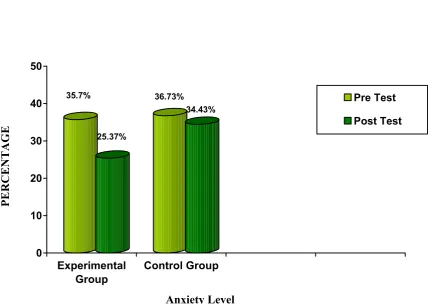
Comparison of frequency level of pre test and post test
anxiety level of both experimental and control group.
Comparison of mean pre test and post test anxiety score of
both experimental and control group.
Comparison of mean pre test and post test HR score of
both experimental and control group.
16
42
42
44
47
50
Appendix No Title Pages
I.
II.
III.
IV
V
VI
Copy of letter seeking permission to conduct study at Govt.
Rajaji Hospital, Madurai.
Letter requesting opinion and suggestion for content and
tool validity
List of experts consulted for the content validity of the
research tool.
a. Questionnaire to collect demographic profile and clinical profile.
b. Tool for assessing anxiety among ICU patients
c. Assessment of Physiological Parameter (HR) Intervention protocol
Copy of certificate in Tactile stimulation.
92
93
94
95
96-98
99
100-105
The research project is a “Quasi experimental study to evaluate the effectiveness of
tactile stimulation on anxiety and selected physiological parameter (HR) among patient
admitted in Intensive Care Units (ICUs) of Government Rajaji Hospital at Madurai”. Pre test
post test non equivalent control group research design was adopted. The total sample size
was 60 out of which 30 samples were in the experimental group and 30 samples were in the
control group. This study was carried out by administration of tactile stimulation twice a day
for 3 days continuously, and by checking Apical heart rate per minute with the help of
stethoscope. The tool used to assess the level of anxiety was modified anxiety part of CINT
questionnaire in which 15 items were related in a four point likert type scale. The data
obtained were analyzed by inferential and descriptive statistics. The major findings of the
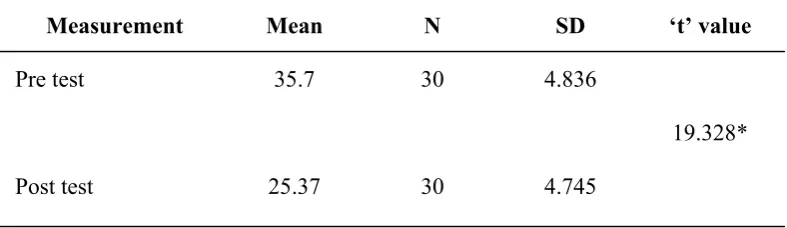
study were the mean post level of anxiety of patients admitted in ICU who received tactile
stimulation was (t=19.328, P<0.05) lower than their mean pre test level of anxiety. The
mean post level of selected physiological parameter (HR) of patients admitted in ICU who
received tactile stimulation was (t=9.483, P<0.05) lower than their mean pre test level of
selected physiological parameter (HR). There was a significant positive relation between the
post level of anxiety (r=1) and selected physiological parameter (HR) (r=0.215) of
experimental group who had received tactile stimulation. There was a significant association
between the pre test level of anxiety with type of ICU [χ2 = 5.59 at df (2)] of experimental and control group. There was a significant association between the pre test level of heart rate
with diagnosis of client [χ2 = 5.59 at df (1)] and type of ICU [χ2 = 15.26 at df (2)]. Based on the findings it is recommended that, tactile stimulation can be used for promoting healing
CHAPTER – I
INTRODUCTION
BACKGROUND OF THE STUDY
“There is no such thing as pure pleasure; some anxiety always goes with it”
- Ovid
The World Health Organization (WHO) takes a more holistic view of health. Its
constitution defines health as a state of complete physical, mental and social well-being
and not merely the absence of disease or infirmity (WHO, 1948). This definition reflects
concern for the individual as a total person functioning physically, psychologically, and
socially.
Illness is a highly personal state in which the person’s physical, emotional,
intellectual, social, developmental or spiritual functioning is thought to be diminished.
Illness behaviors includes assumption of the sick role during this stage and Emotional
responses such as withdrawal, anxiety, fear and depression which are common depending
on security of the illness, perceived degree of disability and anticipated duration of the
illness. (Kozier & Eeb, 2011)
The concept of environmental influences on healing has been known since
Florence Nightingale (1870) as a nursing leader cared for soldiers of the criman war.
Intensive care unit plays a major role for the close monitoring of critically sick patients.
It has high technology machines for better monitoring which require higher trained nurses
(Hupcey, 2004).
The term “Critical Care Unit” invokes images of very ill patients surrounded by
alone can raise feelings of anxiety and more stress in patients and families alike (Rabert
Long and Autchinson 2008)
The appearance of special environment flashing light, buzzing machines, painful
procedures, crowded and hyperactive environment induce stress on the patient.
Bombardment with continuous high level stressors can be disturbing both physically and
psychologically to a stressed critically sick patient. Information received through five
senses evokes physiological and emotional responses of anxiety or serenity (Mazer,
2002).
In the critical care unit, where patient requires more frequent and more intensive
monitoring, noise can be the most pervasive stressors (Petterson, 2000). Multiple authors
have quoted that, patients have described their experience in receiving intensive care
treatment in words such as ‘frightening’, ‘frustrating’, ‘terrifying’ feeling like ‘being in
prison’ and “being alone”. Patients also remember the environment as never being really
quiet or peaceful (Lof et al, 2006, Mangus and Turkington, 2006).
Feelings of loneliness, fear of death, anxiety and insecurity about concrete matters
such as the technical equipment and the different alarms are some of the experiences that
dominate the patients’ narratives. Recent research has confirmed that survivors of ICU
treatment continue to experience both physical and psychological problems for some time
after discharge from ICU. They reported prevalence of anxiety and depressive problems
in ICU survivors ranges from 12% to 43% (for anxiety) and 10% to 30% (for depression)
(Kahn, et al, 2009). Psychological manifestation of stress include anxiety, fear, anger,
depression and unconscious ego defence mechanisms. A common reaction to stress is
response which if left untreated or under treated, anxiety can contribute to the morbidity
and mortality of critically ill patients (Dorrie, Fontain, 2008).
Anxiety is a feeling of unease, such as worry or fear. Anxiety can have both
psychological and physical symptoms. Anxiety releases stress hormones, such as
adrenaline and cortisol. These causes the physical symptoms of anxiety, such as
increased heart rate and increased sweating, headache, feeling faint, breathing faster, etc.
(Barbara Christian, 2003).
Mild anxiety produces a slight arousal state that enhances perception, learning and
productive abilities. Most healthy people experience mild anxiety, perhaps as a feeling of
mild restlessness that prompts a person to seek information and ask questions. Moderate
anxiety increases muscle tension, able to focus but selectively inattentive, slightly
increased respiratory and heart rates, mild gastric symptoms (e.g. butterflies in the
stomach) Tremors, facial twitches. Severe anxiety includes communication difficulty,
inability to relax, fearful facial expression, inability to focus, tachycardia, headache,
dizziness and nausea (Fontaine and Fletcher 2007).
Critical care staff can take measures to develop better ways to understand
patient’s experiences. Meeting such challenges can improve the quality of patient’s
experiences and reduce anxiety and may offset potential adverse effect of being a patient
in an intensive care unit. (Stein Parbury, 2007). Critically ill patients are bombarded with
treatment regimens within highly technical, sensory overloaded environment, and may
find some relief from CAM that fit well within their cultural beliefs and has the potential
Role of Nurses in using Complementary and Alternative Medicine (CAM) at ICU:
It is important that critical care nurses are able to offer beneficial, evidence based
therapy of CAM.
Critical care nurses create healing environments while providing holistic nursing
care with CAM
Critical care nurses should clarify the values and beliefs of the patient before
providing CAM.
Critical care nurses should develop the skill and be expertise on procedure.
Critical care nurses should avoid them self to be hurried, distracted or fragmented.
They should focus full attention on the activity.
Critical care nurses should inquire about healing modalities the client may have
used previously.
Complementary therapies concentrate on relaxation and reducing stress and may
help to calm emotions, relieve anxiety and give a greater sense of confidence and boost to
self-esteem. Complementary therapy works alongside conventional therapy to assist with
improving symptom control and quality of life rather than on treating the disease (Kim
Dolman, 2009).
Interventions in intensive care are often technical, such as administrating
medications for anxiety, pain or sleep. Such ‘ordered’ and charted interventions remain
expected and highly visible (Benner, 2004). They are beneficial for the patients but could
also have side-effects such as hallucination and nightmares. It would be a great benefit to
participate in nursing activities. Tactile touch is such non-pharmacological method, used
successfully in other contexts (Henricson, Berglund and Maatta, 2008).
Tactile stimulation and therapeutic touch helps to alleviate some of suffering like
anxiety. For example, in a research study even with heart patients, touch was shown to
reduce anxiety when used prior to a hospital procedure (Krucof et al., 2004). Therapeutic
touch as a complementary therapy has been used successfully in acute care settings to
decrease anxiety and promote a sense of well-being (Patricia, 2009).
Considering the tactile stimulation as a safe and effective intervention on the
patients, this technique can be used as simple cheap and applicable (Zahra Zare, 2004). It
can be concluded that nurses have an important role in preparing patients emotionally and
psychologically, through various methods including tactile stimulation.
NEED AND SIGNIFICANCE OF THE STUDY
“Touch Heals”
- John Milton
The Intensive Care Unit (ICU) is a potentially hostile environment for the
vulnerable critically ill patient. Frequently reported stressful environmental factors are
noise, ambient light, restriction of mobility, and social isolation. Usually one registered
nurse and one or enrolled nurses are responsible for the care of two or four patients
during the shift. The staff never leaves the patient alone (Berbom 2007, Wikstrom et al,
Equipment and procedures have developed tremendously during the past several
decades and made the modern ICU and the hospitals as most technologically advanced
environment (Szokol and Vender, 2007).
Anxiety, agitation, delirium and pain are common findings in the ICU. These
unhealthy states may lead to increased irritability, discomfort, hypertension, tachycardia,
cardiac ischemia, harmful motor activity and psychologic disquiet for the patient. The
appropriate treatment of these conditions may lead to decreased morbidity and mortality
in the critically ill patient (Garrido, Gonzalez, and Garcia, 2007).
Patients expressed wishes of physical contact, in addition to the contact the nurse
had during treatment, like holding hand, getting a foot rub or receiving a cares. Patients
want to participate in caring actions and be understood for their needs and wishes which
requires communications between the one who gives and the one who receive care.
(Karlsson and Forsberg, 2008).
Several studies have reported that patients who need intensive care unit (ICU)
treatment may experience psychological distress with increasing development of
psychological illness and morbidity related to psychological disorders. The presence of
anxiety, depression and post traumatic stress disorder (PTSD) symptoms have been
reported in three studies to have increased by 40%, 30% and 60% respectively, in ICU
survivors (Adriano and Bonizzoli, 2011).
For critical care patients many alternative and complementary therapies including
hydrotherapy, aromatherapy, massage, music and relaxation can be used successfully as
Watkins, Grossman, Krishnan and Sherwood (2000) examined whether anxiety is
associated with reduction in vagal control of heart rate. Anxiety was measured using the
Spielberger state Trait Anxiety Inventory (STAI). These findings provided an evidence
that trait anxiety is associated with reductions in vagal control of the heart rate.
Touch as therapy is one of the oldest forms of treatment in the world, first
described in China during the second century (Field 2000). As a complementary method,
touch has been used in ICUs to relieve the patients feeling of distress and promote
comfort (Field et al, 2001).
Touch which is promoted in a wish to do well, could mean an existential
confirmation and could be comforting, caring and protecting as well as provide feelings
of trust, confidence and calmness (WigforssPecry, 2006). Touch experienced as
comforting, stimulates the release of the calm and rest hormone Oxytocin and can give an
anti-stress effect (Unvas-moberg, 2000).
In nursing care touch is an integral part and nurses frequently use touch to provide
comfort and reach their patients (Benner, 2000 and Field, 2000). In intensive care, nurse
use touch when caring for the patients, and a hug or a pat on the cheek is experienced by
the patients as expression of human warmth and consideration (Wahlin, et al, 2006).
CAM has the potential to improve patient’s physical and psychological well being
including to promote sleep, rest, reduce anxiety and discomfort thus making the inclusion
of CAM in care something to consider for an holistic approach to nursing in the ICU
environment (Morion and Mitchell 2009). The concepts common to most alternative
practices include holism, humanism, balance, spirituality, energy and healing
High-tech-high touch approach in nursing care was devised to preserve the human
component of nursing care without undermining the advantages of the technological
advancements in the field of patient care. Intensive care nurses should be motivated to
maintain the human element of nursing while rendering care with the help of
sophisticated gadgets. Also, tactile stimulation is not a routine part of the nursing care in
intensive care unit. Tactile stimulation also gives markable reduction in anxiety in
various studies and is rarely studied so far in our setup. Hence, this motivated and
encouraged the investigator to select the present study.
STATEMENT OF THE PROBLEM
A study to assess the effectiveness of the tactile stimulation on anxiety and
selected physiological parameter (HR) among patients admitted in Intensive Care Units
(ICUs) of Government Rajaji Hospital at Madurai.
OBJECTIVES
To find out the level of anxiety and selected physiological parameter before and
after providing tactile stimulation among patients admitted in ICUs in
experimental group
To find out the pre-test and post-test level of anxiety and selected physiological
parameter among patients admitted in ICUs in control group
To evaluate the effectiveness of tactile stimulation on anxiety and selected
To find out the relationship between the post-test anxiety level and selected
physiological parameter among patients admitted in ICUs in experimental group.
To seek association between the pre-test anxiety level with selected demographic
variables (age, sex, diagnosis, occupation, education, marital status, type of ICU
and number of stay in ICU ) of experimental and control group
To find out the association between the pre-test selected physiological parameter
with selected demographic variables (age, sex, diagnosis, occupation, education,
marital status, type of ICU and number of stay in ICU ) of experimental and
control group.
HYPOTHESES
H1:
The mean post test level of anxiety of patient admitted in ICU who have received
tactile stimulation will be significantly lower than their mean pre-test level of anxiety.
H2:
The mean post test level of selected physiological parameter of patient admitted
in ICU who received tactile stimulation will be significantly lower than their mean
pre-test level of selected physiological parameter.
H3:
The mean post test level of anxiety of patients admitted in ICUs in experimental
group who have received tactile stimulation will be significantly lower than the mean
H4:
The mean post test level of selected physiological parameter of patients admitted
in ICU of experimental group will be significantly lower than the mean post test level of
selected physiological parameter of the control group.
H5:
There will be a significant positive relationship between the post test level of
anxiety and selected physiological parameter of patients admitted in ICUs in
experimental group who have received tactile stimulation.
H6:
There will be a significant association between the pre test level of anxiety among
patient’s admitted in ICUs with selected demographic variables (age, sex, diagnosis,
occupation, education, marital status, type of ICU and number of stay in ICU ) of
experimental group and control group.
H7:
There will be a significant association between the pre test level of selected
physiological parameter (HR) among patient’s admitted in ICUs with demographic
variables (age, sex, diagnosis, occupation, education, marital status, type of ICU and
OPERATIONAL DEFINITIONS EFFECTIVENESS
Effect is defined as something brought about by a cause or agent; as a result.
In this study it refers to the outcome of tactile stimulation in terms of reducing
anxiety and selected physiologic parameter (HR).Anxiety was measured by the score
obtained by the subject in modified anxiety part of CINT questionnaire. Level of selected
physiological parameter (HR) was measured by checking apical heart rate per minute
with the help of stethoscope.
TACTILE STIMULATION
It is defined as the activating of nerve signals beneath the skin's surface that
inform the body of texture, temperature and other by touch-sensations.
In this study it refers to gentle tactile stimulation of head, palm and feet by using
effleurage and using finger tips alone for 30 minutes twice a day for three days
continuously.
ANXIETY
A chronic state of tension which affects both mind and body.
In this study it was measured and scored by modified anxiety part of CINT
questionnaire among conscious patients who were admitted in ICUs for more than 12
hours. Pre test was done on first day before tactile stimulation, post test was done 3rd day
PHYSIOLOGICAL PARAMETER
In this study selected physiological parameter is heart rate (HR).
Heart rate is defined as contraction and relaxation of the heart known as the
cardiac cycle or the heart beat. This cycle is repeated 60-100 times a minute in the adult
stimulated by impulses generated by the SA node.
In this study normal rage 70-100 beats per minute has taken as normal Level of
selected physiological parameter which was measured by checking apical heart rate per
minute with the help of a stethoscope. Heart rate was checked in pre test and post test of
each session of tactile stimulation.
PATIENTS ADMITTED IN INTENSIVE CARE UNITS
ICU is defined as the specially equipped area designed for the treatment of
patients with sudden life threatening conditions.
In this study it refers to patients admitted in IRCU, IMCU, and SICU of
Government Rajaji Hospital Madurai.
IRCU: Intensive Respiratory Care Unit An organized approach for the management of acute respiratory failure in an intensive general care unit that utilizes a team of
consultants including a general physician, a surgeon, respiratory care nurses, physical
therapists and a blood gas technician.
IMCU: Intensive medical care unit is a branch of medicine concerned with the diagnosis and management of life threatening conditions requiring sophisticated organ support and
invasive monitoring.
ASSUMPTIONS
This study is based on the assumptions that
Tactile stimulation has no adverse effect among patients admitted in intensive
care units
The anxiety score differs from one individual to another.
Anxiety increases the heart rate
Patients admitted in ICUs have anxiety
The nurses have an important role in promoting a healing environment for
patients admitted in intensive care units.
DELIMITATIONS
This study is delimited to the patients who are conscious and admitted in selected
ICUs of Government Rajaji Hospital
The patients who have spent more than 12 hours in ICUs
The patients who fall into the mild and moderate level of anxiety score as per the
CINT anxiety questionnaire.
30 minutes of Tactile stimulation for twice a day continuously for 3 days
PROJECTED OUTCOME
This study will reveal the effectiveness of tactile stimulation on level of anxiety
and selected physiological parameter (HR). The findings of the study will help the health
CONCEPTUAL FRAME WORK (ROY’S ADAPTATION MODEL)
The conceptual framework of this study is based on the sister Calista Roy’sadaptation model (1939) which involves four concepts person environment nurse and
health. The adaptive system has four components like input, processes, effectors and
output. For the present study the above mentioned components have been modified as
follows.
Roy states that the recipient of nursing care may be a individual, a family, a group
community or a society each to be considered as an adaptive system. In this study the
focus was on individual persons as living systems which are in constant interaction with
their environment.
In this study tactile stimulation was considered as regulator coping mechanism as
input. The term environment was defined as all the conditions circumstances and
influences surrounding and affecting the development and behaviour or person and
group.
Factors in the environment that affect the person were categorized as focal
contextual and residual stimuli. In this study Focal stimuli were anxiety and changes in
selected physiological parameter. Residual stimuli were age, sex, diagnosis, occupation,
education, marital status. Contextual stimuli are type of ICU and number of stay in ICU.
In this study positive and negative response to tactile stimulation on level of
anxiety, selected physiological parameter (HR) were noted as the output. In case of,
negative results they would become the feedback where it must be reassured and
INPUT PROCESS OUTPUT
ENVIRONMENTAL FACTORS
Conscious
Patients
admitted
in
ICUs
for
more
than
12hours
FOCAL STIMULI
PHYSIOLOGICAL
HR
PSYCHOLOGICAL
Level of anxiety
CONTEXTUAL STIMULI
Type of ICU setting,
Number of stay in ICU.
RESIDUAL STIMULI
Age, sex, education,
occupation, marital
status & diagnosis.
EXPE RIMENT AL GROUP CONTROL GROUP
Application
of
tactile
stimulation
No
Application
of
tactile
stimulation
Tactile stimuli produce more comforting. Effect and release hormone
oxytocin which helps to lower the anxiety and heart rate
No Process
No
changes
in
level
of
anxiety
and
physiological
parameter
(HR)
Reduction
in
level
of
anxiety
and
physiological
parameter
(HR)
Feedback
PERSONCHAPTER – II
REVIEW OF LITERATURE
“What is wonderful about great literature is that it transforms the man who reads it
towards the condition of the man who wrote”
- E.M. Forster
The review of literature is a research report and is a summary of current
knowledge about a particular problem and includes what is known and not known about
the problem. The literature is reviewed to summarize knowledge for use in practice or to
provide a basis for conducting a study (Burns and Grove, 2005).
This chapter deals with the literature review of available literature from published
text books, research and non research articles, and medline search related to the present
study problems.
The literature review is arranged in the following headings,
i. Studies related to prevalence and risk of anxiety in ICU’s
ii. Reviews related to tactile stimulation on anxiety and heart rate.
iii. Role of nurse in caring patients in ICU.
STUDIES RELATED TO PREVALENCE AND RISK OF ANXIETY IN ICU:
Dorothy, et al (2012) had done a prospective cohort study of 157 mixed diagnosed
highest anxiety patients in a large general intensive care unit (ICU). Data on four groups
of risk factors (clinical, acute psychological, socio demographic and chronic health) were
collected during ICU admission, post traumatic stress disorder (PTSD) depression,
(n=100). Multi variable analysis was used, at followup 55% of patients had
psychological morbidity. 27.1% had probable PTSD; 46.4% found to have probable
depression, and 44.4% had anxiety. Strikingly high rates of psychological morbidity
were found in this cohort of intensive care survivors.
Dorrie and Fontaine (2008) described in his article on impact of the critical care
environment on the patient, anxiety is the psycho physiological signal that the stress
response has been initiated. Over 70% of ICU patients experience anxiety. A survey of
2500 members of the American Association of Critical Care Nurses (AACN) found that
five of the most important clinical indicators of anxiety are agitation, increased blood
pressure, increased heart rate, the patient’s verbalization changes and restlessness
(AACN, 2009).
Kramer, (2009) conducted the prospective repeated cohort study to quantify the
levels of anxiety experienced by Intensive Care Unit patients just before transfer to the
ward and then twice after transfer to the ward in order to test the hypothesis, that anxiety
levels would change over the three data collection. In the 3 months of study, 249 patients
were admitted to the ICU. The mean anxiety levels remained low at all measurement
points and did not change over time. Anxiety was present in six (17%) patient at time 1,
in three (6.8%) patients at time 2, and in two (4.5%) patients at time 3. This small study
provides a start to the prospective mapping of anxiety levels on time of transfer and
shortly after transfer from an ICU to the wards.
Sharmila (2011) conducted the study to compare the stressors experienced by
patients and nurses, perception of the patients stressors admitted in ICU of selected
design. Purposive sampling technique was used. The total number of sample size
consisted of 80 among that 40 were nurses who are working in ICU and 40 were patients
who were admitted in ICU. The study was carried out by using modified intensive care
unit environmental stressors questionnaire (ICU-ESQ). This tool consists of 50 items,
which are rated in a four-point likert-type scale. The items corresponded to stressors that
are related to physical stressors (13 items), Psychological stressors (22 items), and the
ICU environment stressors (15 items). The findings revealed that the comparison of
mean level of stressors experienced by patients (117.3) was higher than the mean
stressors score of the nurses (114.8). The mean score of physical stressors of patients
(33.5) is higher than mean score of nurses (32.1) psychological stressors of patients
(52.5) is higher than mean score of nurses (51.8), environmental stressors of patients
(31.2) is higher than mean score of nurses (30.8). The being restricted by tubes/lines was
ranked as top stressor by both patients 20 (16.7%) and nurses 19 (15.8%). Fear of death
was ranked as the second stressor by both patients 15 (12.5%) and nurses 16 (13.3%) and
being in pain was ranked as the third stressor by both patients 14 (11.7%) and nurses 12
(10.0%). There was no significant association between the level of stressors perceived by
patients and nurses and their demographic variables.
REVIEWS RELATED TO TACTILE STIMULATION ON ANXIETY AND HEART RATE:
Therapeutic touch is an complementary therapy that is used to help with the
helping patients with cancer find relief from pain and anxiety (American Cancer Society,
2006).
Linda and Thomas (2010) conducted parallel group randomized control trial to
determine healing touch on anxiety, stress, pain, and selected physiological measures of
hospitalized sickle cell disease adult experiencing vaso-occlusive pain episode. For
anxiety, with in groups comparison showed a statistically significant reduction for the
attention controlled with music (P=.01). The trends identified in this study warrant
further research on healing touch’s effect on anxiety, stress, and pain.
Gagne and Toye (1994) conducted a study to examine the two non-invasive
procedures on experienced anxiety. Thirty one inpatients of veterans administration
psychiatric faculty were randomly assigned to one of two treatment conditions
(therapeutic touch and relaxation therapy) or to a therapeutic touch placebo condition.
Multivariance analysis of variance showed that, relaxation and the nursing intervention of
therapeutic touch resulted in significant reduction in anxiety.
Olson and Sneed (1999) conducted study with four group repeated measures
experimental design divided 40 healthy professional caregivers into high and low anxiety
groups and further into ‘therapeutic touch’ and comparison groups. The effectiveness of
the use of therapeutic touch in reducing anxiety was evaluated.
Haricson, Berglund, Mattaa and Sagesten (2006) conducted study among five
nurses with a touch therapist training were interviewed about their experiences of
preparation before giving tactile stimulation in an ICU. To analyze the meaning of
preparation as a phenomenon, Giargi’s descriptive phenomenological approach was used.
(n=23). In the intervention study i) No significant difference were shown for oxytoxin
levels between intervention and control group, ii) There were significantly lower levels of
anxiety for patients. The impact on stress parameter were limited, except for levels of
anxiety which declined significantly.
Kathleen and Adams (2006) done a quasi experimental study to examine the
effects of healing touch on cardiovascular variables in critically ill patients. Twenty five
patients admitted to the medical intensive care unit were studied. Cardiovascular
variables (HR systolic blood pressure, Diastolic blood pressure and MAP) and
oxygenation variable were collected pre and post both healing touch. The findings of the
study indicated that there was a significant different for diastolic blood pressure for the
group who received healing touch first as compared to the subjects who not received.
There was a tendency for the cardiovascular outcomes to show the greatest decrease for
the intervention of healing touch but they did not show clinical significance.
Krucoff., et al (2004) conducted randomized controlled study to noetic healing
intervention (Tactile touch, prayer, meditation and education) was conducted with 150
patients undergoing angioplasty. Patients received stress management (Tactile touch,
prayer) before surgery. There was a 25-30% absolute reduction in adverse
peri-procedural outcomes in patients treated with any noetic therapy compared with standard
therapy. In those with a high level of anxiety noetic therapy appeared to show greater
reduction in absolute in-patient complication rates compared with standard therapy.
Vincent, Drescher, Gantt and Whitehead, (2009), conducted study on heart rate
response to touch, in which the evaluated the effect of tactile stimulation on heart rate
subject’s wrist (X = 9.16 bpm, P< 0.005). To determine if tactile stimulation alone
accounts for these differences three comparisons were made in a second experiment and
found no changes was noted in the absence of tactile stimulation.
Zaha Zare, Hooman Shansavari, and Moeini (2008) conducted study on effects of
therapeutic touch on the vital signs of patient before coronary artery bypass graft surgery.
Clinical trail with 44 samples that were selected by easy sampling method and based on
two separate lists of random numbers for both men and women. They were devided into
two groups. In the therapeutic touch stimulation group, intervention therapy was applied
on patients for 20 minutes. Data was analyzed using descriptive and inferential statistics.
Results showed that there were significant difference between the mean pulse rate before
and after intervention in both groups (P<0.001). Results also showed that there was a
significant difference between the average number of breathing before and after
intervention in both group (P<0.001).
Maria Adela and Silva, (2008) conducted the effects of healing touch on the
amount of narcotic analgesic self administered post operatively, the frequency of bowel
program treatments and medications administered to patients with abdominal
hysterectomies. Sixty preoperative patients were randomly assigned to one of three
groups; healing touch, back massage and no treatment. The results indicated that the
healing touch subjects had a significantly higher level of recovery, also reduction of
systolic and diastolic blood pressure and pulse rate were statistically significant for the
healing touch group.
Bruce and Julian (2009) conducted study on Panic Anxiety and heart rate
as with developmental evidence that links high vagal tone with enhanced attention,
effective emotion regulation, and organismic responsively.
Ischiro kawarchi, Davi Sparrow and Pantel (2008) conducted prospective cohort
studies suggest that pholic anxiety is a strong risk fact for fatal coronary artery disease in
particular sudden cardiac death. Tested hypothesis in 581 men aged 47 to 87 years,
enrolled in the normative aging study. Symptoms of anxiety were assessed using the
crown-crisp index. Men reporting higher levels of phobic anxiety had a higher resting
HR (P=0.025). These data suggest that phobic anxiety is associated with altered cardiac
autonomic control and hence increased risk of sudden cardiac death.
Diane, Charles, Gessert and Colleen (2009) done a prospective study designed to
examine the potential of massage to reduce agitation in cognitively impaired nursing
home residents. Data was collected during baseline (3 days) intervention (6 days) and at
follow up. Five aspects of agitation were assessed. Wandering, verbally agitated
physically agitated socially inappropriate, and resist care. Subjects agitation was lower
during the touch therapy. Intervention than at baseline (2.05 Vs 1.25, P<0.001) and
remained lower at follow up of the 5 agitated behaviours examined in this study.
Pavelettee Sansone and Louise Schmitt (2000) had undertaken a one year
demonstration project and looked at the effects of gentle massage on two groups of
elderly nursing home residents those suffering from chronic pain and those with dementia
who were exhibiting anxious or agitated behaviours. The project was devided into three
12 week phases; different and resident were involved in phase. 59 of 71 residents
anxiety scores declined in two of the three phases. 84% of the nursing attendants
reported that the residents enjoyed receiving tender touch.
ROLE OF NURSE IN CARING ICU PATIENT:
Wilkin and Slevin (2007) conducted a descriptive and qualitative study regarding
the meaning of caring of nurses: an investigation into the nature of caring work in an
intensive care unit. Semi-structured interviews were conducted to collect data on the
experiences of twelve nurses who were selected by purposive sampling. Data analysis
involved using Colaizzi’s reductive procedure. The findings suggest that the nurses in
the study participated in delivering holistic and humane care of the patient and their
relatives. The essential structure of caring was identified as a process of competent
physical and technical action imbued with affective skills. This study revealed caring to
be synonymous with nursing. The descriptive accounts of the nurses experiences of
caring in this study attempt to illuminate the nature of intensive care unit nursing. The
participants described caring as a process involving feelings together with professional
knowledge, competence, and skill and nursing action. This involved the holistic care of
the patient and relatives in meeting their individual needs.
Stayt (2002) conducted an explorative study regarding nurses experiences of
caring for families with relatives in intensive unit. A purposive sample of 12 Registered
Nurses working in an adult intensive care unit were Interviewed transcripts were analysed
using Colaizzi’s framework. The data were collected in August 2005. Findings revealed
that participants experiences were categorized into the following themes: defining the
doubts their professional competence and conflicts between their professional and
personal self. These experiences were linked to participants expectations and
self-imposed standards. Researcher concluded that registered nurses caring for families who
have relatives in adult intensive care units face a fundamental conflict both between role
expectations and patient care and between professional ideals and being a human.
The role of the nurse in controlling the environment to promote healing, to create
a positive, healing environment for family focused care. The needed strategies are
directed towards titrating the environmental stimuli, ensuring the comfort of the patient,
controlling excessive noise and lighting, providing non pharmacologic approaches to
alleviating anxiety, and promoting sleep. (Fontaine, 2005).
Role of nurses in ICUs is expected to develop skill which helps them deal with
the problems experienced by their patient sand the families. Nurses must be educated to
suggest reductions of stressors and motivated to maintain the human element of nursing
(Jaya Kuruvila, 2007).
Critical Care nursing is that specialty with in nursing that deals specifically with
human responses to life threatening problems. A critical care nurse is a licensed
professional nurse who is responsible for ensuring that acutely and critically ill patients
and their families receive optimal care. (AACCN).
Respect and support the right of the patient or the patient’s designated surrogate
to autonomous informed decision making.
Help the patient obtain necessary care.
Provide educate and support to help the patient or the patient’s designated
surrogates make decisions.
Monitor, and safeguard the quality of care that patient receives.
Act as a liaison between the patient, the patient’s family and other health care
professionals.
Focus on making clinical decisions, risk appraisal, interpretation of diagnostic
CHAPTER - III
RESEARCH METHODOLOGY
“Every discourse, even a poetic or oracular sentence, carries with it a system of rules
for producing analogous things and thus an outline of methodology”
- Jacques Derrida
Research methodology indicates the general pattern of organizing the procedure
of gathering valid and reliable data for an investigation. It includes research approach,
research design, the setting, samples, sampling technique, population, criteria for samples
selection, method of sample selection, description of the tool, validity, reliability, pilot
study, procedure for data collection, plan for data analysis and protection of human
subjects.
The present study was designed to assess the effectiveness of tactile stimulation
on anxiety and selected physiological parameter (HR) of the patients admitted in ICUs.
RESEARCH APPROACH
The research approach which was used for this study was an Quantitative
approach. According to polit and hungler (2004) “Quasi experimental approach involves
the manipulation of an independent variable that is institution of an intervention.”Quasi
experiment however lacks either the randomization or control group features that
RESEARCH DESIGN
TREECE and TREECE (1996) say that “a research design is a blue print for
conducting the study that maximizes the control over factors that could interface the
validity of the findings”.
Quasi experimental Pre test post test non equivalent control group design was
used to assess the effectiveness of tactile stimulation on level of anxiety and selected
physiological parameter.
This design is represented below;
Subject Pre Test Manipulation Post Test Day 1 Day 2 Day 3 Day 1 Day 2 Day 3
Experimental Group A1
HR1 HR3 HR5 HR7 HR9 HR11
X HR2
HR4 HR6 HR8 A2 HR10 HR12
Control Group A1
HR1 HR3 HR5 HR7 HR9 HR11
- HR2
HR4 HR6 HR8 A2 HR10 HR12 KEYS:
X - Administration of tactile stimulation
A1 - Assessment of pre test level of anxiety for both
experimental & control group.
A2 - Assessment of post test level of anxiety for both
HR1 HR3 HR5 HR7 HR9 HR11 - Assessment of pre test level of physiological
parameters (HR) in experimental and control group.
HR2 HR4 HR6 HR8 HR10 HR12 - Assessment of post test level of physiological
parameters (HR) in experimental and control group.
VARIABLES
INDEPENDENT VARIABLES: Tactile stimulation.
DEPENDENT VARIABLES: Level of anxiety and selected physiological parameter
(HR) of Patients who are conscious in ICUs.
RESEARCH SETTING
This study was conducted at Government Rajaji Hospital, Madurai. It is 3km
away from the Sacred Heart Nursing College. This is a multi super speciality hospital
with 2418 beds. The study was conducted in IMCU with 12 beds ,IRCU with 10 beds
and SICU with 5 beds. The average admission in these units will be 12. These ICUs has
the bio-medical equipments such as ventilators, suction apparatus, defibrillators,
monitoring devices such as ECG machines and hemodynamic monitors. Both medical
and surgical cases admitted in all ICUs.
STUDY POPULATION
The target population of this study was patients who were admitted in ICUs in
SAMPLE
Patients who were conscious stayed minimum 12 hours in ICUs (IMCU, IRCU, &
SICU ) of Government Rajaji Hospital Madurai, who fit into inclusion criteria.
SAMPLE SIZE
The samples consists of 60 patients admitted in ICUs in which
30 samples were in experimental group and
30 samples were in control group.
CRITERIA FOR SAMPLE SELECTION
The sample was selected based on the following criteria
INCLUSION CRITERIA
Patients who were conscious admitted in ICUs
Patient who have spent minimum of 12 hours in ICUs
Patient falls into mild to moderate level of anxiety as per CINT anxiety
questionnaire.
Patients Included both male and female
Patient who knows to speak Tamil and English
EXCLUSION CRITERIA
Patients who were comatose unconscious and on anaesthetic and sedative drugs.
Patient’s with cardiac abnormalities like heart failure and arrhythmia
Patients who were with skin disease and contra indicated for tactile stimulation.
Patients who were not able to communicate
SAMPLING TECHNIQUE:
Purposive SamplingTechnique was used.
According to Polit and Hungler (2003) purposive or judgement sampling proceeds
on the belief that a researcher knowledge about the population and its elements can be
used to hand pick the cases to be included in the samples. Since it was not possible to do
simple random sampling, samples selected based on specific criteria, this technique was
found appropriate for the purpose of the study.
DESCRIPTION OF THE TOOL
TOOL:1
This consists of demographic variables of patients that are age, sex, diagnosis,
occupation, education, marital status, type of ICU , and number of stay in ICU.
TOOL:2
The original anxiety part of CINT questionnaire was downloaded from online,
which was used for many studies. This questionnaire contains 15 items which was
assessing anxiety level, among patients admitted in ICUs. In this questionnaire 2
and sound and ii) Melancholey as discomfort experienced by the patients because of
wearing in ICU gown. In this the anxiety measure questions items are rated on a 4 point
Likert scale from normal, mild, moderate to severe anxiety.
1. 1 – 15 – normal 3. 31 – 45 – moderate anxiety
2. 16 – 30 – mild anxiety 4. 46 – 60 – severe anxiety
TOOL:3
Assessment of Apical Heart Rate per one minute with the help of stethoscope, before and
after tactile stimulation. Normal HR= 70 – 100 beats per minute.
INTERVENTION Pre Assessment:
Adjust bed height comfortable position and lower side rails if any. Place client in
comfortable position (supine) Drape the client, Expose only the area where tactile
stimulation is to be applied. Ask the patient to close the eyes and concentrate on each
body part to relax one by one starting from head to toe.
TACTILE STIMULATION TO HEAD AND SHOULDER
Relax the scalp using slow gentle stroking and touch all over the head, over and over
again.
The procedure began from the base of the skull at four pressure points(point 1: at
centre on border of occipital, point 2:an inch from point 1 to left side, point 3:an inch
pressure with the help of the finger tips (little finger, ring finger, middle finger, index
finger- 4 fingers at a time)for about 2minutes.
Moving towards the forehead to crown point
The four fingers tips were used to give pressure from the forehead point towards
the crown point. At the crown point, Tip of the index finger was used to give a pressure
for one minute.
Moving sidewise,
Four fingers tips of hand were used to give gentle pressure, the fingers moved
sidewise and then for the whole head, giving pressure for about 4 minutes(a gentle
effleurage with palms of hand was given at the end)
Towards fore head
The pituitary points of fore head was given pressure with the help of finger tip of
index finger simultaneously on both the sides for 2 minutes
Next to pineal point
The pineal point of fore head was given pressure with the help of finger tip of
index finger for 1 minute.
And then to thyroid point
The thyroid point was given pressure with the help of five fingers tips for one
minute.
Hold the head from the back with the help of both the hands and gently swift the
head in rotatory motion of left to right
A gentle touch was provided with the palm and finger pad of the hand on fore
The shoulder was touched gently for a minute by standing at the back of the patient.
TACTILE STIMULATION TO HAND
The hand was held in order that the meridian of the heart region in hand was
pressurized by finger pads of the investigators hands. The little finger was given a
pressure along for one minute and the proximal aspect of the palm meridian was given a
pressure for one minute.
Each finger tips of the patient was given gentle pressure by investigator.
TACTILE STIMULATION TO FOOT
The finger tips of the thumb of both the hands were used to give pressure to the
heart meridian of the sole, at the same time other four fingers of each hand was giving
pressure to the other lateral aspect of the foot. Then, the hallux was given pressure with
the finger tips of the thumb in a circular motion, the same procedure was followed to
other 4 toes, in between of each toes a single finger tip was used to give pressure
Then, the whole sole of the foot was given pressure in a zigzag manner in order that
every pressure points were given pressure for five minutes.
Effleurage was given to body part after completion of tactile stimulation.
At the end of the procedure, the patient was instructed to open his/her eyes and relax.
DEVELOPMENT OF INTERVENTIONAL STRETEGY
A protocol was developed for administering Tactile stimulation. The investigator
underwent a formal training under an expert in the field of yoga of touch therapy. Based
on the review of literature steps of procedure were listed down. The content included in
TESTING OF THE TOOL CONTENT VALIDITY
The tool and techniques were developed by the investigator based on review of
literature. The tools were given to five experts in the fields of nursing medicine and
yoga for content validity. The items were modified based on their suggestion.
RELIABILITY
The reliability of tool determined by Split half method for anxiety and by inter rator
method for assessing apical heart rate were per minute with the help of stethoscope.
There was a significant score of r = 0.8 for both anxiety and heart rate.
PILOT STUDY
Pilot study was conducted at Government Rajaji Hospital Madurai, to test
feasibility, practicability relevance of the study and to plan for data analysis. Formal
administrative approval was obtained from the head of the institution. Six patients
admitted in ICUs were samples and the pilot study was conducted in the manner in which
the final study would be done. Data were analysed to find out suitability of statistics.
DATA COLLECTION PROCEDURE
Before starting the study the researcher had obtained formal permission from all
departmental heads of ICUs to conduct the study. Oral consent had also been obtained
from each samples and their relatives. The total data collection period was 6 weeks.
During first 4 weeks samples for experimental group were selected, following 2 weeks
control group were selected to prevent the intervention contamination.
Total of 30 samples in experimental were recruited in 6 batches. Each batch
consisted of 5 samples for convenient administration of intervention and assessment.
In order to find out the level of anxiety of samples for each day the investigator
assessed the anxiety using modified anxiety part of CINT questionnaire on first day
before the administration of tactile stimulation. The assessment took more than 15
minutes to complete. Interventions were carried out twice a day, morning and evening at
an interval of 5 hours between two session, each sessions lasting for 30 minutes for each
subject and continuously for 3 days. Post anxiety level was measured after all the 6
sessions of tactile stimulation.
Heart rate was assessed by every session of tactile stimulation as pre and post test
assessment. In this study normal range was considered as 70-100 beats per minute.
Morning pre test assessment and intervention was carried out from 10.30am –
1.00pm.Evening assessment and intervention was carried out from 3.30pm – 6pm.
Anxiety level assessed once as a pre and post test assessment. Heart rate was assessed by
every session of tactile stimulation as pre and post test assessment.
In the control group a total of 30 patients were recruited in four batches, each
day, and post test on third day without giving tactile stimulation to control group. Heart
rate checked twice for each session at the interval of 30 minutes. Morning assessment and
intervention was carried out from 10.30am – 1.00pm.Evening assessment and
intervention was carried out from 3.30pm – 6pm.
DATA ANALYSIS
After data collection the data were analysed according to the objectives of the
study by using descriptive such as mean, median, standard deviation and inferential
statistics such as paired and unpaired‘t’ test, chi-square test, and correlation.
Hypothesis related to effectiveness of tactile stimulation in reducing level of
anxiety and selected physiological parameter (HR) was tested using mean standard
deviation paired and independent ‘t’ test.
Correlation was used to find out the relationship between the post test score of
anxiety and post test score of HR in experimental group.
Chi-square was used to find out association between pre test anxiety score and
selected demographic variables.
PROTECTION OF HUMAN RIGHTS
The proposed study was conducted after approval of dissertation committee of the
college. Oral consent was obtained from the study samples before starting data collection.
Assurance was given and confidentiality was maintained. The subjects were explained
that they have rights to withdraw from the study. There was absence of physical and
CHAPTER – IV
ANALYSIS AND INTERPRETATIONS OF DATA
“It is only with heart that one sees rightly, what is essential is invisible to the eye”
- St. Exupery (1943)
This chapter deals with the descriptions of the subjects, classification, analysis
and interpretation of data collected to evaluate the achievement of the objectives of the
study. The data collected were tabulated and presented as follows.
ORGANIZATION OF THE FINDINGS:
The analyzed data were organized and presented under the following headings.
SECTION: I
Characteristics of the subjects.
1. Distribution of samples according to demographic characteristics of the subjects
2. Distribution of samples according to the clinical profile of the subjects
SECTION: II
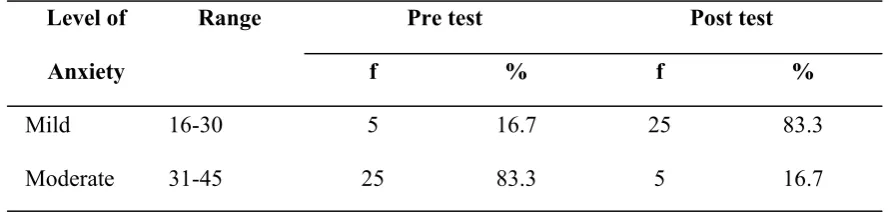
3. Distribution of pre test and post test level of anxiety in experimental group
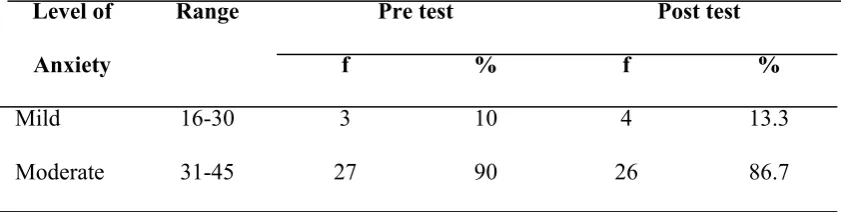
4. Distribution of pre test and post test level of anxiety in control group
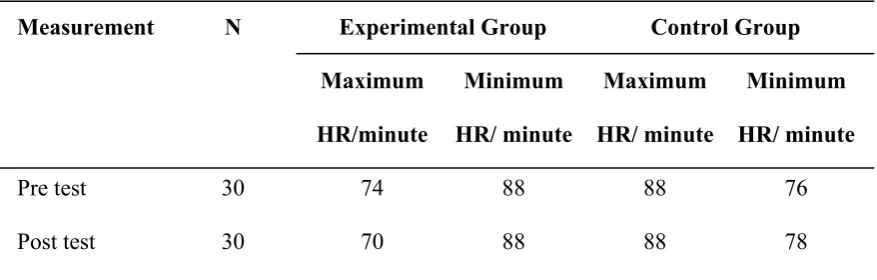
5. Distribution of samples based on their pre test and post test HR level in
SECTION-III
6. Comparison of mean pre test and post test anxiety score of experimental group.
7. Comparison of mean pre test and post test HR score of experimental group.
8. Comparison of mean pre test and post test of anxiety score of control group.
9. Comparison of mean pre test and post test of HR score of control group.
10.Comparison of post test of anxiety score of experimental group and control group
11.Comparison of post test of physiological parameter (HR) score of experimental
group and control group
SECTION: IV
12.Correlation between the post test score of anxiety and post test HR of
experimental group.
SECTION: V
13.Association of pre test score of anxiety score of both experimental and control
group with demographic variables (age, sex, education, occupation, marital status,
diagnosis, type of ICUs, and number of stay in ICUs).
14.Association of pre test score of physiological parameter (HR) score of both
experimental and control group with demographic variables (age, sex, education,
SECTION – I
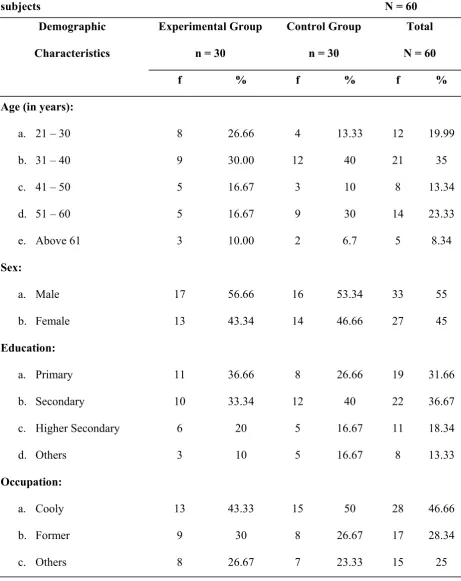
Table 1: Distribution of samples according to demographic characteristics of the
subjects N = 60
Demographic Characteristics
Experimental Group n = 30
Control Group n = 30
Total N = 60
f % f % f %
Age (in years):
a. 21 – 30
b. 31 – 40
c. 41 – 50
d. 51 – 60
e. Above 61
Sex: a. Male b. Female Education: a. Primary b. Secondary
c. Higher Secondary
Demographic Characteristics
Experimental Group n = 30
Control Group n = 30
Total N = 60
f % f % f %
Marital Status: a. Married b. Unmarried 24 6 80 20 23 7 76.67 23.3 47 13 78.33 21.67
The data in the table 1 show that most of the subjects in the experimental group
9(30%) and in the control group 12 (40%) were between the age group of 31-40 years.
Regarding sex, both in the experimental group 17 (56.66%) and in the control group 16
(53.34%) of the subjects were males.
Regarding educational status most of the subjects in the experimental group 11
(36.66%) fell under primary education but in the control group 12 (40%) had studied up
to secondary education.
It was found that both in the experimental group 13 (43.33%) and in the control
group 15 (50%) were coolie workers.
Regarding marital status both in the experimental group and in the control group
majority of them were married. In the experimental group 24 (80%) and in the control
group 23 (76.67%) were married.
The above data show that the subjects in the experimental group and in the control
group were similar in demographic variables such as age, sex, occupation, marital status,
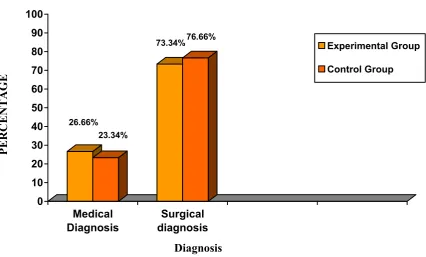
26.66% 23.34% 73.34%76.66% 0 10 20 30 40 50 60 70 80 90 100 Medical Diagnosis Surgical diagnosis Experimental Group Control Group Diagnosis
Fig 2: Bar diagram showing the Distribution of subjects according to diagnosis.
53.33% 50% 46.67% 50% 0 10 20 30 40 50 60 70 80 90 100
1-3 days 4-6 days
Experimental Group
Control Group
No. of stay in ICU
Fig 3: Bar diagram showing the Distribution of subjects according to No. of stay in ICU
PERCE
NTAGE
PERCENT
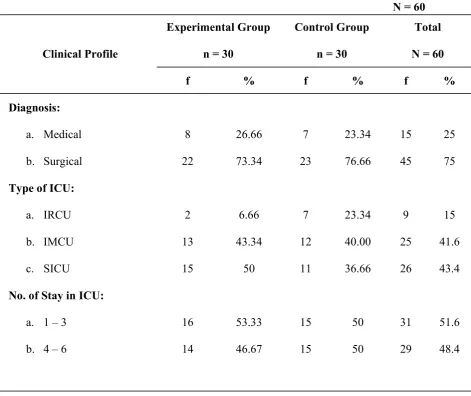
[image:54.595.95.529.418.666.2]Table 2: Distribution of samples according to the clinical profile of the subjects N = 60
Clinical Profile
Experimental Group n = 30
Control Group n = 30
Total N = 60
f % f % f %
Diagnosis:
a. Medical
b. Surgical
Type of ICU:
a. IRCU
b. IMCU
c. SICU
No. of Stay in ICU:
a. 1 – 3
b. 4 – 6
8 22 2 13 15 16 14 26.66 73.34 6.66 43.34 50 53.33 46.67 7 23 7 12 11 15 15 23.34 76.66 23.34 40.00 36.66 50 50 15 45 9 25 26 31 29 25 75 15 41.6 43.4 51.6 48.4
The above table shows t