1
DISSERTATION ON
A PRE-EXPERIMENTAL STUDY TO EVALUATE THE
EFFECTIVENESS OF STRUCTURED TEACHING
PROGRAMME ON KNOWLEDGE REGARDING
EARLY IDENTIFICATION OF HIGH RISK
PREGNANCY AMONG ANTENATAL MOTHERS
ATTENDING AT INSTITUTE OF OBSTETRICS AND
GYNAECOLOGY, CHENNAI-08.
M. SC (NURSING) DEGREE EXAMINATION
BRANCH – III OBSTETRICS AND GYNAECOLOGY NURSING
COLLEGE OF NURSING
MADRAS MEDICAL COLLEGE, CHENNAI
A Dissertation Submitted to
THE TAMILNADU DR.M.G.R MEDICAL UNIVERSITY, CHENNAI
In Partial Fulfillment of the Requirement for the Award of
DEGREE OF MASTER OF SCIENCE IN NURSING
2
CERTIFICATE
This is to certify that this dissertation titled A Pre-Experimental study To Evaluate The Effectiveness Of Structured Teaching Programme on Knowledge Regarding Early Identification Of High Risk Pregnancy Among Antenatal mothers attending at Institute of Obstetrics and Gynaecology,Chennai-08 is a bonafide work done by Mrs.J.Dhanalakshmi, M.Sc (N) II year student, College of Nursing, Madras Medical College, Chennai submitted to The Tamilnadu Dr.M.G.R Medical University, Chennai-32 towards the partial fulfillment of the requirements for the award of degree of Master of Science in Nursing, Branch – III, Obstetrics and Gynecological Nursing, under our guidance and supervision during the academic year 2015 – 2017.
Dr.V.KUMARI., M.Sc (N) Ph.D,
Principal,
College of Nursing, Madras Medical College, Chennai -03.
Dr.R.NARAYANA BABU, M.D,DCH.,
Dean,
3
“A PRE-EXPERIMENTAL STUDY TO EVALUATE THE
EFFECTIVENESS OF STRUCTURED TEACHING
PROGRAMME ON KNOWLEDGE REGARDING EARLY
IDENTIFICATION OF HIGH RISK PREGNANCY AMONG
ANTENATAL MOTHERS ATTENDING AT INSTITUTE OF
OBSTETRICS AND GYNAECOLOGY,CHENNAI-08”.
Approved by the Dissertation Committee on 12.07.2016RESEARCH GUIDE
Dr. V. Kumari., M.Sc (N), Ph.D., ______________
Principal,
College of Nursing,
Madras Medical College, Chennai – 03.
CLINICAL SPECIALITY GUIDE Dr. V. Kumari., M.Sc (N), Ph.D.,
Principal, ______________
College of Nursing,
Madras Medical College, Chennai-03.
MEDICAL EXPERT
Dr.A.Vijayalakshmi, M.D, D.G.O., ______________
Assistant Professsor,
Government Institute of Obstetrics & Gynaecology and Hospital for Women and Children
Institute of Obstetrics and Gynaecology, Chennai – 08.
A Dissertation Submitted to
THE TAMILNADU DR.M.G.R MEDICAL UNIVERSITY, CHENNAI
In Partial Fulfillment of the Requirement for the Award of
DEGREE OF MASTER OF SCIENCE IN NURSING
4
ACKNOWLEDGEMENT
Foremost, I am thankful to GOD ALMIGHTY for giving me an ample resilience, exhortation and patronage till the completion of this research work.
I would like to express my deep and sincere gratitude to our respected former Dean Prof. Dr. Isaac Christian Moses, MD., Madras Medical College, Prof. Dr. Sudha Seshayyan, MD., Vice-Principal,
Madras Medical College, Chennai and the Institutional Ethics Committee for granting me permission to conduct the study in this esteemed institution.
I also extend my gratitude to our respected Dr.R.NarayanaBabu, MD., DCH., Dean, Medical College, Chennai for granting me permission to conduct the study in this esteemed institution.
With deep sense of colossal contemplate, I express my whole hearted gratitude to my esteemed guide, a feat personality Dr.V.Kumari M.Sc (N), Ph.D., Principal, College of Nursing, Madras Medical College, Chennai for her treasured guidance, highly instructive research mentorship, thought provoking suggestions, prudent guidance, moral support and patience molded me to make this research study a grand success.
I would like to express my deep thanks to Mrs.Dominic Arockia Mary, M.Sc (N), Vice Principal (I/C),HOD Department of Medical Surgical Nursing, College of Nursing, Madras Medical College, for her valuable support and suggestion.
5
Surgical Nursing, College of Nursing Madras Medical College, for her guidance, support and encouragement for completing the study.
I extend my thanks to Mrs.P.K.Shanthi M.Sc (N), former Vice Principal (I/C), and HOD,Department of Child health Nursing,
College of Nursing, Madras Medical College, Chennai for her valuable guidance and encouragement during the study.
I am highly indebted to express my deep sense of gratitude to
Ms.M.Rajeswari M.Sc(N), Lecturer in Obstetrics & Gynaecology,
College of Nursing Madras Medical College, Chennai for her constant motivation, honorable support, innovative and creative suggestions towards the successful completion of this thesis.
I immensely extend my gratitude and thanks to
Mrs.V.Vijayalakshmi, M.Sc (N), Lecturer, Obstetrics and Gynaecology Nursing, College of Nursing, Madras Medical College, for her timely assistance in guidance in pursuing the study.
I am extremely grateful to Mrs.S.Thenmozhi, M.Sc.(N), Lecturer, Obstetrics and Gynaecology Nursing, College of Nursing, Madras Medical College, for her encouragement, valuable suggestion, support and advice given in this study.
I am grateful to Mrs.S.Anandhi Devi, M.Sc. (N), Nursing Tutor, Obstetrics and Gynaecology Nursing, College of Nursing, Madras Medical College, for her valuable guidance, suggestion, motivation, timely help and support throughout the study.
6
My sincere thanks to Prof. Dr. S. Baby Vasumathi, M.D., D.G.O., former Director of Institute of Obstetrics & Gynecology and Govt. Hospital for Women & Children, Egmore, Chennai - 600008 for granting the permission to conduct the study.
Extent my earnest gratitude to Dr.T.K.Shaanthi Gunasingh, M.D., D.G.O., F.I.C.O.G., Director and Superintendent, Institute of Obstetrics & Gynecology and Govt. Hospital for Women & Children, Egmore, Chennai- 600008 for her guidance and help extended during the course of the study.
I render my deep sense of sincere thanks to Dr.A.Vijayalakshmi., M.D.,D.G.O, Assistant Professor, Institute of Obstetrics & Gynecology and Govt. Hospital for Women & Children, Egmore, Chennai - 600008 for her valuable suggestions and guidance for this study.
I express my heartfelt gratitude to the Nursing Superintendent Grade- I, Staff Nurses of Antenatal Outpatient department, Institute of Obstetrics & Gynecology and Govt. Hospital for Women & Children, Egmore, Chennai- 600008 for their assistance and help during my data collection.
I owe my special thanks to Dr. A. Venkatesan M.Sc.,M.Phil., Ph.D.,Deputy Director(Statistics), Directorate of Medical Education, Chennai for his untiring, valuable guidance and kind cooperation in successful completion of statistical analysis and compiling of this research study.
I gratefully acknowledge the Experts Prof.Dr.Rosaline Rachel M.Sc.(N), Ph.D., Principal and HOD, Obstetrics and Gynecology Nursing, MMM College of Nursing, and Mrs.V.Dhanalakshmi,
7
Nursing, for their valuable suggestions, constructive judgments while validating the tool.
I thank Mrs.M.Dhanalakshmi M.A.,M. Phil Assistant Professor
Department of English for editing and providing English Validity and
Mr.C.Nagaraj M.A.,B.Ed ., P.G. Assistant for editing and providing Tamil content validity.
I extend my thanks to Mr.Ravi, M.A, M.L.I.Sc., Librarian, College of Nursing, Madras Medical College of Nursing, for his co -operation and assistance which built the sound knowledge for this study and also to the Librarians of The Tamilnadu, DR.M.G.R Medical University, Chennai for their co-operation in collecting the related literature for this study.
I owe my great sense of gratitude to Mr.Jas Ahamed Aslam, Shajee Computers and Mr.Ramesh, B.A, MSM Xerox for their enthusiastic help and sincere effort in typing the manuscript with much value computer skills and also bringing this study in to a printed form.
My special and deep thanks to my father Mr.K.Jeyabalan, my mother Mrs.J.Jothi, my husband Mr.G.Vijayakumar and my daughter Baby.V.Rithika for their loving support and timely help to complete the study successfully and my whole hearted thanks to my colleague and well-wishers for her timely help, support and help in aligning the content.
My earnest gratitude to all antenatal women, who had enthusiastically participated in this study without them it was not possible for me to complete this study.
8
My whole hearted thanks and gratitude to all dear and near ones for all their love, prayers, care, support and encouragement which gave confidence to achieve the goal.
I extend my heartfelt gratitude to those who have contributed directly or indirectly for the successful completion of this dissertation.
9
ABSTRACT
Title:
A Pre-experimental study To Evaluate The Effectiveness Of Structured Teaching Programme on Knowledge Regarding Early Identification Of High Risk Pregnancy Among Antenatal mothers attending at Institute of Obstetrics and Gynaecology,Chennai-08.
Antenatal period is amazing experience of each and every women. Even though this period is going smooth for many mothers some of them may suffer with some high risk during pregnancy may endanger the life of the mother and fetus. The main aim of the study particularly this group of antenatal mother is early identification of high risk pregnancy, prevention of complications , and management of these conditions.
Need for the study
The researcher had seen various kinds or pregnancy a ssociated complications in obstetric department. The women who are all attending the antenatal outpatient department do not have an adequate knowledge regarding complications of high risk pregnanc y. The researcher felt that to increase the knowledge and awareness about high risk pregnancy and selected this topic.
Objectives
1) The assess the knowledge regarding high risk pregnancy among antenatal women
10
3) To associate the findings with selected demographic variables and obstetrical variables.
Key words
High risk pregnancy, Structured Teaching Programme, Identification of high risk pregnancy.
Methodology
Research approach Quantitative research approach Duration of the
study
Four weeks (20.11.2016 to 18.12.2016)
Study setting Antenatal OPD at IOG Research design Pre- experimental design
Study Population Antenatal mothers with gestational age 8-28 weeks.
Sampling Technique Purposive Sampling Technique Sample size 60
Data collection procedure
After obtaining informed and written consent, approximately three to five samples were selected every day and pretest questionnaire was assessed by means of interview method. Structured Teaching Programme was given to the participants for 30 minutes. After pre -test, post -test was conducted after one week to assess the knowledge of women regarding early identification of high risk pregnancy.
Data analysis
11
Inferential statistics like paired t-test, McNemars test and chi-square test.
Results
The findings of the study revealed that the Structured Teachin g Programme had improved the knowledge of women regarding early identification with paired t –test P value is 0.001. There is statistical significance in knowledge attainment on early identification of high risk pregnancy which shows the effectiveness of Structured teaching programme.
Discussion
Hypothesis was proved by the great statistically significance occurs after Structured Teaching Programme. The chi square test shows that there is a statistically significant association between the post- test level of knowledge and demographic variables among women.
Recommendation
A comparative study can be conducted between the knowledge of the patients with high risk pregnancy and their practices.
A follow up study can be recorded to determine the participati on in screening practice for the prevention and early detection of high risk pregnancy.
Conclusion
12
INDEX
CHAPTER
NO. TITLE
PAGE NO.
I INTRODUCTION
1.1 Need for the study
1.2 Statement of the problem 1.3 Objectives of the study 1.4 Operational definitions 1.5 Assumptions
1.6 Research Hypothesis 1.7 Delimitations
1 3 6 6 7 7 8 8 II REVIEW OF LITERATURE
2.1. Literature review related to study 2.2 Conceptual framework
9 9 23 III RESEARCH METHODOLOGY
3.1 Research approach 3.2 Study design
3.3 Setting of the study 3.4 Duration of the study 3.5 Study Population 3.5.1 Target Population 3.5.2 Accessible Population 3.6 Sample
3.7 Sampling Criterion 3.7.1 Inclusion criteria 3.7.2 Exclusion criteria 3.8 Sample size
3.9 Sampling technique 3.10 Research Variables 3.10.1 Independent Variable 3.10.2 Dependent Variable 3.10.3 Influencing Variable
13
CHAPTER
NO. TITLE
PAGE NO.
3.11 Development and description of the tool
3.11.1 Development of the tool 3.11.2 Description of the tool 3.11.3 Teaching Module 3.12. Content Validity
3.13 Protection of Human Subjects 3.14 Reliability of the tool
3.15 Pilot study
3.16 Data collection procedure 3.17 Intervention protocol 3.18 Data entry and analysis
30 30 30 31 31 32 32 32 33 34 34 IV DATA ANALYSIS AND
INTERPRETATION
36
V SUMMARY OF RESULTS 54
VI DISCUSSION 59
VII CONCLUSION AND RECOMMENDATIONS
7.1 Implications of the study 7.2 Limitations
7.3 Recommendations for further study
66 66 68 68
14
LIST OF TABLES
TABLE
NO TITLE PAGE.NO
1.1 Maternal Death at Institute of Obstetrics and Gynaecology
6
4.1 Demographic and Obstetrical profile in the study group.
38
4.2 Percentage of pretest knowledge score in the study group
40
4.3 Pretest level of knowledge score in the study group
40
4.4 Percentage of posttest knowledge score in the study group
41
4.5 Posttest level of knowledge score in the study group
41
4.6 Comparison of pre and posttest knowledge score on high risk pregnancy
42
4.7 Comparison of overall pre and posttest knowledge score on high risk pregnancy
44
4.8 Pretest and posttest level of knowledge score in the study group
45
4.9 Percentage of knowledge gain score on high risk pregnancy
46
4.10 Effectiveness of structured teaching programme on high risk pregnancy
47
4.11 Association between pretest level of knowledge score with demographic and obstetrical variables
48
4.12 Association between posttest level of knowledge score with demographic and obstetrical variables.
50
4.13 Association between post-test level of knowledge score with demographic and obstetrical variables
15
LIST OF FIGURES
FIGURE
NO TITLE
1.1 Maternal Mortality Ratio
1.2 Time trend in Maternal Mortality Ratio -Tamilnadu 2.3 Modified Pender’s Health promotion model.
3.4 Schematic representation of the variables 3.5 Schematic representation of the study 4.6 Age wise distribution of antenatal mothers 4.7 Religion wise distribution of antenatal mothers. 4.8 Type of family system of antenatal mothers. 4.9 Educational status of antenatal mothers. 4.10 Occupational status of the antenatal mothers 4.11 Monthly income status of antenatal mothers. 4.12 Age at marriage of antenatal mothers.
4.13 Gravida wise distribution of antenatal mothers.
4.14 Pretest level of knowledge score of antenatal mothers. 4.15 Posttest level of knowledge score of antenatal mothers.
4.16 Mean pretest and posttest knowledge score of antenatal mothers. 4.17 Pretest and posttest level of knowledge score.
4.18 Pre and posttest percentage of knowledge score of antenatal mothers.
4.19 Percentage of knowledge gain.
4.20 Association between posttest level of knowledge and antenatal women age.
4.21 Association between posttest level of knowledge and antenatal women type of family system.
4.22 Association between posttest level of knowledge score and antenatal women gravida.
16
LIST OF APPENDICES
S.
NO DESCRIPTION
1. Certificate approval by Institutional Ethics Committee 2. Certificate of content validity by experts
3. Letter seeking permission to conduct the study 4. Study tool
Section A – Demographic Information Section B – Obstetric data
Section C– Structured questionnaire on anemia, pre-eclampsia, Gestational disbetes mellitus and multiple pregnancy.
Scoring key Lesson plan 4. Informed consent 5. Coding sheet
17
ABBREVIATION
WHO World Health Organization MMR Maternal Mortality Rate OPD Outpatient Department
IOG Institute of Obstetrics and Gynaecology STP Structured Teaching Programme
GDM Gestational Diabetes Mellitus RCT Randomized controlled trial SSC Skin to Skin Contact
MNMR Maternal and Neonatal Mortality Rate RBC Red Blood Cells
PUFA Poly Unsaturated Fatty Acid
DIC Disseminated Intravascular Coagulation NTD Neural tube Defects
USA United States of America
HAPO Hyperglycemia and Adverse Pregnancy Outcome OGTT Oral Glucose Tolerance Test
ICU Intensive Care Unit
1
CHAPTER –I
INTRODUCTION
A women is the full circle. Within her is the power to create, nurture and transform.
-Diane Mariechild.
Women form the centre of the family and their health is of prime importance to the well-being of the whole family. With the emergence of nuclear family type, health of the women has increased in its relevance. Moreover, women‟s health is of cardinal importance to the health of the society.
It implies that if the mother is healthy, then the child will also be healthy. “Child health” is based on the “Mother’s health”.
“A happy child is a Nation’s pride” and every child will be happy with his or her mother‟s bonding and family care. Health is wealth of the family. Preserving this health during the antenatal period becomes quite imperative to guard the mother from ill health.
Pregnancy is a unique experience in every woman‟s life. The thought of growing fetus in the mother‟s womb indeed is nature‟s way of expressing the attributes of motherhood. Most of the pregnant mothers suffer with many high risk conditions in their journey towards motherhood.
2
The prevalence of medical problems in pregnancy is increasing because of a complex interplay between demographic and lifestyle factors, and developments in modern medicine. Maternal mortality and morbidity resulting from treatable medical conditions, such as anemia, gestational diabetes mellitus and hypertensive disorders have not decreased in recent years.It is vital that the health care professionals must acquire a basic knowledge and understanding of medical problems in pregnancy.This includes pre pregnancy measures s uch as counseling and optimization of medical therapy, as well as multidisciplinary management throughout the pregnancy and the postpartum period.
(Narayan B, Nelson-Piercy C, 2016)1
During pregnancy, a woman‟s body undergoes complex physiological changes, still which may not be understood. Every system in a woman‟s body adapts to the demand of the growing fetus. A great deal of attention during pregnancy is focused on ensuring minimum risk at delivery and maximum health of the women and her fetus (Cooper, 2012)2
Prenatal care is essential for ensuring the overall health of the mother and the infant. It is a major strategy for helping to reduce complications of pregnancy. Prenatal care should include collection of obstetric history, measuring height and weight, taking blood pressure to check preclampsia, screening for anemia and giving education regarding complications during pregnancy. So that the signs of complications can be identified and also measures can be taken to modify, control and reduce and high risk pregnancy (Barley.E.Rose, 2010)3
3
physical conditions ,medical illness or disorder, obstetrical conditions and warning signs.
Teaching is an important nursing intervention because a woman with illness must make modifications in her usual therapy to adjust to pregnancy. Pregnancy often stimulates woman to learn more about primary diseases. (Pillitteri, 2003)4
1.1 Need for the study
“Prevention is better than cure”
All pregnant women by virtue of their pregnant status face some level of maternal risk. Data suggest that amount all pregnant wo men around 40% of them have some complications. About 15% of the pregnant women need obstetric care to manage complications, which is potentially the threatening to mother and fetus.( Samiya M, Samina M, 2015)5
Approximately 10-20 % of all pregnancies in the United states are labeled as high risk. High risk pregnancies are account for more than half of all fetal and prenatal deaths. Nurses are in unique position to educate and empower women, through the phases of child birth, for them to achieve a healthy pregnancy with optimum outcome of a healthy baby. Despite various measures taken to reduce maternal mortality rate and morbidity rate, it remains very high in India (http://www.faqs.org/ health/topics/ 3/High-risk pregnancy.html)6
Global statistics (WHO)
Every day, approximately 830 women die from preventable causes related to pregnancy and childbirth.
4
Between 1990 and 2015, maternal mortality worldwide dropped by about 44%.
Between 2016 and 2030, as part of the Sustainable Development Goals, the target is to reduce the global maternal mortality ratio to less than 70 per 100 000 live births.
Indian Scenario
556/one lakh live births– during 1990 398/one lakh live births – during 1997-1998 301/one lakh live births – during 2001-2003 178/ one lakh live births- during 2010-2012
At present 174/ one lakh live births (WHO, UNICEF, UNFPA, WORLD BANK AND UNITED NATIONS POPULATION DIVISION, 2015)
Tamilnadu Scenario
5
share of SC / ST population in total population is 20%. Among the 11% of maternal deaths occur in home deliveries, the share of SC / ST community is 50%. The major causes of maternal morbidity are pregnancy induced hypertension, anaemia, hemorrages and diabetic induced pregnancy. Cause of maternal deaths shown that 20% of mothers die due to PPH followed by PIH with severe anaemia. Maternal morbidity is another major cause for concern.
6
Institutional Statistics
Table 1.1: Maternal Death at Institute of Obstetrics and Gynaecology
2012-13 Causes
2013-144
2014-15
2015-16
2016-17
3 Haemorrhage 1 2 1 2
4 Eclampsia 3 4 5 3
1 DIC 1 1 2 1
- Cardiac failure 1 - 1 4
1 Amniotic fluid embolism
1 1 2 1
- Heart diseae 1 1 - 2
9 Total 8 9 11 13
The cost of prenatal care is modest compared to the expense of managing serious, preventable complications in the mother and fetus. It is clear that prenatal education on danger signals of pregnancy is a cost effective means for improving health of the mother and infant.
(Arulkumaran, 2012)7
A descriptive study conducted at Belgaum in selected hospitals, to evaluate the prenatal care among 100 risk mothers, revealed that th ey did not receive adequate prenatal care even though they had attended prenatal clinics. They were not informed about simple measure to prevent high risk conditions. This study recommends imparting education to high risk mothers on various aspects of pr enatal care and signs of complications. This study also opens an avenue for research on the effect to maternal education for prevention of complications during pregnancy (Reddy SR, 2014)8
7
the antenatal outpatient department do not have an adequate knowledge regarding complications of high risk pregnanc y. The researcher felt that in order to increase the knowledge and awareness about high risk pregnancy this topic has been selected.
1.2. Statement of the problem:
A Pre-experimental study To Evaluate The Effectiveness Of Structured Teaching Programme on Knowledge Regarding Early Identification Of High Risk Pregnancy Among Antenatal mothers attending at Institute of Obstetrics and Gynaecology,Chennai -08.
1.3. Objectives of the study
1) The assess the knowledge regarding high risk pregnancy among antenatal women
2) To assess the effectiveness of structured teaching prog ramme on knowledge regarding high risk pregnancy among antenatal women.
3) To associate the findings with selected demographic variables and obstetrical variables.
1.4. Operational definitions
Effectiveness- refers to the extent to which the structured teaching programme on high risk pregnancy has achieved the desired effects in improving the knowledge of antenatal women as evident from gain in knowledge scores.
8
Knowledge- refers to understanding level of antenatal women regarding high risk pregnancy, as determined by their sources based on their responses.
Antenatal mother- refers to pregnant women between 8-28 weeks or gestational age.
High risk pregnancy- refers to pregnancy which is complicated by conditions such as Anemia, Pre-eclampsia, Gestational diabetes mellitus and Multiple pregnancy that adversely affect the maternal and fetal outcome.
1.5. Assumptions
1) Antenatal mothers have lack of knowledge regarding high risk pregnancy.
2) Structured teaching programme on high risk pregnancy will improve their knowledge and they can prevent further complications.
1.6. Research hypothesis
Antenatal women who receive structured teaching programme on high risk pregnancy will show a significant increase in the level of knowledge in post- test than that in pre-test.
1.7. Delimitations
1) Mother who come for antenatal checkup in antenatal outpatient department at Institute of Obstetrics and Gynaecology.
2) Study period is limited to 4 weeks.
9
CHAPTER-II
REVIEW OF LITERATURE
The material gathered in the literature review should be treated as an integral part of the research data, since what is found in the literature cannot only have an important influence of the problem, but also find the design of the research, and provide useful comparative material when the data collected in the research is analysed.
Literature review is defined as a broad, comprehensive, in depth, systematic and critical review of scholarly publication, unpublished printed audio or visual materials and personal communications.
(Suresh.K Sharma 2015) 9
This chapter consists of two parts.
Part I : 2.1 Literature review related to study. Part II: 2.2 Conceptual framework
2.1. Literature review related to study
This part is divided into two sections.Section-A
2.1.1 Studies related to identification of high risk pregnancy.
Section -B
2.1.2 Studies related to Anemia.
10
Section-A:2.1.1 Studies related to Identification of high risk pregn ancy:
(Samar k et al., 2014), conducted an exploratory descriptive study aimed to identify profile of high risk pregnancy among Saudi pregnant women in Taif. A convenient sample of two hundreds were included in the study subjects, an interview questionnair e also was used for data collection. The results revealed that 44% of Saudi women with high risk pregnancy and about two-thirds (66%) of them had previous complicated pregnancies and 68.7% of them complained of different medical associated conditions during their current pregnancies such as: anemia (25.3%), gestational diabetes (16.2%), pregnancy induced hypertension (15.2%). 40% of them reported exposure to smoking while 22% exposed to pesticide during their current pregnancies.10
(Dutta S &Das 2012),conducted a descriptive study regarding identification of high risk pregnancy at Srinagar. The study concludes that perinatal mortality rate was 46.1/ 1000 live birth. The perinatal mortality rate in women with no risk factor was 5.02 per 1000 live births, which rose with the level of risk from 27 per 1000 in low risk to 96 in moderate risk to 222 in the high risk group. The women with one or more risk factors were 17.1 times more likely to lose their baby during the perinatal period than those with no risk.11
11
(Dr.Mahmuda Mubasher 2010), conducted a study to find out prevalence and outcome of high risk pregnancies in Pakistan. The sample was composed of 226 pregnancies. The study shows that high risk pregnancies were 69.5% as compared to 30.5% of low risk category. This indicates high prevalence of high-risk pregnancies in the area. It also shows that 73.24% of females with high-risk pregnancy were illiterate as compared to 62.31% with low risk pregnancy. Literate women were of 26.75% in high-risk pregnancies and of 37.68% in low risk.13
(Taehan Kanho 2010) , conducted a descriptive study regarding the identification of high-risk pregnancy, using a simplified risk-scoring system at Chung Ang Medical Center, Korea. This study was based on the 1300 pregnant women. The results of the study show that 560 infants (42.7%) were born to mothers with risk-scores greater than 7, and 753 infants (57.3%) were born to mothers with risk scores less than 7. 2. Maternal age, parity, educational level,demographic factors was significant related statistically to identify the high risk pregnancies.14
(Yara Almerie et al.,2010), conducted a prospective study regarding near-miss and maternal mortality in maternity university hospital, Damascus, Syria revealed that there were 28025 deliveries, 15 maternal deaths and 901 near-miss cases. The study showed a MNMR of 32.9/1000 live births, a MMR of 54.8/1000 live births. Hypertensive disorders (52%) and haemorrhages (34%) were the top causes of near-misses.15
Section B:
2.1.2 Studies related to anemia
12
cognitive function, and can negatively impact the course of diseases like chronic heart failure or chronic kidney disease.16
(Shander A 2014) , stated that anemia means haemoglobin below 13 g/dl in males, 12 g/dl in non-pregnant women, and 11 g/dl in pregnant women. Anemia is prevalent in various patient populations. The detrimental effect of anemia is present in all of this population of patients. 17
(Breymann C,2015), emphasized a meta-analysis study that anemia is a common problem in obstetrics and perinatal care. Any hemoglobin below10.5 g/dL can be regarded as true anemia regardless of gestational age. Reasons for anemia in pregnancy are mainly nutritional deficiencies, parasitic and bacterial diseases, and inborn red blood cell disorders such as thalassemias. The main cause of anemia in obstetrics is iron deficiency, which has a world wide prevalence between estimated 20%-80% and consists of a primarily female population.18
(Rahman MM et al.,2016), conducted a systematic review and meta-analysis on maternal anemia and risk of adverse birth and health outcomes in low- and middle-income countries. Overall, 42.7% (95% CI: 37.0%, 48.4%) of women experienced anemia during pregnancy in low- and middle-income countries. There were significantly higher risks of low birth weight (RR: 1.31; 95% CI: 1.13, 1.51), preterm birth (RR: 1.63; 95% CI: 1.33, 2.01), perinatal mortality (RR: 1.51; 95% CI: 1.30, 1.76), and neonatal mortality (RR: 2.72; 95% CI: 1.19, 6.25) in pregnant women with anemia.19
13
days" from pregnancy through two years of age, covering t he role of iron and the epidemiology of iron deficiency. 20
(De-Regil LM et al.,2015) , conducted all randomised or quasi-randomised trials evaluating the effect of periconceptional folate supplementation alone, or in combination with other vitamins and minerals, in women independent of age and parity. Five trials involving 7391 women (2033 with a history of a pregnancy affected by a NTD and 5358 with no history of NTDs) were included. Four comparisons were made: 1) supplementation with any folate versus no intervention, placebo or other micronutrients without folate (five trials); 2) supplementation with folic acid alone versus no treatment or placebo (one trial); 3) supplementation with folate plus other micronutrients versus other micronutrients without folate (four trials); and 4) supplementation with folate plus other micronutrients versus the same other micronutrients without folate (two trials). Concluded that Folic acid, alone or in combination with vitamins and minerals, prevents NTDs, but does not have a clear effect on other birth defects.21
(Taylor S, Rampton D,2015) , conducted a comparative study was on the indications for oral and Intravenous iron therapy. While most patients respond well to oral iron preparations, a substantial minority have side effects that make them adhere poorly to their treatment. For oral iron-intolerant patients, those responding poorly despite good adherence, and those with severe and/or symptomatic anemia, intravenous iron is an excellent alternative. 22
14
demonstrations of eclampsia, and from the other potentiates the bacterial aggression and development of purulent-septic diseases that generally leads to the development of complications in pregnancy.23
(Shi Q et al.,2015), made a meta-analysis of randomised controlled trials comparing patients treated with intravenous iron sucrose (intravenous group) with those treated with oral iron (oral group) for IDA during pregnancy was perfor med. Significant increases in haemoglobin [meandifference (MD), 0.85; 95% confidence interval (CI), 0.31-1.39; p = 0.002] and ferritin levels (MD, 63.32; 95% CI, 39.46-87.18; p < 0.00001) were observed in the intravenous group. Compared with the oral group, there were fewer adverse events in the intravenous group (risk ratio, 0.50; 95% CI, 0.34 -0.73; p =0.0003). There was no significant difference in birth weight between the two groups.24
(Hlimi T,2015) , adopts a systematic approach to investigate the maternal outcome of anemia and eclampsia in relation to seasonality. A review of 23 published studies, shows a statistically significant link between these maternal disorders and seasonality in developing countries in Sub-Saharan Africa and Central and South Asia. Anemia and eclampsia tend to decrease during the dry season, only to increase with greater rainfall, low and cold temperatures. More research is required to identify the seasonal link between malaria and eclampsia particularly as climate change may exacerbate the rate of the disorders in tropical and sub-tropical areas.25
15
outcomes of pregnant women in whom blood transfusion is either refused or impossible. The importance of a multidisciplinary antenatal and perinatal management plan, including optimisation of haemoglobin and iron stores pre-delivery, blood loss minimisation, early haemorrhage control and postpartum anaemia treatment, is discussed.26
(Rukuni R 2015), conducted a study to appraise whether a national screening programme could reduce the prevalence of iron deficiency anaemia and/or iron deficiency in pregnancy and improve maternal and fetal outcomes. Many studies evaluated haematological outcomes of anaemia, but few analysed clinical consequences. Haemoglobin and ferritin appeared the most suitable screening tests, although future options may follow recent advances in understanding iron homeostasis. The clinical consequences of iron deficiency without anaemia are unknown. Oral and intravenous iron are effective in improving haemoglobin and iron parameters. There have been no trials or economic evaluations of a national screening programme for iron deficiency anaemia in pregnancy.27
2.1.3 Studies related to pre-eclampsia
(Dhariwal NK, Lynde GC, 2017), quoted that hypertensive disorders of pregnancy complicate approximately 10% of all deliveries in the United States and are a leading cause of maternal and fetal morbidity and mortality. Preeclampsia is define d as hypertension in association with proteinuria, thrombocytopenia, impaired liver function, renal insufficiency, pulmonary edema, or new-onset cerebral or visual disturbances.28
16
hypertension in pregnancy by reducing placental perfusio n; enhancing placental release of soluble factors; and by increasing the sensitivity of the maternal vasculature to placental ischemia-induced soluable factors.29
(Singh MD et al., 2015), researched a systematic search strategy to identify citations in electronic databases for the following terms: folic acid supplementation AND pre-eclampsia, folic acid supplementation AND genome stability, folate AND genome stability AND pre -eclampsia, folic acid supplementation AND DNA methylation, and folate AND DNA methylation AND pre-eclampsia. Forty-three articles were selected according to predefined selection criteria. The present review highlights associations between folate deficiency and certain biomarkers observed in various tissues of women at risk of pre -eclampsia.30
(Mudaliar and Menon 2015) , revealed that Pregnancy induced hypertension is defined as hypertension that develops for the first time in pregnancy after 20 weeks of gestation .Hypertension has been defined as blood pressure of 140/90 mm of Hg or greater, on at least two occasions, four to six hours apart.31
17
intervals of less than 2 years and 1.10 [95 % CI 1.02 to 1.19, I(2) 0 %] with intervals longer than 4 years.32
(Vigil-De Gracia P, Ludmir J 2015) , made a randomized controlled trials comparing anticonvulsants with placebo or no anticonvulsant for prevention (a) of eclampsia in women with severe preeclampsia diagnosed during the postpartum period or diagnosed before delivery but without previous treatment and (b) prevention of seizures recurrence in women with eclampsia postpartum. There was no clear difference between the groups reporting eclampsia (relative risk: 0.54, 95% confidence interval: 0.16-1.80). For seizure recurrence, magnesium sulfate was superior to diazepam, but there was no significant difference compared with phenytoin. No conclusion can be drawn on the role of magnesium sulfate post partum as established in antepartum pre-eclampsia/eclampsia management because of lack of powered randomised controlled trials.33
(Brown CM, Garovic VD 2014), conducted study that compared and contrasted the recommendations from different treatment guidelines and outlined some newer perspectives on management, aims to provide a clinically oriented guide to the drug treatment of hypertension in pregnancy. A recent report highlighted hypertensive disorders as one of the major causes of pregnancy-related maternal deaths in the USA, accounting for 579 (12.3 %) of the 4,693 maternal deaths that occurred between 1998 and 2005. In low-income and middle-income countries, preeclampsia and its convulsive form, eclampsia, are associated with 10 -15 % of direct maternal deaths. 34
18
There was no significant difference in the effects of antiplatelet therapy for women randomized before 16 weeks' gestation compared with those randomized at or after 16 weeks for any of the prespecified outcomes.35
2.1.4 Studies related to gestational diabetes mellitus
(Taschereau-Charron A et al., 2017),conducted a comparative study to compare FA profiles in different blood lipid fractions and the influence of dietary fat intake in women with GDM or normoglycemic pregnancies. Results show that women with GDM hav e more saturated and less polyunsaturated FA (PUFA) in their red blood cell (RBC) membranes than normoglycemic pregnant women. Further research is required to determine whether FA profiles are altered prior to the diagnosis of GDM and can be prevented by diet.36
(Rozenberg P, 2016), conducted a randomized control trial was for induction of labour and expectant management in macrosomic babies.The mean birth weight (±SD) was 3831 (±324) g in the induction group 4118(±392) g in the expectant group. Induction of labor significantly reduced the risk of shoulder dystocia or associated morbidity (8/407; 2 %) compared with expectant management (25/411; 6 %); P=0.004.37
-19
0.56 to -0.05) when compared with standard care alone, with no increase in adverse events.38
(McCance DR, 2013), made a randomised trials have offered new insight of hyperglycaemia to adverse pregnancy outcome was clearly demonstrated by the Hyperglycaemia and Adverse Pregnancy Outcome (HAPO) study, but translation of these data into clinical practice has proved challenging because of the continuum of risk. Long -term metabolic and cardiovascular implications of hyperglycaemia during pregnancy for mother and child are now generally recognised with major implications for public health.39
(Valentina Palkova, 2011), conducted a quasi experimental study to assess the effectiveness of an educational program on gestational diabetes mellitus was done among 30 patients with mild GDM and between 19 and 41 years of age. The women were divided into two groups-for group 1 (n=15) education was given group II (n=15) was considered as control group. One month educational programmed was conducted. The clinical data and metabolic control for the two groups were evaluated. Group I showed better improvement in comparison with Group II, and also mild improvement in the blood glucose level. The results proved that the educational approach has the patients to improve patient‟s quality of life.40
20
pregnancy-induced hypertension for women receiving dietary advice was observed and no clear differences were seen for other reported primary outcomes.41
Farrar D et al (2016), conducted a systematic review and meta-analysis on hyperglycaemia and risk of adverse perinatal outcomes. the odd ratios is large for gestational age per 1 mmol/L increase of fasting and two hour post-load glucose concentrations (after a 75 g OGTT) were 2.15 (95% confidence interval 1.60 to 2.91 ) and 1.20 (1.13 to 1.28), respectively. This review and meta-analysis identified a large number of studies in various countries. There was a graded linear association between fasting and post-load glucose concentration across the whole glucose distribution and most adverse perinatal outcomes in women without pre-existing or gestational diabetes.42
2.1.
5
Studies related to multiple pregnancy
(Moldenhauer JS, Johnson MP, 2015) , quoted that although monochorionic (MC) twins comprise only 20% of all twin p regnancies, the risk for fetal loss and long-term morbidity is significantly higher than dichorionic twins due to the presence of placental vascular anastomoses.43
(Tran et al., 2015), conducted a study on delayed- interval delivery in multifoetal pregnancy. Among 18 relevant cohort studies 391 twin and 39 triplet pregnancies could be analyzed. In case of delayed delivery, the survival rate of the second twin or higher order multiple was respectively 44.8% and 82.7% when the first twin was born before or after 24 weeks of gestation. The later was the delivery of the first twin, the higher was the second twin‟s survival rate, but the shorter was the interval between births(14 Vs 26 days).44
21
perinatal outcomes.279.425 mothers gave birth to 276,187(98.8%) singletons and 6,476(1.2%) twins. Odds of severe adverse maternal outcomes (Death, blood transfusion, ICU admission or hyst erectomy) (AOR 1.85, 95% CI 1.60-2.14) and perinatal mortality (AOR 2.46, 65% CI 1.40-4.35) in twin pregnancies were higher, however early neonatal deaths didn‟t reach significance. 45
(Lee, K.E,2012) , conducted a study to develop a greater understanding of the grief parents of a multi-fetal pregnancy experience when one or more of their infants are lost either prior to delivery or in the neonatal period. Recommendations are put forth as to how the NICU nurse can provide care for bereaved parents of mult iples as aligned with the human science paradigm of nursing. 46
(Richards, J et al.,2015), carried out a qualitative study with mothers who had experienced a loss in pregnancy or the neonatal period and had a surviving twin on the neonatal unit. The anal ysis identified three key themes in the accounts mothers gave of their experiences: the status of „special‟; the importance of trust; and control and empowerment. Where the surviving co-twin remained in hospital for many weeks, mothers described the emotional support of health professionals as crucial to their wellbeing.47
22
(Kushnir VA et al., 2017) , conducted a Systematic review of worldwide trends in assisted reproductive technology . SETs and utilization of frozen-thawed embryos increased worldwide over the study period. In 2012 SET utilization in all ART cycles was highest in Japan and Australia/New Zealand (82.6% and 76.3% respectively) and lowest in Latin America (16.0%). 49
(Lumbiganon P et al., 2016), analysed all identified published, unpublished and ongoing randomised controlled trials (RCTs) assessing the effect of formal antenatal breast feeding education or comparing two different methods of formal antenatal breast feeding education, on the duration of BF. Assessed all potential studies identified as there was no conclusive evidence supporting any antenatal BF education for improving initiation of BF, proportion of women giving any BF or exclusively BF at three or six months or the duration of BF. There is an urgent need to conduct a high-quality, randomised controlled study to evaluate the effectiveness and adverse effects of antenatal BF education, especially in low- and middle-income countries. 50
23
2.2. Conceptual frame work
A conceptual framework deals with abstraction, which is assembled by nature of their relevance to a common theme. It describes the mental image of phenomenon and integrates them into a meaningful configuration. It is a visual diagram by which the researcher explains the specific area of interest.
The study was aimed at determining the effectiveness of structured teaching programme on knowledge regarding early identification of high risk pregnancy among antenatal women.
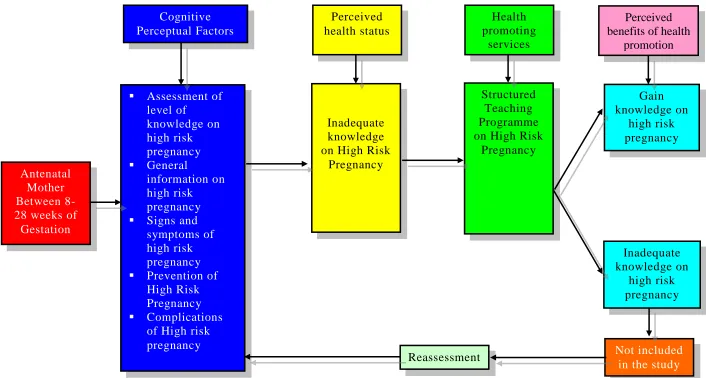
The investigator adopted “Modified Pender‟s Health Promotion Model (1984)
The model focuses on aspects of individuals configuration to perceptional factors, modifying factors and participation on health promoting behavior. The model also identifies factors that influence health promotion activities.
The Model focuses on the following areas : 1) Cognitive perceptual factors
2) Perceived health status 3) Health promoting services
4) Perceived benefits of health promotions 5) Barriers to health promoting behavior
Cognitive perceptual factors
24
symptoms, prevention, management and complications and high risk pregnancy by using structured questionnaire.
Perceived health status
The antenatal women have inadequate knowledge regarding early identification of high risk pregnancy and such women should undergo the next step that involves health promoting services.
Health promoting services
Structured teaching programme on high risk pregnancy is given as health promoting service to the antenatal women irr espective of their knowledge.
Perceived benefits of health promotion
Health promoting behavior is the desired behavioral outcome. In this study health promoting behavior developed by the teaching programme will result in improved knowledge on high risk pr egnancy among antenatal women.
Barrier to health promoting behavior
25
CHAPTER-III
RESEARCH METHODOLOGY
Introduction
Methodology is the most important part of any research study, which enables the researcher to form a blue print for the study undertaken. This chapter deals with the methodology related to evaluate the effectiveness of Structured Teaching Programme on knowledge regarding early identification of high risk pregnancy among antenatal mothers attending at Institute of Obstetrics and Gynaecology,Chennai -08.
3.1. Research approach
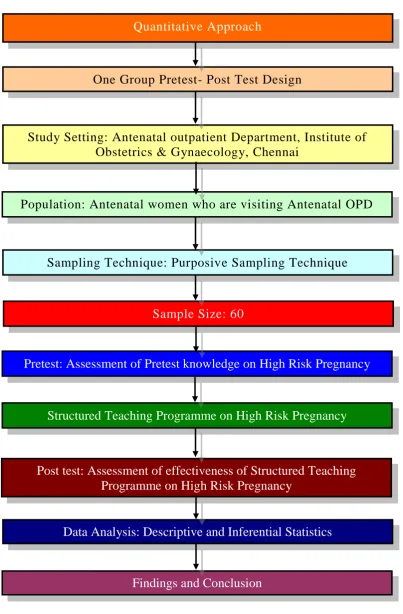
Research approach involves the description of the plan to investigate the phenomenon under study in a structured, unstructured or a combination of the two methods. For this research study the investigator selects the quantitative research approach.
3.2. Study design
Research design incorporates the most important methodology called decisions that the researcher make in conducting a research study. It helps the researcher in the selection of subjects and the manipulation of independent variables to be studied.
The investigator proposed Pre- experimental research design for this Study.
In pre-experimental research design one group pre -test post-test design was used.
Pre Test Structured Teaching Programme Post Test
26
In the present study pretest is administered by means of structured questionnaire and then planned teaching programme will be provided to the group .Post test will be conducted by using the same structured questionnaire.
O1= Assess the pretest level of knowledge regarding Early
identification of High risk pregnancy among antenatal mothers.
X= Structured Teaching Programme on Early identification of High risk pregnancy.
O2= Assess the posttest level of knowledge among the same
group, one week after STP.
3.3. Setting of the study
The study was conducted in Institute of Obstetrics and Gynaecology and Government Hospital for Women and Children, Chennai. This hospital was started in the year 1844 for public service. It is a 1075 bedded maternity hospital, tertiary care centre and referral centre. The hospital is renowned for its excellence in medical experts, nursing care and quality diagnostic services. All facilities are provided for conducting normal, high risk and instrumental deliveries. IOG has departments like neonatal intensive care unit, family plannin g services, oncology department, endocrinology, human milk bank and genetic department which are rendering comprehensive care for entire Tamilnadu and for neighboring state like Andhra Pradesh also.
3.4. Duration of the study
27
3.5. Study population
Population is the aggregation of all the unit in which the researcher is interested.
All antenatal mothers attending antenatal outpatient Department are the population for my stud y.
3.5.1 Target population
A target population consists of the total number of people or objects which are meeting the designated set of criteria.
Antenatal mothers who are in 8-28 weeks of pregnancy are target population of this study.
3.5.2 Accessible population
It is the aggregate of cases that conform to designated criteria and also accessible as study subjects for study.
Antenatal mothers between 8-28 weeks and who have attended Antenatal Outpatient Department during the data collection period are the accessible population for this study.
3.6. Sample
The sample comprised of all antenatal women with gestational age of 8-28 weeks, and who met the inclusion criteria .
3.7.Sampling criterion
28
3.7.1. Inclusion criteria Antenatal women with gestational age of 8-28 weeks.
Antenatal women who attended antenatal outpatient department.. Antenatal women who are willing to participate.
Antenatal women who can able to read and speak Tamil and or English.
3.7.2. Exclusion criteria
Antenatal women who have visual and hearing impairment. Antenatal women with mental illness.
Antenatal women having related obstetrical complications like severe Anemia, Pre- eclampsia, Gestational Diabetes Mellitus, and Multiple pregnancy.
3.8. Sample size
Sample size of the study is 60.
3.9. Sampling technique
Purposive sampling technique was adopted for this study.
3.10. Research variables
Variables are concept at different levels of abstraction that are concisely defined to promote their measurement and manipula tion within the study.
3.10.1 . Independent variable
29
3.10.2. Dependent variableKnowledge of antenatal mother is the dependent varia ble of the study.
3.10.3 . Influencing variable
30
3.11. DEVELOPMENT AND DESCRIPTION OF TOOL
3.11.1 development of tool
A structured questionnaire was developed on the basis of objectives of the study. Tool was developed after extensive review of literature from various text books, journals, internet search and discussion and guidance from the experts in the field of Nur sing, and medical experts from the Institute of Obstetrics and Gynaecology. The tool was developed in English and translated into Tamil. Congruency was maintained in translation.
3.11.2 . Description of the tool
The tool consists of three section.
Section-A
It consists of demographic variables of the sample such as age, religion, type of family, education, occupation and family monthly income.
Section-B
It consists of obstetrical variables of the sample such as age at marriage, last menstrual period, expected date of delivery, obstetrical score, age during first child birth and pre- pregnant health status.
Section-C
31
Part A: Questions related to anemia
Part B: Questions related to Pre-eclampsia
Part C: Questions related to gestational diabetes mellitus
Part D: Questions related to multiple pregnancy
Scoring key
Each correct answer carries – One Mark Each wrong answer carries – Zero Mark <50% - Inadequate knowledge
51-75%- Moderately adequate knowledge 76-100% - Adequate knowledge
3.11.3 Teaching Module
The teaching module was developed by literature review and by obtaining expert‟s opinion. The aid used for this study was a booklet on high risk pregnancy. The structured teaching program me consists of introduction, definition, causes, signs and symptoms, preventive measures, management and complications of high risk pregnancy. The method of teaching programme will be given by lecture cum discussion.
3.12. Content validity
32
3.13. Protection of human subjects
Following submission of study proposal,the permission was obtained from Institutional Ethics committee.Permission for conducting the study was obtained from the Director of Institute of Obstetrics & gynaecology and Hospital for Women and Children.Thus theinvestigator followed the guidelines which were issued by the Institutional Ethics committee. Confidentiality of the results and anonymity will be assured to the subjects.Throughout the study period the respect of the mother and the family members will be maintained. The participants, were assured that at anytime they can withdraw from the study.
3.14. Reliability of the tool
Reliability of the tool was assessed by using Test-retest method and its correlation coefficient r value was 0.84. This correlation coefficient is very high and it is a good tool to evaluate the effectiveness of Structured Teaching Programme on knowledge regarding early identification of High risk pregnancy among antenatal mothers attending at Institute of Obstetrics and gynaecology, Chennai.
3.15. Pilot study
33
3.16. Data collection procedure
The study was conducted in Antenatal outpatient department, after obtaining permission from the Director of IOG. Before the data collection, the researcher introduced herself, explained the purpose of the study to the OPD staff nurse and antenatal mother s between the 8-28 weeks of gestational age.The confidentiality was assured and consent was obtained from the participants.Three to five parti cipants were selected every day and assured that at anytime they can withdraw from the study.
Data collection was done using questionnaire met hod. In pretest the researcher administered structured questionnaire to each participant to assess the knowledge of antenatal women on high risk pregnancy. The subjects took 20-30 minutes to answer the questionnaire by interview method. After that a structured teaching programme was conducted on the same day approximately for 30 minutes per subject and booklets were provided. After that the researcher clarified many doubts asked by the participants regarding my study and also in general,according to the need of each participant. Then each mother was thanked and instructed to come on seventh day after the pretest. The researcher had given a reminder through phone on previous day. Post test was conducted after one week by using the same questionnaire to find out the effectiveness of teaching programme. The data collection process was terminated after thanking the participants for their co-operation. After collecting the posttest questionnaire, every now and then , coding sheet were entered.
34
3.17. Intervention protocol
Place : Antenatal OPD, IOG, Chennai. Intervention tool : Lecture cum discussion
Duration : 30 minutes
Frequency : One-time teaching Time : 7am -1pm
3.18. Data entry analysis
The obtained data were analyzed on the basis of objectives and hypothesis by using the descriptive and inferential statistics.
1) Organize the data.
2) Descriptive statistics was used to analyse the frequency,percentage, mean and standard deviation of the following variables.
a. Demographic variables were analysed in terms of frequency and percentage.
b. Obstetrical variables were analysed in terms of frequency and percentage.
c. Knowledge on high risk pregnancy among antenatal women before and after administration of structured teaching programme was analysed in terms of frequency, percentage and standard deviation.
35
a. Difference between pre-test and post-test was calculated using McNemars test.
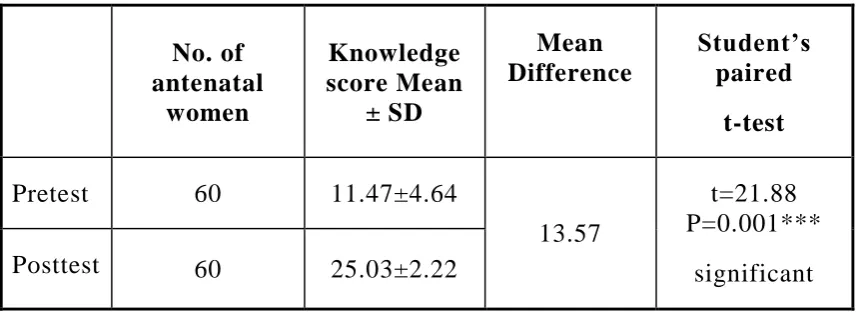
b. Paired „t‟ test was used to find out the effectiveness of structured teaching programme by comparing the pre-test and post- test knowledge scores.
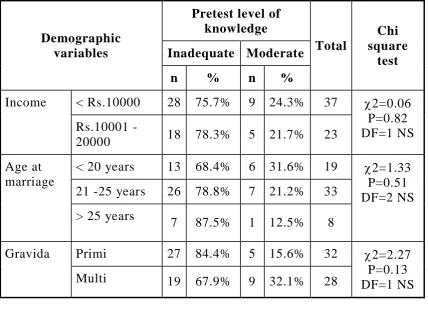
c. Chi-square was used to associate the knowledge with selected demographic and obstetrical variables.
36
CHAPTER-IV
DATA ANALYSIS AND INTERPRETATION
Analysis is categorizing, ordering, manipulation and summarizing of data to obtain the answers for hypothesis.
This chapter deals with the analysis and interpretation of data collected from 60 antenatal mothers between the gestational age of 8 -28 weeks at Institute of Obstetrics and Gynaecology, Egmore, to evaluate the effectiveness of structured teaching programme on high risk pregnancy.
The purpose of analysis was to reduce the collected data to an intelligible and interpretable form so that the relation of the research problem can be studied and tested.
The collected data was analyzed by using descriptive and inferential statistics.
Organization of data
Section-A: Demographic and Obstetric information of antenatal mothers those who participated in the study.
Section-B: Assess the pre-test knowledge regarding high risk pregnancy in the study group.
Section-C: Assess the post-test knowledge regarding high risk pregnancy in the study group.
Section-D: Evaluating the effectiveness of structured teaching programme on knowledge regarding high risk pregnancy in the study group.
37
Statistical analysis
1) Demographic variables in categorical/ dichotomous were given in frequencies with their percentage.
2) Knowledge score was given in mean and standard deviation.
3) Difference between pre-test and post-test was analysed using student paired t-test.
4) Categorical variables difference between pre-test and post-test was calculated using McNemars test.
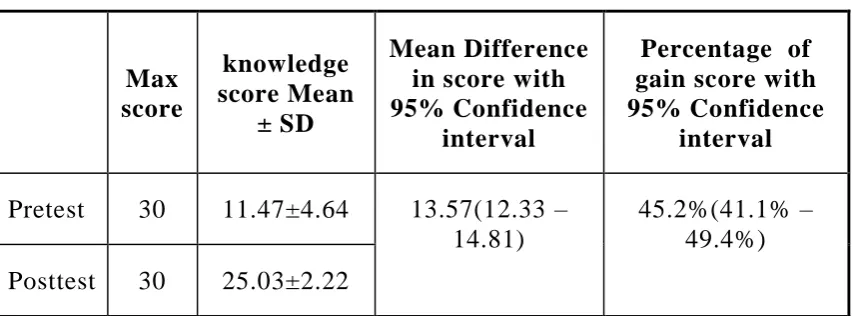
5) Differences between pre-test and post-test score was analysed using percentage with 95% CI and mean difference with 95% CI.
6) Association between post-test knowledge score with demographic variables are analysed using Chi-square test.
7) Association between knowledge gain score with demographic variables are analysed using oneway analysis of variance and student independent t-test.
38
[image:55.595.88.511.153.730.2]Section-A : Demographic and obstetric information of antenatal
mothers those who participated in the study
Table-4.1:Demographic and Obstetrical profile in the study group:
Demographic variables Antenatal
women %
Age < 20 years 1 1.7%
20 -28 years 50 83.3%
> 28 years 9 15.0%
Religion Hindu 54 90.0%
Muslim 3 5.0%
Christian 3 5.0%
Family type Nuclear family 24 40.0%
Joint family 36 60.0%
Education Elementary education 13 21.7%
Middle education 11 18.3%
Higher secondary
education 22 36.7%
Graduate 14 23.3%
Job Home maker 54 90.0%
Government job 1 1.7%
Private job 2 3.3%
Self job 3 5.0%
Income < Rs.10000 37 61.7%
Rs.10001 -20000 23 38.3%
Age at marriage
< 20 years 19 31.7%
21 -25 years 33 55.0%
> 25 years 8 13.3%
Gravida Primi 32 53.3%
39
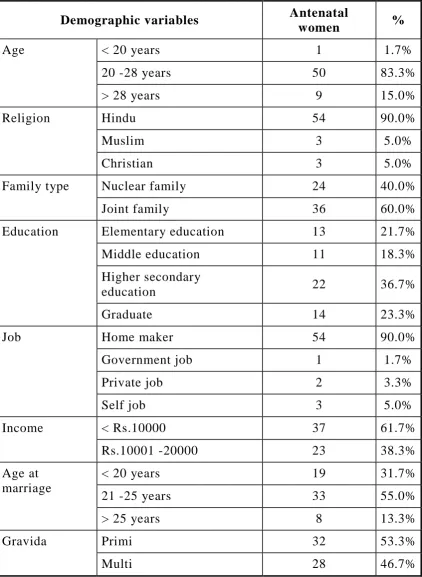
Table 4.1 shows the demographic and obstetrical information of antenatal mothers who are participated in the study.
In considering the age wise distribution of antenatal mothers,83.3% were 20-28 years of age, 15% were in more than 28 years of age group, and remaining 1.7% belongs to less th an 20 years of age.
In the religion wise distribution , 90% are Hindus , 5% belongs to Christian religion and remaining 5% are of in Muslim religion.
In considering the family type, 60% are in joint family and remaining 40% belongs to nuclear family.
In education wise distribution, 36.7% (22) had Higher secondary education, 23.3% (14) were graduates, 21.7%(13) had elementary education and 18.3%(11) were of middle education status.
In considering the job, 90%(54) of them were home makers, 5%(3), of them had self job, and 3.3%(2) of them were working in private sector and only 1.7%(1) in Government jobs.
In the monthly income status, 61.1%(37) family monthly income was below Rs.10,000 and remaining 38.8%(23) monthly income was Rs. 10001-20000.
In considering the Obstetrical variables, in age at marriage, 55% (55) were married at the age of 21-25 years, and 31.7%((19) were married at the age of below 20 years and remaining 13.3%(8) were married at more than 25 years of age.
40
Section-B : Assess the pre-test knowledge regarding high risk
pregnancy in the study group.
Table-4.2: Percentage of pre-test knowledge score in the study group:
Mean SD % of knowledge
Anemia 8 3.35 1.89 41.9%
Pre-eclampsia 8 3.10 1.66 38.8%
Gestational Diabetes Mellitus 7 2.57 1.81 36.7%
Multiple pregnancy 7 2.45 1.73 35.0%
Total 30 11.47 4.64 38.2%
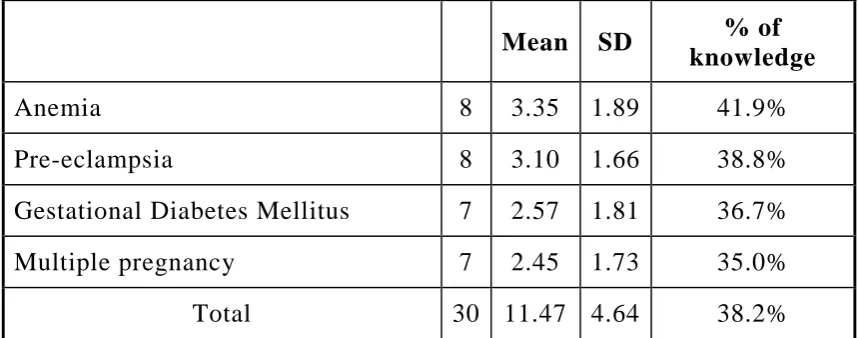
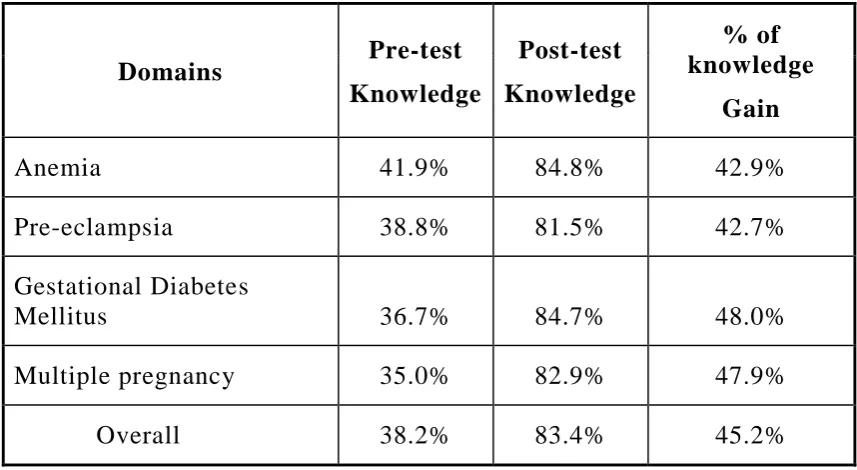
[image:57.595.83.513.142.311.2]Table 4.2 represents the percentage of pretest knowledge score each domain wise. They are having more score in anemia(41.9%) , and moderate score of 38.8% in pre-eclampsia and 36.7