1
FE workforce
programme evaluation
Research report
December 2018
3
List of figures 8
List of tables 9
Glossary 10
Executive summary 11
Introduction 11
FE workforce needs 13
Delivery of maths, English, and SEND staff development training 14
Delivery of the bursary scheme and other incentives 15
Outcomes and impact of the FE Workforce Programme 16
Conclusions 17
1. Introduction 19
1.1 Background 19
1.2 FE Workforce Programme 21
1.3 Aim of the study 23
1.4 Study methodology 24
Stage 1: Scoping 26
Stage 2: Formative evaluation 26
Stage 3: Impact evaluation 27
Stage 4 research 29
Recording and analysis of qualitative data 30
1.5 Structure of this report 30
2.1 Provider awareness of policy changes in maths, English, and SEND 31
Maths and English 31
Learners with Special Educational Needs and Disabilities 32 2.2 The impact of maths, English, and SEND policy changes on providers 32
Maths and English 32
SEND 34
2.3 How providers responded to recent policy changes 35 2.4 How providers plan to implement the GCSE policy changes 36
Initial assessment 36
4 Structure of the maths and English workforce prior to the policy changes – baseline position
38
The baseline SEND workforce 39
Impact of the policy changes on provider demand for maths and English teachers 39 Demand for SEND skills to meet the requirements of the Children and Families Act41
2.6 Key findings 42
3. Delivery of maths, English, and SEND staff development training 44
3.1 Overview of staff development schemes 44
The Maths Enhancement Programme 44
English Enhancement Programme 45
SEND CPD Grant 45
3.2 Perceptions of the schemes 46
3.3 Characteristics of participants 47
Experience in teaching maths or English 47
Participants’ previous skills and experience in teaching maths and English 48 Participants’ previous experience of teaching GCSEs 50 Characteristics of individuals receiving the SEND CPD grant 51
3.4 Learner motivations for attending the training 52
3.5 Effectiveness of the delivery of EEP and MEP programmes 53
The level of stretch and challenge 53
Relevance of the course 53
The quality of teaching 54
3.6 Delivery of SEND grant-funded training 54
Administration of the grant 54
Quality of the training 55
3.7 Outputs 55
Maths Enhancement Programme 55
English Enhancement Programme 58
SEND CPD Grant 59
Influence of the training in supporting teachers to develop their capacity to teach at GCSE
5
3.8 Key findings 61
4. Delivery of the bursary scheme and other incentives 63
4.1 Overview of BIS funded pre-employment schemes 63
The FE bursary scheme for maths, English, and SEND trainee teachers 63 Mathematics Subject Knowledge Enhancement programme 64
Maths teacher Golden Hello programme 65
Maths teacher recruitment incentive 65
Premium graduate scheme 66
4.2 Perceptions of the schemes 66
The bursary scheme 66
Maths Subject Knowledge Enhancement scheme 67
Golden Hello scheme 67
Maths recruitment incentive 68
Premium graduate scheme 68
4.3 Delivery of the bursary scheme 69
Promotion 69
Assessing eligibility 70
Management and administration 71
4.4 Outputs achieved 72
Total volume of bursaries awarded 72
Breakdown of bursaries by subject 73
Breakdown of the bursary by degree classification 74
Number of individuals receiving a Golden Hello 75
Number of individuals benefiting from the Premium Graduate recruitment scheme 75
Take-up of the SKE programme 76
4.5 Effectiveness of the bursary scheme on stimulating demand for further education ITE
programmes 76
Why bursary recipients chose to undertake ITE in FE 76 When providers first heard about the bursary scheme 77 The extent to which the bursary influenced trainees’ decisions to teach maths, English, or
6
4.6 Key findings 79
5. Outcomes and impact of the FE Workforce Programme 81
5.1 Improving the quality of maths and English teaching 81
The EEP and MEP programmes 81
Recruitment incentives 84
5.2 Impact of the programme on increasing the stock of maths and English teachers 85
Bursary scheme and Golden Hellos 85
CPD programmes 86
5.3 Impact on improving support for learners with SEND 87 5.4 Supporting providers to respond to maths and English policy changes 88
Alleviating provider recruitment challenges 88
Building the capacity of existing teachers to deliver GCSEs 89 Supporting provider plans to meet the funding condition 91
5.5 Raising standards in maths and English 91
Increasing maths and English attainment 91
Improving standards in maths and English 92
5.6 Key findings 93
6. Conclusions 95
6.1 Conclusions 95
Has the programme achieved engagement and take-up by the sector? 95 Is the programme targeting the quality of teaching and subject skills? 95 Has the programme had a positive impact on participants? 96 Is the programme increasing the supply of high quality specialist maths, English and SEND
teachers? 97
Does the programme look likely to meet its success criteria of raising attainment and improving teaching confidence and capability in FE? 98
ANNEXES 99
Annex 1: Evaluation framework 99
Annex 2: Research tools 102
ITE provider interviews 102
FE provider topic guides 104
7
8
Figure 1: FE Workforce Programme evaluation logic model 25
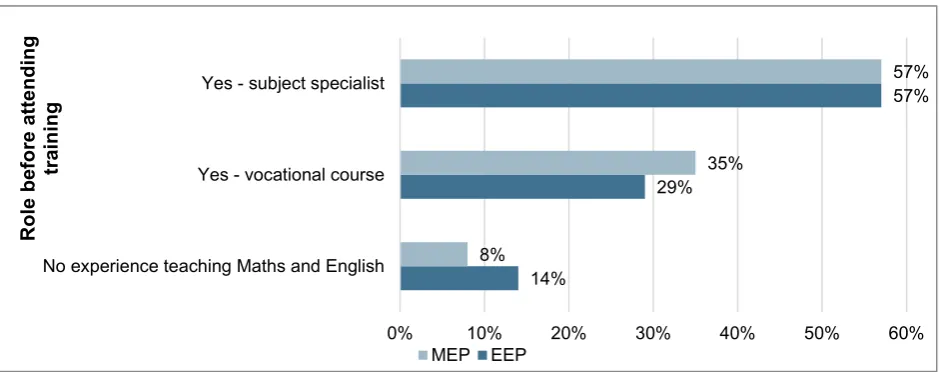
Figure 2: Type of teachers attending EEP and MEP training 48
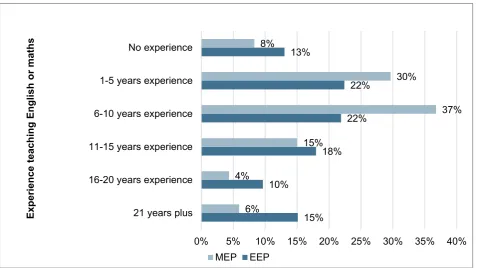
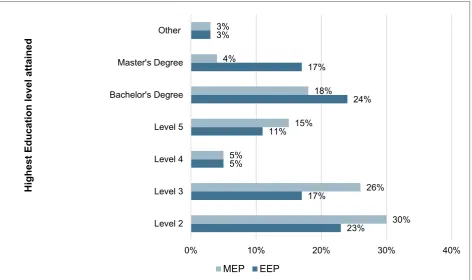
Figure 3: Participants’ level of experience teaching maths or English 49 Figure 4: Highest education level of EEP and MEP participants 50
Figure 5: Job role of SEND CPD grant recipients 51
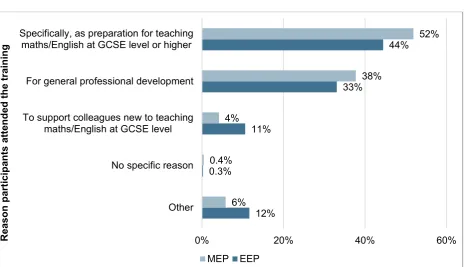
Figure 6: Reason participants attended the training 52
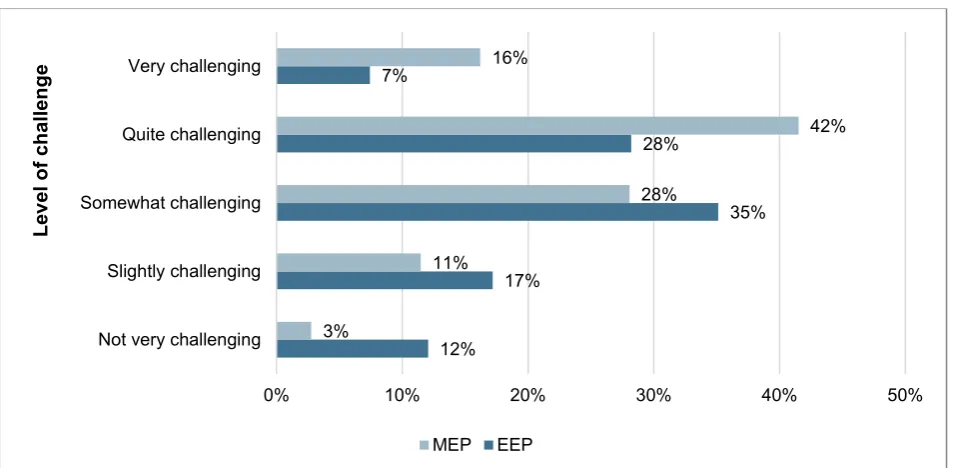
Figure 7: Level of challenge of the MEP and EEP courses 53
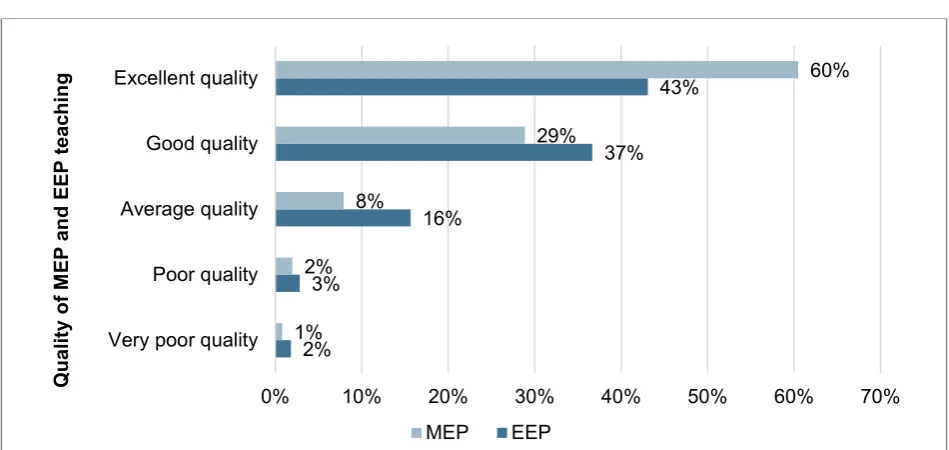
Figure 8: The quality of MEP and EEP teaching 54
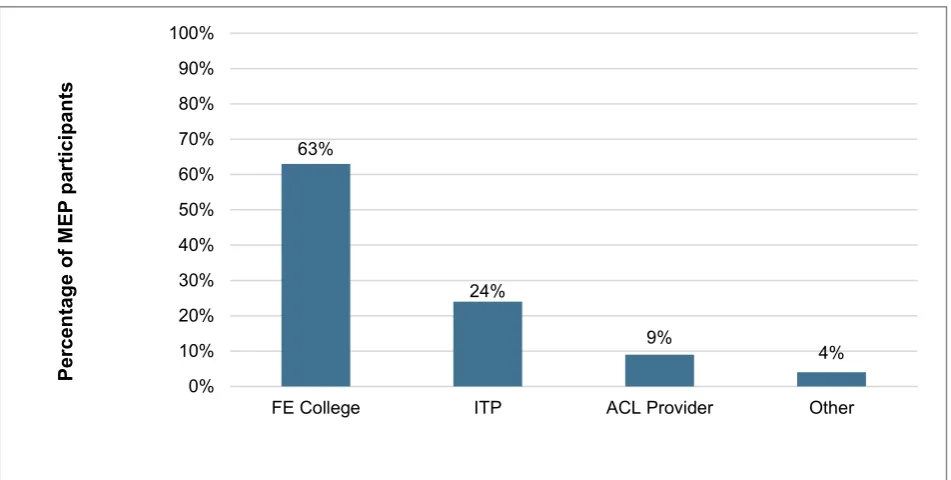
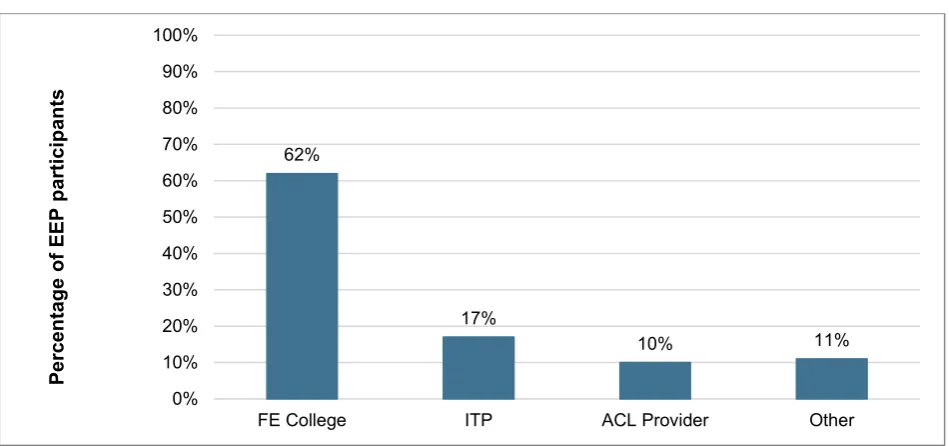
Figure 9: MEP participants by provider type 57
Figure 10: EEP participants by provider type 58
Figure 11: Impact on participants’ capability to teach at GCSE level or higher 60 Figure 12: MEP participants’ capability to teach at GCSE level or higher 61
Figure 13: How recipients heard about the bursary 70
Figure 14: Breakdown of bursary awards by subject and year 73 Figure 15: Bursaries awarded by degree classification in 2013/14 and 2014/15 74 Figure 16: Bursary participants’ motivation for undertaking the subject specialism 77
Figure 17: When trainees first heard about the bursary 77
Figure 18: The influence of the bursary on trainees’ decisions to teach maths, English, or
learners with SEND 79
Figure 19: Influence of the training on participants’ teaching 82 Figure 20: How the training affected participants’ teaching 83
Figure 21: Subjects taught by bursary recipients 86
9
Table 1: Evaluation framework 29
Table 2: Types of provider participating in the MEP 57
Table 3: Types of provider participating in the EEP programme 59 Table 4: Bursaries available to ITE trainees in 2013/14, 2014/15 and 2015/16 64
10 ACETT Association of Centre's for Excellence in Teacher Training
ACL Adult Community Learning
AELP Association of Employment and Learning Providers AoC Association of Colleges
BIS Department of Business Innovation and Skills CATI Computer Aided Telephone Interview
CETT Centres for Excellence in Teach Training CPD Continued Professional Development DfE Department for Education
EEP English Enhancement Programme EHC Education, Health and Care plan ETF Education Training Foundation
FE Further Education
FTE Full Time Equivalent
GCSE General Certificate of Secondary Education ITE Initial Teacher Education
ITP Independent Training Provider MEP Maths Enhancement Programme MI Management Information
NCETM National College for Excellence in Teaching Maths NCTL National College for Teaching and Leadership
OECD Organisation for Economic Co-operation and Development PIAAC Programme of International Assessment of Adult Competence SEND Special Education Needs and Disabilities
11
NOTE: This work was commissioned by the then Department for
Business, Innovation and Skills (BIS) in 2014. BIS was dissolved by the
Machinery of Government changes of 2016, at which point the
Department for Education (DfE) assumed full responsibility for Further
Education policy. The report is an accurate reflection of policy at the
time, however the policy programme described in this report may not
reflect current DfE policies.
Introduction
ICF Consulting, in partnership with Qa Research, was commissioned by the Department for Business, Innovation and Skills (BIS) in 2014 to conduct an evaluation of the Further Education (FE) Workforce Programme. The evaluation assessed specific aspects of the programmes – the operational effectiveness and impact of the programmes in increasing the capacity and capability of teachers delivering maths and English, or supporting learners with Special Education Needs and Disabilities (SEND).
The joint BIS and Department for Education (DfE) FE Workforce Programme was
established in April 2013 to address FE workforce challenges arising from policy changes including those relating to maths, English, and supporting learners with SEND. In terms of the maths and English workforce, it aimed to create an additional 2,500 maths
teachers and 2,600 English teachers with the skills to deliver GCSEs by the end of the 2015/16 academic year. The following activities were delivered through the programme:
For maths and English
• FE Initial Teacher Education (ITE) bursaries, which are a financial incentive to attract high-quality graduates to teach in FE;
• The Maths Enhancement Programme (MEP) and English Enhancement programmes (EEP) to up-skill existing teachers to deliver GCSEs;
• SEND training grants available for FE staff to study approved SEND professional development qualifications;
• A Subject Knowledge Enhancement (SKE) scheme that funds ITE providers to deliver maths subject knowledge training in preparation for or alongside an ITE course;
• A Golden Hello scheme for new maths teachers who have worked in the sector for two years and spend over half their time teaching GCSEs;
12 • A pilot Premium Graduate scheme, which provided a two-year enhanced ITE
scheme for high-calibre new entrants to the FE sector.
To support learners with additional needs
• FE ITE bursaries, which are a financial incentive to attract high-quality graduates to teach in FE;
• Send training grants available for FE staff to study approved SEND professional development qualifications;
The bursary scheme was announced in August 2013 and was open to students undertaking ITE programmes during the academic years 2013/14 and 2014/15. For maths and English the Golden Hello programme, Premium Graduate scheme pilot and SKE programme were launched in the summer of 2014. The Continued Professional Development (CPD) programme for maths (MEP) started in the autumn of 2013, with the English CPD programme (EEP) commencing nearly a year later in September 2014. For SEND, the SEND grant programme was started in the autumn of 2013.
The evaluation has focused on examining the impact of the bursary scheme and professional development training programmes (MEP, EEP and SEND Grant). These were the largest FE Workforce Programme activities and therefore expected to have the most impact on programme targets.
The evaluation was undertaken in four stages:
1. An initial scoping stage in March and April 2014 identified the metrics for assessing programme performance and developed a sampling approach for primary research and research tools.
2. A formative evaluation stage, from May to August 2014, examined the early implementation of the programme and assessed progress towards long-term outcomes and impacts.
3. An impact assessment stage, from October 2014 to June 2015, assessed the extent to which the programme achieved its objectives to raise the quality of maths, English, and SEND provision.
4. A follow-up assessment, from September to December 2015, examined the progression of teachers who received the bursary and the long-term impact of the FE Workforce programme on teaching quality and provider performance.
13
FE workforce needs
• The new condition of funding policy for 16-18 learners has had a considerable impact on FE colleges’ provision, with providers reporting that GCSE maths and English enrolments have typically increased by 400 to 600 enrolments per year. Although some colleges had a few existing GCSE teachers, nearly all had to considerably scale up their GCSE offer, with most typically employing an additional 8 to 12 FTE maths and English GCSE teachers.
• The reforms have had a more modest impact among Independent Training Providers (ITPs) and Adult and Community Learning (ACL) providers. These providers primarily offer apprenticeships or adult learning, which do not require learners to undertake GCSEs in maths and English. However, a few providers have decided to increase their GCSE offer to support Government ambitions to increase standards in maths and English, and some Early Years training providers have to deliver GCSEs in maths and English to meet new DfE requirements. These providers typically had to employ one or two additional specialist GCSE teachers.
• In order to respond to the new condition of funding policy, providers have generally aimed to fill new GCSE teaching roles through a mix of external recruitment and up-skilling the existing workforce. However, providers reported they traditionally experience difficulties in recruiting maths and English teachers, largely due to competition from schools and other FE providers. This, taken alongside the clear evidence of the recruitment activity which has taken place, suggests value in FE Workforce Programme activities that have aimed to attract new entrants to the sector (such as the bursary scheme).
• Providers are increasingly aiming to employ teachers experienced in working with hard-to-reach groups to deliver GCSEs. This is partly because the students newly required to take GCSEs are expected to be less motivated to study these courses, which can create behavioural and attendance problems. Overall, though, FE workforce needs are such that there remains demand for both new GCSE teachers and functional skills teachers who can backfill staff promoted to teach GCSEs (and who may also be capable of progressing to teach GCSEs in a few years’ time).
14 • There is evidence that the requirements of the Children and Families Act are
gaining traction in the sector. FE colleges, in particular, recognise their duty of care to SEND learners, and most also understand the need to provide more holistic support. Perhaps more importantly, since April 2014 there is evidence that this has filtered down to curriculum leads and teachers, rather than just sitting within specialist SEND teams.
• Much of the focus of providers’ early response to the reforms has been in building partnerships with other service providers and enhancing the pastoral and on-course support provided to learners with SEND. To implement these changes, most providers have delivered in-house training to their teachers. However, roll-out has been slow due to limited internal capacity and challenges in timetabling the courses. This suggests a need for short SEND courses for teachers and curriculum leads.
Delivery of maths, English, and SEND staff development
training
• A broad range of participants accessed staff development provision through the FE Workforce Programme (the MEP, the EEP and the SEND CPD grant). The programmes attracted a good mix of vocational and subject specialists,
experienced and recently-qualified teachers, as well as teachers at a mix of educational levels.
• The courses were generally perceived to be well-delivered, with 80-90% of
participants reporting that the teaching and content of all three programmes were of a high standard.
• All three CPD programmes exceeded their targets for learners. In total: • 2,194 participants attended MEP training (against a target of 2,000); • 1,616 attended EEP training (against a target of 1,410);
• 422 individuals received a SEND Grant (against a target of 400).
• This demonstrated considerable sector demand for the training and acknowledged that the provision addressed a clear sector need. It highlights how a substantial subsidy can attract both providers and individual teachers to carve out the space for CPD. In relation to the MEP, in particular, there was a relatively short lead time for signing up teachers. This suggests that those involved in organising and
delivering the programme moved quickly and effectively to fill the available places. • Some participants found the programmes, and particularly the MEP, to be very
15 Around a third of participants for the EEP and MEP held only a Level 2
qualification in maths or English, whereas the courses were primarily targeted at individuals trained to Level 3.
• The EEP and MEP appear to have had a considerable impact on participants’ capability to teach at GCSE level or higher. Around half of participants stated that the programme had made ‘quite a lot’ or ‘a lot’ of difference to their ability to teach at GCSE level and around two-thirds of MEP participants believe that, subsequent to participation, they are ‘mostly’ or ‘very’ capable of teaching GCSEs.
Delivery of the bursary scheme and other incentives
• In total, 1,132 trainee teachers were awarded bursaries by the end of March 2016 and £10 million had been spent on bursaries. The number of trainee teachers receiving bursaries nearly doubled in the second year of the programme, rising from 231 in 2013/2014 to 463 in 2014/2015. In 2015/16, 438 bursaries were awarded, but the number of awards was capped due to high demand.
• There has been relatively little demand for the Golden Hello programme. As of March 2015, only eight1 learners had applied for a Golden Hello. This may be partly due to ITE and FE providers having low awareness of the scheme.
• In the first year of roll out (2013/14), the bursary had a limited impact on increasing ITE enrolments, largely because by the time the funding was committed, ITE providers had little opportunity to promote it. However, since then, the number of bursary awards has doubled, suggesting the programme is having an effect on increasing enrolments on post-graduate ITE courses.
• In 2014/15 and 2015/16, ITE providers were generally far more proactive in
promoting the bursary, advertising in local newspapers and targeting promotion to new graduates or final-year maths and English degree students. However, a few continued to promote the bursary primarily through their website and prospectus. The limitation of this approach is that it mainly attracts trainees who already had an interest in undertaking ITE for FE.
• In the second and third years of the scheme, there was a considerable increase in maths and SEND bursary recipients, compared to the first year. ITE providers believe that this was primarily due to the bursary encouraging graduates to enrol on ITE schemes. It is also likely that the increased marketing of ITE courses undertaken by providers (which was often stimulated by the availability of the
16 bursary) will have raised graduate awareness of FE teaching routes, which in turn will have increased enrolments.
• The bursary scheme has been relatively successful in incentivising graduates to train to teach in FE. Over half (53%) of all bursary survey respondents, and 66% of maths trainee teachers, stated they would not have undertaken their ITE course without the bursary. Most bursary schemes generally have a high level of
deadweight, as it is difficult only to target trainees who would not otherwise have accessed a programme. Therefore, the proportion of trainees reporting that they enrolled on an ITE course because of the bursary is higher than might be
expected.
• Over three-quarters (76%) of survey respondents who reported that they had enrolled on their ITE course because of the bursary stated they would not have done so had the bursary been halved. This was consistent across maths, English and SEND teachers and trainee teachers of different degree classifications.
Outcomes and impact of the FE Workforce Programme
• The FE Workforce Programme appears to have had a positive impact on teachers’ perceptions of the quality of their maths and English teaching. The MEP and EEP have engaged a considerable proportion of the teaching workforce and 86% of participants reported the training has improved the quality of their teaching, with a third (32%) stating it had a large or reasonable impact. The bursary scheme and Premium Graduate Scheme have also increased the number of graduates entering the sector with First or 2:1 degrees.
• The bursary scheme has also been reasonably successful in increasing the volume of new entrants to the FE sector. The number of bursary recipients has increased by over 200 in its second and third year of implementation, and around two-thirds of EEP and MEP participants have started to deliver GCSEs or plan to do so in 2016/17.
• The Maths Recruitment Incentive and Premium Graduate Scheme have also generally complemented the bursary scheme. The Recruitment Incentive was generally well-received by providers as it has helped fund some of the recruitment activities that providers have had to undertake to recruit new teachers. The
Premium Graduate Scheme was largely felt to help promote the sector to high-calibre graduates and has allowed providers to ‘fast track’ talented new teachers to management roles.
17 wanting to recruit around 4-6 new teachers. It would have been unrealistic to expect the bursary scheme to have met this demand in full. However, it has attracted new entrants who would not otherwise have considered teaching in FE and has therefore played a part in alleviating sector skills shortages.
• Providers unable to meet their recruitment needs have, by and large, been able to address the shortfall by up-skilling existing vocational and subject specialist
teachers to deliver GCSEs. The MEP and EEP have played an important role in supporting providers to up-skill their staff, often as part of a wider package of support providers have offered to teachers.
• The FE Workforce Programme was largely aligned to provider plans to respond to recent maths and English policy changes. The MEP and bursary programme (rolled out in 2013/14) took place when providers were beginning to develop a response to the policy changes. The continuation of the bursary scheme and MEP (through the maths Pipeline) and roll out of the EEP in 2014/15 were delivered as providers were taking action to address workforce capacity issues. Without the FE Workforce Programme, providers would have likely have taken some steps to up-skill their existing teachers, but most reported they would have had difficulty in sourcing appropriate high-quality training.
• There is also evidence that the FE Workforce Programme has acted as a ‘spur’ for providers to respond earlier to the GCSE policy changes. Most providers that sent staff on the MEP have started developing plans to further support teachers who are new to teaching GCSEs. This is counter-intuitive. In most cases, organisations firstly develop capacity building plans and then source training that meets their workforce needs. However, there is a sense that providers have pragmatically built their organisational response around the availability of subsidised CPD training through the FE Workforce programme.
• Although participants report that the training has improved the quality of their teaching, providers are experiencing challenges in motivating and supporting learners who have little interest in maths and English. It is likely to take time for teachers to develop learning and support packages that effectively engage these learners and enable them to achieve higher-level skills.
• It is similarly too early to expect the programme to have resulted in an increase in maths and English standards. This will largely depend on teachers’ being able to effectively deliver the new GCSEs in maths and English, as well as the proposed revised functional skills qualifications.
Conclusions
18 CPD programmes were well-attended and providers and stakeholders generally believed it met a clear sector need. Participants on the maths and English enhancement
programmes also generally represented the diversity of teachers delivering maths and English.
Although engagement and promotion of the bursary scheme by ITE providers has been mixed, it has clearly gained greater traction over time. The considerable increase in the number of bursaries awarded in the second and third years of the scheme shows that, given time to incorporate the bursary in the marketing of ITE places, there has been reasonable sector engagement.
The MEP and EEP, in particular, have made a major contribution to increasing the number of maths and English teachers available in the sector. In addition, both
programmes have also had a considerable impact in improving the quality of teaching, according to participants. This is likely to help teachers provide inclusive training to learners.
Providers are, however, likely to continue to face challenges in delivering GCSEs. The increased demand for maths and English teachers is increasing competition for staff among FE providers, which is reportedly affecting staff turnover. Moreover, providers will also need to develop teacher capacity as they begin to deliver the new GCSEs in maths and English and prepare to deliver potentially more stretching functional skills
19
1. Introduction
NOTE: This work was commissioned by the then Department for
Business, Innovation and Skills (BIS) in 2014. BIS was dissolved by the
Machinery of Government changes of 2016, at which point the
Department for Education (DfE) assumed full responsibility for Further
Education policy. The report is an accurate reflection of policy at the
time, however the policy programme described in this report may not
reflect current DfE policies.
ICF Consulting, in partnership with Qa Research, was commissioned by the Department for Business, Innovation and Skills (BIS) to conduct an evaluation of the CPD, education, bursaries and grants offered by the FE Workforce Programme. The evaluation assessed the operational effectiveness and outcomes of these schemes in supporting FE providers to address workforce challenges arising from recent policy changes in maths, English, and supporting learners with Special Education Needs and Disabilities (SEND).
1.1 Background
There is a compelling need to improve standards of maths and English in England. The 2013 Programme of International Assessment of Adult Competence (PIAAC) survey found that England is below the OECD2 average for literacy and numeracy. It ranks 13th out of 24 countries in adult literacy levels and 17th out of 24 countries in terms of
numeracy. Proficiency in numeracy and literacy is particularly low among 16-24 year olds, where England is ranked in the bottom four of all OECD countries.
England is the only OECD country where proficiency in numeracy and literacy among 16-24 year olds is not higher than the 55-65 year old age group3. This is partly the result of the relatively high proportion of young people who leave compulsory education without achieving a good pass in maths and English. In the 2012/13 academic year, nearly a third of learners (29% for maths and 27% for English) did not achieve GCSE grades A*-C by age 16. Less than 10% of these learners then went on to achieve A*-C grades by age 184.
There are concerns that the teaching of maths and English in the Further Education (FE) sector does not sufficiently challenge students or enable them to achieve their potential.
2 Organisation for Economic Cooperation and Development.
3 OECD Skills Outlook, OECD, 2013. Available at: http://skills.oecd.org/skillsoutlook.html
4 16-19 study programmes: Revised English and maths condition of funding Equality Analysis, BIS, June
20 An Ofsted report in 2014 on the early implementation of 16-19 study programmes found
‘too much teaching in English and maths is not good enough’5. It also found that too many teachers do not have the level of professional skills or subject knowledge needed in maths and English.
The Government introduced a range of policies to improve standards in maths and English, including:
• Reforming maths and English GCSEs to make them more stretching and more relevant to employer needs. These new GCSEs were rolled out from September 2015.
• A requirement, introduced in August 2014, for FE providers to ensure that all learners who have not achieved grades A* to C English and maths continue to work towards these qualifications or approved interim ‘stepping stone’
qualifications up to age 18.
• The introduction of a condition of funding policy in 2015/16 requiring all students studying a full-time course6 at an FE college who achieved a GCSE grade D or below in maths or English to study these subjects at age 17 and/or 18.
• The development of a Core Maths programme for 16-19 year olds who have achieved at least a grade C in GCSE maths, but who do not wish to study maths at AS/A level. Core Maths is a two-year programme that learners are expected to undertake alongside their AS/A level programme. It became available at the start of the 2015/16 academic year.
• An expectation that students on apprenticeship programmes work towards
achieving Level 2 qualifications in maths and English during their apprenticeship if they have not already done so. Students with prior qualifications below Level 1 will be required to achieve Level 1 maths and English qualifications to complete an apprenticeship. Students with Level 1 qualifications are expected to undertake Level 2 maths and English qualifications as part of their apprenticeship.
These policies are expected to increase the number of young people studying GCSEs at FE institutions, which in turn will increase provider demand for high-quality maths and English teachers.
In parallel, there have also been changes to the statutory responsibilities of learning providers for supporting learners with SEND. The Children and Families Act 2014 (‘the
5 Transforming 16-19 education and training: the early implementation of 16-19 study programmes, Ofsted,
September 2014. Available at:
https://www.gov.uk/government/publications/transforming-16-to-19-education-and-training-the-early-implementation-of-16-to-19-study-programmes
6 Full-time refers to learners on a study programme of at least 540 planned hours per year if aged 16-17 or
21 Act’) states that FE providers now have a duty to admit students if the institution is
named in their Education, Health and Care (EHC) plan. In addition, the Act requires that FE providers use their ‘best endeavours’ to meet the needs of all students with SEND, which implies that providers should have in place a more holistic offer to learners with SEND to help ensure they achieve their potential.
1.2 FE Workforce Programme
The joint BIS and DfE FE Workforce Programme was established in April 2013 to improve the capacity and capability of FE teachers. It was designed specifically to support the FE sector to respond to the policy developments in maths, English, supporting learners with SEND. The programme formed a key strand of the
implementation of the FE Workforce Strategy7, which aimed to support the sector to address its staffing needs, in order to ensure all FE learners receive a consistently high standard of teaching and learning.
The programme aimed to achieve the following:
• A target of 2,000 maths teachers undertaking CPD; • 1,410 English teachers undertaking CPD;
• 80 experienced maths teachers and a similar number of English teachers undertaking train the trainer courses;
• 400 professionals undertaking SEND CPD training; and
• 640 new English teachers and 520 new maths teachers recruited through graduate entry to initial teacher education.
The overall aim of the programme was to develop 2,500 new maths teachers and 2,000 new English teachers with the skills to deliver GCSEs by the end of the 2015/16
academic year.
Key activities in scope of the programme have included:
For maths and English
• FE Initial Teacher Education (ITE) bursaries, a financial incentive to attract high-quality graduates to teach in FE. Bursary awards range from £4,000 to £25,000, depending on trainees’ degree grade.
22 • The Maths Enhancement Programme (MEP) and English Enhancement
Programme (EEP), which aim to up-skill existing literacy and numeracy teachers to deliver GCSEs. These are short courses (ranging from two to six days) that cover both the subject knowledge and pedagogical skills needed to teach GCSEs. The FE Workforce Programme funded the development and delivery of these programmes.
• A Subject Knowledge Enhancement (SKE) scheme that funds ITE providers to deliver maths subject knowledge training in preparation for or alongside an ITE course. Grants range from around £2,000 to £5,000 per learner, depending on the length of the course. Funding for SKE was first made available in April 2014. • A Golden Hello scheme for new maths teachers. The Golden Hello provides a
grant of £7,500 to new maths teachers who work in the sector for two years and spend over half their time teaching GCSEs. The grant could rise to £10,000 if the recipient undertakes specialist SEND CPD. Payments are made in the 24th month of the teacher’s employment.
• Recruitment incentive grants of £20,000 or £30,000 to support FE providers to facilitate and incentivise the recruitment of new maths teachers and share good practice. In order to bid for a grant, FE providers must submit an application describing the actions they would undertake using the funding and the anticipated impacts. The maths recruitment incentive grants were first tendered in April 2013. A further bidding round took take place in 2015.
• A pilot Premium Graduate ITE scheme, which provides enhanced training and work placements for high-calibre maths graduates who wish to teach in FE. Three consortia were commissioned in 2013/14 to deliver the two-year programmes.
To support learners with additional needs
• FE Initial Teacher Education (ITE) bursaries, a financial incentive to attract high-quality graduates to teach in FE. Bursary awards range from £4,000 to £20,000, depending on trainees’ degree grade. Over £5 million of funding was ring-fenced for the bursaries over two years.
• Special Education Needs and Disabilities (SEND) training grants available to FE staff to study approved SEND professional development qualifications. The grant was available between December 2013 and March 2014. In total, £1 million of grants were awarded.
The bursary scheme was announced in August 2013 and was open to students
23 The Maths Enhancement programme (MEP) began in October 2013 and ran for a year. The grant programme for teachers to undertake SEND training also started in late 2013. The English Enhancement programme (EEP) was piloted from April-July 2014, with the programme running from September 2014 to August 2015.
Since the MEP and EEP programmes finished, the Education and Training Foundation (ETF) has continued to deliver CPD programmes for maths and English teachers through the Maths and English Pipeline programme, which is grant funded by Government. The Pipeline programme aims to support teachers with various levels of experience in delivering maths and English through a suite of training programmes and tools.
The FE Workforce Programme Board is jointly led by BIS and DfE. DfE is responsible for education policy up to age 19 (age 25 for young people with education, health and care plans), while BIS is responsible for the FE sector. A cross-departmental Board was established to manage the programme led by DfE’s Head of Vocational Education Division and the BIS Deputy Director for Vocational Education.
The ETF is responsible for the delivery of most aspects of the programme. The SEND and disabilities CPD grant is managed directly by the DfE SEND and Disabilities team.
1.3 Aim of the study
The aims of the FE Workforce Programme evaluation were twofold:
• To examine the implementation of the FE Workforce Programme. The
evaluation included a formative element to support the continuing development of the programme by identifying recommendations to improve delivery and maximise overall impact.
• To assess overall programme outcomes in terms of increasing the quality and quantity of maths, English, and SEND teaching.
The evaluation has focused on examining the bursary schemes and professional
development training programmes (MEP, EEP and SEND grant). These were the largest activities within the FE Workforce Programme and therefore expected to have the most impact on programme targets.
The evaluation was undertaken in four stages:
24 6. A formative evaluation stage, from May to August 2014, examined the early
implementation of the programme and assessed progress towards long-term outcomes and impacts.
7. An impact assessment stage, from October 2014 to June 2015, assessed the extent to which the programme had achieved its objectives to raise the quality of maths, English, and SEND provision.
8. A follow-up assessment stage took place between January and March 2016. The focus of this stage was to examine the progression and retention of teachers who
received the bursary and the long-term impact of the CPD programme on teacher performance.
This is the final report of the programme. It incorporates findings from all of the research stages.
1.4 Study methodology
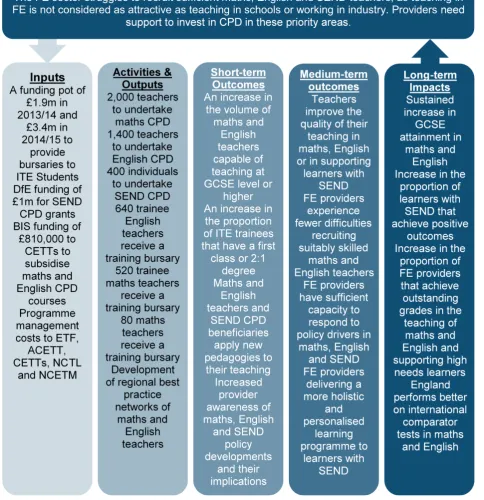
The programme logic model (Figure 1) describes how project inputs and activities were expected to lead to short, medium and long term outcomes and impacts. The logic model formed the conceptual basis for the project evaluation framework. The evaluation
25
Figure 1: FE Workforce Programme evaluation logic model
A mixed-methods approach was adopted for the research. Large-scale surveys of
26 of programme data and qualitative interviews both with FE providers that benefited from FE Workforce Programme activities and those that did not.
The research undertaken in each stage of the research is described below.
Stage 1: Scoping
During the scoping stage, 11 interviews were conducted with key sector stakeholders and individuals responsible for the delivery of the programme. This included: The project team in BIS; Education Training Foundation (ETF); Department for Education (DfE); Association of Centre’s for Excellence in Teacher Training (ACETT); National College for Excellence in Teaching Maths (NCETM); and the National College for Teaching and Leadership (NCTL).
The purpose of the interviews was to understand how the programme was managed, to discuss delivery to date (including what worked well and what worked less well) and to identify stakeholder expectations for the programme. Alongside these interviews, we also examined programme literature, including progress reports and delivery plans, and management information (MI) on programme performance.
Stage 2: Formative evaluation
The formative evaluation stage comprised the main primary research activity in the first year of the evaluation. This research included:
• 10 Initial Teacher Education (ITE) provider case studies, to examine how the bursaries were promoted and administered to students. The selection of case studies included a mix of HE and FE providers, Centres for Excellence in Teacher Training (CETT), and providers that had given a high- and low-volume of bursary awards. In each case study, we spoke to students that accessed the bursary and staff responsible for admissions and delivering the ITE programme.
• 24 telephone interviews with participants on the CPD programmes to qualitatively assess the extent to which the programme met teacher needs and supported those that would benefit most. The selection of interviewees included a mix of participants from FE colleges, private training providers and community learning providers.
• 20 telephone interviews with FE providers that benefited from the CPD programme to examine the implications of recent policy changes on FE
organisations, as well as building an evidence base to understand how the FE programme has supported providers to address their workforce needs.
• 19 telephone interviews with FE providers that did not benefit from the
27 selection of beneficiary providers, in terms of type, size and Ofsted inspection grades. In the interviews, we examined why organisations chose not to send teachers on the MEP and what other activities they were undertaking to prepare for the policy changes in maths, English, and SEND.
• 7 telephone interview with providers that expressed an interest in the English CPD programme.
• 15 telephone interviews with sector stakeholders.
The primary research was supplemented with a review of data. We examined: • Data on the size of bursaries received by trainee teachers and the number
awarded by each ITE provider;
• Information on the teachers that undertook the MEP and summary data on take-up by ethnicity, gender, region and provider type;
• Data on the institutions that accessed the MEP and the number of learners they sent to the training;
• Information on the characteristics of participants that undertook the MEP ‘train the trainer’ course;
• Participant data on the take-up of the SEND CPD grant; and
• Data on the providers that expressed an interest in the EEP programme.
Programme literature was also examined as part of the research. This included various iterations of the bursary guidance issued by BIS, the FE Workforce Strategy, monthly progress reports submitted by ACETT, and papers and minutes from the programme management committee.
Stage 3: Impact evaluation
During the impact assessment stage the following primary research was conducted: • 10 qualitative case study interviews with ITE providers offering FE bursaries
to their students. The interviews examined the approach institutions took to promote the bursary to new students, the level of interest in the bursary, and the extent to which the bursary impacted on the number of students applying for ITE courses. The selection of ITE providers included a mix of FE and HE institutions and providers with a high and low number of bursary recipients. The case studies took place between February and April 2015.
• Computer Aided Telephone Interviews (CATI) with 253 MEP participants and
231 EEP participants. The interviews examined participants’ motivation for
28 The MEP interviews took place around six months after learners had completed their course. The EEP interviews took place when students had completed the programme or in their last month of study. The MEP respondents comprised 12% of the overall volume of MEP participants and the EEP respondents covered 14% of EEP participants. The interviews took place in March and April 2015.
• An online survey of bursary recipients, which received 101 responses. The online survey examined the extent to which the bursary influenced individuals’ decision to enrol on ITE courses and whether they are currently teaching maths, English or supporting learners with SEND in an FE institution. The 101 responses covered around 14% of bursary recipients. The survey was distributed to all ITE providers who then sent the survey to bursary recipients. Although open to students that enrolled in 2014 and 2015, the vast majority (93%) of responses were from learners who enrolled in 2015. Maths bursary recipients were slightly overrepresented in the survey, accounting for 48% of responses but only 28% of bursary recipients. English and SEND bursary recipients comprised 31% and 21% of respondents respectively. The online survey ran from April to May 2015.
• Secondary analysis of an online survey of SEND CPD Grant beneficiaries. The survey was administered by the ACETT to evaluate the SEND element of the programme for the Department for Education. The survey was an attempted census of all individuals that participated in the grant application process. A link to the survey was sent by email to all individuals that applied for the SEND CPD Grant. ICF analysed the data collected from the survey to assess the effectiveness and impact of the grant scheme. The online survey ran from April to May 2015 and 131 responses were received.
• Qualitative telephone interviews with 20 FE providers that sent teachers to
staff development training supported by the FE Workforce Programme. The interviews examined the workforce challenges experienced by providers in relation to recent policy changes, and the extent to which the FE Workforce Programme enabled them to overcome these challenges. The selection of providers included a mix of colleges, independent training providers and ACL providers. Interviews were primarily conducted with curriculum managers and vice-principals with responsibility for maths, English, and/or SEND. The qualitative interviews took place between March and May 2015.
• Qualitative telephone interviews with 20 FE providers that did not access at
29 • Qualitative interviews with six stakeholders. Interviews were conducted with
the three delivery partners providing EEP courses and staff in the Education and Training Foundation (ETF) who were responsible for managing programme activities or complementary programmes. The purpose of the interviews was to assess project management and examine how the programme was aligned and added value to other sector workforce initiatives.
• Analysis of FE Workforce Programme performance data and literature. This included analysing the programme take-up and examining the funding guidance, marketing materials and other documents which provided information on the programme.
A summary of the sampling approach for the quantitative research and response rate is included in Table 1 below.
Table 1: Evaluation framework
Research task
Population of learners with valid
contact details Sampling approach Follow ups with the sample
Responses (response rate)
Bursary online survey
695 (although contact made by
ITE providers) Census
Three email reminders sent over the six week
survey period 101 (15%)
EEP participant CATI
survey 756 Census Unlimited call backs 231 (31%)
MEP participant CATI
survey 436 Census Unlimited call backs 253 (58%)
SEND Grant recipient
online survey 721 Census conducted by ACETT Survey management 131 (18%)
Stage 4 research
During the final evaluation stage, the following tasks were undertaken:
• CATI interviews with 159 EEP participants. The interviews explored how the programme influenced participants’ teaching and their capacity to teach English at GCSE level or higher. The EEP respondents comprised 11% of all EEP
participants. The interviews took place in February and March 2016.
30 • Qualitative interviews with staff in 20 providers. The purpose of the qualitative
interviews was to explore sector perceptions of the FE Workforce Programme and to measure the extent to which it improved the quality and quantity of maths and English teachers in FE. Interviews were conducted with curriculum leads and vice Principal’s responsible for maths and/or English. The interviews took place
between February and April 2016.
• Case studies with 8 FE providers. The case studies explored in-depth the impact of the FE Workforce Programme on improving the quality on maths and English teaching in FE. In each case study 4-6 interviews were conducted with curriculum leads, teachers and senior leaders responsible for maths and English. The interviewed explored the extent to which the programme supported new teachers to deliver GCSEs and helped improve the quantity and quality of new teachers entering the sector. The case studies took place alongside the qualitative interviews.
Recording and analysis of qualitative data
• Notes from all the qualitative interviews were written up into a template based on the interview topic guide. These notes were analysed to identify the findings presented in the report.
• Interviews were informed that views and quotes would be anonymised in the report. Interviews were not recorded.
1.5 Structure of this report
This report is structured as follows:
• Chapter 2 examines providers’ response to recent policy changes and assesses the extent to which the programme was aligned to sector workforce needs; • Chapter 3 assesses the delivery of initiatives aiming to up-skill the existing
workforce;
• Chapter 4 examines the implementation of incentives encouraging new teachers to enter the sector;
• Chapter 5 assesses the impact of the FE Workforce Programme on increasing the quality and quantity of maths, English, and SEND teaching;
31
2. FE workforce needs
This chapter assesses the extent to which FE Workforce Programme was aligned to FE provider workforce needs and priorities (i.e. whether the rationale for the programme intervention was sound). Specifically, it examines:
• providers’ awareness of and response to the introduction of the new condition of funding policy for maths and English, and the Children and Families Act 2014; • whether the programme reflected the recruitment and CPD needs of providers;
and
• whether the programme’s targets were in line with provider workforce needs.
2.1 Provider awareness of policy changes in maths, English,
and SEND
Maths and English
Over the last three years, maths and English policy changes have been a key driver influencing provider plans. In 2014 (at the formative evaluation stage), nearly all
providers stated that they were aware of the policy changes and most regarded them as the most important policy lever influencing their short-term strategy. This view was consistent both across organisations that subsequently accessed FE Workforce Programme activities and those that did not. It was also consistent among heads of departments and individual tutors, indicating that information on the policy changes had generally filtered down within colleges.
“GCSEs seems to be what everyone is talking about at the moment. It is not going to go away. We know that this will become more and more important so we need to make sure we are ready to deliver them” - Medium sized FE provider
In 2014, there were some areas where providers had different interpretations of the policy, and, particularly, the condition of funding policy. Most notably, some providers stated that if a student had a grade D in both maths and English, then they would study one subject at 17 and the other subject at 18. However, in 2015, providers had a clearer understanding of the policy and its implications for their organisation.
32 teachers they needed to deliver GCSEs to all eligible learners. These projections were largely developed using enrolment data from 2014/15.
This was in marked contrast to the situation in 2014, when few had clear projections on the expected number of additional learners and, consequently, the number of new courses they would have to run. Many colleges stated that this was because the number of learners who enrol with a GCSE grade D in maths and English changes substantially each year, and, as a result, they had to wait for the GCSE results to be published before knowing the number of new courses required. Although this variation still exists,
providers have now seen fit to use historical data to provide estimates for workforce planning.
Learners with Special Educational Needs and Disabilities
By 2015, most providers generally had a good awareness of the implications of the Children and Families Act; their level of understanding having increased substantially between 2014 and 2015. Much of this was reported to be due to the work undertaken by partner organisations such as the Association of Colleges (AoC) and Association of Employment and Learning Providers (AELP) in clarifying the implications of the Act for providers.
In 2014, few of the providers interviewed understood the specific changes that were being made through the Act and its impact on their offer. Where providers were aware of the Act, most did not believe that the changes would have a major impact on their offer in any event. A common view was that “it is largely recording what we did anyway”.
Consequently, most providers were initially slow to respond to the requirements of the Act.
By 2015, most providers had a clearer understanding of their duty of care to support learners referred from the local authority, which they believed could increase the number of ‘hardest to help’ learners they would be required to support. Most providers were also aware of the implicit requirement for a more holistic and integrated service offer for learners with SEND. This information had also cascaded to curriculum leads and teachers, whereas in 2014 knowledge of SEND policy was found to be primarily concentrated in specialist SEND teams in providers.
2.2 The impact of maths, English, and SEND policy changes
on providers
Maths and English
33 English enrolments had increased by 400-600 learners per year since they began
implementing the requirements of the condition of funding policy. A few providers reported an even greater increase. Although functional skills enrolments had slightly decreased, the increased teaching time required to deliver GCSEs meant that most providers had to substantially increase the number of maths and English teachers in their organisation.
Most colleges reported having a small GCSE offer prior to the announcement of the new condition of funding policy in 2013/14, typically around 30-50 learners per year. Provision was largely in place for learners who wished to progress to higher education and
therefore needed to achieve a grade C or above in both subjects. This meant that
although most providers had some experience in delivering GCSEs, few had the capacity to scale up their existing offer to support the additional learners who would study GCSEs in maths and English.
To meet the requirements of the new condition of funding policy, most colleges had to employ an additional 8-12 full-time teachers to deliver GCSE maths and English. In 2014, providers generally stated that they planned to fill these additional teaching roles through a mix of external recruitment and from up-skilling their existing workforce.
In Independent Training Providers (ITPs) and Adult Community Learning (ACL)
providers, the maths and English policy changes have had a far more modest effect on the curriculum offer, and on teacher recruitment needs. Most of the ITPs interviewed for the evaluation reported that they have continued to deliver functional skills as part of an apprenticeship framework, rather than deliver GCSEs. A few providers reported giving learners a choice between functional skills and GCSEs in maths and English, but they generally reported there was little learner demand for GCSE courses. Consequently, only a few ITPs recruited additional GCSE teachers since 2014.
Most ACL providers also reported the policy changes in maths and English had relatively little impact on their offer. ACL providers primarily support learners over age 19 and, consequently, did not have to respond to the new condition of funding policy. However, a few ACL providers stated that they had increased their GCSE offer to support the
Government objective of increasing maths and English attainment.
ITP and ACL providers that deliver Early Years training have, however, had to
34 loans. Most ITPs reported that only a few of their learners had good GCSEs in maths and English, meaning that most of these providers had to deliver GCSEs alongside vocational training. Most providers that delivered these courses had to employ one or two GCSE teachers.
SEND
Most FE colleges have made substantial changes to their SEND offer as a consequence of the Children and Families Act 2014. In 2015, most colleges reported that they had:
• strengthened referral protocols and developed new relationships with SEND specialist agencies, charities and local authorities;
• enhanced the pastoral support they provide to the hardest to help learners. This included increasing the availability of one-to-one tutorials and enrichment
activities, such as supported work placements;
• supported vocational tutors to deliver a more inclusive learning offer for SEND learners studying on mainstream pathways; and
• increased the maths and English content in SEND study programmes.
In addition, some FE colleges also reported a general organisational priority to provide more stretching learning for learners with SEND to enable them to reach their potential.
“We will provide a programme for SEND learners that we feel is beneficial to them and can fulfil their requirements. In the past this has been a bit blurred because people have been involved in college programmes for years and years on a revolving door process. They have been repeating and duplicating learning outcomes. I said that that cannot happen; there can be no sideways progression. We go upwards, we stretch, we challenge”. - Medium-sized FE college
Some colleges had delivered in-house training to FE teachers to ensure they could better support learners with SEND. Training was provided on a range of topics, including
35
2.3 How providers responded to recent policy changes
Since 2014, most providers, and particularly colleges, had taken steps to respond to the policy changes outlined in Chapter 1. Nearly all colleges recruited additional maths and English teachers in 2014 and 2015 to prepare to deliver GCSEs from 2015/16, reflecting that the anticipated recruitment need underpinning the FE Workforce Programme is rooted in provider reality. Some providers had also run in-house training, including awarding organisation training, to help teachers new to delivering GCSEs to understand the curriculum and assessment requirements.
ITPs and ACL providers generally responded to the reforms at a slower pace. This reflects that many have a further distance to travel to develop a GCSE offer. Providers that decided to deliver GCSEs as a result of policy changes mostly felt they did not have staff capable of teaching at GCSE level and, consequently, have to recruit a new team of teachers. Some have also had to employ senior managers with experience of delivering GCSEs to lead their work in this area.
Some providers enrolled students with D grades onto GCSE courses in 2014/15, a year before the condition of funding policy was introduced. In the qualitative interviews, around a half of colleges and a few ITPs stated that they decided to do this. This was due to a range of factors, most notably:
• Early preparedness. Some providers believed it necessary to begin recruitment and preparation for GCSEs in early 2014 to ensure they had ample time to implement the changes. These institutions typically had three to four new GCSE teachers in place by the 2014/15 academic year and were therefore in a position to deliver GCSEs to a larger cohort of learners;
• Trialling provision. Some providers believed it would take time to ensure staff were confident in delivering GCSEs and, consequently, wanted to give new teachers an opportunity to shadow experienced GCSE teachers and have their own provision appraised. The need to trial maths and English provision was
largely driven by providers wanting to ensure they maintain their inspection grades following planned 2015/16 changes to the way that Ofsted inspects maths and English provision8; and
8 From 2015/16, Ofsted inspectors will inspect maths and English provision separately as part of all
inspections. To achieve a good or outstanding grade, FE providers must ensure that learners are making sufficient progress to achieving maths English GCSE. Further information is available in the Ofsted Further education and skills inspection handbook from September 2015, available at:
36 • Helping distinguish themselves from competitors. A few providers believed
that the policy focus on maths and English would only increase in future and therefore they wanted to increase performance to create future growth
opportunities. These providers were proactively aiming to be local ‘centres of excellence’ for maths and English.
Providers that already had a substantive GCSE offer were most likely to implement the funding condition early. These institutions already had considerable resources in place to deliver GCSEs and therefore could begin delivery relatively quickly. In contrast,
organisations that had not previously delivered GCSEs or had a very small offer were found to require considerably more time to put the necessary processes in place (in terms of staffing and also developing curricula) to deliver GCSEs.
Regardless of the progress made in implementing the condition of funding policy, nearly all providers still planned to undertake further preparation to improve the way they teach GCSEs. Most providers stated that they would continue to recruit new maths and English teachers in the summer of 2016 and in 2017, and some also planned to continue to develop existing staff to deliver GCSEs. This suggests that there will also be a need for a continuation of FE Workforce CPD activities and incentives in 2016/17 as providers continue to increase GCSE teaching capacity in their organisations.
2.4 How providers plan to implement the GCSE policy
changes
Initial assessment
FE colleges generally employ a systematic approach to assessing whether learners are suitable for a GCSE programme; most were already using diagnostic assessment tools. This was a result of many providers being concerned that some learners with a low D grade may not have a good understanding of some key maths or English concepts and therefore may struggle on the course.
37
Delivery of GCSEs
Most providers reported that they delivered GCSE provision in a largely classroom-based environment alongside a learner’s vocational learning programme. Most students
typically undertook around two to three hours of GCSE lessons per week, which was roughly double the amount of time learners previously spent undertaking functional skills courses. This approach was largely consistent for both colleges and ITPs.
The greatest delivery challenge experienced by providers was maintaining a high attendance for GCSE programmes. Colleges, in particular, reported that some learners undertaking vocational programmes had previous negative experience of GCSEs and had little interest in gaining GCSE qualifications in maths and English. To address this issue, a few providers offered additional pastoral support to students and were proactive in contacting parents or carers when a student missed one or two lessons. As a
consequence of these actions, most providers stated they had maintained attendance rates of 70-85% for their GCSE programmes, which was only slightly below their attendance for other vocational programmes.
Timetabling GCSE courses had also been a challenge for some providers. GCSEs needed to be delivered across a range of departments to make the group sizes viable. Most providers had experienced difficulties in identifying free periods, as most vocational departments develop their timetables independently of each other. A few providers
reported introducing a more centralised approach to timetabling in order to accommodate the delivery of GCSEs. Set periods were assigned to GCSE courses with other courses timetabled around these fixed periods.
The delivery of stepping stone qualifications
Providers adopted different approaches to delivering stepping stone qualifications for learners who need additional support before they can undertake a GCSE programmes. For some, there was a sense of ‘business as usual’, with students being enrolled on functional skills programmes from Entry Level through to Level 1.Other providers felt that, in order to provide effective progression, they needed to develop new programmes. A few stated that, to do this, they modified existing functional skills programmes to ensure that they encompass a broader curriculum, including some of the more theoretical concepts within GCSEs. A few providers also planned to introduce completely new qualifications. In 2016, these new programmes were generally at an early stage of
development, with most stating that they planned to introduce or trial new stepping stone courses in the next one or two years.
38 provides stretch and challenge, as well as supporting progression to GCSEs. The Ofsted report on the early implementation of the 16 to 19 study programmes also recognised that functional skills provision was an area of weakness, with many providers enrolling students on courses at the same level as their prior achievement.
2.5 Impact of recent policy changes on the FE workforce
Structure of the maths and English workforce prior to the policy
changes – baseline position
Prior to the start of the FE Workforce Programme, FE colleges organised their maths and English workforce in different ways. Some providers had a central functional skills team, which incorporated maths and English learning from foundation to GCSEs. In other providers, maths and English functional skills were organised in vocational teams. In many cases, vocational specialists delivered functional skills alongside their vocational courses.
In 2014, the research found considerable variation in the number of maths and English teachers employed by FE providers, partly because of the different ways in which maths and English was organised. Providers that had discrete functional skills departments were likely to have a higher volume of subject specialists (five to 20 staff), most of whom were functional skills teachers. In contrast, providers that delivered maths and English functional skills through their vocational teams generally had fewer functional skills ‘specialists’, but had a larger pool of staff capable of teaching functional skills (20 to 40 staff).
In 2014, we found that most providers had few staff already delivering GCSEs. Most colleges employed one to three maths teachers and one to three English GCSE teachers. A few larger providers had up to 10 GCSE/A Level teachers, but this was largely the result of these providers having a more academic curriculum offer.
The ITPs we interviewed employed between three and 10 specialist maths and English functional skills teachers. The number of teachers varied not only by provider size (in terms of the overall number of learners), but also as a function of the range of
apprenticeships they delivered. For example, some providers solely delivered higher-level apprenticeships, where learners were required to have a GCSE grade C in maths and English for entry.
It also depended on how each ITP delivered functional skills. For example, some
39 This shows that all types of providers might have been expected to need to increase the volume of teachers in their organisation capable of delivering GCSEs as a consequence of the policy changes. However, there was clearly scope to up-skill the existing
workforce. By extrapolating the data collected during the research by organisation size, we estimate that the baseline headcount of teachers delivering maths and English in FE prior to the policy changes was around 7,000 to 9,000, of which the vast majority (6,000 to 7,000) were based in FE colleges.
The diversity of the FE workforce, with teachers having differing levels of maths and English knowledge, suggested an a priori need for CPD programmes to up-skill workers to deliver GCSEs. The approach adopted by the EEP and maths and English Pipeline programmes, incorporating different courses for teachers with different levels of
knowledge of maths or English, seems to reflect the nature of sector demand. Providers reported that a vocational teacher may require a programme focused more on subject knowledge, as opposed to a specialist functional skills teacher who may require more support on pedagogy.
The baseline SEND workforce
In most of the colleges we interviewed in 2014, support for learners with SEND was generally provided by specialist teams. Each team was responsible for providing both one-to-one support for learners in mainstream classes and offering life/basic skills
courses for those with more severe disabilities. These teams generally consisted of a few (two to four) specialist SEND teachers and a larger number (eight to 10) of teaching assistants.
We found that the size of the workforce depended on providers’ Adult Learner Support Fund and high needs funding allocation. Most providers stated that they used this resource specifically to part-fund staff costs for supporting learners with SEND.
Impact of the policy changes on provider demand for maths and
English teachers
Many FE providers had to employ additional GCSE teachers to meet the requirements of the new condition of funding policy. In 2016, nearly all colleges reported they had
allocated additional staff (typically 8 to 12 full-time equivalent (FTE) teachers) to teach GCSEs. A few ITPs and ACL providers also said they had recruited or up-skilled one or two staff to deliver GCSEs.
40 mix of functional skills specialists and vocational teachers (often targeting teachers who may not have substantial subject knowledge, but who were experienced in working with learners who ‘are less academically-minded’). Providers believed the latter were crucial, as many of the learners undertaking GCSEs had little motivation to complete the
programme and were more focused on completing their vocational programme of study. To up-skill teachers, providers m