Copyright © 2004, American Society for Microbiology. All Rights Reserved.
Genetic Bottlenecks Reduce Population Variation in an
Experimental RNA Virus Population
Hongye Li† and Marilyn J. Roossinck*
Plant Biology Division, The Samuel Roberts Noble Foundation, Ardmore, Oklahoma
Received 15 March 2004/Accepted 30 April 2004
Genetic bottlenecks are stochastic events that limit genetic variation in a population and result in founding populations that can lead to genetic drift. Evidence of past genetic bottlenecks in numerous biological systems, from mammals to viruses, has been described. In this study, we used an artificial population of Cucumber mosaic virusconsisting of 12 restriction enzyme marker-bearing mutants. This population was inoculated onto young leaves of tobacco plants and monitored throughout the course of systemic infection. We show here that the genetic variation in a defined population of an RNA virus is significantly, stochastically, and reproducibly reduced during the systemic infection process, providing clear evidence of a genetic bottleneck.
Populations generate genetic variation over time, which can be specifically reduced by selection or stochastically reduced by genetic bottlenecks. After a bottleneck, a limited number of randomly selected individuals create a founding population, resulting in genetic drift. The occurrence of bottlenecks in nature has been inferred from the low genetic diversity of extant populations and extrapolation of an historical event (reviewed in reference 1).
Genetic bottlenecks may occur frequently during the natural life cycles of RNA viruses. Transmission events, both horizon-tal and vertical, and systemic infections represent events in the virus life cycle that may impose a bottleneck. A few studies of plant viruses have attempted to estimate the effect of bottle-necks by examining diversity in populations from systemically infected tissues (18, 40). In addition, a number of studies of animal and bacterial viruses have examined changes in the population structure after passage through artificial bottle-necks (4, 7, 32, 49), but naturally occurring bottlebottle-necks have been poorly studied.
RNA viruses are characterized by the potential for a high degree of variability due to short generation times and error-prone replication (reviewed in reference 11), leading to pop-ulations known as quasispecies (14, 15). In spite of this poten-tial, quasispecies variation in experimental evolution studies with plant viruses was significantly lower than what might be predicted (42).
Low genetic diversity may result from low mutation rates. However, a rough estimation of the mutation rate ofTobacco
mosaic virussuggested that plant viruses were not significantly
different from animal RNA viruses (27). Selection (predomi-nantly negative) for maintaining a functional encoded protein or functional RNA structure is believed to play an important role in the elimination of deleterious variants (20, 34, 36). Population bottlenecks during transmission might also be an important factor for limiting the variation in a population. This
phenomenon was implicated in some laboratory passage ex-periments (2, 23, 25) as well as some analyses of natural plant virus populations (3, 6, 17). However, there hasn’t been any direct experimental evidence showing that naturally occurring bottlenecks play a role in the genetic structure of viral popu-lations.
A comparative study of the mutation frequencies in tobacco protoplasts and systemic leaves of intact plants for both
Cu-cumber mosaic virus (CMV) andTobacco mosaic virusfound
that mutation frequencies were much higher in isolated plant cells (protoplasts) than in intact plants. In systemically infected leaves, both viruses contained some genomic regions that did not accumulate mutations to a detectable level, but the major-ity of the mutations were distributed randomly (43). These results suggested that systemic movement played a role in the limitation of mutation frequencies and that at least some of the limitation was stochastic.
To assess the role of bottlenecks that may limit quasispecies variation during systemic virus infection, we used a cDNA clone of CMV to create an artificial population consisting of restriction enzyme-bearing marker mutants. CMV is a tripar-tite single-stranded RNA virus with a very broad host range (33). Isogenic young tobacco plants were inoculated with a mixture of 12 mutants in equal proportion on the fifth true leaf, and both inoculated leaves and systemic leaves (the 8th and 15th) were analyzed for the presence of the each of the 12 marker mutants at 2, 10, and 15 days postinoculation (dpi), respectively. We found that systemic infection induced a sig-nificant bottleneck in the CMV population. This is the first description of an analysis of a defined population passing through a natural bottleneck, and it clearly demonstrates the role of bottlenecks on population structure.
MATERIALS AND METHODS
Viruses and plants.Tobacco plants (Nicotiana tabacumcv. Xanthi nc) were
inoculated at the five-leaf stage with transcripts generated from cDNA clones of the Fny strain of CMV (37) at a concentration of 500g/ml with viral RNA purified from infected plants (38) or with sap from infected plants. Clones of Fny CMV capable of producing infectious transcripts have been described previously (35, 36).
Construction of the artificial population.To construct an artificial population
bearing specific restriction enzyme site markers, an alignment of 26 CMV-RNA
* Corresponding author. Mailing address: The Samuel Roberts No-ble Foundation, P.O. Box 2180, Ardmore, OK 73402. Phone: (580) 224-6600. Fax: (580) 224-6692. E-mail: [email protected].
† Present address: Institute of Biotechnology, College of Agriculture and Biotechnology, Zhejiang University, Hangzhou, Zhejiang 310029, People’s Republic of China.
10582
on November 8, 2019 by guest
http://jvi.asm.org/
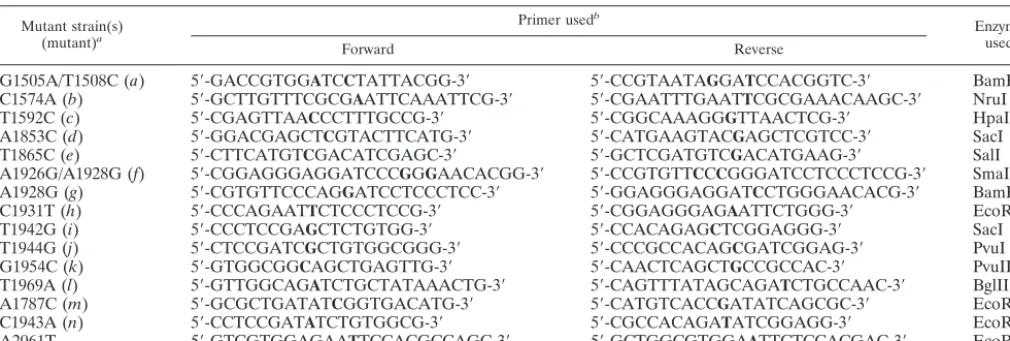
3 sequences (39) was used. Sites with variable nucleotides in the 3⬘nontranslated region were chosen for mutation. For the coat protein (CP) coding region, silent mutations were introduced at the third nucleotide in the codon. Site-directed mutagenesis was done by using a standard PCR mutagenesis protocol (36). The mutations were confirmed by sequence analysis of cDNA clones with an ABI 3100 automated sequencing system. The mutants are listed in Table 1. The transcripts of each mutated RNA 3 were generated in vitro and inoculated together with wild-type Fny CMV RNAs 1 and 2. Systemic infection was assessed by the development of symptoms in young uninoculated leaves. Total RNA was extracted from tobacco plant leaves from passage 0 (inoculated with transcripts) and passage 1 (inoculated with extracted viral RNA or plant sap from passage 0) with Tri reagent solution according to the manufacturer’s protocol (Molecular Research Center Inc., Cincinnati, Ohio). RNA was used as a template for reverse transcriptase (Superscript, Gibco) with primer 6450 (GGCTGCAGTGGTCTC CTT), which is complementary to the 10 terminal nucleotides of Fny CMV RNA 3 (nucleotides in boldface type) and has a linker attached, followed by thermal cycling reactions with primer 6450 and primer 10297 (GAGTCGAGTCATGG ACAAATC), identical to nucleotides 1266 to 1286 of Fny CMV RNA 3 (reverse transcription-PCR [RT-PCR]). This reaction yielded a PCR product of approx-imately 950 bp. Thermal cycling reaction conditions were as follows: an initial denaturation step at 15 s and 94°C followed by 40 cycles of denaturation at 94°C for 6 s, an annealing step at 60°C for 6 s, and an extension step at 72°C for 25 s with an Idaho Technology Rapid Cycle PCR machine. PCR products were purified by extraction with phenol-chloroform (1:1, vol/vol) saturated with Tris-EDTA buffer followed by ethanol precipitation using standard methods (41). The stability of the mutant viruses was tested by digesting the RT-PCR products from these plants with the enzymes specific for the marker-bearing viruses and sequence analysis of the RT-PCR products at 7 or 14 dpi. Populations were constructed by mixing equal amounts of viral RNA from progeny of each of the individually infected mutants.
Analysis of populations.Plants were inoculated with a mixture of mutantsa,
b,c,d,e,f,g,h,i,j,k, andl(Table 1). Inoculated leaves were excised at 2 dpi, and both the inoculated tissue and surrounding tissues were sampled. Approxi-mately 25 mg of tissue was excised from the 8th and 15th systemic leaves at 10 and 15 dpi, respectively. Total RNA was extracted from sampled tissue and used as a template for RT-PCR as described above. After an estimation of DNA concentration by electrophoresis in agarose gel, the purified PCR products were divided into 9 or 10 aliquots. Each aliquot was then digested with one of the 10 marker restriction enzymes shown in Table 1. Some of the mutants shared the same restriction enzyme sites but at different locations (Table 1). The RT-PCR product from a mixture of the original 12 viral RNAs was used as a control. The presence or absence of each mutant in each inoculated and systemic leaf sample was determined by the presence or absence of its diagnostic bands after digestion and electrophoresis.
Comparison of the populations in different locations of the same systemic leaf.
In addition to the experiment described above, a mixture of 12 mutant viruses (a,
b,c,d,e,f,g,i,j,k,m, andn) was inoculated onto a small area on the fifth leaf
of tobacco plants at the seven-leaf stage. The inoculated leaves were detached at 2 dpi. At 10 dpi, 3 pieces of similarly sized tissue (about 25 mg each) were excised randomly from the eighth leaf (the third leaf above the inoculated leaf) and subjected to mutant virus analysis as described above. In addition, the population comparisons for different locations of the same systemic leaf were carried out for tobacco plants in which the whole fifth leaf was inoculated and the inoculated leaf was detached at 6 dpi.
Data analysis.The analysis of variance was used to test the significance of the
mean number of mutants recovered in each experiment (45). A chi-square contingency table was used to test whether all mutants appeared in the systemic leaves with the same frequency (45), thus determining whether their loss during systemic infection occurred stochastically.
The recovery percentage in systemic leaves for each mutant was calculated for each experiment, and the mean recovery percentage of each mutant was ob-tained by treating each experiment as a replicate. Data were arcsin-square root transformed before analysis of variance. The test of least significant difference was used to compare means among the mutants (45).
RESULTS
Systemic infectivity and stability of the artificial popula-tions. Originally, 15 mutants bearing introduced restriction enzyme site markers in the CP region or the 3⬘nontranslated region of Fny CMV RNA 3 were generated by using site-directed mutagenesis (Table 1). All the mutants tested induced systemic mosaic symptoms in tobacco plants. The timing of the appearance and severity of disease symptoms induced by these mutant viruses in tobacco plants were identical to those in-duced by wild-type Fny CMV (data not shown). Except for the mutant strain A2061T, all mutants were stable through passage 0 and 1, as indicated both by complete digestion of the RT-PCR products from these plants with the enzymes specific for the marker-bearing viruses and by sequence analysis of the RT-PCR products (data not shown). The changed nucleotide T in mutant strain A2061T was reverted to the wild-type A after passage 1, and A2061T was not used further.
[image:2.603.45.550.81.251.2]Occurrence of a bottleneck during virus infection. Time course experiments showed that 100% of tobacco plants were infected systemically when they were inoculated on local areas of the fifth leaf and the inoculated leaves were detached at 2 dpi. At 4 dpi, the basal portions or the entire seventh and TABLE 1. Artificial population of CMV RNA 3 marker mutants
Mutant strain(s) (mutant)a
Primer usedb
Enzyme used
Forward Reverse
G1505A/T1508C (a) 5⬘-GACCGTGGATCCTATTACGG-3⬘ 5⬘-CCGTAATAGGATCCACGGTC-3⬘ BamHI C1574A (b) 5⬘-GCTTGTTTCGCGAATTCAAATTCG-3⬘ 5⬘-CGAATTTGAATTCGCGAAACAAGC-3⬘ NruI
T1592C (c) 5⬘-CGAGTTAACCCTTTGCCG-3⬘ 5⬘-CGGCAAAGGGTTAACTCG-3⬘ HpaI
A1853C (d) 5⬘-GGACGAGCTCGTACTTCATG-3⬘ 5⬘-CATGAAGTACGAGCTCGTCC-3⬘ SacI
T1865C (e) 5⬘-CTTCATGTCGACATCGAGC-3⬘ 5⬘-GCTCGATGTCGACATGAAG-3⬘ SalI
A1926G/A1928G (f) 5⬘-CGGAGGGAGGATCCCGGGAACACGG-3⬘ 5⬘-CCGTGTTCCCGGGATCCTCCCTCCG-3⬘ SmaI A1928G (g) 5⬘-CGTGTTCCCAGGATCCTCCCTCC-3⬘ 5⬘-GGAGGGAGGATCCTGGGAACACG-3⬘ BamHI
C1931T (h) 5⬘-CCCAGAATTCTCCCTCCG-3⬘ 5⬘-CGGAGGGAGAATTCTGGG-3⬘ EcoRI
T1942G (i) 5⬘-CCCTCCGAGCTCTGTGG-3⬘ 5⬘-CCACAGAGCTCGGAGGG-3⬘ SacI
T1944G (j) 5⬘-CTCCGATCGCTGTGGCGGG-3⬘ 5⬘-CCCGCCACAGCGATCGGAG-3⬘ PvuI
G1954C (k) 5⬘-GTGGCGGCAGCTGAGTTG-3⬘ 5⬘-CAACTCAGCTGCCGCCAC-3⬘ PvuII
T1969A (l) 5⬘-GTTGGCAGATCTGCTATAAACTG-3⬘ 5⬘-CAGTTTATAGCAGATCTGCCAAC-3⬘ BglII
A1787C (m) 5⬘-GCGCTGATATCGGTGACATG-3⬘ 5⬘-CATGTCACCGATATCAGCGC-3⬘ EcoRV
C1943A (n) 5⬘-CCTCCGATATCTGTGGCG-3⬘ 5⬘-CGCCACAGATATCGGAGG-3⬘ EcoRV
A2061T 5⬘-GTCGTGGAGAATTCCACGCCAGC-3⬘ 5⬘-GCTGGCGTGGAATTCTCCACGAC-3⬘ EcoRI
aFor G1505A/T1508C, the nucleotides at 1505 and 1508 were changed from G to A and T to C, respectively, so that restriction enzyme site BamHI was generated.
The other mutants were constructed in a similar fashion.atonrefer to the 14 mutants used in the bottleneck studies.
bThe letters in boldface type in the primer sequence indicate the mutated nucleotides.
on November 8, 2019 by guest
http://jvi.asm.org/
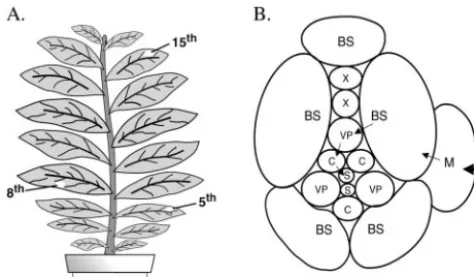
eighth leaves started to show typical mosaic symptoms, where-as these symptoms were not observed on the sixth leaf. Hence, we designated the seventh and eighth leaves as primary sys-temically infected leaves. The 15th leaf had not formed when the inoculated 5th leaf was detached at 2 dpi; hence, infection of the 15th leaf represents a secondary infection from the initial systemically infected leaves (Fig. 1A).
To test whether a bottleneck exists during systemic infection, a population of 12 mutants was inoculated onto plants. The population in the inoculated leaves was analyzed by taking samples at 2 dpi as described above. All 12 mutant viruses were detected in the inoculated leaves of all the tested plants from the three experiments (Fig. 2), indicating that all the mutants replicated and moved from cell to cell in the inoculated leaves (nonreplicating RNA inoculum is not detectable after 2 dpi
[data not shown]). Approximately 25 mg of tissue was excised from the 8th and 15th systemic leaves at 10 and 15 dpi, respec-tively (Fig. 1A), and used for population analysis. Results from three independent experiments showed that the population size decreased significantly (P⬍0.05) after the mixed mutant viruses moved from the inoculated leaves to the primary sys-temic leaves (Fig. 2). The number of mutants recovered from the eighth leaf ranged from 5 to 11, with an average of 7 mutants. The number of mutants recovered from the 15th leaf decreased further as systemic infection progressed, ranging from 2 to 7, averaging 5, and being statistically significant in two out of three experiments (P⬍0.05) (Fig. 2). In addition, the compositions of the population of mutant viruses in the 8th and 15th leaves analyzed were different from each other (data not shown). No plants were found to have the same mutant populations in this study.
Statistical analyses using a chi-square test of independence demonstrated that 11 of the 12 mutants had the same proba-bility of moving systemically to the eighth leaves. Hence, the elimination of mutants during systemic infection was random, except for mutantk(Fig. 3). However, as the virus populations moved further to the 15th leaves, the probabilities of each mutant being present varied to a larger degree. Mutantkwas never detected, and mutantsb, e, andfwere recovered with significantly lower frequencies than the others (Fig. 3), indi-cating that these mutants had a competitive disadvantage when they coinfected tobacco plants. Such differences were unde-tectable in individual infections in tobacco (data not shown). These results indicated that a significant bottleneck existed during the systemic movement of CMV.
Distribution of genotypes in the population.To further in-vestigate the probable mechanisms involving the genetic bot-tleneck during the systemic infection, two further experiments were carried out. In the first experiment, a mixture of 12 mutant viral RNAs was inoculated onto a small area of the fifth leaf of each tobacco plant. For these experiments, we replaced the two most frequently recovered mutants from the first set of experiments (handl) with two additional mutants (mandn). The inoculated leaves were detached from the plants at 2 dpi as described above. Three pieces of tissue were excised ran-domly from the eighth leaf for population analysis at 10 dpi. Consistent with the results described above, all mutants could be detected from the inoculated leaves analyzed, and the pop-FIG. 1. Schematic representation of plant materials. (A) Tobacco
plant showing the location of the inoculated leaf (5th) and the primary (8th) and secondary (15th) systemically infected leaves. (B) Cross-sectional view of a minor vein. The cell-to-cell pathway by which virus is transported via PD is shown by arrows moving from mesophyll cells and passing through BS, VP, and companion cells (C) before entering the sieve elements (S). The PD are abundant in the walls between the mesophyll cells but are limited at the interface of the VP cells and the CC-SE complex. X, xylem.
FIG. 2. Reduction in virus population during systemic infection of
[image:3.603.44.281.70.208.2]Cucumber mosaic virus. Tobacco plants were inoculated with a mixture of 12 mutant viruses of Fny CMV, and the inoculated leaves and systemic leaves of these plants were harvested at 2, 10 (the 8th leaf), and 15 (the 15th leaf) dpi, respectively. Analysis for the presence of each mutant was carried out by RT-PCR followed by restriction en-zyme digestion. Exp1, Exp2, and Exp3 are three independent experi-ments. In, inoculated leaves; 8th and 15th, systemically infected leaves. All values are expressed as the mean numbers of the recovered mu-tants⫾one standard error. Bars with different letters (a, b, or c) are significantly different from each other (P⬍0.05), as determined by least significant difference test.
FIG. 3. Recovery frequency of each mutant in systemically infected leaves. The recovery percentage of systemic leaves for each mutant was calculated for each experiment described in the legend to Fig. 2. The mean recovery percentage of each mutant was obtained by treating each experiment as a replicate;atolrepresent the 12 mutants used in this study. All values are expressed as the mean recovery percentages ⫾one standard error.
on November 8, 2019 by guest
http://jvi.asm.org/
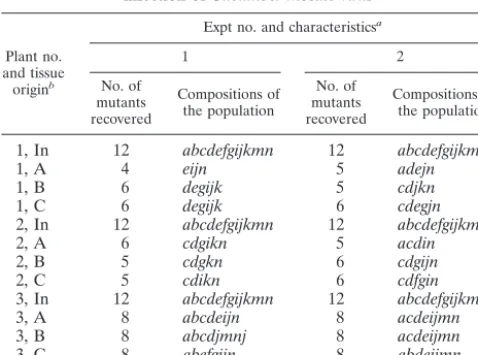
[image:3.603.42.286.516.613.2]ulations were reduced after being moved from inoculated leaves to systemic leaves of all three plants analyzed (Table 2). Interestingly, the population sizes and compositions of most samples varied from the same systemic leaf (Table 2). This result indicated that the mutants were distributed unevenly during systemic movement. In a final experiment, the entire fifth leaf was inoculated and the inoculated leaf was excised at 6 dpi. The populations in different positions of the same sys-temic leaves were analyzed as was done previously. The pop-ulation sizes were again reduced after systemic movement, and most of the population compositions in different areas of the same leaf were also different from each other.
DISCUSSION
In this study, we compared the number of genetically marked mutants of CMV present in the inoculated tobacco leaves with those in the primary and secondary systemically infected leaves. Our results showed that the population diver-sity decreased significantly when the population moved from the inoculated leaves to primary systemic leaves and decreased further as the systemic infection progressed. During this pro-cess, the elimination of a majority of the mutants was stochas-tic. Hence, while the population is affected by selection, there is a significant stochastic bottleneck present during virus move-ment from the inoculated leaves to uninoculated young leaves by which the CMV population variation is reduced. This find-ing indicates that systemic movement plays an important role in the genetic structure of RNA virus population in infected plants. This finding also provides a plausible explanation for the observed difference in mutation frequency of CMV in infected tobacco plants versus in protoplasts and the level of genetic variation that was lower than expected (43).
Plant cells are connected by numerous plasmodesmata (PD) through which the virions or nucleic acid of plant viruses can
pass (26). Plant viruses encode movement proteins that have the capacity to increase the plasmodesmatal molecular size exclusion limit and facilitate virus movement between cells (26, 28). For a successful systemic infection of a plant virus, the virus must establish an infection in epidermal cells, move through several mesophyll cells followed by vascular bundle sheath (BS) and vascular parenchyma (VP) cells, and then enter into the companion cell-sieve element (CC-SE) complex within the inoculated leaves (Fig. 1B). Once inside the CC-SE complex, the viruses are transported along with the photoas-similates towards sink tissues (8, 21, 28). After viruses reach a systemic leaf, they exit from the phloem cells of major veins, followed by an invasion of BS cells and then mesophyll cells (5, 8, 44).
It is generally accepted that there are restrictions at the interface between the VP and CC-SE complex and that these restrictions may affect systemic movement of the virus in the plant (8, 10, 21, 28, 47). The restriction at the interface of the VP and the CC/SE complex may be associated with the fre-quency of PD, which are abundant in cell walls between me-sophyll cells but are limited at the interface between the VP and the CC/SE complex for plants of apoplastic phloem load-ers, including the Solanaceae (46). The restriction of virus entry into the phloem may also be associated with different mechanisms that viruses use to move into the vascular tissues (8, 21).
Details of the dynamics of virus loading into and unloading from the phloem are unknown. Inoculation of a small area of the fifth leaf followed by excision at 2 dpi and inoculation of the whole leaf followed by excision at 6 dpi resulted in similar populations in the systemic tissue (Table 2), implying that virus loading into the phloem of the initially infected leaf may occur over a short period of time rather than as a continuous process. It is also possible that infected mesophyll cells exclude super-infection, and this could result in subpopulations in different areas of systemically infected leaves. However, this type of distribution is not seen in inoculated leaves, and given the abundance of PD between mesophyll cells, it seems likely that numerous virions enter a cell simultaneously. Hall et al. (22) found that the coinfection of two relatedWheat streak mosaic
virus strains resulted in spatial subdivisions of virus strains
[image:4.603.44.283.87.264.2]within individual systemic leaves or tillers of plants, with some leaves containing either strain alone and some containing both. An analogous phenomenon was shown recently by fluorescent labeling of potyviruses in both inoculated leaves and systemic leaves ofNicotiana benthamianaplants by confocal laser scan-ning microscopy (9). However, the spatial separation of pop-ulations did not occur when two unrelated viruses coinfected the same hosts (9, 22). These results were interpreted as being the result of virus-induced gene silencing at a cellular level. Our findings showed that the compositions of populations in different areas of the same systemic leaf varied from each other (Table 2), indicating that the distribution of the mutants in the systemic leaf occurs in patches. Retaining the inoculated leaf on the plant did not increase the number of mutants recovered from the systemic leaf (Table 2). Hence, the most plausible explanation of the bottlenecks found in this study is that only a subset of genotypes in a virus quasispecies are randomly loaded into vascular tissue in a loading event due to the phys-ical and/or functional restriction of PD at the interface of the TABLE 2. Changes in virus populations during systemic
infection ofCucumber mosaic virus
Plant no. and tissue originb
Expt no. and characteristicsa
1 2
No. of mutants recovered
Compositions of the population
No. of mutants recovered
Compositions of the population
1, In 12 abcdefgijkmn 12 abcdefgijkmn
1, A 4 eijn 5 adejn
1, B 6 degijk 5 cdjkn
1, C 6 degijk 6 cdegjn
2, In 12 abcdefgijkmn 12 abcdefgijkmn
2, A 6 cdgikn 5 acdin
2, B 5 cdgkn 6 cdgijn
2, C 5 cdikn 6 cdfgin
3, In 12 abcdefgijkmn 12 abcdefgijkmn
3, A 8 abcdeijn 8 acdeijmn
3, B 8 abcdjmnj 8 acdeijmn
3, C 8 abefgijn 8 abdeijmn
aFor experiment 1, the population of the mutant viruses was inoculated to a
small area of the fifth leaf on tobacco at the seven-leaf stage, and the inoculated leaves were detached at 2 dpi. For experiment 2, the population of mutant viruses was inoculated to the whole fifth leaf of tobacco at the seven-leaf stage, and the inoculated leaves were detached at 6 dpi.
b1, 2 and 3 represent the three analyzed plants. In, inoculated leaf; A, B, and
C, tissues from different locations of the same systemic leaf (eighth leaf).
on November 8, 2019 by guest
http://jvi.asm.org/
VP and the CC-SE complex. Once this population of geno-types reaches the systemic leaf, they exit and initiate infection. Since different areas of the systemically infected leaves contain different populations, it is plausible that the exit from the phloem is also restricted. Consequently, the populations in the inoculated leaves are segregated and subpopulations are formed in the systemic leaf after the systemic movement.
The presence of bottlenecks associated with human immu-nodeficiency virus has been deduced by the significant reduc-tion of genetic diversity (19, 24, 29). The most important im-plication of genetic bottlenecks is genetic drift, which can drive changes in an RNA virus population and the emergence of new virus strains (3, 16, 48). In addition, repeated bottlenecks can result in a loss of fitness, as demonstrated by several experi-mental systems (4, 12, 31, 32, 49). The influence of bottlenecks on the fitness of the RNA virus population is associated with the bottleneck size. Novella et al. (30) showed that the popu-lation will gain fitness in large popupopu-lation transmissions due to competition and optimization of the quasispecies. CMV may be considered an extremely fit virus since it has the largest host range of any known virus, infecting over 1,200 species of plants (13). Clearly, the bottlenecks described in this study are not restrictive enough to cause an overall loss in fitness. They may, however, be sufficient to limit the mutation frequency in sys-temically infected plants.
Fny CMV did not exhibit any changes in the consensus sequence over multiple passages in several different host spe-cies (43). Although this lack of genetic drift under the influ-ence of significant bottlenecks suggests that the majority of individuals do not contain mutations, in some cases (e.g., pep-per), every individual virus examined had at least one mutation (43). Hence, negative selection is also an important factor that contributes to the remarkable stability of the CMV genomic sequence.
ACKNOWLEDGMENTS
We thank Luis Marquez and Rujin Chen for careful review of the manuscript, J. J. Bull for helpful advice, and Cuc Ly for assistance with the figures.
This work was supported by The Samuel Roberts Noble Foundation.
REFERENCES
1. Amos, W., and J. Harwood.1998. Factors affecting levels of genetic diversity
in natural populations. Philos. Trans. R. Soc. Lond. B353:177–186.
2. Ayllo´n, M. A., L. Rubio, A. Moya, J. Guerri, and P. Moreno.1999. The
haplotype distribution of two genes of citrus tristeza virus is altered after host change or aphid transmission. Virology255:32–39.
3. Bonneau, K. R., B. A. Mullens, and N. J. MacLachlan.2001. Occurrence of
genetic drift and founder effect during quasispecies evolution of the VP2 and NS3/NS3A genes of bluetongue virus upon passage between sheep, cattle, andCulicoides sonorensis. J. Virol.75:82.
4. Chao, L.1990. Fitness of RNA virus decreased by Muller’s ratchet. Nature
348:454–455.
5. Cheng, N.-H., C.-L. Su, S. A. Carter, and R. S. Nelson.2000. Vascular
invasion routes and systemic accumulation patterns of tobacco mosaic virus inNicotiana benthamiana. Plant J.23:349–362.
6. Choi, I.-R., J. S. Hall, M. Henry, L. Zhang, G. L. Hein, R. French, and D. C.
Stenger.2001. Contributions of genetic drift and negative selection on the
evolution of three strains of wheat streak mosaic tritimovirus. Arch. Virol.
146:619–628.
7. Clarke, D., E. Duarte, A. Moya, S. Elena, E. Domingo, and J. Holland.1993.
Genetic bottleneck and population passages cause profound fitness differ-ences in RNA viruses. J. Virol.67:222–228.
8. Cruz, S. S.1999. Perspective: phloem transport of viruses and
macromole-cules—what goes in must come out. Trends Microbiol.7:237–242.
9. Dietrich, C., and E. Maiss.2003. Fluorescent labelling reveals spatial
sepa-ration of potyvirus populations in mixed infectedNicotiana benthamiana
plants. J. Gen. Virol.84:2871–2876.
10. Ding, X. S., M. H. Shintaku, S. A. Arnold, and R. S. Nelson.1995.
Accumu-lation of mild and severe strains of tobacco mosaic virus in minor veins of tobacco. Mol. Plant-Microbe Interact.8:32–40.
11. Domingo, E., and J. J. Holland.1994. Mutation rates and rapid evolution of
RNA viruses, p. 161–184.InS. S. Morse (ed.), The evolutionary biology of viruses. Raven Press, Ltd., New York, N.Y.
12. Duarte, E., D. Clarke, A. Moya, E. Domingo, and J. Holland.1992. Rapid
fitness losses in mammalian RNA virus clones due to Muller’s ratchet. Proc. Natl. Acad. Sci. USA89:6015–6019.
13. Edwardson, J. R., and R. G. Christie.1991. Cucumoviruses, p. 293–319.In
CRC handbook of viruses infecting legumes. CRC Press, Boca Raton, Fla.
14. Eigen, M., and C. K. Biebricher.1988. Sequence space and quasispecies
distribution, p. 211–245.InE. Domingo, J. J. Holland, and P. Ahlquist (ed.), Variability of RNA genomes, 1st ed., vol. III. CRC Press, Boca Raton, Fla.
15. Eigen, M., J. McCaskill, and P. Schuster.1988. Molecular quasi-species. J.
Phys. Chem.92:6881–6891.
16. Escarmís, C., M. Da´vila, N. Charpentier, A. Bracho, A. Moya, and E.
Do-mingo.1996. Genetic lesions associated with Muller’s ratchet in an RNA
virus. J. Mol. Biol.264:255–267.
17. Fraile, A., J. M. Malpica, M. A. Aranda, E. Rodríguez-Cerezo, and F.
García-Arenal.1996. Genetic diversity in tobacco mild green mosaic tobamovirus
infecting the wild plantNicotiana glauca. Virology223:148–155.
18. French, R., and D. C. Stenger.2003. Evolution ofWheat streak mosaic virus:
dynamics of population growth within plants may explain limited variation. Annu. Rev. Phytopathol.41:199–214.
19. Frost, S. D. W., M. Nijhuis, R. Schuurman, C. A. B. Boucher, and A. J. L.
Brown.2000. Evolution of lamivudine resistance in human
immunodefi-ciency virus type 1-infected individuals: the relative roles of drift and selec-tion. J. Virol.74:6262–6268.
20. García-Arenal, F., A. Fraile, and J. M. Malpica.2001. Variability and genetic
structure of plant virus populations. Annu. Rev. Phytopathol.39:157–186.
21. Gilbertson, R. L., and W. J. Lucas.1996. How do viruses traffic on the
‘vascular highway’? Trends Plant Sci.1:260–267.
22. Hall, J. S., R. French, G. L. Hein, T. J. Morris, and D. C. Stenger.2001.
Three distinct mechanisms facilitate genetic isolation of sympatric wheat streak mosaic virus lineages. Virology282:230–236.
23. Hall, J. S., R. French, T. J. Morris, and D. C. Stenger.2001. Structure and
temporal dynamics of populations within wheat streak mosaic virus isolates. J. Virol.75:10231–10243.
24. Iba´n˜ez, A., B. Clotet, and M.-A. Martínez.2000. Human immunodeficiency
virus type 1 population bottleneck during indinavir therapy causes a genetic drift in theenvquasispecies. J. Gen. Virol.81:85–95.
25. Kurath, G., and J. A. Dodds.1995. Mutation analyses of molecularly cloned
satellite tobacco mosaic virus during serial passage in plants: evidence for hotspots of genetic change. RNA1:491–500.
26. Lucas, W. J.1999. Plasmodesmata and the cell-to-cell transport of proteins
and nucleoprotein complexes. J. Exp. Bot.50:979–987.
27. Malpica, J. M., A. Fraile, I. Moreno, C. I. Obies, J. W. Drake, and F.
García-Arenal.2002. The rate and character of spontaneous mutations in an
RNA virus. Genetics162:1505–1511.
28. Nelson, R. S., and A. J. E. van Bel.1998. The mystery of virus trafficking into,
through and out of vascular tissue. Prog. Bot.59:476–533.
29. Nijhuis, M., C. A. B. Boucher, P. Schipper, T. Leitner, and R. Schuurman.
1998. Stochastic processes strongly influence HIV-1 evolution during subop-timal protease-inhibitor therapy. Proc. Natl. Acad. Sci. USA95:14441–14446.
30. Novella, I. S., E. A. Duarte, S. F. Elena, A. Moya, E. Domingo, and J. J.
Holland.1995. Exponential increases of RNA virus fitness during large
population transmissions. Proc. Natl. Acad. Sci. USA92:5841–5844.
31. Novella, I. S., S. F. Elena, A. Moya, E. Domingo, and J. J. Holland.1995. Size
of genetic bottlenecks leading to virus fitness loss is determined by mean initial population fitness. J. Virol.69:2869–2872.
32. Novella, I. S., J. Quer, E. Domingo, and J. J. Holland.1999. Exponential
fitness gains of RNA virus populations are limited by bottleneck effects. J. Virol.73:1668–1671.
33. Palukaitis, P., M. J. Roossinck, R. G. Dietzgen, and R. I. B. Francki.1992.
Cucumber mosaic virus. Adv. Virus Res.41:281–348.
34. Power, A. G.2000. Insect transmission of plant viruses: a constraint on virus
variability. Curr. Opin. Plant Biol.3:336–340.
35. Rizzo, T. M., and P. Palukaitis.1990. Construction of full-length cDNA
clones of cucumber mosaic virus RNAs 1, 2 and 3: generation of infectious RNA transcripts. Mol. Gen. Genet.222:249–256.
36. Roossinck, M. J., I. Kaplan, and P. Palukaitis.1997. Support of a cucumber
mosaic virus satellite RNA maps to a single amino acid proximal to the helicase domain of the helper virus. J. Virol.71:608–612.
37. Roossinck, M. J., and P. Palukaitis.1990. Rapid induction and severity of
symptoms in zucchini squash (Cucurbita pepo) map to RNA 1 of cucumber mosaic virus. Mol. Plant-Microbe Interact.3:188–192.
38. Roossinck, M. J., and P. S. White.1998. Cucumovirus isolation and RNA
extraction. Methods Mol. Biol.81:189–196.
39. Roossinck, M. J., L. Zhang, and K.-H. Hellwald.1999. Rearrangements in
the 5⬘nontranslated region and phylogenetic analyses of cucumber mosaic
on November 8, 2019 by guest
http://jvi.asm.org/
virus RNA 3 indicate radial evolution of three subgroups. J. Virol.73:6752– 6758.
40. Sacrista´n, S., J. Malpica, A. Fraile, and F. García-Arenal.2003. Estimation
of population bottlenecks during systemic movement ofTobacco mosaic virusin tobacco plants. J. Virol.77:9906–9911.
41. Sambrook, J., E. F. Fritsch, and T. Maniatis.1989. Molecular cloning: a
laboratory manual, 2nd ed. Cold Spring Harbor Laboratory Press, Cold Spring Harbor, N.Y.
42. Schneider, W. L., and M. J. Roossinck.2000. Evolutionarily related
sindbis-like plant viruses maintain different levels of population diversity in a com-mon host. J. Virol.74:3130–3134.
43. Schneider, W. L., and M. J. Roossinck.2001. Genetic diversity in RNA viral
quasispecies is controlled by host-virus interactions. J. Virol.75:6566–6571.
44. Silva, M. S., J. Wellnick, R. W. Goldbach, and J. W. M. van Lent.2002.
Phloem loading and unloading ofCowpea mosaic virusinVigna unguiculata. J. Gen. Virol.83:1493–1504.
45. Sokal, R. R., and F. J. Rohlf.1995. Biometry: the principles and practices of
statistics in biological research, 3rd ed. W. H. Freeman and Company, New York, N.Y.
46. Turgeon, R.1996. Phloem loading and plasmodesmata. Trends Plant Sci.
1:418–423.
47. Wintermantel, W. M., N. Banerjee, J. C. Oliver, D. J. Paolillo, and M.
Zaitlin.1997. Cucumber mosaic virus restricted from entering minor veins in
transgenic tobacco exhibiting replicase-mediated resistance. Virology231:
248–257.
48. Yuste, E., C. Lopez-Galindez, and E. Domingo.2000. Unusual distribution of
mutations associated with serial bottleneck passages of human immunode-ficiency virus type 1. J. Virol.74:9546–9552.
49. Yuste, E., S. Sanchez-Palomino, C. Casado, E. Domingo, and C.
Lopez-Galindez.1999. Drastic fitness loss in human immunodeficiency virus type 1
upon serial bottleneck events. J. Virol.73:2745–2751.