
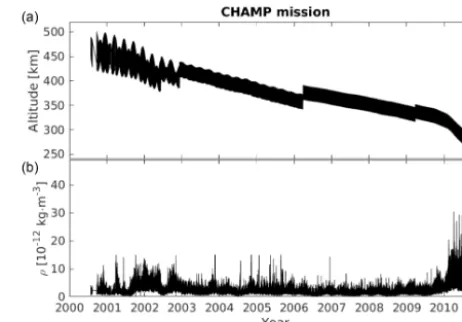
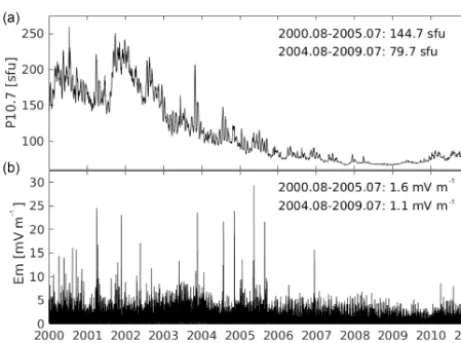
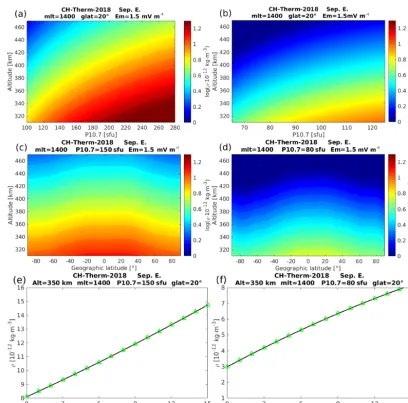
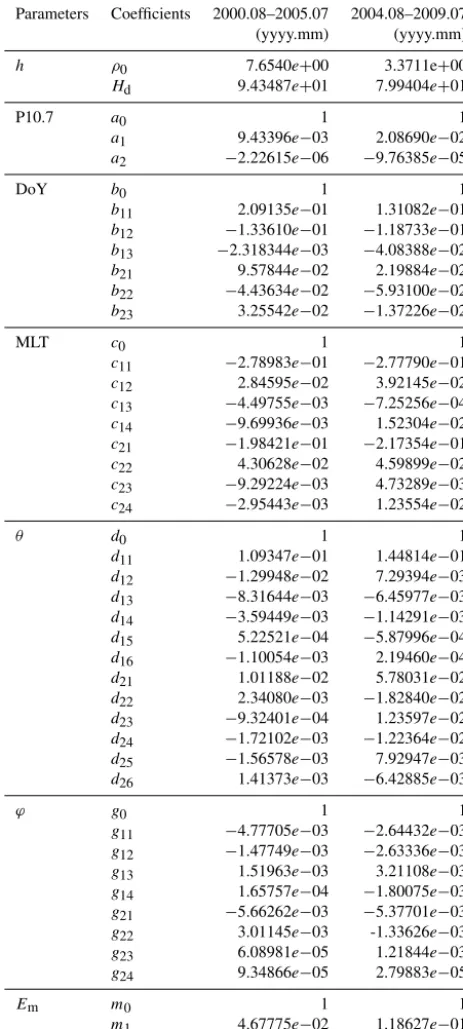
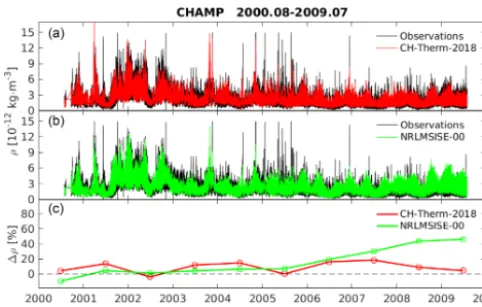
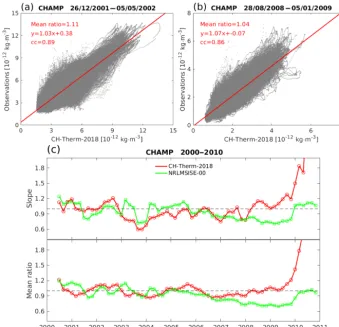
An empirical model of the thermospheric mass density derived from CHAMP satellite
Full text
Figure

Related documents
The aim of this study was to determine if HRM can facilitate downstream analysis of multiple mutant lines identified by TILLING in order to characterise allelic series of EMS
Our previous studies have demonstrated that isometric yoga (i.e. yoga programs that we developed so individuals can practice yoga poses with a self-adjustable isometric load)
Comparing the mechanical properties and histological changes, we found that the decrease in wall stiffness was negatively correlated with the severity of the atherosclerosis after
Quantitation of the number of muscle fibers of human origin in the graft, identified by immunofluorescence labeling with antibodies to hu- man β -spectrin, shows that more large
Comparison of the female donors of the age group 51 – 60 years with results lower than two standard deviations from the mean value of the age and gender matched German
Patients with left-sided neglect and clinical signs of left homonymous hemianopia (cases 10-12) deviated rightwards massively (> 20%) on line bisection, a pattern of performance
Background: Although follicle stimulating hormone (FSH) is known to be predictive of age at final menstrual period (FMP), previous methods use FSH levels measured at time points
