CHILDREN, EDUCATION AND SKILLS
research
social
Knowledge Utilisation Mapping Study:
Scottish Education System
Final report
August 2019
Table of Contents
Executive Summary ... 4
List of acronyms ... 11
1. Introduction: ... 12
1.1 About this research: ... 12
1.2 Background and context: ... 12
1.3 Aims and research questions: ... 13
2. Methodology: ... 15
2.1 Introduction: ... 15
2.2 Strand 1: Literature review ... 16
2.3 Strand 2: Qualitative study ... 17
2.4 Strand 3: Validation survey ... 21
3. Literature Review: ... 22
3.1 Introduction ... 22
3.2 National policy stance and context ... 22
3.3 Importance of practitioner engagement with research ... 25
3.4 Extent of practitioner engagement with research ... 29
3.5 Factors influencing practitioner research engagement ... 29
3.6 Literature review summary and implications ... 35
4. Strand 2: Qualitative Research ... 38
4.1 Introduction ... 38
4.2 How do practitioners in Scotland engage with research and act on research evidence? ... 39
4.3 What factors influence practitioners’ ability to make the best use of evidence and effectively engage in research? ... 49
4.4 Suggested actions to promote a more effective and coherent use of evidence and information across the school system ... 57
4.5 Summary: What factors influence practitioners’ ability to make the best use of evidence and effectively engage in research? ... 59
5. Strand 3: Validation Survey Findings ... 61
5.2 Engagement in research activities ... 62
5.3 Support for informing, planning and developing practice ... 63
5.4 Use of research evidence ... 65
5.5 Skills for engaging more fully with research ... 65
5.6 Engaging more fully with research evidence ... 66
5.7 Respondents’ own comments on engaging with data and research ... 67
5.8 Summary of survey findings ... 68
6. Conclusions and discussion ... 70
4
Executive Summary
Introduction
This report presents the findings from the Knowledge Utilisation Mapping Study project conducted by the Robert Owen Centre for Educational Change and commissioned by Scottish Government. The research was undertaken from April to October 2018.
Aims
Two main questions framed the research, each with related sub questions:
1. How do practitioners in Scotland engage in research and act on research evidence?
2. What factors influence practitioners’ ability to make the best use of evidence?
In defining research evidence, the study included three main types:
• School level data, often collected routinely to help understand pupil’s attainment and achievement
• Accessing secondary research findings and knowledge such as books, and academic journals
• Conducting practitioner enquiry and action research, whether individually or collaboratively.
Research strands and methods
The research project comprised three strands:
• A literature review
• A qualitative strand with interviews and focus groups with 67 key informants at various levels of the education community in six local authorities. A total of 6 head teachers, 8 depute head teachers/ senior management team members, 3 principal teachers, 4 Attainment
5
• An on-line survey of 1,036 practitioners across Scotland to help validate the findings from the qualitative strand. Responses were received from all local authorities in Scotland although the numbers from each
authority were not necessarily proportionate to the size of their staff complement.
Limitations of the research
The purpose of our qualitative sampling and selection of participants was to obtain insights and perspectives from key stakeholders; however, the findings cannot be generalised to all of the participant groups. The research also included a national survey to validate the qualitative findings. This analysis suggested that there was a strong level of consensus across participants in both the quantitative and qualitative strands of the project. The relatively high levels of engagement with data and research across participants and
respondents could indicate that those participating in the research are not typical of the population of Scottish teachers. Nevertheless, the findings are salient, particularly those regarding factors that influence engagement with and use of data and research evidence.
Key findings
Literature review
• There is general agreement that teachers’ roles have developed to incorporate a greater focus on research engagement and practitioner enquiry. Government, OECD and international research literature concur that teachers’ engagement with research is crucial for school and teacher effectiveness.
• There is little literature on the extent and nature of practitioner engagement with research in Scotland. In contrast, there is more
literature on the factors influencing teachers’ engagement with data and evidence. This emphasises that data and research is most valued by practitioners when it informs effective learning and deals with specific aspects of practice.
• The literature suggested that research is only likely to make a difference to practice if: the available evidence is in a form that teachers can
6
• Specialist and partner professionals, such as educational psychologists and speech and language therapists also have a key role in building teachers’ capacity to gather and use data/ research evidence.
Qualitative findings
• The qualitative findings revealed that engagement in research was viewed as central to teachers’ professional identity. Overall, the research, particularly the insights from Attainment Advisors and Regional Improvement Collaboratives (RIC) leads with their strategic overview, illustrate a growing but uneven capacity in the system regarding practitioner research engagement and skills.
• The research evidence and data that practitioners engage with is most commonly school-level data or online summaries of research findings to assess school context, levels of pupil attainment and inform planning and pedagogical approaches in the school.
• Overall, the considerable body of literature regarding the factors influencing practitioner engagement with research aligns with the findings from the qualitative strand of this study. In particular, teachers are more likely to seek out and use knowledge when it can be seen to be readily applied to promote effective learning.
• The most compelling factor seen as influencing practitioner engagement with research is that of time. Providing the time and space for
practitioners to meaningfully engage in collaborative professional dialogue regarding data, research and their practice was seen as
crucial. The literature indicates this, but the qualitative findings bring this into sharp relief. While school planning, accessible research sources and personal motivation can offset the impact of time pressures on research engagement to some extent, the current nature of teachers’ workload acts as a systematic inhibitor to increased research
engagement. Participants, especially Attainment Advisors, RIC Leads and head teachers stressed that the current workload of practitioners places considerable time limits on the extent to which they could engage in research and innovate beyond the basic scrutiny of school-level data. Time for dialogue between practitioners and researchers is a particularly important factor in translating research findings and data-informed insights into classroom practice.
7
from Attainment Advisors, educational psychologists and academic colleagues is key for supporting this process, at least initially.
Attainment Advisors have an increasingly important role in acquiring research knowledge and mobilising this across the system, particularly in their local authorities.
• Head teachers and other school leaders usually see it as their responsibility to keep abreast of knowledge on pedagogy and ‘what works’. Subsequently, they are important intermediaries in knowledge translation. Moral and practical support from school leadership, the local authority and Attainment Advisors is crucial in building a culture of
research engagement and capacity at local level.
• There were limited examples of collaborative research projects within and across schools where teams of teachers and their head teachers focussed on a particular challenge, again within the context of raising attainment. These were usually supported by external critical friends such as university colleagues and Attainment Advisors and facilitated by the Attainment Scotland Fund. Teachers and head teachers find that involvement in small-scale, collaborative interventions with associated enquiry to monitor impact can help to build confidence and capacity of staff to engage with research.
• The resources and funding provided by the Attainment Scotland Fund has helped build systems and capabilities that have fostered use of data and research. This has included resourcing staff to focus on data use and enquiry as well as drawing on external sources of expertise.
• There were examples of local authority programmes to build practitioner capacity and skills, however, in some cases; there was a reduction in local CLPL as financial cut backs continued to affect staffing levels. Strategic participants noted that the emerging brokering role of the RICs in coordinating and facilitating partnerships and sharing of information should enhance the mobilisation of knowledge across the system. Practitioners also called for improvements in the scope, accessibility and usability of research information in repositories accessed via central portals.
Quantitative findings
8
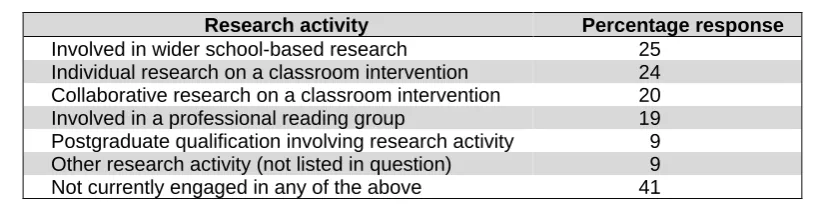
• More than half of respondents (59%) indicated that they were currently involved in one or more research-related activities.
• Almost four out of five respondents reported using data/research material to inform teaching and learning while just over two thirds indicated its use in understanding the impact of teaching and learning.
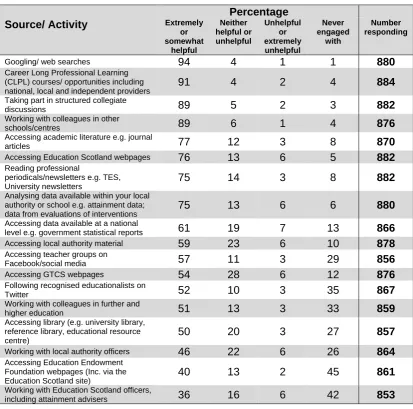
• The supports rated as most helpful in planning and developing practice were: taking part in structured collegiate discussions, CLPL
courses/opportunities or working with colleagues in other
schools/centres. These seemed to be those that offered both the dedicated time and opportunity to collaborate with colleagues. Practitioners also regularly used web searches to find relevant evidence.
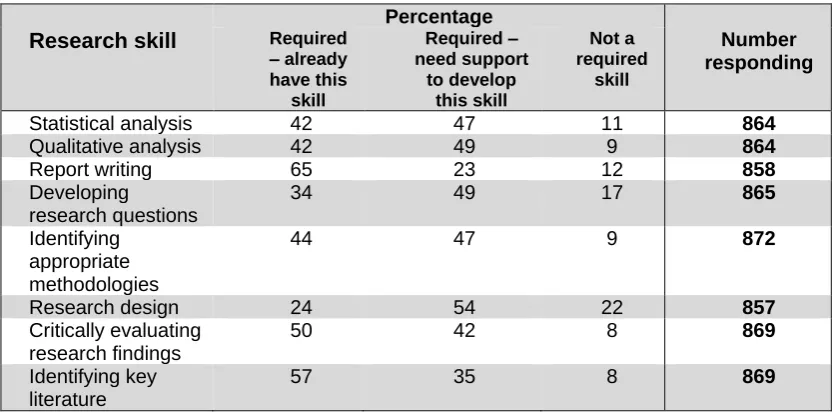
• Substantial numbers of staff thought they already possessed relevant research skills, but respondents also generally stated that they needed support to develop their skills, particularly in relation to analysis of quantitative and qualitative data.
• A large majority of respondents indicated a need for the following;
dedicated time to engage with research evidence (84%), national advice and support on engaging with research evidence (79%), opportunities to work with colleagues on research activities (74%) and partnerships with research specialists (74%).
Discussion
The research findings highlight a number of issues for consideration.
Time and workload
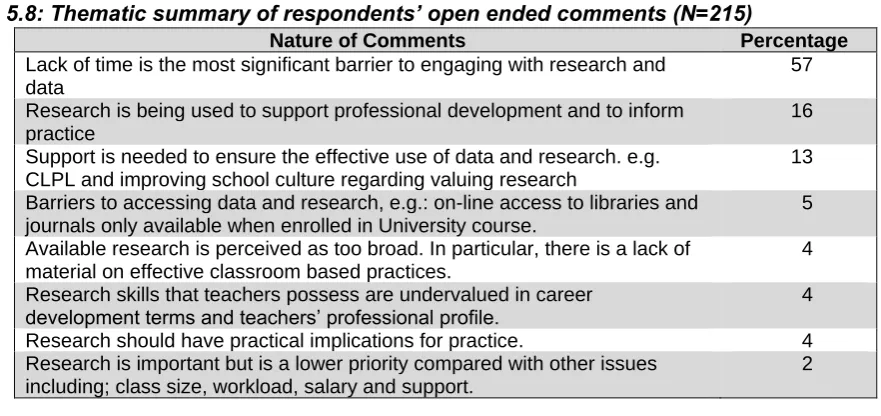
The most important factor seen as influencing practitioner engagement with research is that of time. The findings highlighted the importance of teachers having sufficient time to access, interpret and apply data and evidence and that current workload can inhibit this process.
Relationships between practitioners, researchers and policymakers
9
The influence of key actors
The findings identified a number of key actors that were important conduits for knowledge transfer and mobilisation in education. This included: Attainment Advisors; Educational Psychologists and other allied professionals; academic researchers; and leads at school and local authority level. These findings suggest that the education and policy community could explore how these actors can be further supported in their knowledge mobilisation and leadership roles and how such arrangements become more consistent across Scotland.
Resourcing research engagement across local systems
In addition to local authority and other personnel supporting practitioner research engagement, there were examples of local authority professional learning programmes aimed at building practitioners’ data and research capacity and skills. The value of investing in such central support to deploy specialists, provide CLPL and promote the transfer of knowledge across local authorities appears clear.
The value of collaboration to foster engagement with research and data
While there were limited examples of collaborative practitioner research within and across schools, such arrangements demonstrated that teams of teachers supported by their head teachers and others could enhance the capacity of staff to systematically engage with data and research.
Accessibility of research findings
A strong theme across the literature review and our empirical findings was the issue of how academic findings regarding effective education approaches could be conveyed in a more valuable way to inform teachers’ practice. This suggests there is scope for academics and policy partners, working with
practitioners, to explore how research findings can be better communicated to the teaching profession while retaining appropriate rigour.
Existing educational infrastructure
Currently, at the policy level, the Attainment Challenge and the associated Attainment Scotland Fund are working as drivers to focus teachers’ attention on the value of evidence-based practice. At the same time, aspects of
teachers’ professional environment may not always be conducive to
practitioners’ engagement with data and research. For example, as discussed above, time emerged as a significant barrier impacting on engagement with research.
10
11
List of acronyms
CAR: Collaborative Action Research
CLD: Community Learning and Development
CLPL: Career-long Professional Learning
EEF: Educational Endowment Foundation
EIS: Educational Institute of Scotland
ES: Education Scotland
FRH: Flexible Route to Headship
GTCS: General Teaching Council for Scotland
ITE: Initial Teacher Education
NQT: Newly Qualified Teachers
PEF: Pupil Equity Fund
RIC: Regional Improvement Collaborative
SCEL: Scottish College for Educational Leadership
SERA: Scottish Educational Research Association
SLT: Speech and Language Therapists
12
1. Introduction:
1.1 About this research:
This report presents the findings from the Knowledge Utilisation Mapping Study project conducted by the Robert Owen Centre for Educational Change and commissioned by Scottish Government. The research was undertaken from April to October 2018. It responds to commitments made within the Research Strategy for Scottish Education and builds on previous research on what works regarding mobilising Knowledge into Action in education
(Chapman et al 2015).
1.2 Background and context:
In April 2017, Learning Analysis published ‘A Research Strategy for Scottish Education’. The research strategy aims to support the four priorities set out in the National Improvement Framework. Currently, there are three key strands of the strategy:
• To support the research infrastructure and independent research • To develop a knowledge base of “what works”
• To empower practitioners to produce and use evidence and data.
The research presented in this report responds most primarily to the third aim of the strategy. In the strategy, a commitment was made to undertake
research which would inform the Scottish Government about what changes are needed within the current system to help empower practitioners to produce and use research evidence. This research explores the current capacity of the Scottish education system to use research evidence.
There is a lack of research and literature exploring how research evidence is taken up and used in the context of education (Chapman et al 2015). What literature does exist highlights the complexity of the process of practitioner engagement and the importance of collaboration and interpersonal
relationships in encouraging the use of research evidence. The research reported here is a response to this lack of empirical research regarding how practitioners in Scotland engage in research and act on research evidence. In particular, our research seeks to identify key factors that influence
13
help practitioners engage in research and more effectively use research evidence to inform their practice.
The importance of practitioner research engagement and enquiry as part of strategies to promote teachers’ skills to tackle educational inequity has been highlighted in the literature. Teacher quality and effectiveness is a crucial element in promoting positive educational outcomes irrespective of
social/economic background (Ko et al., 2013) and in the classrooms of the most effective teachers, ‘at risk’ students learn at the same rate as those from advantaged backgrounds (Hamre & Pianta 2005).
For improvement to take place, there needs to be a focus on the development of teachers’ knowledge and skills and for the process to be inspired by what Mincu (2013) refers to as ‘inquiry-minded leadership’, where school leadership values and supports research engagement and links this to learning and
school planning. Research has demonstrated that the most effective school improvements are also locally owned and led by teachers and school leaders, collecting and using data appropriately, conducting enquiry, and working in partnership and collaboration with like-minded professionals and stakeholders (Ainscow et al 2012; Chapman 2014, 2008; Chapman 2012; Cochran-Smith and Lytle 2009; Earl and Katz, 2006; Hadfield and Chapman 2009; Kerr et al 2003). These themes are explored in more detail in Chapter 3.
1.3 Aims and research questions:
The focus of this research was to explore and map how research evidence currently flows through the education system and, to identify the factors that facilitate or inhibit how research evidence influences educational practice and decisions among school actors in Scotland. In defining research evidence, the study includes three main types:
• School level data often collected routinely to help understand pupils’ attainment and achievement;
• Accessing secondary research findings and knowledge such as books, and academic journals;
• Whilst the study focussed primarily on research evidence, other
information about how practitioners engage in research activities more broadly (e.g. practitioner enquiry/action research) and the mechanisms to share emerging evidence more at school, cluster, local authority or regional level was also captured.
14
1. How do practitioners in Scotland engage in research and act on research evidence?
• What types of research, evidence and data do educational practitioners currently use to inform, plan and develop teaching interventions?
• How do those who make or influence school-, cluster- and local authority-level education decisions access research evidence?
• To what extent, and how, do educational practitioners critically evaluate the research evidence used to inform their pedagogy?
2. What factors influence practitioners’ ability to make the best use of evidence?
• What skills and resources do educational practitioners need to be able to understand research evidence, including data they have gathered themselves?
• What organisational, capacity and skill constraints currently hinder or promote the effective utilisation of research evidence?
• How is capacity at classroom, school, cluster, authority and regional level related to the effective use of research evidence?
15
2. Methodology:
2.1 Introduction:
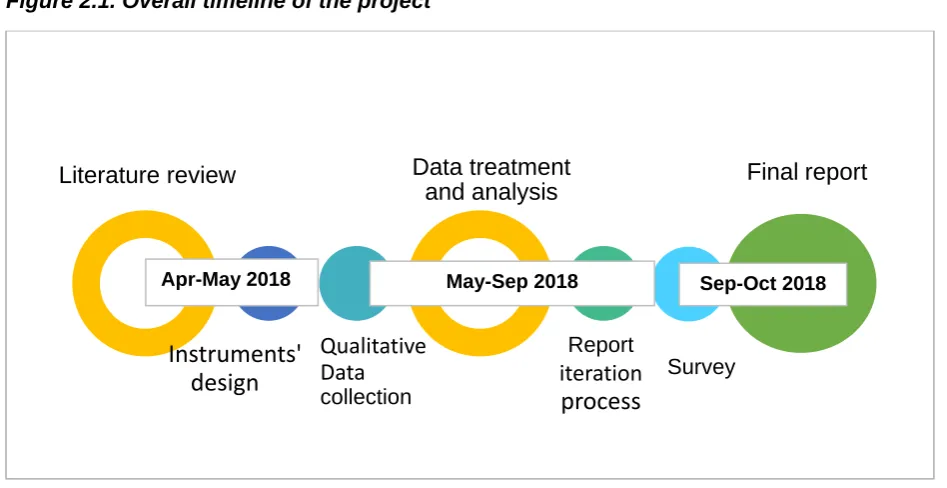
In order to address the research aims, the methodology entailed a three-strand approach (Figure 2.1).
• The first strand was a literature review with two aims: (i) to provide an overview of what is currently known about how research evidence is used within the Scottish education system and (ii) to provide an appropriate framework to inform the subsequent qualitative study.
• The second strand comprised a qualitative study and involved
interviews and focus groups with key stakeholders at different levels of the education system.
• The third strand involved an on-line validation survey to help
[image:16.595.69.543.415.659.2]complement and corroborate the findings emerging from Strands 1 and 2.
Figure 2.1. Overall timeline of the project
Literature review
Instruments' design
Qualitative Data
collection
Data treatment and analysis
Report
iteration
process
Survey
Final report
16
2.2 Strand 1: Literature review
A literature review provided an overview of research engagement and evidence in the context of education. It identified evidence on the extent to which research is embedded in the education system and explored the factors that influence the nature and level of research engagement in education. The review adopted a variant of the systematic review approach.
Systematic reviews summarise large bodies of evidence to help explain differences among studies on the same question. A systematic review
“involves the application of scientific strategies, in ways that limit bias, to the assembly, critical appraisal, and synthesis of all relevant studies that address a specific question” (Cook et al., 1997). Our variation on the systematic review approach involved limiting the time spent reviewing the source databases, due to the time allotted, while still maintaining rigorous selection criteria and
applying a systematic framework to the review approach. This approach is informed by a ‘best evidence’ model (Slavin, 2008), and generates a
sufficiently comprehensive, criterion-based analysis of the available literature. It also uses a robust, consistent method in retrieving, appraising and
synthesising the literature.
The review searched for relevant references from the year 2000 onwards in recognised bibliographic databases using relevant search terms. The search terms were focussed on the main research questions and remit of the study. Where the databases allowed, phrase searching was employed to locate literature across the following sources. Education Resources Information Centre (ERIC); British Education Index (BREI); Google Scholar; SCOPUS; The EPPI-Centre Library; The Australian Education Index (AUEI); Scottish Government website including archived pages and professional association outputs and publications etc. Given the very limited literature that focussed on the Scottish and UK context, the search included international sources that had concentrated on research engagement and evidence in the context of education. The research team drew on the literature review conducted for a previous study (Chapman et al 2015) to highlight relevant concepts of
knowledge mobilisation and how other professions, mainly the medical sector, use data and evidence.
The selection criteria were guided by the terms of reference of the project and, where possible, assessments about the quality/ strength of the evidence to support claims were made. Key criteria included:
17 • Robust peer-reviewed methodology • Quality of data and analysis
• Theoretical and/ or ideological stance
• Plausibility of claims and associations based on evidence presented.
It was not always possible to apply all of the above selection criteria to each source. In instances where it was not possible to filter for criteria such as peer reviewed literature, we took a pragmatic approach to assess the quality of the evidence and its relevance on the information provided in the text. Across the various literature sources, we referenced 63 papers and publications. These were mainly empirical in nature, ranging across quantitative and qualitative methods, with a minority including some theoretical and conceptual content and some discussing use of research evidence in policy contexts. Those that were empirical largely focused on factors influencing teachers’ use of
evidence and its mobilisation.
2.3 Strand 2: Qualitative study
Strand 2 addressed the main aims of the project: i.e. to explore and map the extent to which research evidence is used and how it flows through the education system. This strand also looked at identifying the factors that
facilitate or inhibit how research evidence influences educational practice and decisions among school actors in Scotland. This strand did this by eliciting relevant information from key stakeholders including classroom practitioners and school leadership teams and other stakeholders such as Attainment Advisors working with local authorities and the strategic leads of the RICs.
Given the paucity of relevant literature, this strand was crucial in providing up to date information about how research influences education decisions at all levels of the system in Scotland. This strand provided insight into the
perspectives and experiences of educational practitioners. A qualitative approach was appropriate as it provides ‘in-depth, intricate and detailed understanding of meaning, actions, non-observable as well as observable phenomena, attitudes, intention and behaviours (Cohen et al., 2011; p.219). Similarly, Evans (2009) states that qualitative research is valuable because it acknowledges ‘the studied phenomena as complex, developing, [and]
18
2.3.1 Cases and participant selection
The approach for Strand 2 began at the strategic level, engaging with the leads across the six RICs. Five out of the six invitees were able to take part in an interview.
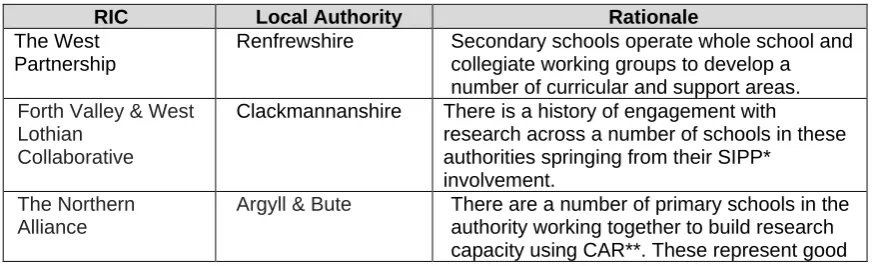
The research team then identified an appropriate local authority within each RIC area. Table 2.1 provides the sampling rationale for the authorities in which to conduct the Strand 2 interviews and focus groups. This rationale was informed by the research teams’ knowledge of research engagement-related activity across Scotland gleaned from the teams’ previous and current national research and development work with schools and local authorities. In each of the selected local authorities, the team invited the Attainment Advisor to take part in an interview. Attainment Advisors were seen as key informants for this strand, particularly given their knowledge of developments across the schools in the context of the local authority and wider Scottish education policy, and their role in building capacity of practitioners and leaders to undertake self-evaluation, enquiry and collaboration in the context of raising attainment. The research team interviewed four Attainment Advisors in total. Two advisors had other commitments that prevented them taking part in an interview during the fieldwork period.
The team worked with RIC leads to identify two schools (one primary and one secondary) in the selected local authorities. When the team contacted each school leader for interview, they also negotiated identification of an
appropriate group of practitioners in the respective schools who were invited to take part in a focus group. A total of 6 primary schools and 5 secondary schools took part in the research.
[image:19.595.65.511.622.755.2]By working down from the strategic level, the qualitative research strand was able to frame the interview data within the various regional and local policy frameworks and contextual factors. This allowed for a more nuanced and informative analysis of the nature of research evidence use across levels of the Scottish education system and the key drivers and inhibitors involved.
Table 2.1: Strand 2 Sample rationale
RIC Local Authority Rationale
The West Partnership
Renfrewshire Secondary schools operate whole school and collegiate working groups to develop a number of curricular and support areas.
Forth Valley & West Lothian
Collaborative
Clackmannanshire There is a history of engagement with
research across a number of schools in these authorities springing from their SIPP*
involvement.
The Northern Alliance
19
examples of school-led (as opposed to LA-led) initiatives.
South East Alliance East Lothian Schools are involved with Scottish Universities’ Insight Institute (supports programmes of knowledge exchange).
South West Collaborative
South Ayrshire Head teachers have been sharing data among their family schools to identify and share good practice as well as identifying areas for improvement. Local authority intends all schools will be consistently data literate to drive improvement across the system.
The Tayside Collaborative
Dundee City The council has a history of building research capacity across schools and partner
organisations. Local evidence-based
interventions and sharing evidence are a key priority for the authority.
* School Improvement Partnership Programme. ** Collaborative Action Research
2.3.2 Methods and data gathering
The research methods employed within the qualitative strand, interviews and focus groups, were designed to gather relevant information from different tiers of informants that could provide insights on the research questions. These were:
• Interviews with RIC leads
• Interviews with the Attainment Advisor responsible for the identified local authority
• Interviews with each school’s head teacher. Often the head teacher would either also invite other members of their senior management team such as depute head teachers to join the interview or invite them to be interviewed separately;
• Focus groups with practitioners including class teachers and CLD and nursery staff.
[image:20.595.67.501.84.271.2]Interviews were typically conducted face-to-face, but for some of the Attainment Advisors and RIC leads telephone interviews were used when requested by the informant.
Table 2.2: Breakdown of informants involved in the qualitative strand
Individual interviews conducted
Head teachers 6
Depute head teachers / other senior management team members
8
Principal teachers 3
Attainment Advisors 4
RIC leads 5
Number of focus groups with practitioners (Inc. teachers, CLD, nursery staff)
20
The data gathering processes were completed between May and September 2018. The total numbers of interviews and focus groups completed during this timeframe are contained in Table 2.2. In total, 67 individuals took part in the qualitative strand.
2.3.3 Processing data and thematic analysis
All interviews and focus groups were audio recorded and transcribed into MS word documents. Transcriptions were analysed using the DEDOOSE 8.0.42 qualitative analysis program. Each file was initially coded using 54 codes generated from the research questions, including sub questions used in the interview and focus group topic guides, as well as themes emerging from the literature review. This initial analytical framework was further developed as other codes were generated from each transcript. The codes were organised into thematic clusters that corresponded to the research aims and questions of the study.
2.3.4 Limitations
Qualitative methods provide in-depth insights regarding participants’
perspectives and practices. However, even when the sampling and selection of participants is for the purpose of obtaining a range of insights and
perspectives, the findings cannot be generalised to all of the participant groups.
Two strategies were selected to address this limitation. First, Strand 3 of the study involves a national survey to validate the qualitative findings to assess the representativeness of the qualitative responses. Second, findings from the qualitative strand were triangulated to compare emerging themes within and across the participant groups. This analysis suggested that there was a strong level of consensus across participants in both the quantitative and qualitative strands of the project. The relatively high levels of engagement with data and research across participants and respondents could indicate that those
21
2.4 Strand 3: Validation survey
The emerging qualitative findings from Strands 1 and 2 informed the design and content of an on-line survey of practitioners. The survey complemented and corroborated the findings of the literature review and qualitative strand. It also supported the generalisability of the findings from Strand 2. Teachers across Scotland were invited to participate via directors of education,
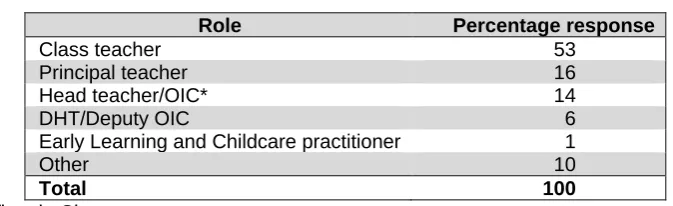
professional associations such the Education Institute for Scotland (EIS) and the Robert Owen Centre’s educational networks as well as through Education Scotland contacts. In total, 1, 036 responses were received by the time the survey closed. Details of who responded are summarised in Chapter 5 of this report.
2.4.1 Analysis of quantitative data
22
3. Literature Review:
3.1 Introduction
The main aims of the literature review for this study were to provide an overview of what is currently known about how research evidence is used within the Scottish education system. Theoretical literature and empirical evidence from outside of Scotland was used to support and develop this understanding.
The role of research in education in Scotland is one that is often discussed. The ways in which teachers and practitioners engage not only with, but in, research is of increasing interest to local and national governments, regulatory bodies and academic institutions, as well as the practitioners themselves. Previous research in Scotland (Chapman et al., 2015) highlights how the use of educational research varies between practitioners, between schools and between local authorities. This section summarises the key findings from the review. The findings are arranged under the following themes that align with relevant research questions for the study:
• national policy stance and context
• importance of practitioner engagement with research • extent of practitioner engagement with research • factors influencing practitioner research engagement.
3.2 National policy stance and context
Since the Governmental acceptance of the recommendations of the
Donaldson report, there has been a general agreement that practitioners in Scotland should engage in professional learning in a regular and meaningful way as part of their normal activity (Donaldson, 2010). Indeed, teachers’ roles have developed to incorporate a greater focus on professional development, with practitioner enquiry being a key theme in their professional identify (Forde, 2015; De Paor and Murphy, 2018).
23
standards1. These provide the overarching framework for assessment and the use of data within CfE. In particular, “Building the Curriculum 5: A Framework for Assessment: Recognising achievement, profiling and reporting” illustrates the wide range of information and evidence that can be used to assess
learners’ progress and achievements. These guidance documents, therefore, reflect the Scottish Government’s expectation that teachers should be able to gather and use information such as:
“Pupil progress records (PPRs), Individualised Educational Programmes (IEPs); Coordinated Support Plans (CSPs); class teacher assessment records, whole school/centre; monitoring, tracking and profiling records over time, attainment data including SQA; information, personal, pastoral and learning support needs information and strategies”
(Scottish Government 2010. p7)
Education Scotland has produced national guidance on Curriculum for Excellence (Education Scotland 2016), which also clarifies expectations around assessment and the use of appropriate data and information. In 2017, the Scottish Government published the National Improvement Framework for Scottish Education, which aims to ensure the better use and national reporting of data on key improvement priorities. This, together with the other
inter-related national policy and guidance documents, again reinforced the
emphasis on the role of data within the education system. Indeed, the latest iteration of the National Improvement Framework highlights the importance of data and ‘all available evidence on educational performance’ within the
developing RICs (Scottish Government 2012).
In the recent Research Strategy for Scottish Education (2017), the Scottish Government recognises the role of independent research in supporting continuous improvement in the education system. The strategy draws on recommendations from a report by the OECD (2015) which recommended that developing an evidence base from evaluation and research was essential in establishing and embedding ‘what works’ within the education sector in Scotland. Before publication of the Research Strategy, a round table discussion of educational researchers and Scottish Government
representatives noted that there was a professional gap between practitioners and researchers and that dialogue between practitioners and researchers is
24
an influential factor in translating research into classroom practice (Royal Society of Edinburgh, 2016). The literature indicates that there is a lack of dialogue between the academic and practitioner communities (Williams and Coles, 2007). This is exacerbated by teachers’ level of understanding of statistical and quantitative research methods and perceptions regarding what ‘research’ is. In their study of teachers’ engagement with research in the Republic of Ireland, De Paor and Murphy (2018), found that teachers often believed that research could only be valuable if it was genuinely ‘scientific’ and heavily quantitative in nature. However, as we shall see, the findings
presented in this report suggest a somewhat different perspective amongst Scottish practitioners.
In recent years, UK politicians and governments, according to Payne (2013), have placed a greater value on certain types of research and data.
Organisations such as Skills Development Scotland (SDS) and the Scottish Qualifications Authority (SQA) have worked with the Scottish Government in recent years to develop ideas about desirable data, evidence and capacities needed to assess effectiveness with the context of the Curriculum for
Excellence and strategies such as the Scottish Attainment Challenge (Payne, 2013). Ozga (2004) has written that policy makers in Scotland and beyond have looked at ways to use evidence to inform practice in education and that this has developed a focus on ‘what works’. In their review, the OECD stated that in Scotland:
Insufficient use is made of assessment information to support children’s learning progress and curriculum development. Too many teachers are unclear what should be assessed in relation to the Experiences and Outcomes, which blurs the connection between assessment and improvement.
OECD 2015 p.11
The OECD review also recognised the importance of systematic formative evidence and professional judgement, however, some academic researchers such as Payne (2013) have expressed their concerns about the heavy
reliance and emphasis on quantitative data in Scottish Education policy. Although the Scottish Government appreciates the value and importance of educational research, Payne (2013) suggests that their focus on quantitative data, and their understanding of ‘real’ research, i.e.: empirical and often quasi-experimental based, has implications for the expectations and perceptions of teachers and practitioners regarding the nature of research (Payne 2013).
25
If we are to achieve the aspiration of teachers being leaders of educational improvement, they need to develop expertise in using research, inquiry and reflection as part of their daily skill set. Outstanding teachers often use research and data to identify areas for improvement and take direct action to address any underperformance.
Donaldson 2010. p70
The GTCS Standards for Registration have embedded the expectation that teachers will have a level of research awareness as part of their professional role. For example, item 2.3.2 states that teachers should have “Have knowledge and understanding of the importance of research and engagement in
professional enquiry” (GTCS 2012, p. 12) and that registered teachers should:
“Know how to access and apply relevant findings from educational research; know how to engage critically in enquiry, research and evaluation individually or collaboratively, and apply this in order to improve teaching and learning”.
GTCS 2012 p.12
Muschamp (2013) believes that research should play an integral role in teaching and cites Hargreaves (1996) who also reports that there is a strong role for research in educational practice, arguing that education should
become an evidence-based profession, much like that of medicine. However, Hargreaves argues that there should not be a reliance on narrow data
collection. Humes (2007) asks whether teaching can ‘ever become a fully research-based profession in the way that, arguably, medicine is?’ (p. 81). In a literature review of how knowledge is mobilised into action, Chapman also cautioned that:
… Education is underpinned by a differing set of values and beliefs that lead to certain assumptions about the nature of the teaching and learning process which are quite distinct from effective processes associated with medical healthcare. As Mitton et al. (2007) helpfully remind us, there is not one ‘off the shelf’ set of recommendations for developing or recommending knowledge into action strategies.
Chapman et al 2015
3.3 Importance of practitioner engagement with research
26
1975). More recent literature argues that being actively and collaboratively engaged in inquiry is critical to school and teacher effectiveness (Elliott, 2009; Hargreaves & Fullan, 2012). Some such as Hamersley (1993) argue that teacher research can be useful but is limited and ‘does not substitute for educational research of a more conventional kind’ (Hamersley 1993 p. 441). Rütten and Gelius (2014) argue that it is vital for practitioners, in their case allied health professionals, to engage with research and draw from innovations and tested interventions in order to improve their practice.
Reeves et al (2010) reported on a pilot project funded by the Scottish Government and GTCS that looked at how practitioner research could
contribute to requirement of the Chartered Teacher Initiative on pupil learning. Their study found that participants reported the practitioner research
experience improved their understanding of learning theory and wider literature, improved their analytical skills and reflection and increased their attention to issues of evidence and pupil learning. Participants valued their enquiry projects, seeing them as developing their teaching. While Reeves et al (2010) state that this finding requires further research to corroborate the
impact on classroom practice and they argue that the political framing of such activity is crucial. They stress that if practitioner research is used as part of a strategy to tackle promoting attainment then it cannot be ‘disembodied from the particularities of classroom life’ or ignore aspects of professional
judgement in favour of privileging that evidence seen as objective and
generalisable. Ozga (2004) also refers to how the Chartered Teacher Initiative reflected the Scottish educational policy stance on aligning the use of
research evidence with the development of the teacher profession. This is also reflected in teachers’ performance measurement and review.
Christie and Menter (2009) provide insights on building teachers’ capacity to engage with and conduct their own research. They reflect on initiatives such as the ‘Schools of Ambition’ and the Applied Education Research Scheme (AERS) in Scotland. They suggest that indicates a ‘key element of effective capacity building lies in collaborative approaches’. Christie and Menter argue there are sound reasons for using collaborative approaches to build teachers’ research capacity and skills.
Collaborative approaches to research are arguably more ecologically valid, especially where research teams include the professional practitioners who actually mediate the learning processes. Furthermore, collaborative approaches are arguably both economically and political sound. Collaborative approaches offer the potential for pooling scarce resources in terms of methodological knowledge and skill and they articulate well with a wide range of political policy.
27
Such arguments align well with aspects of the SIPP collaborative model and its rationale. The benefits of collaborative teacher enquiry for effective practice have been consistently demonstrated in the international research literature (e.g. Fullan, 2013, Chapman et al. 2012, Chapman and Hadfield 2010,
Ainscow et al., 2012, Cochran-Smith and Lytle, 1993, p. 18-19). The literature reveals that practitioner inquiry can support school development in challenging times but only if it facilitates teacher agency rather being a top-down
imposition (Cochran-Smith and Lytle, 2009). Chapman et al (2011) in their evaluation of the English Extra Mile initiative argue that school improvement that is informed by action research and that tackles inequality is much more likely to emerge as a result of collective capacity, that empowers teachers, rather than through centrally driven, top-down mandates underpinned by accountability mechanisms.
Judkins et al. (2014) reported the perceived benefits of using research as: encouraging more deep reflection on teaching practice; challenging thinking; providing new and innovative ideas to inform teaching and learning and encouraging teachers to look beyond school and gain a wider perspective. Teachers also reported benefits of their use of research for learners as being improved achievements and attitude, teachers creating more varied and innovative lessons and learners being more engaged.
Forde (2015) notes that there has been a growing appreciation of teacher research in Scotland, but there remains confusion over what this is and the ways in which it may support professional practice. With the introduction of Curriculum for Excellence, Forde (2015) argues teachers’ roles have
developed, to incorporate a greater focus on professional development, with practitioner enquiry being understood as a dominant theme of this.
De Paor and Murphy (2018), state that ‘teacher research has been identified as a transformative model of (continuous professional development)’ (p. 169). This is further supported by Cochran-Smith and Lytle (1993, p. 18-19), who claim ‘teachers who engage in self-directed inquiry into their own work in classrooms find the process intellectually satisfying’.
28
practice, they argue, can be seen to influence professional development. The two processes should not be seen as mutually exclusive, but rather,
co-dependant. Developing an appreciation of the complex relationship between professional learning and the complexities of practice is, they claim, essential in securing sustainable change. This can be seen as reflected in how research is perceived by practitioners. As discussed by Brown (2007), the relevance of research to everyday practice is important for practitioners, but the importance of practice for research is less well considered.
Describing practitioner enquiry as a means to support professional learning is further considered by Reeves and Drew (2013), who describe the typical perception of enquiry and learning as being evaluative and having a specific end-point. What is important, they argue, is appreciating the cyclical nature of enquiry, as knowledge feeds into and influences practice, which, in itself, generates new knowledge. What is needed, they argue, is ‘a system which is capable of continually creating, disseminating and testing knowledge across and around the network of activities that it performs’ (Reeves and Drew, 2013, p. 46).
The School Improvement Partnership Programme (SIPP)2in Scotland
conducted as a pilot between 2013-15 included Collaborative Action Research (CAR) as an integral component. The SIPP was a collaborative school
improvement model that promoted working across classrooms, schools and local authorities to tackle educational inequity with teachers working together using CAR to innovate, test and refine new approaches to tackle the
attainment gap. A team of University of Glasgow researchers worked with Education Scotland and local authorities to broker and facilitate partnerships within and across schools in a number of Scottish local authorities. This group supported teachers in building their capacity to conduct CAR to assess the impact of their innovation projects. The SIPP model encouraged staff to learn from each other, experiment with their practice and monitor and evaluate change.
The evaluation of the SIPP found that practitioner engagement with research was facilitated by establishing the key overall principles for CAR; local
authorities and head teachers ensuring time for teachers to develop
2
29
professional dialogue, networks and plan their enquiry projects; promoting leadership at all levels; ensuring practitioner ownership of the enquiry process and supporting practitioners to develop appropriate enquiry methods
(Chapman et al, 2016).
3.4 Extent of practitioner engagement with research
There is little empirical evidence in the literature regarding the scale and nature of practitioner engagement with external research in either Scotland or elsewhere. What evidence there is suggests that the use of evidence and engagement in research in educational practice in the UK remains limited and is often lacking in depth (Goldacre 2013; Rickinson, 2005). The literature tends to focus specifically on the extent of practitioner action research, including its benefits and the factors that promote it. Judkins et al. (2014) report that evidence-informed practice in education in the UK is in its inception and evidence is patchy and dependent on individuals' enthusiasm and
experience of enquiry.
3.5 Factors influencing practitioner research engagement
In comparison to available literature on the extent and nature of practitioner engagement with research there is more literature on the factors that facilitate practitioners’ own research and, to some extent, their engagement with
external research evidence.
Perceived relevance of research evidence and activity
A common theme in the UK and international literature is that practitioners seek knowledge that can be seen to have a clear and applied use for their practice. It appears that research is most valued when it deals with specific aspects of practice; is focussed on classroom activity; and when its
application results in effective learning of students (Brown, 2007; Galton, 2000; Ozga 2004). Brown (2007) found, however, that practitioners in England were less likely to be interested in research that supported
teachers in interpreting data, or in designing their own research project. As we shall see in Chapter 4, this is at odds with research elsewhere in this report, which indicates that teachers can value engaging in their own research. However, again, the important motivating factor is that such engagement will help improve their practice and ultimately benefit learners.
Relatedly, practitioners’ sustained investment in enquiry and research has been found to be supported by access to what they perceive to be
30
An evaluation of the School Improvement Programme (SIPP) in Scotland found that establishing collaborative enquiry teams of practitioners working within and across schools promoted teacher’s confidence to engage with research and use data. This included accessing and acting on external research evidence (Chapman et al 2016, 2015). Judkins et al. (2014) also found that teachers are more likely to engage with research if they are practitioner researchers themselves.
Research/ information and data literacy
Practitioners’ information literacy may be a factor limiting their use of research information, further exacerbated by perceived challenges of lack of time and lack of ready access to information sources (Williams and Coles, 2007). In their research, Williams and Coles (2007) surveyed 312 teachers and 78 head teachers from nursery, primary and secondary schools in Scotland, England and Wales and supplemented this with qualitative research. The research found that practitioner attitudes to the use of research evidence was generally positive but there were inhibiting factors such as lack of time and difficulty in accessing sources. The study found that information literacy was an important skill in supporting research engagement. The researchers reported teachers were:
Less confident in finding and using research information than they are in dealing with information generally…they expressed concerns about the construction of effective search strategies and were generally less confident in evaluating and using research information.
Williams & Coles, 2007 p.204.
Williams and Cole (2007) found that UK teachers valued the internet as a source of ideas and knowledge This was partly because of ease of access but also, it is argued, because of ‘issues of trust’ and credibility (Williams and Coles, 2007, p. 205). However, the authors stress that teachers need to be aware of a broader range of sources than they currently use. They suggest the need for more effective local information dissemination and networking strategies. In this regard, Williams and Coles (2007) commend the establishing of portals and consolidated sites to provide access to relevant research evidence and information. However, they also stress such sources are only likely to make a significant difference if there is:
…The development of a research culture and ethos (e.g. Hargreaves, 1999; Nutley & Davies, 2000), but also on the development of an information culture and ethos.
31
Building capacity and networks for research engagement
Canadian research conducted by Cooper et al (2017) found robust
networks to share research evidence along with and leadership structures to help ‘filter’ research were important to translate research into action. Recommendations from this study included time was crucial along with training to build practitioners’ capacity regarding research literacy and evidence-informed practices.
Evidence from the Education Endowment Foundation (Speight et al 2016) reveals that teachers who took part in an action research project, the
Research into Practice – Evidence-informed Continuing Professional
Development project, to improve feedback to pupils struggled to engage with academic literature that could inform their practice. While attitudes toward using research evidence improved, there was no evidence teachers were more likely to use research to inform their teaching practice after being involved in the pilot. The teachers found it difficult to understand how best to use the literature and how it was relevant to what they did in their classroom. There were also challenges of finding time for teachers to implement lessons from research into their practice. This contrasts with findings from the
evaluation of SIPP (Chapman et al 2016, 2015), which found teams of
teachers could effectively develop enquiry networks that had a sustained and positive impact on their practice and learner outcomes. The difference
between the pilots could be due to the differences in the nature of the
practitioner action research and how this process was supported. The SIPP adopted a collaborative approach framed by particular principles and initial support from university researchers over a three-year period to build capacity. In contrast, the action research reported by EEF involved a one-year pilot. SIPP used the whole of the first year to establish shared understanding of the project approach, building trust and a networked infrastructure to support teachers’ collaborative action research. It also involved activity to ensure strategic buy in and allocation of time for teachers to plan and acquire and use evidence. As Speight et al (2016) note, their evaluation found that the strength of teacher networks and time available to use research findings appeared to be important factors influencing the Research into Practice pilot.
Research - practitioner dialogue and access to evidence
32
Potential issues regarding academic research ‘fitting’ with policy requirements can limit availability of evidence in the system, for example difference in
priorities and timescales (Whitty, 2006; Humes, 2007). In Scotland, there have been efforts to bridge this divide with an increased focus on teacher research and with Government making research findings available (Forde, 2015;
Chapman et al., 2015).
Importantly, Williams and Coles (2007) note from their UK study that it cannot be assumed research findings will reach even those teachers willing to seek out information and the research community should build into their research activity ‘appropriate dissemination strategies’ and produce outputs including reviews and summaries of research in an accessible format and style. But Williams and Coles conclude with a caution that even when teacher-friendly summaries and outputs are provided by academics:
‘… The provision of a targeted range of pre-digested information cannot compensate for the richness of the knowledge base available to a teacher with the motivation and skills to search more widely.’
Williams & Coles, 2007 p.205
Thus, implying that summary information alone is not sufficient and teachers also require access to more detailed knowledge along with a desire and skills to elicit such knowledge.
Cooper et al (2017) in a Canadian study, found teachers acquired information, in this case about assessment practices, largely from other teachers, rather than from research. When asked what would promote access to research evidence, teachers requested research summaries, videos, engaging
websites, professional readings, but most of all having opportunities to share ideas with colleagues. Like Williams and Cole, Cooper et al (2017) stress:
Educational researchers have an important and increasing responsibility to ensure their research is shared with practitioners in a way that is relevant, meaningful, and easy to comprehend
Cooper et al (2017. p206)
Ozga (2004) reminds us he transfer of research evidence and related knowledge to education practice is complex and relies on particular conditions, stating that:
Educational research is difficult to transfer to practice because its findings may vary with context, or they may be interpreted differently, or they may contradict policy directions
33
She argues the complex interplay and relationship between researchers, policy makers and practitioners and their agendas should be considered when trying to understand the knowledge transfer and mobilisation.
Promoting an environment for, and culture of, research engagement
Creating the right environment to nurture a culture of evidence-informed practice is a theme in the literature regarding promoting practitioner
engagement with and in research. For example, practitioners are more likely to become engaged in research and enquiry when they feel ownership and have agency in their own learning and inquiry processes (Schneller and Butler 2015).
Specialist and partner professionals are seen as have a key role in supporting practitioners’ research activity but also for building their capacity to be more research capable. For example, schools’ speech and language therapists (SLT) have been found to have a key role in demonstrating usefulness of research evidence, nurturing staff confidence to take risks with practice informed by research evidence (Judkins et al.,2014). The role of educational psychologists in building research capacity in the education system capacity and fostering practitioners’ research skills has been identified by Government.
Educational Psychologists are in a key position to support and carry out research to evolve an evidence base for educational practice, inform policy and strategy, explore new ideas and to evaluate and encourage reflective practice.3
The likelihood of practitioner engagement with research has also been
associated with levels of professional development. Galton (2000) concluded from a survey of 302 teachers that less experienced members of staff
appeared to use research less frequently. Further, the least qualified and experienced members of staff were less likely to cite examples of relevant research. Galton, therefore, suggests professional development is critical in the use, appreciation and application of research. Galton’s research is likely to have less relevance to the situation in Scotland as it pre-dates the policy focus in Scotland on increasing the research content and emphasis within initial teacher education.
3 Retrieved from
34
Government and other organisations and institutions can shape practitioner thinking about educational research and influence structural factors, provide advice and practical support (Humes, 2007). There are some important
initiatives to systematically support practitioner engagement and participation in research, for example, the General Teaching Council for Scotland (GTCS) conducted the Teacher Researcher Programme (TRP) 2003-14 but there is no empirical evidence available of its overall impact.
Humes (2007) argues that practitioners in Scotland and elsewhere, if they are to truly appreciate research as a professional activity, should be encouraged through a culture which values such enquiry as a long-term perspective. He further argues that it will be difficult to maintain teachers’ interest in such activities, if schools and local or national governments do not support this process. Humes (2007) considered a range of structural influences that influence educational research in Scotland, in particular, the variety of organisations and institutions that can foster and support practitioner
engagement in research. One such example was given as the GTCS’ Teacher Researcher Programme (TRP). The TRP initiative was formed in 2003, to encourage practitioners to both engage with, and participate in, research activities (GTCS, 2004). The support offered to practitioners wishing to undertake research included financial assistance, access to facilities and resources and providing avenues with which to disseminate findings. The TRP was suspended in 2014, in order to revise the strategy, ensuring it was fully responding to the needs of the profession (GTCS, online).
Humes (2007) also notes the role of curriculum bodies, including what is now Education Scotland in establishing relationships between teachers and
research. Humes commented that educational research, supported by
systematic reviews of national and international evidence, supported both the implementation of the curriculum, as well as providing an opportunity to
evaluate the impact of resources and interventions. Yet, despite the promise of a greater research agenda, Humes argued changes within the organisation had led to limited impact. The research for our study suggests that the
evolving role of the Attainment Advisors in Education Scotland might lead to greater impact than has previously been reported. Payne (2013) argues that Education Scotland’s commissions little research within Scotland, instead promoting research conducted elsewhere. The reasons for this are not made clear but Payne suggests that this may go some way in explaining why
teachers in Scotland spend little time in conducting their own research (Brown, 2007).
35
Scottish Education Research Association (SERA), formed in 1974, aims to contribute to ‘the improvement of education through promoting and sustaining high quality educational research’ (SERA, 2006, p.1). SERA has links with the both the British and European Educational Research Associations, as well as being a founding member of the World Educational Research Association in 2009. Amongst such agencies, SERA promotes the importance of educational research within an international context (Payne, 2013).
As a membership organisation, SERA is open to individuals with either a professional or academic interest in educational research in Scotland. As Nisbet (2005) identifies, the makeup of the core of this membership has fluctuated regarding representation from practitioners, researchers and policy makers. Recent trends have shown teachers and practitioners account for less than ten percent of all members, whilst the majority of memberships stem from academic disciplines (Payne, 2013). SERA membership has fallen in recent years (Payne, 2013) and the low percentage of teachers and
practitioners who make up the membership may reflect the lack of engagement with research from professionals.
3.6 Literature review summary and implications
The main aims of the literature review were to provide an overview of what is currently known about how research evidence is used within the Scottish education system and what factors influences this. These findings would then inform the qualitative study (Strand 2). Before summarising the main themes across the research literature regarding how research evidence and data are used in the education system it is worth highlighting that the literature largely focuses on teachers’ use of extant knowledge resulting from academic
research studies that can inform practice. Further, the majority of the literature focuses on the factors that influence teachers’ access and application of such research evidence. There is also a body of literature that does address
teachers’ own classroom based research, but again, this largely examines those factors that inhibit or facilitate such practice. The key findings from our literature review can, therefore, be summarised as:
National policy stance and context
• The policy context in Scotland has created an expectation that practitioners in Scotland should engage in professional learning in a regular and meaningful way as part of their normal activity.
36
Importance of practitioner engagement with research
• Government, OECD and international research literature concur that teachers’ engagement with research is crucial for school and teacher effectiveness within the education system in Scotland.
• The reported benefits of practitioners engaging with research include: encouraging deeper critical reflection on teaching practice; providing new and innovative ideas to inform teaching and learning; encouraging teachers to look beyond their own school and gain a wider perspective; and improved learner engagement and attitude and learners being more engaged. Teachers who engage in self-directed inquiry into their own work in classrooms can find the process intellectually satisfying.
• The literature indicates practitioner engagement with and in research can help support school improvement in challenging times when
resources are limited but only if it facilitates teacher agency rather being imposed from above.
Extent of practitioner engagement with research
• There is little literature on the extent and nature of practitioner
engagement with research in Scotland. There is some indication that the use of educational research in Scotland varies between
practitioners, between schools and between local authorities; that evidence informed practice is in its inception; and use of evidence is dependent on individuals' enthusiasm and experience for the
opportunity to engage with enquiry.
Factors influencing practitioner research engagement
• A considerable body of literature regarding the factors influencing practitioner engagement with research exists. A common theme is that practitioners seek knowledge which can be clearly seen to have an application to practice. Research is most valued when it demonstrates effective learning, deals with specific aspects of practice or is focussed on classroom activity.
37
• While practitioner attitudes to the use of research evidence are
generally positive, their level of information literacy and understanding and/ or confidence regarding statistical and quantitative research methods can be a factor limiting their use of research information and data. This exacerbates the reported challenges of finding time to access or conduct research and to access information sources.
• Teachers value social media as an accessible source of ideas and knowledge. The use of Twitter and Facebook requires users to have a level of critical awareness to assess the credibility and validity of the knowledge available.
• Establishing online portals to provide access to relevant research evidence and information is important. Such sources are only likely to make a significant difference if there is a culture of research
engagement across the profession, time to access this material and if the available evidence is in a form teachers can readily understand and apply.
• Specialist and partner professionals are seen as having a key role in supporting practitioners’ research activity and also in building their capacity to be more research engaged.
These findings provided insights that augmented the research questions pertinent for the Strand 2 qualitative research and were reflected in the topics covered in the interviews and focus groups. Conceptually, these findings can be grouped into two broad themes:
a) Practitioner agency and culture, Practitioners are more likely to be engaged in enquiry when they have high levels of ownership and agency regarding their professional practice and related research engagement. This is supported by a school and wider professional culture where such agency is valued, promoted and facilitated by leaders and policies. This emphasises the importance of:
b) Structural factors affect practitioners’ ability to engage in and with
research beyond school-level data. This is particularly the case for
38
4. Strand 2: Qualitative Research
4.1 Introduction
This section presents the qualitative findings emerging from the focus groups and interviews involving teachers, head teachers, Attainment Advisors and RIC leads. The findings are reported in sections that reflect the main research aims and related research questions, i.e.:
1. How do practitioners in Scotland engage in research and act on research evidence?
• What types of research, evidence and data do educational practitioners currently use to inform, plan and develop teaching interventions?
• How do those who make or influence school-, cluster- and local authority-level education decisions access research evidence?
• To what extent, and how, do educational practitioners critically evaluate the research evidence used to inform their pedagogy?
2. What factors influence practitioners’ ability to make the best use of evidence?
• What skills and resources do educatio