R E S E A R C H
Open Access
Retail sector distribution chains for malaria
treatment in the developing world: a review of
the literature
Edith Patouillard
1*, Kara G Hanson
1, Catherine A Goodman
1,2Abstract
Background:In many low-income countries, the retail sector plays an important role in the treatment of malaria and is increasingly being considered as a channel for improving medicine availability. Retailers are the last link in a distribution chain and their supply sources are likely to have an important influence on the availability, quality and price of malaria treatment. This article presents the findings of a systematic literature review on the retail sector distribution chain for malaria treatment in low and middle-income countries.
Methods:Publication databases were searched using key terms relevant to the distribution chain serving all types of anti-malarial retailers. Organizations involved in malaria treatment and distribution chain related activities were contacted to identify unpublished studies.
Results:A total of 32 references distributed across 12 developing countries were identified. The distribution chain had a pyramid shape with numerous suppliers at the bottom and fewer at the top. The chain supplying rural and less-formal outlets was made of more levels than that serving urban and more formal outlets. Wholesale markets tended to be relatively concentrated, especially at the top of the chain where few importers accounted for most of the anti-malarial volumes sold. Wholesale price mark-ups varied across chain levels, ranging from 27% to 99% at the top of the chain, 8% at intermediate level (one study only) and 2% to 67% at the level supplying retailers directly. Retail mark-ups tended to be higher, and varied across outlet types, ranging from 3% to 566% in
pharmacies, 29% to 669% in drug shops and 100% to 233% in general shops. Information on pricing determinants was very limited.
Conclusions:Evidence on the distribution chain for retail sector malaria treatment was mainly descriptive and lacked representative data on a national scale. These are important limitations in the advent of the Affordable Medicine Facility for Malaria, which aims to increase consumer access to artemisinin-based combination therapy (ACT), through a subsidy introduced at the top of the distribution chain. This review calls for rigorous distribution chain analysis, notably on the factors that influence ACT availability and prices in order to contribute to efforts towards improved access to effective malaria treatment.
Background
In many low- and middle-income countries, the retail sector plays an important role in the provision of malaria treatment [1-14]. For example, it was the first source of care for around 45% of households seeking malaria treatment across four communities in Enugu State, Nigeria [15] and in three rural districts of
Tanzania nearly 40% of all anti-malarial volumes were dispensed within the retail sector [16]. Retail providers tend to operate closer to homes [15,17-19] and offer a more reliable and wider range of drugs than public health providers [2,11,14,18-20], sometimes at lower costs [14,21-23].
The market for anti-malarial drugs includes artemisi-nin-based combination therapy (ACT), which is the most effective drug regimen and the official first-line treatment in most developing countries, non-artemisinin drugs, some of which were recommended before the * Correspondence: [email protected]
1London School of Hygiene and Tropical Medicine, Keppel Street, London,
UK
ACT era (e.g. chloroquine, amodiaquine, sulphadoxine-pyrimethamine and quinine), and artemisinin mono-therapies. These three product types are available under different formulations including tablets, suppositories, suspensions, syrups and liquid injectables. Some are sold under their proprietary names, and referred to as inno-vator brands when they are products patented by their originators, or branded generics in the case of generic versions of innovator products marketed under a differ-ent name. Others are sold as unbranded generics with-out a proprietary name.
Within the retail market, these products are sold by a wide range of providers whose characteristics vary sub-stantially across settings. Providers can be pharmacies, drug shops, grocery stores, market stalls or itinerant hawkers. In East and West Africa, drug shops that spe-cialize in handling drugs play a major role, such as in Tanzania where they accounted for 88% of retail sector anti-malarial sales volumes [16]. Mobile vendors are common in West Africa, but are rarely found in East and Southern Africa [24]. Outlets staffed by trained pharmacists are rare in all countries [17,25], and con-centrated in urban areas, whilst drug shops can be found in both urban and more densely populated rural areas. Finally, general shops that sell drugs alongside household goods are often the only medicine retailers in more remote rural villages.
Pharmacies are generally authorized to stock both pre-scription-only drugs and over-the-counter (OTC) pro-ducts, while other outlets can only sell OTC drugs, although in practice some illegally stock prescription-only medicines [24]. Whilst anti-malarial drug availabil-ity is relatively high in the retail sector [19,25-30], the range of anti-malarials is generally lower in outlets which are more remote or have less qualified staff [19,25,28,31]. ACT is rarely available outside facilities and pharmacies because of their high price relative to older, less effective alternatives. For example, in six dis-tricts of Zambia, ACT accounted for only 7% of all anti-malarials sold in the retail sector [33] and in Tanzania, the old monotherapy sulphadoxine-pyrimethamine (SP) was the most commonly retailed anti-malarial, followed by artemisinin monotherapies [34]. The availability of artemisinin monotherapies is highly variable, but a major cause of concern as their use is likely to contri-bute to the development of artemisinin resistance [35].
Other concerns around the quality of care provided in the retail sector relate to retailers’lack of qualifications, poor knowledge of drugs and dosages [36-39], and stocking of unregistered [28,31] and sometimes substan-dard or counterfeit drugs [6,19,40-44]. Although care provided by pharmacies is far from perfect [45,46], most of these concerns are directed to non-pharmacy outlets. Drug shop staff are rarely qualified pharmacists [47],
having at best a basic nursing background [24,26] or sometimes just secondary education [47]. General retai-lers have even fewer qualifications and some are illiter-ate [18,20].
These drug retailers are the last link in a chain of sup-pliers and their practices are likely to be heavily influ-enced by what happens further up the distribution chain. Retail availability, for instance, will be affected by which products are available from suppliers, the market-ing strategies used to promote certain drugs, and the registration of drugs and regulation of providers further up the chain. Retail prices will be influenced by whole-sale prices, and the cost of obtaining and storing goods. Retail quality will be determined by how products have been handled and stored higher up the chain. In turn, the behaviour of suppliers in the chain will be influ-enced by the nature of competition and regulation that they face.
Understanding the distribution chain for anti-malarials is, therefore, crucial in designing interventions to improve retail sector care. This is of particular impor-tance in the light of the implementation of the Afford-able Medicines Facility for Malaria (AMFm), which will rely on existing distribution chains to deliver heavily subsidized ACT to consumers. This article aims to sup-port such initiatives by summarizing the current state of knowledge on the retail sector distribution chain for malaria treatment in low- and middle-income countries.
Methods
Scope of the review
The retail sector distribution chain refers to all levels of the in-country distribution chain, in other words to the chain of wholesalers serving the retail sector. The focus is on suppliers who operate from the point where commod-ities leave the factory gate or port of entry down to those directly supplying retailers. For the purpose of the review, a taxonomy of suppliers was developed (Figure 1). Suppli-ers who sell directly to retailSuppli-ers are termedterminal sup-pliers. These buy from upstream suppliers, referred to as primarysuppliers if they are the point of entry into the distribution chain, orintermediatesuppliers if they them-selves obtain drugs from primary suppliers.
Literature search and review strategies
middle income countries and contacting key informants within these institutions (the William J. Clinton Founda-tion, Medicines for Malaria Venture, Dalberg Global Development Advisors, Health Action International Europe, MIT-Zaragoza International Logistics Program). Searches were finalized in February 2009.
Studies were included if they provided data specifically on anti-malarials for products stocked, volume sold and mark-ups. Studies that looked at the structure of the dis-tribution chain, in terms of supply sources, supplier num-bers and characteristics for both anti-malarials and medicines in general were also included on the basis that anti-malarials are expected to follow the same distribution route as other drugs and represent an important share of all drugs distributed in developing countries.
The review focuses on wholesalers but includes two aspects of retailer behaviour relevant to the study of the distribution chain: their sources of supply and the mark-up they add at the retail level. Other aspects of the retail market, such as its structure and operations have been reviewed elsewhere [24]. Studies were excluded if they compared retail prices to international reference prices without any information on price components across distribution chain levels.
Results
Thirty-two references exploring the distribution chain for anti-malarials and pharmaceutical drugs in general were identified. The evidence they provide focuses mainly on supply sources, with more limited attention
Intermediate 2 supplier
Terminal supplier
Retail supplier
Consumer Intermediate 1
supplier Manufacturer
Primary supplier
[image:3.595.59.535.90.482.2]Scope of the review
to the number and characteristics of suppliers, and anti-malarial sales volumes and mark-ups (Table 2). Methods used included document reviews and structured or unstructured interviews with retailers, wholesalers and informants working at central government level.
Structure of the distribution chain
This section summarizes evidence on the shape of the distribution chain and the number and types of suppli-ers operating at each level. Overall, the chain had a pyr-amid shape similar to that of other private distribution channels, with fewer suppliers at the top and more numerous suppliers at the bottom [25,26,29,31,32, 48-55]. The number of levels within the chain ranged from zero (in the case where retailers obtained drugs directly from the factory gate) up to four levels (in the case of a chain made up of terminal, two intermediate and primary levels). The chain serving more remote out-lets and those with less qualified staff tended to have more numerous levels. There were two intermediate levels of general wholesalers in the chain serving general shops operating in three rural districts in Tanzania but no intermediate level in the chain serving drug shops located in the same districts [32]. In a rural district of Uganda, two intermediate levels of wholesalers supplied the chain down to general stores and market stalls whilst the chain serving drug shops had a single inter-mediate level of wholesalers [26].
Data on the total number of suppliers operating at each level of the anti-malarial distribution chain were generally lacking. When available, data mainly con-cerned registered suppliers of pharmaceutical products in general [25,26,31,48-50,52] and rarely provided infor-mation on the total number of suppliers handling anti-malarials [29,32,51,53]. Overall the number of importers operating in a country was reported to range from 1 to 50 [53]. In Burkina Faso, there were 4 private importers and in Uganda 15 importers and 50 wholesalers, with the latter sometimes owned by importers [54]. The type of businesses acting as terminal, intermediate and pri-mary suppliers is described below, although as will become clear, there is considerable overlap between these categories in practice.
At the terminal level, wholesalers were the most common suppliers, serving pharmacies [25-27,33,48-50,52-54,56], drug shops [26,28,29,31-34,48,50,53,54,57,58] and general shops [25-28,32,33,50,53,57]. In some settings, different types of wholesalers tended to supply different types of retail outlets. In Tanzania and Kenya, wholesalers who sup-plied drugs alongside other commodities served general shops [25,28,32], whilst wholesalers specialized in handling drugs usually served pharmacies [25,27] and drug shops [28,32].
Retailers themselves frequently operated as terminal suppliers for outlets located in more remote areas [13], although with variation across countries and retailer types. Pharmacies frequently supplied rural drug shops [26,31,48,50] and general stores [17,26,50], sometimes in a relatively organized manner, such as in Nigeria where they sent sales teams [17]. Drug shops were somewhat less common terminal suppliers, at times serving other drug shops in Uganda and Tanzania [26,29] and general stores in Uganda only [26].
Importers were also terminal sources when they directly served pharmacies [26,49,50,56], which they sometimes owned [26,49,50], and also drug shops [26,32,50], using sales teams, such as in Tanzania [32].
Public agencies were terminal suppliers, either offi-cially such as in Sri Lanka where the State Pharmaceuti-cal Corporation supplied retail outlets [47] or unofficially in other countries, where government health workers sold public sector drugs to retail shops, such as in Uganda and Cameroon for example [18,19,48].
Terminal suppliers’ characteristics were rarely
explored. When available, the evidence shows that in Tanzania wholesalers infrequently had any health-related qualifications, although drug specific wholesalers were reported to employ more qualified staff (mainly pharmacy and biochemistry graduates) and to have been in operation for longer than general wholesalers [32].
Information on terminal suppliers’ locations shows
[image:4.595.58.540.99.162.2]that overall, remotely located drug shops and general stores obtained their supplies more locally than more accessible retailers. In Zambia, 24% of outlets located in three border districts with DR Congo or Tanzania obtained their drugs from district suppliers and the Table 1 Published literature search strategy: databases and key words
Databases PubMed EconLit IBSS
Key words Private sector†; Commerce†*; Private providers; Retail sector; Supply chain; Distribution chain Anti-malarials†; Malaria†; Non-prescription drugs†;Prescription drugs†; Drugs, essential† Price; Pricing; Markup(s); Profit margin; Price component
Developing countries†; Africa†; Asia, Western†; Asia, Southeastern†; Latin America†
Private sector; Retail sector; Wholesale; Supply chain; Anti-malarials;
Pharmaceuticals
Price; Pricing; Markup(s); Profit margin; Price component
Table 2 Overview of the literature
Reference Distribution chain structure Anti-malarial
products
Source of supply
Number of suppliers
Suppliers’ characteristics
Volumes sold
Mark-ups
Burkina Faso
RBM Secretariat, 2007 [77] X X - - X
Cambodia
Institute of Medicine, 2004 [48], Shretta and Guimier, 2003 [55] X X - - X
PSI, 2008 [58], Sabot, 2009 [63] X - - X X
Rozendaal, 2001 [44] X - - -
-Cameroon
Van der Geest, 1987 ± [19] X - X -
-RBM Secretariat, 2007 [54] X X - - X
Ghana
Buabeng et al., 2008 [56] X - - -
-Kenya
Marsh et al., 2004 [57] X - - -
-Ministry of Health of the Government of the Republic of Kenya, 2004 [78]
- - - - X
Myhr, 2000 [61] - - - - X
Tavrow, 2003 [25] X X X - X
Amin and Snow, 2005 [27] X - - -
-Mozambique
Russo, 2007 ± [49] X X - -
-Nigeria
Adikwu, 1996 ± [17] X - - -
-IFC, 2008 ± [52] X X - -
-Senegal
Institute of Medicine, 2004 [48], Shretta and Guimier (2003) [55] X X - X X
Kone et al., 2007 [62] X - - - X
IFC, 2008 ± [52] X X - -
-Sri Lanka
Rajakaruna et al., 2006 [47] X - - -
-Tanzania
Battersby et al., 2003 [31] X X - - X
Goodman, 2004 [20], Chukwujekwu, 2007 [32] X X X - X
Clinton Foundation, 2008 [34] X - - X X
Government of the Republic of Tanzania and Clinton Foundation, 2008 [29]
X X - X X
Uganda
Adome et al.,1996 [18] X - - -
-The Republic of Uganda, 2004 [59] X - - - X
MMV, 2007 [26] X X - - X
Yadav and Conesa, 2008 [51] - X - -
-IFC, 2008 ± [52] X X - -
same proportion chose to cross borders to buy from Tanzanian or Congolese suppliers [33]. In Tanzania, drug shops generally obtained anti-malarials from drug specific wholesalers or pharmacies located in the capital city, hundreds of kilometres away [28,29,32], whilst those located more than 1,000 kilometres away from the capital city obtained their supplies from more nearby locations [29]. In Uganda and Kenya, general shops usually obtained their supplies from local suppliers [25-27]. In Kenya, the location of general shops’supply sources varied with outlet size, such that large shops where more than one person worked during opening hours obtained their supplies from general wholesalers located inside or outside the district whilst smaller shops where one person worked during opening hours bought more frequently from general wholesalers located within the district [27].
Mobile suppliers, such as sales representatives of drug companies or general distributors, served retailers in many settings, although their popularity and the types of outlets they served varied. In Kenya, mobile vendors commonly supplied both drug and general shops [25,27,57], whilst in Tanzania mobile vendors only served general shops, representing in some districts only 1% of supply sources [28], but in others being a more common source of supply [31]. In Nigeria, sales repre-sentatives of large national and international drug com-panies supplied all types of retail outlets [17]. By contrast, in Uganda and Tanzania, local manufacturers’ sales teams supplied the more accessible retailers with more qualified staff [26,32]. Finally, overseas manufac-turers directly supplied retailers in Sri Lanka only where 5% of retailers obtained drugs directly from drug com-panies in India [47].
At intermediate level, studies provided much less information on supply sources. In settings where inter-mediate-level suppliers were identified [26,32,48,52], they were wholesalers who, as in the case of those oper-ating at terminal level, either handled drugs alongside other commodities or specialized in drugs, hence sup-plying distinct distribution chains. Information on the location of intermediate suppliers was available only for
Tanzania and Uganda, where they operated in the capi-tal city [26,32] and at regional [32] or district level [26]. In Tanzania, intermediate wholesalers were sometimes agents of upstream suppliers at regional level [32]. Regional wholesalers also, at times, used mobile services providing door-to-door services to their customers [32]. In other settings, there was no information available at this level or no intermediate suppliers operating in the chain serving the studied areas [18,25,27,58]. Finally, as at terminal level, information on suppliers’ characteris-tics was provided by a single study reporting that in Tanzania general suppliers had started their business more recently than drug specific wholesalers and rarely employed staff with health related qualifications [32].
[image:6.595.57.545.105.196.2]At the top of the chain or primary level, suppliers were importers who were agents of overseas pharma-ceutical companies, sometimes contracted to act as their sole supplier for distributing their products locally [26,32,50] or, more rarely, integrated with over-seas companies as seen in Mozambique [49]. The lit-erature provided little information on the nature of this agency relationship. In the case of exclusive distri-butorship agreements between overseas companies and local importers, the latter frequently exchanged pro-ducts with other importers for which one or the other was the sole supplier [26,31,32,49,50], creating hori-zontal transactions at the top of the chain. This situa-tion was reported in Zambia where importers tended to have regular customers who would generally pur-chase the bulk of their supplies from few importers. As importers were generally the sole entry point for a par-ticular drug, they would often exchange products between one another [32,50] rather than send custo-mers to buy from the relevant importer. As a result, no clear differentiation between wholesalers and importers existed in many settings, as these roles were product dependent [50,59]. As at terminal and inter-mediate levels, suppliers’characteristics were provided only by the study conducted in Tanzania, where drug-specific suppliers employed more staff with health-related qualifications and had been in operation for longer than general suppliers [32].
Table 2: Overview of the literature(Continued)
Zambia
Institute of Medicine, 2004 [48], Shretta and Guimier, 2003 [55] X X - - X
Yadav, 2007 ± [50] X X - X
-Clinton Foundation, 2008 [33] X - - X
Low/Middle income countries
Foster, 1991 ± [13] X - - -
-Yadav and Ongola, 2007 ± [53] X X - X
Finally, illegal distribution channels were reported in several countries, whereby drugs were smuggled from one country to another [19,44,48,56]. For example, drugs smuggled from Nigeria were commonly found on sale in Cameroon or passing through Cameroon to reach Gabon or the Central African Republic [19]. In Senegal, smuggling took the form of sea or air ship-ments diverted from their initial destination or illegal imports of donations from European countries [48]. Whilst illegal channels were commonly reported, the lit-erature offered very limited information on their struc-ture and actual size [19]. In Zambia, illegal importers were found to serve wholesalers and drug shops directly [48].
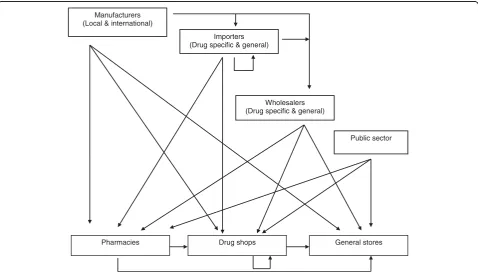
This section shows that the distribution chain is far more complicated than as characterized in our taxon-omy (Figure 1). Figure 2 represents what happens in reality, as reported in the literature.
Anti-malarial sales volumes and mark-ups
Sales volume estimates are key data for assessing the relative importance of wholesalers within the
distribu-tion chain and understanding suppliers’ pricing
deci-sions. Data on actual volumes sold across chain levels were found in only six references [29,34,48,53,55,60]. Anti-malarial sales volumes reported by 21 wholesalers operating across six regions of Tanzania ranged from
2,001 and 27,000 doses per month [34]. The rest of the literature indicated relatively concentrated wholesale markets (compared to retail markets), especially at the top of the chain where a few suppliers were responsible for most of the volume sold [33,51,53]. Only one study on the anti-malarial import market in Uganda calculated concentration ratios (the proportion of anti-malarial sales volumes/value accounted for by the n largest firms) and the Hirshman-Herfindahl index (HHI) (the sum of squared market shares of each firm in the mar-ket). The study found that five importers accounted for nearly 72% of anti-malarial sales with a HHI of just under 1400, indicating moderate market concentration (an index under 1,000 is associated with competitive markets and above 1,800 with monopoly) [51].
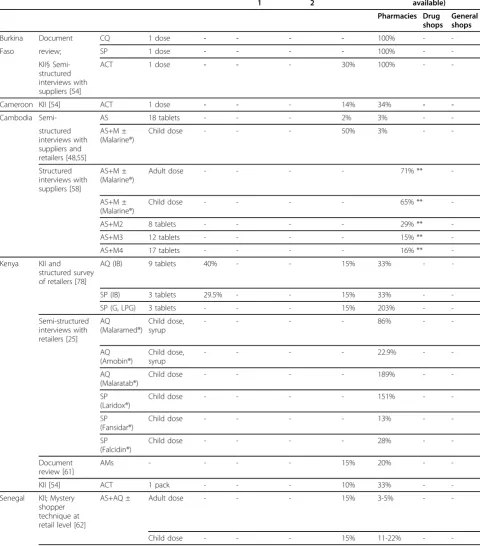
More attention has been paid to measuring anti-malarial price mark-ups, especially on first-line treat-ments for uncomplicated malaria or the most common alternatives at the time of the studies. Methods used included regulatory document reviews, qualitative inter-views with key informants including government offi-cials, wholesalers and retailers [48,54,61], sometimes combined with semi-structured or structured interviews with wholesalers, retailers and/or consumers (Table 3). For the purpose of this review, mark-up data were sum-marized using a specific taxonomy. Primary mark-ups, therefore, refer to the margins that primary suppliers
Manufacturers (Local & international)
General stores Drug shops
Pharmacies
Wholesalers (Drug specific & general) Importers
(Drug specific & general)
[image:7.595.59.538.430.702.2]Public sector
(entry point to the distribution chain) add on top of their purchase prices when they serve intermediate or terminal wholesalers. Terminal mark-ups relate to mar-gins added by terminal wholesalers (retailers’direct sup-ply sources) on top of the price at which they obtained the drug, either from primary or intermediate suppliers (Table 3).
Overall, studies reported mark-ups within the distribu-tion chain serving pharmacies or/and drug shops, except one that also provided anti-malarial mark ups within the chain supplying general stores.
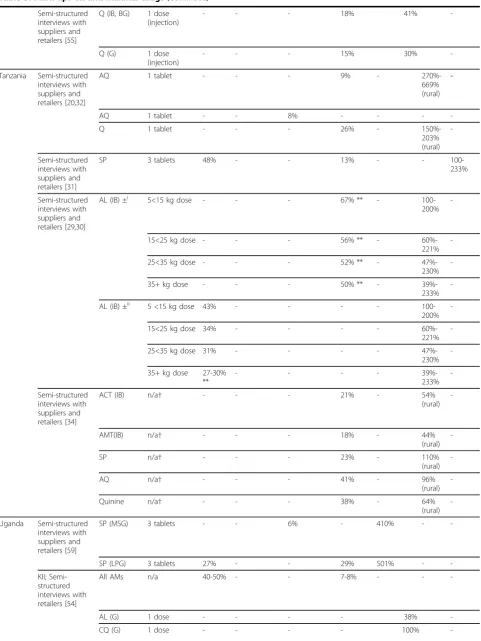
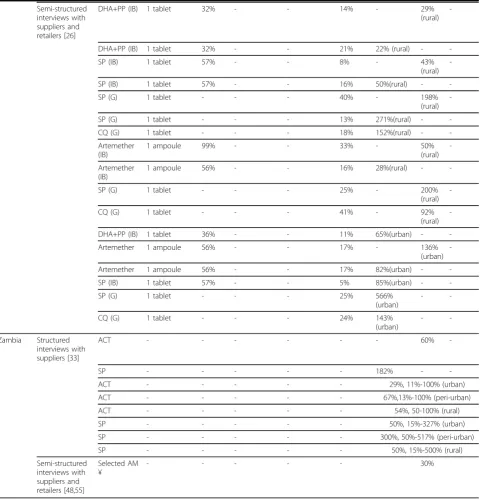
Within the distribution chain, mark-ups varied across levels, ranging from 27% to 99% at primary level, 8% at intermediate and 2% to 67% at terminal level (Table 3). In some settings, mark ups varied depending on the structure of the chain [26], with somewhat higher mark-ups at a given level observed in a distribution chain made of fewer levels. For example, in Tanzania, when supplying regional wholesalers, importers added between 27% and 43%, whilst when directly supplying retailers they added between 50% and 67% [29].
In the retail market, price mark-ups on anti-malarials have been relatively more researched. They were some-times very high and varied greatly across outlet type and location, and anti-malarial type and packaging. There were four key findings. First, mark-ups ranged between 3% and 566% in pharmacies, 29% and 669% in drug shops and 100% and 233% in general shops (Table 3). Second, mark-ups were somewhat higher in rural outlets compared to urban ones. In Zambia, for example, the median ACT mark-up in Lundazi, a rural district was 54% whilst in Kabwe urban district the median was 29% [33]. In Choma, a peri urban district, the median ACT mark-up was, however, much higher than in rural Lun-dazi reaching 300% [33]. Third, generics tended to have higher percentage mark-ups, a situation that may not have translated into higher absolute margins given that generics are generally sold at lower prices than branded products. Fourth, mark-ups varied across packaging types, with a mark-up of 669% on one loose tablet of amodiaquine compared to 270% on a blistered tablet in Tanzania [20]. Again, assuming that loose tablet prices are lower than packed tablet prices, this may not have automatically translated into higher absolute margins.
In some settings, where ACT subsidy schemes have already been implemented, mark ups were within the range expected by the managers of the schemes. In Senegal, private pharmacies purchased the subsidized first-line ACT from public sector medical stores and added on average 35% to the price of an adult dose, which translated into a retail price only 4% higher than the recommended retail price (RRP) [60,62]. In two dis-tricts of Tanzania, a subsidy scheme was piloted in drug shops and in one of these two districts, it was combined
with a RRP printed on ACT packs. ACT availability increased and the subsidy effectively decreased the price of ACT below the price paid by consumers in the con-trol area and below the price of older anti-malarials, leading to a large increase in the proportion of anti-malarial consumers purchasing ACT in the two inter-vention areas (from 1% to 44.2% one year later) [63]. Surprisingly, ACT prices were higher in the district with the RRP than in the district without, suggesting caution in future use of this approach for controlling ACT retail prices [63]. In Cambodia, a contrasting experience of a subsidy scheme was reported. Cambodia is the first country to have switched its first-line treatment to ACT and implemented a social marketing programme, includ-ing a subsidy, packs printed with RRP and mass com-munication campaigns in its endemic provinces. Market penetration of the subsidized ACT remained relatively low and ACT retailed, on average, at a price 70% higher than the RRP [60].
Overall, relatively little is known about the factors that influence pricing decisions. Only one study was identi-fied which used multivariate statistical methods to ana-lyse price determinants, examining prices in drug and general retail shops selling anti-malarials in rural Tanza-nia. The study found that higher retail prices were asso-ciated with branded and packed products, being sold in general shops (which might have reflected higher prices charged by their terminal supply sources) and higher market concentration [16,20]. The rest of the literature provided descriptive findings. Retail and wholesale mar-gins were reported to be influenced by fixed price or margin regulation or, in the absence of regulation, mar-ket competition and consumer demand. Wholesale pri-cing decisions were also reported to be influenced by product characteristics, business practices and costs [26,32,54]. In Uganda, markups were reported to be lower for anti-malarials with shorter shelf life [26]. In Tanzania, drug wholesalers reported giving discounts to customers who bought drugs in relatively large quanti-ties [32], and general wholesalers to customers who pur-chased drugs alongside other commodities [32]. One wholesaler also reported adding 6-7% to cover his expenses and 3-4% for profit [32].
Discussion
Table 3 Mark ups on anti-malarial drugs
Country Methods (study reference)
Generic name* (drug type or brand)
Product description, (as provided in the literature)
Mark ups across supply chain levels
Primary Intermediate 1
Intermediate 2
Terminal Retail (location where available)
Pharmacies Drug shops
General shops
Burkina Document CQ 1 dose - - - - 100% -
-Faso review; SP 1 dose - - - - 100% -
-KII§ Semi-structured interviews with suppliers [54]
ACT 1 dose - - - 30% 100% -
-Cameroon KII [54] ACT 1 dose - - - 14% 34% -
-Cambodia Semi- AS 18 tablets - - - 2% 3% -
-structured interviews with suppliers and retailers [48,55]
AS+M ± (Malarine®)
Child dose - - - 50% 3% -
-Structured interviews with suppliers [58]
AS+M ± (Malarine®)
Adult dose - - - - 71% **
-AS+M ± (Malarine®)
Child dose - - - - 65% **
-AS+M2 8 tablets - - - - 29% **
-AS+M3 12 tablets - - - - 15% **
-AS+M4 17 tablets - - - - 16% **
-Kenya KII and structured survey of retailers [78]
AQ (IB) 9 tablets 40% - - 15% 33% -
-SP (IB) 3 tablets 29.5% - - 15% 33% -
-SP (G, LPG) 3 tablets - - - 15% 203% -
-Semi-structured interviews with retailers [25]
AQ (Malaramed®)
Child dose, syrup
- - - - 86% -
-AQ (Amobin®)
Child dose, syrup
- - - - 22.9% -
-AQ (Malaratab®)
Child dose - - - - 189% -
-SP (Laridox®)
Child dose - - - - 151% -
-SP (Fansidar®)
Child dose - - - - 13% -
-SP (Falcidin®)
Child dose - - - - 28% -
-Document review [61]
AMs - - - - 15% 20% -
-KII [54] ACT 1 pack - - - 10% 33% -
-Senegal KII; Mystery shopper technique at retail level [62]
AS+AQ ± Adult dose - - - 15% 3-5% -
-Table 3: Mark ups on anti-malarial drugs(Continued)
Semi-structured interviews with suppliers and retailers [55]
Q (IB, BG) 1 dose (injection)
- - - 18% 41%
-Q (G) 1 dose
(injection)
- - - 15% 30%
-Tanzania Semi-structured interviews with suppliers and retailers [20,32]
AQ 1 tablet - - - 9% -
270%-669% (rural)
-AQ 1 tablet - - 8% - - -
-Q 1 tablet - - - 26% -
150%-203% (rural)
-Semi-structured interviews with suppliers and retailers [31]
SP 3 tablets 48% - - 13% - -
100-233%
Semi-structured interviews with suppliers and retailers [29,30]
AL (IB) ±i 5<15 kg dose - - - 67% ** -
100-200%
-15<25 kg dose - - - 56% ** -
60%-221%
-25<35 kg dose - - - 52% ** -
47%-230%
-35+ kg dose - - - 50% ** -
39%-233%
-AL (IB) ±ii 5 <15 kg dose 43% - - - -
100-200%
-15<25 kg dose 34% - - - -
60%-221%
-25<35 kg dose 31% - - - -
47%-230%
-35+ kg dose 27-30% **
- - - -
39%-233%
-Semi-structured interviews with suppliers and retailers [34]
ACT (IB) n/a† - - - 21% - 54%
(rural)
-AMT(IB) n/a† - - - 18% - 44%
(rural)
-SP n/a† - - - 23% - 110%
(rural)
-AQ n/a† - - - 41% - 96%
(rural)
-Quinine n/a† - - - 38% - 64%
(rural)
-Uganda Semi-structured interviews with suppliers and retailers [59]
SP (MSG) 3 tablets - - 6% - 410% -
-SP (LPG) 3 tablets 27% - - 29% 501% -
-KII; Semi-structured interviews with retailers [54]
All AMs n/a 40-50% - - 7-8% - -
-AL (G) 1 dose - - - - 38%
[image:10.595.58.540.96.738.2]-Table 3: Mark ups on anti-malarial drugs(Continued)
Semi-structured interviews with suppliers and retailers [26]
DHA+PP (IB) 1 tablet 32% - - 14% - 29%
(rural)
-DHA+PP (IB) 1 tablet 32% - - 21% 22% (rural) -
-SP (IB) 1 tablet 57% - - 8% - 43%
(rural)
-SP (IB) 1 tablet 57% - - 16% 50%(rural) -
-SP (G) 1 tablet - - - 40% - 198%
(rural)
-SP (G) 1 tablet - - - 13% 271%(rural) -
-CQ (G) 1 tablet - - - 18% 152%(rural) -
-Artemether (IB)
1 ampoule 99% - - 33% - 50%
(rural)
-Artemether (IB)
1 ampoule 56% - - 16% 28%(rural) -
-SP (G) 1 tablet - - - 25% - 200%
(rural)
-CQ (G) 1 tablet - - - 41% - 92%
(rural)
-DHA+PP (IB) 1 tablet 36% - - 11% 65%(urban) -
-Artemether 1 ampoule 56% - - 17% - 136%
(urban)
-Artemether 1 ampoule 56% - - 17% 82%(urban) -
-SP (IB) 1 tablet 57% - - 5% 85%(urban) -
-SP (G) 1 tablet - - - 25% 566%
(urban)
-
-CQ (G) 1 tablet - - - 24% 143%
(urban)
-
-Zambia Structured interviews with suppliers [33]
ACT - - - 60%
-SP - - - 182% -
-ACT - - - 29%, 11%-100% (urban)
ACT - - - 67%,13%-100% (peri-urban)
ACT - - - 54%, 50-100% (rural)
SP - - - 50%, 15%-327% (urban)
SP - - - 300%, 50%-517% (peri-urban)
SP - - - 50%, 15%-500% (rural)
Semi-structured interviews with suppliers and retailers [48,55]
Selected AM ¥
- - - 30%
* AM = anti-malarials; AMT = artemisinin monotherapies; mg = milligrams; ml = millilitres; AS = Artesunate; M = Mefloquine; AS+M2 = combination for children weighing between 16 kgs to 24 kgs; AS+M3 = combination for children weighing between 25 kgs to 35 kgs; AS+M4 = combination for adults; AQ = Amodiaquine; SP = Sulphadoxine-Pyrimethamine; Q = Quinine; AL = Artemether-Lumefantrine; DHA+PP = Dihydroartemisinin+Piperaquine; IB = imported innovator brand, IG = imported generic, B = branded; G = locally produced generic, MSG = most sold generic, LPG = lowest priced generic, BG = branded generic; I = imported, LP = locally produced; SC = supply chain; ± = subsidized product; - = level of the chain did not exist or data not available; **Author’s own calculations;†mean across all products within drug class.i
primary supplier is the terminal supplier,ii
[image:11.595.59.540.102.603.2]most of the anti-malarial volumes sold. Wholesale mark-ups were lower than retail mark-mark-ups and these varied across chain levels and anti-malarial drug types.
Overall, there was a lack of representative data on a national scale, which made the interpretation of data difficult. Studies tended to focus on the distribution chain serving a single type of outlet, often the more for-mal type, such as pharmacies generally operating in urbanized settings. Data on the number of wholesalers who operate across levels was restricted to registered businesses and information on their characteristics was generally lacking. Studies were mainly descriptive and provided limited evidence on the influence of the distri-bution chain on retail anti-malarial availability and prices. Sales volume data across chain levels were non-existent and mark-up data were concentrated at retail and terminal levels, with less information at primary and particularly intermediate levels (one study only). This situation can be explained by the methods that have been used to study key variables, which were often limited to document reviews and interviews with key informants (central government, industry representa-tives) or retailers. Evidence on stocking and pricing decisions within the distribution chain was therefore lacking, an important knowledge gap for improving con-sumers’ access to affordable quality malaria treatment. High mark-ups and prices are commonly perceived as a sign of high profit, often leading to calls for medicine price reduction [64]. However, without information that disaggregates mark-ups into profits and costs it is unclear if such measures are appropriate.
A strong interest in working with retailers to improve the quality of care they provide has emerged in recent years. Goodman and colleagues identified 16 interven-tions working with medicine sellers to improve malaria treatment, all including a mix of activities such as train-ing and capacity buildtrain-ing, demand generation, quality assurance and creation of an enabling environment [28]. However, only two of the 16 interventions were imple-mented within the distribution chain, involving training wholesalers and mobile vendors in Kenya and sales representatives in Madagascar. Whilst the evidence available on the outcomes of these initiatives was weak and particularly limited in terms of the sustainability and equity of benefits, it showed some improvements in retailers’knowledge and/or performance [28].
The Affordable Medicine Facility for malaria (AMFm) [65] aims to increase coverage of effective treatment and delay the development of drug resistance, by subsidizing ACT at the top of the distribution chain and imple-menting supporting interventions such as training, regu-latory strengthening and consumer education. The capacity of AMFm to meet its goals has been extensively
debated [66-68], including how the structure of the dis-tribution chain and nature of competition at all levels will affect final prices. Sceptics are concerned that the subsidy will be captured by middle-men within the pri-vate commercial supply chain and informal unqualified profit-maximizing retailers. This review indicates that there is insufficient evidence on anti-malarial distribu-tion chains to predict with confidence what the outcome will be, particularly reflecting inadequate information on profit margins and the factors that influence pricing decisions. On the one hand, relatively concentrated mar-kets (few suppliers accounting for large share of sales) were documented at the primary supplier level in Uganda and Zambia, accompanied by frequent exclusive dealership relationships, and within local areas at retail level, indicating the potential for exploitation of market power. On the other hand, early experiences of subsidiz-ing ACT provide valuable lessons, notably the impor-tance of rigorous distribution chain analysis, for example to set the RRP at an appropriate level. Redu-cing the price of ACT will however not suffice and accompanying interventions need to be identified and tailored to each country context [69]. For example, Rapid Diagnostic Tests (RDTs) have the potential to increase access to accurate diagnosis and appropriate treatment, especially in remote areas where alternative routine microscopy services cannot easily be made avail-able [70-73]. However, the distribution of affordavail-able quality RDTs is also not without challenges [71,74,75] and has been the object of little research to date [76].
Conclusions
Available evidence on the distribution chain for retail sector malaria treatment provides some useful descrip-tive information, but there is a lack of nationally repre-sentative data, and of analysis of the determinants of supplier behaviour. In the advent of the AMFm, a better understanding of the role of the anti-malarial distribu-tion chain on retail outcomes is urgently needed. Retai-lers are likely to remain an important source of malaria treatment and the knowledge gaps identified here could jeopardize the success of initiatives for improving ACT access. Addressing these uncertainties should be a prior-ity of ongoing and future research.
Acknowledgements
Author details
1London School of Hygiene and Tropical Medicine, Keppel Street, London,
UK.2Kenya Medical Research Institute - Wellcome Trust Research Programme, Nairobi, Kenya.
Authors’contributions
EP, CG and KH developed the search strategy. EP conducted the search strategy, reviewed the literature and drafted the manuscript. CG helped to draft the manuscript. CG and KH critically revised the manuscript. All authors read and approved the final manuscript.
Competing interests
The authors declare that they have no competing interests.
Received: 25 October 2009
Accepted: 11 February 2010 Published: 11 February 2010
References
1. Hamel MJ, Odhacha A, Roberts JM, Deming MS:Malaria control in Bungoma District, Kenya: a survey of home treatment of children with fever, bednet use and attendance at antenatal clinics.Bull World Health Organ2001,79:1014-1023.
2. Molyneux CS, Mung’Ala-Odera V, Harpham T, Snow RW:Maternal responses to childhood fevers: a comparison of rural and urban residents in coastal Kenya.Trop Med Int Health1999,4:836-845. 3. Ndyomugyenyi R, Neema S, Magnussen P:The use of formal and informal
services for antenatal care and malaria treatment in rural Uganda.Health Policy Plan1998,13:94-102.
4. Ruebush TK, Kern MK, Campbell CC, Oloo AJ:Self-treatment of malaria in a rural area of western Kenya.Bull World Health Organ1995,73:229-236. 5. Agyepong IA, Manderson L:The diagnosis and management of fever at household level in the Greater Accra Region, Ghana.Acta Trop1994, 58:317-330.
6. Geissler PW, Nokes K, Prince RJ, Odhiambo RA, Aagaard-Hansen J, Ouma JH: Children and medicines: self-treatment of common illnesses among Luo schoolchildren in western Kenya.Soc Sci Med2000,50:1771-1783. 7. Krause G, Sauerborn R:Comprehensive community effectiveness of
health care. A study of malaria treatment in children and adults in rural Burkina Faso.Ann Trop Paediatr2000,20:273-282.
8. McCombie SC:Treatment seeking for malaria: a review of recent research.Soc Sci Med1996,43:933-945.
9. Njau JD, Goodman C, Kachur SP, Palmer N, Khatib RA, Abdulla S, Mills A, Bloland P:Fever treatment and household wealth: the challenge posed for rolling out combination therapy for malaria.Trop Med Int Health2006, 11:299-313.
10. Salako LA, Brieger WR, Afolabi BM, Umeh RE, Agomo PU, Asa S, Adeneye AK, Nwankwo BO, Akinlade CO:Treatment of childhood fevers and other illnesses in three rural Nigerian communities.J Trop Pediatr 2001,47:230-238.
11. Snow RW:The role of shops in the treatment and prevention of childhood malaria on the coast of Kenya.Trans R Soc Trop Med Hyg1992, 86:237-239.
12. Foster SD:Treatment of malaria outside the formal health services.J Trop Med Hyg1995,98:29-34.
13. Foster SD:Pricing, distribution, and use of antimalarial drugs.Bull World Health Organ1991,69:349-363.
14. Rutebemberwa E, Nsabagasani X, Pariyo G, Tomson G, Peterson S, Kallander K:Use of drugs, perceived drug efficacy and preferred providers for febrile children: implications for home management of fever.Malar J2009,8:131.
15. Onwujekwe O, Uzochukwu B, Eze S, Obikeze E, Okoli C, Ochonma O: Improving equity in malaria treatment: relationship of socio-economic status with health seeking as well as with perceptions of ease of using the services of different providers for the treatment of malaria in Nigeria.Malar J2008,7:5.
16. Goodman C, Kachur SP, Abdulla S, Bloland P, Mills A:Concentration and drug prices in the retail market for malaria treatment in rural Tanzania. Health Econ2009,18:727-742.
17. Adikwu MU:Sales practices of patent medicine sellers in Nigeria.Health Policy Plan1996,11:202-205.
18. Adome RO, Whyte SR, Hardon A:Popular pills: community drug use in UgandaAmsterdam: Het Spinhuis Publishers 1996.
19. Geest van der S:Self-care and the informal sale of drugs in south Cameroon.Soc Sci Med1987,25:293-305.
20. Goodman CA:An economic analysis of the retail market for fever and malaria treatment in rural Tanzania.London: University of London 2004. 21. Williams HA, Jones CO:A critical review of behavioral issues related to
malaria control in sub-Saharan Africa: what contributions have social scientists made?.Soc Sci Med2004,59:501-523.
22. Amin AA, Marsh V, Noor AM, Ochola SA, Snow RW:The use of formal and informal curative services in the management of paediatric fevers in four districts in Kenya.Trop Med Int Health2003,8:1143-1152. 23. Brieger WR, Sesay HR, Adesina H, Mosanya ME, Ogunlade PB, Ayodele JO,
Orisasona SA:Urban malaria treatment behaviour in the context of low levels of malaria transmission in Lagos, Nigeria.Afr J Med Med Sci2001, 30(Suppl):7-15.
24. Goodman C, Brieger W, Unwin A, Mills A, Meek S, Greer G:Medicine sellers and malaria treatment in sub-Saharan Africa: what do they do and how can their practice be improved?.Am J Trop Med Hyg2007,77:203-218. 25. Tavrow P, Shabahang J, Makama S:Vendor-to-vendor education to
improve malaria treatment by private drug outlets in Bungoma District, Kenya.Malar J2003,2:10.
26. MMV:Understanding the anti-malarial market: Uganda 2007. An overview of the supply side.Geneva: Medicines for Malaria Venture 2007. 27. Amin AA, Snow RW:Brands, costs and registration status of antimalarial
drugs in the Kenyan retail sector.Malar J2005,4:36.
28. Goodman C, Kachur SP, Abdulla S, Mwageni E, Nyoni J, Schellenberg JA, Mills A, Bloland P:Retail supply of malaria-related drugs in rural Tanzania: risks and opportunities.Trop Med Int Health2004,9:655-663.
29. Government of the United Republic of Tanzania and the Clinton Foundation:Tanzania pilot ACT subsidy: report on findings.2008. 30. Government of the United Republic of Tanzania and the Clinton
Foundation:Tanzania pilot ACT subsidy: report on preliminary findings. 2007.
31. Battersby A, Goodman C, Abondo C, Mandike R:Improving the supply, distribution and use of antimalarial drugs by the private sector in Tanzania.London: Malaria Consortium 2003.
32. Chukwujekwu O, Goodman C:An analysis of the distribution chain for malaria-related drugs sold by retailers in rural South-Eastern Tanzania. London: London School of Hygiene and Tropical Medicine 2007. 33. Clinton Foundation:Understanding the private sector anti-malarial
market in Zambia.2008.
34. Clinton Foundation:Review of the private sector anti-malarial market in Tanzania.2008.
35. Dondorp AM, Nosten F, Yi P, Das D, Phyo AP, Tarning J, Lwin KM, Ariey F, Hanpithakpong W, Lee SJ, Ringwald P, Silamut K, Imwong M, Chotivanich K, Lim P, Herdman T, An SS, Yeung S, Singhasivanon P, Day NP, Lindegardh N, Socheat D, White NJ:Artemisinin resistance inPlasmodium falciparum
malaria.N Engl J Med2009,36:455-467.
36. Marsh VM, Mutemi WM, Muturi J, Haaland A, Watkins WM, Otieno G, Marsh K:Changing home treatment of childhood fevers by training shop keepers in rural Kenya.Trop Med Int Health1999,4:383-389.
37. Nshakira N, Kristensen M, Ssali F, Whyte SR:Appropriate treatment of malaria? Use of antimalarial drugs for children’s fevers in district medical units, drug shops and homes in eastern Uganda.Trop Med Int Health 2002,7:309-316.
38. Abuya TO, Mutemi W, Karisa B, Ochola SA, Fegan G, Marsh V:Use of over-the-counter malaria medicines in children and adults in three districts in Kenya: implications for private medicine retailer interventions.Malar J 2007,6:57.
39. Okoro BA, Jones IO:Pattern of drug therapy in home management of diarrhoea in rural communities of Nigeria.J Diarrhoeal Dis Res1995, 13:151-154.
40. Basco LK:Molecular epidemiology of malaria in Cameroon. XIX. Quality of antimalarial drugs used for self-medication.Am J Trop Med Hyg2004, 70:245-250.
41. Kaur H, Goodman C, Thompson E, Thompson KA, Masanja I, Kachur SP, Abdulla S:A nationwide survey of the quality of antimalarials in retail outlets in Tanzania.PLoS One2008,3:e3403.
Looareesuwan S, Day NP, Green MD, White NJ:Fake antimalarials in Southeast Asia are a major impediment to malaria control: multinational cross-sectional survey on the prevalence of fake antimalarials.Trop Med Int Health2004,9:1241-1246.
43. Newton P, Proux S, Green M, Smithuis F, Rozendaal J, Prakongpan S, Chotivanich K, Mayxay M, Looareesuwan S, Farrar J, Nosten F, White NJ: Fake artesunate in southeast Asia.Lancet2001,357:1948-1950. 44. Rozendaal J:Fake antimalarial drugs in Cambodia.Lancet2001,357:890. 45. Adu-Sarkodie Y, Steiner MJ, Attafuah J, Tweedy K:Syndromic management
of urethral discharge in Ghanaian pharmacies.Sex Transm Infect2000, 76:439-442.
46. Mayhew S, Nzambi K, Pepin J, Adjei S:Pharmacists’role in managing sexually transmitted infections: policy issues and options for Ghana. Health Policy Plan2001,16:152-160.
47. Rajakaruna RS, Weerasinghe M, Alifrangis M, Amerasinghe PH, Konradsen F: The role of private drug vendors as malaria treatment providers in selected malaria endemic areas of Sri Lanka.J Vector Borne Dis2006, 43:58-65.
48. Institute of Medicine:Saving Lives, Buying Time: Economics of Malaria drugs in an Age of ResistanceWashington, DC: National Academy Press 2004. 49. Russo G:Medicine prices in Mozambique: a study of determinants and
policy options.London: University of London 2007.
50. Yadav P:Analysis of the public, private and mission sector supply chains for essential drugs in Zambia - Technical Report.London: DFID Health Resource Centre 2007.
51. Yadav P, Conesa S:Uganda antimalarial markets: preliminary analysis. . Technical Report for the Medicines Transparency Alliance2008.
52. International Finance Corporation:The business of health in Africa: partnering with the private sector to improve people’s lives.World Bank Group 2008.
53. Yadav P, Ongola M:Analysis of Complementary Supply Chain Interventions’and‘Estimating Private-Sector Demand for Anti-Malarials in Ghana, Uganda and Zambia Using Household Consumption Expenditures and Willingness-to-Pay Estimates’.Affordable Medicines Facility - malaria: Technical Proposal to Increase Access to Malaria Medicines Background Paper 92007.
54. RBM Secretariat:Technical proposal to increase access to malaria medicines. Background paper 7 Summary of Field Research.Affordable Medicine Facility - Malaria2007.
55. Shretta R, Guimier JM:Flow of antimalarial drugs in the public and private sector, affordability and discussions of potential strategies to improve financial accessArlington: Management Sciences for Health 2003.
56. Buabeng KO, Duwiejua M, Matowe LK, Smith F, Enlund H:Availability and choice of antimalarials at medicine outlets in Ghana: the question of access to effective medicines for malaria control.Clin Pharmacol Ther 2008,84:613-619.
57. Marsh VM, Mutemi WM, Willetts A, Bayah K, Were S, Ross A, Marsh K: Improving malaria home treatment by training drug retailers in rural Kenya.Trop Med Int Health2004,9:451-460.
58. PSI:Cambodia (2007): MAP study evaluating the coverage and quality of malaria prevention and treatment in endemic areasPhnom Penh: Population Services International 2008.
59. The Republic of Uganda:Medicine pricing survey report.2004. 60. Sabot O, Yeung S, Pagnoni F, Gordon M, Petty N, Schmits K, Talisuna A:
Distribution of artemisinin-based combination therapies through private sector channels: lessons from four country case studies;.2008. 61. Myhr K:Comparing prices of essential drugs between four countries in
east Africa and with international prices.Nairobi:MSF 2000.
62. Kone CG, Ndonky A, Lalou R, Le Hesran J-Y:ACT subventionees en vente dans les officines privees: experience du Senegal.Affordable Medicine Facility - Malaria: Technical Proposal to Increase Access to Malaria Medicines Background paper 7 Summary of Field Research RBM Secretariat2007. 63. Sabot OJ, Mwita A, Cohen JM, Ipuge Y, Gordon M, Bishop D, Odhiambo M,
Ward L, Goodman C:Piloting the global subsidy: the impact of subsidized artemisinin-based combination therapies distributed through private drug shops in rural Tanzania.PLoS One2009,4:e6857.
64. World Health Organization:Medicine prices: a new approach to measurement.2007.
65. RBM Task Force:Draft Technical Proposal for a Global ACT Subsidy.2007. 66. New malaria drug subsidy fails to ensure patients receive best
treatment options - procurement policies must change.http://www.msf.
org/msfinternational/invoke.cfm?objectid=8693ADA5-15C5-F00A-25820B1D342BBA2F&component=toolkit.article&method=full_html. 67. Marriot A:Blind optimism: Challenging the myths about private health care in
poor countriesOxfam International 2009.
68. Kamal-Yanni M:Affordable medicines facility for malaria: reasonable or rash?.Lancet2010,375:121.
69. Moon S, Perez Casas C, Kindermans JM, de Smet M, von Schoen-Angerer T: Focusing on quality patient care in the new global subsidy for malaria medicines.PLoS Med2009,6:e1000106.
70. Bell D, Wongsrichanalai C, Barnwell JW:Ensuring quality and access for malaria diagnosis: how can it be achieved?.Nat Rev Microbiol2006,4: S7-20.
71. Lubell Y, Reyburn H, Mbakilwa H, Mwangi R, Chonya K, Whitty CJ, Mills A: The cost-effectiveness of parasitologic diagnosis for malaria-suspected patients in an era of combination therapy.Am J Trop Med Hyg2007, 77:128-132.
72. Shillcutt S, Morel C, Goodman C, Coleman P, Bell D, Whitty CJ, Mills A: Cost-effectiveness of malaria diagnostic methods in sub-Saharan Africa in an era of combination therapy.Bull World Health Organ2008,86:101-110. 73. Perkins MD:Working without a blindfold: the critical role of diagnostics
in malaria control.Malar J2008,7.
74. Rolland E, Checchi F, Pinoges L, Balkan S, Guthmann JP, Guerin PJ: Operational response to malaria epidemics: are rapid diagnostic tests cost-effective?.Trop Med Int Health2006,11:398-408.
75. Jorgensen P, Chanthap L, Rebueno A, Tsuyuoka R, Bell D:Malaria rapid diagnostic tests in tropical climates: the need for a cool chain.Am J Trop Med Hyg2006,74:750-754.
76. Frost LJ, Reich MR:Creating access to health technologies in poor countries.Health Aff (Millwood)2009,28:962-973.
77. RBM Secretariat:Technical proposal to increase access to malaria medicines: Backgound Paper 5. Supply chain analysis.Affordable Medicine Facility - Malaria2007.
78. Ministry of Health of the Government of the Republic of Kenya:A survey of medicine prices in Kenya.2004.
doi:10.1186/1475-2875-9-50
Cite this article as:Patouillardet al.:Retail sector distribution chains for malaria treatment in the developing world: a review of the literature.
Malaria Journal20109:50.
Submit your next manuscript to BioMed Central and take full advantage of:
• Convenient online submission
• Thorough peer review
• No space constraints or color figure charges
• Immediate publication on acceptance
• Inclusion in PubMed, CAS, Scopus and Google Scholar
• Research which is freely available for redistribution