Dissecting the Software Patent Problem
An Argument Against Patentability based on the
Relationship between Software and Mathematics
Anton Robert Hughes
BE (CSE), LLB (Hons), Grad Dip Legal Prac, Grad Cert Commercialisation
Submitted in fulfilment of the requirements for the Degree of Doctor of Philosophy
May 2012
Declaration of Originality
This thesis contains no material which has been accepted for a degree or diploma by the Univer-sity or any other institution, except by way of background information and duly acknowledged in the thesis, and to the best of my knowledge and belief no material previously published or written by another person except where due acknowledgment is made in the text of the thesis, nor does the thesis contain any material which infringes copyright.
Authority of Access
This thesis may be made available for loan and limited copying and communication in accor-dance with the Copyright Act 1968.
Statement of Ethical Conduct
The research associated with this thesis abides by the international and Australian codes on human and animal experimentation, the guidelines by the Australian Government’s Office of the Gene Technology Regulator and the rulings of the Safety, Ethics and Institutional Biosafety Committees of the University.
Abstract
Should software be patentable? Despite a US Presidential Commission answering in the nega-tive in 1968, and a legislanega-tive exclusion operating in the UK since 1977, the patenting of software has become a regular occurrence in the US, the UK and Australia. But even now software’s patentability is not settled, as evidenced by the widespread protests against the EU Software Directive in 2005, and the level of anticipation of the US Supreme Court decision inBilski v Kapposin 2010. The reason for this continuing unrest is that the patenting of software pro-vides a number of practical problems for the software industry and theoretical challenges to the coherence of the patent regime.
Contents
Abstract i
Contents iii
Acknowledgments ix
Introduction 1
1 Aims . . . 5
2 Outline . . . 7
3 Other matters . . . 9
1 The Nature of Software 11 1 Introduction . . . 11
2 What is software? . . . 11
The Evolution of Modern Software . . . 12
Machine Code . . . 12
Assembly Language . . . 13
High level languages . . . 13
Compilers . . . 14
Interpreters . . . 14
Firmware, kernels and operating systems . . . 14
Libraries, frameworks and patterns . . . 15
Scripting languages and domain-specific languages . . . 16
The modern software development process . . . 17
Main purpose . . . 17
System architecture . . . 17
Abstract data types (ADTs) . . . 18
Algorithms and Data Structures . . . 18
Source code . . . 20
Contents
Putting it all together . . . 22
3 An example . . . 24
4 How is software related to mathematics? . . . 26
Formal equivalence: the Turing machine . . . 28
Are computers and the Turing machine equivalent? . . . 31
Criticisms of the Church-Turing thesis . . . 32
Structural similarities between mathematics and software . . . 33
5 Implications of the isomorphism for patent law . . . 35
6 Conclusion . . . 36
2 The History of Patentable Subject Matter 37 1 Introduction . . . 37
What is a patent? . . . 38
What is a manner of manufacture? . . . 39
2 Early history . . . 40
3 Post-1623 developments . . . 42
Boulton v Bull . . . 42
Principles . . . 43
Processes . . . 43
Overall . . . 44
After Boulton v Bull . . . 45
Patents as a social contract . . . 45
Towards an American Patent System . . . 46
Analogous uses . . . 47
Early US case law . . . 48
An Australian patent custom? . . . 49
4 The modern patent system emerges in the UK . . . 49
5 The early 20thCentury . . . 51
United Kingdom . . . 51
Non-patentability of principles revisited . . . 52
Commerce and trade . . . 56
Morton’s rules . . . 56
United States . . . 59
Australia . . . 59
6 The NRDC case . . . 61
Analogous uses . . . 62
Inventiveness; discovery v invention; knowledge v application . . . 63
Scope of patentable subject matter . . . 64
Application to the present case . . . 69
7 Conclusion . . . 71
Contents
2 The emergence of the modern computer . . . 73
3 How software became patentable subject matter . . . 77
The United States . . . 77
Mental steps doctrine . . . 78
Gottschalk v Benson . . . 86
Parker v Flook . . . 88
In re Freeman & In re Walter . . . 89
Diamond v Chakrabarty . . . 90
Diamond v Diehr . . . 91
In re Abele . . . 93
Alappat . . . 93
State Street . . . 94
Ex parte Lundgren . . . 96
The United Kingdom . . . 98
Developments under the Patents Act 1949 (UK) . . . 99
The European Patent Convention . . . 102
Vicom . . . 105
Genentech Inc’s Application . . . 107
Merrill Lynch . . . 109
Gale’s Application . . . 109
Fujitsu Ltd’s Application . . . 111
The IBM Twins . . . 114
The Board Diverges . . . 115
Software patent directive . . . 117
Australia . . . 118
Early Patent Office practice . . . 118
IBM v Commissioner of Patents . . . 121
CCOM Pty Ltd v Jiejing Pty Ltd . . . 123
Welcome Real-time SA v Catuity Inc . . . 125
4 Recent Developments . . . 127
Australia . . . 128
United Kingdom & European Union . . . 131
Aerotel/Macrossan . . . 131
Symbian . . . 136
Referral to the Enlarged Board (G3/08) . . . 138
The United States . . . 141
In re Comiskey . . . 141
In re Bilski . . . 141
Bilski v Kappos . . . 142
Overview of recent developments . . . 147
5 Conclusion . . . 147
Contents
1 What is a software patent? . . . 149
2 Why is the patenting of software problematic? . . . 150
Abstraction . . . 151
Pre-emption/breadth . . . 153
Mental steps doctrine. . . 154
Intellectual information exclusion . . . 155
Physicality . . . 161
Mischaracterisation . . . 164
Complexity . . . 172
Reuse . . . 174
Software innovations are largely cumulative . . . 174
The software industry relies on openness . . . 174
Summary . . . 177
3 How does the award of patents affect the software industry? . . . 177
Poor documentation means more trivial patents . . . 177
The software market moves too fast for the patent regime . . . 178
Network effects amplify the power of patent holders . . . 179
Programmers hate software patents . . . 179
4 Is this a subject matter issue? . . . 181
5 How should the analysis proceed? . . . 183
6 Conclusion . . . 184
5 The Nature of Mathematics 187 1 A Mathematicians’ Account of Mathematics . . . 188
The history and philosophies of mathematics . . . 193
Ancient times . . . 194
15th Century . . . 196
17th Century . . . 197
19th Century . . . 200
20th Century . . . 206
Can these various views be reconciled? . . . 211
2 A Patent Lawyer’s Account of Mathematics . . . 213
Europe . . . 214
European Patent Office . . . 214
United Kingdom . . . 216
The US . . . 218
Early jurisprudence . . . 219
Yuan . . . 219
Benson and Diehr . . . 220
Alappat and State Street . . . 220
Pre-Bilski practice . . . 222
Bilski v Kappos . . . 223
Contents
Why is mathematics non-patentable? . . . 227
3 Conclusion . . . 230
6 Why Mathematics Is Not Patentable 233 1 Introduction . . . 233
2 Freedom in patent law . . . 234
3 What is meant by freedom? . . . 236
Freedom of Thought . . . 236
Freedom of Expression . . . 238
Truth . . . 239
Autonomy . . . 240
Democracy . . . 241
4 Is freedom required in mathematics? . . . 242
Thought in mathematics . . . 243
Expression in mathematics . . . 247
Expression in the philosophies of mathematics . . . 247
Mathematics as a language . . . 249
Mathematics as an aesthetic activity . . . 252
5 Freedom, the useful arts and non-patentability . . . 255
Defining the fine arts and useful arts . . . 255
What are the fine arts? . . . 256
What are the useful arts? . . . 258
The three dimensions of the fine arts versus useful arts distinction . . . 268
Aesthetic versus rational . . . 269
Expressive versus purposive . . . 270
Intangible versus physical . . . 270
Summary . . . 270
6 Conclusion . . . 271
7 Why Programming is not among the Useful Arts 273 1 Introduction . . . 273
2 Is programming a fine art or a useful art? . . . 274
Intangible or physical? . . . 275
The externalisation of thought . . . 277
Summary . . . 281
Expressive or purposive? . . . 281
Summary . . . 291
Aesthetic or Rational? . . . 292
Just another type of engineering? . . . 293
No Silver Bullet . . . 295
Evaluative aesthetic . . . 297
Motivational aesthetic . . . 298
Contents
Summary . . . 306
Programming is not in the useful arts . . . 306
3 Conclusion . . . 308
8 Implications 309 1 Introduction . . . 309
2 An assessment of the framework . . . 310
3 An assessment of the state of patent law . . . 310
The United States . . . 311
The United Kingdom . . . 312
Australia . . . 313
Summary of the jurisdictions . . . 314
4 Broader implications of the argument for patent law . . . 315
Subject matter is not a “failed gatekeeper” . . . 315
Alternative solutions are insufficient . . . 315
Giving effect to the purpose of patent law . . . 319
Characterisation is key . . . 322
Generalisationsandcase-by-case analysis are required . . . 323
Human rights jurisprudence . . . 324
5 Beyond the patent paradigm . . . 327
Trade secrets . . . 328
Copyright . . . 330
Between the cracks? . . . 331
An alternative protection paradigm? . . . 331
Conclusion 335 Bibliography 339 Articles/Books/Reports . . . 339
Cases . . . 366
Legislation . . . 373
Treaties . . . 374
Acknowledgments
First and foremost, I have to thank my wife Sarah, who has physically, emotionally and intel-lectually supported me through this entire process. Aside from forbidding the discussion of mathematics after 10pm, Sarah has listened attentively on myriad occasions as I voiced barely comprehensible diatribes on topics whose relevance is peculiar to me alone. Thank you also for digging deep in the final run to the finish, and proof reading with the sort of dedication I have come to expect from you.
I am also greatly indebted to my supervisor, Professor Dianne Nicol for her selfless dedication and support. Despite resolute denials as to expertise in the areas of mathematics and software, Di has at every step of the way provided insightful and encouraging feedback which motivated me to work harder, and reach higher.
I would also like to thank the Faculty of Law for extending me a scholarship, and giving me the resources I need to get to work. I have always been afforded generous and unquestioning support by the past and present Deans, Don Chalmers and Margaret Otlowski, and the staff and postgraduates of the Faculty have always made me feel welcome.
A sincere thankyou must also go to the Honourable Justice Porter, who afforded me the oppor-tunity of a front row seat for 2 years to watch the law unfold. Thanks to your your guidance and support, I learned much about thinking in issues, attention to detail and the value of a blank piece of A3 paper.
Thank you to my mother Desma, who understood from personal experience that the process of writing a PhD could be difficult, and whose advice about the process of finishing helped me greatly in the final stages. Thanks for all that hard work proof reading at short notice, and the positive encouragement that went with it. Thank you to my sister Natalya for the advice about aesthetics and semiotics – we truly had the coolest conversations ever.
Introduction
In modern life, software has become ubiquitous. The primary vehicle by which has software entered the public consciousness is the personal computer. It is not unusual for people to have a computer at work, and a computer at home. But people interact with and even depend on soft-ware in increasingly varied ways. Softsoft-ware runs on all manner of devices including “clothes washers and dryers; toasters and microwave ovens; electronic organisers; digital televisions and digital audio recorders; home alarm systems and elderly medic alert systems; irrigation systems; pacemakers; video games; Web-surfing devices; copying machines; calculators; tooth-brushes; musical greeting cards; pet identification tags; and toys.”1 The modern mobile phone
is a pocket computer,2and its software forms a key point of differentiation for many buyers.3
Cars are increasingly reliant on software components, embedded in small microcontrollers, to manage emissions and fuel economy; for advanced diagnostics; to simplify manufacture and design; as well as for comfort and convenience features.4Complex software applications drive
cutting-edge scientific research projects, for example the Large Hadron Collider,5and Human
Genome Project.6 Software systems are used to manage and control the delivery of
infrastruc-1 Martin L Shooman,Reliability of computer systems and networks: fault tolerance, analysis and design(John Wiley and Sons, 2002) at 9.
2 The Android operating system, which powers a growing number of smart phones, is made up of approximately 12,000,000 lines of code: Angel Leon, “How many lines of code does it take to create the Android OS?” on Gubatron.com <http://www.gubatron.com/blog/2010/05/23/how-many-lines-of-code-does-it-take-to-create-the-android-os/> (4 September
2011).
3 Buyers are increasingly interested in whether their phones run on iOS, Android, Windows, Blackberry OS or Symbian. See for example Denis Gallagher, “Smartphone operating systems review”Choice Online, 30 August 2011 <http://bit.ly/qk646R> (14 September 2011).
4 Karim Nice, “How Car Computers Work” onHowStuffWorks.com
<http://auto.howstuffworks.com/under-the-hood/trends-innovations/car-computer.htm> (4 September 2011). 5 For an overview, see Wikipedia, “Large Hadron Collider”
<http://en.wikipedia.org/wiki/Large_Hadron_Collider> (4 September 2011). The Large Hadron Collider depends software to control the operation of the multitude of hardware components, as well as to collect and analyse data. For an overview of the software involved, see Juan Batiz-Benet, Xuwen Cao and Yin Yin Wu, “CERN’s Large Hadron Collider”
<https://sites.google.com/site/multinationalsoftwares/multinationalprojects/cern-lhc> (4 September 2011). 6 The goals of the HGP were to “identify all the approximately 20,000-25,000 genes in human DNA; determine the
Introduction
ture services such as electricity, water, telecommunications and public transport. In addition to the wide range of contexts in which software is used, the size and complexity of individual programs has grown exponentially.7 In 1981, the MS-DOS operating system which powered
most personal computers, was comprised of around 4000 lines of code.8 By 2002, its ancestor,
Windows XP, contained in the region of 40,000,000 lines of code.9
As a result, the software industry is big business. According to the US Bureau of Labor Statis-tics, in 2008 there were around 1.3 million computer systems software engineers and program-mers in the US alone. That number was projected to increase by 21%, to around 1.6 million, by 2018.10 The size of the global software industry has been estimated to be worth US$225.5
bil-lion in 2009. By 2014, that figure is expected to increase by 32.6% to a figure of around US$299 billion.11
But the software business is not like other businesses. Much of the reason for that stems from the unusual nature of the product. Software is “infinitely malleable”.12 It is an arrangement
of concepts, constructed in words. Because of this, it is not engineered like traditional physical products. It does not progress sequentially through various phases from design, to prototype, to testing, to production, with the laws of physics throwing up unexpected difficulties at each stage along the way. Unlike a car, any part of a software product can be completely changed at any point along the development pipeline, and updates continue to be released after the prod-uct is distributed. No matter how much cost is involved in producing the first copy, subsequent copies can be made for free. Software might be built for one customer, or a million: the develop-ment process is the same. Software is regularly built to order, bought off the shelf, or a hybrid of the two – an off-the-shelf product selected, then customised for the specific requirements of an individual or an organisation.
The flexibility and freedom of software is both its strength and its weakness. The ability to modify a product at any point, even after it has been released on the open market, offers users the potential to adapt software to their needs, rather than adapting their needs to the software. But the temptation to change can be hard to resist. This can make project requirements a
con-September 2011). The project was completed in 2003, although the data analysis continues. On the role of automation in the project, see Lynn Yaris, “Machines and the Human Genome Project”
<www.lbl.gov/Science-Articles/Archive/human-genome-mapping-sequencing.html> (4 September 2011): “‘From the beginning, laboratory automation has been recognized as an essential element of the Human Genome Project,’ says Ed Theil a computer systems engineer who has been working with the Human Genome Center’s instrumentation group. ‘Beyond the advantages of speed and relief from tedium, automation minimizes human errors and captures data instantly as part of the process.”’
7 On the relationship between size and complexity, see Chapter 1, at 23. 8 Henry M Walker,The tao of computing(Jones and Bartlett Learning, 2004) at 79.
9 Henry M Walker,The tao of computing(Jones and Bartlett Learning, 2004) at 79. It is acknowledged of course that the number of lines of code in an application is a very crude measure, as it does not take account of language choice, or programming style, both of which may produce marked variations in lines of code used for similar tasks.
10 United States Bureau of Labor Statistics, “Computer Software Engineers and Computer Programmers” in Occupational Outlook Handbook, 2010-11 Edition<http://www.bls.gov/oco/ocos303.htm> (3 September 2011). 11 DataMonitor, “Software: Global Industry Guide 2010” 31 January 2011
<http://www.datamonitor.com/store/Product/software_global_industry_guide_2010?productid=4F026C5C-EBCC-4193-AD27-77260196E7F5> (3 September 2011). DataMonitor did note however a shrink in the market from 2008 of 5.4%. For further statistics Business Software Alliance, “Software Industry Facts and Figures” <http://bit.ly/nq8jKP> (3 September 2011).
Introduction
stantly moving target. As a result, software projects are notorious for blown budgets and late delivery.
The software “factory” is also unusual. Despite the size and complexity of software creations, they can be built by comparatively small teams.13 Those teams can share an office, or be
scat-tered around the globe. Members of the team, the programmers, might see themselves as software engineers, but they may well consider themselves artists. Given the intangibility of the medium they work with, it can be hard to measure their productivity. Empirical evidence suggests a ten-fold variation, even amongst people with similar experience.
In light of these many unique features, it seems sensible to question whether software should be patentable. Traditionally, the patent system has been an important mechanism for benefiting society through the encouragement of innovation. Patent law is said to achieve such encour-agement in three ways: the award of monopolies which encourages both the creation of new inventions, and their commercialisation; through the disclosure of those technologies to the public, which encourages innovation in related areas; and through.14
But patent law came into being early in the 15th Century, and took its modern form towards
the end of the end of the 19th Century. Its original purpose was to incentivise the
establish-ment of new industries at the start of the Industrial Revolution,15 a time where inventing and
commercialising new products was a slow process of trial and error. Patent law protected the inventor’s good idea against the open market to allow it to be commercialised. Since that time, advances in science and technology have seen the patent system broaden to cover a new breed of less and less tangible invention, from chemical processes, to methods of improving devices, methods of medical treatment and even the process of isolating biological materials.
Software is a highly intangible and complex creation, and its industry is characterised by a rapid produce lifecycle, and a high degree of dependence on reuse and conformity. Thus when the question of software’s patentability first fell to be considered in the 1960s, it should be con-sidered a bridge too far for the patent regime. The early indications were that it was. In 1966 a US Presidential Commission composed of leading academics, industry representatives and the Commissioner of Patents recommended that Congress legislatively exclude software from patent law.16 In Europe, just such an exclusion of computer programs forms part of the
Euro-pean Patent Convention,17and has been given legislative operation in the UK since 1977.18 In
Australia, early decisions of the Australian Patent Office were clearly against software patents, although the patentability of software was not judicially considered until 1991.19
13 “I’ve been heard word processors seriously compared with the complexity of Boeing’s airplanes. But according to the product manager of Microsoft Word (version 3.1), his software development team consisted of only eight programmers.”: Brad Cox, “No Silver Bullet Revisited”American Programmer Journal, November 1995
< http://virtualschool.edu/cox/pub/NoSilverBulletRevisted> (22 July 2011)
14 Kathy Bowrey, Michael Handler and Dianne Nicol,Australian Intellectual Property: Commentary, Law and Practice (Oxford University Press, 2010) at 378.
15 A classic example of this Industrial Era invention is Watt’s steam engine, an improvement of which was the subject ofBoulton v Bull(1795) 126 ER 651. The case is discussed in Chapter 2 at 42.
16 Presidential Commission on the Patent System,To Promote the Progress of Useful Arts in an Age of Exploding Technology(1966).
17 Convention on the Grant of European Patents, opened for signature 5 October 1973, 13 ILM 268 (entered into force 7 October 1973).
18 Patents Act1977 (UK).
Introduction
Despite this early reticence, the patenting of software has become commonplace in the US, the UK and Australia. But this does not mean that software’s patentability is a settled issue. The path towards software’s patentability was a gradual one, which was arguably not completed in the US until the decision inState Street20in 1998. But the campaign against software
patent-ing remained vociferous, and determined. The widespread protests against the EU Software Directive in 2005, seen to allow for the uninhibited patenting of software in that jurisdiction, eventually won the day, and collected nearly half a million signatures along the way.21 Even
now, outraged members of the blogosphere, including many software developers, rail against what they see as a broken patent system, and the ludicrousness of software patenting. The re-cent outbreak of the smartphone software patent wars, pitting iPhones against Androids, have added to the discontent.22
So despite the passage of over 40 years since the patentability of software was first considered, the question of software’s patentability remains uncertain. Misunderstandings as to software’s nature, based on intuition rather than analysis, have combined with a preparedness to expand traditional understandings of inherent patentability to accommodate it. This has lead to prac-tical problems for the software industry, where patents are used less as an aid to innovation, and more as a defensive mechanism. This accommodating attitude also presents theoretical challenges to the coherence of the patent regime. On one level, software is an intellectual cre-ation of the kind more familiar to the copyright regime. On another level, software controls the operation of a functional device – a computer – and such a machine seems a comfortable fit within patent law’s historical protection of all manner of useful devices. The problem, put simply, is that software threatens to stretch the boundaries of patentable subject matter into uncharted territory – the realm of the abstract, intellectual creation. This may be the coal-face of innovation in an Information Age, but whether patent law’s Industrial Era regime provides an appropriate incentive is far from clear.
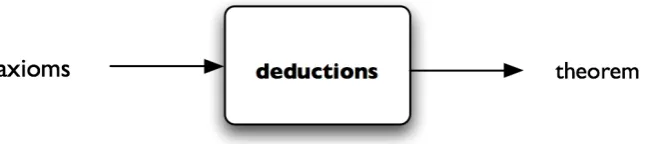
In all of this, software’s relationship with mathematics has been overlooked. Software is a by-product of a quest for truth in mathematics, having developed out of symbolic logic, and mathematical formalism. Symbolic logic seeks to reduce verifiability of mathematical results to the mechanical application of a sequence of rules, starting from agreed axioms. Mathematics and software are also isomorphic activities, in that the activities involved in doing mathematics, and the activities involved in developing software closely correspond to each other. This point is related to the last, in that both disciplines seek to reduce knowledge to a logical sequence of steps – one for the purpose of verification, the other for instructing a computer. This close
20 State Street Bank & Trust Co v Signature Financial Group Inc149 F.3d 1368 (Fed Cir, 1998).
21 A repeat performance seems likely, over the proposed introduction of a unitary patent system in the EU. See the discussion below.
22 See for example Chloe Albanesius, “Infographic: Who Will Win the Patent Wars?”PCMag.com,2 September 2011 <http://www.pcmag.com/article2/0,2817,2392375,00.asp> (4 September 2011); L Gordon Crovitz, “Google, Motorola and the Patent Wars”The Wall Street Journal, 22 August 2011
<http://online.wsj.com/article/SB10001424053111903639404576518493092643006.html> (4 September 2011); Holman W Jenkins, “Obama and the Smartphone Wars”The Wall Street Journal, 24 August 2011
<http://online.wsj.com/article/SB10001424053111903327904576526130093390612.html> (4 September 2011); Kimberlee Weatherall, “Samsung Galaxy Tab vs Apple iPad: the tablet patent wars hit Australia”The Conversation, 3 August 2011
Aims
relationship makes the status of mathematics in patent law an interesting avenue of inquiry. Unlike software, mathematics has a history arguably as long as humanity itself. So considering the patentability of mathematics, which seems always to have been non-patentable, offers a rich repository from which to draw in deciding this contemporary issue.23
1 Aims
Briefly stated, the aims of this thesis are as follows:
1. To argue that software ought not be patentable.
2. In making that argument, to incorporate considerations that go beyond a utilitarian, or purely economic, analysis.
3. To shed light on the nature of software, and the way in which it is constructed, in order to better inform debate, both in the context of intellectual property, and in other legal contexts upon which such an understanding depends.
This thesis is primarily an argument against the patentability of software. It will be shown that the nature of software, and perhaps more importantly, the way it is created, makes it of a kind which cannot be reconciled with the history, purpose and operation of the patent regime. But it is not the first argument advanced for that purpose, nor is it likely to be the last.
Therefore, it is intended that the argument be differentiated from others not by the ends, but by the means. Boyle notes that much of the critical IP scholarship takes place in a “relentlessly util-itarian framework”.24 As such, patents are often justified on purely economic grounds. Patent
theory asserts that “where the norm of free competition would result in free riding by com-petitors and less reason to invest in new technologies, innovation is encouraged by providing innovators with the exclusive rights to their inventions.”25 Innovation is considered to be a
positive on the basis that the public benefit from the disclosure of new and useful technologies, which fall into the public domain at the expiry of the patent grant period – the so-called social contract theory of patent law.26These benefits must be contrasted with the award of monopoly 23 “[A] page of history is worth a volume of logic”:New York Trust Co v Eisner256 US 345 (1921) per Holmes J; “In
this bright future, you can’t forget your past.”: Bob Marley, “No Woman, No Cry”,Live!(1975).
24 James Boyle, “Enclosing the Genome: What the Squabbles over Genetic Patents Could Teach Us” in F Scott Kieff, Perspectives on the Human Genome Project(Academic Press, 2003) 97 at 109.
25 Advisory Council on Intellectual Property,Patentable Subject Matter: Issues Paper(2008)
<http://www.acip.gov.au/library/Patentable%20Subject%20Matter%20Issues%20Paper.pdf>(accessed 13 November 2008) at 1.
Introduction
rights, which amount to a tax on society
in two different ways: first, by the high price of goods, which, in the case of a free trade, they could buy much cheaper; and, secondly, by their total exclusion from a branch of business which it might be both convenient and profitable for many of them to carry on.27
A narrow view of social contract theory frames the patentable subject matter question as a ques-tion of whether the economic benefits of innovaques-tion, prevenques-tion of free-riding, and incentives to invest outweigh the increased prices and exclusion of competition. The danger of assessing the cost on a purely economic basis in these circumstances is that the costs of patenting might be social, ethical, religious, environmental or scientific, and do not fit neatly into an economic analysis. The dangers of overstating patent law in purely economic terms can be stated thus:
Economics can be useful when it is viewed as a science which examines the deci-sion making process, the study of optimization behaviours subject to constraints. Economics cannot be helpful if it is viewed as a precise tool that can mechanically and independently determine the outcomes of complex problems.... [I]t can be used to assist in the framing of issues and in isolating the appropriate factors for judicial consideration. Economics is not helpful, however, in the inherently subjective pro-cess of weighing and quantifying competing concerns. It is wrong not to recognize this limitation, and it is dangerous to assume that difficult, value-laden decisions ... can be decided mechanically by appealing to an economic formula.28
Such a question properly recognises that at times questions of patentability cover social, ethical, religious, environmental, and scientific issues, in addition to economic and legal ones. The latter by themselves will sometimes form an insufficient basis on which to ground patent law. What is sought to be achieved in the course of this argument then, is not to displace economics as a tool by which to assess patent law. It is to develop an alternative analytical framework by which to assess patentable subject matter, and one which at the very least leaves the door open to these broader considerations. At the same time, it is recognised that any such analysis needs to be consistent with the principles developed over patent law’s very long history.
The final aim of this thesis is to bring some clarity to the nature of software. The nature of software as both a description of a computable process, and the mechanism by which such a process is actually performed, is apt to cause confusion. For example, it may be difficult for some to understand how something which can be bought in a box at a shop, carried home, in-serted into a computer, and then run, causing certain images to appear on a screen, might not in fact be a physical artefact at all. By applying the analytical framework which will be developed in this thesis to the special case of software, it is hoped that some light can be shed on the nature of both software development, and software itself, and avoid further mischaracterisation in the future.
27 Adam Smith,An Inquiry into the Nature and Causes of the Wealth of Nations(5thed, Methuen, 1904) at 159-160. 28 Peter J Hammer, “Free Speech and the ‘Acid Bath’: An Evaluation and Critique of Judge Richard Posner’s
Outline
2 Outline
Chapter 1 explores important introductory material, namely the nature of software, although many of the ideas explored are developed in more detail in Chapter 7. In particular, three aspects of software are identified as key to a proper understanding of it. Firstly, successive generations of software have been freed from specific hardware limitations through a process of abstraction. Understanding the level of abstraction means understanding the connection between the alleged invention and the physical constraints of the computer. The level of ab-stractness varies depending on the programming task at hand, and therefore analysis can be very context-specific. Secondly, software development depends on reuse, with software com-ponents being built upon, or with, layers, libraries, frameworks and design patterns. Reuse is a key characteristic of the software industry, and one without which it could not continue. Finally, software entities are highly complex, typically involving large numbers of unique com-ponents. The scale of complexity has been said to be similar in magnitude to that of an aircraft, but the unique nature of each component means there are no economies of scale. Chapter 1 also explores the nature of the relationship between software and mathematics, and explain how it is that software is said to be identical with, or at least isomorphic to, mathematics at both formal structural levels.
Chapter 2 embarks upon an historical account of the patentable subject matter inquiry, tracing the development of such principles from the earliest known patent customs in Europe to the most recent developments in three jurisdictions – the United Kingdom, the United States of America, and Australia. It will be shown that a number of analytical tools have been used to help define the borderline between what is patentable and what is not. A key theme however has been the contrast between abstract, intangible subject matter which is not patentable, and those subject matters involving a corporeal, tangible manifestation which are. The chapter concludes with an analysis of the leading Australian case on patentable subject matter,National Research Development Corporation v Commissioner of Patents29 The case has been described as a
watershed30 and is sometimes characterised as a break with the past.31 However, it will be
argued that rather than representing a new phase in the development of patent law,NRDC
was intended as a continuation of existing principles, and that any claim to a “formula” arising from the case is a misapplication of its text.
Having introduced the key features of computer software and the historical development of the patentable subject matter inquiry it becomes possible to draw those two strands together. Chapter 3 first considers the early history of modern computing, and the emergence of software as a separate phenomenon to the hardware upon which it runs, before charting the course of software from non-patentable idea (or mental process) to patentable process in all three juris-dictions, despite a clear exclusion in the UK. The Chapter concludes by analysing the current
29 (1959) 102 CLR 252 (“NRDC”).
30 Joos v Commissioner of Patents(1972) 126 CLR 611 at 616 per Barwick CJ. See alsoCCOM Pty Ltd & Anor v Jiejing Pty Ltd & Ors(1996) 21 FCR 260 at 287.
Introduction
state of the patentable subject matter inquiry, both as it relates to software, and more broadly for other abstract subject matter.
Chapter 4 will explain in detail why the patenting of software is problematic from both practi-cal and theoretipracti-cal perspectives, tracing these difficulties to the three key features of software identified in Chapter 1. The chapter will also document the way in which the courts of the US, the EU and Australia have attempted to deal with these problems, and describe why it is that the software patent issue should be dealt with as a patentable subject matter issue, rather than as an issue of novelty or non-obviousness. It will be shown why the current approaches are insufficient, and to introduce the notion that a fresh approach to the software patent problem is needed.
The ultimate aim of the thesis is to shed fresh light on the scope of patentable subject matter, to clarify the nature of software, and by doing so to explain why software should not be patentable subject matter. Chapter 5 begins that journey by building on the isomorphism between soft-ware and mathematics identified in Chapter 1. The chapter firstly explores the history and philosophies of mathematics in an attempt to ascertain its nature. It will then be shown that legal accounts of the nature of mathematics are insufficient, as they cannot be reconciled with the contributions of the various philosophies of mathematics to a full understanding of what the nature of mathematics is.
Chapter 6 further explores the nature of mathematics, with a view to constructing a more suit-able explanation of why mathematics is non-patentsuit-able. To do so, a different approach is taken. Whereas the historical, philosophical and legal accounts of the nature of mathematics have fo-cused on what mathematicsis, it will be shown that the better focus is on what mathematics
requiresfor its further progress. By answering that question, it will be possible to avoid the impossibility of providing a definitive unifying account of what mathematics is, and to answer the question of whether mathematics is a proper subject for patent protection. It will be shown that the underlying reason for excepting mathematics from patentability is that mathematical innovation depends on freedom of thought and expression.
Rather than seeking to recharacterise patent law as the competition between inconsistent hu-man rights however, it will be shown how such freedoms can be reconciled with a traditional understanding of the scope of patent law. The mechanism by which that reconciliation is to be achieved is the distinction between the non-patentable fine arts and the patentable useful arts. It will be argued that the concept of the useful arts, or technology, as it might be known in con-temporary language, provides a suitable way of distinguishing between invention and other intellectual pursuits. The analysis of the way freedom operates with mathematics, combined with a foray into the philosophy of technology, leads to the derivation of a three-dimensional analytical framework by which it is possible to distinguish between the fine arts and the use-ful arts in a structured fashion. The analysis is then applied to mathematics to show why mathematics is a fine art and not a useful art, notwithstanding its role in many technological pursuits, because it is intangible rather than physical, expressive rather than functional, and aesthetic rather than rational.
Other matters
and formal connection extend the asserted basis of the non-patentability of mathematics to software. The expressive, aesthetic and intangible nature of software development will be ex-plored. The existence of these attributes, it will be argued, supports the contention that the classification of mathematics as a fine art will usually be appropriate to software. In particular, it will be suggested that the interrelationship of software and hardware, referred to as abstract-ness in Chapter 1, acts as an important consideration. Where the software and hardware are closely interrelated, the physical limitations may constrain the software such that expressive and aesthetic considerations are similarly limited. Where software is merely ancillary to a phys-ical device, this does not change the nature of programming, but it may change what is sought to be patented, namely a physical device in which software is merely a subsidiary component. The limited scope of the claims will mean both that programming as a creative activity is not inhibited, and that what is claimed is sufficiently connected to the traditional conception of the useful arts that it is not contentious. Determining whether it is software, or a physical device which is actually being claimed requires difficult determinations of fact in any particular case, but the difficulty of the choice does not obviate the need to draw such distinctions.
Having demonstrated why programming, like mathematics, is not a useful art, the final chap-ter, Chapter 8, explores the implications of that position. The value of the framework, and the current state of patent law in Australia, the UK and the US are assessed. The importance of characterisation is also acknowledged. Next, the role of subject matter is considered. The need to exclude software from the patent paradigm suggests that subject matter is not a “failed gatekeeper”, but an important mechanism by which “soft” issues such as ethics and social considerations, can be reconciled within patent law. Finally, some remarks are addressed to a broader issue. As it is suggested that software ought not to be protected by patent law, the implications of that position on the protection of software is considered. It will be suggested that there is no need to warp patent law protect the industry. Alternative protection mecha-nisms are explored, and found to be better suited to crafting an Information Age response to an Information Age problem.
3 Other matters
The law stated herein is correct up to the end of June 2011. Where relevant, decisions made since that time have been noted. In particular, the decisions inCyberSource Corporation v Retail Decisions Inc32andAssociation for Molecular Pathology v USPTO,33are briefly noted, but not
com-prehensively analysed. As to Australian law, despite it being nearly 5 years since the Federal Court has given judicial consideration to the scope of subject matter, it seems that Australian law will continue to track developments in the US, as it has in the past. For example, the Cyber-Sourcecase was applied by the Australian Patent Office only days after being handed down.34
Bilskiitself was first applied in the APO decision in Invention Pathways35 only a month after
32 Appeal No 2009-1358 (Fed Cir, 2011). 33 Appeal No 2010-1406 (Fed Cir, 2011).
Introduction
being handed down by the US Supreme Court. In Europe, the impasse between the UK courts and the EPO has not yet been resolved, although plans to introduce a unitary patent system would mean the EPO wins by default. It seems like the 2005 battle over the Software Patent Directive is about to resume in a different form.36
Some parts of this thesis were originally drawn from the following published works:
1. Anton R Hughes, “A Comment on Software, Patents, Innovation and Openness” (2003) 14(1)Journal of Law, Information and Science50;
2. Anton R Hughes, “Avoiding the Software Patent Problem: An Alternative Fix for TRIPS Junkies” (2007) 14(1)eLaw: Murdoch University Electronic Journal of Law100;
3. Anton R Hughes, “Submission to the Advisory Council on Intellectual Property: Patentable Subject Matter Issues Paper” (19 September 2008)
<http://www.acip.gov.au/reviewpatentable/IP22%20Anton%20Hughes.pdf>; and
4. Anton R Hughes, “Case Brief: Bilski v Kappos” (2010) 20Journal of Law, Information and Science229.
36 See Chapter 3, at 117. On the current battle, see for example Richard Stallman, “Beware: Europe’s ’unitary patent’ could mean unlimited software patents”The Guardian, 22 August 2011
C
HAPTER1
The Nature of Software
1 Introduction
To understand why software is an issue for patent law, it is first necessary to understand a number of things about how modern software is organised, and how any particular software component is likely to be built. The nature of software will be returned to in Chapter 7, in much greater detail. However, an understanding of the software development process is necessary in order to properly understand the software patent case law in Chapter 3, and the problems which attend on these cases, set out in Chapter 4.
Through an exploration of the nature of software, four things will become clear. Firstly, the pro-cess of abstraction away from specific hardware limitations has been the key to the sucpro-cess of software. Secondly, the way in which software systems are constructed using layers, libraries, frameworks and design patterns makes it clear that one important goal of software develop-ment is to encourage re-use. Thirdly, the developdevelop-ment of a particular piece of code tends to be very context-specific – not all software development activities are alike. Finally, software entities tend to be complex, typically involving large numbers of unique components. Abstrac-tion, re-use, context and complexity all raise important considerations for the patentable subject matter issue which will be developed in later chapters.
This chapter will also introduce one of the major themes of the thesis – that software is isomor-phic to mathematics. This isomorphism can be demonstrated both at the formal level, and at the structural level. Whilst there are undoubtedly some differences between the two, theprima facieidentity established provides adequate grounds for exploring software’s patentability by reference to the patentability of mathematics.
2 What is software?
Chapter 1: The Nature of Software
aspects of the computer, especially the programs, or sets of instructions “which cause a com-puter to perform a desired operation or series of operations.”1Such a definition is useful to a
certain extent, but overlooks the complex relationship of hardware and software, particularly when a previously externally-stored program2is loaded into the memory of a computer. It also
encourages a focus on the end product of the software development process – an executable manifestation of software – at the expense of other artefacts which exist at intermediary stages, determine the final product, and should probably fall within the definition of software.
So to truly understand the nature of software, it is necessary to see it in the broader context of computer science. First of all, it is necessary to understand how the development of software has evolved from modern times, as much of this evolution has determined the way in which software developers currently operate. With this in mind, it will then be possible to demon-strate the way in which software developers take an abstract idea and develop it into working software, through the paradigm known as top-down programming. It will also be possible to make some general observations about what makes software unique.
The Evolution of Modern Software
Machine Code
Machine code, or native code, is the medium in which all software was originally written, and in which software ultimately executes on a computer. It is also the only language which can be understood and executed by a computer, even now. Machine code instructions are a string of 1s and 0s (or bits) of a set length which tell the computer’s central processing unit (CPU) which instruction to perform, where to get the data, and where to put the result. An example of a 32-bit instruction is given below:3
1 0 0 0 0 0 0 0 1 0 0 0 0 0 1 0 0 0 0 1 1 0 0 0 0 0 0 0 0 0 0 0 Instruction (ADD) Output (L4) Input 1 (L2) Input 2 (L3) (unused)
Table 1.1: Example machine code instruction
This instruction tells the CPU to add the contents of memory location 2 to memory location 3 and put the result in memory location 4. Writing whole programs in machine code would obviously be very tedious and time consuming. Further, errors are easy to make and hard to find. Finally, the set of instructions available tend to vary from computer to computer, meaning
1 “Software” inThe Macquarie Dictionary,(4thed, The Macquarie Library Pty Ltd, 2003). 2 Such as on punched cards, a floppy disk, or in more recent times, a CD or DVD.
3 Adapted from Arvind Asanovic, “Early Developments: From the Difference Engine to IBM 701” (Lecture Slides, MIT, 2005) <http://ocw.mit.edu/courses/electrical-engineering-and-computer-science/6-823-computer-system-architecture-fall-2005/lecture-notes/l01_earlydev.pdf> (11 September
What is software?
there is little portability.4So early on, programmers began to look for ways of moving towards
more human-readable representations of computer instructions.
Assembly Language
The first milestone achieved by programmers in their move away from machine code was to write a program which could convert to and from a symbolic representation of the instruction. This program was called an assembler/disassembler. The assembly language version of the machine code instruction above looks like this:
ADD (L4, L2, L3)
“ADD” is obviously more memorable than 100000, but there is still a one-to-one correspon-dence between assembler instructions and machine code instructions. Seemingly simple oper-ations require a number of machine-level instructions,5and assembly programmers still have
to work within the constraints of hardware-specific instruction sets.6 So they set to work on
hiding the low-level details of the computer in another way.
High level languages
Most programming in contemporary times is done using high level languages. These lan-guages are another step closer to natural language, and a typical instruction in a high level language may be made up of a series of machine-level instructions. High level languages also hide the machine architecture from the programmer. High level languages can be broadly categorised as one of two types, compilers or interpreters. A high-level representation of the example above would be:
a = b + c
In other words, when using high level languages, programmers no longer have to worry about memory locations, architecture-specific instructions or other low-level hardware details. How-ever, in order to be executed by the computer, high-level language commands need to be trans-lated into machine code. As such, high level languages are often classified according to how this translation is achieved, either by compiler or interpreter.
4 This was a particularly big issue early in the history of computing, where there was no standardisation of architecture. Although it may appear to be less of an issues now, where most computers are based on the Intel Pentium architecture, there are still many alternative architectures in use, especially for smaller electronic devices like PDAs and mobile phones.
5 The following example of assembler code for multiplying two numbers on an AVR chipset requires no less than 30 separate instructions. See Gerhard Schmidt, “Mult8.asm” onTutorial for learning assembly language for the AVR-Single-Chip-Processors<http://www.avr-asm-tutorial.net/avr_en/calc/MULT8E.html> (24 July 2008). 6 Despite the difficulties, assembly language is still used today in applications where efficient performance in the
software is valued over the manual labour involved in creating it, for example in device drivers, embedded systems and computer game routines. See Wikipedia, “Assembly language”
Chapter 1: The Nature of Software
Compilers
Compiled languages cannot be run directly on a computer in their original (source code) form. Before they can be executed, a translation program (compiler) translates the high-level lan-guage instructions to machine-specific instructions (the result of compilation being known as object code). Common compiled languages include C and Java.
Interpreters
A more modern development are interpreted languages, for which there is only source code. When these programs are run, a program called an interpreter translates high-level code to machine code as the code is run. Modern examples of interpreted languages include Python, Perl, PHP and Ruby. The downside of interpreted languages is that they generally run slower and require more memory. However, since no compilation is involved, the development and testing of software written in these programs is much more efficient.
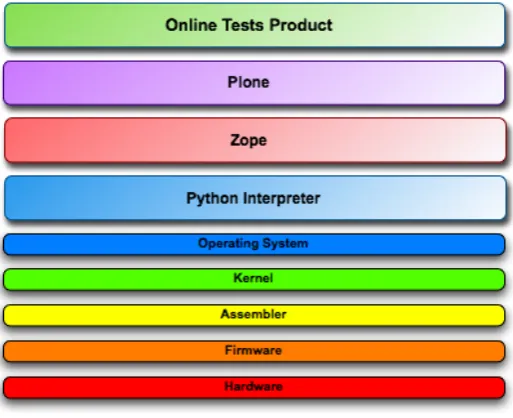
But of course, the abstraction of the software development process does not end there. The efficiency of software development to this point involved abstracting software away from the low level details of the hardware on which it was to be run. A similar type of abstraction can be achieved by breaking software down into a series of layers, where each layer offers the layer above access to its services, but only via a set of higher-level functions. The typical layers involved in the operation of a modern computer are discussed below.
Firmware, kernels and operating systems
Firmware exists right at the borderline between hardware and software, and can be thought of as a computer program embedded in a hardware device. The most familiar role for firmware in modern computers is as the Basic Input Output System (or BIOS) which launches a computer’s startup process by detecting the installed hardware elements, and starting to load the operating system. The reader might be able to just think of it as the first screen which appears when a computer is turned on.
Operating just above the level of the firmware is an operating system’s kernel. The kernel han-dles the lowest level of interactions with the hardware of a computer. The most commonly known kernel is the Linux, the kernel of a GNU/Linux operating system. The job of the ker-nel is to “manage the computer’s resources and allow other programs to run and use these resources”7These resources include the CPU, memory (RAM) and various input/output
de-vices such as displays, disk drives, mice and keyboards. Since there is usually more than one program running at any time on a computer, the kernel can be thought of as deciding which program gets access to what, when, and for how long. The kernel also takes care of communi-cation between programs.
What is software?
Other parts of the operating system perform a wider range of higher level services, including:8
• program execution (starting and stopping applications)
• responding to events (e.g. “somebody hit the “A”key – send an A to the current pro-gram!”)
• memory management (e.g. “Firefox opened a new window – give it more memory!”)
• multitasking (e.g. surfing the web, running a mail merge, printing and drinking coffee at the same time)
• disk access and file systems
• device drivers (e.g. making sure Times New Roman looks the same on the printer at work as it does on the printer at home)
• networking
• security (e.g. who can log in, who can see this file)
• graphical user interface (windows, buttons, menus and so on)
Libraries, frameworks and patterns
Since the history of computer science is a lesson in the benefits of building on what has come before, software developers usually look to break software down into sets of components which can be re-used beyond the problem at hand. As such, the development of most, if not all, applications are built using a series of independent components, which are often written by independent developers, or as a collaborative effort between various parties.
A library (or module) is a “a substantial number of computer program modules designed to solve a wide range of problems in [a] given area”.9For example, a library might contain a
func-tions for calculating mathematical or scientific formulae,10 or functions for managing files.11
Libraries allow programming effort to be concentrated on efforts that can be re-used. Libraries can be thought of as extending a language.
A framework is “the skeleton of an application that can be customized by an application de-veloper”12 and generally provide a set of reusable components such as libraries, as well as a
design or design or pattern by which to combine them to form a whole application. Frame-works consist of both code, in the form of components, as well as a method of organising those
8 This list was adapted from Wikipedia, “Operating system” <http://en.wikipedia.org/wiki/Operating_system> (23 July 2008).
9 “Software Libraries, Numerical and Statistical” in Anthony Ralston, Edwin D Reilly and David Hemmendinger (eds),Encyclopedia of Computer Science(4thed, Wiley, 2003).
Chapter 1: The Nature of Software
components into a larger whole. As an organising concept, they begin to stray beyond the realm of software as “code” into the realm of the purely abstract.
Patterns, or design patterns, are a “general reusable solution to a commonly occurring problem in software design”.13 The original concept of patterns was imported to the software field
from architecture,14 and allows a design to be built from a catalogue of generalised solutions
to recurring problems. A design pattern “describes the problem, the solution, when to apply the solution, and its consequences”.15 Since the mid 1990s,16 design patterns have had an increasingly influential role in the development of software.
The level of abstraction at which patterns exist is such that it becomes questionable whether they are software at all. As a formal manifestation of an process, they have a lot in common with the formal manifestation of an idea in a high level language. They are certainly a useful design tool, and also provide a vocabulary for describing the way software works. Intuitively speaking though, it is submitted that unless they are realised in an ultimately executable form,17 they
should not be considered to be software.
Scripting languages and domain-specific languages
Applications themselves are also frequently developed in such a way that they can be extended by plug-in modules. Scripting languages are programming mini-languages which are primar-ily designed for controlling software applications. They allow users to write “programs within a program”, usually to automate repetitive tasks within the program, rather than having any broader role in software development. A common example would be Microsoft Word macros, written in a subset of the Visual Basic example. Javascript is another example of a scripting language, which is embedded in web browsers and is used to make traditionally static web pages more dynamic, or, dare I say it, more Web 2.0.
Similarly, domain-specific languages are designed to solve a set of needs specific to a particular problem domain. For example, Structured Query Language, or SQL, is the language used to handle interactions with most databases.18 Cascading Style Sheets are another example, and
are widely used to centrally manage the formatting of web sites (font size, background colours and so on).19
13 Wikipedia, “Design pattern (computer science)”
<http://en.wikipedia.org/wiki/Design_pattern_(computer_science)> (29 July 2008).
14 See Christopher Alexander et al,A Pattern Language: Towns, Buildings, Construction(Oxford University Press, 1977).
15 Erich Gamma et al,Design Patterns: Elements of Reusable Object-Oriented Software(Addison-Wesley Professional, 1994).
16 The take-off in design patterns is generally attributed to the publication of the so-called “Gang of Four” book, Erich Gamma et al,Design Patterns: Elements of Reusable Object-Oriented Software(Addison-Wesley Professional, 1994).
17 By this it is meant that they should be manifested in either machine code, assembly language or a compilable or interpreted high-level language.
18 For an introduction see John Worsley and Joshua Drake “Chapter 3: Understanding SQL” inPractical PostgreSQL (O’Reilly, 2001) <http://www.faqs.org/docs/ppbook/c1164.htm> (3 November 2008).
What is software?
The modern software development process
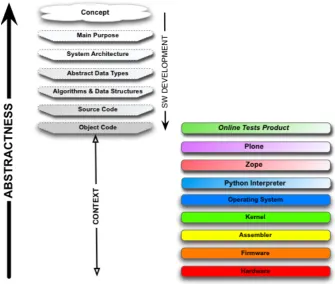
With a general understanding of how software development takes place at differing levels of abstraction, and in different contexts, it is now important to understand how programmers write it. The process “is one of gradual refinement and elaboration”,20starting with a highly
abstract concept, namely the pure idea and moves, through a series of steps, towards specific code – often seen as the the medium in which modern programmers work. Ogilvie identifies 6 individual levels of abstraction within the software development cycle,21 and whilst many of
them may take place in parallel, they are helpful in explaining how software developers ’bridge the gap’ from concept to code.22
To give a more concrete sense of how these levels of abstraction influence each other, the dis-cussion will discuss a fictional program to manage a dental prosthetics business, called Over-Byte.23
Main purpose
What is meant by the “main purpose”of a computer program is a high-level description of the problem which the software is intended to solve.
At its simplest, the main purpose of OverByte is that noted above, namely to manage a dental prosthetics business, although what would typically be involved would be a more detailed statement of the problems which the package is supposed to solve, such as tracking, managing and reporting on the ordinary transactions engaged in by a dental prosthetics business on a day-to-day basis.
System architecture
As the programmer learns more and more about the problem to be solved, they will begin to break the problem up into a series of smaller problems, or modules. “Each module performs a significant portion of the program’s main purpose and is eventually implemented as a distinct section of the source code.”24The system architecture describes how the program is dissected
into these modules, and the interactions and/or relationships between them. The interaction between modules can be described by the way they ‘call’ each other (control flow), the way they push data to each other (data flow) or by the way they are ‘nested’ inside each other (to make an analogy, a ‘family’ module might have 2 ‘parent’ modules and 2 ‘children’ modules).
For OverByte, the modules involved might be grouped into something like order entry, invoic-ing, accounts receivable, end of day procedures and end of month procedures.
20 Peter G Spivack “Comment: Does Form Follow Function? The Idea/Expression Dichotomy in Copyright Protection of Computer Software” [1988] 35UCLA Law Review723 at 729.
21 John WL Ogilvie, “Defining Computer Program Parts Under Learned Hand’s Abstractions Test in Software Copyright Infringement Cases” (1992) 91Michigan Law Review526.
22 It should be noted that the process involved describes the modern paradigm of object-oriented programming. 23 The example is borrowed (but modified) from the US case ofWhelan Associates v Jaslow Dental Lab Inc797 F.2d
1222 (1986).
Chapter 1: The Nature of Software
Abstract data types (ADTs)
Abstract data types, also known as objects, define both the sorts of data stored (data type), as well as the operations which can be performed on it. “[T]he motivation behind every ADT is to associate a given data type with the operations that are useful in manipulating that type”.25
An example for the OverByte program might be an invoice data type. An invoice would store data such as:
• invoice number
• invoice date
• due date
• items
• subtotal
• GST
• Total
Operations which could be done on an invoice would include such things as:
• update invoice values
• delete the invoice
• calculate GST
• process invoice payment
Algorithms and Data Structures
Algorithms and data structures are more computer-specific representations of operations and data types than just discussed. It is important to note that what distinguishes algorithms and data structures from ADTs is that there may a number of specific algorithm and data structure combinations that correctly implement the requirements of the ADT. “Although data struc-tures and algorithms are more specific than ADTs and may even depend on certain program-ming language features for use, they are independent of any specific programprogram-ming language or piece of literal source code.”26 Algorithms, also known as procedures, are a ‘unit’ of
com-putation which perform a specific task. Whilst an “operation merely identifies a desired result,
25 John WL Ogilvie, “Defining Computer Program Parts Under Learned Hand’s Abstractions Test in Software Copyright Infringement Cases” (1992) 91Michigan Law Review526 at 536.
What is software?
an algorithm specifies every step necessary to accomplish that result”.27 Typically, procedures
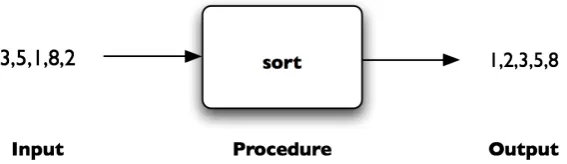
take data as an input, and act on it to create a new set of data as an output. For example, the following represents a procedure for sorting a set of numbers from lowest to highest:
[image:35.595.175.459.245.327.2]Procedures are usually only considered at this somewhat abstract level, so as not to be con-strained by the specific limitations of either computer hardware and a particular programming language, although their operation may be described in more detail than here, either in natural language, a flowchart, or in some sort of pseudo-code.
Figure 1.1: Sort procedure.
A simple example from the OverByte program’s invoice data type would be an algorithm to calculating the GST on an invoice. Such an algorithm might work as follows:28
1. Add up the total cost of items on the invoice.
2. Divide the total by 10, rounding up to 2 decimal places
3. Save this value into the GST field.
Data structuresdescribe how a computer is to represent/store the data in a data type. A data structure “consists of one or more variables of the basic data types, which are organized in some specified combination of arrays, records, and pointers”.29 Data structures are defined at
an abstract level which does not require any consideration of the way they will be represented in the memory of a computer. Considered together, procedures and data spaces can be thought of as a preliminary sketch of a program and are usually written in natural language, or some formal notation.
Many of the data structures in the OverByte invoice data type are simple data structures. For example, the subtotal, GST and total would be stored as floating point (i.e. decimal) numbers. The “items”data is a little more complicated, in that it is an “array of records”. Arrays and records differ in that with an array, each sub-component is the same data type. With a record, each sub-component may be of a different type. Considering the invoice items data structure
27 John WL Ogilvie, “Defining Computer Program Parts Under Learned Hand’s Abstractions Test in Software Copyright Infringement Cases” (1992) 91Michigan Law Review526 at 536.
28 The savvy reader may wonder why the GST isn’t just calculated from the subtotal field. The author admits that the algorithm has been chosen for its illustrative nature, rather than its computational (or logical) efficiency. In other words, calculating it from the subtotal seems too trivial to deserve the label ‘algorithm’.
Chapter 1: The Nature of Software
as a table, each row is a record, because individual columns are of different types, as shown below:
Quantity Description Unit price Item cost
integer/whole number string/text floating point/decimal floating point/decimal Table 1.2: “Items” data structure
Although only one row is shown, multiple rows of data could exist on an actual invoice. The data structure for each column is also shown. Each row will have the same columns, so will be an array of records.
Source code
With a preliminary design in place, the next step is for the procedures and data spaces to be written out in the programmer’s programming language of choice. The programmer is limited in the expression of the code at this stage by both the syntax and grammar of the code. Depend-ing on context and choice of language, the hardware on which the program is to run may also influence the way the source code is written. Because it is in many ways the final stage of the development process, the software reflects all the previously discussed levels of abstraction. As Ogilvie notes:
A program’s entire range of abstraction is embedded in its code in roughly the same way a novel’ s characters and plot are embedded in its text. Therefore, care must be taken to avoid confusing code as the embodiment of parts at every level of abstrac-tion with code as a level of abstracabstrac-tion in its own right.30
A brief extract of how the Invoice components of OverByte thus far discussed might look if written in the Python programming language might look is included in Algorithm 1.1 on the facing page. The code should illustrate that source code is designed as much for humans as for computers. Even those unfamiliar with programming should be able to follow what is going on in this code, particularly aided by the comments embedded throughout, preceded by the # character. The significance of this point cannot be understated, and will be returned to at various points in this thesis..
Object code
This is the final, executable form of software. The transition from source code to object code is usually an automated process, although it may involve some degree of manual configuration