and Duloxetine in the Treatment of Major Depressive Disorder and Comorbid
(Sub)Chronic Pain : Results of an Exploratory Randomized, Placebo-Controlled,
Multicenter Trial (CC:PAINDIP)
.
White Rose Research Online URL for this paper:
http://eprints.whiterose.ac.uk/133550/
Version: Published Version
Article:
de Heer, Eric W, Dekker, Jack, Beekman, Aartjan T F et al. (6 more authors) (2018)
Comparative Effect of Collaborative Care, Pain Medication, and Duloxetine in the
Treatment of Major Depressive Disorder and Comorbid (Sub)Chronic Pain : Results of an
Exploratory Randomized, Placebo-Controlled, Multicenter Trial (CC:PAINDIP). Frontiers in
psychiatry. 118. ISSN 1664-0640
https://doi.org/10.3389/fpsyt.2018.00118
[email protected] https://eprints.whiterose.ac.uk/
Reuse
This article is distributed under the terms of the Creative Commons Attribution (CC BY) licence. This licence allows you to distribute, remix, tweak, and build upon the work, even commercially, as long as you credit the authors for the original work. More information and the full terms of the licence here:
https://creativecommons.org/licenses/
Takedown
If you consider content in White Rose Research Online to be in breach of UK law, please notify us by
doi: 10.3389/fpsyt.2018.00118
Edited by:
Michael Noll-Hussong, Universitätsklinikum des Saarlandes, Germany
Reviewed by:
Giorgos K. Sakkas, University of St Mark and St John, United Kingdom Magda Tsolaki, Aristotle University of Thessaloniki, Greece Robert H. Howland, University of Pittsburgh, United States
*Correspondence:
Eric W. de Heer [email protected]
Specialty section:
This article was submitted to Psychosomatic Medicine, a section of the journal Frontiers in Psychiatry
Received: 15 October 2017
Accepted: 20 March 2018
Published: 05 April 2018
Citation:
de Heer EW, Dekker J, Beekman ATF, van Marwijk HWJ, Holwerda TJ, Bet PM, Roth J, Timmerman L and van der Feltz-Cornelis CM (2018) Comparative Effect of Collaborative Care, Pain Medication, and Duloxetine in the Treatment of Major Depressive Disorder and Comorbid (Sub)Chronic Pain: Results of an Exploratory Randomized, Placebo-Controlled, Multicenter Trial (CC:PAINDIP). Front. Psychiatry 9:118. doi: 10.3389/fpsyt.2018.00118
Comparative Effect of Collaborative
Care, Pain Medication, and
Duloxetine in the Treatment of Major
Depressive Disorder and Comorbid
(Sub)Chronic Pain: results of an
Exploratory randomized,
Placebo-Controlled, Multicenter Trial
(CC:PainDiP)
Eric W. de Heer1,2*, Jack Dekker3,4, Aartjan T. F. Beekman5,6, Harm W. J. van Marwijk7,8,9, Tjalling J. Holwerda4, Pierre M. Bet10, Joost Roth6, Lotte Timmerman1
and Christina M. van der Feltz-Cornelis1,2
1 GGz Breburg, Clinical Centre of Excellence for Body, Mind and Health, Tilburg, Netherlands, 2 Tranzo Department, Tilburg
School of Behavioral and Social Sciences, Tilburg University, Tilburg, Netherlands, 3 Faculty of Behavioral and Movement
Sciences, VU University, Amsterdam, Netherlands, 4 Arkin, Mental Health Institute, Amsterdam, Netherlands, 5 Department
of Psychiatry, VU University Medical Centre, Amsterdam, Netherlands, 6 GGz inGeest, Mental Health Institute, Amsterdam,
Netherlands, 7 EMGO Institute for Health and Care Research (EMGO+), Amsterdam, Netherlands, 8 Department of General
Practice, VU University Medical Centre, Amsterdam, Netherlands, 9 Division of Population Health, Health Services Research
and Primary Care, University of Manchester, Manchester, United Kingdom, 10 Department of Clinical Pharmacology and
Pharmacy, VU University Medical Centre, Amsterdam, Netherlands
Objective: Evidence exists for the eficacy of collaborative care (CC) for major depres-sive disorder (MDD), for the eficacy of the consequent use of pain medication against pain, and for the eficacy of duloxetine against both MDD and neuropathic pain. Their relative effectiveness in comorbid MDD and pain has never been established so far. This study explores the effectiveness of CC with pain medication and duloxetine, and CC with pain medication and placebo, compared with duloxetine alone, on depressive and pain symptoms. This study was prematurely terminated because of massive reorganizations and reimbursement changes in mental health care in the Netherlands during the study period and is therefore of exploratory nature.
results: Sixty patients completed the study. Patients in all treatment groups reported signiicantly less depressive and pain symptoms after 12 weeks. CC with placebo condi-tion showed the fastest decrease in depressive symptoms compared with the duloxetine alone group (b = −0.78; p = 0.01). Non-compliant patients (n = 31) did not improve over
the 12-week period, in contrast to compliant patients (n = 29). Pain outcomes did not
differ between the three groups.
Conclusion: In MDD and pain, patient’s compliance and placebo effects are more important in attaining effect than choice of one of the treatments. Active pain manage-ment with COX inhibitors and pregabalin as alternatives to tramadol or other opiates might provide an attractive alternative to the current WHO pain ladder as it avoids opiate prescription as much as possible. The generalizability is limited due to the small sample size. Larger studies are needed.
Keywords: collaborative care, pain, depression, duloxetine, placebo, pregabalin, algorithm
inTrODUCTiOn
Pain is common among depressive patients (1–4), with comor-bidity rates amounting to two thirds (5). A depressive disorder is a risk factor for developing low-back pain (6, 7), neck pain (6), and joint pain (8). he burden of depression with comorbid pain increases the likelihood of disability to work and unemploy-ment, decreases wellbeing (9, 10) and doubles health care costs compared with patients with pain without depression (10). his comorbidity is associated with treatment resistance and poor response to treatment when only the depressive symptoms are treated (11–13). herefore, it is evident that treatment needs to address both depression and pain.
One option for a dual and integrated treatment approach that addresses both depression and pain is collaborative care (CC), which is efective in the treatment of depression (14–17) and pain (18). CC is a framework for multifaceted care, including psycho-logical as well as pharmacopsycho-logical interventions and interdisci-plinary collaboration of health professionals, and is applicable in primary, secondary, and tertiary care settings (19). In the Netherlands, the general practitioner (GP) acts as a gatekeeper for patients with mental and physical problems. In the national Depression Initiative, from 2006 to 2012 (20), a CC model was implemented and evaluated in which the GP could collaborate with a nurse care-manager and a consultant psychiatrist for treat-ment of a depressive disorder in primary care (19). his model has proved to be successful (17, 21–23), and so was a similar model for anxiety disorders (24, 25) and somatoform disorders (26) in the primary care setting. As a result of these positive outcomes, and the cost-efectiveness of the model (27–30), CC including psychiatric consultation was taken into account in a rigorous reorganization cutback of mental health care provisions in the Netherlands (31) and was made the preferred collabora-tion model for primary care and specialty mental health care in the Netherlands since 2014 by the Ministry of Health and the medical insurance companies. Since then, in order to cope with the increasing demand for mental health care in general practice, a policy change was introduced reimbursing the collaboration of
GPs and mental health specialists (e.g., psychiatrists) that is now being implemented widely (32). Patients with mild mental health problems are treated in primary care (with psychopharmacologi-cal treatment and/or short-term psychologipsychopharmacologi-cal treatment) and patients with moderately severe mental disorders are treated in basic mental health care, where no more than 12 sessions are ofered. Patients with more complex mental health problems are treated in specialized mental health care. In a large randomized controlled trial, antidepressant treatment in combination with a behavioral intervention, such as problem-solving treatment (PST), was more efective in reducing depressive and pain symptoms in primary care patients (33). Antidepressants such as duloxetine are reported to be efective for depressive and pain symptoms (34–39), and appear to be more efective than SSRIs and placebos (36, 40). However, to co-manage pain, the use of analgesics might improve the efect on pain symptoms in patients with depression (33).
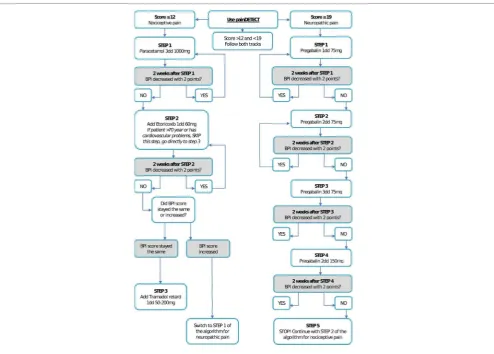
FigUrE 1 | Pain medication algorithm for nociceptive pain (left track), neuropathic pain (right track), and mixed pain (both tracks).
Pain is common in patients with major depressive disorders (MDDs) and has a negative inluence on treatment outcome. Furthermore, pain and depression have a bidirectional asso-ciation: persons with pain symptoms are at increased risk for depression and those with depressive symptoms report more pain symptoms than persons without depressive symptoms (9). Hence, treatment should address both. Evidence exists for the eicacy of CC against MDD, for the eicacy of consequent use of pain medication against pain, and for the eicacy of duloxetine against both MDD and neuropathic pain. However, their rela-tive effecrela-tiveness has not yet been established. Also, in view of miscellaneous results on the effectiveness of duloxetine for pain, a placebo condition in this specific patient group with comorbidity was needed. Hence, the aim of this study was to evaluate the effectiveness of CC with PST, pain medication and duloxetine, and CC with PST, pain medication and placebo, compared with duloxetine alone, on depressive, and pain outcomes. Due to several developments, the enrollment was severely hampered and eventually, the study was prematurely terminated. Surrounding the start of the study, a series of unprecedented changes in the organization and financial reimbursement of mental health care due to cutbacks were
introduced in the Netherlands. As a result, fewer patients were treated in specialized mental health care. These develop-ments in mental health care made it difficult for this study to complete enrollment as envisioned. This study is, therefore, of exploratory nature.
MaTErialS anD METHODS
Trial Design
he design of the study has been described in more detail else-where (48) but is summarized here. his study was a three-armed, randomized, multicenter, and placebo-controlled trial. he three treatment groups of this study consisted of:
1. CC including pain medication treatment, combined with duloxetine;
2. CC, including pain medication treatment, combined with a placebo;
3. duloxetine only.
Setting
his study was led by the Clinical Centre for Body, Mind, and Health, and performed within this center and two other mental health institutions in the Netherlands: Arkin, and GGZ inGeest. Inclusion took place between December 2011 and May 2014.
Ethical Statement
his study was carried out in accordance with the recommen-dations of the scientiic committees of the three participating institutions with written informed consent from all subjects in accordance with the Declaration of Helsinki. All subjects gave written informed consent in accordance with the Declaration of Helsinki. he protocol was approved by the respective scientiic committees of the three participating institutions, the medical ethical committee, and by the Central Commission for Human Bound Research (CCMO, dossier number: NL30081.029.10). he trial is listed in the trial registration: http://www.trialregister.nl/ trialreg/admin/rctview.asp?TC=1089; NTR number: NTR1089.
Participants
Consecutive patients presented at three specialized mental health outpatient clinics were screened for MDD and pain; they were asked informed consent and randomly assigned to one of the three treatment groups. Inclusion criteria were a Patient Health Questionnaire depression sub-scale (PHQ9) (49) score of 10 or higher; an MDD classiication by Mini Neuropsychiatric Interview (MINI interview); and a brief pain inventory (BPI) (50) score of 3 or higher. Exclusion criteria were: a PHQ9 lower than 10; a BPI score lower than 3; alcohol use of more than 3 units (1 unit = 1 glass of at least 0.25 l) a day; drug abuse or dependence in the last 6 months, deined as current use of any hard drugs (deined by Dutch law, e.g., XTC, cocaine, heroin, magic mush-rooms) or cannabis; psychotic symptoms or use of antipsychotic medication that may inluence perception of pain; use of St John’s wort (Hypericum Perforatum); pregnancy and breastfeeding; inability to participate in case of too severe language barrier; dementia; history of renal and liver dysfunction for which treat-ment is needed; uncontrolled hypertension despite treattreat-ment for hypertension; suicidal ideation if this constitutes immediate danger and the need for crisis management (48). Patients were asked to stop their current medications, under the supervision of a psychiatrist, before starting with the study.
randomization
Each participating patient received a unique identiication number. his number was inserted into a specially designed program for randomization. he randomization number (1 for CC + duloxetine, 2 for CC + placebo, and 3 for duloxetine) was digitally sent to the pharmacist of the VU medical center. he pharmacist changed the labels of medication so no information was provided whether the pills were duloxetine or a placebo. he pharmacist could identify the medication by a unique number. Ater receiving a randomization number, the pharmacist would send four unique medication numbers to the contact of the men-tal health center where the patient was registered. he contact would ensure the psychiatrist received the correct medication for
the included patient. Two people controlled the unique medica-tion numbers assigned to a patient. Study investigators, research coordinators, attending care teams, and the patients were blinded to treatment allocation when randomized into one of the CC groups. Medication in the duloxetine alone group was open label. Randomization in a 1:1:1 fashion was balanced within blocks, in which each treatment arm would occur two times in every six randomizations (48, 51).
Variables
Primary Outcome: Depressive Symptoms
he severity of depressive symptoms was measured with the PHQ9, a brief but validated instrument that scores each of the DSM-IV criteria for MDD (49). Each item is scored from 0 (not at all) to 3 (nearly every day). he total score thus varies from 0 to 27; higher scores indicate higher levels of depressive symptoms. A cut-of score of 10 or higher is recommended to indicate moderate levels of depression (52). Response on depres-sive symptoms was deined as a 50% reduction of the baseline PHQ9 score at the end of treatment. Remission of depressive symptoms was deined as a score of 5 or lower on the PHQ9 at the end of treatment.
Secondary Outcome: Pain Symptoms
To measure pain symptoms, the item for average pain of the BPI (50) was used, measuring average pain severity on a scale of a 10-point scale (0 = no pain; 10 = the most severe pain). he BPI is a self-administered questionnaire that was originally designed to assess cancer pain and shows good validity and reliability (Cronbach alpha.85) (50). he questionnaire is com-posed of pain drawing diagrams, four items about pain intensity (worst pain, least pain, average pain, and pain right now), two items on pain relief treatment or medication, and one item on pain interference, with seven sub-items (general activity, mood, walking ability, normal walk, relations with other people, sleep, and enjoyment of life). he BPI was completed at every session (seven in total) with the psychiatrist (every other week), who used the BPI score to adjust the medication. Including the score used to screen for eligible patients and the baseline BPI score, a total of nine BPI measures were obtained. Response on pain symptoms was deined as a 50% reduction of the baseline BPI score at the end of treatment. Remission of pain symptoms was deined as a score of 2 or lower on the BPI at the end of treatment.
the nine-item version ranges from −1 to 38. he painDETECT was originally developed for individuals with low-back pain and showed good sensitivity and speciicity (53). he painDETECT was used in the irst therapy session in the CC treatment groups and was used to determine the choice of pain medication accord-ing to the pain algorithm.
Assessments
Before treatment started, all participants completed a baseline self-report questionnaire. During treatment, the patients completed self-report questionnaires BPI, PHQ9, and the Antidepressant Side-Efects Checklist (ASEC-21) (54) pro-vided by the clinician every other week, according to a Case Registration Form (CRF). he ASEC-21 is a checklist to measure the number of side efects due to the use of an antidepressant. he CRF assessments were used for analyses.
Medications Used in the Study
In this study, duloxetine was used as an antidepressant. Patients started with 30 mg every day for the irst 2 weeks, which was increased to 60 mg for the following 2 weeks. Dependent on the score on the PHQ9, the dose would then be raised to 90 mg (if the PHQ9 score was not decreased with ive points) or would remain 60 mg (if the PHQ9 score decreased by at least ive points). When ater 12 weeks no response or remission was obtained on the PHQ9, a switch to amitriptyline was suggested.
For pain, medication was prescribed according to the nature of pain, for which a distinction was made between nociceptive and neuropathic pain. Figure 1 shows the pain medication algorithm. In short, when a patient reported pain of nociceptive nature, paracetamol 1,000 mg 3dd was prescribed as a irst step. When pain symptoms did not decrease in the following 2 weeks, etoricoxib 60 mg 1dd was added. Tramadol 50–200 mg 1dd was added as a third step if the severity of pain symptoms stayed the same ater the use of etoricoxib. If the severity increased, a switch to the algorithm for neuropathic pain was made. For neuropathic pain, pregabaline was prescribed, starting with 75 mg 1dd and an increase of 75 mg 1dd every 2 weeks if the severity of pain symptoms did not decrease.
intervention
A comprehensive description of the intervention can be found elsewhere (48). Here, we will provide a summary of the intervention.
In all three treatment groups, the intervention lasted 12 weeks. All participants completed the painDETECT questionnaire (to assess nociceptive and neuropathic pain), the PHQ9, and the BPI at baseline. During treatment, assessments of PHQ9 and BPI were performed every other week. Patients who did not show up for three or more sessions were registered as non-compliant.
Every week, each patient had a session with a psychologist, and every other week a session with a psychiatrist. In case of treatment response (50% reduction of the initial score), but non-remission, as indicated by a score of >5 on the PHQ9 ater 12 weeks of treatment, the patient was referred to the GP with subsequent antidepressant treatment and pain medication advice. If ater 12 weeks (ater de-blinding the medication code) no treatment
response had occurred on severity of depressive symptoms, as indicated as less improvement than 50% on the initial PHQ9 score, the patient was not referred to the GP but referred instead for further specialized mental health care. During the treatment, the patient worked through a self-help manual containing infor-mation about depression and pain symptoms, antidepressant medication and relaxation techniques, and was guided by the psychologist. he psychologist treated patients using PST, a brief, structured psychological intervention, consisting of seven stages (55). PST is based on the fact that emotional symptoms are oten associated with problems in daily life, and it encourages patients to formulate practical ways of dealing with such problems (55). he goal of PST is to teach patients to use their own skills and resources to function better and, thus, improving their coping skills. he psychiatrist prescribed and monitored pain medica-tion and duloxetine, and monitored possible side efects of the medication (48). In all treatment groups, a CRF was used to monitor treatment and guide the therapist to carry out treat-ment per protocol. he psychologist and psychiatrist both had a CRF made for a speciic patient and for their speciic treatment. Both the CRF of the psychiatrist and of the psychologist were divided into sections, with each section representing a session. Each session started with the steps that had to be followed for that speciic session. he CRF for the psychiatrist was as follows: each session started by asking about the presence and severity of 21 common antidepressant side efects using the ASEC-21. When an adverse event not mentioned on the ASEC-21 was attributed to the antidepressant therapy, the therapist could write this down. Subsequently, the depressive and pain symptoms were monitored using the PHQ9 and the BPI. he scores on these questionnaires were used to determine the next step in the medication algo-rithms, which could also be found in the current section of the CRF. he algorithm for pain medication is shown in Figure 1. he CRF for the psychologist was as follows: each session consisted of PST, and every session one problem was addressed that bothered the patient the most. hese sessions took place every week.
Collaborative Care
In the CC groups, duloxetine or placebo was prescribed, and pain medication was administered according to an algorithm speciically designed for this study. his algorithm avoids opi-ate prescription as much as possible, which is considered as an alternative to the current WHO pain ladder, with paracetamol, COX inhibitors, and pregabalin as steps before opiates are started.
In the CC groups, duloxetine (or placebo) and pain medica-tion were administered by a psychiatrist, using an algorithm that is shown in Figure 1.
Collaborative care was simultaneously provided by a team of a care-manager (psychologist) and a psychiatrist. Only patients in the CC groups were treated by all specialists. he care- manager was responsible for PST, a brief, structured psychologi-cal intervention.
Duloxetine Only
Compliance
Patients had to show up at least 80% of the sessions to be consid-ered as compliant to treatment. Patients who did not show up for three or more sessions (20% of the sessions) were registered as non-compliant (48).
Statistical Methods
Due to the premature termination of this study, not all data could be used for analyses, and the follow-up period of 12 weeks was used instead of the planned 12 months. However, based on several studies that were performed ater the initial planning of our study, in which we assumed 189 patients would be needed to enable us to ind a result, we recalculated the power (56) of the study to estimate if analysis of the CRF data might be useful. We found three relevant studies. A study reporting treatment response on the PHQ9 comparing duloxetine with placebo (57) found 66% response in duloxetine versus 25% in placebo; to ind a similar efect, assuming alpha 0.05 and power 80%, the n should be 24 patients for each treatment arm. Two other trials, one comparing duloxetine to placebo (35), and an RCT comparing CC versus care as usual (17) found similar diferences in efect. Hence, as we had 20 patients per arm, we decided to evaluate a preliminary estimate of eicacy of CC and duloxetine with pain medication as intended previously, with the data from the CRF assessments, as it might be possible to ind an efect. Nevertheless, these should be considered exploratory analyses rather than hypothesis testing. A full report on the factors that hampered this study and led to the premature termination of this study can be requested from the corresponding author. he 12 weeks CRF assessments were available only for limited analyses. Although the sample size was smaller than intended, explorative, intention-to-treat and per protocol, multilevel regression analyses (MLAs) were performed.
Descriptive analyses were performed to describe the sample at baseline, regarding gender, age, compliance, severity of depres-sive symptoms, and pain severity. Diferences between treatment groups and between compliant and non-compliant patients were analyzed regarding baseline characteristics. All linear vari-ables were normally distributed (normality was tested with the Shapiro–Wilk test). Although the required sample sizes were not reached, we performed explorative, intention-to-treat, MLAs. We evaluated the efect of time for the whole sample, the efect of the treatment group, and the efect of the treatment group over time in terms of depressive symptoms and in terms of pain symptoms over a 16-week period (from moment of screening to the end of the therapy sessions). Quadratic functions of time were included to examine whether there was an initial increase in outcomes fol-lowed by a decrease (negative quadratic function), or the other way around (positive quadratic function). hird, explorative, per-protocol MLAs were used to evaluate the efect in case of compli-ance. Data from all 60 participants were used in the analyses. In the per-protocol analyses, the compliant and non-compliant patients were separately analyzed to examine diferences between these groups. here were no dropouts. he duloxetine only group was used as the reference group in all analyses because we expected the CC groups to be the most efective compared with the duloxetine only group. he number of side efects that were
reported on the ASEC-21 is presented for the total sample and for all the treatment groups. Between group analyses (one-way ANOVA, with LSD post hoc test) were performed to examine whether the number of side efects reported would difer between the treatment groups.
rESUlTS
Participant Flow
he inclusion and follow-up of patients is shown in the lowchart in Figure 2. Of the 76 eligible patients, 16 were excluded for several reasons, including having an elevated risk of suicide or not being luent in Dutch. Twenty-one patients (35%) were randomly assigned to the CC with duloxetine condition, 20 patients (33.3%) to the CC with placebo condition, and 19 patients (31.7%) to the duloxetine alone condition. Of the total sample, 29 patients (48.3%) were compliant, whereas 31 patients (51.7%) were non-compliant for several reasons: (a) side efects; (b) did not want the medication; (c) did not want to continue in the study; (d) moved to another city; and (e) needed/wanted other care. Of all included patients, follow-up measurements were attained during the intervention period, hence no loss of follow-up occurred in this time frame.
Baseline Characteristics
Table 1 shows the baseline characteristics of the total sample and the three treatment groups. he total sample consisted of more women than men, with a mean age of 43. Mean score of the PHQ9 was 17.45 and of the BPI 6.92. Most patients reported neuropathic pain (n = 20), and only ive patients reported pain of both a noci-ceptive and neuropathic nature. No signiicant diferences were found between the three treatment groups regarding gender, age, depressive symptoms, and pain symptoms. he two CC groups did not difer regarding the nature of pain. Table 2 shows the baseline characteristics of compliant and non-compliant patients. Both groups consisted of more women than men. Mean age was 41.9 and 44.4 for compliant and non-compliant, respectively. Mean PHQ9 score was somewhat higher for non-compliant patients (mean = 17.9) than for compliant patients (mean = 17.0), and mean score of the BPI was higher for compliant patients (mean = 7.2) than for non-compliant patients (mean = 6.7). In both groups, an equal number of patients reported pain of nociceptive nature (n = 7) and of neuropathic nature (n = 10). No signiicant dif-ferences were found between compliant versus non-compliant patients regarding gender, age, treatment condition, severity of depressive and pain symptoms, and nature of pain.
intention-to-Treat analysis
TaBlE 1 | Gender, age and mean of pain, and depressive symptoms at baseline of the total sample and three treatment conditions.
Total sample, N = 60 CC + duloxetine, n = 21 (35%) CC + placebo, n = 20 (33.3%) Duloxetine, n = 19 (31.7%) Sample characteristics
Female gender, n (%) 36 (60%) 15 (71.4) 10 (50) 11 (57.9)
Age, mean (SD) 43.2 (12.4) 41.9 (12.2) 41 (12.9) 46.9 (11.7)
PHQ9, mean (SD) 17.5 (4.3) 17.2 (4.2) 17.5 (5.0) 17.7 (3.7)
BPI, mean (SD) 6.9 (1.7) 6.7 (2.1) 7.1 (1.4) 7.0 (1.5)
nature of pain, n(%)a
Nociceptive Neuropathic Mixed
14 (23.3%) 20 (33.3%) 5 (8.3%)
7 (33.3%) 10 (47.6%) 3 (14.3%)
7 (35%) 10 (50%) 2 (10%)
aPatients in the duloxetine alone group (n = 19) did not receive pain medication, therefore, no information was obtained on nature of pain for those patients. Of two other patients,
information regarding nature of pain was missing.
FigUrE 2 | Overview of inclusion, divided in three research groups and number of non-compliant (having missed three or more sessions) and compliant patients.
of treatment (Figure 3). Figures 3 and 4 show the mean PHQ9 and mean BPI scores of the three treatment groups over time, respectively.
Per-Protocol analysis
Per-protocol analysis with the compliant patients showed com-parable results as the ITT analysis (Table 4). Non-compliant patients did not improve over the 12-week period for depressive or pain symptoms (results not shown).
adverse Effects
Table 5 shows the number of patients who reported adverse efects, measured with the ASEC-21. Most patients experienced drowsiness, a dry mouth, nausea, feeling light-headed, insom-nia, headache, and sweating. In the placebo condition, adverse efects were also experienced. In this treatment condition, most patients experienced insomnia, drowsiness, feeling light-headed,
a dry mouth, and sweating. In the duloxetine alone condition, headache was the most reported adverse efect. Adverse efects reported by patients in the CC with duloxetine treatment group are due to both duloxetine and the pain medication. Adverse efects reported by patients in the CC with placebo treatment group are most likely due to only the pain medication. In the duloxetine alone treatment group, the reported adverse efects are due to duloxetine. Patients in the CC + duloxetine treatment group reported signiicantly more side efects than patients in the other treatment groups (F = 6.27; p = < 0.01). No signiicant diferences were found between the duloxetine alone treatment group and the CC + placebo treatment group.
DiSCUSSiOn
[image:8.595.47.550.366.477.2]TaBlE 3 | Intention-to-treat, multilevel analyses comparing the CC + duloxetine and CC + placebo treatment groups with the duloxetine alone treatment group for depressive and pain symptoms.
Total sample, N = 60 CC + duloxetine, n = 21 CC + placebo, n = 20 Duloxetine, n = 19
β (95% Ci) β (95% Ci) β (95% Ci)
Depression
Effect of time −0.34 (−0.47 to −0.20)a Reference
Effect of treatment group −0.31 (−3.16 to 2.54) −0.54 (−3.43 to 2.34) Reference Effect of treatment group and time −0.28 (−0.83 to 0.27) −0.78 (−1.33 to −0.22)a Reference
Effect of treatment group and time (quadratic) 0.02 (−0.01 to 0.05) 0.04 (0.01 to 0.07)ap = 0.01 Reference
Pain
Effect of time −0.07 (−0.13 to −0.02)a Reference
Effect of treatment group −0.27 (−1.24 to 0.71) 0.26 (−0.73 to 1.24) Reference Effect of treatment group and time 0.15 (−0.09 to 0.40) −0.13 (−0.39 to 0.12) Reference Effect of treatment group and time (quadratic) −0.01 (−0.02 to 0.01) 0.01 (−0.01 to 0.02) Reference
[image:9.595.46.551.567.704.2]aSigniicant at the 0.05 level; CC, collaborative care; time, time from screening to end of therapy sessions; signiicant results are bold.
TaBlE 2 | Gender, age, treatment condition, depressive and pain symptoms, and nature of pain at baseline of compliant (n = 29) and non-compliant (n = 31) patients.
Compliant patients (n = 29)
non-compliant patients (n = 31) Sample characteristics
Female gender, n (%) 16 (55.2) 20 (64.5) Age, mean (SD) 41.9 (11.4) 44.4 (13.4)
Treatment condition, n (%)
CC + duloxetine CC + placebo Duloxetine
10 (34.5%) 10 (34.5%) 9 (31.0%)
11 (35.5%) 10 (32.3%) 10 (32.3%) PHQ9, mean (SD) 17.0 (4.0) 17.9 (4.6) BPI, mean (SD) 7.2 (1.6) 6.7 (1.7)
nature of pain, n(%)a
Nociceptive Neuropathic Mixed
7 (24.1%) 10 (34.5%) 3 (10.3%)
7 (22.6%) 10 (32.3%) 2 (6.5%)
aPatients in the duloxetine alone group (n = 19) did not receive pain medication,
therefore, no information was obtained on nature of pain for those patients. Of two other patients, information regarding nature of pain was missing.
patients with moderately severe MDD and comorbid pain. his is a notoriously hard group of patients to engage and treat, and the prognosis of both dimensions of symptoms, when let untreated, is unlikely to be favorable (11–13). Our irst result is that, at the end of the treatment, patients in all treatment groups had signiicantly less pain and depressive symptoms. Considering pain, there were no signiicant diferences between the three treatments. However, the depressive symptoms decreased faster among patients in the CC with placebo group than among patients in the duloxetine only group. For patients who were non-compliant, depressive, and pain symptoms did not decrease, which indicates that the treatments provided did play a role in the outcomes. Hence, our indings suggest that in comorbid MDD and pain, compliance of the patient and placebo efects are more crucial than choice of one of the three treatments explored in this RCT.
A review of 79 studies comparing CC with routine care or alternate treatments found that CC leads to greater improvement than care as usual in depression outcomes in the short term as
well as the long term (14). Our results also show a signiicant improvement of depressive symptoms when CC is ofered. he efect occurs faster in the CC + placebo arm. However, at the end of the intervention period, the outcome is similar in the three treatment arms. In our study, duloxetine had no surplus value for patients in the CC groups, both for depressive symptoms and for pain, which was against our expectations based on studies exam-ining the efect of duloxetine on depression and pain (34, 36, 40). Our indings do correspond with a meta-analysis of duloxetine’s purported analgesic efects on depressed patients, in which the analgesic efects of duloxetine were not supported (58).
he inding that the CC with placebo condition seems to be the most optimal condition in this study is intriguing. A possible explanation might be the placebo efect, which could increase the efect of CC, at least at the beginning of therapy. Patients in both CC groups most likely have an expectation of a reward (i.e., expectation of less pain and depressive symptoms) and had expe-rience with the use of similar medications, have learned the (posi-tive) efects of these medications, and are therefore more likely to experience a positive efect (classical conditioning), which might contribute to less psychological and physical symptoms (59, 60). Considering that side efects of an antidepressant tend to occur mostly in the irst few weeks of use might be a possible explana-tion as experiencing side efects can increase the likelihood of a poorer treatment outcome (61). Hence, we examined the occur-rence of side efects in the three treatment groups. As described in the results, no signiicant diferences in terms of side efects were found between the duloxetine alone and the CC + placebo treatment groups, but treatment response was fastest in the CC + placebo treatment group. Patients in the CC + duloxetine treatment group, however, reported signiicantly more side efects than patients in the other two treatment groups. his suggests that the fast treatment response in the CC + placebo treatment group has to do with receiving a high level of care and attention (CC) and with experiencing less side efects (placebo). We would like to encourage similar studies among larger sample sizes and longer follow-up periods to explore the possible mechanism further and to enhance the generalizability of our results.
FigUrE 3 | Mean Patient Health Questionnaire 9 (PHQ9) score of the three treatment groups over time.
FigUrE 4 | Mean brief pain inventory (BPI) score of the three treatment groups over time.
this study is the use of an algorithm for pain medication, which distinguishes nociceptive pain from neuropathic pain. A WHO pain ladder algorithm does exist, but that algorithm focuses mainly on nociceptive pain. An algorithm for neuropathic
TaBlE 5 | Number of patients who reported side effects of duloxetine/placebo measured with the ASEC-21.
Symptom Total sample (N = 60), n(%) CC + duloxetine (n = 21), n(%) CC + placebo (n = 20), n(%) Duloxetine (n = 19), n(%)
Drowsiness 28 (47) 11 (52) 8 (40) 9 (47)
Dry mouth 27 (45) 12 (57) 7 (35) 8 (42)
Nausea or vomiting 27 (45) 13 (62) 5 (25) 9 (47)
Feeling light-headed on standing 27 (45) 13 (62) 8 (40) 6 (32)
Insomnia 26 (43) 11 (52) 9 (45) 6 (32)
Headache 25 (42) 9 (43) 6 (30) 10 (53)
Sweating 23 (38) 7 (33) 7 (35) 9 (47)
Yawning 18 (30) 8 (38) 3 (15) 7 (37)
Decreased appetite 17 (28) 7 (33) 5 (25) 5 (26)
Tremor 15 (25) 7 (33) 5 (25) 3 (16)
Blurred vision 14 (23) 7 (33) 4 (20) 3 (16)
Feeling like the room is spinning 13 (22) 8 (38) 4 (20) 1 (5)
Weight gain 13 (22) 7 (33) 3 (15) 3 (16)
Constipation 12 (20) 5 (24) 2 (10) 5 (26)
Problems with sexual function 10 (17) 6 (29) 0 (0) 4 (21)
Diarrhea 9 (15) 3 (14) 5 (25) 1 (5)
Increased appetite 9 (15) 5 (24) 1 (5) 3 (16)
Palpitations 9 (15) 6 (29) 1 (5) 2 (11)
Disorientation 8 (13) 5 (24) 1 (5) 2 (11)
Problems with urination 7 (12) 3 (14) 1 (5) 3 (16)
Increased body temperature 3 (5) 0 (0) 3 (15) 0 (0)
Average number of side effects 16 7.3a 4.2 4.7
Adverse effects reported by patients in the collaborative care with duloxetine treatment group are due to both duloxetine and the pain medication. Adverse effects reported by patients in the collaborative care with placebo treatment group are most likely due to only the pain medication. In the duloxetine alone treatment group, the reported adverse effects are due to duloxetine.
[image:11.595.50.547.265.496.2]aSigniicantly different at 0.05 level, using one-way ANOVA with LSD post hoc test, compared with CC + placebo and compared with duloxetine only.
TaBlE 4 | Explorative, per protocol, multilevel analyses comparing the CC + duloxetine, and CC + placebo treatment groups with the duloxetine alone treatment group for depressive and pain symptoms for patients who were compliant.
Total sample, N = 60 CC + duloxetine, n = 21 CC + placebo, n = 20 Duloxetine, n = 19
β (95% Ci) β (95% Ci) β (95% Ci)
Depression
Effect of time −0.37 (−0.53 to −0.22)a Reference
Effect of treatment group −0.52 (−4.58 to 3.54) 0.19 (−3.83 to 4.22) Reference Effect of treatment group and time −0.17 (−0.86 to 0.52) −0.72 (−1.40 to −0.04)a Reference
Effect of treatment group and time (quadratic) 0.02 (−0.02 to 0.05) 0.04 (0.01 to 0.07)a Reference
Pain
Effect of time −0.13 (−0.20 to −0.06)a Reference
Effect of treatment group −0.77 (−2.17 to 0.64) 0.11 (−1.27 to 1.49) Reference Effect of treatment group and time 0.20 (−0.14 to 0.54) −0.15 (−0.48 to 0.18) Reference
Effect of treatment group and time (quadratic) −0.01 (−0.02 to 0.01) 0.01 (−0.01 to 0.03) Reference
aSigniicant at the 0.05 level; CC, collaborative care; time, time from screening to end of therapy sessions; signiicant results are bold.
avoids opiate prescription as much as possible. Recently, it was suggested that adaptations of the original WHO pain ladder are needed (62). For example, opioids should be considered as adju-vant medications instead of the principal medication for the treatment of pain (62), and in other research, it is discussed to select medication for patients with neuropathic pain with good therapeutic efects and a small likelihood of side efects, such as pregabalin (63). Our algorithm is, therefore, a next step in the adaptation of the existing pain ladder and might be useful for health professionals around the world who treat patients with pain symptoms. Another strength is the use of a placebo condi-tion in combinacondi-tion with a three-armed design that enabled us to explore the relative efect of CC, pain medication algorithm, and duloxetine alone.
management program on treatment efect separately. herefore, a need exists for future studies also including a treatment group consisting of CC including duloxetine, but no pain management program, to examine whether a pain management program increases treatment efect on top of CC and duloxetine. his also applies to the efect of CC alone. To measure the efectiveness of CC, future research needs to include a treatment group consisting of only CC. As mentioned before, the sample size of this study is small due to the reasons described. Although signiicant results were found, these need to be interpreted with some caution. Research with a larger sample size is needed for generalizability of the results. his study used a follow-up period of 12 weeks, so no inferences could be made regarding the long-term efect of these treatments ater end of treatment. However, in a review comparing CC with other treatments, CC had a signiicant efect on depression outcomes for up to two years ater treatment (14), and it is, therefore, plausible that the therapeutic efects found in this study might also last for a longer period than used in this study. To study long-term efects and the cost-efectiveness of these treatments, which was envisioned in the original design, both a larger sample size and longer follow-up period are needed. Moreover, to efectively conduct such a study, if possible, future health policies of government and health insurance companies should be taken into account, as these can inluence the feasibility of the study greatly. Including more mental health organizations might also decrease the inclusion period and increase the number of inclusions, which might add to a successful completion of the study. Starting with a feasibility study can help in successfully conducting a full-scale randomized controlled trial for CC for pain and depression in the Netherlands.
he indings from this study are better thought of as hypothesis forming rather than hypothesis testing, and it would be necessary to see the conclusions replicated in future trials. However, CC with active pain management seems promising in the treatment of depression when pain is present and our pain medication algo-rithm might provide an attractive alternative to the current WHO pain ladder. his needs further exploration in full-scale trials.
ETHiCS STaTEMEnT
his study was carried out in accordance with the recommen-dations of the scientiic committees of the three participating institutions with written informed consent from all subjects in accordance with the Declaration of Helsinki. All subjects gave written informed consent in accordance with the Declaration of Helsinki. he protocol was approved by the respective scientiic committees of the three participating institutions, the medical ethical committee, and by the Central Commission for Human Bound Research (CCMO, dossier number: NL30081.029.10). he trial is listed in the trial registration (http://www.trialreg-ister.nl/trialreg/admin/rctview.asp?TC=1089; NTR number: NTR1089).
aUTHOr COnTriBUTiOnS
EH, CF-C, and JD conceived the initial idea for the present study and all authors contributed to its planning, including deining the aims, variables of interest, and analysis strategy. Analyses were done by EH and LT, but all authors had access to the statistical outputs. EH drated the article and all authors contributed to revisions. All authors approved the inal manuscript. All authors agreed to be accountable for all aspects of the work in ensuring that questions related to the accuracy or integrity of any part of the work are appropriately investigated and resolved.
FUnDing
Financial support from Eli Lilly was received, based on achieved milestones (e.g., protocol being approved by an eth-ics committee, inclusion of the first patient, inclusion of 25% of the total number of patients needed for this study). GGz Breburg, Arkin, and GGZ inGeest provided financial and non-financial support. The funders had no influence on the design of this study, data management and analyses, and writing of this article.
rEFErEnCES
1. Alschuler KN, Ehde DM, Jensen MP. Co-occurring depression and pain in mul-tiple sclerosis. Phys Med Rehabil Clin N Am (2013) 24(4):703–15. doi:10.1016/ j.pmr.2013.06.001
2. Askari MS, Andrade LH, Filho AC, Silveira CM, Siu E, Wang YP, et al. Dual burden of chronic physical diseases and anxiety/mood disorders among São Paulo megacity mental health survey sample, Brazil. J Afect Disord (2017) 220:1–7. doi:10.1016/j.jad.2017.05.027
3. Stubbs B, Eggermont L, Mitchell AJ, De Hert M, Correll CU, Soundy A, et al. he prevalence of pain in bipolar disorder: a systematic review and large-scale meta-analysis. Acta Psychiatr Scand (2015) 131:75–88. doi:10.1111/ acps.12325
4. Walker AK, Kavelaars A, Heijnen CJ, Dantzer R. Neuroinlammation and comorbidity of pain and depression. Pharmacol Rev (2014) 66(1):80–101. doi:10.1124/pr.113.008144
5. Bair MJ, Robinson RL, Eckert GJ, Stang PE, Croghan TW, Kroenke K. Impact of pain on depression treatment response in primary care. Psychosom Med
(2004) 66:17–22. doi:10.1097/01.PSY.0000106883.94059.C5
6. Carroll LJ, Cassidy D, Côté P. Depression as a risk factor for onset of an episode of troublesome neck and low back pain. Pain (2004) 107:134–9. doi:10.1016/ j.pain.2003.10.009
7. Pinheiro MB, Ferreira ML, Refshauge K, Ordo-Nana JR, Machado GC, Prado LR, et al. Symptoms of depression and risk of new episodes of low back pain: a systematic review and meta-analysis. Arthritis Care Res (2015) 67(11):1591–603. doi:10.1002/acr.22619
8. Kindler S, Samietz S, Houshmand M, Grabe HJ, Bernhardt O, Bifar R, et al. Depressive and anxiety symptoms as risk factors for temporomandibular joint pain: a prospective cohort study in the general population. J Pain (2012) 13(12):1188–97. doi:10.1016/j.jpain.2012.09.004
9. Bair MJ, Robinson RL, Katon W, Kroenke K. Depression and pain comor-bidity: a literature review. Arch Intern Med (2003) 163:2433–45. doi:10.1001/ archinte.163.20.2433
10. Rayner L, Hotopf M, Petkova H, Matcham F, Simpson A, McCracken LM. Depression in patients with chronic pain attending a specialised pain treat-ment centre: prevalence and impact on health care costs. Pain (2016) 157: 1472–9. doi:10.1097/j.pain.0000000000000542
11. Huijbregts KM, Marwijk van HW, Jong de FJ, Schreuders B, Beekman AT, van der Feltz-Cornelis CM. Adverse efects of multiple physical symptoms on the course of depressive and anxiety symptoms in primary care. Psychother Psychosom (2010) 79:389–91. doi:10.1159/000320899
12. Papakostas GI, Petersen T, Denninger J, Sonawalla SB, Mahal Y, Alpert JE, et al. Somatic symptoms in treatment-resistant depression. Psychiatry Res
13. Van HL, Dekker J, Peen J, van AG, Schoevers RA. Identifying patients at risk of complete nonresponse in the outpatient treatment of depression. Psychother Psychosom (2008) 77:358–64. doi:10.1159/000151389
14. Archer J, Bower P, Gilbody S, Lovell K, Richards D, Gask L, et al. Collaborative care for depression and anxiety problems (Review). Cochrane Lib (2012) 10:1–229. doi:10.1002/14651858.CD006525
15. Bower P, Gilbody S, Richards D, Fletcher J, Sutton A. Collaborative care for depression in primary care. Making sense of a complex intervention: systematic review and meta-regression. Br J Psychiatry (2006) 189:484–93. doi:10.1192/bjp.bp.106.023655
16. Gilbody S, Bower P, Fletcher J, Richards D, Sutton AJ. Collaborative care for depression. A cumulative meta-analysis and review of longer-term outcomes.
Arch Intern Med (2006) 166:2314–21. doi:10.1001/archinte.166.21.2314 17. Huijbregts KML, de Jong FJ, van Marwijk HWJ, Beekman ATF, Adèr HJ,
Hakkaart-van Roijen L, et al. A target-driven collaborative care model for major depressive disorder is efective in primary care in the Netherlands. A randomized clinical trial from the depression initiative. J Afect Disord
(2013) 146(3):328–37. doi:10.1016/j.jad.2012.09.015
18. Dobscha SK, Corson K, Perrin NA, Hanson GC, Leibowitz RQ, Doak MN, et al. Collaborative care for chronic pain in primary care: a cluster randomized trial. JAMA (2009) 301:1242–52. doi:10.1001/jama.2009.377
19. van der Feltz-Cornelis CM. he depression initiative. Description of a collabo-rative care model for depression in the primary care setting in the Netherlands.
Clin Neuropsychiatry (2011) 8(4):260–7.
20. de Jong FJ, van Steenbergen-Weijenburg KM, Huijbregts KM, Vlasveld MC, van Marwijk HW, Beekman AT, et al. he depression initiative. Description of a collaborative care model for depression and of the factors inluencing its implementation in the primary care setting in the Netherlands. Int J Integr Care (2009) 9:e81. doi:10.5334/ijic.313
21. Beekman AT, van der Feltz-Cornelis CM, van Marwijk HW. Enhanced care for depression. Curr Opin Psychiatry (2013) 26(1):7–12. doi:10.1097/ YCO.0b013e32835b2c8c
22. van der Feltz-Cornelis CM. Ten years of integrated care for mental disorders in the Netherlands. Int J Integr Care (2011) 11:e015. doi:10.5334/ijic.567 23. Vlasveld MC, van Marwijk HW, van der Feltz-Cornelis CM. Combatting
depression using the collaborative care model. Ned Tijdschr Geneeskd (2010) 154(8):A1486.
24. Muntingh A, van der Feltz-Cornelis C, van Marwijk H, Spinhoven P, Assendelt W, de Waal M, et al. Efectiveness of collaborative stepped care for anxiety disorders in primary care: a pragmatic cluster randomised controlled trial. Psychother Psychosom (2014) 83(1):37–44. doi:10.1159/000353682 25. Muntingh AD, van der Feltz-Cornelis CM, van Marwijk HW, Spinhoven P,
van Balkom AJ. Collaborative care for anxiety disorders in primary care: a sys-tematic review and meta-analysis. BMC Fam Pract (2016) 17:62. doi:10.1186/ s12875-016-0466-3
26. van der Feltz-Cornelis CM, van Oppen P, Adèr HJ, van Dyck R. Randomised controlled trial of a collaborative care model with psychiatric consultation for persistent medically unexplained symptoms in general practice. Psychother Psychosom (2006) 75(5):282–9. doi:10.1159/000093949
27. Goorden M, Muntingh A, van Marwijk H, Spinhoven P, Adèr H, van Balkom A, et al. Cost utility analysis of a collaborative stepped care intervention for panic and generalized anxiety disorders in primary care. J Psychosom Res (2014) 77(1):57–63. doi:10.1016/j.jpsychores.2014.04.005
28. Goorden M, Vlasveld MC, Anema JR, Mechelen W, Beekman AT, Hoedeman R, et al. Cost-utility analysis of a collaborative care intervention for major depres-sive disorder in an occupational healthcare setting. J Occup Rehabil (2014) 24(3):555–62. doi:10.1007/s10926-013-9483-4
29. Goorden M, Huijbregts KM, Marwijk HW, Beekman AT, Feltz-Cornelis CM, Hakkaart-van Roijen L. Cost-utility of collaborative care for major depres-sive disorder in primary care in the Netherlands. J Psychosom Res (2015) 79(4):316–23. doi:10.1016/j.jpsychores.2015.06.006
30. Steenbergen-Weijenburg KM, Feltz-Cornelis CM, Horn EK, Marwijk HW, Beekman AT, Rutten FF, et al. Cost-efectiveness of collaborative care for the treatment of major depressive disorder in primary care. A systematic review.
BMC Health Serv Res (2010) 10:19. doi:10.1186/1472-6963-10-19
31. van der Feltz-Cornelis CM, Knispel A, Elfeddali I. Treatment of mental disorder in the primary care setting in the Netherlands in the light of the new reimbursement system: a challenge? Int J Integr Care (2008) 8:e56. doi:10.5334/ijic.249
32. Magnée T, de Beurs DP, de Bakker DH, Verhaak PF. Consultations in general practices with and without mental health nurses: an observational study from 2010 to 2014. BMJ Open (2016) 6:e011579. doi:10.1136/bmjopen-2016- 011579
33. Kroenke K, Bair MJ, Damush TM, Wu J, Hoke S, Sutherland J, et al. Optimized antidepressant therapy and pain self-management in primary care patients with depression and musculoskeletal pain: a randomized controlled trial.
JAMA (2009) 301:2099–110. doi:10.1001/jama.2009.723
34. Briley M. Clinical experience with dual action antidepressants in diferent chronic pain syndromes. Hum Psychopharmacol (2004) 19(1):S21–5. doi:10.1002/hup.621
35. Demyttenaere K, Desaiah D, Petit C, Croenlein J, Brecht S. Time course of improvement of diferent symptom clusters in patients with major depression and pain treated with duloxetine or placebo. Curr Med Res Opin (2012) 28(1):41–8. doi:10.1185/03007995.2011.645561
36. Enomoto H, Fujikoshi S, Funai J, Sasaki N, Ossipov MH, Tsuji T, et al. Assessment of direct analgesic efect of duloxetine for chronic low back pain: post hoc path analysis of double-blind, placebo-controlled studies. J Pain Res
(2017) 10:1357–68. doi:10.2147/JPR.S133396
37. Fava M, Mallinckrodt CH, Detke MJ, Watkin JG, Wohlreich MM. he efect of duloxetine on painful physical symptoms in depressed patients: do improve-ments in these symptoms result in higher remission rates? J Clin Psychiatry
(2004) 65:521–30. doi:10.4088/JCP.v65n0411
38. Jann MW, Slade JH. Antidepressant agents for the treatment of chronic pain and depression. Pharmacotherapy (2007) 27:1571–87. doi:10.1592/ phco.27.11.1571
39. Konno S, Oda N, Ochiai T, Alev L. Randomized, double-blind, placebo- controlled phase iii trial of duloxetine monotherapy in Japanese patients with chronic low back pain. Spine (2016) 41(22):1709–17. doi:10.1097/BRS. 0000000000001707
40. Kuga A, Tsuji T, Hayashi S, Fujikoshi S, Tokuoka H, Yoshikawa A, et al. An observational study of duloxetine versus SSRI monotherapy in Japanese patients with major depressive disorder: subgroup analyses of treatment efectiveness for pain, depressive symptoms, and quality of life. Neuropsychiatr Dis Treat (2017) 13:2115–24. doi:10.2147/NDT.S136448
41. Miller E. he World Health Organization analgesic ladder. J Midwifery Womens Health (2004) 49:542–5. doi:10.1016/j.jmwh.2004.08.021
42. Chou R, Fanciullo GJ, Fine PG, Adler JA, Ballantyne JC, Davies P, et al. Clinical guidelines for the use of chronic opioid therapy in chronic noncancer pain.
J Pain (2009) 10(2):113–30. doi:10.1016/j.jpain.2008.10.008
43. U.S. Department of Veteran Afairs, Department of Defense. Clinical Practice Guideline for Management of Opioid herapy for Chronic Pain. he Oice of Quality and Performance, VA, Washington, DC & Quality Management Division, United States Army MEDCOM (2017). Available from: https:// www.healthquality.va.gov/guidelines/Pain/cot/VADoDOTCPG022717.pdf (Accessed: September 20, 2017).
44. Dowell D, Haegerich TM, Chou R. CDC Guideline for prescribing opioids for chronic pain. MMWR Recomm Rep (2016) 65(RR–1):1–49. doi:10.15585/ mmwr.rr6501e1
45. Goesling J, Moser SE, Lin LA, Hassett AL, Wasserman RA, Brummett CM. Discrepancies between perceived beneit of opioids and self-reported patient outcomes. Pain Med (2018) 19:297–306. doi:10.1093/pm/pnw263
46. Nuckols TK, Anderson L, Popescu I, Diamant AL, Doyle B, Di Capua P, et al. Opioid prescribing: a systematic review and critical appraisal of guidelines for chronic pain. Ann Intern Med (2014) 160:38–47. doi:10.7326/0003- 4819-160-1-201401070-00732
47. Volkow ND, McLellan AT. Opioid abuse in chronic pain—misconceptions and mitigation strategies. N Engl J Med (2016) 374:1253–63. doi:10.1056/ NEJMra1507771
48. de Heer EW, Dekker J, van Eck van der Sluijs J, Beekman ATF, van Marwijk HWJ, Holwerda TJ, et al. Efectiveness and cost-efectiveness of transmural col-laborative care with consultation letter (TCCCL) and duloxetine for major depressive disorder (MDD) and (sub)chronic pain in collaboration with primary care: design of a randomized placebo controlled multi-centre trial: TCC: PAINDIP. BMC Psychiatry (2013) 13:147. doi:10.1186/1471-244X- 13-147
50. Tan G, Jensen MP, hornby JI, Shanti BF. Validation of the brief pain inven-tory for chronic nonmalignant pain. J Pain (2004) 5:133–7. doi:10.1016/j. jpain.2003.12.005
51. van der Feltz-Cornelis CM, Adèr HJ. Randomization in psychiatric inter-vention research in the general practice setting. Int J Methods Psychiatric Res
(2000) 9(3):136–44. doi:10.1002/mpr.87
52. Kroenke K, Spitzer RL. he PHQ-9: a new depression diagnostic and severity measure. Psychiatr Ann (2002) 32(9):509–15. doi:10.3928/0048- 5713-20020901-06
53. Freynhagen R, Baron R, Gockel U, Tolle TR. painDETECT: a new screening questionnaire to identify neuropathic components in patients with back pain. Curr Med Res Opin (2006) 22:1911–20. doi:10.1185/030079906X 132488
54. Uher R, Farmer A, Henigsberg N, Rietschel M, Mors O, Maier W, et al. Adverse reactions to antidepressants. Br J Psychiatry (2009) 195:202–10. doi:10.1192/ bjp.bp.108.061960
55. Malouf JM, horsteinsson EB, Schutte NS. he eicacy of problem solving therapy in reducing mental and physical health problems: a meta-analysis.
Clin Psychol Rev (2007) 27:46–57. doi:10.1016/j.cpr.2005.12.005
56. Twisk JWR. Inleiding in de Toegepaste Biostatistiek. Houten: Reed Business Education (2015). ISBN 9789035236387.
57. Hellerstein DJ, Stewart JW, McGrath PJ, Deliyannides DA, Batchelder ST, Black SR, et al. A randomized controlled trial of duloxetine versus placebo in the treatment of nonmajor chronic depression. J Clin Psychiatry (2012) 73(7):984–91. doi:10.4088/JCP.11m07230
58. Spielmans GI. Duloxetine does not relieve painful physical symptoms in depression: a meta-analysis. Psychother Psychosom (2008) 77(1):12–6. doi:10.1159/000110055
59. Benedetti F, Carlino E, Pollo A. How placebos change the patient’s brain.
Neuropsychopharmacol Rev (2011) 36:339–54. doi:10.1038/npp.2010.81
60. Kaptchuk TJ, Kelley JM, Conboy LA, Davis RB, Kerr CE, Jacobson EE, et al. Components of placebo efect: randomised controlled trial in patients with irritable bowel syndrome. BMJ (2008) 336(7651):999–1003. doi:10.1136/ bmj.39524.439618.25
61. Keitner GI. Adding atypical antipsychotics to antidepressants increases response in treatment-resistant major depression but increases discon-tinuation as a result of adverse events. Evid Based Med (2010) 15:19–20. doi:10.1136/ebm1016
62. Vargas-Schafer G. Is the WHO analgesic ladder still valid? Twenty-four years of experience. Can Fam Physician (2010) 56:514–7.
63. Dworkin RH, O’Connor AB, Backonja M, Farrar JT, Finnerup NB, Jensen TS, et al. Pharmacologic management of neuropathic pain: evidence-based recommendations. Pain (2007) 132:237–51. doi:10.1016/j.pain.2007.08.033 64. Gerrits MM, van Marwijk HW, van Oppen P, Leone SS, van Marwijk HWJ,
van der Horst HE, et al. Longitudinal association between pain, and depression and anxiety over four years. J Psychosom Res (2015) 78:64–70. doi:10.1016/j. jpsychores.2014.10.011
Conlict of Interest Statement: CF-C and JD received inancial support and the study medication from Eli Lilly; AB reports personal fees from Lundbeck, outside the submitted work; all other authors have nothing to disclose.