Real-Time Co-ordinated Scheduling using
a Genetic Algorithm
G. Coates1, A. H. B. Duffy2, R. I. Whitfield2, W. Hills1, P. Sen3
1
Engineering Design Centre, University of Newcastle,
Newcastle upon Tyne, NE1 7RU [email protected]
2
CAD Centre,
University of Strathclyde, Glasgow, G1 1XJ
3
Department of Marine Technology, University of Newcastle,
Newcastle upon Tyne, NE1 7RU
Abstract
Real-time co-ordination is an emerging approach to operational engineering management aimed at being more comprehensive and widely applicable than existing approaches. Schedule management is a key characteristic of operational co-ordination related to managing the planning and dynamic assignment of tasks to resources, and the enactment of the resulting schedules, throughout a changeable process. This paper presents the application of an agent-oriented system, called the Design Co-ordination System, to an industrial case study in order to demonstrate the appropriate use of a genetic algorithm for the purpose of real-time scheduling. The application demonstrates that real-time co-ordinated scheduling can provide significant reductions in time to complete the computational design process.
1
Introduction
Design co-ordination is a relatively new approach to engineering management with its emphasis on timeliness and appropriateness [1]. More specifically, design co-ordination has been described as involving the effective utilisation of resources in order to carry out tasks for the right reasons, at the right time, to meet the right requirements and give the right results [2]. Further, based on this description, it has been reported that design co-ordination is the concept of the appropriate activities being performed, in a certain order, by a set of capable agents, in a fitting location, at a suitable time, in order to complete a set of tasks [3].
At an operational level of management [4], design co-ordination in real-time has been identified as being comprised of five key characteristics: coherence, communication/interaction, task management, schedule management and resource management [5]. This paper focuses on schedule management since design co-ordinated scheduling in real-time is of significant importance in that it directly relates to the time the design process can be completed in.
2
Real-Time Design Co-ordination System
Real-time operational design co-ordination enables multiple inter-related tasks to be undertaken and completed by allocating and utilising multiple resources, of varying proficiency, in an optimised fashion in accordance with multiple schedules in a coherent, appropriate and timely manner, within the dynamic and unpredictable design process. Furthermore, real-time operational design co-ordination facilitates the improved performance of the design process to be achieved and, in addition, sustained. The term real-time is used since in-situ operational design co-ordination is continuously in operation. As such, when an event occurs that causes the performance of the design process to be degraded, appropriate adjustments can be made to resume improved performance. This involves resource allocation and utilisation being adjusted and tasks being re-arranged and re-distributed appropriately. Consequently, the improved performance of the design process can be maintained. An important feature of real-time operational design co-ordination is that it also ensures that adjustments only occur if appropriate and, if so, periods of resource adjustment and task re-arrangement are utilised effectively.
significantly degrades the performance of the design process, forecasts are made for expected resource performance and/or task durations are revised. In addition, and only if appropriate, planning and scheduling are repeated in order to produce a more suitable schedule. In periods of transition between successive schedules, tasks continue to be completed and resources utilised in an optimised manner. Monitoring is conducted throughout the duration of the design process such that at any time, and if appropriate, the operational course of action can be adapted with respect to the prevailing circumstances.
Within the DCS, a collection of agents act as members of a multi-functional team operating in a co-ordinated fashion in order to satisfy the objective of ensuring that the specified inter-related design tasks are completed in a structured manner with respect to time, and the allocation and utilisation of the available resources within the computer network environment. This involves agents taking the opportunity to complete tasks concurrently when and where appropriate. However, the emphasis is placed on operational design co-ordination by ensuring that agent actions are conducted appropriately with respect to the time and order that they are performed.
Seven different types of agent are employed within the DCS, namely Co-ordination Manager, Information Manager, Task Manager, Resource Manager, Scheduler, Resource Monitor and Activity Director. Each of the agent types fulfils a particular role and is capable of performing various activities. The behaviour of all agents is complimentary in that they assist each other in order to satisfy the overall design objective of completing the computational design process in a co-ordinated and improved manner. Thus, consistent with Lesser, the collection of agents can be described as a co-operative or benevolent agent society [6].
In any application of the DCS, the number of agents of type Co-ordination Manager, Resource Manager and Scheduler is fixed at one. The number of agents of type Information Manager, Task Manager, Resource Monitor and Activity Director is dependent on the number of analysis tools to be used in the computational design process and/or the number of available resources in the computer network environment. An analysis tool is an individual software module that is executed, which uses input to produce corresponding output. Each execution of an analysis tool uses different input information, and is defined as a task within the context of the DCS. A resource is a machine in the computer network environment on which analysis tools can be executed. The number of Information Managers is equivalent to the number of different analysis tools to be used. The number of Task Managers is equal to the product of the number of analysis tools and the number of resources since a Task Manager exists for each tool on each resource. Each resource being utilised in the computer network environment is allocated a Resource Monitor and an Activity Director.
Figure 1: Configuration of DCS agents
At the outset of the operation of the DCS, the Co-ordination Manager facilitates communication links between other agents that need to interact in order to achieve a common goal. Once all appropriate agents are introduced, the Scheduler invokes a genetic algorithm (GA) [7,8] to derive a schedule from which the original schedule models are based. These schedule models enable the optimised utilisation to be made of the available resources with respect to the outstanding tasks. The general purpose GA based tool was developed to handle large combinatorial multiple criteria problems in various engineering fields. Further, several novel concepts of the GA were introduced, namely a Pareto population, adaptive niche sizing and neural network preferencing [8].
Activity Directors orchestrate Task Managers in accordance with their respective original schedule models such that their designated tasks can be completed. Task Managers operate such that prior to executing their tasks, the appropriate task input information is requested from their related Information Manager. Task Managers complete their tasks and inform their related Activity Director and Information Manager, which stores the resulting task output information. Activity Directors inform the Scheduler as tasks are completed and when they have completed their original/revised schedule models. Throughout the computational design process, Resource Monitors observe and analyse the monitored efficiency of their associated resource and inform the Resource Manager of any significant change, i.e. forecasts of resource efficiency. The Resource Manager is responsible for ensuring that knowledge of resources is maintained at all times and informing the Scheduler if a new schedule may be required. On instruction from the Resource Manager, and if appropriate, the Scheduler again invokes the GA in order to derive the revised schedule models. The process of determining whether or not re-scheduling is appropriate involves consideration of future expected performance of resources, outstanding tasks and the performance characteristics of the GA.
Co-ordination Manager
Task Manager(s) Activity
Director(s)
Resource Monitor(s)
Resource Manager
Information Manager(s) Scheduler
Agent General Agent Agent Resource
Management Agent Schedule
Management Agent Task
Management
Key
3
Industrial Case Study
The case study provided from engineering industry involves the use of ten analysis tools employed in the computational turbine blade design process. The analysis tools enable the calculation of stress and vibration characteristics of turbine blades. Each of the analysis tools is executed multiple times. As such, a total of one hundred and thirty one analysis tool executions, i.e. tasks, are involved in the computational turbine blade design process.
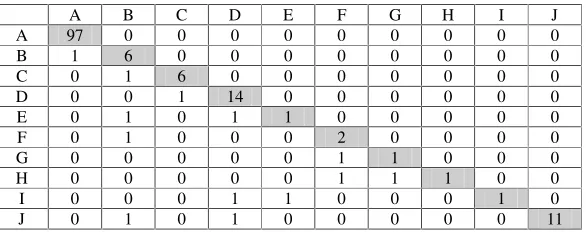
[image:5.612.151.444.343.459.2]Table 1 indicates the dependencies between each of the analysis tools. That is, a non-diagonal element of unity within the matrix signifies that the execution of the analysis tool represented in the particular column must precede that of the analysis tool in the corresponding row. An element equal to zero indicates that no dependency relationship exists between the respective tasks. In addition, values of the datum duration, in seconds, for an execution of the analysis tool associated with the corresponding row and column are shown in the diagonal elements of the matrix.
Table 1: Analysis Tool Dependency Matrix
A B C D E F G H I J A 97 0 0 0 0 0 0 0 0 0 B 1 6 0 0 0 0 0 0 0 0 C 0 1 6 0 0 0 0 0 0 0 D 0 0 1 14 0 0 0 0 0 0 E 0 1 0 1 1 0 0 0 0 0 F 0 1 0 0 0 2 0 0 0 0 G 0 0 0 0 0 1 1 0 0 0 H 0 0 0 0 0 1 1 1 0 0 I 0 0 0 1 1 0 0 0 1 0 J 0 1 0 1 0 0 0 0 0 11
In this paper, the case study is presented with an emphasis on determining whether or not re-scheduling in real-time is appropriate at the point when considered during the computational turbine blade design process. That is, if creating and enacting a revised schedule would result in the process being completed in less time than adhering to the original schedule.
• complete the current schedule, TCCS,
• derive a revised schedule, TDRS, and,
• complete a revised schedule, TCRS.
That is, re-scheduling is performed if TCCS > TDRS + TCRS, otherwise it is not. If scheduling were performed, then during this period the outstanding tasks not re-scheduled would be able to be completed in accordance with the interim schedule models.
Prior to determining any of the three estimated times, the Scheduler requests that each Activity Director suspend administering their associated original schedule models. At the point of suspending the computational design process, twenty seven tasks had been completed. Thus, determining the time estimates requires the consideration of the one hundred and four outstanding tasks within the original schedule models of each Activity Director.
3.1
Estimated Time to Complete the Current Schedule
In order to determine the estimated time to complete the current schedule, the Scheduler supplies each Activity Director with the relevant up-to-date resource forecasted efficiency, RFE. This efficiency is expressed as a coefficient between 0
and 1. The Activity Directors then apply their respective forecasted efficiency to the cumulative datum durDWLRQ 7DD, of the outstanding tasks within its original
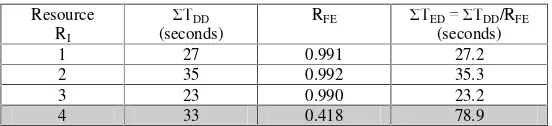
schedule models to determine an estimated time to complete the model. Table 2 shows the cumulative datum duration of outstanding tasks in each original schedule model, and the existing forecasted efficiency of the corresponding resource, which are used to determine an estimate of the time to complete the original schedule
[image:6.612.148.424.462.525.2]PRGHOV 7ED.
Table 2: Estimated Times to Complete Current Schedule Models
Resource RI
DD
(seconds)
RFE ED DD/RFE
(seconds)
1 27 0.991 27.2
2 35 0.992 35.3
3 23 0.990 23.2
4 33 0.418 78.9
Each Activity Director provides the Scheduler with an estimated time to complete their associated original schedule model. The Scheduler then determines that the original schedule model with the greatest estimated completion time, indicated by the shaded cells, corresponds with resource RI = 4. That is, the resource that
experienced the significant reduction in forecasted efficiency to 0.418. Thus, if the original schedule models continue to be adhered to under the prevailing forecasted efficiency, it is estimated that they would be completed in approximately 79 seconds, i.e. TCCS = 79 seconds. This estimate is considered conservative since the tasks undertaken utilising resource RI = 4 may delay dependent tasks to be
3.2
Estimated Time to Derive a Revised Schedule
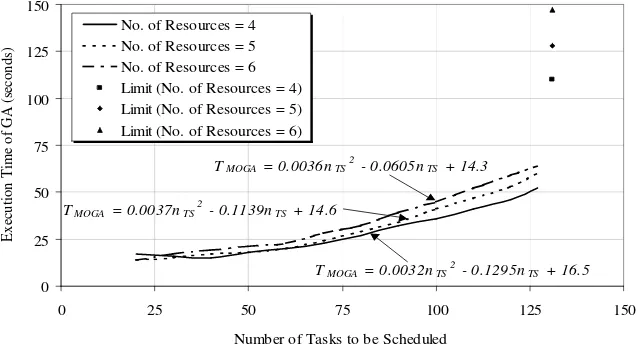
In order to ensure that the appropriate tasks can be undertaken and completed during the period of re-scheduling, the Scheduler estimates the execution time of the GA based on the number of tasks and resources to be considered. At the outset of the operation of the DCS, the Scheduler was provided with knowledge of the relationships between the parameters that influence the execution time of the GA. Based on an empirical study, Figure 2 presents the relationship between the number of tasks to be scheduled, nTS, for a number of resources to be utilised, nR,
and the execution time of the GA, TGA. Furthermore, the information presented in Figure 2 was derived under conditions representative of the actual use of the GA during the operation of the DCS, that is:
• the GA was executed on the machine that would be used for scheduling in the turbine blade design process,
• the forecasted efficiencies of the resources were all set to unity, • the durations of the tasks and dependencies between them were set in
accordance with the case study, and,
• tasks were removed from consideration for re-scheduling in a manner representative of how they would be completed in the case study.
[image:7.612.151.470.434.606.2]The three curves shown in Figure 2 are modelled using the regression equations shown such that the Scheduler can estimate the execution time of the GA based on the number of tasks to be re-scheduled. The estimated execution time limits of the GA are also shown, which are based on the maximum number of tasks that can be scheduled as dictated by the case study.
Figure 2: Estimated Execution Time of GA 0
25 50 75 100 125 150
0 25 50 75 100 125 150
Number of Tasks to be Scheduled No. of Resources = 4
No. of Resources = 5 No. of Resources = 6 Limit (No. of Resources = 4) Limit (No. of Resources = 5) Limit (No. of Resources = 6)
TMOGA = 0.0036nTS2 - 0.0605nTS + 14.3
TMOGA = 0.0037nTS2 - 0.1139nTS + 14.6
TMOGA = 0.0032nTS2 - 0.1295nTS + 16.5
E
x
ec
u
ti
o
n
T
im
e
o
f
G
A
(
se
co
n
d
In Figure 2, the maximum number of tasks that can be re-scheduled is 131, which corresponds to the number of analysis tool executions. The number of tasks to be scheduled, shown on the curves in Figure 2, ranges from 20 to 127. Using the GA to re-schedule beyond these limits would be uneconomical. That is, it would be inefficient in terms of time to re-schedule less than 20 tasks. Further, the upper limit is set at 127 since the datum durations of the first four tasks to be completed are significantly greater than that of all others.
Determining the estimated time to derive a revised schedule simultaneously involves establishing the most appropriate number of outstanding tasks to re-schedule while the remainder are completed. In order to determine the optimum number of tasks to re-schedule, a three-step iterative procedure is applied. Step 1 involves using empirically derived characteristics of the GA to determine its estimated execution time, TDRS, given the number of tasks to be re-scheduled, nTRS.
Based on the time estimate from Step 1, Step 2 entails using the original schedule model for each resource in order to determine the number of outstanding tasks that could be completed during re-scheduling, nTCRS. Step 3 involves deducting the
cumulative number of outstanding tasks able to be completed utilising all resources determined in Step 2 from the number of tasks considered for re-scheduling in Step 1. The results from the application of the procedure are shown in Table 3. The procedure converges on the number of tasks to re-schedule such that the time taken to re-schedule them is as near-coincident as possible with the completion time of the remaining outstanding tasks, TTCRS. Thus, the idle time of each resource is
minimised.
Table 3: Determination of time to re-schedule and concurrently complete tasks
Resources
RI = 1 RI = 2 RI = 3 RI = 4
Itern nTRS TDRS
(secs)
nTCRS TTCRS
(secs)
nTCRS TTCRS
(secs)
nTCRS TTCRS
(secs)
nTCRS TTCRS
(secs)
TCRS
1 104 37.6 8 18.16 16 19.15 13 13.13 14 35.89 51
2 53 18.6 8 18.16 15 18.15 13 13.13 6 16.75 42
3 62 20.8 8 18.16 16 19.15 13 13.13 7 19.14 44
4 60 20.3 8 18.16 16 19.15 13 13.13 7 19.14 44
In Table 3, it can be seen that convergence to the optimum solution with respect to concurrent re-scheduling/task completion is reached after four iterations. That is, the Scheduler should re-schedule sixty tasks, estimated to take approximately 20 seconds, i.e. TDRS = 20.3 seconds, according to the regression equation associated with four resources. During the period of re-scheduling, forty four tasks are estimated as being able to be completed utilising the four resources. Based on their most recent forecasted efficiency, resources RI = 1, 2, and 4 would be utilised for
approximately 19 seconds, while resource RI =3 for approximately 13 seconds. As
Furthermore, this concurrent re-scheduling/task completion results in a mean idle time of the resources of approximately 3 seconds. Since the idle time of resources is minimised, thus maintaining their optimised utilisation, then the arrival of the revised schedule is expected to be as close as possible to the completion of the interim schedule models. That is, the difference between the time for the Scheduler to re-schedule and Activity Directors to complete their respective interim schedule models is minimised.
3.3
Estimated Time to Complete a Revised Schedule
Unlike determining an estimate of the time taken to complete the current schedule, an estimated completion time for a revised schedule must be obtained without using a schedule. This is achieved by determining the critical path of the outstanding tasks to be re-scheduled while considering the number of resources available and their forecasted efficiencies.
The Scheduler applies a two-step iterative procedure to determine the estimated time to complete a revised schedule.
3.3.1 Step 1 – Arrange tasks within groups according to their dependencies
Based on the dependencies between the outstanding tasks to be re-scheduled, tasks are arranged within groups such that the groups must be completed sequentially, however, tasks within groups may be completed in parallel. To determine the groups that the sixty tasks to be re-scheduled could be divided into, an assessment of the tasks they are dependent on is made, i.e. whether it/they:
• was/were completed in accordance with an original schedule model, • will be completed in accordance with an interim schedule model, and/or, • will be re-scheduled for inclusion with a revised schedule model.
Based on the assessment, forty eight tasks would not be dependent on the completion of other tasks once re-scheduled since:
• they were never dependent on the completion of any other tasks, • the tasks they are dependent on were completed in accordance with the
original schedule models prior to the consideration of re-scheduling, and/or,
• the tasks they are dependent on will be completed in accordance with the interim schedule models during the period of re-scheduling.
Similarly, as a result of re-scheduling, only twelve tasks will be dependent on the completion of other tasks within the revised schedule models.
may be completed concurrently since they are independent of other tasks in the same group.
3.3.2 Step 2 – For each task group, order tasks and assign to resources
Within each task group, tasks are ordered in descending order with regard to their respective datum durations. For the first task group, the first task is assigned to the resource with the greatest forecasted efficiency. Subsequently, the next task is assigned to the resource that leads to the minimum estimated time to complete the assigned tasks. This process continues until all tasks within the first group are assigned to resources in this manner. Similarly, the second group of tasks are ordered and assigned to resources.
[image:10.612.149.447.329.403.2]Given that the datum duration of each outstanding task to be re-scheduled is one second, Table 4 presents information regarding how the two groups of tasks identified in Step 1 could be distributed amongst the four resources such that their collective time to completion is minimised.
Table 4: Assignment of re-scheduled tasks
Group 1: 48 tasks Group 2: 12 tasks RI RFE
Number of Tasks Assigned
ED
(secs)
Number of Tasks Assigned
ED
(secs) Total Time (secs) 1 0.991 14 14.13 4 4.04 18.17 2 0.992 14 14.11 4 4.03 18.14 3 0.990 14 14.14 3 3.03 17.17 4 0.418 6 14.35 1 2.39 16.74
Based on Table 4, with respect to the available resources, the estimated time to complete the revised schedule, TCRS, is approximately 18 seconds. This corresponds to the greatest cumulative time to complete the two groups of tasks, as indicated by the shaded row of Table 4.
3.4
Decision to Re-schedule
4
Conclusion
Through the implementation of the approach to operational design co-ordination, the DCS provides a systematic means of simultaneously co-ordinating the various management activities such that resource utilisation can be optimised and design tasks are undertaken and completed in accordance with schedules in a coherent manner. Specifically, this paper has demonstrated that the application of the DCS to the computational turbine blade design process has facilitated real-time co-ordinated scheduling. That is, the schedule management mechanism within the DCS ensures that re-scheduling is only performed if appropriate. The key feature of adjusting in real-time when appropriate enabled benefits to be realised in terms of reducing the time to complete the computational turbine blade design process. However, it is acknowledged that the magnitude of any reduction achieved is dependent on the stage of completion of the process.
With regard to the case study, by deciding to re-schedule, the turbine blade design process was completed in approximately 38 seconds from the point in time when re-scheduling was considered whereas continuing to adhere to the original schedule models would have taken 79 seconds. That is, an approximate reduction of 50% in time to complete the computational turbine blade design process was achieved. As such, relatively significant reductions in the time to complete the design process have been attained as a result of co-ordinated scheduling in real-time.
In order to demonstrate the approach implemented within the DCS further in terms of scalability, future work could involve its application within an engineering organisation where similar significant savings in time could be achieved on a larger absolute scale, i.e. in the order of man weeks or man months. Furthermore, given the generic nature of the approach, it can be applied to any general dynamic re-scheduling problem.
References
1 Duffy AHB, (1995) Ensuring Competitive Advantage with Design Co-ordination. Procs International Conference on Design to Manufacture in Modern Industry; 68-89.
2 Duffy AHB, Andreasen MM, O’Donnell FJ, (1999) Design Co-ordination. Procs International Conference on Engineering Design, 1; 113-118.
3 Coates G, Duffy AHB, Hills W, Whitfield RI, (2000) A Generic Coordination Approach Applied to a Manufacturing Environment. Journal of Materials Processing Technology, 107/1; 404-411.
4 Cole GA, (1994) Strategic Management. DP Publications.
5 Coates G, (2001) An Approach to Operational Design Co-ordination. Ph.D. Thesis, University of Newcastle, United Kingdom.
7 Todd DS, (1997) Multiple Criteria Genetic Algorithms in Engineering Design and Operation. Ph.D. Thesis, University of Newcastle, United Kingdom.