Rochester Institute of Technology
RIT Scholar Works
Theses
Thesis/Dissertation Collections
Spring 5-20-2016
Scare Tactics
Tiago Martines
Gabriel Ortega
Karan Sahu
Lucas Pereira Vasconcelos
Henrique Silva Chaltein de Almeida
Follow this and additional works at:
http://scholarworks.rit.edu/theses
Part of the
Computer and Systems Architecture Commons
, and the
Game Design Commons
This Master's Project is brought to you for free and open access by the Thesis/Dissertation Collections at RIT Scholar Works. It has been accepted for inclusion in Theses by an authorized administrator of RIT Scholar Works. For more information, please [email protected].
Recommended Citation
Rochester Institute of Technology
B. Thomas Golisano College of
Computing and Information Sciences
Master of Science in Game Design and Development
Capstone Final Design & Development Approval Form
Student Name:
Gabriel Ortega
Student Name:
Henrique Silva Chaltein de Almeida
Student Name:
Karan Sahu
Student Name:
Lucas Pereira Vasconcelos
Student Name:
Tiago Martines
Project Title:
Scare Tactics
Keywords:
Asymmetrical Gameplay, Haunted House, C++
Jessica Bayliss, Ph.D.
Committee Co-Chair
Elouise Oyzon
Committee Co-Chair
Chris Cascioli
Committee Co-Chair
Ian Schreiber
Advisor
Owen Gottlieb, Ph.D.
Advisor
Cody Van De Mark
Advisor
David Schwartz, Ph.D.
Scare Tactics
By
Gabriel Ortega
Henrique Silva Chaltein de Almeida
Karan Sahu
Lucas Pereira Vasconcelos
Tiago Martines
Project submitted in partial fulfillment of the requirements for the
degree of Master of Science in Game Design and Development
Rochester Institute of Technology
B. Thomas Golisano College of Computing and
Information Sciences
i
Acknowledgements
We would like to thank our committee members, the School of Interactive Games and Media, our friends and every person who has helped us with designing, developing and testing this project.
ii
Executive Summary
It is the purpose of this document to describe the design and development processes of Scare Tactics. The game will be discussed in further detail as it relates to several areas, such as market analysis, development process, game design, technical design, and each team members’ individual area of background research. The research areas include asymmetrical game design, level design, game engine architecture, real-time graphics, user interface design, networking and artificial intelligence.
As part of the team’s market analysis, other games featuring asymmetric gameplay are discussed. The games described in this section serve as inspirations for asymmetric game design. Some of these games implement mechanics that the team seeks to emulate and expand upon in Scare Tactics. As part of the team’s development process, several concepts were prototyped over the course of
two months. During that process the team adopted an Agile methodology in order to assist with scheduling, communication and resource management. Eventually, the team chose to expand upon the prototype that became the basis of Scare Tactics.
iii
Table of Contents
1 Introduction ... 1
2 Game Genre Background and Market Analysis ... 3
3 Game Development Process ... 8
3.1 Prototype Phase ... 8
3.2 Team Management ... 8
3.3 Task Management ... 9
3.4 Schedule ... 10
3.5 Pipeline ... 10
3.6 Design Process... 11
4 Game Design ... 14
4.1 Summary ... 14
4.2 Introduction ... 14
4.3 Asymmetric Gameplay ... 15
4.3.1 Explorer Gameplay ... 16
4.3.2 Ghost Gameplay ... 24
4.3.3 The Light Mechanic ... 28
4.3.4 Gameplay Influences from Other Games ... 29
4.4 Level Design... 40
5 Technical Design ... 43
5.1 Tools ... 43
5.1.1 Visual Studio 2015 ... 43
5.1.2 Unity ... 43
5.1.3 Proprietary Tools (Debugging) ... 43
5.2 Game Engine Architecture ... 48
5.2.1 Components / Policies ... 49
iv
5.2.3 Vertex Example ... 50
5.3 Class Breakdown ... 50
5.3.1 BaseSceneObject ... 50
5.3.2 BaseComponent ... 51
5.3.3 Explorer Example ... 52
5.3.4 Object Factory ... 54
5.4 Graphics ... 55
5.4.1 Shadow Mapping... 55
5.4.2 Hardware Instancing ... 55
5.4.3 Lighting Deferred Rendering (Point lights / Spot lights) ... 56
5.5 Skeletal Animation ... 57
5.5.1 State Based Animations ... 58
5.6 User Interface ... 58
5.6.1 Font rendering ... 60
5.6.2 Debug UI ... 61
5.7 Collision Detection ... 61
5.7.1 Template Colliders ... 62
5.7.2 Collider Components ... 62
5.7.3 Bounding Volume Hierarchy ... 62
5.7.4 Culling ... 63
5.8 Networking ... 64
5.9 Artificial Intelligence ... 65
5.9.1 Motion Planning ... 66
5.9.2 Decision Making ... 67
5.10 Optimizations ... 70
5.10.1 Memory Management / Static vs Dynamic ... 71
5.10.2 Packet Construction ... 72
6 Asset Overview ... 74
7 Play Testing and Results ... 79
7.1 Internal ... 79
v
7.3 Game Developer’s Conference (GDC) ... 80
7.4 RPI GameFest 2016 / ImagineRIT 2016 ... 81
7.5 Result ... 83
8 Post Mortem ... 84
8.1 Successes ... 84
8.2 Improvements ... 85
vi
List of Figures
Figure 1.1 - Scare Tactics splash screen. ... 2
Figure 2.1 - Four Hunters against One Monster. ... 3
Figure 2.2 - In-Game View of the General. ... 4
Figure 2.3 - Player View in Monaco. ... 5
Figure 2.4 - Dungeon Master vs Three Heroes. ... 6
Figure 2.5 - Warriors Fighting a Monster Possessed by the Shadowlord. ... 7
Figure 4.1 - The 3 Explorers. From left to right: Trap Master, Professor and Sprinter. ... 16
Figure 4.2 - Generator being captured (left) and light cannon (right). ... 17
Figure 4.3 - The Professor Class. ... 18
Figure 4.4 - The Sprinter Class. ... 20
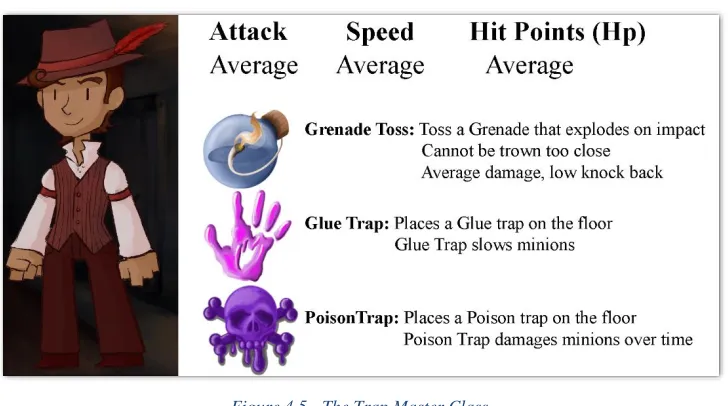
Figure 4.5 - The Trap Master Class. ... 21
Figure 4.6 - Lights affecting the Ghost. The Ghost cannot spawn minions on orange/yellow areas and any minion inside those areas is slowed... 28
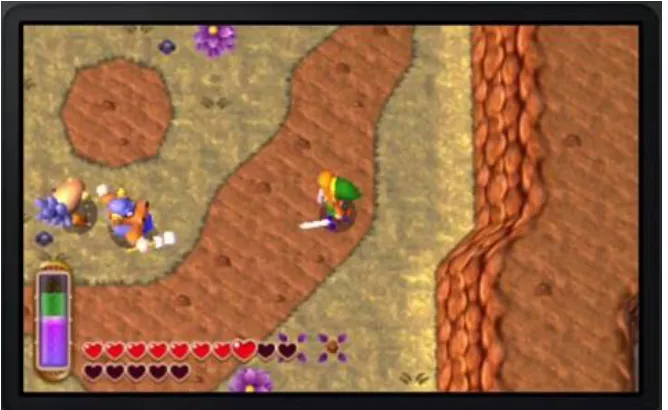
Figure 4.7 - The Legend of Zelda: A link between worlds, title screen. ... 31
Figure 4.8 - The Legend of Zelda: A link between worlds, camera. ... 31
Figure 4.9 - Monaco: What’s yours is mine, title screen. ... 32
Figure 4.10 - A level from Monaco... 33
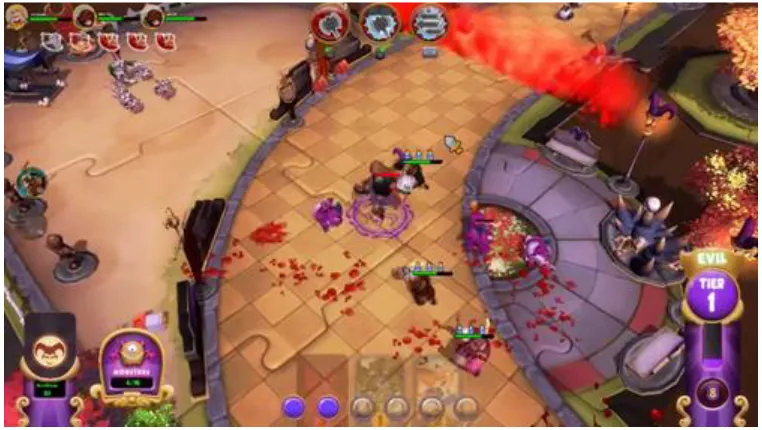
Figure 4.11 - Dungeon of the Endless, title screen. ... 34
Figure 4.12 - Players in different sections of the map (left) and enemies spawning from several locations (right). ... 35
Figure 4.13 - Bastion, title screen. ... 35
vii
Figure 4.15 - Dungeonland, title screen. ... 37
Figure 4.16 - Dungeonland’s Dungeon Master mode. ... 38
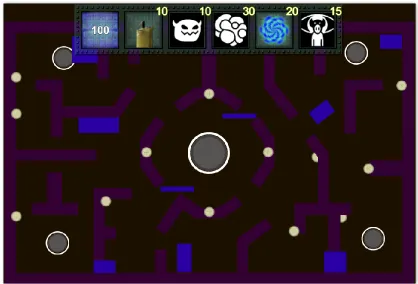
Figure 4.17 - Prototype Level. ... 40
Figure 4.18 - First Level for Ghost vs Man theme. ... 41
Figure 4.19 - Scare Tactics Recent Level. ... 42
Figure 5.1 - Usage example of the CONSOLE_COMMAND macro. ... 44
Figure 5.2 - Console Window filtered by the keyword Warning. ... 44
Figure 5.3 - Console Window context menu displaying Clear and Copy to Clipboard commands. ... 44
Figure 5.4 - Trace messages being displayed in the Console Window. ... 45
Figure 5.5 - Trace messages being displayed on Visual Studio Output Window. ... 45
Figure 5.6 - Variable values being debugged without Trace Window. Usage (left) and output (right). ... 46
Figure 5.7- Variable values being debugged with Trace Window. Usage (left) and output (right). ... 46
Figure 5.8 - Line drawing macro definitions. ... 47
Figure 5.9 - Grid rendering method using TRACE_SMALL_BOX to draw grid data on the game screen. Usage taken from Scare Tactics codebase. ... 47
Figure 5.10 - Grid data being displayed with use of a line drawing macro. Example taken from Scare Tactics development build. ... 48
Figure 5.11 - BaseSceneObject Class Diagram. ... 51
Figure 5.12 - BaseComponent Class Diagram. ... 52
Figure 5.13 - Explorer Class Diagram. ... 53
Figure 5.14 - Usage of Factory iterator. ... 54
Figure 5.15 - Object registration. ... 54
Figure 5.16 - Object creation. ... 55
viii
Figure 5.18 - G-Buffer is composed of several textures, including a normal texture (top left). Diffuse texture (top right). A lighting texture (bottom right) is created using the normals and positions. The
final image (bottom left) is composed using the diffuse and lighting textures. ... 57
Figure 5.19 - Different UI elements on different alignments. ... 59
Figure 5.20 - Radial fill being used to indicate the cooldown of an ability. The math is part of the shader that render sprites. ... 60
Figure 5.21 - Linear fill being used for Ghost’s mana bar. ... 60
Figure 5.22 - UI rendering based on world space coordinates. ... 60
Figure 5.23 - Class diagram for collision detection system. ... 61
Figure 5.24 - Bounding Volume Hierarchy. Root Quadrants are traced in red. All other colliders are a child of one or more quadrants. ... 63
Figure 5.25 - Typical structure of a decorator task. ... 69
Figure 5.26 - Subtree declaration pulled from Scare Tactics codebase. ... 70
Figure 5.27 - Imp Behavior Tree assembled from various subtrees. Example pulled from Scare Tactics codebase. ... 70
Figure 5.28 - Intel CPU architecture. ... 72
Figure 5.29 - Different packet types... 72
Figure 5.30 - Packet structure. ... 73
Figure 6.1 - Character Mood Board. ... 75
Figure 6.2 - Environment Mood Board. ... 75
Figure 6.3 - Professor Concept Art. ... 76
Figure 6.4 - Sprinter Concept Art. ... 76
Figure 6.5 - Trap Master Concept Art. ... 76
ix
x
List of Tables
1
1
Introduction
Asymmetry in games exists in many forms. Turn-based games exhibit asymmetry in that one player goes first and the other second. One form of asymmetric gameplay involves assigning unique mechanics to each player. An example of this can be seen in games such as Gauntlet (1985), where players each select separate avatars each of which possess a distinct skill set. Another form of asymmetric gameplay is the concept of one versus many. In this type of game one player competes against many other players.
Asymmetric games have unique properties when compared to symmetric games. Due to offering separate experiences, an asymmetric game can appeal to a wider audience than a purely symmetric game. However, these types of games are more challenging to balance via purely numerical methods and must rely on play test data.
2
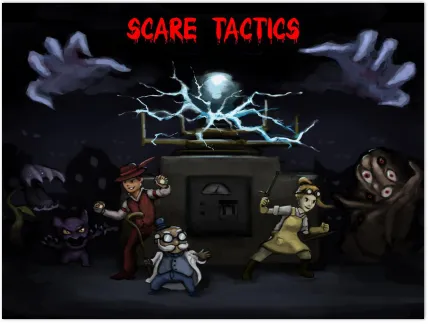
Figure 1.1 - Scare Tactics splash screen.
Scare Tactics is a multiplayer game featuring asymmetric play, developed by So Close Games. It takes place in a haunted house where a group of Explorers face off against a Ghost, whom is in control of the house. A group of up to three people can play as Explorers, while one person can play as the Ghost. The Ghost and Explorer each have unique gameplay mechanics. The gameplay for the
Ghost character is based on the Real Time Strategy genre. He or she can spawn and manage units, as well as manipulate the house on a global scale. The Explorer gameplay is based on top down action adventure. The Explorer can perform melee attacks, acquire power-ups and manipulate the environment on a local scale. Both characters use their unique skills and mechanics to thwart each other. The Explorers must exorcise the haunted house in order to defeat the Ghost, and the Ghost must disable all Explorers by diminishing their health. It was the goal of our team to design and develop
3
2
Game Genre Background and Market Analysis
Our game is focused on providing players with an asymmetric ‘1 vs many’ gameplay experience. We are looking at games that provide a similar experience. Some of the games that we have come across are Evolve, Heroes and Generals, Dungeonland, and Shadow Realms.
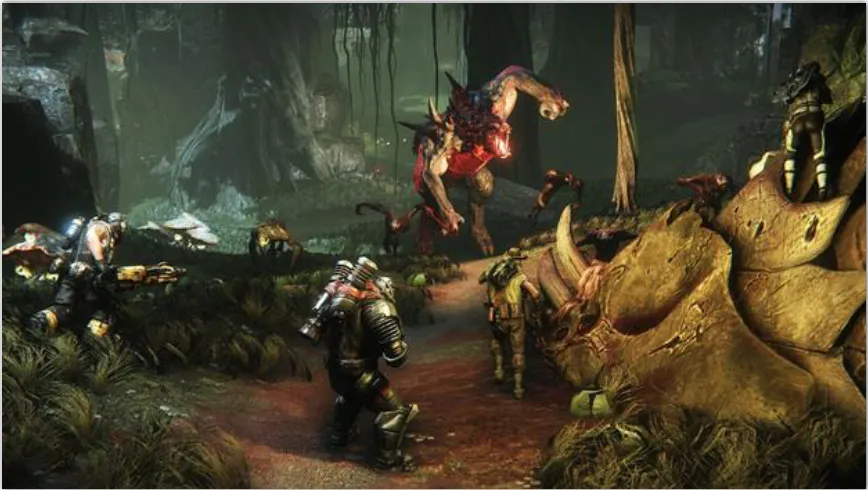
In Evolve, one player plays as the monster while the other four play as hunters (Figure 2.1). Each of the two sides tries to kill the other. It starts out with the monster underpowered and the hunters chase it to take it down. Over time the monster becomes stronger and a force with which to be reckoned. For the majority of the game, the monster is running away from the hunters and trying to catch prey to level up and become stronger. The monster does not have any support while the hunters can be revived by other hunters. From our perspective, the monster does not feel all that overwhelming. This is the opposite of what we are trying to achieve. We want the Explorers to be scared of the Ghost
[image:16.612.100.534.396.641.2]from the outset. If they are careless and within reach of the monsters, they should be taken down.
4
Heroes and Generals is a massive multiplayer battle set during World War II where heroes have a first person point of view and are directly involved in the war. The generals have a map to decide where the battles take place. They could strategize to attack a city to capture it or defend against attacks from the opponent (Figure 2.2). The General is never directly involved with a battle taking place in a city. He does not have detailed information about the troop movement and their actions.
Figure 2.2 - In-Game View of the General.
We do not want this with our Ghost player. His view is similar to the general’s but is limited in
5
Figure 2.3 - Player View in Monaco.
Dungeonland is another Player vs Player asymmetric game very similar to ours in terms of interaction between the two player types (Figure 2.4). Three heroes battle against swarms of monsters that are spawned by a dungeon master. The goal of the heroes is to get to the end of the dungeon and defeat the boss that is controlled by the dungeon master. If they die, the dungeon master wins. The ghost in our game has a very similar role to the dungeon master. He can spawn his minions, place traps and capture the players. We are aiming for a mechanic where the Ghost can possess an Explorer and cause him to have hallucinations. The Explorer would see things that are not actually present. This could lead the Explorer into a trap or mistake another Explorer for a minion of the Ghost. This could harm the Explorers as the game will have friendly fire. We also want the Explorers as well as the
6
Figure 2.4 - Dungeon Master vs Three Heroes.
Shadow Realms is a fast paced third - person action game where a team of warriors fight against an evil called the shadowlord (Figure 2.5). Their goal is to destroy the other player, unlike Dungeonland
7
Figure 2.5 - Warriors Fighting a Monster Possessed by the Shadowlord.
The games currently in this genre are mostly action-oriented and include some elements of strategy. The player fighting against a team of players is outnumbered, but does not necessarily feel extremely evil and overpowering. Scare Tactics intends to take the action setting and add Real Time Strategy (RTS) and stealth elements. We want to reinforce the “1 vs many” gameplay experience. We
8
3
Game Development Process
3.1
Prototype Phase
Our development process started in September 2015, with a 2-month ideation period. During this time, the group focused all of its efforts into creating a unique prototype per week, covering different game styles, themes, mechanics and feelings. Prototypes were put to test with other individuals to help with the evaluation process. This extended ideation phase also played an important role in defining our development process – after every weekly cycle we met for a post-mortem assessment, iterating and polishing the process so it became suitable for our team. More importantly, by the end of this ideation period and the following selection phase, we had a solid game idea that was promptly embraced by all members.
3.2
Team Management
With the selected game idea, we started focused development by November 2015. Initially, we decided to use the some of the techniques often employed for software development via the Scrum
9
Table 3.1 - Most prominent group roles.
Scrum Roles Collaborators
Product Owner Karan Concept Artist Jeannette Forbes Scrum Master Lucas/Gabriel Concept Artist Katherine Harrison Backlog Maintenance Henrique Concept Artist Felipe Yoon
Field Expertise Leaders Rigger/Animator Dillon Guscott
Design Henrique / Karan 3D Modeler Kerong Fu Engine Architecture Gabriel 3D Modeler Steven Cerqueira Graphics Programming Gabriel 3D Modeler Robert Marsh
AI Programming Lucas 3D Modeler Jesse Florio UI Programming Tiago 3D Modeler Ziyun Peng Network Programming Tiago 3D Modeler John David Satriale
Art Karan Audio Designer Kedar Shashidhar
Organization Roles Audio Designer Rick Scott
Process Tiago External Resources Karan
3.3
Task Management
We started by selecting a tool to aid us with controlling tasks, bugs, documentation and other artifacts that are employed during our process. We selected Redmine, an open-source web-based project management and issue tracking tool, mainly because this tool is free to use and allows total customization. For our group, this customization level was especially useful to trim down the features that are usually included in a fully-fledged Scrum environment, but that we considered detrimental to our process given our team size and specific goals.
Moreover, Redmine also integrated seamlessly to the version control system we are using, Git, allowing commit and tags to be directly linked to certain tickets, either bugs or feature requests.
10
3.4
Schedule
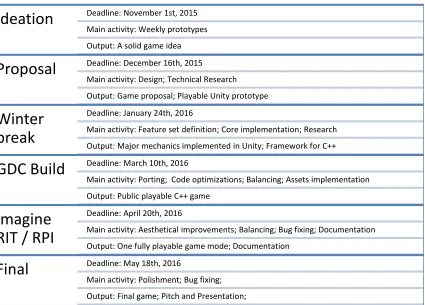
[image:23.612.110.535.167.472.2]With the process tools and methods set, we started to sketch our production schedule. We broke down the timeline into six major milestones, as shown on Table 3.2.
Table 3.2 - Major milestones.
3.5
Pipeline
Following Scrum practices, every week we arranged a sprint planning meeting to specify which tasks were immediately more relevant towards the milestone outputs. Each sprint produced a minor version of the game, e.g., 0.2 or 0.3. A major milestone release was identified by a major version number, e.g., 1.0 or 2.0. With this methodology, we wanted to ensure there would always be a current build readily available for playtest or exposition.
Moreover, our sprint planning tries to schedule most individual tasks in an efficient manner. Design tasks are always followed by a prototyping task, allowing a playtest task to come right after it.
Ideation
Deadline: November 1st, 2015 Main activity: Weekly prototypesOutput: A solid game idea
Proposal
Deadline: December 16th, 2015Main activity: Design; Technical Research
Output: Game proposal; Playable Unity prototype
Winter
break
Deadline: January 24th, 2016
Main activity: Feature set definition; Core implementation; Research
Output: Major mechanics implemented in Unity; Framework for C++
GDC Build
Deadline: March 10th, 2016Main activity: Porting; Code optimizations; Balancing; Assets implementation
Output: Public playable C++ game
Imagine
RIT / RPI
Deadline: April 20th, 2016
Main activity: Aesthetical improvements; Balancing; Bug fixing; Documentation
Output: One fully playable game mode; Documentation
Final
Deadline: May 18th, 2016Main activity: Polishment; Bug fixing;
11
After playtesting, the feature is scheduled for implementation. By pipelining those tasks accordingly, we want to ensure there are fewer roadblocks between design and development phases.
Most of the design decisions involved using Unity as prototyping tool. Thereby, we devoted much of our planning to making tools and policies to export content, levels, configuration and other assets from Unity into our proprietary engine. With this solution, we allowed the design team to work faster and as independently as possible from the development team. We believe this decision greatly improved the experience we had while developing Scare Tactics, as it allowed every member of the team to focus on and improve their areas of interest. More about our prototyping and development environments is detailed on section 5.
3.6
Design Process
By the end of the prototyping phase of our development, we created 6 unique prototypes. Out of the 6, we voted to develop the prototype titled Shutter into our capstone project. The theme of the prototype was prison and considering our asymmetrical gameplay, we felt it might be difficult to expand this theme into a long term project with interesting mechanics. So we went back to the drawing board to come up with themes that would fit better into our asymmetrical gameplay style. The most promising themes from a long list were Nature vs Industrialism (a worker expanding his city versus the Spirit of Nature reclaiming his territory), Magic vs Technology (A scientist and a Wizard fighting over whether theirs is the best method to help their village) and Ghost vs Man (Ghost Squad trying to exorcise a ghost house.) As a group we settled on Ghost vs Man as it appealed to the majority of us and we felt it had the potential to grow.
12
the game in C++. We had very limited time and were a small group of 5 people. Thus, we changed our direction and decided to create a multiplayer only version with a few game modes. Each mode would have a short narrative within itself, trying to give the game a bit more depth.
We opted for the approach to overscope the design and cut down the features that weren’t as exciting and created a priority list for the ones we wanted to implement in the game. Due to this approach we created 4 different game modes, but only managed to implement one, Landmark.
1. Landmark - activate the weapon in the middle of the haunted environment to kill the Ghost
2. Hostage - find and guide the hostages trapped in a haunted amusement park to the exit 3. Escape - escape a haunted junkyard before the Ghost kills every Explorer
4. Escort - guide a scared priest to the heart of the haunted house to exorcise the Ghost
Four Explorer classes:
1. Scout - evolved into Sprinter
2. Support - evolved into Professor
3. Offensive Long Range - evolved into Trap Master
4. Offensive Short Range
Thirteen minions:
1. Basic Melee - evolved into Imp
2. AOE Bomber - evolved into Abomination
3. Ambusher (Defender) - evolved into Flytrap 4. Basic Projectile
13
7. Poison 8. Barrier
9. "Transporter (Worm)" 10. Bull
11. "Trespasser (Ceiling Goop)" 12. Ambusher (Chaser)
14
4
Game Design
This section describes Scare Tactics game design. It will demonstrate all design decisions made for the game as well as the reasoning behind those decisions.
4.1
Summary
Scare Tactics is a hybrid action adventure/tactical online multiplayer game focused on player versus player interaction for children aged 6 and up. The game is set in a house that is haunted by a Ghost. A group of three Explorers decide to go to said house in order to exorcise the Ghost that lives there. The game is a one versus many multiplayer game that provides two different experiences depending on the role the player chooses to play. The Ghost player has a slower-paced, individual and more tactical experience while the Explorers have a faster-paced, team based and action-oriented experience.
4.2
Introduction
As mentioned before, Scare Tactics is a hybrid action adventure/tactical online multiplayer game focused on player versus player interaction. The purpose of this game is to provide two completely different experiences to the players depending on which role they decide to play. These roles are separate and are meant to not directly influence one another. These roles are the Ghost and the
Explorers.
The game takes place on a creepy old mansion where the Ghost lives. The Ghost has absolute power inside the mansion, being able to summon monsters (called Minions) at will, create illusions and telepathically manipulate objects. The Ghost enjoys ruling over the mansion and will attack anyone who dares to disturb its territory.
15
Each explorer has their own unique skills fulfill a specific role on the team. The game starts when these Explorers find the Ghost’s haunted mansion and decide to go inside and exorcise the Ghost.
In Scare Tactics two distinct roles are put against each other. The Ghost, although all-powerful, is alone and has to manage its minions and the whole mansion while the Explorers, significantly weaker by themselves, must use each character's unique skills and teamwork.
Despite the creepy atmosphere and Haunted Mansion theme, Scare Tactics sports a more cartoony style and is geared towards children from age 6 and up. Playtests showed a surprisingly good response from children around that age, as discussed on section 7.
The next few sections will go into deeper detail on the design decisions made during the development of Scare Tactics.
4.3
Asymmetric Gameplay
Asymmetric games are those in which different player roles play differently. This difference in play can come from different mechanics, tasks, visuals, advantages, disadvantages, etc. attached to these roles. The asymmetric design of Scare Tactics is focused on having different mechanics and tasks attached to the different roles. The gameplay experience attached to each role is meant to be played notably different from the other. The team’s objective was to bring together these two different game
experiences and merge them into one.
Merging two game experiences is not a simple task. Both game experiences have to be compelling and unique on their own without being independent from the other. The gameplay loops of both experiences have to be distinct, but still influence one another. The core of this challenge was striving for this balance between independence and interconnectivity.
16
strategy and resource management. The next sections will discuss each of these experiences as well as the differences between them.
4.3.1 Explorer Gameplay
As mentioned before there are three Explorer classes: the Professor, the Sprinter and the Trap Master (Figure 4.1). Each one of these classes fulfills a specific role on the Explorer’s team and has unique skills that help players fulfilling that role. This section will first discuss the general gameplay shared by all explorers and then discuss each one of the explorer classes separately, focusing on their different skills and mechanics.
Figure 4.1 - The 3 Explorers. From left to right: Trap Master, Professor and Sprinter.
General Gameplay
The Explorer’s objective in Scare Tactics is to exorcise the Ghost. In order to achieve that goal they
17
Figure 4.2 - Generator being captured (left) and light cannon (right).
Gameplaywise the Generators and the Light Cannon work as a typical capture point usually present in multiplayer “King of the hill” style games. A capture point is a finite area where players
must stand inside for a certain amount of time in order to score points. When the game starts all 3 generator capture points are available and the Light Cannon capture point only becomes available once the 3 Generator points are captured. When the Explorer captures this last point, they win the game.
The Explorer role in Scare Tactics is the one inspired by the top down adventure genre. A lot of the general Explorers mechanics is lifted directly from conventions of this genre. All explorers have the ability to:
Move around the level: One of the most basic abilities of any game. Explorers can move in
all 8 cardinal directions (North, South, West, East and the 4 diagonals between them). Players cannot jump.
Class Attack: The main method by which Explorers defend themselves and fight minions.
Each class has its own unique attack with their own separate properties that will be discussed in the next session.
18
Turn on/off Wall Lanterns: Explorers can turn on/off Wall lanterns if they are next to them.
These Wall Lanterns are scattered through the level and are light sources similar to the Portable lanterns. As mentioned, lights and their effect on the Ghost and its minions is further discussed on section 4.3.3.
Revive a Downed Ally: When an Explorer takes enough damage, he falls on the ground and
becomes unable to fight. Another Explorer can go near his downed ally and revive him, healing a small amount of that explorers health and enabling him to fight again.
Classes and Skills
This section will detail the three Explorer Classes: The Professor, The Sprinter and the Trap Master.
The Professor Class
The Professor is the one that invented the technology used by the Explorers to fight The Ghost. He is small in stature and little bit portly, however he is very smart and methodical. He prefers to keep his distance and only take action if strictly necessary. Figure 4.3 shows the professor.
19
On the Explorers team he acts as a support class. His unique skill is the ability to heal allies. He can create a green light healing sphere centered on himself that slowly expands outwards, healing himself and any ally that touches said sphere.
Even though he is not a fighter, he is equipped with a heavy staff that he uses to hit minions if they get too close. The staff does a lot of damage due to its weight alone, but the Professor is not strong enough to wield it with enough force to push minions.
Due to his physique, he is the slowest of all Explorers, often being left behind. To compensate he has the highest attack power and hit points. These stats, Attack, Speed and Hit Points; varied greatly during the development of Scare Tactics. He was always meant to be the slowest character but the maneuverability of the Explorers proved to be one of their core assets when it came to surviving the Ghost’s attacks. Speed is such an important status that it is necessary for the slowest character to have
both the highest Attack and HP.
Good Professor players will learn to stay close to the group, staying back and healing whenever necessary. More often than not, the success of an explorer team is dependent on how well the Professor player plays.
The Sprinter Class
20
Figure 4.4 - The Sprinter Class.
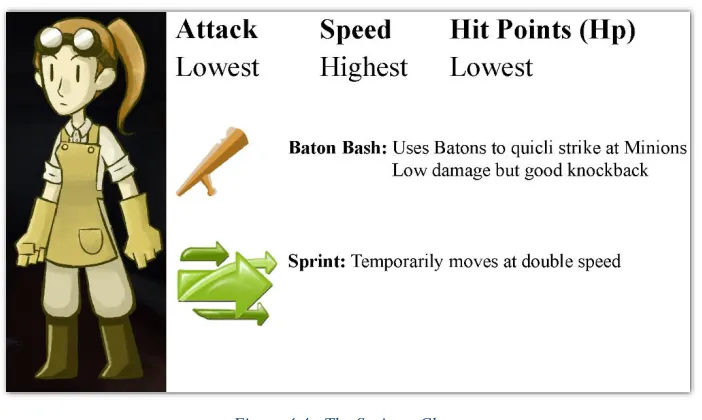
On the Explorers team she acts as a Scout class. Her unique skill is the ability to Sprint, which makes her twice as fast for a limited amount of time. This is a versatile ability that can be used to either escape a bad situation or rush forward to take advantage of an opportunity.
Her weapons of choice are two Batons that she can quickly swing at Minions to cause damage. Even though each blow does low damage individually, the hits tend to pile up making her a decent damage dealer. Her attacks can push minions away and, due to her speed, Players have the choice to either pursue and finish off a Minion or retreat after each blow.
She is the fastest of all Explorers, which means that she usually rushes ahead by herself. However, her low amount of Hit Points makes her very fragile and a perfect target for the Ghost when she is alone. In a reverse situation than that of the Professor, her speed made her a powerhouse during the development of Scare Tactics. It was necessary to make her have the lowest Attack and HP; otherwise she could defeat the Ghost by herself.
21
The Trap Master Class
The Trap Master is a roguish thrill-seeker friend of the Professor that can never say “no” to an adventure. He became friends with the Professor after they stumbled on each other at the University’s library. The Professor was looking for a book about Ghosts and the houses they haunt for research purposes, the Trap Master was looking at the same book looking for an adventure. Years of chasing trouble made him very fit physically and gave him “street smarts”. He is not especially intelligent nor
[image:34.612.136.500.283.486.2]dumb, but he instinctively knows how to get out of a bad situation through luck and quick thinking. Figure 4.5 shows the sprinter.
Figure 4.5 - The Trap Master Class.
His role on the Explorer’s team is to Control Space. He can place two different kinds of traps
that have different effects on the minions. The Glue Trap can slow minions down to a higher degree than that of a light source (see section 4.3.3 for more details) and the Poison Trap unleashes poisonous gas that deal consistent damage to a Minion over a short amount of time. When placed, a Trap stays on the level until it is triggered. Once triggered said Trap unleashes its effect for some time and then disappears. Traps can only be triggered by Minions but their effects can harm Explorers as well.
22
They can only be thrown at a fixed range from the Trap Master, which makes him vulnerable to minions that come too close to him.
Out of all the classes, his attack and abilities are the hardest ones to use. Both Grenades and Traps require great spatial awareness from the player and the misuse of the Trap Master skills can cause serious harm to the whole team. Therefore, he was made into the “Average” stats wise class to ease his learning curve a little bit.
Good Trap Master players will be aware at all time of where they, his teammates, his enemies and his traps are. He will use this information to his advantage. Poison traps are especially good against minions with low mobility while Glue traps can give the team a chance to counter a bad situation. They will work with Sprinters to set up ambushes for enemy minions or work with Professors to set up a powerful defensive position holding their ground using traps, heals, grenades and occasionally whacking a Minion or two with a staff.
Cooperative Gameplay
The Explorer aspect of Scare Tactics relies heavily on cooperative gameplay and requires players to communicate with each other. Cooperation and teamwork are the key to success for the Explorers, given that they can be easily overwhelmed when acting alone. The previous section detailed each Explorer class and, by looking at it, it’s easy to see how they all need each other.
The Professor is powerful and can heal himself, but his low maneuverability makes him easy to be surrounded and overwhelmed when alone. His Heal ability is very powerful, but can only delay the inevitable. However, if another Explorer can help him open a way through the surrounding Minions and he uses his Heal ability well; they can overcome this situation together.
23
to her low HP. The Professor can help her simply by healing her wounds and enabling her to keep fighting and the Trap Master can help her by dealing the extra damage or slowing down the Minions enough that she can avoid them.
The Trap Master class has access to very versatile skills and can adhere to multiple strategies, but he has a fatal weak point at close range. He is very good at keeping minions at a distance but he cannot keep them all away. Eventually some minions will break through and take him down. Any other one of the other classes can cover this flaw simply by being able to attack at close range. A combination with the Sprinter tends to be more offensive while one with the Professor more defensive.
That being said it is not strictly necessary for the explorers to always keep together. Strategies that involve one player acting alone are viable, if well thought out. The player acting alone is definitely more vulnerable, but he can either act as bait to distract the Ghost or rush towards an objective; for limited time. Cooperation does not necessarily mean always being together; but rather acting together using a strategy that best fits the team’s needs.
By being together, Explorers can cover up for their weaknesses and revive one another if necessary. But that also means that they will have the Ghost’s full attention and forces to deal with.
On the other hand, by splitting up they also split up the Ghost’s resources and they can fulfill objectives faster, but they become much more vulnerable. Banding together makes the game last longer and could be interpreted as a long-term strategy, while splitting up is a high-risk high reward strategy that has potential to either succeed or fail marvelously.
24
4.3.2 Ghost Gameplay
The other player role in Scare Tactics is the Ghost. Differently from the Explorers, there is only one
Ghost. This section will discuss the gameplay aspects of the Ghost role as well as the Minions and skills, called Haunts, available for players in this role.
General Gameplay
The Ghost is an all-powerful entity that rules over the Haunted House in which Scare Tactics takes place. No one really knows when he started haunting this mansion, or why. All that it is known is that visitors are not welcome. Should a group of adventures be foolish enough to invade this Ghost’s
territory they will have to face hordes and hordes of Minions.
The Ghost’s objective in Scare Tactics is simple: To kill all Explorers that have invaded its house. However, the Ghost cannot interact directly with the Explorers. Instead it must summon Minions and use Haunts to either kill the Explorers, or trick them into killing each other.
As mentioned in section 4.3.1, the Explorers objective is to redirect three Generators energy to the Light Cannon and use it to defeat the Ghost. Therefore, the Ghost’s objective is to defend said generators and defeat the Explorers. In order to achieve this objective, the Ghost has access to Minions
and Haunts.
Minions are monsters summoned by the ghost each with their own unique status and behavior. Minions are designed so that each one has a specific use and can be considered a different tool in the Ghost’s arsenal.
25
Both Minions and Haunts are discussed more in depth in the next section.
Gameplaywise, The Ghost’s role in Scare Tactics is similar to that of a Dungeon Master in traditional pen and paper RPGs. The Ghost is the one responsible for crafting the obstacles that the Explorer’s must overcome to win the game. If the Explorers succeed in clearing these obstacles, they
win but if they don't, the Ghost wins.
The Ghost’s gameplay is slower and more tactical when compared to the Explorer’s. The ghost
focus on mid- to long-term decisions as well as managing the resources available to it. The Ghost first hatches a plan, then he executes and, if something unforeseen happens, he adapts.
Good Ghost players will be aware of the consequences of their actions, as well as know which Minion or Haunt is appropriate for the situation they are currently in. Players will be able to set ambushes, trick explorers and essentially guide the game to a more desirable state while accurately managing their resources. They understand if they misuse their resources they will be helpless for a small period of time that could very well mean victory or defeat.
Minions and Haunts
As mentioned in previous sections, the Ghost has both Minions and Haunts at its disposal. This section will discuss the different Minion types as well as the Haunts currently available on the game.
26
Table 4.1 - Minion types and stats.
Minion Type
Imp Abomination Flytrap
Description Small but vicious demons that quickly attack any Explorer they set their eyes on.
An agglomeration of flesh and viscera that attacks by exploding itself on their target.
A possessed house plant that would rather eat flesh than bask in the light of the sun.
Role Small melee attackers. Make up the majority of the Ghost’s army. By itself it poses no threat, but in numbers can be a force to be reckoned with.
Big damage dealer. It requires support in order to hit the Explorers, but the damage it does when exploding more than compensate for it.
Immobile defender. Used to guard points of interest.
Can be used to create choke points or to trap Explorers in a room.
Behavior Quickly roams around
the House and immediately attacks first explorer sighted.
Slowly roams around the House. Once it sees an Explorer, start moving towards and blow itself up when in range.
Once an Explorer is close enough turns itself towards him. If the Explorer gets even closer, attacks viciously.
Attack Average Very High Very High
Speed Fast Slower Immobile
Hit Points Low High Highest
Mana Cost 10 25 20
It is important to note that the Ghost cannot directly control Minions. The Ghost needs to keep the Minions behavior in mind when summoning them as well as predict what they will do.
Differently from the Haunts, Minions cost mana to be summoned. Each minion has a cost associated to it, as shown on Table 4.1. The Ghost’s mana bar slowly replenishes itself and, if the Explorer’s
27
Haunts are utility skills that the ghost can use for no cost with the specific purpose of supporting the
Minions and confusing explorers. They are:
Open doors: Minions do not have the ability to open doors. Sometimes Explorers use this information to their advantage by locking a bunch of minions inside a room. With this Haunt the Ghost can release these captured minions when the Explorers least expect it. More experienced Ghost players will try to use a locked room an ambush; gathering a bunch of minions inside a locked room on purpose and releasing them when necessary.
Turning off Wall Lanterns: Light sources have the ability to interfere with the Ghost’s
summoning abilities as well as weakening minions. This is further expanded upon in section 4.3.3. Wall lanterns are one of these light sources. The Ghost has the ability to quite literally turn this annoyance off.
Imp Illusion: This is a very different kind of Haunt. This haunt is not as simple as the others and it is not meant to support the Minions. It instead confuses and tricks the
Explorers into attacking each other. This Haunt targets an explorer and, when in effect, it disguises that explorer as an Imp. However, two important things happen: The targeted
Explorer is not aware that he is disguised as an Imp and the targeted explorer becomes susceptible to friendly fire. By twisting the perception of the other Explorers, the Ghost
has the ability to trick the Explorers into killing one of their own by using this skill.
Haunts are mainly support skills available to the Ghost. However, the combination of both Haunts and
28
4.3.3 The Light Mechanic
As an asymmetric game Scare Tactics has two distinct roles. Each role has its own gameplay completely separate from each other. But an asymmetric game must go beyond just having two different roles, but also make these roles interact with one another. One of the design cornerstones the team adopted was “the Explorers and the Ghost do not interact directly with one another, they use the environment and other indirect interactions instead”. Adhering to this cornerstone heavily influenced how the Ghost’s minions and haunts were designed, for example. Another main mechanic that was born from this cornerstone is the Explorers and the Ghost relation to lights.
In the world of Scare Tactics lights have the ability to weaken the Ghosts and its minions. Gameplaywise this means that the Ghost cannot spawn minions on lit areas and any minion that walks into a lit area becomes slowed, as shown in Figure 4.6.
Figure 4.6 - Lights affecting the Ghost.
The Ghost cannot spawn minions on orange/yellow areas and any minion inside those areas is slowed.
29
overwhelming advantage against the Ghost’s minions in those areas. However, the amount of lit areas
is limited. Lit areas are created by turning on Wall Lanterns scattered throughout the walls of the Mansion and they are placed in way so that it is impossible to light the whole mansion. The Ghost also has the ability to manually turn the wall lanterns off, creating a war of attrition between the Explorers and the Ghost.
Another way the Explorers can create lit areas is through the use of Portable Lanterns. As mentioned before, one skill all Explorers share is the ability to place these Lanterns on the level. Each Explorer can only place one lantern at a time and they disappear after some time, however they cannot be turned off by the Ghost. They act as a temporary defensive solution that can be used in a pinch by the Explorers.
Depending on which role the player play as, light is interpreted in different manners: for the Explorers it is a protective field that can mean the difference between success and failure; for the Ghost it is a constant annoyance that limits its power.
4.3.4 Gameplay Influences from Other Games
Scare Tactics is a hybrid action adventure/tactical online multiplayer game. As mentioned before, this means that as a hybrid game Scare Tactics contains gameplay experiences on both of these genres. The team looked at other games for inspiration and reference when designing the gameplay of Scare Tactics.
This project considers top-down action adventure games to be those in which the player controls a character with a defined set of skills exploring a world and fighting against enemies using said skills. These games use a camera placed above the player’s character, facing down. The player character may
30
This project considers Tactical games to be those in which the players must summon units on a map in order to complete his objectives. It also focuses on games that run in real time, i.e. time constantly moves once the game start and there are no turns. These games usually involve resource and base management, but not necessarily. They usually have a bird’s eye view camera and mouse-driven controls. All units summoned by the player may be available from the start or be locked behind some progression requirement.
The Explorer’s role is inspired by Top-Down Action Adventure games (like games on the
Legend of Zelda series) and the Ghost’s gameplay by Tactical games (like games on the Starcraft
series). The team merged these two game genres in an adventures versus dungeon master like game similar to the dungeon master mode found on Dungeonland. This section will highlight the games on these three genres that had a significant influence on the design of Scare Tactics.
Legend of Zelda: A Link between Worlds
One of the first games studied was The Legend of Zelda: A link between worlds (Figure 4.7). In this game, players take on the role of Link as he explores and defends the kingdom of Hyrule against those that would threaten it. The players have access to a variety of items, each with their unique function, which they must use to get through dungeons and defeat enemies. The core elements of these games are the exploration element and the smart use of both the player’s items and the environment when
31
Figure 4.7 - The Legend of Zelda: A link between worlds, title screen.
The camera in A link between worlds uses a top down perspective (Figure 4.8), but with a twist. The camera is not directly above the character but instead at an angle and zoomed in. This set up not only looks good and allows players to better see details on the character model, but also limits how much of the world players can see on the screen at a time. The game uses the camera distance and angle to limit how much space players have to maneuver in. The size of this “reaction space” was
carefully designed to not allow players to plan how to deal with enemies as they appear on the screen but still be big enough that players can react to enemies. This keeps players in a constant alert state, waiting for the next enemy to appear on the screen in order to properly react to it.
32
Monaco: What’s Yours is Mine
Monaco: What’s yours is Mine (Figure 4.9)is a co-op stealth game where players take on the role of a team of thieves in order to steal all the valuables scattered across the level. Players must choose one of 8 characters to play as. Each character has distinct skills and perks exclusive to them.
Figure 4.9 - Monaco: What’s yours is mine, title screen.
Monaco’s co-op gameplay relies heavily on the characters in play. Each of the characters distinct abilities complement each other if used wisely. The character composition used by a group of players usually dictates how these players approach levels.
For example,iven a group of three players playing as the Cleaner, the Lookout and the Redhead., the Cleaner has the ability to knock out enemy NPCs if they are not alert to his presence, the Lookout
33
Figure 4.10 shows a level from Monaco. Levels in Monaco are big and open allowing the players to move around as much as they want. Most rooms on a level are accessible in more than one way, increasing the freedom of movement the players have.
Figure 4.10 - A level from Monaco.
Due to the game’s bird’s eye view camera, levels are seen from the top. This makes them look like floor plans. This not only fits the game’s theme, as thieves often plan their robberies using these
kind of plans in movies, games and other media; but it also gives all players information about the level layout and the position of other players. Levels are designed to be neatly separated into sections and this makes communication and planning between players easier. Finally, the game has a “fog of war” on the level. Areas not in the line of sight of players are dark and foggy, allowing players to see only the layout of walls and other objects. This “fog of war” and the lighting effect used in Monaco’s
levels make them look even better due to the contrast between light and shadow.
Dungeon of the Endless
34
Figure 4.11 - Dungeon of the Endless, title screen.
The game also features different character classes that the players must choose. Each class has its own unique stats and skills that complement one another, although not to the extent as the ones in
Monaco. The main difference from the characters found in Dungeon of the Endless when compared to other games is that the plays cannot directly control the characters actions. Players can control to which room the characters go and when to use interactable objects on the environment (research stations), but they cannot control which specific enemy the character attacks. This removes the player from the moment to moment gameplay during a battle, allowing them to think more about their mid- to long-term strategy rather than their immediate necessity.
35
4.12). Communication and strategy are the keys to success. The later levels of this game can get so complicated that it is impossible to finish them without proper teamwork.
Figure 4.12 - Players in different sections of the map (left) and enemies spawning from several locations (right).
Bastion
Bastion (Figure 4.13) is an action adventure game where the players take on the role of the Kid, a young soldier tasked with guarding the walls of the town of Caelandia. At the beginning of the game the town, and the whole world, is destroyed in an event called the Cataclysm. Being one of the few survivors, the Kid explores this shattered world in order to not only find other survivors but also to fix the caelondian machine called the Bastion that can, theoretically, restore the world. This game is famous for its interactive storytelling and narration, however these elements are not the focus of this analysis.
36
Bastion’s movement and combat control scheme proved to be very interesting when analyzed. The Kid can move in all 8 cardinal directions and has access to a dodge roll. He has access to a variety of weapons, each with two functions and set of special skills; but can only equip two at a time. Movement is controlled by the keyboard while attacking is done with the mouse, when playing using keyboard and mouse controls. Each weapon is attached to a different mouse button and the mouse cursor is used for aiming. When moving, the Kid faces the direction of the movement but, if an attack button is pressed, he will turn to the direction of the mouse cursor while keeping his movement speed and direction (Figure 4.14). This grants players a great amount of maneuverability during combat, since it lets players attack and reposition themselves at the same time.
Figure 4.14 - The Kid aiming his spear at the mouse cursor.
Dungeonland
Dungeonland (Figure 4.15) is a Hybrid Action Adventure/Tactical multiplayer player versus game with a fantasy setting that heavily borrows from common pen and paper RPG tropes, The game takes place in an amusement park called Dungeonland created by an evil Dungeon Master (the DM) in order to trap and kill adventures dumb enough to come to said park “looking to have some fun”. Up to three
37
Figure 4.15 - Dungeonland, title screen.
The Adventurer role is divided in three different classes, Warrior, Rogue and mage. Warriors can take a lot of damage and strike slowly with powerful blows; Rogues are fast and can deal weaker blows in rapid succession and Mages are fragile but can use their magic to deal a lot of damage. These classes are designed to be able to stand on their own if necessary but work better with the help of the others. The Adventures objective is to go through the park slaying all monsters the DM throw at them until they defeat a stronger boss monster at the end of each level. They all have a set of 3 unique skills available to them, but players can only use one of them on a given level.
38
Figure 4.16 - Dungeonland’s Dungeon Master mode.
Lessons Learned
After analyzing all of these games and identifying interesting mechanics from them, the design team incorporated these mechanics on their own design in a way that made sense for Scare Tactics. From Legend of Zelda: A link between Worlds the camera angle, distance and the “reaction space”
concept created by them greatly influenced how the Explorer’s camera was made. The inability to see that far ahead while maintaining enough space to react to obstacles creates intense moment to moment gameplay that was desired for the Explorer’s gameplay.
The focus on class-based teamwork of the Explorer’s role has its roots in the analysis of both Monaco: What’s yours is Mine, and Dungeon of the Endless. The reliance of the classes on one another increases the necessity for good player communication in order to win. Designing the Explorer classes in a way similar to that of these games and, therefore, increasing the necessity for player communication, was desired since the team wanted a noticeable contrast between the solo role of the
39
The Explorer’s movement scheme was based directly from Bastion. Early playtests showed that it was easy for the Ghost to surround and kill an Explorer. The increased maneuverability in the Explorer’s movement proved to be necessary in order to create a game that could be balanced and fun,
The Ghost’s camera was inspired by the one in Monaco since it provided a good strategic view of the whole level. This made the Ghost player feel more in control of the haunted mansion and allowed him to more easily set up traps and obstacles for the Explorers. However being able to see the whole level at once was not possible in Scare Tactics simply because the level is too big. The team settled on a more zoomed in view. This zoomed in view had the added benefit of hiding some information from the Ghost, adding to the challenge of playing this role.
In Scare Tactics, Minions are not directly controlled by the player. Once spawned they follow their behavior without any more input from the ghost. This a step further from Dungeon of the Endless
indirect character control. This decision allowed for the Ghost to focus solely on the strategic placement of Minions. As the more tactical of the two roles in Scare Tactics, this made sense since it allows the Ghost playersto focus solely on strategy and not on the moment to moment dangers their
Minions might face.
Dungeonland, being similar in design to Scare Tactics, served as a comparison point. By playing this game it was easy to see the strengths and weaknesses of the design decisions shared by both games. By analyzing Dungeonland’s implementation of these design decisions the team was able to come up
with alternate solutions better suited for Scare Tactics. One such design decision was how the Minions
should be spawned by the Ghost. By using a mana system and a deck of cards, Dungeonland limits the Dungeon Master ability to summon monsters in two different ways. This increases the moments of gameplay where “nothing happens”, since the DM cannot make anything happen. In Scare Tactics
the team used a skill and cooldown system instead of the deck of cards, but kept the mana bar. The cooldown served as a weak limitation, stopping the Ghost from spamming the same kind of Minion
40
management of their resources, however these punishments don't happen as often as they do on
Dungeonland thus reducing the amount of gameplay moments where “nothing happens”.
The study of these other games not only helped the Design of Scare Tactics but also increased the design knowledge of the whole team. All games mentioned on this document are impressive in their own unique ways and their study is of great value to anyone interested in game design.
4.4
Level Design
[image:53.612.100.535.329.618.2]Scare Tactics has evolved from being a top-down 2D game to a 3D game with two distinct camera perspectives. Our initial level was a small flat level and both, the Explorers and the Ghost, had a top down camera (Figure 4.17).
Figure 4.17 - Prototype Level.
41
[image:54.612.107.525.161.445.2]Ghost. In our prototype version, the overwatch player used light to their advantage but it did not make sense for the Ghost. Thus we had to strategically position the lights again but this time in favor of the players in the scene (Figure 4.18).
Figure 4.18 - First Level for Ghost vs Man theme.
Since the cameras were different, we wanted to enforce the visual depth and decided to transition from 2D art to 3D art. This was definitely a big transition for us and worked in our favor as it enforced different camera views for both sides of the asymmetrical gameplay. We were happy with the results, but weren’t quite satisfied. Even though our art was 3D, our game did not feel 3D because we were
42
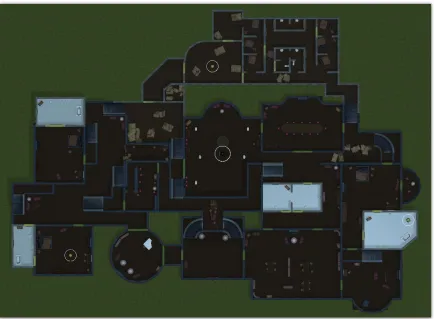
Figure 4.19 - Scare Tactics Recent Level.
Since the level is a haunted mansion, we looked at mansions around the 1900s for references. We created a list of rooms and areas that we wanted to include in our game. The TV show Downton Abbey
43
5
Technical Design
This section describes the technical design of Scare Tactics. It will discuss the team’s choice of tools
for the game, the reasoning behind those choices, as well as, the game’s overall software architecture.
5.1
Tools
5.1.1 Visual Studio 2015
Scare Tactics is being developed in C++ using Microsoft Visual Studio 2015. One of the team’s goals prior to development was to gain more technical experience using C++, because of its wide use within the game development industry. As this is ultimately an academic project, this provided an opportunity for the team to tackle challenges unique to C++ game development, such as memory management and multithreading. C++ also allows us to have full control over the game loop and submission of draw calls to the graphics API. The graphics API for this project is DirectX 11, due to the team's familiarity with it. Visual Studio 2015 also comes with some useful graphics and GPU debugging tools specifically for DirectX.
5.1.2 Unity
In addition, the team used Unity 5 as a prototyping tool and level editor. This allowed mechanics to be tested faster and without the overhead of C++ implementation. Once a mechanic was tested and proven, it was ported to the Scare Tactics engine. The Unity 5 scene editor is a powerful tool that allowed the team the luxury of not having to build a level editor. Levels were built in Unity, exported to the JSON format, and imported into the Scare Tactics engine.
5.1.3 Proprietary Tools (Debugging)
44
Console Window
We built the console window using dear IMGUI framework. It is integrated with our Trace API, and it also supports custom commands (Figure 5.1), keyword filtering (Figure 5.2), and copying to the clipboard (Figure 5.3).
Figure 5.1 - Usage example of the CONSOLE_COMMAND macro.
Figure 5.2 - Console Window filtered by the keyword Warning.
Figure 5.3 - Console Window context menu displaying Clear and Copy to Clipboard commands.
Trace API
45 Logging
Logs can be created using the TRACE_LOG, TRACE_WARN, TRACE_ERROR and TRACE as demonstrated in the (Figure 5.1). The logs are output in the game console (Figure 5.4) as well as in
Visual Studio Output tab (Figure 5.5).
Figure 5.4 - Trace messages being displayed in the Console Window.
Figure 5.5 - Trace messages being displayed on Visual Studio Output Window.
Watch Window
46
Figure 5.6 - Variable values being debugged without Trace Window. Usage (left) and output (right).
In order to better address this kind of debugging scenario, the Scare TacticsTrace API is loaded with the TRACE_WATCH macro. In opposition to the log macros, the watch macro doesn’t output to the console window. Instead, it creates a new watch window which displays the watched values in a much more concise way. Figure 5.7 compares the usage and output of the watch macro with the previously shown log macros
Figure 5.7- Variable values being debugged with Trace Window. Usage (left) and output (right).
Line Drawing
47
Figure 5.8 - Line drawing macro definitions.
The common usage and output of the Line Drawing macros is showed in the Figure 5.9 and Figure 5.10.
48
Figure 5.10 - Grid data being displayed with use of a line drawing macro. Example taken from Scare Tactics development build.
5.2
Game Engine Architecture
This section describes research in the area of game engine architecture. One of the goals of this project was to learn about the various subsystems of a game engine, such as rendering, networking, artificial intelligence, memory management and collision detection. Although commercial engines such as
Unity and Unreal can streamline game development, these engines also abstract the subsystems that the team was interested in building. With that in mind, the team decided to build the engine for Scare Tactics from the ground up.
49
implemented using a combination of Policy Based Design and traditional Inheritance, which leverages
C++ Templates.
5.2.1 Components / Policies
In traditional Inheritance, a behavior, or policy is embedded in a base class, and then extended via a derived class. This results in class hierarchies with greater depth, which can sometimes be a performance issue when taking in account virtual function calls. Virtual functions, which are typically implemented using a lookup table, often require an extra layer of indirection. (Baggett, 2014)
Policy Based Design, which is also known as the Component Pattern (Nystrom, 2014) or the
Strategy Pattern (Gamma 2011), extracts these policies into classes. This pattern differs from inheritance, because policies are no longer embedded inside of a base class. As Nystrom states, “The
entity is reduced to a simple container of components.” (Nystrom 2014. 214) This results in class hierarchies with greater breadth.
5.2.2 Template Specialization / Inheritance
C++ Templates are a construct that allows “combinatorial behavior, because they generate code at compile time based on the types (and / or constant values) provided by the user.” (Alexandrescu, 2001.
6) Through the use of templates, virtual function overhead can be avoided. By decomposing a class into policies, we can achieve different combinations of behaviors.
50
5.2.3 Vertex Example
To illustrate how the Scare Tactics engine implements policy-based design using templates, this section will describe how FBX mesh data is loaded into different types of vertex structures. In graphics programming it is common to define structures to represent vertices of geometric data.
These vertices often contain more than position information, such as vertex normal and texture coordinates used for sampling. The information stored in a vertex structure is determined by the use case. Three dimensional geometry often contains a vertex normal in order to perform lighting calculations, which differs from the vertex used to render two dimensional text.
Managing different types of vertices and the shaders with which they are compatible can often become cumbersome, especially when loading resources from a file. It would be unreasonable to have to modify the FBX resource loader for every kind of vertex that will be added. For example, some mesh data is static and contains no animation data, while others are dynamic and contain blend indices and weights to perform vertex skinning. To solve this problem, the FBX resource class takes a template argument which is a vertex type. This allows us to add many different vertex types without having to modify the resource class which uses them. The FBX resource class can load models using a vertex that stores only positions, or a vertex that stores positions, normals, texture coordinates and blending information.
5.3
Class Breakdown
The domain model in Scare Tactics is a combination of traditional inheritance and the component
pattern as described in section 5.2.