NATIONAL INSTITUTE OF SIDDHA
Chennai – 47THE TAMIL NADU DR. M.G.R. MEDICAL UNIVERSITY
,
CHENNAI - 32A STUDY ON
VENPADAI
(DISSERTATION SUBJECT)
For the partial fulfillment of the
Requirements to the Degree of
DOCTOR OF MEDICINE (SIDDHA)
BRANCH III– SIRAPPU MARUTHUVAM DEPARTMENT
2
CONTENTS
Acknowledgement………...…………...03
Introduction……….…..………..…..05
I. Aim and objectives……….………..…………..08
II. Literature Review……….………...10
1. Siddha aspects……….………11
2. Modern aspects ……….………….………….26
III. Materials and Methods……….……….…...50
IV. Observation and Results……….……….………...56
V. Discussion……….……….………....67
VI. Summary……….……….…………74
VII. Conclusion……….……….………….77
Annexure..………..……….…………....80
Annexure 1: Preparation and properties of Trial Drugs……….………...81
Annexure 2: Pre clinical studies………..………..………..85
Annexure 3: Forms………...……99
3
4
ACKNOWLEDGEMENT
The author is extremely grateful to the almighty for the successful completion of this dissertation work.
I express my gratitude to Dr.S. Boopathiraj M.D. (s), Director, National Institute of Siddha, Chennai, for granting permission to undertake a study in this dissertaion topic and also for providing all the basic facilities in order to carry out this work.
I express my gratitude to Prof. Dr. R.S. Ramaswamy, M.D(s), Dean i/c, Head of the Department of Sirappu Maruthuvam, National Institute of Siddha, Chennai for his encouragement, suggestion and valuable guidance in this dissertation work.
I express my gratitude to Dr.N.J. Muthukumar, M.D(s), lecturer, Department of Sirappu Maruthuvam, National Institute of Siddham, Chennai for his valuable guidance and support in this dissertation work.
I extend my gratitude to Dr. V. Mahalakshmi, M.D(s), Lecturer, Department of Sirappu Maruthuvam, National Institute of Siddha, Chennai for her valuable guidance and support in this dissertation work.
I extend my thanks to Prof. Dr.G.Thiagarajan M.D(s), H.O.D, Department of Sirappu Maruthuvam, Govt. Siddha Medical College, Chennai for his valuable guidance.
I extend my thanks to Dr.T.R. Siddique Ali M.D(s), Assistant Medical Officer, PHC, Medavakkam, Chennai for his valuable guidance.
I extend my thanks to Prof. Dr.P. Rathinavelu MBBS, M.S (Ortho), Department of Orthopaedics, Chengalpattu Medical College Hospital.
I wish to thank Dr.S.Venkatraman MBBS, Ph.D, Director, C.L. Baid Metha College of Pharmacy, Thorapakkam, Chennai.
5
6
INTRODUCTION
"ñÁð¢ð ¶ìô¢ «ï£ò¢ ñ¼ï¢ªîù ô£°ñ¢
ñÁð¢ð ¶÷«ï£ò¢ ñ¼ï¢ªîùê¢ ê£½ñ¢
ñÁð¢ð î¤ù¤«ï£ò¢ õ£ó£ è¢è
ñÁð¢ð¶ ꣬õ ñ¼ï¢ªîù ô£«ñ."
- Íôó¢ 8000
The great Sage Thirumoolar has defined Medicine as that which cures physical and mental ailments, prevents disease and increases lifespan by postponding death.
Now WHO defines Health as the state of physical, mental, social and spiritual well-being.
Siddha system of medicine is an ancient one with spritual qualities. The word „Siddha‟ comes from the word „Siddham‟. Siddham means „Knowledge or Wisdom‟ or an object to be
obtained on perfection or Heavenly Wisdom.
„Sirappu Maruthuvam‟ is a branch of Siddha system which deals with Kaya Karpam,
Yogam, Varmam, Muppu, Thol Noigal (Dermatology) and Enbu Noigal (Orthopedics).
People with Venpadai (Vitiligo) develop white spots in the skin that vary in size and location. The spots occur when pigment cells, or melanocytes, are destroyed and the pigment melanin can no longer be produced.
Melanocytes normally occur throughout the skin, and in the hair follicles, mouth, eyes, and some parts of the central nervous system. In Venpadai, pigment cells can be lost in any of these areas.
Common sites of pigment loss are:
Exposed areas: hands, face, upper part of the chest
7 Body folds: arm pits, groin
Sites of injury: cuts, scrapes, burns
Hair: early graying of hair of the scalp, beard or other areas Area immediately surrounding pigmented moles
Choroid of the eye
Venpadai (Vitiligo) affects at least 1% of the population. About half of the people who develop this skin disorder experience some pigment loss before the age of 20, and about one third of all Venpadai patients say that their family members also have this condition.
Even though most people with Venpadai are in good general health, they face a greater risk of having hyperthyroidism or hypothyroidism, pernicious anemia, Addison's disease, alopecia areata, and/or uveitis.
Diseases of the skin account for a great deal of misery, suffering, incapacity and economic loss. Moreover they become a handicap in the society, because they have an impact on one's appearence. Venpadai is one such disease which affects the individual physically and mentally.
There are many misgivings about this disease in the minds of the public. People think that it is contagious and a type of Leprosy, because of the name "Venkuttam" and also that is due to sin and karma. So the author decided to use the term "Venpadai" instead of Venkuttam for this clinical entity. The same view has been expressed inAnubhava Vaithiya Deva Ragasiyam.
The clinical features of Venpadai are closely related to “Vitiligo” a modern clinical entity described under dermal disorders.
In the treatment of skin diseases, the Siddha system of Medicine has wonderful drugs. The author's choice for the clinical study is
Pusundar Rama Bana Mathirai - internal,
8
9
I.
AIM AND OBJECTIVE
Venpadai (Vitiligo) bears social stigma. It affects at least 1% of the population
The clinical study of Venpadai was done in selected cases of both gender and treated in the Inpatient ward of Ayothi doss Pandithar Hospital of National Institute of Siddha, Chennai-47.
The aim and objectives are:
To have an idea of the incidence of this disease with gender, age, occupation, social status, diet and seasonal variations.
Collection and detailed study of various literatures dealing with definition, etiology, classification, signs, symptoms, prognosis, treatment and diet for Venpadai.
To correlate the signs and symptoms of Venpadai with that of modern medicine.
To establish the efficiency of diagnostic principles of Siddha system.
To analyze Bio-chemical, Anti-oxidant and toxicological studies of the trail drug.
To find out the efficacy of Pusundar RamaBana Mathrai (internal) and Manosilai Ennai
(external) in Venpadai patients.
10
Literature Review…
Siddha aspects
&
11
II.
REVIEW OF LITERATURE
1.
SIDDHA ASPECTS
VENPADAI
Synonyms:
Venkuttam
Swetha Kuttam
Venthittu
Venpulli
Definition: (Iyal)
Venpadi is defined as the discolouration of the localised skin characterised by the appearance of the white patches of irregular shape of the epidermis of skin and sometimes hair also be involved.
Yugimuni, a great Sage, specified this as Swetha kuttam (venpadai) which is one among the eighteen types of kuttam.
(Aetiology)
Siddha system attributes the aetiology of the disease to heredity, stress and strain, malnutrition and venereal exposure. No specific causes were mentioned for venpadai but general
12
1) According to Thirumoolar Karukkidai Vaithiya Nool
”
Six types are caused by kirandhi and megam.
Eight types are caused by insects in the soil.
Four types are caused by worms.
2) According to Yugi Chinthamani – 800
Excessive heat and cold, laziness, excessive sleep in day time, unbridled sexual indulgence, robbery etc. These habits are supposed to be the factors, which lowers the immune mechanism of the body (Iyarkkai vanmai) and makes the body liable for the disease.
Excessive intake of food which are hard to digest, imbalanced food, vomiting, frequent intake of food mixed with stone and hair. Prolonged mental depression, intention to spoil others, raping, greedy, abusing god & noble people, neglecting orphans and beggars, cursing the elders and so on. These are the causes mentioned by Yugi.
5) According to Dhanvanthiri Vaidhyam
1) Intake of unhygienic food
2) Abusing the elderly people like Siddhars and saints.
3) Blaming the worshipping ladies.
4) Sins committed in the previous birth.
5) Thinking of seducing chaste women.
These are the causes mentioned by Dhanvanthiri.
13
”
Kuttam may be hereditary.
Apart from all other etiological factors kuttam is also considered to be one among the “Kanma noi”.
7)
According to “Eighteen siddhars naadi nool”
Excessive intake of acidic food stuffs leads to pallor and discolouration of skin are the causes said by Pathinen Siddhar Naadi Nool.
1.
CLASSIFICATION –
According to Yugi vaidya chinthamani
According to Yugi Chinthamani, Swetha kuttam (Venpadai) is one among the eighteen types of kuttam.
”
14
5. Karna kuttam 6. Siguram 7. Krishna kuttam 8. Avudhumbaram 9. Mandala kuttam
10. Abarisa kuttam 11.Visarchika kuttam 12. Vibaathika kuttam 13. Kideeba kuttam
14. Sarmathala kuttam 15.Thethru kuttam 16. Sithuma kuttam 17. Sathaaru kuttam
18. Swetha kuttam.
2. According to Siddhar Aruvai Maruthuvam
Venpadai has been classified into 3 types on the basis of Mukkutram. They are,
1. Vaatha venpadai
2. Piththa venpadai
3. Kaba venpadai
3.
According to Athma Ratchamirtha Vaidhya Sarasankiragamm
Venpadai is classified into 4 types:
1. Venkuttam
2. Senkuttam
3. Karunkuttam
4. Peru viyathi
Clinical Features of Eighteen Kutta Rogam
a.According to Dhanvanthiri Vaithyam
”
”
When the colour of the face becomes white, it is called Venkuttam.
b.According to vaithya sarasangiragam
Circumscribed white coloured patches in sole, hands, lips, scalp, fingers and wrist joint with thickened border and gradually spreading in nature is known as “Venpadai”. According to this literature blood, muscle and adipose tissues are involved in this disease.
15
c. According to Pararasa Sekaram
1. Watery discharge
2. Gray colour
3. Foul smelling
4. Dryness of the scalp
Premonitory symptoms:
1. The skin appears glittering and rough
2. There is an excessive perspiration or no perspiration
3. Discolouration
4. Heat and itching of the skin
5. Numbness in some parts of the body.
d. According to Siddha Maruthuvam Sirappu
According to Siddha Maruthuvam Sirappu Venpadi has been classified into 4 types:
1. Vaatha venpadai
2. Piththa Venpadai
3. Kaba venpadai
4. Mega Venpadai
1. Vatha Venpadai
It is characterised by the presence of depigmented patches, which are dry, rough and reddish with some what pale-black in colour.
2. Piththa Venpadai
It is characterised by the presence of depigmented patches red in colour like lotus flower, spreading with burning sensation and loss of hairs on that area.
3. Kaba Venpadai
16
4. Mega Venpadai
It is due to the venereal disease. It develops in 4 to 6 months after the venereal exposure. Syphilis develops within four to six months after the venereal exposure. This venpadai develops initially in the nape of the neck and the adjoining spaces. It then gradually spreads to involve the shoulder joints and back of the trunk.
The clinical features of this type are clearly explained by the author of “Siddha Maruthuvam Sirappu” as follows:
Depigmented patches are small in number, pale in colour or light turmeric in colour or dark colour and margins marked by hyperpigmention. These lesions are circumscribed with 2mm to 3mm diameter or above. This correct picture of hypopigmented and hyper-pigmented skin seems to be more or less a multi eyed filter (sieve – like).
Females are more prone to this mega venpadai and the treatment takes longer period. Therefore anti-syphilitic therapy is mandatory in the early period of the treatment.
e. A classical work “Madhava Nithanam” classifies Venpadai as
Savithram - venpadai affecting muscular tissue
Kilesam - venpadai affecting the skin
Varunam - venpadai affecting the adipose tissue
These types are not having any pathological discharge. Kilesam is classified on the basis of mukkutram and their features are as follows:
Vaatha kilesam - Reddish white in colour.
Piththa kilesam - Red coloured patches resembling the petal colour of lotus.
Kaba kilesam - Mildly thickened white patches with itching.
.
17 ”
Curable – 10
Virpodaga kuttam
1. Bama kuttam
2. Gaja sarma kuttam
3. Krishna kuttam
4. Avuthumbara kuttam
5. Thethru kuttam
6. Sithuma kuttam
7. Kideepa kuttam
8. Satharu kuttam
9. Sarmathala kuttam
Incurable –8
`
1. Pundareega kuttam
2. Karna kuttam
3. Sikura kuttam
4. Mandala kuttam
5. Abarisa kuttam
6. Visarchiga kuttam
7. Vibaathiga kuttam
8. Swetha kuttam
18
Incurable coditions:
Lesions with whitened hair
Lesions feeling rough
Lesion appearing like white burnt scar
Lesions found on genitalia, anus, palms and lips
Lesions of fast spreading nature
(Pathology)
In Siddha system the manifestations of all diseases are the result of derangement of doshas that is vaatham, pitham and kabam.
Noi Nadal Noi Muthal Nadal Thirattu and Siddha Maruthuvam text reveals that the Thridhosha Theory is the human body is composed of 96 thathuvams (of constituent principle in nature including panchapoothams and threedhosam). The siddha system of medicine based on
19
According to Siddha literature, eqilibrium of vatham, pitham and kabam is responsible for
the normal colour and texture of skin by the way of equilibrium of black, yellow and white colour.
According to Noi Naadal Noi Mudhlal Naadal thiratu Pitham kurai kunam and senneer kurai
kunam result loss of colour and shining of skin „Vathamalathu meni kedaathu‟
-Theran
Vatham is responsible for the black colour of skin. Derangaed vatham causes loss of black
pigment resulting hypo/ depigmentation of skin.
Pitham is responsible for the yellow/ red colour of skin. Pitham kurai kunam leads to Ranjaga
kuraivu, Prasaga kuraivu and senneer kuraivu. Decreased Ranjagam, Pirasagam, and senneer result hypo/ depigmentation of skin.
Kabam is responsible for the white colour of skin. Kabam lives in endocrinal systems and in
sperm, etc. If it is affected it may be the heredity and endocrinal cause of venpadai.
«ï£ò¢ ï£ìô¢:
ð¤î¢îñ¢ = ð¤é¢è¬ô + ð¤ó£íù¢- «è´øô¢
ð¤î¢îñ¢ °¬øîô¢ ð¤ó£êèñ¢ °¬øîô¢
óë¢êèñ¢ °¬øîô¢
ªêï¢ï¦ó¢ °¬øîô¢
àìô¢ ï¤øñ¤öî¢îô¢ àìô¢ ï¤øñ¤öî¢îô¢
20
õ£îñ¢ = Þìè¬ô + Üð£ùù¢ - «è´øô¢
õ£îñ¢ «õø¢Á郎ô õ÷ó¢ê¢ê¤
õ£îñô£¶ «ñù¤ ªè죶
àìô¤ô¢ è¼ ï¤øñ¢ «î£ù¢øô¤ô¢ Þ¬ìÎÁ
àìô¢ ï¤øñ¤öî¢îô¢ (¦ÅñÀ¨¼)
èÀñ¢ = ²¿º¬ù + êñ£ùù¢- «è´øô¢
õ¤ï¢¶ «è´øô¢
ñó¹ õö¤ ªî£ìó¢¹
àìô¢ ï¤øñ¤öî¢îô¢
21
ñ¼î¢¶õ
õö¤º¬ø
:
”
According to siddha system, the main aim of the treatment is to cure udarpini (physical illness) and manapini (mental illness). Treatment is not only for complete healing but also for the prevention and rejuvenation.
In Siddha medicine the line of treatment consists of
1. Kaappu (prevention)
2. Neekkam (treatment)
3. Niraivu (rejuvenation of well being)
1
Kaapu
As per siddha science, even at the time of conception some defects may occur in the fertilised emrbyo forming the basis for the manifestation of certain constitutional disease later.
To prevent and expiate the misdeeds of the kanma, planting of young trees, establishing
garden laying roads and pathyway, digging well and ponds for public use, constructing temples, donating ornaments to poor children must be done
2.Neekkam (treatment):
The three doshas which organise, activate, regularise and integrate the bodily structure and their functions are always kept in a state of balance by thought, word deed and food. The imbalanced doshas are balanced by administrating a laxative/ pugative/emetic/eye application and also through the appropriate systemic therapy.
Siddha system of Medicine is based on Mukkutra Theory and hence the treatment is mainly aimed to bring down the three dhoshas to its equilibrium state and there by restoring the physiological condition of three thathus.
22
According to the siddha texts the laxative/ purgatives should be given before starting the trial to normalize the deranged Doshas to normal. So the author has prescribed a purgative, Karudan Kizhangu Ennai15ml with hot water in the morning.
The trial drugs
1. Pusundar Rama Bana Mathirai -1(B.I.D) with palm jiggery 2. Manosilai Ennai– external.
3.
(Rejuvenation)
Physical, psychological, social and economic rehabilitation and reassurance of individuals is known as Niraivu.
”
During diseased condition diet restrictions or pathiyam should be strictly followed. These are prescribed to normalize the deserved dosham and to potenciate the drugs.
Diet:
Food stuffs that normalize the vaatha, pitha dhosha to the normal physiological level have to be consumed.
Patients were strictly instructed to avoid all non-vegetarian food except goat‟s meat.
Patients were advised to avoid the Sesban, Brinjal, Kaar arisi, Green plantain, Bitter gourd, Pickles, Tamarind, Food items which are enriched with alcohol, Vitamin C rich fruits and vegetables like lemon, goosberry, orange, etc.
They should take vegetables and green leafy vegetables rich in copper. And also the patients were advised to take more Germinated grams, Dates, Figs and powder of Fenugreek
23
Habits
Using of soaps and detergents should be avoided and they are advised to take neutral value
pH soaps for bath purpose.
Management of Venpadai
According to siddha basic science the purgatives was given to the patients for normalizing the of derange dhodam.
The patients were advised to use green gram powder instead of soap and other detergents. Also the patients were advised to avoid allergic substances which are allergy to the particular individuals.
Sirappu Maruthuvam
In Venpadai, patients were advised to observe pranayamam, yoga and asanas for the fast cure and prevention of recurrences.
Pranayamam :
It is a form of Kayakalpa method and by practicing this, one can prevent many diseases. This is given by the verse.
”
- ñï¢î¤óñ¢
All the 40 patints were strictly advised to do the regular practice of
Oomkara Pranayamam,
Naadi Suthi Pranayamam
&
24
These techniques were very helpful to relieve the stress and strain of the patients. Also it increases alertness, memory and maintain a clear mind.
Yogasanam
Keeping the body steady and motionless in a particular posture for a specific time is known as Yogasanam. This is totally different from the ordinary exercise. Yoga rejuvenates both body and
the mental set-up unlike exercise which tones only the muscles.The common benefits of yoga are:
It tones up the internal organs
It prevents obesity and disease
It maintains normal circulation to all the organs of the body.
It increases alertness, memory and also maintains a clear mind and prevents and cures some disease. Asanas which were advised to the patients were:
Padmasanam,
Vajraasanam,
Machasanam,
Amarntha kokkasanam,
Patha Hasthasanam,
Dhanurasanam
Sarvangasanam
Gayiruvanakkam (suryanamaskkaaram)
These asanams help to prevent and cure skin diseases. These techniques were very helpful in relieving the stress and strain of the patients.
25 ‟
To expiate the misdeeds of the kanma, planting of young trees, establishing garden, laying roads and pathyways, digging wells and ponds for public use, constructing temples, donating ornaments to poor children etc must be done.
26
28
2. MODERN ASPECTS
Skin Anatomy
The human skin is the outer covering of the body and is continuous with the
mucous membranes in the region of the mouth, nose, urogenital organs and the anus. In an adult the skin surface measures 1.5. to 2 m2 while the thickness of the skin varies from fractions of a millimeter to 4 mm. The thickness of the epidermis varies from 0.06-0.9 mm to 0.5 – 0.6 mm. The thickness of the subcutaneous fat varies considerably. Some area is devoid of fat while in others (on the abdomen and gluteal regions). It is several centimeters thick. The mass of skin an adult accounts for approximately 5% while together with the subcutaneous fat for about 10 to 17.7% of the total body mass.
The colour of the skin may change because the amount of the pigment in it varies under the effects of external and internal factors.
The skin surface is covered with hairs over a great area. The areas devoid of hairs are the lips, the palms and soles, the palmar surface of the hand and the plantar surface of the toes, the glans penis, the inner surface of the prepuce and the inner surface of the labia marjoram and minorum.
Facts about the skin:
The skin is the body's largest organ, covering the entire body. In addition to serving as a protective shield against heat, light, injury, and infection, the skin also
regulates body temperature.
stores water and fat.
functions as sensory organ.
29
Skin Histology
The skin develops from two germinative zones. The ectoderm which is represented by the epidermis (the most superficial skin layer) and the mesoderm (the middle
embryonal layer) represented by two layers namely the true skin, or dermis (the middle layer) and the subcutaneous fat or hypoderm the deepest skin layer.
The boundary between the epidermis and dermis and dermis forms a wavy line because of the presence of skin papillar (special out growth on the surface of the true skin). The spaces between which are filled with epithelial processes.
Melanin layer of Skin
Specialized Epidermal Cells
There are three types of specialized cells in the epidermis.
The melanocyte produces pigment (melanin)
The Langerhans' cell is the frontline defence of the immune system in the skin
30
Epidermis
The epidermis is the most superficial layer of the skin and provides the first barrier of protection from the invasion of foreign substances into the body. The principal cell of the epidermis is called a keratinocyte. The epidermis is subdivided into five layers or strata, the stratum germinativum , the stratum spinosum, the stratum granulosum, the stratum lucidum(not seen in this
photomicrograph) and the stratum corneum in which a keratinocyte gradually migrates to the surface and is sloughed off in a process called desquamation.
Stratum germinativum
The stratum germinativum provides the germinal cells
31
Stratum spinosum
The cells that divide in the statum germinativum soon begin to accumulate many desmosomes on their outer surface which provide the characteristic “prickles” (seen
on the close-up view) of the stratum spinosum, which is often called the prickle-cell layer.
Stratum granulosum
The progressive maturation of a keratinocyte is charcterized by the accumulation of keratin, called
keratinization. The cells of the stratum granulosum accumlate dense basophilic keratohyalin granules (seen
on the close-up view). These granules contain lipids, which along with the desmosomal connections, help to form a waterproof barrier that functions to prevent fluid loss from the body. The cells that divide in the statum germinativum soon begin to accumulate many desmosomes on their outer surface which provide the characteristic “prickles” (seen on the close-up view) of the stratum spinosum, which is often
32
Stratum Lucidum
Epidermis varies in thickness throughout the
body depending mainly on frictional forces and is thickest on the palms of the hands and
soles of the feet. The stratum lucidum is normally only well seen in thick epidermis and represents a transition from the stratum granulosum to the stratum corneum.
Stratum corneum
As a cell accumulates keratinohyalin granules, it is thought that rupture of lysosomal membranes release lysosomal enzymes that eventually cause cell death. The dead and dying cells filled with mature keratin form the stratum corneum. The deeper cells of the stratum corneum retain their desmosomal junctions, but as they are pushed to the surface by newly forming cells of the stratum germinativum, the dead cells gradually break apart and are lost, a process called desquamation.
Dermis
33
substance that give the support and elasticity of the skin. Also present are immune cells that are involved in defence against foreign invaders passing through the epidermis.
Papillary dermis
The papillary dermis contains vascular networks
that have two important functions. The first being to support the avascular epidermis with vital nutrients and secondly to provide a network for thermoregulation. The vasculature is organized so that by increasing or decreasing blood flow, heat can either be conserved or dissipated. The vasculature interdigitates in areas called dermal papillae. The papillary dermis also contains the free sensory nerve endings and structures called Meissner‟s corpuscles in highly.
Vascular system of Skin:
Vascular system of the skin is formed of several networks of blood vessels. Large arterial vessels stretch from the fascia through the subcutaneous fat and give off small branches to the fat lobules. On the boundary of the dermis and hypoderm, they divide into branches which stretch horizontally and anastomose with one another. A deep arterial plexus of skin forms, which gives rise to branches supplying the holes of the sweat glands, the hair follicles and the fat lobules. The epidermis is devoid of blood vessels. The most powerful network of blood vessels is located in the skin of the face, palms, soles, lips, genitals and in the skin around the anus.
Lymphatic system of the Skin:
34
of the dermis and already has valves. There is a network of wide loops forming lymphatic plexus and deeper parts are continuous with lymph trunks.
Skin Physiology
The skin and external nucleus membranes separate the human organism from the
environment and accomplish a variety of functions. Normal functioning of the skin and its appendages of high significance for the organism activity as a whole and has a positive influence on its general condition.
The skin not only responds by its adptative reactions to the different effects of the external (exogenic) environmental factors, but is also very sensitive to changes in the various body organs and systems and is often the first to signal the development of a pathological condition by different changes in its function. Consequently though the skin is an independent organ, it at the same time is in a constant dynamic connection with the external environment and with all the organs and systems of an adult and child. The skin communicates with the organism by means of the nervous system, circulation and endocrine glands. The skin takes an active part in protein, carbohydrate, fat, water mineral and vitamin metabolism.
Etiology and Pathogenesis of skin diseases
There are many causes of the development of various skin diseases, sometimes these causes may be related to unconditioned stimuli because their action always and in all
individuals evokes a definite reaction of the skin and is a local response of the whole organism to the damaging effects of the stimulus. Examples of such stimuli are concentrated acid and alkaline solution, which produce chemical burns, large doses of radiant energy, eg. : X-rays, which cause specific skin lesions, the action of high temperatures on a limited skin area (thermal burns) or the effects of low temperature etc. In most cases, however a combination of several factors inducing the pathological process is necessary for a skin disease to develop.
Vitiligo
The name „vitiligo‟ is derived from the Latin word skin eruption, victim meaning a
35
White skin is the literal meaning of leucoderma, derma being derived from the greek words, leucas and dermis. Leucas means white and dermis means skin.
Celeus was the first Roman physician of the 2nd century to coin the word vitilligo, because the disease resembles the white patches of a spotted calf (vitelus).
Vitiligo is characterized by the presence of non-pigmented areas of irregular shape, which develop on the epidermis of skin and hair. In this condition there is absence of deficiency
of melanin, a dark pigment of the skin produced by melanocytes under the stimulation of the sun light and possibly, under the control of a melanin stimulating hormone of the hypophysis.
It is also regarded to develop through eczema scar, prick by injection needle, injury by burn or from other accidents, by friction of foot, wearing tight clothes. It has also been observed in persons who have suffered serious illness due to typhoid, jaundice, liver diseases, diabetes, worms, constipation and diarrhoea.
Definition
Vitiligo is a disorder of the skin especially due to loss of pigment without any disturbances and textural alterations.
A condition due to failure of melanin formation in the skin produced sharply demarcated, milky white patches with Hyperpigmented borders.
But Leucoderma is an acquired not inherited (incurred as a result of factors acting from or originating outside the organism). Condition with localized loss of pigmentation of the skin. Inheritance means an acquisition of characters or qualities by transmission from parent or off spring.
An extremely common depigmentary disorders of great medicosocial signficance among the dark people aetiology uncertain association with variable penetrance, no age is exept, both sexes. A symptomatic puncture linear, oval, circular or irregular, discrete or confluent depigmented and or hypopigmented macules on an otherwise normal skin is confined to mucocutaneous functions dermatomal unilateral or bilateral, symmetrical or asymmetrical
generalized or universal over laying hair retain pigment or turn white, no automatic or sensory disturbances, sun burn or chronic solar damage in longstanding cases, impredictable and
36
It is quite clear that vitiligo is due to some derangement in the pigment metabolism resulting in appearance of white patches in the skin. It is hard to say whether the site of derangement is usually general or local, but the main affected part is the skin, which is the most exposed part of the body. It can be examined by naked eye and can furnish a lot of information about the person and the disease. In certain cases the changes are not clear. Hence the studies of the skin structure and its physiology are essential for proper assessment.
Epidemiology
Vitiligo is an acquired idiopathic depigmentary condition, which though worldwide in distribution is most common in India, Egypt, and other tropical countries. It is a source of great social embarrassment of dark-skinned people. If affects all age groups with no predilection to either sex.
Gross Anatomical Changes in Vitiligo
Vitiligo represents an acquired patchy loss of pigments of the skin. There are no gross changes seen except irregularly demarcated depigmented patches of varying size, usually surrounded by hyper pigmented skin. These are seen distributed symmetrically or asymmetrically at various parts of the body.
Histopathalogic Changes in Vitiligo
Marked histological changes do not occur in cases of vitiligo. All the layers of the epidermis and dermis appear normal except a few changes which can be seen after special stains.
37
There are collections of monomuclear cells at dermo epidermal junction at the border between vitilliginous and normal skin. These cells are predominately small lymphocytes. In the
long standing cases where the skin has become thick and scaly, varying amount of keratosis is seen.
Melanin
Melanin – Dervied from the Greek word Melas, meaning black.
Melanin is endogenous nonhaemoglobin derived or brown black pigment (formed). When the enzyme tyrosinase catalyses the oxidation of tyrosin to dihydroxy phenylalanine (DOPA) in melanocytes.
Distribution
It is widely distributed in the body but peculiarity enough it is limited only to those structures which have got an ectodermal origin, for skin, hair, choroid coat of retina and substanita nigra of the brain.
It is formed from tyrosine by oxidation metabolism and polymarization.
Pigmentation of the Skin
The colour of the skin may be brown or even black according to the amount of pigment present.
Even in white races most parts of the skin contain brown pigment granules in the deepest layers of the germinative zone of the epidermis.
In dark races they are more abundant and extend through out the whole zone.
Functions
The function of melanin in the choroids coat is mainly to convert the eye ball into a perfect dark chamber. Since nervous tissue is derived from ectoderm, the melanin in the substantia nigra may represent the vestigial remnants of the melanin forming properties.
38
Melanin Formation
Melanin whenever it is found is formed in the local cells by the enzyme tyrosinase (or) melanase. The mother substance, upon which the enzyme acts, is a tyrosine derivative (DOPA)
believed to be formed in the adrenals. The broad of melanin synthesis from the oxidation of phenylalanine or tyrosine are as follows.
1. Tyrosine DOPA DOPA quinone
2. DOPA – quinone 2-Carboxy 2, 3 – dihydro – 5, 6 – dihydroxyindole
2 – Carboxy – 2, 3 – dihydro – indole – 5, 6 – quinone 5, 6 Dihydroxyindole.
3. 5, 6 Dihydroxyindole Indole - 5, 6 Quinone Melanin
Melanin formation in both human and amphibian skin is augmented by the hormone known as intermedin or melanocyte – stimulating hormone (MSH) secreted by the pars intermedia of the pituitary gland. Adrenocartico tropic hormone (ACTH) secreted by Anterior Pituitary has melanocyte – stimulating activity similar to MSH although to a much lower degree. In addision‟s disease ACTH is secreted in a large amount and there is brownish black pigmentation of the exposed parts of the skin eg. Hands, feet etc., and mucous membrane.
Melatonin extract from bovine pineal gland, causes concentration of melanin near the nuclei of melanocytes in frog and as a result of this the skin becomes paler. Its role in the human is not known. MSH causes the serum copper to rise and this is accompanied by inner case in the melanin formation. Diminished formation of melanin is seen in albinism and leucoderma. In melanotic sarcoma, melanin may be found in the urine.
Etiology – Vitiligo
39
A neurogenic defect has been postulated for the rare dermatomal pattern of vitiligo which affects principally the limbs.
It is a feeling of many dermatologists that vitilligo is multifactorial malady. Genetic predisposition is an important; its influence varies form 10 to 35%. Auto – immunity has been blamed but in reality, it is a reaction pattern to drugs infections and toxin but not a cause for whole melanocyte system is defective. Important known causative factors are:
Nutritional – defects in copper, proteins and vitamins in diet, digestive upsets like amoebiasis, helminthics, chronic diarrhoea, dysentery etc.,
Endocrines – Association with thyrotoxicosis and diabetes.
Trophoneurosis and autonomic imbalance – emotional stress and strain.
Infections and toxic products, Enteric fever ill health, focal sepsis.
Drugs and chemicals – like quinines, guano furacin, amylphenol, chlorthiazide broad spectrum antibiotics and chloroquin.
Vitiligo has assured epidemic proportions in several parts of India especially Gujarat and Rajasthan. Chemicals are known to inhibit melanogenesis, enzymatic actions and several chain biochemical reactions. They can also cause interference with nutrition of the tissues. Hence tie up of the two chemicals and nutrition may provide the answer. Role of food adulterants, industrial chemicals and dyes, contaminating water and foods may be guess work at this stage but may prove to be ultimate causes.
Auto immune thyroid disease is one of a group of organ specific auto immune diseases that include pernicious anemia, Addison‟s disease and hypo para – thyroidism.
Hereditary Factors
Hereditary disorders are caused by defective genes which are transmitted form one
generation to the other. Depending upon the mode of inheritance of the same disease in other members of the family. The clinical manifestation as a rule, appear early in life, but these may be
delayed if the patient can effectively compensate the defect. Since it is not yet possible to correct the abnormalities of the gene, there is no curative treatment for this disease.
40
Familial incidence has been reported in 7.5 to 21% in India and 33 to 40% in western countries.
It is every day knowledge and observation that emotional factors affect the skin as shown by the blushing of embracement, the pallor of fear and the pallor or redness of range, depending on the subject and his emotional state. Experiments have demonstrated that emotional that emotional stage can affect the following.
Which are direct relevance in the etiology of certain skin disorders.
Control of vascularity of the skin.
Control of sebaceous gland secretion.
Influencing the degree of oxidation.
Influencing the tendency of pruritus.
There is due to the causative factor of this disease, Venpadai from the following basic facts. It is generally considered to be a trophoneurosis. Psychological factors are known to be responsible for the precipitation and aggravation of the disease.
Psychology of Vitiligo Patients
A few basic facts regarding the disease as follows: are known to be responsible for the precipitation and aggravation of this disorder.
1) This disease attaches a social stigma.
2) Inferiority complex immediately following the start of disease, the patient thinks
himself inferior to those with whom he was at par or excelled for so long. Naturally, at the beginning the individual tries to hide the patches of lesion and when fails in this effort, the individual often feels shy of friends and relatives.
3) Idea of reference whenever he sees persons talking at a distance, he thinks it is definitely about him and his disease, which is not generally the fact
4) When the patient feels his disease is incurable he becomes gradually depressed
41
5) Psychosis : As the patient tries to feels shy of the surrounding environment, he
may gradually feel more and more lonely and withdrawn, ultimately plunging in to a state. Such a patient may have dilution of suspicion / doubt that his or her spouse is indulging in adultery, thus bringing in material disharmony.
6) Anxiety : As the disease spreads it may give rise to a state of acute anxiety and insomnia, mixed with depression.
Pathology:
Chemically melanin pigment is a group of chromo proteins with coloured prosthetic groups, which is derived from the precursor tyrosine in the following way, Tyrosine Tyrinase Dihydroxy phenylalanin (DOPA) Melanogenase Melanin (Dopa oxidase).
Melanin + Protein = Melano protein
In the skin, the pigment is produced by the melanocytes of their precursor melanoblasts. The melanoblasts are supposed to be derived from the cells of neuro ectodermal origin during the embryonic life. After birth, these cells migrate to their definitive position. The melanocytes appear as clear cells within the basal cell layer of the epidermis and show dendritic processes after special staining. These processes come in contact to similar process of other melanocytes and epithelial cells through which the melanin pigments are donated to the basal cells of epidermis. The dermis of normal skin also shows macrophages containing melanin pigments known as melanophores, which are incapable to produce the melanin pigments.
Both the melanocytes and melanoblasts contain the enzyme melanogenase or Dopa oxidase,
and they are able to convert dihydroxy phyenylalanine into melanin and such cells are called DOPA positive.
In Behl‟s practice of Dermatology, it is shortly described. A defect in enzyme tyrosinase is
42
Causes of Hypo pigmentation
Generalised depigmentation is found mostly in albinos. In this case, the characteristic dendritic melanocytes are present in the skin, but they are unable to produce melanin pigment due to defective tyrosinase activity. In albinis, the skin looks milky white, the hairs are pale
looking and the iris is transparent. This generalized pallor is also noticed in panhypopituitiarism, male eunuchoidism and phenyl ketonuria.
Localized depigmentation is often noticed in the skin of patterned leucoderma. The white patches on the skin may be quite extensive and the condition is inherited as an autosomal dominant character.
Sometimes sharply defined focal depigmented areas are found on skin of persons suffering from vitiligo. In the affected areas, melanocytes are absent and there is no trace of melanin. The condition is an acquired on and shows some familiar tendency.
Vitiligo in patients in whom the disease spreads very fast or those having halo-navi or malignant melanoma is believed to be based on auto-immune mechanisms, where auto antibodies or sensitized lymphocytes are supposed to act on the melanocytes. Trauma on the skin including that produced by scratching can lead to depigmentation of the skin even when it does not lead to ulceration. Leucoderma is also commonly seen on the flames of ladies wearing tight petticoat strings where the prolonged pressure is presumed to lead to depigmentation. Sometimes vitiligo can be caused by the action monobenzyle either of hydroquinone which is present in the slippers, gloves (or) other articles made of rubber or used as a depigmenting agent in the form of an omitant for pigmentary disorders. Recently vitiligo has also been observed to occur from plastic slippers as well as plastic „bindis‟.
The lesions are usually not present at birth, but can appear at any time thereafter. They consist of a symptomatic depigmented macules of various shapes and sizes while the skin
43
repigmentation of lesions or lesions keep on increasing in size for some patients the lesions become static and stay.
However most people with vitiligo have no other autoimmune disease. Vitiligo may also be hereditary, that is, it can run families. Children whose parents have the disorder are more likely to develop vitiligo. However, most children will not get vitiligo even if a parent has it, and most people with vitiligo do not have a family history of the disorder.
Clinical features :
In this condition patches of skin lose their pigment and become perfectly white, though
no other changes take place in them and particularly there is no scalling.
Vitiligo may occur in either sex and at any age.
The white patches may appear on any part of the skin but commonest on the face,
neck, hands and wrist, lower abdomen and thighs and may be precipitated by trauma to the skin.
They may be of any size or shape and are usually though not always, roughly
symmetrical.
They slowly increase in size until large areas of the skin are completely
decolourished.
The small remaining patches of normal skin may be mistaken for pigmented
areas. The mistake may be avoided by remembering that the vitiligo areas have convex margins and the normal areas thereofore have concave ones.
When vitiligo occurs on a hairy area such as eyebrows or pubis the hair on the
white patch may also become white.
The depigmented areas are sometimes surrounded by an excess of pigmented in
the immediately adjoining skin but this appearance is often illusory and the result of visual contrast.
Vitiligo is most noticeable in the summer when the normal skin is tanned by the
sun. The white areas having not protected pigment are easily made red and sore by
exposure to sun or artificial ultraviolet light.
Vitiligo sometimes disappears spontaneously after months or years but more
44
It is characterized by completely depigment macules and patches of varying size
and shapes.
In these conditions patches of skin loss of colour, there is no other structural
change.
Early lesions may be pale white and ill defined. At this stage, wood‟s lamp helps
to confirm the diagnosis. Patches enlarge slowly and may affect the whole body, at this involvement is very seldom completely.
Any part of the body can be affected but the sites of predilection are the face,
dorsa of fingers and hands, wrist and the legs.
Involvement of mucous membrane especially the lips are not uncommon; it can
precede cutaneous involvement by years.
Hair may or may not become depigmented in vitiliginous areas.
Patients skin is susceptible to even minor trauma, it heals with depigmentation.
At time lesions develop along the distribution of a peripheral nerve, zosteriform
vitiligo. It is interesting sometimes to see a bunch of hair burning in that area of skin.
Occasionaly, vitiligo develops around pigmented moles – „Gals naevus‟.
The onset is slow and the course insidious but enigmatic. It may continue to
increase slowly or come to a half and then increase again. It is reported that the malady usually starts and increasing in the summer months in northern India.
Haemoglobin content of the blood is low and sometimes intestinal parasites and
infections can be detected. Patients‟ complaint of easy fatiguability.
Clinical Criteria for Classification on Vitiligo
Stage of Clinical Features
Vitiligo
Active (V1)
i) New lesions developing
ii) Lesions increasing in size
iii) Border ill defined
45 i) No new lesions developing
ii) Lesion stationary in size
iii) Border hyperpigmented and well-defined.
Improving (V3)
i) Lesions decreasing in size
ii) No new lesions developing
iii) Border defined and signs of spontaneous regimentation (follicular and peripheral)
Zosteriform: Unilateral distribution of lesions, preferably along the course of nerves.
Besides typing the stage of disease, it is useful to decide the variety (acral, Vulgaris, Zosteriform). Severity (localized or extensive) and acuity (insidious or galloping) of vitiligo.
Diagnosis:
1) The distribution, the age of onset and the hyper pigmented border will suggest the
diagnosis.
2) It is usually apparent. In doubtful and early case, Wood‟s lamp is great help in
diagnosis.
3) Usually in macularleprosy, seborrhoeides, pityriasis versicolour and nevoid condition, its assistance is called for.
4) In piebaldism the lesions are present at birth, are usually confined to the head and trunk and rarely show a hyperpigmented border.
5) Careful examination of the texture of the unpigmented skin should exclue lichen sclerosus and scleroderma.
6) Post-inflammatory leucoderma, which is frequent in the darker races, shows an irregular mottling of hyper pigmented and hypopigmented blotches.
7) Hypomelanosis of the affected skin is commonly seen in pityriasis alba, producing slightly scaly areas with rather ill defined edges of children‟s faces.
46
11) Sensations are normal, so is texture unless the patches have been irritated with
treatment.
12) Absence of scaling, crusting and itching help to eliminate seborrhoeids and pityriasis versicolor.
13) These areas often fluorescence a golden yellow when examined under a Wood‟s lamp.
The hypomelanotic macules in leprosy are anaesthetic.
14) Examination of the skin in long wave UVR helps distinguish whether there is total
depigmenation (as in Vitiligo) or not. It may also detect areas of depigmenation not easily seen in ordinary daylight, as well as detecting a lemon-yellow fluorescence seen in some cases of pityriasis versicolor.
Prognosis
It has improved considerably in recent years because of better understanding of etiological factors and advances made in theraphy. In the extensive trial undertaken by the author, it was found that the progress of the disease. 85% of cases were improved and 15% of cases were not improved but in static condition. Analyses of cases which have failed to respond have usually shown the following features:
1) Poor nutritional state or digestion, use of broad – spectrum antibiotics over long
periods. Emotional stress and nervous debility.
2) Presence of vitiligo on resistant sites like the hands and the feet, front of wrists, the
elbows, the waist, the eyelids and lips. 3) Depigmented hair in vitiliginous areas.
Cause of Localised Hypopigmentation
Vitiligo Destruction of melanocytes; common; acquired, multiple sharply defined nonpigmented
patches any where
Pityriasis versicolor Superficial fungus infection leading to disturbance in pigment production common multiple pale scaling patches on trunk
Pityriasis alba Mild patchy eczema of the face in children causing a disturbance in pigment production.
Leprosy One or several pale macules on trunk or limbs that are hypoaesthetic.
White macules of affecting tuberous sclerosis Uncommon development of anomaly CNS connective tissue and skin; several “maple leaf” shaped hypopigmented macules.
Postinflammatory hypopigmentation After inflammatory skin disease (after eczema or trauma to the skin; irregular in shape and in
47
Naevous anaemicus Rare developmental solitary white patch uaually on trunk; thought to have vascular basis.
Chemical toxicity May look very like vitiligo; seen in workers in rubber industry exposed to paratertiary benzyltoluence.
Differential Diagnosis of the important Depigmentary Disorders
Treatment
In many cases the onset of venpadai and periods of active extension of pigment loss
occasionally seem to be related to periods of severe physical or emotional stress. So from this, it is understood that mental helath is very much important in treatment.
Therefore before treating the patients with the drug it is necessary to make the patient mentally fit. The mental fitness of a patient chiefly depends on his family so that the family members aware that it is just depigmentation of the skin and neither it is contagious nor any dangerous disease.
10 Distinguish
Features Albinism
Naevus
Depigmentosus Vitiligo Leprosy Pityriasis
Age Distribution Course Hyperipig mentary Border Heredofamilial Otherfeatures Congential Complete (or) partial Stationary Nil Hereditary
Hair and eyes
may be
affected
Congential
Unilateral
Does not increasing in
size or changing shape
Nil
Not herediotry
Nil
Acquired at
any age Any area Progressive Present Nil Nil Any age Any area Progressive Inflammatory Nil Anesthesi a thickned nerves,
nasal, bleeding slit
smear and biopsy
Any age
Trunk, Neck and
Face Progressive worse in mansoon and summer Nil Nil Furfurace ous like dandruff,
scaling in head
macules and large patches
fungus on
48
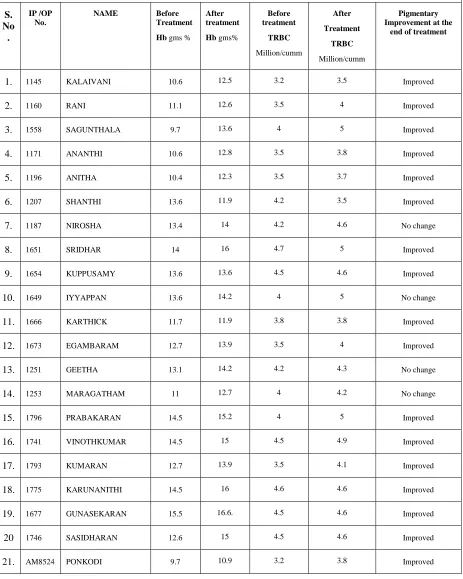
In 6% of those who had perinicious anaemia the haemoglobin content in blood is low. So the patients‟ nutritional state has to be increased as high as possible. This is very particular when
venpadai is active and progressively increasing.
Highly nutritious food like spinach, pomegranate, cheese, butter, milk, almond, germinating grams and food rich in tyrosinase to be added.
Vit-C (Ascorbic acid) must be avoided in diet, since in the formation of melanin, tyrosine, plays an important role. But in the metabolic pathway of tyrosine a metabolic error happens due to the presence of vitamin C (Ascorbic acid). If this error happens continuously the tyrosine
cannot be absorbed by the body and is excreted through urine.
Metabolic error
P.Hydroxy phenyl pyruvic acid (Tyrosinosis)
Ascorbic acid homogentistic acid
In the absence of Ascorbic acid the metabolic error can not occur and normal tyrosine metabolic pathway takes place and melanin is produced without any difficulty.
P.Hydroxy phenyl pyruvic acid correct metabolic.
(Pathway)
Absence of Ascorbic acid p-hydroxy phenylacetic acid & para hydroxy
-phenyl lactic acid
- Bio – chemistry – Saradha subramanian
Diet and restrictions
: Occupation
Cosmetic things
Diet
During bathing – the powder of Bengal gram and green gram or any other herbal products can
be used.
If any one above is the reason for allergy it must be avoided.
Vinegar, cooking soda, food enriched with alcohol must be avoided. These items may
49
Using soaps and detergents also promote bleaching the skin.
Copper and zinc content vegetable and drugs tablet such as cooked greengram or Bengal
gram at least one time a day.
The role of copper in skin pigmenation can be well understook in terms of necessity
copper for tyrosinase activity. Loss of pigments has been repored in acutre zinc deficiency. Also reported in vitiligenous skin, zinc and copper contents are decreased.
Venpadai is also commonly seen on the flanks of ladies pressure is presumed to lead to
depigmentation.
Loose of melanin pigment from the skin often occurs, following wound healing scar
formation commonly lead to depigmentation.
Irritant cosmetic things allergy.
Rubber slipper, gloves etc. Presence of Monobenzyle ether of hydroquinone in the
slipper, gloves or other articles of rubber arvirritate the sking and produce depigmentating disorder (Pathological basis of disease, P-1274).
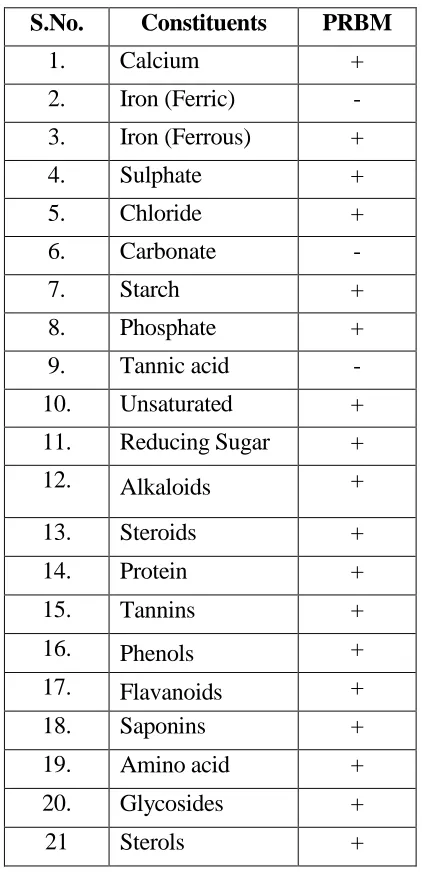
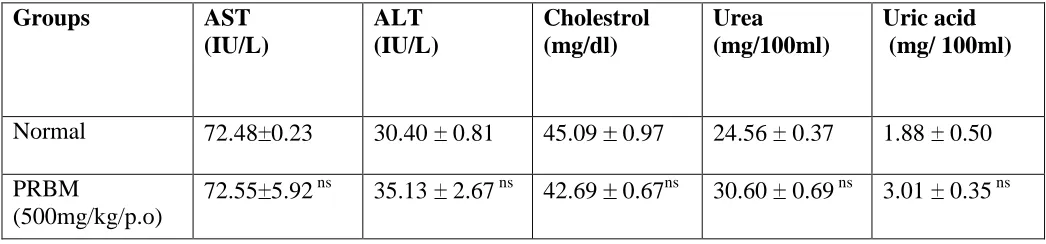
Bio-chemical, Anti- oxidant and Toxicity studies of the test drug was carried out in C.L. Baid Metha college of Pharmacy, Thorapakkam, Chennai.
The patients were treated with
1. Pusundar Rama Bana Mathirai -1 B.I.D. with Palm jaggery
2. Manosilai Ennai – 30 ml (external).
50
51
III.
MATERIALS AND METHODS
The study on Venpadai was carried out in the Ip and Op Department of Sirappu Maruthuvam in Ayothidoss Pandhithar Hospital, National institute of Siddha, Chennai – 47.
The disease “Venpadai” has been dealt in the Siddha Maruthuvam - Sirappu as one
among the eighteen types of kuttam. Patients were selected according to the clinical features as mentioned in Venpadai.
1. Selection of the patients:
For the clinical study 40 cases of venpadai were selected. 20 cases were admitted in the Inpatient ward and 20 cases in Op Department of Sirappu Maruthuvam at Ayothidoss Pandithar Hospital of National Institute of Siddha, Chennai – 47
Sex : Both Sexes Age : Between 13 to 70
2. ClinicalManifestations:
In this study a detailed clinical history was taken from the patients. The following features were seen in the patients admitted for the trial.
Depigmented patches of varying size and shape.
Discoloration of hair (may or may not be present).
Itching (may or may not be present). 3.Aetiological factors:
The seasonal variations and precipitating factors like emotional stress trauma and climatic variations were enquired.
The socio economic status, family history and treatment history were carefully noted
4. Inclusion criteria
Age between 13 - 70 years with the clinical manifestations mentioned above.
Willing to give specimen of blood for the investigation when required.
Willing to be admitted in the Hospital for 48 days or willing to attend OPD once in 8
52 5. Exclusion criteria
Jaundice
Leprosy
Burns
Pregnancy
Lactation
Heart ailments
Any other serious illness
6. Withdrawal criteria
Any drastic changes occurring in hematological / immunological findings during treatment period.
Development of severe exacerbation.
Occurrence of any other serious illness.
7. Trial drugs:
Purgation:
Karudan kizhangu ennai – 30 ml at early morning in empty stomach Internal drug :
Pusundar Rama Bana Mathirai –1(B.I.D) twice a day with palm jaggery External drug :
Manosilai ennai - 30 ml (external application) twice a day. Trial period: 40 days
8. ASSESSMENT AND TESTS
Clinical assessment:
Initial lesion :
10. Anatomical location :
11. Colour : Blackish white (Grey) Pink White
53
13. Shape : Irregular Round Dispersed 14. Borders : Elevated Diffuse
15. Swelling : Present Absent 16. Erythema : Present Absent
17. Sensation : Normal Paraesthesia Pain Numbness Burning Pricking
18. Depigmentation of skin : Present Absent
19. Scaling : Present Absent 20. Crusting : Present Absent 21. Oozing : Present Absent 22. Maccules : Present Absent 23. Papules : Present Absent 24. Vesicles : Present Absent 25. Pustules : Present Absent
26. Palpation : Normal Smooth Rough
Warm Cold
RESULT:
CURED IMPROVED NO CHANGE
9.SIDDHA ASPECTS
ENVAGAI THERVU
NEERKURI
NEIKURI
LABORATORY INVESTIGATIONS:
BLOOD:
TC (Cells/Cumm):
54 Hb (gm%)
Blood Sugar (mg %):
Fasting Post Prandial
Serum Cholesterol (mg %): Blood urea (mg %):
Serum creatinine: SGOT
SGPT
II. URINE:
Albumin: Sugar: Deposits:
Epithelial cells :
Pus cells :
Red blood cells :
Casts/Crystals :
III. MOTION:
Ova -
Cyst -
Occult blood - Pus cells -
9. CLINICAL TRIAL:
Venpadai patients satisfying the inclusion and exclusion criteria will be included for the trial. Informed consent will be obtained from the patients. A day before starting the trial of treatment to regulate the mukkutrams, purgation will be carried out by Karudan Kizhangu Ennai20-30ml with hot water at early morning.
For OPD patients, the trail drugs will be issued for 8 days at a time. They will be asked to
attend the OPD once in 8 days. Also, they will be instructed to bring back unconsumed trial drugs and return them during their next visit.
55 11. FORMS
Form I – Selection proforma
It is used before admission of the patients to the trial
Form II – Assessment form
It is used once in 8 days during treatment.
12. ANALYSIS
Improvement will be mainly assessed by comparing the photos taken before and after
treatment.
56
57
IV. OBSERVATION AND RESULTS
1. Gender distribution
2. Age Distribution
3. Kaalam distribution
4. Occupational Status
5. Seasonal variations
6. Thinai
7. Dietary Habit
8. Socio-economic Status
9. Etiological Factors
10. Family History
11. Distribution of Thridosha
12. Udal Kattugal
13. Ennvagai Thervugal
14. Neerkkuri Neikkuri
15. Sites of lesion
58 1.GENDER DISTRIBUTION :
GENDER NUMBER OF CASES PERCENTAGE
MALE 27 67.5
FEMALE 13 32.5
TOTAL 40 100
2.AGE DISTRIBUTION:
AGE (YEAR) NUMBER OF CASES PERCENTAGE
11– 20 9 22.5
21-30 8 20
31-40 11 27.5
41 – 50 3 7.5
51 – 60 5 12.5
61 – 70 4 10
TOTAL 40 100
3.KAALAM DISTRIBUTION:
Vatha Kaalam - 19 cases (47.5 %)
Pitha Kaalam - 20 cases (50 %)
59 4. OCCUPATIONAL STATUS:
OCCUPATION NUMBER OF CASES PERCENTAGE
STUDENT 12 30
FARMER 3 7.5
HOME MAKER 7 17.5
LEATHER INDUSTRY 2 5
TEACHER 2 5
ELECTRICIAN 2 5
TAILOR 1 2.5
SECURITY 1 2.5
ENGINEER 2 5
BUIDER 2 5
CARPENTER 3 7.5
BUSINESS 1 2.5
MECHANIC 2 5
5. SEASONAL VARIATIONS:
In Siddha system, a year is divided into 6 Paruva Kaalangal (seasons).
Out of 40 cases, 30 patients (75%) were admitted in Kaar Kaalam, and 10 patients (25%) were
admitted in Koothir Kaalam.
6. THINAI:
Among the 40 patients, 1 (2.5 %) was from Kurunchi, 5 (12.5%) were from Marutham
60 7. DIETATY HABITS(D.H.)
D.H. NUMBER OF CASES PERCENTAGE
Vegetarian. 5 12.5
Non-Vegetarian. 35 87.5
Total 40 100
8. SOCIO- ECONOMIC STATUS :
CLASS NUMBER OF CASES PERCENTAGE
POOR 8 20
MIDDLE CLASS 27 67.5
RICH 5 12.5
9. AETIOLOGICAL FACTORS:
AETIOLOGICAL FACTORS
NUMBER OF CASES PERCENTAGE
HEREDITARY 2 5
ANEAMIA 27 67.5
UNKNOWN 11 27.5
10. FAMILY HISTORYOF VENPADAI (FH) :
FAMILY HISTORY NUMBER OF CASES PERCENTAGE
PRESENT 2 5
ABSENT 38 95