THE CARE OF LOW BIRTH WEIGHT BABIES
AMONG MOTHERS
By
P. JEYANTHI
A DISSERTATION SUBMITTED TO THE TAMIL NADU
Dr. M.G.R. MEDICAL UNIVERSITY, CHENNAI IN PARTIAL
FULFILMENT OF THE REQUIREMENT FOR THE
DEGREE OF MASTER OF SCIENCE IN NURSING
THE CARE OF LOW BIRTH WEIGHT BABIES
AMONG MOTHERS
CERTIFICATE
Certified that this is the bonafide work of
Mrs. P. JEYANTHI,
Dr.G.Sakunthala College of Nursing, Trichy, submitted in partial fulfilment of
the requirement for the degree of Master of Science in Nursing from the
Dr.M.G.R.Medical University, Chennai.
Prof. Mrs. Santham Sweet Rose,
M.Sc.(N),Ph.D
(N)
Principal,
Dr.G.Sakunthala College of Nursing,
Trichy.
Place: Trichy
THE CARE OF LOW BIRTH WEIGHT BABIES
AMONG MOTHERS
DISSERTATION COMMITTEE APPROVAL : _____________________
RESEARCH GUIDE
:
_______________________________
Prof. Mrs. C. IRENE LIGHT,
M.Sc (N), Ph.D.(N),Vice Principal,
Dr. G. Sakunthala College of Nursing,
Trichy.
SPECIALTY GUIDE
:
_______________________________
Mrs. R. PARASAKTHI,
M.Sc (N).,Head of the Department of Child Health Nursing, Dr. G. Sakunthala College of Nursing,
Trichy.
CLINICAL GUIDE
:
_______________________________
Dr. T.R.R. KRISHNA,
M.D. (Paediatrics),Paediatrician & Neonatologist,
Dr. G. Viswanathan Specialty Hospitals,
Trichy.
A DISSERTATION SUBMITTED TO THE TAMIL NADU
Dr. M.G.R. MEDICAL UNIVERSITY, CHENNAI IN PARTIAL
FULFILMENT OF THE REQUIREMENT FOR THE
DEGREE OF MASTER OF SCIENCE IN NURSING
This is to certify that Ethical committee of Dr. G. Sakunthala
College of Nursing has discussed with its members the topic “A
pre-experimental study to evaluate the effectiveness of information,
education and communication package
on
knowledge and expressed
practice regarding the care of low birth weight babies among mothers”
opted by Mrs. P. JEYANTHI and its implication on study subjects
for her thesis for M.Sc. Nursing programme and the committee
passed clearance for the same topic for her to persue.
Prof. Mrs. SANTHAM SWEET ROSE, M.Sc(N), Ph.D
Ethical Committee
spite of weakness.
I express my sincere thanks to Principal Prof. Shantham Sweet Rose, M.Sc(N)., Ph.D(N)., for her valuable support rendered for completing this study.
It is pleasure to extend my debt of genuine and hearty gratitude to my research co-ordinator Prof. Mrs. C. Irene Light, M.Sc(N)., Ph.D(N)., for her valuable suggestions, enlightening ideas, continuous guidance and for being the source of encouragement to ensure the best quality of this piece of work.
My deep sense of gratitude to my Research Guide & Head of the Department of Child Health Nursing, Mrs. R. Parasakthi, M.Sc(N)., for her valuable guidance and encouragement throughout this study successfully.
I am grateful to the Department of Paediatric Lecturers of Dr. G. Sakunthala College of Nursing, Mrs. Mettilda, M.Sc(N)., Mrs. Kanickai Mary, M.Sc(N)., Mrs. Kalyani, M.Sc(N)., Mrs. Ponkerutinaveni, M.Sc(N)., for their constant
support, guidance and suggestions throughout the study which helped me a lot to complete this project successfully.
I express my sincere thanks to Dr. V. Jeyapal, M.S., F.I.C.S., F.I.M.S.A., President, Dr. V. Kanagaraj, M.D., D.C.H., D.L.O., Secretary and the Managing Directors of Dr. G. Sakunthala College of Nursing for their support and provision of required facilities for the successful completion of this study.
I express my deep sense of gratitude and immensely thankful to my research to my research medical guide Dr. T.R.R. Krishna, M.D(Paediatrics)., Dr.G.Viswanathan Speciality Hospitals, Trichy for his bright cheerful approach and for his willingness to provide guidance and suggestions to shape my study.
I am thankful to lecture Mr. Prasanna, M.A.(Literature), Government Arts College, for editing this manuscript.
My heart felt thanks to Mrs. Amudha, Mrs. Revathy, Librarian of Dr. G. Sakunthala College of Nursing for his support and timely help throughout my study.
My heartfelt thanks to Golden Net Computers, Trichy.
My sincere thanks to my beloved husband Mr. M.P. Kasi Viswanathan, for his unbounded love and affectionate support, optimistic encouragement which helped to complete the vital part of the study.
I express my acknowledgement to my daughter R. Achaya for patient and barring all the discomfort silently which helped me to sustain throughout the process of completing this project.
I deeply move to thank my parents Mr. V.P. Samy, Mrs. Manimegalai, Mrs. Pappa and all my other family members and friends who is always a source of
inspiration and strengthen me with their support and their prayer, blessings and helped me to carry out this study in a successful manner.
ACKNOWLEDGEMENT
ABSTRACT
I INTRODUCTION 1 - 8
Significance and need for the study Statement of the problem
Objectives Hypothesis
Operational definition Assumptions
Delimitations
II REVIEW OF LITERATURE 9 - 17
Introduction
Literature related to physiological problems Literature related to management
Conceptual framework
III RESEARCH METHODOLOGY 18 - 22
Introduction Research approach Research design Setting of the study Population
Sample size
Sampling technique
Data collection procedure Plan for data analysis Ethical consideration
IV ANALYSIS AND INTERPRETATION OF DATA 23 - 36
V DISCUSSION 37 - 40
VI SUMMARY, CONCLUSION, IMPLICATION,
LIMITATIONS AND RECOMMENDATIONS 41 - 46
Summary of the study Conclusion
Implication Limitation
Recommendation
REFERRENCES 47 - 50
demographic variables 25 2. Percentage of the knowledge scores of mothers of low
birth weight babies before IEC package 27 3. Percentage of expressed practice scores of mothers
of low birth weight before IEC package 28 4. Comparison of mean scores between pre test and
post test 29
5. Correlation between knowledge and expressed practice of
post-test 32
6. Association between selected demographic variables
and post-test knowledge 33
7. Association between selected demographic variables
I Conceptual framework 17 II Percentage distribution of knowledge scores of mothers
of low birth weight baby before and after information, education and communication package administration.
30
III Percentage distribution of expressed practice scores of mothers of low birth weight baby before and after IEC package administration.
A Letter requesting for validation
B List of experts consulted for content validity
C Instrument (English)
(Knowledge and expressed practice questionaire) Instrument (Tamil)
(Knowledge and expressed practice questionaire) D Item Scoring
1. Knowledge
2. Expressed practice E IEC package (English)
IEC package (Tamil) F Letters
terms of knowledge and expressed practice among mothers in Child Jesus Hospital, Trichy, 2011”.
Objectives
1. To assess the level of knowledge on care of low birth weight babies among mothers.
2. To assess the expressed practice on care of low birth weight babies among mothers.
3. To find out the effectiveness of information, education and communication package on care of low birth weight babies among mothers.
4. To find out the relationship between knowledge and expressed practices on care of low birth weight babies among mothers.
5. To find out the association between demographic variables and knowledge on care of low birth weight babies among mothers.
6. To find out the association between demographic variables and expressed practice on care of low birth weight babies among mothers.
Conceptual framework
Rosenstocks and Beckers health belief model.
Research Design
Pre experimental (One group pretest posttest).
Population
Mothers of new borns, diagnosed as low birth weight.
Sampling Technique
Setting
Child Jesus Hospital, Trichy.
Tool
Knowledge questionaire
Expressed practice questionaire
Data collection
The period of the data collection was started from 28.06.2011-12.08.2011. Before starting the study the investigator obtained formal permission from the administrator of Child Jesus Hospital to conduct the study.
Data analysis
1. Percentage, mean, chi-square & standard deviation would be used to know the association between demographic variables and the post test scores. 2. Correlation would be used to determine the relationship between
knowledge and expressed practice.
3. Paired T-test would be used to compare the pre test & post test score.
Major Findings
1. The mean pretest level of knowledge is higher than the mean post test level of knowledge.
2. The mean pretest level of expressed practice higher than the post test level of expressed practice.
3. There is significant improvement in the level of knowledge and expressed practice after administering the IEC package which shows the IEC given was effective.
6. Significant association was found between the post test level of expressed practice and selected demographic variables such as Number of gravida (p < 0.01), fathers occupation (p < 0.01).
Conclusion
1. Care of low birth weight babies is safer and more effective intervention for low birth weight babies.
CHAPTER 1 INTRODUCTION
“CHILDREN’S HEALTH IS TOMORROWS WEALTH” is one of the WHO’s slogans of recent years.
Low birth weight has been defined by the world health organization as weight at birth less than 2500gm. LBW is associated with multiple problems such as foetal and neonatal mortality or morbidity, compromised growth and cognitive development, Increased risk of cardiovascular and metabolic disorders in adult life has also been reported (WHO).
Singh (2004) stated that low birth weight is a major determinant of malnutrition during infancy. These delegate babies are susceptible to infections and prone to physical and mental handicaps during their life. So they need specialized care to overcome the obstacles and it is the responsibility of the mothers, family and community, to help these newborn to adjust in their life. Causes for low birth weight babies are maternal malnutrition, placental dysfunction, multiple pregnancies, intrauterine infections, influence of teratogens like drugs, radiation, systemic diseases of the mother, genetic and chromosomal disorders and pregnancy induced hypertension. Low birth weight babies also have some special problems like respiratory distress, feeding difficulties, aspiration, hypoglycaemia, hypothermia, infections, developmental retardation and high mortality and morbidity.
Singh (2004) insisted that low birth weight babies need specialized care such as temperature control, maintenance of body temperature, monitoring the temperature, skin care and baby bath, care of the eyes, dressings of the baby, in utero milieu, thermal comfort, feeding and monitoring adequate feeding, prevention of infection and administering the immunization at a correct time.
According to Mckinney (2000) kangaroo mother care seeks to provide restored closeness of the newborn with mother or father by placing the infant in direct skin-to-skin contact with one of them. This ensures physiological and psychological warmth and bonding. This kangaroo position provides ready access to nourishment. It arguably offers most benefits for low birth weight babies, who experience more normalized temperature, heart rate, and respiratory rate and increased weight gain, fewer nosocomial infections and reduced incidence of respiratory tract infections.
Elizabeth (2000) mentioned that the complications of low birth weight babies are respiratory distress syndrome, moderate bleeding in brain, chronic lung disease, necrotizing enterocolitis, general infection and meconium aspiration syndrome. It is important to know about the serious complications of low birth weight babies and its early detection of serious problems. When a new born baby is genuinely sick and refuses to take adequate feeds or manifest any other danger signs it should be considered as a seriously ill. The following danger signs should be closely watched and brought to the notice of the consultant.
The serious problems which should be considered early are vomiting, diarrhoea, poor feeding, undue lethargy or excessive crying, excessive frothiness or drooling, chocking at feeds, respiratory difficulty, apneic attacks, cyanosis, seizures, sudden rise or fall in temperature and evidence of superficial infection for example (conjunctivitis and pustules).
Park (2009) stated that the birth weight of an infant is the most important determinant of its chances of survival, health, growth and development. By international agreements, low birth weight has been defined as a birth weight less than 2.5Kgs (up to and including 2499g), measurement being taken preferably within the first hour of the life, before significant post weight loss has been occurred.
birthday and nearly 65% of these infant deaths occur in the neonatal period namely, the first 4 weeks of life. Low birth weight is the most important determinant of neonatal deaths occuring among low birth weight infants.
Prasanna (2004) reported that newborn health is the key to child survival especially in India. India took the lead in incorporating essential newborn care into the national programme, way back to 1992, much before neonatal health appeared on the international health agenda. The national population policy (2000) explicity recognises neonatal care as a priority. In the 10th 5year plan (2002-2007) specific resource allocation has been made for neonatal care and the country and state level targets were listed for neonatal mortality rate (NMR).
Oscar Carsiro (2007) stated that while the majority of low-birth-weight
survivors are free from such major disabilities as cerebral palsy, mental retardation,
and hearing and visual deficits, recent studies point out that cognitive and behavioural
sequeale becomes apparent in later childhood and in the early school years and that
lead to poor academic performance. In addition to the challenges posed by adverse
biologic factors, low birth weight infants frequently have to contend with adverse
environmental risk factors, such as young maternal age and low maternal educational
level and socioeconomic status. Hence there is a need to develop and evaluate
preventive strategies to ameliorate the sequelae of prematurity.
Low birth weight is one of the most serious challenge to maternal and child health in both developed and developing countries. It is the single most important factor that determines the chances of child survival. Nearly 50% of neonatal deaths occur among LBW babies. The survivors among them are at a high risk of developing malnutrition, recurrent infections and neuro-developmental handicaps.
SIGNIFICANCE AND NEED FOR THE STUDY
The first month of life is the most vulnerable time in childhood. Over 60% of all deaths in infant under one year occur in the first month and that too during the first week of life.
World Health Organisation (WHO) (2008) estimates that globally about 25 million low birth weight babies are born each year, consisting of 17% live births. Among these 17% nearly 95% of them are in developing countries. In India almost 7 out of 100 babies do not see their first birth day, nearly 65% of the infant death occurs in the neonatal period.
United nations international children emergency fund (UNICEF) and World health organisation (WHO) (2004) stated that weight at birth is not only a good indicator of mothers health and nutritional status but also the newborns chances for survival, growth, long term health and psychological development. Low birth weight (<2500gms) carries a range of grave health risks for children. Babies who were under nourished in the womb face a greatly increased risk of dying during their early months and years.
Goldenberg (2009) reported that low birth weight is a major determinant of perinatal illness, disability and death. It accounts for the vast majority of perinatal mortality and more than 50% of long term neurologic morbidity such as cerebral palsy. Babies weighing less than 2.500kg are more likely to suffer from a variety of health and developmental problems with respiratory, gastro-intestinal, hearing, sight, immunologic, cognitive, behavioural, social and emotional health and growth. These issues come with considerable emotional and economic cost, to their families and have a considerable economic impact on public services.
weight is a multi factorial problem that includes a wide spectrum of health related problems from its origin to the consequences in later life. It carries a 40 times greater risk of neonatal death. (Behrman & Butter)
Hockenberry and Wilson (2007) stated that the study of low birth weight is also important since birth weight constitutes a good indicator of the current health status of the child and a good predictor of health problems in later parts of the child’s life, which further more is easily available and reliably measured (more reliable than gestational age). This is important, since more and more low (<2,500g), very low (<1,500g) and extremely low birth weight (<1,000g) children survive, many of those who do survive – especially the very low and extremely low birth weight children – experience health problems from birth to later part of life.
Reer and Freer (2000) stated that low birth weight is considered one of the most important indicator of a newborn’s chances of survival, and low birth weight is a major risk factor for perinatal and infant mortality. Low birth weight babies are more likely to have health and developmental problems including learning difficulties, hearing and visual impairments, chronic respiratory problems such as asthma and chronic diseases in later life.
Low birth weight babies have a greater risk of long-term poor health and
mortality and may require a longer period of hospitalisation after birth. They are also
more likely to develop significant disabilities (Leeson et al, 2001, Mick et al, 2002).
Low birth weight is associated with an increased risk of death in the first year of life
and long-term disability and diseases (Barker, 1994). Restricted foetal growth
resulting in low birth weight is associated with poor growth in childhood and a higher
incidence of some adult diseases such as Type 2 diabetes, hypertension and
cardiovascular disease (UNICEF and WHO, 2004). Very low birth weight has also
been associated with poor school achievement which may persist into early adulthood
(Hack et al, 2002).
special care, complications, and signs and symptoms of serious problems for low birth weight and make the mothers to apply in their practice, This knowledge can be acquired by an IEC package. Hence the investigator selected this study in order to educate the mothers of LBW babies regarding the care of LBW.
PROBLEM STATEMENT
A pre-experimental study to determine the effectiveness of information, education, communication package on knowledge and expressed practice regarding the care of low birth weight babies among mothers at Child Jesus Hospital, Trichy,2011
OBJECTIVES
1. To assess the level of knowledge on care of low birth weight babies among mothers.
2. To assess the expressed practice on care of low birth weight babies among mothers.
3. To find out the effectiveness of information, education and communication package on care of low birth weight babies among mothers.
4. To find out the relationship between knowledge and expressed practice on care of low birth weight babies among mothers.
5. To find out the association between demographic variables and post test knowledge on care of low birth weight babies among mothers.
6. To find out the association between demographic variables and post test expressed practice on care of low birth weight babies among mothers.
RESEARCH HYPOTHESES At p<0.05 level
H1: There would be significant difference in the level of knoweldge regarding care of low birth weight babies after the administration of information, education and communication package.
H3: There would be a significant relationship between the knowledge and expressed practice on care of low birth weight babies among mothers. H4: There would be a significant association between the demographic
variables and knowledge on care of low birth weight babies among mothers.
H5: There would be a significant association between demographic variables and expressed practice on care of low birth weight babies among mother.
OPERATIONAL DEFINITION
Effectiveness
Effectiveness is the result produced by the agent or action.
In this study it refers to the extent to which the information, education, communication package achieved, the desired effect in improving the knowledge among mothers on care of low birth weight babies as measured by knowledge questionaire.
Information, Education and Communication
IEC for health is used as a general term for communication activities in health promotion and various aspects coming under IEC are health behaviour, health education, planning for health education, health education with individuals, groups and communities, communicating health messages and media for communicating health messages.
In this study, it refers to a technique which helps to provide teaching regarding, care of low birth weight babies to the mothers in various aspects such as causes of low birth weight, thermoregulation ,immunization, kangaroo mother care, early detection of serious problems, prevention of infection and complications of low birth weight babies to the mothers who had the low birth weight babies, by power point presentation, immunization schedule by hand outs, and breast feeding techniques through demonstration.
Knowledge
It refers to understanding about the care of low birth weight babies among mothers in the following aspects , causes of low birth weight , thermoregulation, immunization, Kangaroo mother care, signs and symptoms of serious problems, prevention of infection and complication of low birth weight as measured by knowledge questionaire
Expressed Practice
The actual application or use of a plan or method are expressed as opposed to the theories related to illness.
In this study it refers to the expression of the mothers on care of low birth weight babies on the following aspects of thermoregulation, immunization, Kangaroo Mother Care and prevention of infection as measured by expressed practice questionaire.
Mothers
A woman in relation to a child or children to whom she has given birth. In this study it refers to the mothers having low birth weight babies.
Low Birth Weight Babies
An infant whose birth weight is less than 2500gm.
In this study it refers to those newborn whose birth weight was between 1500-2500gm at the gestational age of 37 weeks completed
ASSUMPTION
1. Mothers have inadequate knowledge regarding the care of LBW babies. 2. Education will enhance the knowledge of mothers regarding the care of
LBW babies.
DELEMITATIONS The study was delimited to
1. mothers who were having healthy low birth weight babies (1500-2500gms). 2. mothers who were admitted their babies in Child Jesus Hospital at Trichy. 3. 30 samples.
CHAPTER II
REVIEW OF LITERATURE
A literature review involves the systematic identification, location, and summary of written materials that contain information regarding the problem of the study.
A review of related research and non-research literature was done in order to broaden the understanding and develop an insight into the selected problem in the study for the purpose of logical, sequence the chapter is divided in to
Literature related to the health problems of low birth weight babies. Literature related to the management of low birth weight babies.
LITERATURES RELATED TO THE HEALTH PROBLEMS OF LOW BIRTH WEIGHT BABIES
Miler (2011) conducted a study on hypothermia in very low birth weight babies, to study the epidiemiology of neonatal hypothermia in infants using WHO temperature criteria. Population based cohort of 8782 VLBW infants born in California neonatal intensive care units in 2006 and 2007. Associations between admission of hypothermia and maternal and neonatal characteristics and outcomes were determined using logistic regression. Hypothermia by WHO criteria is prevalent in VLBW Infants and is associated with IVH and mortality. Use of WHO criteria could guide the need for quality improvement projects targeted toward to most vulnerable infants.
income, birth order two and above and maternal age above 30 yrs were the significant risk factors of LBW.
Hill (2009) conducted a study on catch up growth for low birth weight infant. A descriptive design was used to collect data from 60 hospital records. Retrospective chart review describes the growth of low birth weight infants after the discharge from neonatal intensive care unit. The low birth weight infants showed gains relative to the full-term infant but lagged behind on each growth parameter at each assessment.
Cristabal (2008) conducted a study on hearing loss in children with very low birth weight babies. An association between birth weight <1500g and hearing loss has been long recognised as universal hearing screening programs have become widely implemented and the survival rate of very low birth weight babies in modern ICU has increased. Children with very low birth weight are at increased of experiencing progressive or delayed onset hearing loss and thus should continue to have serial hearing evaluations after discharge from NICU.
Uthman (2008) conducted a study on effect of low birth weight on infant mortality in nigeria, to examine the relationship between high risk infant of born with low birth weight. It was examined using multivariate survival regression procedure. Low birth weight is strongly negatively associated with infant survival in nigeria independent of other risk factors. Children can be ensured a healthy start in life if women start pregnancy healthy and well nourished and go through pregnancy and childbirth safety.
Holly (2007) conducted a study of neonatal infections in extremely low birth weight infants significantly increase the likelihood of problems related to neurodevelopment and growth in early childhood. Sepsis (199), Sepsis and necrotising enterocolitis (279) or meningitis with or without sepsis (195) study revealed 62% of infant had weight, length or head circumference less than the 10th percentile.
than average chance of morbidity or mortality because of conditions or circumstances superimposed on the normal course of events associated with birth and the adjustment to extrauterine existence.
Farma (2003) examined the dose effect of maternal milk on neonatal morbidity of very low birth (<1.5kg) infants. A daily threshold amount of atleast 50ml/kg of maternal milk through week 4 of life is needed to increase the rate of sepsis in very low birth weight infants, but maternal milk does not affect other neonatal morbidities.
Gurav, Karthikeyan, Jape, (2003) conducted a pilot study on low birth weight babies. Low birth weight babies compromised 35.68% and this percentage was higher for female newborns. The sex wise difference in low birth weight was statistically significant. The percentage of low birth weight was found to be positively correlated with multi gravidity and with increased maternal age.
LITERATURE RELATED TO THE MANAGEMENT OF LOW BIRTH WEIGHT Yashoda, Pai, Sangeeta (2011) conducted a study to determine the feasibility and acceptability of Kangaroo mother care in a tertiary carer hospital in India. A randomised controlled trial was performed over 1 year period in which 89 neonates were randomised in to two groups, Kangaroo mother care and conventional method of care. There was significant reduction in kangaroo mother care vs conventional method care group of hypothermia, higher oxygen saturation and decrease in respiratory rates.
Thukral, Chawla, Agarwal, Deorari, Paul (2009) conducted a observational study on kangaroo mother care an alternative to conventional care, to prove that kangaroo mother care is an gentle and effective method in breast feeding encouragement and avoids agitation which was routinely experienced by low birth weight babies. It was found that low birth weight babies exposed to skin to skin contact showed a better mental development and better results in motor test.
2000gms. It was observed that babies had good weight gain of average 30gms/day and short duration of hospital stay of average 9 days.
Acolet et al (2007) conducted a cluster randomised controlled trail on ‘An active dissemination of information’ on standard care for low birth weight babies in England, to assess the relative effectiveness of active dissemination strategies on change in practice. It was found that the information lead to a change in practice.
Chevalier, Sullivan (2007) conducted a study on ‘Mothers education and Birth weight’. Using british data maternal education is found to be positively correlated with birth weight. They founded modest but heterogenous positive effects of maternal education on birth weight with an increase from the base line weight ranging from 2% to 6%.
Darmstadt (2007) conducted a cluster randomised controlled trail on impact of educational package on care of low birth weight babies among family and community in Uttar Pradesh. It was done to evaluate the effectiveness of educational interventions. It was found that educational package empowers them to change in their, practice with increased confidence.
Dasgupta, Dasgupta, Sinha, Chaudhur (2008) conducted a epidemiological study of low birth weight newborns in west bengal, among different variables studied, statistically significant association was found in case of educational level of mothers and also place of delivery of newborns.
Rao et al (2007) conducted a randomised controlled trial, to compare the effect of Kangaroo mother care and conventional method of care on growth in low birth weight babies, (<2000). A significantly higher number of babies in the conventional methods of care group suffered from hypothermia, hypoglycaemia and sepsis. There was no effect on the time of discharge. More kangaroo mother care babies are exclusively breastfed at the end of the study (98% Vs 76%). kangaroo mother care was acceptable to most mothers and families at home.
1200-2199gm. Conventional care of low birth weight babies involves extended maternal-infant separation and incubator care. Recent research has shown that separation cause adverse effects. Maternal infant skin-skin contact provide an alternative habitat to the incubation. New born care provided by skin-skin contact on the mothers chest results in better physiological outcomes and stability that the same care provided in closed servo-controlled incubators.
UNICEF (2004) mentioned that there was a significant decline in neonatal mortality rate in low birth weight babies. It shows that good essential care of the new born will prevent many newborn from health hazards.
Singh (2004) stated that most babies with a birth weight more than 1800gm or gestational age more than 34 wks can be managed at home. Strict asepsis should be observed to prevent occurrence of bacterial infections.
Priya (2004) conducted a study on Kangaroo mother care on Low birth Weight babies. The research design adopted for this study was quasi experimental design with the same samples as serving as their own control group. Non probability convenience sampling technique was used to select 30 low birth weight babies and their mothers. A checklist for assessment and recording of physiological and behavioural responses of low birth weight babies was used. The findings were, the mean temperature of low birth weight babies during KMC (98.8 f-99.3 f) was higher than routine care.
Ragavendra (2004) insisted that the ways for management for low birth weight are preventing prematurity and manage preterm labour, care of birth, appropriate place of care, intensive care, protocol, respiratory support, prevent infection, monitoring and early detection of complications and feeding.
Renie (2002) stated that babies kept in the thermoneutral range,body temperature below 36 C or above 37 C, adequate humidity reduction in draughts and covering babies after drying will prevent babies from hypothermia.
showed remarkable growth, and experienced fewer episodes of diarrhea as compared to those weaned early.
Parthasarathy (2002) insisted that the low birth weight babies can be managed by keeping the low birth weight babies warm, nutrition and fluids amount and frequency of enteral feeds, technique of feeding, assessment of adequacy of nutrition, nutritional supplements, early detection of sickness and management of complications and vaccination of low birth weight babies.
Elizabeth (2000) stated that stable babies with a birth weight of 1.8kg can be managed at home. Mothers should empowered to breast feed the baby and to maintain warmth and hygiene in the baby, provide appropriate immunization at appropriate time.
Ghai (2000) stated that low birth weight can be treated by thermal protection, fluids and feeds, monitoring and early detection of complications.
CONCLUSION
CONCEPTUAL FRAMEWORK
Conceptual framework for this study is developed from the existing theory and it helps in defining the concepts of interest and proposing relationship among them. The model gives direction for the planning data collection and interpretation of findings.
(Burns and Groove, 1995)
The present study aims at determining the effectiveness of Information Education and Communication package on knowledge and expressed practice of mothers regarding care of low birth weight babies. The conceptual framework of the present study is developed based on Rosenstock’s and Becker’s health belief model.
Good health is an common objective to all people-Rosenstock (1974).
Individual Perception
In this study, the individual perceptions are the deficient knowledge and expressed practice of the mothers in caring their low birth weight baby.
Perceived Threats
In this study, perceived threat is the deficiency in the mothers knowledge and expressed practice in caring the low birth weight babies, which will hinder the performance in their real life. In turn it will affect the babies growth and development.
Modifying Factors
Factors that modify a persons perception includes the following:
Demographic Variables
In this study the demographic variables that have influence over the mothers knowledge and expressed practice in caring for their low birth weight babies include mothers education, mothers occupation, fathers occupation, families income, low birth weight during last pregnancy, disease during pregnancy, number of gravid.
Structural Variables
Cues to Action
Cues to the action can be either internal or external. In this study the internal cues include the feelings of parents or thoughts about the condition of their low birth weight babies. The external cues are the investigators and Information Education and Communication package regarding the care of low birth weight babies.
Mothers of low birth weight babies are trained in giving care for their babies through which they are able to maintain thermoregulation, identify the causes, prevent infection, promote exclusive breast feeding, identify early signs and symptoms of the serious problems of low birth weight and complications.
Likelihood of Action
The likelihood of a person taking recommended preventive health action depends on the perceived benefits of the action, minus the perceived barriers to the action.
The perceived benefits of action
In this study are the improvement of the knowledge and expressed practice in providing care for their low birth weight babies.
The perceived barriers to action
In this study are level of education, income, occupation, cultural beliefs and superstitial belief.
Likelihood of taking recommended preventive health action is the improvement in the knowledge and expressed practice of mother’s of low birth weight babies by caring their babies.
The intervention which is given by the researcher is based on the needs of the low birth weight babies.
INDIVIDUAL PERCEPTION MODIFYING FACTORS LIKELIHOOD OF ACTION
FIGURE 1 CONCEPTUAL FRAMEWORK BASED ON ROSENSTOCKS AND BECKER’S HEALTH BELIEF MODEL
Deficit knowledge and
expressed practice of mothers in care of low birth weight babies,
Breast feeding Thermoregulation KMC
Signs and symptoms of serious problems
Causes
Complications
DEMOGRAPHIC VARIABLE Mothers education, Mothers occupation, Fathers occupation, Families income, disease during pregnancy, LBW during last pregnancy, Number of gravida. STRUCTURAL VARIABLES Prior knowledge and expressed practice of mothers regarding care of LBW babies.
Deficit in knowledge and expressed practice in providing care for LBW babies, which hinders their performance.
PERCEIVED BENEFITS Improved knowledge and expressed practice in care of LBW babies.
PERCEIVED BARRIERS Level of education
Income Occupation Cultural belief Superstitial belief.
AWARENESS REGARDING Causes for LBW
Problems due to LBW
Sign and symptoms of serious problems
Management Complications. CUES TO ACTION
CHAPTER III
RESEARCH METHODOLOGY
Methodology of research refers to investigations of the ways of obtaining, organizing and analyzing data. Methodology studies address the development, validation and evaluation of research tools or methods.
(Polit and Beck, 2004)
This section discusses the research approach, research design, setting of the study, population, sample size, sample data collection procedure.
RESEARCH APPROACH
Experimental approach, a subtype of quantitative approach was used in this study to evaluate the effectiveness of IEC among mothers of low birth weight babies.
RESEARCH DESIGN
Pre-experimental (one group pretest postest design). O1 X O2
KEY
O1 : Pretest.
X : Information, Education and Communication package. O2 : Post test.
SETTING OF THE STUDY
POPULATION
The population of the study consisted of the mothers of newborns who were diagnosed as low birth weight.
SAMPLE
Mothers of newborns who were diagnosed as low birth weight, and admitted in Child Jesus Hospital at Trichy.
SAMPLE SIZE
The sample size was 30.
SAMPLING TECHNIQUE
Non probability convenience sampling technique was used for selection of samples.
SELECTION CRITERIA OF SAMPLES Inclusion Criteria
1. Mothers who had healthy low birth weight babies (1500-2500gms). 2. Mothers who were willing to participate.
3. Mothers who communicated freely in tamil.
Exclusion Criteria
1. Mothers of babies who belonged to very low birth weight and extremely low birth weight category.
2. Mothers who delivered the normal newborn.
DESCRIPTION OF THE TOOLS
PART A: (Demographic variables)
Demographic variables which included mothers education, mothers occupation, fathers occupation, monthly income of the family, presence of illness during pregnancy, previous history of LBW babies and number of gravida.
PART B: (Questionaire on knowledge)
It consisted of 22 questions to assess the knowledge regarding the care of low birth weight babies.
PART C: (Questionaire on expressed practices)
It consisted of 10 questions to assess the mothers knowledge on practice regarding the care of low birth weight babies. Each question has 2 options. “Yes” or “No”.
INFORMATION, EDUCATION AND COMMUNICATION PACKAGE
IEC package was given for the study subjects. The IEC programme consisted of information regarding care of low birth weight babies on the aspects like causes, thermoregulation, immunization, kangaroo mother care, signs and symptoms of serious problems, prevention of infection and complication of low birth weight babies.
SCORING PROCEDURE
A Score of “1” mark was given for every correct answer and “0” mark was given for every wrong answer. The score was ranged as follows.
Knowledge Scores
Adequate : 76-100%
Moderately adequate : 51-75% Inadequate : less than 50%
Expressed Practice Scores
VALIDITY
The tool was evaluated by 5 experts, who were requested to give their valuable suggestion about the content areas, relevant, clarity and appropriate need of the items.
RELIABILITY
The reliability of the tool was established by assessing the quality and adequacy of the tool using split half method. The “r” value was 0.845.
PILOT STUDY
After obtaining formal administrative approval the pilot study was carried out with 5 mothers, admitted in Child Jesus Hospital from 19.06.2011 to 27.06.2011. The pilot study samples were excluded from the main sample for the data collection. The data collected were amenable to statistical analysis and thus the study was found to be feasible.
DATA COLLECTION PROCEDURE
The period of the data collection was 28.06.2011-12.08.2011. Before starting the study the investigator obtained formal permission from the administrator of Child Jesus Hospital to conduct the study. After obtaining permission the mothers of healthy low birth weight babies were identified. Sample was selected and pre-experimental design was used. The data was collected on all 6 days of the week, the timing of the data collection was from 10.00am-04.00pm according to the availability of the mothers and convenience of the ward routine.4 to 5 mothers were selected per day depending on their availability. The nature and purpose of the study was explained to the selected mothers. Informed consent was obtained. Pre test was conducted, and then IEC package was administered to the sample. After 15 days post test was conducted.
PLAN FOR DATA ANALYSIS
Communication package on care of Low birth weight babies. Correlation would be used to determine the relationship between knowledge and expressed practice. Chi-square would be used to find out the association between demographic variables and knowledge and expressed practice on care of low birth weight babies among mothers. Using SPSS 13 Version all the statistics would be done at p< 0.05 level.
ETHICAL CONSIDERATIONS
CHAPTER IV
ANALYSIS AND INTERPRETATION OF DATA
INTRODUCTION
The data themselves do not provide answer to research questions. So the data need to be processed and analysed in an orderly coherent fashion. After the analysis, they must be systematically interpreted. Interpretation is the process of making sense of the results and examining their implications.
This chapter deals with the description of the sample, analysis and interpretation of data to assess the knowledge and expressed practice of mothers of low birth weight babies, the effectiveness of information, education and communication package in terms of knowledge and expressed practice regarding care of low birth weight babies among mothers of low birth weight babies on Child Jesus Hospital at Trichy. The obtained data were classified, grouped and analysed statistically based on the objectives of the study.
OBJECTIVES
1. To assess the level of knowledge on care of low birth weight babies among mothers.
2. To assess the expressed practice on care of low birth weight babies among mothers.
3. To find out the effectiveness of information, education and communication package on care of low birth weight babies among mothers.
4. To find out the relationship between knowledge and expressed practices on care of low birth weight babies among mothers.
5. To find out the association between demographic variables and post test knowledge on care of low birth weight babies among mothers.
6. To find out the association between demographic variables and post test expressed practice on care of low birth weight babies among mothers.
THE STUDY FINDINGS WERE REPRESENTED AS FOLLOWS
SECTION:1 Frequency and percentage distribution of demographic variables.
SECTION:2 Percentage distribution of knowledge and expressed practice scores of mothers of low birth weight babies before IEC package.
SECTION:3 Comparison of mean scores between pre-test and post-test.
SECTION:4 Correlation between knowledge and expressed scores of post-test.
SECTION:5 Association between selected demographic variables and post-test level of knowledge and post-test level of expressed practice of mothers of low birth weight babies regarding care of low birth weight
SECTION I
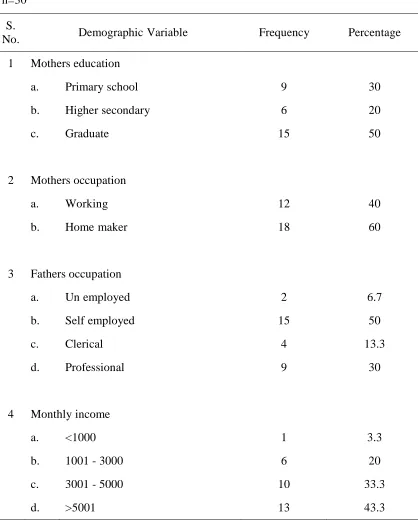
[image:39.595.106.524.198.721.2]This section deals with demographic variables of the sample. Table 1
Frequency distribution of sample according to their demographic variables. n=30
S.
No. Demographic Variable Frequency Percentage 1 Mothers education
a. Primary school 9 30
b. Higher secondary 6 20
c. Graduate 15 50
2 Mothers occupation
a. Working 12 40
b. Home maker 18 60
3 Fathers occupation
a. Un employed 2 6.7
b. Self employed 15 50
c. Clerical 4 13.3
d. Professional 9 30
4 Monthly income
a. <1000 1 3.3
b. 1001 - 3000 6 20
c. 3001 - 5000 10 33.3
5 Disease during pregnancy
a. Yes 3 10
b. No 27 90
6 Low birth weight during last pregnancy
a. Yes 2 6.7
b. No 28 93.3
7 Number of gravida
a. Primi gravida 14 46.7
b. Multi gravida 16 53.3
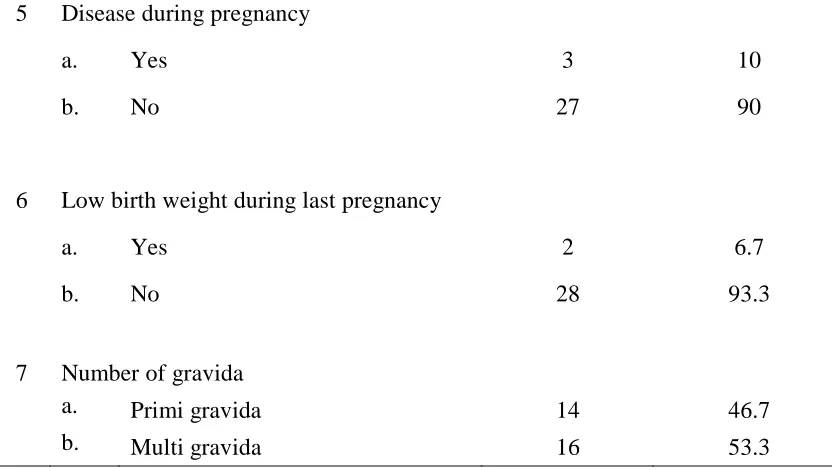
Table 1, describes the frequency distribution of sample according to their demographic variables.
Majority of the mothers 15(50%) were graduate, 6(20%) had higher secondary education and 9(30%) had primary school
Majority of the mothers 18(60%) were home maker and 12(40%) were working.
Majority of fathers 15(50%) were self employed 9(30%) were professional, 4(13.3%) were doing clerical work and 2(6.7%) were unemployed.
Majority of them had a family income of 13(43.3%) >5000, 10(33.3%) had between 3001-5000, 6(20%) had 1000-3000 and 1(3.3%) had <1000.
Majority of the mothers 27(90%) did not had disease during pregnancy and 3(10%) had disease during pregnancy.
Majority of mothers 28(93.3%) did not had low birth weight babies during last pregnancy and 2(6.7%) had low birth weight baby.
[image:40.595.106.522.127.362.2]SECTION II
[image:41.595.98.530.234.337.2]This section deals with the knowledge scores and expressed practice of mothers before IEC package.
Table 2
Percentage distribution of the knowledge scores of mothers of low birth weight babies before IEC package.
S.
No Knowledge Frequency Percentage
1 Inadequate 11 36.7
2 Moderately adequate 17 56.7
3 Adequate 2 6.7
Table 3
Percentage distribution of expressed practice scores of mothers of low birth weight before IEC package.
S.
No Expressed practice Frequency Percentage 1 Unfavourable practice 18 60 2 Moderately favourable practice 10 33.3
3 Favourable practice 2 6.7
SECTION III
[image:43.595.106.538.212.311.2]This section deals with the comparison of mean scores between pre-test and post-test.
Table 4
Comparison of mean scores between pre-test and post-test.
Component Pretest Mean
Posttest Mean
Mean Differences
Standard Deviation
Paired‘t’ test Knoweldge 56.36 80.61 24.25 3.198 9.133*
Expressed practice 53.00 74.33 21.33 2.047
5.709*
* p<0.01.
36.70%
0.00% 56.70%
63.30%
36.70%
6.70%
0.00% 10.00% 20.00% 30.00% 40.00% 50.00% 60.00% 70.00%
Pre test Post test
[image:44.595.114.509.136.535.2]Inadequate knoweldge Moderately adequate knoweldge Adequate knoweldge
Figure 2
Percentage distribution of knowledge scores of mothers of low birth weight baby before and after information, education and communication package administration.
60.00%
3.30% 53.30%
33.30%
43.30%
6.70%
0.00% 10.00% 20.00% 30.00% 40.00% 50.00% 60.00% 70.00%
pre test post test
[image:45.595.124.502.136.518.2]unfavourable practice moderately favourable practice favourable practice
Figure 3
Percentage distribution of expressed practice scores of mothers of low birth weight baby before and after IEC package administration.
SECTION IV
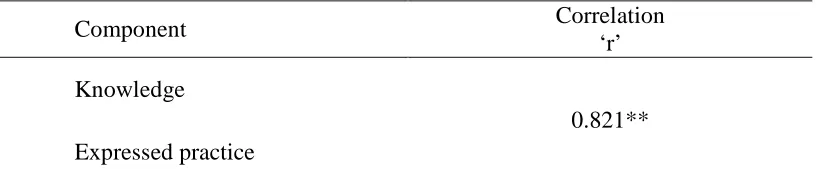
[image:46.595.112.522.211.300.2]This section deals with correlation between knowledge and expressed practice of post-test.
Table 5
Correlation between knowledge and expressed practice of post-test.
Component Correlation
‘r’ Knowledge
Expressed practice
0.821**
** p<0.01.
SECTION V
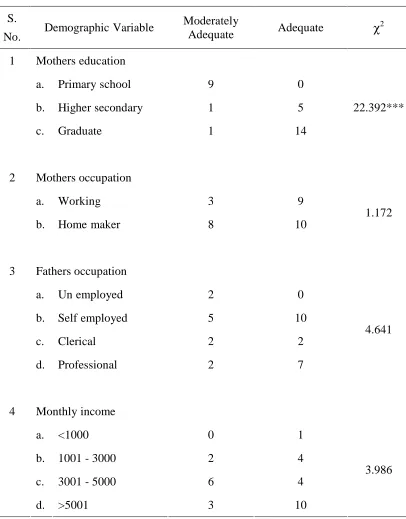
This section deals with the association between selected demographic variables and post-test level of knowledge and post-level of expressed practice of low birth weight babies regarding care of low birth weight babies.
Table 6
Association between selected demographic variables and post-test knowledge. S.
No. Demographic Variable
Moderately
Adequate Adequate χ
2
1 Mothers education
a. Primary school 9 0
b. Higher secondary 1 5
c. Graduate 1 14
22.392***
2 Mothers occupation
a. Working 3 9
b. Home maker 8 10
1.172
3 Fathers occupation
a. Un employed 2 0
b. Self employed 5 10
c. Clerical 2 2
d. Professional 2 7
4.641
4 Monthly income
a. <1000 0 1
b. 1001 - 3000 2 4
c. 3001 - 5000 6 4
d. >5001 3 10
[image:47.595.114.520.226.745.2]5 Disease during pregnancy
a. Yes 2 1
b. No 9 18
1.292
6 Low birth weight during last pregnancy
a. Yes 0 2
b. No 11 17
1.247
7 Number of gravida
a. Primi gravida 9 5
b. Multi gravida 2 14
8.623**
** p <0.01 *** p <0.001
[image:48.595.109.521.124.403.2]Table 7
Association between selected demographic variables and post-test expressed practice.
S.
No. Demographic Variable
Unfavourable Practice
Moderately Favourable Practice
Favourable
Practice χ
2
1 Mothers education
a. Primary school 1 7 1 b. Higher secondary 0 2 4
c. Graduate 0 7 8
7.173
2 Mothers occupation
a. Working 0 7 5
b. Home maker 1 9 8
0.773
3 Fathers occupation
a. Un employed 1 1 0
b. Self employed 0 6 9
c. Clerical 0 3 1
d. Professional 0 6 3
17.502**
4 Monthly income
a. <1000 0 0 1
b. 1001 - 3000 0 5 1
c. 3001 - 5000 1 6 3
d. >5001 0 5 8
5 Disease during pregnancy
a. Yes 0 3 0
b. No 1 13 13
2.917
6 Low birth weight during last pregnancy
a. Yes 0 1 1
b. No 1 15 12
0.98
7 Number of gravida
a. Primi gravida 1 13 0 b. Multi gravida 0 3 13
20.206***
[image:50.595.106.534.128.408.2]**at p at <0.01 *** at p <0.001
CHAPTER V DISCUSSION
This chapter deals with the findings of the study. The study was done to evaluate the effectiveness of information, education and communication package on knowledge and expressed practice on care of low birth weight babies among mothers, at post natal ward, Child Jesus Hospital, Trichy.
A pre experimental design was used to conduct the study. Knowledge and expressed practice was assessed by using structured questionaire. Non probability convenience sampling technique was used. The study sample consisted of 30 mothers of low birth weight babies. Using the above tool, data were collected, and analysed. The study findings revealed the following.
The aim of the study was to evaluate the effectiveness of Information Education and Communication package, on knowledge and expressed practice on care of low birth weight babies among mothers.
Among the demographic variables majority of mothers 15(50%) were graduates, 18(60%) were home makers, 15(50%) of fathers were self employed, 13(43.3%) of family income were >5000, 27(90%) had no disease during pregnancy, 28(93.3%) of mothers did not had low birth weight baby during last pregnancy, 16(53.3%) of mothers were multi gravidas.
The first objective of the study was to assess the level of knowledge on care of low birth weight babies among mothers.
problems and immunization schedule by power point presentation, handouts and demonstrated breast feeding technique.
The second objective of this study was to assess the expressed practice on care of low birth weight babies among mothers.
In the present study the expressed practice scores during the pre test was unfavourable 18(60%) among most of the mothers of low birth weight babies because they were unaware regarding special needs of low birth weight babies.
The third objective of the study was to find out the effectiveness of IEC package on the knowledge and expressed practice care of low birth weight babies among mothers.
Based on the preassessment scores, in the present study, after the administration of information, education, communication package, most of the mothers acquired knowledge 19(63.30%), which was assessed by providing post-test knowledge questionaire. During the period of administering information, education, communication package, mother’s were very interested and they asked questions and clarified their doubts. Interaction was very good. It was also observed that they handled their babies in a safe manner after Information, Education and Communication package. The findings were supported by a study done by Chevalier, Sullivan (2007), Darmstadt (2007), and Acolet et al (2007).
The fourth objective was to find out the relationship between knowledge and expressed practice on care of low birth weight babies among mothers.
There was a positive correlation between post knowledge and expressed practice on care of low birth weight babies among mothers. Achieving health literacy implies that health education not only relays information, but also enhances a persons ability to think about healthy practices, seek and use information and motivate people to take action to improve health (Raquiba. A.Jahan, 2006)
messages and enhancement of peoples ability to think about healthy behaviours, to seek and use information, and motivate people to take action to improve health. This finding was supported by article published by UNICEF(2004)
The fifth objective was to find out the association between demographic variables with knowledge on care of low birth weight babies among mothers.
In this study the association between the demographic variables and mothers knowledge were proportionately influenced by their education, and number of gravidas. It was influenced by their education because, the majority of mothers who participated in this study were graduates and they understood the concept of the care of low birth weight which was provided by information, education and communication package and they grasped the aspects of the care of low birth weight and its importance more easily. It was influenced by the number of gravida, because the majority of mothers in this study were multigravidas. So they already had exposure to the care of the babies, and it was easy for them to understand the aspects of care of low birth weight babies and also easy to recognize the problems of low birth weight babies if not cared properly.
The key process for care of low birth weight babies in information, education, communication package is an interactive partnership between the mother and the health care personnel. For this partnership to work, the mothers need to have a common understanding of effects of the low birth weight. Realistically, mothers are largely responsible for the day to day management of common problems of their children. To improve the quality of care, nurses should help them to prepare for this task and work to create a more responsible health care system. The findings were supported by Biswas R, et al (2008).
The demographic variables of the present study indicated that mother’s expressed practice were influenced by their husbands occupation, and number of gravida.
CHAPTER-VI
SUMMARY, CONCLUSION, LIMITATIONS, IMPLICATIONS AND RECOMMENDATIONS
This chapter presents the summary of the study conclusion and implications for different areas like nursing practice, nursing education, nursing administration and nursing research limitations and recommendations for further study.
SUMMARY OF THE STUDY
A Pre experimental study to evaluate the effectiveness of information, education, communication package on knowledge and expressed practice regarding the care of low birth weight babies among mothers of low birth weight babies at Child Jesus Hospital, Trichy 2011.
THE FOLLOWING OBJECTIVES WERE SET FOR THE STUDY
1. To assess the level of knowledge on care of low birth weight babies among mothers.
2. To assess the expressed practice on care of low birth weight babies among mothers.
3. To find out the effectiveness of information, education and communication package on care of low birth weight babies among mothers.
4. To find out the relationship between knowledge and expressed practice on care of low birth weight babies among mothers.
5. To find out the association between demographic variables and post test knowledge on care of low birth weight among mothers.
6. To find out the association between demographic variables and post test expressed practice on care of low birth weight babies among mothers.
expressed practice questionaire regarding care of low birth weight babies among mothers of low birth weight babies.
The data was analysed and interpreted in terms of objectives and research hypothesis. Descriptive statistics (frequency, percentage, mean and standard deviation) and inferential statistics (paired-‘t’-test, correlation co-efficient and chi-square) were used to test the hypothesis.
MAJOR FINDINGS OF THE STUDY
Among the demographic variables, most of the mothers 15(50%) were graduates, majority of them 18(60%), were home makers, 15(50%) majority of fathers were self employed, 13(43.3%) with the monthly income above 5000. Majority of 27(90%) mothers had no disease during their pregnancy, and maximum 28(93.3%) of the mothers did not had low birth weight babies during their last delivery and majority of the mothers 16(53.3%) were multi gravidas.
In the present study the level of knowledge during pretest was, inadequate among 11(36.7%) subject and moderately adequate among 17(56.7%) subjects and adequate among 2(6.7%) subjects, whereas in post test, inadequate among 0(0%) subjects, moderately adequate among 11(36.7%) and adequate among 19(63.3%) subjects.
In the present study the level of expressed practice during pre-test was inadequate among 18(60.0%) subjects, moderately adequate among 10(33.3%) subjects, adequate among 13(43.3%) mothers whereas during post-test was adequate among 13(43.3%) subjects, moderately adequate 16(53.3%), and inadequate among 1(3%) subjects.
The investigator found that there was a significant correlation (r=0.821) between the post-test level of knowledge and post-test level of expressed practice, significant at p<0.01.
Significant association was found between the post-test level of knowledge and selected demographic variables such as mothers education (χ2 -22.392), number of gravida (χ2 -8.623). So the stated research hypothesis H4 was accepted for mothers education and number of gravida. The other demographic variables (mothers occupation, fathers occupation, monthly income, disease during pregnancy, low birth weight during last pregnancy) were independent on the post test knowledge.
Significant association was found between the post expressed practice and selected demographic variables such as fathers occupation (χ2 -17.502), number of gravida (χ2 -20.206). So the stated research hypothesis H5 was accepted for fathers occupation, and number of gravid. The other demographic variables (mothers education, mothers occupation, monthly, monthly income, disease during pregnancy, low birth weight during last pregnancy) were independent on the post test expressed practice.
CONCLUSION
The following are the conclusions based on the study findings
Practice toward care of low birth weight babies were deficit among mothers. Mothers education has an effect on mothers practice in different ways. The present study revealed that well educated mothers will use the proper technique in caring the low birth weight babies. While illiterate mothers tend to use traditional method. There is need for educational programme for parents especially mothers with low birth weight babies about care of low birth weight babies.
practice of care of low birth weight babies. Therefore if the knowledge of the mother increased, simultaneously the expressed practice also increased.
IMPLICATIONS FOR NURSING PRACTICE
The findings of the study have several implications on nursing practice, nursing education and nursing research.
NURSING PRACTICE
Numerous implications can be drawn from the present study for practice which promotes and creates a new dimension to nursing profession. Nursing practice on care of low birth weight babies play a vital role in promoting the child health. Low birth weight babies were the majority group at risk for many health problems. Since the knowledge of mothers of low birth weight babies were inadequate, it is necessary for the nurses to educate the mothers regarding problems of low birth weight babies and its care. Not only in the community, but also in hospital setting the nurses can schedule and plan for the teaching programmes to educate the mothers. Educating the parents must be interesting. In general the education through interactive sessions will be more effective with the help of audio visual aids.
The present study findings may help the nurses to plan their teaching according to the knowledge level of parents. Imparting knowledge regarding the problems of low birth weight babies, complications, sign and symptoms of serious problems, can prevent the increased rate of neonatal mortality and morbidity.
NURSING EDUCATION
The practical knowledge of the nurse depends upon the education they receive. So the nursing education should prepare the nurses to realize their responsibility as ‘nurse educator’ and practice as ‘nurse communicator’ to render their health services in various settings like community, hospitals and other areas. The nursing curriculum has to focus the nursing students to develop quality skills in providing IEC package.
regarding the care of low birth weight babies. Continuing education programme can be planned and implement to the nurses to update their knowledge and skills with the new trends in care of low birth weight babies.
NURSING ADMINISTRATION
Studies of this nature will help the nursing administrator authorities to recognize the need for conducting in-service education and continuing education programmes for the nursing personnel. The administrator should provide adequate monitory resources in their budget and educative materials like pamphlets, posters, slides, models and cassettes that contain information on all aspects about care of low birth weight babies. Nursing administrator should formulate policies that will include staff and students to be actively involved in health teaching.
A separate health education department can be organized which plays a major role in educating the people about the common problems of low birth weight babies. They should arrange for the mass health education campaigns using IEC package. Nurse administrator should be actively involved in initiating awareness programmes that will help to bring down the neonatal mortality rate.
NURSING RESEARCH
The finding of the study helps to expand the body of professional knowledge upon which further researches can be conducted. Well designed quality assurance studies studies need to be conducted to determine wheather the use of symptoms management guidelines can improve the practice. The Indian literature shows that there are only very limited studies conducted so far. Hence more studies can be conducted in this area in order to strengthen the expanded role of nurses.
LIMITATIONS
1. The mothers were not randomly assigned. Hence the convenience sampling restricts the generalization.
RECOMMENDATIONS FOR FURTHER STUDY
1. A pre experimental study to evaluate the effectiveness of IEC package on care of Low Birth Weight babies could be conducted on a larger sample.
2. A pre experimental study to evaluate the effectiveness of IEC package on implications of Kangaroo mother care on growth and development of low birth weight babies.
3. A p