ENHANCEMENT OF SOLUBILITY AND
DISSOLUTION RATE OF LOPINAVIR BY SOLID
DISPERSION TECHNIQUE
A Dissertation submitted to
THE TAMILNADU DR. M.G.R. MEDICAL UNIVERSITY, CHENNAI
In partial fulfillment of the requirement for the award of the degree ofMASTER OF PHARMACY
(PHARMACEUTICS)
Submitted By
Reg. No: 26104208
Under the guidance of
Dr. P. R. Radhika, M.Pharm, Ph.D.,
Department of Pharmaceutics
MAY 2012
Nandha College of Pharmacy,
Erode-638 052
CERTIFICATE
This is to certify that the work embodied in this thesis entitled, “ENHANCEMENT
OF SOLUBILITY AND DISSOLUTION RATE OF LOPINAVIR BY SOLID DISPERSION TECHNIQUE” submitted to The Tamilnadu Dr. M.G.R. Medical
University, Chennai, was carried out by (Reg.No: 26104208), Department of Pharmaceutics,
Nandha College of Pharmacy, Erode-52 for the partial fulfillment for the award of degree of
Master of Pharmacy in Pharmaceutics under my supervision.
This work is original and has not been submitted in part or full for any other degree or
diploma of this or any other university.
Place : Erode
Dr. Prof. P. R. Radhika
Date : Research Guide
The work presented in this thesis entitled “ENHANCEMENT OF SOLUBILITY
AND DISSOLUTION RATE OF LOPINAVIR BY SOLID DISPERSION TECHNIQUE” was carried out by me in the Department of Pharmaceutics, Nandha College
of Pharmacy, Erode-52 under the direct supervision of Prof. P. R. Radhika, M.Pharm,
Ph.D., Nandha College of Pharmacy, Erode-52.
This work is original and has not been submitted in part or full for the award of any
other degree or diploma of any other University.
Place: Erode Reg. No.
26104208
First of all, I thank the God who is constantly showering his blessing on me. It is my
great privilege pride and honor in expressing my humble thanks to my esteemed teacher and
guide Prof. P. R. RADHIKA, M.Pharm, Ph.D., Department of Pharmaceutics, Nandha
College Pharmacy, Erode for her valuable guidance, keen interest, inspiration and constant
encouragement throughout the course of this investigation. Without her valuable advice and
deep-rooted knowledge, this work would not have been a reality.
It is proud to express my sincere thanks to Dr. T. Sivakumar, M.Pharm, Ph.D.,
Principal Nandha College of Pharmacy, with a deep sense of gratitude for his
encouragement, co-operation, kind suggestion and providing the best facilities during this
work .
I express my loyal thanks to Thiru. V. Shanmugam B.com., Chairman and
Mr. Nandha Kumar Pradeep M.B.A., Secretary, Nandha College of Pharmacy, Erode for
providing all the facilities to make this work a success.
I owe my warm and humble thanks to Dr. S. Tamilzharasi, H.O.D. Dept. of Pharmaceutics, Mr. Jagadeeswaran, M. Pharm., Asst Prof. Dept. of Pharm. Analysis, Prof.
Dr. Sengotuvelu, M.Pharm, Ph.D., and H.O.D. Dept. of Pharmacology, Prof. Dr.Duraisamy
M.Pharm, Ph.D., H.O.D Dept. of Pharmacognosy. Mr. Raja, M.Pharm, (Ph.D)., Asst Prof.
Dept. of Pharmaceutics, Mrs. P. Amsa, M.Pharm, (Ph.D) Asst professor, Department of
pharmaceutics, for their immense help throughout the work.
I express my deepest and special thanks to my batch-mates Mr. Praveen, Mr.
Tandava Krishna, Mr. Sanath, Mr. Sibu, Mr. Subash, Mr.Rajanish, Ms. Pavani for their
kind co-operation help and encouragement throughout my Post-graduation.
With no words I express my heartful and deep gratitude to my friends Mr. Sagar,
Mr. Pavan, Mr. Murali, Mr. Prakash, Mr. Bimal, Mr. Kundan, Mr. Kishore, Mr.
Hemanth, Mr. Nirajan and Mr. Cyril Who always believed in me and stood with me aside
throughout my work.
I also take this opportunity to express my sincere thanks to all the teaching and
non-teaching staff of Nandha College of Pharmacy for their kind cooperation and help throughout
the course.
With no words I can hearties and deep gratitude to my dear friends were always with
The completion of this dissertation is not only to fulfillment my dreams but also the
dreams of my parents who have taken lots of pain for me in completion of higher studies.
A word of thanks to all those gentle people associate with this work directly or
indirectly whose names I am unable to mention here.
Thank you to one and all ………
Place: Erode Reg. No: 26104208
GIT : Gastrointestinal tract
Tg : Gastrointestinal temperature
FT –IR : Fourier transforms infrared spectroscopy
% : Percentage
Mg/ml : Microgram per liter
nm : Nanometer
°C : Degree centigrade
Amt : Amount
PVP : Poly vinyl pyrrolidone
S. No Title Page no.
1 Introduction 1
2 Review of literature 36
3 Aim and objectives 46
4 Plan of work 47
5 Drug profile 48
6 Polymer profiles 50
7 Materials and equipment 54
8 Methodology 55
9 Results and discussion 62
10 Summary and Conclusion 73
Department of Pharmaceutics, Nandha College of Pharmacy, Erode. Page 1
Introduction
1.1 Introduction to Solid Dispersions:
[1]As early as in 1961, Sekiguchi et al. developed the concept of solid dispersion to
enhance absorption of poorly water-soluble drugs. It involved formation of eutectic mixtures
of drugs with water-soluble carriers by melting of their physical mixtures, and once the
carriers dissolved, the drug precipitated in a finely divided state in water. Later, Goldberg et
al. demonstrated that a certain fraction of the drug may also be molecularly dispersed in the
matrix, forming solid solutions, while other investigators reported that the drug may be
embedded in the matrix as amorphous materials. On the basis of these considerations, Chiou
and Riegelman defined solid dispersion as ―the dispersion of one or more active ingredients
in an inert excipient or matrix, where the active ingredients could exist in finely crystalline,
solubilized, or amorphous states.‖
Flow Chart: Advantages of a solid dispersion formulation, as compared to conventional
capsule or tablet formulations, for enhancing dissolution rate, and consequent bioavailability
Department of Pharmaceutics, Nandha College of Pharmacy, Erode. Page 2
Need of Solid Dispersion:
[1, 3]Compared to conventional tablet and capsule dosage forms, solid dispersion
formulations are relatively complex drug delivery systems, requiring a substantially greater
commitment of time, effort, and resources for development.
Therefore, whether there is a need for solid dispersion and whether the desired
bioavailability enhancement will not be achieved by other relatively less complex techniques
such as particle size reduction or salt formation, should be assessed by careful in-vitro
assessment of the NCE‘s biopharmaceutical properties and the relevance of these findings to
the projected in-vivo formulation performance.
Horter and Dressman defined a poorly water-soluble drug as one for which the
dissolution time of a single dose in the GI fluids exceeds the normal transit time through the
absorptive regions of the GIT.
Hence, the absorption of poorly water-soluble compounds is dose dependent and
controlled by the dissolution rate in the GIT and solubility in GI fluids. The fraction of the
dose absorbed will decrease with an increase in the dose size if the drug particle size or
surface area is held constant, while, on the other hand, if the dose size is held constant, the
fraction of the dose absorbed will increase with a reduction in particle size or an increase in
the particle surface area. If it is determined that complete absorption of the dose
might be obtained by reducing the particle size, for instance, to approximately 2–5µm (within
the range of standard manufacturing capability), a conventional tablet or capsule dosage form
may still be feasible.
However, if it is determined that particle size reduction to the submicron range is
necessary; a solid dispersion may provide a viable alternative. In silico absorption modeling
with software packages, such as Gastro Plus® (Simulations Plus, Lancaster, California), have
demonstrated utility in determining the impact of particle size reduction on drug absorption.
Advantages:
- Processing equipment available at small and large scale
- Thermolabile products
- Most carriers can act as ―solid‖ solvent
- Carriers (mainly surface active agents) can maintain super saturation in GI tract
Department of Pharmaceutics, Nandha College of Pharmacy, Erode. Page 3
Disadvantages:
- Understanding the physics of amorphous materials
- Understanding the physical structure of solid dispersions
- Understanding the relationship between physical structure and drug release
- Stability issues; residual solvents
- Prediction of shelf life of amorphous materials
- Increasing number of drugs with low solubility in organic solvents
- Few new carriers
Preparation Methods:
Fusion Method:
[14]The fusion method is sometimes referred to as the melt method, which is correct only
when the starting materials are crystalline. Therefore, the more general term fusion method is
preferred. The first solid dispersions created for pharmaceutical applications were prepared
by the fusion method.
The dispersion consisted of sulfathiazole and urea as a matrix which were melted
using a physical mixture at the eutectic composition, followed by a cooling step. The eutectic
composition was chosen to obtain simultaneous crystallization of drug and matrix during
cooling.
This procedure resulted in solid dispersions of type I. PEG (Poly ethylene glycol) is a
hydrophilic polymer often used to prepare solid dispersions with the fusion method. This
often results in solid dispersions of type III since many drugs are incorporated as separate
molecules in the helical structure present in a crystalline PEG. The helices are aligned in
orderly fashion, illustrating that PEG easily crystallizes. Another polymer frequently applied
as a matrix in the fusion method is PVP (polyvinyl pyrollidone). PVP, supplied in the
amorphous state, is heated to above its Tg (Glass transition temperature).
The drug has to fuse with or dissolve in the rubbery matrix, which is subsequently
cooled to vitrify the solid dispersion. When PVP is used as matrix, solid dispersions of type V
Department of Pharmaceutics, Nandha College of Pharmacy, Erode. Page 4 The mode of incorporation of the drug depends on the PVP-drug miscibility and the
preparation procedure. Grinding is required to obtain the solid dispersion as powder that is
easy to handle.
Although frequently applied, the fusion method has serious limitations. Firstly, a
major disadvantage is that the method can only be applied when drug and matrix are
compatible and when they mix well at the heating temperature. When drug and matrix are
incompatible two liquid phases or a suspension can be observed in the heated mixture, which
results in an inhomogeneous solid dispersion.
This can be prevented by using surfactants. Secondly, a problem can arise during
cooling when the drug-matrix miscibility changes. In this case phase separation can occur.
Indeed, it was observed that when the mixture was slowly cooled, crystalline drug occurred,
whereas fast cooling yielded amorphous solid dispersions. Thirdly, degradation of the drug
and or matrix can occur during heating to temperatures necessary to fuse matrix and drug.
For example, to melt a sugar matrix of galactose a temperature of 169°C was required
and in order to get the glassy PVP in the rubbery state a temperature of about 170°C is
required. PEG‘s melted at around 70°C and are therefore often used for the preparation of
solid dispersions with the fusion method.
Hot melt extrusion:
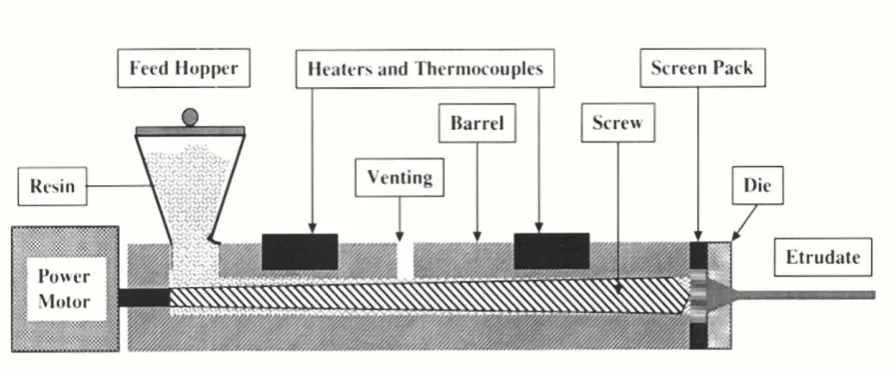
[14]Melt extrusion is essentially the same as the fusion method except that intense mixing
of the components is induced by the extruder. When compared to melting in a vessel, the
product stability and dissolution are similar, but melt extrusion offers the potential to shape
the heated drug-matrix mixture into implants, ophthalmic inserts, or oral dosage forms. Just
like in the traditional fusion process, miscibility of drug and matrix can be a problem.
Solubility parameters are investigated to predict the solid-state miscibility and to
select matrices suitable for melt extrusion. High shear forces resulting in high local
temperatures in the extruder be a problem for heat sensitive materials. However, compared to
the traditional fusion method, this technique offers the possibility of continuous production,
which makes it suitable for large-scale production. Furthermore, the product is easier to
handle because at the outlet of the extruder the shape can be adapted to the next processing
Department of Pharmaceutics, Nandha College of Pharmacy, Erode. Page 5 Fig-2
Solvent evaporation method:
[14]The first step in the solvent evaporation method is the preparation of a solution
containing both matrix material and drug. The second step involves the removal of solvent(s)
resulting in formation of a solid dispersion. Mixing at the molecular level is preferred,
because this leads to optimal dissolution properties. Using the solvent method, the
pharmaceutical engineer faces two challenges. The first challenge is to mix both drug and
matrix in one solution, which is difficult when they differ significantly in polarity. To
minimize the drug particle size in the solid dispersion, the drug and matrix have to be
dispersed in the solvent as fine as possible, preferably drug and matrix material are in the
dissolved state in one solution.
Various strategies have been applied to dissolve the lipophilic drug and hydrophilic
matrix material together in one solution. Low drug concentrations are used to dissolve both
drug and matrix material in water, but this requires evaporation of tremendous amounts of
solvent, making the process expensive and impractical. Solubilisers like cyclodextrins or
surfactants like Tween80® increase the aqueous solubility of the drug substantially.
However, the amounts of solubilisers or surfactants in the final product are often
eminent. This results in solid dispersions that, to a significant extent, consist of solubilisers or
[image:12.595.78.526.105.290.2]Department of Pharmaceutics, Nandha College of Pharmacy, Erode. Page 6 decrease of Tg). Moreover, only dosage forms with low drug loads are possible. In addition,
they are not always tolerated well in the body or may even be toxic. Chloroform or
dichloromethane have been used to dissolve both drug and PVP as matrix simultaneously.
These solvents are used also in other preparation methods. However, according to the
ICH-Guidelines, these solvents belong to Class I, comprising the most toxic solvents.
Therefore, the use of these solvents is unacceptable and impractical because the amount of
residual solvent present in the solid dispersion after drying has to be below the detection
limits. The last strategy for the dissolution of both drug and matrix is the use of solvent
mixtures. Water and ethanol, or dichloromethane and ethanol have been used for this
purpose.
However, dissolution of drug and matrix in these mixtures is not always possible in
the required concentration or ratio. The second challenge in the solvent method is to prevent
phase separation, e.g. crystallization of either drug or matrix, during removal of the
solvent(s). Drying at high temperatures speeds up the process and reduces the time available
for phase separation. On the other hand, at high temperatures the molecular mobility of drug
and matrix remains high, favouring phase separation (e.g. crystallization).
To dry the solutions, vacuum drying is often used. The solution is dried by the
application of vacuum and moderate heating. Sometimes, the solvent evaporation is
accelerated by using a rotary evaporator. Afterwards the formed solid dispersion is often
stored in a vacuum desiccator to remove the residual solvent. Vacuum drying at elevated
temperature bears the risk of phase separation because the mobility of drug and matrix
decreases slowly.
Another drying technique is spray drying. The solution is dispersed as fine particles in
hot air. Due to the large specific surface area offered by the droplets, the solvent rapidly
evaporates and the solid dispersion is formed within seconds, which may be fast enough to
prevent phase separation. Moreover, the solid dispersions prepared by spray drying consist of
particles of which the size may be customized by changing the droplet size to meet the
requirements for further processing or application (e.g. free flowing particles or particles for
inhalation). Spray drying usually yields drug in the amorphous state, however sometimes the
Department of Pharmaceutics, Nandha College of Pharmacy, Erode. Page 7 An alternative to these drying techniques is freeze drying. Although it is concluded in
literature that this is a promising and suitable technique to incorporate drug substances in
stabilizing matrices, the technique is poorly exploited for the preparation of solid dispersions.
One of the reasons might be the low freezing temperature of most organic solvents.
Obviously, sublimation during freeze drying is only possible when the solvent stays frozen.
In addition when the formation of a glass is envisaged, the sample temperature
should be kept below the Tg of the maximally freeze concentrated fraction. Therefore, low
sample temperatures are required which slows down the process. Betageri and Makarla used
a condenser temperature of -75°C, to dry a solution with cyclohexanol as the solvent. In table
6 an overview is presented of several organic solvents. To obtain a lyophilization process of
acceptable duration, the solvent should have a sufficiently high vapour pressure. As can be
seen in table 6, dimethylsulphoxide DMSO has a high melting temperature but it has a very
low vapour pressure. Therefore, DMSO is not suitable as a solvent for freeze drying.
A suitable solvent that meets both requirements is 2-methyl-2-propanol or tertiary
butanol (TBA), because it has a high melting temperature as well as a high vapour pressure.
The application of TBA in lyophilization is discussed by Teagarden. Also mixtures of
solvents can be considered. However, in that case the phase diagram of the mixture should be
consulted. For example, while water and DMSO have melting points of 0°C and 19°C, the
mixture has eutectic points below -60°C. The sample temperature of such a mixture should be
kept below this value, which causes a slow sublimation.
An important advantage of freeze drying is that the drug is subjected to minimal thermal
stress during the formation of the solid dispersion. However, the most important advantage of
freeze drying is that the risk of phase separation is minimized as soon as the solution is
vitrified.
An even more promising drying technique is spray-freeze drying. The solvent is sprayed into
liquid nitrogen or cold dry air and the frozen droplets are subsequently lyophilized. The large
surface area and direct contact with the cooling agent result in even faster vitrification,
thereby decreasing the risk for phase separation to a minimum. Moreover, spray freeze drying
offers the potential to customize the size of the particle to make them suitable for further
processing or applications like pulmonary or nasal administration.
Department of Pharmaceutics, Nandha College of Pharmacy, Erode. Page 8 Spray drying is a process where a solution of drug substance and carrier is evaporated
by spraying the solution as a droplet into a chamber that is maintained under controlled
conditions of heat, humidity, and air flow. The dissolution rate of many poorly water-soluble
drugs has been enhanced using spray drying.
Organic solvents are normally used during spray-drying process as they are easy to
evaporate and possess good solvent capacity for many poorly water-soluble drugs. The
morphology form of solid dispersion, and consequently the drug dissolution and stability, can
be impacted by the process parameters and geometry of equipment. For instance, the particle
size of spray-dried solid dispersion can be controlled by varying the concentration of solute in
spray-drying liquid and the droplet size during spray-drying process.
[image:15.595.109.477.283.502.2]Fig-3
Supercritical fluid methods:
[15]Supercritical fluid methods are mostly applied with carbon dioxide (CO2), which is
used as either a solvent for drug and matrix or as an anti-solvent. When supercritical CO2 is
used as solvent, matrix and drug are dissolved and sprayed through a nozzle, into an
expansion vessel with lower pressure and particles are immediately formed. The adiabatic
expansion of the mixture results in rapid cooling. This technique does not require the use of
organic solvents and since CO2 is considered environmentally friendly, this technique is
referred to as ‗solvent free‘. The technique is known as Rapid Expansion of Supercritical
Solution (RESS). However, the application of this technique is very limited, because the
Department of Pharmaceutics, Nandha College of Pharmacy, Erode. Page 9 with increasing polarity. Therefore, scaling up this process to kilogram-scale will be
impractical.
All other supercritical techniques are precipitation methods. Although generally
labelled as solvent-free, all these supercritical fluid methods use organic solvents to dissolve
drug and matrix and exploit the low solubility of pharmaceutical compounds in CO2. In fact,
these techniques represent alternative methods to remove solvents from a solution containing
typically a drug and a polymer. Moneghini and co-workers reported their method as
solvent-free, but they dissolved PEG and carbamazepine in acetone. They used a technique that is
called the Gas-Anti-Solvent technique (GAS) or Precipitation from Gas Saturated Solutions
(PGSS). The solution is brought into contact with compressed CO2. The conditions are
chosen so that CO2 is completely miscible with the solution under supercritical conditions,
whereas drug and matrix will precipitate upon expansion of the solution. When the volume of
the solution expands the solvent strength (i.e. the ability to dissolve the drug) decreases. This
results in precipitation of matrix and drug. Since this technique is often applied with PEG as
matrix, this technique results in formation of a solid dispersion with a crystalline matrix
(mostly type II or III).
The second type of precipitation technique involves the spraying of a solution
containing drug and matrix through a nozzle into a vessel that contains a liquid or
supercritical anti-solvent. The supercritical anti-sol droplets, in which drug and matrix
become supersaturated, crystallize and form particles. The general term for this process is
Precipitation with Compressed Anti- Solvent (PCA). More specific examples of PCA are
Supercritical Anti Solvent (SAS) when supercritical CO2 is used, or Aerosol Solvent
Extraction System (ASES), and Solution Enhanced Dispersion by Supercritical fluids
(SEDS).
However, as with the other solvent techniques described in the previous section, the
critical step in these precipitation techniques might be the dissolution of drug and matrix in
one solution. The use of water is limited, because the water solubility in compressed CO2 is
limited. Usually organic solvents like dichloromethane or methanol have to be applied to
Department of Pharmaceutics, Nandha College of Pharmacy, Erode. Page 10
Other methods:
Evaporative precipitation into aqueous solutions (EPAS) was used to coat a colloidal
suspension of carbamazepine with block-copolymers as stabilizing surfactants. A solution of
drug in dichloromethane was sprayed in an aqueous solution containing polymeric surfactants
as stabilizers. The obtained colloidal suspension was spray dried, freeze dried or spray freeze
dried, resulting in solid dispersions of type IV/V. It was concluded that the amorphous state
of the drug was best preserved with the spray freeze drying process.
In another process called supercritical fluid impregnation, the drug is dissolved in a
supercritical fluid and exposed to solid matrix material that swells and absorbs the
supercritical solution. By varying the pressure and the time of exposure, the diffusion process
can be controlled. The absorption stops when the pressure is reduced. This process is
investigated for polymethyl methacrylate but can be applied for other polymers as well.
In an electrostatic spinning process a drug-matrix solution is pumped through an
orifice and then subjected to an electrical field to form fibres with a diameter of micro- or
nano-scale. This process is restricted to a limited amount of matrices, because only a few
high molecular weight materials are fibre forming materials. The fibre diameter can be
adjusted by surface tension, electrical field and dielectric constant. After rapid evaporation of
the solvent, the fibres can be directly used or milled and further processed.
Carriers:
[11, 13]Selection criteria for polymeric carriers:
- High Tg
- Super saturation potential
- screening studies from DMSO, DMF in aqueous carrier solutions
- Possibility of interactions with drug
- Solid state solubility (miscibility) of drug in the carrier (molecular dispersion)
- phase behavior studies (―one Tg‖) films
- Theoretical models (e.g. Flory-Huggins)
- Solubility in monomers (e.g. NMP)
- Ternary phase diagrams
- Solubility in water (organic solvents depending on manufacturing process)
Department of Pharmaceutics, Nandha College of Pharmacy, Erode. Page 11
Type of carriers:
Sugars: Dextrose, Sucrose, galactose, Sorbitol, Maltose, Xylitol, Mannitol, lactose.
Acids: Citric acid, Succinic acid.
Poymeric Materials: Povidone, PVP, PEG, HPMC, Methyl Cellulose, HEC, Cyclo dextrins,
HPC, Pecttin.
Insoluble and Enteric Polymers: HPMC phthalate, Eudragit L-100, Eudragit S-100, Eudragit
RL, and RS.
Surfactants: Polyoxy Etthylene Stearate, Renex poloxamer 188, Texafor AIP, Deoxycholic
acid, Tweens, Spans.
Miscellaneous: Penta erithrytol, Penta erithryl tetra acetate, Urea, Urethane, Hydroxy alkyl
Xanthins.
Current Trends in Solid dispersions:
[2]In recent years due to application of combinational chemistry and high-throughput
screening during drug discovery, a majority of new drug candidates exhibits poor aqueous
solubility, compounds to be very challenging for formulation scientists in development of
bioavailable dosage forms for such.
A poorly water soluble compound has classically been defined as one dissolving in
less than 1part per 10000 part of water.A poorly water soluble drug, more recently, has been
defined in general terms to require more time to dissolve in the gastrointestinal fluid than it
take to be absorbed in the gastrointestinal tract. Thus a greater understanding of dissolution
and absorption behaviors of drugs with low aqueous solubility is required to successfully
formulate them into bioavailable drug products.
Although salt formation, particle size reduction, etc. have commonly been used to
increase dissolution rate of the drug, there are practical limitation with these techniques the
desired bioavailability enhancement may not always be achieved. Therefore formulation
approaches are being explored to enhance bioavailability of poorly water-soluble drugs. One
such formulation approach that has been shown to significantly enhance absorption of such
drugs is to formulate/prepare solid dispersion.
Chiou and Riegelman defined the term solid dispersion as “a dispersion involving
the formation of eutectic mixtures of drugs with water soluble carriers by melting of
Department of Pharmaceutics, Nandha College of Pharmacy, Erode. Page 12 The term solid dispersion refers to the dispersion of one or more active ingredient in
an inert carrier or matrix at solid state prepared by melting (fusion), solvent, or the melting
solvent method. Sekiguchi and Obi suggested that the drug was present in a eutectic mixture
in a microcrystalline state, after few years Goldberg et.al. Reported that all drug in solid
dispersion might not necessarily be presents in a microcrystalline state, a certain fraction of
the drug might be molecular dispersion in the matrix, thereby forming a solid solution.
Once the solid dispersion was exposed to aqueous media & the carrier dissolved, the
drug was released as very fine, colloidal particles. Because of greatly enhanced surface area
obtained in this way, the dissolution rate and the bioavailability of poorly water-soluble drugs
were expected to be high. The commercial use of such systems has been limited primarily
because of manufacturing problems with solid dispersion systems may be overcome by using
surface active and self-emulsifying carriers. The carriers are melted at elevated temperatures
and the drugs are dissolved in molten carriers.
Surface-active agents are substances that at low concentrations adsorb onto the
surfaces or interfaces of a system and alter the surface or interfacial free energy and the
surface and the interfacial tension. Surface-active agents have a characteristic structure,
possessing both polar (hydrophilic) and non-polar (hydrophobic) regions in the same
molecule. The surface active carriers are said to be amphipathic in nature.
Surface active carriers uses in Pharmaceutical preparation:
[9]Because of their unique functional properties, surface active carriers find a wide range
of uses in pharmaceutical preparations. These include, depending on the type of product,
improving the solubility or stability of the drug in the liquid preparation, stabilizing and
modifying the texture of semisolid preparations, or altering the flow properties of the final
tablet dosage form. In addition to their use as excipients to improve the physical and
chemical characteristics of the formulation, surface active carriers may be included to
improve the efficacy or the bio performance of the product.
The properties of surfactant are such that they can alter the thermodynamic activity,
solubility, diffusion, disintegration, and dissolution rate of a drug. Each of these parameters
influences the rate and extent of drug absorption. Furthermore, surface active carriers can
exert direct effects on biological membranes thus altering drug transport across the
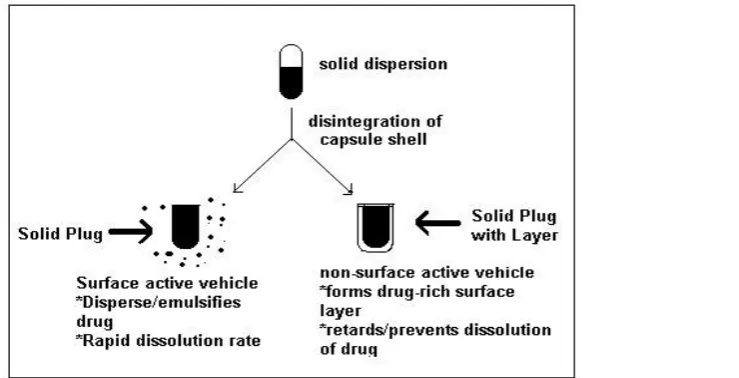
Department of Pharmaceutics, Nandha College of Pharmacy, Erode. Page 13 The advantage of a surface-active carrier over a non-surface-active one in the
dissolution of drug from a capsule formulation is shown schematically in Figure below. The
physical state of drug if a solid dispersion must, however, is carefully considered an
evaluating the advantage of a surface-active vehicle. As mentioned earlier, the drug can be
molecularly dispersed in the carrier to form a solid solution or it can be dispersed as particles.
It can also be both partially dissolved and partially dispersed in the carrier.
The potential for the formation of a continuous drug rich surface layer is possibly
greater if the drug is molecularly dispersed, whereas the drug dispersed, as particulates may
be more prone to dissociation from the water-soluble matrix. It is however, rare that the drug
is dispersed just as particulates and is not at least partially dissolved in the vehicle. Therefore,
a surface-active carrier is preferably in almost all cases for the solid dispersion of poorly
[image:20.595.152.522.320.509.2]water-soluble drugs.
Figure: 4 A schematic representation of the comparative dissolution of a poorly
water-soluble drug from surface-active versus non surface-active vehicle.
Block Copolymers as Pharmaceutical Surface active carriers:
The toxicity of many pharmaceutical surface active carriers has led to the search of
more acceptable solubilizers. Soluble surface-active block copolymers of polyoxyethylene
and polyoxypropylene have been used widely in pharmaceuticals and significantly found
favor for such critical applications as emulsifiers for intravenous lipids and as priming agents
for heart lung apparatus.
A range of commercial block copolymer surface active carriers are available under the
Pluronic, Pluronic R, Tetronic, and pluradot trade names; their preparation and properties
Department of Pharmaceutics, Nandha College of Pharmacy, Erode. Page 14 types are Poloxamer, Meroxapols and Poloxamine, respectively, there being no equivalent
name for the plurodot compounds.
Poloxamers are polyoxyethylene-polyoxypropylene-polyoxyethylene (ABA) block
copolymers; The Meroxapols are polyoxypropylene-polyoxyethylene- polyoxypropylene
(BAB) copolymers; The Poloxamine structure, (AB)2NCH2CH2N(BA) 2, is in full form as
below.
[H (C2H4O) a (C3H6O) b]2NCH2CH2N[(C3H6O)b (C2H4O)aH]2
The Poloxamers have been most widely studied to date, yet there has been
considerable confusion in the literature over the exact nature of their colloidal behavior, in
particular whether micelles are formed. Recently, surface tension measurement on a series of
Poloxamers in aqueous solution and photon correlation spectroscopy has helped to resolve
some of these problems, but as benefits their structure their behavior patterns tend to be
complex.
At low concentrations, approximating those at which more conventional nonionic
detergents form micelles, the Poloxamers monomers are thought to form monomolecular
micelles by a change in configuration in solution. At higher concentration these
monomolecular micelles associate to form aggregates of varying size, which have the ability
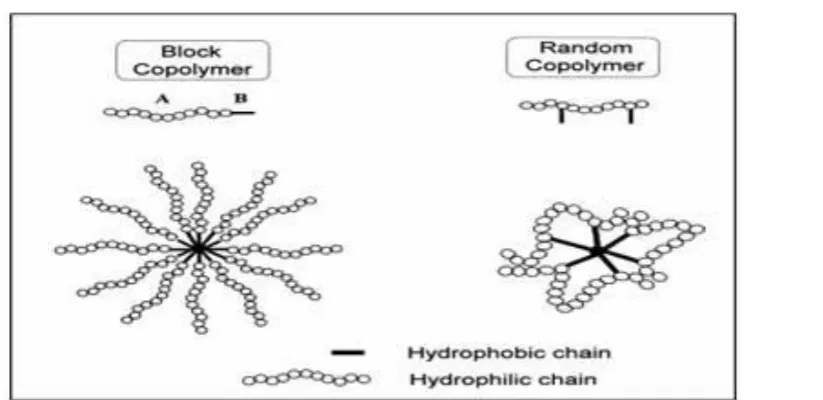
[image:21.595.111.523.439.639.2]to solubilize drugs and to increase the stability of solubilized agents.
Figure: 5 Schematic representations of block and random copolymer micelles
The solubilities of some Para substituted acetanilide in aqueous Poloxamers solutions
increase with increasing ox ethylene content of the polymer, although the more hydrophobic
solutes do not show this trend. The results show that, e.g., 4-nitroacetanilide is less soluble in
Department of Pharmaceutics, Nandha College of Pharmacy, Erode. Page 15 derivatives. Pluronic F68 solubilizes some benzocaine, which above an apparent CMC of
0.23% w/v has a slope for the solubility curve K, of 0.019, i.e., S= SO + K (Csurfactant - CMC)
=SO +0.019(Csurfactant – CMC). The order for solubilization of benzocaine is Triton WR1339
(a tert-octylphenol with ethylene oxide) > Brij 35 > Tetronic 908 > Pluronic F68. At 3%
levels the half-life of benzocaine is increased 4 times by Brij 35 and triton WR1399, but the
limited solubility of benzocaine in Pluronic solutions results in only a marginal increase in
half-life. Pluronic F68 lowers blood viscosity and has been advocated. Intravenous
administration of Pluronic F38 is followed by rapid excretion in the urine; F68 appears in bile
to the extent of 6% of the injected IV dose. Poloxamers 108 (Pluronic F38), although rapidly
phagocytosed, is well tolerated even when administered intravenously in large doses.
Pluronic block copolymers are synthesized by sequential polymerization of propylene
oxide and ethylene oxide. It consists of combined chain of oxyethylene with oxy propylene
where oxyethylene impart hydrophillicity whereas oxypropylene impart lipophilicity. Each
molecule is synthesized as long segment of the hydrophilic portion combined with long
segment of hydrophobic portion referred to as block copolymer. A defining property of
Pluronic is ability of individual block copolymer molecules termed as ―unimers‖ to
self-assemble into micelles in aqueous solution.
The ―unimers‖ form a molecular dispersion in water at block copolymer
concentrations below the critical micelle concentration. At concentration above CMC, the
unimers molecule aggregate, forming micelles with propylene oxide bock in the inner core of
micelles covered by the hydrophilic corona from ethylene oxide block. The water insoluble
compounds are transpired into the propylene core of the micelles.
Block copolymer micelles are aggregates that resemble many properties of micelles
formed by low molecular weight surface active carriers. They are the consequence of a
self-assembling tendency displayed by block copolymers when dissolved in a so-called selective
solvent, which is a good solvent for one of the blocks, but a poor one for the other. Solvent
selectivity and, hence, copolymer self-assembling, have been observed for a variety of block
copolymers in water, polar and non-polar organic solvents and, more recently, in supercritical
fluids.
For this generality and for the possibility of tuning the aggregate properties by
varying either the kind of monomer or the size and proportion of the constituting blocks,
these aggregates are able to provide a much wider range of applications than that observed
for normal surface active carriers, involving solubilization of drugs or pollutants, as
Department of Pharmaceutics, Nandha College of Pharmacy, Erode. Page 16 Limitations of Surface active carrier based Solid Dispersions: [9]
Solid dispersion in surface-active carriers may not be the answer to all bioavailability
problems with poorly water-soluble drug. One of the limitations of bioavailability
enhancement by this method might be the low solubility of drug in available carriers. The
desired dose of a drug cannot be solubilized and filled into the hard gelatin capsules if
adequate solubility in a carrier cannot be obtained.
Dordunoo et alreported that the particle size of a drug in a solid dispersion remained
unchanged if it is just mixed with the carrier instead of dissolving in it. On the other hand, if
the drug is dissolved by heating in excess of its solubility in a carrier under normal storage
condition, it may subsequently crystallize out from the solid dispersion. Either situation
would defect the purpose of bioavailability enhancement of poorly water-soluble drugs by
solid dispersion.
Another possible limitation of the use of surface-active carrier reported by Aungst et
al. is that the bioavailability of a drug may vary depending on the amount of carrier
administered along with it. This variation is because different amounts of a surface-active
carrier may have different solubilization or dispersion effects on a drug in the gastrointestinal
fluid. Serajuddin et al. reported a method whereby the rate and efficiency of dispersion of
drug in aqueous media from different formulations can be studied.
Hydrophilic Polymers:
Polymers like PEG, PVP, UREA has become extremely popular in controlling the
release rate of drugs from solid dosage forms. When a matrix containing a swellable glassy
polymer comes into contact with a solvent, a progressive alteration from the glassy to the
rubbery state leads to a swelling process. For matrix system, drug is often released by
diffusion, because a sort of receding drug boundary comes to exist within the system.
Hydroxypropylmethylcellulose (HPMC) is non-ionic aqueous-soluble cellulose ether
derivative for use in controlled-release dosage forms. Owing to high swellability and high
gelling strength formation this polymer effectively prolongs drug release, which has a
Department of Pharmaceutics, Nandha College of Pharmacy, Erode. Page 17 Newer techniques:
The two important breakthrough in formulation of solid dispersion are, the
development of technologies to fill solid dispersions directly in to hard gelatin capsule and
the ability of surface active & self-emulsifying agents carriers. The technique to fill solid
dispersion directly into hard gelatin capsule as melts, which gets solidify at room
temperature, was first described by Francol‘s & Jones in 1978. But the potential application
of that technique was fully realized by Chatham. For ease of manufacturing the carriers must
be amenable to liquid filling into hard gelatin capsules as melts. The melting temperature of
carriers should be such that the solutions do not exceed ~70°C which is the maximum
acceptable temperature for hard gelatin capsule shells.
The water soluble carriers dissolves more rapidly than the drug, the drug rich layer
has to form over the surface of dissolving plug, which prevent further dissolution of drug
from solid dispersion because of this directly filled hard gelatin capsule is not a good method
of preparation of solid dispersion unless the formation of drug rich layer on the surface of
dissolving plug can be prevented.
The self-emulsifying agent will act as dispersing or self –emulsifying agent on drug
through which the dissolution of drug can be increase by preventing the formation of any
water insoluble surface layer, although the liberated drug remain un dissolved in the
dissolution medium. When its concentration exceeded its saturation solubility, it will disperse
or emulsify into a finely divided state because of the surface activity of the dissolved vehicle
the high surface area will be made available which will facilitate its dissolution in
gastrointestinal fluid.
Serajuddin et al. has also studied improve dissolution of dispersions of REV-5901. He
prepared solid dispersion of poorly water-soluble REV-5901 (alpha-pentyl-3-
(2-quinolinylmethoxy) benzene methanol) in various PEG‘s & in Gelucire®
44/14filled in to
hard gelatin capsule, Gelucire® 44/14 formulation were able to promote complete & rapid
drug dispersion in water & simulated gastric fluid. The PEG‘s formulations by contrast were
only effective in achieving partial drug dispersion. When the formulation with Gelucire®
44/14 can be filled into soft gelatin capsule without any change in solubilization
characteristic of REV-5901 conversely the formulation with PEG-400 gives rise to drug
crystallization due to water migration from the gelatin envelop to the fill, which lead to a
Department of Pharmaceutics, Nandha College of Pharmacy, Erode. Page 18 The most commonly used surface-active carrier is Gelucire® 44/14 & other grades of
Gelucire® the carriers are prepared to have a high melting point but not more than 70 C so as
to compatible to be filled in hard gelatin capsule. The grades of Gelucire® denote different no
like Gelucire® 44/14, Gelucire® 50/13 in that first digit denote the melting point of carrier and
second digit denote HLB value of carrier, on which the grades are differentiated & used as
per for its different applications. Gelucire® 44/14 is a mixture of glyceryl & PEG-1500 ester
of long-chain fatty acid & is official in European pharmacopoeia as a lauryl
macrogolglycerides.
Dordunoo et al studied the effect of Gelucire® 44/14 for improving the solubility of
Temazepam in comparison with various PEG‘s & found Gelucire®
44/14 has shown large
increase in its water solubility. Dordunoo et al has also studied the comparative dissolution of
the hard gelatin capsule contain 12.5% of Triamterene dispersion in various PEG‘s or in
Gelucire® 44/14 with that of capsule containing the drug alone. The result of dissolution
studies shown that dissolution of Triamterene without excipients was limited up to 30% only
& with Gelucire® 44/14 or PEG-1000 was found to be 100% of active ingredient in less than
an hour.
For in-vivo study Aungst B.J. et al & his co-worker has work on improvement of oral
bio-availability of an HIV Protease inhibitor using Gelucire® 44/14 & Labrasol vehicle.
DMP-323 is an HIV-Protease inhibitor exhibiting poor water solubility (< 10
micrograms /ml.). Aungst et al measured the apparent solubility of DMP-323 in aqueous
dispersion of Gelucire® 44/14 or PEG-400 as a function of excipients concentration Gelucire®
clearly improved the apparent solubility of drug while PEG-400 had no solubilization effect
on the drug.
Chen et al improved the dissolution and bioavailability of ABT-963, a poorly water-soluble
compound by preparing solid dispersion using Pluronic F-68 as a carrier by evaporation and
hot melt method. The results show that solid dispersion is a promising approach for
increasing oral bioavailability.
Passerini et al prepared granules containing Ibuprofen, a poorly soluble model drug
by melt granulation. The aim was to improve dissolution and its availability; using lactose as
a diluent and Poloxamer 188 (Lutrol F68) as a new metastable hydrophilic binder. In the
conclusion, it was suggested that melt granulation technique is an easy and a fast method to
improve the dissolution rate of ibuprofen, using Poloxamer 188 as a new hydrophilic
Department of Pharmaceutics, Nandha College of Pharmacy, Erode. Page 19 Vippagunta et al characterized the nature and solid state properties of solid dispersion
system of Nifedipine in a polymer matrix consisting of Pluronic F 68 and Gelucire 50/13 in
1:1:1 ratio. The results indicate that the Nifedipine solid dispersion is physically stable. The
release of Nifedipine was faster in solid dispersion than pure crystalline drug of the same
[image:26.595.108.494.221.716.2]particle.
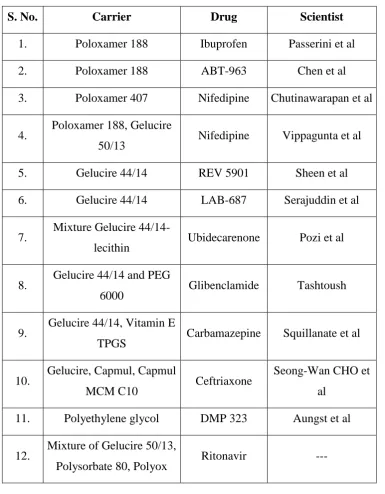
Table: 1 Examples of surface-active carriers used for dissolution enhancement.
S. No. Carrier Drug Scientist
1. Poloxamer 188 Ibuprofen Passerini et al
2. Poloxamer 188 ABT-963 Chen et al
3. Poloxamer 407 Nifedipine Chutinawarapan et al
4. Poloxamer 188, Gelucire
50/13 Nifedipine Vippagunta et al
5. Gelucire 44/14 REV 5901 Sheen et al
6. Gelucire 44/14 LAB-687 Serajuddin et al
7. Mixture Gelucire
44/14-lecithin Ubidecarenone Pozi et al
8. Gelucire 44/14 and PEG
6000 Glibenclamide Tashtoush
9. Gelucire 44/14, Vitamin E
TPGS Carbamazepine Squillanate et al
10. Gelucire, Capmul, Capmul
MCM C10 Ceftriaxone
Seong-Wan CHO et
al
11. Polyethylene glycol DMP 323 Aungst et al
12. Mixture of Gelucire 50/13,
Department of Pharmaceutics, Nandha College of Pharmacy, Erode. Page 20 Future Prospects: [15]
Despite many advantages of solid dispersion, issues related to preparation,
reproducibility, formulation, scale up, and stability limited its use in commercial dosage
forms for poorly water-soluble drugs. Successful developments of solid dispersion systems
for preclinical, clinical and commercial use have been feasible in recent years due to the
availability of surface-active and self-emulsifying carriers with relatively low melting points.
The preparation of dosage forms involves the dissolving of drugs in melted carriers and the
filling of the hot solutions into gelatin capsules.
Because of the simplicity of manufacturing and scale up processes, the
physicochemical properties and as expected to change significantly during the scale up. For
this reason, the popularity of the solid dispersion systems to solve difficult bioavailability
issues with respect to poorly water-soluble drugs will grow rapidly. Because the dosage form
can be developed and prepared using small amounts of drugs substances in early substances
in early stages of the drug development process, the system might have an advantage over
such other commonly used bioavailability enhancement techniques as micronization of drugs
and soft gelatin encapsulation.
One major focus of future research will be identification of new surface-active
carriers and self-emulsifying carriers for solid dispersion. Only a small number of such
carriers are currently available for oral use. Some carriers that are used for topical application
of drug only may be qualified for oral use by conducting appropriate toxicological testing.
One limitation in the development of solid dispersion system may be the inadequate drug
solubility in carriers, so a wider choice will increase the success of dosage form development.
Research should also be directed toward identification of vehicles or excipients that
would retard or prevent crystallization of drugs from supersaturated systems. Attention
should also be given to any physiological and pharmacological effects of carriers used. Many
of the surface-active and self-emulsifying carriers are lipid in nature, so potential roles of
such carriers on drug absorption, especially on their p-glycoprotein-mediated drug efflux,
will require careful consideration. In addition to bioavailability enhancement, much recent
research on solid dispersion systems was directed towards the development of
extended-release dosage forms. It may be pointed out that this area of research has been reinvigorated
Department of Pharmaceutics, Nandha College of Pharmacy, Erode. Page 21 capsule filling processes. Because the formulation of solid dispersion for bioavailability
enhancement and extended release of drugs may employ essentially similar processes, except
for the use of slower dissolving carriers for the later use, it is expected that the research in
Department of Pharmaceutics, Nandha College of Pharmacy, Erode. Page 22
Introduction to HIV / AIDS
Introduction:
[4, 5]Drugs which are active against human immune deficiency virus (HIV) which is a
retro virus. These are useful in prolonging and improving the quality of life and postponing
complications of acquired immune deficiency syndrome (AIDS) or AIDS related complex
(ARC), but do not cure the infection. The clinical efficiency is monitored primarily by plasma
HIV – RNA assays and CD4 lymphocyte count carried out at regular intervals.
Classification:
1) Nucleoside reverse transcriptase inhibitors ( NRTI’S):
Zidovudine, Didanosine, Stavudine, Lamivudine. Are the drugs comes under
this classification.
2) non – nucleoside reverse transcriptase inhibitors:
Nevirapine, Efavirenz. Are the drugs comes this under classification.
3) retroviral protease inhibitor (PI’S):
Indinavir, Neflinavir, Saquinavir, Ritonavir, Lopinavir. Are the drugs comes
this under classification.
Mechanism of action
: Retroviral protease inhibitors: Lopinavir:
An aspartic protease enzyme encoded by HIV is involved in the
production of structural proteins and enzymes (including reverse
transcriptase) of the virus.
The large viral poly protein in broken into various functional
components by this enzyme.
This protease acts as a late step in HIV replication, i.e. Maturation of
the new virus particles when the RNA genomes acquire the core
proteins and enzymes.
These protease inhibitors bind to protease molecule, interfere with its
Department of Pharmaceutics, Nandha College of Pharmacy, Erode. Page 23 Under the influence of both newly and chronic infected cells HIV –
infected cells produce immature noninfectious viral progeny. This
leads to viral replication prevention.
Symptoms:
Dizziness Mood changes Depression Anxiety Paraxoia Fatigue Weakness
Frequent urination Increased thirst Nausea and vomiting Additional pain Tiredness
Abnormal heart beat Weight loss
Jaundice Fever tuberculosis
Pathophysiology:
[5]Cells affected:
The virus entering through which ever route, acts primarily on following cells
Lymph reticular system:
CD4 T – helper, Macrophages, Monocytes, β- Lymphocytes
,
Department of Pharmaceutics, Nandha College of Pharmacy, Erode. Page 24 Central nervous system:
Microglia of nervous system, Astrocytes, Oligodendrocytes, Neurons.
Diagnosis:
WHO:
Stage – I: HIV infection is a symptomatic and not categorized as AIDS.
Stage – II:
Includes minor mucocutaneous manifestations and recurrent upper respiratory tract
infection.
Stage – III:
Includes unexplained chronic diarrhea for longer than a month, severe bacterial
infections and pulmonary tuberculosis.
Stage – IV:
Includes toxoplasmosis of the brain, candidiasis of the esophagus, trachea,
bronchi/lungs and kaposis sarcoma. These diseases are indicators of AIDS.
Antibody tests:
HIV Antibody tests are specifically designed for routine diagnostic testing of adults;
these tests are inexpensive and extremely accurate.
Window period
Antibody tests may give false negative (no antibodies were detected despite the
presence of HIV) results during the window period, an interval of three weeks to six months
between the time of HIV infection and the production of measurable antibodies to
HIV seroconversion. Most people develop detectable antibodies approximately 30 days after
infection, although some seroconvert later. The vast majority of people (97%) have detectable
antibodies by three months after HIV infection; a six-month window is extremely rare with
modern antibody testing. During the window period, an infected person can transmit HIV to
others although their HIV infection may not be detectable with an antibody
Department of Pharmaceutics, Nandha College of Pharmacy, Erode. Page 25 and extend the window period beyond 12 months. This was not the case with patients that
underwent treatment with post exposure prophylaxis (PEP). Those patients must take ELISA
tests at various intervals after the usual 28 day course of treatment, sometimes extending
outside of the conservative window period of 6 months. Antibody tests may also yield false
negative results in patients with X-linked agammaglobulinemia; other diagnostic tests should
be used in such patients.
Three instances of delayed HIV seroconversion occurring in health-care workers have
been reported; in these instances, the health-care workers tested negative for
HIV antibodies greater than 6 months post exposure but were seropositive within 12 months
after the exposure. DNA sequencing confirmed the source of infection in one instance. Two
of the delayed seroconversions were associated with simultaneous exposure to hepatitis
C virus (HCV). In one case, co-infection was associated with a rapidly fatal HCV disease
course; however, it is not known whether HCV directly influences the risk for or course
of HIV infection or is a marker for other exposure-related factors.
ELISA:
The enzyme-linked immunosorbent assay (ELISA), or enzyme immunoassay (EIA),
was the first screening test commonly employed for HIV. It has a high sensitivity.
In an ELISA test, a person's serum is diluted 400-fold and applied to a plate to which
HIV antigens have been attached. If antibodies to HIV are present in the serum, they may
bind to these HIV antigens. The plate is then washed to remove all other components of the
serum. A specially prepared "secondary antibody" — an antibody that binds to human
antibodies is then applied to the plate, followed by another wash. This secondary antibody is
chemically linked in advance to an enzyme. Thus the plate will contain enzyme in proportion
to the amount of secondary antibody bound to the plate. A substrate for the enzyme is
applied, and catalysis by the enzyme leads to a change in color or fluorescence. ELISA
results are reported as a number; the most controversial aspect of this test is determining the
"cut-off" point between a positive and negative result.
Western blot:
Like the ELISA procedure, the western blot is an antibody detection test. However,
unlike the ELISA method, the viral proteins are separated first and immobilized. In
Department of Pharmaceutics, Nandha College of Pharmacy, Erode. Page 26 Specifically, cells that may be HIV-infected are opened and the proteins within are
placed into a slab of gel, to which an electrical current is applied. Different proteins will
move with different velocities in this field, depending on their size, while their electrical
charge is leveled by a surfactant called sodiumlaurylsulfate. Some commercially prepared
Western blot test kits contain the HIV proteins an already on a cellulose acetate strip. Once
the proteins are well-separated, they are transferred to a membrane and the procedure
continues similar to an ELISA: the person's diluted serum is applied to the membrane and
antibodies in the serum may attach to some of the HIV proteins. Antibodies that do not attach
are washed away, and enzyme-linked antibodies with the capability to attach to the person's
antibodies determine to which HIV proteins the person has antibodies.
There are no universal criteria for interpreting the western blot test: The number of
viral bands that must be present may vary. If no viral bands are detected, the result is
negative. If at least one viral band for each of the GAG, POL, and ENV gene-product groups
is present, the result is positive. The three-gene-product approach to western blot
interpretation has not been adopted for public health or clinical practice. Tests in which less
than the required number of viral bands is detected are reported as indeterminate: a person
who has an indeterminate result should be retested, as later tests may be more conclusive.
Almost all HIV-infected persons with indeterminate western blot results will develop a
positive result when tested in one month; persistently indeterminate results over a period of
six months suggest the results are not due to HIV infection. In a generally healthy low-risk
population, indeterminate results on western blot occur on the order of 1 in 5,000 patients:
However for those individuals that have had high-risk exposures to individuals where HIV-2
is most prevalent, Western Africa, an inconclusive western blot test may prove infection with
HIV-2.
The HIV proteins used in western blotting can be produced by recombinant DNA in a
technique called recombinant immunoblot assay (RIBA)
Rapid or point-of-care tests:
Rapid antibody tests are qualitative immunoassays intended for use as a point of care
test to aid in the diagnosis of HIV infection. These tests should be used in conjunction with
the clinical status, history, and risk factors of the person being tested. The positive predictive
Department of Pharmaceutics, Nandha College of Pharmacy, Erode. Page 27 should be used in appropriate multi-test algorithms designed for statistical validation of rapid
HIV test results.
If no antibodies to HIV are detected, this does not mean the person has not been
infected with HIV. It may take several months after HIV infection for the antibody response
to reach detectable levels, during which time rapid testing for antibodies to HIV will not be
indicative of true infection status. For most people, HIV antibodies reach a detectable level
after two to six weeks.
Although these tests have high specificity, false positives do occur. Any positive test result
should be confirmed by a lab using the western blot.
Home Access Express HIV-1 Test It is the only FDA-approved home test: the patient
collects a few blood drops from a finger stick, and mails the sample to a laboratory; results
and counseling are obtained over the phone. All results are anonymous and confirmed before
they are released.
OraQuick is an antibody test that provides results in 20 minutes. The blood, plasma or oral
fluid is mixed in a vial with developing solution, and the results are read from a sticklike
testing device. Usually detects HIV 1 and HIV 2.
Orasure is an HIV test that uses mucosal transudate from the tissues of cheeks and gums. It
is an antibody test that first employs ELISA, then western blot.
Uni-Gold is a rapid HIV antibody test that provides results in 10–12 minutes. A drop of
blood is placed on the device with developing solution. Uni-Gold is only FDA approved to
test for HIV 1.
Clear view Complete HIV 1/2 and Clear view HIV 1/2 Stat-Pak are rapid tests for the
detection of HIV 1 and HIV 2 antibodies in blood, serum, or plasma samples. Results are
provided within 15 minutes.
There is also a urine test; it employs both the ELISA and the western blot techniques.
I Diagnostics Rapid HIV Test is, according only to their website, a non-FDA-approved
home test. The company sells a blood test and a urine test produced by Intec PRODUCTS,
INC. Similar to a home pregnancy test the patient collects a drop of blood/urine and drops the
sample onto a cassette. Results are read visually in 15 minutes. The accuracy of this test has
Department of Pharmaceutics, Nandha College of Pharmacy, Erode. Page 28 The INSTI HIV-1/HIV-2 Rapid Antibody Test is a rapid in vitro qualitative test for the
detection of antibodies to Human Immunodeficiency Virus Type 1 in human whole blood,
serum or plasma. The test is intended for use by trained personnel in medical facilities,
clinical laboratories, emergency care situations, and physicians' offices as a screening assay
capable of providing test results in less than 60 seconds. The assay is packaged as a kit
containing INSTI Membrane Units, Sample Diluent, Color Developer and Clarifying
Solution, and is available in point-of-care use packaging, or packaging suitable for laboratory
use.
Reveal HIV is a rapid in vitro qualitative test for the detection of antibodies to HIV in whole blood, serum or plasma. Reveal is among the fastest rapid HIV test available and it detects
signs of early infection better than some other rapid tests. Reveal HIV is approved in Canada,
the United States, Europe, Africa, Asia, and South America.
Interpreting antibody tests:
ELISA testing alone cannot be used to diagnose HIV, even if the test suggests a high
probability that antibody to HIV-1 is present. In the United States, such ELISA results are not
reported as "positive" unless confirmed by a Western Blot.
The ELISA antibody tests were developed to provide a high level of confidence that
donated blood was NOT infected with HIV. It is therefore not possible to conclude that blood
rejected for transfusion because of a positive ELISA antibody test is in fact infected with
HIV. Sometimes, retesting the donor in several months will produce a negative ELISA
antibody test. This is why a confirmatory Western Blot is always used before reporting a
"positive" HIV test result.
Rare false positive results due to factors unrelated to HIV exposure are found more
often with the ELISA test than with the Western Blot. False positives may be associated with
medical conditions such as recent acute illnesses and allergies. A rash of false positive tests in
the fall of 1991 was initially blamed on the influenza vaccines used during that flu season,
but further investigation traced the cross-reactivity to several relatively non-specific test
kits. A false positive result does not indicate a condition of significant risk to health. When
the ELISA test is combined with Western Blot, the rate of false positives is extremely low,
and diagnostic accuracy is very high (see below).
HIV antibody tests are highly sensitive, meaning they react preferentially with HIV
Department of Pharmaceutics, Nandha College of Pharmacy, Erode. Page 29 by HIV. Risk history, and clinical judgment should be included in the assessment, and a
confirmation test (Western blot) should be administered. An individual with an inconclusive
test should be re-tested at a later date.
Antigens test:
The p24 antigen test detects the presence of the p24protein of HIV (also known as
CA), the capsid protein of the virus. Monoclonal antibodies specific to the p24 protein are
mixed with the person's blood. Any p24 protein in the person's blood will stick to the
monoclonal antibody and an enzyme-linked antibody to the monoclonal antibodies to p24
causes a color change if p24 was present in the sample.
This test is no longer used routinely in the US [2] or the EU [3] to screen blood
donations since the objective was to reduce the risk of false negatives in the window period.
Nucleic acid testing (NAT) is more effective for this purpose, and p24 antigen testing is no
longer indicated if a NAT test is performed. The p24 antigen test is not useful for general
diagnostics, as it has very low sensitivity and only works during a certain time period after
infection before the body produces antibodies to the p24 protein
Nucleic-acid-based tests:
Nucleic-acid-based tests amplify and detect one or more of several target sequences
located in specific HIV genes, such as I GAG, II GAG, env, or the
HIV-pol. Since these tests are relatively expensive, the blood is screened by first pooling some
8-24 samples and testing these together; if the pool tests positive, each sample is retested
individually. Although this results in a dramatic decrease in cost, the dilution of the virus in
the pooled samples decreases the effective sensitivity of the test, lengthening the window
period by 4 days (assuming a 20-fold dilution, ~20hr virus doubling time, detection limit 50
copies/ml, making limit of detection 1,000 copies/ml). Since 2001, donated blood in
the United S
![Supercritical fluid methods: Fig-3 [15]](https://thumb-us.123doks.com/thumbv2/123dok_us/542317.72920/15.595.109.477.283.502/supercritical-fluid-methods-fig.webp)