A STUDY ON
SWETHA KUTTAM
the dissertation Submitted by
Reg.No.32101103
under the Guidance of
Prof.Dr.K.ANAGAVALLI M.D.(S)
Submitted to
THE TAMILNADU DR. MGR MEDICAL UNIVERSITY
Chennai
In partial fulfillment of the requirements
For the award of the degree of
SIDDHA MARUTHUVA PERARIGNAR
DOCTOR OF MEDICINE (SIDDHA)
BRANCH-I MARUTHUVAM
POST GRADUATE DEPARTMENT OF MARUTHUVAM
THE GOVERNMENT SIDDHA MEDICAL COLLEGE
CHENNAI - 106.
ACKNOWLEDGEMENT
My humble thanks to the Almighty God for giving me the opportunity do this dissertation.
I also express my thanks to Siddhars who had blessed and guided me in all my efforts to complete this dissertation.
It is my duty to acknowledge my gratitude to the respected
Prof.V.Banumathi M.D(s), Principal In-charge, Government Siddha Medical College, Chennai -600106, for permitting me to utilize the clinical material of this hospital and helpful in completing my dissertation.
It is my duty to express my gratitude to the respected Prof.P.Parthibhan
M.D(s), Head of the Department, Post Graduate (Maruthuvam) for his guideness, inspiration, unending patience, and his encouragement throughout the course of my studies.
I feel pleasure to offer my deep sense of gratitude to respected
Prof.K.Kanagavalli M.D(s), Head of the Department, Under Graduate (Maruthuvam), for her concern suggestion, supervision and helped as a guide for preclinical and clinical study and submitting this dissertation book with perfection.
I wish to extend my thanks to Dr.R.Menaka M.D(s) and Dr.U.Chitra
M.D(s) Lecturer for their valuable suggestions in completing the dissertation work.
I am very much happy to thank Dr.Sasirekha, M.D., (s) and Dr.Punitha, M.D., (s) for her kind opinion in this dissertatioin work.
I express my cordial thanks to Prof.Subburagavelu M.D, Modern Medicine Professor, M.M.C, Cheenai, for his heip during the study.
I express my thanks to Prof. Selvaraj, Head of the Department, Bio chemistry, Government Siddha Medical college, Chennai, who helped me for qualitative analysis of trial medicine.
I express my special thanks to Dr.Vidhya M.B.B.S., D.M.R.D., for her immense help in modern aspect of diagnosis.
I express my sincere thanks to Prof.Dr.JAnbu,M.Pharm, Ph.d, Vels College of pharmacy and Prof. Dr.K.Kanagavalli M.D(S), Government Siddha Medical College, Chennai,for their guidance in doing Pharmacological studies.
I would like to convey my special thanks to Dr.Manivasakam, B.S.M.S.,
Satistician, Chennai.
I like to thank all my patients who have given their consent to record their case materials and their co-operation.
Finally, I take this opportunity to thank my beloved family members,Collegues and my beloved friends for their encouragement and support in completing the dissertation.
S.NO. CONTENTS PAGE NO.
1. INTRODUCTION 1
2. AIM AND OBJECTIVE 4
3. REVIEW OF LITERATURE
SIDDHA ASPECTS 5
MODERN ASPECTS 32
4. TRIAL DRUGS 52
5. MATERIALS AND METHODS (PROTOCAL) 56
6. RESULTS AND OBSERVATION 60
7. DISCUSSION 80
8. SUMMARY 85
9. CONCLUSION 87
10. ANNEXURES
CHEMICAL ANALYSIS 88
TOXICOLOGICAL STUDY 92
PHARMACOLOGICAL STUDY 104
BIO STATISTICS 119
CONSENT FORM 122
CASE SHEET PROFORMA 124
1
INTRODUCTION
“kWg;gJ cly; Neha; kUe;njdyhFk;
“kWg;gJ cly; Neha; kUe;njdyhFk;
“kWg;gJ cly; Neha; kUe;njdyhFk;
“kWg;gJ cly; Neha; kUe;njdyhFk;
kWg;gJ csNeha; kUe;njdyhFk;
kWg;gJ csNeha; kUe;njdyhFk;
kWg;gJ csNeha; kUe;njdyhFk;
kWg;gJ csNeha; kUe;njdyhFk;
kWg;gJ ,dpNeha; thuhjpUf;f
kWg;gJ ,dpNeha; thuhjpUf;f
kWg;gJ ,dpNeha; thuhjpUf;f
kWg;gJ ,dpNeha; thuhjpUf;f
kWg;gJ rhit kUe;njdyhNk”
kWg;gJ rhit kUe;njdyhNk”
kWg;gJ rhit kUe;njdyhNk”
kWg;gJ rhit kUe;njdyhNk”
-
jpUke;jpuk;
jpUke;jpuk;
jpUke;jpuk;
jpUke;jpuk;
The word siddha comes from the word siddhi which means a perfection or heavenly bliss.
The masters of this ancient medical science are called as ‘Siddha’s. They are greatest spiritual scientists who are highly cultured intellectuals with spiritual insight and personal discipline.
These siddhars evaluvated several approaches (Noi Nadal) and methods of preparation of medicine to provide an optional health and symphony of life to the patient .
Siddhars formulated the drugs through their spiritual intuition, not through their experiments with animals or humans
According to Siddhar’s, medicine is defined as the combination of substances or methods that cures physical and mental ailment and prevent diseases to help mankind to live immortal life.
Siddha system clearly underlines the classic concept of “Pancha Bootha System”
1. The Macro cosum (Universe) 2. The Micro cosum (Body)
2
They hold that the universe is a macro cosum made up of 5 pridominal elements or “Pancha Boothas” viz Nilam (earth), Neer (Water), Neruppu (Fire), Vali (wind) and Veli (Space) and the human being is a micro cosum made up of these 5 elements.
When there is a change in equilibrium of this 5 elements in macro cosum it influence the equilibrium of 5 elements in micro cosum. This imbalance leads to the course of a diseases.
In the present universe, the environment is highly disturbed (imbalanced). The air is polluted, water is contaminated, and food is adulterated. Also the human mind is adulterated at a will. These changes cause several diseases in humans. One such the disease the human are suffering is Swetha Kuttam in modern medicine Swatha Kuttam is related to Leucoderma or Vitiligo.
Even before several centuries siddhar yugi as classified skin disease under a generic name called “Kuttam” as 18 types. Swetha Kuttam is one of them.
• Vitiligo affects 1% of the population
• Common in all races, predominant in dark skin
• The sex incidence is equal
• Onset, usually between 10 and 30 years of age
• The course is unpredictable
• About 30% of patients give a family history.
The author has selected to study the compound “Puvarasam Pattai Kudineer Chooranam” as internal medicine in the treatment of swetha kuttam.
The author has also selected the compound “Nuna Thailam” as external application in the treatment of swetha kuttam.
3
It is because the author has a strong belief in the saying,
“Nth;g;ghU jiog;ghU kpQ;rpdf;fhy;
gw;g nre;Jhuk; ghh;”
The intention of this study of the author is to educate, help, treat and uplift the lives of patients suffering from swetha kuttam. Let the God hear the voices and cries of the suffering.
4
AIM AND OBJECTIVES
Aim:
About 20 to 30% problems in human being pertain to dermatology, lot of interest has been developed in this field. Hence this study was carried out with an intention to study the “Swethakuttam” in various aspects with modern comparison and to formulate an apt treatment that would be given to the patient through Siddha Medicine.
Objectives:
This Scientific work on Swethakuttam was carried out to assess:
1. The incidence of this disease with age, gender, occupation, social, status diet, seasonal variation.
2. To collect the review of the disease dealing with definition, etiology, classification, signs and symptoms, prognosis, treatment and diet for Swethakuttam.
3. To correlate the signs and symptoms of Swethakuttam with that of modern science.
4. To expose siddha diagnostic principles.
5. To find out the quality safety and efficacy of the trail drug by doing - Chemical Analysis
- Acute and sub acute toxicity Studies - Pharmacological Studies
5
REVIEW OF LITERATURE
SIDDHA ASPECTS
Swetha Kuttam
(Swetha – White)
Swetha Kuttam is a Chronic Skin disease Characterized by various sizes of hepo pigmentary patches in the skin.
According to Yugi Munivar classification Swetha Kuttam is one among the 18 types of Kuttam.
Okiz<!hq{qgt<!29z<! Okiz<!hq{qgt<!29z<! Okiz<!hq{qgt<!29z<!
Okiz<!hq{qgt<!29z<!b,gqLeq!hGh<hqe<hc!SOukGm<ml<!NeKb,gqLeq!hGh<hqe<hc!SOukGm<ml<!NeKb,gqLeq!hGh<hqe<hc!SOukGm<ml<!NeKb,gqLeq!hGh<hqe<hc!SOukGm<ml<!NeK!!!!
! ! ! !
“kch<hie!kutkch<hie!kutkch<hie!kutkch<hie!kutfqfqfqxl<!Ohiz<!ouTk<Ks<fqxl<!Ohiz<!ouTk<Ks<xl<!Ohiz<!ouTk<Ks<xl<!Ohiz<!ouTk<Ks<!!!!
sr<uir<gLl<!ouTk<kix<xie< sr<uir<gLl<!ouTk<kix<xie<sr<uir<gLl<!ouTk<kix<xie<
sr<uir<gLl<!ouTk<kix<xie<!!!xqVl<Hl<!xqVl<Hl<xqVl<Hl<!xqVl<Hl<!!!
lch<hig!lbqi<ouTk<ki!zsik<bliGl< lch<hig!lbqi<ouTk<ki!zsik<bliGl<lch<hig!lbqi<ouTk<ki!zsik<bliGl< lch<hig!lbqi<ouTk<ki!zsik<bliGl<!!!!
uiqUkMkt<!tr<jg uiqUkMkt<!tr<jguiqUkMkt<!tr<jg
uiqUkMkt<!tr<jgg<g<g<g<Gkr<Gb<bf<Gkr<Gb<bf<Gkr<Gb<bf<!Gkr<Gb<bf<!!!
ofch<hig!ofVh<Hhm<mK!Ohix<H{<{ib< ofch<hig!ofVh<Hhm<mK!Ohix<H{<{ib<ofch<hig!ofVh<Hhm<mK!Ohix<H{<{ib< ofch<hig!ofVh<Hhm<mK!Ohix<H{<{ib<!!!!
fqxlqVf<ki!zs fqxlqVf<ki!zsfqxlqVf<ki!zs
fqxlqVf<ki!zsiiiik<kqbole<Ox!Bjvg<gizGl<k<kqbole<Ox!Bjvg<gizGl<k<kqbole<Ox!Bjvg<gizGl<k<kqbole<Ox!Bjvg<gizGl<!!!!
ouch<hig!Oleqobz<zil ouch<hig!Oleqobz<zilouch<hig!Oleqobz<zil
ouch<hig!Oleqobz<zil<!ouTk<K!uQr<gqz<<!ouTk<K!uQr<gqz<<!ouTk<K!uQr<gqz<<!ouTk<K!uQr<gqz<!!!!
ou{<SOuk!Gm<mole<Ox!uqtl<hziOl ou{<SOuk!Gm<mole<Ox!uqtl<hziOl ou{<SOuk!Gm<mole<Ox!uqtl<hziOl ou{<SOuk!Gm<mole<Ox!uqtl<hziOl” ! !!
! !!!! !!!! !!!! !!!! !!!! ....b,gq!sqf<kil{q!b,gq!sqf<kil{q!b,gq!sqf<kil{q!b,gq!sqf<kil{q!–!911)hg<gl<!2:9*!!!!911)hg<gl<!2:9*!911)hg<gl<!2:9*!!911)hg<gl<!2:9*!!!!
! !!
6 !
!! !
• kutfqxl<!Ohiz<!ouTh<Hkutfqxl<!Ohiz<!ouTh<H!kutfqxl<!Ohiz<!ouTh<Hkutfqxl<!Ohiz<!ouTh<H!!!
• dkM!dt<tr<jg!ofVh<Hhm<mK!Ohiz<!H{<dkM!dt<tr<jg!ofVh<Hhm<mK!Ohiz<!H{<!dkM!dt<tr<jg!ofVh<Hhm<mK!Ohiz<!H{<dkM!dt<tr<jg!ofVh<Hhm<mK!Ohiz<!H{<!!!
• Oleq!wz<zil<!ouTk<K!uQr<gz<Oleq!wz<zil<!ouTk<K!uQr<gz<!Oleq!wz<zil<!ouTk<K!uQr<gz<Oleq!wz<zil<!ouTk<K!uQr<gz<!!!
• lbqi<!ouTk<kz<lbqi<!ouTk<kz<!lbqi<!ouTk<kz<lbqi<!ouTk<kz<!!!
Siddha literatures states that if the lesions are present in lips, palms soles anal and genital region are incurable.
Pigmentary disease are common and particularly distressing to those with darker skin.
Ofib<!uVl<!upq Ofib<!uVl<!upqOfib<!uVl<!upq
Ofib<!uVl<!upq (Aetiology)!!!!
Aetiological Analysis of Siddha literature
Thirumoolar Karukkidai Vaithiya Nool
u u u
uqbikqBt<!&uiX!uqtr<gqb!Gm<mr<Ogt<qbikqBt<!&uiX!uqtr<gqb!Gm<mr<Ogt<qbikqBt<!&uiX!uqtr<gqb!Gm<mr<Ogt<qbikqBt<!&uiX!uqtr<gqb!Gm<mr<Ogt<!!!!
Sbikqg<!gqvf<kq!gpe<!Olgk<kiZl< Sbikqg<!gqvf<kq!gpe<!Olgk<kiZl<Sbikqg<!gqvf<kq!gpe<!Olgk<kiZl< Sbikqg<!gqvf<kq!gpe<!Olgk<kiZl<!!!!
Hbikq!l{<[tqh<!hzu{<c!eiouzm<M Hbikq!l{<[tqh<!hzu{<c!eiouzm<M Hbikq!l{<[tqh<!hzu{<c!eiouzm<M Hbikq!l{<[tqh<!hzu{<c!eiouzm<M!!!!
fQbikqh<!hPfizib<!fqe<xkqg<!Gm<mOl fQbikqh<!hPfizib<!fqe<xkqg<!Gm<mOl fQbikqh<!hPfizib<!fqe<xkqg<!Gm<mOl fQbikqh<!hPfizib<!fqe<xkqg<!Gm<mOl”!!!!
. kqV&zi<!kqV&zi<!kqV&zi<!kqV&zi<!....!!!!
• Six types of kuttam, are caused by kiranthi noi Meha Noi
• Eight types are caused by Inserts in the soil (l{<[tqh<l{<[tqh<HP?!u{<M*l{<[tqh<l{<[tqh<HP?!u{<M*HP?!u{<M*!HP?!u{<M*!!!
7 According to yugi vaidhya Chindhamani 800
“uqtl<hOu!lqgf<k!duqtl<hOu!lqgf<k!duqtl<hOu!lqgf<k!duqtl<hOu!lqgf<k!d]]]]<{f<ke<!eiZl<<{f<ke<!eiZl<<{f<ke<!eiZl<<{f<ke<!eiZl<!!!!
lqGf<k!sQktk<kiZ!lpx<sq!biZl< lqGf<k!sQktk<kiZ!lpx<sq!biZl<lqGf<k!sQktk<kiZ!lpx<sq!biZl< lqGf<k!sQktk<kiZ!lpx<sq!biZl<!!!!
utl<hOu!lf<kk<kiz<!uif<kq!biZl< utl<hOu!lf<kk<kiz<!uif<kq!biZl<utl<hOu!lf<kk<kiz<!uif<kq!biZl< utl<hOu!lf<kk<kiz<!uif<kq!biZl<!!!!
lgk<kie!oh{<O{iM!lVuziZl< lgk<kie!oh{<O{iM!lVuziZl<lgk<kie!oh{<O{iM!lVuziZl< lgk<kie!oh{<O{iM!lVuziZl<!!!!
gqtl<hOu!gqOzsr<ge<!lqGkziZl< gqtl<hOu!gqOzsr<ge<!lqGkziZl<gqtl<hOu!gqOzsr<ge<!lqGkziZl< gqtl<hOu!gqOzsr<ge<!lqGkziZl<!!!!
ogcbie!Uxg<gr<gt!jm ogcbie!Uxg<gr<gt!jmogcbie!Uxg<gr<gt!jm
ogcbie!Uxg<gr<gt!jmukziZl<ukziZl<ukziZl<ukziZl<!!!!
ktl<hOu!lbqVgx<gt<!kuqM!l{<gt< ktl<hOu!lbqVgx<gt<!kuqM!l{<gt<ktl<hOu!lbqVgx<gt<!kuqM!l{<gt< ktl<hOu!lbqVgx<gt<!kuqM!l{<gt<!!!!
sikk<kqx<!hVgziz<!lqGg<Gr<!G sikk<kqx<!hVgziz<!lqGg<Gr<!Gsikk<kqx<!hVgziz<!lqGg<Gr<!G
sikk<kqx<!hVgziz<!lqGg<Gr<!G]]]]<ml<<ml<<ml<<ml<”<<<<!!!!
hg<gl<!w{<!2:: hg<gl<!w{<!2:: hg<gl<!w{<!2:: hg<gl<!w{<!2::!!!!
The above said literature clearly indicates that the predisposing factors of the diseases are
• Excessive heat and cold, allergy
• Vomiting due to indigestion
• Hyper sexual indulgence.
• Mental disturbance
• Excessive sleep in day time
• Frequent intake of food mixed with polluted stone husk and hair !
Gm<mf<kie<!hkqoem<M!uvOu!oke<eqx< Gm<mf<kie<!hkqoem<M!uvOu!oke<eqx< Gm<mf<kie<!hkqoem<M!uvOu!oke<eqx< Gm<mf<kie<!hkqoem<M!uvOu!oke<eqx<!!!!
GVfqf<jk!squfqf<jk!ljxObi GVfqf<jk!squfqf<jk!ljxObiGVfqf<jk!squfqf<jk!ljxObi
GVfqf<jk!squfqf<jk!ljxObii<!fqf<jki<!fqf<jki<!fqf<jki<!fqf<jk!!!!
kqm<mf<kie<!Okjujbk<!K~ kqm<mf<kie<!Okjujbk<!K~kqm<mf<kie<!Okjujbk<!K~
kqm<mf<kie<!Okjujbk<!K~]]]j{g<G!Ovikl<]j{g<G!Ovikl<j{g<G!Ovikl<j{g<G!Ovikl<!!!!
osh<hzix<!xqVmzix<!hvkivk<jk osh<hzix<!xqVmzix<!hvkivk<jkosh<hzix<!xqVmzix<!hvkivk<jk osh<hzix<!xqVmzix<!hvkivk<jk!!!!
nm<mf<ki!eijsbiz!jmg<g!zk<jk nm<mf<ki!eijsbiz!jmg<g!zk<jknm<mf<ki!eijsbiz!jmg<g!zk<jk nm<mf<ki!eijsbiz!jmg<g!zk<jk!!!!
nhgiqk<k!zgkqhv!Oksq!ke<je nhgiqk<k!zgkqhv!Oksq!ke<jenhgiqk<k!zgkqhv!Oksq!ke<je nhgiqk<k!zgkqhv!Oksq!ke<je!!!!
um<mf<kie<!jukizii<!gx<hpqk<kz< um<mf<kie<!jukizii<!gx<hpqk<kz<um<mf<kie<!jukizii<!gx<hpqk<kz< um<mf<kie<!jukizii<!gx<hpqk<kz<!!!!
uf<kqMOl!hkqoem<M!Gm<mf<kie< uf<kqMOl!hkqoem<M!Gm<mf<kie<uf<kqMOl!hkqoem<M!Gm<mf<kie< uf<kqMOl!hkqoem<M!Gm<mf<kie<!!!!
8
• Use of indescent and disrespectful words against God and highly Religious and noble people.
• Intention to spoil others
• Raping
• Greed
• Cursing the elders and soon have also been given as predisposing causes by yugi test
These habits are supposed to be the factors which lower the immunity of the body (Eyarkkai vanmai) and make it vulnerable to the disease.
According to Agasthiyar Kanma Kandam
Osi<f<k!Gm<mOliM!GjxOfib<gt<!uf<k Osi<f<k!Gm<mOliM!GjxOfib<gt<!uf<kOsi<f<k!Gm<mOliM!GjxOfib<gt<!uf<k Osi<f<k!Gm<mOliM!GjxOfib<gt<!uf<k!!!!
Oskq!Ogt<!lzvik!uVl<H!ogib<kz<! Oskq!Ogt<!lzvik!uVl<H!ogib<kz<!Oskq!Ogt<!lzvik!uVl<H!ogib<kz<! Oskq!Ogt<!lzvik!uVl<H!ogib<kz<!!!!!
kiiqf<!sQuosf<K!ujkgt<!osb<kz<! kiiqf<!sQuosf<K!ujkgt<!osb<kz<!kiiqf<!sQuosf<K!ujkgt<!osb<kz<! kiiqf<!sQuosf<K!ujkgt<!osb<kz<!!!!!
kib<kf<jk!leK!ofif<K!Ovif<!kiOe kib<kf<jk!leK!ofif<K!Ovif<!kiOekib<kf<jk!leK!ofif<K!Ovif<!kiOe kib<kf<jk!leK!ofif<K!Ovif<!kiOe!!!!
kioee<x!okb<uV!kjebpqk<kz<! kioee<x!okb<uV!kjebpqk<kz<!kioee<x!okb<uV!kjebpqk<kz<! kioee<x!okb<uV!kjebpqk<kz<!!!!!
s ss
sii<uie!ohiqObii<gt<!kjlh<!hpqk<kz<!ii<uie!ohiqObii<gt<!kjlh<!hpqk<kz<!ii<uie!ohiqObii<gt<!kjlh<!hpqk<kz<!!ii<uie!ohiqObii<gt<!kjlh<!hpqk<kz<!!!!
gioee<x!ff<kuel<!h,R<oscgt<!oum<mz<! gioee<x!ff<kuel<!h,R<oscgt<!oum<mz<!gioee<x!ff<kuel<!h,R<oscgt<!oum<mz<! gioee<x!ff<kuel<!h,R<oscgt<!oum<mz<!!!!!
gVllmi!siQ!vk<kqx<!giSOhiOz gVllmi!siQ!vk<kqx<!giSOhiOzgVllmi!siQ!vk<kqx<!giSOhiOz gVllmi!siQ!vk<kqx<!giSOhiOz!!!!
Doee<x!Uml<ohz<zil<!ohim<M!ohim<mi Doee<x!Uml<ohz<zil<!ohim<M!ohim<miDoee<x!Uml<ohz<zil<!ohim<M!ohim<mi Doee<x!Uml<ohz<zil<!ohim<M!ohim<mi!!!!
Bme<!ouTk<K!GjxOfiBkqvR<!sqf<Kl<! Bme<!ouTk<K!GjxOfiBkqvR<!sqf<Kl<!Bme<!ouTk<K!GjxOfiBkqvR<!sqf<Kl<! Bme<!ouTk<K!GjxOfiBkqvR<!sqf<Kl<!!!!!
uioee<x!gVlr<gt<!kQi<h<hkx<G! uioee<x!gVlr<gt<!kQi<h<hkx<G!uioee<x!gVlr<gt<!kQi<h<hkx<G! uioee<x!gVlr<gt<!kQi<h<hkx<G!!!!!
ujgobie<E!osiz<Oue<!Ogt< ujgobie<E!osiz<Oue<!Ogt<ujgobie<E!osiz<Oue<!Ogt< ujgobie<E!osiz<Oue<!Ogt<!!!!
! !!
9
lzvik! nVl<H! ogit<kz<?! sQu! osf<Kgjt! ujkgt<! osb<kz<! ohx<Oxii<!
lejk! ofiGl<hc! osb<kz<! ohiqObii<gt<! kl<jl! hpqk<kz<! ff<kuel<!
h,R<oscgt<! oum<Mkz<! Ngqb! -g<giv{r<gtiz<! Gm<mOfib<! uVl<! we<X! ngk<kqbi<!ge<l!gi{<mk<kqz<!%xh<hm<Mt<tK/!
sqk<k!lVk<Ku!sqxh<H!–!F~zqe<hc;.!
2/ Okizqz<!K{q!Lkzqbux<xiz<!uqmilz<!Wx<hMl<!dvib<U!
3/ K~l<hx<x!SvhqfQi<gtqe<!uqgx<hl<!
4/ ofgp<!ohiVt<gt<!Okizqz<!ncg<gc!dvib<kz<!!
5/ sk<kx<x!d{U!
6/ -f<Ofib<!yVujg!gilqbk<kiz<!hqxg<Gl<!!
7/ uqz!-l<lqgt<!Gjxf<K!Ohikz<!)n*!-z<zilz<!-Vk<kz<!!
8/ OlgOfib<?!ogiXg<G!Ofib<g<G!Kj{bigUl<!! 9/ okiPOfibqZl<!ou{<hjm!gi[l<!
:/ OlgOfibqZl<?! okiPOfibqZl<! uVl<! ou{<hjm! okix<Xl<! lx<xju!! okix<xikju!
As analysed in Siddha system predisposing causes for this disease waries from hereditary, factor, stress and strain, mal nutrition and venereal exposure, no other specific causes have been mentioned for Swethakuttam.
• nPgqb! lQe<?! f{<M?! fk<jk?! sqh<hq?! -jugjt! lqGkqBl<! d{<mhqe<!!!!!!!!!!! Obigfqjzbqz<!-Vk<kz<!!
• Ougi! d{Ugjt! ogit<tz<?! ubqX! fqjxb! d{<m! hqe<! Obigfqjzbqz<!-Vk<kz</!!
• ke<uqje?!hpuqje?!kib<!
10 Classification:
According to Yugi Vaidhya Chinthamani ! Lk<kiGl<!Gm<mf<kie<!hkqoem<Mg<Gl< Lk<kiGl<!Gm<mf<kie<!hkqoem<Mg<Gl<Lk<kiGl<!Gm<mf<kie<!hkqoem<Mg<Gl< Lk<kiGl<!Gm<mf<kie<!hkqoem<Mg<Gl< Leqbie!b,gqfie<!osizzg<!Ogtib< Leqbie!b,gqfie<!osizzg<!Ogtib<Leqbie!b,gqfie<!osizzg<!Ogtib< Leqbie!b,gqfie<!osizzg<!Ogtib<!!!!
Hk<kiGl<!H{<miQg!G Hk<kiGl<!H{<miQg!GHk<kiGl<!H{<miQg!G
Hk<kiGl<!H{<miQg!G]]]<mk<OkiM]<mk<OkiM<mk<OkiM<mk<OkiM!!!!
ohiVgqe<x!uqx<Ohimgg<!Gm<mliGl< ohiVgqe<x!uqx<Ohimgg<!Gm<mliGl<ohiVgqe<x!uqx<Ohimgg<!Gm<mliGl< ohiVgqe<x!uqx<Ohimgg<!Gm<mliGl<!!!!
hk<kiGl<!hili!G hk<kiGl<!hili!Ghk<kiGl<!hili!G
hk<kiGl<!hili!G]]]]<m!Wgsi<l!G<m!Wgsi<l!G<m!Wgsi<l!G]<m!Wgsi<l!G]]]<ml<<ml<<ml<<ml<!!!!
hiquie!gi<eG hiquie!gi<eGhiquie!gi<eG
hiquie!gi<eG]]]<ml<!si<lG]<ml<!si<lG<ml<!si<lG<ml<!si<lG]]]]<mr<<mr<<mr<<mr<!!!!
gqk<kiGr<!gqV gqk<kiGr<!gqVgqk<kiGr<!gqV
gqk<kiGr<!gqV]]]]<{!Gm<ml<!nUKl<hv!Gm<ml<<{!Gm<ml<!nUKl<hv!Gm<ml<<{!Gm<ml<!nUKl<hv!Gm<ml<<{!Gm<ml<!nUKl<hv!Gm<ml<!!!!
Ogcbie!l{<mz!G Ogcbie!l{<mz!GOgcbie!l{<mz!G
Ogcbie!l{<mz!G]]]]<mliG!ole<Oe<mliG!ole<Oe<mliG!ole<Oe<mliG!ole<Oe!!!!
Gm<mli!hiqs!G Gm<mli!hiqs!GGm<mli!hiqs!G
Gm<mli!hiqs!G]]]]<m!OliM<m!OliM<m!OliM<m!OliM!!!!
lVuzir<!gqCh!G lVuzir<!gqCh!GlVuzir<!gqCh!G
lVuzir<!gqCh!G]]]]<mf<!si<lkz!G<mf<!si<lkz!G<mf<!si<lkz!G<mf<!si<lkz!G]]]]<mf<<mf<<mf<!<mf<!!!
kqm<mlix<!kk<KV!G kqm<mlix<!kk<KV!Gkqm<mlix<!kk<KV!G
kqm<mlix<!kk<KV!G]]]]<m!OliM<m!OliM<m!OliM<m!OliM!!!!
kg<gie!sqk<Kli!G kg<gie!sqk<Kli!Gkg<gie!sqk<Kli!G
kg<gie!sqk<Kli!G]]]]<mR<!skiV!G<mR<!skiV!G<mR<!skiV!G]<mR<!skiV!G]]<mf<]<mf<<mf<!<mf<!!!
Km<mliR<!SOuk!G Km<mliR<!SOuk!GKm<mliR<!SOuk!G
Km<mliR<!SOuk!G]]]]<mke<!Oeiomig<gs<<mke<!Oeiomig<gs<<mke<!Oeiomig<gs<!<mke<!Oeiomig<gs<!!!
Sbl<hie!hkqoem<Mg<!Gm<mlis<Os Sbl<hie!hkqoem<Mg<!Gm<mlis<OsSbl<hie!hkqoem<Mg<!Gm<mlis<Os Sbl<hie!hkqoem<Mg<!Gm<mlis<Os!!!!
....hg<gl<!w{<;!2:2hg<gl<!w{<;!2:2hg<gl<!w{<;!2:2!hg<gl<!w{<;!2:2!!!
11
18. Swetha kuttam
Swetha Kuttam is also called as Venpadai.
1. According to Siddhar Aruvai Maruthuvam
Venpadai has been classified into 3 types on the basis of Mukkutram they are,
1. Vaatha Venpadai 2. Pitha Venpadai 3. Kaba Venpadai
Clinical Features:
1. The Skin appears glittering and tough
2. There is an excessive perspiration or no perspiration 3. Discolouration
4. Heat and itching of the skin
5. Numbness in some parts of the body
2. According to Sirappu Maruthuvam
1. Vaatha Venpadai 2. Pitha Venpadai 3. Kaba Venpadai 4. Mega Venpadai
(i) Vaatha Venpadai
It is characterized by the depigmented patches, which are dry, rough and reddish with somewhat pale-black colour.
(ii) Pitha Venpadai
12 (iii) Kaba Venpadai
It is characterized by the depigmented patches white in colour like leucus flower, spreads with rashes and itching.
(iv) Mega vepadai
It is due to the veneral diseases and it occurs after 4 or 6 months after the onset of disease, syphilis within four or six months of the attack. This venpadai develops initially along the nape and the adjoining spaces. Also gradually it affects the shoulder joints, back of trunk. Clinical features of this type are clearly defined by the author of Siddha Maruthuvam Sirappu” as follows:
Depigmented patches are small in number, pale in colour, with turmeric colour or dark colour margin marked with hyperpigmented signs. These lesions are circumscribed with 2mm to 3mm diameter or above. This correct picture of hypopigmented and hyper-pigmented skin seems to be more or less a multi eyed filter (sieve-like).
Females are more prone to this Mega Venpadai. Therefore anti syphilitic therapy is mandatory in the early period of the treatment.
According to Athma Rakshamirtha Vaidhtya Sarasankiraham
Swethakuttuam is classified into 4 types 1. Venkuttam
13 Clinical Features of Kutta Rogam
1. According to Agasthiyar Ayulvedham 1200
“djvk<kii<!hkqOepr<Gdjvk<kii<!hkqOepr<Gdjvk<kii<!hkqOepr<Gdjvk<kii<!hkqOepr<Gm<mLx<x!siQvLmz<!ouTg<gm<mLx<x!siQvLmz<!ouTg<gm<mLx<x!siQvLmz<!ouTg<g!m<mLx<x!siQvLmz<!ouTg<g!!!
zqVf<Kl<!hkqoem<mir<Gm<m!lqklib<!oki{<jmk<!kiegm<Ml<! zqVf<Kl<!hkqoem<mir<Gm<m!lqklib<!oki{<jmk<!kiegm<Ml<!zqVf<Kl<!hkqoem<mir<Gm<m!lqklib<!oki{<jmk<!kiegm<Ml<! zqVf<Kl<!hkqoem<mir<Gm<m!lqklib<!oki{<jmk<!kiegm<Ml<!!!!!
ohVk<k!siQvl<!out<jt!!hx<xqh<!ohVg<g!KbvL{<miGl<! ohVk<k!siQvl<!out<jt!!hx<xqh<!ohVg<g!KbvL{<miGl<!ohVk<k!siQvl<!out<jt!!hx<xqh<!ohVg<g!KbvL{<miGl<! ohVk<k!siQvl<!out<jt!!hx<xqh<!ohVg<g!KbvL{<miGl<!!!!!
uVk<kr<gi[l<!hkqoem<mil<!ujgbir<!Gm<mujg!osie<Oeil< uVk<kr<gi[l<!hkqoem<mil<!ujgbir<!Gm<mujg!osie<Oeil<uVk<kr<gi[l<!hkqoem<mil<!ujgbir<!Gm<mujg!osie<Oeil< uVk<kr<gi[l<!hkqoem<mil<!ujgbir<!Gm<mujg!osie<Oeil<”!!!!
....!!!hg<gl<!w{<;346!hg<gl<!w{<;346hg<gl<!w{<;346!hg<gl<!w{<;346!!!
2. According to Thanvanthiri Vaithyam
“lQg<ogtk<!OkiXolZOliilQg<ogtk<!OkiXolZOliilQg<ogtk<!OkiXolZOliilQg<ogtk<!OkiXolZOlii<!Lgl<!ouTg<Gligqz<!<!Lgl<!ouTg<Gligqz<!<!Lgl<!ouTg<Gligqz<!<!Lgl<!ouTg<Gligqz<!!!!!
Ofig<gqbz<!liqg<GR<!osie<e!ou{<Gm<mliOl Ofig<gqbz<!liqg<GR<!osie<e!ou{<Gm<mliOlOfig<gqbz<!liqg<GR<!osie<e!ou{<Gm<mliOl Ofig<gqbz<!liqg<GR<!osie<e!ou{<Gm<mliOl”
....hg<gl<!w{<;42:hg<gl<!w{<;42:hg<gl<!w{<;42:!hg<gl<!w{<;42:!!!
3. According to Vaidhya Saarasangiraham
* Sole, hands, lips, scalp, fingers and wrist joint – all organs are found with white coloured patches which are circumscribed along with thickened border and gradually spread which is known as “Swetha Kuttam”.
* Blood, muscle and adipose tissue are affected by disease.
* Dislocation of hairs, absence of normal skin texture comparing the adjoining normal skin area and appearance of burns is not curable.
4. According to Anubhava Vaidhiya Deva Ragasiyam
-f<Ofijb!G -f<Ofijb!G-f<Ofijb!G
-f<Ofijb!G]]]<mole!%xqEl<!-K!G]<mole!%xqEl<!-K!G<mole!%xqEl<!-K!G<mole!%xqEl<!-K!G]]]]<m!ujggtqeqe<X!OuXhm<mK!<m!ujggtqeqe<X!OuXhm<mK!<m!ujggtqeqe<X!OuXhm<mK!<m!ujggtqeqe<X!OuXhm<mK! we<hjkbl<! G
we<hjkbl<! Gwe<hjkbl<! G
we<hjkbl<! G]]]<mk<jkh<! Ohiz<! nu<utU! ogiMjlbie! uqbikq!]<mk<jkh<! Ohiz<! nu<utU! ogiMjlbie! uqbikq!<mk<jkh<! Ohiz<! nu<utU! ogiMjlbie! uqbikq!<mk<jkh<! Ohiz<! nu<utU! ogiMjlbie! uqbikq!
nz<zoue<Xl<! d{v! Ou{<Ml</! -f<Ofibqz<! kqm<M! kqm<mig! ou{<jl! nz<zoue<Xl<! d{v! Ou{<Ml</! -f<Ofibqz<! kqm<M! kqm<mig! ou{<jl!nz<zoue<Xl<! d{v! Ou{<Ml</! -f<Ofibqz<! kqm<M! kqm<mig! ou{<jl! nz<zoue<Xl<! d{v! Ou{<Ml</! -f<Ofibqz<! kqm<M! kqm<mig! ou{<jl!
fqxlie! hjmgt<! d{<migq! hqxG! Okgl<! L fqxlie! hjmgt<! d{<migq! hqxG! Okgl<! Lfqxlie! hjmgt<! d{<migq! hqxG! Okgl<! L
fqxlie! hjmgt<! d{<migq! hqxG! Okgl<! LPuKl<! hvuq! dmjz!PuKl<! hvuq! dmjz!PuKl<! hvuq! dmjz!PuKl<! hvuq! dmjz!
14
....hg<gl<!w{<;319hg<gl<!w{<;319hg<gl<!w{<;319!hg<gl<!w{<;319!!!
Character of Swetha Kuttam
Skin colour will change to reddish black or reddish white or white colour with spreading nature. The imbalance of the three thathu produces certain lesions in skin known as kuttam.
Absence of perspiration and thickening of skin may produce the colour changes in skin. ! !! ! kQVl<?!kQvikju kQVl<?!kQvikjukQVl<?!kQvikju kQVl<?!kQvikju
In Thanvanthiri Vaithiyam
sik<kqbl<! sik<kqbl<!sik<kqbl<! sik<kqbl<!....!!!22!2222!22!!!
! !! !
“h,{<mf<!FvuqOeiM!skiiqgl<!H{<miQ!gf<k!h,{<mf<!FvuqOeiM!skiiqgl<!H{<miQ!gf<k!h,{<mf<!FvuqOeiM!skiiqgl<!H{<miQ!gf<k!h,{<mf<!FvuqOeiM!skiiqgl<!H{<miQ!gf<k!!!!!
ki{<M!uqx<Ohiml<!hiliUme<!jlkzl<!ou{<Gm<ml<! ki{<M!uqx<Ohiml<!hiliUme<!jlkzl<!ou{<Gm<ml<!ki{<M!uqx<Ohiml<!hiliUme<!jlkzl<!ou{<Gm<ml<! ki{<M!uqx<Ohiml<!hiliUme<!jlkzl<!ou{<Gm<ml<!!!!!
%{<cM!gig %{<cM!gig%{<cM!gig
%{<cM!gigxf<kq!sqXjl!bsz!Gm<ml<!xf<kq!sqXjl!bsz!Gm<ml<!xf<kq!sqXjl!bsz!Gm<ml<!xf<kq!sqXjl!bsz!Gm<ml<!!!!!
Ou{<cb!uqbikqObiMl<!hkqoeie<Xl<!uqiqk<Kg<!giOe Ou{<cb!uqbikqObiMl<!hkqoeie<Xl<!uqiqk<Kg<!giOeOu{<cb!uqbikqObiMl<!hkqoeie<Xl<!uqiqk<Kg<!giOe Ou{<cb!uqbikqObiMl<!hkqoeie<Xl<!uqiqk<Kg<!giOe”////!!!!
....hg<gl<!w{<;436hg<gl<!w{<;436hg<gl<!w{<;436!hg<gl<!w{<;436!!!
! !! !
nsik<kqbl<! nsik<kqbl<!nsik<kqbl<! nsik<kqbl<!....!!!!8888!!!!
! !! !
“osiz<ZGm<ml<!WPujgOhi<!osiz<zqg<!ghiz!si<lQgl<osiz<ZGm<ml<!WPujgOhi<!osiz<zqg<!ghiz!si<lQgl<osiz<ZGm<ml<!WPujgOhi<!osiz<zqg<!ghiz!si<lQgl<osiz<ZGm<ml<!WPujgOhi<!osiz<zqg<!ghiz!si<lQgl<!!!!
ouz<Z!LKl<hi!Olgqchl<!uqsi<s<sql{<mzg<!gqvLl< ouz<Z!LKl<hi!Olgqchl<!uqsi<s<sql{<mzg<!gqvLl<ouz<Z!LKl<hi!Olgqchl<!uqsi<s<sql{<mzg<!gqvLl< ouz<Z!LKl<hi!Olgqchl<!uqsi<s<sql{<mzg<!gqvLl<!!!!
lz<zz<!kVlQsq!bGju!biGl<!ohbOvi!OvpiGl< lz<zz<!kVlQsq!bGju!biGl<!ohbOvi!OvpiGl<lz<zz<!kVlQsq!bGju!biGl<!ohbOvi!OvpiGl< lz<zz<!kVlQsq!bGju!biGl<!ohbOvi!OvpiGl<!!!!
uz<zgqbikqg<!G{l uz<zgqbikqg<!G{luz<zgqbikqg<!G{l
uz<zgqbikqg<!G{lkje!uGk<kh<!hiiqZXjvh<OhOekje!uGk<kh<!hiiqZXjvh<OhOekje!uGk<kh<!hiiqZXjvh<OhOekje!uGk<kh<!hiiqZXjvh<OhOe”////!!!!
15 Curable -11
1. Thethuru Kuttam 2. Sadhaaru Kuttam 3. Pundareega Kuttam 4. Virpodaga Kuttam 5. Sama thala Kuttam 6. Baama Kuttam 7. Kaha Nandhi Kuttam 8. Venkuttam
9. Sithuma Kuttam 10. Alasakuttam 11. Vibaathiga Kuttam
Incurable -7
1. Kabaala Kuttam 2. Sarumamega Kuttam 3. Avudhumbara Kuttam 4. Kideeba Kuttam 5. Visarchika kuttam 6. Aguvai Kuttam 7. Mandala Kuttam
In Yugi Vaidhya Chinthamani -800
Gm<mf<kie<!hkqoem<cz<!sik<kqbf<kie<! Gm<mf<kie<!hkqoem<cz<!sik<kqbf<kie<!Gm<mf<kie<!hkqoem<cz<!sik<kqbf<kie<! Gm<mf<kie<!hkqoem<cz<!sik<kqbf<kie<!!!!!
%xg<Ogt<!uqx<ohimg!hili!Gm<ml< %xg<Ogt<!uqx<ohimg!hili!Gm<ml<%xg<Ogt<!uqx<ohimg!hili!Gm<ml< %xg<Ogt<!uqx<ohimg!hili!Gm<ml<!!!!
kqm<mf<kie<!ogssi<l!Gm<moliM kqm<mf<kie<!ogssi<l!Gm<moliMkqm<mf<kie<!ogssi<l!Gm<moliM kqm<mf<kie<!ogssi<l!Gm<moliM!!!!
gqVm<ce!Gm<mlUKl<hv! gqVm<ce!Gm<mlUKl<hv!gqVm<ce!Gm<mlUKl<hv!
gqVm<ce!Gm<mlUKl<hv!Gm<mf<kiEl<Gm<mf<kiEl<Gm<mf<kiEl<Gm<mf<kiEl<!!!!
kqm<mlif<!OkkqkqVg<!!Gm<moliM kqm<mlif<!OkkqkqVg<!!Gm<moliMkqm<mlif<!OkkqkqVg<!!Gm<moliM kqm<mlif<!OkkqkqVg<!!Gm<moliM!!!!
osb<sqk<Kli!Gm<mr<!gqch!Gm<ml< osb<sqk<Kli!Gm<mr<!gqch!Gm<ml<osb<sqk<Kli!Gm<mr<!gqch!Gm<ml< osb<sqk<Kli!Gm<mr<!gqch!Gm<ml<!!!!
km<mf<kie<!lqGf<k!skiV!Gm<ml< km<mf<kie<!lqGf<k!skiV!Gm<ml<km<mf<kie<!lqGf<k!skiV!Gm<ml< km<mf<kie<!lqGf<k!skiV!Gm<ml<!!!!
slgqVm<{!Gm<ml<!sik<kqbli!ole<Oe slgqVm<{!Gm<ml<!sik<kqbli!ole<OeslgqVm<{!Gm<ml<!sik<kqbli!ole<Oe slgqVm<{!Gm<ml<!sik<kqbli!ole<Oe”////!!!!
16 Curable-10
1. Virpodaka kuttam 2. Baama Kuttam 3. Gaja Saruma Kuttam 4. Krishna Kuttam 5. Avuthumbara Kuttam 6. Thethuru Kuttam 7. Sithuma Kuttam 8. Kideepa Kuttam 9. Sathaaru Kuttam 10. Sarmathla Kuttam
Incurable-8
1. Pundareeka Kuttam 2. Karna Kuttam 3. Sikura Kuttam 4. mandala Kuttam 5. Abarisa Kuttam 6. Visarchika Kuttam 7. Swetha Kuttam 8. Vivadhika Kuttam
According to Siddha literature if the lesions are present in palms, soles, anal region, genitalia area incurable,. The patches look like burns is also incurable.
Mukkutra Verupadugal (Pathogenesis):
“uiklziK!Oleq!ogmiKuiklziK!Oleq!ogmiKuiklziK!Oleq!ogmiKuiklziK!Oleq!ogmiK”!!!!
....!!!Okjvbi<!Okjvbi<Okjvbi<!Okjvbi<!!!
....!!!Ofib<!fimz<!Ofib<!Lkz<!fimz<!kqvm<M!Ofib<!fimz<!Ofib<!Lkz<!fimz<!kqvm<MOfib<!fimz<!Ofib<!Lkz<!fimz<!kqvm<M!Ofib<!fimz<!Ofib<!Lkz<!fimz<!kqvm<M!!!
17
Inappropriate diet
Vali Vitiated
/+ Azhal + iyam
Udal Kattugal affected
/ (Especially Saaram, Senneer)
Disease
THINAIGAL – LANDS (GEOGRAPHICAL AREA)
Geography affects a person in a same manner as the seasons. Nilam is classified into 5 types, depending upon the surrounding, Vegetation, landscape and ecological state.
Study of the five lands is very necessary, because certain diseases are vulnerable in certain lands.
S.No. Thinaigal / lands Geographical area
Common diseases
1. Kurinji – Hilly trea Mountains & its Surroundings
Iya noi, Liver Diseases 2. Mullai – Sylvian Tract Forest its
Surroundings
Azal, Vali, Liver Diseases
3. Marutham – Fertile area Fields & its Surroundings
Ideal place for healthy Living 4. Neithal – Coastal Area Sea & its
Surroundings
Vali diseases, Liver
Diseases 5. Paalai – Arid area Desert & its
Surroundings
18
Each region has got its own characteristics features which influence the inhabitant’s mental, physical, economic, occupational and cultural activities. In each region, on the basis of its peculiar physical and climatic features, some ailments are endemic. The preventive and curative measures for these ailments are stated in the medical literature.
PARUVAKALAM /( SESONAL EFFECTS):
Because of the climate changes, which are the results of solar, lunar and planetary effects, natural changes take place in the earth and its atmosphere as well as human body. A certain change in the aggravation, displacement of aggravation or normal sign of Mukkutram during different seasons in normal and the biological processes in the body become adapted to these changes.
SIDDHARS described six seasons in a year and each constituting two months some of the diseases are more prevalent during the particular Paruvakalam (season) and study of it will be of much use of diagnosis.
Here is a table of the Principle seasonal effects:
S.No. Kaalam Synonym Kutram Suvai
1. Kaar Kaalam (Aug 16 –Oct 15)
Early Rainy Vali Azhal ↑ Inippu,
Pulippu, Uppu 2. Koothir Kaalam
(Oct. 16 – Dec.15)
Late Rainy (Autumn)
Vali (-) Azhal ↑
Inippu, Kaippu, Thuvarppu 3. Munpani Kaalam
(Dec.16-Feb.15)
Early dew
(Winter I Part) Azhal (-)
Inippu,
Pulippu, Uppu 4. Pinpani Kaalam
(Feb.16 – April 16)
Late dew
(Winter II Part) Iyam
Inippu, Pulippu, Thuvarppu 5. Elavenil Kaalam
(April 16 –June 15) Early Summer Iyam ↑↑
Kaippu, Karppu, Thuvarppu 6. Muthuvenil
Kaalam
(June 16- Aug. 15)
Later Summer
Vali ↑
19 ↑ Accumulation (Thannilai Valarchi) ↑↑ Aggravation (Vetrunilai Valarchi) (-) Alleviation (Thannilai Adaithal)
In every season there will be changes in the land, water, plants, animals and human beings, which will modify the physiology and making (rendering) them susceptible to certain specific disease which are common in these seasons. The siddhars have been anticipating these changes and advised certain measures in the form of diet, purgative exercises, etc, to avoid the onset of such ailment.
UYIR THATHUKKAL / MUKKURTRAM:
These are all the main three pillars which functions the body with an equilibrium state. Any disturbance in that state leads to diseased condition in our body.
The three pillars are
1. Vali 2. Azhal 3. Iyam
(i) VALI or VAYU:
Vali is not mere wind, but also that which causes motion, energy and sensation of every cell in the body. Vayu relates to nerve force. It is responsible for all movements in the mind and the body. In human body it controls the Gnanedriyam (sensory actions) & Kanmendriyam (motor activities).
Vali generally lives in:
20 Varieties of Vali:
According to their location and functions they are classified into 10 types.
1. Uyirkkal (Pranan)
2. Kezhnokkum kaal (Abaanan) 3. Parravukaal (Viyanan)
4. Melnokkum Kaal (Udhanan) 5. Nadukkaal (Samanan)
6. Naagan 7. Koorman 8. Kirugaran 9. Devadhathan 10. Thananjeyan
1. Uyirkkaal (Pranan) (Heart Centre)
It regulates the respiratory, cardiac and digestive system. By joining with pingalai, it forms azhal naadi. It is responsible for bio confusion in the body.
In Swetha Kuttam, Uyirkkaal may be affected.
2. Kezhnokkum Kaal (Abaanan) Mooladharam Centre)
It regulates the defaecation, micturation, menstruation, parturition and ejaculation. It corresponds to the pelvic plexus and the lower part of the gut.
3. Paravukaal (Viyanan) (fore head centre)
It spreads all over the body and all nerve endings. It regulates constriction and relaxation of the voluntary and involuntary musles. The neurological problems were due to this Vayu. It spreads the nutrients to all over the body form the digested food.
4. Mel Nokkumkaal (Udhanan)
21 5. Nadukkaal (Samanan):
It is responsible for digestion and it spreads the nutrients all over the body. Joining with suzhumunai forms the Kaba naadi. It neutralizes the other four Vayus.
6. Naagan:
It is responsible for the intelligence and derangement of this Vayu causes Impaired memory. It helps to opening and closure of eyelids.
7. Koorman:
This is responsible for the vision, Yawning and Lacrimal secretions.
8. Kirugaran:
It is responsible for salivation, nasal secretion, hunger, sneeze, cough and concentration.
9. Devadhathan:
It is responsible for laziness and anger.
10. Thananjeyan:
It produces swelling all over the body and leaves from cranium only after the 3rd day after death. It is responsible for the decay of the body after death.
II. AZHAL:
22 Seats of azhal:
Between heart & the navel, Sweat, lymph, blood, stomach, urinary bladder, saliva eye and skin.
S.No. Name Location Function
1. Akkuanal (Analagam) Stomach Small intestine
Dissolvent & Digestive 2. Vanna eri (Ranjagam) Liver, Spleen,
Stomach
Colouring, Pleasin, Gratifying 3. Attralangi (Sathagam) Heart Effective efficient 4. Nokku Azhal (Alosagam) Eyes Seeing, consideration 5. Ollolithee (Prasagam) Skin Complexion of the
skin
In Swetha Kuttam, Vannaeri (Ranjagam), Ollolithee (Prasagam) were affected.
III. IYAM
It imparts moisture. Iyam is located in samanan semen, head, tongue, flat, bone marrow, blood, nose, chest, nerves, brain, large intestine, eyes, stomach & pancreas.
S.No. Name Location Function
1. Alli Iyam (Avalambagam) Lung Supports all the other 2. Neerpi Iyam (Kilethagam) Stomach Moistens and nourishes
the food 3. Survaikanna Iyam
(Pothagam)
Tongue Take care of perception
4. Niraivu Iyam (Tharpagam) Head Refrigerant effect to eyes
23
Since Swetha kuttam patients are not having defined description of pathology, the pattern of disturbance in Vali, Azhal, iyam keeps on varying. The Manifestation of these uyir thathus keep on changing according to the predominant symptom. But alteration in azhal thathu is seen mostly.
UDAL KATTUGAL : (SEVEN PHYSICAL CONSTITUENTS)
1. Saaram – Chyle (Plasma)
It is responsible for the growth & development. It keeps the individual in good spirit and nourishes the blood.
In Swetha Kuttam, Saaram may be affected.
2. Senner – Blood
Blood imparts colour to the body and nourishes the muscle for the ability.
In Swetha Kuttam, Senneer may be affected.
3. Oon – Muscle:
Gives shape to the body.
4. Kozhuppu – Fat:
It helps in lubricating the different organs and maintains oily matter of the body.
5. Enbu – Bone:
24 6. Mulai - Marrow
It fills the bone cavity, nourishes semen and imparts strength, endurance and shiny appearance.
7. Sukkilam or Suronitham (Sperm & Ovum):
It is responsible for the reproduction.
RELATIONS BETWEEN SEVEN UDAL THATHUS & MUKKUTRAM
S.No. Udal Kattugal Governing Kutrams
Bootham
1. Saaram (Plasma) Iyam (Kabam) Neer 2. Senneer (Blood) Azhal
(Pitham)
Thee + Neer
3. Oon (Muscle) Iyam (Kabam) Mann + Neer 4. Kozhuppu (Fat) Iyam (Kabam) Mann + Neer 5. Enbu (Bone) Vali (Vatham) Mann + Vali 6. Mulai (Marrow) Iyam (Kabam) Neer + Vali 7. Sukkilam/Suronitham
(Reproductive tissues)
Iyam (Kabam) Neer
PINIYARI MURAIMAI – (DIAGNOSIS)
The methodology of diagnosing in siddha science is very unique and solely based on the clonical acumen of the physician. It is based on the three main principles.
1. Poriyal Aridhal 2. Pulanal Aridhal 3. Vinaathal
25
in hand with the concept to examining the patients “Pori” and “Pulan” with that of the “patient’s Pori and Physicians Pulan”.
Vinaadhal (Interrogation)
The physician should interrogate about the patients name, age, occupation, diet, habits, and nativity, socio economic status, if prone to any allergens, complaints, History of previous and present illness, family and personal history, duration of illness.
Enn Vagai Thervugal (Eight diagnostic methods in Siddha):
It is the unique and special method in Siddha.
“fich<!hiqsl<!fifqxl<!olipquqpqfich<!hiqsl<!fifqxl<!olipquqpqfich<!hiqsl<!fifqxl<!olipquqpqfich<!hiqsl<!fifqxl<!olipquqpq!!!!
lzl<!Lk<kqvlqju!lVk<KuviBkl< lzl<!Lk<kqvlqju!lVk<KuviBkl<lzl<!Lk<kqvlqju!lVk<KuviBkl< lzl<!Lk<kqvlqju!lVk<KuviBkl<”
“olb<g<Gxqfqxl<!okieq!uqpqfi!-Vlzl<!jgg<Gxqolb<g<Gxqfqxl<!okieq!uqpqfi!-Vlzl<!jgg<Gxqolb<g<Gxqfqxl<!okieq!uqpqfi!-Vlzl<!jgg<Gxqolb<g<Gxqfqxl<!okieq!uqpqfi!-Vlzl<!jgg<Gxq”////!!!!
....!!!Okjvbi<!Okjvbi<Okjvbi<!Okjvbi<!!!
....!!!Ofib<!fimz<!Ofib<!Lkz<!fimz<!!Ofib<!fimz<!Ofib<!Lkz<!fimz<!Ofib<!fimz<!Ofib<!Lkz<!fimz<!!Ofib<!fimz<!Ofib<!Lkz<!fimz<!!!!
“okiGg<gZx<x!nm<muqkh<!hiqm<js!ke<jeokiGg<gZx<x!nm<muqkh<!hiqm<js!ke<je!okiGg<gZx<x!nm<muqkh<!hiqm<js!ke<jeokiGg<gZx<x!nm<muqkh<!hiqm<js!ke<je!!!
Kzg<gLXl<!h{<ckOv!oktquigh<! Kzg<gLXl<!h{<ckOv!oktquigh<!Kzg<gLXl<!h{<ckOv!oktquigh<! Kzg<gLXl<!h{<ckOv!oktquigh<!!!!!
Hgi<gqe<x!uii<k<jkjbh<!hii<!fijuh<h Hgi<gqe<x!uii<k<jkjbh<!hii<!fijuh<hHgi<gqe<x!uii<k<jkjbh<!hii<!fijuh<h Hgi<gqe<x!uii<k<jkjbh<!hii<!fijuh<hiV!iV!iV!iV!!!!!
uGg<giqb!Okgole!okim<Mh<hiV uGg<giqb!Okgole!okim<Mh<hiVuGg<giqb!Okgole!okim<Mh<hiV uGg<giqb!Okgole!okim<Mh<hiV!!!!
uelie!siQvk<kqe<!fqxk<jkh<hiV uelie!siQvk<kqe<!fqxk<jkh<hiVuelie!siQvk<kqe<!fqxk<jkh<hiV uelie!siQvk<kqe<!fqxk<jkh<hiV!!!!
sgqg<gqiqb!lzk<jkh<!hiV!szk<jkh<hiV sgqg<gqiqb!lzk<jkh<!hiV!szk<jkh<hiVsgqg<gqiqb!lzk<jkh<!hiV!szk<jkh<hiV sgqg<gqiqb!lzk<jkh<!hiV!szk<jkh<hiV!!!!
sii<f<kuqpq!kjeh<!hii<k<K!oktquib<g<giO{ sii<f<kuqpq!kjeh<!hii<k<K!oktquib<g<giO{sii<f<kuqpq!kjeh<!hii<k<K!oktquib<g<giO{ sii<f<kuqpq!kjeh<!hii<k<K!oktquib<g<giO{”!!!!
!!!!!!! !!!!!!!!!!!!!!
26
Envagai thervugal is the speciality of Siddha diagnosis. These are the instruments for the physician to diagnose disease.
1. Naadi:
The three Uyir thaadukkal felt through the pulse is called Naadi.
Naadi Vayu Uyir thathu Ratio
Edakalai + Abaanan Vatham – 1
Pinkalai + Piranan Pitham – ½
Suzhumunai + Samanan Kabam – ¼
“giqLgecjb!uip<k<kqg<giqLgecjb!uip<k<kqg<giqLgecjb!uip<k<kqg<giqLgecjb!uip<k<kqg<!!!!
jgkeqz<!fic!hii<g<gqz< jgkeqz<!fic!hii<g<gqz<jgkeqz<!fic!hii<g<gqz< jgkeqz<!fic!hii<g<gqz<!!!!
ohVuqvzr<!Gzk<kqz< ohVuqvzr<!Gzk<kqz<ohVuqvzr<!Gzk<kqz< ohVuqvzr<!Gzk<kqz<!!!!
hqck<kc!fMOu!okim<miz<! hqck<kc!fMOu!okim<miz<!hqck<kc!fMOu!okim<miz<! hqck<kc!fMOu!okim<miz<!!!!!
yV!uqvOzicz<!uikl<! yV!uqvOzicz<!uikl<!yV!uqvOzicz<!uikl<! yV!uqvOzicz<!uikl<!!!!!
dbi<!fMuqvzqz<!hqk<kl< dbi<!fMuqvzqz<!hqk<kl<dbi<!fMuqvzqz<!hqk<kl< dbi<!fMuqvzqz<!hqk<kl<!!!!
sqVuqvz<!&e<xqOzicz< sqVuqvz<!&e<xqOzicz<sqVuqvz<!&e<xqOzicz< sqVuqvz<!&e<xqOzicz<!!!!
sqOzk<Kl<!fic!kiOe sqOzk<Kl<!fic!kiOesqOzk<Kl<!fic!kiOe sqOzk<Kl<!fic!kiOe”!!!!!!!!
....ngk<kqbi<!ficngk<kqbi<!ficngk<kqbi<!fic!ngk<kqbi<!fic!!!
....Ofib<!fimz<!Ofib<!Lkz<!fimz<!Ofib<!fimz<!Ofib<!Lkz<!fimz<!Ofib<!fimz<!Ofib<!Lkz<!fimz<!Ofib<!fimz<!Ofib<!Lkz<!fimz<!!!!!
2. Parisam:
27 3. Naa:
Signs and symptoms in the tongue are considered here. Size, appearance, thickness, colour (pigmented, magenta) fissured (longitudinal, transverse) coated, geographical patches, oral hairy leucoplakia, candida, aphis ulcers, sense of taste, saliva secretion.
4. Niram:
The colour of skin is mainly considered here but also the change in other organs.
In Swetha Kuttam, Niram was affected.
5. Mozhi:
The change in the normal sound of voice mainly urattha oli (Valithel), thazhltha oli (Melithal), physiological and mental status can also be noted during conversation.
6. Vizhi
Colour, warm, burning sensation, irritation, visual perception.
7. Malam:
Nature, quantity, colour, odour, froth, consistency are noted.
8. Moothiram:
The urine examination classified into two types
a) Neerkkuri
“uf<kfQi<!giq!wjm!l{l<!Fjv!wR<soze<uf<kfQi<!giq!wjm!l{l<!Fjv!wR<soze<uf<kfQi<!giq!wjm!l{l<!Fjv!wR<soze<uf<kfQi<!giq!wjm!l{l<!Fjv!wR<soze<”!!!!
....Okve<Okve<Okve<Okve<!!!!
....Ofib<!fimz<!Ofib<!LkOfib<!fimz<!Ofib<!LkOfib<!fimz<!Ofib<!LkOfib<!fimz<!Ofib<!Lkz<fimz<z<fimz<z<fimz<!z<fimz<!!!
28
Urine is to be observed for the following characters
Niram (colour)
Edai (specific gravity)
Manam (smell)
Nurai (froth)
Enjal (deposit)
b) Neikkuri
It is an important test to assess the predominantly affected humour.
nVf<Kli!xqvkLl<!nuq nVf<Kli!xqvkLl<!nuqnVf<Kli!xqvkLl<!nuq
nVf<Kli!xqvkLl<!nuqOviklklib<Oviklklib<Oviklklib<Oviklklib<!!!!
n0gz<!nzi<kz<!ngizu,{<!kuqi<k<kpp< n0gz<!nzi<kz<!ngizu,{<!kuqi<k<kpp<n0gz<!nzi<kz<!ngizu,{<!kuqi<k<kpp< n0gz<!nzi<kz<!ngizu,{<!kuqi<k<kpp<!!!!
Gx<xuVf<kq!dxr<gq!jugjx Gx<xuVf<kq!dxr<gq!jugjxGx<xuVf<kq!dxr<gq!jugjx Gx<xuVf<kq!dxr<gq!jugjx‘!!!!
Ncg<gzsk<!kiuqOb!giKohb<! Ncg<gzsk<!kiuqOb!giKohb<!Ncg<gzsk<!kiuqOb!giKohb<! Ncg<gzsk<!kiuqOb!giKohb<!!!!!
okiV!l%i<k<kg<!gjzg<!Gm<hM!fQiqe<! okiV!l%i<k<kg<!gjzg<!Gm<hM!fQiqe<!okiV!l%i<k<kg<!gjzg<!Gm<hM!fQiqe<! okiV!l%i<k<kg<!gjzg<!Gm<hM!fQiqe<!!!!!
fqxg<Gxq!ofx<Gxq!fqVlqk<kz<!gmOe fqxg<Gxq!ofx<Gxq!fqVlqk<kz<!gmOefqxg<Gxq!ofx<Gxq!fqVlqk<kz<!gmOe fqxg<Gxq!ofx<Gxq!fqVlqk<kz<!gmOe!!!!
....Okve<Okve<Okve<Okve<!!!!
....sqk<k!lVk<Kuir<g!SVg<gl<!)hg<gl<!w{<;!61:*sqk<k!lVk<Kuir<g!SVg<gl<!)hg<gl<!w{<;!61:*sqk<k!lVk<Kuir<g!SVg<gl<!)hg<gl<!w{<;!61:*sqk<k!lVk<Kuir<g!SVg<gl<!)hg<gl<!w{<;!61:*!!!!
On the day before the urine test one should take food, consisting of all the six tastes at the regular time based on one’s digestive fire; after a sound overnight sleep, urine should be collected in glass ward and the test should be done before 90 minutes from dawn.
29
If the oil drop takes the shape of a snake, it indicates Vatha disease. If it spreads like a ring it indicates Pitha and if it stands like a pearl it indicates Kapha disease.
If there is a combined shape like a ring in a snake, or snake in the ring, snake and a pearl in the ring, it indicates combined derangement of humors.
Swetha kuttam starts with disturbed Azhal and eventually involves all the three uyir thathus-thus resulting in various patterns of oil spread in the urine surface.
NOI NEEKAM (TREATMENT)
In siddha system the main aim of treatment is not only for the removal of physical illness but also the mental illness. Treatment is considered with prevention and improvement of the general body condition (rejuvenation) also.
This is said as follows:
Kappu/Thuvarppu - Prevention
Neekkam - Treatment – curative Niraivu - Restoration – promotive
While treating the disease the following principles must be noted.
“Ofib<!fic!Ofib<!Lkz<fic!nK!k{qg<Gl<!Ofib<!fic!Ofib<!Lkz<fic!nK!k{qg<Gl<!Ofib<!fic!Ofib<!Lkz<fic!nK!k{qg<Gl<!Ofib<!fic!Ofib<!Lkz<fic!nK!k{qg<Gl<!!!!!
uib<fic!uib<h<hs<!osbz< uib<fic!uib<h<hs<!osbz<uib<fic!uib<h<hs<!osbz< uib<fic!uib<h<hs<!osbz<!!!!
“dx<xietUl<!hq{qbtUr<!gizLr<dx<xietUl<!hq{qbtUr<!gizLr<dx<xietUl<!hq{qbtUr<!gizLr<dx<xietUl<!hq{qbtUr<!gizLr<!!!!
gx<xie<!gVkqs<!osbz< gx<xie<!gVkqs<!osbz<gx<xie<!gVkqs<!osbz< gx<xie<!gVkqs<!osbz<”!!!!
....kqVg<Gxt<kqVg<Gxt<kqVg<Gxt<kqVg<Gxt<!!!!
30 LINE OF TREATMENT:
1.To bring the three Kutrams in equilibrium 2.Medicines (Int & Ext)
3.Diet and advises
1. Bring the three Kutrams in Equilibrium:
Since Siddha system of medicine is based of Mukkutra theory, the purgation (kalichal Maruthuvam) was given by for the vitiation of three humours.
Agasthiyar Kuzhambu 100mg was administrated at early morning as a purgative in the prior day of treatment.
!
3/!lVf<Kgt< 3/!lVf<Kgt<3/!lVf<Kgt< 3/!lVf<Kgt<!!!!
dt<lVf<K!!! ;!! h,uvS!hm<jm!GcfQi<!S,v{l<h,uvS!hm<jm!GcfQi<!S,v{l<!h,uvS!hm<jm!GcfQi<!S,v{l<h,uvS!hm<jm!GcfQi<!S,v{l<
ntU!! !!! ;!! 36gq!-VOujt!71lqzq
HxlVf<K!!!! ;!! F{i!jkzl<F{i!jkzl<F{i!jkzl<F{i!jkzl<
3.
Diet and Advices
Recommendations
• Use Copper rich water storing it in a copper vessel for at least 8 hrs.
• Increase green vegetables, carrot, bottle gourd, beans & pulses intake.
• Consume soaked red grains 30-50gms / day as an immunomodulator.
31 Restrictions
(1) Citrus foods viz. Lemon, Orange, Grapes, Tomato, Pickles, Mango, Fine flour (Maida).
(2) Butter milk(lassi), Apple, Chilli< Urad dal and food containing sour and Vitamin C contents.
(3) Spicy, Salty Foods.
(4) To avoid Curd, Oil, Alcohol, Sugar. (5) Mustard
(6) Brinjal
(7) Non-Vegetarian diet & fast foods. (8) Beverages like cold drinks.
(9) Chemical based detergents/soaps.
32
MORDERN ASPECTS
SKIN
The Skin is one of the largest organ in the body. It has many functions, the most important of which is as a barrier to protect the body from noxious external factors and keep the internal systems interact.
Hippocrates, Father of Medicine described many skin diseases and divided them into two groups according to their exogenous or endogenous causes. He attributed the origin of disease to abnormal mixing of black and yellow bile, blood and phlegm. The theory of abnormally mixed humors played a major role in dermatology for a long time.
Dermatology is a branch of medicine dealing with the skin. Its roots reach back to antiquity. The obviously manifested skin diseases have drawn the attention of men since time immemorial.
Skin Anatomy:
33 Skin Histology:
The skin develops from two germinative zones. The ectoderm which is represented by the epidermis (the most superficial skin layer) and the mesoderm (the middle embryonal layer) represented by two layers namely the true skin, or dermis (the middle layer) and the subcutaneous fat or hypoderm the deepest skin layer.
The boundary between the epidermis and dermis forms a wavy line because of the presence of skin papilla (special our growth on the surface of the true skin) the spaces between which are filled with epithelial processes).
Layers of the skin:
Skin is composed of three layers. The epidermis, the dermis and the subcutaneous.
Epiderms:
34
The four layers the epidermis represent the stages of maturation of keratin by keratinocytes.
1. Basal Cell layer (Stratum basale) 2. Prickle cell layer (Stratum spinosum) 3. Granular cell layer (Stratum granulosum) 4. Horny layer (Stratum corneum)
Dermis:
The dermis is defined as a tough supportive connective tissue matrix, containing, specialized structures, found immediately below and intimately connected with the epidermis. Two layers are distinguished in it, the papillary or sub epithelial layers and the reticular layer. The papillary layer is that part of the dermis which is found between the epidermis and the superficial network of blood vessels. The reticular layer merges with the subcutaneous fat and is not demarcated from it sharply. The dermis is supportive connective tissue, mainly collagen, elastin and glycosaminoglycans.
Subcutaneous Layer:
The subcutis consists of loose connective tissue and fat (upto 3 cm thick on the abdomen).
Blood and Lymphatic Vessels:
35
The lymphatic drainage of the skin is important, and abundant meshes of lymphatics originate in the papillae and assemble into larger vessels which ultimately drain into the regional lymph nodes.
Pigmentation of the Skin:
The colour of the skin may be brown or even black according to the amount of pigment present and it varies due to external and internal factors.
Even in white races most parts of the skin contain brown pigment granules in the deepest layers of the germinative zone of the epidermis. In dark races they are more abundant and extend throughout the whole zone.
The degree of racial pigmentation does not depend on the number of melanocytes present but on their metabolic activity and the size and shape of their melanin producing organelles the melanosomes.
Brownness of the skin depends upon transfer of melanosomes from melanocytes into keratinocytes. Melanosomes are cytoplasmic particle fromed in melanocyted and then distributed among the basal cells of the epidermis. Each melanocytes in the epidermis secretes melaosomes are the site of melanin synthesis by the action of tyrosinase upon tyrosine.
Melanin:
Melanin – Derived from the Greek word Melas, meaning black.
Melanin is complex black –brown polymer synthesized from the amino acid dihydroxyphenyl alanine (L-DOPA).
The forms of melanin exist.
36
The initial part of melanin synthesis is catalysed by a copper –containing enzyme complex known as tyrosinase which also catalyses the transformation of L.DOPA to tyrosine.
Melanin Formation:
Melanin, wherever it is found, is formed in the local cells by the enzyme tyrosinase (or) melanase. The mother substance, upon which the enzyme acts, is a tyrosine derivative (DOPA) believed to be formed in the adrenals. Melanin synthesis from the oxidation of phenylalanine or tyrosine is as follows:
1. Tyrosine → DOPA → DOPA → Quinone 2. DOPA –Quinon → 2-Carboxy 2.3 – dihydro – 5.6 – dihyroxyindole.
→2-Carboxy – 2.3 – dihydro – indole – 5.6 – Quinone → 5.6 Dihydroxyindole.
3. 5.6 Dihydroxyindole → Indole -5.6 Quinone → Melanin
Melanin formatioin in both human and amphibian skin is augmented by the Hormone known as intermedian or melanocyle – stimulating hormone (MSH) secreted by the pars intermedian of the pituitary gland. Adrenocarticotropic hormone (ACTH) secreted by anterior Pituitary has melanocytestimulating activity similar to MSH although to a much lower degree. In Addison’s disease ACTH is secreted in a large amount and there is brownish black pigmentation of the exposed parts of the skin Eg. Hands, feet and mucous membrane.
37 Distribution:
It is widely distributed in the body but peculiarly enough it is limited only to those structures which have got an ectodermal origin, for Eg: skin, hair, choroid coat of retina and substantia nigra of the brain.
Functions:
The function of melanin in the choroids is namely to covert the eye ball into a perfect dark chamber. Since nervous tissue is derived from ectoderm, the melanin in the substantia nigra may represent the vestigial remnants of the melanin in the substantia nigra may represent the vestigial remnants of the melanin forming properties. Melanin is the great protector of the skin against the actinic rays of the sun.
Melanin in keratinocyges is black and absorbs all visible light, UVR and infrared radiation. It is also a powerful electron acceptor and may have other protective functions which as yet have been poorly characterized.
Abnormal Pigmentation
Normal pigmentation of the skin is influenced of the amount and depth of melanin, by the degree of vascularity, by the presence of carotene and by the thickness of the horny layer. The amount of melanin produced is influenced by genetic factors, the amount and wave lengths of UV light received the amount of melanocyte. Stimulating hormone (MSH) secreted, and the effected of melanocyte stimulating chemical such as furocoumarins (psoralens) Abnormal pigmentation of the skin is produced by a variety of causes.
Types of pigmentary disorder:
38
abnormal non melanin pigments in the skin, Eg, Haemosiderin from broken down haem pigment in extravasated blood.
Homogentisic acid deposited in cartilage particular in the inherited metabolic defect known s alkaptonuria.
Drugs and heavy metals toxicity. Silver, Gold, Mercury, Arsenic poisoning, Amiodarone and phenothiazines causes slate grey, dusky skin pigmentation in exposed sites.
Vitiligo:
The name ‘Vitiligo’ is derived from the Latin work skin eruption, victim meaning a blemish (spoil the beauty of) happens to be a synonym for it. White skin is the literal meaning of leucoderma, derma being derived from the Greek words, leucas and dermis. Leucas means white and dermis mans skin.
Celeus was the first Roman physician of the 2nd century to coin the word vitiligo, because the disease resembles the white patches of a spotted calf (vitelus).
Being a social problem. WHO announced May 19th as “World Vitiligo day” to create awareness.
Prevalence:
39 Epidemiology:
Vitiligo is an acquired idiopathic depigmentary condition which, though worldwide in distribution, is most common in India. Egypt and other tropical countries. It is a source of great social embarrassment of dark skinned people. It affects all age groups with no predilection to either sex.
Gross Anatomical changes in Vitiligo:
Vitiligo represents an acquired patchy loss of pigments of the skin. There are no gross changes seen except irregularly demarcated. Hypo pigmented patches of varying size, usually surrounded by hyper pigmented skin. These are seen distribute symmetrically or asymmetrically at various parts of the body.
1. Definition:
Vitiligo is an acquired often disfiguring, pigmentary anomaly of the skin manifested by depigmented white patches surrounded by a normal or a hyperpigmented border.
As a result, white patches appear on the skin in different parts of the body. similar patches also appear on both the mucous membranes ( tissues that line the inside of the month and nose), and the retina (inner layer of the eyeball). The hair that grows on areas affected by vitiligo sometimes turns white.
40
It is quite clear that vitiligo is due to some derangement in the pigment metabolism resulting in appearance of white patches in the skin. It is hard to say whether the site of derangement is usually general or local, but the main affected part is the skin, which is the most exposed part of the body. It can be examined by naked eye and can furnish a lot of information about the person and the disease. In certain cases the changes are not clear. Hence the study of the skin structure and its physiology is essentials for proper assessment.
II. Etiology & Pathogenesis:
• Epidemiological studies suggest that vitiligo or a susceptibility to the disease may be inherited and about one fourth to one third of patients have family members affected with the disease. A multifactorial pattern of inheritance is revealed is most studies.
• Three possible mechanisms that may cause destruction of melanocytes, the pigment – producing cells of the skin, have been suggested by different workers.
• The autoimmune hypothesis originated from the observation that vitiligo is associated with some autoimmune diseases. Both cellular and humoral factors responsible for autoimmune damage to melanocytes have been demonstrated.
These autoimmune disease include hyperthyroidism (an overactive thyroid gland), adrenocortical insufficiency (the adrenal gland does not produce enough of the hormone called corticosteroid), alopecia areata (patches of baldness), and pernicious anemia (a low level of red blood cells caused by the failure of the body to absorb vitamin B12), and it is also common in diabetes mellitus.
41
• The autocytotoxic or self – destruct hypothesis suggests that some toxic molecules produced during the biosynthesis of melanin are responsible for melanocyte damage is susceptible inviduals.
• The neural hypothesis postulates that neurochemicals liberated from nerve endings are toxic to melanocytes.
Drugs and chemicals – like quinines, guano furacin, amylphenol, chlorthiazide, board spectrum antibiotics and chloroquin.
It is also regarded to develop through eczema scar of prick by injection needle, injury by burn or from other accidents, by friction of foot, wearing tight clothes. It has also been observed in persons who have suffered serious illness due to typhoid, jaundice, liver diseases, diabetes, worms, constipation and diarrhea.
The non pigmented patches whitish or reddish are round or oval in shape with smooth surface and slowly grow into large, irregularly outline areas. It may be the result of skin disease or it may be harmless conditions of unknown cause.
• Hereditary factors
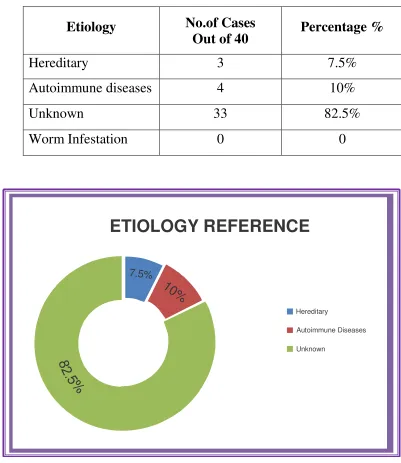
Hereditary is one of the factors supposed to be related with venpadi Familial incidence has been reported in 7.5 to 21% in India and 33 to 40% in Western countries.
• Emotional factors
42
- Control of vascularity of the skin - Control of sebaceous gland secretion - Influencing the degree of oxidation. - Influencing the tendency of pruritus.
There is due to the causative factor of this disease, venpadai from the following basic facts, it is generally considered to be a trophoneurosis. Psychological factors are known to be responsible for the precipitation and aggravation of the disease.
• Others
Sometimes vitiligo can be caused by the action of monobenzyle either on hydroquinone presents in the slippers, gloves (or) other articles made of rubber or used as a depigmenting agent in the form of an irritant for pigmentary disorders. Recently vitiligo has also been observed to occur from plastic slippers as well as plastic ‘hindis’.
III Pathology:
Chemically melanin pigment is a group of chromo proteins with coloured prosthetic groups, which is derived from the precursor tyrosine in the following way Tyrosine tyrinase dihydroxy phenylanin (DOPA) Melanogenase Melanin (Dopa Oxidase).
Melanin + Protein = Melano protein
43
In the skin, the pigment is produced by the melanocytes of their procursor’s melanoblasts. The melanoblasts are supposed to be derived from the cells of neuro ectodermal origin during the embryonic life. After birth, these cells migrate to their definitive position. The melanocytes appear as clear cells within the basal cell layer of the epidemis and show dendritic processes after special staining. These processes come in contact with similar process of other melanocytes and epithelial cells through which the melanin