City, University of London Institutional Repository
Citation
:
Wan, S., Li, D., Gao, J., Roy, R. ORCID: 0000-0001-5491-7437 and He, F. (2018). A collaborative machine tool maintenance planning system based on content management technologies. The International Journal of Advanced Manufacturing Technology, 94(5-8), pp. 1639-1653. doi: 10.1007/s00170-016-9829-0This is the accepted version of the paper.
This version of the publication may differ from the final published
version.
Permanent repository link:
http://openaccess.city.ac.uk/22120/Link to published version
:
http://dx.doi.org/10.1007/s00170-016-9829-0Copyright and reuse:
City Research Online aims to make research
outputs of City, University of London available to a wider audience.
Copyright and Moral Rights remain with the author(s) and/or copyright
holders. URLs from City Research Online may be freely distributed and
linked to.
City Research Online: http://openaccess.city.ac.uk/ [email protected]
DOI: 10.1007/s00170-016-9829-0
A Collaborative Machine Tool Maintenance Planning System Based on Content
Management Technologies
Shan Wana, Dongbo Lia,*, James Gaob, Rajkumar Royc and Fei Hea
a School of Mechanical Engineering, Nanjing University of Science and Technology, Nanjing, Jiangsu, 210094, China b Faculty of Engineering and Science, University of Greenwich, Chatham Maritime, Kent, ME4 4TB, UK c School of Aerospace, Transport and Manufacturing, Cranfield University, Bedfordshire, MK43 0AL, UK
* Corresponding author: Email address: [email protected], Phone: +86(025)84315446, Fax: +86(025)84315831
Abstract
From product maintenance and service point of view, high-value sophisticated computer numerical control (CNC) machine tools in modern manufacturing factories play important roles: they are manufacturing equipment, on the other hand, they are also products supplied by equipment manufacturers. There is a trend that manufacturers are extending their responsibilities to the products use phase to meet customers’ requirements for life-time support and service. To ensure the effective performance and efficient maintenance of high-value machine tools, information and knowledge from their lifecycle should be collected and reused. However, in the research area of product service systems and related computerised maintenance systems, there is a lack of research work on how to integrate knowledge from different stakeholders into the maintenance and service planning process, which is important for modern digital manufacturing systems to reduce machine tools’ downtime and improve their working performance. This project proposed a collaborative maintenance planning framework to connect different stakeholders and integrate their knowledge into the maintenance and service process. The potential of advanced content management systems (CMS), which are widely used non-engineering sectors such as finance, business, publishing and government organizations, has been explored and tested for applications in the manufacturing engineering domain. The research realised that CMS have several advantages compared with traditional engineering information systems, especially in managing dynamic and unstructured knowledge. A prototype maintenance and service planning system has been developed and evaluated using a real CNC machine tool.
Keywords Product Service System, Content Management System, Knowledge Management, Process Management, Machine Tool Maintenance and Service
1 Introduction
Industrial maintenance plays important role in keeping or renovating manufacturing equipment to its designed functionality based on the requirements of customers or society [1]. Maintenance tasks include maintenance planning, repairing, calibrating and testing, as well as internal and external collaboration between stakeholders [2]. There are two types of maintenance, i.e., scheduled and unscheduled maintenance. Scheduled maintenance is planned according to machine tool manufacturers’ maintenance manuals and current machine tools’ production plan. Unscheduled maintenance includes corrective maintenance and predictive maintenance. Corrective maintenance is required when machine tools break down suddenly and then how to take maintenance actions is planned. Predictive
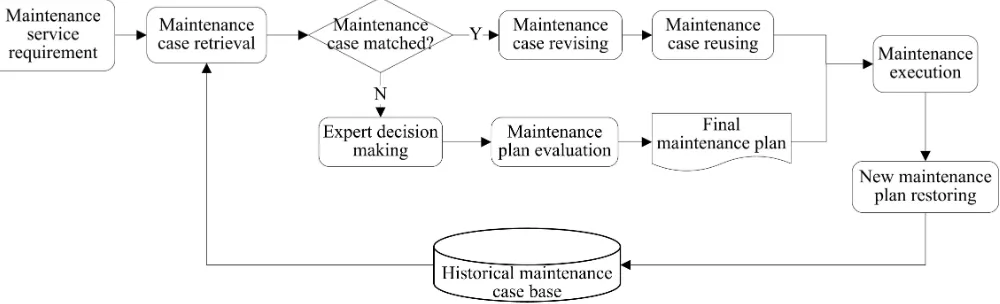
maintenance includes predicting when a machine tool is going to fail, and planning maintenance actions in advance with respect to current production situation. When deciding maintenance actions, engineers need to check previous information and knowledge to see if there are similar cases to refer to. Fig. 1 illustrates a case based maintenance planning process, which shows that when maintenance service is required, previous maintenance cases are firstly retrieved to see if there are similar cases. If yes, then the retrieved maintenance case needs to be revised to reflect current situation and then a new maintenance plan is generated. Otherwise, a complete new plan needs to be decided by experts. After maintenance execution, the new maintenance plan is stored in the historical maintenance case base which can be reused for future maintenance planning.
International Journal of Advanced Manufacturing Technology, Available online 3rd December 2016 DOI:10.1007/s00170-016-9829-0
Published by Springer. This is the author accepted manuscript.
Fig. 1 A case based maintenance planning process
Maintenance and service providers are facing the challenges of managing ever-increasing information (with associated knowledge) and complexity in products, systems and processes. Whether and how to manage, share and reuse lessons learnt from previous experiences effectively would affect the effectiveness and efficiency of new maintenance operations. With the development of intelligent manufacturing technologies in Industry 4.0, information systems should reflect and represent real-life production environment which is dynamic with changes in both machine tool conditions, and individual parts and assemblies being manufactured. One of the most noticeable research advances in intelligent manufacturing was reported by Li et al. [3, 4]. In their innovative tensor based tool path generation method, one surface of a complex part may be divided into different sub-surfaces for different optimisation targets to achieve global optimised machining. There is a need for information models of real-life dynamic information to support manufacturing systems and equipment maintenance, to be integrated with the dynamic product model and machine tool monitoring data.
In the maintenance and service aspect, it has been reported by engineers and managers in industry that learning from previous best practice, methods and tools used, and mistakes made is very important [5]. However, currently there are difficulties in capturing, recording and re-using such valuable knowledge. The investigation and literature survey reported in [5] with respect to knowledge management and lessons learnt during a product’s lifecycle, was conducted from late 2013 to early 2014 in a leading manufacturing company in the UK. The investigation results have shown that with complex information sharing network globally and across the supply chain, the efficiency
and robust of knowledge sharing becomes a challenge. Colleagues “cannot identify what is known within their organizations” [5] and thus the previous knowledge such as best practices and expertise cannot be easily retrieved and reused. Thus, due to the importance and the difficulty of managing and reusing previous knowledge, it is necessary to develop new tools to improve current situation.
There are already a lot of data and information management systems related to maintenance, such as e-maintenance systems [6], Product Data Management (PDM) Systems [7], Product Lifecycle Management (PLM) Systems [8], and Customer Relationship Management (CRM) Systems [9]. However, the collected data in the systems are not fully utilized to guide following maintenance actions [10]. Besides, different information storage formats may lead to misunderstanding between different systems, which may cause problems such as repeatedly ordering wrong spare parts [2]. Furthermore, information in existing systems is sometimes not up-to-date, e.g., the scheduled maintenance procedures are not updated when equipment is changed. Voice from customers about equipment reliability are gathered, but cannot be fed back to the Original Equipment Manufacturers (OEMs), which cannot be used for the improvement of new product development. Moreover, poor communication because of distrust between different stakeholders affects effective collaboration. For example, the scheduling of supporting resources is delayed because of planning information not being shared timely. Most importantly, although lessons learnt are identified and stored in some systems in certain formats, it is often left behind and hard to be retrieved and reused.
problems in: knowledge representation, updating, communication, and retrieval. The effects of reusing lessons learnt not only rely on the representation format of knowledge, but also relate to a series of organisational networked elements such as individual learning, culture, social, technology, process and infrastructure [11]. Process based method and social based methods are two of the many methods used to disseminate lessons learnt. Process based methods allow explicit knowledge to be reflected in organisations’ policies, processes and procedures; while social based methodologies are used for tacit knowledge that is transferred from one person to another [11]. Human factors have impact on the success of the lessons learnt process. Communication is regarded as the most efficient way to enhance learning and reusing knowledge, while most technologies for communicating such as Blogs, Emails or Video conferencing are usually separated from projects where the knowledge comes from, and the same as technologies for project management with communication tools.
CMSs are being taken as one of the most important Information and Communication Technology (ICT) tools in managing organization information and knowledge, especially unstructured information and knowledge, in business, media, financial and social applications [12]. Thus it can potentially solve the above mentioned problems. However, few applications are in managing engineering knowledge for the manufacturing industry. Due to the capability, flexibility and extendibility of CMS, this research aims to implement CMS in a machine tool maintenance knowledge management system, so as to enhance the collaboration between different stakeholders in different organisations, and to improve the efficiency of maintenance planning and scheduling. The objectives of this research are as below:
Develop a knowledge sharing, learning and reuse framework for machine tool maintenance and service;
Propose a knowledge mapping methodology for maintenance and service knowledge reuse;
Identify the capability and feasibility of a CMS (Drupal) for enhancing project management and communication; and
Develop a collaborative maintenance planning system for different stakeholders distributed geographically.
2 Literature Review
Product service system and lessons learnt: With the development of Product Service System (PSS), the equipment for manufacturing systems can be taken as products of the equipment manufacturer. Apart from the benefits of selling the products by the manufacturers, their responsibilities (thus benefits) would be extended to products’ whole usable life [13]. In the issues of equipment maintenance and services, information about products’ (i.e., the equipment) design and manufacturing phases such as drawings, and the equipment maintenance instructions provided by the manufacturers, can be used in the maintenance decisions making as a starting point. From this point, the equipment, such as computer numerical control (CNC) machine tools, is not only the manufacturing assets in the plant, but also the products to be maintained and serviced. The maintenance information and knowledge will not only be used to improve manufacturing performance for the manufacturing company, but also be fed back to the equipment manufacturers to improve the reliability and quality in the future. PSS provide services (maintenance included) from the viewpoint of product lifecycle management. PSS enables collaboration between different stakeholders involved in the service process, so as to reduce impact on environment and achieve sustainability [14]. The advantage of this concept will be taken in the design of the proposed framework in this research. Based on the advantages of PSS, stakeholders from the product lifecycle involved in the maintenance actions can collaborate within the same platform. This research combined them together to generate a collaborative maintenance management system with knowledge management capability. However, PSS is still in the development stage far from being mature industrial system due to many unsolved issues such as PSS design methodologies [15], value distribution and network connections [16].
dissemination within teams and organizations, as well as the application to new projects, not only recording it [18]. General knowledge management processes have been proposed by previous researchers [19], which include knowledge exploitation, representation, formalization, adaption, revision and retaining. In terms of knowledge reuse, Potes Ruiz et al. [19] proposed an experience feedback process to reuse knowledge, in which case based reasoning (CBR) was taken as a problem solving process. Experiences are regarded as cases (including problem description and solution), and then the source case will be retrieved from the database and adapted according to the new problem, then new knowledge obtained from new problems with their solutions are retained into the database for reusing, and so forth. In order to carry out this process, different knowledge techniques are implemented including knowledge formalization, aggregation and retrieving. CBR process is a process which requires engineers to retrieve the knowledge actively and record what they have got during problem solving. For people who lack initiatives, faults still cannot be completely avoided. In respect of product service process for CNC machine tools, the following actions are needed: service request receiving, scheduled maintenance alert, fault diagnosis, service planning (resources, timing), calibration and validation. For service suppliers, their maintenance and service tasks are very heavy, which need engineers to respond quickly and effectively, thus the right knowledge to be used at each stage is better to be pushed to the right person at the right time [20].
ICT tools for product maintenance and service knowledge management: For large especially global companies, geographically distributed activities are very common. Due to CNC machine tools’ particularity on its roles – product of machine tool manufacturers as well as manufacturing equipment for manufactured products, their maintenance and service require the collaboration between different stakeholders such as machine tool manufacturers, manufacturing systems, service providers and part suppliers. In order to ensure successful maintenance management, experts and maintenance executors are concerned about collaborative knowledge management because the machine tools’ technical problems demand diverse analysis approaches and maintenance actions frequently and regularly [19].
As a product’s condition is changing either due to normal deterioration or the increasing product diversity and complexity requirements from
customers within its lifecycle, it has to be controlled using PLM methodologies while keeping the principal of sustainability and environmental protection [21, 22]. Within PLM, the engineering systems used are primarily Computer-Aided Design (CAD) systems to manage product design data, Computer-Aided Engineering (CAE) systems for engineering analysis, and Computer-Aided Manufacturing (CAM) systems to manage manufacturing related information, Product Data Management (PDM) systems to integrate all product related data and information. CRM Systems are used to manage customer related information. Enterprise Asset Management (EAM) systems are implemented to manage the health of manufacturing and business related equipment and assets [23]. In terms of product maintenance and service, there are e-maintenance systems such as Computerized Maintenance Management Systems (CMMS) [10] or Fault Diagnosis Assistant Systems (FDAS) [24] which are used for managing maintenance and diagnosis related data and information. Industrial maintenance includes strategy making, planning (scheduled and unscheduled), calibration and testing, management of maintenance actions, and internal and external collaboration between different partners [2].
These systems have certain capabilities of storing different formats of contents (such as video, audio, or graphic files) to support the product development, manufacturing and maintenance process. However, these contents are badly managed: engineers have difficulties in searching for the right information when needed. Although they roughly know where the information is, they still cannot find the exact place. Lessons learnt, as important industry knowledge and been paid much attention, even has been stored, is still not effectively used to guide the working process to avoid the same faults happening. Besides, the development of most current systems is based on certain coding languages, which take a long software development cycle. As the rapid changing requirements from customers, it has difficulties for the software vendors to response to the changes quickly.
‘Information Week’, when he introduced the knowledge push of Microsoft [25]. Knowledge sharing can be described as either push or pull. Knowledge pull means actively searching and implementing knowledge sources identified to support knowledge users’ decision making, while knowledge push means knowledge is disseminated to the user who may need to receive it [20]. This technology has been widely implemented in the management fields such as Informatics and Marketing, but lack of use in engineering especially in the maintenance process fields [26]. It is a key technology that ensures the application of knowledge management. Wang et al. [27] used knowledge push service technology to make design knowledge available and thus to improve the efficiency of knowledge acquisition for product designers. Gagnon [28] also indicated knowledge push as one of the important knowledge dissemination methods (the other two are knowledge pull and exchange). Research has shown that knowledge push has been taken as a very important approach for knowledge dissemination and learning, however, this technology has rarely been implemented in the product maintenance field. Maintenance and service is related to complex knowledge from diagnosis to execution. Engineers spend a lot of time in searching for knowledge for their decision makings, thus the implementation of knowledge push is expected to significantly improve the efficiency of knowledge sharing and reuse.
Content management systems: CMS together with other systems such as Decision Support Systems, Semantic Networks and Goupware systems are regarded as the same type of knowledge management systems [29]. They can be used to define workflows, track and manage different versions of contents, identify users and their roles, publish contents to repositories to support access, search and retrieval [20]. With the increasing complexity of organizational data (structured and unstructured), CMS are implemented to cope with these issues. Currently, CMS are one of the most important ICT tools in managing organization information and knowledge with strong capability, flexibility and extendibility
[12]. CMS have been widely implemented for business, media, financial and social applications
[30]. For example, Clair [12] implemented CMS to
deal with issues of metadata management for libraries, in terms of the responsibility, standards, workflows and barriers. Stacciniet et al. [31]
developed a collaborative distance learning platform using Open Source CMS. However, there were few attempts to implement CMS in manufacturing industry to manage product and manufacturing data (including lessons learnt and best practices) and process [32]. Knowledge is highly associated with content management, and an organization’s performance such as productivity, quality, profitability and customers’ satisfaction, are significantly impacted by effective content stewardship by using appropriate information technologies. This research implemented an Open Source CMS system (Drupal) in the product maintenance and service applications, to manage information and knowledge during the process of operations. The example product used is atypical complex CNC machine tool in advanced manufacturing systems.
3 The Role of CNC Machine Tools in Product Lifecycle
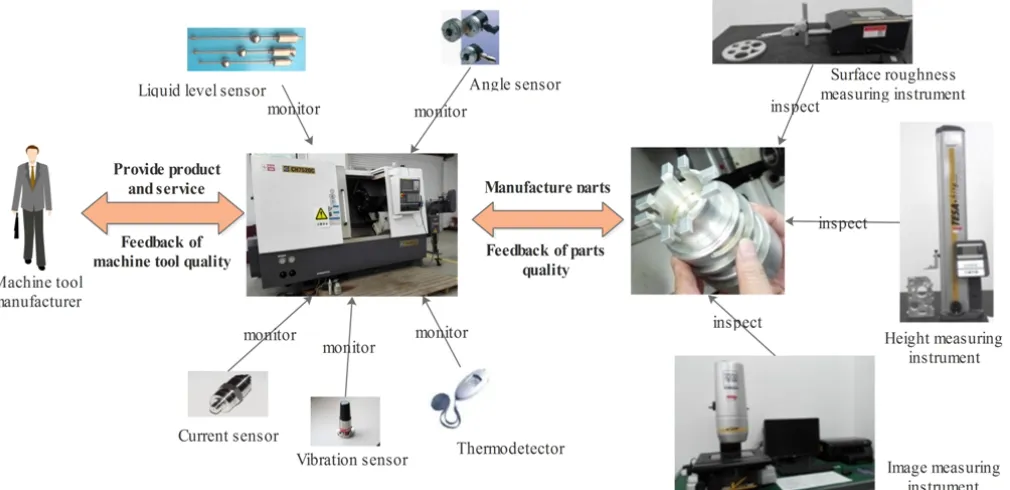
Fig. 2 The role of CNC machine tools in manufacturing systems
Within the CNC machine tools’ lifecycle, machine tool manufacturers, machine tool users, service providers and machine tool parts suppliers collaborate with each other. It is the responsibility of machine tool users to operate the machine correctly, and enhance productivity when the machine tool is in good condition, as well as request maintenance and service once the machine tool unexpectedly breaks down. Knowledge is needed such as how to operate machine tools safely and correctly to avoid machine tool breakdowns. Machine tool manufacturers gain profits from selling machine tools, as well as from maintenance and services (in the PSS business model), thus how to design products with good quality and high customer satisfaction is important to them. The quality feedback from machine tool users is important for them to improve the design and manufacturing of new machines. The main role of service providers, either internal maintenance department from machine tool users, or maintenance department within machine tool manufacturers, or third-party service providers, or any combination of the three, is to make maintenance and service plan according to service request, current production schedules as well as the machine monitored data, and to schedule maintenance tasks in line with the production schedules, as well as to execute maintenance work. Thus, the knowledge required by service providers varies because of its complexity, while machine part suppliers will support service suppliers with
parts.
The aim of the collaborative maintenance and service framework is to integrate all stakeholders from the machine tool’s lifecycle with the knowledge to support the maintenance activities (e.g., maintenance planning and scheduling, resource allocation and maintenance execution), as well as provide knowledge feedback from the maintenance phase to other lifecycle stages. In order to provide knowledge to different stages of maintenance and service, knowledge push capability, by making full use of lessons learnt and best practices from others is the key. The collaboration network is taking ICT technologies as supportive tools, and the Internet as information dissemination approach, and provides all the stakeholders with full and real-time information, which can be achieved by integrating with their other internal management systems.
4 The Knowledge Management Framework for Machine Tool Maintenance and Service
manufacturers. However, in reality, the maintenance schedules may vary because of the changing in the operation conditions and working environment of the machine tools. Furthermore, traditional maintenance planning only includes the prioritization of maintenance tasks, without providing guidance of maintenance procedures – even there exists maintenance guidance, it is normally not updated.
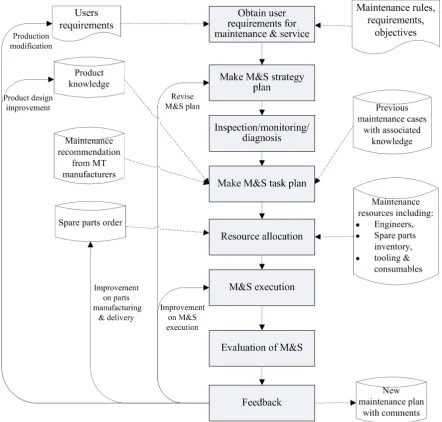
The implemented system has knowledge push capability to provide knowledge related to each maintenance stage to engineers. As can be seen in Fig. 3, a maintenance process is divided into several stages such as receiving customers’ requirements, inspection and diagnosis, scheduling and planning, resource allocation, maintenance execution, evaluation and feedback. Different stakeholders such as machine tool (MT) users, MT manufacturers, part suppliers and service providers will contribute their knowledge related to the maintenance process. For example, MT users request service by expressing their requirements such as no-fault-found, near-to-zero downtime and Overall Equipment Efficiency (OEE), which are the input to the maintenance planning process. At the same time, service providers have various maintenance requirements such as maintenance rules, requirements and objectives. When making maintenance and service plan, the knowledge acquired by this stage will contain production knowledge from MT users since the machine tool’s service has to be staggered with production plan. Product knowledge and maintenance recommendation knowledge from MT manufacturers are necessary since maintenance work is operated on machine tool itself; the maintenance recommendation is made based on product design parameters, and is an important reference for machine maintenance scheduling. Furthermore, previous maintenance cases and related knowledge stored by service providers are important input to the new maintenance task plan, to reduce duplicated work.
After the plan has been made, resource allocation acquires information of resources including engineers, spare parts, tooling and consumables, which can be supported by service
providers, while the spare parts order will be sent to parts suppliers and the order information will be communicated in time in turn. After the maintenance has been executed and evaluated, the current maintenance case will be reviewed to generate new knowledge, restored as new maintenance plan with comments for service providers. Furthermore, the new maintenance plan can be feedback to the maintenance task planning phase to revise the original plan, resource allocation knowledge can be fed back to the execution phase to improve next resource arrangements and execution efficiency. In addition, some problems such as parts manufacturing, delivery and ordering can be learnt and fed back to parts suppliers for future improvement. If a machine tool is to be found to improve design parameters, then the information will be fed back to the machine tool manufacturers. At last, since maintenance scheduling and planning affect production directly in manufacturing systems, production plan will be modified in line with the maintenance plan so that maintenance requirements from MT users will change accordingly. Fig. 3 shows a closed-loop maintenance process which adopts a Plan-Do-Check-Act (PDCA) cycle.
DOI: 10.1007/s00170-016-9829-0
Fig. 3 The proposed framework of knowledge reuse in maintenance and service process
Case Based Reasoning (CBR) is a methodology that helps progressive learning from experiences for problem solving [19]. A typical CBR can be represented as Fig. 4, which includes five basic cyclical steps:
(1) Elaborate the new problem semantically as much as possible;
(2) Retrieve the previous similar maintenance cases and linked knowledge from the Knowledge Base according to the elaborative problem description, and this knowledge will be pushed to engineers who are going to view it;
(3) Reuse one similar solution of the retrieved cases, so that a solution to the new maintenance problem is proposed;
(4) Revise or adapt the proposed solution considering the new problem’s speciality other than the retrieved cases.
(5) Retain the validated solution together with the new problem as another experience to the Knowledge Base for reusing in the future.
[image:9.595.305.547.560.729.2]Usually, a case is composed of two parts: the problem and solution. It can be represented as a pair element, denoted as:
!"#$ = ('(), #+,('()))
In particular, during the five steps of the CBR process, the current case can be represented as:
./01.23 = 435.23, 067 435.23
While the retrieved previous case can be represented as:
./01431 = (435431, 067(435431))
However, one of the problems using this method is that similar cases may not get similar results, because of the different deconstruction methodology, thus there is a need to represent the cases semantically.
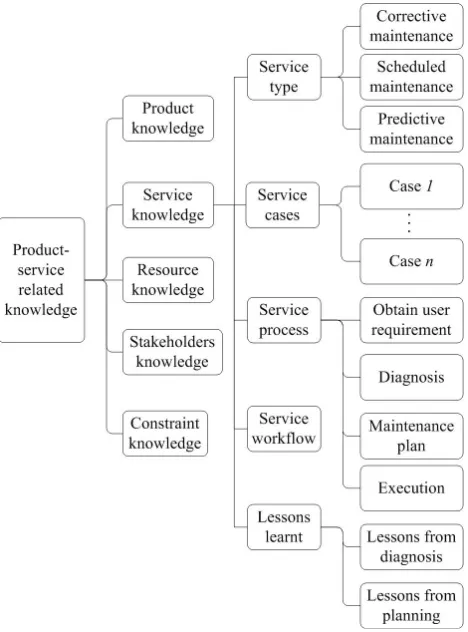
The cases are a set of description of maintenance problems which are composed of problem context, the analysis of the problem, and the solution. The semantic description involves different types of maintenance and service knowledge such as product knowledge, service knowledge, resource knowledge, stakeholders’ knowledge, and constraint knowledge (Fig. 5). Product knowledge provides the basis for service actions, as the maintenance problems occur on certain components in the form of failure mode. It is the input into maintenance process indicating where to maintain. While maintenance and service knowledge includes service type, service cases, service plan, service workflow, and lessons learnt. Resource knowledge includes the resources that support maintenance executions such as personnel, spare parts, consumables, tools and technology. Stakeholder knowledge includes the participations in the maintenance process and during the machine tools product lifecycle: the machine tool manufacturers, machine tool users, service providers and parts suppliers. At last, the constraint knowledge covers the business rules and standards, goal of machine tool’s performance and management of the maintenance process.
In order to represent knowledge effectively and formally, ontology (semantic knowledge representation), as one of the most popular ways, is selected here. The term “Ontology” represents domain entities and their relationships by means of
classes and relations, because knowledge is not only contained in information, but also in the relationships among information items [33]. Ontology allows representing the semantics of maintenance knowledge in a formal way that the computer can interpret, which enables the implementation methods of advanced computer
science to manage, search and enrich the knowledge [34]. In summary, the proposed system is to improve four aspects of current maintenance management:
(1) Collaboration: The proposed framework is going to integrate knowledge from all stakeholders in the machine tool product lifecycle related to the maintenance decision making to fill current gap of not using knowledge from other stakeholders;
(2) Knowledge management: Content or document will be classified/structured/managed so as to solve the problem of not finding the right information when needed; latest maintenance execution procedures/steps are to be provided to users to make up for deficiencies of current maintenance management not providing maintenance procedures; then, the mostly used knowledge or lessons learnt can be seen in obvious zone in the system which can be achieved by ranking engineers’ votes;
(3) Process management: Process management will be enhanced in the system to be developed so that knowledge can be recommended to engineers in certain process stage, so that to reduce engineers time to search for related knowledge; and
(4) User interface: A user-friendly interface is to be designed to reduce confusion of users when using the system.
5 Implementation Using Content Management Technologies
One of the definitions of CMS is from Patel et al.
[29] that a CMS is what allows you to apply management principles to contents. One of the three most widely used CMSs is Drupal (the other two are Wordpress and Joomla) [12]. Drupal can manage Web contents and experiences, and is also an Enterprise Collaboration and Social Software
[35].
information will be displayed in a site Template called Theme in Drupal.
As introduced previously, there are three major modules to be developed: Product knowledge management, Maintenance and service planning, and Knowledge sharing. The product knowledge to be used in maintenance planning is the product structure, assembly information, according to which maintenance plans can be made.
[image:11.595.37.271.183.499.2]Fig. 5 An example of Product-Service related knowledge structure
Fig. 6 Five layers of information flow in Drupal
5.1Knowledge of machine tools as products
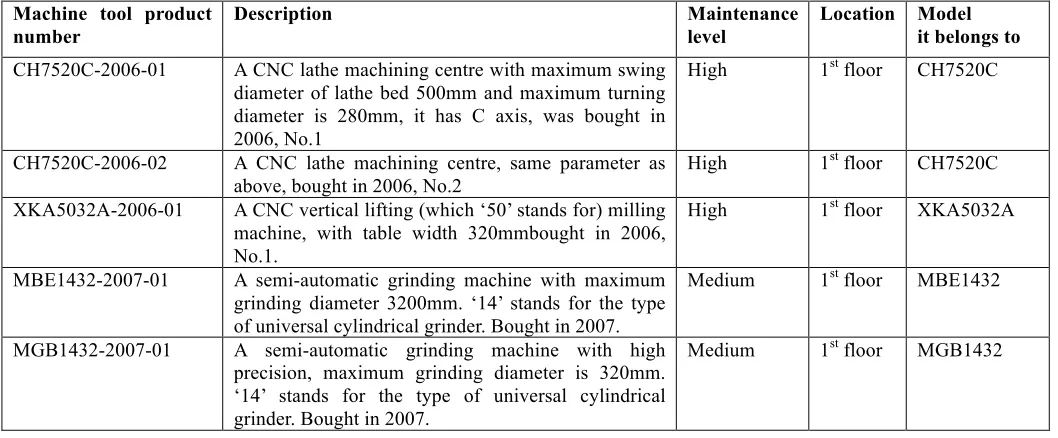
In order to manage knowledge of machine tools as products, three content types are defined in Drupal: Machine Tool Model Content Type, Machine Tool Product Content Type and Component Content Type, within each of them, there is a Node Hierarchy field, which allows them to be parent/child node of another. In this case, since one machine tool model could have several machine tool products, the Machine Tool Model Content Type is the parent node of Machine Tool Product Content Type. Similarly, since a machine tool product may have several components, the Component Content Type is the child node of Machine Tool Product Content Type. Table 1shows a list of machine tool products. There are four example machine tool models inside which are CH7520C, XKA5032A, MBE1432 and MGB1432, CNC lathe machining centre, CNC lifting milling machine, semi-automatic grinding machine and high precision semi-automatic grinding machine respectively. In the model CH7520C, there are two
products CH7520C-2006-01 and
CH7520C-2006-02, while there is only one product in XKA5032A machine tool model which is XKA5032A-2006-01. Similarly, both MBE1432 and MGB1432 models have one product respectively as well. Inside of each machine tool product, the knowledge used for maintenance are included in the Machine Tool Product Content Type for service suppliers to check if needed, such as components, product description, maintenance level, location and maintenance manuals.
5.2Corrective maintenance workflow
The service to complex engineering products has to be requested to the manufacturers by the product users and then assigned to service providers according to requirements and constraints. Then maintenance plans and executions will be conducted by service providers. During the planning, spare parts, consumables and tools may be ordered from parts or tool suppliers. This process involves various stakeholders to complete, thus a clear management workflow that allows them to collaborate with each other is necessary.
[image:11.595.34.274.559.703.2]DOI: 10.1007/s00170-016-9829-0
Machine tool product number
Description Maintenance
level
Location Model it belongs to CH7520C-2006-01 A CNC lathe machining centre with maximum swing
diameter of lathe bed 500mm and maximum turning diameter is 280mm, it has C axis, was bought in 2006, No.1
High 1st floor CH7520C
CH7520C-2006-02 A CNC lathe machining centre, same parameter as above, bought in 2006, No.2
High 1st floor CH7520C
XKA5032A-2006-01 A CNC vertical lifting (which ‘50’ stands for) milling machine, with table width 320mmbought in 2006, No.1.
High 1st floor XKA5032A
MBE1432-2007-01 A semi-automatic grinding machine with maximum grinding diameter 3200mm. ‘14’ stands for the type of universal cylindrical grinder. Bought in 2007.
Medium 1st floor MBE1432
MGB1432-2007-01 A semi-automatic grinding machine with high precision, maximum grinding diameter is 320mm. ‘14’ stands for the type of universal cylindrical grinder. Bought in 2007.
[image:12.595.36.565.46.265.2]Medium 1st floor MGB1432
Table 1 List of example machine tool products
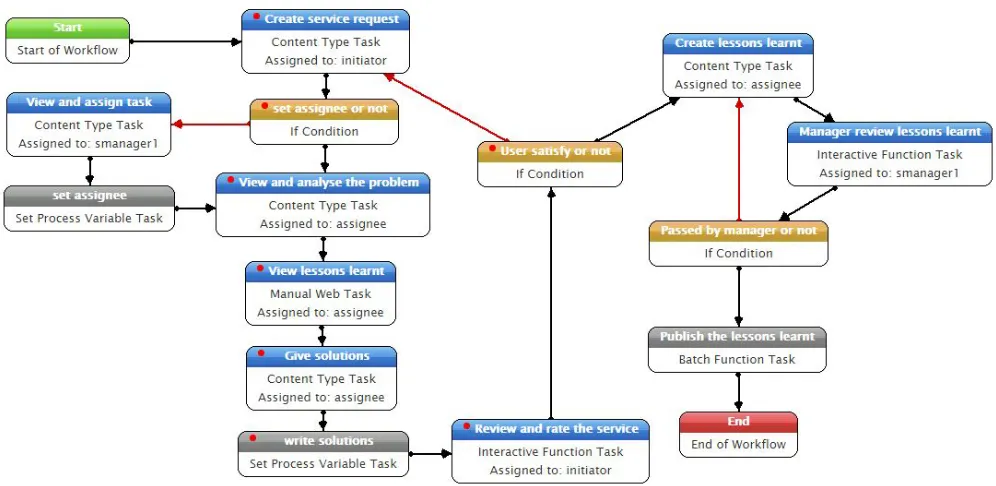
from service request until maintenance solution has been given, executed and evaluated (user satisfied with the results), as well as lessons learnt is given by engineers after maintenance execution. Within this process, the assignees (engineers who execute this task) will be asked to view previous lessons learnt to aid this task to be executed successfully. Then after users are satisfied with the results, lessons learnt creation process starts right away to record what engineers have learnt during this task, then it will be published unless managers approve it. The workflow has a start and end box to control when to start and end, here it is started by creating a service request by the initiator (whoever initiate it, normally it is users who operate the machine tools).
There is a series of task types in the workflow template for developers to choose, some of them are used here: Content Type Task allows the assigned user roles to create new content or edit the existing content. The If Task judges the condition and leads workflow to different branches. Interactive Content Type Task assigns a task, such as approve or submit, to a user role that is later tested by the If Task, and the interactive results will affect the workflow branches. Set Process Variable Task takes advantage of user defined process variables, which allows workflow to dynamically assign tasks based on data automatically collected during the workflow. Manual Web Task is used to provide an internal URL for engineers to view previous lessons learnt, which makes learning from previous experiences compulsory as a process stage. At last, the Batch Function Task executes function either custom code, Drupal function or other
module function automatically, here a Drupal function maestro_publishNode is used to publish lessons learnt once the manager approves the engineers lessons learnt submission. These boxes are assigned to different users who have certain roles such as initiator, managers and engineers, thus they can execute different tasks such as request services, assign engineers, response to requests and give feedback.
5.3Scheduled maintenance planning module
maintenance instructions to guide them to do tasks, especially new engineers need to know the steps and which component to disassembly, inspect and
assembly, thus on the system’s right region, all the instructions written in book pages are displayed for users to navigate according to their requirements.
Fig. 7 The workflow control by the backend Maestro module
5.4Lessons learnt and knowledge sharing module
The maintenance, repair and service for machine tools is a complex process that requires high qualified and experienced engineers to accomplish. However, most of the knowledge such as working methods, working habits and what has been learnt during projects remains in the engineers head (also called tacit knowledge) which is hard to be learnt. In order to improve current practice in knowledge sharing and reuse, it is necessary to manage lessons learnt which is good for both existing and new engineers to avoid faults. Lessons learnt is the knowledge that obtained from previous experiences by engineers who execute the tasks. On one hand, some of the engineers will generalise best practices based on their own experiences. On the other hand, service team members or experts in companies who have rich experiences or are familiar with service executions will conduct period meetings to summarise lessons learnt by reviewing previous experiences. Abundant lessons learnt are generated by different people and stored in different formats such as word, excel forms or databases, and in different places such as PLM system or CAD systems. Poor management of such lessons learnt led to low efficiency to be reused.
The main purpose for managing lessons learnt is to capture tacit knowledge and previous knowledge from engineers in order to learn and reuse it more efficiently in the future. Due to the sophisticated machine tool’s product structure and complex maintenance process, to have a series of clear classification of knowledge is very useful to push related knowledge to engineers based on their current requirements.
[image:13.595.48.546.126.369.2]DOI: 10.1007/s00170-016-9829-0
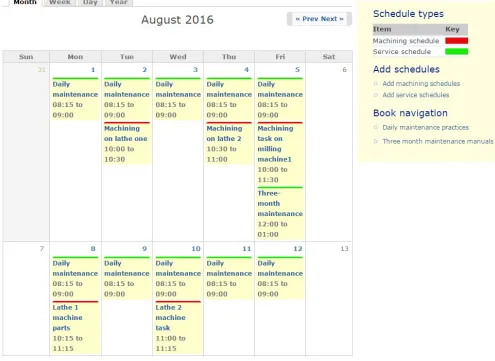
Fig. 8 Maintenance and machining schedule
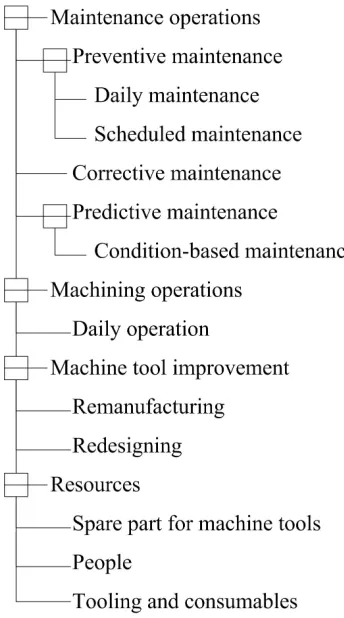
preventive maintenance (e.g. daily maintenance and scheduled maintenance), corrective maintenance and predictive maintenance (e.g. condition based maintenance); machining operations includes daily operations; while machining improvement contains improvement on two aspects: remanufacturing and redesigning; and resources includes spare parts for machine tools, people, tooling and consumables. Lessons learnt need to be checked when diagnosing machine problems, and that is why failure mode taxonomy is necessary. The failure mode includes three aspects: Electronic failure, Mechanical failure and Assistant system failure, and each aspect has its subcategory, for example, electronic failure includes bad line connection to the cable, component parameter drift, performance not stable, false alarm and component failure.
[image:14.595.46.541.65.426.2]Fig. 9 The taxonomy of lessons learnt
[image:15.595.310.549.74.228.2]Fig. 10 The taxonomy of failure mode
Fig. 11 The interface of creating new lessons learnt
6 Verification Example
CH7520C, manufactured by a Chinese machine tool manufacturer, is a type of high performance CNC machining product with high power and high precision. It can achieve multiple processing such as turning, milling, drilling and tapping in a single set-up. The machine tool product is designed with good operation convenience, high strength and dynamic-static stiffness, and with high protection from leakage of gas, oil and electric, as well as advanced design of the mechanical structure, coolant and safety system. It has a C-axis and a driving tool which can realise turning and milling compound machining. Some of its primary parameters are: the maximum swing diameter of lathe bed is 500mm, the maximum turning diameter is 280mm, the hydraulic clamping diameters 210(8’’), the speed of main spindle ranges from 40 to 4000 r/min, the tool carrier has 12 stations, the minimum angle that the C axis can control for milling is 0.001 degrees, the lathe bed can be 45 degree slant. This kind of CNC machine tool product has long life during their usage, its machining stability, efficiency needs to be ensured by maintenance and service actions, thus the efficiency and effectiveness of maintenance and service planning can help to achieve high machining performance.
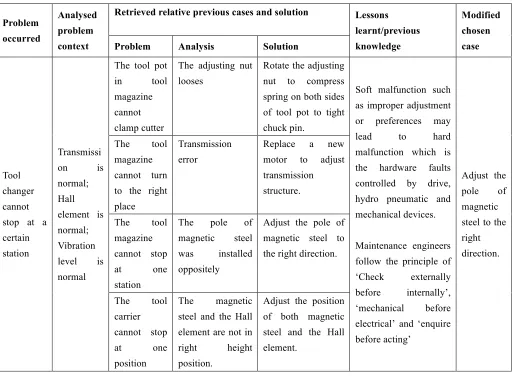
[image:15.595.60.255.396.713.2]component for CNC machine tool, since each step requires cutting tool to machine parts (lathe or mill). However, sometimes, the tool changer goes wrong such as tool changer cannot stop at a certain station. Due to the complex mechanical and electrical structure of CNC machine tools, the root cause for this problem is not easy to be found. Besides, the
definition for the same component in database is different in different cases, since it is recorded by different maintainers. For example, tool changer is also called tool magazine. The right knowledge can be found and applied to the new case through applying the case based reasoning method and modelling the knowledge semantically.
Problem occurred
Analysed problem context
Retrieved relative previous cases and solution Lessons
learnt/previous knowledge
Modified chosen case Problem Analysis Solution
Tool changer cannot stop at a certain station
Transmissi
on is
normal; Hall element is normal; Vibration level is normal
The tool pot
in tool
magazine cannot clamp cutter
The adjusting nut looses
Rotate the adjusting nut to compress spring on both sides of tool pot to tight chuck pin.
Soft malfunction such as improper adjustment or preferences may
lead to hard
malfunction which is the hardware faults controlled by drive, hydro pneumatic and mechanical devices.
Maintenance engineers follow the principle of ‘Check externally before internally’, ‘mechanical before electrical’ and ‘enquire before acting’
Adjust the pole of magnetic steel to the right direction. The tool
magazine cannot turn to the right place
Transmission error
Replace a new motor to adjust transmission structure.
The tool magazine cannot stop
at one
station
The pole of magnetic steel was installed oppositely
Adjust the pole of magnetic steel to the right direction.
The tool carrier cannot stop
at one
position
The magnetic steel and the Hall element are not in right height position.
[image:16.595.40.553.165.541.2]Adjust the position of both magnetic steel and the Hall element.
Table 2 An example of corrective maintenance plan for CH7520C
7 Conclusions
The main research outcomes contributing to new ideas and developments in the field of product service systems and machine tool maintenance are that, firstly, CNC machine tools are high-value manufacturing equipment, whilst in this project they are regarded as products to be maintained. The maintenance and service plans for the machine tools will also be considered in line with the production schedules of the manufacturing systems in which the machine tools perform manufacturing
has been given by engineers that the system could potentially enhance the efficiency and effectiveness of maintenance knowledge retrieval when making maintenance planning decisions. Thirdly, CMSs are widely used in domains such as business, social media, government, but rarely in engineering applications. This research proves the feasibility and advantages of using CMSs in managing engineering knowledge. The advantages of the CMS system Drupal used for system development, compared with traditional engineering information systems, are summarised below:
It is a platform based system that can make a new information system quickly. Users can simply configure it rather than do a lot of programming work;
Many contributed modules can be downloaded and easily extended in functionality, and it is Open Source which allows users to make custom modules as new functions;
More importantly, it is good at managing dynamic knowledge including lessons learnt, workflows, and content publishing, which meets the requirements of machine tool maintenance planning; and
It is easy for stakeholders to collaborate since it is a Web based system, and it is more flexible and user friendly because of the social media style.
Acknowledgements
This research was funded by China Scholarship Council (Grant Ref: 201206840032) through a joint PhD project between Nanjing University of Science and Technology (NUST) and UK Universities. The PhD researcher (first author of this paper) spent two years in the UK and jointly supervised by senior academics at NUST, Greenwich and Cranfield Universities (co-authors of this paper) throughout her PhD study. The authors would like to thank the engineers and managers of the collaborating companies in both UK and China who have provided valuable advice and technical support during the study.
References
1. Söderholm P, Holmgren M, Klefsjö B. (2007) A process view of maintenance and its stakeholders. Journal of Quality in Maintenance Engineering,13:19-32. doi: 10.1108/13552510710735096
2. Metso L, Marttonen S, Thenent NE, Newnes LB. (2016) Adapting the SHEL model in investigating industrial maintenance. Journal of Quality in Maintenance Engineering,22:62-80. doi: 10.1108/JQME-12-2014-0059 3. Zhou G, Li Y, Liu C, Hao X. (2016) A feature-based
automatic broken surfaces fitting method for complex aircraft skin parts. The International Journal of Advanced Manufacturing Technology, 84:1001-1011. doi: 10.1007/s00170-015-7774-y
4. Liu X, Li Y, Ma S, Lee C. (2015) A tool path generation method for freeform surface machining by introducing the tensor property of machining strip width. Computer-Aided Design,66:1-13. doi: 10.1016/j.cad.2015.03.003
5. Essop IA, Evans RD, Wan S, Giddaluru MP, Gao JX, Baudry D, Mahdikhah S, et al. (2016) Investigation into current industrial practices relating to product lifecycle management in a multi-national manufacturing company. Computer-Aided Design and Applications,13:647-661. doi: 10.1080/16864360.2016.1150711
6. Zhu Q, Jiang P. (2009) An outsourcing e-maintenance system for improving maintenance of an industrial product service system. Applied Mechanics and
Materials,16-19:1077-1081. doi:
10.4028/www.scientific.net/AMM.16-19.1077
7. Do N. (2015) Integration of engineering change objects in product data management databases to support engineering change analysis. Computers in Industry,73:69-81. doi: 10.1016/j.compind.2015.08.002
8. Srinivasan V. (2011) An integration framework for product lifecycle management. Computer-Aided Design,43:464-478. doi: 10.1016/j.cad.2008.12.001 9. Khodakarami F, Chan YE. (2014) Exploring the role of
customer relationship management (CRM) systems in customer knowledge creation. Information & Management,51:27-42. doi: 10.1016/j.im.2013.09.001 10. Rastegari A, Mobin M. Maintenance decision making,
supported by computerized maintenance management system, in: 2016 Annual Reliability and Maintainability Symposium (RAMS), Tucson, AZ, 2016, 1-8, doi: 10.1109/RAMS.2016.7448086
lessons learned knowledge model for organisational learning through projects. International Journal of Project Management,33:311-324.doi:10.1016/j.ijproman.2014.07. 004
12. Clair KM. (2012) Metadata Best Practices in Web Content Management Systems. Journal of Library Metadata,4:362-371. doi: 10.1080/19386389.2012.735562 13. Wan S, Gao J, Li D, Tong Y, He F. Web-based Process
Planning for Machine Tool Maintenance and Services, in: Procedia CIRP, Cranfield, England, 2015,165-170, doi:10.1016/j.procir.2015.07.018
14. Mont OK. (2002) Clarifying the concept of product service system. Journal of Cleaner Production,10:237-245. doi: 10.1016/S0959-6526(01)00039-7
15. Tran T, Park JY. (2016) Development of a novel set of criteria to select methodology for designing product service systems. Journal of Computational Design and Engineering,3:112-120. doi: 10.1016/j.jcde.2015.10.001 16. Sakao T, Ölundh Sandström G, Matzen D. (2009)
Framing research for service orientation of manufacturers through PSS approaches. Journal of Manufacturing Technology Management,20:754-778. doi: 10.1108/17410380910961082
17. Potes Ruiz P, Kamsu Foguem B, Grabot B. (2014) Generating knowledge in maintenance from Experience Feedback. Knowledge-Based Systems,68:4-20. doi: 10.1016/j.knosys.2014.02.002
18. Garon S. (2006) Space project management lessons learned: a powerful tool for success. Journal of Knowledge Management,10:103-112.doi:10.1108/1367327061065666 5
19. Potes Ruiz PA, Kamsu-Foguem B, Noyes D. (2013) Knowledge reuse integrating the collaboration from experts in industrial maintenance management. Knowledge-Based Systems,50:171-186. doi: 10.1016/j.knosys.2013.06.005
20. Frost A. (2010) An Educational KM Site - Knowledge Sharing.
http://www.knowledge-management-tools.net/knowledge-sharing.html, Accessed 1 August 2016
21. Borsato M. (2014) Bridging the gap between product lifecycle management and sustainability in manufacturing through ontology building. Computers in Industry,65:258-269. doi: 10.1016/j.compind.2013.11.003 22. Fortineau V, Paviot T, Lamouri S. (2013) Improving the
interoperability of industrial information systems with description logic-based models The state of the art.
Computers in Industry,64:363-375. doi: 10.1016/j.compind.2013.01.001
23. Penciuc D, Durupt A, Belkadi F, Eynard B, Rowson H. (2014) Towards a PLM Interoperability for a Collaborative Design Support System. Procedia CIRP,25:369-376. doi: 10.1016/j.procir.2014.10.051 24. Su K, Hwang S, Chou Y. (2006) Applying knowledge
structure to the usable fault diagnosis assistance system: A case study of motorcycle maintenance in Taiwan. Expert Systems with Applications,31:370-382. doi: 10.1016/j.eswa.2005.09.065
25. Ricadela A. (2000) Microsoft's knowledge push. Information Week,805:151.
26. Yang SF, Wang Q, Liu L. (2010) (in Chinese) Fault diagnosis system based on knowledge pushing. Journal of
Aerospace Power, 25:203-207.
http://d.g.wanfangdata.com.cn/Periodical_hkdlxb2010010 33.aspx
27. Wang ZS, Tian L, Wu YH, Liu BB. (2016) Personalized knowledge push system based on design intent and user interest. Proceedings of the Institution of Mechanical Engineers, Part C: Journal of Mechanical Engineering Science,230:1757-1772. doi: 10.1177/0954406215584395 28. Gagnon ML. (2011) Moving knowledge to action through
dissemination and exchange. Journal of Clinical
Epidemiology,64:25-31. doi:
10.1016/j.jclinepi.2009.08.013
29. Frost A. (2010) An Educational KM Site - Content
Management Systems.
http://www.knowledge-management-tools.net/knowledge-management-systems.html, Accessed 1 August 2016. 30. Patel SK, Rathod VR, Parikh S. Joomla, Drupal and
WordPress - A Statistical Comparison of Open Source CMS, in: 3rd International Conference on Trends in Information Science & Computing (TISC2011), Chennai, India, 2011,182-187, doi: 10.1109/TISC.2011.6169111 31. Staccini P, Bordonado C, Alet J, Joubert M, Dufour JC,
Fieschi M. A Customized Open Source Content Management System to Support Collaborative Distance Learning: The J@LON Platform, in: Twentieth IEEE International Symposium on Computer-Based Medical Systems (CBMS' 07), Maribor, Slovenia, 2007, 651-656. doi: 10.1109/CBMS.2007.4
doi: 10.1109/ICEBE.2008.104
33. Paul M, Engelhart M, Rus I, Lindvall M. (2002) Knowledge management in software engineering. IEEE software,19:26-38. doi: 10.1109/MS.2002.1003450 34. Brandt SC, Morbach J, Miatidis M, Theißen M, Jarke M,
Marquardt W. (2008) An ontology-based approach to knowledge management in design processes. Computers & Chemical Engineering, 32:320-342. doi: 10.1016/j.compchemeng.2007.04.013
35. RealStoryGroup. (2016) Real Story Group - Make Better
Technology Decisions.
https://www.realstorygroup.com/Vendors-Evaluated/, Accessed 1 May 2016