0022-538X/89/114777-10$02.00/0
CopyrightC 1989, American Society forMicrobiology
Linker Insertion Mutants
of
Simian Virus
40 Large T
Antigen
That
Show trans-Dominant Interference with
Wild-Type
Large T
Antigen
Map
to
Multiple Sites
within the
T-Antigen
Gene
JIYUE ZHU* ANDCHARLESN. COLE
Departmentof Biochemistry andTheMolecular Genetics Center, Dartmouth MedicalSchool, Hanover, NewHampshire 03756
Received23May 1989/Accepted 28 July 1989
Linker insertion mutants affecting the simian virus 40 (SV40) large tumor (T) antigen were constructed by inserting a 12-base-pair oligonucleotide linker into restriction endonucleasecleavage sites located within the early region of SV40. One mutant, with the insertion at amino acid 5, was viable in CV-lp and BSC-1cells, indicating that sequences very close to the amino terminus of large T could be altered without affecting the lytic infection cycle of SV40.Allother mutants affecting large T were not viable. Incomplementation assays between thelinker insertion mutants and either a late-gene mutant, dlBC865, or a hostrange/helperfunction (hrlhf) mutant, dlA2475, delayed complementation was seen with the 6 of the 10 nonviable mutants. Of these 10 mutants, 5 formed plaques 3 to 4 days later than in controlcomplementations, whilecomplementation by one of the mutants,inA2827, with aninsertion at amino acid 520, was delayed more than 1 week. Most mutants which showed delayed complementation replicated lesswellinCos-1 cells than did a control mutant,dlA1209, which produced no T antigen. The replication ofinA2827(aa520) was reduced by more than 90%. Similar interference with viral DNAreplication was seen when CV-1, HeLa, or 293 cellswerecotransfected with an origin-defective plasmid encodingwild-typelargeTantigenandwithinA2827(aaS20).Only one of the mutant Tantigens,inA2807(aa303), was unstable. These results indicate that some of the mutant T antigens interfered withfunctions of
wild-type
Trequiredfor viral DNA replication. However, not all of the mutants which showed delayed complementation also showed interference with viral DNA replication. This indicates that mutant large Tantigens may interfere trans dominantly with multiple activities ofwild-typelarge T antigen.Simian virus40(SV40) largeTantigenisamultifunctional,
708-amino-acid phosphoprotein. Tantigen islocated
primar-ily in the nucleus, but a small amount is found in the
cytoplasm andatthe cell surface. Tantigenplaysessential
roles during both lytic and transforming infections bySV40.
It binds specifically to sequences at the SV40 origin of
replication and nonspecifically to cellular DNA. Large T
antigen also possesses ATPase and helicase activities (52,
64).
Sequences within T antigen sufficient for binding to the
SV40 origin ofDNAreplication have been localized to the
region between amino acids 131 and 259 (3, 54); however,
mutations affecting theputative metal-binding finger region
(amino acids 302to320)show alteredDNAbinding,
suggest-ingthatthisregionmight interactwith andregulatethe DNA
binding domain (3). Genetic and immunological studies
indicatethat the ATPase andhelicase activitiesof largeT are
contained within theregion between amino acids 350and 600
(10, 14). TheC terminus ofTantigen constitutesaseparate
functional domain involved in providing adenovirus helper
functionandahostrangefunction
(hr/hf function)
(12).hrlhf
mutantsreplicateto thesamelevelas
wild-type
SV40 in all monkey kidney cell lines examined but produce progeny virus inefficientlyin CV-1 monkeykidneycells (40,66, 67). SV40 Tantigenisphosphorylated (59), glycosylated (23),ADP ribosylated (22), acylated (27), and adenylylated (7).
Phosphorylation sites are clustered in two regions. Several
arelocated between Ser-106 and Thr-124, while others are
located near the C terminus, from Ser-639 to Thr-701 (42,
*Correspondingauthor.
68). T antigen exists as monomer and oligomerizes into
dimeric, tetrameric, and higher-order forms (35). A cell
cycle-related protein,p53, is physically associated with and metabolically stabilized by Tantigeninbothpermissiveand nonpermissive cells (28). Tantigen is also associated with transcription factor AP-2 (33) and DNA polymerase a (47). The binding of DNA polymerase a to T antigen can be blocked in vitroby p53. This suggests that DNA polymerase a andp53 bind to the same orphysically adjacent sites on large Tantigen (18). Recently, Tantigen has been found to formacomplex with the retinoblastomasusceptibilitygene product Rb (15). T-antigen sequences located between aminoacids 105 and 114 are important forcomplex forma-tion between T and Rb (15). Whether other T-antigen se-quences are also important for Rb binding has not been determined.
Large Tantigen performs multiple functions
during
lyticandtransforming infections by SV40.The DNA
binding
andATPase-helicase activities ofTare required forviral DNA
replication (47, 64, 69). For Tantigen to beactive in DNA
replication, theseactivities mustbelocated within a single
T-antigen monomer(14). T
antigen
autoregulates
synthesisof its own mRNA (2, 60). At low levels, T stimulates
transcription of SV40 early mRNA (25), while at higher
concentrations,Tacts torepressearlymRNA
synthesis
(2).Tantigencan transactivate transcription from a number of
viral and cellularpromoters,
including
the SV40late(8,
24), adenovirus E2(29),Roussarcomaviruslongterminalrepeat (1), and rRNA promoters (48). Tantigen
induces host cellDNAsynthesis (17, 49). Italsoplayscentral roles in
immor-talization of primary cells (61, 62) and in the malignant 4777
on November 10, 2019 by guest
http://jvi.asm.org/
transformation of established cell lines (26, 58). Mutants with defects in DNA binding, ATPase-helicase, or hr/hf
function retain the ability to immortalize cells atthe same
frequency as wild-type SV40, indicating thatnone ofthese
activities of T antigen arerequired forimmortalization (14,
62).
Mutational analysis hasplayed acentral role in assigning
functional activities to specific domains ofT antigen. To study furthertheorganization, interaction, and activities of thevariousdomains of Tantigen,weinserteda12-base-pair
(bp) synthetic oligonucleotide linker into multiple sites within the SV40 early region. Here we present the initial characterization of these mutants. Ten were nonviable,
belongedtothe Acomplementation group, andwere
defec-tive in viral DNA replication. Several of these mutants interferedwith thefunctionsofwild-typeTantigen. Plaque formationwasdelayedin cellscoinfected byacapsid protein
mutant and some linker insertion mutants. In addition, replication of viral DNAwas reducedupto20-fold in Cos-1 cells transfected by some mutants; these cells produce wild-type large Tantigenconstitutively(19). Notallmutants that showed delayed complementation showed reduced
rep-lication in Cos-1 cells. Mutations which resulted in
trans-dominantinterference were locatedat many sites.
MATERIALS ANDMETHODS
Cells, tissue culture, andplasmidDNAs.CV-1, CV-lp,and BSC-1 cells are permanent lines of African green monkey
kidney cells. Cos-1 cells are a derivative of CV-1 cells
transformed with an origin-defective SV-40 and produce
SV40 large T antigen constitutively. Cells were cultured in Dulbecco modified Eagle medium (DMEM) containing 10% fetal calf serum (FCS), unless specified otherwise. Our
wild-type strain of SV40 was the small-plaque strain
orig-inallycharacterized by Takemoto etal. (56). Standard tech-niqueswereused forbacterialgrowth and transfection (31),
minilysate DNA preparation and analysis (5), and large-scale plasmidpurification byCsCl-ethidium bromide buoyant den-sitycentrifugation.
Construction of mutants. A plasmid containing the
com-plete SV40 genome inserted into the EcoRI site of pUC18
(pCC2Pa) was used for mutant constructions. The early region ofSV40 fromthe KpnIsite (nucleotide 294) (65)tothe BamHI site (nucleotide 2533)wasisolated frompCC2Pa and
subcloned between the BamHI and KpnI sites in the poly-linkerofpUC18. Thisplasmid DNAwasdigested witheither
AluI,DraI,orSspI, inthepresenceof ethidium bromide (33
,ug/ml) for 1 to 2 h, to limit cleavage to once permolecule
(45). After digestion, the DNA wasfractionated by
electro-phoresis in a 0.7% agarose gel in TBE buffer (89 mM Tris
hydroxide,89 mMboricacid, 2.5 mMEDTA [pH8.3]). Unit length,linear DNAwasisolated fromthe gelandpurified by
extraction withphenoland chloroform,followed by ethanol precipitation. These linear molecules were then ligated, by
using T4 DNAligase, with alarge molar excess ofa 12-bp
non-phosphorylated syntheticoligonucleotide linker, d(TCG CGATCGCGA), purchased from New England BioLabs. This linker contains two NruI sites and a single PvuI site.
After ligation, theDNA washeated at90°C for30 s, cooled
at room temperature for 30 min, and transformed into Escherichia coli HB101. The sites of linker insertion were
determinedby restriction endonuclease digestion of minily-sate DNA preparations, which indicated which AluI, DraI,
orSspIsite wasmissing and where NruI and PvuI sites had
been inserted. The mutant SV40 early regions, as KpnI to
BamHI fragments, were then isolated from 0.7% agarose
gels and ligated with the BamHI to KpnI fragment of
pCC2Pa,which contains the remainder of the SV40 genome and pUC18. These mutants were assigned SV40 mutant numbers in the 2800 series.
Plaque and complementation assays. Viral DNAs were separated frompUC18 sequences by digestion withEcoRI and circularizedby ligationat low concentration(5 mg/ml) with T4 DNA ligase. Agarosegel electrophoresiswas used
tomonitordigestionandligation.CV-1 cells in 60-mmplates
were incubated for 45 min with 0.3 ml of DNA solution
containing500 mg of DEAE-dextran per ml in Tris-buffered
saline (TS;25 mM Tris chloride [pH7.5], 137 mMNaCl, 5
mM KCl, 0.6 mM Na2HPO4, 0.05 mM MgCl2, 0.7 mM
CaCl2) and various dilutions of viral DNAs. Cellswerethen washed twice with TS andwereoverlaidwith 3 mlof DMEM
containing 4% FCS and 1% Bacto-Agar (Difco
Laborato-ries).Plateswere overlaid3 to4
days
later and stained 6to7daysafter transfectionwith0.01%neutral red. The
plaques
werecounted every day afterstainingfor about 2 weeks.
Complementation assays were performed in the same
manner, exceptcellsweretransfected withamixtureoftwo mutant DNAs, as described previously (66). Each 60-mm
platereceived0.1 mgofhelperDNA and0.1,0.01, or0.001
mgofmutantDNA.
Viral DNA replication. Mutant SV40 DNAs were sepa-rated from pUC18 sequences, circularized as described
above,and introduced into CV-lporCOS-1 cells in 60-mm
platesbyusingDEAE-dextran, asdescribedabove. After 45
minat 37°C, cells werewashed twice with TS and then fed
with 5 ml of DMEM containing 2% FCS-100 mM
chloro-quine diphosphate (Sigma Chemical
Co.,
St.Louis, Mo.).
After 6h,chloroquine-containingmediumwas
replaced
withDMEMcontaining 2% FCS. ViralDNAswereharvested
0,
1, 3, and 5 days after transfection as described
previously
(40, 66, 67). The DNAs were
digested
with MboI andfractionated on a 1.5% agarose
gel.
Input DNAs had beenisolated from
dam'
bacteriaandwerethereforemethylated
(GAmTC)andresistanttoMboI
digestion,
while DNA whichhad replicated in mammalian cells was not
methylated
atGATC andwas therefore sensitivetoMboI
digestion.
Afterelectrophoresis, DNAs were transferred to Nytran
nylon
(Schleicher& Schuell, Inc., Keene, N.H.), and
hybridized
under standard conditions with
32P-labeled,
nick-translatedpCC2Pa DNA. After hybridization and
washing,
thenylon
blotwasexposedtoKodak XAR-5 filmfor
autoradiography.
Plasmidp6-1(agiftfrom J.
Alwine)
contains thecomplete
genomeofanSV40mutant
lacking
6bpattheBglI
site in theorigin of replication (21, 24). In some
experiments,
CV-1,
HeLa,or293 cells werecotransfected with insertionmutant andp6-1 DNAsbythecalciumphosphate method(70).Cells were incubated in the presence of the calcium phosphate
precipitate for 18 h. Cells received 0.5 mg of each
recircu-larized viral DNAand 5 mg ofsalmon sperm DNA
(Sigma)
as a carrier. Cultures were harvested and
low-molecular-weight DNAs were isolated 1, 2, 3, and 5 days after
transfection, as described above. These DNAs were
di-gested with MboI and EcoRI and analyzed as described
above.
Pulse-chase labeling and immunoprecipitation of T anti-gens. BALB/c 3T3 cell lines expressing mutant or
wild-type
SV40largeT antigens wereprepared by
cotransfecting
cellswith mutant or wild-type SV40 DNAs and pSV2neo (51). Colonies were isolatedafter selection in DMEM
containing
10% FCS and 500 mg of G418 per ml, screened for the
production ofSV40largeT
antigen
byimmunofluorescence,
on November 10, 2019 by guest
http://jvi.asm.org/
and maintained in DMEM
containing
10% FCS and 250 mgof G418per ml. The production of large T antigen in the cell
lines was confirmed by Western blotting (immunoblotting) analysis.
To examinethe stabilities of mutant T antigens, 2 x 10⁵
Mutant ion Fraes
Wildtype
Numbers Site Codon nserted I
Mutnt
l ~~~~~~~~~~~45 6
ValLeu Asn
2801
5150
5
3
4 6Val PheArgAsp rg Glu Asn 34 35 36
2803
14~~~~~~~3 36bS
5060
35
2AyrgAEL
LysTyrPhe ^ Ap GhLys
167 168 169
2815 4316 168
31
LysA AlaLysValAlaIleAlaThrAla
218 219220
2817
4162
219
2
Phe Ser Phe3 218 220
PheSerArgALpArgAsp Phe
302 303 304
2807
3910 303
3e
Lys
CysPheArgAt
Ag
AspLys 345 346 3472819
3782
346
-1
Leu A LysLeuVal Ala neAlaThrLys 408 409 420
2809
3592 409
3 408PheL¶Lys
409PhePhe Arg A Agr AspLys
424 425
2811
3546
424
0
3 424PheLys
425PheSerArgSerArg Lys 460 461
2821
3438
460
0
Glu Leu3 460 461
GluSerAgSerArg Leu 463 464 465
2823 3428 464 ~
ValaaIle
3 463
4t
65Val ValAlaI Ala ThrIle 519 520 521
2827
3259 520
Gln Ile Phe
3 519 521
Gln Ile
Avg
ArpgGlu
Phe519 520 521
2828
3259 520
2Glni
521GlnIleA Glu Phe
173 174
2829
4643
173
0Lys
Ly
Stop
(sd 3 173 174
(smalt) LysSerArg
Sfr
Avg
Leu
Stopcellswereseeded onto 60-mmplates theday beforelabeling.
The cells were washedtwice with TS and incubated for 1 h
at37°C in2mlof DMEM lacking methionine andcontaining
2%dialyzed FCS. The medium was removed, and the cells were labeled for 2 h with 100 iCiof[35S]methionine
(Du-pont,NEN ResearchProducts, Boston, Mass.) in 0.7 mlof
DMEM lacking methionine and containing 2% dialyzed
FCS. Cells were washed twice with TS and incubated in DMEMcontaining 10% FCS. Cultures were harvested after chaseperiodsof 0, 5, and 17 h and were lysed with 0.5 mlof
EBC buffer (50 mM Tris chloride [pH 8.0], 100 mMNaCl,
0.5% NonidetP-40, 0.1 Uofaprotininper ml[15])for 20 min
at4°C. The cellulardebris wereremoved by centrifugation for 15 min at 4°C in a microcentrifuge. Extracts from
identicalnumbersofcells weremixed with 10
Rl
of amixtureof mouse ascites fluids containing monoclonal antibodies
PAb901 and PAb9O2 (a gift from S. Tevethia and J.
Te-vethia). These antibodies recognize denaturation-resistant
determinants located at the carboxy and amino termini of
large T antigen, respectively (J. Tevethia and S. Tevethia,
personal communication). Mixtures were rocked for 1 h at
4°C. Protein A-Sepharose beads (20,ul;Sigma)(1:1 mixture
in Tris-buffered saline-bovine serum albumin [15]) were
addedtothemixture, and rockingwas continued for 30 min
at4°C.TheSepharosebeads werepelletedbycentrifugation
and washed three times with 1 ml EBC buffer at 4°C.
Immunoprecipitated proteins were released by heating in
sample buffer for 15 min at 70°C and analyzed by
electro-phoresis in sodium dodecyl sulfate-7.5% polyacrylamide
gels, followed by fluorography. The relative intensities of
T-antigen bands were determined by densitometric
scan-ning. Serial dilutions of
"S-labeled
proteins wereelectro-phoresed on a parallel gel and analyzed in the same way.
This indicated that the densitometric readings reflected
accuratelythe amount of
3"S-labeled
largeTantigen.RESULTS
Construction of linker insertion mutants. A setofmutants waspreparedby insertionof a 12-bp oligonucleotide linker,
d(TCGCGATCGCGA), into DraI, SspI, and AluI sites
within the SV40 early region. All three enzymes cleave
multiple timesin the largeT-antigen-coding region and leave
blunt ends on cleaved DNA. Digestion of SV40 DNAwith these enzymes was performed in the presence ofethidium
bromide sothat alarge fractionof the DNA wasfull-length
linear molecules. Full-length, linearDNA wasisolatedfrom
an agarose gel and ligated with the linker. The linker
containstwoNruI sites and asingle PvuI site.Mutantswere
analyzed by restriction endonucleasedigestion. All mutants
were assignednumbers in the 2800 series; for clarityinthis
paper,mutantsarealsoreferredtobythepositionwithin the
Tantigen whereadditional amino acids wereinserted. For
example, the mutant inA2803 contains an insertion of 4
amino acids within codon 35; we refer to this mutant as
inA2803(aa35). These linker insertion mutantsencode large
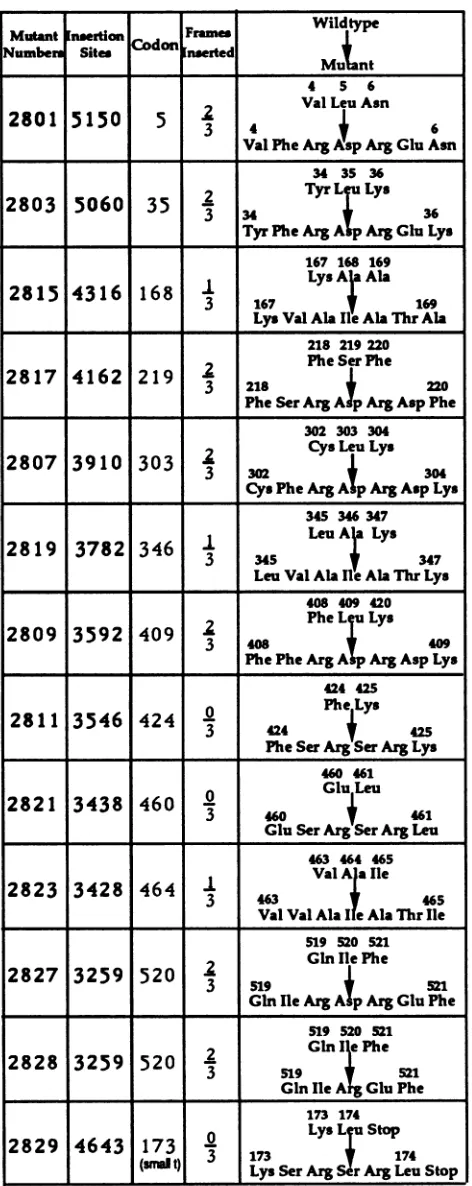
FIG. 1. Linker insertion mutants of SV40. Mutants were pre-paredasdescribedinMaterialsandMethods. The Tantigencodon interrupted by or immediately upstream of the inserted linker is listed. The frame of insertion refers to whether the linker was
inserted between 2 codons (0/3), after the first nucleotide of the disrupted codon(1/3),orafterthesecondnucleotide ofthedisrupted codon (2/3). The aminoacid sequencesofwild-type andinsertion
mutantTantigens,atthesite ofinsertion,areshown. Allinsertions maintain the normalreading framesonboth sides of theinsertion.
on November 10, 2019 by guest
http://jvi.asm.org/
[image:3.612.62.298.137.730.2]Tantigens which differ from the wildtypeby theaddition of four amino acids atthe site of the linker insertion(Fig. 1). The sequence of amino acids inserted depends on the reading frame of the insertion. Mutant inA2828(aa520) was
derivedfrominA2827(aa520) by digestiontocompletionwith NruIfollowedby ligation.This excised 6bpfrom theDNA, resulting in a mutant which encodes a large T antigen containing 2 amino acids inserted at the position of amino acid520.
Biological properties of the mutants. The effects of the mutations onthe SV40 lytic infection cyclewere examined
by plaque assay. Circularized viral DNAswere transfected
into CV-lp and BSC-1 cells. Mutants inA2801(aa5) and inA2829(small t)wereviable and formedplaques ofthesame
size and with thesameefficiencyaswild-type SV40inCV-lp cells at 33, 37, and 41°C and in BSC-1 cells at 37°C. The mutation in inA2829(small t) is in the region encoding the carboxy terminus of smalltantigen;itsviabilityis consistent with the previous observation that mutants affecting only smalltantigen have little effecton lytic infectionby SV40. Mutant inA2801(aa5) has a linker inserted at amino acid codon5,suggestingthatamutationneartheamino terminus of T antigendoes nothavemajoreffectsonthe functions of Tantigen required duringthelytic cycle. None of the other mutantsformedplaques in CV-lpand BSC-1 cells.
The SV40 large T antigen plays an essential role in initiation of viral DNAreplication (57). To seewhetherany
of thesenewnonviablemutantswerepositivefor viral DNA replication, mutantDNAsweretransfected into CV-1cells.
Cellswere harvested0, 1, 2, and 3 daysaftertransfection, and viral DNAwasisolated. Sensitivityof DNAproducedin eucaryoticcells todigestion byMboIwasusedtodistinguish the progeny DNAfrom input DNA. After MboIdigestion, the DNAs were analyzed by Southern blotting. No viral
DNAreplicationwasdetected in the cells transfectedbyany
ofthenonviable mutants.
Genetic complementation analysis. The ability of the
non-viableinsertion mutants tocomplement early and lategene
mutants was tested by cotransfecting CV-lp cells with insertion mutant DNA and DNA fromearly- andlate-gene mutants. MutantdIA1209(12)lacks 329bp (nucleotides4862 to 5191), including the normal early mRNA cap site, the entirefirstexonof thelarge T-antigen-codingregion,and the 5' splice site of the large T-antigen intron. It encodesnoT antigenbutcan provide capsid proteins. Asexpected, none
ofthe nonviable insertionmutantswas abletocomplement dlA1209(Table 1).MutantdlBC865containsasmalldeletion
at the SV40 EcoRI site (nucleotide 1782) and produces a
short amino-terminal fragment of VP1 and a wild type T antigen (9). All early gene mutants were expected to
com-plementthismutant. All thenonviableinsertionmutantsdid indeedcomplementdIBC865. However, the time of
appear-anceand thenumbers ofplaquesformed varied frommutant to mutant. In control plates which received 50 ng of both dlA1209 and dlBC865 DNA, about 50 plaques appeared on
each 60-mm plate 6 to 7 days after transfection, and the numberreachedamaximumofabout 200plaquesonday 10 or 11. Mutants inA2815(aal68), inA2817(aa219), inA2807
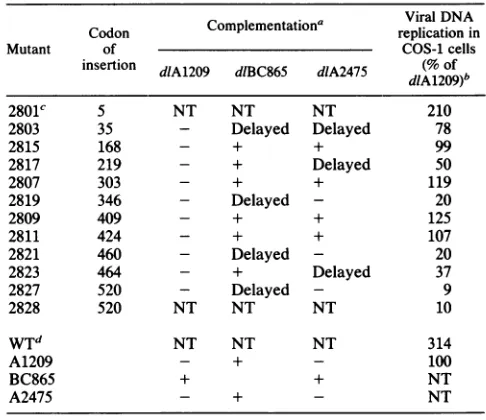
(aa303), inA2809(aa409), inA2811(aa424), and inA2823 (aa464) complemented dlBC865aswellasdIA1209(Table 1).
Mutants inA2803(aa35), inA2819(aa346), inA2821(aa460), and inA2827(aa520) showed delayed complementation with dlBC865. In plates transfected with inA2803(aa35) and dlBC865, plaques appeared 3 to 4days later andgrew more
[image:4.612.317.560.99.309.2]slowly than the control (dlBC865 and dlA1209). However, the specific infectivities (in PFU per milligram) of these
TABLE 1. Mutant DNAreplication in COS-1 cells and complementationanalysis
Complementation' ViralDNA
Codon replication in
Mutant of COS-1 cells
insertion dIA1209 dlBC865 dlA2475 (% of d1A12O9dIBC865 d1A2475 dlA1209)b
2801C 5 NT NT NT 210
2803 35 - Delayed Delayed 78
2815 168 - + + 99
2817 219 - + Delayed 50
2807 303 - + + 119
2819 346 - Delayed - 20
2809 409 - + + 125
2811 424 - + + 107
2821 460 - Delayed - 20
2823 464 - + Delayed 37
2827 520 - Delayed - 9
2828 520 NT NT NT 10
WTd NT NT NT 314
A1209 - + - 100
BC865 + + NT
A2475 - + - NT
aComplementation assays are described in Materials and Methods. +, Plaquesappearedatthesametimeasin the control(d1BC865ordIA1209),that is,6 to 7days aftertransfection; Delayed, plaques appearedmorethan 10days after transfection. NT, Nottested; -,noplaques appeared.
b The numbers represent the relative levels ofDNAreplication in Cos-1 cells(level indlA1209 = 100)averaged from samples isolated 3 and 5 days aftertransfection. The valueswerederived from densitometricscanningof comparable bandsonSouthern blotautoradiographsfromone experiment.
Theexperimentswererepeated, and similar levels of DNAreplicationwere
observed.
cinA2801(aa5)wasviable andwas nottested forcomplementation.
dWT,Wild type.
mutants were similar to that of dlA1209.
Complementa-tion between dlBC865 and either inA2819(aa346) or
inA2821(aa460) was also delayed by 3 to 4 days. Fewer
plaques (20to50% ofthetotal inthe control)wereformed,
but the plaques formed were normal in size and rate of
enlargement. In the case of inA2827(aaS20), the plaques
appeared at least 7 days later than on control plates. The
specific infectivityofinA2827(aa520)DNA was 10 to 20% of
that of dlA1209. We do not know whether more plaques
would haveappeared after further incubationbecausethese cells died after 20 days of incubation, even without SV40 infection. Complementation between dlBC865and inA2817
(aa219) or inA2823(aa464) was delayed by 1 to 2 days in
some experimentsand was normal in otherexperiments.
The C-terminal 80amino acids ofSV40 large T antigen
provide the hr/hf function (13, 66, 67). Mutants whose T
antigens lackthisdomain failtohelphumanadenovirusesto
grow in monkey cells and are unable to form plaques on
CV-lpcells. These mutantsproduce plaques on BSC-1 cells
and produce normal progeny yields in Vero cells (13). A
well-characterized membersof this class, dlA2475, produces
aTantigenlacking theC-terminal 26amino acids (13). We
reportedpreviously thatthismutant is able tocomplement
intracistronically other group A mutants that produce T
antigens containinganintact Cterminus(66). Formation of
plaquesbycomplementation(Table 1) betweendlA2475and
inA2803(aa35), inA2817(aa219), or inA2823(aa464) was
de-layed by 3 to 5 days. Mutants inA2819(aa346), inA2821
(aa460), and inA2827(aa520) did not complement dlA2475.
These results indicate that some of the insertion mutant T
antigens, eventhough theycontain normal Ctermini, were
unable to complement an hrlhf mutant. This could reflect
on November 10, 2019 by guest
http://jvi.asm.org/
A 2801 2803 2807 2809 WT
ml
- f -II -II '''-'0 1 3 5 0 1 3 5 0 1 3 5 0 1 3 50 1 3 5
s$:v.st =~~~~~~~~~~~tf :::
s
~ ~
m. @4..'a.~~~~~~~~~~~~~~~~~~~~~~~~~~~~~~~~~~~~~~~~~~~~~~~~~~~~~~~~~~~~~~~~~~~~~~~~~~~~~~~~~~~~~~~~~~~~~~~~~~~~~~~~~~~~~~~~~~~~
B 2811 2815 2817 WT
Mo
1 3 50
1 3 5 0 1 3 50~
35M
- MI
o 0
5 M
0
>M
D 2827
M
r-35
'IO
S0
C 2819 2821 2823 WT
M o
1 3 5o
1 3 5o
1 3 5o
1 3 54~~~~~4
282 8 W T 12 09 Mock
a
ajl ";I'J '~ .1
£~~~~~
'3
I
I
_- z
a!
0 :-a nC:s
5 Cf) M
gested
Jinput
NAI)igestedl
progenyD)NA
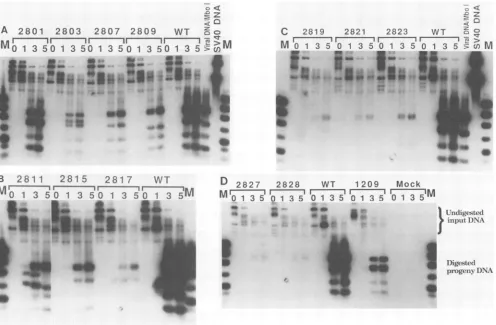
FIG. 2. MutantSV40 DNA replication in Cos-1 cells. Cos-1 cells were transfected with mutant DNAs. Progeny DNA was harvested 0, 1,3,and5dayslater, digested withMboI,andanalyzed byelectrophoresisin1.5% agarose gels. Afterelectrophoresis,aSouthern blot was prepared(50) andautoradiographed. Lanes M, Plasmid pCC2Pa digested withHinfl. Equalamounts of these markers were added on both sides of each geltomonitor the evenness of transfer of DNA to the nylon membrane and ofhybridizationwith theradiolabeledprobe. The lanes marked viralDNAIMboI containedMboI-digestedSV40DNAisolated from infected cells. The presence of anMboIsitewithin the linker caused differentmutants to have fragments of different sizes. WT, Wild type.
either their inability to provide the hr/hf function or, more
likely, their interference with replication activities of
dlA2475Tantigen.
Insertion mutant viral DNAreplication in Cos-l cells. The
interference of mutant T antigens with wild-type (or
dlA2475)Tantigencould occur during viral DNA replication
or at some other steps during the lytic infection cycle. To examine theinterferencefurther, viral DNA replication was
analyzed in Cos-1 cells transfected by various insertion
mutants. In Cos-1 cells, the large T encoded by the
inte-gratedSV40 genomepermitsreplication of introduced DNA
molecules containing a functional SV40 origin of DNA
replication. Viral DNAs were isolated 0, 1, 3, and 5 days
after transfection. MboI digestion was again used to
distin-guishtheinputDNAfrom progeny DNA in Cos-1 cells (Fig.
2). Mutant dlA1209 served as a positive control; because dlA1209 encodes no T antigen, the replication of dIA1209 DNA reflected the activity of the endogeneous large T
antigen encoded bythe integrated SV40 genome. Wild-type
SV40replicatedtoahigherlevel inCos-1 cells thandlA1209;
thisprobablyreflects the contribution to replication of both
the endogenousT antigen and the wild-type T encoded by
transfected SV40 DNA (Fig. 2D). The replication of inA2817(aa219) (Fig. 2B), inA2819(aa346) (Fig. 2C), inA2821(aa460) (Fig. 2C), inA2823(aa464) (Fig. 2C), and
inA2827(aa520) (Fig. 2D) DNAs was significantly reduced (50 to 95%) compared with that of dlA1209. Mutant
inA2828(aa520)(Fig. 2D), whichcontains a 6-bp insertion at
the same site as the 12-bp insertion of inA2827(aa520),
replicated to the same reduced extent as inA2827(aa520),
which replicated 5 to 10% as well as dlA1209. All these
mutants showed reduced complementation with either a
late-gene mutant
(d1BC865),
an hrlhf mutant (dlA2475) orboth. The data in Fig. 2 demonstrate that some of the
insertion mutant T antigens interfered with the replication functions of wild-typeTantigen.
Thereplication of inA2803(aa35) (Fig. 2A) in Cos-1 cells
was slightlyreduced compared to that ofdlA1209.
Interest-ingly, this mutant also showed delayed complementation
with dlBC865 and dlA2475. In contrast, mutants inA2817
(aa219) (Fig. 2B) and inA2823(aa464) (Fig. 2C) replicated
much less well in Cos-1 cells than mutant inA2803(aa35),
even though they complemented dlBC865 normally. This
could indicate that inA2803(aa35) interfered with functions
ofwild-type Tantigen distinct from viral DNAreplication.
Finally,someof theinsertionmutants[inA2807(aa303) (Fig.
2A), inA2809(aa409) (Fig. 2A), inA2811(aa424) (Fig. 2B),
andinA2815(aal68) (Fig. 2B)]replicatedaswellasdlA1209.
Interactions between wild-type and mutant T antigens in CV-1, HeLa, and 293cells. Theability ofinA2827(aa520)to
Wv.
0:
4*a.".
on November 10, 2019 by guest
http://jvi.asm.org/
[image:5.612.63.559.81.406.2]2827 1209
+ + Wildtype
_e p6-i p6-1
I: l-'I -- r-I
11 2 3 5 1 2 3 5 1 2 3 5
W T 2828 2817 2819
I I - I
5 17 0 5 17 0 5 17 0 5 t7
4 2t'0
I
S
is
.x** sp 0
_ , fw
-.ak:,:
MRW!1|
....-1:.
-.-_~~~~~~~~~~"
Mr dhl
FIG. 3. Viral DNA replication in cotransfected CV-lp cells. CV-lp cells were cotransfected with plasmid p6-1 and inA2827
(aa520) or d1A1209 DNAs. Other cultures were transfected with wild-type SV40DNA. Progeny DNAwas harvested1, 2, 3, and 5
days after transfection, digested with MboI andEcoRI, and
ana-lyzed by electrophoresis ina1.5%agarosegel.After electrophore-sis, aSouthern blot waspreparedandautoradiographed. LaneM, Plasmid pCC2Pa digested with Hinfl. Equal amounts of these markerswereaddedoneachside of thegeltomonitor theevenness
of transfer of DNAtothenylonmembrane and ofhybridizationwith
the radiolabeledprobe. Transferwaseven;only the left marker is shown.Lanes 2to5, inA2827(aa520)and p6-1cotransfection;lanes 6to 9,d1A1209 and p6-1 cotransfection; lanes 10to 13, wild-type SV40 transfection.
interfere withwild-type T antigen activities wasalso
exam-ined in cells cotransfected with inA2827(aa520) and a
plas-midexpressing wild-type T antigen. We used plasmid p6-1,
an origin-defective plasmidexpressing wild-type T antigen.
The absence ofa functionalorigin of replication prevented
replication from occurring in cells which received only p6-1 (datanotshown). Viral DNA replication couldnotoccurin
cells which received only mutant DNA, since all mutants examined in this experiment were replication defective.
Only cotransfected cells containedbothafunctionaloriginof
replication (provided on the plasmid expressing mutant T antigen) andareplication-competent T antigen (providedon
plasmidp6-1).
Much less viral DNA replication occurred in CV-1 cells (Fig. 3) cotransfected byinA2827(aa520) and p6-1 (lanes 2to 5)than in cellstransfected by wild-typeSV40 (lanes 10to13)
or cotransfected by dlA1209 and p6-1 (lanes 6 to 9). We estimate thatinA2827(aa520) replicatedto only 5 to 10% of
the level of the control plasmid, dlA1209. We observed a
similar interference by inA2827(aa520) in cotransfected HeLa and293 cells (datanot shown).
StabilitiesofmutantTantigens.Theinability ofamutantT antigen to carry out some functions ofT could be caused
eitherby absence of the protein, due to instability, orto a
functional defect in the mutant polypeptide. Analogously, interference with wild-type Tmaybe a common effect ofa
stablemutantTantigen; the lack of interference bysomeof
theinsertionmutantTantigens could reflect their instability. Toexaminethispossibility, cell lines expressingmutantT antigenswereprepared by cotransfecting BALB/c 3T3cells
- 97,
-'-TAg
-*p53
FIG. 4. Analysis of the stabilities ofmutantTantigens (T Ag). BALB/c 3T3 cells(2 x 10⁵)expressingthemutantTantigenswere seededonto60-mmdishes thedaybeforeradiolabeling.Cellswere
pulse-labelled for 2 h with [35S]methionine, and theneitherlysed immediately or chased in complete medium for 5 or 17 h (as indicatedatthe top of thefigure) beforelysis.Portions of celllysates from identical numbers of cells were immunoprecipitated with a mixture ofmonoclonal antibodiesPAb901 andPAb902,analyzed by electrophoresis on asodiumdodecyl sulfate-7.5% polyacrylamide gel,andfluorographed. WT, Wild type.
with pSV2neo and eitherwild-type or mutantSV40DNAs,
followedby selection for resistancetoG418. The stabilities
of the mutant T antigens were measured by pulse-labeling cells for 2 h with[35S]methionine, followed by incubationin
complete medium for 0, 5, or 17 h. The T antigens were
immunoprecipitatedwith anti-Tantigenmonoclonal
antibod-iesPAb901 and PAb9O2, whichrecognizeepitopes nearthe
Cterminusand N terminus oflargeTantigen, respectively
(J. Tevethia and S. Tevethia, personal communication).
Some examples of the fluorograms obtained are shown in
Fig. 4. The fraction of labeled T antigen remaining after 5-and 17-h chase periods was determined by densitometric
scanningoffluorograms;thesedata arepresentedin Table 2.
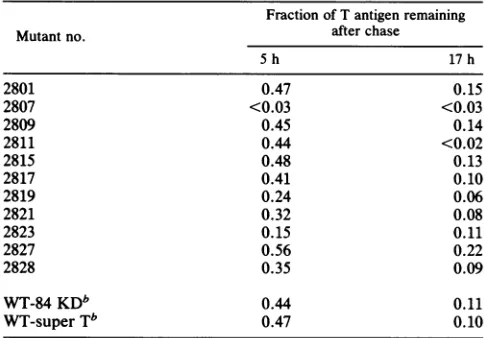
Allof the mutant TantigensexceptinA2807(aa303)were as stable aswild-type T. MutantinA2807(aa303) producesaT
antigen containing additional amino acidsatamino acid303.
ThisTantigenwasvery unstablesincelabeled Tantigenwas
notbedetectedafter a 5-h chase. For thewildtypeandmost
of the other mutants, 30 to 50% of the labeled T antigen remained after the 5-h chase. The fraction of T antigen
remaining after the 17-h chase ranged from 50% [inA2819
(aa346)]to170%[inA2827(aa520)] ofthe amountofwild-type
Tantigen remainingafter 17 h. Thesefindings indicatethat
thebehavior ofmost mutantTantigens ingenetic
comple-mentation tests and thereplicationpatterns of most mutants
inCos-1cellsreflect thepropertiesof the mutant Tantigens,
rather than theirinstability.
We were unable to obtain cell lines which expressed inA2803(aa35) T antigen. The transfection protocol used a 10:1 molar ratio of insertion mutant DNA to pSV2neo. Under those conditions, most G418' clones isolated were
expected to contain the insertion mutant genome. Fewer
G418r clones were obtained with inA2803(aa35); ofthe 16 clones examined, all were negative for expression of
on November 10, 2019 by guest
http://jvi.asm.org/
[image:6.612.88.279.81.287.2] [image:6.612.334.547.81.276.2]TABLE 2. Stabilitiesof large T antigens encoded by SV40 insertion mutantsa
Fraction of T antigen remaining
Mutant no. after chase
5h 17 h
2801 0.47 0.15
2807 <0.03 <0.03
2809 0.45 0.14
2811 0.44 <0.02
2815 0.48 0.13
2817 0.41 0.10
2819 0.24 0.06
2821 0.32 0.08
2823 0.15 0.11
2827 0.56 0.22
2828 0.35 0.09
WT-84KDb 0.44 0.11
WT-super Tb 0.47 0.10
aThe data are from densitometric scannings of fluorograms like the one
showninFig. 4. The numbers were normalized to the amount of T antigen presentafter the 2-h pulse-labeling.
bThere were two Tantigen bands immunoprecipitated from BALB/c 3T3 cells transformed by wild-type (WT) SV40 (Fig. 4). One migrates at the position expected for wildtype SV40 large T antigen. A larger species, super T, has been described previously (8a) and is often found in SV40-transformed cells.
inA2803 T antigen. This suggests that expression of
inA2803(aa35)Tantigen is deleteriousorlethal.
DISCUSSION
Inthispaper, wehave described thepreparationandinitial
characterization ofa set ofmutants which contain a 12-bp
oligonucleotide
linker inserted into restriction endonucleasecleavage sites located at positions within the SV40 early
region. The ability ofthese mutants toproduce plaques was
tested in CV-lp cells atthree differenttemperatures and in
BSC-1 cells at 37°C. The only mutant affecting large T
antigen whichwasabletoproduce plaquesunderanyofthe
conditions tested was inA2801(aa5), which has a linker
inserted at amino acid codon 5 of both small and large T
antigens. Since small t is not required for the SV40 lytic
cycle
inmonkey kidney celllines,
ourstudies donotindicatewhether this alteration affectsanyoftheproperties of small
t. The finding that alterations can be made near theamino
terminus oflargeTwithout
affecting viability
isinteresting.NootherSV40mutantswithlesions in this
region
havebeendescribed. Mutants with insertions or deletions located
slightlyfurtherfromthe N terminushave beenprepared,are
nonviable, and belong to the A complementation group.
Theseinclude inA2803(aa35),described in thesestudies,and
dlA1135, lacking
amino acids 17 to 27 (11, 39). MutantdlA1135(aa35) is defective for bindingto the SV40origin of
DNAreplication and forATPase activity. The
adenovirus-SV40 hybrid T antigen, D2, is competent for SV40 DNA
replication, even though it lacks the amino-terminal 114
amino acids oflarge T and has, in their place, 104 amino
acids encoded by adenovirus DNA sequences (4, 63,
64).
These dataareconsistentwith theamino-terminal
portion
oflargeTplayingastructuralrole in the overall conformation
of the
protein
orwithitsbeing
neededforother activitiesofTantigen orboth. Thechangesinthe
protein
causedby
theinsertionatcodon 5 did not alter theabilityof the
protein
toinduce DNA replication. In preliminary
experiments,
wehavefound that the T antigen encoded byinA2801(aa5) was less active thanwild-type T antigen in transactivation of the
SV40 late promoter and intransformation ofmouse 1OT1/2
cells and rat REF52 cells (Zhu and Cole, manuscript in preparation).
Six ofthe mutants wedescribed,with the linkerinserted at
codons35, 219, 346, 460, 464, and520, had reduced abilities to complement late-gene mutant dlBC865, hrlhf mutant dlA2475, or both. These defects in genetic complementation
could reflect additional mutations in the mutant genomes,
affecting the SV40 origin of replication, VP1 (the BC gene product), or the hr/hf region (the C terminusofTantigen). However, theinability of someinsertionmutants to
comple-ment either aBC mutant or an hrlhfmutantwould require
multiple additional lesions, makingthis possibility unlikely.
The T antigens encoded bydlBC865 and dlA2475 are both competent for viral DNAreplication; the insertion mutants providecapsid protein and hr/hf activity. Our results suggest that thecomplementationpatterns reflect the activities of the mutant large T antigens. We believe that theseT antigens
interfere directly with wild-type large Tfunctions required
duringthelytic cycle.
Todetermine whetherthe mutant Tantigens couldinhibit
viralDNAreplication mediated by wild-typeT, weanalyzed
viral DNAreplicationaftertransfection of mutant genomes
into Cos-1 cells. Allofthe mutants which showeddelayed
complementationshowed reduced levels ofreplication.This
reduction could becausedbydefectiveoriginsofreplication. We havereplacedtheorigin regions oftwooftheseinsertion mutants without affecting their ability to interfere. This
indicates that trans-dominant interference is a property of
the mutant Tantigens.
The degreeofinterference with viralDNA replicationin
Cos-1 cells varied from mutant to mutant. inA2803(aa35)
replicated slightly but reproducibly to a level about 25%
belowthatofthe controlDNA,dlA1209, which producedno
T antigen. DNA replication ofmutant inA2817(aa219) was
inhibited by more than 50% and inA2827(aa520) and
inA2828(aa520) bymorethan
90%
(Fig. 2, Table 1). Similarlevelsof interference with viralDNA replicationwere seen
in CV-1, HeLa, or 293 cells cotransfected with inA2827
(aa520)and anorigin-defective plasmid encoding wild-typeT
antigen (Fig. 3).
It isinteresting that inA2803(aa35) replicated better than
inA2817(aa219) or inA2823(aa464), even though inA2817
(aa219) and inA2823(aa464) complemented
dlBC865
moreefficiently thaninA2803(aa35). This raises the
possibility
thatthere are
multiple
mechanismsby which mutant Tantigens
can interfere with
wild-type
Tfunctions. We arecurrently
conducting
experiments
todetermine whether activitiesof T other than viral DNA replication aresusceptible
totrans-dominantinterferenceby mutantT
antigens.
Wealso noted that severalofthemutantT
antigens
didnotinterferewith thereplication activityofwild-type T
antigen.
The
possibility
thatthisreflectsinstability
of thesemutantTantigens was examined
(Fig.
4, Table2). Only one of the Tantigens encoded
by
noninterfering
mutants[inA2807
(aa303)] was unstable. Loeber etal. (30) described several
point
mutationsaffecting
theregion
from amino acid 302to320 andsuggestedfrom their results that this
region
may beinvolvedin theoverall structural framework of the
protein.
Mutant T
antigens
that are stable and do not interferemight not oligomerize, either with themselves orwith
wild-type T.
Alternatively,
these Tantigens might
be unable toform complexes with host DNA
replication proteins.
Inter-ference
might
bepossible only
if Tantigen
containedspecific
on November 10, 2019 by guest
http://jvi.asm.org/
posttranslational modifications, and some mutant Tantigens might show a pattern of modifications different from those of wild-type T.
OtherT-antigen mutants which show trans-dominant in-terference have been described. Mutants 5061 and 5062 (16)
produce T antigens containing amino acid insertions or
substitutions in the vicinity of amino acid 430, in the domain
involvedin nucleotide binding and ATPase-helicase activity.
Some of the mutants examined in our experiments affect
sitesrelatively close to the position of the mutations of 5061
and 5062; others affect sites quite distant from them.
Mu-tants of polyomavirus showing trans-dominant interference
with polyomavirus DNA replication have also been reported (37)and have lesions in the ATPase region of polyomavirus
large T antigen.
The ability of some purified SV40 mutant T antigens to
interfere with viral DNA replication in vitro has also been
reported. Mutants C6-2, T22, C8A, C2, andCll,with amino
acidchanges at positions 153, 203, 224, 516, and 523 or 549,
respectively, were able to inhibit viral DNA replication in a
concentration-dependent manner. Addition of a threefold
molarexcess of the mutant T antigen resulted in a 75 to 90%
reduction in the amount of radiolabeled substrate
incorpo-ratedintoSV40 DNA. In contrast to our studies and those of
Farber et al. (16), the mutant T antigens described by
Stillmanet al. (53) did not interfere with viral DNA
replica-tion when monkey cells producing the mutant T antigens
were infectedwith wild-typeSV40 (20).
Therearemultipleways in which a mutant T antigen could
interfere with wild-type DNA replication. It could bind to
andblockorigins of DNA replication, preventing wild-type
T antigen from using them. Alternatively, the mutant T
antigen could oligomerize with wild-type T, forming mixed
oligomersinactive in viral DNA replication. We do not know
whetherall of the monomers in an oligomer must be active
for theoligomerto participate in viral DNA replication. The
monomericform and possibly the dimeric form
(5S-7S)
of Tantigen are less phosphorylated (6, 36, 43, 55) and more
activein DNA binding than higher-order oligomers (6, 41).
Phosphorylation
of T antigen down-regulates the DNArep-lication mediated by T antigen (34, 46). Finally, T could
interfere by binding to and sequestering some host
compo-nent essential for viral DNA replication. T is known to
interact with host DNA polymerase a (18, 47) and might
interactwithothercellular DNA replication proteins.
trans-Dominant
interference in procaryotes, where theformationofoligomers is essential for regulation to occur,
has been described. The ability of mutant polypeptides to
interferewith wild-type activity through formation of mixed
oligomers has been described in the lac repressor system
(32) and in the case of recA (38, 44, 71, 72). Additional
experimentswill be required to determine whether there are
multiple mechanisms for trans-dominant interference by
SV40 Tantigenand how these mutantT antigens interfere.
ACKNOWLEDGMENTS
We thank Michelle Chamberlain, Catherine Heath, and Mita Vogel forexcellent technical assistance. We thank Kevin Haley for hisinvolvementin theearly stages of this project. We thank all the membersofourlaboratoryforhelpfuldiscussions.Critical reading ofthemanuscriptbyTerryl Stacy,Phil Rice, and Roger Denome is greatlyappreciated.
Thiswork wassupportedbyPublic Health Service grant CA39259 toC.N.C. from the National Institutes of Health and in part by a core grant from the National Cancer Institute (CA23108) to the Norris Cotton Cancer CenterofDartmouth Medical School.
LITERATURE CITED
1. Alwine, J. C. 1985. Transient gene expression control:effects of transfected DNA stability and trans-activation by viral early proteins. Mol. Cell. Biol. 5:1034-1042.
2. Alwine, J. C., S. I. Reed, and G. R. Stark. 1977. Characteriza-tion of the autoregulaCharacteriza-tion of simian virus 40 gene A. J. Virol. 24:22-27.
3. Arthur, A. K., A. Hoss, and E. Fanning. 1988. Expressing of simian virus 40 T antigen in Escherichia coli: localization of T-antigen origin DNA-binding domain to within 129 amino acids. J. Virol. 62:1999-2006.
4. Baumann, E. A., C.-P. Baur, M. Baack, and S. Beck. 1985. DNA sequence of the leftward junction in the adenovirus-simian virus 40 hybrid
Ad2+D2
and determination of the structure of the D2-T antigen. J. Virol. 54:882-885.5. Birnboim, H. C., and J. Doly. 1979. A rapid alkaline extraction procedure for screening recombinant plasmid DNA. Nucleic Acids Res. 7:1413-1423.
6. Bradley, M. K., J. D. Griffin, and D. M. Livingston. 1982. Relationship of oligomerization to enzymatic and DNA-binding properties of theSV40large T antigen. Cell 28:125-134. 7. Bradley, M. K., J. Hudson, M. S. Villanueva, and D. M.
Livingston. 1984. Specific in vitro adenylylation of the simian virus 40 large tumor antigen. Proc. Natl. Acad. Sci. USA 81:6574-6578.
8. Brady, J., J. B. Bolen, M. Radonovich, N. P. Salzman, and G. Khoury. 1984. Stimulation of simian virus 40 late gene expres-sion by simian virus 40 tumor antigen. Proc. Natl. Acad. Sci. USA 81:2040-2044.
8a.Burger, C., and E. Fanning. 1983. Specific DNA binding activity of T antigen subclasses varies among different SV40-trans-formed cell lines. Virology 126:19-31.
9. Carbon, J., T. E. Shenk, and P. Berg. 1975. Biochemical procedure for production of small deletioins in simian virus 40 DNA. Proc. Natl. Acad. Sci. USA 72:1392-1396.
10. Clark, R., D. P. Lane, and R. Tjian. 1981. Use of monoclonal antibodies as probes of simian virus 40 T antigen ATPase activity. J. Biol. Chem. 256:11854-11858.
11. Clark, R., K. Peden, J. M. Pipas, D. Nathans, and R. Tjian. 1983. Biochemical activities of T-antigen proteins encoded by simian virus 40 A gene deletion mutants. Mol. Cell. Biol. 3:220-228.
12. Cole, C. N., T. Landers, S. P. Goff, S. Manteuil-Brutlag, and P. Berg. 1977. Physical and genetic characterization of deletion mutants of simian virus 40 constructed in vitro. J. Virol. 24:277-294.
13. Cole, C. N., and T. P. Stacy. 1987. Biological Properties of simian virus 40 host range mutants lacking the COOH-terminus of largeTantigen. Virology 161:170-180.
14. Cole, C. N., J. Tornow, R. Clark, and R. Tjian. 1986. Properties of the simian virus 40(SV40)large T antigens encoded bySV40 mutants with deletions in gene A. J. Virol. 57:539-546. 15. DeCaprio, J. A., J. W. Ludlow, J. Figge, J.-Y. Shew, C.-M.
Huang, W.-H. Lee, E.Marsilio,E. Paucha, and D. V. Livingston. 1988. SV40 large tumor antigen forms a specific complex with the product of the retinoblastoma susceptibility gene. Cell 54:275-283.
16. Farber, J. M., K. W. C. Peden, and D. Nathans. 1987. trans-Dominant defective mutants of simian virus 40 T antigen. J. Virol. 61:436-445.
17. Galanti, N., G. J. Jonak, K. J. Soprano, J. Floros, L. Kacz-marek, S. Weissman, V. B. Reddy, S. M. Tilghman, and R. Baserga. 1981. Characterization and biological activity of cloned simian virus 40 DNA fragments. J. Biol. Chem.256:6469-6474.
18. Gannon, J. V., and D. P. Lane. 1987. p53and DNA polymerase
ax
compete for binding to SV40 T antigen. Nature (London) 329:456-458.19. Gluzman, Y. 1981. SV40-transformed simian cells support the replication of early SV40 mutants. Cell 23:175-182.
20. Gluzman, Y., J. Davison, M. Oren, and E. Winocour. 1977. Properties of permissive monkey cells transformed by UV-irradiated simian virus 40. J. Virol. 22:256-266.
21. Gluzman, Y., R. J. Frisque, and J. Sambrook. 1980. Origin
on November 10, 2019 by guest
http://jvi.asm.org/
defectivemutantsofSV40. ColdSpringHarborSymp. Quant. Biol. 44:293-299.
22. Goldman,N., M. Brown, and G. Khoury. 1981. Modification of SV40Tantigen bypolyADP-ribosylation. Cell 24:567-572. 23. Jarvis,D.L.,andJ.S. Butel.1985.Modification of simian virus
40largetumorantigen by glycosylation. Virology 141:173-189. 24. Keller, J. M., andJ. C. Alwine. 1984. Activation of the SV40 late promoter:direct effects of Tantigenintheabsence of viral DNAreplication. Cell 36:381-389.
25. Kelly, J. J., J. M. Munholland, and A. G. Wilderman. 1989. Comeasurement of simian virus 40 early and late promoter activityin HeLa and293cells in the presence ofTantigen. J. Virol. 63:383-391.
26. Kimura, G., and R. Dulbecco. 1973. A temperature-sensitive
mutantof simian virus40affecting transforming ability. Virol-ogy52:529-534.
27. Klockmann,U.,and W.Deppert. 1983.Acylated simian virus40
large Tantigen: a new subclass associated with a
detergent-resistant lamina of the plasma membrane. EMBO J. 2:1151-1157.
28. Lane, D.,and L. V.Crawford.1979.Tantigenisboundto ahost protein in SV40-transformed cells. Nature (London) 278:261-263.
29. Leoken, M., I. Bikel, D. M. Livingston, and J. Brady. 1988. Trans-activation ofRNApolymerase II andIII promotersby SV40smalltantigen. Cell 55:1171-1177.
30. Loeber, G.,R.Parsons,and P.Tegtmeyer. 1989. The zincfinger regionof simianvirus 40largeTantigen. J. Virol. 63:94-100. 31. Mandel,
M.,
and A. Higa. 1970. Calcium-dependentbacterio-phageDNAinteraction.J. Mol. Biol. 53:159-162.
32. Miller, J. H. 1978. The lac operon control and its use as a geneticsystem, p. 31-87. In J. H. Miller and W. S. Reznikoff (ed.),The operon. ColdSpringHarborLaboratory,ColdSpring Harbor,N.Y.
33. Mitchell, P. J., C. Wang, and R. Tjian. 1987. Positive and
negative regulation oftranscription in vitro: enhancer-binding
proteinAP-2is inhibitedby SV40Tantigen. Cell 50:847-861. 34. Mohr,I. J., B.Stillman,and Y. Gluzman. 1987. Regulationof
SV40DNAreplicationby phosphorylationofTantigen.EMBO
J.6:153-160.
35. Montenarh, M.,and R.Henning.1983. Self-assemblyof simian virus 40largeTantigen oligomers bydivalentcations.J. Virol. 45:531-538.
36. Montenarh, M., and D. Muller. 1987. Thephosphorylation at
Thr 124 of simian virus 40 large T antigen is crucial for its
oligomerization. FEBS Lett. 221:199-204.
37. Nilsson,S.V.,andG.Magnusson. 1984.Activityof
polyomavi-rus large T-antigen proteins expressed by mutant genes. J.
Virol. 51:768-775.
38. Ogawa, T.,H. Wabiko, T. Tsurimoto,T. Horii, H. Masukata, and H. Ogawa. 1978. Characteristics ofpurified recA protein and regulation of its synthesis in vivo. Cold Spring Harbor
Symp. Quant. Biol. 43:909-915.
39. Pipas,J.M.,K. W.C.Peden,and D. Nathans.1983.Mutational analysis of simianvirus40 Tantigen: isolation and characteri-zation ofmutants with deletions in the T-antigengene. Mol. Cell. Biol. 3:203-213.
40. Polvino-Bodnar,M., and C. N. Cole. 1982. Construction and
characterization ofviable deletion mutantsof simian virus 40 lackingsequencesnearthe 3' endof theearly region.J. Virol. 43:489-502.
41. Runzler, R.,S.Thompson,and E.Fanning.1987. Oligomeriza-tion andorigin DNA-binding activityof simian virus40largeT
antigen.J. Virol.61:2076-2083.
42. Scheidtmann, K. H., M. Hardung, B. Echle, and G. Walter.
1982. Simian virus 40 large T antigen is phosphorylated at
multiple sites clustered in twoseparate regions. J. Virol. 44:
116-133.
43. Scheidtmann, K. H., M. Hardung, B. Echle, and G. Walter. 1984. DNA-binding activity ofsimian virus40largeTantigen correlates with a distinct phosphorylation state. J. Virol. 50: 1-12.
44. Sedgwick, S. G., andG. T. Yarranton. 1982. Clonedtruncated
recA genes inE. coli. I. Effect on radiosensitivity and recA+ dependentprocesses. Mol. Gen. Genet. 185:93-98.
45. Shortle,D., and D. Nathans.1978. Local mutagenesis:amethod for generatingviral mutants in preselected regions of the ge-nome. Proc. Natl.Acad. Sci. USA 75:2170-2174.
46. Simmons, D. T., W. Chou, and K. Rodgers. 1986. Phosphoryla-tiondownregulatestheDNA-binding activityof simian virus 40 TantigenJ. Virol. 60:888-894.
47. Smale, S. T., and R. Tjian. 1986.T-antigen-DNA polymerasea complex implicated in simian virus 40DNA replication. Mol. Cell. Biol.6:4077-4087.
48. Soprano, K. J., V.G. Dev, C. M. Croce, and R. Baserga. 1979. Reactivation of silentrRNAgenesbysimianvirus40in human-mousehybridcells. Proc. Natl.Acad. Sci. USA 76:3885-3889. 49. Soprano, K. J., N. Galanti, G. J. Jonak, S.McKercher,J. M. Pipas, K. W. C. Peden, and R. Baserga. 1983. Mutational analysis of simian virus 40 T antigen: stimulation of cellular DNAsynthesisandactivationofrRNA genes bymutantswith deletions in theTantigengene.Mol. Cell. Biol.3:214-219. 50. Southern, E. M. 1975. Detection of specific sequences among
DNAfragmentsseparated by gel electrophoresis. J. Mol.Biol. 98:503-517.
51. Southern,P. J., and P.Berg. 1982.Transformation of mamma-lian cells to antibiotic resistance with a bacterial gene under control of the SV40 earlyregionpromoter. J.Mol.Appl.Genet. 1:327-341.
52. Stahl, H., P. Droge, and R. Knippers. 1986. DNA helicase activity of SV40 largetumorantigen.EMBO J. 5:1939-1944. 53. Stillman, B., R. D. Gerard, R. A. Guggenheimer, and Y.
Gluzman. 1985. T antigenandtemplate requirements forSV40 DNAreplicationin vitro;EMBOJ. 4:2933-2939.
54. Strauss, M., P. Argani, I. J. Mohr, and Y. Gluzman. 1987. Studies on the origin-specific DNA-binding domain of simian virus40large T antigen. J. Virol. 61:3326-3330.
55. Sturzbecher, H.-W., M. Morike, M. Montenarh, and R. Hen-ning. 1985.Relationship of phosphorylationtothe oligomeriza-tion of SV40Tantigen and its association withp53. FEBSLett. 180:285-290.
56. Takemoto, K. K., R. L. Kirschtein, and K. Habel. 1966. Mutants of simian virus 40differing in plaque size, oncogenicity, and heatsensitivity. J. Bacteriol.92:990-994.
57. Tegtmeyer, P. 1972. Simian virus 40 deoxyribonucleic acid synthesis: the viral replicon. J. Virol. 10:591-598.
58. Tegtmeyer, P. 1975. Function of simian virus 40 gene A in transforming infection.J. Virol. 15:613-618.
59. Tegtmeyer, P., K. Rundell,andJ. K.Collins. 1977. Modification of simian virus40proteinA.J. Virol.21:647-657.
60. Tegtmeyer,P., M.Schwartz,J. K. Collins, and K. Rundell.1975. Regulation oftumorantigen synthesis by simian virus40 gene A.J. Virol. 16:168-178.
61. Tevethia,M.J. 1984. Immortalization ofprimarymouseembryo fibroblasts with SV40 virions, viral DNA, and a subgenomic DNAfragment inaquantitativeassay. Virology 137:414-421. 62. Tevethia,M.J., J.M.Pipas,T.Kierstead,andC. N. Cole.1988.
Requirements for immortalization of primary mouse embryo fibroblastsprobedwith mutantsbearingdeletions in the 3'end of SV40gene A.Virology 162:76-89.
63. Tjian,R.1978. TheDNAbinding sitesonSV40DNAforaT antigen-related protein. Cell 13:165-179.
64. Tjian, R.,and A. Robbins.1979.Enzymaticactivitiesassociated withapurified simian virus40Tantigen-related protein.Proc. Natl.Acad. Sci. USA 76:610-614.
65. Tooze, J. 1981. DNATumorviruses, p. 801-804. ColdSpring HarborLaboratory, ColdSpring Harbor, N.Y.
66. Torrow,J.,and C. N. Cole. 1983. Intracistronic complementa-tion in thesimianvirus 40 A gene. Proc. Natl.Acad.Sci. USA 80:6312-6316.
67. Torrow, J., and C.N.Cole. 1983.Nonviablemutantsof simian virus 40 with deletions near the 3' end of gene A define a
function forlargeTantigen required afteronset ofviral DNA replication.J. Virol. 47:487-494.
68. VanRoy, F.,L. Fransen, and W.Fiers. 1983. Improved local-ization of phosphorylation sites in simian virus 40 large T
on November 10, 2019 by guest
http://jvi.asm.org/
antigen.J.Virol. 45:442-446.
69. Wiekowski, M., P. Droge, and H. Stahl. 1987. Monoclonal antibodiesasprobesforafunction oflarge T antigenduring the elongationprocessof simian virus40 DNAreplication.J.Virol.
61:411-418.
70. Wigler, M., A. Pellicer, S. Silverstein, R. Axel, G. Urlaub, and L. Chasin. 1979. DNA-mediatedtransfer of theadenine phospho-ribosyltransferase locus into mammalian cells. Proc. Natl.
Acad. Sci. USA76:1373-1376.
71. Yancy,S. D., and R. D. Porter.1984.Negative complementation of recA protein by recAl polypeptide: in vivo recombination requiresamultimeric form of recAprotein. Mol. Gen. Genet.
193:53-57.
72. Yarranton, G.T., and S. G.Sedgwick. 1982. Clonedtruncated
recAgenesin E.coli.II.Effects oftruncatedgeneproductson
in vivorecA+ protein activity. Mol. Gen. Genet. 185:99-104.