Remote Access Laboratories for Preparing STEM
Teachers: A Mixed Methods Study
Wu Ting
Australian Digital Futures Institute, University of Southern Queensland Peter R Albion
School of Teacher Education and Early Childhood, University of Southern Queensland Lindy Orwin
Australian Digital Futures Institute, University of Southern Queensland Alexander Kist
School of Mechanical and Electrical Engineering, University of Southern Queensland Andrew Maxwell
School of Mechanical and Electrical Engineering, University of Southern Queensland Ananda Maiti
Australian Digital Futures Institute, University of Southern Queensland
Bandura’s self-efficacy theory provided the conceptual framework for this mixed methods investigation of pre-service teachers’ (PSTs) self-efficacy to teach Science, Technology, Engineering and Mathematics (STEM) subjects. The Science Teaching Efficacy Belief Instrument-B (STEBI-B) was modified to create the Technology Teaching Efficacy Belief Instrument (T-TEBI). Pre-test and post-test T-TEBI scores were measured to investigate changes in PSTs’ self-efficacy to teach technology. Interviews and reflections were used to explore the reasons for changes in pre-service teachers’ self-efficacy. This paper reports results from a pilot study using an innovative Remote Access Laboratory system with PSTs.
Keywords: Self-efficacy, STEM, Remote Access Laboratories (RAL)
National requirement for STEM teacher preparation
Achieving a productive and progressive future for Australia will require a workforce with high levels of scientific and digital literacy developed through studies of Science, Technology, Engineering and Mathematics (STEM) subjects. Among other indicators, a Queensland government report has recognized that “innovation is key to economic growth and STEM is a key driver of innovation” (DETA, 2007, p. v). The Office of the Chief Scientist (2013) has noted the importance of STEM capability as a driver for innovation and prosperity.
Australian Curriculum: Technologies
The Australian Curriculum: Technologies comprises two subjects, Design and Technologies and Digital Technologies, proposed for study by all students from Foundation to Year 10 (ACARA: Australian Curriculum Assessment and Reporting Authority, 2013). Each is configured as dual strands addressing knowledge and understanding and processes and production skills within which are embedded key ideas of creating preferred futures, project management, systems thinking, design thinking, and computational thinking.
For most in-service and pre-service teachers many of the elements in the technologies curriculum were not part of their own schooling or teacher preparation. They will be unsure about the relevant knowledge and skills and will lack the repertoire of teaching ideas that they have for traditional subjects. They will require time and support for preparation. Thus, successful implementation of the Australian Curriculum: Technologies will require the provision of relevant resources and attention to relevant teacher development.
Remote Access Laboratories (RALs)
Remote Access Laboratory (RAL) are well established in universities for providing students with more flexible access to experiments, especially in electrical and computer control engineering (Maiti, Maxwell, & Kist, 2013). They have been used effectively in secondary schools (Lowe, Newcombe, & Stumpers, 2013) and may also offer benefits for primary schools through sharing of equipment that is expensive to acquire and maintain. There has been little research on RAL in teacher education (Kist, Maxwell, & Gibbings, 2012). This research is investigating the effects of RAL on the preparedness of pre-service teachers (PSTs) for STEM teaching.
RALfie
The Remote Access Laboratories for fun, innovation and education (RALfie) project represents a new approach to RAL. Where most RAL systems offer remote access to experiments at a central location such as a university campus, RALfie supports peer-to-peer sharing of experiments. It is creating a learning environment and the associated technical systems to allow children to create low cost RAL, using tools such as the Lego Mindstorms EV3 Programmable Brick, and share them with other learners online (Maxwell, Orwin, Kist, Maiti, Midgley, & Ting, 2013). Others can use the RAL, thus creating two types of participants: Makers and Users of RAL.
In this study, PSTs participated as RAL Makers in a two hour face-to-face workshop using Lego to build an experiment and then connect it to the RALfie environment using the interface called a RALfie Box. They also connected IP cameras to the RALfie Box, allowing remote viewing of the experiment in action. A web-based interface enabled remote control. PSTs were then able to view the experiment and control it remotely. Other PSTs were later recruited to participate as Users, accessing established RALfie experiments remotely.
RALfie and Teacher Preparation for STEM education
Teachers may have low confidence for teaching STEM because they lack STEM experience in their own education. Although self-efficacy, the belief in personal capability to achieve specific goals (Bandura, 1977), is not identical to confidence, it is related. It affects behaviour and persistence in the face of challenges and is informed by successful experience, seeing others succeed, persuasive influences, and emotional responses. Self-efficacy for science teaching has been studied using the Science Teaching Efficacy Belief Instrument (STEBI) (Riggs & Enochs, 1990) which includes subscales to measure self-efficacy (SE) and outcome expectancy (OE). SE refers to teachers’ personal beliefs that they can teach science successfully and OE refers to teachers’ beliefs that their teaching can influence students’ achievement (Bandura, 1997). Professional training has been found to increase primary teachers’ self-efficacy for teaching science (Albion & Spence, 2013).
RALfie has the potential to provide hands-on and online opportunities for PSTs to develop capability and confidence for implementing the Australian Curriculum: Technologies. Moreover, it offers resources to support related teaching after they graduate.
Research approach and method
their internal beliefs. A quantitative approach is insufficient to investigate the nuances of pre-service teachers’ self-efficacy and a qualitative approach is inadequate to explore the relationship between pre-service teachers’ self-efficacy for teaching STEM and engagement with RAL. Therefore, it is important to use a mixed methods approach to understand pre-service teachers’ self-efficacy to teach STEM by the use of RAL. Quantitative methods alone are unable to provide specific reasons why their self-efficacy changed. The limitations of a quantitative approach can be offset by the strengths of qualitative methods (Creswell, 2011).
PSTs’ self-efficacy for teaching technologies was measured using the T-TEBI instrument which has been derived from the STEBI-B (Enochs & Riggs, 1990) by adjusting the wording of items to reflect technology rather than science and, for some items, to better suit the Australian context. The 23 items comprise two subscales for efficacy expectations or self-efficacy (SE, 13 items) and outcome expectancy (OE, 10 items). TEBI items are presented for response on a 5-point scale, Strongly Disagree (1) to Strongly Agree (5). The T-TEBI was administered twice, before and after the PSTs have worked with RALfie activities. Quantitative data was analysed using SPSS to detect differences in pre-test and post-test measures. Efficacy expectations measure belief that a person can perform a behaviour necessary for some result and outcome expectancy is the estimation that the behaviour will produce the desired outcomes (Bandura, 1997).
Selected PSTs were also interviewed to explore aspects of their experience with RALfie activities. Qualitative data was analysed thematically using the sources of self-efficacy information as a guide (Bandura, 1997). This paper reports the data from a pilot study which was conducted in 2014 to inform the main study which is being conducted in 2015. For the purposes of this paper the qualitative data have also been analysed using the conference themes, globally connected and digitally enabled.
Quantitative results
There were 15 participants who completed both the pre-test and post-test T-TEBI surveys. Of those, 8 students had participated in RALfie activities, including 6 students who participated in both Maker and User events and 2 who participated only in a User event by remote access. There were 7 students who had not participated in any RALfie activities. All participants were USQ pre-service teachers enrolled in a final year technology curriculum and pedagogy course. The survey was administered online twice, at the beginning and end of semester one in 2014 using LimeSurvey. The URLs were broadcast in the Learning Management System for all students enrolled in the course. Once the survey had closed, data were transferred to SPSS for analysis.
The responses for each participant on each subscale (self-efficacy and outcome expectancy) were summed and divided by the number of items to yield a normalized score from 1 to 5. Figure 1 displays the differences in scores on the subscales in a bubble plot format. Filled circles represent 8 PSTs who participated in RALfie activities while the open circles represent 7 PSTs who did not participate. For both subscales there is an unanticipated decrease in scores for the RALfie user group and an increase for the non-users.
Figure 1: Differences in self-efficacy and outcome expectancy scores
from non-users group agreed or strongly agreed with the item 2. Reverse scored items are indicated by *.
Table 1: T-TEBI Self-Efficacy Scores (SE) N=15
*reverse score Pre-test Post-test
S D/D U A/S A S D/D U A/S A
2 I will continue to find better ways to teach technology. 8/7 8/7
* 3 Even if I try very hard, I will not teach technology as well as I will most
subjects
4/6 1/1 3/0 4/4 3/1 1/1
5 I am going to know the steps necessary to teach technology concepts
effectively.
1/1 7/6 3/1 5/6
* 6 I am not going to be very effective in monitoring technology learning
activities.
3/5 4/1 1/1 4/6 1/1 3/0
* 8 I am going to generally teach technology ineffectively. 8/7 6/6 2/1
12 I am going to understand technology concepts well enough to be
effective in teaching primary technology.
1/1 7/6 2/1 6/6
* 17 I am going to find it difficult to explain to students why technology
learning activities work.
5/3 2/4 1/0 4/4 1/1 3/1
18 I am going to typically be able to answer students’ technology questions 2/0 2/2 4/5 1/0 3/1 3/6
* 19 I wonder if I am going to have the necessary skills to teach technology 3/2 3/2 2/3 3/4 4/0 1/3
* 21 Given a choice, I am not going to invite the principal to evaluate my
technology teaching.
6/5 1/1 0/1 5/3 0/3 2/1
* 22 When a student has difficulty understanding a technology concept, I am
going to be at a loss as to how to help the student understand
7/4 1/3 5/5 3/2
23 When teaching technology, I am going to welcome student questions 8/7 8/7
* 24 I do not know what to do to turn students on to technology 4/6 2/1 2/0 5/6 2/1 1/0
The most notable changes in responses for self-efficacy items as shown in Table 1 was for items 5, 12 and 22. Those items all refer to ‘technology concepts’ and the PSTs who participated in RALfie activities recorded decreases in self-efficacy as measured by those items. Perhaps the most likely explanation is that the RALfie activities involved unfamiliar concepts and their limited exposure was not sufficient to develop confidence. On the other hand, they recorded increases for item 24, suggesting that their experience with the RALfie activities was engaging and they see the value of such activities in their own classrooms. At the same time the students who had not participated in RALfie activities recorded increases in their self-efficacy as indicated by items 17, 21 and 22, most likely resulting from their experience in the course they were studying.
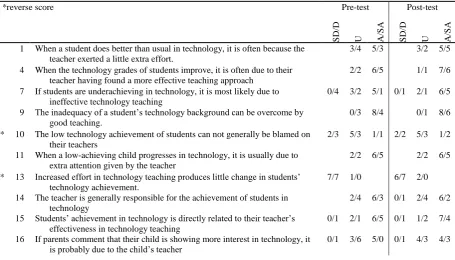
Table 2: T-TEBI Outcome Expectancy Scores (OE) N=15
*reverse score Pre-test Post-test
S D/D U A/S A S D/D U A/S A
1 When a student does better than usual in technology, it is often because the
teacher exerted a little extra effort.
3/4 5/3 3/2 5/5
4 When the technology grades of students improve, it is often due to their
teacher having found a more effective teaching approach
2/2 6/5 1/1 7/6
7 If students are underachieving in technology, it is most likely due to
ineffective technology teaching
0/4 3/2 5/1 0/1 2/1 6/5
9 The inadequacy of a student’s technology background can be overcome by
good teaching.
0/3 8/4 0/1 8/6
* 10 The low technology achievement of students can not generally be blamed on
their teachers
2/3 5/3 1/1 2/2 5/3 1/2
11 When a low-achieving child progresses in technology, it is usually due to
extra attention given by the teacher
2/2 6/5 2/2 6/5
* 13 Increased effort in technology teaching produces little change in students’
technology achievement.
7/7 1/0 6/7 2/0
14 The teacher is generally responsible for the achievement of students in
technology
2/4 6/3 0/1 2/4 6/2
15 Students’ achievement in technology is directly related to their teacher’s
effectiveness in technology teaching
0/1 2/1 6/5 0/1 1/2 7/4
16 If parents comment that their child is showing more interest in technology, it
[image:4.595.72.528.508.768.2]Table 2 presents the patterns of responses on the outcome expectancy items. The students who participated in RALfie events mostly recorded positive values on the pre-test, leaving little scope for increases though there were some on items 4, 7 and 16. Those who did not participate in RALfie activities recorded increases on those items and also on items 1 and 9. Overall the data indicate belief that teachers can make a positive difference to learning in technology through effective teaching.
Qualitative results
There were two sources of qualitative data, interviews and PSTs’ reflections in their assignment work. Six participants were interviewed. Aby, Shasha, Jo and Bek participated in both Maker and User Events for 5 hours. They were mature aged PSTs in their final year of prep aration as primary school teachers. Daniel and George, who participated in only the User Event for 1 hour, were mature aged PSTs in their first year of preparation as primary school teachers. Both of them had one year of study for an Engineering degree before switching to Education. Lilian was one of three PSTs who voluntarily wrote reflections about RALfie as part of their assignment. Lilian participated in the Maker Event for 2 hours. Four themes that were evident in the qualitative data are reported in this paper. Thematic analysis was used to analyse interview data (Clarke, 2013).
Theme 1. RALfie broadened PSTs’ view of enacting the Technology Curriculum
RALfie as an innovative technology provides both hands-on and online modes for participants to access STEM experiments. By engaging with RALfie, PSTs have a new experience of working with technology. RALfie activities are matched the requirements of the Technologies Curriculum such as “explore and use a range of digital systems with peripheral devices for different purposes, and transmit different types of data
(ACTDIK007)”. RALfie broadened PSTs’ understanding of how to implement the new Technologies Curriculum in classrooms.
RALfie provides opportunities for PSTs to learn to teach the Australian Curriculum: Technologies in an innovative way rather than the old-fashioned ICT style. Aby said, “Had I not known about RALfie and had the access to it in my previous courses, I would still have no idea about any other technologies that could be put into classrooms. I have never seen a Mindstorms kit ever in my prac. I probably would keep doing the same old-fashioned ICT that kind of stuff like technology in the curriculum.”RALfie is an innovative system which provides hands-on and online opportunities for teachers to integrate RALfie into their teaching practice in the classroom. RALfie broadened PST’s understanding of the new Technologies Curriculum. Instead of keeping on doing the old-fashioned ICT, RALfie offered creative ways to teach the Technologies Curriculum. Aby also commented, “Now I would be keener to use them because I have access to it before. I have experience with it…Seen that pendulum idea, wow it is pretty cool.” This response is consistent with enactive mastery experiences which is the principal source of self-efficacy information (Bandura, 1997). PST’s past successful experience working with RALfie will increase their self-efficacy to use RALfie or similar systems to implement the Technologies Curriculum in their classroom. Therefore, it is important to engage more PSTs in activities like RALfie that provide more opportunities for them to integrate technology activities for teaching the new
curriculum.
RALfie will make a difference for lesson planning and technology teaching in the classroom. Aby commented that “It [RALfie] will make a very big difference in regards to our lesson planning for the technology
curriculum. Probably make us more innovative in how we are going to teach things.” Aby realized the
significant educational purpose that RALfie can fulfill in assisting them to teach the new Curriculum. That is consistent with Daniel’s comment “It [the Pendulum activity] is just something appeal to them [school students]. It is different to learn about physics from how they normally would in the classroom”. By participating in both
the Maker and User Events, Aby had more exposure to RALfie activities in both hands-on and online modes. Spending more time with RALfie is more likely to increase PSTs’ understanding of the RALfie concept, self-efficacy and improve capacity and capability to teach the Technologies Curriculum in an innovative and creative way. Although Daniel participated in the User Event only for 1 hour, his engineering background probably assisted him to appreciate that RAlfie is different from the traditional way of teaching STEM.
Theme 2: Globally connected
2005). One of the principles of connectivism is that “learning is a process of connecting specialized modes or information sources” (Siemens, 2005, p. 4). Learning is focused on connections and specialized information sets or databases that enable us to learn more are far more important than our current state of knowing.
RALfie activity demonstrated that the world is globally connected. Shasha said “I think it [RALfie] can make differences in a lot of areas. I think the most important one would be just for students to learn how connected the world is. If they are in another part of the country they can control it”. The connectivity of RALfie is the
most important element which makes it different in Shasha’s opinion. In the digital age, people acquire competence from forming connections (Siemens, 2005). RALfie is a new learning tool which changes the learning environment and has a great potential to impact on learning. According to Connectivism, the ability to see connections among fields, ideas, and concepts is a core skill (Siemens, 2005). Shasha has learned through perceiving connections that RALfie enabled. RALfie offers both hands-on and online environments which represent innovation and change in technology-enabled learning (Bell, 2010).
Jo shared the same view with Shasha about the connectivity of RALfie and stated that “Users can go online and it can be done anywhere in Australia as long as you’ve got internet”. Furthermore, Jo explained the benefit of the connectivity that RALfie enabled. “So it is probably easier and cheaper alternatives for schools who cannot
buy them. But it provides all students with the same chance for building knowledge and learning”. Jo’s vision of
RALfie resonates with a major goal of RALfie: to use the potential to be globally connected to provide an equal learning opportunity for students who are disadvantaged due to their isolated location (Wu, Albion, Maxwell, Kist, Orwin, & Maiti, 2015). Students can access RALfie and learn anytime and anywhere, which could engage more children to learn STEM in the future.
RALfie is globally connected which shows the future of the world. Importantly, RALfie links the real hands-on experiments to remote access. Jo stated that “the traditional ways were not that interesting whereas this User event and the Maker event are very interesting. It shows where the world is moving. The world is moving to remote access…so it connects the real world and where the world is heading into. It provides a small snapshot of what could be in the future”. Connectivity is the future which links people and resources globally regardless
of location. However, if networked activities are to be substituted for hands-on activities, it is important to retain the sense of reality. The connection between hands-on experiments and remote access makes RALfie real and engaging for PSTs. Learning by making, tinkering and inventing is consistent with Piagetian Theory because hands-on activities are concrete (Martinez, 2013). Learning starts with concrete learning and proceeds to more abstract learning. The physicality of the Maker Event is concrete and the User Event is more abstract, involving aspects of computational thinking and conceptual thinking. The integration of Maker and User events is in line with people’s learning stages as described by Piaget (Piaget, 1973).
Theme 3: Digitally enabled
Digital skills and digital confidence are important for citizens in 21st century because they underpin the digital economy. Digital skills are fundamental to the growth and competitiveness of the economy. It is of great importance to enhance Australians’ digital skills to participate in the digital world. Digital technology also changes the way we communicate with one another, gain knowledge and discover new ideas. It also shapes teaching and learning in school subjects. Therefore, it is urgent to empower Australian students to use and access computer technology effectively to participate in Digital Economy (Office of the Chief Scientist, 2013). Correspondingly, teachers need to make the most use of technology in classroom teaching and learning to fully prepare students to participate and embrace the digital economy.
RALfie offers both hands-on and online opportunities for PSTs to embrace digital skills and digital confidence. Aby stated that “because the world is kind of focusing more and more on technology. It [RALfie] is heading in that direction and fostering innovation. As the technology progresses, it can progress with it”. RALfie is digital
technology which addresses key skills related to computational thinking and associated concepts, such as design thinking and conceptual thinking. Computational thinking is a key concept in the new Australian Curriculum: Technologies (ACARA, 2014). Computational thinking will empower children to change the future of the world (Catlin & Woollard, 2014).
designed and built them (Martinez, 2013). “I like the pendulum idea as an online activity...it was also based on science concepts of gravity. I think it is very helpful in the classroom”. Moving from hands-on RALfie to online
RALfie is in line with Piaget’s theory that learning should move from concrete learning to more abstract learning (Piaget, 1973). RALfie is a vehicle to teach science and technology together, which is consistent with the integration across learning areas favoured by the Australian Curriculum: Technologies (ACARA, 2014). RALfie enables students to “Investigate the main components of common digital systems, their basic functions and interactions, and how such digital systems may connect together to form networks to transmit data” (ACTDIK014).
Multi-level engagement through the use of RALfie has been identified. George commented on the online system by stating that “I like how it has experiment, system, levels and quests. Good fun stuff like that. I like interacting with a lab remotely. I feel that is exciting”. It is clear that George is engaged with RALfie cognitively by applying computational thinking skills and emotionally by feeling excited about the online system (Munns & Martin, 2005). Daniel said “You play with Lego Mindstorm kits and you are doing it remotely. For high school students it would be amazing experience just to be able to set it up and get it working and play with it.”Daniel’s
view that using the online system is highly engaging to youth is in line with the experience being engaging. Both Daniel and George were engaged cognitively and emotionally with RALfie, which is helpful for them to be self-efficacious about working with technologies. Even though they participated as Users only, they can still foresee the potential excitement of hands-on RALfie activities. That is consistent with their year of Engineering study that built up their self-efficacy in use the online RALfie system and be able to understand the hands-on activities. Both Daniel and George demonstrated their agency and power to learn by the use of RALfie (Bandura, 1997). The multidimensional construct of behavioural, cognitive, agentic and emotional engagement is substantive engagement (Munns & Martin, 2005). High levels of engagement with technologies are beneficial for these PSTs to develop their capacity and capability to work effectively with digital technologies in their future classrooms.
However, Bek had a different opinion on the online system. She participated in both Maker and User Event and said, “I like working with the hands-on part. I did not like the programming so much. I found that quite
complicated. Physically move it and handle the stuff are lots of fun. I found it is pretty engaging.”Although she participated in both modes of RALfie, she did not enjoy the programming side of the User Event and was more engaged at the behavioural level. The cognitive activities were beyond her current abilities and she would require more time and support to learn the relevant skills. However, being able to express her preference of RALfie activities demonstrated her agentic engagement by communicating likes and dislikes (Reeve & Tseng, 2011). Additionally, she might need to be matched with Daniel and George who are more comfortable with programming and computational thinking. In that way, there will be opportunities for Bek to learn vicariously from her peers (Bandura, 1997).
Theme 4. Frustration when using RALfie
Frustration is defined as an emotional state “which arises when the progress a user is making towards achieving a given goal is impeded” (Gilleade & Dix, 2004, p. 228). Frustration is a negative emotion. However, frustration is sometimes deemed necessary to heighten the overall experience which can be monitored to indicate when a user is in need of support (Gilleade & Dix, 2004). Frustration can be used as an indicator for change and professional training, which could assist the users to tackle situations they deem too hard to handle by themselves. Therefore, PSTs’ frustration offers a chance for the RALfie research team to provide professional training for the future users to avoid the negative emotion, which will help future users to persist through obstacles.
Frustration caused by RALfie has been identified in PST’s reflection. Lilian wrote her reflection in her
assignment: “At first this activity [RALfie Maker activity] was daunting and I felt overwhelmed, as I had never used this software [Lego Mindstorms] before. Although after collaboratively working through the explicit instructions with my group we were able to successfully create the car to move around its assigned network”.
The lack of previous successful experience working with RALfie resulted in frustration and low self-efficacy for using it which is consistent with self-efficacy theory (Bandura, 1997). The lecturer’s clear instructions were used to scaffold and facilitate the PSTs’ learning. In order to increase PTS’s self-efficacy to use RALfie to gain knowledge and skills to teach the Technologies curriculum, it is important to provide professional training to scaffold them. By working with a group, PSTs learn from each other in a collaborative way. That is consistent with Vygotsky’s theory that interaction with peers is an effective way of developing skills (Vygotsky, 1978).
identified in PSTs’ interviews. Shasha commented that “I know a lot of people when we started courses related to RALfie, they were so worried that they had no experiences in ICT and technology. Something like that might really intimidate them and put them off”. RALfie as an innovative technology is foreign and new to many PSTs.
The lack of previous experience of working with the tasks found within the RALfie system leads to worries and frustration which is consistent with self-efficacy theory (Bandura, 1997). From Vygotsky’s view, RALfie was perceived to be beyond the PSTs’ Zone of Proximal Development (ZPD). The ZPD has been defined as “the distance between the actual developmental level as determined by independent problem solving and the level of potential development as determined through problem solving under adult guidance, or in collaboration with more capable peers”(Vygotsky, 1978, p. 86).
Frustration of PSTs can be monitored for change and used for professional training. PSTs need to have more time exposure to RALfie Maker and User Events. The RALfie activities need to be monitored to a reasonable level of difficulty to meet individual learning needs. A sequence of progressively more difficult tasks and the use of levels in the gamification system are planned for the production version of RALfie and these may mitigate some of the frustration experienced with the tasks used in the research events. This research has confirmed the need for appropriate professional training resources in RALfie that will develop PSTs digital skills.
PSTs who used RALfie may have had an over-inflated view of what they knew about technology before they started the RALfie activities. Encountering RALfie in a one-off, high level Maker Event, instead of in the structured progression of activities from simple to more complex, might be far from the zone of proximal development (Vygotsky, 1978). They may have had too little contact with the system to learn enough
background information for the task they encountered. One or two experiences may be inadequate to move from novice to competent Maker. The chosen activity may not be suitable for novices so choosing a simpler activity might not have the same effect.
From a technical point of view, RALfie is a prototype system which will keep developing and progressing. It is important to reassure PSTs that the technology will keep improving. Future versions RALfie will be provide more support for novices and the platform will be more stable. Ensuring the participants are aware they are working with a prototype of the RALfie system and explaining how RALfie has evolved from a concept to reality could be reassuring to the PSTs. It is important so that they can believe that future RALfie activities will be more user-friendly. In this way PSTs may persist through current setbacks and use RALfie in the future.
Lessons learned from pilot study
The pilot study allowed for simple trials with the T-TEBI instrument derived from the STEBI-B (Enochs & Riggs, 1990) as described above. Although the small number of participants precluded statistical analysis of the data including standard checks of reliability, the pilot study provided an opportunity to test operation and usefulness of the online questionnaire and to confirm that participants were able to interpret the questions. The major study will require larger numbers of participants in both RALfie user and non-user groups and efforts have been made to encourage responses by offering entry to a prize draw for those who complete both pre-test and post-test.
The pilot study also provided opportunity to test interview questions and practise the techniques to be employed in conducting interviews and analysing the data. During the interviews it became apparent that the previous histories of participants as learners of science and technology in schools or beyond were significant. Those experiences influenced participants’ initial attitudes to the activities as well as the knowledge and skills they were able to bring to the activities. Interviews in the main study will be adapted to ensure that relevant
information about previous experiences is collected. Techniques for managing and analysing transcribed data in Nvivo were tested and adapted. That experience will inform the processes to be used in the main study.
Discussion
In reviewing the results from the T-TEBI pre-test and post-test, it was evident that the scores for SE and OE were slightly decreased for PSTs who had engaged with the RALfie activities but not for those who had not engaged with RALfie. From the interviews it was found that the RALfie concept was difficult to understand for PSTs without prior background, resulting in varying degrees of frustration as they tried to complete the
their self-efficacy of teaching technology concepts dropped after the involvement of RALfie. However, there was a positive shift on the item about turning learners on to technology, suggesting that despite the difficulties they found the RALfie activities engaging and saw the value of similar activities for their own future classes. That was supported by several comments in the interview data.
The change in outcome expectancy was less marked and the comparatively high pre-test scores suggests that there may have been some ceiling effect in play. That is, there was little scope for increased scores. It is possible that higher levels of outcome expectancy, coupled with desire to be the sort of teacher who could make a difference, contributed to the willingness of PSTs to volunteer for the RALfie activities so that the volunteers were somewhat self-selected for higher levels of OE. The non-volunteers did show some increase in OE between pre-test and post-test. In part that will have been because their lower initial scores allowed more scope for increase.
PSTs who had engineering background had more positive responses to the programming activity whereas PSTs who did not have engineering background preferred the hands-on activity rather than programming activity. PSTs’ background knowledge and experience has an impact on their self-efficacy for using the abstract programming system. In order to build up PSTs’ self-efficacy to teach STEM there would be benefit in seeking to include a wider range of activities in which they could gain positive experiences of working with STEM. Interview data also indicated that the lecturer’s explicit instructions helped PSTs to understand the RALfie concepts. That will have contributed to increased confidence for working with the RALfie activities and is consistent with the third source of self-efficacy information, verbal persuasion (Bandura, 1977). There would be value in offering PSTs additional instruction relevant to RALfie and other technology activities as a means of enhancing their self-efficacy for engaging with STEM subjects as learners and teachers.
Negative changes of PSTs’ self-efficacy to teach science and technology have been identified from the pre-test and post-test T-TEBI measures. However, from interviews there are plenty of positive comments that PSTs made about RALfie. The quantitative data did not quite match with the qualitative data in the sense that PSTs feel more self-efficacious to teach the Curriculum and RALfie enabled them to learn digital skills. Self-efficacy is a specific construct (Bandura, 1997). It is important to understand PSTs’ self-efficacy to construct an experiment, connect the experiment to a server to test networks, program the interface, and remote control the experiment. PSTs’ self-efficacy of using RALfie should be directly and specifically linked to key skills used in the RALfie. However, the T-TEBI instrument alone is not good enough to show the whole picture of PSTs’ self-efficacy. Therefore, it is important to expand and enrich the T-TEBI instrument by adding specific RAL-related questions such as “I will be able to control an experiment remotely”.
Even though frustration is a negative emotion, there are possible benefits for PSTs experiencing some frustration in the process of learning new technologies. When PSTs have a whole and full experience of using RALfie in the future, they may shift from being frustrated to being more self-efficacious by attending more professional training and having more time exposure to RALfie. The process of developing self-efficacy is important for PSTs to be more persistent when encountering setbacks in the future as they have had an experience of moving from being frustrated to being self-efficacious. Those PSTs who have been through the process of developing self-efficacy should be more determined and resilient to tackle more difficult technologies in the future and should understand more deeply about how to develop their students’ self-efficacy for using RALfie in the classroom.
Limitations of this study need to be addressed as well. The small sample size constrains the analysis of the quantitative data and does not permit generalization. In the interview process, there is the possibility of researcher bias in the process of data collection or analysis. To minimize bias, the researcher will cross check themes over time. This research has progressed to a larger trial after modification of the instruments and methods based on the findings of this pilot. Results of that study will be shared in future publications.
Acknowledgement: This research was supported through the Australian Government's Collaborative Research Networks (CRN) program.
References
ACARA: Australian Curriculum Assessment and Reporting Authority. (2013). Draft Australian curriculum: Technologies foundation to Year 10. Sydney. Retrieved 8th August 2014, from
Albion, P. R., & Spence, K. G. (2013). Primary Connections in a provincial Queensland school system:
Relationships to science teaching self-efficacy and practices. International Journal of Environmental & Science Education, 8(3).
Bandura, A. (1997). Self-efficacy: The exercise of control. New York: WH Freeman.
Bell, F. (2010). Connectivism: Its place in theory-informed research and innovation in technology-enabled learning. The International Review Of Research In Open And Distributed Learning, 12(3), 98-118. Catlin, D., & Woollard, J. (2014). Educational robots and computational thinking. Paper presented at the
Proceedings of 4th International Workshop Teaching Robotics, Teaching with Robotics & 5th International Conference Robotics in Education.
Clarke, V. V. (2013). Teaching thematic analysis. Psychologist, 26(2), 120-123. Creswell, J. W. (2011). Designing and conducting mixed methods research (2nd ed. ed.).
DETA, D. o. E. T. a. t. A. (2007). Towards a 10-year plan for science, teachnology, engineering and
mathematics (STEM) educaiton and skills in Queensland. Department of Education Training and the Arts. Queensland. from http://education.qld.gov.au/projects/stemplan/docs/stem-discussion-paper.pdf Enochs, L. G., & Riggs, I. M. (1990). Further development of an elementary science teaching efficacy belief
instrument: A preservice elementary scale. School Science and Mathematics, 90(8), 694-706. doi: 10.1111/j.1949-8594.1990.tb12048.x
Gilleade, K. M., & Dix, A. (2004). Using frustration in the design of adaptive videogames. Paper presented at the Proceedings of the 2004 ACM SIGCHI International Conference on Advances in computer entertainment technology.
Kist, A. A., Maxwell, A. D., & Gibbings, P. D. (2012). Expanding the concept of remote access laboratories.
Paper presented at the Proceedings of the 2012 ASEE Annual Conference and Exposition (ASEE 2012).
Lowe, D., Newcombe, P., & Stumpers, B. (2013). Evaluation of the Use of Remote Laboratories for Secondary School Science Education. Research in Science Education, 43(3), 1197-1219.
Maiti, A., Maxwell, A. D., & Kist, A. (2013). An overview of system architectures for remote laboratories.
Paper presented at the Teaching, Assessment and Learning for Engineering (TALE), 2013 IEEE International Conference on.
Martinez, S. L. (2013). Invent to learn : making, tinkering, and engineering in the classroom. Torrance Calif: Constructing Modern Knowledge Press.
Maxwell, A. D., Orwin, L., Kist, A. A., Maiti, A., Midgley, W., & Ting, W. (2013). An inverted remote laboratory-makers and gamers. Paper presented at the Proceedings of the 24th Annual Conference of the Australasian Association for Engineering Education (AaeE 2013).
MCEETYA. (1999). The Adelaide declaration on national goals for schooling in the twenty-first century. Canberra: M inisterial Council on.
Munns, G., & Martin, A. (2005). It’s all about MeE: A motivation and engagement framework. Paper presented at the Australian Association for Research in Education Conference, University of Western Sydney. Office of the Chief Scientist. (2013). Science, technology, engineering and mathematics in the national interest:
A strategic approach. Canberra. Retrieved 8th August 2014, from
http://www.chiefscientist.gov.au/2013/07/science-technology-engineering-and-mathematics-in-the-national-interest-a-strategic-approach/
Piaget, J. (1973). To Understand is to Invent: The Future of Education: Penguin Books.
Ping, R. M., Bradley, C., Gunderson, E. A., Ramirez, G., Beilock, S. L., & Levine, S. C. (2011). Alleviating anxiety about spatial ability in elementary school teachers. Paper presented at the Annual Meeting of the Cognitive Science Society, Boston, MA.
Reeve, J., & Tseng, C.-M. (2011). Agency as a fourth aspect of students’ engagement during learning activities.
Contemporary Educational Psychology, 36(4), 257-267.
Riggs, I. M., & Enochs, L. G. (1990). Toward the development of an elementary teacher's science teaching efficacy belief instrument. Science Education, 74(6), 625-637.
Siemens, G. (2005). Connectivism: A learning theory for the digital age. International Journal of Instructional Technology and Distance Learning, 2(1), 3-10.
Vygotsky, L. S. (1978). Mind in society: The development of higher psychological processes: Harvard University Press.
Westerlund, J. F., Radcliffe, R. A., Smith, D. A., Lemke, M. R., & West, S. S. (2011). Profiles of US science teacher candidates: Safeguards amidst the gathering storm. International Journal of Environmental & Science Education, 6(3).