LLeeaarrnniinngg IInnttoo PPrraaccttiiccee
The Evaluation of SIRCC HNC in
Social Care
Donna Liyanage
Acknowledgements
Thanks are due to all the SIRCC HNC in Social Care students who took time out of their busy
work schedules to complete the questionnaire.
Many thanks are also due to all members of SIRCC, in particular Jennifer Davidson and
Maureen Anderson for devoting their valuable time, especially at the questionnaire
development stage and their continued support. Preparatory work was undertaken by Lynne
Hunter and special appreciation is also due to Claire Burns, Fiona Feilberg, Sue Broussine,
Diane Ritchie, Stuart Marquis and Danny Butcher for their valuable comments on the
questionnaire. Ian Milligan and Maureen Anderson contributed with editing the text and the
final formatting was done by Michelle Lamont.
Donna Liyanage is an independent researcher. She is originally from Sri Lanka where she
studied in Business Administration and qualified as a lecturer. She now lives in Scotland and
Contents
EExxeeccuuttiivvee SSuum
mm
maarryy
44
C
Chhaapptteerr 11
BBaacckkggrroouunndd ttoo tthhee RReeppoorrtt
66
11..11
Introduction
66
11..22
Brief Description of HNC, Delivery Modes and Participants
77
C
Chhaapptteerr 22
M
Meetthhooddoollooggyy
1100
22..11
Introduction
1100
22..22
Nature of the Research
1100
22..33
Data Collection Method
1100
22..44
Selection of Sample
1111
22..55
Postal Survey
1111
22..66
Reliability and Validity
1111
22..77
Pre-testing Questionnaire
1133
22..88
Questionnaire Administration
1144
22..99
Data Analysis
1144
22..1100
Summary
1144
C
Chhaapptteerr 33
RReesseeaarrcchh FFiinnddiinnggss
1166
33..11
Introduction
1166
33..22
Profile of Respondents
1166
33..33
Individual Attributes
1199
33..33..11
Self Efficacy
2200
33..33..22
Decision Involvement and Expectancy
2211
33..33..33
Relationship between Individual Attributes
2211
33..44
Training Curriculum
2222
33..55
Relationship - Individual Attributes and Training Curriculum
2255
33..66
Work Climate
2266
33..66..11
Supervisor Support, Supervisor Feedback and Peer Support
2266
33..66..22
Work Environment
2277
33..77
Barriers to Implementation of Learning
2288
33..88
Core Skills Appraisal
2299
33..99
Learning on HNC and Change of Practice
2299
33..1100
Suggestions for Future Improvements
3333
C
Chhaapptteerr 44
D
Diissccuussssiioonn
3344
RReeffeerreenncceess
3377
A
Executive Summary
IInnttrroodduuccttiioonn
This research project analyses and reports the findings from a mail survey of 103 residential childcare workers who have completed the HNC in Social Care. The research aims to evaluate how students' learning impinged on their attitudes and their practice by identifying the facilitators and perceived barriers to the transfer of learning. The students who completed the HNC in Social Care in the year 2006 were chosen for the evaluation. The questionnaire was administered between April 2007 and May 2007.
FFiinnddiinnggss
Data collected from a large-scale mail survey of 103 completed HNC in Social Care students demonstrates that if respondents have prior knowledge about the course and if they are involved in making the decision to undertake the HNC course, they will be active learners and believe that they have the ability to undertake the course.
Many of the participants reported that the HNC in Social Care had changed their attitudes and practice in the workplace. They reported that they now work more collaboratively with other agencies and professionals and have improved confidence, morale and efficiency. They believed that they have developed better team-working skills across departmental boundaries and have improved communication with their teams and with their managers. They also believed that the HNC in Social Care helped them to manage available resources better and that they have more appreciation of different roles and challenges. Learning through the HNC in Social Care also helped them to involve young people more in decision-making and in making clear plans. Respondents also reported that they were more motivated and happier at work and had more knowledge and understanding of issues within residential childcare. Some also reported that they were more aware of others' feelings and cultural backgrounds as well as the complex issues that young people have to deal with.
Executive Summary
Results also suggest that behaviour on the part of supervisors is associated with respondents' ability to transfer learning to the workplace yet less than 50% of supervisors were engaged in behaviour associated with improving learning transfer. These findings are of concern considering the important role that supervisors play in the learning and development process.
Results also suggest that it is not sufficient to have a motivated supervisor. Organisational commitment to learning is also required. The organisation should have a strong culture that encourages workers to put learning into practice and should provide freedom to try new skills.
Recommendations are made based on the results of the study. These are as follows:
z Employers need to recognise the demands which undertaking the HNC place on workers. One form of
support provided by some, but by no means all, agencies is the provision of regular study days within the employee's rota.
z Supervisors should involve workers in decision making about training and being put forward for the
HNC course.
z Supervisors should be more knowledgeable about SIRCC's HNC in Social Care in order to support
workers from the selection process onwards. SIRCC should prepare materials about the course for supervisors and seek to engage them through a variety of means.
z SIRCC should disseminate the findings of this survey and attempt to engage employers around the
requirements for learning transfer. These findings contribute to the evidence base of what works for learning transfer.
Some respondents felt, however, that they were unable to implement their learning. Findings reflect the difficult working environment in residential child care and illustrate their difficulty in implementing new learning in their daily practice. The biggest barrier to implementing change was the heavy workload followed by insufficient workers on duty to facilitate 'trying out' new skills.
Chapter 1 - Background
11..11
IInnttrroodduuccttiioonn
The Scottish Institute for Residential Child Care (SIRCC) is funded by the Scottish Government and is a partnership between the University of Strathclyde,The Robert Gordon University (RGU), Langside College, and Who Cares? Scotland. The main aim of the Scottish Institute for Residential Child Care (SIRCC) is ‘to ensure that residential child care staff throughout Scotland have access to the skills and knowledge they require to meet the needs of the children and young people in their care’ (SIRCC 2001a). Services provided by SIRCC include advice and consultancy, organisational development, provision of in-service training and qualifications, and research. SIRCC offer services free of charge to residential child care workers employed by Scottish local authorities, independent and voluntary organisations, their managers, inspectors and trainees.
SIRCC believes that residential child care workers should be critically reflective practitioners who are able to use their learning effectively in the workplace. They should have a positive and influential voice in the development of child care and be empowered to promote good practice and challenge poor practice.
Review of the literature revealed that there has not been significant research carried out in the UK regarding the impact of training and education, especially in the residential child care sector. ‘This may be because of the substantial methodological difficulties in evaluating the impact of qualifications and measuring the presence of a qualified staff team as a single factor in improving the outcomes for young people’ (SIRCC, 2005b). Although there is no research evidence to show a direct correlation between qualification and workplace outcomes, a wide range of well-known reports have emphasised that weaknesses in residential child care would be better addressed by the strengthening of the workforce through training and education (Kent, 1997; Skinner, 1992; Utting, 1997).
Background
human services environment and the many factors which may be influencing the care practice of individuals who have undertaken particular training courses.
In 2005 SIRCC began to address this agenda by developing more in-depth evaluations of various types of training starting with specialist short courses (Kay and Stevens, 2006). This current research project is an evaluation of participants' perspectives of the effectiveness of the Higher National Certificate (HNC) in Social Care which is delivered by a number of Further Education colleges and RGU, that is courses funded by SIRCC. All the participants on SIRCC-funded HNC courses are residential workers who are released on a 'day-release' basis to undertake the course, or who access it through a variety of distance or open learning modes.
Langside College in Glasgow is one of the SIRCC managing partners and the largest of the Institute's providers of the HNC in Social Care. The HNC in Social Care is a generic social care course accredited by the Scottish Qualifications Authority (see below for details). The HNC delivered by SIRCC workers and contracted colleges (the SIRCC HNC) therefore teaches the same modules and outcomes, but the teaching materials and examples used consistently focus on the needs of children, young people and their families and residential child care contexts rather than on other settings or clients groups such as disabled adults or older people. The evaluation is designed to explore how students' learning impinged on their attitudes and their practice by identifying the facilitators and perceived barriers to the transfer of learning. In addition, the report examines a range of individual characteristics and workplace features associated with these barriers and facilitators.The main aim of this report therefore is to explore whether participants can identify what they have learnt on the HNC in Social Care and how that learning has had an impact on their attitudes and on their practice.
11..22
BBrriieeff D
Deessccrriippttiioonn ooff tthhee H
HN
NC
C iinn SSoocciiaall C
Caarree,, D
Deelliivveerryy M
Mooddeess aanndd PPaarrttiicciippaannttss
The HNC in Social Care is a nationally validated and recognized qualification and is considered appropriate vocational training for people who are either currently working in or who want to begin career in the care sector, i.e., residential child care. The purpose of the HNC in Social Care is to provide an integrated course of practice and theory to equip workers with the knowledge and basic skills to work effectively in a range of care settings through:
z Developing an understanding of the major influences on human development and behavior
z Enabling the demonstration of an understanding of the value base underpinning work in a social care
Background
z Enabling the linking of theory to a range of social care practice settings
z Providing an understanding of law, policy, resources and needs relevant to service users
z Equipping students with the skills and knowledge necessary to promote the independence of service
users in different settings
z Encouraging the development of practice using a process of critical self-evaluation.
The HNC in Social Care is offered at seven sites:
1. Robert Gordon University (RGU)
2. Langside College
3. Forth Valley College
4. Adam Smith College
5. Stevenson College
6. Dumfries and Galloway College
7. Inverness College
Langside and RGU are two of the partner organisations of SIRCC and the HNC course is delivered by them and also 'sub-contracted' out to other further education institutions. Senior workers from these providers together form an HNC Advisory Group which meets three times a year to discuss and develop the residential child care-oriented HNC. In order to make the course as accessible as possible, places are available on a number of routes. These include day release, distance learning, evening classes and blended learning. Optional modules offered also differ depending on the provider. All offer the mandatory HNC units:
z Social Care Theory for Practice
z Social policy and its Application to Social Services Provision
z Psychology for Social Care Practice
z Sociology for Social Care Practice
z Social Care Group Award 'Graded Unit'.
Background
The Group B Optional units offered consist of:
In all the courses a variety of teaching methods are used which include lecture, discussion, presentations, group exercise, seminars and research. Students are responsible for their own learning and there is a minimum attendance requirement for the course.
U
Unniitt TTiittllee
PPrroovviiddeerr
M
Mooddee ooff D
Deelliivveerryy
Understanding Loss and the Process of Grief
RGU
Forth Valley
Dumfries & Galloway Adam Smith
Day Release
Team Working in Care Settings RGU
Stevenson College
Distance Learning Blended Learning
Understanding and Supporting Behaviour
Langside RGU
Forth Valley
Dumfries & Galloway Adam Smith
Day Release
Stress Management (1/2 unit) and Counselling Awareness (1/2 unit)
Chapter 2 - Methodology
22..11 IInnttrroodduuccttiioonn
The literature review revealed that the transfer of learning from the HNC to the workplace is neither automatic nor guaranteed but depends upon certain personal and organisational characteristics. Based on this premise, this section summarises the major elements of the process. First, the nature of research, then the research approach and the data collection procedures used will be presented and explained. Finally, issues of reliability and validity as well as the statistical analysis framework and techniques employed will be briefly illustrated.
22..22
N
Naattuurree ooff tthhee RReesseeaarrcchh
The research aimed to examine the transfer of HNC knowledge and skills back to the workplace. It was an attempt to develop the body of knowledge in the area concerned by building on existing concepts and incorporating the findings of prior research. It began by exploring the transfer of training using published research in related fields. The main purpose of this initial stage was to define and clarify the information needed and to develop the questions. As already noted the objective of this research was to design an evaluative study focused on the transfer of HNC knowledge and skills back to the workplace and investigate the facilitators and barriers to knowledge transfer. The precision of the data requirement and the availability of resources indicate that the research design most likely to yield the required information at the least cost is descriptive cross-sectional research.
22..33
D
Daattaa C
Coolllleeccttiioonn M
Meetthhoodd
Methodology
22..44
SSeelleeccttiioonn ooff SSaam
mppllee
In this research, the population refers to all HNC in Social Care graduates from SIRCC providers in 2006. The sample frame was developed using SIRCC's database. This choice is based on the fact that, at present, it is the only database available which has information about all seven SIRCC providers. This database contained the home addresses of all HNC students and sufficiently detailed information about the members of the population under investigation, including names, work address and date HNC competed. In total, 567 students were identified as the population which comprised completed SIRCC HNC students since SIRCC began offering the HNC in 2000. The sample consisted of all graduates from the year 2006. In total, 215 students were identified as the sample.
22..55
PPoossttaall SSuurrvveeyy
Though the questionnaire used in this study appears lengthy, the researcher adopted widely-recommended guidelines for ensuring a high response (Green et. al., 1988; Churchill, 1991).
z Inclusion of a covering letter bearing SIRCC letterhead signed by the researcher (see Appendix 1).
z The appeal described the importance of services provided by the care workers and the fact that, with
the respondent's co-operation, factors could be identified both inside and outside the training process that serve to enhance or inhibit the transfer of knowledge and skills to the workplace.
z The letter was individually addressed to give it a personal touch.
z Provision of a pre-paid addressed envelope for the return.
z Offering all responses received by a certain date to be entered into a prize draw for a £20 gift
voucher and promising a copy of the report to all when it is ready.
z Sending a reminder letter together with another questionnaire and a stamped return envelope (see
Appendix 2 ).
22..66
RReelliiaabbiilliittyy aanndd V
Vaalliiddiittyy
Methodology
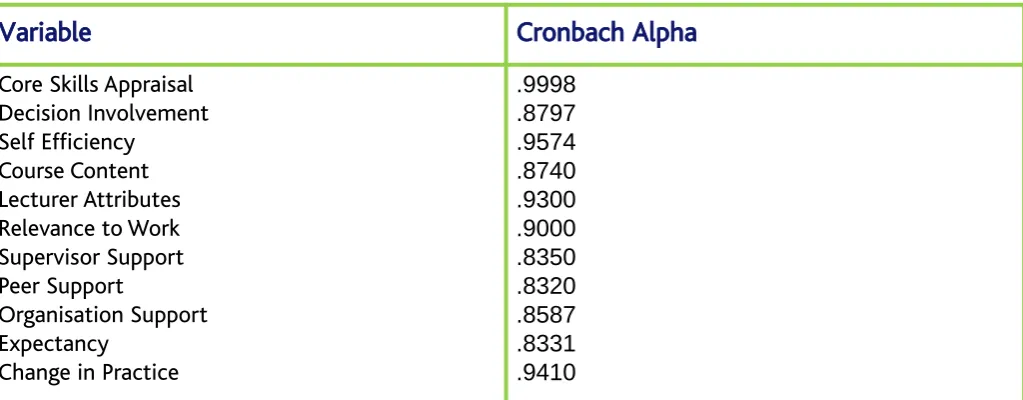
Table 2.1: Reliability Analysis Statistics
The calculated alpha coefficient ranged from .8320 to .9998. They satisfy Nunnally's (1967) threshold level of acceptable reliability coefficient for exploratory research, taken as equal to or greater than 0.8.
Internal consistency is a necessary but not sufficient condition for validity. To ensure adequate content validity of the measures used in the study, two steps were faithfully followed during the constructs' development. First, a thorough review of the relevant literature as well as literature within SIRCC was conducted to determine the appropriate concepts to be included. This resulted in an initial list of items/issues representing each of the study constructs. Second, the list of items was modified based on discussions with the members of the Advisory Group and some members of SIRCC at Langside College.
As to discriminant validity which refers to the degree to which a given construct differs from others, item-total correlation was calculated and the correlation coefficient was substantially high. It thus implies that no scale has to be dropped, as they contribute significantly in each case to the concept that the total index was designed to measure.
V
Vaarriiaabbllee
C
Crroonnbbaacchh A
Allpphhaa
Core Skills Appraisal Decision Involvement Self Efficiency
Course Content Lecturer Attributes Relevance to Work Supervisor Support Peer Support
Organisation Support Expectancy
Change in Practice
Methodology
22..77
PPrree-tteessttiinngg tthhee Q
Quueessttiioonnnnaaiirree
A number of steps was taken to test and validate the research questionnaire. Firstly, following the suggestion of Green et. al. (1988), the questionnaire was reviewed by SIRCC Advisory Group members to check its
clarity and content. As a result of this, significant changes were made to the questionnaire. The first draft
of the questionnaire was then discussed, question by question, with SIRCC's Assistant Director: Workforce Development and comments and suggestions were incorporated into a revised questionnaire. Then it was passed on to staff members of SIRCC at Langside College who have knowledge of the questionnaire's topic as such knowledge may affect the detection of errors in the pre-test. Following these discussions, changes with necessary modifications were made in both ideas and the sequence and wording of the questions. Finally, the questionnaire pre-tested on 19th February 2007 with five completed HNC students from Langside College. The purpose of this pre-test was to check on the operationalisation of the major sets of variables, the clarity of questions, and the appropriateness of the proposed scales. Two types of revision were indicated. First the need to eliminate redundant questions and second the desirability of introducing additional variables to reflect the realities of transfer of learning to workplace. The final questionnaire was then sent to the sample respondents after deciding that the questionnaire had no significant problems concerning the content validity or the structure of the questionnaire and the terms used. Data obtained was comprehensive and 'fit for the purpose' and there was no evidence that respondents had difficulty with any of the questions.
Methodology
[image:14.595.41.562.294.391.2]The postal survey was implemented between March 2007 and April 2007 to a total of 215 students. The first wave was mailed out on the 23rd March 2006. Reminder letters and a second copy of the questionnaire with pre-paid envelopes were posted as a follow up to all non-respondents in mid-April. The cut-off date was 30th April 2007. Thus the data collection period via mail survey was approximately one month, which is considered reasonable for a mail survey.
Table 2.2: Number of HNC Students selected for the mail survey
A total of 103 usable questionnaires representing a 47.9 per cent response rate were received by the cut-off
date. Five responses were discounted because they were returned by the Post Office as 'not known at this address'.
22..99
D
Daattaa A
Annaallyyssiiss
Analysis of data was carried out using SPSS for Windows version 14.0. Various descriptive statistics were computed including frequencies, mean, median, mode, standard deviation, and cross tabulation. These computations were performed for all the variables.
22..1100 SSuum
mm
maarryy
This chapter describes the research approach adopted in the present study. It has been concluded that the objectives of this study require that rich, quantitative data be collected and thus that the research design involve quantitative techniques.
D
Deessccrriippttiioonn
Total Completed Students 576
Students surveyed (2006 graduates) 215
Total Response 108 (50.2%)
Methodology
In addition, the review of the questionnaire and sample design was discussed with reference to the field survey carried out by the researcher. This illustrated the systematic approach adopted by the researcher when conducting her fieldwork. The chapter also explains the methodology of the fieldwork and the procedures taken to ensure a high level of reliability and validity in respect of the findings.
Chapter 3 - Research Findings
33..11
IInnttrroodduuccttiioonn
This chapter presents the findings of the report. The findings result from an analysis of the information provided by the 103 respondents who responded to the mail survey in terms of the foci of the research. It begins by outlining the profiles of the respondents and their characteristics. It then describes the results of the analytical process designed to examine the relationship between the transfer of learning and the organisational environment, supervisor support and peer support. A series of tests and analyses are carried out to determine factors that influence the transfer of learning as well as to distinguish characteristics associated with successful transferees and unsuccessful transferees.
33..22
PPrrooffiillee ooff tthhee RReessppoonnddeennttss
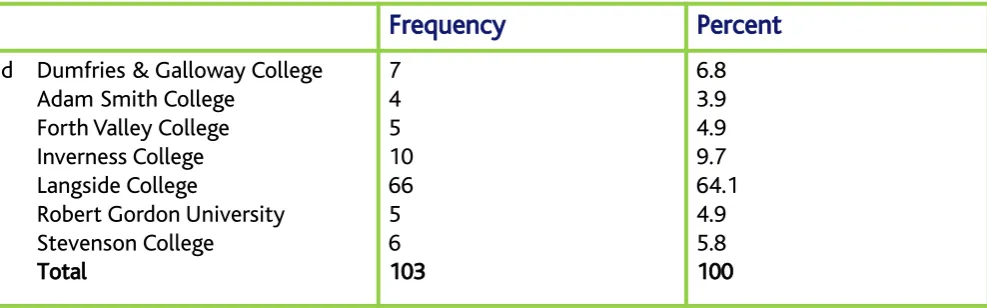
[image:16.595.61.555.457.611.2]Of the total 103 respondents, 66 (64.1%) were from Langside College, 10 (9.7%) from Inverness College, 7 (6.8%) from Dumfries and Galloway College, 6 (5.8%) from Stevenson College, 5 (4.9%) from RGU and 5 (4.9%) from Forth Valley College.
Table 3.1: Numbers of Respondents by Place of Study
The age of the respondents ranged from 16 to 60 years of age. Table 3.2 shows that highest proportion of respondents is aged between 24 and 39 years of age followed by those between 40 and 49. These two groups account for more than three quarters (76.7%) of respondents. Just over two thirds of the respondents (68.9%) were female and only 32 (31.1%) were male. This may suggest that the HNC course respondents represent the normal gender balance, given that previous SIRCC research shows that two thirds of the workforce is female (SIRCC 2004). Results also show the dominant nature of the residential child care sector
FFrreeqquueennccyy
PPeerrcceenntt
Valid Dumfries & Galloway College Adam Smith College
Forth Valley College Inverness College Langside College
Robert Gordon University Stevenson College
Total
7 4 5 10 66 5 6 103
Research Findings
[image:17.595.31.563.158.283.2]by the indigenous white ethnic group. All the respondents (100%) were white ethnic background.
Table 3.2: Number of Respondents by Age
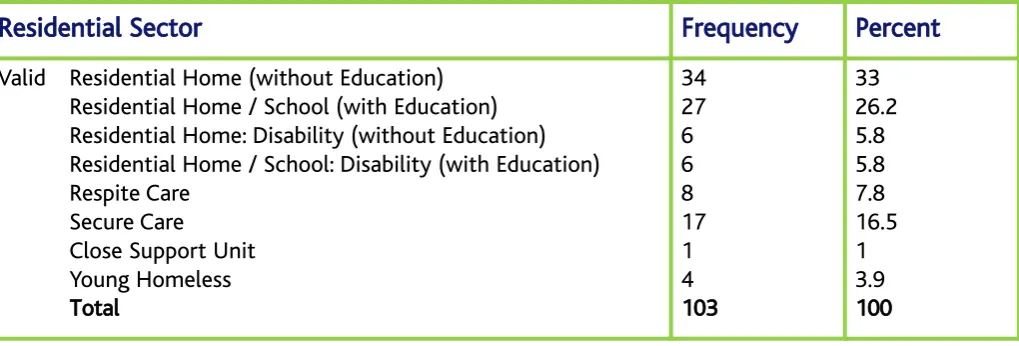
The types of establishment were defined following the classification used by SIRCC in its definition of the residential child care sector. Table 3.3 shows that the respondents who participated in this survey represent a wide spectrum of establishments. Of the total of 103 respondents, 34 (33%) were from Residential Homes (Without Education) and 26.2% from Residential Homes (With Education). 16.5% of the respondents work in Secure Care and 8 (7.8%) work in Respite Care. The remainder of the respondents fall under Residential Home: Disability (Without Education) 5.8%, Residential Home: Disability (With Education) 5.8%, Young Homeless 3.9% and Close Support Unit 1%.
Table 3.3: Number of Respondents by Types of Establishment
A
Aggee
FFrreeqquueennccyy
PPeerrcceenntt
Valid 16-24 24-39 40-49 50-59 Total
2 42 37 22 103
1.9 40.8 35.9 21.4 100
RReessiiddeennttiiaall SSeeccttoorr
FFrreeqquueennccyy
PPeerrcceenntt
Valid Residential Home (without Education) Residential Home / School (with Education) Residential Home: Disability (without Education) Residential Home / School: Disability (with Education) Respite Care
Secure Care
Close Support Unit Young Homeless Total
34 27 6 6 8 17 1 4 103
[image:17.595.46.556.474.647.2]Research Findings
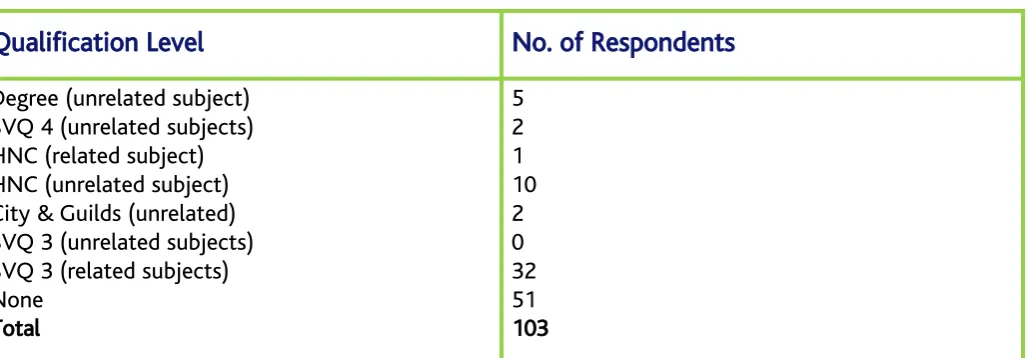
[image:18.595.47.561.270.449.2]In terms of prior qualifications, there was a high level of educational qualification amongst the respondents who attended the HNC in Social Care course with five of the respondents holding a degree (Table 3.4). Half of the respondents (50.5%) had a previous qualification while others (49.5%) did not have any qualification at all. Types of qualification included HNC in Computing, Word Processing, International Travel, Business Administration, Health Studies, Quality Management, Graphic Design and Building and Structure. Some also had City and Guild's Ship Building Certificate, NC Child Care and Education and Diploma in Health Studies.
Table 3.4: Number of Respondents with Prior Qualifications
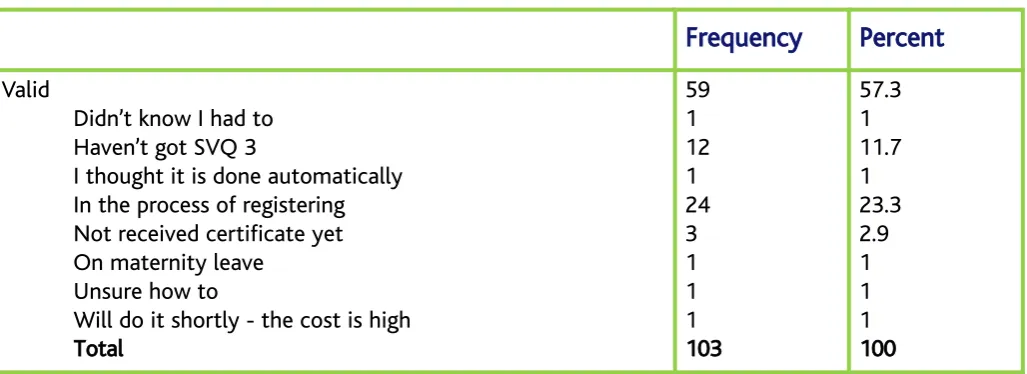
Results also show that 30 (29.1%) respondents are registered with the Scottish Social Services Council (SSSC) while 56 (54.4%) are not registered. Surprisingly, 17 respondents did not know whether they were registered with SSSC or not. Table 3.5 displays the respondents based on why they are not registered with SSSC. 23.3 % of the respondents are in the process of registering while 12 respondents indicated that they have not yet achieved SVQ 3. Other reasons for not registering includes not received certificate (3%), on maternity leave (1%), unsure how to (1%), didn't know I had to (1%) and cost is high (1%).
Q
Quuaalliiffiiccaattiioonn LLeevveell
N
Noo.. ooff RReessppoonnddeennttss
Degree (unrelated subject) SVQ 4 (unrelated subjects) HNC (related subject) HNC (unrelated subject) City & Guilds (unrelated) SVQ 3 (unrelated subjects) SVQ 3 (related subjects) None
Total
Research Findings
Table 3. 5: Why Not Registered with SSSC
Respondents decided to undertake HNC for different reasons. 74% of the respondents indicated that they undertook the course for career development, to develop skills and to improve their practice. Only 5.8% of respondents said that they undertook the HNC for the registration purpose. Even though registration is compulsory, results show respondents’ willingness to improve practice and develop skills. Surprisingly, 5% of the respondents reported that they chose the course because their supervisor asked them to do so.
33..33
IInnddiivviidduuaall A
Attttrriibbuutteess
Arguably the single unifying theme throughout training transfer literature is the importance of the individual attributes of the trainees. Individual attributes include the trainees' 'decision involvement', i.e. the level of involvement trainees have in the decision to apply for or to be put forward for training, and also includes their level of active involvement in the learning in the class-room, participation in group projects and so on. A second individual attribute is referred to as 'self efficacy', i.e. where trainees believe that they can learn and transfer some benefits to their job. A third attribute is described as 'expectancy', i.e. the level of knowledge the trainees have about the training and perceived utility. These have all been cited as contributing factors in the transfer of knowledge to the workplace (Gregoire et al., 1998; Wehrmann et al., 2002), although agreement as to their relative importance is far from universal. Some of these dimensions are explored further in this study and are summarised in following Table 3.6.
FFrreeqquueennccyy
PPeerrcceenntt
Valid
Didn’t know I had to Haven’t got SVQ 3
I thought it is done automatically In the process of registering Not received certificate yet On maternity leave
Unsure how to
Will do it shortly - the cost is high Total
59 1 12 1 24 3 1 1 1 103
Research Findings
Table 3.6: Summary of the Individual Attributes of the Trainees
Note: The scale used is a five point scale where 1=Strongly Disagree 2=Disagree 3= Neither Agree nor Disagree, 4=Agree, 5=Strongly Agree
33..33..11 SSeellff EEffffiiccaaccyy
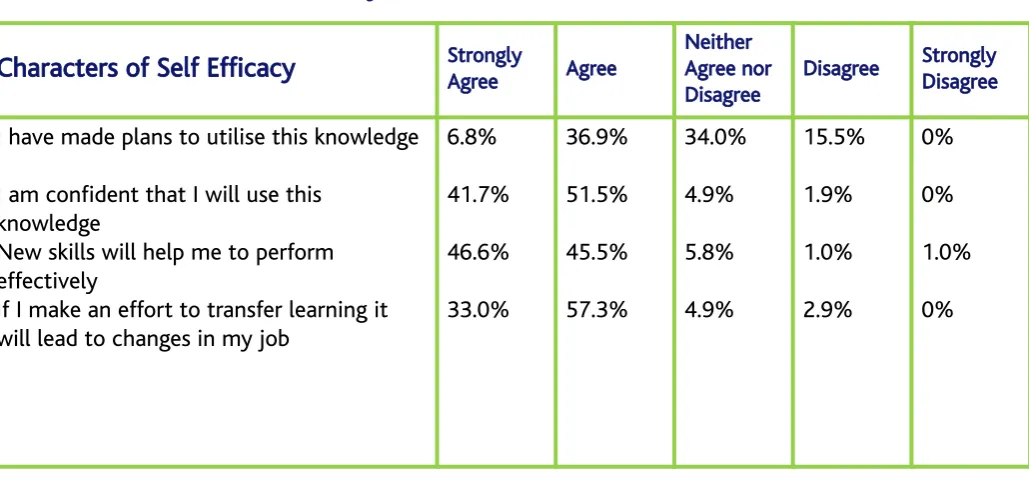
[image:20.595.43.558.528.770.2]As we can see in Table 3.6 above, respondents believed that they can learn and master training material and transfer some benefits to their job. This is clear from the high mean score for the agreement scale of Self Efficacy. However, a more detailed analysis (Table 3.7) highlights the point that 43.7% have made plans with a co-worker to utilise the knowledge and 93.2% of the respondents were confident that they will use this knowledge on the job. A similar number reported that new skills learned through the HNC will help them to perform the job more effectively. 90% believed that if they make an effort to transfer learning, it will lead to changes in job performance. Meanwhile, only 15.5% percent of the respondents reported that they have not made any plans to utilise the knowledge.
Table 3.7: Characters of Self Efficacy
V
Vaarriiaabbllee
M
Meeaann
SSttdd.. D
Deevv..
Self Efficacy 4.1 038
Decision Involvement 4.86 0.42
Expectancy 4.32 7.57
C
Chhaarraacctteerrss ooff SSeellff EEffffiiccaaccyy
SSttrroonnggllyyAAggrreeee AAggrreeeeN Neeiitthheerr A
Aggrreeee nnoorr D Diissaaggrreeee D Diissaaggrreeee SSttrroonnggllyy D Diissaaggrreeee
I have made plans to utilise this knowledge
I am confident that I will use this knowledge
New skills will help me to perform effectively
If I make an effort to transfer learning it will lead to changes in my job
Research Findings
33..33..22 D
Deecciissiioonn IInnvvoollvveem
meenntt aanndd EExxppeeccttaannccyy
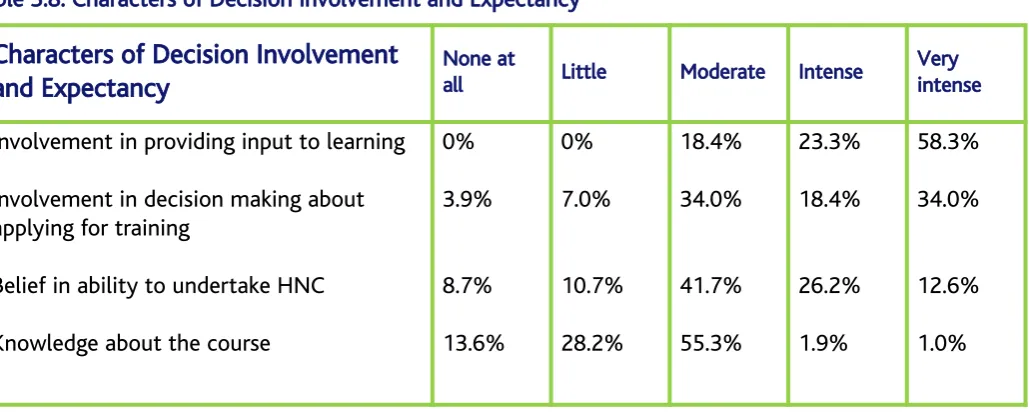
An overview of table 3.8 leads to the conclusion that to a greater extent, the majority of respondents were involved in decisions about training. This is evident from the high mean scores for the levels of involvement
that trainees have in the selection of training and their level of input into learning. A more detailed
[image:21.595.47.562.344.550.2]analysis highlights the fact that the nearly 81.6% of the respondents consider that they are highly involved in providing input into learning. About 52% reported that they are intensively involved in the decision to undertake the HNC. To a greater extent they believed that they had the ability to successfully undertake the course. A similar number (55%) reported that they had a moderate knowledge about the course before they started the HNC course.
Table 3.8: Characters of Decision Involvement and Expectancy
3.3.3 Relationship between Individual Attributes
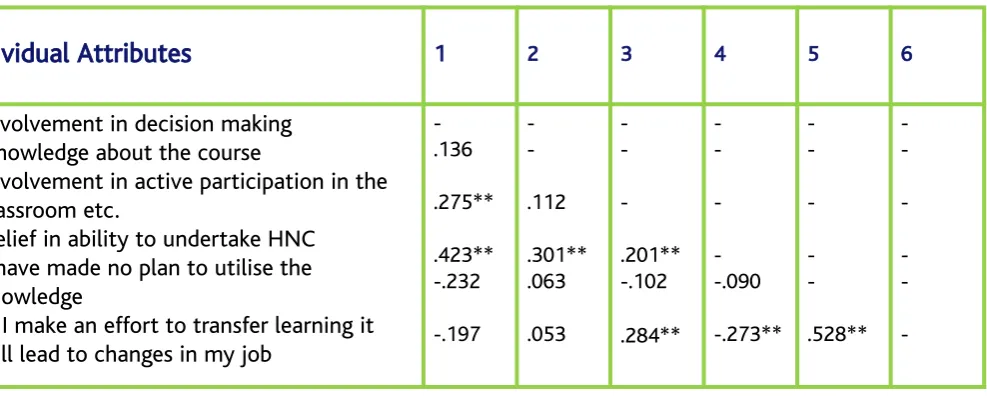
The interrelationship between variables describing the individual attributes is presented in Table 3.9. The relationship between individual characteristics is extremely important since these factors form a significant part of the transfer of learning.
C
Chhaarraacctteerrss ooff D
Deecciissiioonn IInnvvoollvveem
meenntt
aanndd EExxppeeccttaannccyy
N Noonnee aatt
aallll LLiittttllee MMooddeerraattee IInntteennssee V Veerryy iinntteennssee
Involvement in providing input to learning
Involvement in decision making about applying for training
Belief in ability to undertake HNC
Knowledge about the course
0%
3.9%
8.7%
13.6%
0%
7.0%
10.7%
28.2%
18.4%
34.0%
41.7%
55.3%
23.3%
18.4%
26.2%
1.9%
58.3%
34.0%
12.6%
Research Findings
Table 3.9: Relationship between Individual Attributes - Pearson Correlation
**. Correlation is significant at the 0.01 level (2-tailed)
The results show that significant associations exist between self efficacy and decision involvement as well as expectancy. Residential workers who were involved in the decision making to undertake the HNC course and who had prior knowledge about the course and were actively involved in classroom learning believed that they have the ability to undertake the course.
33..44
TTrraaiinniinngg C
Cuurrrriiccuulluum
m
According to Gregoire et al.(1998) curriculum represents an important area to transfer of learning. An effective training curriculum is reported to include clear objectives relevant to work context, positive trainer characteristics, and performance feedback (Rooney, 1998; Gregoire, 1998; Wehrmann et. al., 2002). All these dimensions are explored further in this study and are summarised in following Table 3.10.
IInnddiivviidduuaall A
Attttrriibbuutteess
1 22 33 44 55 661. Involvement in decision making 2. Knowledge about the course
3. Involvement in active participation in the classroom etc.
4. Belief in ability to undertake HNC 5. I have made no plan to utilise the
knowledge
6. If I make an effort to transfer learning it will lead to changes in my job
-Research Findings
Table 3.10: Training Curriculum
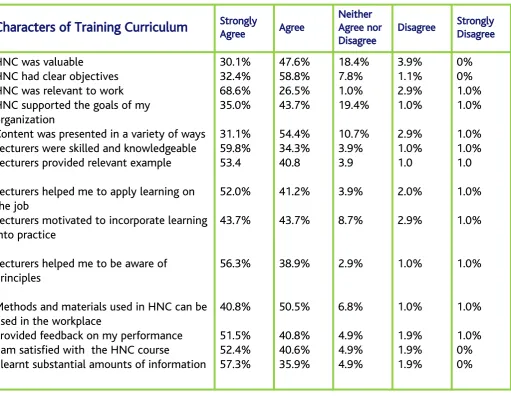
As we can see in Table 3.10 above, respondents considered that the curriculum offered in the SIRCC courses is a very important factor for achieving learning. A more detailed analysis highlights the point that 91 per-cent of the respondents agreed that the HNC course had clear objectives, while only 1% disagreed. A similar number of respondent (92%) also believed that this HNC was relevant their work and it mirrored the goals of their organisation. Around 95% of the respondents believed that the content was presented in a variety of ways and the lecturers, group work, assignments, handouts, logbooks, presentation, as well as the other students helped them to put what they learned in to practice. Respondents believed that the lecturers were skilled and knowledgeable and they helped the respondents to see how the learning can be applied on the job.
C
Chhaarraacctteerrss ooff TTrraaiinniinngg C
Cuurrrriiccuulluum
m
SSttrroonnggllyyAAggrreeee AAggrreeeeN Neeiitthheerr A
Aggrreeee nnoorr D Diissaaggrreeee D Diissaaggrreeee SSttrroonnggllyy D Diissaaggrreeee
HNC was valuable
HNC had clear objectives HNC was relevant to work HNC supported the goals of my organization
Content was presented in a variety of ways Lecturers were skilled and knowledgeable Lecturers provided relevant example
Lecturers helped me to apply learning on the job
Lecturers motivated to incorporate learning into practice
Lecturers helped me to be aware of principles
Methods and materials used in HNC can be used in the workplace
Provided feedback on my performance I am satisfied with the HNC course
I learnt substantial amounts of information
Research Findings
Nearly 95% of the respondents agreed that the lecturers provided appropriate examples relevant to child care
and motivated them to incorporate new learning into practice. They also believed that methods and
[image:24.595.36.563.393.541.2]material used during the HNC can be used in the working environment. Moreover, in total, 95% of the respondents agreed that the lecturers/the course helped them to become aware of underlying principles (guiding values) which can be used with different cases and situations. As can be seen from the following table (Table 3.10), 92.2 percent of the respondents agreed that they were provided with feedback on their performance while only 2.9% of the respondents disagreed. Overall 93.2% of the respondents were very satisfied with the HNC in Social Care course and they believed that they learnt a substantial amount.
Table 3.11: Provided Feedback on My Performance
"II did not have any experience before starting the course. II have found that without it II would not able to do my job properly. II believe that everything II learnt from HHNNC was beneficial to my working practice.
EEveryday II think back to what II learnt and look for opportunities to use the skills" ((19)).
FFrreeqquueennccyy PPeerrcceenntt VVaalliidd PPeerrcceenntt
C
Cuummuullaattiivvee PPeerrcceenntt
Valid Strongly Agree Agree
Neither Agree Nor Disagree Disagree
Strongly Disagree Total
53 42 5 2 1 103
51.5 40.8 4.9 1.9 1 100
51.5 40.8 4.9 1.9 1 100
Research Findings
[image:25.595.47.549.175.367.2]33..55
RReellaattiioonnsshhiipp BBeettw
weeeenn IInnddiivviidduuaall A
Attttrriibbuutteess,, TTrraaiinniinngg C
Cuurrrriiccuulluum
m aanndd LLeeaarrnniinngg O
Ouuttccoom
mee
Table 3.12: Correlation Between Individual Attributes and Training Curriculum on Learning Outcome
**correlation is significant at the 0.01 level (one-tailed) * correlation is significant at the 0.05 level (one-tailed)
According to the analysis of the relationship between self efficacy and learning outcome, there is real
evidence to suggest that the self efficacy does affect the learning outcome. The relationship was examined through Pearson's correlation coefficient (table 3.12). Self efficacy is by far the most important factor within the individual attributes group and was positively and significantly correlated with learning outcome. However expectancy and decision involvement were not significantly correlated with the dependent variable.
Among the conceptual variables relating to training curriculum, it appears from table 3.12 that the trainer attributes is by far the most important explanatory variable. The indicator shows a strong positive relationship between learning outcome (p = .680, p<.01). When the lecturers provide appropriate examples relevant to child care and when the lecturers motivate them to incorporate new learning into practice learning the outcomes will be very high. Performance feedback, curriculum design and clear objectives were all significantly correlated with the learning outcomes at the p<.01 level.
IInnddeeppeennddeenntt V
Vaarriiaabbllee
LLeeaarrnniinngg OOuuttccoommee
Pearson Correlation
Significance
Self Efficacy
Decision Involvement Expectancy
Trainer attributes Performance Feedback
Curriculum Design (Relevant to Work) Clear Objectives
.580** .222 .096 .684** .661** .577** .466**
Research Findings
33..66
W
Woorrkk C
Clliim
maattee
The success of the training depends on the work environment in nurturing new skills and bringing about training transfer (Gregoire, 1998). From the point of view of SIRCC this is the least controllable variable. In this section of the report supervisor support, supervisor feedback, peer support, and work environment will be explored.
33..66..11 SSuuppeerrvviissoorr SSuuppppoorrtt,, SSuuppeerrvviissoorr FFeeeeddbbaacckk aanndd PPeeeerr SSuuppppoorrtt
Research Findings
Table 3.13: Supervisor Support, Supervisor Feedback and Peer Support
Over 70% of the respondents reported that their peers often or always provide their support to complete the HNC. Peers frequently support before, during and after the course. Respondents also believed that peers show patience and appreciation when new skills and knowledge are tried and used and they support the use of learning on the job.
33..66..22 W
Woorrkk EEnnvviirroonnm
meenntt
Only half of the respondents believed that their organisation has a strong culture that encourages them to put learning into practice and provides freedom to try new skills, while the other half believed that they do not have a strong culture to support their skills. Moreover, 42.6% of the respondents reported that in their organisation mistakes are seen as an opportunity to learn and not to blame. However, nearly half of the respondents believed that in their organisation, failure to apply new learning is not noticed or dealt with.
C
Chhaarraacctteerrss ooff SSuuppeerrvviissoorr SSuuppppoorrtt
SSttrroonnggllyyAAggrreeee AAggrreeeeN Neeiitthheerr A
Aggrreeee nnoorr D Diissaaggrreeee D Diissaaggrreeee SSttrroonnggllyy D Diissaaggrreeee
My supervisor asks me about the knowledge I gained from HNC
My supervisor encourages me to try new skills
My supervisor provides support to try new skills
My supervisor discourages trying new approaches to work problems
My supervisor does not react negatively to use of new skills
My supervisor checks back with me to see how my efforts are going
My supervisor works with me on problems My supervisor assists in identifying
opportunities
My colleagues reinforce and support the use of learning
My colleagues show patience when new skills are tried
Research Findings
33.. 77 BBaarrrriieerrss ttoo IIm
mpplleem
meennttaattiioonn ooff LLeeaarrnniinngg
Putting learning into practice can produce a series of problems for the learner. The respondents were presented with 18 items perceived as problems, which were identified by the learning into practice literature, and asked to indicate how frequently each problem was encountered during their effort. Responses were measured by a five-point scale ranging from 'never' being a problem (1) to 'always' having a problem (5).
[image:28.595.42.570.427.761.2]Several important observations should be made about the data in Table 3.14. The most serious problems encountered during putting learning into practice were the heavy workload and not enough workers on duty to try new ways of working. Other major problem areas were lack of feedback from the supervisor and lack of time to apply new skills. Problems such as the fear that mistakes would be criticised, high level of stress, lack of similar knowledge in staff group, lack of supervisory support and lack of communication came next in order of frequency of mention. One of the least problematic areas appeared to be learning not relevant to practice. This indicates that the HNC course content is highly relevant to residential child care practice.
Table 3.14: Impediments to Putting Learning into Practice
PPrroobblleem
m A
Arreeaa
M
Meeaann
Learning not relevant to practice Lack of motivation
Do not agree with all the theory Lack of peer support
Can't remember what I learnt Lack of motivation of agency
Lack of opportunity to perform and practice new skills Culture of agency does not allow
Lack of communication Lack of supervisory support
Lack of similar knowledge in staff group High level of stress
Mistakes would be criticized Lack of time to apply new skills Red tape/procedures do not allow Lack of feedback from supervisor
Not enough staff on duty to try new ways of working Large case load and heavy work demand
Research Findings
Findings reflect the difficult working environment in residential child care and illustrate their difficulty in implementing new learning in their daily practice. The biggest barrier to implementing change was the large case load and heavy work followed by not enough workers on duty to try new skills.
33..88
C
Coorree SSkkiillllss A
Apppprraaiissaall
A question about the students' experience of the Core Skills Appraisal and Course was included in the questionnaire. However an atypically small number of respondents answered this question and thus findings cannot be safely reported. Speculation about why the response to this question was so low and discussion with those responsible for the Core Skills Appraisal itself suggest that the question may not have been worded clearly enough or participants may not have remembered undertaking the appraisal or have understood its role in relation to meeting the entry requirements for the HNC.
A full evaluation of the Core Skills Appraisal Project and course can be seen at www.sircc.strath.ac.uk.
33..99
LLeeaarrnniinngg oonn H
HN
NC
C aanndd C
Chhaannggee ooff PPrraaccttiiccee
Research Findings
There was also an open question inviting students to say in their own words 'in what ways it [the learning on the course] had a direct impact on the children and young people'.
Many respondents reported that their attitude to residential child care work had changed because of their learning on the HNC in Social Care course. A majority of the respondents reported that the learning they acquired on the course had led to an increase in their self confidence and an improvement in their competence on the job. When respondents were asked whether learning on the HNC led to changes in their practice the majority stated that they now challenge poor practices and provide a higher quality work practice.
BBeeccaauussee ooff m
myy lleeaarrnniinngg oonn H
HN
NC
C,, II...
NNeevveerr HHaarrddllyy EEvveerrSSoom
mee-ttiimmeess OOfftteenn AAllwwaayyss
…challenge poor practice …am a more competent worker
…delivered higher quality work practice
…work more collaboratively with other agencies and professionals
…have improved confidence …have improved morale …have improved efficiency
…have better team working skills across departmental boundaries
…have greater communication with my team …have greater communication with my manager …manage available resources better
…have more appreciation of different roles and challenges …involve young people more
…make clearer plans
…am more prepared to offer support to other staff …have clearer roles and accountabilities
Research Findings
Nearly 80% of the respondents reported that they work more collaboratively with other agencies and professionals and have improved confidence, morale and efficiency of their work. A similar percentage stated that they have developed better team working skills across departmental boundaries and have improved communication with their team and with their managers. They also believed that the HNC in Social Care helped them to manage available resources better and have more appreciation of different roles and challenges. Learning through the HNC Social Care course also helped them to involve young people more in decision making and making care plans. Respondents also reported that they are more motivated and happier at work and have more knowledge and understanding of issues within child care. Some also reported that they are more aware of others' feelings and cultural backgrounds as well as complex issues young people have to deal with.
For several respondents the HNC in Social Care course learning led to a change in their attitudes toward the children and young people in their care, and they gave examples of exactly how the learning experience affected their attitude toward the young people.
‘‘...now II am able to take more responsibilities without seeking advice from my supervisor and have a better awareness of complex issues…….. better understanding of care planning & clearer focus to
implement it’ ((25))
‘‘HHNNC course improved my time management skills. NNow II manage time properly to ensure that there is sufficient time to support young people. IIt also has helped me to recognise the law relating to
working with young people. NNow II have better record and report writing based on the better understanding of the relevant theory with each individual’ ((84))
‘‘II am no longer afraid to have my say at a children hearing or review and II am confident of what II am talking about. II am more confident in vocalising an opinion that may change work practice within my
team’ ((10)).
Research Findings
Some participants reported that the knowledge they had gained from the courses had improved their communication skills with children and young people and this, in turn, improved their relationships with the children and young people. Many respondents also reported that learning through the HNC helped them to promote young people's rights more effectively and to understand their behaviour and be more efficient in dealing with abuse. Other variables that had a direct impact on children and young people included: awareness of different cultures and values; better communication; creating good atmosphere by being non-judgemental; listening to young people. They also said that they had better insights and understanding of the environment, family background and ages of the young people. Respondents also reported better relationships with young people resulting in the young people being more comfortable in approaching workers with problems.
Some respondents indicated that the course had led to an increase in their own self-knowledge and how this had a positive impact on them as much as on their workplace practice.
However, nearly 70% of the respondents reported that finding time to study as well as working full time was difficult and created high levels of stress and therefore affected negatively the other areas of their family life. High demanding workload, tight time scales for submitting assignments and lack of a family all contribute to
‘‘IIt helped me to think why young people behave the way they do therefore work more effectively with them. II feel II am a more competent worker, therefore understand the young people's individual
circumstances better’ ((32)).
‘‘II have better relationships with young people and so they are more comfortable approaching me with problems. So II have a better understanding of why young people behave the way they do. II IInvolve
children more and make them aware of their rights and responsibilities’ ((778))
‘‘NNow II am more understanding and sympathetic. II was able to advise a family that they were entitled to receive transport to and from respite. Small things like that will encourage more involvement from
service users’ ((3))
‘‘II became more thoughtful and understanding and less discriminatory. NNow II am more aware of myself and my values. NNow II understand family values and my own children better and deal better with my
own teenager.’ ((31))
Research Findings
Findings also revealed that 90% of the respondents believed that the HNC in Social Care course content was relevant to their practice. However, 10% of respondents reported that the course content was not relevant to their practice. They believed that the course is to some extent discriminatory against the needs of children with learning disabilities as most of the materials were not relevant to disabled young people. One respondent also reported that "a lot of discussion was about children and I worked with a 17-year-old".
33..1100 SSuuggggeessttiioonnss ffoorr FFuuttuurree IIm
mpprroovveem
meennttss ffrroom
m RReessppoonnddeennttss
Respondents were also asked to suggest any ways in which the course could be improved. The following suggestions were made:
z Course should cover the drug and alcohol abuse of young people and parents.
z Graded unit repeated a lot of what was done in the case study and could either be incorporated in
with it or change it.
z Include talks from experienced workers within the work of child care.
z More teaching days per week and more practice in relation to scenarios/situations.
z More contact with lecturers, particularly towards the end of the course.
z More information regarding children with learning disabilities.
z More time in class to learn from other students and more discussion in the class for a better
understanding of theories.
z Placements in different work settings.
Chapter 4: Discussion
The findings from this study reveal many positive evaluations of the HNC course and the teaching staff who deliver it. Respondents to this survey could clearly identify benefits to themselves in terms of improved knowledge about children and how to work with them, and improved self-confidence and confidence in working with others were also noted frequently. However there are also much more mixed findings when it comes to barriers to implementing learning in practice, these latter relate to the role of supervisors and the other organisational factors. In the following section we discuss the positive and negative findings.
Respondents believed that the course content was relevant to their work practice. This is particularly significant given that course content was deemed by the other researchers to be crucial in terms of learning and transfer of learning. Findings revealed that course content helped the respondents to learn about theory and how it related to practice.
Whilst most respondents were positive about the relevance of the HNC course content, this on its own is not enough to ensure transfer of learning. Literature revealed that trainers' attributes are also an important
factor for putting the learning into practice. The majority of the respondents believed that trainers'
attributes were relevant to their practice. Nearly 95% of the respondents agreed that the lecturers provided appropriate examples relevant to child care, motivated them to incorporate new learning into practice and also helped them to become aware of underlying principles (guiding values) which can be used with different cases and situations. Receiving positive feedback enhances the confidence which helps to sustain motivation.
Support from peers was also found to be an important factor in terms of overall learning transfer. Sharing experiences and learning from each other was a core aspect of learning transfer.
‘‘Theories learned helped me understand better what impacts on a young person's development. NNow II understand young people's rights and problems better and can get them appropriate support’ ((86)).
‘‘II used the graded unit to work with a young person to increase their health’ ((13)).
‘‘II am more aware of relationship building and respecting different values relating to the children's social & psychological backgrounds and more aware of diversity of families and lifestyles with my staff
group’ ((5))
Discussion
BBaarrrriieerrss ttoo LLeeaarrnniinngg aanndd LLeeaarrnniinngg TTrraannssffeerr
Workload
Many respondents were critical about the level of support offered by their organisation while they were undertaking training and after completion of the course in terms of making good use of the learning.
Most criticism related to the excessive demands in place on their time; having to work full time, attend the HNC course, and study at home affected the respondents personally and professionally.
Personal motivation to transfer learning was also weakened due to heavy work demands. Given the fact that the students were in employment there were obviously many opportunities to put new learning into practice in an environment with heavy work demands. However, workers may not feel that they have the time to reflect and practice new strategies in the day-to-day pressure unless they are also supported by supervisors and structures are put in place by managers which encourage them to adopt new or revised practices.
Supervisors' Behaviour
The results also suggest that certain behaviour on the part of the supervisors is associated with respondents' ability to transfer training to the workplace. Unfortunately, findings also suggest that only about a half of all supervisors are engaging in the behaviour associated with improving learning transfer. Less than 45% of the workers reported frequent encouragement in respect to training activities. This finding is of concern considering the important role that supervisors play in the training process. Supervisors are constantly identified as key figures in mediating pre- and post- training environments that provide workers with support and opportunity to use newly acquired skills (Gregoire et al., 1998).
‘‘MManaging time between study, work and personal life was difficult and was very stressful. DDue to time constraints of the distance learning, the amount of study time was unrealistic. This impacted on my
home life very badly’ ((4))
‘‘FFinding time to study as well as working full time was difficult. II was extremely fatigued & this created stress’ ((63))
Discussion
Recommendations
Based on the foregoing findings, the following recommendations are offered as ways of improving 'learning transfer' more widely across the sector.
z Employers need to recognise the demands which undertaking the HNC places on workers. One form
of support provided by some, but by no means all, agencies is the provision of regular study days within the employee's rota.
z Supervisors should involve workers in decision-making about training and being put forward for the
HNC course.
z Supervisors should be more knowledgeable about SIRCC's HNC in Social Care in order to support
workers from the selection process onwards. SIRCC should prepare materials about the course for supervisors and seek to engage them through a variety of means.
z SIRCC should disseminate the findings of this survey and attempt to engage employers around the
requirements for learning transfer. These findings contribute to the evidence base of what works for learning transfer.
Conclusion
References
z Curry, D. (2001). Evaluating Transfer of Learning in Human Services. Journal of Child and Youth Care Work,
15-16, 153-170.
z Diamantopoulos, A. and Schlegelmilch, B. (1997). Taking the Fear out of Data Analysis. London: The Dryden
Press.
z Gregoire, T; Propp, J and Poertner, J (1998). The Supervisor's Role in the Transfer of Training. Administration
in Social Work, 22(1), 1-18.
z Kay, H. & Stevens, I. (2006). The Pilot Evaluation of SIRCC Short Courses. Glasgow: Scottish Institute for
Residential Child Care.
z Kent, R. (1997). Children's safeguards Review. London: Stationery Office.
z Skinner, A. (1992). Another Kind of Home: A Review of Residential Child Care. Edinburgh: HMSO.
z Scottish Institute for Residential Child Care (2001a). Annual Report. Glasgow: Scottish Institute for
Residential Child Care.
z Scottish Institute for Residential Child Care (2001b). Training Needs Analysis. Glasgow: Scottish Institute
for Residential Child Care.
z Scottish Institute for Residential Child Care (2004). Residential Child Care Qualifications Audit 2004.
Glasgow: Scottish Institute for Residential Child Care.
z Scottish Institute for Residential Child Care. (2005a). The contemporary role and future direction of
residential care for young children and young people in Scotland: SIRCC Position Paper. Glasgow: Scottish Institute for Residential Child Care.
z Scottish Institute for Residential Child Care (2005b). Annual Report. Glasgow: Scottish Institute for
Residential Child Care
z Utting, W. (1997). People Like Us: The Report of the Review of safeguards for children living away from
home. London: The Stationery Office.
z Wehrmann, K., Shin, H. and Poertner, J. (2002) Transfer of Training: An Evaluation Study, Journal of Health
Appendix 1: Covering Letter
9 April 2007
Dear ______________
Impact of HNC and Transfer of Learning
The Scottish Executive has placed special emphasis on creating an environment for the Social Care Sector to maintain and improve the quality of services provided by residential child care workers. In line with these aspirations, the Scottish Institute of Residential Child Care (SIRCC) is initiating a research project to identify what it takes to transfer learning into practice. We feel the best way to do this is to ask the experts - you the service providers. We believe that your insights can help to identify factors both inside and outside the training process that serve to enhance or inhibit the transfer of knowledge and skills to the workplace.
The data you provide will be treated with the strictest confidence and the results will be only discussed in aggregate form. Neither you nor your organisation will be identified in any way.
The questionnaire enclosed is divided into three short sections. Please complete each section fully. It should not take you any longer than 15 minutes to complete. I hope that you will share your experience with us by completing the enclosed questionnaire and return it in the pre-paid envelope provided within 5 days, by 15 April 2007
ALL FULLY COMPLETED FORMS WILL BE ENTERED FOR A PRIZE DRAW FOR ONE OF 3 GIFT VOUCHERS TO A VALUE OF £20.
Your contribution to this survey will be very important, and I would like to thank you, most sincerely, in advance for all your help.
Thank you for participating.
Yours sincerely
Donna Liyanage Researcher
Appendix 2: Reminder Letter
16 April 2007
Dear _____________
Impact of HNC and Transfer of Learning
Recently, I contacted you regarding the survey of impact of HNC and transfer of learning, and provided you with a copy of the research questionnaire. If you have already returned the questionnaire, please accept my sincere thanks for your valuable help. If you have not had the chance to complete the questionnaire yet, I would appreciate, if you could complete the enclosed questionnaire and return it in the pre-paid envelope provided at the earliest possible opportunity (within 5 days). Your response to this survey is very important as you have been specifically selected to represent the views of SIRCC and impact of HNC in Social Care.
The data you provide will be treated with the strictest confidence and the results will only be used in aggregate form. Please write your name and address in the space provided at the end of the questionnaire for a copy of the summary of the findings.
ALL FULLY COMPLETED FORMS WILL BE ENTERED FOR A PRIZE DRAW FOR ONE OF 3 GIFT VOUCHERS TO A VALUE OF £20.
Thanks you for your support.
Yours sincerely
Donna Liyanage Researcher
Appendix 3: Questionnaire
IIm
mppaacctt ooff tthhee H
HN
NC
C iinn SSoocciiaall C
Caarree
Instructions: When you see a blank line as follows '_____', please write in a word or number as requested. When there is a rating scale please circle the number on the scale that best reflects your rating.
Section 1: Background Information
1. Gender: Male Female
2. Ethnicity: How would you describe your ethnicity? (Please tick)
White Pakistani
Black-Caribbean Bangladeshi
Black-African Chinese
Black-Other Mixed Ethnicity
Indian Other Ethnic Group
3. Age: 16-24 25-39
40-49 50-59 60 plus
4. Where do you work?
Residential Home (without education) Respite Care
Residential Home/School (with education) Residential Home: Disability (without education) Residential Home/School: Disability (with education) Care Leavers
Secure Care
Questionnaire
5. Did you have any previous qualifications? Yes No
If yes, what? ________________________________________________________________________
6. Have you registered with the SSSC? Yes No Don’t Know
If not, why not? _____________________________________________________________________
Section 2: The HNC in Social Care
1. Where did you take the HNC in Social Care?
Dumfries & Galloway College Langside College
Adam Smith College (formerly Fife) Robert Gordon University
Forth Valley College (formerly Falkirk) Stevenson College
Inverness College
2. How was it delivered?
Day Release Distance Learning Blended Learning
Full Time Evening Flexi Route
Fast Track Infill Other
(Please specify___________________)
3. When did you start the course? (i.e. September 2005) _________________________________________
4. Have you completed the four mandatory SVQ3 units for the HNC in Social Care?
Questionnaire
5. Core Skills Appraisal (if you did not undertake the core skills appraisal please move on to question 6)
6. Why did you decide to undertake the course? (please tick those that apply)
Career development To develop my skills To improve my practice Personal interest
For registration purposes
My manager / supervisor told me to Other (please specify below)
______________________________________________________________
7. For the following questions please circle the response most applicable to you:
Very Unhelpful
Unhelpful Neither helpful nor unfelpful
Fairly helpful
Very helpful
1. To what extent was the core skills appraisal helpful?
1 2 3 4 5
2. If you undertook the core skills course, to what extent was that helpful?
1 2 3 4 5
None at all
Very rarely
Some Frequent-ly
Always
1. How much knowledge did you have about the course before you started?
1 2 3 4 5
2. How useful did you think the course would be in your job?
1 2 3 4 5
3. To what extent were you involved in the decision to undertake the course?
1 2 3 4 5
4. How much belief did you have in your ability to successfully undertake the course?
Questionnaire
8. To what extent do you agree with the following ? (please circle th response most applicable to you)
Strongly Agree
Agree Neither Agree nor Disagree
Disagree Strongly Disagree 1. Prior to attending the HNC, I heard that this course was
‘worthwhile/valuable’
1 2 3 4 5
2. The course had clear objectives 1 2 3 4 5 3. The course was relevant to my work 1 2 3 4 5 4. The content was presented in a variery of ways 1 2 3 4 5 5. The lecturers were skilled, knowledgable and credible. 1 2 3 4 5 6. I was provided with feedback on my performance 1 2 3 4 5 7. The course supported and mirrored the goals of my
organisation
1 2 3 4 5
8. The lecturers helped me to see how the learning can be applied on the job
1 2 3 4 5
9. The lecturers motivated me to incorporate new learning into practice
1 2 3 4 5
10. The lecturers/the course helped me to become aware of underlying principles (guiding values) which can be used with different cases and situations
1 2 3 4 5
11. Methods and materials used during the HNC can be used in the work environment
1 2 3 4 5
12. The lecturers provided appropriate examples relevant to child welfare
1 2 3 4 5
13. Overall, I am very satisfied with the HNC course 1 2 3 4 5 14. During the course, I learned a substantial amount of
information
1 2 3 4 5
15. I have used the knowledge and skills I learned from the course on the job
1 2 3 4 5
16. As a result of using the knowledge/skills from the HNC, I have observed client progress
1 2 3 4 5
Questionnaire
9. Which aspects of the course, if any, helped you to put what you learned into practice in your workplace? (Please tick those that apply)
The teaching staff Tutorials
Lectures Workbooks
Group work The other students
Presentations Individual tutor support
Assignments Virtual campus
Handouts Other (please specify)
Log books ________________________________________________