Iowa State University Patents
Iowa State University Research Foundation, Inc.
1-26-1982
Positive pressure drug releasing device
Keith E. Magoon
Iowa State University
Lawrence E. Evans
Iowa State University, [email protected]
Frederick B. Hembrough
Iowa State University
Follow this and additional works at:
http://lib.dr.iastate.edu/patents
Part of the
Veterinary Physiology Commons
This Patent is brought to you for free and open access by the Iowa State University Research Foundation, Inc. at Iowa State University Digital Repository. It has been accepted for inclusion in Iowa State University Patents by an authorized administrator of Iowa State University Digital Repository. For more information, please [email protected].
Recommended Citation
Magoon, Keith E.; Evans, Lawrence E.; and Hembrough, Frederick B., "Positive pressure drug releasing device" (1982).Iowa State University Patents. 239.
Positive pressure drug releasing device
Abstract
A positive pressure long-term drug delivery device particularly useful for the intravaginal or intrauterine
release of a drug capable of passing through a diffusion membrane and being absorbed by the vaginal or
uterine epithelium. The device includes a tubular casing having a plunger urged by a compression spring to
create a continuous positive pressure on a drug in liquid form within the chamber of the casing, a supported
membrane at one end of the casing through which such drug diffuses at a predetermined rate, and resilient
elements at the opposite end of the casing for facilitating retention of the device throughout the term of
administration of the drug.
Keywords
Veterinary Clinical Sciences
Disciplines
Veterinary Medicine | Veterinary Physiology
United States Patent [191
[11]
4,312,347
Magoon et a1.
[45]
Jan. 26, 1982
[54] POSITIVE PRESSURE DRUG RELEASING 4,004,582 1/1977 Nakamura et a]. ... .. 128/260
DEVICE 4,014,334 3/1977 Theeuwes ... .. 128/260
4,036,227 7/ 1977 Zaffaroni 128/260 [75] Inventors: Keith E. Magoon; Lawrence E. Evans; 4,160,452 1/1979 Theeuwes ... .. 128/260
Frederick B. Hembrough, all of
Ames, Iowa Primary Examiner-C. Fred Rosenbaum
Attorney, Agent, or Firm—Tilton, Fallon Lungmus [73} Assignee: Iowa State University Research
Foundation, Inc., Ames, Iowa . {57] ABSTRACT
[21} AppL NO; 124,542
A positive pressure long-term drug delivery device
, particularly useful for the intravaginal or intrauterine
[221 Fllad: Feb‘ 25’ 1980 release of a drug capable of passing through a diffusion
[51] Int. (31.3 ... .. A61M 7/00 membrane and being absorbed by the vaginal or uterine [52} US. Cl. ... .. 128/260 epithelium. The device includes a tubular casing having [53] Field Of Search ... .1 ... .. 128/260, 261, 172, 769 a plunger urged by a compression spring to create a
[56] References Cited continuous positive pressure on a drug in liquid form
within the chamber of the casing, 22 supported mem
U'S' PATENT DOCUMENTS , ' brane at one end of the casing through which such drug 1,476,946 12/1923 Bessesen . diffuses at a predetermined rate, and resilient elements 3,057,344 10/1962 Abella et al. ... .. l28/769 at the oppgsite end of the casing for facilitating fete“ 3,492,993 2/1970 Tillman --- " ‘28/ 261 tion of the device throughout the term of administration
3,659,600 5/1972 Merrili 128/172
3,788,322 1/1974 Michaels. 128/260 “the drug‘
3,929,132 12/1975 Higuchi .. 128/260
3,948,263 4/1976 Drake ... .. 128/260 9 Claims, 4 Drawing Figures
4,312,347
Jan. 26, 1982
US. Patent
‘
I
“
“
‘A
('II
[III
“
“
‘7277772777?
, ' _
[image:4.557.56.502.90.740.2]4,312,347
1
POSITIVE PRESSURE DRUG RELEASING
DEVICE
BACKGROUND AND SUMMARY
While the device of this invention is applicable for the long-term delivery of various drugs to a wide variety of animals, not excluding human beings, it is believed par ticularly useful for treating domestic animals for the
purpose of reversibly controlling reproduction. The
need is particularly acute with regard to control of the canine population in view of the increasing number of unwanted stray and abandoned dogs in this country and elsewhere. Such free-roaming animals have been known to cause property damage and attack other animals (including man) as well as carrying and spreading dis
eases. Few methods are presently available for success
fully controlling canine reproduction.
Ovariohysterectomy (spaying) constitutes a positive method of reproduction control; however, ovariohys
terectomy has met with opposition because of its irre
versibility (especially with respect to pets) and because
of its cost (primarily with respect to stray or abandoned animals). As an alternative to spaying, mechanical de vices have recently become available which are de signed to prevent penile insertion into the female but, unfortunately, such devices are of limited effectiveness.
Chemosterilants have been studied and found to con
trol fertility, but they often cause pathological changes
in the uterus making ovariohysterectomy necessary. All known exogenous progestens cause cystic endometrial hyperplasia, endometritis, and mucometra. Of various progestens that have been studied, only magestrol ace tate is approved for commercial use and, in addition to the disadvantages already mentioned, is relatively ex
pensive.
The problems with chemosterilants is not only one of drug selection but also of ease and effectivenessv of ad
ministration. Thus, subcutaneous androgen implants
such as testosterone have been tested in the bitch and found to inhibit estrus with minimum side effects. Im
plantation is, however, a surgical procedure usually requiring the administration of anesthesia and, depend
ing on the weight of the animal, more than one implant may be necessary. Oral administration, although sim pler, is time-consuming and inconvenient since estrus is inhibited only for the duration of a daily dosage which must be initiated prior to the beginning of procstrus to be effective.
Osmotic devices for delivering drugs in various se lected environments have been disclosed, for example, in US. Pat. Nos. 4,160,452, 4,036,227, and 4,014,334.
While such devices are intended to deliver drugs at
continuous and predetermined rates for extended peri ods, their effectiveness depends on osmotic pressure which in turn depends on factors which may be vari able. The presence and extent of ?uid surrounding such devices, and the precise nature of such fluid, all affect the operation of osmotic devices.
Other patents indicating the state of the art are US.
Pat. Nos. 3,659,600, 3,984,263, 3,492,993, 1,476,946, and
3,929,l32, and the references cited therein.
In view of the above, it is a main object of this inven tion to provide a long-term drug delivery device suit able for intrauterine or intravaginal (preferably the
latter) placement, which is positive-acting in its opera
tion. Speci?cally, it is an object to provide an intrava— ginal or intrauterine device which utilizes a positive
20
2
pressure mechanism for the gradual and continuous
delivery of a drug to a warm-blooded animal.
The positive pressure mechanism includes a compres sion spring which exerts a constant force to reduce the size of a variable-volume chamber containing a drug solution which is capable of passing through a diffusion membrane and of being absorbed by the vaginal or uterine epithelium. One Wall of the chamber includes a supported diffusion membrane; a second wall of the chamber, or a compartment of that chamber, takes the
form of a plunger driven by the compression spring. The casing de?ning the chamber is preferably of cylin
drical shape and is dimensioned to be received within the body cavity of the animal to be treated. Where the
cavity constitutes the vaginal cavity, the device is addi tionally provided with ?exible retaining elements which project radially outwardly from the end of the casing
opposite from the end in which the diffusion membrane is supported. The result is a dependable and relatively
simple drug-delivery device which utilizes a positive
pressure mechanism, not dependent upon osmotic pres , sure, and which is particularly suitabie for delivering
25
35
40
45
65
estrus-controlling drugs to livestock, pets, and other warm-blooded animals.
Other features, objects, and advantages of the inven
tion will become apparent from the drawings and speci ?cation.
DRAWINGS
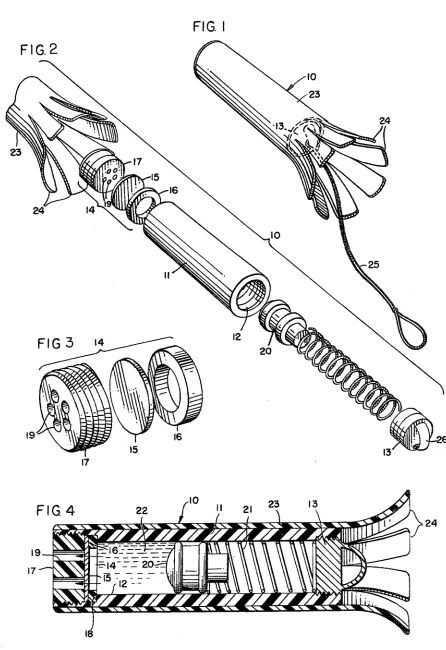
FIG. 1 is a perspective view of a device embodying this invention.
FIG. 2 is an exploded fragmentary perspective view depicting the various components of the device.
FIG. 3 is an enlarged exploded perspective view illustrating the diffusion membrane and its supporting elements.
FIG. 4 is an enlarged longitudinal sectional view of
the device illustrating the operative relationship of parts.
DETAILED DESCRIPTION
Referring to the drawings, the numeral 10 generally designates a drug releasing device or capsule having a tubular casing 11 de?ning a cylindrical chamber 12. One end of the chamber is closed by a threaded plug or end wall 13, the inner surface of the chamber being threaded to receive the plug. The opposite end of the casing is open and receives a supported diffusion mem brane assembly 14 (FIG. 3). The assembly 14 includes a diffusion membrane 15, a retaining ring 16, and an aper tured membrane support member 17. As shown most clearly in FIG. 4, the casing 11 is counterbored to pro vide a shoulder 18 for bracing the retaining ring 16. The membrane 15 is sandwiched between the ring and the
apertured support member 17, the latter being thread
edly received within the delivery end of the casing. The exposed area of the diffusion membrane 35, and hence the diffusion of drug through that membrane, may be varied by selecting a ring 16 having a central opening of the desired size.
The membrane support member is provided with a plurality of apertures 19 which are parallel with the axis
of that member and extend completely therethrough.
4,312,347
3
provide discharge passages for the delivery of a treat ment medium to the host animal. Five such apertures are shown in the drawings although the number and size of such apertures should not be taken as critical. In the
delivery of a drug, the metering function is performed
primarily by the diffusion membrane; hence, the num
ber and total area of the apertures should not be so small
as to interfere with the metering action of the diffusion
membrane, nor should they be so large or few in num
ber that the member 17 fails to provide adequate sup port for the membrane. Within such general guidelines,
the number and size of the apertures 19 may be varied
considerably.
Within chamber 12 is a plunger 20 which slidably and sealingly engages the cylindrical inner surface of the
casing. A compression spring 21 is interposed between
end wall 13 and plunger 20 to provide a constant and generally uniform force urging the plunger towards the delivery end of the device.
Within the chamber 12, in the space between plunger 20 and the diffusion membrane 15, is a drug solution 22. The liquid treatment agent may be any of a variety of
drug solutions capable of diffusing through membrane
15 and being absorbed by the uterine or vaginal epithe lium. The device of this invention is considered particu larly useful for the long-term administration of an estrusinhibiting drug such as, for example, mibolerone (7
alpha, l7-dimethyl-19n0rtestosterone), and androgenic
anabolic steroid; however, the device may be used foradministering other chemosterilants (such as magestrol acetate, chlormadinone, melengestrol acetate, delmadi
none acetate, noresthisterone acetate, testosterone, etc.)
as well as steroids and other medicaments for treatment
of arthritis, hormones for correcting hormonal imbal ances (insulin), antibiotics, and the like. With respect to the operation of the device, the essential factors are that the drug be stable throughout the term of administra
tion and be capable of diffusing through membrane 15 and being absorbed through the wall of the body cavity. For vaginal implantation the device is provided with
a resilient sleeve 23 (silicone rubber) which covers the side wall of the casing and which is provided at the proximal end of the device (the end opposite the deliv ery or distal end) with a multiplicity of ?exible ?ngers 24. The ?ngers 24 extend axially beyond end wall 13 and ?are radially outwardly. It has been found that the
spring action of the outwardly ?ared integral ?ngers 24
is highly effective as retaining means for holding the device within the vaginal cavity. The ?ngers ?ex out
wardly for gently but effectively engaging the vaginal
epithelium to secure the device in operative position. To facilitate removal of the device, an extraction cord 25 may if desired be secured to the end wall 13 of the casing. As shown in FIGS. 1, 2, 4, the plug or end wall is provided with an integral loop or ring 26 for attach ment of the extraction cord or other removal device.The materials from which the device is formed may
vary considerably, the main requirement being that they
be durable, function properly, and be non-toxic and
non-irritating. The cylindrical portion of the casing 11 may, for example, be stainless steel although polymeric
materials such as polytetra?uoroethylene may be used.
Similarly, the retaining ring 16, membrane support
member 17 and end plug 13 may be formed of a durable inert plastic (as shown) or of a metal having similar non-reactive properties. Membrane 15 may be formed of any suitable polymeric material capable of function ing as a diffusion membrane; silicone rubber, preferably
20 25 40 45 50 55 60
4
reinforced medical grade silicone rubber subdermal implant material sold under the designation Silastic
Sheeting 501-7 by Dow Chemical Company, Midland,
Michigan, has been found effective but other known membrane materials may be used. Silicone rubber is also
a suitable material for the fabrication of outer sleeve 23
with its integral spring ?ngers 24 but, again, other poly
meric materials having similar properties may be se lected.
The rate of delivery of the drug is controlled primar ily by the concentration of the drug solution but may also be adjusted to varying the thickness and exposed area of the membrane and the pressure developed by
the compression spring, such delivery rate being se
lected on the basis of the dosage requirements for the particular treatment or effect sought to be achieved. The spring 21 should exert a substantially constant force through the full range of movement of plunger 20. In general, that force should develop a pressure upon ?uid 22 within the range of about 400 to 1500 mm Hg, prefer
ably 600 to 1200 mm Hg. The effect is to overcome or
make negligible the back diffusion osmotic pressures external to the membrane, assist in maintaining a rela tively constant concentration within the device, and contribute to providing a substantially constant ?ow across the membrane. The effect is revealed by the
following formula:
where N is the net ?ow of drug solution i across the diffusion membrane, C is the concentration of the drug solution, K is the permeability of the membrane, Ap is the difference in pressure (i.e., the positive pressure
generated by the spring plus osmotic pressure from the
inside of the membrane, to the osmotic pressure (back diffusion) from the outside of the membrane), Dim is the diffusion coefficient across the membrane, and AZ is the change in distance across the membrane. Thus, it is evident that the ?ux of a species across the membrane, in this case the drug solution, is the sum of a ?ux driven by pressure and a ?ux driven by concentration. Stated differently, an increase or reduction in the pressure
created by selecting springs of different strength pro
duces a generally proportional increase or decrease in the ?ow across the membrane, other factors remaining constant. Since the helical compression spring exerts a substantially constant force and therefore creates a sub stantially constant linear pressure, the result, using any such spring capable of producing a constant internal pressure substantially greater than back diffusion os motic pressures, is the achievement of a substantially uniform diffusion rate of the drug across the membrane over the operating life of the device. While such operat ing life would depend primarily on the drug involved and the purpose of its administration, in general the term would fall within the range of about one week to
several months or more.
The invention is further illustrated by the following
examples:
EXAMPLE 1
A device for controlling estrus in dogs was con structed generally as shown in the drawings utilizing a tubular casing 11 having an outside diameter of 13 mm,
a chamber diameter of 5 mm and a membrane of silicone
4,312,347
5
diameter of 1 mm. The capsule when fully charged contains 0.8 ml of ethanol with 8760 micrograms (mcg) of mibolerone dissolved therein. Coil spring 21 devel oped an internal pressure of about 800 mm Hg.
EXAMPLE 2
Fifteen female dogs (beagles) were treated with mi bolerone utilizing devices prepared as set forth in this application and as speci?ed in Example 1. Each device was placed in the vaginal tract of an animal during the month preceding the time when, on the basis of calcula tions from prior records, the dog was expected to come into estrus. The capsules were left in place for periods ranging between 10 to 12 weeks. Capsules which were removed at 10 weeks had approximately 0.1 ml solution left, whereas those removed at 12 weeks generally had no drug solution remaining therein. All dogs treated remained out of estrus during the periods in which the
capsules remained vaginally implanted.
While in the foregoing we have disclosed an embodi ment of the invention in considerable detail for purposes of illustration, it will be understood by those skilled in the art that many of these details may be varied without
departing from the spirit and scope of the invention.
We claim:
1. A positive pressure drug releasing device compris
ing an elongated casing having a tubular side wall defin ing a chamber; said casing being open at one end and having an end wall at the other end thereof; a diffusion membrane secured to said casing and extending across
said open end; a plunger slidably disposed within said
chamber for axial movement therein; a drug solution in said chamber between said plunger and said membrane;
said drug solution being diffusable through said mem
brane and absorbable by the body wall of a cavity in which said device is implanted; and a compression
spring interposed between said plunger and said end wall; said spring being in a state of compression for
producing a substantially uniform positive pressure on said drug solution of a magnitude sufficient to render
20
25
30
35
40
45
50
55
65
6
negligible the effects of back diffusion osmotic pressure when the device is in use.
2. The device of claim 1 in which said compression spring is a coil spring capable of expanding from a com pressed state to an expanded state within said chamber during the term of administration of said drug solution; said spring exerting a substantially uniform force over such range of expansion to generate a positive pressure within said chamber in the range of about 400 to 1500 mm Hg.
3. The device of claim 2 in which said spring gener ates a positive pressure within said chamber within the range of about 600 to 1200 mm Hg.
4. The device of claims 1, 2, or 3 in which said diffu sion membrane is formed of silicone rubber.
5. The device of claim 1 in which a membrane sup port member is secured to said casing external to said membrane to brace said membrane against outward movement in response to pressure of said solution gen erated by said spring; said support member having a
plurality of apertures extending therethrough and paral
lel with the longitudinal axis of said device; said aper tures being sufficiently large in size to have no substan tial adverse effect on the drug-metering action of said diffusion membrane.6. The device of claims 1, 2, or 3 in which a plurality
of ?exible ?ngers slope radially outwardly and axially
away from the end of said casing remote from saiddiffusion membrane for assisting in retaining said device
within the vaginal tract of a warm-blooded animal. 7. The device of claim 6 in which said casing has a
protective sleeve extending thereabout, said ?ngers
being formed integrally with said sleeve.
8. The device of claim 8 in which said sleeve and
?ngers are formed of ?exible non-irritating polymeric
material. '
9. The device of claim 6 in which an extraction cord is secured to said end wall between said ?ngers and extends from said device in the general axial direction of said fingers to facilitate extraction of the device fr