ISSN(Online) : 2319-8753
I
nternational
J
ournal of
I
nnovative
R
esearch in
S
cience,
E
ngineering and
T
echnology
(An ISO 3297: 2007 Certified Organization)
Vol. 2, Issue 9, September 2013
Image Based Analysis for Identification of
Medical Plantusing Ant-Colony Algorithm
C. Chandra Sekhar
Professor, Department of ECE, S V College of Engineering, Tirupati, A.P, India
ABSTRACT: Medicinal leaves widely used in Medicine, Cosmetic and Pharamastic Cosmetic industry. Medicinal leaves are very critical in the futures. Presently identification of the type of medicinal leaves is still done manually and it will be occur to human error. Leaves are the key components of plants. The leaf extracts of many medicinal plants can cure various diseases and alternating for allopathic medicinal system now a days. In this method an extraction of shape, color, morphology and texture features from leaf image. Next step is using Ant colony optimization algorithm to feature selection process. Final step training a Support Vector Machine (SVM) classifier to display the leaf name. The results of the flavia database leaf achieved an average accuracy is 95.53% from the ACO-based approach. Same method used to find medical leaf.This work has been implemented using the image processing and neural network toolbox in MATLAB.
KEYWORDS: Medicinal leaves, Feature Extraction, Ant Colony Optimization and Support Vector Machine.
I. INTRODUCTION
Ayurveda is called medicinal plants is important of a system of medicine and useful in the treatment of certain chronic diseases. Ayurveda is considered as a form of alternative to allopathic medicine in the world. Ayurveda definitely brings substantial profits to India by export of Ayurvedic medicines in foreign exchange, because of many countries inclining towards this system of medicine [18]. There is considerable depletion in the population of certain species of medicinal plants. Hence, we need to grow more plant species in India. This upgrading work requires easy recognition of medicinal plants. In society all the people not well know the medical plants and their medical uses. India has 15 Agro climatic zones and 17000-18000 flowering plants species of which 6000-7000 are estimated to have medicinal usage in folk and documented systems of medicine, siddha, unani and Homoeopathy. Plant identification systems have been developed by several researchers. Wu et el. [4] identified 6 species of plant using features such as aspect ratio, leaf vein, leaf dent and invariant moment to classify plants. Color was included as a feature by Kunttu et al [5], who used image correlograms for image retrievel and Q-K Man et al [6] have used color moments for plant identification. According to Choras [7], texture is powerful regional descriptor that helps in the recovery process. Abdul Kadir et al [8] used color, vein, shape and texture features with various parameters and obtained 93.75% accuracy. J. Du et al[9] indicates that ANN classifier (MLPN,BPNN, RBFNN and RBPNN) run faster than KNN (k=1, 4) and MMC hyper-sphere classifier and got better classification efficiency for plant species identification. Here implemented a leaf recognition algorithm for selected medical plant leaves using shape, color, vein and texture features and an ANN classifier.
The rest of the paper organized as follows: Section 2 and 3 discuss the design methodology and Feature Extraction. Section 4 gives an overview of Ant Colony Optimization algorithm and Section 5 gives an overview of the SVM classifier.
II. DESIGN METHODOLOGY
ISSN(Online) : 2319-8753
I
nternational
J
ournal of
I
nnovative
R
esearch in
S
cience,
E
ngineering and
T
echnology
(An ISO 3297: 2007 Certified Organization)
Vol. 2, Issue 9, September 2013
based on a feature decision making algorithm is apply to the feature search space to select a different subset of features while the repeated process measures the quality of selected features.
Fig 1: Overall flow diagram
Based on the evaluation of subsets in each iteration the amount of pheromones is reorganized for the best local features as a positive feedback. This technique of feedback is called wrapper in which the classifier is engaged with the search algorithm to measure the interaction of all possible features and determines the distinguish features as the local best features in each iteration. Finally, a global best subset is generate when the stopping criteria are satisfied and Support Vector Machine trains the dataset based on the selected features as the global best and display the leaf name and their uses.
A. PRE-PROCESSING
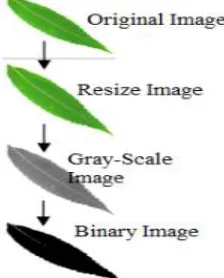
Figure.2: Detailed block diagram of pre-processing
2.1.1.Original image
The original image is obtained from the flavia dataset. Original image size is 1600X1200 pixels. Processing of the original images is very difficult because it is too big.
2.1.2.Resized image
Resize the image into 250X250 pixels to fit into Matlab.
ISSN(Online) : 2319-8753
I
nternational
J
ournal of
I
nnovative
R
esearch in
S
cience,
E
ngineering and
T
echnology
(An ISO 3297: 2007 Certified Organization)
Vol. 2, Issue 9, September 2013
2.1.3. Gray-scale image
A gray-scale image is combination of different shades of grey color. Preserving the brightness of the image a RGB color image can be converted to a gray scale image. Some early grayscale monitors can only show up to sixteen different shades but in recent days grayscale images are commonly stored with 8 bits per sampled pixel, which allows 256 different intensities.
2.1.4. Binary Image
From a grayscale image, thresholding can be used to create binary images. A digital image is a binary image that has only two possible values for each pixel. Normally the two colors used to a binary image that is black and white. The color used for the object in the image is the foreground color while the rest of the color is the background color. Binary images are also called bi-level or two-level. This means that each pixel is stored as a single bit in 0 or 1.
III. FEATURE EXTRACTION
In this step the features were extracted from shape, colour, vein and texture of the leaf. Feature extraction involves reducing the amount of resources required to describe a large set of data.
A. .COLOR FEATURES
Color features are important for colour based image analysis. The information of colour distribution is an imagecaptured by the low order moments.
Moment 1: It is called Mean. It provides average Colour value in the image.
Moment 2: It is called Standard Deviation (SD). The standard deviation is defined as square root of the variance of the distribution.
Moment 3: It is called Skewness. It measure the degree of asymmetry in the distribution.
Moment 4: It is called Kurtosis. It measure the peakness in the distribution.
B. SHAPE FEATURES
3.2.1 Aspect Ratio
The ratio of maximum width to major axis length. 3.2.2 Roundness
The roundness ratio is defined as Roundness=A/P2 ,where A and P represented area and perimeter of the leaf. Perimeter is the distance around a two dimensional shape or measurement the distance around something the length of the boundary.
C. VEIN FEATURES
ISSN(Online) : 2319-8753
I
nternational
J
ournal of
I
nnovative
R
esearch in
S
cience,
E
ngineering and
T
echnology
(An ISO 3297: 2007 Certified Organization)
Vol. 2, Issue 9, September 2013
Table.1: Example of different leaf feature values
D. TEXTURE FEATURES
An image texture is a position of standard of measurements computed an image processing future to detail the clear texture of a leaf image. Leaf image texture gives information about spatial arrangement of colour or intensities in a leaf image or selected region of a leaf image. Gray Level Co-occurrence Matrices (GLCMs) used to extracted texture features. GLCM is very useful to obtain the relative position of the neighbouring pixels in an image. The co-occurrence matrix GLCM (i,j) counts the co-occurrence with gray value of pixels i and j at given distance d.
Texture Features are
Energy
Entropy
Contrast
Correlation
Homogeneity
IV. ANT-COLONY OPTIMIZATION ALGORITHM
ISSN(Online) : 2319-8753
I
nternational
J
ournal of
I
nnovative
R
esearch in
S
cience,
E
ngineering and
T
echnology
(An ISO 3297: 2007 Certified Organization)
Vol. 2, Issue 9, September 2013
Table 1 Comparison of classification rate on Flavia database
Figure.3: Graph between Iteration and Best Cost
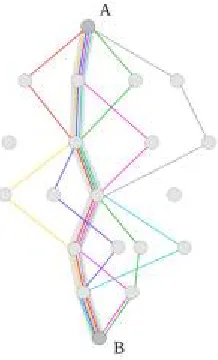
Fig.4 shows, with an ACO algorithm the shortest path in a graph between two points A and B. It is built from a combination of several paths. Broadly talking, ant colony algorithms is regard as occupied meta-heuristics with each solution represented by an ant moving in the feature search space.
ISSN(Online) : 2319-8753
I
nternational
J
ournal of
I
nnovative
R
esearch in
S
cience,
E
ngineering and
T
echnology
(An ISO 3297: 2007 Certified Organization)
Vol. 2, Issue 9, September 2013
V. SVM CLASSIFIER
Support Vector Machine (SVM) is machine learning tool that based on the idea of large border Data classification. The tools have strong theoretical foundation and the classification algorithms based on it gives good generalization performance. Standard implementations provides good classification accuracy is slow and do not scale well. Hence they do not applied to large-scale data mining applications.Hence the training as well as the classification times is high First part of our work is developing a new learning algorithm which is used to solve the dual problem add the
support vectors incrementally. These algorithm selects a new support vectors from a random sample based on simplification ability. In the second part of our work we developed a classification algorithm problem instead of the dual problem they solving the primal. This algorithm performs better in terms of resulting classifier difficulty comparable with generalization error when compared to the first phase algorithm. In both phases we reduced the resultant classifier complexity which is compared with existing works. Experimental results is done on real-world large datasets show these methods help to reduce the storage cost produce comparable classification accuracy by existing works and result in reduction of support vectors thereby reducing the inference time.
Figure 5: Display leaf name using SVM classifier
VI. CONCLUSION
An automated technique for identification of various medical plants and displays their uses in which ACO algorithm is used. In ACO algorithm purpose is selecting best separation of discriminate features from related plants and compares them. In this method, first process from the input image feature will be extracted then feature selection process. Compared to the other methods an Ant-Colony Optimization algorithm main advantage is feature selection process. Finally SVM classifier is used to display the plant name. The results of the flavia database leaf achieved an average accuracy is 95.53% from the ACO-based approach. Same method used to find medical leaf.
REFERENCES
[1]. Mohammad Ali Jan Ghasab, Shamsul Khamis, Faruq Mohammad, Hessam Jahani Fariman, “Feature decision-making ant colony optimization system for an automated recognition of plant
species”, Vol.42, Issue 5, pp. 2361–2370,2015.
[2]. Kadir, A., Nugroho, L. E., Susanto, A., & Santosa, “Leaf classification using shape, color, and texture”, International Journal of Engineering Trends and Technology, 2(1), pp.225–230, 2011.
[3]. Chaki, J., & Parekh, “Plant leaf recognition using shape based features and neural network classifiers”, International Journal of Advanced Computer Science and Applications (IJACSA),vol. 2(10), pp.41–47,2011.
[4]. Wu. Q, Zhou. C & Wag. C, “Feature Extraction and Automatic Recognition of Plant Leaf Using Artificial Neural Network”, Avances en Ciencias de la computaction, pp. 5-12,2006.
[5]. Kunttu. I.Lepisto. L& Visa. A, “Image Correlogram in Image Database Indexing and Retrieval”, Proceedings of 4th European Workshop on
Image Analysis for Multimedia Interaction Services,pp.88-91,London, 2003.
[6]. Q-K Man, C-H. Zheng, X-F. Wang & F-Y.Lin, “Recognition of Plant Leaves Using Support Vector Machine”, International Conference on Intelligent Computing, pp. 192-199,2008.
[7]. Choras R. S, “Image Feature Extraction Techniques and Their Application for CBIR and Biometrices Systems”, International Journal of Biology and Biomedical Engineering, vol.1(1),pp.616,2007.
ISSN(Online) : 2319-8753
I
nternational
J
ournal of
I
nnovative
R
esearch in
S
cience,
E
ngineering and
T
echnology
(An ISO 3297: 2007 Certified Organization)
Vol. 2, Issue 9, September 2013
[9]. Du. J,Huang. D, Wang. X and Gu.X, “Shape recognition based on radial basis probabilistic neural network and application to plant species identification”, in proceedings of 2005 International Symposium of Neural Networks, ser.LNCS 3497. Springer, 2005.