Abstract
YELVERTON, TIFFANY LEIGH BERRY. Soot Formation in Laminar Jet Diffusion Flames at Elevated Pressures. (Under the direction of Dr. William L. Roberts.)
Fossil fuels, which have a finite and depleting source, are currently needed to
provide energy for most practical combustion devices across the world. Due to the ever
increasing demand for these combustion devices, it is essential that research focus on
finding ways to make these combustion processes more efficient. In order to ensure
thermodyna mic efficiency and high power output, these combustion devices typically
operate at elevated pressures, which have been shown to increase the pollutant
(particularly soot and nitrogen oxides) production. One way to ensure these combustion
devices are working as efficient ly as possible is to reduce or eliminate the production of
these pollutants. Therefore the following investigation was completed in order to better
understand the growth and production of soot caused by combustion inefficiencies.
The current investigation uses five individual, but interrelated, experiments in
order to analyze soot formation in hydrocarbon-air diffusion flames at elevated pressures,
where most common combustion devices operate. The investigations were conducted in
a co-flow laminar diffusion flame burner, and utilized two hydrocarbon fuels (methane
and ethylene) in pure and diluted form. The addition of diluent (helium, nitrogen, argon,
or carbon dioxide) to the fuel stream enabled the investigation to focus on the reductio n
of soot formation within these flames, and thus focus on gaining a better understanding of
Through this investigation several interesting observation were made from the
analysis of pressure and dilution effects on ethylene and methane flames. It was shown
that the addition of inert diluent to the fuel stream does decrease the flame’s propensity to
soot, with carbon dioxide proving to be a superior soot suppressant compared to helium.
It was also shown in heavily diluted flames that in some instances there is not only a
chemical effect on the sooting tendencies of diluted flames, but also a purely diffusion
driven effect. Each of the individual experiments is discussed in detail, with further
Soot Formation in Laminar Jet Diffusion Flames at Elevated Pressures
by
Tiffany Leigh Berry Yelverton
A dissertation submitted to the Graduate Faculty of North Carolina State University
in partial fulfillment of the requirements for the Degree of
Doctor of Philosophy
Mechanical Engineering
Raleigh, North Carolina
2008
APPROVED BY:
_________________________
Dr. William L. Roberts Chair of Supervisory Committee
_________________________ ________________________
Dr. Tarek Echekki Dr. Kevin M. Lyons
Member of Supervisory Committee Member of Supervisory Committee
Dedication
…to my whole family, especially the two men in my life:
my daddy, my hero
and
Biography
The author was born Tiffany Leigh Berry on December 31, 1980 in Raleigh, North
Carolina, daughter of Billy and Dorothy Berry and younger sister of Adrienne Lynn (Berry)
Bauer. She graduated in 1999 from Cary High School, but prior to her senior year had
already applied to attend North Carolina State University to pursue a degree in Aerospace
Engineering. Upon completion of her undergraduate studies in May 2003, she decided to
continue her education and applied and was accepted to the Aerospace Engineering program
for her Master of Science. During her first year of graduate school she decided that she
wanted to pursue a Doctorate degree in order to one day return to academia. With the help of
her advisor, Dr. William L. Roberts, a research proposal was determined that allowed many
phases of her research to be conducted that would carry her through both of her graduate
degree programs. She completed her Master of Science in Aerospace Engineering in July
2005, and began her Doctorate studies in Mechanical Engineering, which was better suited
for her combustion research.
Therefore, Tiffany graduates as a Doctor of Philosophy in Mechanical Engineering in
August 2008. While working towards her Ph.D. she was lucky enough to marry her best
friend, William Yelverton, and thus she will graduate Tiffany Leigh Berry Yelverton.
Although Tiffany’s plans for returning to academia at some point are not completely out of
the question, she is currently seeking to stay in research as a postdoctoral researcher, not at
the university, but rather with the National Risk Management Research Laboratory of the
Environmental Protection Agency in Research Triangle Park under the technical advisement
Acknowledgements
The author would like to acknowledge her advisor, Dr. William L. Roberts, whose
love of research, and knowledge of combustion and thermal sciences has been a great source
of help throughout these many years in which they have worked together; her committee for
their help and guidance; Sean Danby (especially for all his help in coding) Carlye Rojas,
Ranjith Kumar, Wes Boyette and Dan Cassidy for all their help and support throughout many
trials and tribulations of research, for being such great friends, and for always making the
AERL fun; Bill Linak and Bob Seila at the Environmental Protection Agency, for their
seemingly unending help and understanding that experimental research knows no timeline;
Neervi Shah, Malia McCarthy, and Jane Vignovic for being there to listen to her complain
and to offer her comfort or a batch of margaritas.
The author would like to acknowledge most of all her family; her parents Billy and
Dorothy Berry who have provided more support (both emotional and financial) than any
child could ever ask for, as well as for teaching her all the values needed to succeed in life:
believe in yourself, believe in your family, care for others, and always work as hard as you
can so that all your dreams can come true; her sister, and best friend, Adrienne Bauer for
always comforting her and watching over her since childhood; her dogs: Spice (who passed
away during graduate school), Duke, and Bella, who always made home such a happy and
crazy place to be; and last but certainly not least, her husband Will Yelverton for all his love,
Table of Contents
LIST OF TABLES ...vii
LIST OF FIGURES ...viii
1 INTRODUCTION ...2
1.1SOOT FORMATION AND GROWTH... 4
1.2EFFECTS OF ELEVATED PRESSURE ON SOOT FORMATION... 7
1.3SMOKE POINT... 8
1.4FUEL EXIT VELOCITY PROFILE AND DILUTION EFFECTS... 11
1.4.1 Diluent and Dilution ...11
1.4.2 Exit Velocity Profiles...14
1.5SOOT SURFACE TEMPERATURE... 16
1.6HYDROCARBON SPECIES CONCENTRATIONS... 16
1.7SOOT VOLUME FRACTION AND PYROMETRY... 17
1.7.1 Refractive Index of Soot ...19
1.7.2 Two Wavelength Emission Technique ...20
1.7.3 Laser Extinction and Tomographic Inversion Technique...21
2 GENERAL EXPERIMENTAL APPARATUS ...23
2.1 CO-FLOW DIFFUSION FLAME BURNER AND CHIMNEY... 23
2.2 PRESSURE VESSEL AND IGNITION SYSTEM... 25
2.3 PRESSURE METERING... 28
2.4 FUEL FLOW METERING... 29
3 SMOKE POINT IN PURE ETHYLEN E AND METHANE FLAMES ...31
3.1 BACKGROUND... 31
3.2 EXPERIMENTAL APPARATUS... 31
3.3 RESULTS AND DISCUSSION... 33
3.4 SMOKE POINT CONCLUSIONS... 37
4 VELOCITY PROFILE EFFECTS WITH DILUTIO N AND PRESSURE ...39
4.1 BACKGROUND... 39
4.2 EXPERIMENTAL APPARATUS... 40
4.3 RESULTS AND DISCUSSION... 41
4.4 VELOCITY PROFILE CONCLUSIONS... 52
5 SOOT SURFACE TEMPERATURE ...54
5.1 BACKGROUND... 54
5.2 EXPERIMENTAL APPARATUS... 54
5.2.1 Camera Specifications...56
5.2.2 Black Body Calibrator ...57
5.3 RESULTS AND DISCUSSION... 58
5.4 THERMOMETRY CONCLUSIONS... 69
6 HYDROCARBON SPECIES CONCENTRATIONS ...71
6.1 BACKGROUND... 71
6.2 EXPERIMENTAL APPARATUS... 71
6.2.1 Burner and Chimney Modifications...73
6.2.2 Probe Design ...74
6.2.3 GC-FID ...76
6.4 HYDROCARBON SPECIES CONCLUSIONS... 90
7 SOOT VOLUME FRACTION...92
7.1 BACKGROUND... 92
7.2 EXPERIMENTAL APPARATUS... 92
7.2.1 Pyrometry ...94
7.2.2 Extinction...95
7.3 RESULTS AND DISCUSSION... 98
7.4 SOOT VOLUME FRACTION CONCLUSIONS...114
8 INVESTIGATION CONCLUSIONS ... 116
9 FUTURE WORK... 118
9.1 MAJOR NON-HYDROCARBON AND RADICAL SPECIES CONCENTRATIONS...118
9.2 ANALYSIS OF THE HACAMECHANISM...120
10 REFERENCES ... 121
11 APPENDICES ... 127
11.1 MATLABCODE FOR TWO COLOR PYROMETRY...128
11.2 MATLABCODE FOR TEMPERATURE AND SOOT VOLUME FRACTION...132
11.3 QUARTZ CHIMNEY MODIFICATIONS FOR CONCENTRATION MEASUREMENTS...137
11.4 QUARTZ SLEEVE FOR CONCENTRATION MEASUREMENTS...138
11.5 THREADED ROD FOR MICROPROBE USE IN PRESSURE VESSEL...139
List of Tables
Table 1.1: Transport properties of the four diluents at 20 degrees Celsius ... 13 Table 4.1: Slope of fuel flow rate versus diluent flow rate in ethylene flames at their smoke point for both CO2 and He ... 49
List of Figures
Figure 1.1: Soot spherules forming agglomerates (Gaydon & Wolfhard, 1970)... 6
Figure 1.2: Undiluted ethylene flame at 2 atm at smoke point (left) and just above smoke point (right) ... 9
Figure 2.1: Co- flow diffusion flame burner cup ... 24
Figure 2.2: High pressure vessel with dimensions ... 26
Figure 2.3: Ignition system schematic ... 27
Figure 3.1: Non-dimensionalized smoke point height of ethylene as a function of pressure . 34 Figure 3.2: Non-dimensionalized smoke point height of methane as a function of pressure . 34 Figure 3.3: Inverse volumetric fuel flow of pure ethylene as a function of pressure ... 36
Figure 3.4: Inverse volumetric fuel flow of pure methane as a function of pressure ... 36
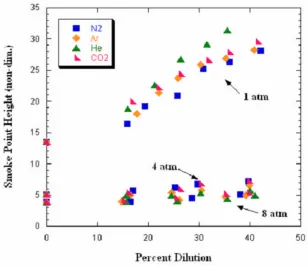
Figure 4.1: Diluted ethylene and methane flames as a function of temperature at (a) 1, (b) 4, and (c) 8 atmospheres ... 44
Figure 4.2: Smoke point height as a function of percent dilution for a diluted ethylene flame at 1, 4, and 8 atmospheres... 46
Figure 4.3: Volumetric fuel flow rate versus diluent flow rate at (a) 1, (b) 4, and (c) 8 atmospheres with curve fits for CO2 and He ... 48
Figure 4.4: Volumetric fuel flow as a function of volumetric diluent flow for a plug and parabolic exit velocity profile along with previous researcher's findings ... 50
Figure 4.5: Volumetric fuel flow and smoke point as a function of fuel to air velocity ratio for undiluted ethylene in two different burner configuratio ns ... 52
Figure 5.1:Watec 902 Ultimate monochrome CCD camera with ND filter and color filter wheel... 57
Figure 5.2: Black body calibrator ... 58
Figure 5.3: Pure ethylene soot surface temperature profiles as a function of pressure ... 59
Figure 5.4: Soot surface temperature profiles of ethylene flames diluted 40% by volume .... 61
Figure 5.5: Maximum soot surface temperatures for (a) undiluted ethylene and (b) ethylene with 40% dilution... 64
Figure 5.6: Soot volume fraction and soot surface temperatures as a function of pressure for undiluted, constant fuel mass flux ethylene flames ... 66
Figure 5.7: Measured soot surface temperature with radiative losses represented ... 68
Figure 6.1: Final quartz microprobe design ... 76
Figure 6.2: C2H2 concentration in (a) helium and (b) carbon dioxide diluted flames ... 81
Figure 6.3: C2H4 concentration in (a) helium and (b) carbon dioxide diluted flames ... 83
Figure 6.4: C6H6 concentration for (a) helium and (b) carbon dioxide diluted flames... 86
Figure 6.5: C10H8 concentration in (a) helium and (b) carbon dioxide diluted flames ... 89
Figure 7.1: Extinction measurement schematic ... 96
Figure 7.2: Comparison of soot volume fraction measureme nts at 1 atmosphere ... 99
Figure 7.5: Soot volume fraction (a), in ppm, and temperature (b), in Kelvin, profiles for He (left) and CO2 (right) diluted flames at 2 atmospheres ... 104
Figure 7.6: Extinction measurements of soot volume fraction as a function of radial position at 2 atmospheres in diluted flames ... 106 Figure 7.7: Soot volume fraction (a), in ppm, and temperature (b), in Kelvin, profiles for He (left) and CO2 (right) diluted flames at 4 atmospheres ... 108
Figure 7.8: Extinction measurements of soot volume fraction as a function of radial position at 4 atmospheres in diluted flames ... 110 Figure 7.9: Soot volume fraction (a), in ppm, and temperature (b), in Kelvin, profiles for He (left) and CO2 (right) diluted flames at 8 atmospheres ... 111
1
Introduction
In a society that depends heavily of a depleting supply of non-renewable fossil fuels
in order to make energy for heat and work, eliminating inefficiencies from combustion
devices that run on these fossil fuels is becoming more and more critical. It is known that
diffusion-flame-driven devices are much more fuel efficient than premixed- flame-driven
devices, but with this increased efficiency comes the disadvantage of more pollutant
formation, particularly soot and NOx. Since these diffusion-flame-driven devices can
provide a more efficient means to meet energy demands, research efforts should be focused
on reducing or eliminating the pollutant formation from these combustion devices while
maintaining fuel efficiency. Of these pollutants formed through the combustion process,
particulate matter is of greatest concern. Particulate matter, such as soot, is a risk not only to
the environment, but also to human health. Soot has been proven to be a carcinogen and a
mutagen as well as causing more long-term illnesses such as chronic bronchitis (Sydbom et
al., 2001; Comstock et al., 1998; Morgan et al., 1997; Scheepers et al., 1992). Because of
these environmental and human health effects soot entails, the Environmental Protection
Agency (EPA) continues to stringently monitor and regulate particulate emissions from all
sources, both mobile and stationary. Heavy-duty Diesel engines continue to come under
strict regulations for emissions from the EPA, and Diesel engine manufacturers find it
the interactions between combustion chemistry, transport, and fluid mecha nics, but a
complete understanding of these interactions is not known by the combustion community at
this time. The majority of the research conducted currently is accomplished at atmospheric
conditions and not at elevated pressures where these devices operate. The lack of research at
elevated pressures is due mostly to cost, time, and safety issues. Despite these drawbacks,
this research is necessary to increase the pool of knowledge in order to reduce or eliminate
soot production from these diffusion- flame-driven devices.
The current research used ethylene and methane, both pure and diluted (individually
with helium, nitrogen, argon and carbon dioxide) from 1 to 16 atmospheres to investigate
smoke point height, fuel exit velocity profile effects, soot surface temperatures, hydrocarbon
species concentrations, and soot volume fraction. Each of these investigations was
conducted in order to gain the necessary information to evaluate the hydrogen absorption
carbon addition (HACA) soot growth mechanism at elevated pressures. This soot growth
mechanism is widely accepted in the combustion community, but has not been thoroughly
investigated at elevated pressures where most practical combustion devices operate. Each
phase of the experiments is documented within this paper and as the experimental apparatus
changes for each experiment is it noted. In most cases, except where noted, the air to fuel
velocity ratio remains at unity and the flames are kept at their smoke point. By limiting these
experiments to velocity- matched and smoke point conditions, this research eliminates
possible causes for discrepancies from laboratory to laboratory and makes the data
reproducible and easier to compare and contrast to the research of other investigations.
reason for that particular phase of the experiment, each individual experimental apparatus,
the results and discussion obtained from each phase, and finally the conclusions that are
apparent from each phase as well as the overall conclusions reached from the entire
investigation.
1.1
Soot Formation and Growth
Recent research has focused on a better understanding of soot growth and formation.
Investigators have determined that a better understanding of chemical kinetics transport, and
fluid mechanics would greatly increase the combustion community’s understanding of soot
formation. Although some understanding exists for the chemical kinetics, transport, and
fluid mechanics, the interactions between these three functions are also of great interest and
not very well understood at all, and it has been determined that, as a community, our research
efforts should be focused on these interactions (Frenklach, 2002; Richter & Howard, 2000).
Diffusion flames and premixed flames have very contrasting qualities that must be
understood prior to being able to conduct research. Diffusion flames, as stated earlier, will
produce more soot than premixed flames. This is due to the fundamental controlling
mechanisms present in diffusion flames. In diffusion flames, the fuel and the oxidizer are
stored separately and do not come into contact with one another until they reach the primary
reaction zone. The fuel and oxidizer then diffuse into the reaction zone due to the
oxidizer present and then the fuel and oxidizer enter the reaction zone together. Furthermore,
in the premixed flame soot is created when the oxidizer is absent, as it is responsible for the
converting of hydrocarbons into carbon monoxide and diatomic hydrogen. It has been shown
by Wagner (1981) experimentally that if the ratio of carbon to oxygen atoms for the flame is
greater than 0.5, the premixed flame will produce soot. The converse of Wagner’s findings
also holds true such that soot will not be produced if a non-soot- yielding ratio of carbon to
oxygen atoms is maintained in the mixture region. Controlling and maintaining the ratio of
carbon to oxygen atoms in the mixing region in a diffusion flame is typically not possible,
which makes an environment more suitable for soot production.
Whether dealing with a diffusion or premixed flame, soot formation begins in the
same manner, in the preheat zone. It is in the preheat zone that the large molecules
decompose into smaller hydrocarbon pieces because of increases in temperature that occur in
this zone. Soot precursors are formed because of this pyrolysis and take the form of
acetylene (C2H2). Hydrocarbon fuels that have a low propensity to form soot, such as
methane (CH4), have low soot production because they have a more difficult path to
thermally decompose into acetylene. However, more complex hydrocarbons, such as
ethylene (C2H4), have a much easier path to thermally decompose into acetylene and thus
have a much higher propensity to form soot. After the precursors to soot are created, the
acetylene molecules combine in groups of three to form benzene rings (C6H6). Several of
these benzene rings then combine to form polycyclic aromatic hydrocarbons, typically
referred to as PAHs. Then the process of polymerization begins and the rings of benzene
the rings become unsaturated. As this process continues, the carbon to hydrogen atom ratio
increases and causes the rings to group together forming the soot particle, often called a soot
spherule. These soot spherules continue to grow in size up to roughly 30 to 50 nm in
diameter. Just one of the many things researchers do not understand about soot formation is
why the soot spherule’s growth discontinues at this range of diameters. However, after the
soot spherules reach this diameter range, they begin to join together to form agglomerates,
which end up containing hundreds to thousands of soot spherules. Then these agglomerates
join together to form clusters, which result in soot particles (Figure 1.1). These soot particles
have an estimated empirical formula of C8H.
Figure 1.1: Soot spherules forming agglomerates (Gaydon & Wolfhard, 1970)
growth. The visibly yellow portion of a flame (a candle for instance) is the soot
incandescence. If the soot in this soot incandescence region is oxidized prior to diffusing
across the flame front, the flame with cease to emit visible smoke. This is how the
distinction between soot and smoke becomes apparent. Any carbon that leaves the flame is
smoke, but any carbon that stays within the flame and is oxidized, forming CO or CO2, is
considered soot. Early investigations by Schalla and co-workers (1955) looked at the
difference between smoke and soot production in diffusion flames at atmospheric and
elevated pressures.
1.2
Effects of Elevated Pressure on Soot Formation
A very well known and well researched aspect of diffusion- flame-driven devices is
that the soot production increases, while soot oxidation decreases, with increasing pressure
(Flower & Bowman, 1986). However, as mentioned previously, experimental research at
elevated pressures is limited because of its timely, costly, and dangerous nature. More recent
research is moving towards experimental research at elevated pressures, such as the current
research, in order to better understand pollutant formation from combustion devices at their
normal operating conditions. Researchers, although they do not fully understand why, agree
that increasing the pressure surrounding a diffusion flame increases the reaction rates and the
diffusion coefficient of the flame, thus leading to increased soot production. Other
researchers, who have focused on spray combustion and premixed- flame-driven combustion,
have seen increases in soot production in these devices when the environment surrounding
Kadota et al., 1977; Miller & Maahs, 1977; Millberg, 1959; Fischer & Moss, 1998;
Heidermann et al., 1999).
Previous research by McCrain and Roberts (2005), conducted in a similar burner and
vessel configuration as the current research at elevated pressures, was able to measure the
effects of elevating pressure. Working with laminar diffusion flames, they were able to
measure the soot volume fraction, fv. The current work also investigates the soot volume
fraction in laminar diffusion flames at elevated pressures, but uses a different technique,
described below in detail in §1.7, from McCrain and Roberts (2005) who used laser induced
incandescence (LII) and extinction measurements.
Increasing the pressure inside the vessel has a few impacts on the flame. With the
reaction rates increasing in proportion to the pressure and the diffusion rates increasing as the
gradients become steeper, the flame becomes thinner, less stable, and shorter. These changes
to the flame were expected, and similar findings involving pressure effects on flames were
reported by Miller and Maahs (1977). They showed that hydrodynamics disrupt the flame
and make it more sensitive to extinction because the diffusion of reactants cannot occur
quickly enough to restore the flame.
1.3
Smoke Point
The smoke point of a flame has been recognized in the combustion community, for
many years, as a fundamental measure of a fuel’s propensity to soot. Smoke point has been
1.2, it is possible to see the distinct difference between two flames at and just slightly above
their smoke points. The flame on the left has a volumetric fuel flow rate of 76 sccm and an
air co-flow rate of 16.6 SLPM. The flame on the right, which is slightly above its smoke
point, has a volumetric fuel flow rate of 98 sccm and an air co- flow rate of 21.7 SPLM. In
each flame the air to fuel velocity ratio is unity. In the flame on the right, which is just above
its smoke point, it is possible to see visible smoke from the tip and feathering of the flame
(called wings) near the tip which is a sign of a flame reaching and exceeding its smoke point.
Figure 1.2: Undiluted ethylene flame at 2 atm at smoke point (left) and just above smoke point (right)
The smoke point can also be described as the position of the flame where the soot production
and soot oxidation directly offset one another. It should be noted that the current research
was conducted with gaseous fuels rather than liquid fuels. There is limited experimental
research published regarding the smoke point of gaseous fuels, and even fewer publications
exist that focused on smoke points of diluted fuels or the effects of pressure (Dai & Faeth,
Glassman & Yaccarino, 1981; Schalla et al., 1954). Furthermore, only slightly more research
on smoke points, using numerical simulation has been conducted and published (Guo et al.,
2002; Delichatsios, 1994; Kent, 1986). The work of Schalla and co-workers (1955),
mentioned previously, examined the smoke and soot production in diffusion flames and
recorded flame heights at smoke points for ethylene and ethane flames from 0.5 to 20
atmospheres. They worked with not only wick- fed liquid fuels but also with gaseous fuels.
Although they had no way of metering and recording the fuel flow rates, they were able to
measure the flame’s height at its smoke point. They reported that the flame height decreased,
nearly linearly, with the increasing pressure for gaseous fuels. At the time they believed this
effect to be caused by diffusion rates and the rate of mixing of the fuel and air. Dai and
Faeth (2000) investigated laminar diffusion flames and the air to fuel velocity ratios effects at
sub-atmospheric pressures to find that the flame’s height at its smoke point is twice as long
as a soot- free (blue) flame under the same conditions. Urban and co-workers (2000) also
tested with laminar diffusion flames, but in microgravity conditions, and reported that
contrary to normal gravity conditions, the smoke point occurred in two configurations:
closed-tip flames with soot emissions along the flame axis and open-tip flames with soot
emissions from an annular ring about the flame axis.
In the current experimental research diffusion flames are investigated and the
luminous flame height and mass flow rates were recorded at the smoke point of pure and
diluted flames. Since the current research sought to investigate combustion devices at
atmospheric conditions, but also at elevated pressures up to 8 atmospheres for ethylene and
up to 16 atmospheres for methane.
1.4
Fuel Exit Velocity Profile and Dilution Effects
The investigation into the effects of the fuel exit velocity profile was not initially
anticipated as a phase of this research. However, after the smoke point data was collected
and compared to that of previous researchers, it was necessary to investigate the fuel exit
velocity profile and the effects of different inert diluents in order to explain the discrepancy
between the current experiment and the experiments of previous researchers.
1.4.1 Diluent and Dilution
Previous researchers have investigated the effects of dilution on smoke point in laminar
diffusion flames at atmospheric pressures. McLintock (1968) investigated the effects on
smoke point and sooting tendencies by adding inert diluent to either the fuel or oxidizer
stream. It was found that dramatic differences in the smoke point existed when using
different diluents, with carbon dioxide (CO2) having a very strong ability to suppress soot
production and helium (He) having a very weak to no ability to suppress soot production.
Both nitrogen (N2) and argon (Ar) fell in between CO2 and He, but much closer to He, in
their ability to suppress soot formation. For McLintock’s experiments the air co-flow
velocity was held constant with an initial fuel-to-air velocity ratio of approximately 1.4,
which increased with dilution level. At the initial fuel-to-air velocity ratio, McLintock found
plotting the volumetric fuel flow rate at the smoke point versus the volumetric diluent flow
rate.
Glassman and co-workers (1998, 1980) found similar trends when using these
diluents in a highly over-ventilated environment (with unreported, but presumed constant, air
co-flow velocity), but showed CO2 having an even stronger soot suppression effect than
McLintock (1968) had reported. Glassman and co-workers plotted the volumetric fuel flow
rate versus the volumetric diluent rate and found a slope of 1.10 for CO2 and a slope of 0.2
for He. Although the results of Glassman and McLintock differ slightly, the observation that
CO2 is much more efficient than He at suppressing soot is consistent. Since the findings of
the current experiments differ, showing very little difference in soot suppression at the smoke
point height using CO2 versus He, from those of previous investigations, this experiment to
investigate fuel exit velocity profiles and dilution was added as a phase in the research.
Previous investigations into dilution of a fuel or oxidizer stream have shown that
there is both a thermal effect, scaling with molar heat capacity of a diluent, and a dilution
effect, scaling with the molecular and thermal diffusivities of a diluent (Guo et al., 2000,
2004). Many researchers have used the same diluents for investigation as the ones chosen for
the current experiments: He, Ar, N2, and CO2. The use of these diluents, to investigate the
effects of diluent addition to ethylene and methane flames, makes it possible to cover a broad
Table 1.1: Transport properties of the four diluents at 20 degrees Celsius
Helium Carbon
Dioxide
Argon Nitrogen
Specific Heat Capactiy
(J/kg C) 5193 846 520 1042
Kinematic Viscosity
(cm2/s) 1.15 0.08 0.12 0.15
Thermal Diffusivity
(cm2/s) 1.59 0.10 0.18 0.19
Binary Diffusion Coefficient into N2 (cm
2
/s) 0.71 0.16 0.20 0.22
With the addition of any of these diluents, to a fuel or oxidizer stream, there is a change in
the viscosity and therefore the shear layer growth and entrainment is effected. Therefore, it
is expected that He should have more of an effect on entrainment and mixing than CO2, with
N2 and Ar falling between them. Table 1.1 shows the kinematic viscosities, thermal and
molecular diffusivities, and the specific heats of the four diluents (Kanury, 1994). From the
values in this table it is made clear the property differences between He and CO2, such that
they differ by a factor of 15 in both kinematic and thermal diffusivity but only a factor of 5 in
molecular diffusivity. This provides a unique effect on the ethylene when either of the two
diluents is used.
The transport and thermal effects on soot suppression by a given diluent is important
to consider, but the possible chemical effects must also be considered. Glassman (1998) and
Schug (1980) both postulated that there were chemical effects with the addition of CO2 in
addition to the thermal and transport effects. Later, in 2001, Liu and co-workers showed
computationally that these chemical effects do suppress soot formation by reducing both the
converting CO2, by hydrogen atom, to carbon monoxide and hydroxyl prompts the oxidation
of soot precursors in the formation region. They further found that not only does the addition
of CO2 to the fuel stream reduce soot formation, but this addition also reduces NOx formation
through suppression of the temperature.
1.4.2 Exit Velocity Profiles
As stated previously, the initial intent of this particular experiment was not to study
the effects of fuel exit velocity profile on smoke point, but rather to identify potential reasons
for the discrepancies observed with dilution compared with the findings of previous
researchers.
Faeth and co-workers identified and aerodynamic means of affecting the diffusion
flame by reducing the shear layer effects between the fuel and the air co-flow (Lin & Faeth,
1996; Dai & Faeth, 2000). They were able to show that the closer to unity the fuel-to-air
velocity ratio falls, the effect of the shear layer becomes smaller and nearly negligible. Prior
to Faeth’s work, Roper and co-workers (1977) reported that smoke point was insensitive to
the fuel to air velocity ratio as long as the flame was highly over-ventilated. This led some
researchers to conclude that for gaseous fuel laminar flames, the smoke point and soot
concentrations are dominated by buoyancy and molecular diffusion, and are insensitive to
viscous effects. Ultimately, this was proven to not be the case.
Faeth and co-workers (1996, 2000) showed the velocity ratio to have great effect on
determining smoke point characteristics of a particular fuel. The found that in these laminar
substantially increasing the air co-flow rates. For the majority of the current research, and
research conducted by Berry and Roberts (2006), a plug flow fuel exit velocity profile and a
fuel to air velocity ratio of unity was employed. As stated above the plug flow fuel exit
velocity profile was necessary to eliminate oscillations in the flames as pressure within the
vessel was increased, and the velocity ratio of unity was used to minimize shear layer effects.
In contrast, many of the researchers completing similar experiments have used parabolic fuel
exit velocity profiles and a plug flow air exit velocity. In most of the experiments of other
researchers, the velocity matching between fuel and air, if it ever occurred, only occurred at
the initial undiluted conditions. Therefore, as diluent was added to their fuel stream the fuel
exit velocity increased, maintaining the over-ventilated status, but the air co-flow velocity
remained constant.
When the velocities are not matched, shear layer and entrainment scales with the
viscosity and therefore the diluent choice becomes important. Smooke (2005) showed,
experimentally and computationally, the importance of the velocity ratio in diffusion flames.
Their investigation was performed in a velocity matched parabolic velocity profile flame at
atmospheric conditions.
The Froude number (G) determines whether the flame is momentum or buoyancy
dominated, as it is a dimensionless ratio between inertial and gravity forces. The Froude
number was calculated for the current investigation using the atmospheric, undiluted ethylene
flame and had a value equal to 0.21, and thus it is buoyancy controlled. With increasing
pressure causes a decrease in Froude number, thus all of the flames in this investigation are
1.5
Soot Surface Temperature
In order to reach the overall goal of investigating the accuracy of the HACA
mechanism at elevated pressures it was necessary to complete soot surface temperature
measurements from the flames at and above atmospheric pressure. These measurements are
necessary to understand the structure of the flame, as temperature can affect the
concentrations of species among other characteristics of the flames. Experiments by
previous researchers have focused on soot surface temperature measurements but only at
atmospheric pressure conditions (Hall & Bonczyk, 1990; Cignoli et al., 2001; Xu et al.,
2003). More recent research, conducted by Thomson and co-workers (2005) has focused on
these measurements with elevating pressure and has shown an overall decrease in soot
surface temperature as pressure increases. Also, they observed that the temperature increased
axially from the base to the tip of the flame. Throughout the current experiment the same
trends in soot surface temperatures were recognized; however, a major difference between
the current experiment and those of previous researchers is that the current measurements
were taken at the flame’s smoke point.
1.6
Hydrocarbon Species Concentrations
Yet another essential piece of information that was required to analyze the HACA
mechanism at elevated pressures was species concentrations. This experiment focused on
hydrocarbon species only, but future experiments to be conducted in the near future by
concentrations were measured by extracting samples from ethylene flames and analyzing
them with gas chromatography with a flame ionization detector (GC-FID). Unlike the
previous experiments discussed thus far in the current investigation, the flame for this
experiment were not at their smoke point; however, they were velocity matched such that the
reactant flow (fuel plus diluent) velocity was matched with the air co- flow velocity. The
samples were extracted through a probe and in order to avoid clogging of the probe, it was
necessary to use very heavily diluted flames, 80% by volume. However, these flames
remained highly over-ventilated and buoyancy dominated at all pressure conditions.
Hydrocarbon species have been investigated by many researchers in the last ten to
fifteen years both computationally (Smooke et al., 1999; McEnally et al., 2000) and
experimentally (McEnally & Pfefferle, 1999; Kim et al., 2004 & 2008). However, excluding
the most recent work by Kim and co-workers (2008), these measurements have been
accomplished at atmospheric pressures. Also, in each of the investigations by previous
researchers the species concentration measurements have been taken along the centerline of
the flame. The current research extracted samples not only along the centerline, but also
along the surface of the flame. Nearly all of the samples collected were within the blue
(soot- free) region of the flame with only a few samples reaching in to the soot incandescence
(yellow) region of the flame.
1.7
Soot Volume Fraction and Pyrometry
Soot mass yield is one characteristic that can be useful in determining the parameters
flame. There are several experimental methods that can be incorporated to measure soot
volume fraction such as LII, laser extinction, and pyrometry, to name a few. Of all the
research that has been conducted over the years pertaining to soot volume fraction, some of
which has been conducted at elevated pressures, it is clear that the researchers are in
agreement that as pressure increasing the soot volume fraction also increases.
One of the first investigations into soot volume fraction at elevated pressures was
conducted by Flower and Bowman (1986). They were able to measure soot volume fraction
from 1 to 10 at atmospheres, showing experimentally that as the pressure increases the rates
of soot production and growth also increase. Flower and Bowman collected line integrated
soot volume fraction measurements using laser scattering techniques, but unfortunately these
measurements to not provide results that are spatially or temporally resolved.
As mentioned previously, more recent experiments have been conducted, with a
similar burner and pressure vessel to that used in the current investigation, to investigate not
only soot volume fraction, but the effects elevated pressure has on soot volume fraction.
McCrain and Roberts (2005) used a diffusion flame, with undiluted methane or ethylene, to
measure integrated and peak soot volume fraction. The technique chosen for these
measurements were LII and extinction. They found that integrated fv of methane scales
approximately as P1.0, and for ethylene approximately as P1.2. They also found that peak fv
for methane and ethylene scales approximately as P1.2 and P1.7, respectively. This research
was conducted in the same pressure vessel as the current research, and the measurements
ethylene. Their work was unique in the fact that no other researchers had ever measured
peak soot volume fraction.
1.7.1 Refractive Index of Soot
The refractive index of soot has been widely disputed over the past half of a century,
especially in laboratory scale experiments. In 1969, Dalzell and Sarofim published a journal
article describing the best value to be used for the index of refraction for soot, 1.57-i0.56.
This value became widely accepted and many researchers still continue to use this particular
index of refraction. However, more recent investigations into the refractive index of soot
have led researchers to choose their value to be more specific to their particular laboratory
set-up. Chang and Charalampopoulos (1990) experimentally showed that there is a
wavelength dependence for the soot refractive index. They combined classical and dynamic
light scattering measurements and the Kramers-Kronig relations to express refractive index
of soot for specific wavelengths, thus making the decision for the refractive index assumption
specific to experimental apparatus. They performed these measurements and calculations for
a range of wavelengths and then were able to determine an equation (Eq. 1.1) that can be
used to calculate the refractive index of soot for a given experiment.
For the pyrometry and laser extinction methods used in the current experiments, using the
above equation, the refractive index of soot was determined to be 1.75- i0.57.
1.7.2 Two Wavelength Emission Technique
This technique for measuring the temperature profile and soot volume fraction along
the centerline of the flame has been shown to be rather accurate (De Iuliis et al., 1998;
Cignoli et al., 2001; Boiarciuc et al., 2006). Boiarcius (2006) conducted measurements of
soot volume fraction and particle size estimates using both the two color emission method
and the classic method of LII and found that the two color emission technique is just as
accurate, but requires less time and equipment. Cignoli and co-workers (2001) extended on
the two-color pyrometry (discussed in §1.5) technique and used mathematical equations to
solve for the soot volume fraction based on the emissions of the flame, emission from a
known source (a tungsten lamp), the temperature profile, and the spectral properties of soot
to measure the soot volume fraction in flames. Although the current experiment employs a
black body calibrator to create a temperature calibration for the flame’s profile, the same
equations used by Cignoli et al. (2001) and De Iuliis et al. (1998) was used to determine soot
volume fraction for the flames in the current experiment. As stated previously (§1.5), the
two-color pyrometry yielded a temperature profile of each flame. The same fourth-order
equation, based on Planck’s equation, was used, but a new calibration was necessary
according to the needed camera settings for these measurements in order to generate a
temperature profile. Then, using that temperature profile, and updating and adding to the
− − − = s L L S abs v T T c E E L
f ln 1 0.99 *exp 1 1
λ
λ λ l
(1.2)
where, labs is the natural length of absorption at a given wavelength with respect to soot
spectral properties (calculated), L is the width of the flame under consideration (measured),
ES? is the integration process over the optical path (measured), EL? is the intensity of the
calibrated lamp emission (given), c is Planck’s constant (given), ? is the wavelength of the
filter (in µm), TL is the lamp or black body calibrator temperature (measured), and TS is the
soot temperature determined from the image ratio (measured), the soot volume fraction is
calculated.
1.7.3 Laser Extinction and Tomographic Inversion Technique
The laser extinction method is the same method employed by McCrain and Roberts
(2005) to yield ave rage soot volume fraction, and used by many other researchers. This
method uses a helium- neon (HeNe) laser beam and passes the beam through the flame.
When the laser beam passes through the flame the energy is removed by molecules or
particles, such as soot. The soot particles scatter and absorb the laser energy and the beam
becomes attenuated. Another beam is passed directly above the flame, but parallel to the
beam passing through the flame to yield an unattenuated beam. The ratio of the attenuated
and unattenuated beam can be used to calculate average soot volume fraction. D’Alessio and
Rayleigh scattering regime (where d<<?) to solve for average soot volume fraction using the
following equation:
{
(
1
)
/(
2
)
}
Im
)
/
ln(
6
2 2,
−
+
=
m
m
I
I
L
f
svave oπ
λ
(1.3)
where in this case, ?=632 nm (He-Ne laser beam), L is the path length, I is the attenuated
intensity, I0 is the unattenuated intensity, and m is the refractive index of soot. As stated
above, in §1.7.1, the value used in this particular experiment for the refractive index of soot
is 1.75-i0.57.
Once the extinction measurement s were completed, these values for average soot
volume fraction for each flame is used, along with a tomographic inversion technique, to
solve for the soot distribution at a given height in the flame. Other researchers have
previously used this technique to investigate soot volume fraction and distribution at
2
General Experimental Apparatus
For the majority of the experiments throughout this investigation the co-flow burner
and the pressure vessel remained the same. However, at times during certain experiments the
co-flow burner was modified, and in one experiment a second co- flow burner was utilized.
This section details the co- flow burner, pressure vessel, chimney, and ignition most often
used throughout this investigation. In the following chapters, when applicable, changes or
modifications to the burner or chimney that were necessary for each particular experiment
are documented.
2.1
Co-Flow Diffusion Flame Burner and Chimney
The burner, modeled as the classic over- ventilated Burke-Schumann (1928) laminar
diffusion flame, used for this investigation has a fuel tube diameter of 4.5 mm and an air
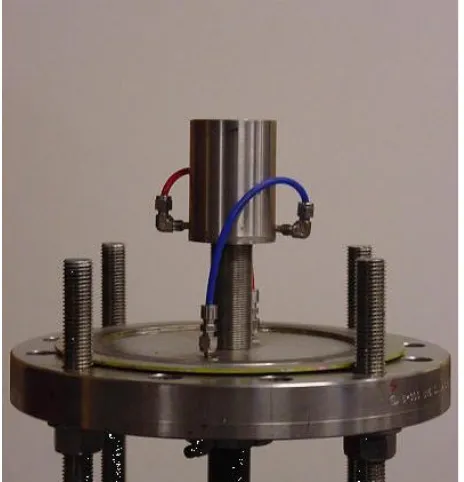
Figure 2.1: Co-flow diffusion flame burne r cup
In order to minimize pressure fluctuation effects on the fuel flow rate, stainless steel wool
(0000 gage) was inserted into the fuel tube. This created an isolated pressure drop and a
uniform, also referred to as plug or top-hat, exit velocity profile. The steel wool was
necessary for measurements made at elevated pressure, within the vessel, to isolate the fuel
flow rate from small fluctuations that in turn would cause large changes in the fuel flow rate.
As discussed previously, using a plug flow exit velocity profile did cause some discrepancies
between the results of this investigation and the results of others. However, as explained
later in chapter 3, these discrepancies were studied and it was possible to show that the
current experiments were in agreement with other researcher’s experimental results when a
compare atmospheric as well as elevated pressure results, and since the elevated pressure
conditions required flow straightening of the fuel flow, the flow straightener in the fuel tube
was necessary for the majority of the experiments, resulting in a plug fuel exit velocity
profile. It should also be noted that the fuel and the diluent entered the burner through the
fuel tube; however, they were introduced well in advance of the fuel exit plane and therefore
were considered fully mixed.
The air co-flow portion of the burner had a combination of hollow glass spheres and
ceramic honeycomb to instill uniform exit velocity profile. A quartz chimney was also
utilized with the co- flow burner at both atmospheric and elevated pressure conditions. This
chimney had an outside diameter of 71 mm, a 3 mm wall thickness, and a 40 cm overall
height. This chimney, though slight modifications were necessary from experiment to
experiment throughout this investigation (describe in detail in future sections), was necessary
to combat air perturbations within the pressure vessel, caused by the geometry of the vessel.
2.2
Pressure Vessel and Ignition System
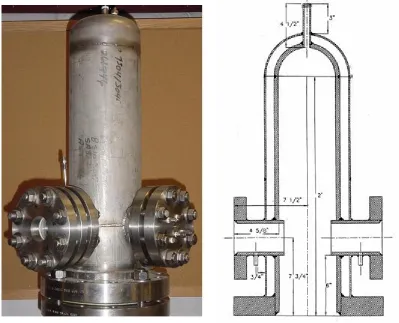
The vessel in which the co- flow burner is housed is a water cooled pressure vessel
that is capable of continuous operation up to 30 atmospheres, although for this investigation
it was not used at any greater pressure than 16 atmospheres. It was designed and originally
built by Li (2001), shown in Figure 2.2. The vessel is one meter tall and has four flanges
extended beyond its circular body. In three of these flanges there are glass windows,
constructed of BK-7 (diameter of 7.6 and thickness of 2.5 cm), that allow for optical viewing
holes for intrusive diagnostics. Because of the fuels used, and their sooting tendencies, the
vessel has air ports on two of the windows to purge the area and prevent accumulation, of
condensation and soot, on the window surface and thus allowing optical access. The co-flow
burner housed inside the vessel is
Figure 2.2: High pressure vessel with dimensions
capable of vertical translation, allowing for optical access to all portions of the flame. The
resistance to ground spark was not reached until it came into contact with the stainless steel
fuel tube, several layers of electrical tape were applied to the outside of the ceramic.
The electrode was place inside the exhaust port of the pressure vessel and lowed
through the open end of the quartz chimney, and then was place 3 to 5 mm from the fuel
tube. Since the electrode passed through the exhaust port it was removed once ignition had
occurred so the exhaust value could be replace on the exhaust port to meter the pressure in
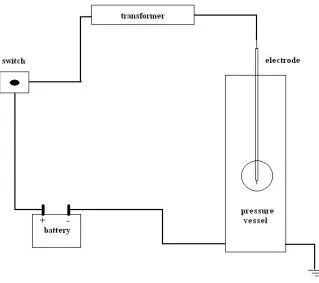
the vessel during experiments. As diagramed in Figure 2.3, the portion of the exposed
copper wire that was outside of the pressure vessel was attached to an electrical cable that ran
to a low-to-high voltage transformer, which was powered by a 12 volt deep cycle marine
battery.
A toggle switch between the battery and the transformer provided an electrical arc inside the
pressure vessel from the copper wire to the fuel tube lip. This provided a very strong spark
for the ignition of the flame within the vessel.
2.3
Pressure Metering
Elevating the pressure within the vessel is time consuming and very sensitive. The
pressure is built in the vessel based on a simple concept of mass in versus mass out, such that
the reactant and air come through the burner into the vessel and then the amount of products
that are released from the vessel controls the pressure within the vessel. The air provided for
combustion comes from compressed cylinders to ensure enough back pressure to sustain the
pressure inside the vessel, the air is also ensured to by dry. A needle valve is attached to the
exhaust port of the vessel and by opening and closing the needle valve the pressure can be
metered. However, if at any time the needle valve closes completely the flame inside the
vessel will be extinguished. The pressure inside the vessel is displayed on an external gauge
and has a range of 0 to 1000 psig. The mass flux of co- flowing air is increased, while the
needle valve is closed slowly to build pressure. It proves to be a taxing chore to maintain a
velocity matched fuel to air ratio and building pressure within the vessel, while maintaining a
flame that is not providing too much soot to the inside of the vessel. Window air is kept
flowing (to prevent soot and condensation build-up on the windows), but with a very
2.4
Fuel Flow Metering
In the base of the pressure vessel two ports exist, one for fuel and diluent inlet and the
other for air co- flow inlet. Stainless steel fittings and plastic fuel lines carry the fuel, diluent,
and air to the burner cup from the base of the vessel. On the outside of the pressure vessel,
stainless steel fittings attach to stainless steel braided lines to carry the fuel, diluent, and air
from the compressed cylinders, to the flow meters, and then on to the pressure vessel. As
mentioned previously, two ports do exist on two of the optical flanges to provide air to the
remove debris and condensation from the windows.
All of the air provided to the pressure vessel (both to the burner cup and to the
window air) ran from the compressed cylinders to separate TeleDyne Hastings mass flow
meters (Model 201). Each of these flow meters was calibrated with nitrogen for a range of 0
to 100 standard liters per minute (SLPM).
As for the fuel and the diluent, each was carried to individual TeleDyne Hastings
mass flow meters (Model 200) that were calibrated with nitrogen for much slower flow rates,
1 to 1000 standard cubic centimeters (sccm). Each of the fuels (methane or ethylene) and
diluents (helium, nitrogen, argon, or carbon dioxide) used were at least 99% pure and each
mass flow meter was calibrated for the individual use of these gases.
Each of the four TeleDyne Hastings mass flow meters was powered by the same
TeleDyne Hastings power supply (Model 40). This power supply not only provided power,
but also provided a digital read-out of the flow rates for each meter. Since each of the flow
meters was calibrated using nitrogen, it was necessary to input a correction factor, into the
factors and are provided by the manufacturer for air, ethylene, methane, argon, helium, and
3
Smoke Point in Pure Ethylene and Methane Flames
3.1
Background
Although a large portion of the smoke point height measurements was accomplished
while the author was seeking the degree of Master of Science, all of these measurements
were repeated while the author was seeking the current degree of Doctor of Philosophy, and
are essential to the fundamental understanding of the more recent research and therefore this
experiment and its findings are included in this paper.
As mentioned previously, the smoke point of a fuel specific flame is a measure of the
fuel’s propensity to soot. It is the point at which the soot production and oxidation are
directly offset and thus no visible smoke is emitted from the flame. For this experiment, pure
ethylene and methane flames were tested up to 8 and 16 atmospheres, respectively to
measure the smoke point height of each flame.
3.2
Experimental Apparatus
The most basic form of the current co- flow burner set- up was utilized for these smoke
point height measurements. The burner, as stated previously, had a fuel tube diameter of 4.5
millimeters, a co-flow diameter of 65 millimeters, and a solid quartz chimney with an inside
diameter of 65 millimeters. The fuel exit velocity profile, with stainless steel placed in the
fuel tube, was plug.
Methane was chosen because it can be used to represent natural gas, which is
soot. Ethylene was chosen as a representation of a complex hydrocarbon with a very high
propensity to soot. A more commonly used fuel, propane, was considered for the
experiments, but since propane has such a low saturation pressure at room temperature
elevated pressure testing would have resulted in a liquid form of propane rather than a
gaseous form.
The methane testing was completed over the pressure range of 2 to 16 atmospheres,
while the ethylene pressure testing ranged from 1 to 8 atmospheres. Obtaining a pure
laminar, steady, methane flame at atmospheric proved to be impossible in the current burner.
However, other researchers have experienced the same problem with methane diffusion
flames at atmospheric conditions (Kent, 1986). Each of the flames was tested at its smoke
point and with fuel to air velocity ratios equal to unity.
To determine the smoke point height of each flame an iterative approach was used
to adjust the fuel flow rate and air co-flow rate to unsure that the velocity ratio remained at
unity. Fuel was increased until the flame emitted visible smoke and then the air co- flow was
increased to the velocity matched ratio. If the visible smoke from the flame then ceased,
more fuel was added to get to a smoking flame, and then the air increased, continuing this
process until the velocity matched fuel to air ratio smoke point height of the flame was
obtained. As the experiments were repeated several times, the iterative process improved to
where roughly three iterations were required to obtain each smoke point height. Once the
smoke point was reached, an image of the flame was taken with a digital camera and later
As mentioned above, the current experiments were completed for the visible smoke
point, and therefore the smoke point heights reported within should be understood to be
luminous smoke point heights and not stoichiometric contour height measurements, which
other researchers have investigated previously (Newman et al., 2004).
3.3
Results and Discussion
In order to determine the effects pressure has on the overall kinetics of the soot
inception and oxidation portions of the soot formation process, smoke point height
measurements were made. These smoke point heights were measured and then
non-dimensionalized, by the fuel tube diameter (4.5 mm), for ease of comparison of results.
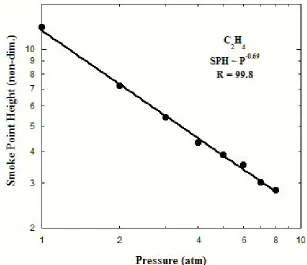
Figure 3.1 shows the non-dimensionalized smoke point height of ethylene as a function of
The data in each of these figures is plotted in log- log space, and in this configuration the data
fit to a power law where the smoke point height scales as a function of pressure to the -0.69
for ethylene and -0.29 for methane. In each case the smoke point height varied from the
results of Schalla and co-workers (1954) in which they found the smoke point height to
decrease nearly linearly with increasing pressure. These findings were the first that would
later prompt the fuel exit velocity profile experiments (discussed in Chapter 4), as it was
believed that these discrepancies were due to the plug fuel velocity exit profile used for this
experiment.
The volumetric fuel flow rate (FFV) was also plotted as a function of pressure, for
both ethylene (Figure 3.3) and methane (Figure 3.4), in order to determine if a functional
dependence of FFV on pressure exists at the smoke point. In both instances, pure ethylene
and pure methane, the best trend fit is available in log- linear space, yielding a logarithmic
dependence from 2 to 8 atmospheres for ethylene and from 2 to 16 atmospheres for methane.
From these plots it was possible to determine that the volumetric fuel flow scales as the
exponential of 0.19 time pressure for ethylene and as the exponential of 0.10 times pressure
for methane. The data point for pure ethylene at atmospheric conditions obviously does not
fit the trend that exists for the ethylene date from 2 to 8 atmospheres.
This difference in trend at atmospheric pressure is believed to be caused by residence time,
but is not fully understood at this time. In each of these plots it should be noted that the
pressure was non-dimensionalized and referenced to one atmosphere.
After analyzing the each of these figures, it was necessary to also look at a possible
relationship between smoke point height and volumetric fuel flow rate because it was
interesting to note that the inverse volumetric fuel flow rate and the flame height decrease as
pressure increases. Therefore, in Figures 3.5 and 3.6 the inverse volumetric fuel flow rate
was plotted as a function of the non-dimensionalized smoke point height for ethylene and
methane, respectively. Each set of data was plotted in log- log space and clearly shows that in
both instances, ethylene from 1 to 8 atmospheres and methane from 2 to 16 atmospheres, the
relationship between volumetric fuel flow rate and smoke point height scales as pressure
divided by the log of pressure, such that as pressure increases the slope increases.
3.4
Smoke Point Conclusions
This experiment was completed in order to gain more knowledge about the chemical
kinetic processes and the emissions that result from them. As the process of soot formation
at elevated pressures, where most practical devices operate, is not wholly understood, it is
necessary to break apart and try to better understand the fundamental processes driving the
formation and growth. This particular experiment focused on pure ethylene and methane and
how pressure increases affect their smoke point. The conclusio ns obtained from this
1. As pressure increases, the flame height at the smoke point decreases. The
behavior of ethylene and methane is quite different as the smoke point height scales as
P-0.69 for ethylene and as P-0.29 for methane.
2. As pressure increases, the volumetric fuel flow rate at the smoke point also
increases, but at a slower rate. For ethylene the inverse volumetric fuel flow rate scaled as
exp(0.19*P) and for methane it scaled as exp(0.10*P).
3. The relationship between the inverse volumetric fuel flow rate and the smoke
point height is not linear, but is obviously a function of pressure. The relationship, when
plotted in log-log space, is nearly linear for methane due to its relatively weak pressure
dependence, but the slope is much steeper for ethylene due to its much stronger pressure
4
Velocity Profile Effects with Dilution and Pressure
4.1
Background
As noted previously in Chapter 1, the experiments on velocity profile effects with
dilution and pressure were not originally planned as a portion of this investigation. However,
differences in results from the current study of smoke point height and the results of previous
investigations into smoke point height prompted these experiments. With the addition of
these experiments it was possible to show the results from the current smoke point height
experiments as well as the results from other previous investigations (Schug et al., 1980;
McLintock, 1968) were all correct. The differences in the results from each of these
experiments were caused by the fuel exit velocity profile. As discussed in Chapter 1, for
most instances in the current investigation, a plug fuel exit velocity profile was utilized (a
necessary characteristic in order to take experimental data at elevated pressures with steady,
laminar diffusion flames) where a parabolic fuel exit velocity profile was utilized by most
other researchers.
For the current experiments discussed in this chapter, data was collected in three
different configurations: in the co- flow burner discussed in §2.1 (with a plug fuel exit
velocity profile) and in a larger co- flow burner with both a plug fuel exit velocity profile and
a parabolic fuel exit velocity profile (detailed later in §4.2). By using both of these burners
in several configurations, it is possible to replicate the current experimental data as well as
4.2
Experimental Apparatus
Given a sufficient length, the velocity profile from a constant area tube will be
parabolic, often called fully developed. By adding flow obstructions, glass beads for this
investigation, it is possible to cause a one dimensional exit velocity profile called a plug (or
top-hat) flow velocity profile. In order to combat the dynamic pressure oscillations in the
high pressure vessel, the fuel tube was filled with either stainless steel wool (burner 1) or
glass beads (burner 2).
For this experiment two burners were employed to make measurements of smoke point
height in steady, laminar diffusion flames at atmospheric and elevated pressures. One burner
configuration that was utilized is the co-flow burner, chimney, and vessel described in detail
in Chapter 2. As a reminder, this burner has a plug fuel exit velocity profile and is from here
on referred to as burner 1.
In burner 1 the fuel and diluent (reactant) were mixed prior to entering the burner and
an iterative approach was used to achieve and maintain the flames tested at their velocity
matched smoke points. This particular burner and iterative approach were used to measure
smoke point height with ethylene and methane diluted individually with four different
diluents (He, N2, Ar, and CO2) at dilution levels ranging from 0% to 40% by volume.
The other burner utilized for these experiments (referred to from here as burner 2),
used to better understand the discrepancies in the efficiency of suppressing soot between the
previous results and those reported here, was also a co-flow burner but was larger than burner
tested) the smoke point was reached with a volumetric fuel flow rate of 138 sccm and the
corresponding air flow rate was 7100 sccm, which is more than three times larger than
necessary to over- ventilate the flame. Therefore, although some of the experiments run with
this burner are not fuel to air ve locity matched, they are nonetheless highly over-ventilated.
In the cases where a plug fuel exit velocity profile was needed from burner 2, glass
beads (3 millimeters in diameter) were packed into the fuel tube for 300 millimeters. For the
parabolic fue l exit velocity profile cases, the beads were removed from the fuel tube. In both
instances with burner 2, plug and parabolic, the air co-flow region had a combination of
screens and ceramic honeycomb to ensure uniform air co-flow exit profile. Similar to burner
1, a quartz chimney (120 millimeter inside diameter) was incorporated to protect the flame
from perturbations of the ambient air surrounding the burner (experiments in burner 2 were
run at atmospheric pressure outside of the pressure vessel).
When testing with burner 2 occurred, ethylene was the only fuel used (since methane
cannot yield a steady, laminar flame at its smoke point at 1 atmosphere), and it was diluted
with either He or CO2. For these measurements only two diluents were used because they
represented the two diluents (out of the four previously used) that had the least (He) and
greatest (CO2) effect on the smoke point height of the flames.
4.3
Results and Discussion
Luminous smoke point heights were measured using burner 1 in diluted ethylene
flames at 1, 4, and 8 atmospheres as well as in diluted methane flames at 4 and 8