R E S E A R C H
Open Access
On an HARQ-based coordinated multi-point
network using dynamic point selection
Behrooz Makki
*, Thomas Eriksson and Tommy Svensson
Abstract
This paper investigates the performance of coordinated multi-point (CoMP) networks in the presence of hybrid automatic repeat request (HARQ) feedback. With an information theoretic point of view, the throughput and the outage probability of different HARQ protocols are studied for slow-fading channels. The results are compared with the ones obtained in the presence of repetition codes and basic HARQ, or when there is no channel state information available at the base stations. The analytical and numerical results demonstrate the efficiency of the CoMP-HARQ techniques in different conditions.
1 Introduction
Coordinated multi-point (CoMP), also known as net-work multiple-input multiple-output (MIMO), is one of the most promising techniques for improving the data transmission efficiency of wireless cellular networks [1-4]. The main idea of a CoMP network is to allow geo-graphically separated base stations (BSs) to cooperate in serving the users. The cooperation is achieved through high-speed backhaul links such that the users’ data and channel state information (CSI) can be shared between the BSs. Theoretically, coordinated systems should outper-form non-cooperative schemes. In practice, however, the performance gain of the CoMP networks largely depends on (1) the amount of CSI available at the transmitters (CSIT) and receivers (CSIR) and (2) the limited capac-ity of the backhaul links. This is the main motivation for studying the CoMP systems under limited CSI and back-haul capacity conditions, which has become a hot topic recently.
Performance of CoMP networks has been studied, e.g., by [5-10] under a perfect CSI assumption and by [11-14] in finite backhaul capacity conditions. The papers deal-ing with imperfect CSI in CoMP networks can be divided into two categories. The first group is the ones in which both the CSIT and the CSIR are assumed to be partially known [14-17]. In these works, the focus is on investi-gating the effect of training signals, providing imperfect
*Correspondence: [email protected]
Department of Signals and Systems, Chalmers University of Technology, Gothenburg 412 96, Sweden
CSIR, on the network performance. The second group, on the other hand, is the papers in which, while the receivers are assumed to perfectly estimate the channels (perfect CSIR), the BSs have access to imperfect CSIT obtained by quantized CSI feedback [18-30]. Here, it is concen-trated on the effects of the CSIT quantization and the quantized CSIT error is normally modeled as Gaussian noise. However, some other CSI quantization schemes have been summarized in [21-28] as well. Finally, to study the effect of BS synchronization, [27-30] have considered the cases where the BSs are provided with quantized CSI of the channel phase, while the amplitudes are perfectly fed back. Some of the most important conclusions drawn from these works are as follows:
• Compared to non-cooperative systems, the cooperation-based schemes suffer more from inaccurate CSIR. That is, the CoMP systems need larger number of pilot symbols than single-cell transmission to make use of its potential [14-17]. Therefore, the CoMP networks are more appropriate for low-mobility communication setups, where the channels change slowly and can be estimated accurately.
• The presence of phase ambiguity and asynchronous data transmission can degrade the system
performance severely and even make it worse than a non-CoMP model [28-30]. Particularly, an important phase ambiguity source, not considered by [28-30], is phase-noise and frequency offset [31,32] which makes the synchronization very difficult.
• For realistic results, simple cooperation schemes should be considered, where not only the amount of backhaul capacity and feedback resources is
minimized but also the implementation complexity is as low as possible.
These points are the main motivations for our paper. Here, the goal is to develop a simple cooperation scheme for low-mobility CoMP networks which leads to minimum feedback requirement, acceptable back-hauling resources, and affordable implementation com-plexity. Therefore, we propose that hybrid automatic repeat request (HARQ) feedback is selected and, at every moment, each user is served by a single BS, while the serving BSs are switched in the successive time slots. The reasons for our selection are
• HARQ is a technique in thedata link layer already provided in many wireless protocols, e.g., IEEE 802.11n [33], IEEE 802.16e [34], and 3GPP LTE [35]. Hence, it needs no new additional design which introduces it as a cost- and complexity-efficient approach.
• From an information theory point of view, HARQ is a sequential feedback approach; in each
(re)transmission round, only 1-bit feedback is sent by the users which, compared to the quantized CSI schemes reporting all corresponding fading
coefficients of the channel, reduces the feedback load substantially. Moreover, there is no quantized CSI feedback to be shared between the BSs, decreasing the backhauling requirements (Meanwhile, the HARQ feedback bits are shared between the BSs). • In the proposed scheme, each user is served by only
one BS in each time slot. Therefore, there is no need to synchronize the BSs, which decreases the implementation complexity substantially.
In summary, the proposed scheme achieves some advantages related to coordinated data transmission but can still avoid many problems that may limit the practical implementation of CoMP networks.
The results are of particular interest when we remember that, although HARQ schemes have been widely studied in single-user [36-41] and MIMO systems with asymp-totically high signal-to-noise ratios (SNRs) [42-47], there are very few results for CoMP-HARQ [48]. Specifically, reviewing the third generation partnership project (3GPP) reports, e.g. [49], there are many aspects of the CoMP-HARQ that have not been studied yet. Therefore, the final conclusions of the paper should be useful for the peo-ple involved in limited feedback issues in CoMP network standardization.
As described both theoretically and numerically, the proposed scheme leads to considerable performance
improvement in terms of system throughput and the user outage probability. Particularly, the BS cooperation makes it possible to combine the advantages of fast-fading chan-nels, having a large diversity gain, with the potential for accurate channel estimation in slow-fading channels. For sufficiently large number of users, the proposed CoMP-HARQ scheme can be modeled as a collection of single-user interference-free networks experiencing a modified SNR. Moreover, to have a positive multiplexing gain, the number of retransmissions should be scaled with the transmission power. Finally, compared to code-combining HARQ protocols, the diversity combining schemes are preferable at low powers, because they lead to the same throughput and outage probability with less complexity at the encoders and decoders.
2 System model
Consider a CoMP communication setup consisting ofN geographically distributed BSs andKusers, withK ≥ N. The BSs are connected via delay-free backhaul links such that the users’ data can be shared between the BSs. The BSs are limited to a peak power constraintP. Lethj,ibe the channel coefficient between the j-th BS and thei-th user. Also, define the channel gainsgj,i = |. hj,i|2. We study the low-mobility, also called slow-fading, scenario where the channel gains remain constant in afading block, deter-mined by the channel coherence timeLc, and then change
independently to other values according to the probabil-ity densprobabil-ity functions (pdfs)fgj,i(.). The simulation results are given for both homogenous and heterogenous links. However, to be more tractable, the analytical results are presented for homogenous links where the channels expe-rience the same fading pdfs. Note that considering the same pdfs does not mean that the channel realizations are the same in a time slot, as they have independent random values. However, for ergodic channels, the same pdf indicates that in the long-run, i.e., over infinitely many time slots, they experience the same behavior. Also, extension of the results for heterogenous networks is straightforward.
The length of the fading block,Lc, is assumed to be so
long that many packetsa are transmitted in a single fad-ing block. As a result, the channel gains can be assumed to be perfectly known by the receivers [18-30,36-41]. On the other hand, there is no CSI available at the BSs (CSIT), except the HARQ feedback bits. The complex white Gaus-sian noises added at the receivers are supposed to have distributionsCN(0, 1). Finally, the results are presented in natural logarithm basis, and the throughput is obtained in nats per channel use (npcu).
2.1 Data transmission model
maximum ofM+1 times. In each fading block,Nusers are selected randomlyb. From a specific user perspective, the
user receives the data from one BS in each time slot. Then, in the next slot, the serving BSs are switched and the user is served by another BS. The BS switching is done inde-pendently of whether new codewords are going to be sent to the users or the previous messages should be retrans-mitted in an HARQ-based fashion. By this technique, the HARQ protocol has a large diversity gain compared to the non-CoMP case.
Remark 1.Four different schemes have been con-sidered for the CoMP networks in the 3GPP commu-nity during Release 11 [50,51]: (1) joint transmission, (2) dynamic point selection (DPS), (3) dynamic point blanking, and (4) coordinated scheduling/beamforming. The proposed scheme belongs to the DPS approach of the CoMP networks where the transmission points are varied according to the considered cooperation rules.
Here, although some discussions about the basic ARQ and repetition codes are presented, the main focus is on two stop-and-wait HARQ protocols:
1) Repetition time diversity (RTD). This scheme belongs to thediversity combining category of HARQ protocols [52] where the same data is repeated in the (re)transmission rounds and, in each round, the receiver performs maximum ratio combining (MRC) of all received signals.
2) Incremental redundancy (INR). The INR belongs to the category ofcode combining protocols [52]. Here, a codeword is sent with an aggressive rate in the first round. Then, if the user cannot decode the initial codeword, further parity bits are sent in the next retransmission rounds and in each round, the receiver decodes the data based on all received signals.
In harmony with, e.g., [36-41], we study the system per-formance for the complex Gaussian codes which have been proved to be optimal for power-limited data trans-mission in fading AWGN channels with long codewords ([53], Chapter 9). The same approach as in, e.g., [54], can be used to extend the results to the case with, e.g., low-density parity-check codes.
2.2 Figures of merit
We consider two, namely, outage probability and long-term throughput, evaluation yardsticks. A user outage probability is the probability of the event that the data cannot be decoded by the user when all retransmis-sion rounds are used. The long-term throughput, on the other hand, is defined as follows. Let the total number
of channel uses and the number of successfully decoded information nats up to the end of thek-th slot beτ(k)and Q(k), respectively. Then, the long-term throughput [36-41]
is defined as
η= lim k→∞
Q(k)
τ(k) =
E{ ˜Q}
E{ ˜τ}, (1)
where E{.} is the expectation operator andQ˜ andτ˜ are the number of successfully decoded information nats and the number of channel uses in a fading block, respectively. Here, thecontinuouscommunication model is considered, where the users are always actively requesting new infor-mation. In this case, all of the channel uses during a fading block are used. Therefore, definingR˜as the achievable rate random variable of the HARQ protocols in a fading block, the long-term throughput is rephrased as
η= E{LcR˜} Lc =
E{ ˜R}, (2)
i.e., the average rate [37-40].
3 Performance analysis for the RTD HARQ protocol
In this section, we derive the throughput and outage prob-ability of the network in the presence of RTD HARQ pro-tocol. The simulation results for the RTD are summarized in the figures presented in Section 6.
With no loss of generality, assume that the new data transmission of thek-th user is started from thek-th BS. Also, let us focus on a specific, say the first, user while the final throughput is obtained by summation on all users throughput. In this way, the signal-to-interference-and-noise ratio (SINR) received at the first user in them-th (re)transmission round is
γm= Pgm,1 1+PNj=1,j=mgj,1
. (3)
Here, (3) is based on the fact that starting from the first BS, the user is served by the m-th BS in the m -th (re)transmission round. Considering Rayleigh fading channels fgj,i(g) = λe−λg,g ≥ 0,∀i,j, on which we focus, the SINR cumulative distribution function (cdf ) is obtained as
Fγm(x)=Pr
Pgm,1
1+PNj=1,j=mgj,1
≤x
(a) =1− e
−λ Px
(1+x)N−1,x≥0, (4) where(a)is found by integration on the gains pdfs andλ represents the fading parameter determined by the path loss and shadowing between the BSs and the terminalsc.
whereQis the number of information nats considered for the initial codeword,Ldenotes the codewords length, and R= QL represents the initial codeword rate.
The data is decoded at the end of them-th round if (1) it has not been decoded before and (2) retransmitting the data at them-th round, the channel SINR, accumulated after MRC, supports the data rate. In this way, the achiev-able data rate random variachiev-able for the RTD protocol is obtained as accumulated SINRxat the end of them-th round the max-imum decodable data rate is m1log(1+x)if the codeword is repeatedmtimes. In this way, the long-term throughput for the first user is
ηRTD1 = as the packet starts from each BS with probability N1 and the network is homogenous, the system long-term throughput is found as
ηRTD=NηRTD1
Here, (7) gives the users expected achievable rates for different message decoding conditions. Moreover, (7) indicates that the performance of the HARQ protocol improves as the number of retransmissions increases (as seen in the following, the throughput is scaled with the number of retransmission rounds at most logarithmi-cally). Moreover, the user outage probability is
Pr{outage}RTDi =Pr{R>log(1+γ(M+1))} =Fγ(M+1)(eR−1), ∀i.
(8)
The optimal parameterR, in terms of, e.g., throughput, can be found numerically. Finally, bounds of the through-put and comparisons between the RTD and other schemes are presented in Section 5.
4 Performance analysis for the INR HARQ protocol As mentioned before, the INR protocol is based on an aggressive codeword transmission in the first round, send-ing further parity bits in the retransmissions and com-bining all received representations of the signal at the receiver. Therefore, the results of, e.g., [36-39,41] can be used to find the achievable rate random variable of the first user with packet transmission starting from the first BS as sent in each round. In this way, the first user long-term throughput is found as
ηINR1 =
and the system long-term throughput is
ηINR=N
According to (7) and (11), the only difference between the RTD and INR protocols is in the achievable rate terms where log(1+ mn=1γn) of the RTD is replaced by mn=1log(1+γn) in the INR (Further comparisons between the RTD and INR protocols are presented in Section 5). Again, R is optimized to maximize the throughput for each transmission power. Also, the user outage probability is obtained by
Pr{outage}iINR=Pr{R> M+1
n=1
log(1+γn)},∀i. (12)
In Section 5, we use (10) to (12) to analyze the through-put at asymptotically low and high powers, and evaluate the effect of BS cooperation on the performance of the network.
5 On the performance of the proposed schemes In this section, we derive performance bounds for various cases and compare the performance of different schemes operating in the CoMP scenario.
5.1 Performance bounds
that the performance of the considered protocols becomes bounded if the number of retransmission rounds is finite.
Theorem 1.With a fixed number of retransmissions, the throughput achieved by the considered CoMP-HARQ schemes is upper bounded even if the transmission power goes to infinity.
Proof.The theorem is proved for the INR protocol which, as stated in the following, results in higher throughput compared to the RTD. The throughput upper bound is found based on the following (in)equalities:
ηINR(b)=NM
Here,(b)is obtained by some manipulation on (11) and (c)comes from the Markov’s inequality, Pr(X≥x)≤ E(xX) [55]. Then, (d) follows from
=E{mn=1log(1+γn)} =mE{log(1+γn)} z and partial integration and (g) is based on (4) and e−λPx ≤1. Finally,(e)in (13) follows fromM
m=0m1+1 ≤
1+log(M+1)which is obtained by Riemann integral and the fact that 1xis a decreasing functiond.
Intuitively, both the signal and the interference pow-ers grow linearly with P. Hence, with high transmis-sion power, the system becomes interference-limited and, according to (4), the users received SINR is bounded. In other words, the theorem states that: (1) the multi-plexingz gain of the proposed CoMP scheme, defined
as ρ = lim
P→∞ η
log(P) [56], is zero if a fixed
num-ber of retransmission rounds are considered for the HARQ protocols. (2) To have a positive multiplex-ing gain, a necessary condition is to scale the number of retransmission rounds with the transmission power. (3) Also, according to (13), the throughput is scaled with the number of retransmission rounds at most logarithmically. Finally, denoting the channel instanta-neous capacity by C, we can use (b) in (13) to write
which indicates that for sufficiently high initial transmis-sion rate, whereE{CR1} → 1, the throughput scales with the initial rate Rat most linearly. Note that (h) in (15) is obtained with the same procedure as in (b) of (13) and then implementation of the exponential Chebyshev’s inequality, Pr(X ≥ x) ≤ e−txE(etX),∀t > 0 [55]. Also, (i)follows from the fact that m1 mn=1log(1+γn) ≤ C, i.e., the maximum decodable rates is less than the channel
instantaneous capacityC, and(j)comes from e− 1
Finally, the same qualitative conclusions are valid for the RTD protocol.
Theorem 2.For Rayleigh fading channels, the proposed CoMP-HARQ network can be modeled/underestimated by N interference-free single-user networks having a modified transmission SNR.
Proof.With the same procedure as in (13), the RTD- and INR-based throughput, i.e., (7) and (11), can be rewritten as
Moreover, from (4), we can show that the auxiliary ran-dom variableγnis dominatedeby the random variableωn which follows the cdff
Fωn(x)=1−e−( λ
Therefore, using (16), (17), and the fact thatFγn(x) ≤ i.e., by appropriate scaling of the fading pdf and the transmission SNR. Also,ηRTD,SU andηINR,SU denote the throughput achieved by the RTD and INR protocols, respectively, in the equivalent channel model of (18). In words, (19) and (20) imply that the CoMP-HARQ network performance can be underestimated by N interference-free single-input single-output (SISO) Rayleigh fading channels with fading coefficient h ∼ CN(0, 1), ω¯n = |h|2, and transmission SNRP¯ = λ+(NP−1)P. Interestingly, the approximation Fγn Fωn becomes very tight for moderate/high values ofN. Thus, the collection of SISO channels becomes an accurate model for the proposed CoMP-HARQ network, as stated in the theorem.
One of the benefits of Theorem 2 is that there are closed-form/approximate expressions for the probability terms of (19) and (20) such as
whereV(x,y)is the normalized incomplete Gamma func-tion (please see [57] for more details about (21)).
5.2 Comparisons
This subsection compares the performance of different schemes in terms of the throughput and the outage prob-ability.
Remark 2. Let M < N. The spatial diversity gained in the proposed CoMP-HARQ scheme with slow-fading channel is the same as the time diversity achieved in the non-CoMP-HARQ schemes when the channel is fast-fading, i.e., when the channel gains change in each retrans-mission round independently.
In order to show this, consider a non-CoMP model where each user is always served by a specific BS and there is no cooperation between the BSs. In this way, the link between the i-th user and its corresponding BS is an interference-affected SISO channel. Assuming a fast-fading model, i.e., the channels take new values in each retransmission round, the received SINR of thei-th user in round nisu(n) = Pgi(n)
1+PNj=1=igj(n)
where gi(n)
repre-sents the gain realization of the channel between thei-th user and its corresponding BS at roundn. Hence, a user throughput in the presence of the RTD and INR protocols is
respectively, which are the corresponding throughputs obtained for thei-th user in the proposed CoMP model when the channel is slow-fading (see (6) and (10)).
of possible HARQ-based retransmissions is normally less than the number of cooperative BSs.
Remark 3.It has been previously shown that the INR outperforms the RTD in terms of outage probability and throughput ([38], lemma 1). However, as log(1+x) → x for smallx’s, (7) and (11) can both be rewritten as
η=N M+1
m=1 R mPr{γ
(m−1)<R≤γ(m)} (24)
whenP→0. That is, the same performance is achieved by the INR and RTD protocols at low transmission powers.
This is interesting when we remember that the superi-ority of the INR over the RTD is at the cost of complexity; in the INR, the codewords are changed in each retrans-mission which results in more complex encoders and decoders. Therefore, compared to the INR, the RTD is preferable at low transmission powers, because the same throughput and outage probability are achieved in both schemes while the RTD leads to less implementation complexity.
As demonstrated in [58], the gain of the INR scheme over the RTD increases with the initial transmission rateR. Also, [58] has previously shown that the difference between the performance of the RTD and INR protocols decreases with the SINR variation between the retrans-missions. Thus, compared to the non-CoMP setup, the gain of the INR over RTD decreases in the CoMP scenario. Finally, it is worth noting that the considered HARQ protocols, RTD and INR, lead to better system perfor-mance compared to (1) the open-loop communication model, (2) basic ARQ protocols, and (3) the case when repetition codes are implemented in a cooperative fash-ion; the open-loop communication model is a special case of the HARQ-based schemes with no retransmissions, i.e., M= 0. Hence, settingM = 0 in, e.g., (8), the open-loop system throughput is
ηOpen=NR1−Fγ1(eR−1)
(25)
which is clearly less than the throughput obtained in (7) and (11). In basic ARQ, on the other hand, the same code-word is transmitted in different retransmission rounds and the users decode the data in each round indepen-dently of the previously received signals. In this way, with some manipulations, the throughput of the basic ARQ approach is found as
ηBasic=N M+1
m=1
R m
m−1
l=1
Prlog(1+γl) <RPrR≤log(1+γm)
.
(26)
Then, as less information is exploited by the basic ARQ decoder, compared to the RTD, the throughput in the
RTD model is obviously higher than the throughput in the basic ARQ (the superiority of the HARQ protocols over the basic ARQ has been previously shown in the lit-erature, e.g., [36,38]). Here, it is interesting to note that with a slow-fading condition, e.g., [38] has shown that there are no performance gains with basic ARQ and the optimal throughput/outage probability achieved by the basic ARQ is the same as the one in the open-loop com-munication setup if the channel does not change in the retransmissions. However, the proposed CoMP-HARQ approach makes it possible to utilize the SINR varia-tions and, depending on the channel pdf, increase the throughput by implementation of basic ARQ.
Finally, using repetition codes the same codeword is transmitted by the switching BSs in different rounds, the same as in RTD. However, as opposed to RTD, the MRC-based decoder is not implemented in each round but only when all possible repetition rounds are used. In this case, removing them-th,m= 1. . .M, probability terms of (7), the system throughput for the repetition codes is obtained by
ηRept= NR
M+1Pr{R≤log(1+γ
(M+1))}< ηRTD≤ηINR.
(27)
The same arguments can be used when comparing the outage probability of these schemes. Here, the only impor-tant difference is that the RTD HARQ and the repetition code schemes lead to the same outage probability. This is because in RTD, the outage occurs if and only if the data is not decodable in the last retransmission round, the same as in the repetition codes.
6 Simulation results
In Figures 1, 2, 3, 4, and 5, we setλi,j = 1,∀i,j, i.e., the channel is assumed to be homogenous. Figures 6 and 7 study the heterogenous networks. The throughput is given in npcu and transmission power is presented in decibels which is given by 10 log10P(as the noise variance is set to 1, the transmission power is the same as the transmission SNR). For the outage probability, the results are obtained for fixed initial transmission rates, specified in the figures. For the throughput and in each transmission power, the initial transmission rate is optimized by exhaustive search, to maximize the throughput for that power.
Considering N=4 BSs and a maximum of M=1
−4 −2 0 2 4 6 0.1
0.2 0.3 0.4 0.5 0.6 0.7 0.8
Transmission SNR (dB)
Throughput (npcu)
CoMP−INR CoMP−RTD NonCoMP−INR NonCoMP−RTD No CSIT (M=0) CoMP−Repetition code
Homogenous network, N=4 BSs
Figure 1System throughput vs the transmission SNR 10 log10P.
Homogenous networkλ=1,N=4 BSs, a maximum ofM=1 retransmission rounds for the HARQ protocols.
with Theorem 1. Therefore, implementation of HARQ in CoMP networks is more appropriate at low transmis-sion powers. With even a single (re)transmistransmis-sion round, substantial performance improvement is achieved by the HARQ schemes, compared to the case with no CSI at the BSs. Also, the CoMP data transmission scheme results in considerable throughput increment, compared to the
0.02 0.1 0.2 0.3 0.4 0.5 10−3
10−2 10−1
Initial transmission rate, R
Users outage probability
RTD INR NonComP
ComP
Homogenous network, N=2 BSs, transmission SNR=5dB
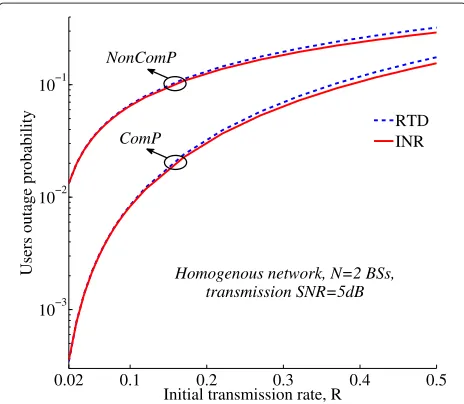
Figure 2User outage probability vs the initial transmission rate
R.Homogenous networkλ=1,N=2 BSs, SNR=5 dB, a maximum ofM=1 retransmission rounds for the HARQ protocols.
−4 −2 0 2 4 6
0.01 0.015 0.02 0.025 0.03 0.035 0.04 0.045
Transmission SNR (dB)
Throughput difference,
Δη
(npcu)
N=8 N=10 N=20 INR HARQ protocol, M=1
Figure 3Difference between the throughput of CoMP-HARQ and single-user channel model introduced in Theorem 2, that is,
η=ηINR−ηINR,SU.Homogenous network, INR HARQ protocol with a maximum ofM=1 retransmission round.Nrepresents the number of BSs/users.
non-CoMP models. Interestingly, the cooperation gain, i.e., the difference between the throughput of the CoMP and non-CoMP schemes, is observed to be (almost) con-stant, at medium and high powers. Finally, the repetition codes are simple but perform poorly in terms of through-put, in comparison to the other schemes.
The effect of CoMP transmission on the user outage probability is studied in Figure 2 where, settingN = 2, the user outage probability is obtained for different initial
0 1 2 3 4
0.4 0.6 0.8 1 1.2
Maximum number of retransmissions, M
Throughput (npcu)
INR RTD
Homogenous network, N=5 BSs, transmission SNR=10dB
0 1 2 3 4 10−8
10−6 10−4 10−2 100
Maximum number of retransmissions, M
Users outage probability
RTD INR
NonCoMP CoMP
Homogenous network, N=5 BSs, transmission SNR=10dB, R=0.5
Figure 5Outage probability for different number of retransmissionsM.Homogenous network,N=5, transmission SNR=10 dB, initial transmission rateR=0.5.
transmission rates. As shown in the figure, CoMP trans-mission leads to considerable outage probability reduc-tion, particularly at low rates. Moreover, the difference between the performance of the RTD and INR protocols increases with the initial transmission rate.
−4 −2 0 2 4 6
10−1 100
Transmission SNR (dB)
Users outage probability
RTD INR R=1
R=0.5
Heterogenous network, N=2 BSs,λ
11=λ22=1,λ12=λ21=0.1,
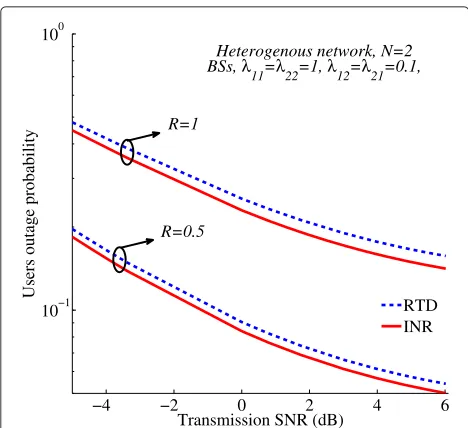
Figure 6Outage probability vs the transmission SNR 10 log10P.
Heterogenous networkN=2, a maximum ofM=1 retransmission rounds. The fading parameters are set toλ1,1=λ2,2=1,
λ1,2=λ2,1=0.1. The same outage probability as in the RTD scheme
is achieved by repetition codes with repetition order of 2.
0.5 1 1.5 2
0.2 0.4 0.6 0.8 1 1.2 1.4 1.6
Fading parameter, λ2,1=λ2,2
Throughput (npcu)
SNR=6dB SNR=3dB SNR=0dB SNR=−3dB
N=2 BSs, INR protocol, a maximum of M=1 retransmission
Figure 7System throughput vs the second BS fading parametersλ2,1=λ2,2.Heterogenous networkλ1,i=1,i=1, 2, a
maximum ofM=1 retransmission round, INR protocol.
The validity of Theorem 2 is verified in Figure 3. Here, the throughput differenceη = ηINR −ηINR,SU is plot-ted as a function of the transmission power whereηINR and ηINR,SU are obtained by (11) and (20), respectively. As demonstrated in the figure, the difference between the throughput of the two models considered in Theorem 2 becomes small as the number of users increases. Also, the throughput difference increases with the transmis-sion power. However, using (4) and (18), it can be shown that the difference becomes bounded as the power increases.
Setting N=5, Figures 4 and 5 study the system throughput and outage probability as a function of the maximum number of retransmissions. As demonstrated, considerable performance improvement is achieved by increasing the number of retransmissions. Also, the differ-ence between the performance of INR and RTD protocols and the difference between the CoMP and non-CoMP data transmission models increase withMsubstantially.
outage probability becomes bounded at high powers, as the system becomes interference-limited.
Finally, settingN =2 andM= 1, Figure 7 investigates the system throughput in a heterogenous network. Here, while we setλ1,i = 1,i = 1, 2, the throughput is plotted as a function of the fading coefficients associated with the second BS, i.e.,λ2,1 = λ2,2. As it can be seen, the system
throughput decreases when the distance between the sec-ond BS and the users, modeled byλ2,i,i= 1, 2, increases. At asymptotic conditionλ2,i → ∞,i = 1, 2, the network is mapped to a 1×2 SIMO channel working in a TDMA fashion.
7 Conclusions
This paper studied the performance of a CoMP-HARQ network. The proposed approach exploits the advantages of coordinated data transmission schemes and, mean-while, solves some of the important problems that may limit the practical implementation of CoMP networks. As demonstrated both theoretically and numerically, con-siderable performance improvement can be achieved by implementation of CoMP-HARQ systems. However, the system performance becomes bounded if the number of HARQ-based retransmission rounds does not scale with the transmission power. The proposed CoMP net-work can be modeled by a collection of interference-free single-user channels experiencing a specific SNR. Finally, the diversity combining HARQ schemes outperform the code-combining HARQ protocols at low transmission powers. This is because the same outage probability and throughput are achieved by these protocols, while the diversity combining schemes lead to less implementation complexity.
Endnotes
aA packet is defined as the transmission of a codeword
along with all its possible retransmission rounds.
bThis is the best scheme for schedulingNusers with no
CSIT at the BSs [56] as well as when, due to scheduling delay and complexity, the users are selected for transmission based upon queue lengths instead of on channel conditions.
cFor heterogenous Rayleigh fading channels,
fgj,i(g)=λj,ie−
λj,ig,g≥0, (4) is rephrased as
Fγm
k,i(x)=1− e−
λk+m−1,i
P x
N j=1,j=m(1+
λk+m−1,i
λk+j,i x)
,x≥0.
dStraightforward modifications can be applied to (13)
and (14) to prove the theorem for heterogenous networks. eThe random variableXdominates the random
variableYifFX(x)≥FY(x), ∀x[59]. fFor heterogenous channels, we can useF
γkm,i(x)≤
Fωkm,i(x),∀x, whereFωmk,i=1−e
−(λk+mP−1,i+jN=1,j=mλkλ+m−1,i
k+j,i )x.
Competing interests
The authors declare that they have no competing interests.
Received: 25 February 2013 Accepted: 2 August 2013 Published: 16 August 2013
References
1. D Gesbert, S Hanly, H Huang, S Shamai, O Simeone, W Yu, Multi-cell MIMO cooperative networks: a new look at interference. IEEE J. Sel. Areas Commun.28(9), 1380–1408 (2010)
2. J Zhang, Networked MIMO with clustered linear precoding. IEEE Trans. Wireless Commun.8(4), 1910–1921 (2009)
3. CB Chae, S Kim, RW Heath, Network coordinated beamforming for cell-boundary users: linear and nonlinear approaches. IEEE J. Sel. Topics Signal Process.3(6), 1094–1105 (2009)
4. C Shen, TH Chang, KY Wang, Z Qiu, CY Chi, Distributed robust multi-cell coordinated beamforming with imperfect CSI: an ADMM approach. IEEE Trans. Signal Process.60(6), 2988–3003 (2012)
5. P Marsch, G Fettweis, inICC 2007. A framework for optimizing the uplink performance of distributed antenna systems under a constrained backhaul (Glasgow, 24–28 June 2007), pp. 975–979
6. A Sanderovich, O Somekh, S Shamai, inISIT 2007. Uplink macro diversity with limited backhaul capacity (Nice, 24–29 June 2007), pp. 11–15 7. BL Ng, JS Evans, SV Hanly, D Aktas, Distributed downlink beamforming
with cooperative base stations. IEEE Trans. Inf. Theory.54(12), 5491–5499 (2008)
8. N Levy, S Shamai, Clustered local decoding for wyner-type cellular models. IEEE Trans. Inf. Theory.55(11), 4967–4985 (2009)
9. N Levy, S Shamai, Information theoretic aspects of users’ activity in a wyner-like cellular model. IEEE Trans. Inf. Theory.56(5), 2241–2248 (2010) 10. MK Karakayali, GJ Foschini, RA Valenzuela, Network coordination for
spectrally efficient communications in cellular systems. IEEE Wireless Commun.13(4), 56–61 (2006)
11. S Shamai, O Simeone, O Somekh, A Sanderovich, BM Zaidel, HV Poor, in
PIMRC 2008. Information-theoretic implications of constrained
cooperation in simple cellular models (Cannes, 15–18 September 2008), pp. 1–5
12. S Shamai, O Simeone, O Somekh, HV Poor, inITAW 2008. Joint multi-cell processing for downlink channels with limited-capacity backhaul (Washington, D.C., 2–4 June 2008), pp. 345–349
13. J Hoydis, M Kobayashi, M Debbah, Optimal channel training in uplink network MIMO systems. IEEE Trans. Signal Process.59(6), 2824–2833 (2011)
14. P Marsch, G Fettweis, inGLOBECOM 2009. On downlink network MIMO under a constrained backhaul and imperfect channel knowledge (Honolulu, 30 November–4 December 2009), pp. 1–6
15. T Wild, inVTC 2011. Comparing downlink coordinated multi-point schemes with imperfect channel knowledge (Budapest, 15–18 May 2011), pp. 1–5
16. H Sun, X Zhang, W Fang, inPIMRC 2011. Dynamic cell clustering design for realistic coordinated multipoint downlink transmission (Toronto, 11–14 September 2011), pp. 1331–1335
17. B Ghimire, G Auer, H Haas, Busy burst enabled coordinated multipoint network with decentralized control. IEEE Trans. Wireless Commun.10(10), 3310–3320 (2011)
18. J Shi, T Zhang, Y Zhou, Z Zeng, Z Huang, inVTC 2011. Rate loss caused by limited feedback and channel delay in coordinated multi-point system (Budapest, 15–18 May 2011), pp. 1–6
19. X Hou, C Yang, inICASSP 2011. How much feedback overhead is required for base station cooperative transmission to outperform non-cooperative transmission? (Prague, 22–27 May 2011), pp. 3416–3419
20. M Eslami, WA Krzymien, M Al-Shalash, inMC-SS 2011. A hybrid mode user-location-aware network MIMO with limited feedback for cellular downlink (Herrsching, 3–4 May 2011), pp. 1–4
21. F Yuan, C Yang, Bit allocation between per-cell codebook and phase ambiguity quantization for limited feedback coordinated multi-point transmission systems. IEEE Trans. Commun.60(9), 2546–2559 (2012) 22. Y Li, J Ge, C Shen, J Li, W Miao, inISCIT 2011. Coordinated multi-point
23. 3GPP TS 36.211 v9.1.0, Evolved universal terrestrial radio access (E-UTRA); physical channels and modulation. March 2010
24. J Jin, Q Wang, C Lin, H Yang, Y Wang, inGLOBECOM 2010. Coordinated multi-point transmission with limited feedback (Miami, 6–10 December 2010), pp. 850–854
25. TR Lakshmana, A Papadogiannis, J Li, T Svensson, inPIMRC 2012. On the potential of broadcast CSI for opportunistic coordinated multi-point transmission (Sydney, 9–12 September 2012), pp. 1262–1267 26. J Li, A Papadogiannis, R Apelfrojd, T Svensson, M Sternad, inPIMRC 2012.
Performance evaluation of coordinated multi-point transmission schemes with predicted CSI (Sydney, 9–12 September 2012), pp. 1055–1060 27. D Kim, OS Shin, I Sohn, KB Lee, Channel feedback optimization for
network MIMO systems. IEEE Trans. Veh. Technol.61(7), 3315–3321 (2012) 28. D Kim, OS Shin, KB Lee, inGLOBECOM 2011. Efficient limited feedback
schemes for network MIMO systems (Houston, TX, 5–9 December 2011), pp. 1–6
29. S Zhou, J Gong, Z Niu, Distributed adaptation of quantized feedback for downlink network MIMO systems. IEEE Trans. Wireless Commun.10(1), 61–67 (2011)
30. F Yuan, C Yang, inVTC 2011. Phase ambiguity quantization for per-cell codebook based limited feedback coordinated multi-point transmission systems (San Francisco, 5–8 September 2011), pp. 1–5
31. MR Khanzadi, H Mehrpouyan, E Alpman, T Svensson, D Kuylenstierna, T Eriksson, inICSPCS 2011. On models, bounds, and estimation algorithms for time-varying phase noise (Honolulu, 12–14 December 2011), pp. 1–8 32. F Munier, T Eriksson, A Svensson, An ICI reduction scheme for OFDM
system with phase noise over fading channels. IEEE Trans. Commun. 56(7), 1119–1126 (2008)
33. F Peng, J Zhang, WE Ryan, inWCNC 2007. Adaptive modulation and coding for IEEE 802.11n (Hong Kong, 11–15 March 2007), pp. 656–661 34. WiMAX Forum, Mobile WiMAX - part II: a comparative analysis. (WiMAX,
Solana Beach, 2006)
35. 3GGP, LTE. http://www.3gpp.org/LTE
36. G Caire, D Tuninetti, The throughput of hybrid-ARQ protocols for the Gaussian collision channel. IEEE Trans. Inf. Theory.47(5), 1971–1988 (2001) 37. B Makki, T Eriksson, On hybrid ARQ and quantized CSI feedback schemes in quasi-static fading channels. IEEE Trans. Commun.60(4), 986–997 (2012) 38. C Shen, T Liu, MP Fitz, On the average rate performance of hybrid-ARQ in
quasi-static fading channels. IEEE Trans. Commun.57(11), 3339–3352 (2009)
39. B Makki, T Eriksson, On the average rate of HARQ-based quasi-static spectrum sharing networks. IEEE Trans. Wireless Commun.11(1), 65–77 (2012)
40. B Makki, A Graell i Amat, T Eriksson, inWCNC 2012. Power allocation in repetition time diversity hybrid automatic repeat request feedback (Paris, 1–4 April 2012), pp. 2329–2334
41. B Makki, A Graell i Amat, T Eriksson, HARQ feedback in spectrum sharing networks. IEEE Commun. Lett.16(9), 1337–1340 (2012)
42. HE Gamal, G Caire, MO Damen, The MIMO ARQ channel: diversity-multiplexing-delay tradeoff. IEEE Trans. Inf. Theory.52(8), 3601–3621 (2006)
43. T Holliday, AJ Goldsmith, HV Poor, Joint source and channel coding for MIMO systems: Is it better to be robust or quick? IEEE Trans. Inf. Theory. 54(4), 1393–1405 (2008)
44. A Chuang, A Guillen, i Fabregas, LK Rasmussen, IB Collings, Optimal throughput-diversity-delay tradeoff in MIMO ARQ block-fading channels. IEEE Trans. Inf. Theory.54(9), 3968–3986 (2008)
45. KD Nguyen, LK Rasmussen, A Fabregas, N Letzepis, inAusCTW 2009. Rate-diversity-delay tradeoff for ARQ systems over MIMO block-fading channels (Sydney, 4–7 February 2009), pp. 116–121
46. H Liu, L Razoumov, N Mandayam, P Spasojevic, An optimal power allocation scheme for the STC hybrid-ARQ over energy limited networks. IEEE Trans. Wireless Commun.8(12), 5718–5722 (2009)
47. KD Nguyen, LK Rasmussen, A Guillen, i Fabregas, N Letzepis, MIMO ARQ with multibit feedback: outage analysis. IEEE Trans. Inf. Theory.58(2), 765–779 (2012)
48. Y Gao, Y Li, H Yu, S Gao, X Wang, inCHINACOM 2011. Modeling and analysis of SU-CoMP HARQ in 3GPP LTE system level simulation (Harbin, 17–19 August 2011), pp. 295–298
49. 3GPP, TR25.835, Report on Hybrid ARQ Type II/III[s]. http://www.3gpp. org/ftp/Specs/html-info/25835.htm
50. HL Määttänen, K Hämäläinen, J Venäläinen, K Schober, M Enescu, M Valkama, System-level performance of lte-advanced with joint transmission and dynamic point selection schemes. Eurasip J. Adv. Signal Process (2012)
51. PartnershipProject 3rd Generation, TSG RAN: (E-UTRA); 3GPP TS 36.213 version 11.0.0 Physical layer procedures (Release 11) (2012). http://www. 3gpp.org/
52. S Wicker,Error Control Systems for Digital Communication and Storage. (Prentice-Hall, Upper Saddle River, 1995)
53. TM Cover, JA Thomas,Elements of Information Theory. (Wiley, New Jersey, 2006)
54. S Sesia, G Caire, G Vivier, Incremental redundancy hybrid ARQ schemes based on low-density parity-check codes. IEEE Trans. Commun.52(8), 1311–1321 (2004)
55. IN Bronshtein, M van den Brand,Handbook of Mathematics, 5th ed. (Springer-Verlag, Berlin Heidelberg, 2007)
56. N Jindal, MIMO broadcast channels with finite-rate feedback. IEEE Trans. Inf. Theory.52(11), 5045–5060 (2006)
57. E Telatar, Capacity of multi-antenna gaussian channels. Eur Trans. Telecommun.10, 585–595 (1999)
58. J-F Cheng, Coding performance of hybrid ARQ schemes. IEEE Trans. Commun.54(6), 1017–1029 (2006)
59. VS Bawa, Optimal rules for ordering uncertain prospects. J. Financ. Econ. 2(1), 95–121 (1975)
doi:10.1186/1687-1499-2013-209
Cite this article as:Makkiet al.:On an HARQ-based coordinated multi-point network using dynamic multi-point selection.EURASIP Journal on Wireless Communications and Networking20132013:209.
Submit your manuscript to a
journal and benefi t from:
7Convenient online submission
7Rigorous peer review
7Immediate publication on acceptance
7Open access: articles freely available online
7High visibility within the fi eld
7Retaining the copyright to your article