MP-03.01
Does the Method of Bladder Cuff Excision Affect Disease Recurrence after Nephrouretectomy for Upper Tract Urothelial Carcinoma? A Single-centre Comparison of Three Bladder Cuff Excision Methods
Allard, Christopher; Alamri, Abdulaziz; Matsumoto, Edward; Dason, Shawn; Kapoor, Anil
McMaster Institute of Urology, Hamilton, ON, Canada
Introduction and Objectives: The standard management of upper urinary
tract urothelial carcinoma (UTUC) is radical nephroureterectomy (RNU) with bladder cuff excision (BCE). Multiple methods of BCE are possible. We investigated whether any of three methods of BCE used at our institution is associated with disease recurrence or metastases.
Methods: We performed a retrospective review of RNU at our institution.
Three BCE methods were used: open extravesical, open intravesical via cystotomy, and transurethral incision (TUI) using an endoloop through a laparoscopic port to secure the distal ureter. We defined recurrence as any urothelial recurrence and metastases as disease recurrence outside the urothelium.
Results: From January 2001 to January 2011, 112 patients underwent RNU
(110 laparoscopic, 2 open) with complete data. Sixty-one, 30, and 21 patients underwent TUI, extravesical, and intravesical BCE respectively. After a median follow-up of 22 months (range 0-113), 36 (32.1%) patients developed recurrences (bladder = 34, contralateral UT = 2) and 18 (16.1%) metastases. Recurrence rates were 26.7%, 38.1%, and 32.8% in the extra-vesical, intraextra-vesical, and TUI groups respectively (p=0.682). Factors associ-ated with recurrence or metastases in a univariate regression analysis were a history of bladder cancer, smoking, positive margins, lymph node status unknown (compared to negative), and concomitant CIS. In a multivariate analysis, stage, positive margins, and CIS were associated. The method of BCE was not associated with oncologic outcomes.
Conclusions: These three methods of BCE appear to be equally
oncologi-cally valid. A limitation of this study is its retrospective design. Ideally, prospective studies are needed to best assess whether a particular method is superior, but the rarity of UTUC makes prospective studies unlikely. Multi-centre trials could further validate the various methods.
MP-03.02
Regional Differences in Practice Patterns and Associated Outcomes for Upper Tract Urothelial Carcinoma in Canada: Outcomes from the Canadian Upper Tract Collaboration
Wassim, Kassouf1; Rendon, Ricardo2; Bell, David2; Izawa, Jonathan3; Chin,
Joseph3; Kapoor, Anil4; Matsumoto, Edward4; Lattouf, Jean-Baptiste5; Saad,
Fred5; Lacombe, Louis6; Fradet, Yves6; Fairey, Adrian7; Jacobsen, Niels7;
Drachenberg, Darrel8; Cagiannos, Ilias9; So, Alan10; Black, Peter10; Metcalfe,
Michael10
1McGill University, Montreal, QC, Canada; 2Dalhousie University, Halifax,
NS, Canada; 3University of Western Ontario, London, ON, Canada; 4McMaster University, Hamilton, ON, Canada; 5University of Montreal,
Montreal, QC, Canada; 6Laval University, Quebec, QC, Canada; 7University
of Alberta, Edmonton, AB, Canada; 8University of Manitoba, Winnipeg,
MB, Canada; 9University of Ottawa, Ottawa, ON, Canada; 10University of
British Columbia, Vancouver, BC, Canada
Introduction and Objectives: We aim to delineate regional differences in
practice patterns for upper tract urothelial carcinoma (UTUC) and relate these to patient outcomes.
Materials and Methods: A multi-institutional radical nephroureterectomy
database was created with information on all patients treated with nephro-ureterectomy for UTUC between 1994 and 2009 from 10 academic centres in Canada. The centres were divided into three regions across Canada. Primary study variable was geographical region within Canada. Secondary study variables were time from diagnosis to surgery, open versus laparo-scopic nephroureterectomy, management of the distal ureter, performance of lymphadenectomy and administration of chemotherapy and/or radiation therapy. Outcome measures were overall survival, disease-specific, and recurrence-free survival. Cox proportional multivariable linear regression analysis was used for analysis.
Results: There was a significant difference between the regions for time
from diagnosis to surgery date (p=0.001), type of surgery (open vs. lapa-roscopic, p<0.01), and management of distal ureter (p=0.001) in 1029 patients. Multivariable linear regression analysis demonstrated that tumor location, stage, grade, and salvage radiation therapy were significant in association with overall survival.
Conclusions: There are practice pattern differences between regions within
Canada. However, there is no association with a change in overall survival when demographic, clinical and pathological data are considered.
MP-03.03
Impact of Body Mass Index (BMI) on Outcomes of Patients with Upper and Lower Urinary Tract Cancers Treated by Radical Surgery: Results from a Canadian Multicentre Collaboration
Bachir, Bassel G.1; Aprikian, Armen1; Izawa, Jonathan2; Chin, Joseph2;
Fradet, Yves3; Fairey, Adrian4; Estey, Eric4; Jacobsen, Niels4; Rendon,
Ricardo5; Cagiannos, Ilias6; Lacombe, Louis3; Tanguay, Simon1; Lattouf,
Jean-Baptiste7; Kapoor, Anil8; Matsumoto, Edward8; Saad, Fred7; Bell, David5;
Black, Peter9; So, Alan9; Drachenberg, Darrel10; Kassouf, Wassim1 1McGill University Health Centre, Montreal, QC, Canada; 2University
of Western Ontario, London, ON, Canada; 3Laval University, Quebec,
QC, Canada; 4University of Alberta, Edmonton, AB, Canada; 5Dalhousie
University, Halifax, NS, Canada; 6University of Ottawa, Ottawa, ON,
Canada; 7University of Montreal, Montreal, QC, Canada; 8McMaster
University, Hamilton, ON, Canada; 9University of British Columbia,
Vancouver, BC, Canada; 10University of Manitoba, Winnipeg, MB, Canada
Introduction and Objectives: To evaluate the effect of body mass index
(BMI) on outcomes after radical cystectomy (RC) and radical nephroure-terectomy with bladder cuff excision (RNU) in a contemporary group of patients from a Canadian multicentre collaboration.
Methods: Data was collected from eight participating Canadian centres
on patients who had undergone RC or RNU from 1998 to 2008. Patients without BMI data were excluded from analysis. Various clinico-pathologic parameters among the three subsets of patients (BMI <25 kg/m2, 25-30 kg/
m2, >30 kg/m2) were analyzed. Kaplan-Meier method was used to determine
any difference in overall (OS), disease-specific (DSS), and recurrence-free survival (RFS) across the three distinctive weight classes. Multivariate analy-ses models were also constructed to asanaly-sess the impact of BMI on survival.
Results: Data on BMI was available on 847 patients who had undergone
RC as well as 664 patients who had undergone RNU. There was no dif-ference in histology, pathologic stage, grade and margin status among the three subsets of patients undergoing either type of surgery. However, RC patients with lower BMIs (<25 kg/m2) were significantly older, had more
nodal metastasis and trended towards higher pathological stage while RNU patients with lower BMIs (<25 kg/m2) were significantly older and received
less adjuvant chemotherapy compared to those with BMI >30 kg/m2. After
adjusting for different variables on multivariate analysis, BMI was not an independent prognostic factor for OS and DSS in both surgical groups. Although BMI >30 kg/m2 was not associated with worse RFS in the RC
group, it was associated with worse RFS in the RNU group.
Conclusions: Increased BMI does not seem to influence survival in
patients undergoing RC. BMI >30 kg/m2 is associated with worse RFS in patients undergoing RNU.
MP-03.04
A Population-based Study of Surgeon Characteristics Associated with the Uptake of Contemporary Techniques in Renal Surgery
Yap, Stanley1; Alibhai, Shabbir1; Margel, David1; Abouassaly, Robert2;
Timilshina, Narhari1; Finelli, Antonio1
1University of Toronto, Toronto, ON, Canada; 2University Hospitals Case
Medical Center, Cleveland, OH, United States
Introduction and Objectives: Despite current evidence, we have
wit-nessed a slow uptake of new standards in the surgical management of renal tumors. We sought to evaluate surgeon-level characteristics asso-ciated with the uptake of laparoscopy, partial nephrectomy (PN), and adrenal-sparing approaches in the surgical management of renal tumors.
Methods: Using the Ontario Cancer Registry, we identified surgeons
treating renal cell carcinoma (RCC) in the province of Ontario, Canada, between the years of 2002 to 2004. We then classified individuals within this cohort as either high or low utilizers of laparoscopy, PN, or adrenal-sparing approaches. Further variables analyzed included academic status, surgeon graduation year, and surgical volume status. We then utilized univariable and multivariable logistic regression models to assess predic-tors of uptake.
Results: We evaluated 108 surgeons for their uptake of both laparoscopy
and adrenal-sparing approaches and 94 surgeons for their uptake of PN. Regarding laparoscopy, we identified 32 surgeons (30%) as high users based on a cut-off of using laparoscopic approaches in at least 50% of their radical nephrectomies for tumors 7cm or smaller. Predictors of uptake of laparoscopy included graduation year after 1990 (OR 4.81, 95% CI 1.57-14.8) and high surgeon volume (OR 4.33, 1.60-10.4). We identified 41 surgeons (44%) as high users of PN based on a threshold of performing PN for >33% of their cases for T1a tumors. The only significant predictor of uptake of PN was academic status (OR 5.83, 1.96-17.3). We identified 69 surgeons (65%) as high users of adrenal-sparing approaches but did not identify any significant predictors for uptake in this group.
Conclusions: We identify unique factors contributing to the uptake of
distinct surgical techniques in the management of RCC. This information sheds light on the underlying mechanisms and helps us understand how to further encourage the dissemination of these practices.
MP-03.05
Association between Comorbidity and Survival after Radical Nephroureterectomy: Results from the Canadian Upper Tract Collaboration
Fairey, Adrian1; Jacobsen, Niels2; Tanguay, Simon3; Rendon, Ricardo4;
Bell, David4; Izawa, Jonathan5; Chin, Joseph5; Kapoor, Anil6; Matsumoto,
Edward6; Black, Peter7; So, Alan7; Lattouf, Jean-Baptiste8; Saad, Fred8;
Drachenberg, Darrel9; Cagiannos, Ilias10; Lacombe, Louis11; Fradet, Yves11;
Kassouf, Wassim3
1University of Southern California, Pasadena, CA, United States; 2University
of Alberta, Edmonton, AB, Canada; 3McGill University, Montreal, QC,
Canada; 4Dalhousie University, Halifax, NS, Canada; 5University of
Western Ontario, London, ON, Canada; 6McMaster University, Hamilton,
ON, Canada; 7University of British Columbia, Vancouver, BC, Canada; 8University of Montreal, Montreal, QC, Canada; 9University of Winnipeg,
Winnipeg, MB, Canada; 10University of Ottawa, Ottawa, ON, Canada; 11Laval University, Quebec City, QC, Canada
Introduction and Objectives: The role of comorbidity as an independent
prognostic factor for survival after radical nephroureterectomy (RNU) for upper tract urothelial cancer (UTUC) has not been studied. Here we examined the associations between comorbidity and survival outcomes.
Methods: Institutional radical nephroureterectomy databases containing
detailed information on UTUC patients treated between 1994 and 2009 were obtained from 10 academic centres in Canada. Data were collected on 1029 patients and combined into a relational database formatted with patient characteristics, pathologic characteristics, and survival status. Comorbidity burden was classified as low (CCI ≤2) or high (CCI >2) using the Charlson Comorbidity Index (CCI). The outcomes were overall survival (OS), disease-specific survival (DSS), and recurrence-free survival (RFS). The Kaplan-Meier method and Cox proportional regression models were used to analyze survival data.
Results: Comorbidity data was evaluable for 322 out of 1029 patients
(31%). The median follow-up duration was 2.5 years (IQR, 0.6 to 6.2 years). 101 (31%) and 221 (69%) patients had low and high comorbid-ity burden, respectively. The predicted 5-year OS (86% vs. 66%, log-rank p<0.01), DSS (89% vs. 76%, log-rank p=0.02), and RFS (62% vs. 42%, log-rank p<0.01) rates differed between patients with low and high comorbidity burden. Univariable Cox regression analysis showed that high comorbidity burden was associated with poorer OS (HR 2.45, 95% CI 1.43 to 4.17, p<0.01), DSS (HR 2.20, 95%CI 1.13 to 4.29, p=0.02), and RFS (HR 1.85, 95%CI 1.28 to 2.68, p<0.01). However, multivariable Cox regression analysis showed that comorbidity burden was not inde-pendently associated with OS (HR 1.74, 95%CI 0.80 to 3.81, p=0.160), DSS (HR 1.87, 95%CI 0.70 to 4.99, p=0.21), or RFS (HR 1.37, 95%CI 0.82 to 2.30, p=0.24).
Conclusions: Comorbidity burden was not independently associated with
survival outcomes after RNU for UTUC.
MP-03.06
Ipsilateral Adrenalectomy at the Time of Radical Nephrectomy – Does It Impact Overall Survival?
Yap, Stanley1; Alibhai, Shabbir1; Abouassaly, Robert2; Timilshina, Narhari1;
Margel, David1; Finelli, Antonio1
1University of Toronto, Toronto, ON, Canada; 2University Hospitals Case
Medical Center, Cleveland, OH, United States
Introduction and Objectives: Despite current evidence supporting
ipsilat-eral adrenal gland-sparing approaches during radical nephrectomy (RN), such practices remain underutilized. The long-term consequences of an iatrogenic solitary adrenal gland are poorly understood. We performed a population-level analysis to assess the impact of ipsilateral adrenalectomy on overall survival.
Methods: Using the Ontario Cancer Registry (OCR), we identified 1,651
patients in the province of Ontario, Canada with pT1a renal cell carci-noma (RCC) who underwent RN between1995 and 2004. We linked individual patient information with pathologic data from abstracted pathology reports and determined whether the ipsilateral adrenal gland was removed at the time of RN. We utilized univariable and multivariable (adjusting for age, gender, tumor size, and tumor grade) Cox proportional hazards models and Kaplan-Meier curves to assess predictors of overall and cancer-specific survival.
Results: The overall rate of ipsilateral adrenalectomy at the time of RN
was 30%. Median follow-up for the cohort was 109 months. Adrenal removal was associated with worse overall survival; 10-year mortality 26% compared to 20% for those in whom the adrenal gland was left in situ. Factors predictive of worse overall survival on multivariable analy-sis were increasing age (hazard ratio (HR) 1.07 per year, CI 1.06-1.08), high-grade tumors (HR 1.38, 1.00-1.90), and having undergone ipsilateral adrenalectomy (HR 1.23, 1.00-1.50). Ipsilateral adrenalectomy was not predictive of cancer-specific survival (HR 1.18, 0.78-1.79).
Conclusions: We demonstrated a significant association between
MP-03.07
Oncolytic Virotherapy Combined with Targeted Therapy for the Treatment of Renal Cell Carcinoma
Lawson, Keith1; Shi, Zhong Qiao1; Spurrell, Jason1; Kawakami, Jun2;
Morris, Don1
1Department of Oncology, University of Calgary, Calgary, AB, Canada; 2Division of Urology, Department of Surgery, University of Calgary,
Calgary, AB, Canada
Introduction and Objectives: In the present study, we assessed the utility
of combining sunitinib with reovirus (RV), an oncolytic virus that has been demonstrated to mediate both innate and adaptive anti-tumor immune responses in addition to its direct oncolytic effects.
Methods: In vitro, a panel of renal cell carcinoma (RCC) cell lines were
treated with escalating doses of RV, sunitinib or a combination of these agents. Cytotoxicity, viral progeny and apoptosis was subsequently quanti-fied by WST-1, plaque titration and TUNEL assays, respectively. Natural killer (NK) cell and cytotoxic T lymphocyte (CTL) migration towards reo-virus infected cells was assessed utilizing 3µm pore transwell plates. Synergy was assessed via the Chou and Talalay method. In vivo, 8-9 week old Balb/c mice were inoculated with 2.5x10⁶ RENCA cells sub-cutaneously to establish a syngeneic immunocompetent murine model of RCC and treated with RV (i.t or i.v), sunitinib (i.p) or a combination of these agents.
Results: RV replicated and induced a cytotoxic response in all tested cell
lines (RENCA, 786-0, A498, ACHN). The addition of sunitinib to reovirus infected RCC cells lead to a synergistic cytotoxic response [CI <1] and did not effect viral replication. RV infection of RCC cells enhanced both NK and CTL migration relative to irradiated virus control. In vivo, intratumoral RV administration significantly decreased tumor burden and enhanced overall survival [177 vs. 44 mm2, p=0.001]. The combination of sunitinib
with intravenously delivered RV facilitated an enhanced anti-tumor effect relative to either agent used as a monotherapy.
Conclusions: Our results suggest that RCC is sensitive to RV oncolysis both
in vitro and in vivo. Moreover, we have demonstrated that combination therapy with sunitinib enhances this therapeutic effect. To our knowledge, this is the first study to report these findings. Thus, our novel therapeutic strategy warrants further investigation for use against RCC.
MP-03.08
Clinical Role of the SWI/SNF Complex Gene PBRM1 in Clear Cell Renal Cell Carcinoma
Morales, Carlos; Kurban, Ghada; Matevski, Donco; Massey, Christine; Evans, Andrew; Gallie, Brenda L.; Jewett, Michael A.S.
University Health Network, Princess Margaret Hospital, Toronto, ON, Canada
Introduction and Objectives: Recently, the SWI/SNF chromatin
remod-eling complex gene PBRM1 was identified as the second major cancer tumor suppressor gene in clear cell renal cell carcinoma (ccRCC), with mutations in 41% of cases. We have conducted a pilot study to assess the relationship of PBRM1 mutation on various clinicopathological param-eters and outcome in ccRCC patients at the University Health Network.
Methods: Our cohort consisted of 20 patients who underwent surgery for
ccRCC between 2005 and 2006, and who had consented to have tumor tissue frozen for future study. DNA was extracted from tumor and normal tissue and PCR performed using barcoded PBRM1 primers that covered the whole gene. 20 samples were pooled and processed with the Illumina Miseq sequencer. Mutations detected were confirmed by conventional sequencing. Associations between mutation and clinicopathological vari-ables were tested using Fisher’s exact and Wilcoxon rank sum tests. The association between PBRM1 mutation and time-to-progression was tested using the log-rank test; the progression-free survival was estimated using the Kaplan Meier method.
Results: PBRM1 mutations, including frameshift insertions and deletions
and single nucleotide changes were seen in 14 (70%) of patients. Patients with the mutations were more likely to have a smaller tumor size and a low Fuhrman grade (p=0.05 for both). Also, the TNM stage distribution after treatment showed that patients with the mutation were more likely to have localized disease. Three (50%) of the patients without mutation
and 4 (29%) of the patients with mutation had progressed by last visit. The 1-year progression free survival was 40% vs. 75% among patients without and with the mutation, respectively (log-rank p=0.25).
Conclusions: ccRCC patients with PBRM1 mutations may have a better
natural history. Further studies with bigger samples are needed in order to confirm these findings. These are underway.
MP-03.09
Canadian Kidney Cancer Information System (CKCis): a Prospective Platform to Better Understand Outcomes of Patients with Kidney Cancer
Tanguay, Simon1; Kapoor, Anil2; Wood, Lori3; Heng, Daniel4; Zhihui, Liu5;
Hanley, James5; Lane, Kelly6; Chow, Raymond6; Hamilton, Wendella1;
Jewett, Michael A.S.7
1McGill University Health Centre, Montreal, QC, Canada; 2McMaster
University, Hamilton, ON, Canada; 3Capital District Health Authority,
Halifax, NS, Canada; 4Alberta Health Services, Calgary, AB, Canada; 5McGill University, Montreal, QC, Canada; 6University Health Network,
Toronto, ON, Canada; 7University Health Centre, Toronto, ON, Canada
Introduction and Objectives: In the face of rapid evolution in treatment,
outcomes of kidney cancer patients need to be reported with as little or no delay on as large a population cohort as possible. We present the development of a Canadian multicentre prospective database.
Methods: An evaluation of major kidney cancer databases in Canadian
institutions was performed to obtain a baseline inventory. Twelve Canadian centres were then selected to participate in this project; each represented by a urologist and a medical oncologist Governance rules were developed and approved. Predefined research questions were formulated. Essential data needed to answer these research questions as well as future research questions was selected and approved by the group and appropriate data fields were created for the database. The eCancerCare platform was used to create a centralized database with a secure web access. An initial pilot phase was performed in five institutions. The project has now rolled out to all 12 centres.
Results: During the pilot phase, 428 patients were enrolled into CKCis.
104 (24.3%) patients underwent a biopsy in order to confirm histological diagnosis. Resection of the primary renal tumor was performed in 324 patients, 5 had thermal ablation and 5 underwent resection of metastasis. Systemic therapy was used in 60 patients. During this follow-up period, 2 patients died of their disease, 99 are alive with disease and the remain-ing group are alive with no evidence of disease. A total of 2658 imagremain-ing studies were performed in the follow-up of these patients.
Conclusions: The CKCis represents an important tool in the prospective
and continuous evaluation of outcome for patients with kidney cancer. Its development will help strengthen collaboration between Canadian institutions and promote the development of kidney cancer research.
MP-03.10
Validation of a Partial Nephrectomy Bench Model Developed via a Novel Material Engineering Process
Alamri, Abdulaziz; Abdulla, Alym; Madjeruh, John; Matsumoto, Edward McMaster University, Hamilton, ON, Canada
Introduction and Objectives: We previously determined the mean tear
strength and resistance of human kidneys and used this data to develop a high-fidelity partial nephrectomy model with similar tissue character-istics to that of a human. Here we aimed to test the validity of this new bench model.
Methods: A questionnaire evaluating face and content validity was
dis-tributed to urology staff, fellows and residents. The questionnaire assessed the utility of the model as a surgical education tool using a 5-point scale. It asked participants to score the anatomical representation of the kidney model and the cutting, suturing, knot-tying and tissue tearing character-istics compared to a human kidney. Participants’ opinion of the model’s value was assessed. Participant level of training and surgical experience were also collected.
Results: 20 participants assessed the model and completed the
participants (90%) agreed or strongly agreed that the model was a good representation of a human kidney and tumor and two (10%) participants were neutral in opinion. 16 (80%) agreed or strongly agreed that cutting the model was similar to that of human kidney tissue, 2 were neutral and 2 disagreed in opinion. The median suturing score (out of 5) on the model were as follows: needle insertion=4, needle driving=3.5, knot/tying=4 and tissue tear strength=4. Overall, 19 (95%) agreed or strongly agreed that the model would help in laparoscopic training and 15 (75%) thought the same for open surgical training. All would recommend use this model for resident training. There were no statistically significant difference (p>0.05) in responses between staff and trainees.
Conclusions: Our partial nephrectomy model engineered using actual
measures of tear strength and resistance of a real kidney demonstrates good face and content validity. Both experts and novice felt that this model was realistic and had potential educational utility.
MP-03.11
Laparoscopic Partial Nephrectomy for ≥4 cm Renal Masses
Alyami, Fahad
Dalhousie University, Halifax, NS, Canada
Introduction and Objectives: Laparoscopic partial nephrectomy (LPN)
is frequently used for the management of cT1a renal masses. While data on safety and long-term oncological outcomes of LPN for T1a tumors is widely available, it is lacking for >T1a lesions. We report our experience with LPN for ≥4 cm renal masses from a Canadian tertiary centre.
Methods: Between January 2003 to July 2011, 53 consecutive LPN for
≥4 cm renal masses were performed. Demographic, pathological and clinical data were obtained from a prospective database.
Results: Mean patients age was 60 years (62% male). Median tumor
size was 4.8 (4-11) cm. The median surgical time was 145 minutes, and the median estimated blood loss was 100 ml. The median WIT was 24 minutes. Four (7.5%) cases required conversion to open surgery. One case was converted to total nephrectomy for clinical and pathological evidence of T3 disease. Surgical margin was positive in one case (1.9%). Four (7.5%) patients developed a urine leak postoperatively managed with a ureteric stent. Four (7.5%) patients developed postoperative bleeding requiring selective angioembolization. The median hospital stay was 4 days. There was no statistically significant difference between preoperative and postoperative estimated glomerular filtration rate and mean arterial blood pressure, p=0.5 and 0.1, respectively.
Conclusions: LPN for ≥4 cm renal masses is a safe and feasible approach. The perioperative morbidity appears to be equivalent to other standard approaches. Although LPN for ≥4 cm is technically challenging, in well selected patients and in experienced hands, it has acceptable surgical outcomes with no impact in renal function or blood pressure.
MP-03.12
Defining Small Renal Masses “trifecta” after Laparoscopic Partial Nephrectomies
Blouin, Annie-Claude1; Dujardin, Thierry2; Audet, Jean-François2;
Caumartin, Yves2; Lacombe, Louis2; Imbeault, Annie2; Fradet, Vincent2;
Fradet, Yves2; Pouliot, Frédéric2
1Université Laval, Quebec, QC, Canada; 2Centre hospitalier universitaire
de Québec, Quebec, QC, Canada
Introduction and Objectives: Treatment decision for small renal masses
(SRM) is getting more complex with the development of minimally inva-sive surgery techniques, the acknowledged importance of renal function (RF) and the well-established risk of death from RCC. While a number of studies have addressed separately the morbidity, the oncological and the renal function (RF) outcomes after partial nephrectomy (PN), the % of patients with a successful combination of the three outcomes (SRM trifecta) is unknown. The objective of this study was to define the % of patients fulfilling the SRM trifecta after laparoscopic PN (LPN) using dif-ferent SRM trifecta definitions.
Methods: Between 2003 and 2008, 318 patients underwent LPN at
CHUQ for a SRM. 179 met inclusion criteria. After data collection, we generated many definitions of SRM trifecta combining a number of onco-logical, RF and mordidity outcome criteria.
Results: Median patient age, ASA score, BMI, tumor size (mm) and
preop-erative eGFR were 59,2,28,25 and 83, respectively. Mean follow-up was 44 months. Using the following SRM trifecta definition: absence of recur-rence, eGFR ≥60 at last follow-up and absence of ≥ IIIb Clavien-Dindo complications, 77.7% of patients achieved the SRM trifecta : 96.7, 83.2 and 96.1% achieved the oncological, RF and morbidity criteria, respec-tively. In univariate analysis, patients who reached trifecta were younger, had a smaller BMI, a better ASA score and a smaller tumor size (p<0.05). Using other definitions, between 20.7 and 98.3% fulfilled the trifecta.
Conclusions: After LPN, we show that long-term RF was the most frequent
criteria responsible a patient’s failure to achieve our proposed SRM tri-fecta. These results demonstrate that significant morbidity rarely occurs after LPN and that laparoscopic radical nephrectomy should not be justi-fied based on morbidity or oncological outcomes. Moreover, we set the basis for SRM trifecta definitions in order to compare LPN success with other surgical approaches.
MP-03.13
Fuhrman Grade Does Not Improve the Discriminant Ability in Patients with Papillary Renal Cell Carcinoma
Ismail, Salima; Sun, Maxine; Abdo, Al’a; Djahangirian, Orchidée; Hanna, Nawar; Karakiewicz, Pierre
Cancer Prognostics and Health Outcome Unit, University of Montreal Health Centre, Montreal, QC, Canada
Introduction and Objectives: Fuhrman grade (FG) categorizes renal cell
carcinoma (RCC) into a four-tier grading system. Previous investigators suggested that FG is not applicable in the setting of papillary RCC (pRCC) for prediction of cancer-specific mortality (CSM). We tested this hypothesis in a national database.
Methods: We relied on the SEER database to identify an overall
popula-tion of 4767 patients with papillary RCC who were treated with partial or radical nephrectomy between years 1988 and 2008. Univariable and multivariable Cox regression analyses for prediction of cancer-specific mortality (CSM)-free survival were fitted. The discrimination accuracy was calculated using the area under the curve (AUC). In addition to the conventional four-tiered FG system, we also assessed whether the 3-tiered FG system (I–II vs. III vs. IV) and the 2-tiered FG system (I–II vs. III–IV) may increase prognostic ability.
Results: The overall 5-year CSM-free survival rate was 91.2% (95%
confi-dence interval: 90.1–92.4). In univariable analyses, FG II, III, and IV were associated with a 1.8- (p=0.003), 4.3- (p<0.001), and 16.0-fold higher rate of CSM than their FG I counterparts (p<0.001). Univariable AUC for FG (71.4%) was the third most informative after tumor size (AUC: 75.0%) and tumor stage (AUC: 74.0%). In multivariable analyses, FG II, III, and IV were associated with a 1.3- (p=0.3), 1.8- (p=0.03), and 3.5-fold higher rate of CSM than their FG I counterparts (p<0.001). The AUC for prediction of 5-year CSM after adjustment for all other covariates resulted in 85.3 vs. 84.3% with and without the consideration of FG (+1.0%). Similar AUC values were obtained regardless of the FG system used: 3-tiered, 84.9% vs. 84.9%, 2-tiered.
Conclusions: It appears justified to use FG in pRCC patients. Also, based
on the lower predictive accuracy when the modified FGS were used, it appears justified to continue using the conventional FG model.
MP-03.14
Comparative Study for Carbonic Anhydrase-ix, Vascular Endothelial Growth Factor and Platelet Derived Growth Factor Receptor-alpha Immunohitochemical Expression in Renal Cell Carcinoma
Bishr, Mohamed1; Le Page, Cécile1; Gannon, Philippe O.1; Barres,
Véronique1; Albadine, Roula2; Saad, Fred2; Lattouf, Jean-Baptiste2 1Centre de recherche du Centre hospitalier de l’Université de Montréal
(CRCHUM) and Institut du cancer de Montréal, Montreal, QC, Canada;
2Centre hospitalier de l’Université de Montréal (CHUM), Montreal, QC,
Canada
Introduction and Objectives: Approximately 60% of sporadic ccRCC
pathway results in high expression of carbonic anhydrase-IX (CA-IX), vascular endothelial growth factor (VEGF) and platelet derived growth factor receptor (PDGFR-α) among other target proteins. Our objectives were to compare between the patterns of immunohistochemical (IHC) expression of CA-IX, VEGF and PDGFR-α in renal cell carcinoma (RCC) and evaluate their significance in relation to the different clinicopatho-logical variables in ccRCC.
Methods: The clinical data of 50 patients with RCC who underwent either
radical or partial nephrectomy in the Centre hospitalier de l’Université de Montréal were collected. A tissue microarray containing 150 cores representing the 50 patients was constructed. The specificity of the anti-bodies used was validated by Western blot technique. Scoring of the IHC staining was done by a pathologist.
Results: IHC staining for VEGF and PDGFR-α was cytoplasmic while for CA-IX it was membranous. We noted a significant difference in the IHC expression of CA-IX, VEGF and PDGFR-α between normal kidney tissue and RCC (p<0.001) while between ccRCC and papillary RCC, only CA-IX and PDGFR-α showed significant difference (p<0.001). In ccRCC, an inverse correlation was observed between the percentage of CA-IX + cells and the intensity of VEGF staining (p=0.014). Significant association was found only between CA-IX and Fuhrman nuclear grade and tumor size (P= 0.049, p=0.001 respectively) and between VEGF and stage (p=0.035).
Conclusions: In ccRCC, the IHC expression of CA-IX and VEGF are more
correlated to the clinicopathological variables than PDGFR-α. Combining these biomarkers together could improve their correlation with clinical parameters and their potential prognostic ability.
MP-03.15
Percutaneous Renal Cryoablation: Results from a Prospective Study
Metcalfe, Charles1; Welsh, Mike2; Donnelly, Bryan3
1University of British Columbia, Vancouver, BC, Canada; 2University of
Calgary, Department of Radiology, Calgary, AB, Canada; 3University of
Calgary, Division of Urology, Calgary, AB, Canada
Introduction and Objectives: Management for small renal tumors is
evolv-ing; with minimally invasive surgery assuming a leading role. Within this field, cryoablation is one alternative in appropriately selected cases. Herein we report our experience with renal cryoablation.
Methods: Prospective data has been collected from August 2006 including
patient demographics and tumor characteristics. Follow-up data includes radiologic surveillance by CT scans performed at 3 months and annually thereafter. Renal function and haemoglobin pre- and post-treatment are compared. Cancer specific survival and overall survival are reported.
Results: A total of 170 patients are included in the prospective study.
Mean patient age is 64 years. Mean tumor size is 3.1 cm (range 2.0 to 5.9 cm). Pathology from biopsies include renal cell carcinoma in 77% of cases (62% clear cell, 9% chromophobe, 6% papillary and one wilms tumor), 9% oncocytoma and 14% missed or no biopsy performed. 8 patients (5%) required repeat treatment resulting in complete resolution for residual disease. Loss of enhancement/involution of tumor has been achieved in all other cases. Mean follow-up is 30 months (3-62 mo.). There was no significant difference between pre- and post-renal function and haemoglobin. There was one postoperative death on day 2. Two patients required blood transfusion for delayed bleeds. Cancer specific survival is 100% and overall survival is 97%.
Conclusions: Percutaneous cryoablation is a safe and effective form of
definitive treatment in the evolving management of small renal masses.
MP-03.16
Contrast-enhanced Ultrasound for Follow-up after Radiofrequency Ablation of Small Renal Masses
Kapoor, Anil1; Allard, Christopher1; Matsumoto, Edward1; Coret, Andu2 1McMaster University, Institute of Urology, Hamilton, ON, Canada; 2McMaster University, Department of Radiology, Hamilton, ON, Canada
Introduction and Objectives: Radiofrequency ablation (RFA) is a treatment
option for small renal masses (SRMs). Post-RFA imaging with contrast-enhanced computed tomography (CE-CT) or magnetic resonance imaging
(MRI) is necessary to evaluate the success of treatment and to monitor for recurrence. Neither modality is optimal; CE-CT exposes patients to ionizing radiation and potentially nephrotoxic and immunogenic contrast, while contrast-enhanced MRI is costly and poses a risk of nephrogenic systemic fibrosis. Ultrasound, though minimally morbid, fails to delineate enhancement. Contrast-enhanced ultrasound (CE-US) is a new modality employing gas-filled microbubbles to visualize enhancement in real time. We compared the diagnostic accuracy of CE-US to CE-CT for post-RFA monitoring of SRMs.
Methods: This is a prospective partially blinded single-centre pilot trial.
After RFA for SRMs, patients underwent standard monitoring with CE-CT at 3 and 6 months, and every 6 months thereafter. Patients underwent CE-US within 14 days of each CE-CT. Two radiologists interpreted CE-CT and CE-US independently; each was blinded to results of the alternate imaging modality. The diagnostic accuracy of CE-US and CE-CT were compared.
Results: 13 patients enrolled and underwent RFA for SRMs from January
2010-2012. After a median follow-up of 18 months, 2 patients had CE-CT evidence of tumor recurrence; in both of these patients, CE-US also dem-onstrated tumor recurrence as interpreted by a blinded radiologist. In the other 11 patients all CE-CT and CE-US were independently interpreted as negative for recurrence.
Conclusions: In this pilot trial, there was perfect concordance between
CE-CT and CE-US in detecting recurrence after RFA of SRMs. CE-US may be a viable, low cost, minimally morbid alternative to CE-CT and MRI for monitoring after RFA of SRMs. Larger studies are needed to validate the results of this pilot study.
MP-03.17
Prophylactic vs. Selective Ureteral Stenting in Preventing Ureteric Complications Post Renal Transplant: A Retrospective Review
Ordon, Michael; Ghiculete, Daniela; Stewart, Robert; Pace, Kenneth; Honey, R. John D’A.
St. Michael’s Hospital, Toronto, ON, Canada
Introduction and Objectives: The use of prophylactic ureteric stents to
prevent vesicoureteric complications after renal transplantation remains controversial. At our centre prior to Sept. 2008, stents were placed when deemed necessary by the surgeon (selective), since then, stents were placed in all patients (prophylactic) undergoing transplantation. Our objective was to evaluate the role of prophylactic versus selective stent-ing in the development of postoperative ureteric complications.
Methods: A retrospective review of 588 patients who underwent renal
transplantation from Jan. 2006-May 2011 was completed. The primary outcome was the rate of ureteral complication (development of ureteric obstruction or uretero-vesical anastomotic leak). Secondary outcomes were the rate of urinary tract infections (UTI) and forgotten stents (FS). Using the Chi square test, we compared our primary and secondary outcomes across the selective and prophylactic cohorts. Logistic regres-sion was used to compare the two cohorts while adjusting for potential confounders.
Results: The selective cohort consisted of 258 patients and the
prophy-lactic cohort 330 patients. The two groups were comparable for age and performing surgeon, but not for gender and donor type (live/deceased). Unadjusted analysis demonstrated that the prophylactic group had a sig-nificantly lower rate of ureteral complication compared to the selective group (2.7% vs. 9.3%, OR 0.27, p=0.0006). After adjusting for differences in gender and donor type, the prophylactic group was still associated with a lower risk of ureteral complication (OR 0.25, p=0.0006). There was no significant difference in the rate of UTIs (20.9% vs. 16.7%) and FS (4.2% vs. 3.9%) between the prophylactic and selective groups, respectively.
Conclusions: Our retrospective review found that prophylactic stenting
MP-03.18
Supplemental Hydrogen Sulphide Reduces Graft Inflammation and Modulates Inflammatory and Anti-apoptotic Gene Expression in Renal Grafts Transplanted Following Prolonged Cold Storage
Lobb, Ian1; Liu, Weihua2; Garcia, Bertha2; Lan, Zhu3; Sener, Alp4 1Microbiology and Immunology, University of Western Ontario,
Matthew Mailing Centre, London, ON, Canada; 2Pathology, University
of Western Ontario, London, ON, Canada; 3Surgery, University of Western
Ontario, Matthew Mailing Centre, London, ON, Canada; 4Surgery and
Microbiology and Immunology, University of Western Ontario, Matthew Mailing Centre, London, ON, Canada
Introduction and Objectives: Ischemia and reperfusion injury (IRI) is
inherent in organ transplantation and is detrimental to graft function and survival. Hydrogen sulphide (H2S) is a newly characterized endogenous
molecule shown to protect against ischemic tissue injury. We have pre-viously demonstrated that H2S treatment during prolonged cold organ
preservation mitigates renal IRI and improves early graft function. The current study aimed to characterize specific mechanisms underlying these protective effects of H2S.
Methods: Bilaterally nephrectomized Lewis rats underwent renal
trans-plantation (RTx) with left kidneys obtained from syngeneic donors that were flushed, at the time of procurement, with either cold (4°C) UW solution (UW group) or cold UW solution + 150 µM NaHS (H2S group) and stored for 24 hours at 4°C in the same solution. Sham operated rats were also followed. Renal grafts were obtained between post-RTx day 3 and 5 and were placed half in formalin and half stored at -80°C. Formalin specimens underwent immunohistochemical staining with anti-bodies against specific markers of neutrophils (myeloperoxidase; MPO) and macrophages (CD68). Renal grafts stored at -80°C were analyzed via qPCR for expression of pro-inflammatory genes (IFN-γ, TNF-α and ICAM-1) and anti-apoptotic genes (ERK-1 and ERK-2).
Results: H2S treated renal grafts contained significantly fewer MPO-positive and CD68-MPO-positive cells compared to UW grafts, which had sig-nificantly greater numbers of both cell types compared to Sham (p<0.05). Relative expression of ERK-2 was significantly increased (p<0.05) in the H2S group compared to UW, while ERK-1 was unchanged between
groups. As well, expression of IFN-γ, TNF-α and ICAM-1 was markedly decreased in H2S treated grafts compared to UW.
Conclusions: These apparent anti-inflammatory and anti-apoptotic effects
of H2S likely contribute to the overall mechanism by which H2S protects
against cold IRI during renal transplantation.
MP-03.19
Does Donor Side Affect Outcomes? A Comparison of Right versus Left Allografts in Deceased Donor Renal Transplantation
Ordon, Michael; Ghiculete, Daniela; Stewart, Robert; Pace, Kenneth; Honey, R. John D’A.
St. Michael’s Hospital, Toronto, ON, Canada
Introduction and Objectives: In deceased donor renal transplantation,
the right kidney with its short renal vein potentially poses a challenge of more difficult vascular anastomoses in the recipient, including the pos-sible need to lengthen the renal vein with inferior vena cava or shorten and reconstruct the renal artery. To our knowledge, differences in allograft outcome based on donor side have not been previously reported. Our objective was to review all deceased donor transplants (DDRT) performed at our centre over the past 5 years to determine if allograft donor side is associated with a greater risk of vascular complication.
Method: A retrospective review of all DDRT performed from Jan. 2006-
May 2011 was completed. Our primary outcome was graft loss second-ary to a vascular complication. Secondsecond-ary outcomes were the need for renal vein lengthening and arterial reconstruction. Primary and secondary outcomes were compared across left and right-sided allografts using the Chi square test.
Results: Of the 356 DDRT performed, 237 (66.6%) were right and 119
(33.4%) were left allografts. The right and left cohorts were comparable for age, surgeon and recipient operative side. There was no statistically
significant difference in the rate of vascular complications resulting in graft loss between the right and left cohorts (3.8% vs. 1.7%). There was a significantly greater likelihood of renal vein lengthening in the right cohort (5.2% vs. 0%, p=0.01), but no difference in need for arterial reconstruction (18.2% vs. 24.8%) in the right vs. left cohorts, respectively.
Conclusions: Retrospective review of DDRT from our centre, which
per-forms a high proportion with right allografts, showed no significant differ-ence in the rate of vascular complications causing graft loss between right and left kidneys. Although technically more challenging, right allograft kidneys are not associated with greater risk of technical failure when performed in a high volume centre.
MP-03.20
Detrimental Effects of Prolonged Warm Renal Ischemia Reperfusion Injury Are Abrogated by Supplemental Hydrogen Sulphide: an Analysis Using Real-time Intravital Microscopy
Zhu, Justin1; Kalbfleisch, Melanie1; Bihari, Relka1; Lobb, Ian1; Davison,
Michael1; Mok, Amy1; Lawendy, Abdel1; Sener, Alp2
1University of Western Ontario, London, ON, Canada; 2Matthew Mailing
Centre for Translational Transplant Studies, London, ON, Canada
Introduction and Objectives: The expanding deficit of healthy kidney
donors has led to a surge in the use of kidneys obtained from donors after cardiac death (DCD), which are associated with prolonged warm ischemia and reperfusion injury (IRI). Hydrogen sulphide (H2S) has been
demonstrated to mitigate short courses of IRI in various organ systems. We aimed to determine the protective role of supplemental H2S in a murine
prolonged warm renal IRI model using real-time intravital microscopy.
Methods: Lewis rats were subjected to 1h of ischemia and 2h of
reperfu-sion during intraperitoneal treatment with PBS (IRI, n=10) or 150 µmol/L of H2S (IRI + H2S, n=12) and compared to Sham (n=9). We assessed renal
and hepatic function with serum creatinine, alanine aminotransferase, and aspartate aminotransferase. Intravital microscopy (IVM) was used to assess renal and hepatic microcirculation. Kidneys were analyzed via histology and real-time PCR for inflammation and apoptosis.
Results: Compared to Sham, serum creatinine rose to 72.8 ± 2.5 µmol/L
in the IRI group but only to 62.8 ± 0.9 µmol/L with IRI+H2S (p<0.05). The
surge in alanine and aspartate aminotransferases with IRI was similarly decreased with H2S supplementation. IVM revealed increased renal
cap-illary perfusion, decreased leukocyte infiltration and decreased hepatic sinusoidal diameter with H2S+IRI. Histological and real-time PCR analy-sis revealed improved acute tubular necroanaly-sis and apoptoanaly-sis scores as well as down-regulation of inflammatory cytokines IL2 and IFNG, and upregulation of anti-apoptotic genes BCL2, ERK1, and ERK2 following H2S supplementation.
Conclusions: These findings are the first to show the real-time protective
role of supplemental H2S in prolonged periods of warm renal IRI through
anti-inflammatory and anti-apoptotic effects. The protective effects of H2S suggest potential clinical applications in both DCD models of renal trans-plantation and oncological practices requiring vascular clamping.
MP-03.21
En Bloc Adult Organ Transplantation
Tran, Kim-Chi1; Taqi, Ali1; Warren, Jeff2; Caumartin, Yves3; Nguan,
Christopher4; McAlister, Vivian1; Luke, Patrick1
1University of Western Ontario, London, ON, Canada; 2University of
Ottawa, Ottawa, ON, Canada; 3University of Laval, Laval, QC, Canada; 4University of British Columbia, Vancouver, BC, Canada
Introduction and Objectives: Dual transplantation has been used to
opti-mize the donor pool in kidney transplantation. Herein we describe and provide follow-up of a simplified technique permitting dual en-bloc (DEB) transplantation of adult organs using single in situ arterial and venous anastomoses.
Methods: Eighteen adult DEB transplants were performed at our centre
DEB implants had donor IVC connected to recipient external iliac vein and “Y” arterial interposition graft anastomosed to the recipient iliac artery. Ureters were conjoined prior to implantation as a single patch into the recipient bladder. Duodenum from the pancreatic allograft was connected to recipient jejunum.
Results: Mean follow-up was 20 months (range 1-96 months). Mean
opera-tive time was 206±57minutes in DEB renal transplants. Delayed graft func-tion rate was 28%. At 12-months follow-up, mean serum creatinine was 157±69 µmol/L in evaluable DEB renal transplant recipients. Three year overall and graft specific survival were 89% and 78%. No intraoperative complications occurred. However, one delayed postoperative thrombosis occurred in a severely atherosclerotic arterial branch of one kidney from an ECD adult pair (2.6% of units). Ureteral complications occurred in 5% of transplants. In the en bloc kidney/pancreas recipient with inadequate left iliac arterial conduit, both organs functioned immediately, and 1 year serum creatinine was 96 µmol/L and HbA1c was 5%.
Conclusions: Adult dual en-bloc renal transplantation is safe and effective.
By employing techniques used to conjoin organ vasculature ex vivo, the number of in situ anastomoses is reduced, minimizing operative ischemic time and potential for complications associated with extensive dissec-tion. Furthermore, contralateral vascular conduits are spared for potential future use.
MP-03.22
Maximal Kidney Length Predicts Need for Native Nephrectomy in Patients with Autosomal Dominant Polycystic Kidney Disease Undergoing Renal Transplantation
Cristea, Octav1; Yanko, Daniel2; Langford, Sarah2; House, Andrew2; Stitt,
Larry1; Sener, Alp2; Luke, Patrick2
1Schulich School of Medicine and Dentistry, London, ON, Canada; 2London Health Sciences Centre, London, ON, Canada
Introduction and Objectives: Native nephrectomy (NX) in patients with
sutosomal fominant polycystic kidney fisease (ADPKD) is performed on a case-by-case basis. Relative indications include: recurrent infections, pain, bleeding, space requirements for transplantation. The purpose of our study was to determine if kidney size can be used to predict need for NX (pre-, post-, or concomitant with transplantation).
Methods: We performed a retrospective analysis of all ADPKD patients
who underwent renal transplantation (TX) at our centre between January 2000 and March 2010. Maximal and mean kidney length, kidney length:patient height ratio, predicted kidney weight: patient weight ratios, body mass: kidney mass index ratios were assessed for ability to predict need for NX. Kidney size was obtained from pre-TX imaging reports and corroborated with post-NX surgical pathology reports. Size parameters were assessed for their potential predictive ability by way of ROC curve analysis.
Results: Sixty-nine patients met our inclusion criteria, of which 15 (22%)
underwent native NX within a mean of 1.15 years (95%CI 0.56 – 1.74) of TX. No significant differences were found between demographic vari-ables of the NX and Non-NX groups. Maximal kidney length predicted
need for NX to a greater degree than any other parameters. The median kidney length in the NX group was 25.0 cm (95%CI 21.0 – 30.0), while the corresponding length in the Non-NX group was 19.6 cm (95%CI 18.5 – 20.1) (p=0.001). An ROC curve analysis revealed an AUC of 0.772 (95%CI 0.665 – 0.864) (p<0.0001). A criterion of <25 cm revealed Specificity of 79.6% (95%CI 66.5 – 89.4) and Sensitivity of 40.0% (95%CI 16.3 – 67.7) for NX, while a criterion of <19.1 cm revealed a Specificity of 100% (95%CI 78.2 – 100.0) and a Sensitivity of 44.4% (95%CI 30.9 – 58.6) for Non-NX.
Conclusions: Maximal kidney length in patients with ADPKD is
associ-ated with eventual need for native NX and may be of clinical use in risk stratification.
MP-03.23
Risk Stratification and Management Strategy for Undetected Thrombophilia in Pediatric Renal Transplant Recipients
Davis, Jeffrey; Sindhwani, Puneet; Turman, Martin
University of Oklahoma, Health Sciences Center, Oklahoma City, OK, United States
Introduction and Objectives: Vascular thrombosis is responsible for 4-8%
of renal transplant graft loss in children. No accepted, standardized pre-transplant thrombophilia workup or post-pre-transplant management regimen exist.
Methods: All pediatric renal transplant patients listed since 10/2005 were
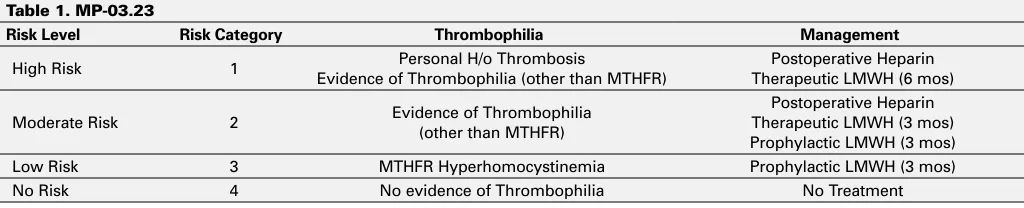
evaluated for hypercoagulability risk factors using the following throm-bophilia panel: Protein C level and activity, Protein S level and activity, PT20210A Mutation, Lupus Anticoagulant Panel (repeated twice), Factor V Leiden Deficiency, MTHFR gene Mutation, Homocystinemia, and Elevated Factor VIII. Based on these studies, patients were classified as low, moderate, high or no risk for thrombosis and post-transplant anticoagulation was determined (Table 1).
Results: Between 2005 and 2011, 64 pediatric renal transplant patients
were evaluated. 15 underwent transplant prior to initiating a thrombo-philia protocol. 49 underwent thrombothrombo-philia workup and were strati-fied based on these results. Of those, 40 have gone on to receive a kidney transplant and 9 remain listed. 13 were stratified high risk, 5 moderate risk, 27 low risk, and 4 no risk. The most common throm-bophilia abnormality was MTHFR gene mutation (44%) which differs from patients in DVT studies where the most common mutations are Factor V Leiden Deficiency and PT20210A Mutation. Prior to initiating the protocol, 3/15 (20%) transplant recipients experienced a vascular thrombosis complication. Since initiating the protocol, 0/40 recipients have experienced a thrombotic complication, there was one hematoma requiring exploration in the protocol group.
Conclusions: Thrombophilia screening and anticoagulation treatment
can prevent adverse vascular events. A high rate of thrombophilia was unmasked in this group of pediatric end-stage renal disease patients. Using a standardized workup and a prophylaxis regimen protocol, a lower complication rate of thrombosis was seen.
Table 1. MP-03.23
Risk Level Risk Category Thrombophilia Management
High Risk 1 Evidence of Thrombophilia (other than MTHFR)Personal H/o Thrombosis Therapeutic LMWH (6 mos)Postoperative Heparin
Moderate Risk 2 Evidence of Thrombophilia (other than MTHFR)
Postoperative Heparin Therapeutic LMWH (3 mos) Prophylactic LMWH (3 mos)
Low Risk 3 MTHFR Hyperhomocystinemia Prophylactic LMWH (3 mos)