Editor’s key points
} Breast cancer continues to bethe most common form of cancer affecting women in Canada (1 in 9 women), but diagnostic and treatment improvements have increased survival to 87%. Breast reconstruction can improve quality of life for patients who undergo mastectomy, but rates of reconstruction in Canada continue to be low. Many effective options are available for reconstruction, making almost all patients who require mastectomy candidates.
} Cancer Care Ontario recommends
that all women diagnosed with operable breast cancer requiring mastectomy be referred to a plastic surgeon to discuss reconstructive options before their scheduled mastectomies.
} This article outlines the options
for reconstruction, outcomes, and complications, and provides guidance that can be used to help patients decide among the various options. While some women will choose not to undergo breast reconstruction, all women should receive the appropriate education and support to allow for informed decision making.
Breast reconstruction
Updated overview for primary care physicians
Ron B. Somogyi MD MSc FRCSC Natalia Ziolkowski MD Fahima Osman MD FRCSC Alexandra Ginty MD CCFP(EM) FCFP Mitchell Brown MD MEd FRCSCAbstract
Objective To offer primary care providers a comprehensive summary of breast reconstruction options and complications.
Quality of evidence A literature search was conducted in PubMed with no time restriction using the search terms breast reconstruction, summary, review, complications, and options. Levels of evidence range from I to III.
Main message As breast cancer survival rates increase, the focus of breast cancer management must shift to include the restoration of a patient’s quality of life after cancer. Breast reconstruction plays a crucial role in the restoration of normality for these women. Women who undergo mastectomy often suffer from challenges related to body image, self-esteem, and a decrease in quality of life scores. Cancer Care Ontario’s Breast Cancer Treatment Pathway Map mandates that all women diagnosed with breast cancer who might require mastectomy be referred to a plastic surgeon to discuss reconstructive options before surgery.
Conclusion The knowledge and guidance of primary care providers is critical to effectively guiding and supporting patients who might undergo breast reconstruction in their decision-making processes. A thorough understanding of patient selection factors, modern options for breast reconstruction, and expected outcomes is essential.
B
reast cancer continues to be the most common form of canceraffect-ing women in Canada (1 in 9 women).1 Certain women (with genetic
mutations like BRCA1, BRCA2, and TP53) have a greater likelihood
of developing the disease. Diagnostic and treatment improvements have
increased survival to 87%,2,3 leading to a need to focus on restoration of
quality of life after cancer. Studies show that women who undergo mastec-tomy often suffer from challenges related to body image, self-esteem, and
a decrease in quality-of-life scores.4,5 Postmastectomy breast
reconstruc-tion can offset or reverse these negative sequelae of prophylactic or onco-logic mastectomies. It has been shown to be one of the most important determinants of functional and psychosocial well-being, long-term health, and patient satisfaction compared with patients who have undergone
mas-tectomy without reconstruction.6,7 However, rates of breast reconstruction
in Canada continue to be low, approaching 2.7% to 18.5%.8 While not all
women will be candidates or have a desire to undergo breast reconstruction, 100% of women should be given the option and feel that they were
appro-priately counseled to make a confident decision. The key to this lofty goal is complete engagement of the entire health care team.
In 2015, Cancer Care Ontario (CCO) released a Breast Cancer Treatment
Pathway Map,9 which mandated that all women diagnosed with operable
Quality of evidence
A PubMed literature search was conducted with no
time restriction using breast reconstruction, summary,
review, complications, and options. Guidelines published by national cancer-related organizations were also reviewed. A supplemental search of references from selected articles and reference lists of guidelines was also performed. Finally, expert experience from key opinion leaders in Canadian breast reconstruction was included to provide the most up-to-date and compre-hensive review of modern options for reconstruction. Levels of evidence range from I to III.
Main message
The knowledge and guidance of the primary care phy-sician (PCP) is critical during the time of diagnosis and decision making. As one of the patient’s most valu-able resources during the journey through breast can-cer treatment, the PCP must understand and support decision making around modern reconstructive options. Unfortunately, the most recent comprehensive review we found written specifically with PCPs in mind comes
from more than 35 years ago10 and much has changed.
The purpose of this review is to provide a modern update on reconstructive options that offers PCPs a framework for discussion with and support of women who are can-didates for breast reconstruction.
Dispelling false beliefs. An unfortunate number of patient and health care provider beliefs around breast reconstruction are outdated and false. Patients often think they are too old,11 feel vanity in their desire to undergo
reconstruction, worry that reconstruction will interfere with cancer treatment, or believe that breast reconstruc-tion is dangerous and fraught with complicareconstruc-tions.
The reality is that there are no absolute contraindi-cations to breast reconstruction. Certainly, the patients’ general health and the type and grade of malignancy must be considered. Certain factors such as morbid obe-sity and smoking considerably limit options. In most cases, however, health- and tumour-related factors will influence the type and timing of reconstruction but not whether or not reconstruction is an option. Breast reconstruction itself does not lead to an increase in recurrence nor increased difficulty in surveillance.
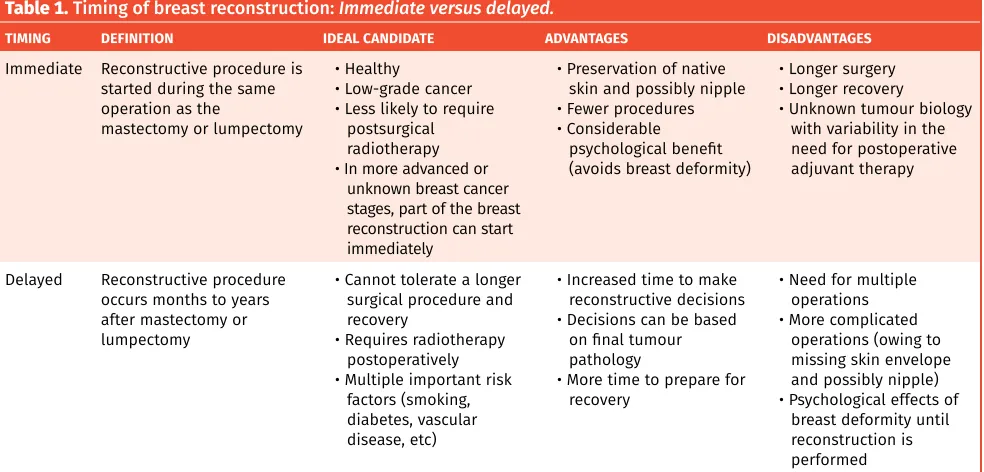
Timing of breast reconstruction. Immediate breast reconstruction, performed during the same procedure as oncologic resection, has the distinct advantages of decreasing the total number of surgeries, providing improved psychological benefit, and preserving much of the native breast skin and potentially the nipple. Delayed reconstruction might be recommended for patients with advanced disease, those for whom there are uncertain-ties about disease control, or those not interested in or prepared to make a reconstructive decision at the time of their oncologic procedure (Table 1).
Mastectomy incisions. Before deciding on a recon-structive technique, a decision about which type of mastectomy is appropriate is made by the general sur-geon, if possible in consultation with the plastic surgeon. When immediate reconstruction is not planned, a hori-zontal incision is made to remove excess skin with the mastectomy specimen and allow the remaining skin to close neatly, flat against the chest wall. When immedi-ate reconstruction is planned, the incision is modified to preserve as much breast skin as possible. Traditionally, “skin-sparing” mastectomy involves nipple and
areo-lar excision as an ellipse, leaving a horizontal scar and
Table 1. Timing of breast reconstruction: Immediate versus delayed.
TIMING DEFINITION IDEAL CANDIDATE ADVANTAGES DISADVANTAGES
Immediate Reconstructive procedure is started during the same operation as the
mastectomy or lumpectomy
• Healthy
• Low-grade cancer • Less likely to require
postsurgical radiotherapy • In more advanced or
unknown breast cancer stages, part of the breast reconstruction can start immediately
• Preservation of native skin and possibly nipple • Fewer procedures • Considerable
psychological benefit (avoids breast deformity)
• Longer surgery • Longer recovery
• Unknown tumour biology with variability in the need for postoperative adjuvant therapy
Delayed Reconstructive procedure occurs months to years after mastectomy or lumpectomy
• Cannot tolerate a longer surgical procedure and recovery
• Requires radiotherapy postoperatively • Multiple important risk
factors (smoking, diabetes, vascular disease, etc)
• Increased time to make reconstructive decisions • Decisions can be based
on final tumour pathology
• More time to prepare for recovery
• Need for multiple operations • More complicated
operations (owing to missing skin envelope and possibly nipple) • Psychological effects of
most native breast skin behind. Today, in appropriate patients, a “nipple-sparing” approach can be used. In these cases, surgeons will decide where to make the access incision for removal of the underlying breast tis-sue while preserving all overlying skin, nipple, and are-ola. A nipple-sparing approach can often be considered if these criteria are met:
• the tumour does not involve the area around the nipple; • the patient has small- or medium-sized breasts
(gen-erally, A to a small C cup size); and
• the patient has good native nipple position (minimal ptosis).
The various incisions types are shown in Figure 1.
Options for breast reconstruction. Options for breast reconstruction are divided into alloplastic (implant-based) or autologous (tissue-(implant-based) reconstruction (Table 2). Implant-based reconstruction is currently the most common type of breast reconstruction performed
in North America.12 Substantial improvements made in
both implant technology and techniques have allowed for aesthetically pleasing, efficient, and safe reconstruc-tion in most breast cancer patients. Likewise, advances, particularly in the field of microsurgery, have provided options for transfer of tissue from various body areas with minimal donor-site morbidity. Both categories of breast reconstruction can be performed in an immediate or delayed fashion.
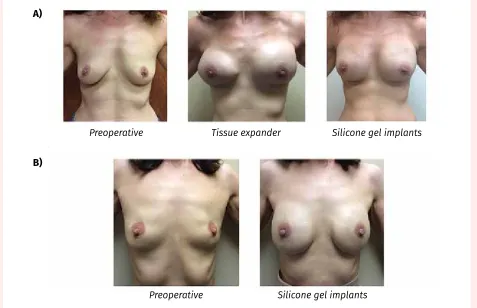
Alloplastic implant-based reconstruction: Alloplastic reconstruction (Figure 2) is traditionally performed in 2 stages involving insertion of a tissue expander followed by implant exchange. A “direct-to-implant” approach
allows reconstruction with the permanent implant at
time of mastectomy. Table 3 provides guidance for
deciding between these approaches. Alloplastic recon-struction involves shorter surgeries with easier recovery
but with the possible need for ongoing implant
moni-toring or adjustment in the future. Surgery can take 1 to 2 hours per side, and return to normal activity is expected within 2 to 3 weeks. Exercise and heavy lifting are restricted for 6 weeks.
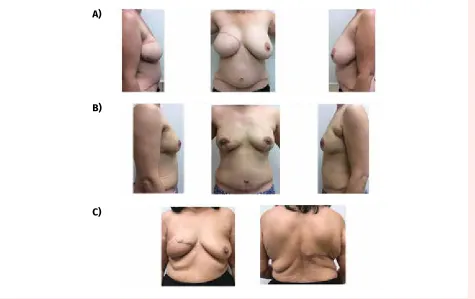
Autologous tissue reconstruction: Autologous
recon-struction (Figure 3) uses the patient’s own skin, fat,
and muscle to reconstruct the breast mound. Broadly, autologous reconstruction is divided into pedicled ver-sus free flap. The advantages and disadvantages of each
are described in Table 4. Pedicled flaps originate from
tissue close to the breast and use native blood supply to vascularize the breast mound. Examples of pedicled flaps include the latissimus dorsi flap and the pedicled TRAM (transverse rectus abdominis myocutaneous) flap. Alternatively, free flaps can be taken from close or remote areas. They are disconnected from their native blood supply and reconnected in the breast area via spe-cialized microvascular techniques. The most commonly used example is the DIEP (deep inferior epigastric artery perforator) flap, which uses skin and subcutaneous tis-sue of the abdomen supplied by the DIEP blood vessels to create the breast mound. Common autologous breast reconstruction types are described in Table 5.
Autologous reconstruction involves longer surgery with donor- and recipient-site involvement. For this rea-son, return to sedentary activity (eg, walking or sitting for prolonged duration) is usually 2 weeks, but with restriction in many activities for up to 8 weeks. A hospi-tal stay of 1 to 4 days is generally required.
Fat grafting in breast reconstruction: Autologous
fat grafting (Figure 4) involves harvesting fat from a
remote body area via liposuction followed by injection with small cannulas into the breast area. Most com-monly, it is used for refinement and optimization, as an adjunct for both types of breast reconstruction,13 or
to fill partial mastectomy defects.14 It is currently being
used in select cases as the primary method for whole-breast reconstruction. As a filler material it is favourable owing to its availability, ease of harvest, and
biocom-patibility.13 The abundance of adipose-derived stem
cells within the transferred fat also gives the fat great potential to repair breast tissues damaged from surgi-cal trauma or radiation. This technique has extended the options of reconstruction in many patients who would have previously been poor candidates. It has been shown in many studies to be safe and compatible with surveillance imaging15 and it does not influence the
risk of cancer recurrence.16,17
Lumpectomy defect reconstruction: As an alternative
to mastectomy, many women undergo breast conserva-tion therapy (BCT). Breast conservaconserva-tion therapy includes
Figure 1. Types of mastectomy incisions:A) Horizontal (skin-sparing mastectomy), B) skin-reducing, C) nipple-sparing, inframammary, and D) nipple-nipple-sparing, radial incision.
A)
B)
C)
lumpectomy followed by radiation and provides
equiva-lent long-term survival compared with mastectomy.18,19
While this approach leaves most of the breast intact, up to 40% of patients can have unsightly and
deform-ing breast abnormalities followdeform-ing BCT.20-23 The new
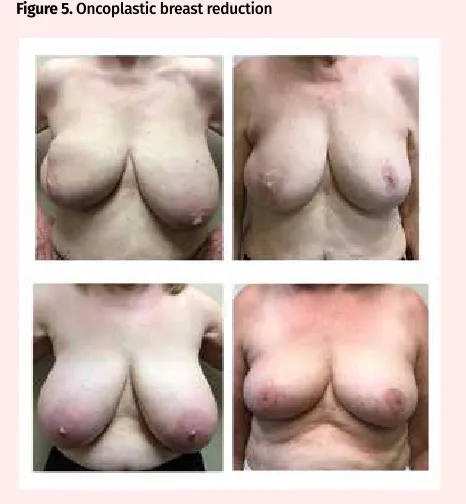
field of oncoplastic surgery combines the lumpectomy
with immediate rearrangement of adjacent tissues to preserve the ideal breast shape. In many cases, the contralateral breast will be balanced at the same time
through breast reduction or lift (Figure 5). Although
possible through autologous fat grafting, transfer of autologous tissue flaps, or local tissue rearrangement,24
Table 2. Types of breast reconstruction: Alloplastic versus autologous.
TYPE IDEAL CANDIDATE ADVANTAGES DISADVANTAGES COMPLICATIONS
Alloplastic
(implant-based) • Average to thin body habitus (no excess tissue for autologous)
• No donor site • Shorter surgery • Fewer short-term
complications • Fewer scars • Faster recovery
• Often multistage endeavour • Longer timeline to
completion • Difficult to achieve
symmetry in unilateral cases
• Requires implant maintenance and exchange
• Capsular contracture • Malposition • Rupture
• Implant rippling or visibility
• Less natural look and feel
Autologous
(tissue-based) • Requires adequate excess soft tissue at donor site
• Minimal major comorbidities • Not obese
• Use of own tissue • Natural look and feel
that changes with patient over time • Easier symmetry in
unilateral cases
• Large donor site • Longer, more
technically challenging procedure
• Longer recovery • More short-term
complications
• Partial or complete flap failure
• Donor-site morbidity including wound dehiscence, weakness, hernia, or bulge
Figure 2. Types of alloplastic implant-based reconstruction: A) Two-stage reconstruction; B) direct-to-implant reconstruction.
Preoperative
Tissue expander
Silicone gel implants
Preoperative
Silicone gel implants
A)
Table 3. Types of alloplastic (implant-based) reconstruction
TYPE DEFINITION TECHNICAL DETAILS ADVANTAGES DISADVANTAGES Two stage Performed in 2 stages:
• Stage 1—tissue expander inserted under pectoralis muscle
• Stage 2—expander exchanged for implant with or without fat grafting and with or without nipple reconstruction
• Expander is filled (via transcutaneous injections) every 1-2 wk until appropriate volume is achieved (Figure 4)
• Fat grafting is used for lumpectomy defect reconstruction
• Patient provides constant input on size desired
• Second stage allows for refinement and adjustment or adjunctive procedures (nipple areolar reconstruction, fat grafting, pocket adjustment for symmetry, etc)
• Multiple surgeries
Direct to implant Final implant inserted at
time of mastectomy • Robust, healthy skin required at time of mastectomy • Internal scaffold
(acellular dermal matrix or synthetic mesh) is placed within mastectomy site to help support implant • Appropriate for small or
medium breasts with minimal ptosis only
• No weekly saline
injections • Technically challenging• Might still require second operation (for contouring, symmetry, nipple-areolar reconstruction, etc)
Figure 3. Autologous breast reconstruction: A) and B) abdominal-based reconstruction; and C) latissimus dorsi reconstruction.
A)
B)
reconstructing these defects in a delayed manner is far more difficult. This highlights the need to consider plas-tic surgery involvement early in the decision to undergo BCT when a large defect is possible.
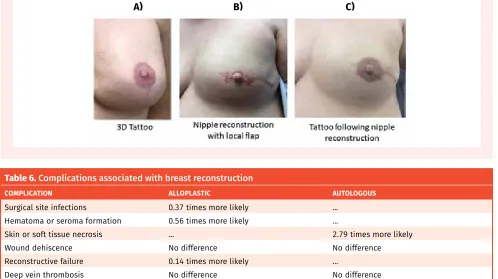
Nipple-areolar reconstruction: Reconstruction of the nipple-areolar complex (NAC) (Figure 6) is the last step of breast reconstruction and is usually undertaken when the breast mound has healed and settled in its final posi-tion. Restoration of the NAC includes reconstruction of the projecting nipple and pigmentation. For nipple reconstruction, local skin flaps can be designed and folded to produce a projecting nipple, a graft can be har-vested from the contralateral nipple, or a 3-dimensional tattoo can be used to give the illusion of a projecting nipple. Pigmentation of the NAC can be obtained via tattoo or skin graft.25,26 Patients are generally very
satis-fied with NAC reconstruction, although a lack of
long-term nipple projection is a common problem.27 These
procedures are often completed under local anesthesia in an outpatient setting.
Adjunct procedures: For many women, secondary
procedures such as fat grafting, implant adjustments or replacements, or skin tightening procedures are required over time. In unilateral cases, balancing proce-dures such as contralateral breast reduction, augmenta-tion, or mastopexy can be performed in the immediate or delayed setting to achieve appropriate symmetry.
Outcomes and complications
Outcomes: Many recent studies have looked at
outcomes, complications, and satisfaction rates after breast reconstruction. Regardless of procedure type, most women find an improvement in quality of life and psychological and emotional well-being, with an improvement in body image, symmetry, and bal-ance. Studies repeatedly demonstrate that, when asked,
Table 4. Advantages and disadvantages of autologous breast reconstruction: Pedicled versus free flap.
AUTOLOGOUS BREAST
RECONSTRUCTION ADVANTAGES DISADVANTAGES
Pedicled flap • Technically simpler • Shorter operative times
• Lower risk of partial or complete flap failure
• Potential loss of function due to sacrifice of muscle: - Pedicled TRAM—loss of abdominal strength and higher
rate of abdominal hernia
- Latissimus dorsi—decreased range of movement and strength of upper extremity; feels “tighter”
Free flap • Ability to harvest larger amount of tissue
• No sacrifice of underlying muscle • Technically complex• Longer operative times • Longer hospital stays • Higher risk of flap failure TRAM—transverse rectus abdominis myocutaneous.
Table 5. Common types of autologous (tissue-based) breast reconstruction
TYPES DEFINITION IDEAL CANDIDATE
Pedicled flap
• Pedicled TRAM • Rectus abdominis muscle
• Soft tissue from lower abdomen similar in colour, texture, and longevity
• Underlying rectus abdominis muscle is separated from its attachment to the pubis and flipped up onto the breast area along with the overlying skin and subcutaneous tissues
• Healthy amount of excess abdominal tissue (not obese)
• Unilateral
• Latissimus dorsi • Versatile flap from back
• Can be used with muscle alone or with overlying skin • Small amount of bulk
• Thin patient (inadequate abdominal tissue) • Generally has significant skin damage from
radiotherapy Free flap
• DIEP • Same tissue as pedicled TRAM but without sacrifice of underlying rectus muscle
• Vessels dissected from muscle and microvascular anastomosis created to recipient vessels in chest
• Healthy patients • Bilateral cases
• Desire to harvest larger amounts of tissue
• SGAP • Skin and fat from upper buttock • Reserved for unique cases (ie, inadequate
abdominal tissue or previous failed abdominal tissue reconstruction) • TUG • Skin, fat, and small muscle from upper inner thigh
women who have undergone breast reconstruction indicate they would make the same decision again and would recommend reconstruction to a friend who was facing this decision.4-7
Complications: Complications specific to breast
reconstruction depend on the reconstructive option
chosen (Table 6).28 Complications of implant-based
reconstruction include capsular contracture (hardening of the internal breast capsule), malposition (improper or changed positioning of the implant), implant rip-pling or edge visibility, and an unnatural look or feel. Complications more specific to autologous reconstruc-tion include donor-site complicareconstruc-tions such as wound healing delay, abdominal bulge or hernia, and occasion-ally donor-site weakness. Difficulties in obtaining good shape, appropriate size, and good symmetry are prob-lems with both implant- and tissue-based reconstruction.
Surveillance following breast reconstruction. There are no data to support the value of routine screening mammography after mastectomy and reconstruction. Further, there are no data to suggest breast reconstruc-tion hides local recurrence or affects survival.29,30 The
goal of mastectomy is to remove all breast tissue, and if there is a small amount of residual breast tissue it is almost always under the breast skin. Therefore, local recurrences after mastectomy usually present as skin recurrence, as the skin is physically separated from the chest wall by breast reconstruction.31,32 Clinical
exami-nation of the chest wall and reconstructed breast can detect skin recurrences and should be performed during
breast cancer survivorship follow-up appointments.29,33
Cancer Care Ontario recommends diagnostic imaging (such as mammography, ultrasound, and magnetic res-onance imaging) primarily for reconstructed breasts of symptomatic patients.9,34
Funding. In Canada, most provinces offer postmastec-tomy breast reconstruction coverage. Refer to the rele-vant schedule of benefits for more information.35-43
Patient education. Many educational resources exist to help patients better understand their options for breast reconstruction. Online and print resources are available
from the CCO44 and the Canadian Cancer Society45
web-sites. An international campaign for breast reconstruction awareness takes place on the third Wednesday of October every year. Additionally, BRA (Breast Reconstruction Awareness) Day events are an excellent resource for patients to learn about options and improve access to breast reconstruction. Education and event information are available online.46
Behavioural change. Given that there are no abso-lute contraindications for breast reconstruction, surgical optimization can be achieved for women thinking about undergoing the procedure with the support of their PCPs. Strong examples in this realm include smoking cessation and weight loss.
Conclusion
All breast cancer patients should receive education about breast reconstruction as soon as operative man-agement is considered, as reflected in CCO’s breast
cancer treatment guidelines47 and other similar
guide-lines worldwide. Currently, many effective options are available for breast reconstruction, making virtually all cancer patients candidates. These include both implant-based and tissue-implant-based options that each can be per-formed in either the immediate or the delayed setting.
While some women will choose not to undergo breast reconstruction, all women should receive the appropriate education and support to allow for informed decision making. The PCP remains one of the most
valuable resources for women embarking on the breast cancer treatment journey. As such, it is important to stay up to date on the options available to these women. Dr Somogyi is Assistant Professor in the Division of Plastic and Reconstructive Surgery at the University of Toronto in Ontario. Dr Ziolkowski is a resident in the Division of Plastic and Reconstructive Surgery and a master’s degree candidate in the Clinician Investigator Program at the University of Toronto. Dr Osman is a surgeon at North York General Hospital in Toronto. Dr Ginty is Adjunct Assistant Professor in the Department of Family Medicine at McMaster University in Hamilton, Ont. Dr Brown is Associate Professor in the Division of Plastic and Reconstructive Surgery at the University of Toronto.
Contributors
All authors contributed to the literature review and interpretation, and to preparing the manuscript for submission.
Competing interests
None declared
Correspondence
Dr Ron B. Somogyi; e-mail [email protected] References
1. Canadian Cancer Society. Breast cancer in Canada, 2016. Toronto, ON: Canadian Can-cer Society; 2017. Available from: www.cbcf.org/ontario/AboutBreastCancerMain/ FactsStats/Pages/Breast-Cancer-Canada.aspx. Accessed 2017 Mar 1.
2. Canadian Cancer Society. Breast cancer statistics. Toronto, ON: Canadian Cancer So-ciety. Available from: www.cancer.ca/en/cancer-information/cancer-type/breast/ statistics/?region=bc. Accessed 2015 Oct 1.
3. Halls S. Breast cancer incidence and mortality rates worldwide: Canada, U.K., U.S.A.
Camrose, AB: Moose & Doc Breast Cancer; 2017. Available from: breast-cancer.ca/ mortratings. Accessed 2017 Mar 1.
4. Al-Ghazal SK, Fallowfield L, Blamey RW. Comparison of psychological aspects and patient satisfaction following breast conserving surgery, simple mastectomy and breast reconstruction. Eur J Cancer 2000;36(15):1938-43.
5. Serletti JM, Fosnot J, Nelson JA, Disa JJ, Bucky LP. Breast reconstruction after breast cancer. Plast Reconstr Surg 2011;127(6):124e-35e.
6. Baildam AD. Oncoplastic surgery for breast cancer. Br J Surg 2008;95(1):4-5.
7. Schain WS. Breast reconstruction. Update of psychosocial and pragmatic concerns.
Cancer 1991;68(5 Suppl):1170-5.
8. Zhong T, Fernandes KA, Saskin R, Sutradhar R, Platt J, Beber BA, et al. Barriers to im-mediate breast reconstruction in the Canadian universal health care system. J Clin Oncol 2014;32(20):2133-41.
9. Cancer Care Ontario. Breast cancer treatment pathway map. Version 2015.11. Toronto, ON: Cancer Care Ontario; 2015. Available from: www.cancercare.on.ca/common/ pages/UserFile.aspx?fileId=349036. Accessed 2016 Sep 1.
10. Mendelson BC, Woods JE. Breast reconstruction after mastectomy. Aust Fam Physi-cian 1979;8(6):646-7, 651-3.
11. Platt J, Baxter N, Zhong T. Breast reconstruction after mastectomy for breast cancer.
CMAJ 2011;183(18):2109-16. Epub 2011 Nov 7.
12. National Clearinghouse of Plastic Surgery Procedural Statistics. 2014 Plastic surgery statistics report. Arlington Heights, IL: American Society of Plastic Surgeons; 2015. Available from: https://www.plasticsurgery.org/documents/News/Statistics/2014/ plastic-surgery-statistics-full-report-2014.pdf. Accessed 2018 Apr 23.
13. Gabriel A, Champaneria MC, Maxwell GP. Fat grafting and breast reconstruction: tips for ensuring predictability. Gland Surg 2015;4(3):232-43.
14. Hoy E. State of the art: reconstructing partial mastectomy defects with autologous fat grafting. Del Med J 2016;88(1):20-3.
15. Lindegren A, Chantereau MW, Bygdeson M, Azavedo W, Schultz I. Autologous fat transplantation to the reconstructed breast does not hinder assessment of mam-mography and ultrasound: a cohort study. World J Surg 2016;40(5):1104-11. 16. Silva-Vergara C, Fontdevila J, Descarrega J, Burdio F, Yoon TS, Grande L. Oncological
outcomes of lipofilling breast reconstruction: 195 consecutive cases and literature review. J Plast Reconstr Aesthet Surg 2016;69(4):475-81. Epub 2016 Feb 3. 17. Kronowitz SJ, Lam C, Terefe W, Hunt KK, Kuerer HM, Valero V, et al. A
multidisci-plinary protocol for planned skin-preserving delayed breast reconstruction for patients with locally advanced breast cancer requiring postmastectomy radiation therapy: 3-year follow-up. Plast Reconstr Surg 2011;127(6):2154-66.
18. Veronesi U, Cascinelli N, Mariani L, Greco M, Saccozzi R, Luini A, et al. Twenty-year follow up of a randomized study comparing breast-conserving surgery with radical mastectomy for early breast cancer. N Engl J Med 2002;347(16):1227-32.
19. Fisher B, Anderson S, Bryant J, Margolese RG, Deutsch M, Fisher ER, et al. Twenty-year follow up of a randomized trial comparing total mastectomy, lumpectomy, and lumpectomy plus irradiation for the treatment of invasive breast cancer. N Engl J Med 2002;347(16):1233-41.
Figure 6. Nipple areolar reconstruction:A) Three-dimensional tattoo, B) nipple reconstruction with local flap, and C) tattoo following nipple reconstruction.
A)
B)
C)
Table 6. Complications associated with breast reconstruction
COMPLICATION ALLOPLASTIC AUTOLOGOUS
Surgical site infections 0.37 times more likely ...
Hematoma or seroma formation 0.56 times more likely ...
Skin or soft tissue necrosis ... 2.79 times more likely
Wound dehiscence No difference No difference
Reconstructive failure 0.14 times more likely ...
Deep vein thrombosis No difference No difference
Pulmonary embolism No difference No difference
20. Al-Ghazal SK, Fallowfield L, Blamey RW. Does cosmetic outcome from treatment of primary breast cancer influence psychosocial morbidity? Eur J Surg Oncol
1999;25(6):571-3.
21. Curran D, van Dongen JP, Aaronson NK, Kiebert G, Fentiman IS, Mignolet F, et al. Quality of life of early-stage breast cancer patients treated with radical mastec-tomy or breast-conserving procedures: results of EORTC Trial 10801. Eur J Cancer
1998;34(3):307-14.
22. Sneeuw KC, Aaronson NK, Yarnold JR, Broderick M, Regan J, Ross G, et al. Cosmetic and functional outcomes of breast conserving treatment for early stage breast can-cer. 2. Relationship with psychosocial functioning. Radiother Oncol 1992;25(3):160-6. 23. Waljee JF, Hu ES, Ubel PA, Smith DM, Newman LA, Alderman AK. Effect of esthetic
outcome after breast-conserving surgery on psychosocial functioning and quality of life. J Clin Oncol 2008;26(20):3331-7.
24. Loskem A, Pinell-White X, Hodges M, Egro FM. Evaluating outcomes after correction of the breast conservation therapy deformity. Ann Plast Surg 2015;74(Suppl 4):S209-13. 25. Liliav B, Loeb J, Hassid VJ, Antony AK. Single-stage nipple-areolar complex
reconstruction technique, outcomes, and patient satisfaction. Ann Plast Surg
2014;73(5):492-7.
26. Farhadi J, Maksvytyte GK, Schaefer DJ, Pierer G, Scheufler O. Reconstruction of the nipple-areola complex: an update. J Plast Reconstr Aesthet Surg 2006;59(1):40-53. 27. Goh SCJ, Martin NA, Pandya AN, Cutress RI. Patient satisfaction following
nipple-areolar complex reconstruction and tattooing. J Plast Reconstr Aesthet Surg
2011;64(3):360-3. Epub 2010 Jun 8.
28. Tsoi B, Ziolkowski NI, Thoma A, Campbell K, O’Reilly D, Goeree R. Safety of tissue expander/implant versus autologous abdominal tissue breast reconstruction in postmastectomy breast cancer patients: a systematic review and meta-analysis.
Plast Reconstr Surg 2014;133(2):234-49.
29. Sim YT, Literland JC. The use of imaging in patients post breast reconstruction. Clin Radio 2012;67(2):128-33. Epub 2011 Sep 10.
30. Zakhireh J, Fowbie B, Esserman LJ. Application of screening principles to the recon-structed breast. J Clin Oncol 2010;28(1):173-80. Epub 2009 Nov 2.
31. Slavin SA, Love SM, Goldwyn RM. Recurrent breast cancer following immediate reconstruction with myocutaneous flaps. Plast Reconstr Surg 1994;93(6):1191-204. 32. Kroll SS, Khoo A, Singletary SE, Ames FC, Wang BG, Reece GP, et al. Local recurrence
risk after skin-sparing and conventional mastectomy: a 6 year follow up. Plast Reconstr Surg 1999;104(2):421-5.
33. Barnsley GP, Grunfeld E, Coyle D, Paszat L. Surveillance mammography following the treatment of primary breast cancer with breast reconstruction: a systematic review.
Plast Reconstr Surg 2007;120(5):1125-32.
34. Zhong T, Spithoff K, Kellett S, Boyd K, Brackstone M, Hanrahan R, et al. Breast cancer reconstruction surgery (immediate and delayed) across Ontario: patient indications and appropriate surgical options. Toronto, ON: Cancer Care Ontario; 2016. Available from: https://www.cancercareontario.ca/en/guidelines-advice/types-of- cancer/31721. Accessed 2018 Apr 25.
35. Medical Services Plan. MSC payment schedule index. Victoria, BC: Government of British Columbia. Available from: https://www2.gov.bc.ca/assets/gov/health/ practitioner-pro/medical-services-plan/msc-payment-schedule-december-2017. pdf. Accessed 2018 May 4.
36. Alberta Health. Schedule of medical benefits effective April 1, 2017. Edmonton, AB: Alberta Health; 2017. Available from: www.health.alberta.ca/professionals/SOMB. html. Accessed 2018 Apr 23.
37. Government of Saskatchewan. Payment schedules. Regina, SK: Government of Saskatchewan. Available from: www.saskatchewan.ca/government/health-care- administration-and-provider-resources/resources-for-health-care-businesses-and-career-development/physician-career-resources#physician-payment- schedules-newsletters-and-bulletins. Accessed 2016 Sep 9.
38. Manitoba Minister of Health. Manitoba physician’s manual. Winnipeg, MB: Govern-ment of Manitoba; 2018. Available from: www.gov.mb.ca/health/documents/ physmanual.pdf. Accessed 2018 Apr 23.
39. Ontario Ministry of Health and Long-Term Care. Schedule of benefits. Physician services under the Health Insurance Act. Toronto, ON: Ontario Ministry of Health and Long-Term Care; 2015. Available from: www.health.gov.on.ca/english/providers/ program/ohip/sob/physserv/sob_master20160406.pdf. Accessed 2016 Sep 9. 40. Régie de l’assurance maladie du Québec. Health insurance. Quebec city, QC: Régie de
l’assurance maladie du Québec. Available from: www.ramq.gouv.qc.ca/en/citizens/ health-insurance/healthcare/Pages/fees-billed-physician.aspx. Accessed 2016 Sep 9. 41. Government of New Brunswick. New Brunswick physicians’ manual. Fredericton, NB: Government of New Brunswick; 2015. Available from: www.gnb.ca/0394/pdf/2015/ physician_manual-e.pdf. Accessed 2016 Sep 9.
42. Nova Scotia Medical Services Insurance. Physician’s manual. Halifax, NS: Nova Scotia Medical Services Insurance; 2014. Available from: www.medavie.bluecross.ca/ static/MSI/PhysicianManual.pdf. Accessed 2016 Sep 9.
43. Newfoundland and Labrador Medical Care Plan. Medical payment schedule. St John’s, NL: Newfoundland and Labrador Medical Care Plan, Department of Health and Community Services; 2013. Available from: www.health.gov.nl.ca/health/mcp/ providers/Full_MCP_Payment_Schedule-03_13_14.pdf. Accessed 2016 Sep 9. 44. Cancer Care Ontario. Recommended resources for patients and families. Toronto,
ON: Cancer Care Ontario. Available from: https://www.cancercareontario.ca/en/ resources-patients-and-families. Accessed 2018 Apr 25.
45. Canadian Cancer Society [website]. What is breast cancer? Toronto, ON: Canadian Cancer Society; 2017. Available from: www.cancer.ca/en/cancer-information/cancer-type/breast/breast-cancer/?region=on. Accessed 2017 Mar 9.
46. Breast Reconstruction Awareness Day [website]. Toronto, ON: Canadian Cancer Society. Available from: www.bra-day.com. Accessed 2017 Mar 9.
47. Cancer Care Ontario. Guidelines & advice. Breast cancer. Toronto, ON: Cancer Care Ontario; 2017. Available from: https://www.cancercare.on.ca/toolbox/qualityguide lines/diseasesite/breast-ebs/. Accessed 2017 Mar 9.
This article is eligible for Mainpro+ certified Self-Learning credits. To earn credits, go to www.cfp.ca and click on the Mainpro+ link.