© 2016, IJCSMC All Rights Reserved 1
Available Online at www.ijcsmc.com
International Journal of Computer Science and Mobile Computing
A Monthly Journal of Computer Science and Information Technology
ISSN 2320–088X
IMPACT FACTOR: 5.258IJCSMC, Vol. 5, Issue. 4, April 2016, pg.01 – 08
Design of Smart Video Surveillance Security System
for Hazard Situations by Using Adaptive Multi
Objective Memtic Fuzzy Clustering Algorithm
Rajeswari.E
1, Dr. Subramanian.R
21
P.G Scholor (Applied Electronics), Rathinam Technical Campus, Tamilnadu, India
2
HOD of ECE Department, Rathinam Technical Campus, Tamilnadu, India
1
[email protected]; 2 [email protected]
Abstract – The overture of this work is principally focused on a video analysis based railway-road safety.The recent research of surveillance security systems for road and railway route is Hazard Situations at un expected Level Crossings.In this proposal we initate the AMMFCA with hidden markov model for implementing a smart video surveillance security system that is very much used for detecting and evaluating abnormal and clustering situations induced by pedestrians, vehicle drivers as well as unattended objects. The experimental design is checked in video surveillance system which is connected to a communication system.ESP8266 wifi controller is used the Wireless Access for Vehicular Environment,which takes the information on the dynamic status of the both safe or presence of a dangerous situation.
Keywords- AMMFCA, HMM, ESP8266, Hazard situations
I. INTRODUCTION
Data clustering is the process of dividing data elements into classes or clusters so that items in the same class are as similar as possible, and items in different classes are as dissimilar as possible. Depending on the nature of the data and the purpose for which clustering is being used, different measures of similarity may be used to place items into classes, where the similarity measure controls how the clusters are formed. Some examples of measures that can be used as in clustering include distance, connectivity, and intensity.One of the main goals of computer vision is to enable computers to replicate the basic functions of human vision such as motion perception and scene understanding. To achieve the goal of intelligent motion perception, much effort has been spent on visual object tracking, which is one of the most important and challenging research topics in computer vision. Essentially, the core of visual object tracking is to robustly estimate the motion state of a target object in each frame of an input image sequence.
© 2016, IJCSMC All Rights Reserved 2
facilities is an essential key element to ensuring good operation of the road and railway transport. Statistically, nearly 44% of LC users have a negative perception of the environment, which consequently increases the risk of accidents[2].
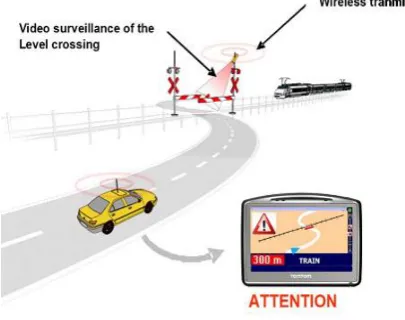
In india for example, several dramatic accidents have occurred in recent years, involving buses with children onboard. Always, in France, when an accident occurs, the transport operator waits for a road user noticing the accident to use a very old telephone installed at the LC premises to warn the traffic center that something bad is happening at the LC.Then, the operator at the traffic center calls all the approaching trains to tell them to stop immediately without any additional information on wh at is going on. In the meantime, at the LC level, the situation is becoming worse, because of the wounded users and/or the blocked traffic. This is a ―blind‖ way of managing LC incidents.the below figure 1 shows the real video analysis system with communications module which is refer from[1]. However, we know from the accident statistics that the behavior of pedestrians, road vehicle drivers, and railway operators cannot be estimated beforehand. According to Griffioen , human errors cause 99% of accidents at the LCs, 93% of which are caused by road users. It is important also to note the high cost related to each accident, which is approximately 100 million Euros per year in the EU for all LC accidents. For this purpose, road and railway safety professionals from several countries have been focused on providing an LC that is as safe as possible. Actions are plann ed to exchange information and provide experiments for improving the management of LC safety and performance[3],[4].
Fig. 1 General architecure of video surveiallance system
In this we propose a method to improve safety at Level crossings. Here we use kalman filter to predict the persons in the level crossings. By using Gaussian mixture model the person is predicted in the entire process. In the proposed method foreground subtraction is used to identify the persons moving in the level crossings. And the moving persons are tracked in the process.
II. RELATED WORKS
In moving object detection various background subtraction techniques available in the literature were simulated. Background subtraction involves the absolute difference between the current image and the reference updated background over a period of time. A good background subtraction should be able to overcome the problem of varying illumination condition, background clutter, shadows, camouflage, bootstrapping and at the same time motion segmentation of foreground object should be done at the real time. It’s hard to get all these problems solved in one background subtraction technique. So the idea was to simulate and evaluate their performance on various video data taken in complex situations.
Object tracking is a very challenging task in the presence of variability Illumination condition, background motion, complex object shape, partial and full object occlusions. Here in this thesis, modification is done to overcome the problem of illumination variation and background clutter such as fake motion due to the leaves of the trees, water flowing, or flag waving in the wind. Sometimes object tracking involves tracking of a single interested object and that is done using normalized correlation coefficient and updating the template. On developing a framework to detect moving objects and generate reliable tracks from surveillance video. After setting up a basic system that can serve as a platform for further automatic tracking research, the question of variation in distances between the camera and the objects in different parts of the scene (object depth) in surveillance videos are takled.
© 2016, IJCSMC All Rights Reserved 3
objects in video surveillance. The surveillance system is the process of monitoring the behavior, activities or other changing information, usually people for the purpose of influencing, managing, directing, and protecting. Most of the surveillance system includes static camera and fixed background which vies a clue for the object detection in videos by background subtraction technique. In surveillance system three main important steps these are object detection, object tracking and recognition. Some challenges in video processing Video analysis, video segmentation, video compression, video indexing. In case of video analysis there are three key steps: detection of interesting moving object, tracking of such objects from frame to frame and analysis of objects tracks to recognize their behavior. Next it comes video segmentation it means separation of objects from the background.
It also consists of three important steps: object detection, object tracking and object recognition. In this work it is given more focus towards the investigation video analysis and video segmentation section. A typical automated single camera surveillance system usually consists of three main parts, which can be listed as moving object detection, object tracking and event recognition. In my problem it is to solve an automatic moving target detection and tracking details. The process of automatic tracking of objects begins with the identification of moving objects.
An improved background subtraction method in conjunction with a novel yet simple background model to achieve very good segmentation is used. Once the moving pixels are identified, it is necessary to cluster these pixels into regions, which is referred as blobs, so that pixels belonging to a single object are grouped together. Single moving objects are often incorrectly separated into two or more sub regions because of lack of connectivity between pixels, which usually occurs due to occlusion from other objects.In general, a typical visual object tracking system is composed of four modules: object initialization, appearance modeling, motion estimation, and object localization.
— Object initialization. This may be manual or automatic. Manual initialization is performed by users to annotate object locations with bounding boxes or ellipses. In contrast, automatic initialization is usually achieved by object detectors (e.g., face or human detectors).
— Appearance modeling. This generally consists of two components: visual representation and statistical modeling. Visual representation focuses on how to construct robust object descriptors using different types of visual features. Statistical modeling concentrates on how to build effective mathematical models for object identification using statistical learning techniques.
— Motion estimation. This is formulated as a dynamic state estimation problem: xt = f(xt−1, vt−1) and zt = h(xt, wt), where xt is the current state, f is the state evolution function, vt−1 is the evolution process noise, zt is the current observation, h denotes the measurement function, and wt is the measurement noise. The task of motion estimation is usually completed by utilizing predictors such as linear regression techniques.
— Object localization. This is performed by a greedy search or maximum a posterior estimation based on motion estimation
III. FUNCTIONAL FORMULATION
© 2016, IJCSMC All Rights Reserved 4
The figure 2 snap is taken from smart city area of coimbatore,tamilnadu,india.Indian Telecom, the national telecommunication services provider successfully connected the country’s first and largest Closed Circuit Television (CCTV) surveillance system through its advanced fibre optic-based Metro Ethernet Network (MEN) infrastructure to improve road safety and national security by providing facilities to authorities of smart city Department to carry out real-time video monitoring, control cameras remotely, record, store and playback .By using this referal we have to start our real time Smart video surveillance security system for Hazard Situations by using adaptive multiobjective memtic fuzzy clustering algorithm.
Fig. 3 Multi object seperation
The figure 3 Shows the multi object seperation from the markov hidden model. These approaches examine for the object model in the existing frame. Shape matching performance is similar to the template based tracking in kernel approach. Another approach to Shape matching is to find matching silhouettes detected in two successive frames. Silhouette matching, can be considered similar to point matching. Detection based on Silhouette is carried out by background subtraction. Models object are in the form of density functions, silhouette boundary, object edges. Capable of dealing with single object and Occlusion handling will be performed in with Hough transform techniques.
Fig .4 Snapsis of danger evalution
The figure 4 indimate the danger evalutions structure ,.it is refered from Road Safety System for Detecting Hazard Situations at Level . However, these methods need a high number of statistical measures to be accurate[5],[6]. Hence, it is difficult to apply these methods in real time. In this paper, we propose a real-time HMM to predict ideal trajectories of moving objects in an LC environment. Finally, to estimate the degree of danger related to each object, the predicted ideal trajectories are analyzed considering different sources of danger (position, velocity, acceleration, . . .) and using an information fusion framework based on Dempster–Shafer theory[7],[8].
Fuzzy Clustering Algorithm
Data clustering is a data analysis method which mining important information from a dataset by grouping data into several clusters. In clustering, similar data points are grouped into the same cluster while different data points are put into different clusters. Generally, data clustering method is grouped two different categories: hierarchical and partition method. Hierarchical clustering works by either merging two clusters or splitting a cluster. Hierarchical algorithm which performs clusters merging is called agglomerative hierarchical algorithm[9].
© 2016, IJCSMC All Rights Reserved 5
Thus, a memetic algorithm is needed, which can be seen as a hybrid of the population-based evolutionary algorithms with one or more local search methods. As can be seen in the global search can perform a rough search and locate the promising regions, whereas the local search can conduct an accurate search in the promising regions.
Fig. 5 Influence of the local search capability for single- and multiple objective optimization.
The figure 5 shows the adaptive memetic fuzzy clustering principle for same image extractions which is based on group searching and local searching it is taken from the refernce video input. The remote sensing image clustering was transformed into a multiobjective optimization problem. At the same time, in an investigated the effectiveness of the memetic algorithm in a single-objective clustering method for remote sensing imagery. Our motivation was to demonstrate the effectiveness of the memetic algorithm in a multiobjective clustering method for remote sensing imagery. This type of method has not yet been investigated in the remote sensing community, to the best of our knowledge[4].
IV. PROPOSAL DESIGN OF REAL TIME SMART VIDEO SURVEILLANCE SECURITY SYSTEM FOR HAZARD SITUATIONS
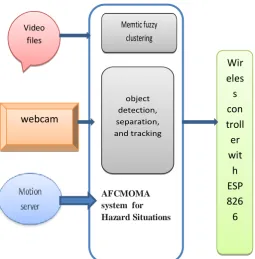
Fig. 6 Proposal structure of real time smart video surveillance security system for hazard situations
The design of our proposal principly foccused on growing country railway-road safety and secure transportations system. In this we propose a method to improve safety at Level crossings. Here we use kalman filter to predict the persons in the level crossings. By using Gaussian mixture model the person is predicted in the entire process. In the proposed method foreground subtraction is used to identify the persons moving in the level crossings. And the moving persons are tracked in the process .further more we initiate the adaptive memtic fuzzy clustering for same visual detections from hazzard situations ,here we take cloud,all low visiblity obects are hazzard situations.The live video is taken from high quality CCTV camera which is compared from existing vedio files.the motion server is used to detect the pedestrians, vehicle drivers, and unattended objects.
Memtic fuzzy clustering
object detection, separation, and tracking
AFCMOMA system for Hazard Situations
AFCMOMA system for Hazard Situations
Video files
webcam
© 2016, IJCSMC All Rights Reserved 6
The video surveillance system is connected to a communication system (the Wireless Access for Vehicular Environment), which takes the information on the dynamic status of the LC (safe or presence of a dangerous situation) and sends it to users approaching the LC. Four hazard scenarios are tested and evaluated with different real video image sequences: presence of the obstacle in the LC, presence of the stopped vehicles line, vehicle zigzagging between two closed half barriers, and pedestrian crossing the LC area.In addition, in the multiobjective memetic framework, in order to acquire more individuals with high quality, a new population update strategy is devised, in which the updated population is composed of individuals generated in both the local and global searches of low vissble video frame.Multiobjective clustering algorithms implement the task of clustering through a multiobjective optimization technique,the goal of which is to generate a set of cluster centers by simultaneously minimizing or maximizing multiple objective functions.finally the result is given to the wifi module which is developed by using ESP8266.
V. EXPERIMENTAL RESULT
The Accidents at railway LCs have continuously become a serious road safety problem particularly when it involves fatalities. Research has shown that the major cause of crashes at railway LCs is that the drivers fail to take sufficient care to avoid crash.by keeping this scenario we foccused on surveiallence system.the below sections explained the our experimental results. The below procedure explained the edge detections of unvisual video.
for i = 1:length(fg)
temp0{i} = edge(fg{i}, 'hidden markovian', 0.99) + fg{i};
temp2 = temp0{i};
temp2 = cat(3,temp2,temp2,temp2);
EDGE = addframe(EDGE, uint8(temp2) *255);
end;
Fig. 7(a) frame generation from video file Fig. 7(b) Object tracking
The experimental functions is started from video file which is lively recorded in CCTV cam coder.the next setup is focussing the frame generation from the video file for analysing levell crossing. The above 7(b)figure is mentioning tracking the pedestrians.
© 2016, IJCSMC All Rights Reserved 7
Fig. 8(a) classifications from cluster image Fig. 8(b) memetic fuzzy clustering principle for hazard situations
In these figures three pedestrians (P1, P2, and P3) are walking around the LC area as the barriers are closed. The primary cour of the object is detected by using global searching algorithm with hidden markovian model.finally the different current communication means have been tested . The best suitable technique of communication is WirelessAccess for Vehicular Environment (WAVE),for this purpose esp8266 is used and checked.due to Improving the safety of people and road–rail facilities is an essential key element to ensuring good operation of the road and railway transport . the operator at the traffic center calls all the approaching trains to tell them to stop immediately without any additional information on what is going on. In the meantime, at the LC level, the situation is becoming worse, because of the wounded users and/or the blocked traffic. This is a ―blind‖ way of managing LC incidents.so we foccussed the method starts by detecting and tracking objects seen in the monitored zone by a video camera. The second stage of the method consists in predicting for each tracked object the ideal trajectory allowing to avoid potential dangerous situations. The ideal trajectory prediction is based on an HMM. The th ird stage is concerned with the analysis of the predicted trajectory to evaluate the danger related to each tracked object.
VI. CONCLUSION
In this proposal we focussed and designed an efficient smart video surveillance security system for Hazard Situations at level crossing in transportation route..We majorly consider this design for growing country railway-road safety system such as india,pakistan.The experimental design is based on fall of a pedestrian and unattended objects in level crossing .We used an adaptive multiobjective memetic fuzzy clustering algorithm with hidden markovian models were used for the hazzard situation at level crossing.Finally the proposal design is checked by the matlab 13v and vissual studios.For our future enhancement the designed result will be check with wifi communications system.The proposal structure figure 6 is mentioning of our future enhancement work.We hope our experimental result will be work on real time road safety system in growing countries.
REFERENCES
[1] Houssam Salmane ―A Video-Analysis-Based Railway–Road Safety System for Detecting Hazard Situations at Level Crossings‖ Houssam Salmane IEEE TRANSACTIONS ON INTELLIGENT TRANSPORTATION SYSTEMS 2015.
[2] E. Griffioen, ―Improving level crossings using findings from human behaviour studies,‖ in Proc. 8th Int. Level Crossing Symp., Sheffield, U.K.,2004.
[3] [Online].Available:http://www.uic.org/cdrom/2008/11_wcrr2008/pdf/G.2.4.5.4.pdf
[4] L. Khoudour, M. Ghazel, F. Boukour, M. Heddebaut, and M. El-Koursi,―Towards safer level crossings: Existing recommendations, new applicable technologies and a proposed simulation model,‖ Eur. Transp. Res.Rev., vol. 1, no. 1, pp. 35– 45, Mar. 2009.
[5] J. J. Garcia et al., ―Efficient multisensory barrier for obstacle detection onrailways,‖ IEEE Trans. Intell. Transp. Syst., vol. 11, no. 3, pp. 702–713,Sep. 2010.
[6] E. Schnieder, R. Slovak, E. M. El Koursi, L. Tordai, and M. Woods,―A European contribution to level crossing safety,‖ in Proc. FOVUS,Stuttgart, Germany, Sep. 2008, pp. 222–228.
© 2016, IJCSMC All Rights Reserved 8
[8] L. Khoudour et al., ―PANsafer project: Towards a safer level crossing,‖ presented at the 11th Level Crossing Symposium, Tokyo, Japan, 2010.
[9] N. Fakhfakh et al., ―Background subtraction and 3D localization of moving and stationary obstacles at level crossings,‖ in Proc. Int. Conf. Image Process. Theory, Tools Appl., Paris, France, 2010, pp. 72–78.
[10] A. Prioletti et al., ―Part-based pedestrian detection and feature-based tracking for driver assistance: Real-time, robust algorithms, and evaluation,‖ IEEE Trans. Intell. Transp. Syst., vol. 14, no. 3, pp. 72–74,Sep. 2013.