Clinical Interventions in Aging 2017:12 213–222
Clinical Interventions in Aging
Dovepress
submit your manuscript | www.dovepress.com 213
O r I g I n A l r e s e A r C h
open access to scientific and medical research
Open Access Full Text Article
An investigation of quality improvement initiatives
in decreasing the rate of avoidable 30-day,
skilled nursing facility-to-hospital readmissions:
a systematic review
Michael Mileski Joseph Baar Topinka Kimberly lee Matthew Brooks Christopher Mcneil Jenna Jackson
school of health Administration, Texas state University, san Marcos, TX, UsA
Objectives: The main objective was to investigate the applicability and effectiveness of quality improvement initiatives in decreasing the rate of avoidable 30-day, skilled nursing facility (SNF)-to-hospital readmissions.
Problem: The rate of rehospitalizations from SNF within 30 days of original discharge has increased within the last decade.
Setting: The research team participants conducted a literature review via Cumulative Index of Nursing and Allied Health Literature and PubMed to collect data about quality improvement implemented in SNFs.
Results: The most common facilitator was the incorporation of specialized staff. The most cited barriers were quality improvement tracking and implementation.
Conclusion: These strategy examples can be useful to acute care hospitals attempting to lower bounce back from subacute care providers and long-term care facilities seeking quality improvement initiatives to reduce hospital readmissions.
Keywords: readmissions, skilled nursing, quality improvement, hospital, finance, Medicare, transfers
Introduction
Unnecessary hospital readmissions from skilled nursing facilities (SNFs) are gaining attention as a quality improvement focus due to their financial expense and association
with increased patient complications.1 Approximately 20%–25% of patients discharged
to SNFs are readmitted to acute care hospitals within 30 days of discharge in the
USA.2 The average Medicare payment per rehospitalization was $10,352 in 2006,
with hospital readmissions accounting for ~$4.34 billion in reimbursement expenses.
Transfers between hospitals and SNFs are associated with increased medical errors
and patient stress that can lead to functional and mental decline.3
The rate of rehospitalizations from SNFs within 30 days of original discharge has
increased to nearly one-fifth since 2004, and ~90% of these rehospitalizations were
unplanned.2 Hospitals contributed to this trend by discharging higher-acuity patients in
order to reduce average length of stay and to improve patient throughput, resulting in
better financial margins.4 This practice caused many nursing homes that once focused
on older, noncognitive, and functionally deficient residents to shift more care toward shorter-term, high-acuity, and medically complex patients. Rehospitalization is not Correspondence: Michael Mileski
Texas state University, 601 University Drive, san Marcos, TX 78666, UsA Tel +1 832 752 4419
email [email protected]
Journal name: Clinical Interventions in Aging Article Designation: Original Research Year: 2017
Volume: 12
Running head verso: Mileski et al
Running head recto: An investigation of quality improvement initiatives DOI: http://dx.doi.org/10.2147/CIA.S123362
Clinical Interventions in Aging downloaded from https://www.dovepress.com/ by 118.70.13.36 on 20-Aug-2020
For personal use only.
Number of times this article has been viewed
This article was published in the following Dove Press journal: Clinical Interventions in Aging
Dovepress Mileski et al
always avoidable for this population; however, retrospective analysis of readmission diagnoses and variation in geographic
readmission rates suggest this metric can be improved.5
The Medicare Payment Advisory Commission found that the five potentially avoidable conditions – congestive heart failure, urinary tract infection, respiratory infection, sepsis, and electrolyte imbalance – accounted for 78% of all 30-day
readmissions from SNFs to hospitals.5 The average rate of
readmissions among SNFs also shows wide geographic variations, with a low of 15.1% in Utah and a high of 28.2%
in Louisiana.2 Some of the state level differences can be
attributed to reimbursement incentives, for example, a $10 higher Medicaid payment rate being associated with a 9%
lower odds of hospitalization.6
Currently, a SNF that reduces 30-day rehospitalization rates primarily generates savings for Medicare because Medicare Part A pays full cost of the first 20 days of SNF
room and board and covers hospitalization expenses.6 After
day 21 in a SNF, there is a lower cost to Medicare as the patient now has some responsibility for their own care via
copayments required by Medicare.7 The lack of compensation
from Medicare for the amount of care needed has created a financial incentive for SNFs to not initiate quality improve-ment programs. States with higher Medicaid SNF reimburse-ment rates generally have lower hospital readmission rates because they have more financial incentive to keep complex care patients at the facility. The Affordable Care Act (ACA) began to change the payment incentives that promote this
behavior in October 2012.8
One of the programs established under the ACA was the Hospital Readmissions Reduction Program, which reduced reimbursement under the Prospective Payment System for hospitals with excess 30-day readmission for
some diagnoses.8 Hospitals are incentivized to not discharge
patients too early and to identify and coordinate with SNFs that can maintain low readmission rates. Increased scrutiny from the Centers for Medicare and Medicaid Services (CMS) and collaboration between hospitals and SNFs led to a focus
on providing high quality care at reduced costs.9
The ACA promoted the testing of a number of pay-for-performance (PFP) schemes. For instance, the ACA called for bundling payments for episodes of care and value-based reimbursement. This effort was made in order to collect data on the feasibility of CMS programs that could improve
patient care without increasing cost.10 The ongoing Nursing
Home Value-Based Purchasing Demonstration, which started in July 2009, gives participating SNFs in Arizona, New York, and Wisconsin financial incentives to lower avoidable
hospi-talization rates.7 Participating SNFs can earn a PFP incentive
if they are within the top 20% of SNFs or if they are in the top 20% of SNFs for overall improvement. The main objective of this literature review was to investigate the applicability and effectiveness of quality improvement initiatives in decreasing the rate of avoidable 30-day, SNF-to-hospital readmissions. It seems that most quality improvement initiative (QII) studies utilized in this review showed some element of success in their implementation. This study will look further into these successes and also identify areas where barriers also existed to meeting them.
Materials and methods
Design
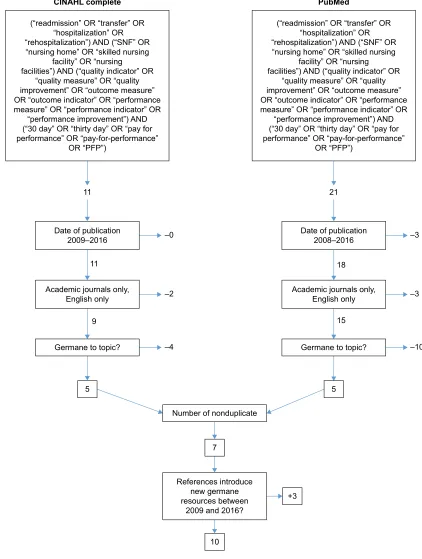
This study used a systematic review of peer-reviewed articles found in indexed databases. The Preferred Reporting Items for Systematic Reviews (PRISMA) guidelines were used to ensure consistent and precise reporting of results. The initial search was conducted on June 20, 2016 and final search was completed on July 10, 2016 using the Cumulative Index of Nursing and Allied Health Literature and PubMed. The Medical Subject Headings at the National Center for Biotechnology Information were used to discover keywords for the queries. However, there were multiple terms that appeared for the two acronyms searched PFP and SNF. To avoid artificially narrowing the initial search scope, a more inclusive keyword search was utilized. The authors examined the search results to taper the final scope. Under-standing the most commonly revealed keywords led to the complex, four-string Boolean search included in Figure 1. A review of articles found in the citations led to additional resources that met the inclusion criteria.
Inclusion criteria
All authors individually reviewed the articles from the search, determined germane literature, and summarized themes. Inclusion criteria included English-language and peer-reviewed articles published by academic journals or universities between January 1, 2009 and July 10, 2016. Articles had to explore at least one quality improvement strategy for reducing 30-day hospital readmission rates from SNFs to hospitals. Articles could reference prevent-able readmission rates or total readmission rates within the 30-day time period.
exclusion criteria
Articles were only incorporated if deemed germane by all authors. Trade industry reports and poster presentations with-out clear, scientific format, and a peer review process were excluded. Articles that dealt with discharge from SNFs
Clinical Interventions in Aging downloaded from https://www.dovepress.com/ by 118.70.13.36 on 20-Aug-2020
Dovepress An investigation of quality improvement initiatives
or hospitals-to-home settings were not included. Articles that only mentioned readmission rates without reference to the efficacy of quality improvements were not included. Articles that did not mention rates for 30-day readmission were excluded. Similar examination outcomes demonstrated that the authors had a parallel understanding of the research
subject and scope. Bias was not considered when reviewing the research involved in this study. The final sample of articles after meeting exclusion criteria was then analyzed further for consensus among all authors for final inclusion.
When analyzed, this sample yielded a kappa statistic (k=1),
showing strong reliability.
± ± ±
± ± ±
*HUPDQHWRWRSLF" ³UHDGPLVVLRQ´25³WUDQVIHU´25
³KRVSLWDOL]DWLRQ´25 ³UHKRVSLWDOL]DWLRQ´$1'³61)´25 ³QXUVLQJKRPH´25³VNLOOHGQXUVLQJ
IDFLOLW\´25³QXUVLQJ IDFLOLWLHV´$1'³TXDOLW\LQGLFDWRU´25
³TXDOLW\PHDVXUH´25³TXDOLW\ LPSURYHPHQW´25³RXWFRPHPHDVXUH´ 25³RXWFRPHLQGLFDWRU´25³SHUIRUPDQFH PHDVXUH´25³SHUIRUPDQFHLQGLFDWRU´25
³SHUIRUPDQFHLPSURYHPHQW´$1' ³GD\´25³WKLUW\GD\´25³SD\IRU SHUIRUPDQFH´25³SD\IRUSHUIRUPDQFH´
25³3)3´
'DWHRISXEOLFDWLRQ ±
$FDGHPLFMRXUQDOVRQO\ (QJOLVKRQO\
3XE0HG
*HUPDQHWRWRSLF" $FDGHPLFMRXUQDOVRQO\
(QJOLVKRQO\ 'DWHRISXEOLFDWLRQ
±
³UHDGPLVVLRQ´25³WUDQVIHU´25 ³KRVSLWDOL]DWLRQ´25 ³UHKRVSLWDOL]DWLRQ´$1'³61)´25 ³QXUVLQJKRPH´25³VNLOOHGQXUVLQJ
IDFLOLW\´25³QXUVLQJ IDFLOLWLHV´$1'³TXDOLW\LQGLFDWRU´25
³TXDOLW\PHDVXUH´25³TXDOLW\ LPSURYHPHQW´25³RXWFRPHPHDVXUH´ 25³RXWFRPHLQGLFDWRU´25³SHUIRUPDQFH PHDVXUH´25³SHUIRUPDQFHLQGLFDWRU´25
³SHUIRUPDQFHLPSURYHPHQW´$1' ³GD\´25³WKLUW\GD\´25³SD\IRU SHUIRUPDQFH´25³SD\IRUSHUIRUPDQFH´
25³3)3´
&,1$+/FRPSOHWH
1XPEHURIQRQGXSOLFDWH
5HIHUHQFHVLQWURGXFH QHZJHUPDQH UHVRXUFHVEHWZHHQ
DQG"
Figure 1 Preferred Reporting Items for Systematic Reviews flow diagram.
Abbreviations: CInAhl, Cumulative Index of nursing and Allied health literature; PFP, pay-for-performance; snF, skilled nursing facilities.
Clinical Interventions in Aging downloaded from https://www.dovepress.com/ by 118.70.13.36 on 20-Aug-2020
Dovepress Mileski et al
Data analysis
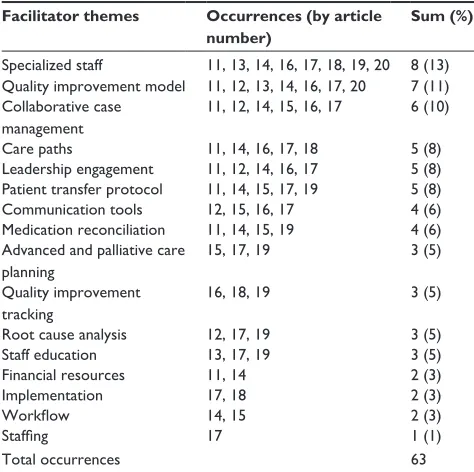
Narrative summaries related to factors that influenced quality improvement initiatives were extracted from each article. These, in turn, were grouped into larger recurring themes that were either key determinants or impediments to success. The themes chosen were by consensus of the authors. Those chosen were agreed upon to be ones which provided overarching summary to the facilitators and barriers extracted. These themes were then divided in two affinity matrix tables for facilitators and barriers. Each table docu-ments the themes, their citation occurrence, their frequency sum, and frequency percentage.
Results
study selection
The article selection process is outlined in the PRISMA flow diagram in Figure 1. The initial search protocol identified a total of 32 articles from the database, of which 26 were nonduplicate. Nineteen articles were excluded for not meet-ing the predetermined inclusion requirements, leavmeet-ing seven articles remaining. A further analysis of citations generated three additional articles that met the inclusion requirements. A total of 10 articles were used for qualitative analysis.
Assessment tools
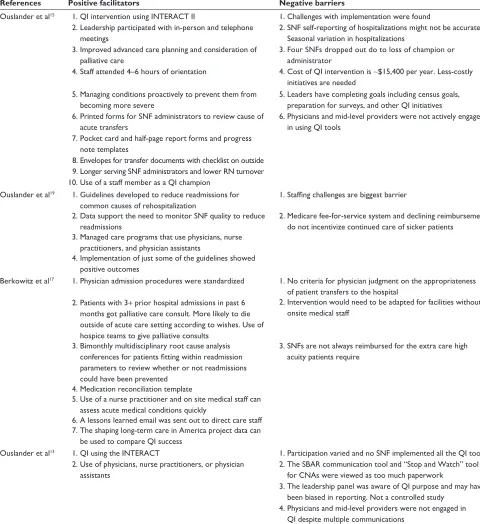
The 10 articles included in the qualitative analysis are sum-marized in Table 1 from most recent to oldest.
The authors reexamined the 10 articles and documented each quality improvement initiative or factor related to SNF-to-hospital readmissions and sorted them into positive facilitators or negative barriers. Broader themes were then assigned to each point (Table 2).
Discussion
The introduction of the new Medicare Inpatient Prospective Payment System decreases reimbursement to hospitals with
increased readmission rates.11 For this reason, hospitals have
been key forces in spurring improvements in transitions
of care, quality of care, and coordination with SNFs.11–13
Although the reimbursement model does not directly incentivize SNFs to improve 30-day hospital readmission rates, improvements made to transitions of care, and quality of acute care make SNFs stand out as referral partners to
hospitals.12,14,15 It is not surprising that successful strategies
to reduce 30-day hospital readmissions have been advanced by hospitals and SNFs.
Sixteen facilitator themes were identified and their occur-rence, frequency sum, and percent frequency are shown
in Table 3. The most cited facilitator of QI initiatives that reduced readmission rates was the use of specialized staff. Successful strategies included the use of hospital pharmacists to coordinate medication reconciliation prior to transfer and
during the first days following discharge.11 In fact, medication
reconciliation was cited in multiple articles as a key strategy
for reducing hospital readmissions.11,12,16,17 Post-discharge
advocate nurses were also used by hospitals to improve
transitions of care to SNFs.12 Similarly, other articles pointed
to the use of physicians, mid-level providers, and advanced practice nurses to ensure proper care plans were made and
orders written.13,17–19 Multiple QI initiatives put focus on
patient transfer protocols that included standardized docu-ments, checklists, order reconciliation, and post-discharge
follow-up.11,12,16–17 Communication tools, such as the
Situ-ation Background Assessment RecommendSitu-ation (SBAR)
Method, were also cited as useful to reducing mistakes.14–16,20
Workflow improvements were made to arrange the electronic medical record documentation in a more helpful and
stream-lined fashion.11,16 Better coordination with specialists outside
the direct hospital-SNF relationship was also noted. One
study incorporated the use of neurologic telehealth consults.20
Another study used a specialized nurse working with a state quality improvement organization to provide education to facilities on proper clinical procedures and strategies aimed
at QI initiatives.13 SNFs also assigned special responsibilities
to existing employees, such as designating a QI champion to
promote facility engagement with QI initiatives.15
Specialized staff facilitators were identified when SNFs utilized clinical supervision that did not include the standard facility employees. The clinicians discussed in the articles included pharmacists, nurse practitioners, telehealth neu-rologic consultants, nurse navigators, and post-discharge
advocate nurses.11–13,15,17–20 Most of the QI initiatives used
quality improvement models as facilitators to reduce hospital
readmissions.12–15,18,20 The most cited model was the
Inter-vention to Reduce Acute Care Transfers (INTERACT).13–15
INTERACT is a comprehensive QI program that includes educational tools and strategies designed to help empower SNF staff to properly identify, assess, document, and
com-municate the changing status of patients.13–15 Other QI
models included the Shewhart Cycle of Plan-Do-Study-Act
(STAAR),18 the Modified Brokerage Case Management
Model designed to connect clients with services,12 and the
use of a Collaborative Partner Prioritization Model to select
the best institutions with which to work.20 Another positive
facilitator was the use of collaborative case management between SNFs and hospitals either through phone calls, direct
Clinical Interventions in Aging downloaded from https://www.dovepress.com/ by 118.70.13.36 on 20-Aug-2020
Dovepress An investigation of quality improvement initiatives
Table 1
s
tudies selected for review and a summary of design, methods, and results
Author/date/ location Aim Sample/settings Methods Assessment tool Key findings
Bisiani and Jurgens
12/August
2015/
n
Y, U
sA
evaluate and compare two care management models on 30-day hospital readmission rates 13,000 medical records prior and 978 medical records after intervention from a Community
h
ospital
r
etrospective, quasi-experimental, interrupted time series
Medical record data
Patient characteristics, addition of positions, and modification of workflows did not impact hospital readmission rates from
sn
Fs
Meehan et al
14/
August 2015/ CT, U
sA
evaluate the impact of I
n
T
er
ACT
QIO-training on decreasing 30-day hospital readmissions from
sn
Fs
staff from 5
sn
Fs in surrounding
community with
$
40 beds and
$
10%
30-day medicare beneficiary readmission rates
r
etrospective, quasi- experimental, mixed methods
h
ospitalization tracking
tool data; staff-reported contact log; staff surveys
Mixed clinical results
Wood
18/2014/
MA, U
sA
Define causes of hospital readmission of cardiac surgery patients from a
sn
F
and test impact of education on 30-day readmission rate All cardiac surgery patients discharged from the Medical Center to a
sn
F and
the 20 nurses at that
sn
F
r
etrospective, quasi- experimental, mixed methods Medical record data, initial nursing survey; pre-test and post- intervention test Evidence of a knowledge deficit and an educational need among the
sn
F staff nurses
caring for cardiac surgery patients
lu et al
11/
May 2013/ Mn
, U
sA
Determine if QI initiative focused on discharge orders and medication reconciliation at a hospital can decrease 30-day readmissions from patients discharged to
sn
Fs
A designated intervention group of 87 patients and a control group of 1,893 patients discharged to
sn
Fs from a
teaching hospital
r
etrospective, quasi-experimental, interrupted time series
Medical record data
standardized discharge order reconciliation with pharmacist involvement in medication reconciliation led to decreased readmission rates for patients discharged from a hospital to sn
Fs
sandvik et al
16/
May 2013/ sD, U
sA
evaluate the effectiveness of universal patient transfer protocols and a collaborative community forum on reducing 30-day readmission rates from hospitals to
sn
Fs
705 Medicare patients discharged from the hospital to
sn
Fs
r
etrospective, quasi- experimental, cross- sectional Medicare claims data; surveys standardized transfer forms and processes developed between hospitals and
sn
Fs help to
reduce 30-day readmission rates
Maly et al
20/2012/
PA, U
sA
Determine if
hospital-sn
F collaboration
using physician partnerships, education, telemedicine, and
eM
r
sharing can
reduce 30-day readmission
A community hospital system and 29 surrounding
sn
Fs
r
etrospective, quasi- experimental, cross- sectional
Medicare claims data
SNFs with a medical director affiliated with the referring hospital had lower all-cause hospital readmission rates
Ouslander et al
15/
March 2011/U
sA
Determine if the QI program InT
er
ACT II could reduce hospital
readmission rates from
sn
Fs
25 participating
sn
Fs and 11 comparison
sn
Fs located in Florida, Massachusetts,
and
n
ew York
r
etrospective, quasi-experimental, interrupted time series surveys: medical record data;
sn
F reported
data
sn
Fs with the highest engagement in the QI
program had the greatest reduction in hospital readmission rates
Ouslander et
al
19/
March 2011/ Fl, U
sA
Determine the frequency and diagnosis associated with 7- and 30-day hospital readmissions from
sn
Fs
3,254 Medicare patients 75 and older who were discharged from a 350-bed nonteaching community hospital to a
sn
F
r
etrospective, quasi- experimental, cross- sectional
Medical record data
C
h
F, renal failure, UTI, pneumonia, and COPD
were the most common diagnosis associated with hospital readmissions from
sn
Fs
Berkowitz et al
17/2011/
MA, U
sA
evaluate an intervention to improved discharged disposition from a skilled nursing recuperative services unit of a hospital 862 patients discharged before the intervention and 863 during the intervention from a 50-bed
sn
U
associated with a hospital
Prospective, quasi-experimental interrupted time series Administrative discharge disposition data; MD
s assessment
data
standardized admission procedures, palliative care consultations, multidisciplinary conferences within a skilled nursing facility led to a decline in readmissions to acute care
Ouslander et al
13/2009/
g
A, U
sA
Test tools and strategies designed to assist
sn
Fs in reducing potentially
avoidable hospitalizations over 6 months Ten pre-intervention hospitalizations were compared to 65 post-intervention hospitalizations from 3 different
sn
Fs
Prospective, quasi-experimental interrupted time series Direct observation; survey; MD
s data;
Medicare data
Despite only partial implementation, the quality improvement initiative was associated with a 50% reduction in the overall rate of potentially avoidable hospitalizations
Abbreviations: C h F, congestive heart failure; COPD, chronic obstructive pulmonary disease; eM r , electronic medical record; In T er ACT, intervention to reduce acute care transfe rs; MD s, minimum data set; QIO, quality improvement organization; sn
Fs, skilled nursing facilities;
sn
U, skilled nursing unit; UTI, urinary tract infection.
Clinical Interventions in Aging downloaded from https://www.dovepress.com/ by 118.70.13.36 on 20-Aug-2020
Dovepress Mileski et al
Table 2 Themes associated with quality initiatives to reduce 30-day snF-to-hospital readmissions
References Positive facilitators Negative barriers
Bisiani and Jurgens12
1. Identification of at-risk patients can help tailor treatment 1. Point of entry rn care manager and case. Management assistants do not reduce readmission rates
2. Collaborative case management associated with lower readmissions
2. Modification of work flows did not reduce readmission
rates
3. Interventions saved $412 per patient 3. Challenge in finding experienced case managers
4. Post-discharge telephone call reduces readmission 5. Use of a post-discharge advocate nurse
6. senior leadership develop service design and strategy 7. Medication reconciliation decreased adverse events,
lowers hospital readmissions
8. Use of the modified brokerage case management model
Meehan et al14 1. InTerACT 1. some leaders did not see compelling reason to participate
2. Conducting root cause analyses of transferred residents 2. Additional support needed to bring about QI initiatives, not enough time
3. Providing snF institutional information to local emergency departments
3. not all the QI tools were implemented equally
4. leadership is critical to success of QI initiatives 4. staff lacked technologic capabilities to use hospital tracking tools 5. sBAr form and progress note
Wood18 1. Use of the shewhart cycle of plan-do-check-act and state
action on avoidable rehospitalizations
1. Insufficient education among SNF staff in cardiac care
2. Knowledge gap in cardiac care identified, education
provided in assessment, care, and interventions
2. Patients being readmitted for preventable or manageable conditions
3. nurse practitioner involvement 3. Only 75% of staff returned educational surveys and tests lu et al11 1. Including pharmacists on multidisciplinary team helps
reduce readmission rates
1. One study did not show significant reduction following
medication reconciliation, medication errors are common in snFs
2. Use of a standard discharge order reconciliation process and not discharging after 2 pm
2. Two extreme severity of illness groups did not have statistical reductions in readmission rates. The illness is more important than medication reconciliation 3. Medication reconciliation and 2–4 day follow up reduces
hospital readmissions
4. Improving electronic workflow reduced medication errors 5. Limited financial resources required for meaningful results
6. executive leaders supported evidence-based changes 7. Pharmacist involvement in medication reconciliation
reduced discrepancies
sandvik et al16 1. geriatric community forum used to promote
multidisciplinary collaboration
1. Challenges with implementation and staff engagement. little coordination between facilities, physicians, and hospitals 2. nurse-to-nurse telephone report using sBAr 2. Low readmission rate could reflect poor-quality choices
3. Using a single set of forms with checklists during patient transfer
3. Transfer forms not always completed by sending physicians 4. Medication list with diagnosis for each medication and
comments helps to reduce errors
4. Personnel turn over causes loss of institutional knowledge and continuity of QI project
5. Advanced directive form can reduce undesired hospitalizations
5. hospitalists with less nursing home experience overall began completing transfers
6. Universal documentation with prompts, safety reminders, and checklists
6. Improper transfer of patient data, improper documentation, missing orders had been prior issue
Maly et al20 1. Collaborative partner prioritization tool 1. Aligning hospitals and snFs requires like-minded leaders that
are willing to invest time and effort
2. Use of sBAr communication tool 2. QI project needs time to grow in order to track and report
findings
3. hospital/snF collaboration involving patient information and clinical educational resources
4. sharing of protocols for care of patients with congestive heart failure, post-myocardial infarction, and pneumonia 5. Telehealth neurologic consults
6. Physician form for aligning goals and sharing interest
(Continued)
Clinical Interventions in Aging downloaded from https://www.dovepress.com/ by 118.70.13.36 on 20-Aug-2020
Dovepress An investigation of quality improvement initiatives
Table 2 (Continued)
References Positive facilitators Negative barriers
Ouslander et al15 1. QI intervention using InTerACT II 1. Challenges with implementation were found
2. leadership participated with in-person and telephone meetings
2. snF self-reporting of hospitalizations might not be accurate. seasonal variation in hospitalizations
3. Improved advanced care planning and consideration of palliative care
3. Four snFs dropped out do to loss of champion or administrator
4. staff attended 4–6 hours of orientation 4. Cost of QI intervention is ~$15,400 per year. less-costly initiatives are needed
5. Managing conditions proactively to prevent them from becoming more severe
5. leaders have completing goals including census goals, preparation for surveys, and other QI initiatives 6. Printed forms for snF administrators to review cause of
acute transfers
6. Physicians and mid-level providers were not actively engaged in using QI tools
7. Pocket card and half-page report forms and progress note templates
8. envelopes for transfer documents with checklist on outside 9. longer serving snF administrators and lower rn turnover 10. Use of a staff member as a QI champion
Ouslander et al19 1. guidelines developed to reduce readmissions for
common causes of rehospitalization
1. Staffing challenges are biggest barrier
2. Data support the need to monitor snF quality to reduce readmissions
2. Medicare fee-for-service system and declining reimbursement do not incentivize continued care of sicker patients
3. Managed care programs that use physicians, nurse practitioners, and physician assistants
4. Implementation of just some of the guidelines showed positive outcomes
Berkowitz et al17 1. Physician admission procedures were standardized 1. no criteria for physician judgment on the appropriateness
of patient transfers to the hospital 2. Patients with 3+ prior hospital admissions in past 6
months got palliative care consult. More likely to die outside of acute care setting according to wishes. Use of hospice teams to give palliative consults
2. Intervention would need to be adapted for facilities without onsite medical staff
3. Bimonthly multidisciplinary root cause analysis
conferences for patients fitting within readmission
parameters to review whether or not readmissions could have been prevented
3. snFs are not always reimbursed for the extra care high acuity patients require
4. Medication reconciliation template
5. Use of a nurse practitioner and on site medical staff can assess acute medical conditions quickly
6. A lessons learned email was sent out to direct care staff 7. The shaping long-term care in America project data can
be used to compare QI success
Ouslander et al13 1. QI using the InTerACT 1. Participation varied and no snF implemented all the QI tools
2. Use of physicians, nurse practitioners, or physician assistants
2. The sBAr communication tool and “stop and Watch” tool for CnAs were viewed as too much paperwork
3. The leadership panel was aware of QI purpose and may have been biased in reporting. not a controlled study
4. Physicians and mid-level providers were not engaged in QI despite multiple communications
Abbreviations: CNA, certified nursing assistant; INTERACT, intervention to reduce acute care transfers; QI, quality improvement; RN, registered nurse; SBAR, situation
background assessment recommendation; snFs, skilled nursing facilities.
meetings, or geriatric community forum meetings.11,12,14,16,20
An example of collaborative case management included pro-viding receiving emergency departments with information of
SNF capabilities and procedure.11 The staff education
facili-tator focused on developing specialized skills for common readmitting diagnoses, proactive management of common
causes of rehospitalization,15,18,19 and care paths for complex
conditions, such as congestive heart failure, post-myocardial
infarction, and pneumonia.18,20 Education was also used to
familiarize nursing staff with the tools and protocols that were integral to the QI initiatives and to share lessons learned from
root cause analysis following readmissions.14,15,17
Root cause analysis following hospital readmissions was commonly used in helping to elucidate the cause and improve
Clinical Interventions in Aging downloaded from https://www.dovepress.com/ by 118.70.13.36 on 20-Aug-2020
Dovepress Mileski et al
QI initiatives. Many of the SNFs in this study held root cause
analysis meetings in order to learn from past readmissions.14,15,17
The patient transfer protocol facilitator reflects articles that highlighted standards in transfer procedure when a hospital discharges to a SNF. Examples of transfer protocols include: the discharging hospital performing a follow-up call once a transfer has occurred, not discharging a patient to a SNF
after 2 pm, and including a discharge checklist.11,12,15–17 The
care paths facilitator was noted when SNFs used standard care regimes to proactively address patient populations most
at risk of readmission to acute care.12,15,19,20 Multiple articles
mentioned that medication reconciliation, the process of reviewing medication accuracy and appropriateness, is vital
in preventing hospital readmissions.11,12,16,17
Utilization of communication tools, such as progress notes and the SBAR form had a positive impact on acute care
read-mission rates.14–16,20 Quality improvement tracking through the
reporting and monitoring of data proved important in
compar-ing the success of the QI initiative.17,19,20 Leadership
engage-ment was beneficial when administrators, medical directors, and physicians took an active role in QI initiatives focused on reducing hospital admissions. Successful leaders took part in planning meetings, project design, community forums, QI implementation, root cause analysis, and goal forming and
setting.11,12,14,15,20 Advanced care planning, including advanced
directives and do-not-resuscitate orders, alongside an empha-sis on palliative care and hospice services also helped to keep
SNF residents from undesired visits to acute care.15–17
Thirteen barrier themes were identified in reference to quality improvement programs to reduce SNF-to-hospital readmissions (Table 4). Issues associated with quality improvement tracking and implementation were the most frequently discussed barriers to reducing 30-day SNF-to-hospital readmissions. Examples of tracking issues included staff lacking the technical skills to use readmission tracking
software,14 no definitive criteria for when rehospitalization
was appropriate,13,16,17 the need for long-term monitoring to tell
if QI initiatives were effective,20 and the need to account for
seasonal differences in readmission rates.15 Specific examples
of implementation barriers included lack of engagement by
staff and physicians,15,16,18 partial use of available QI tools,13,14
and lack of on-site medical professionals to carry out required
initiatives.17 Other barriers included the need for increased
staffing and specialized personnel to carry out the improve-ments, both of which add expenses that are not always covered
by the current, pay-for-service reimbursement model.15,17,19
Staffing issues included a general lack of personnel to carry
out QI initiatives,14,19 a lack of experienced case managers,12
and a loss of QI leadership and knowledge due to turnover.15,16
Use of advanced practice and specialized staff was not always effective in improving readmission rates. Three studies showed that physicians and mid-level providers were not engaged
with using QI strategies.13,15,16 Another article suggested that
hospitalists were not as consistent in making quality discharges
to SNFs as facility-associated physicians.16
Surveys also showed that there was inadequate training and support during and after implementation and a lack of knowledge and protocols for care paths specific to certain
conditions.11,18 External factors outside the SNF’s control can
Table 3 Facilitating themes associated with reduced 30-day
skilled nursing facilities-to-hospital readmissions
Facilitator themes Occurrences (by article
number)
Sum (%)
specialized staff 11, 13, 14, 16, 17, 18, 19, 20 8 (13) Quality improvement model 11, 12, 13, 14, 16, 17, 20 7 (11) Collaborative case
management
11, 12, 14, 15, 16, 17 6 (10)
Care paths 11, 14, 16, 17, 18 5 (8)
leadership engagement 11, 12, 14, 16, 17 5 (8) Patient transfer protocol 11, 14, 15, 17, 19 5 (8)
Communication tools 12, 15, 16, 17 4 (6)
Medication reconciliation 11, 14, 15, 19 4 (6) Advanced and palliative care
planning
15, 17, 19 3 (5)
Quality improvement tracking
16, 18, 19 3 (5)
root cause analysis 12, 17, 19 3 (5)
staff education 13, 17, 19 3 (5)
Financial resources 11, 14 2 (3)
Implementation 17, 18 2 (3)
Workflow 14, 15 2 (3)
Staffing 17 1 (1)
Total occurrences 63
Table 4 Barrier themes associated with higher 30-day skilled
nursing facilities-to-hospital readmissions
Barrier themes Occurrences
(by article number)
Sum (%)
Implementation 12, 13, 15, 17, 19, 20 6 (17)
Quality improvement tracking 12, 15, 16, 17, 19, 20 6 (17)
Staffing 11, 12, 15, 17, 18 5 (14)
specialized staff 11, 15, 17, 20 4 (11)
Financial resources 17, 18, 19 3 (9)
leadership engagement 12, 15, 17 3 (9)
Care paths 13, 14 2 (6)
Collaborative case management 15 1 (3)
Communication tools 20 1 (3)
Medication reconciliation 14 1 (3)
Patient transfer protocol 15 1 (3)
staff education 13 1 (3)
Workflow 11 1 (3)
Total occurrences 35
Clinical Interventions in Aging downloaded from https://www.dovepress.com/ by 118.70.13.36 on 20-Aug-2020
Dovepress An investigation of quality improvement initiatives
also act as barriers to implementation, including the location of the facility, its proximity to a hospital, and the presence
of state standards or local community initiatives.12,15,16 These
examples help to explain why initiatives to reduce hospital readmission rates varied in their degree of success between states and communities.
A lack of leadership engagement acted as a barrier to suc-cess when leaders did not see a compelling reason to invest time and energy into QI initiatives to reduce readmissions. SNF administrators expressed that increasing census numbers and maintaining regulatory compliance were more important
than reducing hospitalizations.14–16 The majority of articles
highlighted the fact that leadership recognized the usefulness of a QI program to reduce readmissions but felt that
employ-ees were already taxed with heavy workloads.13,15,16,18,19
Staffing was a natural barrier in that additional staffing hours were needed to satisfy the QI initiatives, yet it was hard to
find SNFs with ample and qualified staff.12,14–16,19 Lack of
staff education was a noted barrier to success because staff lacked the knowledge to care for the patients most likely to
be readmitted to acute care settings.18 Communication tools
became barriers if certified nursing assistants and nurses in
the facilities felt that forms added unnecessary paperwork.13
The financial resources needed to implement and continue a
QI initiative were noted by multiple articles.15,17,19
A lack of reliable data and the time needed before see-ing measurable improvements meant that quality improve-ment tracking could be a barrier to successful reduction in rehospitalizations. More immediate metrics to measure improvements, more accurate criteria in tracking, and less reliance on self-reporting were specific examples of
track-ing issues cited in studies.12,15–17,19,20 The implementation
barrier was found when facilities struggled to set up quality
improvement tools and adoption of procedures.13–17,20 The
care paths barrier was illustrated when patients were being readmitted for manageable conditions but the staff lacked the
knowledge of how to properly care for these conditions.11,18
Medication reconciliation was not a panacea to improving outcomes; medication errors were still common and did not
decrease readmissions in one literature reference.11 Patient
transfer protocols proved imperfect due to the failure to fully complete orders and include data when transferring between
levels of care.16 Similarly, workflow redesign failed to impact
the readmission rates to hospitals in another study.12
Limitations
This research review has limitations in its application. All the noted studies were conducted in a quasi-experimental
manner, and most were retrospective in nature. For example, one article only considered retrospective fixed data so
medical records were not accessible for root cause analysis.19
Multiple articles noted that participation in QI initiatives among SNFs varied and, in some cases facilities dropped out
completely.12,16,19 The research relied mainly on smaller study
samples at a state or community level. There was no con-sistent implementation across the nation or between nations
that could be compared.13,15,16,19 Much of the research included
some aspect of self-reporting, facility statistics. Self-reporting
data could invite bias and open studies to errors.13,15,16
Conclusion
When considered from a very overarching perspective, it appears that many of the mitigating factors of the barri-ers presented can be overcome by facilitators which were discussed here. Allowances for the proper identification of patients and their diagnoses allows for tailored treatments to their specific condition. Collaboration in case management by teams of practitioners working with the patient will cause any barriers to care to be quickly identified, to mitigate readmis-sions overall. The use of post-discharge follow-up with these patients and the use of patient advocates also can be used as a tool to decrease readmissions in many circumstances. The use of quality checklist tools, such as the INTERACT/ STAAR/SBAR, and other standardized protocols will allow for a more streamlined care pipeline for patients, as these tools will allow us to provide care on a more equitable level to more patients, and these tools can be hybridized to begin to address any factors, which might be identified to be caus-ing readmissions further reduccaus-ing them as time progresses. In addition, staffing and management should be striving to provide proper education to ensure that readmissions will decrease. Any of these interventions require a strong commit-ment from managecommit-ment, so that the benefits of QII protocols are realized over time.
Hospital readmissions have become a national focus. SNFs working to find ways to reduce 30-day readmissions to acute care may consider adopting a quality improvement procedure. This study supplied a systematic review of both facilitators and barriers summarizing the results of two scholarly databases. These strategy examples can be useful to acute care hospitals attempting to lower bounce back from subacute care providers, and long-term care facilities seek-ing QI initiatives to reduce hospital readmissions. Focusseek-ing on a continuum of quality care results in better treatment efficiency, improved patient safety, and increased commu-nication within partnering hospitals and SNFs.
Clinical Interventions in Aging downloaded from https://www.dovepress.com/ by 118.70.13.36 on 20-Aug-2020
Clinical Interventions in Aging
Publish your work in this journal
Submit your manuscript here: http://www.dovepress.com/clinical-interventions-in-aging-journal
Clinical Interventions in Aging is an international, peer-reviewed journal focusing on evidence-based reports on the value or lack thereof of treatments intended to prevent or delay the onset of maladaptive correlates of aging in human beings. This journal is indexed on PubMed Central, MedLine,
CAS, Scopus and the Elsevier Bibliographic databases. The manuscript management system is completely online and includes a very quick and fair peer-review system, which is all easy to use. Visit http://www.dovepress. com/testimonials.php to read real quotes from published authors.
Dovepress
Dovepress
Mileski et alAcknowledgments
This article has not been published previously elsewhere in whole or in part, and it is not under consideration for pub-lication elsewhere. It is approved by all authors, and tacitly or explicitly where the work was carried out, and that, if accepted, it will not be published elsewhere including elec-tronically in the same form, in English or in any other lan-guage, without the written consent of the copyright-holder.
Disclosure
The authors report no conflicts of interest in this work.
References
1. Creditor MC. Hazards of hospitalization of the elderly. Ann Intern Med. 1993;118(3):219–223.
2. Mor V, Intrator O, Feng Z, Grabowski DC. The revolving door of rehospitalization from skilled nursing facilities. Health Aff (Millwood). 2010;29(1):57–64.
3. Coleman EA, Min SJ, Chomiak A, Kramer AM. Posthospital care transi-tions: patterns, complications, and risk identification. Health Serv Res. 2004;39(5):1449–1466.
4. DeFrances CJ, Hall MJ, Podgornik MN. Advance Data From Vital and Health Statistics No 359: 2003 National Hospital Discharge Survey. Available from: http://www.cdc.gov/nchs/data/ad/ad359.pdf. Accessed September 12, 2016.
5. Donelan-McCall N, Eilertsen T, Fish R, Kramer A. Small patient popu-lation and low frequency event effects on the stability of SNF quality measures. Washington, DC, USA: Medicare Payment Advisory Com-mission; 2006. Available from: http://tinyurl.com/j838zb4. Accessed March 14, 2012.
6. Intrator O, Grabowski DC, Zinn J, et al. Hospitalization of nursing home residents: the effects of states’ Medicaid payment and bed-hold policies. Health Serv Res. 2007;42(4):1651–1671.
7. Centers for Medicare and Medicaid Services. Medicare Nursing Home Value-Based Purchasing Initiative. 2015. Available at: https://innovation. cms.gov/initiatives/Nursing-Home-Value-Based-Purchasing/. Accessed September 21, 2016.
8. Fontanarosa PB, McNutt RA. Revisiting hospital readmissions. JAMA. 2013;309(4):398–400.
9. Berwick DM, Nolan TW, Whittington J. The triple aim: care, health, and cost. Health Aff (Millwood). 2008;27(3):759–769.
10. Guterman S, Davis K, Stremikis K, Drake H. Innovation in Medicare and Medicaid will be central to health reform’s success. Health Aff (Millwood). 2010;29(6):1188–1193.
11. Lu Y, Clifford P, Bjorneby A, et al. Quality improvement through implementation of discharge order reconciliation. Am J Health Syst Pharm. 2013;70(9):815–820.
12. Bisiani MA, Jurgens CY. Do collaborative case management models decrease hospital readmission rates among high-risk patients? Prof Case Manag. 2015;20(4):188–196.
13. Ouslander JG, Perloe M, Givens JH, Kluge L, Rutland T, Lamb G. Reducing potentially avoidable hospitalizations of nursing home resi-dents: results of a pilot quality improvement project. J Am Med Dir Assoc. 2009;10(9):644–652.
14. Meehan TP, Qazi DJ, Van Hoof TJ, et al. Process evaluation of a qual-ity improvement project to decrease hospital readmissions from skilled nursing facilities. J Am Med Dir Assoc. 2015;16(8):648–653. 15. Ouslander JG, Lamb G, Tappen R, et al. Interventions to reduce
hospitalizations from nursing homes: evaluation of the INTERACT II collaborative quality improvement project. J Am Geriatr Soc. 2011; 59(4):745–753.
16. Sandvik D, Bade P, Dunham A, Hendrickson S. A hospital-to-nursing home transfer process associated with low hospital readmission rates while targeting quality of care, patient safety, and convenience: a 20-year perspective. J Am Med Dir Assoc. 2013;14(5):367–374. 17. Berkowitz RE, Jones RN, Rieder R, et al. Improving disposition
out-comes for patients in a geriatric skilled nursing facility. J Am Geriatr Soc. 2011;59(6):1130–1136.
18. Wood M. Improving Transitions of Care of Cardiac Surgery Patients Dis-charged to Skilled Nursing Facilities: A Quality Improvement Approach [doctoral dissertation]. 2014. MN, USA: Walden University. 19. Ouslander JG, Diaz S, Hain D, Tappen R. Frequency and diagnoses
associated with 7-and 30-day readmission of skilled nursing facility patients to a nonteaching community hospital. J Am Med Dir Assoc. 2011;12(3):195–203.
20. Maly MB, Lawrence S, Jordan MK, et al. Prioritizing partners across the continuum. J Am Med Dir Assoc. 2012;13(9):811–816.
Clinical Interventions in Aging downloaded from https://www.dovepress.com/ by 118.70.13.36 on 20-Aug-2020