Scholarship@Western
Scholarship@Western
Electronic Thesis and Dissertation Repository
4-25-2016 12:00 AM
Innate and learned predator recognition in four strains of
Innate and learned predator recognition in four strains of
captive-bred atlantic salmon, Salmo salar
bred atlantic salmon, Salmo salar
Malcolm J. Lau
The University of Western Ontario Supervisor
Bryan Neff
The University of Western Ontario Graduate Program in Biology
A thesis submitted in partial fulfillment of the requirements for the degree in Master of Science © Malcolm J. Lau 2016
Follow this and additional works at: https://ir.lib.uwo.ca/etd Part of the Biology Commons
Recommended Citation Recommended Citation
Lau, Malcolm J., "Innate and learned predator recognition in four strains of captive-bred atlantic salmon, Salmo salar" (2016). Electronic Thesis and Dissertation Repository. 3715.
https://ir.lib.uwo.ca/etd/3715
This Dissertation/Thesis is brought to you for free and open access by Scholarship@Western. It has been accepted for inclusion in Electronic Thesis and Dissertation Repository by an authorized administrator of
i
Abstract
Innate and learned anti-predator responses can be important determinants of survival in
natural environments. However, few studies have examined population differences in
these anti-predator responses. My study measured innate and learned anti-predator
responses in four strains of Atlantic salmon, Salmo salar, which had varying captive
breeding histories. All four strains of salmon tested had an innate anti-predator response
to alarm cue and no response to a visual predator cue. Following training in which the
alarm cue and predator cue were paired, I found that one of the four strains (Sebago),
developed a learned anti-predator responses as indicated by reduced activity in response
to the predator cue. The duration of captive breeding could not explain why only the
Sebago strain showed an ability to learn, suggesting that other factors affect the evolution
of learned anti-predator responses. Understanding population variability in learning
ability may be important when selecting populations for reintroduction efforts.
Keywords
ii
Co-Authorship Statement
I plan to submit a version of this thesis for publication with Bryan Neff, Shawn Garner,
and Chris Wilson as co-authors. I contributed to the experimental design, performed the
experiment, and drafted the manuscript. Bryan Neff contributed to the study design and
assisted in drafting the manuscript. Shawn Garner contributed to the design and provided
insight regarding data analysis and the manuscript. Chris Wilson assisted with the
collection and rearing of the fish as well as contributing to the experimental design of the
iii
Acknowledgments
Thank you. To everyone who has played a role in helping me get to where I am today,
thank you. Firstly, I would like to thank my supervisor Dr. Bryan Neff for taking me in as
an undergraduate student and for helping me develop into the graduate student that I am
today. Bryan’s guidance has been instrumental to the success of my project, and his
passion for science is inspiring. I would also like to thank Dr. Shawn Garner for his
continual support and countless hours spent helping me with all aspects of my project. I
am extremely grateful for Shawn’s kindness and willingness to go the extra mile, and
without him I would be lost. Thank you to the members of my advisory committee, Dr.
Yolanda Morbey and Dr. Beth MacDougall-Shackleton. They helped shape my project
and explore my research from every angle. Finally, I would like to thank Chris Wilson
and all of the staff at Normandale fish culture station who provided me with the fish for
my experiment. Their expertise and support was vital to my success in raising the fish.
Thank you to all my friends and colleagues at Western. The Neff lab has always been
inviting to newcomers, and I will fondly remember all the lunches that I have had here.
Thank you to Scott for bringing me into the fold and also driving to the east coast with
me. Thanks Tim, Nico, Ross, Lucas, Aimee, Adriano, Kayla, John, Kat, Babak… There
are a lot of lab members and a lot of undergraduates who helped me all along the process.
So thank you Neff lab members past and present. There was also a ton of people outside
the lab who made graduate school amazing thank you Ben, Blair, Mat, Paul, Toby, Meg,
and Zander (to name a few of many) for making life great.
Thank you to my family. Mom, thank you for always being there for me. You are truly
the best mom anyone could ask for. Thanks to you Dad. You inspire me to want to learn
how things work. Thanks Al Thanks Nicole, you’re chill siblings. Thank you Jordana.
iv
Table of Contents
Abstract ... i
Co-Authorship Statement... ii
Acknowledgments... iii
Table of Contents ... iv
List of Tables ... vi
List of Figures ... vii
1 Introduction ... 1
1.1 Effect of predation on prey populations... 1
1.2 Predator defense mechanisms ... 1
1.3 Energetic costs of anti-predator behaviours ... 3
1.4 Innate and learned anti-predator behaviour ... 4
1.5 Evolution of innate and learned anti-predator behaviour ... 5
1.6 Anti-predator behaviours in aquatic ecosystems ... 7
1.7 Effect of captive breeding on anti-predator responsse ... 10
1.8 Reintroduction of Atlantic salmon into Lake Ontario ... 11
1.9 The classical conditioning paradigm ... 12
2 Methods ... 13
2.1 Experimental fish ... 13
2.2 Experimental trials ... 14
2.3 Behavioural measures ... 17
2.4 Preparation of cues ... 18
2.5 Statistical analysis ... 19
v
3.1 Physical differences among salmon ... 21
3.2 Innate response to cues ... 22
3.3 Learned response to predator cue ... 28
4 Discussion ... 35
4.1 Innate anti-predator response ... 35
4.2 Effect of captive breeding on the learned anti-predator response ... 36
4.3 Other causes of population differences in the learned anti-predator response ... 38
4.4 Implications for reintroductions ... 40
4.5 Caveats of the research ... 40
4.6 Impact on the field of learned anti-predator behaviour ... 41
4.7 Future research ... 42
References ... 44
Appendices ... 50
vi
List of Tables
Table 2.1 Timeline of predator recognition training and behavioural observations in
Atlantic salmon, Salmo salar. ... 16
Table 2.2 Timeline of predator recognition training and behavioural observations in
Atlantic salmon, Salmo salar. ... 17
Table 3.1 Descriptive statistics of body mass, fork length, and overall condition of four
Atlantic salmon strains, Salmo salar.. ... 21
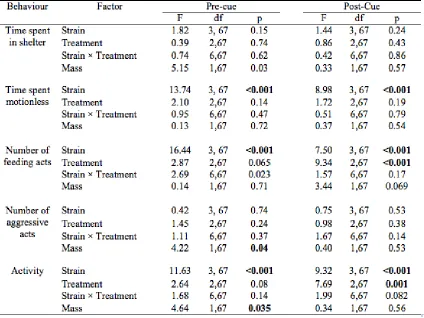
Table 3.2 Statistical analysis of behaviour in four Atlantic salmon, Salmo salar, strains on the day of the first exposure to predator and alarm cues. ... 23
vii
List of Figures
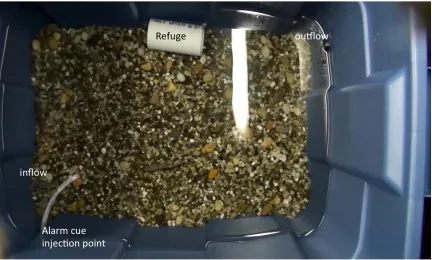
Figure 2. 1 Experimental tank used for behavioural observation and predator recognition
training of Atlantic salmon, Salmosalar. ... 14
Figure 2.2 Example schedules for paired and unpaired treatments of predator recognition
training of Atlantic salmon, Salmosalar. ... 16
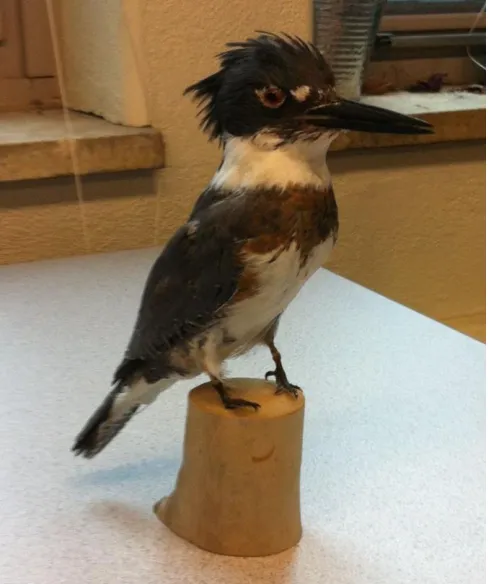
Figure 2. 3 Belted kingfisher model being displayed to salmon in an experimental tank..
... 19
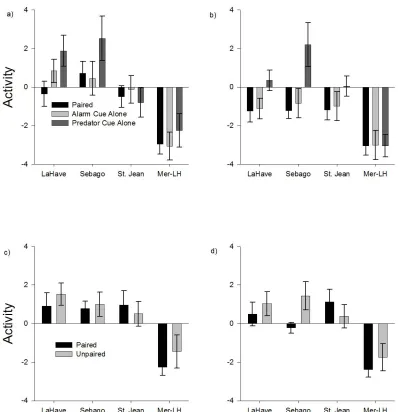
Figure 3.1 Innate and learned anti-predator response of Atlantic salmon, Salmo salar, as measured by activity levels.. ... 24
Figure 3.2 Four measures of Atlantic salmon, Salmo salar, innate anti-predator response.. ... 26
1
Introduction
1.1
Effect of predation on prey populations
Predation, which occurs when an animal kills and eats another animal, is a major source
of mortality that can have large impacts on prey populations (Elton, 1924). For example,
Atlegrim (1989) studied the effect of excluding avian predators from populations of
larval sawflies (Hymenoptera: Symphyta) and geometrids (Geometridae). Atlegrim found
that when predators were excluded from a habitat, the populations of both prey species
were larger than in habitats that included predators because of the lack of mortality due to
predation. Predator and prey population sizes also tend to co-vary. In a classic example,
Elton (1924) used historic data from Hudson’s bay fur trappers to estimate the population
size for Canada lynx (Lynx canadensis) and snowshoe hare (Lepus americanus) over a
200-year period. Elton found that there was a consistent 10-year cycle in the population
sizes of both the predatory lynx and the prey hare; when the hare population increased the
lynx population increased shortly after, followed by a decline in the hare population,
which was associated with a decline of the lynx population. Predators can also cause
strong selection on prey species to avoid predation. In many species, the selection
resulting from predation has lead to the evolution of specialized defense mechanisms that
allow prey species to better avoid predation (Alcock, 1993).
1.2
Predator defense mechanisms
To avoid predation, many prey have evolved physiological or behavioural defence
mechanisms (Alcock, 1993). One such defence mechanism is chemical defense, where
tropical frog (Dendrobates pumilio) produces steroidal alkaloids, which are toxic to many
predators, is one mechanism these frogs have evolved to resist predation (Daly & Myers,
1967). Chemical defenses can also be linked with a change in the physical appearance of
prey species that signals the presence of toxic chemicals (referred to as aposematism;
Alcock, 1993). Schuler and Hesse (1985) showed that warning colourations are effective
at deterring predation by examining predation by chickens (Gallus gallus domesticus) on
mealworms (Tenevrio molitor) of different colours. They found that chickens avoided
black and yellow coloured mealworms, colours typically associated with toxicity, and
preferred to eat olive coloured mealworms. These colourations can be so effective at
deterring predators that some prey species will mimic the colouration of other toxic
species, without producing the associated defense chemical. For example, species of toxic
and non-toxic butterflies (Lepidoptera spp.) that occupy similar habitats can have similar
colour patterns and this is a result of the non-toxic species mimicking toxic species
colouration as a defense mechanism to predators (Mallet & Joron, 1999). Changes in
colouration and morphology can also help prey species blend into their environments so
as to camouflage themselves from predators. Kettlewell (1956) studied pepper moths
(Biston betularia) in England at the dawn of industrialization in that country. Pepper
moths were originally light in colour, similar to the trees on which they were found.
However, as England became more industrialized, soot began darkening trees, leading to
a rise in a form of moth with a darker colouration. Kettlewell found that in forests closest
to industrial centers, where there was the greatest build up of soot, the darker coloured
moths had higher survival than the light coloured moths and this difference was attributed
also react behaviourally to predators and one of the most common ways to reduce
mortality due to predation is to flee when a predator is detected (Lima & Dill, 1990; Lima
1998). Prey species can also avoid predators on a larger scale by changing their habitat
use either spatially or temporally. For example, Heithaus and Dill (2006) examined
habitat use of bottlenose dolphins (Tursiops aduncus) in the presence and absence of
predatory tiger sharks (Galeocerdo cuvier). Heithaus and Dill found that when tiger
sharks were present, dolphins preferentially used less productive but safer foraging sites.
Prey species can also combine colouration and behaviour to reduce mortality due to
predation. For example, yellow-legged frogs (Rana muscosa) are conspicuous while sun
bathing on top of a rock out of the water, so when confronted with a potential predator
the frogs dive into the water and stay motionless, blending into the yellow-green coloured
algae found on submerged rocks (Norris & Lowe, 1964).
1.3
Energetic costs of anti-predator behaviours
The evolution of anti-predator behaviours are often associated with an energetic cost, and
these costs can result in a trade-off between growth and survival (Werner & Anholt,
1993). For example, Bryant and Julkunen-Titto (1995) examined growth rates in related
species of birch trees (Betula spp.) that do and do not produce chemical defenses. They
found that species with defense chemicals had slower rates of growth when compared to
species that did not produce the chemicals. Similarly, the production of cryptic
colouration has been shown to be costly. Talloen et al. (2004) fed satyrine butterflies
(Pararge aegeria) on either a low or high nutrient diet. They found that when butterflies
were fed a low nutrient diet they produced paler, less cryptic wing colours. The authors
produce melanin, the compound that results in the cryptic wings. Defense mechanisms
can also have more direct effects on growth by reducing time available for foraging or the
efficiency of foraging. By fleeing or hiding from predators, prey have less time to
allocate to foraging. Foraging efficiency can also be reduced if prey species adopt less
efficient but safer foraging strategies. For example, when under predation risk, gray
squirrels (Sciurus carolinensis) adopted foraging strategies that maximized the time spent
in cover, sacrificing foraging efficiency to maximize survival (Lima & Valone, 1986).
1.4
Innate and learned anti-predator behaviour
Individuals can respond to signals of predation either through innate or learned
mechanisms. I defined an innate anti-predator response, such as fleeing or
motionlessness, as one that is expressed in its entirety upon the first exposure to the
signal of predation; subsequent expression of the behaviour is not modified or otherwise
enhanced (e.g. Jackson & Brown, 2011). An innate response to predators has been shown
in a wide variety of taxa. For example, Japanese monkeys (Macaca fuscata) that had
never experienced predation by snakes innately identified and avoided snakes (Shibasaki
& Kawai, 2009). Atlantic salmon (Salmo salar) that had never encountered an avian
predator increased the time spent in shelter in response to great blue herons (Ardea
herodias; de Mestral & Herbinger, 2013). Prey may also innately respond to conspecific
signals of threat that are associated with the presence of a predator or predation event;
these signals are called alarm cues (Brown, 2003). For example, juvenile white-browed
scrubwrens (Sericornis frontalis) suppress calling in response to their first exposure to
alarm calls from conspecifics (Haff & Magrath, 2012). Responding to alarm cues appears
was reduced in fathead minnows (Pimephales promelas) that were exposed to alarm cue
compared to those that were not exposed to alarm cue (Mathis & Smith, 1993).
A learned behavioural anti-predator response is one that is not expressed in its entirety
after the first exposure but is instead modified over subsequent expression of this
behaviour (Alcock, 1993). A common example of a learned anti-predator response is the
development of an association between an alarm cue that elicits an innate response and a
predator cue that does not elicit an innate response (Chivers & Smith, 1998). This type of
learned anti-predator response has been shown in a wide range of taxa. For example,
robins (Petroica australis) have been shown to learn to reduce feeding and movement in
response to stoats (Mustela erminea) after a presentation of a model stoat with an alarm
call (Maloney & McLean, 1995). Rainbow trout (Oncorhynchus mykiss) reduce foraging
and stay motionless in response to northern pike after repeated pairing of northern pike
odour with an alarm cue (Brown & Smith, 1998). Learned anti-predator responses
presumably confer additional survival benefits above innate responses, likely due to
increased specificity of the signal of predation (Mirza & Chivers, 2000; Chivers et al.,
2002). Mirza and Chivers (2000) examined the survival of brook trout (Salvelinus
fontinalis) when exposed to chain pickerel (Essox niger). They found that brook trout that
were first exposed to a combination of alarm cue and pickerel odour had greater survival
when encountering chain pickerel than brook trout that were previously exposed to either
alarm cue or pickerel odour alone.
1.5
Evolution of innate and learned anti-predator behaviour
There are many factors that might affect the expression and evolution of anti-predator
alarm cues would evolve when these cues are reliable and consistent signals of predation
across multiple generations. For example, damage-induced alarm cues, which are
released after mechanical damage to the skin, are reliable signals of predation risk
(Pfeiffer, 1977). Rainbow trout are a species with damage-induced alarm cues and the
response to alarm cue has been shown to be maintained over 100 years in the absence of
predation in some populations (Scheurer et al., 2007). One potential explanation for the
maintenance of alarm cue in rainbow trout is that because of the mechanism of release,
damage-induced alarm cues are a reliable signal of risk that is consistent across
generations regardless of predation and there is little selection to weaken the response to
alarm cue. I would expect the response to predator cues to be more variable, as predator
cues can be less reliable and less consistent than alarm cues across generations, as
predator communities have been shown to change over time (Parody et al., 2001). In fact,
an innate response to odour cues of a predatory fish has been found in some studies of
salmonids (Hawkins et al., 2004; Jackson & Brown, 2011), but not in others (Brown &
Smith, 1998; Ferrari et al., 2010a). In some species there are even population differences
in response to predator cues. For example, O’Steen et al. (2002) found that guppies
(Poecilia reticulata) from populations that experienced predation had an innate response
to predator cues, while guppies from populations that never experienced predation did not
respond to the same predator cues. Additionally, populations of guppies transplanted
from streams without predators to streams with predators evolved an innate anti-predator
response to predator cues within 35 years of the transplant (Magurran et al., 1992;
I expect a learned response to be effective when predator communities are variable both
within and across generations and by modifying behaviour based on changes in the
predator community, prey species increases the effectiveness their anti-predator response.
In fact, brown trout (Salmo trutta) have shown the ability to learn to recognize many
different types predators, but only have innate anti-predator response to a select few
(reviewed by: Brown et al., 2013). Migratory species in particular have a strong potential
for encountering multiple discrete predator communities as populations move from one
location to another. Anadromous species in particular may experience vast changes in the
predator communities experienced as individuals migrate from natal streams to oceans
and I expect learning to be an effective anti-predator mechanism in anadromous species.
Atlantic salmon are an anadromous species that have shown the ability to learn to
respond to predators (Hawkins et al., 2008; Houde et al., 2010; de Mestral & Herbinger,
2013) and it is likely that the variability in the predator community resulting from
migration contributed to the evolution of the ability to learn in Atlantic salmon (Brown &
Chivers, 2005).
1.6
Anti-predator behaviours in aquatic ecosystems
Aquatic ecosystems provide an excellent system for studying alarm cues. Alarm cues
have been observed in a wide range of aquatic taxa, including coral (Discophyton rudyi;
Goddard, 2006), larval mayfly (Siphlonurus lacustris; Huryn & Chivers, 1999), and
Atlantic salmon (Hawkins et al., 2004). In fact, Pfeiffer (1977) found that 64% of all
freshwater fishes use alarm cue as a defense mechanism. Alarm cue is a reliable signal in
aquatic environments where visual and auditory cues can be obscured and it is likely that
continued to identify new species that use alarm cue in their anti-predator response
(reviewed by: Ferrari et al., 2010b). In fishes, damage-induced alarm cues are the most
common form of alarm cue (reviewed by: Chivers & Smith, 1998). Alarm cue is stored in
specialized cells in the skin, which have the sole function of releasing alarm cue when the
skin is broken (Smith, 1982). Little is known about the chemical composition of alarm
cues in aquatic systems, however Ferland et al. (2010) investigated the composition of
alarm cue in bullfrog tadpoles (Rana catesbeiana) and found that alarm cue is likely a
large, complex carbon chain that contains a single sulphur molecule. After alarm cue is
released fish that detect this signal typically decrease movement, seek shelter, increase
shoal cohesion, and reduce foraging (Chivers & Smith, 1998).
There are three main theories for the evolution of alarm cue is fishes. The first is that kin
selection is the major driving force on the evolution of alarm cue and the cost of
producing and storing alarm cue is compensated by the increased survival of nearby
conspecifics (Smith, 1982). The second theory is that individuals directly benefit from
damage released alarm cues by attracting secondary predators (Smith, 1982). Chivers et
al. (1996) found that alarm cue released from a fathead minnow attracted northern pike
and that when multiple pike were present each pike interfered with the others increasing
the chance of survival for the fathead minnow. A third alternative is that there is a
survival benefit to both the releaser and receiver of alarm cue. Previous work on innate
anti-predator response to alarm cue has shown that several factors, such as concentration
of alarm cue, developmental stage, and condition can affect the innate response to alarm
cue (Hawkins et al., 2004; Brown et al., 2006; Binning et al., 2014). For example,
non-parasitized coral reef fish (Scolopsis bilineata). They found that when individuals were
parasitized they took longer to flee from predators than non-parasitized individuals.
Innately responding to an alarm cue is a common anti-predator mechanism that has been
thoroughly studied in aquatic systems.
Learned anti-predator responses are a topic of growing interest in aquatic ecosystems.
How learned anti-predator responses develop and evolve is less well known than how
innate anti-predator responses have evolved. This is likely due to the complex nature of
learned anti-predator responses; not only is a learned response reliant on the presence of a
innate response but learned responses also require more complicated testing procedures
to study. To measure an innate response, an individual is exposed to a stimulus and their
behaviour recorded. In contrast, to measure a learned response, an individual must form
an association between a stimulus that innately elicits a behavioural response and a
stimulus that does not innately elicit a behavioural response, then the individual must be
tested to evaluate if this association is retained over time. However, a number of aspects
of the learned anti-predator response have been investigated. For example, Ferrari et al.
(2010a) investigated the retention time of juvenile rainbow trout that had been trained to
recognise pumpkinseed sunfish (Lepomis gibbosus) as predators and found that higher
concentrations of alarm cue during training increased the length of time the learned
response was retained. Brown et al. (2011) studied the retention of a learned response in
rainbow trout and found that faster growing fish had shorter retention times than slower
1.7
Effect of captive breeding on anti-predator response
Captive breeding in fishes provides an excellent system for studying the development and
evolution of innate anti-predator responses. Captive breeding programs remove the effect
of predation during much of the life cycle, and this artificial selection could have large
impacts on fitness when captive-bred individuals are released in natural environments
(Fleming & Gross, 1993; Neff et al., 2011). Captive-bred species have been shown to
have lower survival than wild-caught fish after exposure to a live predator (Fritts et al.,
2007), and this difference likely occurs because captive breeding is associated with a
reduction in the innate response to both predator cues and alarm cues. For example,
Houde et al. (2010) compared the innate response of Atlantic salmon to an avian predator
cue across groups differing in the proportion of wild and hatchery ancestry and found that
the response to predator cue decreased as hatchery ancestry increased. In a comparison of
the innate response to an avian predator model in first- and second-generation
captive-bred Atlantic salmon, de Mestral and Herbinger (2013) found that the second-generation
salmon displayed more risk-taking behaviours than the first-generation salmon. Captive
breeding programs provide an opportunity to study the effect of removing populations
from predation and previous work has shown a decrease in innate anti-predator response
after even one generation of captive breeding.
Captive breeding programs similarly offer an excellent opportunity to study learned
anti-predator responses in populations that have been removed from the effects of predation.
Captive-bred populations are known to have the ability to learn to recognise predators,
even after several generations in captivity (Mirza & Chivers, 2000; Ferrari et al., 2010a;
rainbow trout were able to learn to recognise pumpkinseed sunfish as predators. Although
individuals from captive-bred populations have shown a learned anti-predator response,
no study has explicitly examined the effect of captive breeding on the learned
anti-predator response. I would expect that the removal from predation would reduce the
ability of individuals to be able to learn to recognize predators. My study will be the first
to investigate the effect of captive breeding on the learned anti-predator response.
1.8
Reintroduction of Atlantic salmon into Lake Ontario
My thesis will use Atlantic salmon populations targeted for reintroduction into Lake
Ontario to study the effect of captive breeding on innate and learned anti-predator
responses. Lake Ontario once supported an abundant Atlantic salmon population and a
thriving freshwater fishery (Whitcher & Venning, 1869), but Atlantic salmon were
extirpated from Lake Ontario by 1898 (Crawford, 2001). There are four strains of
Atlantic salmon with different captive breeding histories that are currently being
reintroduced into Lake Ontario: the LaHave River strain, the Sebago Lake strain, the
Lac-Saint-Jean strain, and the Mersey-LaHave strain. The LaHave strain has been propagated
in the hatchery system for five generations, the Sebago strain for two generations, and the
Saint-Jean strain for two generations. The Mersey-LaHave strain is a hybrid strain that
was created in 2014 by crossing wild Mersey females and hatchery LaHave males. The
Mersey-LaHave strain was created to revitalize the LaHave strain by interbreeding the
captive-bred strain with a wild population; the Mersey population was used due to the
lack of wild LaHave salmon and the close proximity of the Mersey and LaHave rivers.
Despite this reintroduction effort, a self-sustaining population of Atlantic salmon has not
reintroduction efforts is a reduction in the anti-predator response of the strains being
released. Specifically, predation by belted kingfishers (Megaceryle alcyon) and common
mergansers (Mergus merganser) is estimated to cause between 21% and 45% of all
mortality in 0-2 year old Atlantic salmon (Cairns, 2001), and a reduction in the response
to belted kingfishers could have large impacts on the survival of salmon after release into
natural streams. The variation in captive breeding history of these four strains provides an
opportunity to study changes in innate and learned anti-predator responses to belted
kingfishers due to captive breeding.
1.9
The classical conditioning paradigm
In my study I used a classical conditioning paradigm to evaluate the innate and learned
anti-predator responses of captive-bred Atlantic salmon (Rescorla, 1967). Salmon were
exposed to either an alarm cue (unconditioned stimulus), a predator cue (conditioned
stimulus) or both cues together. The first exposure to these cues was used to evaluate the
innate response of salmon. Salmon were then exposed to either a paired or unpaired
training treatment. In the paired treatment the alarm cue and predator cue were presented
simultaneously, which simulates an environment in which the predator cue is a reliable
signal of short-term predation risk. In the unpaired treatment the alarm cue and predator
cue were presented at different times, which simulates an environment in which the
predator cue is not a reliable signal of short-term predation risk. Following training,
salmon were exposed to the predator cue alone to evaluate their learned response. If
captive breeding has an effect on anti-predator response, then I predict that the
LaHave strain. Additionally, I predict that the Saint-Jean and Sebago strains would both
have stronger anti-predator responses than the LaHave strain.
2
Methods
2.1
Experimental fish
Four Atlantic salmon strains were examined in this study: the LaHave River strain from
Nova Scotia (44.3N, 64.4W), the Sebago Lake strain from Maine (43.8N, 70.5W),
the Lac-Saint-Jean strain from Quebec (48.6N, 72.0W), and the Mersey-LaHave strain
from Nova Scotia (Mersey River: 44.0N, 64.7W). These strains differ in the length of
time they have been maintained in captivity (in the Ontario Ministry of Natural
Resources hatchery system). The LaHave strain has been propagated in the hatchery
system since 1995, the Sebago strain since 2006, and the Saint-Jean strain since 2007.
The Mersey-LaHave strain is a hybrid strain that was created in 2014 by crossing wild
Mersey females and hatchery LaHave males.
The individuals used in this study were from mixed family production stock from the
Normandale fish hatchery (42.7N, 80.4W). The individuals were raised at Normandale
fish hatchery until they became free swimming and at least 1 g in mass, then they were
brought to the University of Western Ontario. Upon arrival to the university, the salmon
were placed into strain specific 50 L flow through housing tanks that were maintained at
11C throughout the experiment. Salmon were fed pelleted floating food (Corey Foods)
ad libitum and maintained on a 12:12 hour light:dark cycle. My experiment began when
2.2
Experimental trials
Predator recognition training and behavioural observation took place in 60 40 20 cm
experimental tanks (Figure 2.1). Experimental tanks had a fresh water flow of 100
mL/min to maintain water quality. Tanks included a gravel substrate and a 9 cm long
refuge made of 3.8 cm diameter PVC pipe placed on the gravel opposite the inflow. A
blind was placed around and above the experimental tanks to obscure the researcher and
the digital cameras used to record behaviour.
Figure 2.1 Experimental tank used for behavioural observation and predator recognition
training of Atlantic salmon, Salmosalar.
At the start of each trial, two salmon from the same strain were randomly selected and
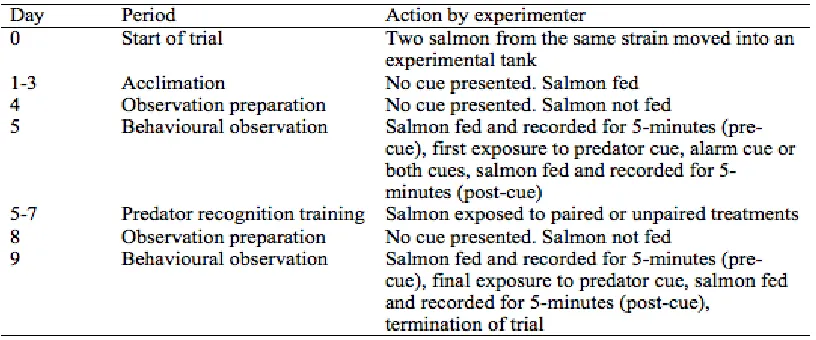
moved from a housing tank into an experimental tank (day 0). On days 1-3, salmon were
fed 100 mg of floating food (Corey Foods) between 10:00 and 11:00 AM. On day 4,
The first observations were collected on day 5. Between 10:00 and 11:00 AM, a digital
video camera was positioned above each experimental tank and individuals were given
10 minutes to acclimate to the presence of the video cameras. Individuals were then
recorded for 5 minutes, during which time they were provided with 50 mg of floating
food. Individuals were then exposed to alarm cue alone, predator cue alone, or both cues
together. The alarm cue was derived from the skin of juvenile salmon and the predator
cue was a belted kingfisher model (described in detail below). When exposed to the
alarm cue, 10 mL of cue was injected over 1 second into the tank via a fixed piece of
tubing located above the tank inflow. When exposed to the predator cue, the model was
presented at the upper edge of the tank for 5 minutes. Individuals were recorded for 5
minutes starting at the beginning of the presentation of a cue, during which time they
were provided with 50 mg of floating food. I term the first 5-minute recording, before the
presentation of any cue, the first observation pre-cue block, and the second 5-minute
recording, during the presentation of cues, the first observation post-cue block. The
pre-cue block measured baseline behaviour and the post-pre-cue block measured the behavioural
response to cues (behavioural measures are described below).
Predator recognition training began on day 5 and lasted a total of 3 days (i.e. from day 5
until day 7 of the experiment). Individuals that were exposed to the alarm cue and
predator cue together during the first behavioural observations were assigned to the
paired treatment, whereas individuals that were exposed to either cue alone were assigned
to the unpaired treatment. Individuals in the paired treatment were exposed to the
predator cue and alarm cue simultaneously, twice a day, at random intervals no less than
and alarm cue at separate times, twice a day for each cue, at random intervals no less than
60 minutes apart (Figure 2.2). All cues were presented between 10am and 5pm. On the
day after the training period (day 8), all fish were given 24 hours during which no cues
were presented and they were not fed.
Figure 2.2 Example schedules for paired and unpaired treatments of predator recognition
training of Atlantic salmon, Salmosalar.
On day 9, there was a second observation day, in which behaviour was recorded for 5
minutes in the pre-cue block as described above. All salmon were then exposed to the
predator cue alone, and behaviour was recorded for 5 minutes in the post-cue block as
described above. I term these recordings the second observation pre-cue block and
second observation post-cue block. Salmon were then euthanized with an overdose of
A summary of the training and observation timeline is included in Table 2.1. In total, I
examined 40 salmon from the LaHave strain (22 unpaired, 18 paired), 28 salmon from
the Sebago strain (14 unpaired, 14 paired), 28 salmon from the Saint-Jean strain (14
unpaired, 14 paired), and 18 salmon from the Mersey-LaHave strain (10 unpaired, 8
paired).
Table 2.1 Timeline of predator recognition training and behavioural observations in
Atlantic salmon, Salmo salar.
2.3
Behavioural measures
Each 5-minute block (first observation pre-cue, first observation post-cue, second
observation pre-cue, second observation post-cue) was scored for anti-predator response
by an observer who was blind to the timing and treatment using a stopwatch and tally
counter. Behaviour was scored separately for each fish in a pair. Four behaviours
commonly associated with anti-predator response were examined for each block: time
spent in shelter, time spent motionless, number of feeding acts, and number of aggressive
in shelter was calculated as the total amount of time within a 5-minute block that a
salmon spent with at least half of its body within the refuge. Time spent motionless was
calculated as the total amount of time within a 5-minute block that a salmon spent
stationary on the gravel bottom of a tank or within the refuge. Number of feeding acts
was calculated as the total number of floating food pellets consumed within a 5-minute
block. Number of aggressive acts was calculated as the total number of rapid movements
or biting motions directed towards another salmon within a 5-minute block.
2.4
Preparation of cues
As in previous studies on salmonids, alarm cue was derived from the skin of juvenile
Atlantic salmon. Salmon were euthanized using an overdose of MS-222; the skin was
removed, homogenized, and filtered through cheesecloth into water collected from the
housing tanks to a concentration of 10 mL water per 1 cm2 of skin (Ferrari et al., 2010a).
Alarm cue was prepared in 400 mL batches by pooling alarm cue produced by
individuals from all 4 strains and then frozen in 50 mL aliquots at -20C until needed
(Brown et al., 2013b).
The predator cue was a belted kingfisher model that was 20 cm tall. When presented to
salmon in an experimental tank, the model was placed on a raised stand such that the top
12 cm of the model (most of the body and head) was visible over the edge of the tank
Figure 2.3 Belted kingfisher model that was displayed to salmon.
2.5
Statistical analysis
Body mass and fork length were examined using a linear model with strain and treatment
as fixed factors. I then calculated overall condition of individuals using the residual from
a regression of body mass and fork length. Condition was then also examined in a linear
model with strain and treatment as fixed factors. For both models, a Tukey’s HSD test
was used to investigate differences in among populations.
The first observation was used to determine the naïve response to the cues. Each of the
four behaviours (time spent in shelter, time spent motionless, number of feeding acts, and
factors: strain (LaHave, Sebago, Saint-Jean, and Mersey-LaHave), treatment (alarm cue,
predator cue, or both cues), the treatment × strain, and as a covariate: body mass. The
same model was used for both first observation pre- and post-cue behaviours. Similar
models were used to examine the behavioural response to predator cue following
training, for the second observation pre- and post-cue blocks, differing only in that the
treatments were paired and unpaired. In all models pair ID, a unique identifier for each
pair of fish, was included, nested within treatment and strain, to control for any
interaction between two fish in an experimental tank (results not presented). For all
models the number of feeding acts and number of aggressive acts were logarithm
transformed log10(number +1) to achieve normality.
Additionally, the four behavioural measures were combined into a single variable to
capture overall activity. To do so, I first calculated a Z-score value for each behaviour
based on combined observations across all time periods. These Z-scores were combined
into an index of overall activity using score(log(number of feeding acts+1)) +
Z-score(log(number of aggressive acts+1)) – Z-score(time spent in shelter) – Z-score(time
spent motionless). In general, positive activity values were associated with high feeding
and aggression and low time spent in shelter or motionless. The same linear models
3
Results
3.1
Physical differences among salmon
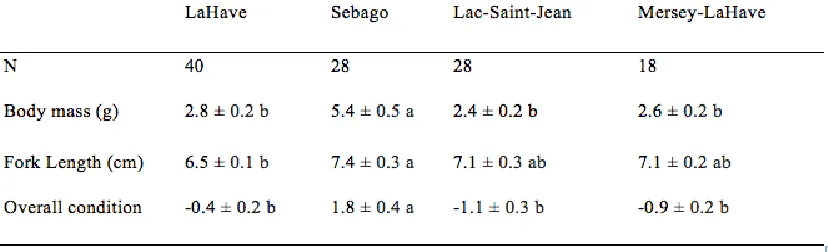
Body mass, fork length, and overall condition of each Atlantic salmon was recorded
following the final exposure to the predator cue (Table 3.1). There were significant
differences in body mass among strains (F3,67 = 18.34, p < 0.01). Sebago salmon were on
average 112% heavier than the other three strains. There was also a significant difference
in fork length among strains, with the Sebago salmon significantly longer than LaHave
salmon, and Saint-Jean and Mersey-LaHave salmon intermediate in length (F3,67 = 3.07, p
= 0.03). On average Sebago salmon were 15% longer than LaHave salmon. Sebago
salmon were also in significantly better condition than the three other strains of salmon
(F3,67 = 17.64, p < 0.01). There were no significant differences in body mass, fork length,
or condition for salmon assigned to different treatments (all p > 0.05).
Table 3.1 Descriptive statistics of body mass, fork length, and overall condition as
calculated as the residuals of the regression of body mass and fork length of four Atlantic
3.2
Innate response to cues
Examining overall Atlantic salmon activity on the first observation day during the
pre-cue block, there was a significant effect of strain on activity (Table 3.2; Figure 3.1).
Mersey-LaHave salmon had lower activity levels than all other strains. As expected, there
was no significant difference in activity among salmon assigned to different treatments
prior to the onset of those treatments (i.e. before the first presentation of the cues). To
investigate the innate anti-predator response and confirm the presence of an innate
response to alarm cue, the post-cue block on the first observation day was examined.
There was a significant effect of treatment on activity (Table 3.2; Figure 3.1). Exposure
to alarm cue either alone or paired with the predator cue resulted in lower activity levels
than exposure to the predator cue alone, indicating an innate response to the alarm cue
but not to the predator cue (Table 3.2; Figure 3.1). There was a significant effect of strain
on activity. Mirroring the trends in the pre-cue block, Mersey-LaHave salmon were less
Figure 3.1 Innate and learned anti-predator response of Atlantic salmon, Salmo
salar, as measured by activity levels. Atlantic salmon, Salmo salar, activity as
calculated through combined Z-score of four behavioural measures (time spent
motionless, time spent in shelter, number of feeding acts, and number of aggressive acts)
for each individual. Activity is presented on the first observation day when salmon were
post-cue block. Also presented is activity on the second observation day when salmon
were exposed to the predator cue following a five day predator recognition training
protocol in the (c) pre-cue block and (d) post-cue block. Mersey-Lave salmon were
significantly less active than all other strains. After the first exposure to cues, salmon
exposed to alarm cue had significantly lower activity levels than salmon exposed to the
predator cue, demonstrating an innate response to alarm cue. Following training, salmon
from the Sebago strain that had received paired training had significantly lower activity
than Sebago salmon from the unpaired training, indicating that only Sebago salmon had
acquired a learned anti-predator response.
Examining the behaviour of the Atlantic salmon on the first observation day during the
pre-cue block, there was a significant effect of strain on time spent motionless and
number of feeding acts (Table 3.1; Figure 3.2). Mersey-LaHave salmon generally spent
more time motionless and made fewer food strikes than all other strains. The
Mersey-LaHave salmon were motionless for an average of 113 seconds longer per block and
made 0 feeding acts compared to the average of 8 feeding acts per block in the other
strains. There was no significant effect of strain on time spent in shelter or number of
aggressive acts. There was a significant effect of body mass on number of aggressive acts
and activity, with larger salmon showing more aggressive acts and more activity than
smaller salmon. There was no significant effect of body mass on time spent in shelter,
time spent motionless, and number of feeding acts. There was no significant interaction
between strain and treatment for any behaviour. As expected, there were no significant
behavioural differences among salmon assigned to different treatments prior to the onset
Figure 3.2 Four measures of Atlantic salmon, Salmo salar, innate anti-predator
response. Atlantic salmon, Salmo salar, behaviour on the first observation day when
salmon were first exposed to alarm cue, predator cue or both cues. Presented are the per
individual mean (± SE) of four measures in both the pre- and post-cue block: (a) pre-cue
time spent in shelter, (b) post-cue time spent in shelter, (c) pre-cue time spent motionless,
(d) post-cue time spent motionless (e) pre-cue number of feeding acts, (f) post-cue
number of feeding acts, (g) pre-cue number of aggressive acts, (h) post-cue number of
aggressive acts. Mersey-LaHave salmon spent significantly more time motionless and
made fewer feeding acts compared to all other strains. After exposure to alarm cue, there
were significantly fewer feeding acts than after exposure to the predator cue, indicating
and innate response to alarm cue but not the predator cue.
To investigate the innate behavioural anti-predator response and confirm the presence of
an innate response to alarm cue, the post-cue block on the first observation day was
examined. There was a significant effect of treatment on number of feeding acts (Figure
3.2). Exposure to alarm cue either alone or paired with the predator cue resulted in
significantly fewer feeding acts than exposure to the predator cue alone (Table 3.2;
Figure 3.2). After exposure to alarm cue, either paired or alone, salmon made an average
of 2.1 food strikes per block, compared to the average of 6.7 food strikes per block after
exposure to the predator cue alone. This reduction in feeding represents a 74% decrease
in the number of feeding acts relative to the pre-cue block and indicates that the alarm
cue elicited an innate behavioural response. In contrast, after exposure to the predator cue
there was only a 16% decrease in number of feeding acts per block, indicating that the
of strain on time spent motionless, and number of feedings acts. Mirroring the trends in
the pre-cue block, Mersey-LaHave salmon spent significantly more time motionless and
fed less after exposure to any cue than the other three strains (Table 3.2; Figure 3.2).
Mersey-LaHave salmon were motionless for an average of 132 seconds longer per block
and made 0 feeding acts compared to the average 4 feeding acts per block in the other
strains. For time spent motionless, there was no significant effect of either treatment or
body mass and no significant interaction between strain and treatment. There was no
significant effect of body mass and no significant interaction between strain and
treatment for number of feeding acts. For activity, there was no significant effect of body
mass and no significant interaction between strain and treatment. There were no
significant factors in the model examining both time spent in shelter and number of
aggressive acts.
3.3
Learned response to predator cue
Examining overall Atlantic salmon activity on the second observation day, following
training, during the pre-cue block there was a significant effect of strain on activity.
Mersey-LaHave salmon were less active than all other strains (Table 3.3; Figure 3.1).
There was a significant effect of body mass on activity; specifically, larger salmon were
more active (Table 3.3). There was no significant interaction between strain and
treatment for activity. As expected, there was no behavioural difference in activity levels
among salmon assigned to different treatments before exposure to the predator cue. To
test the hypothesis that captive breeding affected the learned anti-predator response, the
post-cue block on the second observation day was examined. There was a significant
by the Mersey-LaHave strain being less active than all other strains. There was also a
significant effect of body mass on activity, where larger salmon were more active than
smaller salmon. There was a significant interaction between strain and treatment on
activity (Table 3.3). Specifically, based on pairwise comparisons the only significant
difference between the paired and unpaired treatments occurred in the Sebago strain [F1,
67 = 4.62, p = 0.039] where salmon were more active in the unpaired treatment than in the
paired treatment, although two of the other three strains also showed a trend in which
activity was lower after exposure to the predator cue in the paired treatment than in the
unpaired treatment (Figure 3.1). This reduction in activity indicates that the Sebago strain
was the only strain that showed an ability to display a learned response to the predator
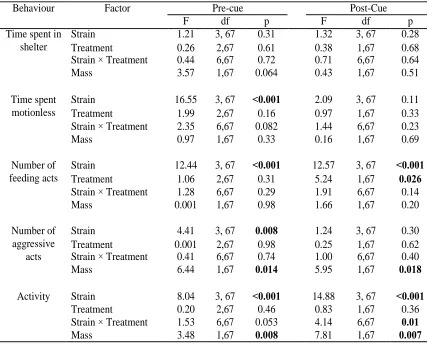
Table 3.3 Statistical analysis of behaviour in four Atlantic salmon, Salmo salar, strains on the day of the final exposure to the predator cue.
Examining the behaviour of Atlantic salmon on the second observation day, following
training, during the pre-cue block there was a significant effect of strain on time spent
motionless, number of feeding acts, and number of aggressive acts. Mersey-LaHave
salmon spent more time motionless, fed less, and made fewer aggressive acts than all
other strains (Table 3.3; Figure 3.3). Compared to the other strains, Mersey-LaHave
salmon were motionless for an average of 23 seconds longer per block, made 12 fewer
feedings acts per block and made 0 aggressive acts compared to the average 0.2
aggressive acts per block of the other strains. There was a significant effect of body mass
Behaviour Factor Pre-cue Post-Cue
F df p F df p
Time spent in shelter
Strain 1.21 3, 67 0.31 1.32 3, 67 0.28 Treatment 0.26 2,67 0.61 0.38 1,67 0.68 Strain × Treatment 0.44 6,67 0.72 0.71 6,67 0.64 Mass 3.57 1,67 0.064 0.43 1,67 0.51
Time spent motionless
Strain 16.55 3, 67 <0.001 2.09 3, 67 0.11 Treatment 1.99 2,67 0.16 0.97 1,67 0.33 Strain × Treatment 2.35 6,67 0.082 1.44 6,67 0.23 Mass 0.97 1,67 0.33 0.16 1,67 0.69
Number of feeding acts
Strain 12.44 3, 67 <0.001 12.57 3, 67 <0.001 Treatment 1.06 2,67 0.31 5.24 1,67 0.026 Strain × Treatment 1.28 6,67 0.29 1.91 6,67 0.14 Mass 0.001 1,67 0.98 1.66 1,67 0.20
Number of aggressive
acts
Strain 4.41 3, 67 0.008 1.24 3, 67 0.30 Treatment 0.001 2,67 0.98 0.25 1,67 0.62 Strain × Treatment 0.41 6,67 0.74 1.00 6,67 0.40 Mass 6.44 1,67 0.014 5.95 1,67 0.018
Activity Strain 8.04 3, 67 <0.001 14.88 3, 67 <0.001 Treatment 0.20 2,67 0.46 0.83 1,67 0.36 Strain × Treatment 1.53 6,67 0.053 4.14 6,67 0.01 Mass 3.48 1,67 0.008 7.81 1,67 0.007
on number of aggressive acts; specifically, larger salmon made more aggressive acts
(Table 3.3). There was no significant effect of body mass and no significant interaction
between strain and treatment for time spent motionless and number of feedings acts.
There was no significant interaction between strain and treatment for activity and no
significant effects for time spent in shelter. As expected, there were no behavioural
differences among salmon assigned to different treatments before exposure to the
Figure 3.3 Four measures of Atlantic salmon, Salmo salar, learned anti-predator
response. Atlantic salmon, Salmo salar, behaviour on the second observation day when
salmon were exposed to the predator cue following a five day predator recognition
training protocol. Presented are the per individual mean (± SE) for four measures in both
the pre- and post-cue block: (a) pre-cue time spent in shelter, (b) post-cue time spent in
shelter, (c) pre-cue time spent motionless, (d) post-cue time spent motionless (e) pre-cue
number of feeding acts, (f) post-cue number of feeding acts, (g) pre-cue number of
aggressive acts, (h) post-cue number of aggressive acts. Mersey-LaHave salmon spent
significantly more time motionless, made fewer feeding acts, and fewer aggressive acts
than all other strains. After the paired training treatment, salmon exposed to the predator
cue displayed significantly fewer feeding acts compared to salmon from the unpaired
training treatment, indicating a learned anti-predator response.
Examining the behaviour of Atlantic salmon during the post-cue block on the second
observation day there was a significant effect of strain on number of feeding acts (Table
3.3). Similar to the pre-cue block, the effect was driven by the Mersey-LaHave strain
feeding less than all other strains, making an average of 7 fewer feedings acts per block
than the other strains (Table 3.3). There was also a significant effect of body mass on
number of aggressive acts, where larger salmon made more aggressive acts than smaller
salmon. There was a significant effect of treatment on number of feeding acts; exposure
to the predator cue resulted in fewer feeding acts in the paired treatment but not the
unpaired treatment (Table 3.3; Figure 3.3). In the paired treatment salmon made an
average of 7 feedings strikes per block compared to 12 feeding strikes per block made in
represented a 50% reduction in number of feeding acts per block made in the pre-cue
block. This reduction in feeding indicates that after the paired training treatment salmon
learned to respond to a predator cue that previously did not elicit a response. In contrast,
after the unpaired treatment there was only a 14% reduction in number of feeding acts,
indicating that there was no learning after the unpaired treatment. There was no
significant effect of body mass and no significant interaction between strain and
treatment for number of feedings acts. Apart from body mass, there were no significant
effects for number of aggressive acts and there were no significant effects for time spent
4
Discussion
4.1
Innate anti-predator response
Exposure to alarm cue commonly elicits an innate behavioural response, often resulting
in decreased movement and feedings (Brown, 2003). Here, I found that an alarm cue
derived from skin homogenates elicited an innate response in four strains of Atlantic
salmon. This is consistent with my prediction that, due to the mechanism of release,
damage-induced alarm cues have been a consistent signal of threat over an evolutionary
timescale and that the response would be maintained despite captive breeding. Other
studies in salmonids have similarly shown that an innate response to skin-derived alarm
cue is conserved across multiple generations (reviewed by: Ferrari et al., 2010b),
including in hatchery-raised salmonids (Brown & Smith, 1998; Berejikian et al., 2003;
Jackson & Brown, 2011). Indeed, one study of rainbow trout found an innate response to
alarm cue even after 100 years (~15 generations) in a predator free environment
(Scheurer et al., 2007). In my study, presentation of alarm cue was associated with a
reduction in the number of feeding acts and overall activity, but there was no effect of the
cue on time spent in shelter, time spent motionless, or number of aggressive acts.
Previous studies of the innate response to alarm cue in Atlantic salmon have shown that
time spent in shelter and time spent motionless are associated with an anti-predator
response (Houde et al., 2010; Jackson & Brown, 2011). It is possible that feeding
behaviour shows more drastic changes in the anti-predator response and is a more
consistent response across salmonids than movement and social interactions, which may
Innate responses to direct predator cues are generally more variable among species than
the innate response to alarm cues (Hawkins et al., 2004; Brown & Smith, 1998; Ferrari et
al., 2010a). For example, an innate response to odour cues of a predatory fish has been
observed in some studies of fishes (Hawkins et al., 2004; Jackson & Brown, 2011), but
not in others (Brown & Smith, 1998; Ferrari et al., 2010a). I predicted that due to the
migration of anadromous fish and natural shifts in predator communities over time,
predator cues would not be a consistent signal of threat, both within and between
generations, leading to the absence of an innate response to direct predator cues in
Atlantic salmon. Consistent with this prediction, I found no innate response to an avian
predator cue in four strains of Atlantic salmon. Interestingly, avian predator cues were
associated with an innate anti-predator response in previous studies of Atlantic salmon
(Houde et al., 2010; de Mestral & Herbinger, 2013). However, these studies of avian
predators had the predator model strike the surface of the water, integrating a disturbance
component to the presentation of the avian predator cue that was not present in my study.
Taken with my data, I suggest the disturbance and not the visual cue of the bird actually
elicited the behavioural response in the Atlantic salmon. As predicted, I found that there
was an innate behavioural response to the alarm cue but no innate response to the
predator cue.
4.2
Effect of captive breeding on the learned anti-predator
response
Most studies on learned anti-predator responses pair a stimulus that elicits an innate
behavioural response (e.g. an alarm cue), with a stimulus that does not elicit an innate
the presentation of a predator cue that previously did not elicit a response subsequently
elicits the original innate behavioural response. The consistent differences in innate
response to alarm cue and predator cue that I observed allowed me to assess learning
across the four strains of Atlantic salmon that I used. I predicted that after multiple
generations without predation, captive-bred Atlantic salmon would have reduced ability
to learn to respond to predators. However, I found no differences among the fours strains
of Atlantic salmon that could be attributed to captive breeding history. Specifically, the
Mersey-LaHave strain did not show an increased ability to learn compared to the LaHave
strain, and while the Sebago strain did show a greater ability to learn than the LaHave
strain the Saint-Jean strain did not differ from the LaHave strain. Additionally, the
Sebago strain only showed evidence of learning when examining overall activity and
feeding behaviour, further reinforcing the idea that foraging behaviour is more drastically
changed in the anti-predator response than movement and social interactions. My data
represent the first explicit test of the effect of captive breeding on the learned
anti-predator response, although a number of studies that have shown a learned anti-anti-predator
response have been performed using captive-bred salmonids (e.g. Berejikian et al., 2003;
Hawkins et al., 2008; Brown et al., 2013a). It is surprising that although learning has been
shown in captive-bred salmonids with a wide range in number of generations spent in
captivity only one of the strains studied showed an ability to learn to recognise predators.
It is possible that the effect of captive breeding on anti-predator learning depends on the
nature of the predator cue. Previous demonstrations of learning in captive-bred salmonids
all used an odour cue of a predator (e.g. Jackson & Brown, 2011); in contrast, my study
associated with hatchery feeding lead to a reduced sensitivity to these cues, as for
example appears to be the case in a study that showed that captive breeding reduced the
innate response of Atlantic salmon to overhead predator cues (de Mestral & Herbinger,
2013). Alternatively, the Mersey-LaHave strain was only recently brought into captive
environments and any difference in learning ability may have been masked by a
disruption to normal behaviour caused by the captive environment. Similarly, Metcalfe et
al. (2003) found that after the first generation of captive breeding, Atlantic salmon were
less active than both wild-caught and second-generation captive-bred salmon. It is
possible that the low baseline activity in the Mersey-LaHave strain masked the
anti-predator response. Overall, it remains unclear if captive breeding has an effect on the
ability of individuals to learn to respond to predators.
4.3
Other causes of population differences in the learned
anti-predator response
Factors other than captive breeding might also affect cross-population differences in the
ability to learn. Such factors are implicated in my study, because the Sebago strain
showed a greater capacity to learn than the Saint-Jean strain, despite comparable captive
breeding histories. If anti-predator learning depends on body size or developmental stage,
then the greater body mass and condition of the Sebago strain compared to the Saint-Jean
strain could explain the difference in learning ability. However, in a study of rainbow
trout the acquisition of a learned anti-predator response was not linked to growth rate or
body size, and in fact, larger fish had lower retention of the learned response (Brown et
al., 2011). Previous work investigating the ontogeny of the learned anti-predator response
although learning was age dependant and occurred only when salmon were at least
four-months old (Hawkins et al., 2008). All the fish used in my experiment were older than
four months, and based on previous studies body size itself is unlikely to explain the
differences in learning ability I observed among populations. If body size cannot explain
cross-population differences in the ability to learn, then other factors must be considered
Another factor that might explain the difference in learned anti-predator responses
between the Sebago and Saint-Jean strains could result from population-level differences
in the predator communities that these two populations have evolved with. Bird counts
from the eBird Survey (Sullivan et al., 2009), which spans North America and uses
volunteer reporting of bird sightings, show no major differences in the summer
abundance of major avian predators of Atlantic salmon (belted kingfishers and common
mergansers) across the populations used in my study. However, the Saint-Jean and
Sebago populations do show temporal differences in the abundance of belted kingfishers.
Sebago Lake is farther south than Lac-Saint-Jean, and belted kingfishers are present at
Sebago Lake year-round whereas belted kingfishers are only present at Lac-Saint-Jean
between April and October (Sullivan et al., 2009). Salmon are smallest and most
vulnerable to avian predation early in the year (Cairns, 2001) and the greater abundance
of belted kingfishers at Sebago Lake during this time of year could lead to a
predisposition of Sebago salmon to respond to belted kingfisher cues. Indeed, previous
work in mammals has shown that individuals are innately more skilled at detecting visual
cues of native predators than of neutral objects (Shibasaki & Kawai, 2009). Regardless of
the cause, I present some of the first evidence that predator recognition learning differs