SYMBOLICS, INC.
This document Is COMPANY CONFIDENTIAL. It contains extremely sensitive and proprietary information. Reasonable and
appropriate care should be taken to protect this tnformation. Copies of this document are Individually numbered with the reCipient's name recorded. You are responsible for your copy of this document. As newer versions of this document are created, older versions will be collected for centralized destruction. Under no cirCUmstances 15 this document to be copied. If you need to have someone added to the distribution list or if more
copies 'of this document are needed. contact Linda Birch
I
Symbolics, Inc.
Table of Contents
Page
1. Lisp-Machine Data Types 1
1.1 Introduction to Lisp-Machine Objects 2
1.1.1 Memory Words 2
1.1.2 Classes of Stored Object Representations 3
1.1.3 Components of Stored Representations 6
1.1.4 Operand-Reference Classification 12
1.2 Data-Type Descriptions 13
1.2.1 Representations of Symbols 13
1.2.2 Representations of Instances and Related Data Types 14
1.2.3 Representation of Characters 17
1.2.4 Representations of Numbers 19
1.2.5, Representations of Lists 24
1.2.6 Representations of Arrays and Strings 30
1.2.7 I-Machine Array Registers 36
1.2.8 Representations of Functions and Closures 40
1.2.9 Instruction Representation 43
1.2.10 Program-Counter Representations 46
1.2.11 Representation of Locatives 46
1.2.12 Representation of Physical Addresses 46
1.3 Data~Type Code Assignments 48
1,3.1 Headers, Special Markers, and Forwarding Pointers 48
1.3.2 Number Data Types 48
1.3.3 Instance Data Types 49
1.3.4 Primitive Data Types 49
1.3.5 Special Marker for Garbage Collector 50
1.3.6 Data Types for Program Counter Values 50
1.3.7 Full·Word Instruction Data Types 51
1.3.8 Half-Word Instruction Data Types 51
1.4 Appendix: Comparison of 3600-Family and I-Machine Data 52 Representations
1.4.1 Array Differences 54
1.4.2 Compiled Function Differences 56
2. Memory Layout and Addressing 57
2.1 Address Space, 57
Symbolics, Inc.
2.1.2 Ephemeral Addresses 2.1.3 Unmapped Addresses 2.1.4 Wired Addresses
58 .58
59
2.1.5 Pages 59
2.2 GC Support 59
2.3 Address Translation 60
2.3.1 Page Hash Table 60
2.3.2 PHT Lookup Algorithm 63
2.3.3 Translation Algorithm 66
2.4 Appendix: Comparison of 3600-family and I-machine Memory Layout 69 and Addressing
3_ Macroinstruction Set
3.1 Introduction
3.1.1 Instruction Sequencing 3.1.2 Internal Registers
3.1.3 Explanation of Instruction DefInitions 3.2 The Instructions
3.2.1 List-Function Operations 3.2.2 Predicate Instructions 3.2.3 Numeric Operations
3.2.4 Data-Movement Instructions 3.2.5 Field-Extraction Instructions 3.2.6 Array Operations
3~2. 7 Block Instructions
3.2 . .8 Function-Calling Instructions 3.2.9 Binding Instructions
3.2.10 Catch Instructions
3.2.11 Lexical Variable Accessors 3.2.12 Instance Variable Accessors 3.2.13 Subprimitive Instructions
4. Function Calling, Message Passing. Stack-Group Switching
4.1 Stacks
4.1.1 Control Stack 4.1.2 Binding Stack 4.1.3 Data Stack
4,2 Registers Important to Function Calling and Returning 4.3 Function Calling
4.3.1 Starting a Function Call 4,3.2 Pushing the Arguments 4.3.3 Finishing the Call
4.4 Function Entry 257
4.4.1 Push-apply-args 259
4 .. 4.2 Pull-apply-args 261
4.4.3 Trapping Out of Entry and Restarting 266
4.5 Function Returning 266
4.5.1 Function Return Instructions 266
4.5.2 Frame. Cleanup 270
4.5.3 Value. Matchup 271
4.6 Catch, Throw and Unwind-Protect 271
4.7 Generic Functions and Message Passing 275
4.7.1 Flavor 276
4.7.2 Handler Table 276
4.7.3 Calling a Generic Function 277
4.7.4 Sending a Message 278
4.7.5 Accessing Instance Variables 278
4.8 Stack-Group Switching 280
4.9 Appendix: Comparison of 3600-Family and I-Machine Function- 282 Calling
5. Exception Handling 283
5.1 Traps in General 283
5.2 The Extra Stack 285
5.3 Trap Modes 285
5.4 Trap Vector 286
5.5 Exceptions 286
5.5.1 Error Traps 286
5.5.2 Instruction Exceptions 287
5.5.3 Arithmetic Traps 287
5.5.4 Memory Exceptions 289
5.5.5 Stack Overflow 290
5.5.6 Sequence Breaks 290
5.5.7 Preemption 291
5.5.8 Trace Traps 292
5.5.9 PULL-APPLY-ARGS Exception 293
5.5.10 FEP-mode Traps 293
5.5.11 Processor Faults 293
5.6 Trap Vector Layout 294
5.7 Reset and Init 295
5.8 Appendix: Comparison of 3600-Family and I-Machine Exception 295 Handling
.
Symbolics, Inc.
AO.1 Revision 0 Implementation Memory Features 297 AO.2 Revision 0 Implementation Instruction Features 298 AO.3 Revision 0 Implementation Function-Calling Features 300 ADA Revision 0 Implementation Exception Handling Features 300
APPENDIX B. Summary of Omitted 3600 Instructions 303
APPENDIX C. Notes on ICMachine Architecture History 305
APPENDIX D. Hints for Software Developers 309
0.0.1 Stack Groups on the I Machine 310
APPENDIX E. Notes on Future Implementations of the Ivory Chip 315
APPENDIX F. Instruction Classifications for Packed Instructions 317
F.l Formats 317
F.2 Operand-from-stack Instructions 317
F.3 10-hit-immediate Instructions 319
FA Encodings 321
Index 325
List of Figures
Figure 1. Classes of stored object representations. 4
Figure 2. Three types of object references. 7
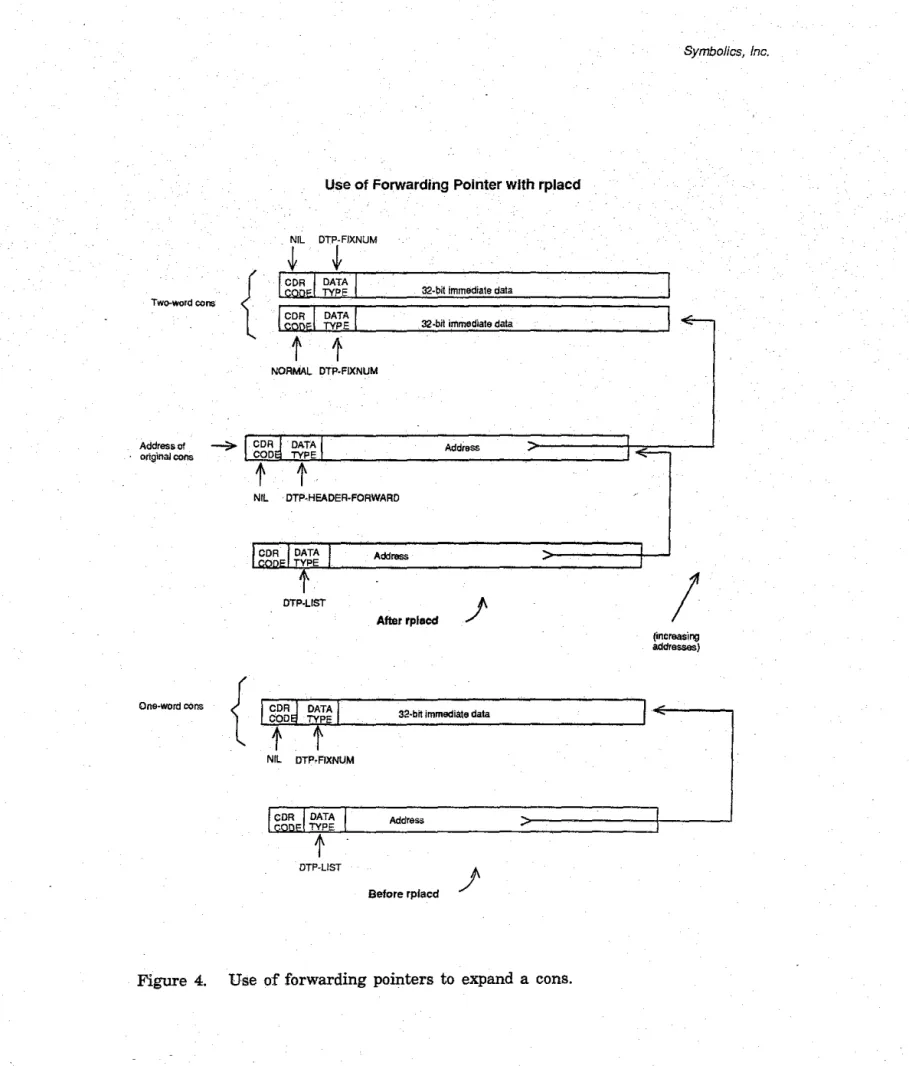
Figure 3. Use of forwarding pointers to move an array. 9 Figure 4. Use of forwarding pointers to expand a cons. 11
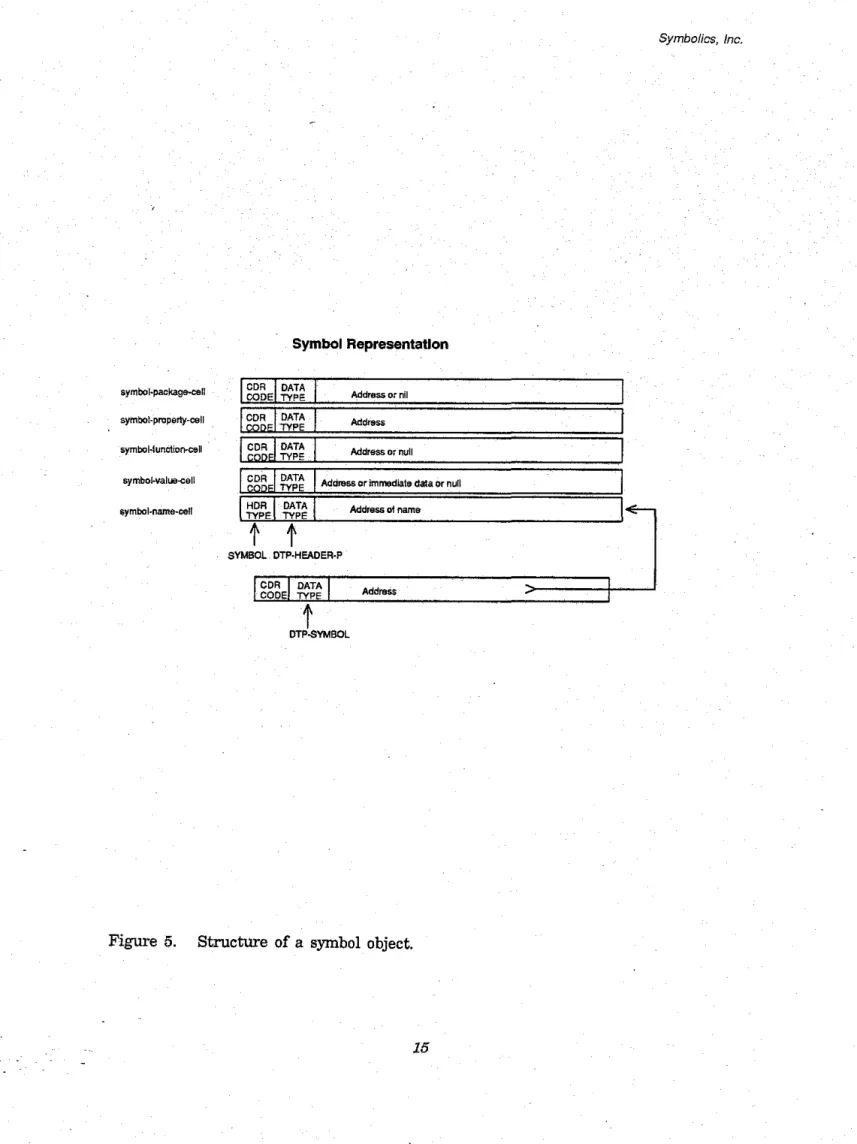
Figure 5. Structure of a symbol object. 15
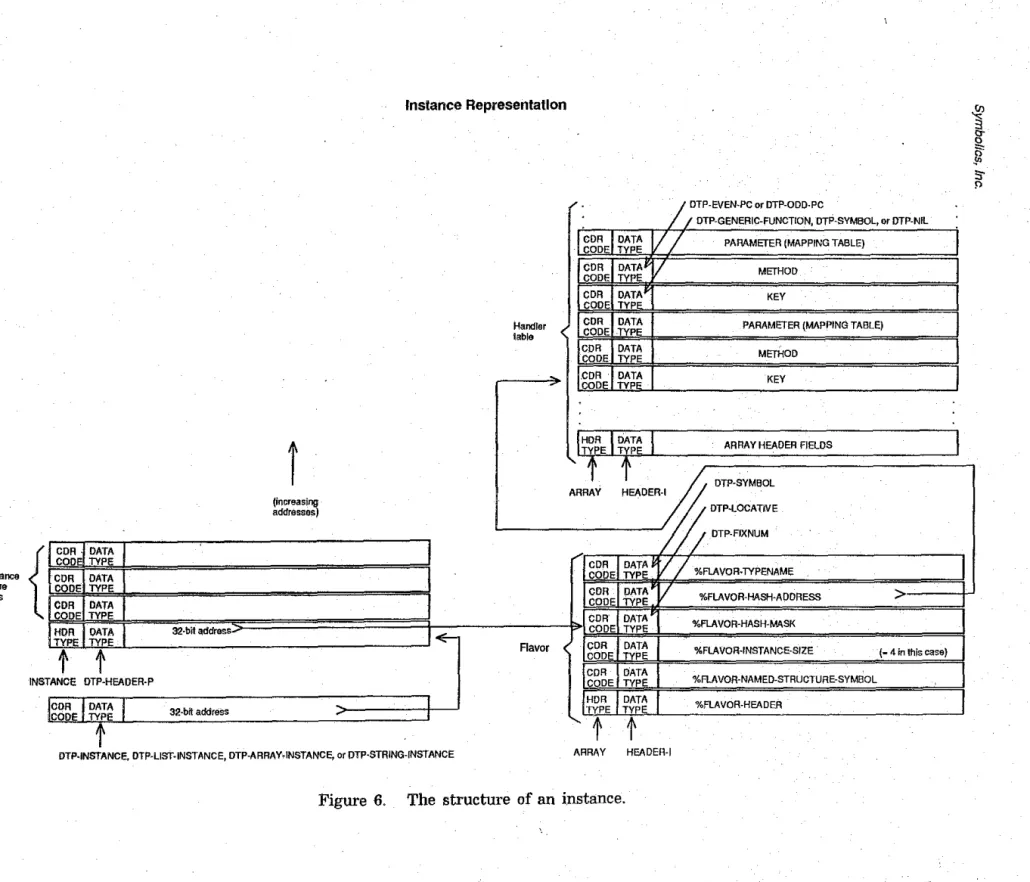
Figure 6. The structure of an instance. 18
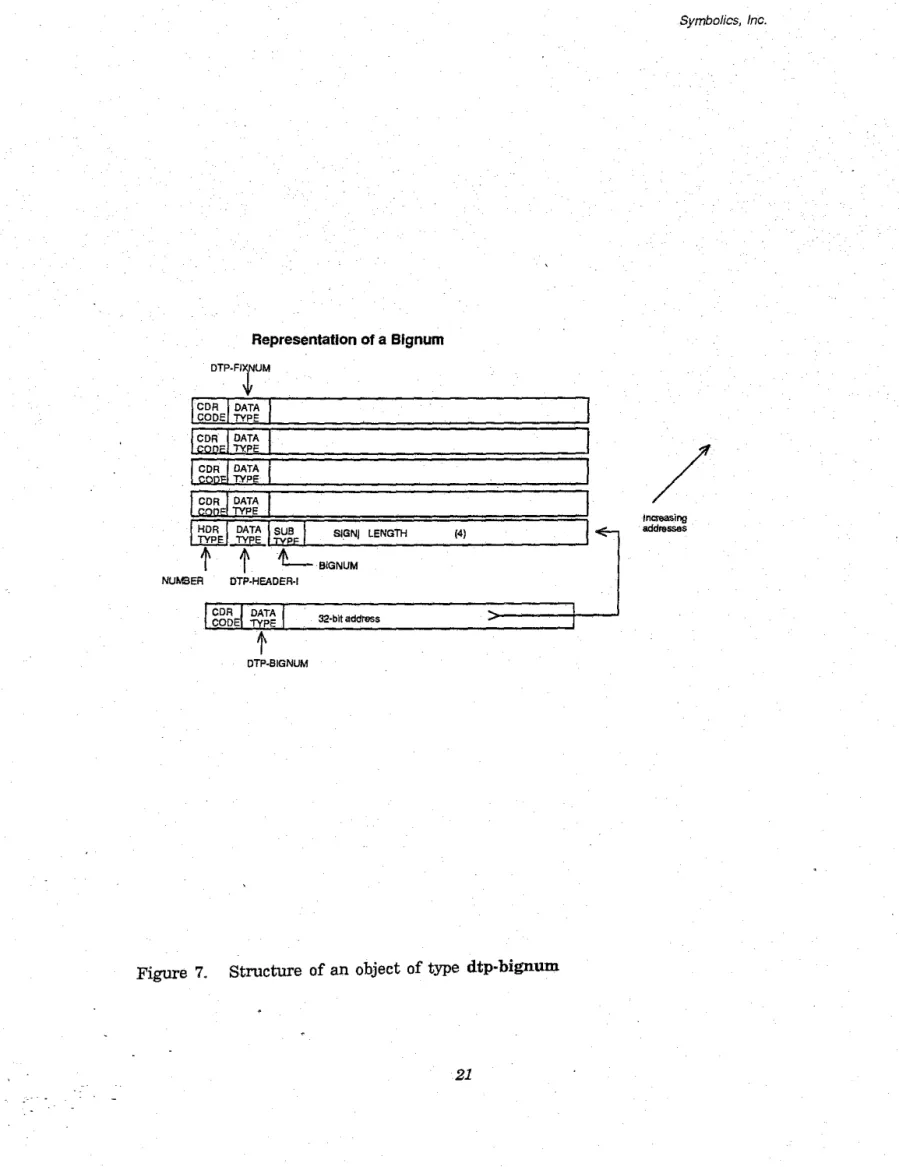
Figure 7. Structure of an object of type dtp-bignum 21
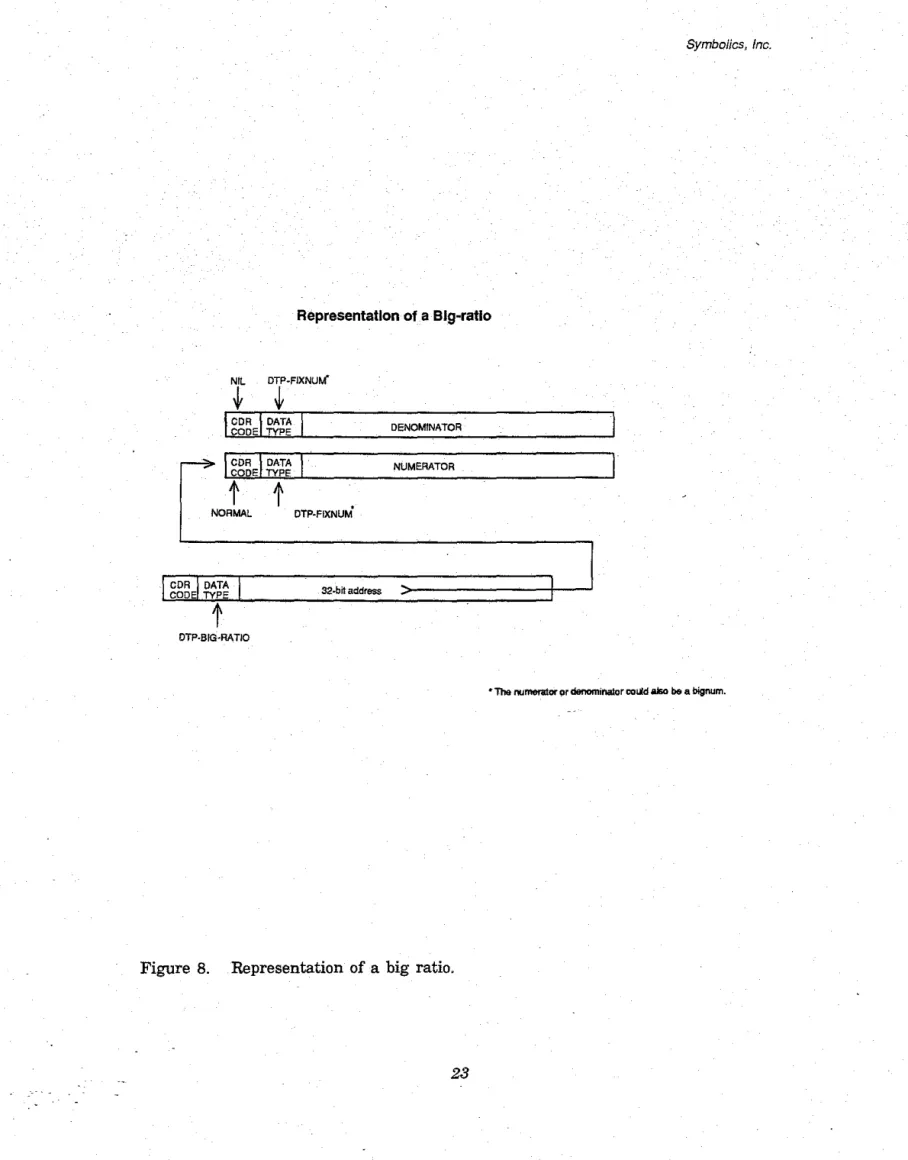
Figure 8. Representation of a big ratio. 23
Figure 9. Representation of a double-precision floating-point number. 25
Figure 10. Representation of a complex number. 26
Figure 11. Ordinary and compact list structures. 28
Figure 12. An object reference to thecddr of a list. 29 Figure 13. Short-prefix arrays with and without leaders. 33
Figure 14. A two-dimensional array. 35
Figure 15. A simple displaced array. 37.
Figure 16. A one-dimensional array indirected to a two-dimensional array. 38
Figure 17. The structure of a compiled function. 42
Figure 18. The structure of a lexical closure. 44
Figure 19. The structure of a dynamic closure. 45
Figure 20. Comparison of array preflx structures. 55
Figure 21. I-machine instruction formats. 80
. Figure 22. An I-machine control stack frame . 243
Figure 23. The stack at the end of a start-call instruction 252 Figure 24. The stack after completion of the flnish-call instruction 256
Figure 25. The argument matchup algorithm 260
Figure 26. The push-apply-args operation 262
Figure 27. The pull-apply-args operation 263
Symbolics, Inc.
List of Tables
Table 1. Header Types 8
Table 2. Valid Array Types for Byte-Packing Values 40
Table 3. Headers, Special Markers, and Forwarding Pointers 48
Table 4. Number Data Types 49
Table 5. Instance Data Types 49
Table 6. Primitive Data Types 50
Table 7. Special Marker for Garbage Collector 50
Table 8. Data Types for Program Counter Values 51
Table 9. Full-Word Instruction Data Types 51
. Table 10. Half-Word Instruction Data Types 52
Table 11. I-Machine Internal Registers 76
Table 12. I-Machine Instruction Formats 78
1. Lisp-Machine Data Types
****************************************************** *************~************
This me is confidential. Don't show it to anybody, don't hand it out to people, don't give it to customers, don't hardcopy and leave it lying around, don't talk about it on airplanes, don't use it as sales material, !lon't give it as background to TSSEs, don't show it off as an example of our (erodable) technical lead, and don't let our competition, potential competition, or even friends learn all about it. Yes, this means you. This notice is to be replaced by the real notice when someone defines what the real notice is .
. ********************************************************************************
The purpose of this chapter is to categorize and define all the objects that occur in I-machine memory, both visible and invisible. The categorization of a storage object is done according to its data type as specified by its type code. The definitions are presented in order by Lisp-object type.
The essence of I·machine architecture is its support of the execution of the Lisp language at the hardware level. This dictates the salient features of individual archltectural components. In particular, I-machine data representations reflect the fact that, in a Lisp machine, every datum is a Lisp object. Every word in memory therefore contains either a Lisp object reference or part of the stored
representation of a Lisp object. (The only exceptions are forwarding pointers and special markers. "Invisible" to ordinary Lisp code, these are used primarily for system memory management, including garbage collection.)
I-machine architecture is fully type coded: every word in memory has a data-type field. The function of the data-type encoding, to be described in this chapter, is to allow I-machine hardware to discriminate between the types of data it is operating on in order to handle each appropriately. More information in how I-machine instructions use different types of data is contained in another chapter. See the section "Macroinstruction Set."
The chapter f'rrst introduces the I-machine's basic storage unit. It then lists the different ways that a Lisp object can be stored in memory and describes the components of these representations. Note the interrelation between object references and stored representations of objects: while a stored representation is the target of an object reference, it can also contain object references as part of
its structure. This relationship reflects the nature of the Lisp language.
As part of its introduction to stored representations, the chapter discusses those stored objects that are not object references, including those that are invisible.
Symbolics, Inc.
used in have not yet been defined. The general overview of data types
encountered in I-machine memory makes forward references to some structures necessary. The reader can make use of the cross references supplied to help clarify these sections.
After the introduction, the body of the chapter describes and defines the structure of each of the Lisp objects that the I-machine architecture accommodates with a specifically assigned data type. The concluding section summarizes the data-type information.
1.1 Introduction to Lisp-Machine Objects
1.1.1 Memory Words
1.1.1.1 Length and Format
Words are the ba&ic unit of storage on the I machine. Every item in memory, including object references and object representations, is made up of one or more words. Whenever we refer to an address, it is the address of some word. More information on addresses is available elsewhere. See the section "Memory Layout and Addressing."
A word contains 40 bits, which are assigned to the following fields:
Position Length
<39:38> 2 bits <37:32> 6 bits <31: B> 32 bits
Field Name
Cdr Code
Data Type
Address or Immediate Data
+---+---+---.... ---+
ICDRI TYPE ADDRESS/DATA
+---+---+---+
31 B
1.1 .1.2 Fields
The data-type field indicates what kind of information is stored in a word. Each Lisp object referenced by its own assigned data type is explained in detail in the data-type section. See the section "Data-tYPe Defmitions." The functions of data types that do not serve as Lisp object references are described in an introductory section. See the section "Components of Stored Representations."
The address or immediate data field is interpreted according to the data type
or
the word. This field contains either the address of the stored representation of an. used in have not yet been defmed. The general overview of data types
encountered in I-machine memory makes forward references to some structures necessary. The reader can make use of the cross references supplied to help clarify these sections.
After the introduction, the body of the chapter describes and defines the structure of each of the Lisp objects that the I-machine architecture accommodates with a specifically assigned data type. The concluding section summarizes the data-type information.
1.1 Introduction to Lisp-Machine Objects
1.1.1 Memory Words
1.1.1.1 Length and Format
Words are the basic unit of storage on the I machine. Every item in memory, including object references and object representations, is made up of one or more words.' Whenever we refer to an address, it is the address of some word. More information on addresses is available elsewhere. See the section "Memory Layout and Addressing."
A word contains 40 bits, which are assigned to the following fields:
Position Length
<39:38> 2 bits <37:32> 6 bits <31:8> 32 bits
Field Name
Cdr Code Data Type
Address or Immediate Data
+---+---+---+
ICDRI TYPE ADDRESS/DATA
+---+---+---+
39 37 31
Words in actual physical memory may be more than 40 bits wide to allow for parity or ECC schemes. The architecture does not require the existence of parity or ECC nor does it specify any specific ECC algorithm. Such information and its implications are part of the documentation of each implementation and of the system units that support the implementaticm.
1.1.1.2 Fields
object, or the actual representation of an object. This is explained in the sections covering the individual data types.
The code field is used for various purposes. For header data types, the
cdr-code field is used as an extension of the data-type field. For stored
representations of lists, the contents of this field indicate how the data that constitute the list are stored. Other uses of the cdr-code field are for instruction sequencing. Use
ot
the cdr code is explained in the sections on lists, headers, and compiled functions.1_1.2 Classes of Stored Object Representations
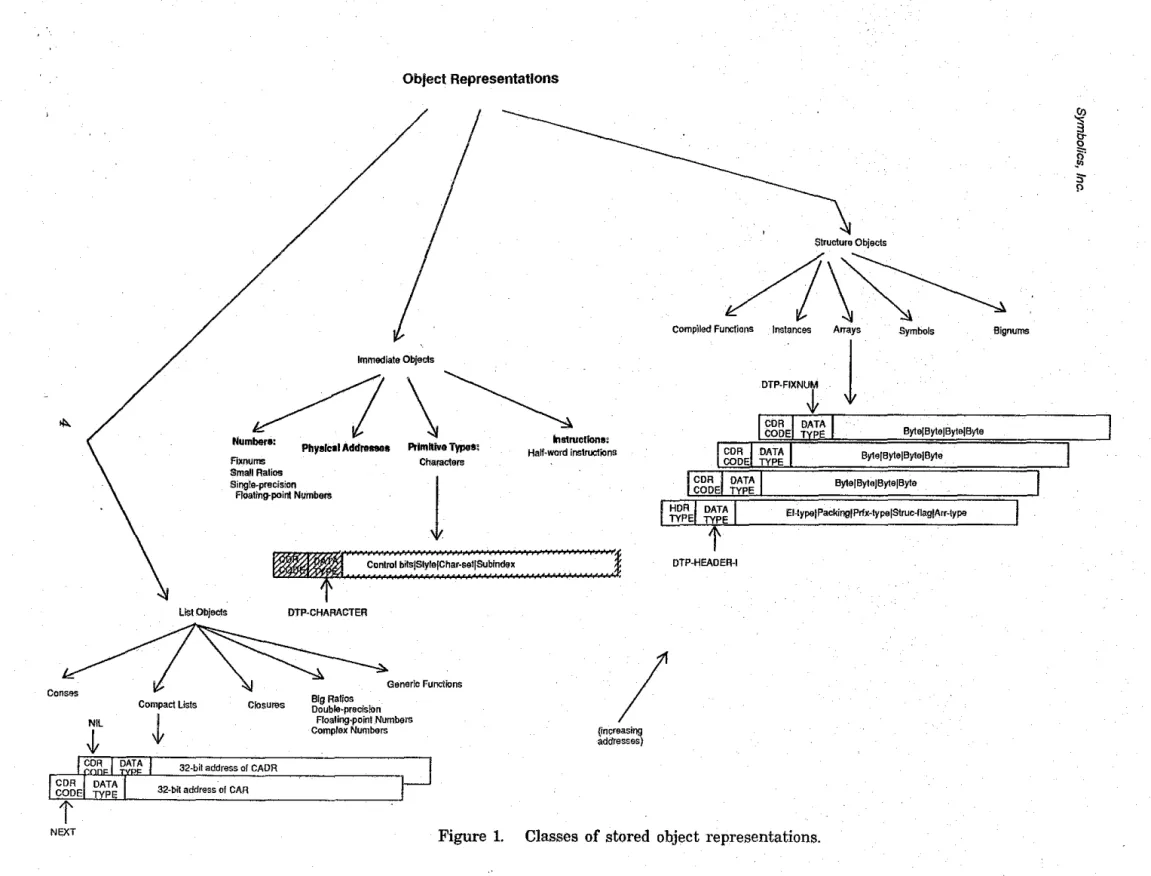
Figure 1 illustrates the ways in which objects are represented .
. The storage structures for Lisp objects are introduced here so that the reader will be able to see how the various data types function within them.
There are three fundamentally different ways that Lisp objects are stored in memory. An object can be stored
• as a list,
• as immediate data,
• or as a structure.
A list object is an object built out of one or more conses. Refer to the Reference Guide to Symbolics-Lisp for the' definition of a cons. The representation consists
of a block of memory words strung together by means of the cdr codes. Often the block consists of only one or two words, so it is important to avoid the overhead of having an extra header word: this is why list representation and structure
representation are different. The following types of objects have list representations:
conses, lists, big ratios,
double-precision floating-point numbers, complex numbers,
dynamic closures, lexical closures, and generic functions
Note that there is a difference between the concept of a list as a type of structure and the concept of the data type dtp-list. All the above data types use list
>!>. Conses NIL
t
NEXT list Objeels Compact Usls~
Object Representations Immediate Objects/1\~
Numbore: Physlc.1 Addronos Prlmhivo TypeS: Half-word instructions AlCnums Characters
Small Ratios Single_precision Aoaling-point Nl,.!mbers OTP-CHARACTER
1
Generio FunctionsClosures Big Ratios Double-precision Roaling-poinl,Numbers
Complex Numbers (inCfeasillQ
/
addresses)
32·bil address of CADR
32-bit address of CAR
Structure Objects
Compiled Functions Instances Symbols Bignums
DTP'FIXNl~.r
CDR DATA
I
···-J-~--i·
CODE TYP_E_ _ BytejBytelBylelByte
1-
CDR1
DATA1
Byte]BytelBytelByte--1
CODE TYPE'
-cORT DATA
I
BytelBytelBytelByte -- J CODEI TYPEEI.lypeIPackingIPrfx-typeISiruc-l1a.gIArr-lypa
DTP-HEADER-I
Figure 1. Classes of stored object representations.
An immediate object does not require any additional memory words for its
representation. Instead the entire object representation is contained right in the object reference. To be an immediate object, an object type must not be subject to. side-effects, must have a small representation, and must have a need for very efficient allocation of new objects of that type. The following types of objects have immediate representations:
small integers (fIxnums),
single-precision floating-point nunibers, small ratios,
characters,
packed instructions, and physical addresses
. A structure object is represented as a block of memory words. The first word
contains a header with a special data type code. U sualjy all words after the first contain object references. The header contains enough information to determine the size of the object's .representation in memory. Further, it contains enough information about the type of the object so that a legal object reference
designating this object can be constructed. Structure representation is designed to work for large objects. Some attention is also paid to minimizing overhead for small objects, but there is always at least one word of overhead. The objects represented as structures are:
symbols, instances, bignums, arrays, and
compiled functions.
The stored representation of a list or structure object is contained in some number of consecutive words of memory. Each memory word within the structure may contain
an object reference, a header,
a forwarding pointer, or
a speciczl marker.
The data-type code identifies the word type. For example, an array is represented as a header word, which contains such information as the length of the array, and, following the header, memory words that contain the elements of the array. An
Symbo/ics, Inc.
1.1.3 Components of Stored Representations
The components of the stored representations to be found in Lisp machine memory are either object references, headers, forwarding (invisible) pointers, or special markers.
1.1.3.1 Object References
Object references are the mechanism by which one refers to an object. The object reference is the fundamental form of data in this and any Lisp system. Object references are similar in function to the "pointers" of other languages. As noted before, an object reference can both point to the representation of a Lisp object and be a component part of such a representation.
There are three types of object references:
object references by address
irnmediate object references, and
pointers.
Figure 2 illustrates .the three types of object references.
Object references by address are implemented by a memory word whose address field contains the virtual address of the stored representation of the object. Such memory words are categorized as pointer data. Examples of this type of object reference are symbols, lists, and arrays.
Immediate object references are implemented by memory words that directly contain the entire representation of the object. These are implemented by memory words. that contain the object in the 32-bit immediate data field. Examples of this type of object reference are small integers (fIXnumS) and single-precision floating-point numbers.
Pointers are implemented in the same way as object references by address. The difference between these two types is that pointers contain the virtual addresses of locations that do not contain objects: they point instead to locations within objects .. for example, to the value cell of a symbol. Pointers are also categorized as pointer data.
1.1.3.2 Headers
A header is the fll'st word in the stored representation of structure objects. The header marks the boundary between th~ stored representations of two objects and contains information about the object that it heads. This information is either immediate data, when the header type is dtp-header.i, or it is the address of some descriptive data, when the header type is dtp-header-p. The header-i format contains object-specific immediate data in bits <31:0>. The header-p format >contains the address of an object-specific item in bits <31:0>. Object references
usually use the address of an object's header as the address of the object. (The only exceptions are the object reference to a compiled function and the object
2 bils 6 blls 32 bils
I
Pointer Immediate Object Reference 32-bit data
' I
iWl~fi£r::::\:: .'~~;'~~~;;_\
:.:':: .. :::':]
t:::\"::':::~~;;:;;,;\
'. :"::':'
::J
~~
{
Locative Physical Address (E:x1emal-varue-call.. PC
EXAMPLES . visible for binding only)
Flxnum Single-precision Floating-point Number
)
FiglirJ 2.
Three types of object references.\
Object Reference by Address
;
_11%~~
z
~;,~b~~~r:~)
11r,r, / / ; ;Yn;~"''''';~~h~mi'dWh:''UMdd'l
/~~
UslSymbol
~
§.
Symbolics, Inc.
reference to an array with a leader, in which case the reference points to a specified location inside the structure.
The cdr-code field of a header word is used as the header-type field: it
distinguishes what kind of object the structure represents. The four header types for each type of header format are shown in Table 1.
Table 1. Header Types
DTP-HEADER-P Header. Type G 1 2 3
Symbolic Name
%header-type-symbol %header-type-instance %header-type-leader
DTP-HEADER-I
Header Symb.olic Name Type
Object Type
Symbol Instance Array leader Reserved
Object Type
o
%header-type-compiled·function1 2 3
%header-type-array %header-type-number
Compiled Function Array
Number Reserved
It is possible to change the memory location of an object represented by a structure, In this case, the object's header is moved to a new location and the object's old location is fIlled with a word of data type dtp-header-forward, an invisible pointer that contains the address of the new location of the reference. The object references in the locations of the old structure are all replaced with pointers of the type dtp-element-forward, which contain the addresses of the new . locations of the objects. This arrangement allows all existing references to the
object to continue to work. Refer to Figure 3. Forwarding pointers are described more fully in the next section. See the section "Forwarding (Invisible) Pointers."
1_1.3.3 Forwarding (Invisible) Pointers
A forwarding pointer specifies that a reference to the location containing it should be redirected to another memory location, just as in postal forwarding. These are also called invisible pointers. They are used for a number of internal bookkeeping purposes by the storage management software, including the implementation of extendable arrays.
The data types of the forwarding pointers are:
<0
Address
DTP·FIXNUM
t
I
CDRI
DATACODE TYPE BytelBytelBytelByie
L~~ ~~~-'-,___
BytelBytelBylelBrte'
CDR.' OATA , BytelByto]BytelByle CODE TYPE
F~~j w~fl
ARRAVlYPEFIELOSt
DTP-HEADER-I
Array Structure before Moving
/
(increasing addresses)
!
CDR , DATA , CODe TYpE~RRA~ ~;~
I
t
OTP-HEADER-IC
C, CDR CODE TYPE
EI
DATABytelBytelBylelByie
ARRAY TYPE FIELDS
Address
::::z..
~'-
, I
COR DATAl ~ AddressCODE TYPE
COAd. DATA·
CODE TYPE Address
I
CDRCOD TYPE DATA
I
AddressI
CD~d DATAl COD .TYPE Address•
t
DTP-HEADER-FORWARD
Array Structure after Moving
Symbolics, Inc.
dtp-external-value-cell-pointer dtp-one-q-forward
dtp-header-forward dtp·element-forward
An external-value-cell pointer is used to link a symbol's,value cell to a closure or instance value ceIl. It is not invisible to binding and unbinding. See the section "Binding Stack."
A one-q-forward pointer forwards only the cell that contains it, that is, it indicates that the cell is contained at the address specified in the address field of the dtp-one-q-forward word and that the cdr-code of the required data is the cdr code of the dtp-one-q-forward word. This pointer is used to link a symbol value or function cell to a wired cell or a compiled-function's function cell, as well as for many other applications.
A header-forward pointer is used when a whole structure is forwarded. This word marks where the header used to be, and contains the address of where the header is now. When an array with a leader is forwarded, dtp-header-forward pointers replace both the preIlX header and the leader header. The other words of the structure are forwarded with dtp-element-forward pointers. The address field of an element-forward pointer contains the new address of the word that used to be there. The cdr code of the required data is stored with the relocated data -- the cdr code of the header-forward pointer is ignored. Every word of the structure except the headers contains an element-forward pointer.
A header-forward pointer is also used in connection with list representation. List representation is explained fully in another section. See the section
"Representation of Lists." When a one-word cons must be expanded to a two-word cons by rplacd, a new two-word cons is allocated and the old one-word cons is replaced by a header-forward pointer containing the address of the new cons. (The cdr code of the header-forward pointer is required to be cdr-nil for garbage-collection purposes. It is ignored by cdr and rplacd operations.) The cdr code in the location containing the forwarding pointer is ignored. This is one difference between a header-forward pointer and a one-q-forward pointer: the cdr code in the location containing a one-q-forward pointer is used rather than ignored. See Figure 4. This figure illustrates how a cons whose car contains a reference to a IlXUum and whose cdr is nil is changed when an rplacd instruction changes its cdr to another IlXUum.
1 .1 .3.4 Special Markers
A special marker indicates that the memory location containing it does not currently contain an object reference. An attempt to use the contents of that location signals an error. The address field of a special marker is used by error-handling software to determine what kind of error should be reported. (The hardware does not use the special-marker address field.)
NIL DTP-FIXNUM
{
I
gg~f!
t t
DATATYPE 32·bit immediate data
Two-word cons
I
ggti
g!
TYPE DATAI
32·M immediate datat
t
NORMAL DTp·F1XNUM
Address of ~ Address
Original COfIS
NIL DTP-HEADER·FORWARD
Add ....
DTP·LlST
After rplacd
One·word cons
32·bij immediate data
Nfl DTP,FIXNUM
Address
DTP·UST
Sefore rplaed
Figure 4. Use of forwarding pointers to expand a cons.
I
Symbolics, Inc.
The data types of the special markers are:
dtp-null
dtp-monitor-forward dtp-gc-forward
A null special marker is placed in the value cell or function cell of a symbol or in the instance-variable value cell in an instance, in those cases when no value has been assigned. The address field of the null marker contains the address of the name of the variable. This makes it possible for an error handler to report the name of the offending variable when an attempt to use the value of an unbound variable is detected.
A null special marker is also used to initialize a freshly-created virtual memory page in case it is accidentally accessed before an object is created in it. The address field contains the word's own address.
The encoding of the null-special-marker data type is zero. Memory that is
initialized to all bits zero thus contains all null words, which will cause a trap if
referenced.
The monitor special marker is intended for use with a debugging feature that will allow modifications of a particular storage location to be intercepted. See the section "Exception Handling."
A marker of type dtp-gc-forward is used by the garbage collector and may only appear in oldspace. When an object is evacuated from oldspace, each word of the object's former representation contains a dtp-ge-forward that points to the new location of· that word. It is categorized here as a special marker, rather than as a pointer, since it is visible only to the garbage-collecting system, never to Lisp code.
1_1.4 Operand-Reference Classification
Immediate data dtp-f'IXD.um, dtp-small-ratio, dtp-singie-float, dtp-character, dtp..physical-address, dtp-packed-instruction,
dtp.spare-immediate-l (22 type codes)
Pointer data dtp-double-float, dtp-bignum, dtp·big-ratio, dtp-complex, dtp-spare-number, dtp-instance, dtp-Iist-instance,
dtp·array·instance, dtp·string.instance, dtp-nil, dtp-list, dtp-array, dtp-string, dtp·symbol, dtp-Iocative,
dtp·leldcal-closure, dtp-dynamic-closure, dtp-compiled-function, dtp-generie-function,
dtp-spare-pomter-l, dtp-spare-pointer. 2, dtp-spare-pointer-3, dtp-spare.pointer·4, dtp·even-pc, dtp-odd-pc,
dtp-call-compiled·even, dtp-ca1I-compiled-odd,
Null
dtp-call~indirect, dtp-call-generic,
dtp-call-compiled-everi-prefetch,
dtp-call-compiled-odd-prefetch, dtp-call-indirect-prefetch, dtp-call-generic-prefetch (33 type codes)
dtp-null (1 type code)
Immediate Headerdtp-header-i (1 type code)
Pointer Header dtp-header-p (1 type code)
HFWD
EFWD
1FWD
EVCP
GC
Monitor
Data
Header
Immediate
Pointer
Numeric
Instance
dtp-header-forward (1 type code)
dtp-element-forward (1 type code)
dtp-one-q-forward (1 type code)
dtp-external-value-cell-pointer (1 type code)
dtp-gc-forward (1 type code)
dtp-monitor-forward (1 type code)
The union of immediate data and pointer data (55 type codes)
The union· of immediate header and pointer header (2 type codes)
The union of immediate data and immediate header (23 type codes)
The union of pointer data, null, pointer header, HFWD, EFWD, 1FWD, EVCP, and monitor (40 type codes)
dtp-f'lXIlum, dtp-small-ratio, dtp-single-float, dtp-dcuble-float, dtp-bignum, dtp-big-ratio, dtp-complex, dtp-spare-number (8 type codes)
dtp-instance, dtp-list-instance, dtp-array-instance, dtp-string-instance
1.2 Data-
Type DescriptionsThis section defmes how each type of object is represented in storage and explains how the stored representations make use of type-coded objects.
1.2.1 Representations of Symbols
Symbolics, Inc.
dtp-header-p. The header is followed by four words. The header's header-type field equals %header-type-symbol and the address field of the header contains the address of the symbots name, a string. The five words that constitute a symbol object, in order, are:
e
SYMBOL-NAME-CELL1 SYMBOL-VALUE-CELL
2 SYMBOL-FUNCTION-CELL
3 SYMBOL-PROPERTY-CELL 4 SYMBOL-PACKAGE-CELL
See Figure 5.
address of the symbol's name the value, or an unbound marker the definition, or an unbound marker the property list
the home package, or NIL
The special symbols nil and t reside in IlXed memory locations: (vma=pma
1011000) and (vma=pma 101106~), respectivelY. See the section "Wired Addresses." The Irxed address and separate data type for nil speed up operations such as predicate functions.
1.2_2 Representations of Instances and Related Data Types
The data types described in this section are used by the flavor system, which deals with flavors, instances, instance variables, generic functions, and message passing. A flavor describes the behavior of a family of similar instances. An instance is an object whose behavior is described by a flavor. An instance variable is a variable that has a separate value associated with each instance. A generic function is a function whose implementation dispatches on the flavor of its first argument and selects a method that gets called as the body of the generic function. Generic functions are described in the section on function data types. See the section
"Representation of Functions and Closures." In message pas~ag, an instance is called as a function; the function's Irrst argument, known as the message name, is a symbol that is dispatched upon to select a method that gets called.
See the Lisp documentation for more information about flavors, instances, instance variables, and messages.
1.2.2_1 Flavor Instances
The object reference to an instance is a word of data type dtp-instance whose address field points to the instance structure. The stored representation of an instance consist of a header with type dtp-header-p, whose header-type field equals %header-type-instance. The words following the header of the instance are the value cells of the instance variables. They contain either object references or an unbound marker. The cdr codes are not used. The address field of the header contains the address of the hash-mask field of a flavor-description structure. This description structure is called a flavor.
A flavor . contains information shared by all instances of that flavor. The architecturally delmed fields of a flavor are:
symbol-packaga.cell
symbol-property-cell
symbol-tunc1ion-csll
symbol-value-cell
~ymbot-name-cen
Symbol Representation
I
CDRI
DATA· CODE. TYPE
I
CDRI
DATA· CQpf. TYPE
I
~DRI
DATA · cOPE. TYPEAddress or nil
Address
Address or null
I
CDRI
DATAI
~df9SS or irnrnediats data or null· COPE. TYPE .
t t
SYMBOL DTp·HEADER-P
AddreSs
Symbolics, Inc.
• the array header, part of the packaging of the structure -(It must be a short-prefIx array format, but is not checked.)
• the named-structure symbol, part of the packaging of the structure
• the size of an instance, used by the garbage collector and by the instance referencing instructions (%instance-ref and the like)
• the hash mask, used by the hardware for method lookup
• the handler hash table address, used by the hardware for method lookup
• the name of the flavor, used by the type-of function
-. additional fIelds kuown ouly to the flavor system
A handler table is a hash table that maps from a generic function or a message to the function to be invoked and a parameter to that function. Typically, the
function is a method and the parameter is a mapping table used by that method to access instance variables. The mapping table is a simple, short-prefIx ART-Q array. For speed, the format of handler tables is architecturally defIned and known by hardware. Handler hash tables are packaged inside arrays, but this is software dependent, not hardware or architecture dependent.
A handler table consists of a sequence of three-word elements. The address of the -fIrst word of the fIrst element is in the flavor. Each element consists of:
the key
the method
the parameter
This is a generic function (dtp-generic-function), a message name (dtp-symbol), or nil, which is a default that matches .verything (dtp-nil).
This is a program-counter value (dtp-even-pc or dtp-odd-pc) addressing the instruction at which the compiled function corresponding to the method is to be entered.
This is a parameter that gets passed from the function or message to the method as an extra argument. If the parameter in the handler table is nil, the generic function or message is used as the parameter.
Method entries are normally of type dtp-even-pc or dtp-odd-pc. An interpreted method invokes a special entry point to the Lisp interpreter; this is implemented by storing the interpreter (a dtp-even-pc or dtp-odd-pc) as the method function and storing the actual method as the parameter.
Each unused three-word slot in the handler hash table, plus a fence slot at the end of the table, is f'illed with nil, a default method function, and nil. The default
method function takes care of rehashing after a garbage collection, default handling, and error signalling.
Figure 6 illustrates the structure of an instance object, a flavor, and a handler table. Refer to the chapter on function calling to see how instances, methods, and generic functions are applied. See the section "Handler Table."
1.2.2.2 List Instances
The object reference to a list instance is a word of data type dtp-list-instance whose address field points to an instance structure. The instance structure for a list instance is the same as that for an ordinary instance. Trap handlers written in Lisp enable list-manipulation instructions to operate in a generic manner on objects of the list-instance data type. See the section "Flavor Instances."
'1.2.2.3 Array Instances
The object reference
to
an array instance is a word of data typedtp-array-instance whose address field points to an instance structure. The instance structure for an array instance is the same as that for an ordinary instance. Trap handlers written in Lisp enable array-manipulation instructions to operate in a generic manner on ·objects of the array.instance data type. See the section "Flavor Instances."
1.2.2.4 String Instances
The object reference
to
a string instance is a word of data typedtp-string-instance whose address field points
to
an instance structure. The instance structure for a string instance is the same as that for an ordinaryinstance. Trap handlers written in Lisp enable string-manipulation instructions to operate in a generic manner on objects of the string-instance data type. See the section "Flavor Instances."
1.2.3 Representation of Characters
&;
Instance value
celfs
Instance Representation
U I P-EVEN-PC or OTt-'-ODD·PC
DTP·GENERIC-FUNCTION, DTP-SYMBOL, or DTP-Nll CDR DATA PARAMETER (MAPPING TABLE)
CODE TYPE
CDR DATA METHOD
CODE TYPE
CDR DATA KEY
CODE TYP
Handler CDR DATA PARAMETER (MAPPING TABLE)
labia CODE TYPE
CDR DATA METHOD
CODE TYE
.CDR DATA KEY
CODE TYP
i
(HOR~
TYPEI
~
DATA TYPS ARRAY HEADER FIELDSt t
"/i--(inCreaSi~ ARRAY HEADER-I
addresses ~.DTP-LOCATIVE
( / _ DTP-FIXNUM
CD~E . DATA COD TYPE
gg~ DATA
CDR DATA I
V /
%FlAVOR·TYPENAME . CODE TYPE
C DE TYPE DATA'
1/
cg~E DATA
CDR %FLAVQR-HASH-ADORESS
>
CODE TYPECO E TYPE
HDR 32·bit address
COR' DATA %FLAVOR-HASH·MASK
D~Jf ~ CODE TYPE
TYPE TYE
t t
Flavor < COR CODE TYPE DATA %FLAVOR-INSTANCE-SIZE (- 4 in this case)rANeE OTP-HEADER-P CDR CODE DATA TYPE %FlAVOR-NAMED-STRUCTURE-SYMBOL
{
INS'
CDR DATA I HDR DATA %FlAVOR-HEADER
CODE TYPE 32-M address TYPE TYPE
t
t t
OTP.INSTANCE, OTP-LiST-INSTANCE, DTP·A,RRAY.1NSTANCE, or DTp·STRING·INSTANCE ARRAY HEADER·I
Figure 6. The structure of an instance.
~
~
~
Position Symbolic Name Description
<31 :28> (4 bits) %%CHAR-BITS Control,Meta, Super, Hyper bits <27:16> (12 bits) UCHAR-STYLE Italic, 1 arge, bold, " ,
<15:8> (8 bits) %%CHAR-CHAR-SET Character set
<7:0> (8 bits) %%CHAR-SUBINDEX Index within this character set
+--+---+----+---+---+---~+ ICCI TYPE IBITSI STYLE ICHAR-SET ISUBINDEXI
+--+---+----+---+---+---+
39 37 31 27 15 7
o
Note that the fields in a character object are not used by the hardware; character 'format is invisible to it. The fields may change in future software,
1.2.4 Representations of Numbers
1.2.4.1 Fixnum Representation
A flXIlum is represented by an immediate object whose data field contains a 32·bit, two's·complement integer. Its data type is dtp.fixnum.
1.2A2 Bignum Representation
The object reference
to
a bignum is a word of data type dtp-bignum, whose address field points to a bignum structure. The header word of the structure contains data type dtp·header-i, with the header-type field equal to%header-type-number, and' %header-subtype-bignum. (Note that fifteen values of the 4-bit header subtype field are available for expansion.) See Figure 7, The following fields in the header word are specific to bignums:
Position <31:28> <27>
<26:0>
Symbolic Name
%%HEADER-SUBTYPE-FIELD nBIGNUM-SIGN
%:.BIGNUM-LENGTH
Description o for a bignum
B for a positive number, 1 for a negative number
the number of fixnums that follow
Note that the hardware does not make use of these header-word fields, Following the header is a sequence of flXIlums that make up the bignum, The
least-significant part of the bignum is stored in the first flXllum, The flXIlums are two's complement and use all 32 bits for each digit. The bignum sign bit is the value of all the most significant bits not explicitly stored in the bignum.
Symbolics, Inc.
+---+
INMIHEADER-IIBIGN1100000000000000000000008001 I
+---+
39
+---~---+
ICCI FIXNUM 1880000000000000000000000000000001
+---+
39
1_31. would also occupy 2 words: the header with sign 0 and length 1, and a
IIXnum that happens to be -1_31.
-+---~---+
INMIHEADER-IIBIGNI0009aa0000BBB0B00B080080B01 I
+---+
39
+--~---~---~---~---+
ICCI FIXNUM I 1B0BB0BB0BB0B0BBB0B9B00BS0S9BSBS I
+~---~---+
39
1_2.4.3 Small-Ratio Representation
A small ratio is represented by an immediate object of data type dtp-small-ratio. The data field is divided into two subfields as follows:
Position
<31: 16>
<15:9>
Description
form a twoJs-complement numerator. B is an
illegal value.
is an unsigned denominator. 0 and 1 are illegal values.
+--+~---~-+--~~-~~-~~---~-~+---+
ICCISM~RATI NUMERATOR DENOMINATOR
+=-+---~--+-~---+--~---~--~---~+
39 37 31 15 B
The illegal values are so because of either division by zero, or because the number is an integer and should be represented as such. The ratio is reduced to lowest terms. Note that the hardware does not make. use of the fields of the small ratio.
Representation of a Blgnum
DTPoFJ!UM
I
CDRI
DATAI
· CODE. TYPE .
I
CDRI
DATAI
· CODE. T'(PE .
I
CDRI
DATAI
· COQF, TYPE .
I
HDRI
DATAI
SUBI
~'GNI LENGTHl.J:!:egJ TYPE . TyPE. .
t
tLBIGNUM
NUMBER DTp·HEADER·j
32-M address
DTP·B1GNUM
{41
Figure 7. Structure of an object of type dtp·bignum
/
Increasing
Symbolics, Inc.
1.2.4.4 Big-Ratio, Representation
The object reference to a big ratio' is a word of data type dtp·big-ratio, whose address field points to a cons pair, The car of the cons contains the numerator of the ratio, and the cdr contains the denominator, As with small ratios, a numerator of 0, or a denominator of 0, 1, or a negative number, is illegaL The ratio is
reduced to lowest terms. See Figure 8.
1.2.4.5 Single-Precision Floating-Point Representation
A single-precision floating-point number is represented as an immediate object of data type dtp-single-float whose data field contains a 32·bit IEEE single basic floating· point number. The following fields are defined:
~08ition
<31> <30:23> <22:0>
Symbolic Name %%S!NGLE-SIGN
%%SINGLE-EXPONENT %%SINGLE-FRACTION
Description
o
for positive numbers, 1 for negative numbers excess-127 exponent positive fraction, with hidden 1 on the left+-~+----~~+-+---~---+---+
ICCISNG-FLISI EXPONENT I FRACTION
+--+---+-+---~---+---+
39 37 31 22
1.2.4.6 Double-Precision Floating.Point Representation
The object reference to a double· precision floating-point number is a word of data type dtp-double·float. The address field of the double· float word contains the address of a cons pair, See Figure 9. The data, fields in the words of the cons pair hold two Irxnums, containing the sign, exponent, and fraction as packed fields, The most-significant word is stored first, violating normal byte-order conventions, The second f'rxnum contains the low 32 bits of the fraction, The first IlXl1um contains the following fields:
Representation of a Big-ratio
NIL DTP-FJXNUM""
~ ~
!
CDRI
DATA"CODE. TYPE
I
CORI
DATA• CODE. TYPE
t t
NORMAL
DTP·BIG-RATIO
DTP.FtXNUM
32-bit address
DENOMINATOR
NUMERATOR
Figure 8. Representation of a big ratio.
Symbo/ics, Inc.
Position
<31> <30:20> <19:0>
Symbolic Name
%%OOUBLE-SIGN
%%D.OUBLE-EXPONENT %%OOUBLE-FRACTION-HIGH
Description
o
for a positive number,1 for a negative number
excess-1023. exponent top 20 bits of fraction
(excluding the hidden bit)
+--+---+-+---+---+
ICCI FXNM 151 EXPONENT I FRACTI ON-H I GH
+-~+---+-+---+---+
39 37 31 19
The' second flxnum contains one field:
Position
<31:0>
Symbolic Name
%%FRACTI ON-LOW
Description
bottom 32 bits of fraction
+--+---+---+
ICCI FXNM I FRACTl ON-LOW
+-~+---+---+
39 37 31
o
This conforms to the IEEE standard 64-bit representation. In non-generic code double-precision floating-point numbers are often represented as a pair of fixnums. Avoiding the normal in-memory object representation saves consing overhead.
1_2_4_7 Complex-Number Representation
The object reference to a complex number is a word of data type dtp-complex, whose address points to a cons pair. The car of the cons contains the real part of the number, and the cdr contains the imaginary part. See Figure 10.
1_2.4.8 The Spare-Number Type
An object reference using dtp-spare-number can be employed by software to implement additional numeric data types. Functions that require numeric data types as arguments will behave properly (usuany trapping out to user-defined handlers) with dtp-spare-number operands.
1_2.5 Representations of Lists
The object reference to a list is a word of data typedtp-Iist, whose address field contains the address of a word that contains the car of a cons. The storage representation of a list is usually a linked conection of conses. Refer to the
Reference Guide to Symbolics Lisp for a complete description of conses and lists. In
Representation of Double-precision Floating-point Number
FRACTION· LOW
~
L
:DR I DA fAI
SIGNI . INORMAL DTP·FIXNUM
. .
I CD§.I DATA
COD j lYPEJ
32·M addresst
DTP-DOUBLE·FLOAT
SymboJios, Inc.
Representation of a Complex Number
NIL ANY NUMERIC DAi"A TYPE
~ ~
I
CDR , DATA. CODE. TYPE
t t
NORMAL ANY NUMERIC !>ATA TYPE
32·blt address
OTP-COMPLEX
IMAGINARY-PART
Figure 10. Representation of a complex number.
compact form, however,a list can be stored in a sequence of adjacent memory words. See Figure 11.
The cdr-code tag ofa memory word that constitutes an element of a list specifies how to get the cdr. of its associated cons according to whether the list is stored in normal linked-list form or in compact form. The cdr-code tag works as follows: Code Symbolic Name Description
o
cdr-next1 cdr-nil
2 cdr-normal
3
Increment the address to get a reference to the cdr, itself a cons. This is used for compact lists.
The cdr is nil. This is used for both kinds of list.
Fetch the next memory word; it contains a reference to the cdr. This is used for normal lists.
(illegal)
A typical, that is, not compact, two-word cons has cdr-normal in the cdr-code tag of its flrst word and cdr-nil in that of its second. The car and cdr operations ignore the cdr code in the second word, but it is helpful to the garbage collector.
In general, a compact list representation consists of a contiguous block of one or more memory words. The cdr code of the last word is always cdr-nil. The cdr code of the second·to-Iast word may be cdr-normal or cdr-next. The cdr code of each of the remaining words is· c£l.r-next. Note that when a cons consists of exactly two words, the cdr-normal form is used in its representation, and the cdr code of the second word is always cdr-nil. In a two-element list consisting of two words, the cdr code of the flrst word is cdr-next.
Note that a dtp-list pointer can point into the middle of a list representation. This happens any time cdr-next is used; for instance, if a list of four elements is fully cdr-coded .. that is, it is stored in compact form .. its representation consists of four words. The contents of each word is an element of the list. The cdr .codes of the flrst three words are cdr-next; the cdr code of the last word is
cdr-nil. An· object reference to the cddr of this list has data type dtp-list and the address of the third word. The garbage collector protects the entire block of storage if any word in it is referenced. See Figure 12.
~
Ordinary
Ust Structure
Compact
U,'
StruclUra
List Representations of the list (a b)
OTP-Nll
NIL
NORMAL
Nil OTP-UST
~
I
:Ll
cooMt
I ••. _
' I
J
TYPE·
Cons
I
CDRJ
DATA f 32-bit address cop TYPEt
-f
32-bit address of prinlname (bl
NORMAL OTP-SYMBOl
32·bit addrass
OTP·lIST
32-bit addmss
32-M adl;fress
NEXT OTP-SYMBOl
32-M address
DTP-L1ST
Figure 11.
32-bil address of prirrtname (al
/
(increasing addresses)
Ordinary and compact list structures.
Note: Ihe objects contained in the lisls in these
examples happen to be symbolS; they could be any lisp objects.
32·M address of prinlname (bl
32-bit address of printname lal
fR
~
~
.'"
$'
!g
NEXT
OTP·LlST
t
OTP-llST
/
NIL DTP-SYMBOl
(increasing
addresses)
t t
Address
32-bit address
t
Reference to (a bed)
32-bil address
>
t
Reference to cddr (a bed)
32-bit address o(prinlname
32-bit address of prinlname
32-bit address of printname
Nole: the objects contained in the lists in these
examples happen 10 be symbols; they could be any lisp objects. Idl
I')
la)
~
~
Symbolics, Inc.
There is one exception; if the cdr is being changed to nil, the cdr-nil cdr code is used to represent it. Use of rplacd can split an object representation into two independent object representations, one of which might then be garbage-collected.
dtp-header-forward is used to implement list forwarding. If the data-type tag (of the car) is dtp-header-forward, the cdr code is ignored (except by the garbage . collector, which expects it to be cdr-nil). The address in the forwarding pointer
points to a pair of words that contain the car and cdr.
1.2.6 Representations of Arrays and Strings
The object reference to an array or string is a word with data type dtp-array or dtp-string. The representation of arrays described here does not apply to object references with data type dtp-array-instance or dtp-string-instance.
Whether an array is referred to by dtp-array or dtp-string has no effect on its stored representation: the data type of the object reference simply serves to make the stringp predicate faster.
An array is a structure consisting of a preIIX followed by optional data. (Data does not follow the preIIX of an array structure if, for example, the array is displaced.) A preIIX is deImed to be a word whose data type is dtp-header-i and whose header type is %header-type-array, followed by zero or more additional words. The prefix defines the type and shape of the array. This is similar to the 3600. The detailed format of the preIIX is different from the 3600, and simpler. The data is a
sequence of object references or of flxnums containing packed bytes.
The byte flelds in a preIIX header's 32-bit immediate field are:
. Position
<31: 26> 6. <31 :30> 2
<29:27> 3
Symbolic N arne
ARRAY-TYPE-FIELD ARRAY-ELEMENT-TYPE
ARRAY-BYTE-PACKIN.
<26> 1 ARRAY-LIST-BIT
Description
Combination of fields below Element type, one of: fixnum,
character, boolean, object-reference. Byte packing. Base 2 logarithm (0 to 5) of the number of elements per word 6 or 7 in this field is undefined. 1 in ART-Q-LIST arrays, 0 otherwise <25> 1 ARRAY-NAMED-STRUCTURE-BIT
1 in named-structures, 0 otherwise <24> 1 ARRAY-SPARE-1 (spare for software use)
<23> 1 <22:15> 8
ARRAY-LONG-PREFIX-BIT 1 if prefix is multiple words ARRAY-LEADER-LENGTH-FLELD
<14:0> 15
ARRAY-Number of elements in the leader Use of these bits depends on the prefix type, as described below
+--+---+--+---+-+-+-+-+---+---+
IARIHDR-IITYIBPBILISI-IPIL-LENI
+--+---+--+---+-+-+-+-+---+---~---+
39 38 31 30 27 23 15
Bits <31:27> correspond to the same bits of the control word of an array register. Array registers are discussed in the following section. See the section "I-Machine Array Registers,". Bits <26:24> are not used by hardware. Bits <31:27,23> enable various special pieces of hardware (or microcode dispatches). Bits <22:0> are used by hardware under microcode control. Bits <31:26> are sometimes grouped
together as ARRAY-TYPE-FIELD.
Some arrays include packed data in their stored representation. For example, character strings store each character in a single a-bit byte. This is more efficient than general arrays, which require an entire word for each element, Accessing the nth character of a string fetches the n/4th word of the string, extracts the mod(n,4)th byte of that word, and constructs an object reference to the character whose code is equal to the contents of the byte. Machine
instructions in compiled functions are stored in a similar packed form. For uniformity, the stored representation of an object containing packed data remains a sequence of object references. Each word in an array of element-type Iumum, boolean, or character is an immediate object reference, data type dtp-fixnum, whose thirty-two bits are broken down into packed fields as required, such as four a-bit bytes in the case of some character . strings.
Symbolics, Inc.
An array can dptionally be preceded by a leader, a sequence of object references that implements the array-leader feature. If there is a leader, the leader is preceded by a header of its own, tagged dtp-header-p and %header-type-Ieader; the .address field of this header contains the address of the array's main header -- that is, the address of the header of the array preIIX. Note that if an array has a leader, the address field of an object reference designating that array contains the address of the main header, the one after the leader, not the address of the header at the beginning of the array's storage, before the leader. Refer to the diagram, Figure 13.
The address of leader element i of an array whose address is a,. regardless of whether the preIIX is long or short, is given by (- ail).
The two array formats (%array-prefix-short and %array-prefix-Iong) are provided to optimize speed and space for simple, small arrays, which are the most common. Wherever possible fields have been made identical in both formats to simplify the implementation.
Description of the two preIIX types:
%array-pref'lX-short:
Position Bits Symbolic Name Description
<14: II> 15 ARRAY-SHORT -LENGTH-FI ELD Length of the array.
+--+---+~-+---+~+-+-+-+---+-~---+
IARIHDR~IITYIBPBILlsl-leIL-LENI AR-LENGTH I
+~-+---+--+---+-+-+-+-+---~-+---~----+
39 38 31 39 27 23 14
e
The preIIX is one word. The array is one-dimensional and not displaced, but may have a leader. Most common arrays including defstructs, editor lines and most arrays with f'ill-pointers use this type. (You can find out about fill pointers by using the Document Examiner, or refer to the Reference Guide to Symbolics Lisp.) See Figure 13.
The address of data element i of a short-preIIX array whose address is a and whose ARRAY-BYTE-PACKING field is b is given by (+ a (ash i (- b» 1). When b is greater than zero, packed array elements are stored right-to·left within words, thus the right shift to right-justify data element i is
(ash (Iogand i (1· (ash 1 b») (- 5 b».
Array
Array
Last active element
t
Array data E29 E28 E27 E26 E25 E24 E23 E22 E21 E20 E19 E;8 E17 E1
Array prefix
Array leader
Fill pointer _ldreiemO Named-structure ~ CDR
symbol _ tdr e
32-bit addrus
DTp·ARRAY
/
(increasing addresses)
With Leader
2 •.
32-bit address
32·bit address
30.
{
Array dala
<
E29 E28 E27 E26 E25 E24 E23 E22 E21 E20 1::19 E18 E17 E1
Array prof" 30.
t
2-bit element-type field
32-M address
DTP·AARAY
Generated by:
Without Leader (make-array 30 :element-type '(unsigned-byte 2»)
Symbolics, Inc.
%array-prefix-Iong:
Position Bits Symbolic Name Description
<14> 1 ARRAY-DISPLACED-BIT 0 for normal array, 1 for displaced array ..
-c<H~:'3>--'r2~llRAY~tflN(FSPARE---Spare-:-- ~~'--;;
<2:0> 3 ARRAY-LONG-DIHENSIONS-FIELD ~
Number of dimensions.
+--+---+~-+---+-+-+-+-+---+-+~----+----+
IARIHDR-IITYIBPBILISI-11IL-LENIDISPAREIDIMSI
+--+---+--+~--+-+-+-+-+---+-+---+----+
39
38 31 30 27 23 1413 2o
The long prefix format is used for displaced arrays (including indirect arrays), arrays that are too large to fit in the short-pref'1X format, and multidimensional (including zero-dimensional) arrays. The first word of the pref'1X contains the number of dimensions in place of the length of the data. The total length of the . prefix is (+ 4 (* d 2» where d is the number of dimensions.
The second word of the pref'1X is the length of the array. For conformally displaced arrays, this is the maximum legal linear subscript, not the number of elements (which may be smaller).
The third word of the pref'1X is the index offset. This word is always present, even for non-indirect arrays. Zero should be stored here in h09--displaced arrays,
since the this word is always added to the subscript .. Always having an index offset keeps the format uniform and allows the feature that displaced arrays of packed elements can be non-ward-aligned.
The fourth word of the prefix is the address of the data. This is a locative to the first word after the pref'1X for normal arrays, except for normal arrays with no elements, in which case it is a locative to the array itself to avoid pointing to garbage. For displaced arrays, this is a locative or a f'lXnum. For indirect arrays, this is an array.
The remaining words of the prerlX consist of two words for each dimension. The rrrst word is the length of that dimension and the second word is the value to mUltiply that SUbscript by. Note that this is different from the 3600. See Figure 14.
A one-dimensional array with a subscript multiplier not equal to 1 cannot be encached in an array register. Currently the software considers such arrays illegal and will never create one.
I
%array-pref"lx-Iong:
Position Bits S;ymbolic Name <14> . 1 ARRAY-DISPLACED-BIT
<13> 1 ARRAY-DISCONTIGUOUS-BIT
Description
B for normal array. 1 for displaced array.
B for normal array. 1 for conformal array. <12:3>
<2:9> 12
3
ARRAY-LONG-SPARE Spare.
ARRAY-LONG-DIMENSIONS-FIELD
Number of dimensions.
+~-+---+--+---+-+-+-+-+---+-+---+----+ IARIHDR-IITYIBPBILISI-11IL-LENIDISPAREIDIHSI
+--+---+--+---+-+-+-+-+---+-+---+----+
39 38 31 39 27 23 1413 2
The long pref1x format is used for displaced arrays (including indirect arrays), arrays that are too large to f1t in the short-pref1x format, and multidimensional (including zero-dimensional) arrays. The f1rst word of the preflx contains the number of dimensions in place of the length of the data. The total length of the prefIx is (+ 4 (* d 2» where d is the number of dimensions ..
The second word of the prefIx is the length of the array. For conformally displaced arrays, this is the maximum legal linear subscript, not the number of elements (which may be smaller).
The third word of the prefIx is the index offset. This word is always present, even for non-indirect arrays. Zero should be stored here in non-displaced arrays, since the this word is always added to the subscript. Always having an index offset keeps the format uniform and allows the feature that displaced arrays of packed elements can be non-ward-aligned.
The fourth word of the pref1x is the address of the data. This is a locative to the f1rst word after the preIlX for normal arrays, except for normal arrays with no elements, in which case it is a locative to the array itself to avoid pointing to garbage. For displaced arrays, this is a locative or a IlXntun. For indirect arrays, this is an array.
The remainipg words of the preIlX consist of two words for each dimension. The Ilrst word is the length of that dimension and the second word is the value to multiply that subscript by. Note that this is different from the 3600. See Figure 14.