Constructive Technology Assessment of the
Hydrogen Transition in the U.S.
Atlanta, July 2006
Constructive Technology Assessment of the
Hydrogen Transition in the U.S.
Master’s Thesis ‘Philosophy of Science, Technology and Society’
University of Twente
Thesis Committee
University of Twente
Dr. ir. Ellen van Oost Dr. Ir. Boelie Elzen Dr. Adri Albert de la Bruheze
Georgia Institute of Technology
Dr. Valerie Thomas
Atlanta, July 2006
Constructive Technology Assessment of the Hydrogen Transition in the U.S
5
Summary
Hydrogen is seen as a very promising fuel for the future and is expected to substitute the current petroleum regime. In this report a Constructive Technology Assessment (CTA) is conducted on the infrastructure related to the hydrogen economy. In a CTA the impacts of a technology on society and the assessment of these impacts by involved actors will be analyzed and suggestions for further development and decision oriented options are given in order to avoid negative consequences of the technological development. As a conceptual model for this CTA the system innovations approach and its multi-level perspective (MLP) has been used. Based on the three levels of MLP – micro level of niches, meso level of regimes and macro-level of landscapes – the hydrogen developments, the actions and positions of actors and its impacts have been analyzed. The research question I have focused on is ‘How can we use the insights of a technology assessment of likely future hydrogen infrastructures for policy advice on current policies?’
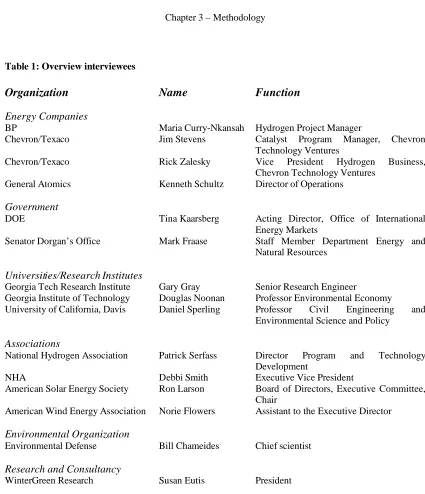
For the CTA an extensive array of literature and empirical data has been used. Apart from scientific literature and written empirical data, I have interviewed 15 actors with different backgrounds regarding the hydrogen transition. These actors were from involved industries, the government, research institutes and universities, and hydrogen associations.
In the U.S., and in most other developed countries, three important aspects that put pressure on the petroleum regime – the regime that plays a key role in the hydrogen transition and was the main focus of my research – can be seen today. These are environment, peak-oil, and geopolitics, with energy security as the main concern related to oil. These issues put pressure on the regime from both the landscape level, as from within the regime itself. These pressures create ‘windows of opportunities’ for new technologies.
Hydrogen is not an energy source, but an energy carrier and therefore it needs to be produced by using other energy sources. Influenced by the developments at the regime and landscape level many different hydrogen production technologies were, and are, explored and developed. The expectations are that natural gas will be the dominant technology in the near-term, in the mid-term coal and nuclear hydrogen technologies will join natural gas and only in the very long term renewable hydrogen technologies are expected to become the dominant technology.
Expectations and promises play an important role in the hydrogen transition. They create ‘prospective structures’; actions become coordinated through the prospect of a new technology and its functions while this emerging configuration is simultaneously shaping the technology to be. Prospective structures are actively created by actors involved in the hydrogen transition by means of articulation processes. These articulation processes therefore cause a significant pressure on the existing regime and are an important strategic move for new actors.
Summary
6
transition itself, they have a strong influence on the government. The oil companies have a strong incentive to control the transition process and even slow it down. Because of their size, capital strength and political influence they are more or less able to do that. Renewable industries are less influential, and got involved in the hydrogen transition mainly in order to protect their federal budgets. They do not particularly support a hydrogen transition. Other involved actors that have an influence on the hydrogen transition are environmental organizations, car manufacturers as users of hydrogen technologies, end-users, interest organizations, etc.
The most likely production methods that will emerge as dominant paths in the U.S. are natural gas for the short term, coal and nuclear for the mid-term. These paths are not only the preferred paths of the big industries; the U.S. government strongly favors these paths as well. Because of their ‘scripts’ these production paths require centralized production systems. There are several important impacts that follow from this centralized fossil and nuclear hydrogen path, of which the most relevant from a CTA point of view are ‘environment and sustainability’, the related to this ‘non equal playing field’, and the, to centralized production related, impacts, ‘distribution network’, ‘oligopolistic regime structure’, and ‘freedom’
The assessments of the impacts by the actors vary considerably per actor (group). For most impacts there is a clear trade-off between economy on the one hand and the environment and society on the other. When it comes to environmental impacts, economic interests usually have the upper hand in actors’ actions and decisions. This applies for industries, the government, as well as the public.
Hydrogen has the potential to change our present rigid centralized petroleum system in a decentralized fuel system. This has many technical, economical and social advantages. First, it can break down today’s oligopolistic petroleum regime and can avoid the creation of new ones. Second, it has the potential to increase our personal freedom and autonomy. From a moral point of view decentralized systems are therefore more desirable than centralized. Reality is different though, since effective freedom and not having concerns about where the energy comes from are in general valued over autonomy.
Constructive Technology Assessment of the Hydrogen Transition in the U.S
7 political parties, end-users, the public, etc. need to put pressure on the government and on the big industries in order to be able to steer the developments. Market-approaches seem favorable for the reduction of emissions, but in addition technology-forcing regulations are necessary to avoid that the ‘market solution’ goes toward centralized production systems again. It is important that a change in the public’s perspective and behavior regarding environmental issues, and issues related to (de)centralized production, are stimulated as well. This landscape change, together with the democratization of the technological developments can influence both the government and industries.
The creation of technological nexuses, or the involvement of renewable industries in existing nexuses is important for the development of decentralized hydrogen production technologies as well. By not involving only them, but also increasing the active participation of the public and of environmental organizations in the discussion and development process, the hydrogen transition can be democratized and the pressure from the landscape level can be increased. Small companies, environmentalist, politicians, the public, etc. should more pro-actively pursue the creation of nexuses, but also the forming of alliances and partnerships.
Constructive Technology Assessment of the Hydrogen Transition in the U.S
9
Contents
Summary... 5
Preface ...13
1. Introduction ...15
1.1 Objective...15
1.2 Research Question...16
1.3 Overview Report ...16
2. Theory...17
2.1 Technology Assessment ...17
2.2 Social Shaping of Technology ...18
2.3 Co-evolution ...21
2.4 System Innovations ...22
2.5 Multi-Level Perspective (MLP) ...23
2.5.1 Technological Regimes...23
2.5.2 The Socio-technical Landscape ...24
2.5.3 Niches...25
2.5.4 The Sociological Characteristics of the Three Levels...25
2.5.5 Dynamics of System Innovation ...27
2.6 Promises and Expectations...30
2.7 Scripts ...34
2.8 Conceptual Model ...34
3. Methodology ...37
3.1 Literature Review...37
3.2 Data ...37
3.3 Scope...38
4. Exploration of the Technological Developments ...40
4.1 Hydrogen ...40
4.1.1 Hydrogen Characteristics...40
4.1.2. Interest in Hydrogen...41
4.1.3. Current Use of Hydrogen...42
4.2 External and Internal Pressure on Regime ...45
4.2.1 Environment...45
4.2.2 Peak-Oil ...48
4.2.3 Geopolitics ...50
4.3 Hydrogen Technology ...52
4.3.1 Hydrogen Production ...52
4.3.1.1 Hydrogen from Natural Gas...53
4.3.1.2 Hydrogen from Coal...54
4.3.1.3 Hydrogen from Nuclear Energy ...55
4.3.1.4 Hydrogen from Electrolysis ...56
4.3.1.5 Hydrogen from Wind Energy ...57
4.3.1.6 Hydrogen from Biomass ...58
4.3.1.7 Hydrogen from Solar Energy ...59
4.3.1.8 (De)centralized Scripts ...61
4.3.2 Hydrogen Storage...64
4.3.3 Hydrogen Distribution ...66
4.3.4 Fuel Cell ...69
4.3.5 Hydrogen Niches ...70
Contents
10
4.3.7 The Role of Expectations...75
4.3.8 Technology Foresight...76
4.4 Conclusion ...79
5. Hydrogen’s Social Environment...81
5.1 Actors...81
5.1.1 Technology Regulators ...81
5.1.2 Technology Developers ...82
5.1.3 Technology Users...84
5.1.4 Other Involved Groups...84
5.2 The Actors’ Positions and Influences ...85
5.2.1 The Big Energy Industries ...85
5.2.2 The Government...88
5.2.3 Renewable Industries ...90
5.2.4 Environmental organizations...93
5.2.5 Users...94
5.2.6 Influence of Existing Regime ...96
5.2.7 Co-evolution ...97
5.3 Conclusion ...98
6. Assessment of Impacts ...101
6.1 Impact Analysis...101
6.1.1 Centralized Production...101
6.1.2 Environment and Sustainability...103
6.1.3 GECF: The New ‘Gas OPEC’? ...105
6.2 Normative Assessment of Impacts...107
6.2.1 Environment and Sustainability...107
6.2.2 Non Equal Playing Field ...111
6.2.3 Centralized Production – Distribution Network...112
6.2.4 Oligopolistic Regime Structure ...114
6.2.5 Freedom ...117
6.2.6 Conclusion ...120
7. Feedback...122
7.1 Stimulation of Alternative Variations and Niches ...122
7.2 Modification of the Landscape Level ...125
7.2.1 Governments...125
7.2.2 The Public ...126
7.2.3 Democratizing of the Technological Development ...128
7.3 Creation or Utilization of Technological Nexus ...129
8. Summary and Conclusion ...132
References ...140
Appendix A ...150
Figures Figure 1: Multiple levels as a nested hierarchy... 26
Figure 2: The dynamics of sociotechnical change... 27
Figure 3: A dynamic multi-level perspective on system innovations... 29
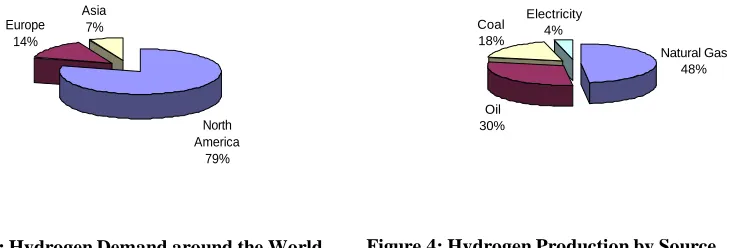
Figure 4: Hydrogen Production by Source ...43
Figure 5: Hydrogen Demand around the World... 43
Figure 6: Consumption of Hydrogen by type of applications in 1990... 44
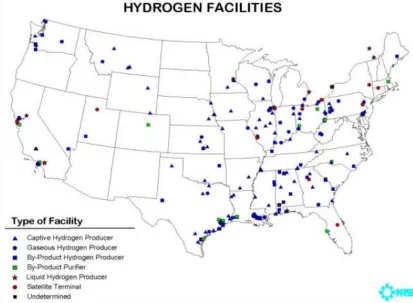
Figure 7: Hydrogen Facilities... 44
Constructive Technology Assessment of the Hydrogen Transition in the U.S
11
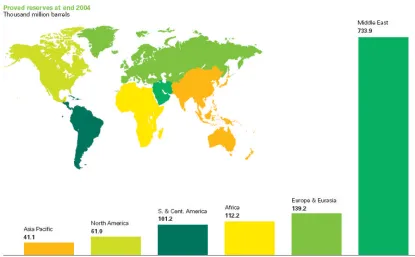
Figure 9: Proved oil reserves at end 2004... 49
Figure 10: Proved natural gas reserves at end 2004... 51
Figure 11: The primary energy sources considered and their routes to hydrogen... 53
Figure 12: Solar generation of Hydrogen using CPV... 60
Figure 13: Micro-production of solar hydrogen... 63
Figure 14: Major Natural Gas Pipeline Transportation Routes and Capacity Levels at Selected Key Locations... 67
Figure 15: Hydrogen facilities and natural gas pipeline network in the US...68
Figure 16: PEM Fuel Cell ...69
Figure 17: Worldwide hydrogen fueling stations...71
Figure 18: Hydrogen economy timeline with manufacturing R&D ...78
Figure 19: U.S. Spending on Hydrogen R&D in 2004 ...89
Figure 20: DOE's R&D spending ...91
13
Preface
It seems ages ago that I came to the University of Twente to start my bachelor program Civil Engineering. After one semester I indicated to my mentor that I wanted to start another major. Business Administration and Philosophy of Science, Technology and Society (PSTS) seemed to fit my desires best. Since Business Administration was closely related to my prospective management track in Civil Engineering I chose PSTS and started to take a course every now and then. Things went pretty well and after I got back from China where I finished my bachelor program Civil Engineering I had only 2.5 semesters left for my Master program PSTS. I decided to mainly focus on PSTS first, before finishing my Masters Civil Engineering. As one of the few students, I was committed to finding a challenge abroad for my Master’s thesis. The PRIME Master Program was set up right in time for me to take part in it and in January 2006 I left for the U.S. to work on my thesis at Georgia Institute of Technology.
Although I consider myself more an engineer than a philosopher, something I realized once again the last six months, PSTS has been of great value to me. Many times people, especially Americans, have asked me questions like “what do you want to do with that?” or “is that good for your career?” Many times I answered ‘I don’t know, I just like it”. Surprised faces were the result. Although I never had the intention to continue with a ‘PSTS-career’ and always saw engineering as my main focus, over the years I experienced the usefulness of PSTS for my personal development and academic skills, but also for my possible future career. Every engineer, manager, policy- and decision-maker benefits from a deeper understanding of science, technology and society.
I would like to take this occasion to thank all the people that contributed to my thesis and were of great help, both the interviewees at organization, as people at the University of Twente and Georgia Institute of Technology. There are a few persons I would like to mention explicitly. First of all Ellen van Oost. As my first advisor at the University of Twente, she played an important role in the accomplishment of my thesis. Moreover, it was because of her help that I had the opportunity to go to Georgia Tech for my thesis. From the University of Twente I also would like to thank Boelie Elzen, my second advisor for supervising my thesis and Adri Albert de la Bruheze as a third member of the graduation committee. From Georgia Tech I would like to thank Valerie Thomas for her help and input. She provided me with interesting material, helped me out in getting it, and kept me on track. I also would like to thank Philip Shapira, for making my PRIME exchange program possible. Finally I would like to thank my family and friends for their support and understanding.
1. Introduction
Oil production is about to peak. When this will happen exactly is not clear and several studies make different predictions. However, most of those predictions are in the range of one or two decades. The steadily growing oil prices might indicate that the end is coming close. Moreover, the relation between greenhouse gases and climate change has become clear in many studies and is broadly recognized today. Finally, energy independence has become a popular and often discussed topic in politics. The need for alternative sources of energy to fuel our future economy is increasing and today hydrogen is ‘the solution’.
In 2003 President Bush announced the Hydrogen Initiative in his State of the Union Address in February of 2003:
“A simple chemical reaction between hydrogen and oxygen generates energy, which can be used to power a car producing only water, not exhaust fumes. With a new national commitment, our scientists and engineers will overcome obstacles to taking these cars from laboratory to showroom so that the first car driven by a child born today could be powered by hydrogen, and pollution-free. Join me in this important innovation to make our air significantly cleaner, and our country much less dependent on foreign sources of energy” (Bush, 2003)
In this address, President Bush called for $1.2 billion to be spent on hydrogen research to facilitate the transition to a “hydrogen economy”. This was in response to a growing recognition that the U.S. dependence on oil comes with significant costs. Ever since, interest in hydrogen rose even more among industries, governments, and scientists.
As stated in the Address, hydrogen indeed has the potential for reducing the amount of greenhouse gases, like carbon dioxide, and air pollutants released into the atmosphere. Therefore it could play a role in reducing global warming and air quality problems in and around major cities. It can break the U.S. reliance on oil, and it can be a substitute for oil as a fuel in the future. However, hydrogen is not an energy source, but an energy carrier, like electricity. Therefore it needs to be produced by using other energy sources.
In my research I will take a closer look at the infrastructural aspects related to the hydrogen economy, particularly in relation to the transportation sector. Hydrogen can be produced from several different energy resources – fossil fuels, nuclear energy, or renewable energy – which is one of the advantages it can have for the future. This means that there is a broad range of possible future suppliers. What the future production method and energy source will be is unclear yet, but it is clear that different production pathways have different impacts on the above mentioned potential advantages of hydrogen and on society in general. The 21st century gives us the opportunity to make a shift from the polluting fossil fuel transportation era to a clean hydrogen future; now we only have to seize this opportunity and make sure that we aim at the right infrastructure.
1.1 Objective
Chapter 1 – Introduction
16
the market in a relatively near future, it is important to analyze the possible future supply side related to it. At this moment steering and control of the infrastructural system is still possible before any negative consequences will happen or undesired directions are taken. This is necessary before huge investments are made in the development and construction of an energy infrastructure – which will last for over 50 years – that turns out to be not the best solution for the future. In a TA the impacts of a technology on society and the assessment of these impacts by involved actors will be analyzed. Based on this, suggestions for further development and decision oriented options can be given in order to avoid negative consequences of the technology. Insights from a TA can provide valuable inputs to decision and policy makers, managers, R&D departments, etc.
1.2 Research Question
The research question I will focus on in this TA is:
How can we use the insights of a technology assessment of likely future hydrogen infrastructures for policy advice on current policies?
This question can be split up in several sub questions:
a) What are likely infrastructures for the future hydrogen economy?
b) How does the existing regime influence and control the developments and
policies, and what social mechanisms play an important role in the developments?
c) How are the impacts of these infrastructures assessed?
d) How can the developments be controlled or steered?
1.3 Overview Report
2. Theory
In this Chapter I will discuss theoretical concepts that are of importance to my research and form the basis for it. First, I will further elaborate the concept ‘Technology Assessment’. Secondly, I will discuss the widely used concepts of ‘Social Shaping of Technology’ (SST). This will lead to the discussion of ‘System Innovations’ and the ‘Multi-Level Perspective’ (MLP), which will serve as a conceptual model for my research. In technological change and MLP expectations and promises play an important role, which will be discussed at the end of this chapter.
2.1 Technology Assessment
Technology Assessment attempts to provide policymakers with a rational basis for their decisions. The classic aim of technology assessment is ‘to identify technology induced risks early enough, to analyze in detail the range of possible social, economic, legal, political, cultural and ecological effects, to process investigation results in a problem oriented manner, to present alternative decision oriented options, and at the same time to point out the various social interests and value judgments linked with the development and use of new technologies’.1 The process of technology development is heterogeneous. For this research I will make use of a Constructive Technology Assessment (CTA). Constructive Technology Assessment is a type of TA rooted in the social constructivist ideas in Science and Technology Studies (STS). The conceptualization of technological development as a fundamental social process opens possibilities for integration of assessment insights into the development of the technology itself (this is where the notion “constructive” is referring to).2 In this social construction of technology, not only policy makers are addressed as target group but also engineers and designers. Interaction with scientists, engineers and designers, policy makers/actor groups from the envisaged user situation and CTA analysts is central (that is: variation environment, selection environment and CTA analysts).3
CTA pays attention to the steering of the internal development of the technology. It is based on the idea that during the course of technological development, choices are constantly been made about the form, the function, and the use of that technology and, consequently, that technological development can be steered to a certain extent (Schot, 1992). For the use of CTA, Schot proposes a co-evolutionary model, in which variation and selection are neither independent nor coincidental processes. Since heuristics is present, technological developments follow quite specific directions, while other possible directions are ignored (this is also known as ‘path dependency’). The content of technological development is shaped simultaneously with the context. Variation and selection are linked by actors, resulting in the actor role labeled ‘technological nexus’. The nexus role implies considering both the selection and variation process as a resource and an option: that is, activities that can and must be molded and harmonized through
1 Institute of Technology Assessment, Austria: http://www.oeaw.ac.at/ita/ebene3/e2-1a.htm
Chapter 2 – Theory
18
active efforts. In most cases the nexus is specific, describing the relation between technological variation and environmental selection.
Another way actors link variation with selection is by niche management. This co-evolutionary model suggests three general CTA strategies to alter current lines of technological development: the development of alternative variations; modification of the selection environment; the creation or utilization of technological nexus. Governments clearly rely heavily on strategies of stimulating alternative variations through funding and subsidies and changing selection through regulation (Schot, 1992). I will discuss ‘niches’ in more detail in section 2.5.3.
Fuel cell vehicles (FCVs) are an existing technology which is not in the early phase of development anymore. Many efforts in the development, however, are still necessary in order to put valuable products on the market. Moreover, as indicated before, successful implementation relies heavily on the development of the whole system; not just the fuel cells, but also, among others, the required infrastructure. Since implementation of fuel cells on the market seems to come close (today they are used, but only in demonstration projects), it is important to conduct a CTA on the infrastructural services and installations, to analyze the possible future consequences and risks of the technology, on social, economic, legal, political, cultural and environmental level. By looking at social interests, value judgments and alternative design and decision options a rational basis for decision-making is provided to policymakers, managers, developers, etc. in order to steer the developments of the technology in the ‘right’ direction, away from undesirable impacts.
CTA has its roots in, the in literature widely discussed, Social Shaping of Technology (SST). In the next section I will discuss this popular theory.
2.2 Social Shaping of Technology
The term social construction started to become common in science and technology studies in the late 1970s. Since then, important texts have claimed to show the social construction of facts, knowledge, theories, phenomena, science, technologies, and societies. For science and technology studies, social constructivism provides three important reminders. First is the reminder that science and technology are importantly social. Second is the reminder that they are active. And third is the reminder that science and technology do not provide a direct route from nature to ideas about nature, that the products of science and technology are not themselves natural (Sismondo, 2004).
In their first edition of ‘the Social Shaping of Technology’ MacKenzie and Wajcman introduced the metaphor of ‘social shaping of technology’ (SST), rather than the more popular ‘social construction’, in part because, according to them, the latter is too prone to the misconception that there was nothing real and obdurate about what was constructed. What is being shaped in the social shaping of artifacts is no mere thought stuff, but obdurate physical reality (MacKenzie and Wajcman, 1999). I will use both terms alternately, considering them as alike.
Constructive Technology Assessment of the Hydrogen Transition in the U.S
19
innovation to be exposed and analyzed. SST emerged through a critique of ‘technological
determinism’, which is, in general, the theory that technology is an independent actor, and that changes in technology determines social changes. As a contradictory, in SST technology is a social product, patterned by the conditions of its creation and use. Central to SST is the concept that there are ‘choices’ (though not necessarily conscious choices) inherent in both the design of individual artifacts and systems, and in the direction or trajectory of innovation programs (Williams and Edge, 1996). These choices, as well as technological developments, are seen as a social phenomenon. Usage and meanings, given to a certain technology by users, play an important role in this process. Technology does not have its own life but is shaped by society; there is an interaction between context and content, a co-evolution (see section 2.3). In a broad sense the sociology of technology is concerned with explaining how social processes, actions and structures relate to technology. Within social constructivism the focus is on the social, political and economic forces which give rise to particular technologies (Mackay and Gillepsie, 1992).
One of the most well known approaches of social construction is the Social Construction of Technology (SCOT) of Pinch and Bijker. In SCOT the developmental process of a technological artifact is described as an alternation of variation and selection: variation refers to the development of the technology itself, the content; selection refers to the development of the environment of the technology, the context. This results in a multidirectional model, in contrast with the linear models used explicitly in many innovation studies and implicitly in much history of technology (Pinch and Bijker, 1984). Linear models conceived of innovation as involving a one-way flow of information, ideas and solutions from basic science, through research and development, to production and the diffusion of stable artifacts through the market to consumers (Williams and Edge, 1996).
SCOT emphasizes the artifact, its ‘relevant social groups’ and the ‘interpretative flexibility’ of an artifact: different social groups associate different meanings with artifacts leading to interpretative flexibility appearing over the artifact (Kline and Pinch, 1999). Moreover, it points to closure, the ways in which innovation may become stabilized. Bijker and Pinch's focus is not just on the symbolic meaning of technologies but includes also variation in criteria for judging whether a technology 'works' (MacKenzie and Wajcman, 1999).
Although SCOT has been refined and developed over the last decade, important weaknesses have appeared. First, SCOT as originally conceived dealt mainly with explaining the social process of the conception, invention, design and development of technology. It fails, however, to take account of ideology in the social shaping of technology, to consider marketing as a process which is central to the shaping of technology and, finally, it fails to take account of the appropriation of technologies by users (Mackay and Gillepsie, 1992).
Chapter 2 – Theory
20
in the discussion. The oil industry, for example, is one of the big sponsors of political campaigns and has been able to influence many policies in history.
This second weakness is often remarked by proponents of the neo-Marxist approach who argue that, instead of focusing at the micro level, we need to examine how wider, macro socio-economic forces affect the nature of technological problems and solutions (Mackay and Gillepsie, 1992). This approach criticizes the social constructivist approach, but also the actor network approaches – which are a reaction to a concern related to this second weakness: the neglect of the reciprocal relationship between artifacts and social groups (Kline and Pinch, 1999; MacKenzie and Wajcman, 1999) – and the systems approaches for ignoring the political and economic context within which a technology is developed (Mackay and Gillepsie, 1992). Too much power and autonomy is ceded to individual actors, rather than to existing structures of power and interests (Williams and Edge, 1996). Russell (1986) puts it this way:
“Far beyond just ‘identification’ and ‘description’, groups need locating in a structured and historical context. That is, we need to map out not only their relation to the technology, but their relations to other sections of society, the economic, political and ideological constraints and influences on them, the broad historical changes affecting them and the more specific events leading them to the process under investigation. It is this structural location that largely determines the relationship to each technology which they conceive or which confronts them...” (pp. 335)
In Russell’s opinion it is, instead of looking at the limited micro focus of the SCOT approach, better to situate social processes producing technologies in an established framework and in a wider context of social analysis. Then it is possible to relate the micro level to a broader social structure and process. He states that in political processes in particular, the analysis of technology and technological change desperately needs a better framework to avoid the empiricism and implicit pluralism which has characterized many case studies. Therefore Russell argues that regarding the analysis of political processes behind technology we must consider what is peculiar about the material and ideological properties of existing technical systems – themselves the cumulative product of previous such processes – into which alternative innovations would have to fit: for example, the roads, fuel supply, the manufacturing industry itself, etc. Such systems provide different barriers to the introduction of each option. we may not be able to resolve whether such constraints are real, contrived or imagined, but we must at least show whether and how arguments about them were deployed by each group in debate and decision-making (Russell, 1986). This consideration of the wider context of social analysis is very important in relation to FCV and the hydrogen economy. As mentioned before the system is wider than just the fuel cells; hydrogen production, distribution, fuelling stations, storage, they all provide different barriers. And regarding the hydrogen production, it is not just the fossil fuels industry that is involved, but also the nuclear, renewables, etc.
Constructive Technology Assessment of the Hydrogen Transition in the U.S
21 regarding societal functions fundamentally, as is argued in the fourth Dutch National Environmental Policy Plan (Elzen et al, 2004). Transportation and energy supply systems are amongst these societal functions and this approach therefore seems to be suitable for my research regarding fuel cell vehicles and hydrogen. Before I will discuss this approach in more detail, I will first briefly explain the already mentioned concept of ‘co-evolution’, since the overall pattern of technical changes is one of co-evolution (Rip and Kemp, 1998) and the System Innovations approach – as well as CTA – heavily relies on this concept.
2.3 Co-evolution
Co-evolution is increasingly recognized as an important issue, e.g. in evolutionary economics, long-wave theory, innovation studies. It has always been an important theme in science and technology studies, with its emphasis on seamless webs, emerging linkages between heterogeneous elements and co-construction (Rip, 2002).
Co-evolution is often used as a broad characterization of co-development and mutual shaping, without specific reference to evolutionary theory. It deals with “bridging of the gap” between science and technology on the one hand, and society on the other hand. Nowothny et al emphasize the co-evolution of science and society, not as a theory, but as a diagnosis, and a plea for more interaction between science and society (Rip, 2002). They state that co-evolution “denotes an open, and certainly more integrated, system of science-society interaction which enhances the generation of variety, whether in the choice of scientific problems, colleagues or institutional designs, on the one hand, or the selective retention of certain choices, modes or solutions on the other hand” (Rip, 2002). Under such a broad heading, interactions between (science,) technology and society can be studied.
The link with explicit evolutionary and co-evolutionary theory is sometimes made, but often it is only the overall connotation of the terms ‘evolution’ and ‘co-evolution’ that is used. A key point is that patterns occur in co-evolution, and that some of them stabilize and shape further actions and interactions; a well-known example is a technological regime (to which I will come back later). Actors experience the constraints of such a regime. In open and fluid situations, they might actively try to create a regime that is of advantage to them (for example in the battle about an industry standard) (Rip, 2002).
The process of co-evolution can, and will, be modulated by actors (the rough agreements and networks, for example), and this also allows a productive role for governments. But processes of co-evolution cannot be shifted at will in any desired direction. A certain nonmalleability characterizes technology, not because actors have insufficient power or resources to get what they want, but because technological developments have, in a sense, the rules of their own: from the heuristics in search processes to the normal ways of doing things in a technological regime. These rules are outcomes of action and interaction, leading to the particular form that irreversibilities take in the situation of technical change in societies. Because such rules function at a collective level, they cannot be changed easily by any one actor (Rip and Kemp, 1998).
Chapter 2 – Theory
22
may give rise to patterns with dynamics of their own. For actors, there is the experience of co-evolution (in terms of mutual interdependencies, and the force of path dependency) and anticipation on selection, as well as, even more precariously, anticipation on emerging patterns (Rip, 2002).
Improving outcomes is possible for each actor through a better understanding of their selection environments and the dynamics of co-evolution. Since other actors will react, the improved strategies cannot be stable. In fact, an enlightened actor understands his action as modulation of interactions and emerging patterns of which he himself is a part, rather than linear steps toward goal achievement. The same holds for actors with a governance responsibility (governmental or otherwise). Modulation of ongoing processes rather than forceful shaping is the enlightened approach (Rip, 2002).
It is these dynamics of co-evolution that play an important role in system innovations, as we will see in the next section.
2.4 System Innovations
In recent years, there is increasing interest in transitions and system innovation at the level of societal functions such as transportation, communication, housing, energy supply, feeding. Societal functions are fulfilled by sociotechnical systems, which consist of a cluster of elements, including technology, regulation, user practices and markets, cultural meaning, infrastructure, maintenance networks, and supply networks. A transition is a shift from one sociotechnical system to another, i.e., a system innovation. System innovations are co-evolutionary processes, which involve technological changes, as well as changes in other elements, such as user practices, regulation, industrial networks, infrastructure, and symbolic meaning (Geels, 2002a; Geels, 2005a; Geels, 2005b). This emphasis on the co-evolution of technical and societal change distinguishes transitions from more incremental processes of innovation which are primary characterized by technical development (successive generations of technologies) with the societal embedding of these technologies changing relatively little (Elzen et al, 2004). A transition from our present petroleum based system towards a future hydrogen based system requires us indeed to look at the co-evolution of technical and societal change, since not only the involved technologies will (have to) change, but also policies and regulations, the consumption of energy, power relations in politics, business, etc. and power relations between the Middle East and Western Countries. According to Rifkin (2002) hydrogen, that has the potential to bring about a decentralized energy system, will give rise to a wholly new type of energy infrastructure as well as to radically different economic institutions and new patterns of human settlement, just as coal and the steam engine and, later, oil and the internal combustion engine did in the past. When every human being on earth can be the producer of his or her own energy, the very nature of commercial life radically changes. Economic activity becomes far more widely diffused and this would make possible the establishment of human settlements that are more widely dispersed and more sustainable in relationship to local and regional environmental resources.
Constructive Technology Assessment of the Hydrogen Transition in the U.S
23 many of these new technologies are not (yet) taken up. This is partly related to economic reasons, but also to social, cultural, infrastructural and regulative reasons (Geels, 2002a; Geels, 2005b). The ‘chicken-egg’ problem related to fuel cells and the hydrogen economy illustrates this problem: manufacturers of FCVs are not willing to invest a lot of money in the development when a decent hydrogen infrastructure is absent. Investing in an infrastructure on the other hand is not attractive when there are only a few vehicles running on hydrogen yet (Romm, 2004). The different elements in a system are linked and aligned to each other and therefore the existing systems are ‘locked in’ at multiple dimensions and are stable and not easy to change. Radically new technologies have a hard time to break through the existing systems. Hence, the analytical focus in academic sustainability analyses has widened from artifacts to sociotechnical systems (Geels, 2002a; Geels, 2005b).
Innovation systems can be defined on various levels, e.g., national, regional or sectoral systems of innovation. An important insight from the systems of innovation approach(es) is the emphasis on interlinkages between elements and co-evolutionary processes. But the main focus in the systems of innovation approach is on the functioning of systems rather than the change of systems. Hence, a recent review of the sectoral system of innovation approach noted that one of the key questions that need to be explored is: how do new sectoral systems emerge, and what is the link with the previous sectoral system? (Geels, 2005b)
System innovations involve simultaneous processes on multiple dimensions and levels. They are a blend of longer term and shorter term processes. System innovations require that these processes link up and reinforce each other. The so-called multilevel perspective (MLP) has been developed to analyze and explain transitions and system innovations (Elzen et al, 2004). I will describe this perspective in the next section.
2.5 Multi-Level Perspective (MLP)
The multilevel perspective was originally developed to understand regime shifts. To that end, three levels were distinguished: the micro level of technological niches, the meso level of technological regimes and the macro level of socio-technical landscapes. The conceptualization of dynamics at these levels aims to combine insights from evolutionary economics, innovation studies and science and technology studies (Geels, 2005b).
2.5.1 Technological Regimes
Chapter 2 – Theory
24
environment of technologies, and existing systems and socio-technical landscapes, must be taken into account. Rip and Kemp (1998) therefore introduce a wider definition of technological regime. They define it as:
‘the rule-set or grammar embedded in a complex of engineering practices, production process technologies, product characteristics, skills and procedures, ways of handling relevant artifacts and persons, ways of defining problems - all of them embedded in institutions and infrastructures’ (p. 338).
These rules, which are cognitive, normative and formal, are much wider than the cognitive routines Nelson and Winter refer to. Moreover, according to Rip and Kemp's definition rules are embedded not only in the minds of engineers, but also more widely in the knowledge base, engineering practices, corporate governance structures, manufacturing processes and product characteristics (Geels, 2005b). Examples of such rules are: the search heuristics of the engineers, technical standards, the rules of the market in which firms operate, the user requirements to be accommodated at any given time, and the rules laid down by governments, investors and insurance companies. These rules guide (but do not fix) the kind of research activities that companies are likely to undertake, the solutions that will be chosen and the strategies of actors (Geels, 2002b).
This widening of the definition means that more social groups are taken on board than engineering communities. Technical trajectories are not only influenced by engineers, but also by users, policymakers, societal groups, suppliers, scientists, capital banks etc. These wider embeddings make rules, which have both enabling and constraining effects, harder to change (Geels, 2002a and 2005b). Because the activities of these groups are also guided by rules, Geels (2002a) proposes to further widen the scope from technological to socio-technical regimes to refer to the semi coherent set of rules carried by different social groups and to understand coordination between the different groups.
2.5.2 The Socio-technical Landscape
Technological trajectories are situated in a ‘socio-technical landscape’, consisting of a set of deep structural trends external to the regime. The analytical importance of ‘landscapes’ is that they form an external structure or context for interactions of actors. While regimes refer to rules that enable and constrain activities within communities, the ‘socio-technical landscape’ refers to a wider technology-external context or external environment, which cannot be changed at will by regime actors. The context of landscape is even harder to influence than that of regimes. It mostly results from the juxtaposition of the dynamic in a variety of regimes. With regard to technological trajectories, the landscape can be understood as providing a ‘gradient’ or backdrop for development. This means that the landscape makes it easier for technical trajectories to go in certain directions rather than others (Geels, 2002a; Elzen et al, 2004; Geels, 2005b).
Constructive Technology Assessment of the Hydrogen Transition in the U.S
25 2.5.3 Niches
While regimes usually generate incremental innovations, radical innovations are generated in niches (Geels, 2002a). Most inventions are initially relatively crude, have low technical performance, and are cumbersome and expensive. Because such innovations cannot survive and compete in normal, mainstream markets, they need some protection. This protection is provided by niches, in which the selection criteria are very different from the regime. Niches are actively constructed by incubators or product champions. These actors are able to rouse the interests of other actors (for example, policymakers, users, suppliers) to mobilize resources for further development work of the innovation, by making promises about possible functionalities and market applications (Van Lente and Rip, 1998; Geels, 2002a; Geels, 2005b). Their activities lead to a support network of actors, who are willing to put time and money into nurturing and developing the innovation. These networks of actors expect or have a strategic vision that the innovation can be developed as a viable market product (Elzen et al, 2004; Geels 2005b). Because niches offer some protection, they act as ‘incubation rooms’ for radical innovations (Geels, 2002a; Geels, 2005b). In these first niches commercial viability might well be absent. The first applications of electricity at world fairs, theaters and public events had symbolic value; they brought excitement. The first applications of airplanes and cars in races were never commercial successes; indeed, the motivation to engage in such activities was not primarily economic in nature (Hoogma et al, 2005).
Niche developments happen in two (partly overlapping) forms: technological niches, and market niches. Niche development starts in protected spaces, were regular market conditions do not prevail because of special conditions created through subsidies and an alignment between various actors. These technological niches are often played out in the form of experiments like those with electric vehicles in various European countries in cities. Technological niches can develop into market niches - application in specific markets in which regular market transactions prevail (Geels, 2002b; Geels, 2005b)
These niches are important for the development of a new technology, underpinning the take-off of a new regime and the further development of a new technology. They provide space for such key processes as: network formation, coupling of promises and expectations, and learning and articulation processes on issues like technology, user preferences and practices, regulations, and so on (Geels, 2002b; Elzen et al, 2004).
2.5.4 The Sociological Characteristics of the Three Levels
Chapter 2 – Theory
26
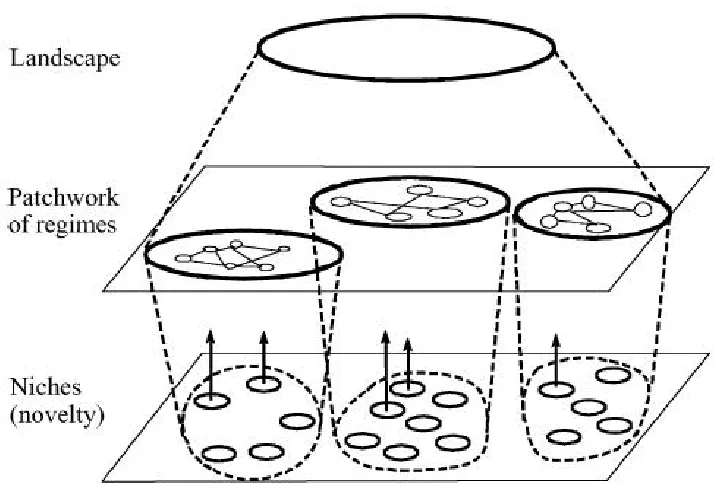
Figure 1: Multiple levels as a nested hierarchy (Geels, 2002a)
The multilevel framework is based on sociological concepts, with a focus on activities of people and the rules, which provide the context for action and interpretation. On the one hand people act on the basis of rules, but on the other people learn from their actions and may change the rules. The (socio)logic of the three levels is that they provide different kinds of structuration of activities in local practices (Geels, 2005b):
The rules in technological niches are vague and imprecise; for example, diffuse promises about potential uses and different ideas about best search directions. There are no specific rules that guide activities. The activities of actors in a niche go in many directions and there is experimentation and uncertainty. The niche rules provide only loose structuration; the rules have no strong coordination ‘power’ on actors.
In technological regimes, structuration of activities in local practices is much stronger than in technological niches. A reversal has occurred. While actors put in a lot of effort to articulate and uphold rules in niches, the rules have become ‘stronger’ in technological regimes. They have strong coordinating effects on the activities of actors in local practices. The rules do not determine action, but strongly guide them. It is possible to deviate, but this is difficult, and takes a lot of effort. Social conventions and rules in (technical) communities are not easy to change.
Constructive Technology Assessment of the Hydrogen Transition in the U.S
27 2.5.5 Dynamics of System Innovation
The multilevel perspective has been used to understand the emergence and diffusion of new technologies. An important point of the MLP is the dynamic interaction between the multiple levels (Geels, 2005b).
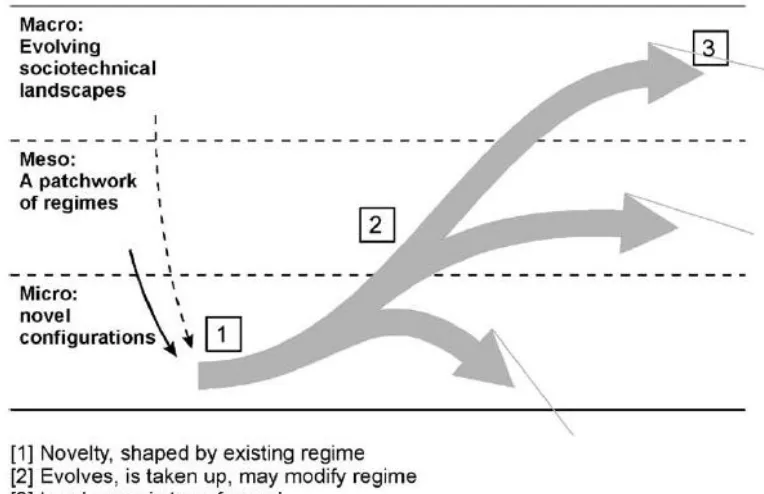
Novelties emerge in niches in the context of existing regimes and landscapes with its specific problems, rules and capabilities. Novelties are produced on the basis of knowledge and capabilities and geared to the problems of existing regimes. Niches are crucial for transitions and system innovations, because they provide the seeds for change (Geels, 2002a; Geels, 2005b). Figure 2 shows how transitions start in niches. The downward arrow from the regime level is solid, while the arrow from the landscape is dotted. This is meant to indicate that the influence from the regimes on niches is stronger and more direct than the influence from landscapes, which is more diffuse and indirect (Geels, 2002a; Geels, 2005b).
After successful application in one domain, the technology finds through a series of new applications that become attainable because of its progressive improvement in terms of performance characteristics and economics. This is the process of niche branching, which includes the emergence of new application domains and the creation of the bandwagon effect (that is, a wider diffusion) through replication of the niche elsewhere. The changes brought forth by this process of niche branching culminate in the emergence of a new technological regime by coupling to developments on other levels (Hoogma, et al, 2005). This process is indicated with a ‘2’ in figure 2.
Chapter 2 – Theory
28
The important point of the multi-level perspective is that the further success of a new technology is not only governed by processes within the niche, but also by developments at the level of the existing regime and the sociotechnical landscape. Changes at the landscape level, for instance, may influence the development of technologies embedded in regimes as well as new promising alternatives by putting pressure on the regime, and creating openings for new technologies (Geels, 2002a; Geels, 2005b; Hoogma et al, 2005). Or as Elzen et al (2004) state it: “Radical innovations form the seeds for transitions and their chance of breaking through can increase when the existing regime becomes less stable, through internal problems or negative externalities that cannot be solved adequately” (p. 254). The development of the FCVs and a hydrogen economy, for example, is strongly influenced by the increasing need for cleaner fuels to solve the environmental problems that came with our existing fossil fuels regime. Moreover, the ‘end of cheap oil’, an aspect that causes significant internal pressure in the petroleum regime, has a strong influence on the development of alternative fuels and energy sources. On the other hand, the landscape is, however, not directly influenced by the success of local innovation processes and only to a limited extent by individual regime shifts. Of course, if a number of regime shifts occur, the landscape will be changed (Hoogma et al, 2005).
The concept of technological regimes helps understand inertia in socio-technical change (e.g. car manufacturers stick to gasoline engines), due largely to the embeddedness of existing technologies in broader technical systems, production and consumption patterns, belief systems and values, which creates economic, technological, cognitive and social barriers for new technologies (Geels, 2002b; Hoogma et al, 2005).
Because of the inertia of incumbent technologies, many new technologies remain on the shelf. For instance, the new product may require different knowledge and capabilities, new production techniques and skills that may not be available. Their use and development may require complementary inventions and changes in organization (in production routines, in plant and factory layout) plus changes in the institutional context (in regulation, fiscal policies and social norms and values). These are known to come about slowly (Geels, 2002b). In a transition to a hydrogen economy these changes will play an important role and are important to look at.
Constructive Technology Assessment of the Hydrogen Transition in the U.S
29 engines and more efficient oil production methods) they try to slow down the transition process.
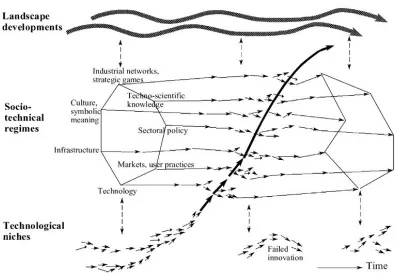
Geels (2002a and 2005b) made several additions to the MLP and refined figure 2. To counter the bias towards the novelty, Geels argues that more explicit attention needs to be paid to ongoing processes at the socio-technical regime and landscape levels, for example, emergence of new markets, policy dynamics and new technologies which can act as stepping stones. According to Geels, regimes should be analyzed not only as barriers, but also as opportunities. As a heuristic, Geels (2002a) has distinguished seven dimensions in the sociotechnical regime (figure 3): technology, user practices and application domains (markets), symbolic meaning of technology, infrastructure, industry structure, policy and techno-scientific knowledge. The regular ongoing incremental processes are represented with relatively long arrows. Although the different dimensions are linked and co-evolve, they also have internal dynamics. This may result in ‘tensions’, represented in figure 3 with shorter diverging arrows, indicating uncertainty and differences of opinion. Tensions may lead to periods in which linkages are weakening or ‘loosening up’.
Figure 3: A dynamic multi-level perspective on system innovations (Geels, 2002a)
At the landscape level, changes usually take place slowly, e.g. cultural changes, demographic trends, broad political changes. The slowly evolving landscape developments are represented in figure 3 with fat long arrows. Landscape changes may put pressure on the regime.
Chapter 2 – Theory
30
small arrows going in different directions. Although radical innovations may seem promising for a while, there is no guarantee for success. Radical innovations may also gradually stabilize into a dominant design, represented in figure 3with arrows growing longer and fatter.
The basic notion of Geels’ improved multi-level perspective is that system innovations occur as the outcome of linkages between developments at multiple levels, represented with vertical dotted arrows. An important consequence of his addition is that the existing regime should not (only) be seen as a barrier for radical novelties, but the ‘ongoing processes’ in the regimes may also create opportunities. A system innovation occurs when the new innovation conquers wide market shares and links up with ongoing processes in the regime. Radical innovations break out of the niche-level when ongoing processes at the levels of regime and landscape create a ‘window of opportunity’. These windows may be created by tensions in the socio-technical regime or by shifts in the landscape which put pressure on the regime. System innovations do not only involve technology and market shares but also changes on wider dimensions such as regulation, infrastructure, symbolic meaning, and industrial networks (represented by the increased density of arrows). Besides, system innovations are about the linking of multiple
technologies. Once established, a new socio-technical regime may influence wider landscape developments (Geels, 2002a; Geels, 2005b).
An important aspect of the MLP is to do away with simple causality in system innovation. There is no ‘cause’ or driver of system innovation. Instead, there are simultaneous processes at multiple dimensions and levels. System innovations come about when these processes link up and reinforce one another. Such innovations are not simply ‘caused’ by novelties at the niche level, because their breakthrough and diffusion depends on processes and circumstances at the regime and landscape levels (Geels, 2005b).
This improved multi-level perspective of Geels will serve as a conceptual model for my research.
2.6 Promises and Expectations
Promises and expectations play a crucial role in early phases of technical change and in the creation of niches. In the early stages of development, the advantages of a new technology are often not evident. Its value still has to be proven (in terms of technical, social as well as commercial viability) and there are many resisting forces. In order to get the new technology on the agenda, actors make promises and raise expectations about new technologies. Promises are especially powerful if they are shared, credible (supported by facts and tests), specific (with respect to technological, economic and social aspects), and coupled to certain societal problems which the existing technology is generally not expected to be able to solve. Once certain promises have been accepted and placed on the agenda, activities need to be developed to substantiate the expectations, for example by conducting research or doing experiments (Kemp et al, 1998; Geels, 2002b).
Constructive Technology Assessment of the Hydrogen Transition in the U.S
31 these parties often construct and communicate positive expectations in order to make other actors believe that it will yield returns in future (Hoogma et al, 2005). This way expectations are used to attract attention and enroll more actors to widen the social network (Geels, 2005b) At first sight, it seems that this is happening with the ‘hydrogen economy’ as well. The hydrogen economy seems to be very popular in the U.S. and the current government is one of the proponents of it. As stated in the introduction, in his State of the Union Address of 2003 President Bush says:
“A simple chemical reaction between hydrogen and oxygen generates energy, which can be used to power a car - producing only water, not exhaust fumes. With a new national commitment, our scientists and engineers will overcome obstacles to taking these cars from laboratory to showroom - so that the first car driven by a child born today could be powered by hydrogen, and pollution-free. Join me in this important innovation - to make our air significantly cleaner, and our country much less dependent on foreign sources of energy” (Bush, 2003).
Critics claim, however, that it will take much longer before the hydrogen economy will be realized or before mass production of FCVs will happen. Romm, one of the critics, speaks of “the hype about hydrogen” to indicate that the expectations about hydrogen are exaggerated. He claims that we need several technical breakthroughs to make it happen and that this will not happen the coming decades. We would do better to focus on renewables and other alternatives first, before we focus on hydrogen (Romm, 2004).
Because expectations and promises seem to be an important driver related to the hydrogen economy, and to technical change in general, I will pay special attention to it in my research. In this section I will therefore explain the dynamics of expectations in technological developments as a mode of coordination. This section is based on work of Van Lente and Rip (1998).
In sociology, several theoretical attempts have been made to fill the gap between functionalism which forgets creative actors, and an interactionism which forgets about constraining structure. Such attempts seek to overcome the dualism of structure versus agency. The key issues are how actions lead to structures, and how the structures enabling constraining action.
Technology dynamics teaches us that structure emerges and action is shaped in a way in which content matters as much as traditional sociological categories of explanation. Structures can be ‘merely’ prospective, and still be influential. To emphasize this, Van Lente and Rip introduce the term prospective structure.
Chapter 2 – Theory
32
The key issues regarding this problem become how actions lead to structures, and how the structure is enabling constraining action. Van Lente and Rip point out that expectations, and their related stories, about possible developments should be considered as a source of change in this discussion. These lead to action, not because there is a structure behind the backs of the actors, but because now actors are creating one before them. It is because of their content that these stories help to create new patterns and institutions. The basic mechanism is that actors position themselves and others (and future technology) in a story or plot, and so make others into characters in the story. Thus, prospective structures emerge, i.e. arrangements that do not yet exist, but are nonetheless forceful due to the perceived implications of the projected future.
Van Lente and Rip discuss three examples of emerging patterns in expectations about technology. In all three of them a co-evolution of structure and agency can be seen. First, Moore’s Law as a self-fulfilling prophecy. Moore’s Law is a prediction regarding the development of memory chips that became true. The fulfilling of this self-fulfilling prophecy did not occur because it is a prophecy, but because actors take up the prophecy and act accordingly. That is a basis for other actors to accept the expectations and act accordingly, etc.
Secondly, diffuse coordination and Membrane Technology. Based on expectations about Membrane Technology a gradual agenda was built and an independent and compelling macro-actor was established to coordinate the heterogeneous actors in the membrane technology field. This macro-actor mobilized rhetorical and other resources to further one’s interests – but the interests were defined in terms of the promise of a new technology in which actors could and should participate. A promising technology itself can coordinate action – at least rhetorically in texts.
The third example of emerging patterns in expectations about technology is the self-justifying technology. Before 1985, High Definition Television (HDTV) was held to be a promising idea among technologists, but it was not widely promoted, certainly not as any kind of national cause, except perhaps in Japan. The shift to prominence after 1985 took place because HDTV became the subject of a strategic game. In the resulting tug-of-war around HDTV, more is at issue that interest politics around standards and markets. It is obvious that interest politics will occur: the economic and political interests associated with HDTV are immense. The potential world market is estimated in terms of hundreds of billions of dollars and the size of one’s share of this market will have important consequences for other industrial activities, for the labor market, and for the relative strength of national economies. So it is not surprising when parties interested in the development try to gather support or try to promote this (future) commodity. Notable, however, is how interests are defined here. It is only because HDTV is taken as promising that there are interests at stake, and that interest politics can come into play. If HDTV were not seen as promising, there would be no interest in the technology, and thus no actor’s interests to be staked out.
Constructive Technology Assessment of the Hydrogen Transition in the U.S
33 The dynamics of the self-justifying technology is a conversion of promises into requirements at the societal level. Once technical promises are shared, they demand action, and it appears necessary for technologists to develop them, and for others to support them. At the same time, the options which are considered feasible and promising are translated into requirements, guidelines and specifications. This shapes concrete design and development trajectories, now at meso and micro level, but also through conversion of expectations and promises.
Technological promises function as a yardstick for the present and as a signpost for the future. Technological determinism is not given, but actively constructed. The ‘option-promise-requirement-necessity’ sequence does not imply anything like an autonomous socio-technical process. The transitions do not occur automatically, but are the result of the actions and interactions of technologists, firms and governments. The transitions are a consequence of actors assessing what is “feasible”, what is “obsolete”, and what is “necessary”, and of the efforts that follow these assessments. Moreover, the transitions are in principle reversible and can be undone – although entailing increasing costs and work. The pressure to at least recover and preferably to cash in on sunk investments also increases. As more and more is invested in a promising technology, any detour or even delay will encounter increasing resistance.
When some overall promise has been articulated and become forceful, the functions that were seen as necessary become specifications for design and development work. Promise-requirement cycles start up again, embedded in the overall framework. Behind the promise-requirement cycles lies the dynamics of expectations: as soon as expectations are shared they assume a life of their own. The basic point is that when expectations are shared they create a pattern into which the actors themselves may be locked. However, in and of themselves promises will not be sufficiently powerful to establish requirements for technology development. This demands that the promise is taken up in an agenda (a local, a field, or a macro agenda). While an expectation statement is performative, i.e. it does something, it is an action - and because of its script, others may react - it only becomes an issue that demands consideration and action when actions and reactions converge sufficiently for it to become part of an agenda.
Expectations and stories about the future in general, reduce essential contingency in a non-deterministic sense, by providing blueprints that can be used in action. Such stories are thereby transformed into reality. Starting with contingency, a scenario is told, presented, read, and filled in by the actions of self and others. This creates a structure, which becomes the background for further stories. Afterwards, some actors or factors may be identified as driving forces, but this is attribution, and part of the process. The process of filling in the scenario creates the substance from which structure as well as the agency, i.e. attributed actors, are derived.
Chapter 2 – Theory
34
2.7 Scripts
A final concept that plays a role in my research is the script of a technology. In the sociology of technology, it has been argued that artifacts and technologies contain an intended use. This is referred to as the script of a technology or artifact. This script prescribes (in a more or less coercive manner) what users have to do (or not to do) to produce the envisioned functioning of the technological artifact (Oost, 2003). Usually developers of technical objects ‘inscribe’ their vision of their defined actors and future use in the technical content of the new object (Akrich, 1992). The power of this script is limited though; real users can behave differently than the projected user and use the artifact in a different way than the script prescribes. An example of this is the screwdriver. The intended use of a screwdriver is to screw of unscrew screws. In reality, however, we see many other different uses. Users use the screwdriver for stirring their coffee for example, or to open up a beer bottle. The process in which new meanings are given to artifacts by users is called de-scription by Akrich (1992)
Artifacts and technologies can also contain scripts that are not based on the developers vision, but that are based on the nature of a technology. A large containership, for example, is made for navigating the ocean and is not suitable for navigating small rivers. The script, thus, limits certain kinds of usage. Scripts that are based on the nature of a technology are much more powerful and harder to change. It is these scripts that are of importance to the hydrogen transition. The different hydrogen technologies have their own script, which can have a different impact on the transition and on our society. This will be discussed in chapter 4.
2.8 Conceptual Model
Summarizing the previous section, for my research I will make use of the System Innovations approach, which relies on SST and co-evolutionary theories, and the multi-level perspective that distinguishes three multi-levels (the micro multi-level of technological niches, the meso level of technological regimes and the macro level of socio-technical landscapes) will serve as a conceptual model. The dynamics of this MLP are shown in figure 3 and these will play an important role. Within this model, special attention will be paid to expectations and promises.
For my actual CTA I made use of the four steps model developed by Smit and Oost (1999). Their model is a useful tool for a systematic and comprehensive analysis of the technology, its consequences and social judgments, in order to give steering, control and policy options. The multi-level perspective as well as expectations and promises and scripts are integrated in the 4-step model and formed the input for the questions that will be addressed in each step. The four steps of the model are:
1. Exploration of the technology and a foresight of the technological developments
Constructive Technology Assessment of the Hydrogen Transition in the U.S
35 current developments and applications. Based on experts’ visions the expectations and promises of the different aspects will be outlined, which will lead to the discussion of likely infrastructures for the future hydrogen economy. The questions that will be discussed are:
a) What are likely infrastructures for the future hydrogen economy?
b) What changes on the landscape level influence the regime level and create opportunities for new technologies?
c) What new technologies put pressure on the regime level? d) What processes in niches influence the regime level? e) Which co-evolutionary processes have occurred?
f) How do expectations and promises influence the developments? g) What role do scripts play in the technological development?
2. Assessment of possible social/environmental impacts and actor groups involved
The second step of the CTA will analyze the different relevant organizations, institutes, societal groups, etc. that play a role in the hydrogen transition. Four different actor groups will be distinguished: technology regulators; technology developers; technology users; and other groups. The focus in this step is especially on the positions, interests and opinions of each actor (group) and how they influence the developments. The questions that will be discussed are:
a) How do new actors try to put pressure on the existing regime?
b) How does the existing regime influence and control the developments and policies?
c) What articulation processes related to promises and expectations have occurred?
d) What role do social mechanisms play?
e) What is the role of users in the developments? f) What role do technological nexuses play?
3. A normative assessment of the impacts from the perspectives of involved actor
groups, and an analysis and evaluation of this assessment.