A Low-Complexity Source Encoding Assisted Multiple
Access Protocol for Voice/Data Integrated Networks
Andres Kwasinski
Department of Electrical and Computer Engineering and The Institute for Systems Research, University of Maryland, College Park, MD 20742, USA
Email:[email protected]
Mehdi Alasti
Department of Electrical and Computer Engineering and The Institute for Systems Research, University of Maryland, College Park, MD 20742, USA
Email:[email protected]
K. J. Ray Liu
Department of Electrical and Computer Engineering and The Institute for Systems Research, University of Maryland, College Park, MD 20742, USA
Email:[email protected]
Nariman Farvardin
Department of Electrical and Computer Engineering and The Institute for Systems Research, University of Maryland, College Park, MD 20742, USA
Email:[email protected]
Received 22 August 2003; Revised 19 May 2004
We present and evaluate the performance of a reduced complexity variation to the source encoding assisted multiple access (SEAMA) protocol for integrating voice and data over a wireless network. This protocol, denoted as slow movable-boundary SEAMA (SMB-SEAMA), uses the same embedded and multistate voice encoder used in the original SEAMA protocol. However, in SMB-SEAMA, the movable voice/data boundary is not set based on the frame-by-frame bandwidth demand of the voice sub-system, but on the number of ongoing voice calls and the acceptable average distortion level. This results in a protocol that, at the network layer, is packet switched for both voice and data; however, from the data traffic point of view, the voice looks like circuit switched. Analytical results show that SMB-SEAMA is a very efficient MAC protocol and presents a model for analyzing the performance of queuing systems with a variable number of servers, each with a constant service time. Consequently, while reducing the refreshing rate of the movable boundary by three orders of magnitude, simulation results demonstrate that SMB-SEAMA does not significantly degrade the system performance (less than 8% reduction in throughput) and it still performs better than packet reservation multiple access (PRMA), the other known packet-switched scheme, which updates the boundary during every transmit frame.
Keywords and phrases:TDMA, embedded voice coding, packet-switched wireless network, data boundary setting, voice-data integration.
1. INTRODUCTION
In a resource-limited wireless network, the medium access control (MAC) protocol design plays an essential role in in-tegrating different services (e.g., voice and data) and satis-fying each service demands while providing high network utilization. While end-users evaluate network performance in terms of the perceived quality (regardless of how it is de-fined), network operators and designers face the conflicting need to satisfy end-users’ demands and assure high network
utilization. At the root of this problem is the need to consider the design problem at two different layers of the communica-tion link: the applicacommunica-tion layer and the network layer. Because of these inherently conflicting constrains on different layers, a cross-layer design can provide the best solution.
A successful MAC protocol operates across different layers of the communication link to achieve high network efficiency by employing statistical multiplexing. In a voice/data wireless network, the utilization can be increased by exploiting the time-varying characteristic of speech at the application layer in conjunction with statistical multiplexing and movable-boundary schemes [1,2] at the network layer. The idea is to logically separate voice and data subsystems by a movable boundary, the slots1left unused by voice are made available to data. For example, the wireless integrated multiple access (WIMA) protocol [1] takes advantage of the variations in the number of voice calls by incorporating a movable boundary for the voice subsystem that assigns the free slots to data traf-fic. This MAC protocol is circuit switched for voice subsys-tem and packet switched for data subsyssubsys-tem.
Packet-switched protocols take advantage of the varia-tions in the output rate of real-time traffic (e.g., voice) to assign the network resources among users more efficiently. Packet reservation multiple access (PRMA) protocol [3,4], uses the talk spurt/silence model of voice [5], and only calls in a talk spurt can access the channel. Similar to WIMA, PRMA separates voice and data subsystems with a movable bound-ary. Unlike WIMA, in PRMA both voice and data subsystems are packet switched. In every frame, the movable boundary in PRMA depends on states of all the voice calls. Thus, we consider this as fast movable boundary (FMB) as opposed to slow movable boundary (SMB) in WIMA.
The source encoding assisted multiple access (SEAMA) protocol exploits source encoder characteristics for voice/da-ta integration in a wireless network [6]. SEAMA increases network utilization while it provides the desired QoS for applications. At the application layer, SEAMA employs an embedded multistate (multirate) voice encoder. An embed-ded voice encoder has the property that a truncated ver-sion of its output bit stream can be used to generate a coarser description of the original input signal. SEAMA as-signs bandwidth to ongoing calls based on the state of the encoders (state of the calls). SEAMA resolves overflows by selectively dropping packets from the embedded bit stream of some calls, according to an optimal scheduling pol-icy. As a result, SEAMA achieves a significant gain in net-work utilization, for example, a 100% gain compared to a circuit-switched network and at least a 20% compared to PRMA [6]. Moreover, the quality of the voice traffic degrades gracefully by increasing the number of admitted calls. At the network layer, and similar to PRMA, SEAMA is packet switched for both voice and data and it incorpo-rates an FMB, that is, the movable boundary is updated every frame.
SEAMA (with FMB) provides high network utilization, however, it adds to the complexity when compared to WIMA (with SMB). In SEAMA and PRMA the state information of all voice calls are needed to determine the FMB; in contrast,
1The discussion here is specific of a time-division multiple access
net-work, but it is straightforward to extend to other multiple access techniques, for example, when the concept of time slots is replaced by radio channels.
in WIMA the number of ongoing voice calls is enough to ob-tain the SMB. The challenge is to develop a low-complexity MAC protocol with SMB that provides a performance com-parable with SEAMA.
This paper proposes a low-complexity intelligent MAC protocol that is a modification to SEAMA for supporting voice and data in a wireless communication network. More precisely, the proposed protocol reduces the refreshing rate of voice/data boundary by three orders of magnitude when compared to SEAMA and PRMA, yet, its performance is close to SEAMA and still better than PRMA.
We propose a variation of SEAMA, SMB-SEAMA, that uses an SMB. Our goal is to design, analyze, and evaluate the performance of such new MAC protocol. At the application layer, SMB-SEAMA uses the same voice encoder (embedded and multistate) employed in SEAMA. At the network layer, SMB-SEAMA is packet switched for both voice and data; however, from data traffic point of view, voice looks like cir-cuit switched. In other words, the SMB depends only on the number of voice calls. In essence, SMB-SEAMA still achieves the high network utilization provided by SEAMA while it re-duces the complexity by using an SMB. Even more, analytical results also indicate that SMB-SEAMA behaves as a highly efficient MAC protocol. Simulation results show that SMB-SEAMA does not significantly degrade the system perfor-mance (less than 8% reduction in throughput) when com-pared to FMB-SEAMA.
The rest of this paper is organized as follows.Section 2 presents the description of the SMB-SEAMA protocol.
Section 3 provides the design of the movable-boundary
scheme. InSection 4, we present mathematical analysis of the movable-boundary setting and both the voice and data sub-system performance. In the case of the voice subsection, we study the statistical characteristics of the average distortion for a given number of calls. Our work in the data subsection leads to the mathematical study of the behavior of a mul-tiserver queuing system with fixed service time and infinite waiting queue where the number of servers changes over time following some random process (a truncated Poisson in our case).Section 5presents the simulation results and compar-isons to PRMA and between the slow and the fast movable schemes. Finally,Section 6draws some conclusions.
2. DESCRIPTION OF SEAMA
The data compartment carries data packets, one in each time slot, and has a size equal to the number of slots left unused by the other compartments. The voice setup compartment is only used by calls intending to initially enter the system.
Speech is basically a variable rate source. For a given fi-delity criterion, at any time, the rate of speech source de-pends on the level of voice activity. We assume that the sys-tem employs anL-state voice encoder with one distinct rate associated with each state; for instance, the QCELP coder has four states and four rates [7]. From now on, we use the terms “encoder state” and “call state” interchangeably. We as-sume framing and timing parameters so that the voice en-coder rate corresponds to an integer number of packets per frame. We denote byxmax
l the requested bandwidth in terms of the number of slots per frame for a call in state l. For instance, QCELP produces one of one, two, four, or eight packets per frame depending on the encoder state. If a new call meets the criteria imposed by the network admission control policy, it will be admitted and the network will al-low sending packets to the base station for the duration of the call. Although this implies a commitment of network re-sources for the duration of the call, in order to perform an efficient statistical multiplexing, the amount of committed resources will change depending on the call and the network state. Furthermore, no commitment is given to the data traf-fic.
Because of the dynamic state change of each voice call, a mechanism for allocating bandwidth, measured as the num-ber of time slots per frame, is needed. In each transmission period, each call transmits the packets generated in the pre-vious frame along with the bandwidth requested to trans-mit the packets generated in the current frame. The over-all result is that while cover-alls undergo a fixed delay equal to one frame, SEAMA knows all the bandwidth requests nec-essary to control the network flow. Using a feedback chan-nel, SEAMA assigns slots to each call based on the next states of all calls as well as the available network resources (total bandwidth). For most practical coders, this procedure causes a delay that is tolerable in two-way voice communication sit-uations.
SEAMA controls network flow and admissions of a net-work section from a centralized position. In its flow control task, SEAMA determines the rate assignment among calls to avoid congestion. Congestion, or equivalently overflow, oc-curs when the total requested bandwidth exceeds the voice compartment capacity. Specifically, let Nt denote the num-ber of ongoing calls in the tth frame, letNl,t be the num-ber of ongoing calls in state l, each requesting xmax
l slots per frame. Then, overflow occurs when Ll=1Nl,txmaxl > B. Because SEAMA knows the bandwidth requested by each call one transmission period earlier, it can detect the occur-rence of congestion and resolve it. To resolve overflow while providing the best QoS for the voice traffic, voice calls use an encoder producing an embedded bit stream within each state. SEAMA’s flow control mechanism exploits the hierar-chical structure of the embedded encoder bit stream by se-lectively dropping low-significance packets to avoid overflow.
An embedded source encoder produces a sequence of source descriptions with the property that each source descrip-tion, except the first, may be decomposed into the prior source description and incremental descriptions. By decod-ing this sequence, the decoder can obtain a sequence of source reconstructions with decreasing expected distortions. It was shown in [6] that, to optimally resolve congestion by minimizing an increase in average distortion, the rates of all calls in the same state should be either the same or maximum one slot apart. Even more, [6] presented a greedy but optimal algorithm that SEAMA uses to resolve the overflow problem and to determine the bandwidth as-signment to each call. Figure 1summarizes the main flow control operations carried on by SEAMA for the voice sub-section.
SEAMA also implements an admission control policy that determines the maximum admissible number of calls, hereafter denoted by Nmax. The policy accounts for the two interrelated facts that the overflow probability increases as more calls are admitted and that the overflow resolu-tion increases the average distorresolu-tion per call. An appro-priate solution for this policy is to choose the maximum number of voice calls, so that the peak-load average dis-tortion is kept below a threshold d, where the peak-load distortion, ¯E[D], is defined as the average distortion per call when the number of calls in the network is maximum,
¯
E[D] = E[D(N) | N = Nmax]. Here D(N) is the av-erage distortion per call normalized to its minimum value (i.e., the minimum value of D is 1). Note that we have dropped from the notation the time reference. This is be-cause, without loss of generality, we will consider in the sequel the network state at some generic time. In the no-tation we now emphasize the dependence of the distor-tion on the random number of users present in the sys-temN.
3. SLOW MOVABLE-BOUNDARY SEAMA DESIGN
As presented in [6] SEAMA implemented an FMB between voice and data sections. Specifically the boundary was set at every frame based on the state of each call by doing BF = min[Ll=1nlxmaxl ,B], wherenlis the number of calls in statel andBis the maximum number of slots allocated to the voice compartment. Because of the frequent boundary adaptation (typically tens of times per second if using practical coders), we call this scheme FMB-SEAMA.
Mobile
Mobile Source samples encoded
into embedded bit stream. Maximum bit rate depends on source activity level.
Store encoded source in a buffer. Remove from the buffer the encoded source stored in the previous transmission period.
Send to base station:
source activity level from data in the buffer,
encoded source bit stream just removed from the buffer.
Communication channel
T
ransmission
p
er
iod
n
T
ransmission
p
er
iod
n
+1
Base station Collect source activity level from all calls.
Compute bandwidth request from each call.
Compute total bandwidth request. Set voice/data boundary:
FMB:BF=min[nixmax,B]
SMB:E[D(N)|N=n]< d
update every frame, update when call starts/ends.
Assign bandwidth (source encoding rate) to each call. If overflow occurs, encoded sources embedded bit streams are truncated.
Communication channel Source samples encoded
into embedded bit stream. Maximum bit rate depends on source activity level.
Store encoded source in a buffer. Remove from the buffer the encoded source stored in the previous transmission period.
Send to base station:
source activity level from data in the buffer, encoded source bit stream just removed from the buffer. Use bandwidth assigned by base station.
Figure1: SEAMA’s flow control operation.
Then, in a network supportingncalls we have
ED(N)|N=n
=
n1+···+nL=n
n n1· · ·nL
qn1 1 · · ·q
nL LD
n1,. . .,nL
,
(1)
whereD(n1,. . .,nL) is the optimum average normalized dis-tortion per call resulting from SEAMA flow control opera-tion, which assigns rates among calls as described in [6, Sec-tion 2].
In our design we use the high-rate approximation for the distortion-rate encoder, given by fl(x) = αl22kx,x ≤ xmaxl , where k is a scaling factor converting from bits per sec-ond (bps) to number of slots and αl is a coder-dependent
parameter [8]. Assuming that, when operating at maximum encoding rate, the average distortions in each state are all the same and equal to a constantδ, the encoder normalized distortion-rate performance in statelis fl(x)/δ=22k(x
max l −x). In the absence of rate control, the average normalized dis-tortion per call is (1/n)Ll=1nl22k(x
max
l −x). However, in the presence of an overflow SEAMA optimally controls each call voice encoding rate. It was shown in [6] that, following this optimal rate adaptation,
Dn1,. . .,nL
= L
l=1
22k(nl/n)xmaxl
2−2k(B/n), (2)
In SMB-SEAMA, this boundary changes based on the num-ber of calls present in the system. Denoting by BS(n) the boundary setting in SMB-SEAMA when there arenusers and combining (1) and (2),
ED(N)|N=n
=n!2−2k(BS(n)/n) n1+···+nL=n
L
l=1
qnl l 22kx
max l nl/n
nl!
. (3)
The problem of designing the voice/data boundary is, then, the one of findingBS(n) such thatE[D(N)|N=n]≤
d. This leads to the SMB design formula
BS(n)
=
n
2klog2
n!n1+···+nL=n L
l=1
qnl l 22kx
max l nl/n/n
l!
d
.
(4)
Note that, because of the admission control policy which setsNmaxconsideringBandE[D|N = Nmax]≤ d, we have thatBS(Nmax)=B.
4. SLOW MOVABLE-BOUNDARY SEAMA ANALYSIS
Because the movable voice/data boundary is the main tool used here to integrate voice and data, its adaptation affects both voice and data traffic within the same frame. In this sec-tion we analyze the movable-boundary setting and both the voice and data subsystem performance.
4.1. Movable-boundary setting
We assume that the number of calls present in the system,
n, is fixed and large, and consider the average normalized distortionD(n1,. . .,nL) in the presence of an overflow, from (2),
D
n= L
l=1
nl
=Dn1,. . .,nL
=2(2k/n)(Ll=1nlxmaxl −B(n)) =2(2k/n)(ni=1xmaxi −B(n)) =2(2k/n)(S(n)−B(n)),
(5)
where we have defined S(n) ni=1ximax. Let µX be the average number of slots requested by each call (i.e., µX =
lqlxmaxl ) and σX2 the variance. Using the assumption that the number of users is large, and resorting to the law of large numbers [9], we can say thatS(n)/n≈µXwith high proba-bility. Therefore,
D(n)≈22k(µX−B(n)/n). (6)
Using (6) in (1) and considering the design condition
E[D(N)|N=n]≤d, we have
d≈ n1+···+nL=n
n n1· · ·nL
qn1
1 · · ·qLnL22k(µX−B(n)/n)
≈22k(µX−B(n)/n) n1+···+nL=n
n n1· · ·nL
qn1
1 · · ·qLnL. (7)
From here, since the sum adds up to 1, we get
log2d≈2k
µX−B(n)
n
. (8)
Through algebraic operations, this equation leads to
B(n)≈n
µX− 1 2klog2d
. (9)
This result allows us to derive the following lemma.
Lemma 1. Assuming that the fixed number of voice calls is
large, thenBS(n)≈µXn.
Proof. The proof follows from considering that under
practi-cal operating conditions,dis a number close to one andkis larger than 1. ThenµX(log2d)/(2k).
FromLemma 1, we can derive the important conclusion
that SMB-SEAMA is a highly efficient MAC protocol. To see this, consider that in a circuit-switched system, the number of slots permanently assigned to each call equals the maxi-mum bandwidth request. Statistical multiplexers assign less time slots per call than the number assigned in a circuit-switched system because they take advantage of the source statistics. This more efficient time slot assignment comes as a tradeoffwith the probability of having to drop some packets because of a lack of time slots. For example, in PRMA [3], the number of time slots assigned per call is determined by a limit on the packet drop probability. This tradeoffis trans-lated on an average number of slots assigned per call that is less than the number assigned in a circuit-switched system but more than the average number of slots requested by each call, µX.Lemma 1shows that in SMB-SEAMA this assign-ment, commonly known aseffective bandwidth, is very close to the average number of slots requested by each call, that is,
SMB-SEAMA
Circuit-switched system Statistical
multiplexer, packet loss<1%
Average number of slots required/assigned per call
0 1 2 3 4 5 6 7 8 9
Figure2: Average bandwidth request,S(n)/n, and the correspond-ing assignment for different multiplexing techniques.
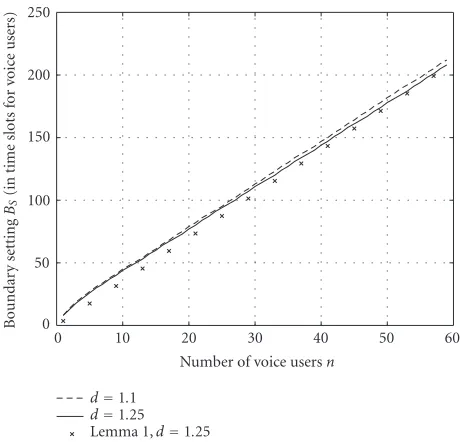
Figure 3summarizes the design and analysis results for
BS(n) following both the design equation (4) andLemma 1. We calculated BS(n) using (4) ford equal to 1.1 and 1.25, that is, 10% and 25% additional average normalized dis-tortion compared to the one where all calls transmit at full rate. In the case ofLemma 1, we setd = 1.25. We choose as voice encoder a QCELP-like encoder developed at the University of Maryland’s Communications and Signal Pro-cessing Laboratory (CSPL). This encoder is similar in struc-ture to QCELP, being multistate with different rates asso-ciated with each state. It differs from QCELP in that the output stream is embedded, which allows for the flow con-trol protocol to adapt encoding rate by selectively drop-ping source packets. Because of this property we named the encoder embedded QCELP. To calculateBS(n), we mea-sured the encoder-dependent parameters as being L = 4,
xmax1 = 1, x2max = 2, x3max = 4, x4max = 8, q1 = 0.585,
q2 = 0.035, q3 = 0.050, and q4 = 0.330. According to our tests on the embedded-QCELP encoder, we have found that the impact on perceptual quality when allowing 10% or even 25% additional average distortion is almost negli-gible. Note that the design results show a very small de-pendence on the design value chosen for d. This is be-cause the values chosen for d are relatively small so that the perceived quality degradation is kept negligible. Note that this observation was expected from Lemma 1 and its proof.Figure 3also shows the values forBS(n) obtained using
Lemma 1. These results clearly shows that the approximation
inLemma 1is very tight and that the protocol is highly effi
-cient.
4.2. Voice subsystem
It is clear from our study so far that, when using the SMB, calls are going to be operating with an average distortion equal to the targetd. Nevertheless, the instantaneous distor-tions per call change following the total bandwidth request. Equations (2) and (5) show the average normalized distor-tion D(n1,. . .,nL) in the presence of an overflow. Clearly, when there is no overflow, calls will be carried on with no packets dropping, thusD(n1,. . .,nL)=1. We can combine these two operational conditions into a single equation for
D(n1,. . .,nL). From (5)
Dn1,. . .,nL
=2(2k/n){Ll=1nlxlmax−B(n)}+, (10)
Number of voice usersn
Boundar
y
setting
BS
(in
time
slots
for
voic
e
users)
d=1.1
d=1.25 Lemma 1,d=1.25 0
0
10 20 30 40 50 60
50 100 150 200 250
Figure 3: Voice/data movable boundary BS(n), measured as the number of slots reserved for voice traffic in a frame, as a function of the number of calls in the network.
where{x}+=∆ max[0,x]. Therefore,
D(n)=Dn1,. . .,nL
=2(2k/n){ni=1xmaxi −B(n)}+ =2(2k/n){S(n)−B(n)}+.
(11)
Note that the domain ofD(n) is [1,∞] becauseD(n) is a measure of a normalized distortion. Equation (11) shows that the case D(n) = 1 (whenS(n) ≤ B(n)) needs to be considered separately from the caseD(n)>1 (whenS(n)> B(n)). For the case D(n) = 1 we have P[D(n) = 1] =
P[S(n)≤B(n)]. Assuming that the number of users is fixed and large, we can apply the CLT to approximate the distribu-tion ofS(n)/nas
S(n)
n −→Zn∼N
µX,σ 2 X
n
in distribution. (12)
Then, usingLemma 1,
PD(n)=1≈1−Q
B(n)−nµ X
σX√n
≈ 1
2, (13)
where
Q(θ) √1 2π
∞
θ e v2/2
dv. (14)
when S(n) > B(n). Over this range of values, the pdf
whereδ(x) is Dirac’s delta function.
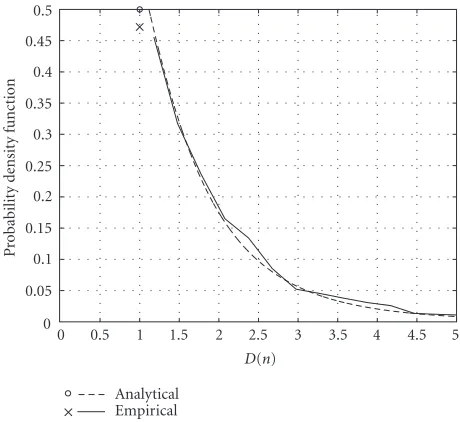
Figure 4 illustrates this result when d = 1.25. In the
figure we include the analytical function from (17) as well as the empirical result obtained from simulation using the embedded-QCELP encoder as described inSection 4.1. Note that even though in the process of developing (17), we did some simplifying assumptions, the result matches very closely the empirical observations. Also, note that there is a nonzero probability that distortion may exceed the accept-able range. Nevertheless, this does not contradicts our claim thatd = 1.25 is an acceptable value. The reason for this is that, because of their relatively low probability of occurrence, the system operates under high distortion for short periods of time and close to the average distortiondmost of the time. In terms of subjective perception of the received speech qual-ity, the high distortion values become insignificant because of their short duration.
4.3. Data subsystem
We have already emphasized the fact that, because the boundary is changed based on the number of active voice calls, for the data subsystem the voice subsystem appears as being circuit switched. Our goal in this section is to analyze
0 0.5 1 1.5 2 2.5 3 3.5 4 4.5 5
Figure4: The probability density function of the average normal-ized distortion per voice callD(n).
the performance of the data subsystem in terms of the aver-age system delay. For this purpose we assume that the data traffic consists of packets arriving following a Poisson arrival process with rateλd. Each packet is transmitted in one time slot. Those packets that cannot be transmitted because at the time of transmission all time slots in the data subsection are occupied by other data packets wait in a queue of infinite length and first-in-first-out (FIFO) service discipline. We will show next that the behavior of the data subsystem is the one of a variable number of servers (those time slots in the frame unoccupied by voice calls), each with constant service time (equal to the frame transmission time).
Let Nt be the number of voice calls at time t,Bt the number of slots assigned to the voice subsystem at time t
(movable-boundary setting at time t), Gt the number of backlogged data packets at time t, and dt the number of data packets arriving at timet. We assume that packets arriv-ing durarriv-ing the frame correspondarriv-ing to timetare put in the waiting queue until at least the beginning of the next frame. Therefore, at timetwe have
Assuming that the data packet backlog process is in the steady state and using the fact that the movable-boundary setting is independent of the data packet backlog process and using (18),
i=0Pizibe the probability generating func-tion of the data backlog process. Assuming that the voice call traffic is Poisson (λ) with exponential (η) holding times [10] and that the number of ongoing calls,N, is limited toNmax,
thenAppendix A.1shows that
gG(z)= H(z)−z
From (23), we show inAppendix A.2that the data backlog process probability generating function can be written as
gG(z)=
wherezrare the zeroes of the denominator in (23).
Simulated
Figure5: Mean waiting time obtained using (27).
Using this result and the well-known propertyE[Gt] =
limz→1dgG(z)/dz,Appendix Bshows that the mean number
of backlogged data packets is
EGt
Finally, using Little’s law, the mean data packet delay,∆d, is
This result has the form of a modified version of the for-mula for the mean waiting time of a system with Poisson in-put and multiple servers with constant service time [11]. Of course, the differences are due to the fact that the voice/data boundary (in effect the number of servers) changes over time based on the number of users present in the system. This process that changes the number of servers (i.e., the voice/data boundary setting) is represented by its probabil-ity generating function. As an application example,Figure 5 shows the mean waiting time obtained through (27) for a system using the same embedded-QCELP decoder described
inSection 4.1, the total number of slotsM=150, maximum
W
Figure6: Average waiting time as a function of data packets arrival rate (λd) with voice subsection load,ρV, as a parameter. Normalized distortion threshold equals 1.1.
estimate the mean data packet delay. Because (27) follows from the assumption of a system in steady state, it is also important to note that this result is valid up to the oper-ating point when the queuing system becomes instable and the mean waiting time grows rapidly. Finally we note that in (25) we could have usedLemma 1to do the approxima-tion Bt(n)≈ µXn. Also, assuming ergodicity of all the pro-cesses involved, the first- and second-order statistics E[Bt] andE[B2
t] can be approximately calculated as
EBt
In this section, we present simulation results aimed at pro-viding insight into the performance of the new design com-bining a slow movable voice/data boundary and selective voice packet dropping from an embedded stream. We focus on simulations aimed at evaluating the impact on the data subsection as compared to other solutions. For this purpose we used the same setup as in [6]. The TDMA frame size is assumed to be Tf = 200 milliseconds. A frame consists of
M =300 time slots, with a maximum ofB=200 allocated to voice calls. For FMB-SEAMA, usingE[D|N=Nmax]≤d as an admission control condition, from (3) withn=Nmax
W
Figure7: Average waiting time as a function of data packets arrival rate (λd) with voice subsection load,ρV, as a parameter. Normalized distortion threshold equals 1.25.
and using the fact thatBS(Nmax)=B=200, we found that
Nmax=55 ford=1.1 andNmax=57 ford=1.25 (this can also be seen inFigure 3). As discussed, these values of dis-tortion were chosen because our test have shown that they correspond to a perceptually negligible distortion.
In simulations, we assumed a Poisson arrival process (i.e., exponential interarrival time) with rateλfor voice calls with the random calls duration following an exponential distribu-tion with mean 1/η. Three cases of voice subsection load were considered withρV =λ/ηequal to 40, 50, and 60 and with 1/η=3 minutes [12] in all cases. The voice encoder used was the embedded QCELP described inSection 3.
For the data subsection we assumed also that packets arrive following a Poisson process with rate λd. Each data packet has size equal to one slot, thus each is serviced dur-ing the duration of one slot. We assume that packets may be transmitted in the same frame where they arrive if possible.
We first compared both SMB and FMB schemes by mea-suring the maximum data arrival rate that can be supported by each network configuration before the data subsection of the network is overflowed. Simulations were performed us-ing Monte Carlo method with a simulation time long enough so as to guarantee the statistical confidence in the results. We measured the average queuing delay for both FMB-SEAMA and SMB-SEAMA as a function of the data arrival rate under different voice network loads and by allowing either 10 or 25 percent additional average distortion per call (d=1.1 or
Table1: Data subsection comparison between FMB and SMB.
d ρV λd λd Difference Relative
difference
FMB-SEAMA SMB-SEAMA
1.10 40 155 126 29 0.19
1.10 50 120 108 12 0.10
1.10 60 120 115 15 0.13
1.25 40 134 130 4 0.03
1.25 50 120 111 9 0.08
1.25 60 115 108 7 0.06
1.50 40 135 130 5 0.04
1.50 50 116 108 8 0.07
1.50 60 111 105 6 0.05
overflow, we estimated the overflow point to roughly corre-spond to a time in queue equal to 50 frames in all cases. Be-cause steady-state behavior of the system cannot be assured for the measurements of interest in this case, we did not use (27). Results are summarized inTable 1. We can see that the downsizing of reducing complexity by using an SMB scheme is some data subsection performance reduction. This reduc-tion is noticeable in the case whend = 1.10. Nevertheless, this case corresponds to an overly restrictive design. We have noticed that a value ofd=1.25 is completely acceptable from the subjective performance point of view. In this case, the degradation in performance is small (ranging from 3% to 8%), especially when considering that the boundary is up-dated at a frequency three orders of magnitude smaller. It is clear from these results that the design should consider performance, complexity, and distortion as three interrelated variables. The observation that the choice of a largerd atten-uates the performance reduction in the data subsection was confirmed by measuring the performance whend = 1.50. These results are also included inTable 1.
It is important to consider that a larger, yet still accept-able, value of distortion threshold is not only desirable in view of these results but also because it maximizes the per-formance improvement of SEAMA when compared to other multiple access protocols, such as PRMA [3,4,6]. Due to a number of key differences between PRMA and SEAMA (both SMB and FMB schemes), it is not possible to compare them using the same setup as described above. Perhaps the most important difference is that PRMA uses a two-state vocoder that transmits at full rate for speech periods and does not transmit at all during silence. Then, in an overflow situa-tion, while SEAMA selectively drops a portion of packets, PRMA drops all of them, effectively silencing an active user. Because of this, PRMA is set to operate at a low overflow probability (typically 1%). In SEAMA, overflow configura-tion is based on the distorconfigura-tion threshold. Also, PRMA differs from SEAMA in the access method. Since in PRMA active users contend for access to the channel in every silence-to-talk spurt transition it is possible that users may be silenced at the beginning of a talk spurt if a contention occurs. In sum-mary, the overall effect of these differences is that fair com-parison between SEAMA and PRMA can only be drawn in
W
aiting
time
(in
n
umber
o
f
tr
ansmitt
ed
fr
ames)
Data arrival rateλd(in units ofTframe=0.002 s)
0 200 400 600 800 1000 1200
0 10 20 30 40 50 60 70
PRMA SEAMA
Figure 8: Average waiting time versus arrival rate (λd) for data packets for both PRMA and SEAMA.
Combining all the simulations results we can conclude that SMB-SEAMA presents an acceptable reduction in per-formance, considering the reduction in complexity, when compared to FMB-SEAMA. Even more, from these results we can also infer that SMB-SEAMA should still outperform PRMA.
6. CONCLUSIONS
In this paper, we have presented, designed, analyzed, and evaluated a reduced complexity variation to the source en-coding assisted multiple access (SEAMA) protocol. The vari-ation, denoted as SMB-SEAMA, uses at the application layer the same embedded and multistate voice encoder used in FMB-SEAMA. The new scheme, instead of setting the voice/data boundary based on the frame-by-frame band-width demand, sets the boundary based on the number of active voice calls in the system and a maximum average nor-malized distortion threshold. This results in a protocol that, at the network layer, is packet switched for both voice and data; however, from data traffic point of view, the voice sub-section looks as a simple circuit-switched network.
We have also presented mathematical analysis that devel-ops a model to describe the boundary setting and both the voice and data queuing subsystems behavior. These results allowed us to find a tight approximation for the boundary setting that shows that SMB-SEAMA is a very efficient MAC protocol, allocating a number of time slots to voice calls very close to the one necessary for all speech users to commu-nicate at the average encoding rate. In addition to this, the result for the data subsection models the behavior of a mul-tiserver queuing system with fixed service time and infinite waiting queue where the number of servers changes over time following some random process (a truncated Poisson in our case).
In the design, we have used average distortion values that have been shown in informal tests to have an almost negligi-ble impact on perceptual quality. Simulations results using an acceptable distortion threshold show that the SMB scheme does not significantly affect performance (less than 8% in maximum acceptable data arrival rate). Even more, simu-lations also show that SMB-SEAMA could still outperform pure packet-switched protocols such as PRMA (accepts 12% more data arrival rate). The overall result is then a highly effi -cient, low-complexity MAC protocol with an SMB that pro-vides a performance comparable with SEAMA.
APPENDICES
A. DERIVATION OF EXPRESSIONS FOR THE PROBABILITY GENERATING FUNCTION OF THE DATA BACKLOG PROCESS
A.1. Probability generating function of the data backlog process
In this appendix, we intend to show that the data backlog process probability generating function is as shown in (23).
LetgG(z)
Since the data arrival is a Poisson process with average ar-rival rateλd, its probability generating function is given by, [9],gd(z)=eλd(z−1). To findgB(z) we first note that ˆpB(n)
P[Bt = B(n)] = P[Nt = n]. We also assume that the call traffic is Poisson (λ) with exponential (η) holding times [10]. The number of ongoing calls,N, is limited toNmax, thus is a truncated-Poisson (ρV,Nmax) random variable whereρV =
A.2. Alternate expression for the probability
generating function of the data backlog process
Next, we can derive a more useful expression forgG(z) that does not explicitly depend onQandH(z). Note that the de-nominator ofgG(z) in (23) hasMzeroszr,r=0, 1,. . .,M−1, which are the roots of
C
Using the normalizing property for probability generating function limz→1g(z)=1, it is clear that one root isz0 =1. The rest of the roots can be obtained by setting in (A.6)
zr=γe−jω, with j= √
−1,CNmax
k=0(ρkV/k!)zB(k)=Γ(z)ejθ(z), separating the real and imaginary parts to obtain the equa-tions
γ=Γ1/Meλd(γcosω−1)/M,
ω=2πr+θ+γλdsinω
M , r=1, 2,. . .,M−1,
(A.7)
that need to be iterated to find each of the rootszr.
SincegG(z) has no poles for|z| ≤ 1, the numerator of
The constantKcan be found by using the normalizing prop-erty limz→1gG(z)=1, that is,
Therefore, the data backlog process probability generating function is as in (25).
B. DERIVATION OF EXPRESSION FOR MEAN NUMBER OF BACKLOGGED DATA PACKETS
In this appendix, we show that the mean number of back-logged data packets is as in (26).
Knowing the probability generating function of the data backlog process, its expected value can be obtained from the property E[Gt] = limz→1dgG(z)/dz, [9]. Consider first
that E[Bt] = limz→1dgB(z)/dz and E[Bt2] − E[Bt] = limz→1d2gB(z)/dz2[9]:
lim z→1
−gB(z)−
M−λdz
zM−1eλd(1−z)
gB(z)−zMeλd(1−z) − 1 1−z
=M−
M−λd 2
+gV (1) 2M−λd−gB(1)
=M−
M−λd 2
+EB2t
−EBt
2M−λd−E
Bt
.
(B.13)
Then, we conclude that (26) holds.
REFERENCES
[1] J. E. Wieselthier and A. Ephremides, “Fixed- and movable-boundary channel-access schemes for integrated voice/data wireless networks,” IEEE Trans. Communications, vol. 43, no. 1, pp. 64–74, 1995.
[2] J. E. Wieselthier and A. Ephremides, “Performance analysis of fixed- and movable-boundary channel-access schemes for integrated voice/data wireless networks,” inProc. 12th Annual Joint Conference of the IEEE Computer and Communications Societies. Networking: Foundation for the Future (INFOCOM ’93), vol. 3, pp. 1204–1213, San Francisco, Calif, USA, March– April 1993.
[3] D. J. Goodman, R. A. Valenzuela, K. T. Gayliard, and B. Rama-murthi, “Packet reservation multiple access for local wireless communications,” IEEE Trans. Communications, vol. 37, no. 8, pp. 885–890, 1989.
[4] S. Nanda, D. J. Goodman, and U. Timor, “Performance of PRMA: a packet voice protocol for cellular systems,” IEEE Trans. Vehicular Technology, vol. 40, no. 3, pp. 584–598, 1991. [5] P. T. Brady, “A model for generating on-offspeech patterns in two-way conversations,”Bell System Technical Journal, vol. 48, no. 9, pp. 2445–2472, 1969.
[6] M. Alasti and N. Farvardin, “SEAMA: a source encoding as-sisted multiple access protocol for wireless communications,”
IEEE Journal on Selected Areas in Communications, vol. 18, no. 9, pp. 1682–1700, 2000.
[7] Qualcomm Inc., “Proposed EIA/TIA interim standard— wideband spread spectrum digital cellular system dual-mode mobile station-base station compatibility standard,” Tech. Rep. 45.5, Telecommunications Industry Association (TIA), San Diego, Calif, USA, April 1992.
[8] A. Gersho and R. M. Gray, Vector Quantization and Sig-nal Compression, Kluwer Academic Publishers, Boston, Mass, USA, 1992.
[9] A. Leon Garcia, Probability and Random Processes for Electri-cal Engineering, Addison Wesley, Reading, Mass, USA, 2nd edition, 1994.
[10] C. M. Barnhart, J. E. Wieselthier, and A. Ephremides, “An approach to voice admission control in multihop wireless net-works,” inProc. 12th Annual Joint Conference of the IEEE Com-puter and Communications Societies. Networking: Foundation for the Future (INFOCOM ’93), vol. 1, pp. 246–255, San Fran-cisco, Calif, USA, March–April 1993.
[11] H. Akimaru and K. Kawashima,Teletraffic: Theory and Appli-cations, Springer-Verlag, Germany, 2nd edition, 1999. [12] A. Ganz, Z. J. Haas, and C. M. Krishna, “Multi-tier wireless
networks for PCS,” inProc. IEEE 46th Vehicular Technology Conference. “Mobile Technology for the Human Race” (VTC ’96), vol. 1, pp. 436–440, Atlanta, Ga, USA, April–May 1996.
Andres Kwasinski received his diploma in electrical engineering from the Buenos Aires Institute of Technology, Buenos Aires, Argentina, in 1992, and the M.S. and Ph.D. degrees from the University of Maryland, College Park, Md, in 2000 and 2004, respec-tively. Andres Kwasinski is currently a Re-search Associate in the Institute for Systems Research, University of Maryland, College Park, Md. During 1993, he worked for
PECOM-NEC as telephone switches software developer and from 1994 to 1998 for Lucent Technologies in several capacities. His re-search interests are in the area of multimedia wireless communica-tions, user-cooperative communicacommunica-tions, cross-layer designs, wire-less MAC protocols, and speech, audio, and video processing (es-pecially in the area of signal compression).
Mehdi Alastireceived the Ph.D. degree in electrical and computer engineering from the University of Maryland, College Park, Md, in 2001. He then worked at Zagros Networks, Inc. from 2001 till 2003, where he was a Principle Engineer architecting state-of-the-art switch fabrics and designing scheduling algorithms to support quality of service for high-speed switching systems. From July 2003 till January 2004, he was a Faculty Research Associate in the De-partment of Electrical and Computer Engineering, the University of Maryland, working on wireless communication networks. Since January 2004, he is with the Advanced Technology Group, Airvana Inc., as a Principle Engineer working on algorithms and protocols for high-speed wireless communication networks. He still conducts research in the area of communication networks and in particular the design algorithms and protocols for supporting quality of ser-vice in wireless networks. Mehdi Alasti is responsible for a number of inventions including his inventions in quality-of-service aware scheduling algorithms for crossbar switches, multiple access pro-tocols for integrated voice-data wireless networks, and rate-based scheduling algorithms for wireless networks.
K. J. Ray Liureceived the B.S. degree from the National Taiwan University in 1983, and the Ph.D. degree from UCLA in 1990, both in electrical engineering. He is a Professor in the Department of Electrical and Com-puter Engineering and Institute for Systems Research, University of Maryland, College Park. His research contributions encompass broad aspects of wireless communications and networking; information security;
Dr. Liu is a Board of Governor Member and has served as Chairman of Multimedia Signal Processing Technical Committee of IEEE Sig-nal Processing Society.
Nariman Farvardinreceived the B.S., M.S., and Ph.D. degrees in electrical engineer-ing from Rensselaer Polytechnic Institute, Troy, NY, in 1979, 1980, and 1983, respec-tively. Since January 1984, he has been with the Department of Electrical and Computer Engineering, the University of Maryland, College Park, Md, where he is currently a Professor and holds a joint appointment with the Institute for Systems Research. Dr.