ISSN(Online): 2320-9801
ISSN (Print) : 2320-9798
I
nternational
J
ournal of
I
nnovative
R
esearch in
C
omputer
and
C
ommunication
E
ngineering
(An ISO 3297: 2007 Certified Organization)
Vol. 4, Issue 5, May 2016
Feature Based Extraction of Content Delivery
with User Intelligence
Sonali D. Darade, G. M. Bhandari
Student, Department of Computer Engineering, JSPM’s Bhivarabai Sawant Institute of Technology and Research, Wagholi, Pune, India
Professor, Department of Computer Engineering, JSPM’s Bhivarabai Sawant Institute of Technology and Research, Wagholi, Pune, India
ABSTRACT: In the proposed system, we presented a new system for the delivery of the content,by utilizing the two various systems such as Context and User Intelligence. This system delivers the contents as a response to the user when user makes a request. Proposed system is able to manage the contents by statically as well as dynamically that is based on the kind of the contents. Issues of the previous system are solved by the proposed system. Challenging problems of the previous system are overcome by the new architecture called as the CPCDN. CPCDNuses an algorithm to overcome the content delivery problems. In this system we contribute the feature based extraction on the basis ofprevious videos.This method extracts the videos fromthe most number of download of particular videos..
KEYWORDS: Context, Content, CPCDN, feature extraction. I. INTRODUCTION
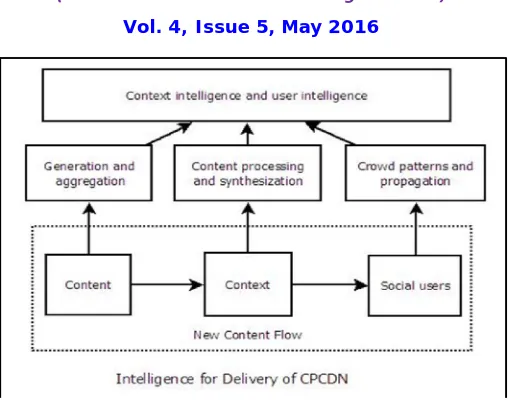
Fig. 1. Content flow presented by CPCDN with intelligences mining.. II. RELATED WORK
In this segment it illustrates existing work done by the analysts for content mining process.
Robert Schmidt proposes [1], the content delivery is similar in everything about premier essential existing accessible services. An ensured event to web sites is frequently conceded through SSL. Still, movement conjunction over the network layer could break this security model and creates further ensuring strategy important. This paper introduces an essential measure of the assurance of servers by RPKI, Resource Public Key Infrastructure to prevent conjunction inside the web spine. This paper presents applied starting strategy that records for dispersed content planning and should modify the content property holders to calculate and enhance the security of the online framework. Anne-Marie Kermarrec proposes [2] Peer-to-companion (P2P) operations are vast investigations of recent years, bringing about amazingly climbable operations for a huge differs of isolated services and applications. A P2P consolidates reciprocally proper roles to machines that may work each as client and server. This eases the need for any primary component to hold world information. Rather, every peer gets single decisions supported related information of the rest of the operation, giving significant thoughtfully.
Bernd Klasen proposes [3] the developing on-line activity that is transport the base as far as possible impels a basic request for an effective content delivery model. Promoting social networks and exploitation enhanced delivery most likely will encourage overcoming this disadvantage. In any case inferable from the enhanced way of the concerned networks like a model is hard to evaluate. At the time of this paper it propose the utilization a simulative methodology to deal with examination however the SatTorrent P2P protocols supported by social networks will enhance content delivery through that of diminished exchange length and traffic.
KatrienVerbert proposes [4], Recommender frameworks are observed broadly by the Technology Enhanced Learning (TEL) community all through the late years. By typical proper resources from a without a doubt flexible style of decisions, such operations delivers a better way to give each observing works. Analysis is going on in extremely various and well scenario, the mix of discourse input in regards to the client inside the recommendation framework has pulled in primary interest. Such strategy is observed as worldview for building up a intelligent frameworks that will more prominent suspicion and anticipate the necessities of end users and act extra with effectiveness.
ISSN(Online): 2320-9801
ISSN (Print) : 2320-9798
I
nternational
J
ournal of
I
nnovative
R
esearch in
C
omputer
and
C
ommunication
E
ngineering
(An ISO 3297: 2007 Certified Organization)
Vol. 4, Issue 5, May 2016
III.PROPOSED ALGORITHM
System known as Content Delivery system is first begins from the user provides desired term to search for some outcomes and outcomes are directly extracted over the web. Proposed system works as, user provides query for particular video and system processes the query or term to retrieve the information of outcomes over the You Tube video browser. Input query provided by the user preprocessed over the web and also outcomes are mined over the web at the time when system operations processing the retrieving contents of the particular video that is provided query by user inside query insertion block. At the start, these contents are in encrypted form and it has to integrate within the suitable format where static as well as dynamic contents are available. All retrieved contents outcomes are Fetched contents results are mixedwithin a single block and this block contains data or data relevant to the particular video like video name, time duration and number of downloads by other users etc. Every outcome display the total downloads due to feature extraction within the proposed system. C-1 Content giving is context-aware: Once created by the content provider or a user, content (such as a photo transmitted by a user) are processed to be synthesized (e.g., mixed at the time of an Internet page) with one by one associated elements (like blogs) to be finally provided to a user at the time ofprevious context. The introduced computing analysis demonstrate that it turns into a standard rather than connected degree exception, that contents are incorporated generally in a few contexts. C-2 Content delivery is useraware: Rather than the latent clients of the contents, clients get to be essential content makers [4] and propagators. Client movement and social activity have extraordinarily changed while contents are utilized by family clients are worried inside the content delivery from content creation to content distribution.
A. Content Services
This paper implements continuous delegate content services to work persistent researches of a CPCDN: World Wide web Service: Since developed most recent twenty years, achievement of World Wide web has made components the overwhelming type of content delivery as well as it is changing into another trend that website page are dynamically made, such as consistent components part is joined in entirely distinct Webpages, though a web page suit to numerous multimedia framework components. These components are adaptably consolidated and conveyed in a few contexts, such as the web page under steady URL joins components once it is acquired by various clients at various times. The web social network service has been increasingly all around enjoyed past years [10]. Inside a web social network, contents are made by clients and worked through the social associations. Its upgraded content delivery inside an more sense that social relationship and client conduct can impact that contents are analyzed by that clients.
B. Measurement Setup
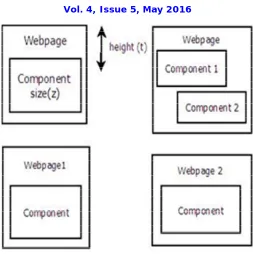
Fig. 2. Importance of components in web pages
C. Dynamic Delivery Context
A huge division of website pages, nowadays include numerous parts (incorporating not exclusively fundamental markup language codes, moreover multimedia framework objects like pictures), that take a lot of your time to exchange. In 2013, the sites of Tencent portal web site mixed over a hundred and forty sections, whose size may differ from 29 bytes to 168 KB, with a minimum size of 13.8 KB. Content suppliers adaptably form dynamic parts into a to a great degree custom-made context, such as the web pages of Tencent web page are adaptably made for individuals in step with their reference and time and area information.
D. Crowd Pattern
Conventional CDN provides components in an extreme passive technique, such as no previous information are utilized by the CDN while working a content demand. This will be not economical for current content delivery, wherever clients appear certain inclination of contents. In current content delivery, there available interest patterns between a group of clients and a bundle of contents, such as the gang structure. This framework utilizes a co-clustering algorithmic system [8] to the grid molded by five hundred clients summarily best and hence the components these clients disperses. The co-clustering outcomes are instance in each yellow/light example shows that a content has been shared by a current client. This framework analyses that there are numerous client clusters, wherever clients inside the similar client group propose to ask for the contents inside the comparing content cluster. This investigation proposes that clients might be grouped into teams with comparable inclinations. Additionally, the black/dark illustrations are the shares provided by an identical five hundred clients in one day, consistently when the co-clustering inside the underlying circular. The current framework analyses that the greater part of the new examples are spread over the scopes of the groups supported the previous client-content co-clustering. According to the our co-clustering outcomes, we characterize a client-content relevance file which presents the probability level for client to demand content later on as indicated by the clustering, which is ascertained as follows:
)
1
...(
|
||
|
U
C
M
M
ISSN(Online): 2320-9801
ISSN (Print) : 2320-9798
I
nternational
J
ournal of
I
nnovative
R
esearch in
C
omputer
and
C
ommunication
E
ngineering
(An ISO 3297: 2007 Certified Organization)
Vol. 4, Issue 5, May 2016
Fig.3. Guiding social content delivery in CPCDN using predicted popularity based on the user intelligence.
Social Popularity Index: Configuration ofauthor creates the most natural mixture of the two opinions. This system plansa social popularity index of content as follows:
(
)
1
(
1
)
(
(
)
(
))
(
)...(
2
)
)
(
c
ap
c
f
u
p
u
u
S
c
x
where is the previous popularity of contents, which is designed as the amount of prior viewers of content, is the follower number of customer, is the typical re-dispersing extent of client, such as the ordinary part of devotees that have dispersed the content posted by client in the late historic time and is the set of clients who have dispersed components. Content with a tremendous is to pull in more requests in the further time.
E. Feature based Extraction
The feature extraction concept is introduced for the proper outcomes. This will be accomplished through the most downloaded videos over the You Tube browser that brought list of all videos; this video extracts the video content from the summary and returns the desired video content to the client. The concept Feature extraction starts from connective beginning set of scaled data and assembles inferred segments intended to be informative as well as non-frequent, giving the accompanying learning and generalization levels and in specific circumstances results in higher human expectations. Feature extraction is clarified to spatiality corruption. Once the input document to applied equation is basically more enormous to be applied and it's determined to be repeated then it is redesigned into a corrupt cluster of choices (additionally named an alternatives vector). This strategy is named feature extraction. This alternatives region unit determined to contain the relative information from the provided input document, so the predefined work is worked by abuse this degrade outline instead of the entire beginning data.
F. Algorithm
Algorithm: Crowd-pattern based replication
1: procedure REPLICATION 2: Replication set of R =
4: Update the index
e
ucof user content relevanceusing Eq. (1)5: for all
c
A
do6: Through the relevance index get updated
V
c 7: Into R push all (c, r)8: end for
9: Rank R in
v
crs
reverse order 10: for all (c, r) in the ranked R do 11: Content c is cloned at r 12: Local server load get updated 13: break if local servers are fully cloned 14: end for15: end procedure
G. Complexity Analysis
Time complexity of crowd pattern is n=O(logn)
H. Mathematical Model
UCDN is the lastcost of web contentprovider below CDN infrastructure, V(X) is that the better thing related the contentprovider by responding to the total requestvolume X, (N) is that the profit per requestfrom faster content delivery via a geographicallydistinct set of N CDN proxy servers, Co is cost of outsourcing contentdelivery, P(u) is that the usage-based pricingfunction and u is that the CDN web utility.
)
4
)...(
arctan(
2
)
3
)...(
(
)
(
)
(
i CDNu
u
P
Co
X
N
X
V
U
I. Experimental Setup
We use Java framework (version jdk 8) on Windows platform building the system, the development tool used is Netbeans (version8.1). The system can run on any slandered machine, no specific hardware to run the application.
IV.RESULTS AND DISCUSSION
ISSN(Online): 2320-9801
ISSN (Print) : 2320-9798
I
nternational
J
ournal of
I
nnovative
R
esearch in
C
omputer
and
C
ommunication
E
ngineering
(An ISO 3297: 2007 Certified Organization)
Vol. 4, Issue 5, May 2016
Fig. 4 Accuracy Comparison Graph
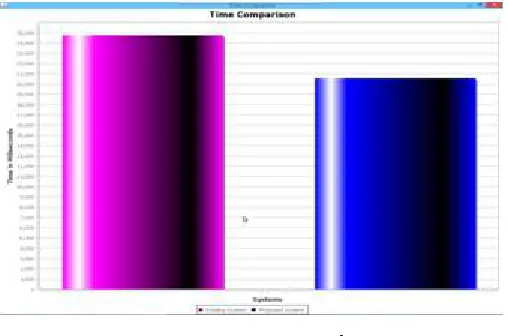
Fig.5time comparison graph demonstrates the comparison between existing system and proposed system. Comparison says that the proposed system is more time efficient than the existing system.
Fig.5 Time Comparison Graph
V. CONCLUSION AND FUTURE SCOPE
REFERENCES
1. Robert Schmidt, When BGP Security Meets Content Deployment:Measuring and Analyzing RPKI-Protection ofwebsites, 2014.
2. Anne-Marie Kermarrec Want to scale in centralized systems?Think P2P, Universit of Rennes 1 - ESIR / IRISA,Inria Rennes, Rennes, France, 2015.
3. Bernd Klasen, SocioAware Content Distribution using P2Psolutions in Hybrid Networks, SES ASTRA TechCom, Betzdorf,Luxembourg, 2014.
4. KatrienVerbert Department of Computer Science, KU Leuven,Celestijnenlaan 200A, B-3001 Leuven, Belgium, 2012.
5. B. Ager, W. Mhlbauer, G. Smaragdakis, and S. Uhlig, ”webcontent cartography,” in Proc. ACM Internet Meas. Conf.,2011, pp. 585600. 6. E. Bakshy, J. Hofman,W. Mason, and D.Watts, ”Everyone’san influencer: Quantifying influence on Twitter,” in Proc.ACM Int. Conf. web
Search Data Mining, 2011, pp. 6574.
7. B. Brewington and G. Cybenko, ”How dynamic is thewebb?,” Comput. Netw., vol. 33, no. 1, pp. 257276, 2000.
8. M. Cha, H. Kwak, P. Rodriguez, Y. Ahn, and S. Moon, ”Itube, you tube, everybody tubes: analyzing the world’slargest user generated content video system,” in Proc.ACM SIGCOMM, 2007, pp. 114.
9. M. Cha, A. Mislove, and K. Gummadi, ”A measurementdrivenanalysis of information propagation in the Flickrsocial network,” in Proc.ACM Int. Conf. World Wide web,2009, pp. 721730.