MULTIPARENTAL POPULATION
Ef
fi
ciently Tracking Selection in a Multiparental
Population: The Case of Earliness in Wheat
Stéphanie Thépot,*,†,1Gwendal Restoux,‡Isabelle Goldringer,†Frédéric Hospital,§ David Gouache,** Ian Mackay,††and Jérôme Enjalbert† *Université Paris-Sud, Unité Mixte de Recherche 0320/Unité Mixte de Recherche 8120, Génétique Végétale, F-91190 Gif-sur-Yvette, France,†Institut National de la Recherche Agronomique, Unité Mixte de Recherche 0320/Unité Mixte de Recherche 8120, Génétique Végétale, F-91190 Gif-sur-Yvette, France,‡Unité d’Ecologie, Systématique et Evolution, Centre National de la Recherche Scientifique Unité Mixte de Recherche 8079, Université Paris-Sud, F-91405 Cedex Orsay, France,§Institut National de la Recherche Agronomique, Unité Mixte de Recherche 1313 Génétique Animale et Biologie Intégrative, F-78352 Jouy en Josas, France, **Arvalis, Institut du Végétal, Station Expérimentale, F-91720 Boigneville, France, and††National Institute of Agricultural Botany, Huntingdon Road, Cambridge CB3 0LE, United Kingdom
ABSTRACTMultiparental populations are innovative tools forfine mapping large numbers of loci. Here we explored the application of a wheat Multiparent Advanced Generation Inter-Cross (MAGIC) population for QTL mapping. This population was created by 12 generations of free recombination among 60 founder lines, following modification of the mating system from strict selfing to strict outcrossing using thems1bnuclear male sterility gene. Available parents and a subset of 380 SSD lines of the resulting MAGIC population were phenotyped for earliness and genotyped with the 9K i-Select SNP array and additional markers in candidate genes controlling heading date. We demonstrated that 12 generations of strict outcrossing rapidly and drastically reduced linkage disequilibrium to very low levels even at short map distances and also greatly reduced the population structure exhibited among the parents. We developed a Bayesian method, based on allelic frequency, to estimate the contribution of each parent in the evolved population. To detect loci under selection and estimate selective pressure, we also developed a new method comparing shifts in allelic frequency between the initial and the evolved populations due to both selection and genetic drift with expectations under drift only. This evolutionary approach allowed us to identify 26 genomic areas under selection. Using association tests betweenflowering time and polymorphisms, 6 of these genomic areas appeared to carryflowering time QTL, 1 of which corresponds toPpd-D1, a major gene involved in the photoperiod sensitivity. Frequency shifts at 4 of 6 areas were consistent with earlierflowering of the evolved population relative to the initial population. The use of this new outcrossing wheat population, mixing numerous initial parental lines through multiple generations of panmixia, is discussed in terms of power to detect genes under selection and association mapping. Furthermore we provide new statistical methods for use in future analyses of multiparental populations.
KEYWORDSQTL detection; parental contribution; recombinant population; selection detection; experimental evolution; multiparental populations; Multiparent Advanced Generation Inter-Cross (MAGIC); MPP
A
LTHOUGH the recent development of genomesequenc-ing in crop species has strongly increased capacity for gene discovery, the accurate mapping of genes controlling the genetic variation of complex traits (QTL) remains a key objective. The principal mapping methods rely on the detec-tion of statistical associadetec-tion between polymorphisms at mo-lecular markers and quantitative variation of phenotypic traits
and were historically developed for progenies of biparental crosses with parents chosen for their extreme phenotypes at a trait of interest. These populations are powerful resources for QTL detection, but have low precision as few effective meioses (and thus subsequent recombinations) occur during their development. As a result, large parental haplotype blocks are preserved in the segregating population. In addi-tion, the number of QTL segregating is limited by the use of
only two parents (Cavanaghet al.2008). Association genetics
in a panel of diverse accessions can partly overcome these limits. These have higher numbers of loci segregating and ex-ploit numerous historical recombinations leading, in theory,
tofiner mapping of multiple QTL. However, a major limit of
association mapping is the unavoidable genetic structure
Copyright © 2015 by the Genetics Society of America doi: 10.1534/genetics.114.169995
Manuscript received August 19, 2014; accepted for publication November 11, 2014; published Early Online November 17, 2014.
Supporting information is available online athttp://www.genetics.org/lookup/suppl/ doi:10.1534/genetics.114.169995/-/DC1.
1Corresponding author: Université Paris-Sud, UMR 0320/UMR 8120 Génétique
within the panel, which can lead to increased rates of false-positive associations (Breseghello and Sorrells 2006). This
can be accounted for in statistical models (Yuet al. 2006),
but power to detect QTL that are correlated with that struc-ture is lost.
Therefore, different kinds of multiparental populations
have been developed to obtain greater precision in fine
mapping with little or no genetic structure. One proposed option is to combine different biparental populations, for
example, factorial crosses or diallels (Rebai and Goffinet
1993) or crosses with a common reference line (nested
as-sociation mapping, NAM; Yuet al.2008). For complete allele
reshuffling, another option relies on optimized pyramidal or
circular crosses between 4, 8, or 16 parents (Multiparent Advanced Generation Inter-Cross, MAGIC; Kimura and Crow
1963; Cavanaghet al.2008; Huanget al.2012).
When the number of parents increases, or when multiple generations of intercrossing are added (advanced intercrosses) to accumulate more meiosis per individual (Rockman and Kruglyak 2008), controlled crossing becomes too onerous and random crossing appears the best solution (see, for instance, theArabidopsis thalianaMAGIC population obtained with a
di-allel cross followed by panmixia; Scarcelliet al.2007). Infinite
populations, random advanced intercrosses may induce genetic drift and selection leading to evolution of allele frequencies. Although drift can be reduced through increasing the number of crosses (increasing effective size) and was shown to be limited in effect (Rockman and Kruglyak 2008), avoiding selection is a hard task. Nevertheless, shifts in allele fre-quency can be used to detect regions under selection and
these provide another approach to QTL identification.
Various methods have been proposed to identify regions under selection by detecting selective sweeps (Maynard Smith and Haigh 1974), through either (i) shifts in allele frequency at some markers, which are large when compared to shifts in the rest of the genome (Goldringer and Bataillon 2004; Nielsen 2005) or (ii) directional temporal shift in
fre-quency using genetic time series data (Bollback et al.2008;
Nishino 2013; Federet al.2014). These methods raise a
num-ber of statistical challenges. A major complication is that the
actual population size is unknown (Federet al.2014).
The purpose of this study is to assess the impact of 12 generations of advanced random intercrosses on an evolved
dynamic management population of wheat (Triticum aestivum)
(Henry et al. 1991) and to demonstrate the value of this
kind of population for gene discovery, usingflowering time
as an illustration. The studied population has been derived from a dynamic management program aiming at conserving adaptive potential of the crop through repeated cultivation of numerous populations in contrasted locations. These
pop-ulations have three specific features: (i) a large number of
founders (60); (ii) a mating system modified from
predom-inantly selfing to strict outcrossing using genetic male
ster-ility; and (iii) a middle-term evolution with 12 generations of open pollination. First we describe the evolution from the parents to the evolved population of (i) a phenotypic trait
involved in climatic adaptation,flowering time, and (ii) the
genetic diversity using the 9K i-Select SNP array. Then, as parental contributions can also evolve during the intercross generations, we develop a Bayesian method to estimate the parental contributions to the evolved population. Third, we estimate the effective size of the population and search for loci under selection using a novel method that allows detec-tion of selecdetec-tion between only two temporal samples,
pro-viding both a test of significance and an estimation of the
selection coefficient. The loci we detected as under selection
were additionally tested for association withflowering time.
Finally we discuss the use of panmictic multiparental pop-ulations to study the genetic bases of local adaptation.
Materials and Methods
Biological material: The INRA MAGIC population
The material studied is referred to as a MAGIC population, in its broad sense, as it incorporates both multiple parents and advanced intercrossing. It is derived from a very diverse composite population created between 1976 and 1980 (Trottet 1988), by crossing 60 European and worldwide wheat breeding lines selected for their resistance to diseases
and their good agronomic values (Supporting Information,
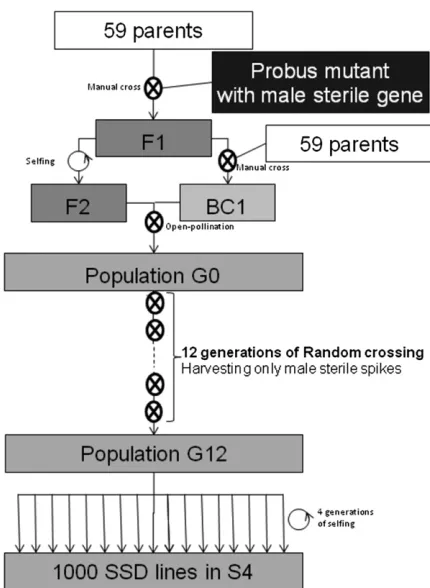
Table S1). Each of the 59 parents wasfirst crossed with male
sterile segregants from the 60th, the variety“Probus”(Fossati
and Ingold 1970), which is maintained as heterozygous for the
recessive nuclear sterility genems1b(McIntosh 1988). Among
the F1 plants (Ms1b/ms1b = fertile), some were selfed (F2)
while others were backcrossed (BC1) with the 59 parents to reduce the proportion of Probus genome in the population. The bulked seeds of the two progenies (F2 and BC1) were then
sown in a mixed row design, in an isolatedfield surrounded
by rye (Secale cereal) (Figure 1). Male-sterile individuals
(ms1b/ms1b) were tagged at flowering time, naturally wind pollinated by fertile plants, and harvested at maturity. Due to
this open pollination, the relative contribution of F2 vs. BC1
plants was unknown, leading to uncertainty regarding the con-tribution of Probus relative to the other parents. The progeny of
thisfirst outcrossing cycle (G0 population) were resown in
iso-lation and male-sterile plants harvested again. Such manage-ment stabilizes the proportion of male-sterile plants at 50% in
the field. The Probus contribution is therefore expected to
range between 50% (F2 only) and 25% (BC1 only), with 37.5% in the balanced case. Note that around the male-sterility gene the Probus contribution is either 100% for male-sterile (ms/ms)or 50% for male-fertile (Ms/ms) genotypes.
This population has been managed in Le Moulon (48.4°
N, 21°E) for 12 generations, as part of the French dynamic
management project (Henry et al. 1991), and has always
been grown in isolation without artificial selection. Each
generation, at least 10,000 seeds, was sown and 3000
spikes from tagged male-sterile plants were harvested and
threshed as a bulk. At the 12th generation, 1000“S4”lines
that in total, these lines underwent 15 outcrossing cycles (three for the creation of the original population, G0 pop-ulation, plus 12 at Le Moulon).
In this study, we analyzed 56 of the 60 parental lines
including Probus (4 were no longer available; Table S1), as
well as a subset of 380 out of 1000 S4 SSD lines. The SSD lines were chosen to represent the phenotypic diversity of the pop-ulation on the basis of a principal component analysis (PCA) of
all phenotypic traits scored the first year. These 380 lines
(hereafter the“evolved population”) consist of all individuals
with extreme phenotypes and a random sample of
intermedi-ate scoring lines. This selected set was not significantly
differ-ent from 500 random samples of 380 individuals, both for SNP
allelic frequencies and for mean flowering time (data not
shown). In contrast, this sampling strategy increased the phe-notypic variance and the subsequent ability to detect QTL.
Phenotyping
Flowering time was assessed infield trials at Le Moulon over
two seasons (2010–2011 and 2011–2012), with a November
sowing. Each genotype (S4 SSD lines + parents) was sown in two single-row (20 seeds) replicates in a randomized
complete block design. For each line, flowering time was
approximated using heading date score, when 50% of the
plants had half of their main ears emerged from theflag leaf.
Heading date was transformed into the sum of the mean
temperatures per day (i.e., degree days or dd) from sowing
to heading, based on data recorded by the meteorological station at Le Moulon.
Molecular analysis
Total DNA of each of the 436 lines (380 SSD lines + 56 parents) was extracted from 500 mg of leaf tissue.
Ex-tractions were performed using a modified procedure of
Dellaportaet al.(1983) including a carbohydrate
precip-itation described in Michaels et al. (1994). Genotyping
was performed by M. J. Hayden’s team at DPI Victoria in Bundoora, Australia, using a 9K i-Select SNP array (Cavanagh et al. 2013). SNP allele clustering was performed using
GenomeStudio software (http://support.illumina.com/array/
array_software/genomestudio.html). Errors in allele assigna-tion by GenomeStudio were detected by visual inspecassigna-tion of SNP allele clusters and manually corrected. Only SNPs that
could be unambiguously scored as biallelic were kept, i.e.,
SNPs exhibiting three clusters or less. Fourteen additional polymorphisms located in candidate genes involved in the
earliness pathway (Table S2) were genotyped using the
KASPar SNP genotyping system developed by KBioscience (http://www.kbioscience.co.uk/).
Population structure analysis
Population genetic structure was analyzed independently for the parental and the evolved populations with a
discrim-inant analysis of principal components (DAPC; Jombartet al.
2010). The DAPC computation was made using the package “adegenet” v. 1.3–6 (Jombart and Ahmed 2011) and the statistical program R v. 2.15.3-1 (R Development Core Team 2013). Euclidian distance among genotypes was calculated
using the procedure dist.gene in the package“ape”(Paradis
2010). An analysis of molecular variance (AMOVA; Excoffier
et al. 1992) was performed to estimate the percentage of genetic variance explained by structure, as determined by the PCA k-means procedure included within the DAPC
method, using the“pegas”R-package (Paradis 2010).
Estimation of parental contributions
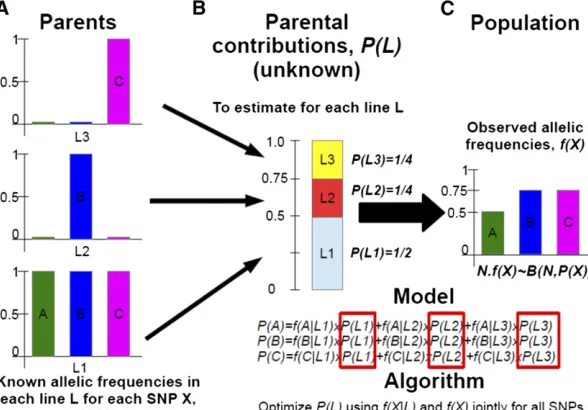
As the contribution of parental lines to the evolved popula-tion is unknown due to the generapopula-tions of open pollinapopula-tion, we developed a Bayesian approach for its estimation. We
considered the SSD lines to be afinite sample of a theoretical
infinite population (i.e., no genetic drift but sampling
stochas-ticity) resulting from many cycles of free recombination of a set of 56 parental lines without selection pressure, muta-tion, migramuta-tion, or linkage disequilibrium among markers. Under these assumptions, the likelihood of an observed data set is
L ¼Y
L
l
38032
nl
pnl l ð12plÞ
380322nl;
with plthe allelic frequency of allele A at the locuslin the
evolved population, nlthe total count of allele A at locusl
over all the sampled SSD lines, and Lthe total number of
loci (the complete Bayesian model is fully described in the Appendix). This model is very similar to that used in the
Structure software (Pritchardet al.2000) when population
of origin is known (i.e., the case with learning) except that
we have focused on the origin of the whole population and not on individual assignments. Similarly we have assumed
that loci were in Hardy–Weinberg equilibrium within the
population. Thus we have assumed that allelic frequencies
werefixed after thefirst round of random mating.
The probabilitypldepends on the expected contribution
of each parental linek,P(Par= k), and on the frequency of
allele A at locuslin each parental linek,f(A)lk,
pjl¼ XK
k
fðAÞlk PðPar¼kÞ;
with Kthe total number of parental lines. Genetic
informa-tion is assumed to be available for all putative parental lines
K; thus PKkPðPar¼kÞ ¼1: Furthermore P(Par = k) is
as-sumed to be the same for any part of the genome (no selec-tion, no LD) and, therefore, the same for all loci studied.
We considered that no previous information is available
on the putative contribution of each parental linek(even for
Probus); thus, we chose a noninformative prior distribution
using aflat Dirichlet distribution (i.e., an even contribution
of all parental lines).
Bayesian estimations of the posterior distributions ofP(Par
= k) were performed considering the whole set of markers,
Pgw(Par= k), or at the chromosome level considering subsets
of markers for each chromosome c,Pc(Par= k). The posterior
distributions were estimated for each of the 56 available pa-rental wheat lines with a MCMC method using the Gibbs
sampler (i.e., a particular case of the Metropolis–Hastings
algorithm) implemented in JAGS (Plummer 2003). Note that the four unavailable parental lines were ignored since no genetic information was available. We used the 5590 markers polymorphic in the parental populations for the genome-wide estimations and the 5056 markers mapped for the chromo-some level estimations. Three independent Markov chains
ran for five million iterations for genome-wide estimates
(56 parental lines 3 3 chains 3 5.106 iterations) and ran
for 1 million iterations for estimates at the chromosome level
[56 parental lines321 chromosomes (for bread wheat)33
chains3106iterations]. To reduce temporal correlation
be-tween successive elements within the Markov chain only one
element overfive was kept. Chain convergence was checked
using a Gelman and Rubin (1992) test. Analyses were con-ducted using R (R Development Core Team 2013) and the “CODA”package (Plummeret al.2006).
The 56 genome-wide estimates of parental contributions were considered as good proxies for the genetic composition of the initial population. Indeed, global variation in parental contributions can occur only in the very early intercrosses, as the high level of recombination accumulated over subsequent generations makes global selection against one parent very unlikely on a genome-wide scale. A theoretical initial
popula-tion was therefore designed, composed of the 56 parental multilocus genotypes, weighted according to their contribu-tions estimated on genome-wide data. This population will be
referred hereafter as the“initial population.”
To validate this method we simulated a set of 50 SSD lines derived from the random mating of six parental
geno-types. Full random reshuffling of 30 biallelic and independent
SNP markers was simulated, using variable initial parental contributions including even contributions (100 simulated data sets for three scenarios). In all cases, the mean and the mode of
the posterior distribution ofP(Par= k)were always close to the
real simulated contributions, which were all included in the highest posterior density interval (HPD).
To test the robustness of this method to the assumption of linkage equilibrium, we compared estimates using all the markers on chromosome 1A (442 markers) with estimates
after removing markers in linkage disequilibrium, i.e., by
removing marker pairs with a correlation above a 0.06 threshold (130 independent markers). Estimates of parental contributions with the two sets of markers differed on aver-age only by 0.004 (max 0.02) showing the low impact of linked loci on estimates.
Finally we tested the robustness of the model to missing information, as four parental lines were missing from our panel of 60. Using the chromosome 1A data described above, we removed four randomly chosen parental lines from the analysis and recomputed the relative contributions of the 52 remaining parents. Probus was always retained in the selected set. We repeated these computations 12 times
with three parallel chains each forfive million iterations. We
then compared the percentage of information lost (the sum of the contributions, from the analysis of all parents, of the four excluded parents) to the mean absolute error (estimated from the difference between estimates from all parents and from censured data). We found a near-perfect linear positive relationship between the percentage of information lost and
the mean absolute error (Figure S1). Except for Probus, the
observed and expected contributions difference of each
pa-rental line is1% (from an expected contribution of 37.5%
for Probus and a balanced contribution of the remaining parents). Thus the four missing parents should lead to a mean
absolute error of0.16% (Figure S1). This is very small and
thus should not dramatically influence our analyses.
Comparison between chromosomal and genome-wide contribution estimates
The contributions of parental lines to the evolved population
were computed genome-wide,PgwðPar¼kÞ;and at the
chro-mosome level,PcðPar¼kÞ:In absence of evolutionary forces,
contributions of parental linekat both levels should be
sim-ilar. An upward or downward deviation of the contribution of a parental line at the single chromosome level relative to the genome-wide estimate, indicating that this contributor was favored or depreciated over the others, can result from selec-tion acting on genes located within this chromosome. We
Dkc¼PcðPar¼kÞ2PgwðPar¼kÞ:
In the absence of selection and genetic drift the whole
genome must behave similarly leading to Dkc¼0 (i.e., the
null hypothesis), whereas it should differ significantly from
0 (positively or negatively) if parental line kis respectively
over- or underrepresented in chromosome c relative to its
genome-wide contribution (i.e., the alternative hypothesis).
Pc ðPar¼kÞ and Pgw ðPar¼kÞ differed in their statistical
power to estimate the contribution of parental lines due to differences in the number of markers considered. Further-more the number of iterations used to reach the
conver-gence of Markov chains also differed. Thus to test if Dkc
differed from 0 we estimated its posterior distribution with
10,000 values ofDkccomputed by randomly drawing within
posterior distributions of Pc ðPar¼kÞ and Pgw ðPar¼kÞ;
respectively. This allowed nonsymmetric and/or multimodal
posterior distributions ofPc ðPar¼kÞandPgw ðPar¼kÞ, in
contrast to simple tests of mean difference based on
sum-mary statistics (e.g., Student’s t-test). Significance was
tested by computing ICaðDkcÞ; the credible interval of the
posterior distribution of Dkc at the ð12aÞ level. If
02ICaðDkcÞ the null hypothesis was accepted, whereas if
0;ICaðDkcÞit was rejected with a riskaandDkcwas judged
to differ significantly from 0. We computed this test for all
combinations of each parental linekand each chromosome
c. Because of multiple comparisons, to keep an overall
a¼0:05 level we applied a conservative adjustment toakc
for each single test with a Bonferroni correction resulting in
akc¼a=ðK3CÞ ¼0:05=ð56322Þ ¼4:0631025:
Temporal genetic evolution
To monitor the evolution of genetic diversity, we estimated the average minor allele frequencies (MAF), the average
expected heterozygosity (He, Nei diversity), and the
ob-served heterozygosity for the 56 parents, the initial and the evolved populations.
We estimated linkage disequilibrium as the square of the
Pearson correlation coefficient (r2) between all pairs of loci
(R Development Core Team 2013). The decay of LD with genetic distance was compared between the initial and the evolved populations using the map of the 9K i-Select SNPs
(Cavanaghet al.2013).
Temporal variance of allelic frequencies (Fc) was
com-puted by the standardized variance at each biallelic locus (Nei and Tajima 1981),
Fcl¼
ðFil2FelÞ 2
FilþFel
22Fil3Fel ;
whereFilandFelare the frequency at locuslin the initial and
the evolved populations, respectively.
The multilocus Fc was calculated as the average of the
single locusFclestimated over all markers. Effective
popula-tion size (Ne), assumed constant over time, was then
esti-mated by the temporal Waples (1989) method,
Ne¼ Dt
2Fc21=2S021=2St;
where Δt is the number of generations of recombination
between the theoretical“initial population”and the evolved
populations (15 in our case), S0 is the sample size of the
initial population andStthat of the population at generation
t (respectively 56 and 380). Due to the high inbreeding
level, the numbers of independent alleles sampled (2S0
and 2St) could be approximated by the number of
individ-uals (S0andSt).
The demographic population size (Ned) was estimated as
the harmonic mean of the minimum true number of plants of each gender grown in the population (.5000 male plants and 3000 harvested female plants per generation) (Charlesworth 2009).
Detection of traces of selection
To determine whether changes in SNP allele frequencies were possibly driven by selection and drift (as opposed to drift alone), we used a maximum-likelihood approach.
Considering one of the alleles at a given SNP, let X0be the
number of copies of this allele in the population at
genera-tion 0, andX15be the number of allele copies at generation
15. Let Nebe the effective population size. Here, Ne is
as-sumed to be known. Finally, letsbe the coefficient of
selec-tion of the allele, such that thefitness of the genotypes aa,
aA, and AA is 1, 1 +s, and 1 + 2s, respectively (withs$0).
Here, A is the positively selected allele at the SNP ðs$0Þ.
Assuming these parameters are known, one can compute
PrðX15jX0; s; NeÞ;the probability that the allele copy
num-ber at generation 15 isX15, given that the allele copy
num-ber at generation 0 wasX0, with a selection coefficientsand
an effective population size Ne. This probability was
com-puted numerically by iterating a standard formulation of
a Wright–Fisher model with genetic drift and selection, as
described, for example, in Neuhauser (2004).
The effect of sampling of genotyped individuals was
taken into account by settingNe=nin the last generation
when iterating the Wright-Fisher model, wherenis the size
of the sample of individuals genotyped at generation 15
(here n= 380). A similar sampling effect could also affect
the estimate of initial allelic frequencies, but in our case we considered that the founders were extensively represented in the initial population.
Now, for a given locus, we knowðX0;X15;NeÞ, so the only
parameter of the model is s, and LðsÞ ¼PrðX15jX0;s;NeÞ
gives the likelihood of the model. In practice,L(s) was
max-imized numerically for positive values ofsranging from 0 to
1, and for“negative”values by symmetry. Negative selection
was then implemented as
PrðX15jX0;s;NeÞ ¼Prð2N2X15j2Ne2X0;2s;NeÞfor s,0:
Now, forfX0;X15g, lets* be the value ofsthat maximizesL
LRTðX0;X15Þ ¼22 ln
Lðs¼0Þ Lðs¼s*Þ
:
The significance of the test was assessed by assuming that the
LRT follows ax2distribution with one degree of freedom (Wilks’
theorem) under the null hypothesis of absence of selection (i.e.,
if s¼s*¼0). As we performed multiple tests, estimatedP
-values were transformed intoQ-values, which are measures of
significance in terms of false discovery rate (FDR) rather than
the false-positive rate (Storey and Tibshirani 2003), using the “qvalue”R-package (Dabney and Storey 2004). Markers were tested with a threshold of 0.05 after a FDR correction.
When testing for selection in the MAGIC population,X15
corresponded to the number of alleles observed in the evolved population (.380 individuals maximum), while
X0 was considered as a large gametic pool, where alleles
were sampled according to their inferred frequencies
(pa-rental contributions) to produce a G1 of sizeNe.
Phenotypic analysis, differentiation, and association tests
Broad-sense heritabilities of earliness traits in the evolved population were assessed for each year using an ANOVA model including only a replicate and a genotype effect. Heritability across years was estimated on adjusted replicate means data using an ANOVA including year and genotype effects. Experimental factor effects were then tested using the following linear model,
Yijk¼mþyjþrðyÞjkþGiþ ðG3yÞijþeijk;
whereGiis the effect of the genotypei,yjis the effect of the
year j (2010–2011 or 2011–2012), r(y)jk is the effect of
replicatekin yearj, (G3y)ijis the interaction between year
and genotype, and eijkis the residual error term. Genotype
and genotype-by-year interaction effects were both declared as random effects. We estimated adjusted means over rep-licate and year effects for each genotype of the evolved
population. Each marker’s association with flowering time
was then tested successively, using adjusted means.
Results
Molecular diversity
The genotyping of the 436 wheat lines (56 parents + 380 SSD lines) with the 9K i-Select SNP assay provided a data set of 8632 SNPs. After removing SNPs failing to generate clear genotype clustering, 7270 (84.2%) high-quality SNPs were kept. Among these, 6476 (75.0% of the total) were polymorphic. This polymorphism rate is reasonably high, compared to the 100% rate observed with a worldwide panel on the same SNP array
(Cavanaghet al.2013). After removing monomorphic markers
and pairs of cosegregating markers over the 436 wheat lines,
thefinal data set consisted in 5621 unique polymorphic SNPs
(65.1%) for the parental and the evolved populations.
Structure analyses
Thefirst two axes of the PCA on the parental lines explained
17.1% of genetic variance. K-means clustering on principal
components axes (the first step of the DAPC analysis)
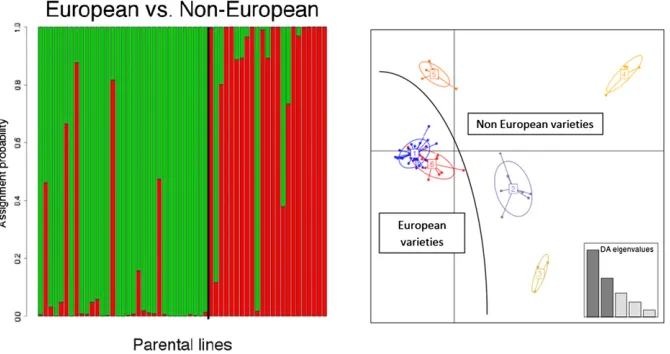
re-vealed that the optimal genetic structure of parental lines consisted of two groups, mainly separating European wheat lines (France, Bulgaria, Germany, Great Britain, Netherlands, Poland, and Switzerland), from non-European (United States, South America, Russia, Ukraine, Australia, Japan, and Brazil). This is in agreement with the clear division found between lines of European and Asian origin in a diverse collection of
worldwide wheat varieties (Balfourieret al.2007). This
struc-ture was confirmed by the assignment probabilities provided
by the DAPC (Figure 2). AMOVA showed that these two groups explained 15% of the parental genetic diversity. Increasing the
number of groups led to identification of six groups of lines
related by pedigree, most notably a group of U.S. lines and another group related to the pre-breeding line VPM.
Both AMOVA and DAPC results showed very low structure in the evolved population. The K-means clustering on PCA axes revealed two groups that explained only 4.2% of the
variation according to an AMOVA and the first two axes of
PCA explained only 5.09% of the genetic variance.
These results demonstrated that the population structure observed in the parents has been nearly completely eroded after 12 panmictic generations, leading to very low structure in the evolved population.
Parental contributions estimation
To infer the contribution of each parent to the evolved population, Bayesian estimates were conducted both at
genome-wide and at chromosome levels (seeMaterials and
Methods). The genome-wide estimates were precise, with a 95% credible interval of 0.1% around the mean, but varied widely between parents. The Probus parental line had the highest contribution (35%), followed by Talent and TJB 240 lines, with contributions close to 6%. The other parents had much lower contributions, ranging from 0.008 to 3.8% (Figure
3), with five lines contributing ,0.01% (Condor, Marquillo,
Redhart, Redon M4, and Toropi). The high contribution of Probus is in accordance with its weight in the initial crossing
scheme, duringms1bsterility introduction, and confirms a
bal-anced contribution between the selfed and backcrossed F1’s (Figure 1) for which we expected a 37.5% contribution to the initial population.
Estimates of contribution at the single chromosome level showed little difference from the genome-wide ones, with
a mean average difference of 1.4% (Figure S2). However,
40% of these slight variations were significantly different
(Bonferroni correction, Table S3). However, as some
esti-mated contributions were very low, significant variation
can be due to very small differences. In these cases, the differences are most likely artifacts. D genome
chromo-somes exhibited a lower number of significant tests (18%
differences. This apparent discrepancy reflects the lower
precision of contribution estimates (i.e., larger credible
inter-vals) due to the lower number of markers on the D genome: chromosomes covered with higher marker densities (1B, 2A,
2B, 3A, and 4B) exhibited more numerous significant
differ-ences between genome-wide and chromosome-level estimates
(in 30–40 parental lines out of 56). The genome-wide results
will be used in the following analyses.
Evolution between the initial and the evolved populations
Estimates of parental contributions allowed us to infer the allelic frequencies in the theoretical initial population. As expected, genetic diversities of initial and evolved popula-tion were very similar and lower than those found in the panel of the 56 parents (average MAF, 0.18, 0.17, 0.25 and
He, 0.25, 0.24, 0.34). Furthermore 129 markers turned out
to be monomorphic in the evolved population, this loss
be-ing due either to nondetection in the sample or tofixation.
Conversely, 31 markers were polymorphic in the evolved population but not among the parents. This could be
explained by (i) alleles specific of the four lines missing from
our parental panel, (ii) alleles lost for some parental lines during the management procedure in genebanks
(regenera-tion through selfing cycles; Esquinas-Alcazar 2005), as they
could have presented initial residual heterozygosity, (iii) contamination (migration) despite the isolation of plots (Hucl and Matus-Cadiz 2001), and (iv) mutation, as found for SSR markers in another wheat experimental population
(Raquin et al. 2008). The observed heterozygosity in the
evolved population was 3.2%. This is significantly higher
than predicted after four selfing generations starting from
an initialHeof 0.24 (1.6%). A possible explanation to this
difference could be afitness advantage of heterozygote
indi-viduals (heterosis). The Ne estimated from Fcbetween the
initial and the evolved populations was 310.97, much lower
than the demographic population size (Ned = 7500).
The evolved population presented a globally low linkage disequilibrium (LD) with a long-distance LD (between in-dependent markers or between chromosomes) almost null
(r2= 0.003, Figure 4). Short-distance LD peaked at 0.4 for
completely linked loci and decreased with genetic distance to
reach a plateau at a distance of50 cM. LD was much higher
at medium/long distances for the initial population (Figure S3).
Detection of traces of selection
Among 5635 markers (5621 SNPs from the 9K i-Select array + 14 KASPar SNPs), 57 markers representing 26
indepen-dent genomic areas were detected as significantly under
selection (i.e., behaving nonneutrally), with a likelihood
ra-tio .12.45 (Table S4). The selection coefficients ranged
from 0.07 to 0.7 (Table S4). The selected markers were
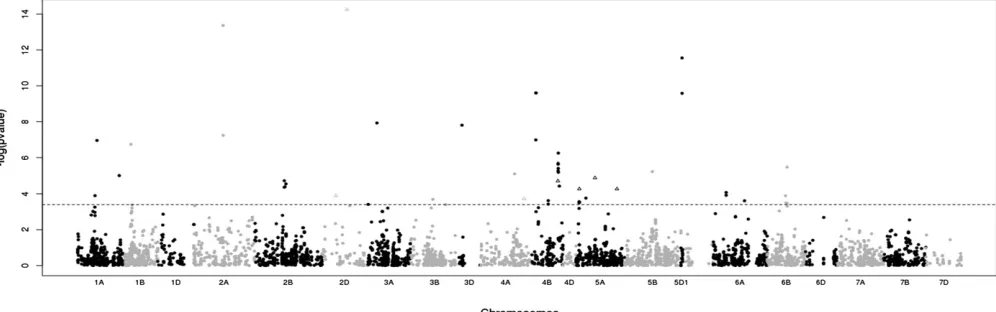
lo-cated on multiple chromosomes (1A, 1B, 2A, 2B, 2D, 3A, 3B, 3D, 4A, 4B, 5A, 5B, 5D, 6A, 6B), but mainly on 2B, 4B, 5A, and 6B (Figure 5). Among the 14 KASPar markers located in
flowering-time candidate genes, a single one matched with
a genomic area under selection (Ppd-D1, Figure 5).
Association of markers with heading date
Heading date was highly heritable, at 0.95 and 0.96, respectively in the 2 years of experimentation and at 0.91 across years. Heading date variability was larger among the parents than in the evolved population, while mean heading date was 128 dd earlier in the evolved population (Figure 6).
The markers detected as significantly under selection
were tested for their association with heading date. Seven markers, located on chromosomes 2D (two markers), 4A and 5A (three markers), were associated with heading date
with aP-value,0.05. Two markers located on chromosome
2D were strongly associated with heading date: Ppd-D1
(P-value = 5.10270), and wsnp_CAP11_c3842_1829821
(P-value = 3.53 10211) (Figure 5 and Figure 6). Ppd-D1
explained 56% of the phenotypic variation in a single marker model (Figure 6). The frequency of the allele associated with
earlier flowering at this locus (the photoperiod insensitive
allele) increased from 0.19 to 0.77 between the initial and the evolved populations. With a 117 dd difference between the two Ppd-D1 alleles (Figure 6), this allelic frequency var-iation accounted for 53% of the total phenotypic evolution
ð½0:58 3117 dd=128 ddÞ. wsnp_CAP11_c3842_1829821
explained 12% of phenotypic variation and its insensitive photoperiod allele frequency increased from 0.73 to 0.94 be-tween the initial and the evolved populations. The difference between the effects of the two alleles being 103 dd, allelic frequency variation at this marker accounted for 17% of the
total phenotypic evolutionð½0:21 3103 dd=128 ddÞ.
How-ever, a global model including both markers showed that the effect of wsnp_CAP11_c3842_1829821 was due only to its
small but significant LD withPpd-D1(LD = 0.18,P-value =
0.002). Hence,Ppd-D1 is probably the only selected gene in
this region.
Discussion
We analyzed an evolved population derived from an exper-imental population with a very broad genetic basis (60
diverse parents,Table S1). To our knowledge, this is thefirst
long-term use of nuclear male sterility to modify a plant’s
reproductive biology,i.e., turning wheat from selfing to
out-crossing during 12 generations (even if genetic male sterility has often been used in recurrent selection programs to facil-itate recombination; see, for example, Mackay and Gibson
1993 and Kannenberg and Falk 1995). The specific
character-istics of the population and of its history led us to develop various methods to describe its evolution and the genetic basis of this evolution.
To assess selection and drift effects, we first performed
a Bayesian inference of parental contributions to the putative ancestral population, using parental genotypes and observed allelic frequencies in the evolved population. Estimates high-lighted the strong contribution of Probus, with a more balanced contribution from the remaining parents, in good agreement
with the known crossing scheme. This confirmed the
robust-ness and accuracy of our method of estimation as suitable to infer the allelic frequencies in our theoretical initial population. Note that methods based on haplotype reconstruction can be
used to infer parental contributions (Huang et al.2012), but
would necessitate much higher marker density than currently available in this highly recombined population. A future com-parison of these two approaches should bring additional infor-mation about which is most suitable in studies with differing crossing schemes and objectives, given tradeoffs in precision, robustness, and computing time.
To test for selection, we used the estimated parental contributions to infer the initial allelic frequencies, thus allowing the estimation of the effective population size for use in a likelihood-ratio selection test.
The estimated effective size of the population (Ne= 311)
was very low compared to its demographic size (Ned=7500).
The ratio Ne/Ned = 0.04 is low, but not far from the 1/10
ratio commonly found in other studies (Frankham 1995;
Luikart et al. 2010). Note that this value is similar to that
estimated by Goldringeret al.(2001) for selfing populations
in dynamic management (Ne/Ned = 0.03, with Ne ranging
from 40 to 150). HigherNefor an outcrossing population is
expected, with a theoretical twofold difference due to the uncorrelated segregation of the two alleles present in each open-pollinated individual, as well as to the lower trans-mission of reproductive success to a recombinant progeny (Austerlitz and Heyer 1998). Despite uncertainty about initial allelic frequencies, the striking gap observed between genetic and demographic sizes is an indication of selective pressures on dynamic management populations even though they are managed to avoid bottlenecks. However, other factors can Figure 3 Genome-wide estimates of contribution for each parent.
Max-imum credible interval 0.002. Above bars represent the contribution higher than the median contribution while below bars correspond to contributions lower than the median. Parents with the highest contribu-tion are in red and those with the lowest in green.
explain the lowNe/Ned ratio; for example, the variance in out-put of male and female gametes per plant is probably higher than the theoretical Poisson distribution (Caballero 1994).
Based on this inferred effective size, we implemented a method determining the likelihood of observed allelic frequency shifts in the absence of selection, as well as
estimating the most likely selection coefficient, thus allowing
us to build a likelihood ratio test.Ne is thus a key parameter
and, as expected, in our test, the likelihood ratio increases
withNe: the lower the genetic drift, the higher the power to
detect selection (simulations not shown). As reviewed by
Federet al.(2014), its estimation represents a major
statisti-cal challenge. Various methods to detect selection without
estimating Ne have been developed , but none were
appro-priate to the present study as they require more than two
samplings in a time series (Bollbacket al.2008; Federet al.
2014). Our test for nonneutral temporal variations in SNP allele frequencies detected 26 genomic areas, mainly located on chromosomes 2B, 4B, 5A, and 6B (Figure 5). We checked
that the detected SNPs also yielded the lowestP-values with
the method developed in Goldringer and Bataillon (2004)
and therefore would also have been identified as the best
candidates. Note that chromosomes 2B and 4B were among those for which many parental contributions estimated at the chromosome level diverged from their genome-wide
estima-tions (Table S4). This highlights the complex interaction
be-tween parental contribution estimates and the selection test: strong selection might bias parental estimates and thus de-crease the power of the selection detection test itself.
Effec-tively, parental contribution estimates are those best fitting
the allele frequencies in the evolved population, and there-fore they minimize the genetic divergence between the initial and the evolved populations. This should minimize the appar-ent impact of selection on allele frequencies. The test for se-lection is therefore conservative. In our study, there is no global
correlation (cor =20.09,P-value = 0.69) over the 21 wheat
chromosomes between the number of areas in which selection
is detected and divergence in genome-widevs.
chromosomal-parental contribution estimates. This might be related to the low LD of the population, explaining that selection affects only small chromosomal areas and, reciprocally, that selection on a given area has little effect on the estimation of parental contribution at the chromosome level and even less at the genome-wide level. However, for chromosome 5A, the pres-ence of strong selection with a hitchhiking effect on numerous SNPs resulted in a link between selection and local variations in estimates of parental contributions.
Within the 57 SNPs under selection, the highestP-value
corresponded to Ppd-D1, which is a known candidate gene
involved in photoperiod sensitivity (Bealeset al.2007) and
a key earliness QTL in many genetic studies (Hanocq et al.
2007; Le Gouis et al.2012). Using association tests on the
evolved population, we confirmed the strong impact of this
QTL on flowering time. In addition to Ppd-D1, five other
markers were associated with heading date (two markers
with P-value ,0.05 and three markers withP-value ,0.1,
Table S4). Most were located on chromosome 5A. Assuming
that allelic effects are additive, thesefive markers explained
only 1% of the phenotypic shift in heading date. Hence, heading-date evolution is mainly explained by one gene (Ppd-D1) with the remainder due to numerous loci either
with a strong effect on flowering time and a low allelic
frequency shift or with a significant allelic frequency
evolu-tion and a low effect (Kremer and Le Corre 2012). One area was detected as under selection and associated with heading
date (P-value,0.1,Table S4) at the end of chromosome 4B
(Figure 5). This area could match with the location of Vrn2B, a known gene involved in an integrative pathway of vernalization requirement and photoperiod sensitivity but not located in the available map. Three areas, one on chromosome 4A and two on chromosome 5A, could also match previously detected QTL for heading date (Hanocq et al.2007; Le Gouiset al.2012). Finally one additional area on chromosome 5A did not correspond to any reported QTL.
In the selfing populations of the dynamic management
experiment (Rhoné et al. 2008, 2010), not only Ppd-D1
Figure 5 Manhattan plot of the–log10(P-value) of selection tests. The horizontal line represents the significance threshold (FDR correction = 4.2e-4).
showed a strong effect on earliness, but a significant associ-ation was also found for candidate genes with major effects
onflowering time, such asVrn1, which were not detected
here.Vrn1is known for its epistatic control of vernalization
(Roussetet al.2011) and in these selfing populations
differ-ent combinations of alleles made with each of the three
copies of Vrn1 (Vrn-A1, Vrn-B1, and Vrn-D1) have been
selected. One hypothesis explaining why Vrn1 is detected
as under selection in these selfing populations but not here
might be that in outcrossing populations, selection is less
efficient in maintaining epistatic combinations, because they
can be readily broken by recombination.
In agreement with previous studies (Allard 1988; Le Boulc’h et al.1994; Goldringeret al.2006), we found that earliness is
a major target trait for selection, the evolved populationfl
ower-ing earlier than the initial one. A fast response to selection is expected given the large initial genetic variability and high heritability of earliness. Here, this clear phenologic evolution was used as a model when analyzing genomic areas under positive selection. The selective pressures might have at least three origins. First, the viability of pollen might decrease in late
flowering plants (higher summer temperatures; Welsh and
Klatt 1971). Second, earlier maleflowering plants have a
selec-tive advantage as few females are already fertilized (Gérard et al.2006), leading to less competition and higher reproduc-tive success. Third, there might be a bias during the male sterile plants tagging phase, with a higher tagging intensity at the beginning of the season (sterile spikes are easier to identify).
Here, we checked only association with earliness and
found it significant for 24% of the genomic areas detected
under selection (six different areas, Table S4). The other
markers found under selection but not associated with ear-liness could still be involved in its regulation, as they could
have reached near fixation in the evolved population in
re-sponse to selection and therefore escape detection in an association test (Luo 1998). Alternatively they could be in-volved in the regulation of other adaptive traits such as disease resistance and plant height.
One area under selection, on the short arm of chromo-some 4B, corresponds to the location of the sterility gene
ms1b(Driscoll 1975). In this area, one marker exhibited an
allelic frequency change from 0.37 in the initial population
(allele present infive parents including Probus, which
con-tributed to 34% of the initial population) to 0.02 in the evolved population. In this area of chromosome 4B, the frequency of the Probus allele decreased dramatically for four markers, in contrast with markers in adjacent regions (mean of allelic frequency differences between the initial
and the evolved populations: 0.37vs.0.04, data not shown).
This is in full agreement with the expected evolution of
male-sterility genems1b, which was under stabilizing selection
during population evolution (75% of sterile allele; Doggett and
Eberhart 1968) and then selected against duringfixation
gen-erations asms1b/ms1bgenotypes are sterile.
The introduction of the nuclear male-sterility gene,ms1b,
The 12 generations of panmixia broke both the initial pop-ulation structure and long distance LD, resulting in a very
low level of LD in the evolved population (r2= 0.003 at 100
cM). This is to be compared to a r2of 0.04 between
inde-pendent markers in a 19-parent MAGIC population of A.
thaliana (Kover et al. 2009) or of 0.004 in a four-parent
MAGIC population of wheat (Huang et al. 2012). The LD
in the INRA MAGIC experimental population is the lowest
described so far for a wheat population, with r2= 0.28 at
a 2.5-cM distance (Figure 4). As a comparison,r2was 0.8 at
5 cM for a four-parent MAGIC population (Huang et al.
2012), or between 0.25 and 0.5 at 5 cM for an association
mapping panel (Cavanagh et al. 2013). The low value of
short distance LD in the INRA MAGIC population is due mostly to the low initial LD within the set of 56 parents
(r2= 0.3 at 2.5 cM). The importance of parental diversity
at very short distances (close to 0 cM) is well illustrated in the 4-parent and 19-parent MAGIC populations, with LD
values of 1.0 and 0.2, respectively (Koveret al.2009; Huang
et al. 2012). Thus the overall very low LD of the INRA MAGIC population is the result of both low initial LD due to the high number of parents (and their relatively low re-latedness) and a high number of recombinations, breaking LD at medium to long genetic distances. This low LD, com-bined with the absence of structure and a large diversity,
make this population of great value forfine mapping.
The INRA MAGIC population is similar in concept to other advanced intercross populations such as the mouse
Collabora-tive Cross (Churchill et al. 2004), theArabidopsis 19-parent
MAGIC lines (Koveret al.2009), the Arabidopsis multiple
par-ent recombinant inbred lines (AMPRIL with eight parpar-ent lines;
Huang et al. 2011), the Drosophila Synthetic Population
Re-source (DSPR) (Kinget al.2012a), the rice eight-parent MAGIC
lines (Bandilloet al.2013), and the yeast four-parent MAGIC
lines (Cubilloset al.2013) (see Rakshitet al.2012 for a
com-plete review on multiparent intercross populations). Neverthe-less, these designs differ by the number of combined parental genomes per individual. The power to detect QTL was found to be higher in multiparental than in biparental populations, and it increased with the number of combined parental genomes
per individual (Klasen et al.2012). This factor allows afiner
mapping since the number of recombination breakpoints is in-creased. Moreover, all of these populations resulted from many generations of intercrossing, which allowed more precise de-tection of QTL. They were mainly analyzed using traditional association mapping methods directly on the phenotype and
genotype of lines (Huanget al.2011; Cubilloset al.2013) or
on reconstructed parental haplotypes (Koveret al.2009; King
et al.2012b). Only Cubilloset al.(2013) complemented
stan-dard association mapping with an evolutionary approach,i.e.,
detection of temporal allelic shifts corresponding to population adaptation, which allowed them to detect and map precisely a gene involved in heat stress resistance.
With such an evolutionary approach, studying both at
phenotypic and genetic levels, we successfully identified 26
genomic areas under selection. Among them, 6 were associated
with earliness: one major gene, four areas already detected in previous QTL studies, and one new genomic area. As the population exhibited quite fast evolution in one environment,
growing such diversified gene pools in different divergent
environments could give access to more genetic areas associ-ated with local adaptation. In dynamic management,
experi-ments so far have been performed without geneflow between
populations, although appropriate geneflow would add genetic
variability and could strengthen the detection of selected areas, as it is expected to homogenize neutral genomic areas. In addition, the genetic basis of local adaptation could be analyzed through association genetics since the number of panmictic generations guarantees very low LD and absence of
struc-ture. Using more individuals (1000 SSD lines are available—
seed samples are available on request) with a higher density
of markers should confirm that these evolutionary mapping
populations are an invaluable platform for trait discovery and validation in the future.
Acknowledgments
The authors thank S. Pin, N. Galic, V. Sanchez, and all trainees (R. Angeleri, C. Biton, K. DeBray, J. Ratet, and J. Thomas) for
their technical help in thefield experimentation, as well as V.
Combes for her support in DNA extraction. We also thank the associate editor and the two anonymous reviewers for their helpful comments on earlier versions of the manuscript, which
improved this work substantially. This work was financially
supported by Arvalis Institut du Végétal,“Biologie et
Amélio-ration des Plantes” department of Institut National de la
Recherche Agronomique and National Institute of Agricultural Botany. This work is a part of S. Thépot’s Ph.D. supported by the Ministère de l’Enseignement Supérieur et de la Recherche.
Literature Cited
Allard, R. W., 1988 Genetic changes associated with the evolution of adaptedness in cultivated plants and their wild progenitors. J. Hered. 79: 225–238.
Austerlitz, F., and E. Heyer, 1998 Social transmission of reproduc-tive behavior increases frequency of inherited disorders in a young-expanding population. Proc. Natl. Acad. Sci. USA 95: 15140–15144.
Balfourier, F., V. Roussel, P. Strelchenko, F. Exbrayat-Vinson, P. Sourdille et al., 2007 A worldwide bread wheat core collection arrayed in a 384-well plate. Theor. Appl. Genet. 114: 1265–1275. Bandillo, N., C. Raghavan, P. A. Muyco, M. A. L. Sevilla, I. T. Lobina
et al., 2013 Multi-parent advanced generation inter-cross (MAGIC) populations in rice: progress and potential for genetics research and breeding. Rice 6: 1–15.
Beales, J., A. Turner, S. Griffiths, J. Snape, and D. Laurie, 2007 A Pseudo-response regulator is misexpressed in the photoperiod insensitive Ppd-D1a mutant of wheat (Triticum aestivum L.). Theor. Appl. Genet. 115: 721–733.
Bollback, J. P., T. L. York, and R. Nielsen, 2008 Estimation of 2Nes from temporal allele frequency data. Genetics 179: 497–502. Breseghello, F., and M. E. Sorrells, 2006 Association mapping of
Caballero, A., 1994 Developments in the prediction of effective population size. Heredity 73: 657.
Cavanagh, C., M. Morell, I. Mackay, and W. Powell, 2008 From mutations to MAGIC: resources for gene discovery, validation and delivery in crop plants. Curr. Opin. Plant Biol. 11: 215–221. Cavanagh, C. R., S. Chao, S. Wang, B. E. Huang, S. Stephenet al., 2013 Genome-wide comparative diversity uncovers multiple targets of selection for improvement in hexaploid wheat land-races and cultivars. Proc. Natl. Acad. Sci. USA 110: 8057–8062. Charlesworth, B., 2009 Effective population size and patterns of molecular evolution and variation. Nat. Rev. Genet. 10: 195–205. Churchill, G. A., D. C. Airey, H. Allayee, J. M. Angel, A. D. Attieet al., 2004 The Collaborative Cross, a community resource for the genetic analysis of complex traits. Nat. Genet. 36: 1133–1137. Cubillos, F. A., L. Parts, F. Salinas, A. Bergström, E. Scovacricchi
et al., 2013 High-resolution mapping of complex traits with a four-parent advanced intercross yeast population. Genetics 195: 1141–1155.
Dabney, A., and J. D. Storey, 2004 Q-value estimation for false discovery rate control. Medicine 344: 539–548.
Dellaporta, S. L., J. Wood, and J. B. Hicks, 1983 A plant DNA minipreparation: version II. Plant Mol. Biol. Rep. 1: 19–21. Doggett, H., and S. A. Eberhart, 1968 Recurrent selection in
sor-ghum. Crop Sci. 8: 119–121.
Driscoll, C., 1975 Cytogenetic analysis of two chromosomal male-sterility mutants in hexaploid wheat. Aust. J. Biol. Sci. 28: 413– 416.
Esquinas-Alcazar, J., 2005 Protecting crop genetic diversity for food security: political, ethical and technical challenges. Nat. Rev. Genet. 6: 946–953.
Excoffier, L., P. E. Smouse, and J. M. Quattro, 1992 Analysis of molecular variance inferred from metric distances among DNA haplotypes: application to human mitochondrial DNA restriction data. Genetics 131: 479–491.
Feder, A. F., S. Kryazhimskiy, and J. B. Plotkin, 2014 Identifying signatures of selection in genetic time series. Genetics 196: 509– 522.
Fossati, A., and M. Ingold, 1970 A male sterile mutant inTriticum aestivum. Wheat Inf. Serv. 30: 8–10.
Frankham, R., 1995 Effective population size/adult population size ratios in wildlife: a review. Genet. Res. 66: 95–107. Gelman, A., and D. B. Rubin, 1992 Inference from iterative
sim-ulation using multiple sequences. Stat. Sci. 7: 457–472. Gérard, P. R., E. K. Klein, F. Austerlitz, J. F. Fernández-Manjarrés,
and N. Frascaria-Lacoste, 2006 Assortative mating and differ-ential male mating success in an ash hybrid zone population. BMC Evol. Biol. 6: 96.
Goldringer, I., and T. Bataillon, 2004 On the distribution of tem-poral variations in allele frequency: consequences for the esti-mation of effective population size and the detection of loci undergoing selection. Genetics 168: 563–568.
Goldringer, I., J. Enjalbert, J. David, S. Paillard, J. L. Phamet al., 2001 Dynamic management of genetic resources: a 13-year experiment on wheat, pp. 245–260 in Broadening the Genetic Base of Crop Production, edited by H. D. Cooper, C. Spillane, and T. Hodgkin. CABI, Wallingford, UK.
Goldringer, I., C. Prouin, M. Rousset, N. Galic, and I. Bonnin, 2006 Rapid differentiation of experimental populations of wheat for heading time in response to local climatic conditions. Ann. Bot. 98: 805–817.
Hanocq, E., A. Laperche, O. Jaminon, A.-L. Lainé, and J. Le Gouis, 2007 Most significant genome regions involved in the control of earliness traits in bread wheat, as revealed by QTL meta-analysis. Theor. Appl. Genet. 114: 569–584.
Henry, J. P., C. Pontis, J. David, and P. H. Gouyon, 1991 An experiment on dynamic conservation of genetic resources with metapopulation, pp. 185–198 inSpecies Conservation: A
Popula-tion Biological Approach, edited by A. Seitz and V. Loeschcke. Birkhäuser Basel.
Huang, B. E., A. W. George, K. L. Forrest, A. Kilian, M. J. Hayden et al., 2012 A multiparent advanced generation inter-cross population for genetic analysis in wheat. Plant Biotechnol. J. 10: 826–839.
Huang, X., M.-J. Paulo, M. Boer, S. Effgen, P. Keizer et al., 2011 Analysis of natural allelic variation in Arabidopsis using a multiparent recombinant inbred line population. Proc. Natl. Acad. Sci. USA 108: 4488–4493.
Hucl, P., and M. Matus-Cadiz, 2001 Isolation distances for minimizing out-crossing in spring wheat. Crop Sci. 41: 1348–1351.
Jombart, T., and I. Ahmed, 2011 adegenet 1.3–1: new tools for the analysis of genome-wide SNP data. Bioinformatics 27: 3070–3071.
Jombart, T., S. Devillard, and F. Balloux, 2010 Discriminant anal-ysis of principal components: a new method for the analanal-ysis of genetically structured populations. BMC Genet. 11: 94. Kannenberg, L. W., and D. E. Falk, 1995 Models for activation of
plant genetic resources for crop breeding programs. Can. J. Plant Sci. 75: 45–53.
Kimura, M., and J. F. Crow, 1963 On the maximum avoidance of inbreeding. Genet. Res. 4: 399–415.
King, E. G., S. J. Macdonald, and A. D. Long, 2012a Properties and power of the Drosophila synthetic population resource for the routine dissection of complex traits. Genetics 191: 935–949. King, E. G., C. M. Merkes, C. L. McNeil, S. R. Hoofer, S. Senet al., 2012b Genetic dissection of a model complex trait using the Drosophila synthetic population resource. Genome Res. 22: 1558–1566.
Klasen, J. R., H.-P. Piepho, and B. Stich, 2012 QTL detection power of multi-parental RIL populations inArabidopsis thaliana. Heredity 108: 626–632.
Kover, P. X., W. Valdar, J. Trakalo, N. Scarcelli, I. M. Ehrenreich et al., 2009 A multiparent advanced generation inter-cross to
fine-map quantitative traits inArabidopsis thaliana. PLoS Genet. 5: e1000551.
Kremer, A., and V. Le Corre, 2012 Decoupling of differentiation between traits and their underlying genes in response to diver-gent selection. Heredity 108: 375–385.
Le Boulc’h, V., J. L. David, P. Brabant, and C. de Vallavieille-Pope, 1994 Dynamic conservation of variability: responses of wheat populations to different selective forces including powdery mil-dew. Genet. Sel. Evol. 26: 221–240.
Le Gouis, J., J. Bordes, C. Ravel, E. Heumez, S. Faure et al., 2012 Genome-wide association analysis to identify chromo-somal regions determining components of earliness in wheat. Theor. Appl. Genet. 124: 597–611.
Luikart, G., N. Ryman, D. A. Tallmon, M. K. Schwartz, and F. W. Allendorf, 2010 Estimation of census and effective population sizes: the increasing usefulness of DNA-based approaches. Con-serv. Genet. 11: 355–373.
Luo, Z. W., 1998 Detecting linkage disequilibrium between a poly-morphic marker locus and a trait locus in natural populations. Heredity 80: 198–208.
Mackay, I. J., and J. P. Gibson, 1993 The effect of gametic-phase disequilibrium on the prediction of response to recurrent selec-tion in plants. Theor. Appl. Genet. 87: 152–160.
Maynard Smith, J., and J. Haigh, 1974 Hitch-hiking effect of a fa-vorable gene. Genet. Res. 23: 23–35.
Nei, M., and F. Tajima, 1981 Genetic drift and estimation of ef-fective population size. Genetics 98: 625–640.
Neuhauser, C., 2004 Mathematical models in population genetics, pp. 4–19 in Handbook of statistical genetics, Vol. 4. edited by D. J. Balding, M. Bishop and C. Cannings. Wiley, New York. Nielsen, R., 2005 Molecular signatures of natural selection. Annu.
Rev. Genet. 39: 197–218.
Nishino J. 2013 Detecting selection using time-series data of al-lele frequencies with multiple independent reference loci. Genes Genomes Genet. 3: 2151–2161.
Paradis, E., 2010 pegas: an R package for population genetics with an integrated–modular approach. Bioinformatics 26: 419–420.
Plummer, M., 2003 JAGS: a program for analysis of Bayesian graphical models using Gibbs sampling, pp. 20–22 in Proceed-ings of the 3rd International Workshop on Distributed Statistical Computing (DSC 2003), Available at:http://www.ci.tuwien.ac. at/Conferences/DSC-2003/Drafts/Plummer.pdf
Plummer, M., N. Best, K. Cowles, and K. Vines, 2006 CODA: conver-gence diagnosis and output analysis for MCMC. R News 6: 7–11. Pritchard, J. K., M. Stephens, and P. Donnelly, 2000 Inference of population structure using multilocus genotype data. Genetics 155: 945.
Rakshit, S., A. Rakshit, and J. V. Patil, 2012 Multiparent inter-cross populations in analysis of quantitative traits. J. Genet. 91: 111–117.
Raquin, A.-L., F. Depaulis, A. Lambert, N. Galic, P. Brabantet al., 2008 Experimental estimation of mutation rates in a wheat population with a gene genealogy approach. Genetics 179: 2195–2211.
R Development Core Team, 2013 R: A Language and Environment for Statistical Computing. R Foundation for Statistical Comput-ing, Vienna, Austria.http://www.R-project.org.
Rebai, A., and B. Goffinet, 1993 Power of tests for QTL detection using replicated progenies derived from a diallel cross. Theor. Appl. Genet. 86: 1014–1022.
Rhoné, B., C. Remoué, N. Galic, I. Goldringer, and I. Bonnin, 2008 Insight into the genetic bases of climatic adaptation in
experimentally evolving wheat populations. Mol. Ecol. 17: 930– 943.
Rhoné, B., R. Vitalis, I. Goldringer, and I. Bonnin, 2010 Evolution offlowering time in experimental wheat populations: a compre-hensive approach to detect genetic signatures of natural selec-tion. Evolution 64: 2110–2125.
Rockman, M. V., and L. Kruglyak, 2008 Breeding designs for re-combinant inbred advanced intercross lines. Genetics 179: 1069–1078.
Rousset, M., I. Bonnin, C. Remoué, M. Falque, B. Rhoné et al., 2011 Deciphering the genetics offlowering time by an associa-tion study on candidate genes in bread wheat (Triticum aestivum L.). Theor. Appl. Genet. 123: 907–926.
Scarcelli, N., J. M. Cheverud, B. A. Schaal, and P. X. Kover, 2007 Antagonistic pleiotropic effects reduce the potential adaptive value of the FRIGIDA locus. Proc. Natl. Acad. Sci. USA 104: 16986.
Storey, J. D., and R. Tibshirani, 2003 Statistical significance for genomewide studies. Proc. Natl. Acad. Sci. USA 100: 9440–9445. Trottet, M., 1988 Use of genic male sterility for breeding wheat lines resistant toLeptosphaeria nodorumMuller: results of afirst cycle and prospect. pp. 1199–1202 in Proceeding of the Seventh International Wheat Genetics Symposium, Cambridge, UK. Waples, R. S., 1989 A generalized approach for estimating
effec-tive population size from temporal changes in allele frequency. Genetics 2: 379–391.
Welsh, J. R., and A. R. Klatt, 1971 Effects of temperature and photoperiod on spring wheat pollen viability. Crop Sci. 11: 864–865.
Yu, J., G. Pressoir, W. H. Briggs, I. V. Bi, M. Yamasaki et al., 2006 A unified mixed-model method for association mapping that accounts for multiple levels of relatedness. Nat. Genet. 38: 203–208.
Yu, J., J. B. Holland, M. D. McMullen, and E. S. Buckler, 2008 Genetic design and statistical power of nested association mapping in maize. Genetics 178: 539–551.
Appendix
The observations (Figure A1),nil, were defined as the number of alleles A (arbitrarily chosen from the two alleles of each
biallelic SNP) observed in the SSD lines for each individualiat each locusl. The random variableNil, defined as the number
of A alleles for individualiat locuslcan take three possible values: 0 or 2 when homozygous for allele A or B, respectively,
and 1 if heterozygous. We did not consider linkage disequilibrium; consequently the number of alleles A at each locus for
each individual is independent. The likelihood function is thus defined as
L ¼YI
i YL
l
PðNil¼nilÞ;
with I the total number of individuals (i.e., the 380 SSD lines here) and Lthe total number of loci considered (i.e., the
number of markers). The probability function ofNilfollows a binomial distribution leading to
L ¼YI
i YL
l
2 nil
pnij
l ð12plÞ22nij;
with plthe probability of an individual carrying allele A at locusl(i.e., the expected frequency of allele A at locuslin the
evolved population). Given that individuals and loci are independent in the model above, the equation is exactly equivalent to
L ¼Y
L
l
380 32
n:l
pn:l l ð12plÞ
380322n:l;
withn.lthe total number of alleles A at locuslover all individuals. In others terms this model relies only on allele frequencies
in the evolved population and not on their associations (i.e., no LD). It is thus capable of coping with the numerous selfing
events necessary to obtain SSD lines. The probability pj depends on the expected contribution of each parental line k,
PðPar¼kÞ, and on the frequency of allele A in each parental linek,fðAÞk. We can thus formulatepjas
pj¼ XK
k
fðAÞkPðPar¼kÞ;
withKthe total number of parental lines (i.e.,K= 56 in this study).Genetic information is available for all putative parental
linesKthus:
XK
k
PðPar¼kÞ ¼1:
FurthermorePðPar¼kÞis the same for all loci considered during estimation. Finally because no previous information was
available on the virtual contribution of each putative parental linek, we considered aflat Dirichlet prior distribution,
PðPar¼1. . .KÞ DirðaÞ;
GENETICS
Supporting Information
http://www.genetics.org/lookup/suppl/doi:10.1534/genetics.114.169995/-/DC1
Ef
fi
ciently Tracking Selection in a Multiparental
Population: The Case of Earliness in Wheat
Stéphanie Thépot, Gwendal Restoux, Isabelle Goldringer, Frédéric Hospital, David Gouache, Ian Mackay, and Jérôme Enjalbert
Figure S1 Linear relationship between the total lost contributions and the mean absolute error. The red line represents the regression of mean error by lost
contributions (Y= 1.21 10‐4+ 3.74 10‐2X). The blue lines represent the estimate for a mean contribution of each parental line of 1% leading to a mean absolute
error of about 0.16% on the contribution estimates.
Lost contributions (%)
Mean
Absolute
Error
Tables S1‐S4
Available for download as Excel files at http://www.genetics.org/lookup/suppl/doi:10.1534/genetics.114.169995/‐/DC1
Table S1 List of parental lines with their pedigree and their origin (from Pontis 1992, & Trottet)
Table S2 List of genotyped markers located in candidate genes
Table S3 Summary table of selection tests and association tests results with the location of markers and allelic frequency in initial and evolved populations. Only results of markers significantly under selection are presented.
Table S4 Results of t‐tests between contribution estimated with one chromosome and genome‐wide by chromosome and by parent.