University of Windsor University of Windsor
Scholarship at UWindsor
Scholarship at UWindsor
Electronic Theses and Dissertations Theses, Dissertations, and Major Papers
1-1-2006
Human physiological limitations during prolonged multi-tasks: An
Human physiological limitations during prolonged multi-tasks: An
aiding tool.
aiding tool.
Ali I. Mohamed University of Windsor
Follow this and additional works at: https://scholar.uwindsor.ca/etd
Recommended Citation Recommended Citation
Mohamed, Ali I., "Human physiological limitations during prolonged multi-tasks: An aiding tool." (2006). Electronic Theses and Dissertations. 7220.
https://scholar.uwindsor.ca/etd/7220
NOTE TO USERS
This reproduction is the best copy available.
®
HUMAN PHYSIOLOGICAL LIMITATIONS DURING
PROLONGED MUTI-TASKS: An Aiding Tool
By Ali I. Mohamed
A Dissertation to the Faculty of Graduate Studies and Research through Industrial and Manufacturing Systems Engineering
in partial fulfillment of the Requirements for the Degree of Doctor of Philosophy at the
University of Windsor
Windsor, Ontario, Canada
Library and Archives Canada
Bibliotheque et Archives Canada
Published Heritage Branch
395 W ellington Street Ottawa ON K1A 0N4 Canada
Your file Votre reference ISBN: 978-0-494-35984-6 Our file Notre reference ISBN: 978-0-494-35984-6
Direction du
Patrimoine de I'edition
395, rue W ellington Ottawa ON K1A 0N4 Canada
NOTICE:
The author has granted a non exclusive license allowing Library and Archives Canada to reproduce, publish, archive, preserve, conserve, communicate to the public by
telecommunication or on the Internet, loan, distribute and sell theses
worldwide, for commercial or non commercial purposes, in microform, paper, electronic and/or any other formats.
AVIS:
L'auteur a accorde une licence non exclusive permettant a la Bibliotheque et Archives Canada de reproduire, publier, archiver,
sauvegarder, conserver, transmettre au public par telecommunication ou par I'lnternet, preter, distribuer et vendre des theses partout dans le monde, a des fins commerciales ou autres, sur support microforme, papier, electronique et/ou autres formats.
The author retains copyright ownership and moral rights in this thesis. Neither the thesis nor substantial extracts from it may be printed or otherwise reproduced without the author's permission.
L'auteur conserve la propriete du droit d'auteur et des droits moraux qui protege cette these. Ni la these ni des extraits substantiels de celle-ci ne doivent etre imprimes ou autrement reproduits sans son autorisation.
In compliance with the Canadian Privacy Act some supporting forms may have been removed from this thesis.
While these forms may be included in the document page count,
their removal does not represent any loss of content from the thesis.
Conformement a la loi canadienne sur la protection de la vie privee, quelques formulaires secondaires ont ete enleves de cette these.
© 2006, Ali Mohamed
ABSTRACT
Physical work capacity refers to the maximum capabilities of the physiological system to
produce energy for muscular work. Physical work capacity plays a central role in the
process of carrying out ergonomic stress analysis in industry where a balance between
job stress requirements and physical work capacity is maintained. If physical work
capacity is exceeded, the worker is at risk of overexertion and may be producing lower
quality work. If the job stress requirements are less than Physical work capacity, the
worker may be underutilized and this could be an opportunity for productivity gains.
Over the last four decades, ergonomics researchers and practitioners have devoted
considerable resources to solving the problems associated with handling materials
manually. Researchers have also agreed that since manual lifting is physically the most
stressful material handling activity, it is best to contain the manual lifting injury hazard.
Results of such efforts are reflected in terms of various guidelines and weight limit
recommendations for manual lifting activities (e.g. NIOSH and the revised NIOSH).
However, the cost, number, and severity of injuries had either continued to rise or remain
unchanged because of the way the problem has been historically approached. Most
industrial manual material handling tasks involve more than one type of activity (lifting,
turning, carrying, etc.). And yet, most efforts have been directed at only one activity, little
attention has been paid to designing/analyzing tasks that include multiple and diverse
manual handling activities. By relating the energy expended in a job to the aerobic power
of the individuals for endurance effort, an objective assessment can be made of the work
capacity of the worker performing these activities without undue fatigue. Based on the
assumption that a job can be divided into sub-tasks, and the average metabolic energy
expenditure rate of the job can be predicted by knowing the energy expenditure of the
simple tasks and the time duration of the job), the energy requirement to perform a
certain task can be determined by summing the time weighted energy cost of all task
elements over the time duration that task is being performed.
This research utilizes most suitable model(s) that could be used in determining human
capabilities of performing multiple jobs. It also utilizes the physiological approach in
determining human capacity for multiple jobs, and examines the combinations of lifting,
carrying, and lowering activities, to develop an evaluation and a decision making tool
that help designers, engineers, and managers overcome human limitations in all stages of
design of product and process. Another contribution of this study is the development of
general models that could be used in determining the maximum energy expenditure of
individuals of certain age, height, weight, and gender within a targeted percentile.
As a contribution to the area of physiological assessment of work, this study provides
designers and practitioners, especially in the field of cellular manufacturing environment
where high volume is dealt with, with a simple tool that could be used during both early
stages of the design and during production stages to evaluate the physiological
requirements of work and the capacity of people needed to perform them. The tool helps
in labor assignment, determining work/rest periods needed to overcome peoples’ fatigue
besides the usual breaks assigned during the work shift. Despite its great advantages,
there are some limitations that could be addressed in depth to further enhance the tool for
better performance.
DEDICATION
To my family
ACKNOWLEDGEMENT
I would like to express my sincere appreciation to my supervisor Dr. L. Oriet for
his guidance, advice and assistance during the course of this study. I am also grateful to
the members of my committee, Dr. F. Moro, Dr. J. Zhang, Dr. M. Wang and the external
examiner Dr. O. Basir for their suggestions and cooperation.
Sincere thanks to Mrs. Mummery and Mr. Barakat for his efforts and help.
Finally, my thanks are due to my family for their patience and moral support.
TABLE OF CONTENTS
ABSTRACT iv
DEDICATION vi
ACKNOWLEDGEMENTS vii
LIST OF TABLES xiii
LIST OF FIGURES xiiv
CHAPTER I 1.0 INTRODUCTION 1
1.1 General Overview 1
1.2 The Role of Human Factors 1
1.3 Workplace stress factors 2
1.4 Ergonomics Applications 2
1.5 Ergonomics Results 2
1.6 Physical work capacity 3
1.7 Manual Material handling and Human Limitations 4
1.8 Cellular Manufacturing 5
1.9 Motivation for the Study 7
1.10 Scope and Objective of the Study 9
1.11 Thesis Organization 10
CHAPTER II 2.0 LITERATURE REVIEW 11
2.1 Ergonomics Impact 11
2.2 Manual Material Handling 12
2.2.1 MMH Cost and Impact 14
2.3 The NIOSH Original Lifting Model 15
2.3.1 NIOSH Guidelines 15
2.3.2 NIOSH Limitations 16
2.4 Physical Work Capacity 18
2.4.1 Maximum Aerobic Capacity 19
2.5 Factors Affecting Aerobic Capacity 21
2.6 Thermal Comfort 25
2.6.1 Temperature and Humidity 25
2.6.2 Standards on Workplace temperatures 26
2.6.3 What is Humidix 28
2.7 Heat Stress Management 30
2.7.1 Heat Stress 30
2.7.2 Heat Strain 32
2.7.3 Personal Factors 32
2.7.4 ACGIH Guidelines for Limiting Heat Strain 33
2.7.5 ACGIH Guidelines for Heat Stress
Management 34
2.8 MMH Design Approaches 35
2.8.1 The Biomechanical Approach 3 5
2.8.2 The Physiological Approach 35
2.8.3 The Psychophysical Approach 36
2.9 Methods for Estimating Energy 37
2.10 Prediction Models 3 9
2.10.1 Maximum Aerobic Capacity 39
2.10.2 Physiological Fatigue Limit 41
2.10.3 Work-Rest periods 44
2.11 Manufacturing Systems 45
2.11.1 Manufacturing Systems Models and
Techniques 45
2.11.2 Cost Criteria 45
2.11.3 Cell Formation Techniques 4 8
2.11.4 Ergonomics Implications 5 3
CHAPTER III 3.0 DEVELOPMENT OF REGRESSION MODELS 55
3.1 Introduction 55
3.2 Data Source 55
3.3 Data Analysis 5 9
3.4 Male Individuals Vo2max Prediction Regression
Models 60
3.4.1 Stepwise Regression for the 95th
Percentile Population 61
3.4.2 Stepwise Regression for the 75th Percentile
Population 61
3.4.3 Stepwise Regression for the 50th Percentile
Population 62
th
3.4.4 Stepwise Regression for the 5 Percentile
Population 62
3.4.5 Prediction Models for Other Male Percentiles 63
3.5 Female Individuals Vo2max Prediction Regression
Models 64
3.6 Models validation 65
3.7 Work Capacity Prediction Models 69
3.8 Work Methodology 71
CHAPTER IV 4.0 TOOL DESCRIPTION 73
4.1 Introduction 73
4.2 Individual’s Characteristics 73
4.2.1 Person’s Height values 73
4.2.2 Person’s Weight values 73
4.2.3 Age values 74
4.2.4 Targeted Percentile values 74
4.3 Job Characteristics 76
4.4 Task Control Factors 78
4.5 System Process 79
4.6 System Output 80
4.7 Job redesign 81
CHAPTER V 5.0 TOOL DESIGN 82
5.1 Software 82
5.2 Individual Data Screen 82
5.3 Job Characteristics Screen 83
5.4 Report Screen 85
5.6 Data Validation 86
5.7 Program Development and Testing 87
CHAPTER VI 6.0 DISCUSSION AND CONCLUSIONS 89
6.1 General Discussion 89
6.2 Regression Models 89
6.3 The Decision Aiding Tool 90
6.4 Tool Limitations 91
6.5 Conclusions 92
6.6 Recommendations for Future Work 92
REFERENCES 94
APPENDICES 113
VITA AUCTORIS 118
LIST OF TABLES
2.1 Acceptable temperature for people with typical clothing doing secretary
work at 50% relative humidity 27
2.2 ASHRAE's acceptable ranges of operative temperature . 27
2.3 summarizes some typical responses to various temperatures 28
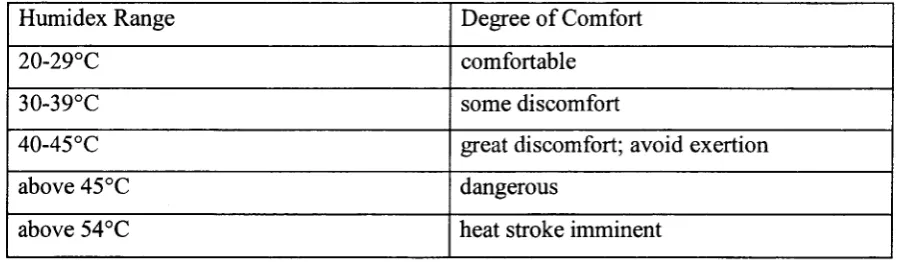
2.4 Humidix and comfort ranges 29
2.5 Screening Criteria for Heat Stress Exposure 31
3.1 Subjects Predicted Vo2max values in ml/kg.min 57
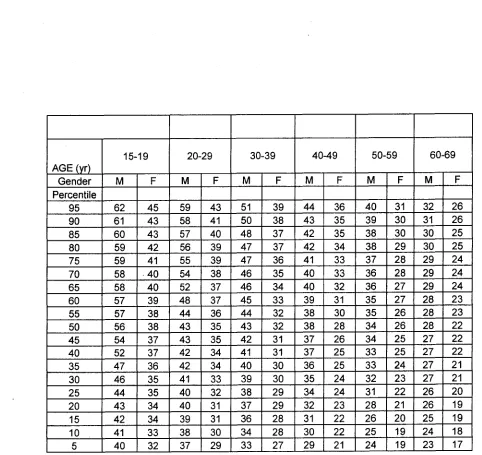
3.2 Percentile by age groups and gender for body weight (kg) 58
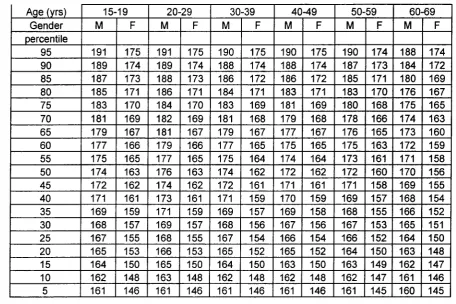
3.3 Percentile by age groups and gender for STANDING HEIGHT(CM) 59
3.4 Regression analysis table for the 95th % 61
3.5 Regression analysis table for the 75th % 62
3.6 Regression analysis table for the 50h % 62
3.7 Regression analysis table for the 5th % 63
3.8 Vo2max models for male subjects 63
3.9 Regression analysis table for the 95th % female individuals 64
3.10 Regression analysis table for the 75th % female individuals 64
tVi
3.11 Regression analysis table for the 50 % female individuals 64
tti
3.12 Regression analysis table for the 5 % female individuals 64
3.13 Vo2inax models for female subjects 65
3.14 Comparison of predicted and observed values (95% male individuals) 66
3.15 Comparison of predicted and observed values (75 % male individuals) 66
3.16 Comparison of predicted and observed values (50% male individuals) 66
3.17 Comparison of predicted and observed values (5 % male individuals) 67
3.18 Comparison of predicted and observed values (95% female individuals) 67
3.19 Comparison of predicted and observed values (75% female individuals) 67
3.20 Comparison of predicted and observed values (50% female individuals) 68
3.21 Comparison of predicted and observed values (5% female individuals) 68
LIST OF FIGURES
1.1 Wastes in Manufacturing 7
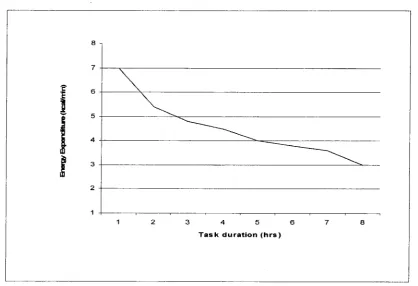
2.1 Energy expenditure as a function of task duration for continuous
lifting tasks 42
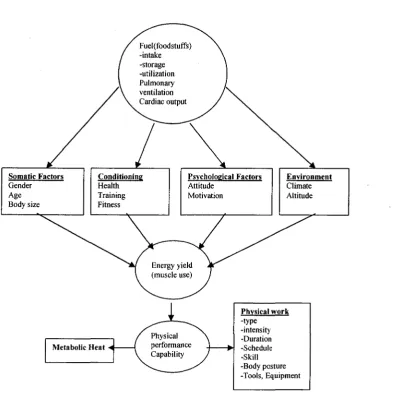
2.2 Determiners of individual physical work capacity 43
3.1 Difference in V0 2 max for 50% male/female subjects 60
3.2 Methodology for developing the aiding tool 72
4.1 Verifying Individual’s Data 75
4.2 Job Characteristics 77
4.3 Environmental data verification 78
4.4 System’s main processes 79
4.5 System Output 80
5.1 Individual Data Screen 83
5.2 Job Characteristics Screen 84
5.3 Report Screen 86
CHAPTER I
INTRODUCTION
1.1 General Overview:
Ergonomics (also known as human factors) is the branch of science that is
concerned with the achievement of optimal relationships between workers and their work
environment. It deals with the assessment of the human’s capabilities and limitations,
work and environmental stresses, static and dynamic forces on the human body structure,
fatigue, design simulation and training, and design of workstations and tools. The two
conflicting factors in this optimization process are workers’ productivity and their health
and physical well being. That is, while workers should perform their job in the most
efficient manner possible, they must also be protected against undue physical, biological,
and psychological strain that may occur as a result of performing the required tasks
(Tayyari and Smith, 1997).
1.2 The Role of Human Factors
Human factors professionals are well positioned to play a significant role in the
workforce renewal process and in the identification of product features that make
products more effective and satisfying to use and process features that optimize human-
machine system to produce superior products. According to Plonka (1997) ergonomists
and human faetors professionals can assist to:
1. Identify work force attributes that are important for successful performance in the
manufacturing environment.
2. Address the correct mixture of experience, theory, and practice to support a
continuous development and training process.
3. Help workers to redefine workplace and to gain competitive advantage.
4. Play a significant role in problem solving and the transfer of lessons learned into
practice by reducing their experiences to principles that machine designers can
5. Besides mitigating the effects of system complexity, human factors professionals
classify work from the perspective of cognitive, skill, and knowledge demands for
workers rather than the traditional approaches used by labor unions using
seniority and historical precedence.
Humans build the products that are consumed, and this reality that will be studied and
supported with this research.
1.3 Workplace stress factors
Every workplace represent its own, distinctive physical and mental workload
stress factors such as: complexity and number of tools used in the workplace; and
unnatural environmental conditions (thermal, noise, vibration).
The stress from these factors placed on the worker are significant, and the above
mentioned ergonomic principles can be applied to the design of the workplace so that the
strain placed on the worker is reduced in balance of productivity goals and objectives..
1.4 Ergonomics Applications
Ergonomics principles can be used in the following industrial applications:
1. design, modification, replacement and maintenance of equipment for enhanced
productivity, work-life and product quality;
2. design and modification of work spaces and workplace layout for ease and speed
of operation, service and maintenance;
3. design and modification of work methods, including automation and task
allocation between human operators and machines;
4. Controlling physical factors in the workplace for the best productivity and safety
of employees.
1.5 Ergonomics Results
Application of these principles to the workplace is expected to result in the following:
1. Understanding the effects of a particular type of work on workers’ bodies and
2. Predicting the potential long-term (or cumulative) effects of work on workers;
3. Assessment of the worker interface with process and tools;
4. Improvement of productivity and well-being of workers by “fitting the task to the
person”, rather than “fitting the person to the task”. The result is to achieve the
best matching between worker capabilities and job requirements;
5. Establishment of a knowledge base support for designers, engineers, and medical
personnel for improving the productivity and well-being o f individuals.
1.6 Physical work capacity
Physical work capacity (PWC) refers to the maximum capabilities of the
physiological system to produce energy for muscular work. PWC plays a central role in
the process of carrying out ergonomic stress analysis in industry. The objective of
applying ergonomic principles in the workplace is to maintain a balance between job
stress requirements and PWC. If PWC is exceeded, the worker is at risk of overexertion
and producing lower quality work. If the job stress requirements are less than PWC, the
worker is underutilized and there is a productivity loss. Tichauer pointed out that
ergonomic stress can be classified into two main categories:
1. traumatogenic (high dose over short duration) and
2. Cumulative (low dose over long duration.
The maximal oxygen uptake or the maximal aerobic power is defined as the highest
oxygen uptake the individual can attain during exercise (2-6 min depending on type of
exercise) engaging large muscle groups while breathing air at sea level (Astrand and
Rodahl, 1986).
In a normal healthy person, the PWC is directly related to the capability of the
cardiovascular system to provide oxygen to the working muscles and to remove waste
products of metabolism. PWC can be defined in terms of specific muscle group activities
(e.g. lifting tasks) or for whole-body activities (walking) (Tayyari and Smith 1997).
Aerobic capacity is denoted by V0 2 max and usually expressed in liters per minute or
milliliters of oxygen per kilogram body weight per minute for a given gender and age
group. Its synonyms are PWC, maximal oxygen uptake, and V0 2 max. In many types of
increase in the rate of exercise. If a given task demands an oxygen uptake of 2.0 liter/min,
the person with a maximal O2 uptake of 4.0 liter/min has a satisfactory safety margin, but
the 2.5 liter individual must exercise close to his/her maximum, and consequently his/her
internal equilibrium becomes much more disturbed. It is obvious that the individual’s
maximal aerobic power play a decisive role in his/her physical performance It has been
found that for each liter of O2 consumed, about 5kcal; range of 4.7 to 5.05; of energy will
be delivered; hence the higher the oxygen uptake, the higher energy aerobic output)
(Astrand and Rodahl, 1986). During the simulated automobile assembly tasks, Chung et
al. (2001) evaluated heart rate; oxygen consumption and subjective discomfort rating
were evaluated. Although no statistically significant increase was observed in heart rate
for the poor leg posture, all three physiological measures, heart rate, oxygen consumption
and subjective discomfort rating, showed a significant increase for the heavy load and for
the laterally bent and twisted trunk posture. From the results it was confirmed that heavy
load and lateral bending and twisting postures are very harmful to workers from a
physiological as well as a biomechanical perspective.
1.7 Manual Material handling and Human Limitations
In tasks like assembly, maintenance, packaging, and construction, despite the increasing
degree in mechanization and automation, manual material handling (MMH) carried out
by humans continues to be an important and essential requirement of many industrial
service occupations.
As described by Shephard (1991), the human body can be recognized as a very good
mechanical design. However, it is not indestructible and there are some limitations of the
human body because of the material and the mechanical structure, the level o f mechanical
stress cannot exceed some physical bounds at some given time at some given tasks within
the musculoskeletal system.
In order to reduce injuries, improve productivity, and improve quality, the job demands
should match the capacities of the individuals. This can be done by adjusting the task
characteristics to fit the workers. MMH is affected by three factors:
2. Task related factors; workplace geometry, posture range of movement, container
size shape, handles frequency and load stability.
3. Workplace environment factors; temp, lighting, and vibration.
Transporting materials is always costly in terms of machinery, space, and energy.
In many existing facilities, reduction and simplification of material movement can lower
the expense of material transport which amounts to 30 to 75 percent of total operating
cost, Karl and Kroemer (1997). From a human point of view, redesigning, improving, or
eliminating manual carrying transport lines would increase the possibility of reducing the
risks of overexertion and injury to workers.
Cumulative trauma disorder (CTD), known also as Repetitive Strain Injury (RSI)
occurs when an activity is repeated so often that it overloads the body parts involved. In
order to avoid such injuries, there exist some conditions that need to be avoided when
designing the workplace. Among these conditions are;
1. Work that requires prolonged or repetitive exertion of more than about one third
of the operator’s static muscular strength available for that activity.
2. Putting body segments in extreme positions.
3. work that makes the person maintain the same body posture for long periods of
time
There are also some recommendations and guidelines provided by the National Institute
for Occupational Safety and Health (NIOSH) that need to be followed and considered
during the design stage of a manufacturing facility. These recommendations are
published in the Work Practice Guide (WPG) for manual lifting.
1.8 Cellular manufacturing
Cellular manufacturing is a lean manufacturing approach that helps companies build a
variety of products for their customers using lean manufacturing techniques. In cellular
manufacturing, equipment and workstations are arranged in a sequence that supports a
smooth flow of materials and components through the process, with minimal transport or
A manufacturing cell consists of the people and the machines or workstations required
for performing the steps in a process, with the machines arranged in the processing
sequence. Arranging people and equipment into cells helps companies achieve one-piece
flow and high-variety production. One-piece flow is the state that exists when products
move through a manufacturing process one piece at a time, at a rate determined by the
needs of the customer. Operating so that products flow one piece at a time allows the
company to deliver products to customers quicker, reduces storage and transport
requirements, lowers the risk of damage, and exposes other products to address.
Cellular manufacturing offers companies the flexibility to give customers the variety they
want, it allows variety by grouping similar products into families that can be processed
on the same equipment. It also encourages companies to shorten changeover time so
product type can be changed more frequently. Converting a factory to cellular
manufacturing means eliminating waste from processes as well as from operations. Fig
1.1 lists all eight aspects of waste recognized in manufacturing as stated by Ott (1999). A
process is a continuous flow in which raw materials are converted to finished goods in a
series of operations. The focus of a process is the path of the materials as they are
transformed into something to sell. An operation is any action performed by workers or
machines on the raw materials, work-in-process, or finished products.
Cellular manufacturing can help make companies more competitive by cutting out costly
transport and delay, shortening the production lead time, saving factory space that can be
used for other value-adding purposes, and promoting continuous block low-inventory
production. It also helps employees by strengthening the company competitiveness,
which helps support job security. It also makes daily production work go smoother by
removing the clutter of access WIP inventory, reducing transport and handling, reducing
the walking required, and addressing causes of defects and machine problems, Ott
Waste Type Example
Defects Scrap , rework, replacement production, inspection Waiting Stock-outs, lot processing delays, equipment downtime,
capacity bottlenecks
Processing Unnecessary or incorrect processing
Overproduction Manufacturing items for which there are no orders Movements Human motions that are unnecessary or straining Inventory Excess raw material, WIP, or finished goods Transport Carrying WIP long distances, inefficient transport Unused employee
creativity
Lost time, ideas, skills, improvements
Fig 1.1 Wastes in Manufacturing
1.9 Motivation for the Study
It is well established that occupational injuries and illness accounts for a significant
portion of lost workdays in industry. When an employee is injured or becomes ill, the
cost of that injury or illness is not easily calculated due to a variety of factors. Aside from
medical, indemnity and risk management costs associated with an injury or illness, there
are also ancillary or indirect costs such as lost productivity; overtime associated with
compensating for injured; work-site modification and/or supervision of injured workers,
recruitment and retraining of replacement workers, human resource department costs for
managing injured and legal fees. These factors combined represent a significant
opportunity for cost reduction since occupational injuries are manageable and in many
instances preventable. Many studies call workplace disruption and lost productivity
indirect costs because they are not costs of treating the injury. Nevertheless, these costs
affect an employer’s profitability directly whenever an employee misses work, works at
less than usual capacity, or are diverted to less demanding tasks. Uninjured co-workers
may also lose productivity by assuming additional work-load during the absence of their
colleague absence. As a result, an employer may have to pay overtime. In other cases,
work may be rescheduled awaiting the injured person return. Replacement of an
employee may cause further productivity loss because the replacement is less skilled,
Employers lose more productivity when coworkers divert their attention from their work
to help their injured coworker out of curiosity or sympathy or they may at least chat about
the accident rather than producing. Supervisors and executives lose productivity when
they are diverted to injury investigation to secure evidence against liability actions or
point the way to future prevention. Insurers and claims processors may also investigate,
passing the cost to the employer as claims administration expenses. Supervisors lose time
assisting injured employee, reschedule production, hiring temporary or permanent
replacement, or providing training. Further reduction in profitability may result from
interference with production, failure to meet orders in time, loss of bonuses, or payments
of forfeits. Injured employees and their family have to cope with the accident for some
time. They alone bear the tears, despair, and reduced quality of life that injury can bring.
Consequently, employers have to pay higher wages to induce people to take risky jobs.
These wage premiums can be viewed as prospective insurance premiums. They
compensate in advance for their possible future losses (T. Miller, 1997).
Musculoskeletal disorders (MSD) due to cumulative trauma represent a major health and
financial burden to the employees and to the industry. In the US in 1989 alone, the total
compensable cost for the upper-extremity work-related MSDs was estimated to be $563
million. In recent years; many companies have implemented office ergonomic training
programs to reduce and prevent MSDs among VDT users (Lewis et al, 2002).
Workplace injuries cost the US an estimated $140 billion annually. This estimate
includes $17 billions in medical and emergency services, $60 billions in lost productivity,
$5 billion in insurance costs, and $62 billion in lost quality of life.
As been mentioned by Guidotti (1995), the Canadian province of Alberta’s expenditures
on workers’ compensation claim costs increased to 470million dollars in 1997, $62
million overbudget and representing a 3% growth over 1996 costs. In 1998, cost
increased to $555 million, $90 million overbudget and 15% growth over 1997costs. In
1999, $821 million, 45% overbudget, and 75% over the total claim cost in 1997. In light
of these staggering costs, the need for occupational injury and illness control research and
ensuing remedial action has never been more apparent. Mital et al (1993) reported that
manual material handling injuries have continued to be a major injuries problem. MMH
and cardiovascular system. When this strain exceeds the human body capacity, it results
in discomfort, fatigue, and injuries.
The literature review indicates that several techniques and models are developed to help
in designing production cells. Many of these models consider several functions such as
material handling, machine investments, setup, tooling and processing times, and
unutilized capacity. The studies tackled mainly the cost aspect of each evaluation criteria.
However, all these models failed to address the importance of including human
limitations in the design of cells. There is also a lack of comprehensive data base of
human related data, especially in terms of manual material handling. Hence, there exists
the need to develop a model(s) which will include the effect of human interaction with
such systems.
1.10 Scope and Objective of the Study
Over the last four decades, ergonomics researchers and practitioners have devoted
considerable resources to solving the problems associated with handling materials
manually. Researchers have also agreed that since manual lifting is physically the most
stressful material handling activity it is best to contain the manual lifting injury hazard.
Results of such efforts are reflected in terms of various guidelines and weight limit
recommendations for manual lifting activities (e.g. NIOSH and the revised NIOSH).
However, despite these efforts to contain the hazards of MMH, the cost, number, and
severity of injuries has either continued to rise or remains unchanged because of the way
the problem has been historically approached. Most industrial manual material handling
tasks involve more than one type of activity (lifting, turning, carrying, etc.). And yet,
most efforts have been directed at only one activity - manual lifting (for instance, the
user’s manual associated with the revised NIOSH lifting guide); little attention has been
paid to designing/analyzing tasks that include multiple and diverse manual handling
activities.
To date, limited efforts have been directed at designing and analyzing handling tasks
involving multiple and diverse activities. One such effort was initiated by Mital 1983.
The procedure that was developed was revised (Jiang et al, 1986), after the publication of
The primary scope and objectives of this research will be focused on three main aspects:
Firstly, to develop regression models which will be used in determining maximum human
physiological capabilities; Secondly, to utilize available physiological models in
determining job physiological demand and; Finally, to use the above mentioned two
objectives in developing a decision aiding tool that help designers, engineers, and
managers overcome human limitations in all stages of design and during production.
Despite the useful use of this decision aiding tool in all areas where manual handling of
materials is being performed, an ideal application of such tool would be in the area of
cellular manufacturing. Such systems are characterized by high volume, high variety,
routinely performed material handling, and human wasted movements. Become of such
characteristics of this system, the proposed aiding tool of this study would enable
addressing the ergonomic issues of such system such as human maximum reach,
frequency of movements, maximum walk, and maximum load capacity.
1.11 Thesis Organization
The remainder of this report will be organized as follows:
Chapter 2 includes literature review of previous studies conducted regarding the area of
physiological work, manual material handling, available tools and standards governing
such activities with their applications and limitations, and finally selected work done in
the area of cellular manufacturing systems. Chapter 3 represents maximum energy
expenditure regression models developed and how they are used besides the existing
available models to develop the decision aiding tool. Chapters 4 and 5 describe and
explain how the aiding tool is developed and used. Finally, Chapter 6 represents some
conclusions regarding this study, its limitations, and suggestions for future work that
CHAPTER 2
LITERATURE REVIEW
2.1 Ergonomics Impact
Ergonomics, as a tool, is not only limited to predicting and eliminating workplace
injuries, but can also be used to enhance productivity, reduce production costs, increase
productivity, quality and profit. The following literature represents the impact of applying
ergonomics principles within some industries and services;
Miller (1997) concluded that occupational injury and illness control and prevention
represents an avenue of substantial revenue recovery if this problem can be attenuated.
Ergonomics has been shown to be an effective method of addressing the problem of
occupational injury and illness by the general accounting office in the US.
Resnick and Zanotti (1997) suggested that the optimal workplace design must consider
both ergonomics and productivity as main objectives despite the fact that they present
conflicting recommendation for workstation design. In this way, a workplace can be
designed to improve long term performance and maximize the contribution of the job to
the profitability of the organization.
Martin and Burri (1995) in their study of IBM manufacturing plant emphasized the
importance of ergonomics as a tool for improving work environments for people and its
overall contribution to productivity. Within this study, four manufacturing facilities were
evaluated and redesigned. These ergonomics improvements resulted in $7,375,000
savings. The authors estimated the savings from such programs to reach $130 millions for
the past ten years.
Stanton and Baber (2003) in their article regarding cost-effectiveness of ergonomics
posed the question of whether organizations can afford not to have ergonomics after its
obvious impact on organizations. After checking literatures on the significance of
ergonomics, the author concluded that all papers reviewed suggest that the cost of
ergonomic involvement and intervention are likely to be a small fraction of the total
Although the cost of interventions used by Yeow and Sen (2003) was less than $1100,
this cost resulted in average savings in yearly rejection cost of $574,560. When the
authors conducted a study to improve workstations for electrical tests in a printed circuit
assembly, they concluded a reduction in rejection rate, increase in monthly revenue,
improvements in productivity, quality, and operators working conditions and
occupational health and safety and enhancement in customer satisfaction.
2.2 Manual Material Handling
Despite the recommendation for using mechanical means in handling materials in any
production environment, manual material handling (MMH) continues and will continue
to be a part of many occupations (Burt et al, 1999). Such activities are considered as main
reason behind lower back and other related injuries. In the pursuit of reducing the effect
of such activities on humans, researchers developed indices such as the job severity index
and the lifting index. These indices were developed with the assumption that the severity
of a job in terms of its injury potential is a function of job demands and job capacity, i.e.
if the requirements of the job are well above that of a person’s capacity to perform that
particular job, a fair assumption is that the job can be dangerous for that person.
Techniques for analyzing manual handling tasks take a variety of forms, i.e.,
biomechanical (Anderson et al., 1985; Schultz et al., 1982; Freivalds et al., 1984; Hsiang
and Ayoub, 1994), psychophysical (Snook and Ciriello, 1991), physiological (Garg et al.,
1978) and epidemiological (Winkel and Mathiassen, 1994). Some techniques use postural
analyses to develop ergonomic interventions (Derksen et al., 1994; Kant et al., 1990;
Burdorf et al., 1991; Burdorf et al., 1992; Mattila et al., 1993; Kivi and Mattila, 1991;
Genaidy et al., 1994; Kuorinka, 1994). Other techniques look at specific tasks in the field
and make recommendations based on physiological or subjective results (Kemper et al.,
1990; Tomer et al., 1988; Vink, 1992, Ljungberg et al., 1989; Damlund et al., 1986;
lhammar et al., 1986). Some investigators have combined techniques of task analysis so
that comparisons can be made between the multiple assessment approaches (Rohmert,
Yeung et al. (2002) explored whether professional expertise can be relied on, through the
use of a systematic procedure, to quantify the effects of lifting task parameters on
perceived effort and risk of injury outcome measures. Three international experts
participated in the research reported herein and evaluated the interactive effects of 6
lifting variables: (a) weight of load, (b) horizontal distance, (c) frequency of handling, (d)
work duration, (e) twisting angle, and ( f ) height of lift. They predicted the lifting effort
and the injury risk of a large number of lifting configurations. A linguistic approach was
used to describe the lifting activities. Logistic regression analyses were employed to
model effort as a function of various lifting task variables. The results showed that all 3
experts rated the weight of load as the most dominant variable and the height of lift as the
least important variable. Furthermore, they differed slightly in ranking the relative
importance of other variables. In general, the effect of weight of load on physical effort
was, at a minimum, 2 times more important than other lifting task variables. The
horizontal distance, work duration, frequency, and twisting angle variables were
considered to be more important than the height of lift by 25% to 33%. Collectively,
these findings indicate that the experts agreed on the most and least important variables.
Snook and Ciriello, (1991) noted that It is also important to note that some of the weights
and forces in Snook’s tables will exceed recommended physiological criteria when
performed continuously for 8 h or more.
The recommended 8 h criteria are approximately 1000 ml/min of oxygen consumption
for males; 700 ml/min for females (NIOSH 1981). Tables give maximum acceptable
weights and forces for individual manual handling tasks or components, (e.g. lifting).
Frequently, however, industrial tasks involve combinations with more than one
component (e.g. lifting, carrying, and lowering). Previous results indicate that, in a
multiple component task, the weight or force of the component with the lowest percent of
population is the best estimate of the maximum acceptable weight or force for the entire
task. Therefore, each component of a combined task should be analyzed separately using
the frequency of the combined task. The weight or the force of the combined task with
the lowest per cent of the population represents the maximum acceptable weight or force
for the combined task. However, since the physiological cost of the combined task will be
combined tasks may exceed recommended physiological criteria for extended period of
time.
2.2.1 MMH Cost and Impact
It has been documented in the literature that a worker’s risk factor of incurring a low back
pain has been directly related to occupational activities such as manual material handling
due to inappropriate handling techniques used (Bigos et al. 1986; Marras et al. 1993;
Snook 1989). Four specific occupational risk factors associated with low back pain have
been identified as: lifting, work posture, frequent bending and twisting and repetition
(Genaidy et al. 1994; Andersson 1985). MMH tasks pose physical stresses to the operator
shown as strains on the musculoskeletal and cardiovascular system. Discomfort, fatigue,
or injury will result when the strain imposed on one of these systems exceeds the capacity
of the system.
MMH-related injuries are responsible for about 41% of the cost of workers’
compensation keeping 20% of workers out of the workplace for an average of 3 weeks to
6 months. Treatment and disability expenses resulting from MMH is approaching $14-18
Billion (Haldeman, 1990). In the province of Ontario, Canada, it has been reported by
Worker Compensation Board (WCB), that the average number of days lost per claim due
to back injuries is 83 days and the average cost per claim is $10,949 (WCB report, 1997).
Lifting, defined as moving object by hands from lower position to a higher one (Kroemer,
1992), is associated with up to one-half of lower back injuries (Nelson, 1987). Lavender
et al., (2003) Lifting and material handling have been associated with the onset of low
backpain in several epidemiological studies (Andersson, 1991, 1999; NIOSH, 1997). In
particular, lifting which requires severe trunk flexion has been shown to increase the
likelihood of low-back disorders (LBDs) (Marras et al., 1993; Punnett et al., 1991). Both
static and dynamic linked segment biomechanical models have been used to describe the
forces and moments acting on the spine as lifts are performed in the laboratory and in
industry; Freivalds et al., 1984; Lavender et al., 1999; Potvin et al., 1992. The studies
above showed how effective ergonomics tools are when applied to a workplace design in
terms of their impact on the total production costs. These studies and applications are in
tools in such manner would constitute an extra cost factor, which is cost of change. This
cost could be augmented or eliminated if these principles are applied proactively. That is,
during early stages of the design process.
2.3 The NIOSH Original Lifting Model
In 1981, NIOSH published the work practice guide for manual lifting (WPG). WPG was
based on the thought that “an overexertion injury is the result of job demands that exceed
a worker’s capacity” (Waters et al, 1997).
The WPG was developed with the input of many experts. It involved epidemiological,
biomechanical, physiological, and psychophysical studies of the capabilities and
limitations of people while performing MMH activities. In establishing the scope and
limit of the recommendations of the WPG, the following assumptions were presented:
1. smooth lifting;
2. two-handed, symmetric lifting in the sagittal plane;
3. moderate width;
4. unrestricted lifting posture;
5. good coupling;
6. favorable ambient environments. (Tayyari and Smith, 1997)
2.3.1 NIOSH Guidelines
Mital and, Ramakrishnan (1999) demonstrated that manual lifting activity does not limit
a person’s ability to perform manual materials handling activities. Using a complex
manual materials handling task from the railroad industry, it is demonstrated that the
capability to perform multiple activity materials handling jobs is limited by different
materials handling activities for different people. The complex manual materials handling
task, which involved lifting, turning, carrying, and pushing activities, was analyzed using
both the old and revised NIOSH lifting guidelines. It is concluded that both old and
revised NIOSH guidelines are of little use in analyzing multiple jobs. It is suggested that
the failure to study realistic manual handling activities, and the resulting lack of
guidelines to design such jobs, is a dominant reason why the hazards of manual materials
activity task, lifting is not always the limiting activity for everyone. This further
demonstrates the limitation of the revised NIOSH guide, particularly when it comes to
designing and/or analyzing realistic industrial jobs. The study recommended weights also
demonstrates the need to develop population capability data for multiple activity tasks.
Mital and Ramakrishnan (1999) mentioned that the efforts to develop population
capability data for multiple activity materials handling tasks, at least in the initial stages,
owing to a vast number of possible combinations, will have to be limited to pervasive and
industry-specific activities. However, unless such efforts are undertaken, containing the
manual materials handling hazard cannot be assured.
Most studies in manual material handling (MMH) have paid attention to single MMH
activities such as lifting, lowering, carrying, holding, pushing or pulling and have ignored
combined activities. Also, most studies have involved two-handed (symmetric) MMH
activities rather than one-handed MMH activities. Very few studies have reported
information on workers’ capacities for combinations of one-handed MMH activities (e.g.
lifting a box, then carrying the box, and lowering the box). These kinds of combined
activities are common in industry and in our daily lives. Very few studies have examined
the capacities of combinations of two or more activities such as lifting a box, then
carrying the box and lowering the box with two hands (Jiang, 1984; Morissey and Liou,
1988). Jiang (1984) used the psychophysical methodology to find the maximum
acceptable weight of two-handed combined manual material handling activities
2.3.2 NIOSH Limitations
The original NIOSH equation was criticized by practitioners because it was difficult to
use and many of its underlying assumptions were inflexible (DeClercq and Lund, 1993).
In using the NIOSH WPG in real-world situation, the following considerations should be
taken into account:
1. Other MMH (holding, carrying, pushing, and pulling) are assumed to be minimal.
2. When lifting activities are not performed, the individual is assumed to be at rest.
3. The work force is physically fit and accustomed to physical labor.
4. Safety factors commonly used by engineers to account for the unexpected
The Work Practices Guide for Manual Lifting provided by the National Institute for
Occupational Safety and Health of USA (NIOSH, 1981) or the Revised NIOSH Lifting
Equation (Putz- Anderson and Waters, 1991; Waters et al., 1993, 1994), respectively, is
accepted as a valuable tool for the design and evaluation of manual lifting in ergonomics
and occupational health. Many industries have found the Work Practices Guide to be very
useful in identifying problems and reducing injuries. Moreover, the NIOSH method has
gained considerable recognition in the drafting of European and international standards
(CEN, 1996; ISO, 1995).
Jager and Luttmann (1999) claim that although several critical issues were considered in
this survey, the Work Practices Guide for Manual Lifting provided by NIOSH (1981)
remains, nevertheless, a valuable compendium for ergonomists and practitioners,
demonstrating the wide scope of stress-and-strain influences and consequences for
persons performing manual materials handling tasks during a working life. A revised
lifting equation has been developed by (Waters et al., 1994) to account for the quality of
the couplings and twisting action during lifting. However, the revised lifting equation has
not been accepted and its future implementation is in question
The NIOSH models attempt to determine the amount of weight that could be lifted such
that the compressive forces on the spine would not exceed 3430N in most individuals
performing a lift during a specified set of lifting conditions. The 1981 lifting guide
required the following lift specifications: the initial vertical location of the load, the
vertical displacement of the load, the maximum horizontal distance between the load and
a point midway between the ankles, and the frequency of lifting (NIOSH, 1981). The
revised model also includes the asymmetry of the lift (angular deviation from the mid-
sagittal plane) and the quality of the hand to object coupling (Waters et al., 1993).
Unfortunately, the role of dynamics has not been incorporated. In fact, the model still
assumes that the lifts are performed slowly over a 2-4 s period.
Snook, (1978); Snook and Ciriello, (1991) investigated the relationship between lifting
and lowering demands (as expressed by the revised NIOSH lifting equation (Waters et
al., 1994)) and reporting of workers’ compensation claims and concluded a fairly high
proportion of the female population, whereas a higher percentage of pushing and pulling
tasks were acceptable according to the psychological data. The NIOSH equation was
formulated according to the empirical model suggested by Drury and Pfeil (1975).
Particularly, its development required two inputs: (a) data generated in the published
literature, and (b) expertise of committee members convened under the auspices of
NIOSH. No formal approach was deployed to use human expertise to establish manual
lifting guidelines
2.4 Physical W ork Capacity
PWC refers to the maximum capabilities of the physiological system to produce energy
for muscular work. The maximal oxygen uptake or the maximal aerobic power is defined
as the highest oxygen uptake the individual can attain during exercise (2-6 min depending
on type of exercise) engaging large muscle groups while breathing air at sea level.
(Astrand and Rodahl, 1986). In a normal healthy person, the PWC is directly related to
the capability of the cardiovascular system to provide oxygen to the working muscles and
to remove waste products of metabolism. PWC can be defined in terms of specific
muscle group activities (e. g lifting tasks) or for whole-body activities (walking) (Tayyari
and Smith 1997).
Aerobic capacity is denoted by V0 2 max and usually expressed in liters per minute or
milliliters of oxygen per kilogram body weight per minute. Its synonyms are PWC,
maximal oxygen uptake, and V0 2 max. In many types of exercise, it has been proven that
the oxygen uptake increases roughly linearly with an increase in the rate of exercise. If a
given task demands an oxygen uptake of 2.0 liter/min, the person with a maximal O2
uptake of 4.0 liter/min has a satisfactory safety margin, but the 2.5 liter individual must
exercise close to his/her maximum, and consequently his/her internal equilibrium
becomes much more disturbed. It is obvious that the individual’s maximal aerobic power
play a decisive role in his/her physical performance. It has been found that for each liter
of O2 consumed, about 5kcal; range of 4.7 to 5.05; of energy will be delivered; hence the
During the simulated automobile assembly tasks, Chung et al. (2001) evaluated heart
rate, oxygen consumption, and subjective discomfort rating. Although no statistically
significant increase was observed in heart rate for the poor leg posture, all three
physiological measures, heart rate, oxygen consumption and subjective discomfort rating,
showed a significant increase for the heavy load and for the laterally bent and twisted
trunk posture. From the results it was confirmed that heavy load and lateral bending and
twisting postures are very harmful to workers from a physiological as well as a
biomechanical perspective.
2.4.1 Maximum Aerobic Capacity
Individuals have a maximum aerobic capacity they could produce during certain physical
exercise. When designing jobs for these individuals, the energy requirement for these
jobs should not reach this maximum value since individuals will perform these jobs for
prolonged time. The issue of how much value of this maximum capacity should be used
as an acceptable limit has been the topic of discussion of the people concerned with this
field.
Christensen proposed that work could be performed at 50 percent of maximum aerobic
power for eight-hour work day. Astrand expressed serious doubts that this was too high
an expectation. Research by Brauha supports the theory that a work capacity limit based
on 50 percent of the maximum aerobic capacity of an individual was a fatigue-generating
energy expenditure rate.
Studies by Lehmann recommended 33 percent of the maximum aerobic power of a
normal healthy person as the maximum energy expenditure rate that should be expended
for an eight-hour work day. Generally, 16 kcal/min is taken as the maximum aerobic
power of a normal healthy young male for a highly dynamic job (walking, bicycling...).
For an eight-hour continuous work period, a physical work capacity limit of 5.2 Kcal/min
is recommended by Chaffin. This is based on 33 percent of 16Kcal/min taken as the
maximum aerobic power for a healthy male. As stated by Moores, the aforementioned 5.2
Kcal/min was also deemed an average acceptable level by Lahmann from studies
undertaken throughout German industry. Indeed, older workers and female workers will
physical work load of blue-collar workers and compared the work load factors between
ageing (45 years) and young workers.
Energy expenditure, HR and the proportions of poor work postures were similar when the
ageing and young subjects were compared in their occupational groups, i.e., physical
work load of blue-collar workers seems not to be affected by age. The study
recommended that physical work load should be reduced with age. Ergonomic and
organizational measures, exercise and health promotion and the continuous improvement
of occupational skills are needed for promoting work ability, health and well being of all,
and, particularly, ageing blue-collar workers. As stated by Pollock (1973) Maximal
oxygen consumption rate (Vo2max) is often considered to be the most representative
measure of cardiorespiratory fitness. However, Vo2max is a measure of the maximal
capabilities of the oxidative systems and may not be the most appropriate measure for
determining work capacity at sub-maximal workloads. For example, it has been noted
that V0 2 does not reflect accurately either the environmental demands of a task or the
subjective estimates of fatigue (Christensen 1953). In addition, a Loree et al. (1957) claim
that measurement of Vc^max requires subjects to exercise to volitional exhaustion, which
may not be appropriate in many subjects, and requires expensive laboratory equipment
and trained technicians. Other techniques for determining work capacity that involve
measurement of parameters other than V0 2 have been proposed in the literature.
Alternatively, Muller (1953) has suggested that the heart rate (HR) response at a
submaximal power output and the physical working capacity (PWC) at a submaximal HR
should be considered as important as Vo2max in determining the effectiveness of exercise
training programs Muller defined the endurance limit (EL) in absolute terms as
approximately 2000 kcal in an 8-h work shift. However, factors other than the workload,
such as heat, isometric contractions, and the movement of body weight, influence EL.
Therefore, Muller (1953) states that, "we tried to end a test which would indicate, in all
types of muscular activity, whether a given intensity of work can be endured for hours
without symptoms of fatigue." Thus, he used HR as an indicator of the adequate blood
/
Levushkin, (2001) estimated the physical work capacity of young men (17-21 years old).
A comparative analysis of the physical work capacity in subjects with different levels of
motor activity showed that the indices of physical development, physical fitness, and
aerobic capacity in 17-year-old athletes exceeded the same indices in the untrained age-
matched group. Physical work capacity was significantly higher in athletes than in the
untrained subjects during the whole juvenile period. In athletes the age-related physical
fitness and aerobic capacity increased to a greater extent but physical development
increased to a lesser extent than the same in the untrained subjects.
Physical development of male subjects significantly increases at the age of 17-18 years,
and at the age of 18-21 years it stabilizes around the level achieved by 18 years. Physical
fitness during early adulthood changes insignificantly: general and back muscle strength
slightly increases, spine flexibility decreases, and speed is virtually unchanged. The
aerobic capacity in subjects increases at the age of 17-18. However, at the age of 18-21
years the changes in aerobic capacity are insignificant. Weibel (1999) attributed the
limitation of oxygen supply to muscles to two main conditions: (1) in heavy exercise
where endurance work becomes limited when Vo2max is reached; and (2) at high
altitude. The study suggested that it has been demonstrated that oxygen supply to the
muscle cells becomes limited by the diffusing capacity of the lung when individuals work
hard under hypoxic conditions such as at high altitude.
2.5 Factors Affecting Aerobic Capacity
Personal, task, and environmental parameters are important factors affecting the physical
work capacity. Some of the most important personal factors are age, gender, body weight,
and fitness level. As it has been mentioned in the literature, Individual’s age is one of the
main factors affecting the value of the maximal oxygen uptake. The maximal oxygen
uptake increases with age up to between sixteen to seventeen years in females, and
eighteen to twenty years in males. Beyond these ages there is a gradual decline so that the
sixty years old individual attains about 70% of the V0 2 max from what it was at the
his/her age of twenty five. V0 2 max of a female is about 25-30% lower of that of males
(Tayyari and Smith 1997). It is well established that environmental factors affects the
decreased by about 12% when individuals are handling loads at 32 degrees temperature
compared to lifting loads at moderate ambient temperature of < 27 degrees. Fig 2.2 was
adapted from Kroemer et al (2001) to represent all these factors.
The maximal oxygen uptake increases with age up to between sixteen to seventeen years
in females, and eighteen to twenty years in males. Beyond these ages there is a gradual
decline so that the sixty years old individual attains about 70% of the Vo2 max from what
it was at the his/her age of twenty five. In the post-40-year category physical "fitness
begins to decrease and may impair work capacity and performance particularly in
physically demanding blue-collar jobs. Physical work load should be adjusted according
to the work capacity of each individual worker for preventing overstrains, fatigue,
disorders and injuries. In principle, physical work load should be decreased with
increasing age due to the natural and evident decline of physical work capacity
(Ilmarinen, 1992).
According to health and safety representatives the most negative factors affecting
physical work load are excessive physical job demands, time pressure, cold, heat,
humidity, and noise (Heikkinen et al., 1994; Miettinen and Louhevaara, 1994;
Louhevaara et al., 1998).
The greater requirements of work output, and the effects of ageing, may considerably
increase physical strain and work-related disorders in blue-collar jobs.
The decline in muscle capacity with age is mainly related to changes in muscle
composition, decreased muscle mass due to reduced physical activity and less efficient
neurogenic motor control [Aoyagi and Shephard, 1992; Bemben et al., 1991; Frontera et
al., 1991]. There are still doubts about whether a primary age-dependent process within
the muscle fibers also contributes to the observed reduction in muscle strength with age
[McCarter, 1990]. Astrand et al. [1973] report that the decline in aerobic power with age
is mainly related to reduced maximal heart rate and consequently reduced maximal
cardiac output. Nygard et al., (1987, 1988b) and Era, (1992) reported that despite the
positive effect of activity on physical capacity, a negative relationship between capacity
and physical activities at work has been observed in recent studies among middle-aged
and elderly worker's. Since the relationship between physical capacity and physical work
term physically demanding activities might have a deleterious effect on physical capacity
possibly in combination with aging.
Physical performance is greatly influenced, directly or indirectly by factors in the
external environment. Air pollution affects physical performance directly by increasing
airway resistance and indirectly causing ill health. The same applies for tobacco use and
alcohol. Noise damages hearing and elevates heart rate and affects other performance
parameters that reduce physical performance. Cold can reduce physical performance due
to numbness of the hands or lower body temperature. Heat, if intense, can greatly reduce
endurance because more of the circulating blood volume must be devoted to transporting
heat rather than oxygen and because sweating results in dehydration. Astrand et al,
(2003).
Physical activities performed in hot, humid conditions may cause fatigue and exhaustion
sooner than in more moderate conditions. Cold significantly affects physical work due to
the reduction in limb and whole body temperature. This reduction in temperature affects
the limbs muscular control, and reduced muscular strength and endurance because of the
reduction in the metabolic rate. People perception of comfort is influenced by three
factors: air temperature with a comfort zone of 20-25 C; relative humidity of comfort
zone 30-70%; and air velocity with a comfort zone of 0.1-0.3 m/s.
Wooson et al, (1992) assigned a lower and an upper heat threshold. Between these two
values lies the comfort zone that should be used for work design. Winter comfort zone of
65-70F and summer comfort zone of 69-75F, both with relative humidity of 30-70%.
Below 65F, heavy clothing will be needed which will affect the individual comfort when
performing heavy work. However, above 75F clothed subjects experience physical
fatigue, become sleepy, and feel warm.
Noise has mixed results as a factor affecting performance. While some studies showed
performance decrements, others showed no effect or even an improvement in
performance. (Atwood et al, 2004 and Obome, 1995)
OSHA had set a standard of 90dBA as maximum level noise for an 8 hr shift duration
above which at least half of the people in any given group will judge the environment as