ABSTRACT
THOMASON, SPENCER TREXLER. Optimization of Ionic Crosslinking. (Under the direction of Dr. Peter Hauser and Dr. Brent Smith.)
Durable press treatment with formaldehyde-based finishes produce excellent durable
press performance, however they also significantly reduce the strength of the fabric and
release formaldehyde, a suspected human carcinogen. Ionic crosslinking has been explored
as a potential alternative for durable press treatment. Previous work has shown significant
improvements in wrinkle recovery angle with carboxymethylation and ionic crosslinking of
cotton fabric with cationic glycerin. Optimal conditions from previous work are further
optimized and evaluated. This research models the effect of this treatment on a number of
physical and chemical properties of the fabric. With selected ionic treatments, wet wrinkle
recovery angles (WRA) can be increased by 83% and dry WRA can be increased by 19%.
The durable press (DP) performance only increased slightly with these treatments on this
fabric. There is a weak correlation between WRA and DP performance. Under certain
conditions, this treatment improved WRA and DP performance, but not nearly as much as
DMDHEU treatment. The treatment can produce tensile strength increases of up to 25%,
breaking strain increases of up to 340%, and tear strength increases of up to 80%. This is in
sharp contrast to decreases in each of these properties with DMDHEU treatment. Whiteness
index (WI) of carboxymethylated and ionically crosslinked fabrics were only slightly lower
than untreated fabric, while DMDHEU causes a considerable reduction in WI. Fabrics could
be produced with this treatment with stiffness similar to untreated fabric, whereas DMDHEU
treatment always results in considerable stiffness increase. Ionic treatment can produce a
slight increase in DP performance with none of the adverse affects which are observed with
OPTIMIZATION OF IONIC CROSSLINKING
by
Spencer Thomason
A thesis submitted to the Graduate Faculty of
North Carolina State University
In partial fulfillment of the Requirements for the degree of
Master of Science
Textile Chemistry
Raleigh, NC
2006
Approved by:
______________________________ Dr. Peter Hauser
Committee Chair
______________________________ Dr. Brent Smith
Committee Co-Chair
DEDICATION
This work is dedicated to my parents who have provided loving support for all of my
BIOGRAPHY
I was born in Salisbury, NC and grew up in Concord, NC. After completing high
school, I attended North Carolina State University. I completed B.S. degrees in Chemical
Engineering and Textile Chemistry with a concentration in Polymer Science.
During college I had two internships. My first internship was with Collins and
Aikman. I filled in for an advanced development chemist who was on maternity leave. I was
in charge of development of their Universal Backing System for four months. This
technology involved backcoating and laminating automotive fabrics with hot melt adhesives.
My second internship was with Milliken Chemical as a process engineer intern. At
Milliken Chemical I was involved with a project designed to optimize and improve control of
alkoxylation reactions. We used FTIR Attenuated Total Reflectance to monitor alkoxylation
reactions real time for molecular weight control.
I graduated from college in 2001 and accepted a position with Corning in their
Optical Fiber Division. I was hired as a manufacturing engineer. I was involved in a large
scale capital expansion of an optical fiber manufacturing facility located outside of Charlotte,
NC. My primary focus was in a portion of the process which involved high precision gas
delivery systems and chemical vapor deposition to form the core of the optical fiber. As the
telecommunications sector experienced considerable economic weakness, the facility
expansion was halted and I was relocated to a new position as a process engineer in
Wilmington, NC. In this position I was still focused on the same portion of the optical fiber
manufacturing process, but my responsibilities were in next generation equipment design and
As the economy continued to slow, I realized that I needed to transition into a new
industry. In 2002 I accepted a position with Mississippi Polymer Technologies initially as a
project engineer. I transitioned to a process engineer and then to a production engineer. This
was a small company so my responsibilities were quite broad. We developed and produced a
new high performance thermoplastic based on a polyphenylene copolymer. My initial
responsibility was to develop a process for production of this material. As the process was
developed, I became responsible for design and installation of a facility in which to run this
process. Of course, as the facility was completed it was necessary to actually run the plant. I
was responsible for training and supervising operators, implementing manufacturing systems,
procuring materials, and continuous improvement of the process and facility. It offered me a
tremendous amount of responsibility and a broad range of experiences. I was able to design,
build, and operate a 500,000 lb/yr advanced engineered plastics production facility from a
laboratory scale process.
While in south Mississippi, I was also involved in the startup of a microbrewery.
Lazy Magnolia Brewing Company was started in late 2004 and will be distributing
throughout the state of Mississippi in 2006. I was responsible for design and construction of
the facility and manufacturing systems.
As my role in developing the production process and building and starting up the
facility was completed, the company was sold to Solvay Advanced Polymers. I determined
that it was a good time to complete the M.S. Textile Chemistry degree which I had begun
part time. I moved back to Raleigh, NC and continued studies toward this degree in 2005.
ACKNOWLEDGEMENTS
The author would like to express appreciation for assistance provided by a number of
individuals and organizations. Dr. Peter Hauser and Dr. Brent Smith have provided advice
and guidance throughout this research. Jeff Krause provided support in the NCSU College of
Textiles pilot plant with equipment used for fabric preparation and durability testing. Jan
Pegram provided support in the NCSU College of Textiles physical testing laboratory with
equipment used for physical testing of samples. Judy Ellison provided support with
DMDHEU fabric preparation. Birgit Andersen provided support with the CHN analyzer.
The author would like to thank the National Textile Center and the NCSU College of
Textiles for financial support of this work. Cotton Incorporated provided the fabric for trials.
TABLE OF CONTENTS
LIST OF TABLES………... ix
LIST OF FIGURES………... x
1 Introduction………... 1
2 Background………..2
2.1 The Nature of Cotton………... 2
2.1.1 Cellulose Chemistry……… 3
2.1.2 Wrinkling of Cellulose Fabrics………... 3
2.2 Durable Press Treatment……….. 4
2.2.1 Traditional Durable Press Finishes………... 5
2.2.1.1 Urea / Formaldehyde………..5
2.2.1.2 Melamine / Formaldehyde………. 6
2.2.1.3 Cyclic Urea Methylol Durable Press Finishes………... 8
2.2.2 Other Formaldehyde Based Durable Press Finishes………... 9
2.2.3 Low Formaldehyde Release Durable Press Finishes……… 10
2.2.4 Non-Formaldehyde Durable Press Finishes……….. 11
2.3 Ionic Crosslinking as a Durable Press Finish……….14
2.3.1 Variety of Chemistries Available for Ionic Crosslinking………. 14
2.3.2 Preceding Ionic Crosslinking Research……… 15
2.3.3 Optimal Chemistry for Ionic Crosslinking………16
2.3.3.1 Chemistry of Carboxymethylation of Cellulose………... 16
2.3.3.2 Chemistry of Cationic Glycerin………... 19
2.3.3.3 Chemistry of Crosslinking………... 21
2.4 Proposed Research………. 22
3 Experimental Procedures………. 23
3.1 Raw Materials……… 23
3.1.1 Fabric……… 23
3.1.2 Chemicals……….. 24
3.2 Equipment……….. 24
3.3 Procedures……….. 25
3.3.1 Baseline Procedures……….. 25
3.3.2 Single (or Small Number) Variable Trials……… 27
3.3.3 Design of Experiment (DOE) Trials………. 30
3.3.4 Ten Yard Trials………. 34
3.3.5 Traditional DMDHEU Treatment………. 36
3.4 Analysis………. 36
3.4.1 Carboxymethylation……….. 37
3.4.2 Nitrogen Content………... 38
3.4.3 Count………. 39
3.4.4 Shrinkage……….. 39
3.4.5 Basis Weight………. 39
3.4.6 Bending Rigidity………... 39
3.4.7 Tear Strength………. 40
3.4.8 Tensile Strength ………40
3.4.10 Wet WRA………41
3.4.11 Durable Press Rating………...41
3.4.12 Whiteness Index……….. 42
4 Results and Discussion……….. 42
4.1 Carboxymethylation………... 42
4.1.1 Analysis of Carboxymethylation……….. 42
4.1.2 Summary of Carboxymethylation………. 48
4.2 Nitrogen Composition ………49
4.2.1 Analysis of Nitrogen Content………... 49
4.2.2 Summary of Nitrogen Content……….. 52
4.3 Picks and Ends………... 55
4.4 Shrinkage Due to Home Laundering………. 56
4.5 Basis Weight………... 58
4.5.1 Analysis of Basis Weight……….. 58
4.5.2 Summary of Basis Weight……… 60
4.6 Bending Rigidity……… 61
4.6.1 Analysis of Bending Rigidity………61
4.6.1.1 Bending Rigidity in the Warp Direction……….. 61
4.6.1.2 Bending Rigidity in the Fill Direction………. 64
4.6.2 Summary of Bending Rigidity……….. 66
4.7 Tear Strength……….. 68
4.7.1 Analysis of Tear Strength………. 68
4.7.1.1 Tear Strength in the Warp Direction……… 69
4.7.1.2 Tear Strength in the Fill Direction………... 70
4.7.2 Summary of Tear Strength……… 72
4.8 Tensile Strength………. 74
4.8.1 Analysis of Tensile Strength………. 74
4.8.2 Summary of Tensile Strength………... 77
4.9 Strain at Break ………79
4.9.1 Analysis of Strain at Break………... 79
4.9.2 Summary of Strain at Break……….. 81
4.10 Dry WRA………. 84
4.10.1 Analysis of Dry WRA………. 84
4.10.2 Summary of Dry WRA………... 86
4.11 Wet WRA……….87
4.11.1 Analysis of Wet WRA……… 87
4.11.2 Summary of Wet WRA………... 89
4.12 Durable Press Performance……….. 90
4.12.1 Analysis of DP Performance……….. 90
4.12.2 Summary of DP Rating………... 91
4.13 Whiteness Index………... 92
4.13.1 Analysis of Whiteness Index………...92
4.13.2 Summary of Whiteness Index………. 95
5 Conclusions……….…... 95
6 Future Work……….. 98
6.2 Other Applications of Ionic Cellulose………... 100
LIST OF TABLES
Table 3.1 Variations in series 2 treatments……… 27
Table 3.2 Variations in series 3 treatments……… 28
Table 3.3 Variations in series 4 treatments……… 29
Table 3.4 Variations in series 7 treatments……… 32
Table 3.5 Variations in series 8 treatments……… 33
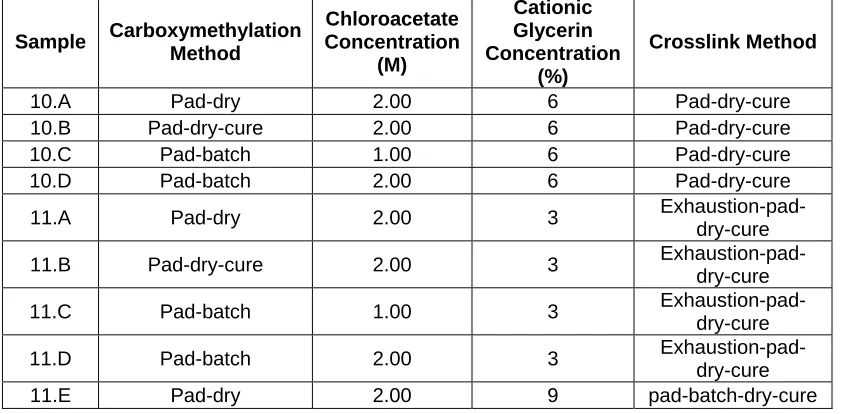
Table 3.6 Variations in series 10 and 11 treatments……….. 36
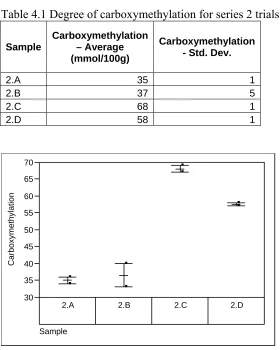
Table 4.1 Degree of carboxymethylation for series 2 trials………... 43
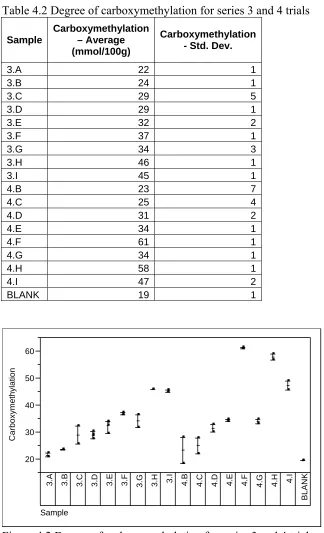
Table 4.2 Degree of carboxymethylation for series 3 and 4 trials………. 44
Table 4.3 Degree of carboxymethylation for series 7, 8, 10, and 11 trials……… 46
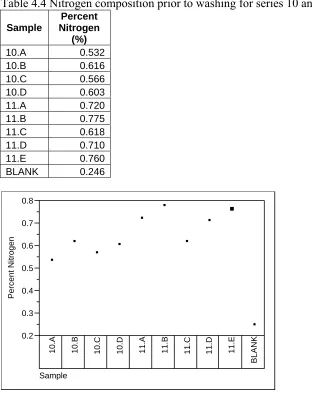
Table 4.4 Nitrogen composition prior to washing for series 10 and 11 trials……… 50
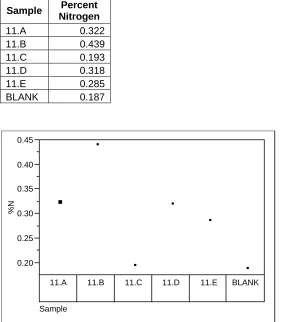
Table 4.5 Nitrogen composition after washing for series 11 trials……… 51
Table 4.6 Nitrogen composition for durability to laundering evaluation for series 11 trials……… 52
Table 4.7 Picks and Ends for series 11 trials………. 55
Table 4.8 Percent shrinkage in the warp direction for series 11 trials………... 56
Table 4.9 Percent shrinkage in the fill direction for series 11 trials……….. 56
Table 4.10 Basis weight for series 7, 8, 9, 10, and 11 trials……….. 59
Table 4.11 Bending rigidity in the warp direction for series 7, 8, 9, 10, and 11 trials………62
Table 4.12 Bending rigidity in the fill direction for series 7, 8, 9, 10, and 11 trials……. 65
Table 4.13 Tear strength in the warp direction for series 10 and 11 trials……….69
Table 4.14 Tear strength in the fill direction for series 10 and 11 trials……… 71
Table 4.15 Tensile strength in the warp direction for series 7, 8, 9, 10, and 11 trials………75
Table 4.16 Strain at break in the warp direction for series 7, 8, 9, 10, and 11 trials……. 79
Table 4.17 Dry WRA for series 7, 8, 9, 10, and 11 trials……….. 85
Table 4.18 Wet WRA for series 7, 8, 9, 10, and 11 trials……….. 88
Table 4.19 DP rating for series 10 and 11 trails……….90
LIST OF FIGURES
Figure 2.1: Chemical structure of cellulose………... 3
Figure 2.2 Formaldehyde crosslinking reactions………... 5
Figure 2.3 Urea / formaldehyde reaction to form dimethylol urea (DMU)………... 6
Figure 2.4 N-methylol crosslinking reaction………6
Figure 2.5 Melamine / formaldehyde reaction to form trismethoxymethylol melamine……….. 7
Figure 2.6 Dimethylol dihydroxy ethylene urea (DMDHEU)………... 9
Figure 2.7 Alkylated dimethylol dihydroxy ethylene urea (alkylated DMDHEU)... 10
Figure 2.8 Dimethyl dihydroxy ethylene urea (DMeDHEU)……… 11
Figure 2.9 Carboxymethylated cellulose………... 17
Figure 2.10 Carboxymethylation of cellulose with chloroacetic acid………... 19
Figure 2.11 Cationization of glycerin……… 20
Figure 2.12 Anionic cellulose crosslinked with cationic glycerin………. 22
Figure 4.1 Degree of carboxymethylation for series 2 trials………. 43
Figure 4.2 Degree of carboxymethylation for series 3 and 4 trials……… 44
Figure 4.3 Degree of carboxymethylation for series 7, 8, 10, and 11 trials……….. 47
Figure 4.4 Nitrogen content prior to washing for series 10, and 11 trials………. 50
Figure 4.5 Nitrogen content after washing for series 11 trials………... 51
Figure 4.6 Correlation between nitrogen content and carboxymethylation………... 53
Figure 4.7 Durability to laundering as indicated by nitrogen content………... 54
Figure 4.8 Shrinkage in the warp direction due to laundering………... 57
Figure 4.9 Correlation between shrinkage due to laundering and carboxymethylation……… 57
Figure 4.10 Basis weight for series 7, 8, 9, 10, and 11 trials………. 59
Figure 4.11 Correlation between shrinkage during the process and basis weight………. 61
Figure 4.12 Bending rigidity in the warp direction for series 7, 8, 9, 10, and 11 trials……….. 62
Figure 4.13 Bending rigidity in the fill direction for series 7, 8, 9, 10, and 11 trials.65 Figure 4.14 Correlation between bending rigidity and carboxymethylation………. 67
Figure 4.15 Correlation between bending rigidity and nitrogen content……….. 67
Figure 4.16 Correlation between bending rigidity and basis weight………. 68
Figure 4.17 Tear strength in the warp direction for series 10 and 11 trials………... 69
Figure 4.18 Tear strength in the fill direction for series 10 and 11 trials……….. 71
Figure 4.19 Correlation between tear strength and carboxymethylation………... 72
Figure 4.20 Correlation between tear strength and nitrogen content………. 73
Figure 4.21 Correlation between tear strength and basis weight………... 74
Figure 4.22 Tensile strength in the warp direction for series 7, 8, 9, 10, and 11 trials……….. 75
Figure 4.23 Correlation between tensile strength and carboxymethylation……….. 77
Figure 4.24 Correlation between tensile strength and nitrogen content……… 78
Figure 4.25 Correlation between tensile strength and basis weight……….. 78
Figure 4.26 Strain at break in the warp direction for series 7, 8, 9, 10, and 11 trials.80 Figure 4.27 Correlation between strain at break and carboxymethylation……… 82
Figure 4.29 Correlation between tear strength and strain at break……… 83
Figure 4.30 Correlation between tensile strength and strain at break……… 83
Figure 4.31 Dry WRA for series 7, 8, 9, 10, and 11 trials………. 85
Figure 4.32 Correlation between dry WRA and bending rigidity………. 87
Figure 4.33 Wet WRA for series 7, 8, 10, and 11 trials………. 89
Figure 4.34 CIE WI for series 7, 8, 9, 10, and 11 trials………. 94
Figure 8.1 Analysis of the effect of fabric type on degree of carboxymethylation... 108
Figure 8.2 Analysis of the effect of double treatment on degree of carboxymethylation………... 109
Figure 8.3 Initial analysis of the effects of process parameters on degree of carboxymethylation using series 3 and 4 data………. 110
Figure 8.4 Final analysis of the effects of process parameters on degree of carboxymethylation using series 3 and 4 data………. 111
Figure 8.5 Initial analysis of the effects of process parameters on degree of carboxymethylation using series 7, 8, 10, and 11 data……… 112
Figure 8.6 Final analysis of the effects of process parameters on degree of carboxymethylation using series 7, 8, 10, and 11 data……… 113
Figure 8.7 Analysis of the effects of process parameters on nitrogen content prior to washing using series 10 and 11 data………... 114
Figure 8.8 Analysis of the effects of process parameters on nitrogen content after washing using series 11 data……….. 114
Figure 8.9 Analysis of the effects of process parameters on nitrogen content as an indication of durability to laundering using series 11 data………. 115
Figure 8.10 Analysis of the effects of process parameters on basis weight using series 7, 8, 9, 10, and 11 data………... 116
Figure 8.11 Initial analysis of the effects of process parameters on bending rigidity in the warp direction using series 7, 8, 9, 10, and 11 data…….. 117
Figure 8.12 Final analysis of the effects of process parameters on bending rigidity in the warp direction using series 7, 8, 9, 10, and 11 data……...118
Figure 8.13 Initial analysis of the effects of process parameters on bending rigidity in the fill direction using series 7, 8, 9, 10, and 11 data…… …..119
Figure 8.14 Final analysis of the effects of process parameters on bending rigidity in the fill direction using series 7, 8, 9, 10, and 11 data…… …..120
Figure 8.15 Analysis of the effect of carboxymethylation on tear strength in the warp direction………...121
Figure 8.16 Analysis of the effect of crosslinking on tear strength in the warp direction……….…...122
Figure 8.17 Analysis of the effect of carboxymethylation on tear strength in the fill direction……….. …..123
Figure 8.18 Analysis of the effect of crosslinking on tear strength in the fill direction………. …..124
Figure 8.19 Initial analysis of the effects of process parameters on tensile strength in the warp direction using series 7, 8, 9, 10, and 11 data...…...125
Figure 8.21 Initial analysis of the effects of process parameters on strain at
break in the warp direction using series 7, 8, 9, 10, and 11 data….. …...127 Figure 8.22 Final analysis of the effects of process parameters on strain at break
in the warp direction using series 7, 8, 9, 10, and 11 data………… …...128 Figure 8.23 Initial analysis of the effects of process parameters on dry WRA
using series 7, 8, 9, 10, and 11 data………... 129 Figure 8.24 Final analysis of the effects of process parameters on dry WRA
using series 7, 8, 9, 10, and 11 data………. 130 Figure 8.25 Initial analysis of the effects of process parameters on wet WRA
using series 7, 8, 10, and 11 data………. 131 Figure 8.26 Final analysis of the effects of process parameters on wet WRA
using series 7, 8, 10, and 11 data………. 132 Figure 8.27 Initial analysis of the effects of process parameters on WI using
series 7, 8, 9, 10, and 11 data………... 133 Figure 8.28 Final analysis of the effects of process parameters on WI using
1 Introduction
Durable press (DP) finishes are an important treatment for cotton fabrics which
provide wrinkle resistant and permanent press performance for apparel. This treatment
became important in the 1930’s and has continued to play an important role in the apparel
industry.
Cotton fabric is particularly prone to wrinkling. Hydrogen bonding holds cellulose
fibers together. Under stress these bonds can shift and hold fabrics in a new orientation,
particularly when cotton is wet. Water molecules lubricate the cellulose chains and disrupt
hydrogen bonding thus allowing them to shift more easily under stress. When the fabric is
dried, the cellulose retains its new shape as the hydrogen bonds reform in a new
configuration.
This problem has been overcome by covalently bonding the cellulose chains together,
forming covalent bonds that are not disrupted by water. Formaldehyde-based crosslinking
agents are the dominant products used to accomplish this in industry. These products
provide excellent wrinkle resistance and durable press performance. They also produce
several adverse effects. They reduce the strength of the fabric. They increase the stiffness of
the fabric and cause yellowing. These properties considerably reduce the wear and abrasive
properties of treated fabrics. They also release formaldehyde over time, which is undesirable
since formaldehyde is a suspected human carcinogen.
There has been considerable effort to develop a product that could provide wrinkle
resistant and durable press performance without these adverse effects. Low formaldehyde
release products and products that are not based on formaldehyde have been developed.
overcome some of these disadvantages, but have failed to capture a significant portion of the
durable press market due to high costs and other factors.
Ionic crosslinking has been explored as a potential durable press treatment. Previous
work has shown significant increases in both wet and dry wrinkle recovery angle by
producing ionic cellulose and crosslinking it with an ionic crosslinking agent of the opposite
charge. Significant strength and elongation gains have also been demonstrated with ionic
crosslinking techniques. This research further explores ionic crosslinking as a durable press
finish. (1,2,3)
2 Background
2.1 The Nature of Cotton
Cotton fibers are each a single plant cell. American Upland cotton used for
traditional textiles range in length from ⅞ to 1¼ inches. The fiber diameter is 16 to 20
micrometers. The width is fairly uniform along the length of the fiber. Mature fibers are flat,
twisted ribbons. The cross-section is commonly described as kidney bean shaped. The fibers
taper to a conical point at the tip. (4)
Cotton fibers are composed of five regions. The outer layer is the cuticle. It is a very
thin waxy layer that can be removed by scouring and bleaching. The primary cell wall is
next. It is composed of fibrils spiraling around the fiber axis at an angle of 20 to 30 degrees.
This layer is thick in mature cotton. The secondary cell wall is below the primary cell wall.
The secondary cell wall makes up the majority of the fiber volume. It is composed of
concentric layers of spiraling fibrils. The structure of the outermost layer is slightly different
of the lumen after the cell dies and dries produces the twisted, kidney bean shaped
appearance of the fiber. (4)
2.1.1 Cellulose Chemistry
The fibrils are composed of linear cellulose polymer chains. After scouring and
bleaching, cotton is over 99% cellulose. (5) The cellulose polymer is shown in Figure 2.1.
Cellulose molecules are composed of cellobiose units joined together by 1,4-β glycosidic
bonds. The degree of polymerization ranges from 6,000 to 14,000 and the molecular weight
is greater than 570,000g/mol. (6,7) Approximately 65 to 70% of the cellulose is crystalline
and 30 to 35% is amorphous. (4)
Intermolecular forces are dominated by hydrogen bonding. (8) Hydrogen bonding
occurs between the oxygen atom between rings and the primary hydroxyl group attached to
C6. The hydroxyl groups impart a high affinity to water and can be reacted to modify the
cellulose chemical structure.
O O OH H H H H H O H O H OH O O OH H H H H H O H OH O O OH H H H H H O H OH O OH OH H H H H H O H OH n Cellulose
Figure 2.1: Chemical structure of cellulose
2.1.2 Wrinkling of Cellulose Fabrics
Cotton fabric is particularly prone to wrinkling. Wrinkling occurs when fibers are
stressed. The hydrogen bonds which hold them in their original orientation are broken and
new bonds are formed in the new orientation. When the stress is removed, there are no
forces to cause the fibers to return to their original orientation. They are left in the new
This phenomenon is clear when viewed on a molecular level. When a fiber is bent,
the cellulose chains on the outside of the bend are stretched while the cellulose chains on the
inside of the bend are compressed. Neighboring molecules are attracted to each other
through hydrogen bonding. The forces cause hydrogen bonds to be broken, and new
hydrogen bonding occurs in the stressed arrangement. When the stress which caused the
bend is removed, there is no restoring force to return the bonding to the original arrangement.
Wrinkling occurs most easily when cotton fabric dries from 25% moisture content to
5% moisture content. When fabric is wet, water molecules are attracted to the chains and
disrupt hydrogen bonding. This lubricates the cellulose chain. The polymer chains slide past
each other more easily when forces are applied. When the fabric dries, the lubrication is
removed and wrinkles are ‘set’ as the hydrogen bonds reform. This explains why washing
and drying cotton fabrics results in wrinkling of the fabric.
The construction of the yarn and fabric affects wrinkling. (9) Thicker fibers
experience more wrinkling because the stress on the inside and outside of the fiber is greater
when it is bent. Tight constructions wrinkle more than loose constructions and high twist
yarns wrinkle more than low twist yarns for the same reason.
2.2 Durable Press Treatment
To reduce wrinkling, the bond permanence between cellulose chains must be
increased. The hydrogen bonds can be replaced with covalent bonds. These bonds are not
disrupted by water because they are much stronger and provide a restoring force to return the
chains to their original orientation after the stress is removed. (10) There are a number of
approaches to producing a stronger bond through reaction with the hydroxyl groups on the
2.2.1 Traditional Durable Press Finishes
Cellulose can be crosslinked using aminoplasts which react to form bonds with
themselves and with cellulose or using reactants which will only form bonds with cellulose to
form crosslinks. Urea / formaldehyde and melamine / formaldehyde are two aminoplasts
which are used for durable press treatments. Aminoplasts are known as self crosslinking and
film forming materials. Cyclic urea methylol compounds are used as crosslinking agents.
They will react with cellulose, but will not self crosslink.
The simplest crosslinker is formaldehyde. This crosslinking reaction is shown in
Figure 2.2. It can react with cellulose at high temperature in the presence of MgCl2 to form
methylene bridges. This is a very strong crosslink and does not release formaldehyde.
O
H H
O
H OH
O
H OH HO R R O O R
+
H2OFormaldehyde Water Formalin
+
2+
2 H2OFigure 2.2 Formaldehyde crosslinking reactions
2.2.1.1 Urea / Formaldehyde
Crosslinking with urea and formaldehyde was developed in the late 1920’s. (11)
Urea and formaldehyde will react to form a cellulose crosslinking precursor. One mole of
urea and two moles of formaldehyde react to form dimethylol urea (DMU). This reaction is
shown in Figure 2.3. DMU can react to form a crosslink between the methylol group on
DMU and the hydroxyl groups of cellulose chains. The reaction with cellulose requires an
N
H2 NH2
O
H H
O
O
H N N OH
O
2
+
Urea Formaldehyde DMU
Figure 2.3 Urea / formaldehyde reaction to form dimethylol urea (DMU)
R N OH
O
R' OH
R N O R'
O
+
+
H2OH+
Figure 2.4 N-methylol crosslinking reaction
DMU treatments produce excellent crease recovery and are easy to cure. The
chemicals are inexpensive and very efficient. However, they have several undesirable
properties. The reactants are not stable for long periods of time and must be used shortly
after mixing. They also produce a stiff hand. They have poor chlorine resistance. They can
form a chloramide in the presence of bleach which can later produce hydrochloric acid (HCl)
in the presence of a weak acid. Chlorine retention occurs at the secondary amine. The HCl
causes yellowing and tendering of the fabric. (9,12,13,14)
Alkylated urea / formaldehyde can be used as well. These chemicals are more stable
and therefore are more stable solutions for production and produce a softer hand since there
is less reaction between the crosslinking agent itself. (9)
2.2.1.2 Melamine / Formaldehyde
Melamine and formaldehyde will form a crosslinking agent. Reaction of one mole of
melamine (2,4,6-triamino-1,3,5-triazine) with three moles of formaldehyde produces
trismethyloxymethylol melamine. Reaction of one mole of melamine with six moles of
formaldehyde produces hexamethoxymethylol melamine. Reaction with methyl alcohol is
these chemicals will react with the hydroxyl groups on cellulose in the presence of an acid
catalyst to form crosslinks.
N N N NH2 NH2 N
H2 H H
O N N N N N N O H OH OH N N N N N N O H OH OH N N N N N N O O O 2
+
Formaldehyde Melamine+
3 CH3OHTrismethoxymethylol melamine
Figure 2.5 Melamine / formaldehyde reaction to form trismethoxymethylol melamine
Melamine / formaldehyde resins have greater durability and stability than urea /
formaldehyde and are also more expensive. Trismethyloxymethylol melamine produces a
stiff hand. It has excellent laundry durability and poor chlorine resistance. The chlorine
produces yellowing, but less degradation than with urea / formaldehyde.
Hexamethoxymethylol melamine produces a softer hand and has less chlorine retention.
(9,15,16)
Both urea / formaldehyde and melamine / formaldehyde have serious drawbacks as
finishes for cotton. They produce good durable press performance, but they also produce a
stiff hand and they are not chemically stable. They release considerable formaldehyde,
resulting in around 3,000 mg/kg formaldehyde release. (9) Since they are film formers, they
2.2.1.3 Cyclic Urea Methylol Durable Press Finishes
Cyclic ureas can be reacted with formaldehyde to form crosslinking agents. These
compounds will react with cellulose but are not film formers. They cannot produce a
thermoset plastic material, so they generally do not cause as much stiffness in the fabric.
One mole of ethylene urea will react with two moles of formaldehyde to form dimethylol
ethylene urea (DMEU). DMEU will react to form crosslinks between the hydroxyl groups
on cellulose when an acid catalyst is present and will not self-crosslink. It is stable and has a
long shelf and pad bath life. It produces good durable press performance and a softer hand
than seen with aminoplasts. It has less than desirable durability and poor chlorine resistance.
It also has a formaldehyde release above 1,000 mg formaldehyde / kg fabric. DMEU is
inexpensive and was widely used up until around 1960. (9,17)
One mole of propylene urea will react with two moles of formaldehyde to produce
dimethylol propylene urea. Dimethylol propylene urea will react with the hydroxyl groups
on cellulose in the presence of an acid catalyst to produce crosslinks. It is more stable than
DMEU, has better chlorine resistance, and is more durable to laundering. It does not yellow
like most formaldehyde based finishes. (18) It is also more expensive than DMEU. (9)
4,5-Dihydroxy ethylene urea will also react with formaldehyde to form a crosslinking
agent. One mole of 4,5-dihydroxy ethylene urea reacts with two moles of formaldehyde to
form dimethylol dihydroxy ethylene urea (DMDHEU). The structure of DMDHEU is shown
in Figure 2.6. DMDHEU currently accounts for over 85% of all durable press treatments.
(9,19,20) DMDHEU has a lower reactivity which allows for a delayed cure step. The
chemicals also have a longer shelf and pad bath life. DMDHEU has better durability to
white fabrics. It has a lower formaldehyde release, but the formaldehyde release is still about
1,000 mg/kg. (9)
N N
O
H OH
OH O
H
O
Dimethylol dihydroxy ethylene urea (DMDHEU)
Figure 2.6 Dimethylol dihydroxy ethylene urea (DMDHEU)
While there are a large variety of chemistries available for producing DP finishes,
DMDHEU and alkylated DMDHEU (discussed in section 2.2.3) are almost universally used
for textile applications. Prior treatments such as urea / formaldehyde and melamine /
formaldehyde are obsolete due to properties such as harsh hand, chlorine retention, and
formaldehyde release. Newer treatments have not been able to provide sufficient
improvements over DMDHEU because of generally poorer DP performance and higher cost.
DMDHEU is the industry standard for DP finishing of textiles.
2.2.2 Other Formaldehyde Based Durable Press Finishes
Carbamates can be used to produce precursors to crosslink cotton. These chemicals
show no chlorine retention and no yellowing. They also have excellent laundry durability.
However, they cause high strength loss in the fabric and high formaldehyde release. (9)
Vapor phase formaldehyde treatment can also be used to treat fabrics. This can be
used for garment processing. The garment is placed in a sealed chamber and then
formaldehyde, steam and sulfur dioxide are added. This process produces excellent durable
is also very expensive. (9) There was considerable interest in this chemistry in the 1960’s
and 1970’s, but it has never become commercially important.
2.2.3 Low Formaldehyde Release Durable Press Finishes
Untreated cotton fabric has the potential to release between 0 and 20 mg
formaldehyde / kg fabric. Traditional durable press finishes dramatically increase the
formaldehyde release of finished fabrics. Formaldehyde is an irritant. It is classified as a
probable human carcinogen by the U.S. Environmental Protection Agency (21) and as a
known human carcinogen by the International Agency for Research of Cancer. (22) The
U.S. Occupational Safety and Health Administration indicates that formaldehyde is a
potential cancer hazard. (23) As a result, low formaldehyde release durable press finishes
have been developed and non-formaldehyde finishes are widely sought after.
Alkylated DMDHEU releases less formaldehyde than DMDHEU. The structure of
alkylated DMDHEU is shown in Figure 2.7. If DMDHEU is partially methylated, it has the
potential to release around 500 mg formaldehyde / kg fabric. If it is fully methylated, it has
the potential to release approximately 300 mg formaldehyde / kg fabric. (9)
N N
O O
O O
O
R R
R R
Alkylated dimethylol dihydroxy ethylene urea (DMDHEU)
Ultra low formaldehyde release (ULF) can be achieved by crosslinking with a
mixture of one mole DMDHEU to two moles diethylene glycol. It has a formaldehyde
release of less than 50 mg/kg. (9)
2.2.4 Non-Formaldehyde Durable Press Finishes
All formaldehyde based crosslinking agents produce two undesirable properties if
applied by pad-dry-cure mehods. They cause considerable strength reductions in the fabrics.
(24,25) Strength reduction is a result of both rigid crosslinks and molecular weight
reduction. The largest factor is that the rigid crosslinks prevent the polymer chains from
sliding to allow stresses to be absorbed by many chains. Many acid catalysts produce a
decrease in molecular weight during treatment which further decreases strength. These
finishes also contain formaldehyde. Low formaldehyde release finishes deal with the health
issues with formaldehyde, however there are still marketing concerns which drive a desire for
non-formaldehyde finishes.
Dimethyl-4,5-dihydroxy ethylene urea (DMeDHEU) can be used to crosslink
cellulose. The structure of DMeDHEU is shown in Figure 2.8. It is difficult to cure and has
relatively poor durable press performance. It is two to three times more expensive than ULF
finish. (9)
N N
O
H OH
O
Dimethyl dihydroxy ethylene urea (DMeDHEU)
A number of polycarboxylic acid anhydrides have been used as durable press
finishes. The carboxylic acid groups on these molecules react with the hydroxyl groups on
cellulose to form ester bonds. These treatments are formaldehyde free and generally produce
a softer hand than formaldehyde based finishes.
1,2,3,4-Butane tetra carboxylic acid (BTCA) was developed for use as crosslinking
agent by the USDA. It reacts to form an anhydride which in turn forms ester bonds with the
hydroxyl groups on cellulose in the presence of sodium hypophosphite catalyst. It is the
most effective polycarboxylic acid for durable press applications. The durable press
properties are similar to those of DMDHEU, however it has less durability then N-methylol
compounds because the ester bond is much easier to hydrolyze than the ether bond. The
reaction requires a large amount of catalyst. Approximately 30% catalyst is required. It is
also expensive at approximately four times the cost of DMDHEU.
BTCA has been replaced with less expensive chemicals such as polymaleic acid and
polyacrylic acid. Citric acid, maleic acid, and tartaric acid are the most economical
alternatives which have been explored. (26,27) Citric acid and maleic acid / itaconic acid
mixtures have also been used with phosphorous containing catalysts. (28) Durable press
performance is somewhat lower than with BTCA, but strength loss is lower. (29) These
chemistries are less efficient than BTCA and less durable. (30) A combination of citric acid
and a terpolymer of maleic acid, acrylic acid, and vinyl alcohol has shown improved
performance and durability over most other polycarboxylic acid options. (30) A combination
of polycarboxylic acid and citric acid has also produced improved properties. (27) These
processes still require high concentrations of catalyst and all cause yellowing of the fabric.
1,3-Dihydroxy-4,5-dimethyl-2-imidazolidinone (DHDMI) is a commercially
available non-formaldehyde durable press finish. (30) It is much less efficient than
DMDHEU and requires high levels of resin add-on. It is less expensive than BTCA, but far
more expensive than DMDHEU.
Short chain polycarboxylic acids produce strength loss like formaldehyde based
finishes. However, the strength loss is not generally as large. Long-chain polycarboxylic
acids can be used to produce finishes with little to no strength loss. (31,32)
Polycarboxylic acids require large amounts of an acid catalyst. The typical catalysts
are phosphorous containing compounds. Sodium hypophosphite is the most effective
catalyst. (28) This can produce problems through cellulose degradation causing strength
loss, high cost because of the large concentration requirements, and environmental concerns
with the waste stream. Sodium hypophosphite is known to produce shade change with
certain dyes. (28)
Other catalysts have been tested with positive results. N-heterocyclic compounds
have been studied. Imidazole and its alkyl derivatives have been shown to produce similar
durable press properties to sodium hypophosphite and better mechanical properties. (28,33)
Mono- and disodium salts of fumaric acid, maleic acid, and itaconic acid have been used as
catalysts with BTCA to produce high durable press ratings and wrinkle recovery angles.
(28,34)
Boric acid is often added to suppress the reactions which cause yellowing during the
curing process. (28) Trials with boric acid actually produce an increase in strength properties
Treatment with a combination of citric acid and chitosan has also been investigated.
(36) In this case, the esterification occurs both between citric acid and cellulose and between
citric acid and chitosan. This produces slight improvements in wrinkle recovery angle and
durable press performance and in tensile and tear strength. The treatment has a higher
durability than most other polycarboxylic acid treatments.
2.3 Ionic Crosslinking as a Durable Press Finish
2.3.1 Variety of Chemistries Available for Ionic Crosslinking
Ionic crosslinking has been investigated as a mechanism for producing durable press
performance. (1,2) There is currently a patent pending for a process which produces an
ionically crosslinked fibrous material. The process involves applying a polyelectrolyte to an
ionic fibrous material to form an ionically crosslinked material, such that the polyelectrolyte
has a charge opposite that of the ionic fibrous material. Ionically crosslinked fabrics have
demonstrated improvements in WRA without strength loss. (1,3)
Cotton fabric has been ionically crosslinked using a variety of techniques.
Cationizing agents have been used to produce cationic cellulose. Then the cationic cellulose
has been crosslinked with an anionic crosslinking agent. Anionizing agents have also been
used to produce anionic cellulose. The anionic cellulose has been crosslinked with a cationic
crosslinking agent.
Fabric has been treated with chloroacetic acid (CAA) to produce anionic sites on the
polymer chains and crosslinked with cationized chitosan and other polycations. Cotton
fabric has also been treated with 3-chloro-2-hydroxypropyl trimethyl ammonium chloride
Most research has focused on utilizing chitosan as the crosslinking agent. (1,2,3) It
can be reacted with CHTAC to form cationic chitosan or with chloroacetate to form anionic
chitosan. Since the nature and number of ionic sites on both cellulose and chitosan can be
controlled, chitosan provides considerable flexibility as a crosslinking agent. Cationic
chitosan can be produced through substitution at the ring NH2 site (37) or through
substitution at the C6 and ring hydroxyl sites. (1)
Numerous treatment methods have been evaluated. Trials have been performed using
pad-batch processes, exhaust fixation processes, pad-steam processes, and pad-dry-cure
processes. (1)
Anionization of cellulose with chloroacetate and crosslinking with cationic chitosan
produces an average increase in WRA of 130° and a strength increase between 10 and 60%.
Durability to home laundering has also been evaluated. Cationic chitosan as a crosslinking
agent appears to be extremely durable, with almost no decrease in crosslinking agent after
three wash cycles. (1)
2.3.2 Preceding Ionic Crosslinking Research
The most recent work has shown promising results using wrinkle recovery angle as a
gauge of performance. (2) Plain weave, 100% cotton fabrics were evaluated using a number
of ionic crosslinking procedures.
Cellulose was reacted with CAA and crosslinked with cationic chitosan, cationic
glycerin, calcium chloride, magnesium chloride, cationized ethylene glycol, cationized
dextrose, cationized D-celobiose, and cationized β-cyclodextrin. All of these crosslinking
cationic glycerin produced the best results. They were evaluated using dry-cure,
pad-batch, and exhaustion application methods. (1,2)
Cellulose was also reacted with CHTAC and crosslinked with PCA, BTCA, EDTA,
NTA, HEDTA, oxalic acid, citric acid, and maleic acid. Each polyanion showed positive
results, but the best were observed with PCA and BTCA. The same application procedures
were evaluated. (1,2)
Ionic crosslinking with a variety of chemistries has shown significant increase in wet
and dry wrinkle recovery angle. (1,2) It has also shown increases in fabric strength. Anionic
cotton crosslinked with cationic glycerin produced using pad-batch carboxymethylation and
exhaustion application of the crosslinking agent yielded the best results. Compared to
untreated fabric, increases of 140° were observed in wet WRA and increases of 100° were
observed in dry WRA. A 58% increase in tensile strength was produced. (2)
2.3.3 Optimal Chemistry for Ionic Crosslinking
Optimal ionic crosslinking treatments involve three principal chemical processes. (2)
Anionic cellulose is produced through carboxymethylation with the sodium salt of
chloroacetic acid in the presence of sodium hydroxide. Cationic glycerin is obtained from
reaction of glycerin and CHTAC. Then the anionic cellulose is crosslinked with the cationic
glycerin.
2.3.3.1 Chemistry of Carboxymethylation of Cellulose
Carboxymethylation of cellulose produces carboxymethylcellulose (CMC). This
molecule is shown in Figure 2.9. It is formed by reacting chloroacetic acid with cellulose
under alkaline conditions. Different preparation methods and conditions will result in
then on the secondary alcohols. Substitution is most likely to be 6-O-linked, followed by
2-O-, then 2,6-di-2-O-, 3-2-O-, 3,6-di-2-O-, 2,3-di-2-O-, and finally 2,3,6-tri-O- linking.
O O OH H H H H H O H O H O O O OH H H H H H O H O O O OH H H H H H O H O O OH OH H H H H H O H O O O O O O O O O n
Figure 2.9 Carboxymethylated cellulose
The degree of carboxymethylation is one factor that influences the properties of
fibers. Substitution may or may not be evenly distributed along the chain. Substitution is
dependent on the accessibility of the functional groups. The accessibility of the modified
functional groups is also important for determining the properties of the modified cellulose.
The accessibility of the groups is related to the degree of carboxymethylation, but there is not
a direct correlation. The reaction conditions affect the accessibility of the groups. (38)
Carboxymethylation begins with the most accessible hydroxyl groups on the cellulose
molecule. For example, substitution will occur more rapidly and be more homogeneous in
regions where the crystallinity is lower, because the reactants can travel through lower
crystallinity regions more easily than higher crystallinity regions. As the reaction proceeds,
the reactants penetrate into the more highly ordered regions of the cellulose structure. At
early stages of the reaction, the distribution of the carboxymethyl groups is very
inhomogeneous. As the reaction time is lengthened, the distribution of the carboxymethyl
Desirable carboxymethylation treatments for ionic crosslinking have been evaluated.
(1,2,3) The cotton fibers are treated with sodium hydroxide. This removes the hydrogen
atom from the hydroxyl groups leaving a negatively charged oxygen atom. This reactive
form of cellulose is known as soda cellulose. Chloroacetate reacts with cellulose at these
sites. This treatment can be performed by soaking, padding, and drying the fabric prior to
treatment with the chloroacetate, or the NaOH and chloroacetate may be combined in
solution for a single step treatment to carboxymethylate the fabric. 20 to 40% NaOH
solutions are used which are prepared by dissolving solid NaOH pellets in deionized water.
The fabric is carboxymethylated using the sodium salt of chloroacetic acid. The
solution is prepared from chloroacetic acid and sodium carbonate. Solutions were prepared
approximately one hour prior to fabric treatment but are stable for several days. A solution
of chloroacetate is prepared by dissolving solid chloroacetic acid flakes in deionized water.
Solutions in the range from 0.0 to 2.0M were prepared. Once the solid is fully dissolved,
sodium bicarbonate powder is added to the chloroacetic acid solution. One mole of sodium
carbonate is added for every two moles of acetic acid. Carbon dioxide is generated and the
chloroacetate is formed in solution.
Cotton fabric is treated with chloroacetate by soaking or padding. Then the reaction
is allowed to proceed at a number of different conditions. The chloroacetate reacts with the
hydroxyl groups on the cellulose chain forming an ether linkage and generating hydrochloric
acid. This reaction is summarized in Figure 2.10.
The fabric is rinsed in deionized water and soaked in dilute acetic acid. 2 g/L acetic
acid solutions are used. The acetic acid neutralizes any residual alkali in the fabric. This is
O O O H H H H H H O H O H O H O O O H H H H H H O H O H O O O H H H H H H O H O H O O H O H H H H H H O H O H n O O O H H H H H H O H O H O O O O H H H H H H O H O O O O H H H H H H O H O O O H O H H H H H H O H O O O O O O O O O n Cellulose C l O O N a
N a O H
Chloroacetic acid (Sodium salt)
+
Anionic cellulose
Figure 2.10 Carboxymethylation of cellulose with chloroacetic acid
2.3.3.2 Chemistry of Cationic Glycerin
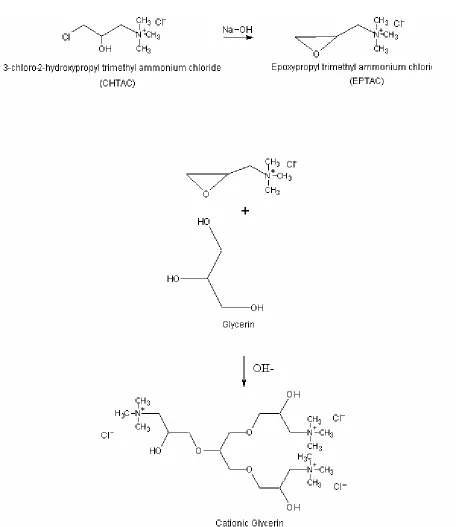
Cationic glycerin is produced from glycerin and CHTAC. (1,2) The reaction for
production of cationic glycerin is summarized in Figure 2.11. A solution of 69%
3-chloro-2-hydroxypropyl trimethyl ammonium chloride (CHTAC) is mixed with 50% by weight
aqueous NaOH at room temperature. This is performed slowly by adding the NaOH solution
dropwise into the CHTAC solution. Addition proceeds until the solution has reached a pH of
(EPTAC) and sodium chloride. Since there is a large quantity of NaCl formed which
precipitates from solution, the solution is filtered to remove the majority of the salt.
Glycerin is then added to the solution at a mole ratio of one mole of glycerin to 8
moles of CHTAC. The mixture is stirred for ten minutes at room temperature. It is then
moved to a preheated water bath and held at 60°C for 20 hours with agitation. The solution
gradually becomes viscous and the color changes from clear to yellowish. The product is
cooled to room temperature and filtered. The pH is then adjusted to 7.0 using acetic acid.
2.3.3.3 Chemistry of Crosslinking
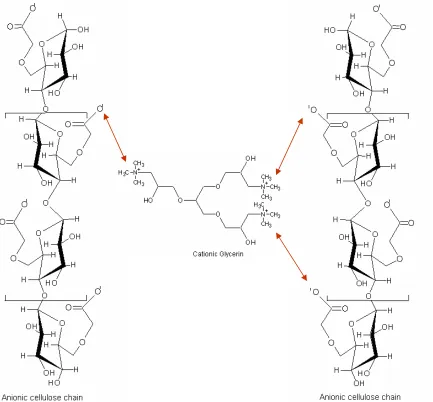
The anionic cellulose molecules are crosslinked using the cationic glycerin
molecules. The fabric is soaked in a solution of between 3 and 9% by weight cationic
glycerin. The cationic glycerin exhausts onto the fabric. Over a period of time, positive
charges on the cationic glycerin form ionic bonds with negative charges on anionic cellulose.
Figure 2.12 Anionic cellulose crosslinked with cationic glycerin
2.4 Proposed Research
The objective of this research was to further optimize the ionic crosslinking of
cellulose, to improve understanding of the process and chemistry, to scale up the laboratory
process to an economically viable pilot plant process, and to use additional evaluation
techniques to measure the effects on final product properties particularly DP rating.
First, a variety of parameters were evaluated to develop an understanding of some of
initial trials, statistically designed experiments were performed to develop quantitative
models for how to optimize the process for desired properties. This led to small scale trials
using pilot plant scale equipment to validate these models and analyze scale-up of the
treatment.
The larger runs were evaluated to determine the effects of this treatment on an array
of fabric characteristics. DP rating was particularly important because it is the industry
standard for DP treatment evaluation. Previous evaluation of ionic crosslinking has relied on
WRA. WRA was assumed to correlate with DP rating but had to be validated.
3 Experimental Procedures 3.1 Raw Materials
The fabric and chemicals used for this research are all industrially available. In
developing the ionic cross-linking process, cost was a primary concern. As a result, low cost,
readily available raw materials were selected.
3.1.1 Fabric
Cotton Incorporated provided white shirting fabric for this research. This is a 100%
cotton fabric which has been scoured, desized, bleached, and heat set. It is a plain weave
construction. No sizing was present on the fabric and no additional finishing had been
performed. The original fabric width is 120 cm. The fabric basis weight is 112 g/m2. The
picks and ends are 44x27 yarns/cm. The yarns are ring spun. Prior to any treatment, the CIE
whiteness index is 77.64.
Three fabrics with a 3x1 twill construction were also provided by Cotton
Incorporated. The first twill fabric is white with a CIE whiteness index of 82.39. It has a
The second twill fabric is grey with L*=63.30, a*=1.62, and b*=9.67. It has a basis weight
of 250 g/m2, a yarn count of 48x20 yarns/cm, and an original width of 162 cm. The third
twill fabric is reddish tan with L*=58.38, a*=8.38, and b*=18.64. It has a basis weight of
225 g/m2, a yarn count of 48x20 yarns/cm, and an original width of 149 cm.
The fabrics were tested for the presence of starch and polyvinyl alcohol sizing and
found to be free of these sizings. The fabrics had a pH of 7.0 as determined by AATCC Test
Method 81-2001 pH of Water-Extract from Bleached Cotton. (39) They were also tested for
absorbency. They were more absorbent than the range of AATCC Test Method 79-2000
Absorbency of Bleached Textiles (40) and AATCC Test Method 35-2000 Water Resistance:
Rain Test. (41)
3.1.2 Chemicals
The primary chemicals used for this project were the following:
• Sodium hydroxide (pellets)
• 3-Chloro-2-hydroxypropyl trimethyl ammonium chloride (69% aqueous solution)
• Glycerin (99+%)
• Chloroacetic acid (flakes)
• Sodium carbonate (powder)
3.2 Equipment
Fabric treatment was completed in the North Carolina State University College of
Textiles pilot plant. The fabric was padded using a Werner Mathis AG padding machine. It
was capable of padding fabric up to 18 inches in width in either continuous or batch
processes. The trough was approximately one liter in volume. Both the fabric speed and the
Werner Mathis AG forced air curing oven. This dryer allowed fabric to be mounted on
7”x12” metal pin frames or placed in a loose container. The time and temperature was both
controlled in this oven. Continuous drying was performed in a Werner Mathis AG dryer.
Fabric could travel directly from the padder to the dryer or directly to the dryer. Maximum
width for this dryer is approximately 18 inches. This dryer allowed for tension control in the
warp direction but not in the weft direction. The tension, speed, temperature, and air speed
could all be controlled in this dryer.
3.3 Procedures
The process used in this research evolved from the previous work. (1,2,3) The
optimal procedure determined from previous work was used as the starting point for this
research. The procedure was first duplicated. Then several series of single (or small
number) variable trials were run with small samples. The next several series of trials were
run as a Design of Experiment (DOE) and subsequent additions to that DOE. After optimal
conditions were determined from small scale trials, larger continuous or semi-continuous
trials were run.
3.3.1 Baseline Procedures
The initial procedure for this research was the procedure optimized by Bilgen. (2)
This procedure involves three major steps. First, the fabric is treated with NaOH. Second,
the fabric is treated with the chloroacetate, washed, treated with acetic acid, and washed
again. Finally, the partially carboxymethylated fabric is treated with cationic glycerin.
Fabric is treated with NaOH using a pad-dry method with prior soaking in the
solution. The fabric is placed in a solution of 20% by weight aqueous NaOH. The fabric is
approximately 100% WPU. The samples are dried in a forced air curing oven under tension
for 10 minutes.
The fabric is treated with chloroacetate using a similar soak then pad-dry procedure.
It is placed in a 2.0 M aqueous solution of chloroacetate. The fabric is left in the solution for
5 minutes at room temperature. It is padded to approximately 100% WPU. The fabric is
placed in a polyethylene bag and the air is removed from the bag. It is held in the sealed bag
at 70°C for one hour. After one hour, the fabric is rinsed in hot tap water three times and
cold tap water once. It is treated with a 2 g/L acetic acid solution. Finally, it is rinsed with
cold deionized water three times. The fabric is centrifuged and dried at room temperature for
24 hours without tension.
The partially carboxymethylated fabric is then cross-linked with cationic glycerin
using an exhaust-pad-dry-cure method. It is soaked in 3% by weight cationic glycerin in
water for one hour. Then the fabric is padded to approximately 100% WPU. It is dried in a
forced air curing oven at 85°C for 5 minutes under tension. It is then cured in the same oven
at 140°C for 90 seconds. The fabric is washed using 2 g/L of a nonionic wetting agent at
100°C for 10 minutes. It is rinsed in cold tap water, centrifuged, and dried at room
temperature for 24 hours without tension.
The first series of experiments (Series 1) was run to duplicate the optimal conditions
as determined by previous work and to evaluate new fabrics which would be used for this
research. Prior to the first trials, considerable time was spent observing and running trials
with Bilgen. Series 1 was run exactly as described above. Sample 1.A was the fabric used in
fabric used in previous work. Samples 1.C, 1.D, and 1.E were a variety of different cotton
fabrics with a twill construction.
3.3.2 Single (or Small Number) Variable Trials
Series 1 was followed by several series of experiments designed to determine the
effects of specific variables. A basic understanding of the effects of some of these variables
was developed in previous work, however further evaluation was necessary. Other variables
had not been evaluated at all in previous work.
Series 2 was run to evaluate a double treatment of the carboxymethylation steps of the
procedure. Variations in series 2 treatments are summarized in Table 3.1. Sample 2.A was
run using the baseline procedure with the plain weave fabric used in previous work. Sample
2.B was run using the baseline procedure with the plain weave fabric selected for this work.
Samples 2.C and 2.D were run by a procedure in which the carboxymethylation procedure
were performed twice, then the sample was crosslinked. Samples were treated with NaOH,
treated with chloroacetate, treated with NaOH, treated with chloroacetate, and cross-linked.
Sample 2.C was the fabric used in previous work, and sample 2.D was the fabric selected for
this work.
Table 3.1 Variations in series 2 treatments
Sample Fabric Carboxymethylation Treatment
2.A Old Once
2.B New Once
2.C Old Twice
2.D New Twice
Samples were then prepared using the same procedures without tension. These
samples were labeled 2.A.NT, 2.B.NT, 2.C.NT, and 2.D.NT.
Series 3 evaluated treatment of the plain weave fabric and was performed to evaluate
prepared at 0.00, 0.25, 0.50, 0.75, 1.00, 1.25, 1.50, 1.75, and 2.00M concentrations of
chloroacetate.
Samples were soaked in 20% aqueous NaOH solution for 10 minutes at room
temperature. They were padded to approximately 100% WPU. The samples were dried at
60°C for 10 minutes. They were dried with 2 kp tension in the warp direction and no tension
in the fill direction. After drying was complete the tension had reduced to between 0.5 and 1
kp in the warp direction. The alkali treated samples were then soaked in aqueous solutions of
the chloroacetate. The sample identifications and associated chloroacetate concentrations are
summarized in Table 3.2. Each sample was soaked for 5 minutes at room temperature and
then padded to approximately 100% WPU. They were placed in polyethylene bags and held
at 70°C for one hour. They were rinsed three times in cold tap water, one time in 2 g/L
aqueous acetic acid, and one final time in cold tap water. They were centrifuged and dried at
room temperature for 24 hours.
Table 3.2 Variations in series 3 treatments
Sample
Na salt of CAA concentration
(M)
3.A 0.00 3.B 0.25 3.C 0.50 3.D 0.75 3.E 1.00 3.F 1.25 3.G 1.50 3.H 1.75 3.I 2.00
Series 3 samples were crosslinked with 6% cationic glycerin. They were soaked for
minutes with 2 kp tension in the warp direction and no tension in the fill direction. They
were cured at 140°C for 90 seconds under the same tension.
Solutions which were used for Series 3 were reused to evaluate whether they could be
reused which might effect the transition to a continuous process. Series 4 repeated a portion
of Series 3 to evaluate repeatability. Series 4 also included trials in which NaOH and CAA
steps were combined and in which the pad-batch CAA step was replaced with a pad-dry
procedure. Variations in series 4 treatments are summarized in Table 3.3.
Table 3.3 Variations in series 4 treatments
Sample Carboxymethylation Method
Number of Steps for Carboxymethylation
Chloroacetate Concentration
(M)
NaOH Concentration
(%)
4.A Pad-batch 2 0.00 20
4.B Pad-batch 2 0.25 20
4.C Pad-batch 2 0.50 20
4.D Pad-batch 2 0.75 20
4.E Pad-batch 1 1.00 20
4.F Pad-dry 1 1.25 20
4.G Pad-batch 1 1.50 20
4.H Pad-dry 1 1.75 20
4.I Pad-batch 1 2.00 40
Samples 4.B, 4.C, and 4.D were prepared with exactly the same procedure as used for
3.B, 3.C, and 3.D. These were also the plain weave fabric. The only difference is that the
chloroacetate solutions were reused. Series 4 was run one day after series 3, so the solutions
also aged for approximately 24 hours. Samples 4.E and 4.G were prepared using one step to
the carboxymethylate the fabric. The 1.00M and 1.50M solutions were each mixed with
equal parts by weight of 20% aqueous NaOH. The mixtures were stirred for one minute.
Then the fabrics were soaked in the solutions for 30 seconds and padded to approximately
100% WPU. They were then placed in polyethylene bags at 70°C for one hour. Samples 4.F
and 4.H were also produced by mixing the 1.25M and 1.75M chloroacetate solutions with
bags, they were just dried at 70°C for 10 minutes. Sample 4.I required mixing the 2.00M
chloroacetate with 40% aqueous NaOH, soaking for 30 seconds, padding to approximately
100% WPU, and placing the sample in a polyethylene bag at 70°C for 1 hour. All samples
were rinsed in cold tap water three times, 2 g/L aqueous acetic acid one time, and a final
rinse in cold tap water. They were centrifuged and dried at room temperature for 24 hours.
Portions of the samples were left unwashed and portions were washed with tap water for
comparison.
Series 5 involved both the plain weave fabric and the three twill fabrics. Sample 5.A
was the plain weave fabric, and samples 5.B, 5.C, and 5.D were twill fabrics. They were all
treated with the baseline procedure. A section of each sample was left unwashed, and a
section was washed with tap water for comparison.
Series 6 trials were prepared following the baseline procedures with an increase in the
soaking temperature. The solutions were heated to determine if soak temperature affects the
results. Samples were soaked at room temperature, 40°C, and 60°C. Sample 6.A was the
plain weave fabric, and samples 6.B, 6.C, and 6.D were twill fabrics. A section of each
sample was left unwashed, and a section was washed with tap water for comparison.
3.3.3 Design of Experiment (DOE) Trials
A number of process parameters were identified which were either likely to affect the
final properties of the fabric or whose effects were unknown. Statistical software (SAS JMP)
was used to verify that a designed set of experiments would allow for analysis of each
variable. Number of steps, CAA concentration, NaOH concentration, carboxymethylation
temperature and method, crosslink concentration and method, and soak time were all
Series 7 was the first of three series run to generate statistical data for design of the 10
yard trials. The variations in series 7 trials are summarized in Table 3.4. Sample 7.A was
soaked for 30 seconds in 20% NaOH solution, padded to approximately 100% WPU, and
dried at 60°C for 10 minutes under tension. It was soaked in 2.0M chloroacetate solution for
30 seconds, padded to approximately 100% WPU, and dried at 70°C for 10 minutes under
tension. Sample 7.B was soaked in 20% NaOH solution for 10 minutes, padded to
approximately 100% WPU, and dried 60°C for ten minutes under tension. It was soaked in
2.0M chloroacetate solution for five minutes, padded to approximately 100% WPU, and
dried at 70°C for ten minutes under tension. Sample 7.C was soaked for ten minutes in a
50%/50% by weight mixture of 2.0M chloroacetate and 20% NaOH. It was padded to
approximately 100% WPU, and dried at 70°C for ten minutes under tension. Sample 7.D
was soaked for 30 seconds in a 50%/50% by weight mixture of 2.0M chloroacetate and 20%
NaOH. It was padded to approximately 100% WPU, and dried at 70°C for ten minutes under
tension. Sample 7.E was soaked for 30 seconds in 20% NaOH solution, padded to
approximately 100% WPU, and dried at 60°C for ten minutes under tension. It was soaked
for 30 seconds in 2.0M chloroacetate, padded to approximately 100% WPU, and placed in a
polyethylene bag at 70°C for one hour. Sample 7.F was soaked for five minutes in 20%
NaOH solution, padded to approximately 100% WPU, and dried at 60°C for ten minutes
under tension. It was soaked for five minutes in 2.0M chloroacetate, padded to
approximately 100% WPU, and placed in a polyethylene bag at 70°C for one hour. All
samples were rinsed thoroughly in deionized water, soaked in 2 g/L acetic acid solution for