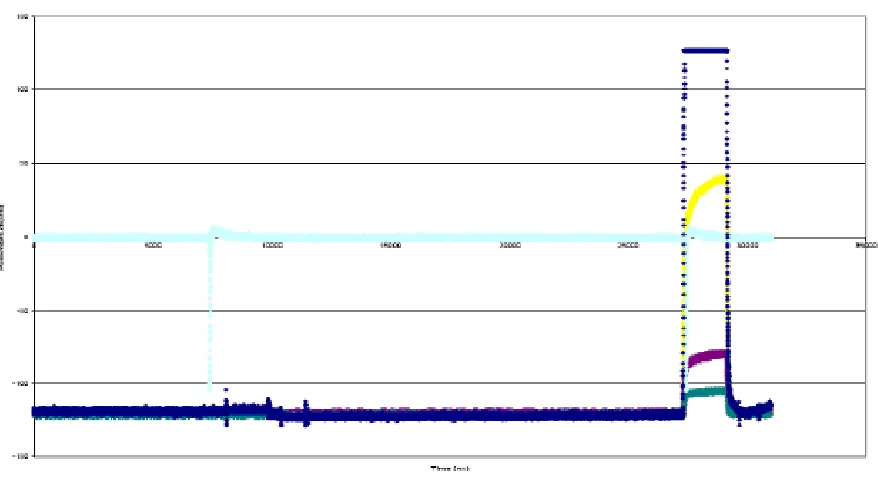
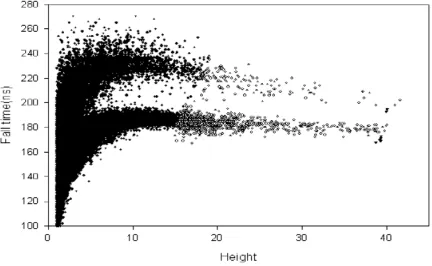
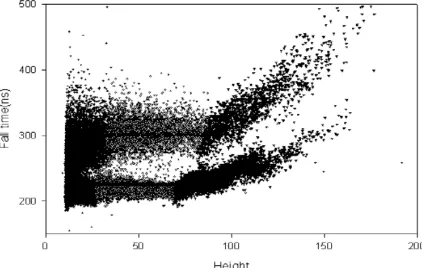
Abstract
LI, ANDY ON YAU. NE213 Scintillator Characterization using n/γ Digital Pulse Shape Discrimination. (Under the direction of Ayman I. Hawari.)
NE213 scintillation detectors are excellent tools for use in a mixed gamma and
neutron field due to its established pulse shape discrimination ability. With proper pulse
shape discrimination, gamma or neutron responses may be obtained in a mixed radiation
field. The neutron response needs to be deconvolved from the detector response function to
obtain an energy spectrum. To perform unfolding of neutron spectra, mono-energetic
responses are needed and the responses may be obtained via experiment or simulation of the
NE213 detector.
In this work, response functions were tested with the unfolding of a Cf252 spectrum.
Particularly, experiments were performed at the Los Alamos National Laboratory where
Cf252 spectra were obtained. During the experiment, different pre-amplifier set-ups were
tested. Namely, the pulse shape discrimination ability of the system using 50 ohm, 500 ohm,
and 1000 ohm termination resistors were compared. However, linear system responses were
not observed with the different settings. Thus, the Amoeba Simplex fitting routine was used
to augment the fall time pulse shape discrimination technique to separate the neutron and the
gamma signals. Furthermore, a new figure of merit scheme was explored to quantify the
pulse shape discrimination ability of the said non-linear system. Alongside the Cf252 spectra
experimental measurements, the program Scinful was used to generate mono-energetic
neutron responses needed for unfolding. Consequently, both the Cf252 neutron spectra and
Among the different termination resistors compared with the new figure of merit
scheme, the 50 ohm resistor setting was observed to be superior. The resultant unfolded
spectrum using the 50 ohm termination resistor shows excellent agreement between 2-10
MeV. However, even with the Amoeba Simplex method, results below 2 MeV are not
accurate due to the poor pulse shape discrimination limit of the system used. Results above
NE213 Scintillator Characterization
using n/γ Digital Pulse Shape
Discrimination
By
Andy On Yau Li
A thesis submitted to the Graduate Faculty of North Carolina State University
in partial fulfillment of the requirements for the Degree
of Master of Science
Nuclear Engineering
Raleigh, North Carolina
2007
Approved by:
_____________________ ______________________ Man-Sung Yim Wenbin Lu
______________________ _______________________ Mark Nelson Ayman I. Hawari
Dedication
This work is dedicated to Gap Tai and Loi Yau Li,
Biography
Andy Li was born On Yau Li to Wai Lun Li and Wai Ling Wu in the morning of June
14th 1984 in Hong Kong, China. He grew up in the small town of Taipo with his parents and
extended family. On Yau showed interests in math, science and literature in school and was
an avid player of Chinese flute and Chinese chess when out of class. On November 1996,
after his graduation from primary school at age 12, On Yau moved with his parents to the
United States.
On his move to the United States, On Yau changed his name for the more
Americanized name Andy. Andy and his family first moved to the small town of Morehead
City, NC, where his family owned and operated a Chinese restaurant. The restaurant
business did not last, however, and they soon moved to the North Carolina capital, Raleigh,
on January 1999. It was in Raleigh that Andy graduated from Leesville Road High School in
2002 and proceeded to enter North Carolina State University. Andy majored in Nuclear
Engineering while in North Carolina State University. At the suggestion of his adviser, Dr.
Ayman Hawari, Andy spent a summer interning out at Los Alamos National Laboratory.
While at LANL, Andy began to work on scintillation detector related project under Dr. Mark
Nelson. Andy graduated from Nuclear Engineering at North Carolina State University in
2005. He then entered the Master’s degree program at North Carolina State University
working on a joint project with Dr. Mark Nelson. Andy Plans to pursue his Ph. D. in North
Acknowledgements
First and foremost, I would like to express my most sincere gratitude to Dr. Ayman
Hawari for his guidance and direction throughout the years. I am grateful for the
opportunities he had presented to me, and I appreciate all of the efforts he had spent on my
behalf on this project. I look forward to our continued relationship for years to come.
I am grateful for the Advance Nuclear Technology group at Los Alamos National
Laboratory for hosting me. I would also like to thank Dr. Mark Nelson for working with me
in this project. Furthermore, I would like to thank Scott Gardner and Ken Butterfield for
directing my attention to Amoeba and answering my many questions about data fitting. I am
also grateful for the many others who had worked with me at LANL.
I would also like to thank Dr. Man-Sung Yim and Dr. Wenbin Lu for serving on my
thesis committee.
Finally, I am grateful for my family and my friends for their support and
Table of Contents
LIST OF TABLES...vii
LIST OF FIGURES... viii
CHAPTER 1 INTRODUCTION ...1
1.1 SCINTILLATION DETECTORS OVERVIEW...1
1.2 PULSE SHAPE DISCRIMINATION OVERVIEW...4
CHAPTER 2 LIQUID SCINTILLATOR DETECTION PRINCIPLES ...7
2.1 PROTON RECOIL MECHANISMS...7
2.2 SPECTRUM DISTORTIONS...10
2.2.1 Carbon Scattering ...10
2.2.2 Nonlinear Light Output...11
2.2.3 Light Calibration...14
2.2.4 Edge Effect...14
2.2.5 Multiple Hydrogen Scattering ...15
2.2.6 Finite Detector Resolution...16
2.2.7 Pulse Shape Discrimination Capability ...16
2.3 PULSE SHAPE DISCRIMINATION METHODS...17
2.3.1 Rise Time Method ...17
2.3.2 Forte Method...18
2.3.3 Zero Crossing Method ...19
2.3.4 Fall Time Method ...20
2.3.5 Charge Integration Method...21
2.4 FIGURE OF MERIT...22
2.5 MODIFIED FIGURE OF MERIT...23
2.6 FOM*FUNCTION FITTING...25
2.6.1 Amoeba Algorithm ...26
2.6.2 Current Implementation...29
2.6.3 PSD Implications ...32
2.7 RESPONSE FUNCTION...32
2.8 SCINTILLATOR FULL RESPONSE TO NEUTRON DETECTION...34
2.8.1 Input File...35
2.8.2 Solid Angle Determination ...36
2.8.3 Interaction ...37
2.8.4 Products Light Output...40
2.8.5 Post-Interaction Neutrons Fate ...42
2.8.6 Different Interaction Type Considerations...42
2.8.7 Scinful Output...43
2.8.8 Obtaining Response Function from Scinful output...44
2.9 RESPONSE SURFACE AND UNFOLDING...46
2.10 FERDUNFOLDING...48
CHAPTER 3 NE213 SCINTILLATOR EXPERIMENTAL RESPONSE...51
3.1 SCINFUL VERIFICATION VIA UNFOLDING...51
3.1.1 Experimental Set-Up...51
3.1.2 Data Operation ...53
3.1.3 System Calibration and Light Unit Conversion ...56
3.1.4 Amoeba Results-500 ohm and 1000 ohm Case...62
3.1.5 Amoeba Results-50 ohm Case...64
3.1.6 FOM* Results ...66
3.1.7 Scinful Response Function ...68
3.1.8 FERD Unfolding...69
BIBLIOGRAPHY ...79
APPENDICES ...81
APPENDIX A AMOEBA CODE...82
APPENDIX B FERD-PCRESPONSE FILE INPUT...93
APPENDIX C CIRCUITRY ANALYSIS...107
C.1 ATTENUATION NETWORK...108
List of Tables
Table 2-1-Scinful reaction types, reaction thresholds, and references. ... 38
Table 3-1-Na22 light unit calibration results... 60
Table 3-2-Lower PSD limit. ... 60
Table 3-3-Numerical Amoeba results for 500 and 1000 ohm case. ... 64
Table 3-4-Numerical Amoeba results for 50 ohm case. ... 65
List of Figures
Figure 1-1-Simplified electron excitation schematics. ... 3
Figure 2-1-Ideal hydrogen nucleus recoil energy spectrum ... 10
Figure 2-2-Effect of carbon scattering in an organic scintillation detector ... 11
Figure 2-3-Light output vs. particle type and energy by Verbinski et al ([10])... 12
Figure 2-4- Effect of nonlinear light output on an ideal spectrum deconvolved from an ideal proton scattering energy spectrum and a differential light curve. ... 13
Figure 2-5-The effect of carbon recoil and edge effect on an energy spectrum. ... 15
Figure 2-6-Effect of finite resolution on an ideal spectrum... 16
Figure 2-7-Simple experimental scheme illustrating the data branch of the zero crossing method... 20
Figure 2-8-Example of a gamma ray pulse taken with the charge integrating method. ... 22
Figure 2-9-A sample PSD histogram showing the relevant parameters for FOM calculation. ... 23
Figure 2-10-PSD histogram of a non-linear system. ... 24
Figure 2-11-PSD plot of a non-linear system. ... 24
Figure 2-12-Reflection in a 2-D case... 27
Figure 2-13-Expansion in a 2-D case... 27
Figure 2-14-Contraction in a 2-D case... 28
Figure 2-15-Shrinkage in a 2-D case. ... 29
Figure 2-16-A non-linear PSD plot obtained from Acqris digitizer with a 500 ohm termination set-up. ... 29
Figure 2-17-500 ohm PSD plot fitted with separate regressions for separation and mid-line functions... 30
Figure 2-18-Amoeba solution to the 500 ohm PSD... 31
Figure 2-19-Scinful cross section comparison with ENDF data ... 39
Figure 2-20-Carbon elastic cross-section... 39
Figure 2-21-Hydrogen elastic scattering cross-section dominates total cross-section data.... 40
Figure 2-22-Sample Scinful output with different components. ... 44
Figure 2-23-Verbinski's Curve fitted with a power function... 45
Figure 2-24-An example of a response surface for a NE213 scintillation detector... 47
Figure 2-25-Example Foreground Input File... 49
Figure 2-26-FERD's differential output for 64 bin, 50 ohm terminated Cf252 spectrum. .... 50
Figure 3-1-Laboratory experimental set-up used for Cf252 spectrum measurements in spring 2007... 52
Figure 3-2-Non-inverting pre-amp used with Spring 2007 set-up... 53
Figure 3-3-Sample pulse recorded by the Acqiris system ... 54
Figure 3-4-Sample unsaturated processed Acqiris pulse... 55
Figure 3-5-50 ohm termination fall time PSD plot... 57
Figure 3-6-500 ohm termination fall time PSD plot... 57
Figure 3-7-1000 ohm termination fall time PSD plot... 58
Figure 3-9-Na22 spectrum taken with 500 ohm termination... 59
Figure 3-10-Na22 spectrum taken with 1000 ohm termination... 59
Figure 3-11-50 ohm light unit PSD plot. ... 61
Figure 3-12-500 ohm light unit PSD plot. ... 61
Figure 3-13-1000 ohm light unit PSD plot. ... 62
Figure 3-14-Amoeba solution to the 500 ohm PSD... 63
Figure 3-15-Amoeba solution to the 1000 ohm PSD... 63
Figure 3-16-50 ohm PSD plot... 64
Figure 3-17-Amoeba results for 50 ohm PSD. ... 66
Figure 3-18-Sample Scinful response function for 20.55 MeV mono-energetic neutron source with 3x3 NE213 detector. ... 68
Figure 3-19-Sample Scinful response function for 1.51 MeV mono-energetic neutron source with 3x3 NE213 detector. ... 69
Figure 3-20-PSD Plot of 50 ohm termination neutron data... 69
Figure 3-21-Cf252 neutron Spectrum for 50 ohm termination... 70
Figure 3-22-Ferd unfolded Cf252 spectrum for 50 ohm termination... 70
Figure 3-23-Calculated Cf252 spectrum... 71
Figure 3-24-Comparison of calculated Cf252 spectrum with the FERD unfolded spectrum..72
Figure 3-25-Cf252 500 ohm PSD neutron spectrum. ... 73
Figure 3-26-Cf252 500 ohm termination neutron spectrum. ... 73
Figure 3-27-500 ohm termination Cf252 neutron unfolded compared with calculated spectrum... 74
Figure 3-28-Cf252 1000 ohm PSD neutron spectrum. ... 75
Figure 3-29-Cf252 1000 ohm termination neutron spectrum. ... 75
Figure 3-30-1000 ohm termination Cf252 neutron unfolded compared with calculated spectrum... 76
Figure C-1-Non-inverting pre-amp used with Spring 2007 set-up, where RT is the termination resistor... 107
Figure C-2--inverting pre-amp used with Spring 2007 set-up section view... 107
Introduction
1.1 Scintillation Detectors Overview
Scintillation detectors are among the first types of detectors used for radiation
detection and measurement. Scintillation detectors detect radiation types and strength
through light emissions (scintillation) inside the detector, which is then detected and
amplified by a photomultiplier for subsequent signal processing. There are many different
types of scintillation detectors available, and each detector type possesses different
characteristics making it suitable for different purposes.
Inorganic scintillation detectors are typically crystals of alkali metals, such as
NaI(Tl), LiI(Eu), CsI(Tl) and CaI(Na), where the elements in parentheses are impurities
introduced into the crystal lattice deliberately to act as activators for scintillation. Inorganic
scintillation detectors are typically used for gamma detection due to their high counting
efficiency, which is due primarily to their high density in comparison to other gaseous
detectors. When radiation enters the detector, electrons are excited from the valence band to
the conduction band in the crystal lattice. As electrons are excited to conduction band, holes
are formed in valence band. Both electrons and holes then, commonly called electron-hole
pairs, may move around freely in the crystal lattice in the corresponding band. The amount
of electron-hole pairs are proportional to the energy deposited by the incoming radiation.
The holes drift and ionize the activator atoms, followed by the deionization of an election
capture forming a neutral configuration that may corresponds to an excited energy state of
then de-excite by emitting a photon, the photon is then amplified through the
photo-multiplying tube and a signal is generated.
In comparison to inorganic scintillation detectors which depend on the crystal
lattice’s energy bands for light generation, organic scintillation detectors depend on the
energy transition in the energy levels of a single molecule. Many organic scintillation
detectors are either liquid or plastic and are made up of mostly hydrogen and carbon, with the
most commonly used organic scintillation detectors being NE213 and NE110. As radiation
enters the detector, it interacts and excites electrons of a molecule to an excited singlet state
(denote by S1, S2, S3 where the ground state is S0). If the electron possesses energy
corresponding to a level between two states, the electron will de-excite to the lower energy
state through vibration and energy transfers to nearby electrons. Then, the electron would
further de-excite itself by scintillation (Figure 0-1). The amount of energy lost by the
electron, however, is generally less than the excitation energy to one of the energy states. As
the electron would normally de-excite to one of the sub-levels (levels between S0 and S1) of
ground state, thus preventing self-absorption, and lose the rest of its energy through
vibrations. Besides excitation to the singlet ground state where electron de-excitation
through scintillation is relatively fast, the electrons may also be excited to a triplet state,
where scintillation de-excitation is delayed. The de-excitation time for a singlet electron is in
the order of nanoseconds, where as the de-excitation time for a triplet electron is in the order
of milliseconds. Thus, excitation to the triplet state may contribute to the uncertainty in fast
measurements using an organic scintillation detector. Impurities in the scintillation may
of the radiation detected due to other mechanisms of energy loss such as heat. As in the case
of an inorganic scintillation detector, the light is then collected and amplified in the
photo-multiplying tube and a signal is then generated.
Figure 0-1-Simplified electron excitation schematics.
Both inorganic and organic scintillators rely on electron excitation and de-excitation
to generate a photon, however, each type is used in different situations. Inorganic
scintillators are typically denser than organic scintillation detectors, making their counting
efficiency higher. Also, inorganic scintillators excel at gamma detection through the
photoelectric effect due to the high Z number (atomic number) of the crystal. However,
because of their high Z number, inorganic scintillators are insensitive to high energy neutrons
as elastic neutron scattering events with high Z nuclei do not deposit much energy. Inorganic
scintillation detectors may detect thermal neutrons through nuclear reactions, such as the
6Li(n,alpha) reaction in the LiI(Eu) detector. For certain crystal types, the growth and
manufacturing of a large crystal often prove difficult, which effectively limits the usage of
certain detector types to small scale laboratory applications. Organic scintillation detectors
are generally less dense, making their efficiency less than desirable. Due to the their low Z Valence Band
Conduction Band
Incoming Radiation
number, organic scintillation detectors are also not sensitive to gamma radiation except
through Compton scattering, where the gamma radiation does not deposit all of its energy in
the detector and only a continuum with energies lower than the gamma ray’s full energy is
typically observed in a gamma ray spectrum. Organic scintillators may, in comparison to
inorganic detector, detect and measure neutron energies. Since neutrons generate recoiling
nuclei in the detector with energy, depending on target mass, from zero up to potentially the
incoming energy, deducing the measured neutron spectrum requires unfolding using known
response functions. Also, with energy higher than fission neutrons (> 10 MeV), competing
carbon reactions may skew the energy spectrum and causes complications in unfolding.
Gamma ray radiations are generally present with a neutron source and may further
complicate the unfolding process. With pulse shape discrimination, the gamma rays may be
differentiated from neutrons and removed from the neutron pulse height spectrum prior to
unfolding. Compared to inorganic scintillators, organic scintillators are much easier to
manufacture. Many sizes and shapes may be made, which makes organic scintillators very
attractive for large scale neutron detection projects.
Depending on the purpose of the experiment, different types of scintillators may be
used. Inorganic scintillators are mostly used for gamma ray measurements while organic
scintillators are mostly used for neutron measurements, though organic scintillators also
require prior measured response functions to unfold the measured energy spectrum. ([1], [2],
[3])
1.2 Pulse Shape Discrimination Overview
on the measurement desired, however, some of the incoming radiation should be rejected.
Pulse shape discrimination (PSD) techniques are used to separate two or more types of
radiation and one of the main strengths of an organic liquid scintillator is its ability to
perform PSD in a mixed radiation environment. Traditionally PSD performed on
scintillators is based on several principles. First, it is well known that different particles have
a different associated stopping power in a medium and tt follows then that different particles
interact differently in a medium. Mainly the heavier particles (such as alphas), which have a
high stopping power, are observed to produce a quenching effect, resulting in less light being
produced per particle’s incoming energy. Quenching causes the excited electrons to
de-excite via radiationless processes, such as phonen and heat. Conversely the lighter particles
(such as electrons) quench less, resulting in effectively a higher amount of light being
produced in comparison with a heavy particle of equivalent energy. Some PSD techniques,
such as the rise time technique which is common in gas detectors, are based off of the direct
consequence of the clustering of charges on heavier particles (Also called quenching in gas
detectors), while other PSD techniques are based upon the decay fluorescence of the
scintillator. As stated, heavier particles tend to quench the detector volume resulting in a less
light being procuded overall in comparison with lighter particles. Heavier particles also
generate more triplet electrons than lighter particles. Normally electrons excite to a singlet
excitation state, but more triplet states can be observed with heavy incoming particles.
Triplet states have a longer de-excitation time than singlet states, thus resulting in longer
decay fluorescence time for the scintillator. Some PSD techniques, such as the fall time and
the charge integration techniques are based upon the decay fluorescence difference of the
Over the years, the aforementioned techniques were explored and used with success,
and they will be described in details a later section. With the advent of computers and data
analysis tools, the recent efforts in developing PSD had shifted from hardware focused
approaches (such as the Forte method and other analog methods ( [5], [6]), which will be
described) to data analysis approaches (such as statistical estimates and template matching
technique ([7], [8], [9])). Specifically, the later approach performs PSD on mixed
particle-type data post data collection rather than performing PSD during data collection. This
approach allows for flexibility in the development and the implementation of the PSD
technique to the data obtained. However, this approach is also often more time consuming
and requires more data storage space than concurrent data collection PSD. In this work, a
post data collection PSD technique using the amoeba simplex regression is explored and
Chapter 2
Liquid Scintillator Detection Principles
2.1 Proton Recoil Mechanisms
In an organic scintillator, proton recoil occurs when an incoming neutron collides
elastically with a proton. The proton then ionizes surrounding electrons in its track for
subsequent detection. Since a neutron has the approximately the same mass as a proton, the
neutron may transfer all of its energy to a proton in one collision depending on the angle of
collision. Therefore, a precise response function of the detector must be known to unfold the
resulting proton continuum. Besides proton collisions, a neutron may also collide with
carbon atoms in the detector, causing a skew in the resulting spectrum.
Assuming stationary proton in the laboratory system, neutrons and protons with
non-relativistic energy (E<<939 MeV) have energies Enc and EPc in the center of mass system
where n P n P c n E m m m
E ( )2
+
= 2.1
n P n P n c P E m m m m E 2 ) ( +
= 2.2
En is neutron energy in the laboratory system; mn and mP are mass of the neutron and proton
respectively. With Q=0 in neutron scattering, the products Enc’ and EPc’ have the same total
energy as the reactant. Also, in atomic mass units, neutron has a weight of 1 and proton has a
weight of A and thus Equation (2.1) and (2.2) maybe rewritten as
n c
n c
n A E
A E
E )2
1 ( '
+ =
n c P c P E A A E E 2 ) 1 ( ' + =
= 2.4
Upon conversion from the center of mass system into the laboratory system, the recoiled
proton energy EP becomes
n
P E
A A
E (1 cos )
) 1 (
4
2 − α
+
= 2.5
where α is the neutron scattering angle in the center of mass frame. Upon transformation of
α toϑ, whereϑis the recoil angle measured from the incoming neutron’s initial path in the
laboratory frame, Equation (2.5) becomes
n
P E
A A
E (cos )
) 1 ( 4 2 2 ϑ +
= 2.6
Since A and En are constant for a given interaction, the maximum and minimum of
the recoil proton’s energy then depends on the scattering angle. The minimum energy is zero
and it occurs when the recoiled proton scattered perpendicularly from the neutron. The
maximum energy of the recoiled proton is
n P E A A E 2 ) 1 ( 4 +
= 2.7
which occurs when the proton is forwardly scattered.
Since a continuum from zero energy up to energy shown in Equation (2.7) is
expected, the probability of interaction for each scattering angle must be examined to
estimate the shape of the ideal spectrum. Let P(α)dαbe the probability that a neutron will
s d d P σ α σ α α π α
α) 2 sin ( )
( = 2.8
where 2πsinαdα is the differential slice of an angle dα aboutα to all space, and s
σ α σ( )
is
the fraction of neutrons scattering into the angleα . If P(EP)dEPis defined as the probability
of a neutron that will be scattered into an energy dEP aboutEP, where the recoiled energy
P
E is caused by scattering angleα, then
P P dE
E P d
P(α) α = ( ) 2.9
and s P P P dE d dE d P E P σ α σ α α π α
α) 2 sin ( )
( )
( = = 2.10
Using Equation (2.5) to substitute the relationship P
dE dα
, Equation (2.10) becomes
n s P P E A A dE d P E P π σ α σ α
α) (1 ) ( )
( ) ( 2 + =
= 2.11
In the case of a hydrogen atom, neutron hydrogen scattering is isotropic up to about
14 MeV. Thus, substituting
π σ α σ 4 )
( = s into Equation (2.11) and A=1 for hydrogen, it
becomes
n P
E E
P( )= 1 2.12
As can be seen with Equation (2.12), for an ideal hydrogen scattering detector, the ideal
energy spectrum is simply a uniformly distributed continuum between zero energy and initial
Figure 2-1-Ideal hydrogen nucleus recoil energy spectrum
In Figure 2-1 above, an ideal hydrogen nucleus recoil energy spectrum is shown,
where the probability for a neutron interacting in the detector volume is equal for all
energies. In a real detector, however, many different factors contribute to the formation of
the measured spectrum. The many factors which contribute into a real spectrum will be now
discussed ([1], [2], [3]).
2.2 Spectrum Distortions
2.2.1 Carbon Scattering
All organic scintillation detectors contain carbon. From Equation (2.7) it can be seen
that the maximum amount of energy transfer from a neutron to a carbon in a single collision
is 28% of its initial energy. Combined with the low light output from heavy particles
(Non-linearity of light output will be explained in a later section), scattering from carbon alone
only contribute to low energy events and will cause a skew in the spectrum favoring low
energy events (Figure 2-2).
En Ep
1/En
Furthermore, the carbon scattered neutron may scatter again with another proton in
the detector volume. Since the neutron will have lower energy after initial scattering with the
carbon nucleus, the neutron may at most deposit 72% of its initial energy in its second
scattering (assuming with a hydrogen atom). Therefore, fewer events will be recorded in the
resulting energy spectrum corresponded to energy between 72% to 100% of the maximum
neutron energy due to carbon scattering ([1], [2]).
Figure 2-2-Effect of carbon scattering in an organic scintillation detector
2.2.2 Nonlinear Light Output
Depending on the energy and the particle type incoming or recoiling in case of
neutron detection, the light output of an organic scintillation detector may not be linearly
proportional to the incoming radiation’s energy. The reason for the nonlinearity of light
outcome is unknown, but is suspected to be the result of nonlinear specific energy loss by
heavy charge particles inside the detector. Specifically, gamma rays and electrons exhibit
linear responses, while protons and neutrons exhibit nonlinear light output ([1], [2],[10]).
En Ep
1/En
dN/dE
For example, Figure 2-3 illustrates the characteristic light output of a NE213 detector as a
function of particle energy.
0.001 0.01 0.1 1 10 100
0.1 1 10 100
Energy (MeV)
Li
gh
t O
ut
pu
t
Proton (A=1) Alpha (A=4) Carbon (A=12)
Figure 2-3-Light output vs. particle type and energy by Verbinski et al ([10]). The proton light output is related to energy byL=1.13ER1.4318.
For hydrogen atoms, the light output L from proton recoil is approximately related to
energy ERby
2
3
R
kE
L= 2.13
where k is a proportionality constant.
Spectra obtained from an organic scintillation detector are typically calibrated to give
the quantity
dL dN
, or number of counts in a bin with widthdL. To obtain the energy
spectrum
dE dN
, the light spectrum must be transformed with the quantity
dE dL
dE dL dL dN dE dN = 2.14 where dE dL
may be obtained from Equation (2.13)
2 1 2 3 R kE dE dL
= 2.15
Moreover, with Equation (2.13), (2.14) and (2.15), it can be shown that the shape of
the light spectrum
dL dN
obtained is skewed by the quantity
dE dL
(Figure 2-4, [1]), where
3 1 2 1 ' 2 3 Constant − = =
= k L
kE dE dL dE dN dL dN R 2.16
where k’ is simply a proportionality constant.
Figure 2-4- Effect of nonlinear light output on an ideal spectrum deconvolved from an ideal proton scattering energy spectrum and a differential light curve.
dN/dE
E
E dH/dE ≈ 3/2kE1/2 dH/dE
dN/dE
Also as can be seen in Equation (2.14), the quantity
dE dL
must be known accurately to
determine the energy spectrum. Since the energy spectrum
dE dN
must be unfolded to obtain
the source spectrum, an error in
dE dL
would be compounded in the final source spectrum. For
the purpose of obtaining the energy spectrum, the curves presented by Verbinski et al.
(Figure 2-3, [10]) will be used.
2.2.3 Light Calibration
Since a NE213 detector does not output in energy or light unit directly, a light
calibration must be made. One light unit in a detector for a given gain setting is defined as
1.13 times the half height of the Na22 1275 keV energy peak ([6]). Thus, any spectrum
taken with the NE213 detector should be taken with a Na22 spectrum as well to calibrate the
results to light or energy scale.
2.2.4 Edge Effect
If the incoming neutrons have sufficient energy such that the recoiled proton’s mean
free path is not small in comparison with the detector dimensions, then edge effect will be
observed in the detector output. Edge effect is caused by incomplete energy deposition by
the recoiled protons. The protons, after recoil, will deposition some of their energy through
electron ionization then escape the detector volume. Thus, the resulting energy spectrum of
Figure 2-5-The effect of carbon recoil and edge effect on an energy spectrum.
2.2.5 Multiple Hydrogen Scattering
For large detectors, it is possible for neutrons to undergo multiple scattering before
stopping or escaping from the detector volume. If a neutron undergoes multiple carbon
scatterings, then the resulting spectrum would be similar to that resulting from a single
carbon event, where more low energy events will be observed. On the other hand, if the
neutron undergoes multiple hydrogen scatterings, the effect could be significant in the
resulting spectrum. All events from a single neutron, even from multiple scatterings, happen
within a short period of time and will be recorded as one even in the final spectrum. Since
the average energy lost in a single neutron hydrogen collision is half of the neutron’s initial
energy, multiple scatterings with hydrogen increases the energy transferred to the detector
and causes more high energy events to be observed. Counts
E
Heavy-atom Recoils
Wall and end effects
2.2.6 Finite Detector Resolution
Since no detector possesses perfect resolution, the energy spectrum obtained will
always be smeared in comparison with the ideal spectrum (Figure 2-1). In essence,
electronic noises, non-uniform light collection (Due to the difference in the location of
interaction), and the statistical nature of detection techniques all contribute to the finite
resolution of the detector as shown in Figure 2-6 ([1]).
Figure 2-6-Effect of finite resolution on an ideal spectrum.
2.2.7 Pulse Shape Discrimination Capability
Liquid scintillators are capable of detecting both neutron and gamma pulses.
Neutrons mostly react through isotropic proton recoil as described. Gamma rays, due to the
low-z (atomic number) content of the scintillator, generally react through Compton scattering
as oppose to photoelectric events in other gamma detectors. Furthermore, different particle
type causes electron excitation through different excitation mechanisms. Since neutrons
react mainly through proton recoil, the ionization density along the recoiled proton’s track is
high enough to produce triplet state electrons and thus producing high decay fluorescence. In
dN/dE
E
contrast, gamma ray reactions mainly produce singlet state electrons and lower decay
fluorescence. Specifically, the light produced from the NE213 scintillator has three distinct
components: a short 3 ns rise time, an intermediate 32 ns transient and a long 270 ns fall time
which is affected by the decay fluorescence ([4]). Pulse shape discrimination (PSD) for
NE213 detectors typically makes use of the 270 ns tail component to distinguish between
neutrons and gammas. The PSD ability is important with measurements taken in a mixed
gamma/neutron area where only one particle’s response is desired, PSD can filter out the
undesirable particles’ responses from the detector.
2.3 Pulse Shape Discrimination Methods
The ability of the NE213 scintillator to perform PSD is extremely important as it allos
for the separation of signals in a mixed field environment. For example, most neutron
measurements have gamma back ground signals, with PSD, the gamma signals may be
filtered. PSD techniques are used to separate two or more types of radiation. Over the years,
several PSD methods were proposed and implemented for different scenarios and they each
have their strengths and weaknesses. This section will give a brief introduction to some of
the methods that had been used in recent years.
2.3.1 Rise Time Method
Proportional counters often use the rise time method (RT) to perform PSD in a mixed
environment. In organic scintillators, different particle types cause a difference in the decay
light component, whereas in gas-filled proportional counters, a difference in the rise time is
Heavy particles in a proportional counter typically have a much shorter range than
light particles, thus the ionization track of the heavy particles is much shorter than that of the
lighter particles. An example is that gamma rays induced fast electrons often will pass
through the proportional counter where as a neutron recoiled proton will follow a short path
and comes to rest within the detector volume. It follows that the shorter track of the heavier
particles has a shorter corresponding charge collection time compared with the longer track
of the lighter particles. The difference in rise time may then be exploited to perform PSD
([1]). Since liquid scintiallors de-excite through a different mechanism, the rise-time
difference is not directly observed ([1], [2]). However, liquid scintillators may use a
preamplifier with a time constant to integrate the fall time of the pulses, and thus imitate the
rise time method. With the RT method in general, a rise time to pulse height converter
(RHC) can be used to convert the rise time to a pulse. The magnitude of the resulting pulse
then is indicative of the pulse’s particle type. A single channel analyzer then may be used in
conjunction with a coincident counting system to filter out a certain type of particles. The
strength of this particular method is its accuracy: 1/500 false rejection for neutron with
energy less than 500 keV and 1/50 for neutron with energy less than 60 keV ([6]). The
limitation of this method is its dependency on the hardware and the restriction of gas
proportional counters.
2.3.2 Forte Method
The Forte method is a PSD scheme used with a pulse shape discriminator designed by
Forte. The circuitry uses signals from the anode and some of the dynodes in the
or large negative pulse for gammas ([2]). The signals may then be gated with coincidence
modules and delay lines to achieve PSD. The main strength of this method is the type of
pulses created making neutron and gamma pulses easily distinguishable once the original
pulse passed through the PSD circuitry. The main draw back for the Forte method is that it is
extremely hardware intensive. The dynodes used must be tested with the correct gain to
ensure no saturation occurred, and then modifications of the photomultiplier tube base must
be done so then the dynode may output the correct signal to the pulse shape discriminator.
Also, the Forte method must be used with the correct pulse shape discriminator (designed by
Forte). Even though this method is not usable for those who do not possess the hardware
described, its description here serves as an illustration on the variety of PSD schemes and the
various in-house designed hardware which may accompany them ([5], [6])
2.3.3 Zero Crossing Method
The zero crossing method (ZC) utilizes the zero crossing point of the pulse as a
reference to perform PSD. The zero crossing point is the point at which a bipolar duplication
of the original pulse, made by super-imposing an inversion of the original pulse, crosses the
zero bias axis. The ZC scheme first separates the signals into multiple branches (Figure 2-7).
The scheme then uses either a double delay line or a CR circuit to help find the zero crossing
point of a given pulse. The interval between the zero crossing point and the leading edge of
the pulse gives an indication of the fall time of the pulse, and thus pulse shape. The time
difference is fed into a time to amplitude converter and then the gamma and neutron signals
are separated by the discrimination setting on a single channel analyzer down in the data
main advantage of this method is its sensitivity to low energy pulses, which is effective down
to about 30 keV neutrons with the use of a time of flight scheme concurrently. However, a
constant fraction discriminator along with a time to amplitude converter must be used with
this scheme. Several reports compared this method favorably with the charge integration
method ([10]).
Figure 2-7-Simple experimental scheme illustrating the data branch of the zero crossing method.
2.3.4 Fall Time Method
The fall time method utilizes the same principle as the ZC method, in that the fall
time of the pulses examined is indicative of the pulse shape. The difference between the two
methods, however, is that the fall time method measures fall time directly, whereas the ZC
method measures the fall time through a series of analog time gates. The fall time may be
measured with analog equipment or with post-data collection analysis. Since neutron pulses
have higher decay fluorescence, their fall time will be higher than gamma pulses. The main NE213
Detector Anode Buffer Preamplifier
Pulse Shape Analyzer
Amplifier Time to Amplitude
Converter (TAC)/Single Channel Analyzer
(SCA) Multi Channel
Analyzer (MCA) Delay
Neutron Pulse Height Spectrum
advantage of this method is its flexibility in that the fall time may be measured during or
after data collection. However, with some setups, the fall time is not as stable as the ZC
method. The fall time reference may drift with differing pulse size, leading to non-ideal PSD
spectra.
2.3.5 Charge Integration Method
The charge integration method (CI) is the least hardware intensive method out of all
schemes mentioned. CI compares a short portion of the pulse’s charge with its total charge,
the tail-to-total ratio or the rise to total ratio, to determine the pulse shape. An example of an
integrated gamma pulse is shown in Figure 2-8. The ratio used depends on the detector used;
the tail ratio is normally used with liquid scintillators and the rise time ratio with gas
detectors. Gammas and neutrons are separated by a tail-to-total ratio specific to the system
used; the ratio may be used post data-collection to perform PSD. In principle, this method is
similar to ZC, with the exception that the difference between the gamma and the neutron
pulses is compared on a normalized basis. Though several papers had pointed out that with
lower incoming particle energies, ZC is superior to CI. The main strength of CI, however, is
that CI is relatively straight forward to implement. In principle, only the detector and a
digitizer are needed to record the pulse shape. In actuality, however, the pulses may have to
be shaped and conditioned before recording so a few other components such as a
pre-amplifier may be desired. Even with the added components for pulse shaping, the CI system
is much simpler than other PSD systems mentioned. Also since PSD maybe performed by
software, more flexibility is allowed in the data collection components and implementation
Figure 2-8-Example of a gamma ray pulse taken with the charge integrating method.
2.4 Figure of Merit
NE213 liquid scintillation detectors’ ability to perform PSD enables it to be employed
in a neutron/gamma mixed field. The figure of merit (FOM) is a measure of a detector
system’s PSD capability and may be given by
) (
FOM
n
FWHM FWHM
s
+ ∆ =
γ
2.17
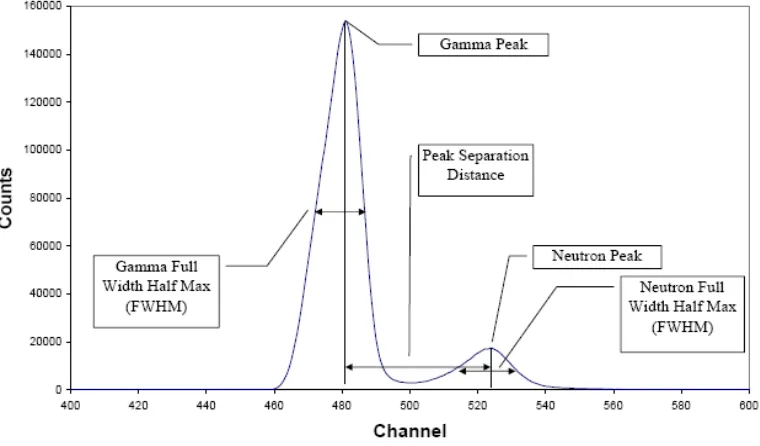
Where ∆s is the separation between the gamma and the neutron peak, and FWHM is the full
width at half max of the individual peaks. The peaks described are the individual particle’s
peak seen in the histogram of the PSD parameter (Figure 2-9). A good PSD capability is
denoted by a large FOM value. As a large FOM value consists of a large peak separation
Figure 2-9-A sample PSD histogram showing the relevant parameters for FOM calculation.
Typically, PSD results are plotted in such a way that the FOM capability of the
system can be easily visualized. Specifically, there are two common types of PSD plots: one
with the PSD parameter plotted against a normalization parameter and one is a histogram
representation of the PSD parameter. For the histogram type the PSD parameter is shown
explicitly after binning ([1], [2]).
A problem with the aforementioned FOM scheme is that the scheme only takes into
account a linear spectrum. If non-linearity exists in the system, then more than two peaks
may be observed (Figure 2-10). In such cases, the definition of FWHM for the neutron and
the gamma peaks becomes unclear, and another scheme should be used.
2.5 Modified Figure of Merit
When non-linearity exists in the system or when the traditional FOM scheme is not
PSD capability of the system ([15]). In the PSD histogram below, due to non-linearity of the
system gain, multiple peaks exist. In such cases, the traditional FOM scheme breaks down as
the definition of the peak separation and the FWHM becomes unclear.
Figure 2-10-PSD histogram of a non-linear system.
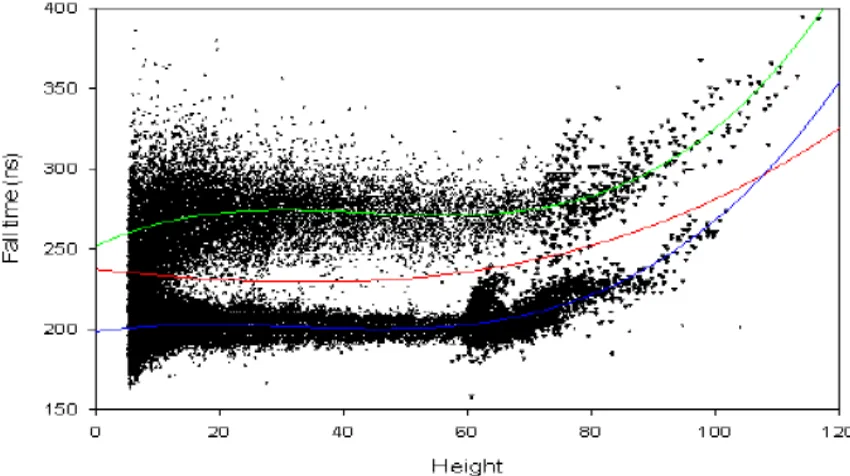
The corresponding PSD scatter plot of the Figure 2-10 is below in Figure 2-11. In the
scatter plot, it is clear that the fall time of the pulses does not vary linearly with the height of
the pulse. Furthermore, it is clear that the peaks of Figure 2-10 are created from the
curvature of the scatterplot.
In Figure 2-11, a separation function (Red line), a neutron mid-line (Green line) and a
gamma mid-line (Blue line) function are plotted. With the functions, a new FOM scheme
(FOM*) may be derived with the following expression:
)) ( ) ( ( ) ( ) ( * FOM n dh dh h h n σ γ σ γ + − =
∫
∫
2.18The numerator expression
∫ ∫ − dh dh h h
n( ) γ ( ) describes the neutron and gamma peak
separation by normalizing the difference between a neutron and a gamma mid-line function
represented by n(h)andγ(h)as shown in the PSD plot. Furthermore, the denominator term
(
σ(γ)+σ(n))
described the combined spread of the peaks. σ(γ)is the standard deviation ofthe gamma peak in respect to the gamma mid-line function and σ(n)is the standard
deviation of the neutron peak. As can be seen, the new FOM scheme preserves the definition
of the traditional FOM scheme by using translated expression for both the numerator and the
denominator terms. Furthermore, if an appropriate fitting routine is used to calculate the
separation and the mid-line functions, a more objective FOM may be obtained, as the new
scheme’s definitions are more clear than the old scheme’s, especially when in the old FOM
scheme the FWHM of the peaks are not readily clear when the peak separation is small.
2.6 FOM* Function Fitting
To fit the neutron and the gamma mid-line functions separately, an initial arbitrary
separation function will need to be defined. However, all three functions may be fitted
The amoeba simplex fitting routine is also called the Nelder-Mead Simplex Method,
and was first developed by Nelder and Mead. A simplex is a generalized triangle with (n+1)
vertices in an n-dimensional plane. The method uses a sequence of simplexes to find the
minimum of a given function f(a1,a2,...,an). The amoeba algorithm is intrinsically
non-linear and is effective in bypassing local minima during minimization.
2.6.1 Amoeba Algorithm
The simplex method for finding the minima of a given function
) ,..., , ( )
(A f a1 a2 an
f = will be given in this section.
1) With an n-parameter function f(a1,a2,...,an), )(n+1 initial points must be chosen.
For example, for a 2-parameter function f(A)= f(a1,a2), three initial
guesses f(X)=(x1,x2), f(Y)=(y1,y2)and f(Z)=(z1,z2)must be chosen.
2) Define }B={b1,b2,...,bn (B for best), where f(B)= f(b1,b2,...,bn) produces the
smallest function from the pool of values. Similarly, define W ={w1,w2,...,wn} (W
for worst), where f(W)= f(w1,w2,...,wn) produces the largest function value. The
goal now is to shrink the simplex in such a way that W improves.
3) With B and W defined, it is then possible to find the mid-point M, where M is the
average of all points excluding W. With M then, a reflection R may be found.
Specifically, R denotes the set of coordinates given by a projection of W along M,
4) If f(R)= f(r1,r2,...,rn)is less than f(W), an expansion point should be tested.
Basically, the point E denotes an expansion of R along the mid-point M,
whereE =R+(R−M) (Figure 2-13).
Figure 2-12-Reflection in a 2-D case.
5) If either f(R)or f(E)is smaller thanf(W), then f(W)should be replaced by the
smallest value of the two. After the replacement, the whole process is repeated from
step 2). However, if f(W)is less than f(R), then two contraction points
1
C andC2should be considered (Figure 2-14).
Figure 2-13-Expansion in a 2-D case.
B
W
G
R M
B
W
G
R
6) The points C1andC2are defined as the mid-points between W-M and M-R,
respectively. Thus ( ) 2
1
1 W M
C = + and ( )
2 1
2 M R
C = + . The smaller function value
between f(C1)and f(C2)is then compared with f(W). If either f(C1)or f(C2) is
smaller than f(W), then W is replaced by the point and the process is repeated from
step 2).
7) If none of the function values f(R),f(E),f(C1)or f(C2) is smaller than f(W), the
simplex must shrink toward the best point B (Figure 2-15). Specifically, every
vertices of the simplex B,X,Y,...,Wundergoes the transformation ( ) 2
1
* X B
X = + .
Afterwards, the function f is then re-evaluated at every point and the order of
W Y X
B, , ,..., are reassigned and the process begins anew from step 2).
Figure 2-14-Contraction in a 2-D case.
8) The process repeats until a given tolerance is reached, typically defined by
(
f(B) f(W))
T < − .
For a more detailed explanation of the amoeba scheme, please refer to [16], [17]. B
W
G
R M
Figure 2-15-Shrinkage in a 2-D case.
2.6.2 Current Implementation
The current problem lies in fitting suitable curves to the PSD plots obtained from
non-linear system, such as Figure 2-16. The curves are needed to obtain a modified figure of
merit (FOM*), which is discussed in an earlier section.
Figure 2-16-A non-linear PSD plot obtained from Acqris digitizer with a 500 ohm termination set-up.
G W
S M
Originally, a gamma/neutron separation curve was fitted manually to the space
between the upper neutron and the lower gamma region. Then separate linear regression
lines are fitted to each of the regions. Cubic regressions were used to fit the separation and
the mid-line functions in this method. With this method, however, the separation function is
needed, and since the curve is fitted manually (Figure 2-17), huge error may be present.
Furthermore, the neutron and gamma regression lines often crossed and caused errors in
subsequent calculation. Thus, the option of using the amoeba method to fit all three curves
simultaneously was explored and tested (Figure 2-18).
The function that simplex minimizes in this case is the simple regression:
( )
(
)
∑
−= X X h 2
f i 2.19
WhereXiis the individual date point andX
( )
h is the fitted function of height (h).Figure 2-18-Amoeba solution to the 500 ohm PSD. Green line is the neutron mid-line function, red the separation function and blue the gamma mid-line function.
According to Figure 2-16, there are three distinct regions in the PSD plots: the upper
neutron, lower gamma and the middle separation regions. As such, three cubic equations are
used (Figure 2-18) and referenced in the amoeba routine, and they are as follows:
( )
h =a +bh+ch2 +dh3γ
γ 2.20
( )
h a a bh ch2 dh3S = γ + S + + + 2.21
( )
h a a bh ch2 dh3N = γ + N + + + 2.22
In the equations above, aγ,aS,aN,b,c,dare free parameters and amoeba is free to adjust
them. A note of interest is that the three regions are assumed to be the same shape, thus the
only difference between the equations is the intercept terma. Also, the presented equations
2.6.3 PSD Implications
As shown in Figure 2-18 above, the amoeba method may be used to separate neutron
and gamma data. Even though in the current implementation, amoeba is used to obtain
functions for the FOM* scheme, the amoeba method itself is a powerful method that may be
used outside of the current scope. Even with the traditional FOM scheme, a need exists to
separate neutron and gamma data. If the detection system is set up in such a way that allows
for post data collection PSD, the amoeba method may easily be used to extract neutron data.
Even in a linear concurrent PSD-data collection system, the amoeba method may still be used
to find the optimum value of the PSD parameter, such as the lower level discriminator cut-off
in a traditional charge integrating system. The capability of amoeba performing PSD on a
non-linear post data collection PSD system will be demonstrated in the experimental section;
however, its ability to perform PSD on any system should not be overlooked.
2.7 Response Function
With good PSD techniques, neutron spectra may be separated from gamma spectra in
a mixed field measurement data set. If the neutron data set is obtained from a
mono-energetic neutron source, then the detector’s response function for that particular neutron
may be determined ([18], [19]). To illustrate, consider the probability of a recoiled proton’s
energy is in intervaldEaboutE where
dE E dE E P
n P
1 )
( = 2.23
Then the ideal proton energy spectrum with bin widthdEP, defined to beN(EP)dEP, is given
∫
− = max0 ( ) ( ) ( )
)
( E n P
n P n n n H P
P H E E
E dE dE E E T N dE E
N σ φ 2.24
where
H
N =Hydrogen atom number density
T=Time of measurement of the recoil protons
) (En
σ =Elastic scattering cross section of hydrogen
n n dE
E ) (
φ =Neutron flux of neutrons with energy dEnaboutEn
n P
E dE
= probability of a recoiled proton’s energy is dEPaboutEP
) (En EP
H − =Function with valueH(En −EP)=1En ≥EP, and 0 otherwise
The measured spectrumM(E)dE with all of the spectrum distortions taken into
consideration is given by
∫
= max
0 ( , ) ( )
)
(E dE E dER E EP N EP dEP
M 2.25
dE E
M( ) may also be expressed in terms of the neutron source spectrum (or neutron flux)
n n dE
E ) (
φ , where
∫
= max
0 ( , ) ( )
)
(E E dEnk E En En
M φ 2.26
In both Equation (2.25) and (2.26), bothR(E,EP)andk(E,En)are defined as the response
function to relate the ideal neutron spectrum and the neutron flux spectrum to the measured
spectrum. k(E,En)can be related to R(E,EP)through the relationship
) ( ) ( ) , ( ) , ( max
0 n P
E n n H P P
n H E E
E E T N E E R dE E E
To unfold the measured spectrum to obtain the source spectrumφ(En)then, both
dE E
M( ) andk(E,En)must be determined. M(E)dE is simply the measured spectrum,
obtainable through a detector system. k(E,En)can be determined by characterizing the
detector system. As can be observed through Equation (2.26), if the neutron source is
mono-energetic with energy E, Equation (2.26) may be rewritten as a differential spectrum with the
source flux φ0
dE E E k dE E
M( ) = ( , n)φ0 2.28
With the aid of an accelerator as a source for monoenergetic neutrons or a computer
simulation to simulate the source detector interaction, the response function for
mono-energetic neutrons with different energy may be determined. Then, if the quantity
) , (E En
k for many energy levels is known, a response surface maybe constructed for a range
of energies. The response surface may then be used to unfold the measured
spectrumM(E)dE to obtain the source spectrumφ(En) (Equation (2.26)). For this project,
the program Scinful (Scintillation Full Response to neutron detection) is examined and used
for the purpose of generating response functions k(E,En) for neutron spectrum unfolding.
2.8 Scintillator Full Response to Neutron Detection
Scinful (Scintillator Full Response to Neutron Detection) is a Monte Carlo program
which can be used to simulate NE213 or NE110 scintillation detectors. In Scinful, a
cylindrical detector and a point source are modeled; each particle from the source is
monitored and tracked through out the program. The final output from Scinful is a
spectrum, where L is the light output from the detector. Besides the total spectrum, Scinful
can also give the light output from each individual reaction, and if desired, Scinful can also
output the spectra in terms of energy instead of light output. In the following sections,
Scinful will be dissected and each process of the calculations will be discussed ([20], [21]).
2.8.1 Input File
The input file of Scinful consists of seven lines and they are given below:
1) Comment Lines
2) # of Histories, Detector Type, Attenuation Coefficient
3) Source Energy, Low Energy Bound, Distribution, Energy Cut off
4) Random Number Generator Seed
5) x, y, z of the source location
6) Detector Radius, Detector Height, Collimator Radius
7) Wbox
The interpretation of each variable:
Comment Lines- This line is designated to the description of the program, this line may be
left blank
# of Histories- Number of interaction simulated in the detector
Detector Type- May be either 213 or 110, a negative sign in front of the numbers denotes
pulse shape discrimination
Attenuation Coefficient- The attenuation coefficient for light transport in the detector, Scinful
Source Energy- The upper bound of the source energy in MeV, if the source is
mono-energetic, this is the source energy. The magnitude of the source must be less than 100 MeV.
Low Energy Bound- The lower energy bound of the source energy in MeV, 0 should be
inputted if the source is mono-energetic.
Distribution- The distribution of the source energy:
0 if the source is mono-energetic
<0 if the source energy is uniformly distributed
>0 if the source follows a Maxwellian distribution with temperature equals to the
number inputted
Random Number Generator Seed- Seed for the random number generator
x, y, z of source location- the (x, y, z) coordinates of the source. The origin of the coordinate
system is the center of the detector front face. The x, y plane is the detector front face and
the negative z axis runs along perpendicular to the front face of the detector.
Detector Radius- The radius of the detector in cm.
Detector Height- The height of the detector in cm.
Collimator Radius- The radius of the front collimator in cm.
Wbox- Scinful uses Wbox to calculate the width of light bins used in the spectrum.
2.8.2 Solid Angle Determination
Scinful determines the solid angle of the source through Monte Carlo method.
Scinful first estimates a solid angle which encompasses the entire detector surface.
Depending on the source location in respect to the detector, the method of estimation will be
closest and the furthest edge on the detector surface, the angle between the two lines is
Scinful’s first estimate of the solid angle. If the source is positioned in such a way such that
both the sides and the front face of the detector is visible to the source, Scinful calculates the
front face component and the side component separately then sums the two.
After the initial estimate is chosen, Scinful then emits particles in the estimated solid
angle. If a particle does not hit the detector surface, a new particle will be generated until the
detector surface is hit. If the detector surface is hit, Scinful will then track the particle in the
detector and perform subsequent calculations. In the end, the total number of particles
emitted and the particles hitting the detector is tallied. The final true solid angle then is
simply the initial solid angle times the ratio of the tracked particles.
2.8.3 Interaction
After the solid angle is determined, the energy of the particles emitted is sampled
from the energy distribution specified in the input file. With the energy of the particle then,
all of the cross-sections pertained to the energy are tallied. Except for hydrogen in which an
experimental fit is used, all of the other cross-sections are stored in tabular form in the
program. In all, eleven different types of interactions are taken into account in Scinful.
Table 2-1 contains the eleven reaction types in Scinful, respective reaction threshold, and the
reference for each reaction ([22]).
The hydrogen cross-section agrees extremely well with ENDF/B-V data (Figure
2-19). The carbon reaction cross-sections, on the other hand, typically agree well with
ENDF/B-V data at low energy, but deviates above 15-20 MeV (Figure 2-20). The deviation
the reactions. Furthermore, the reactions listed above with an * in the reference are not found
in ENF/B-V cross-section archive. The reliability of those cross-sections is suspicious due to
the lack of data on them, as only one or two papers had published results on those reactions.
Furthermore, only one major reaction with Hydrogen is listed, whereas ten different carbon
reactions are listed in Scinful. This is primarily due to the fact that hydrogen elastic
scattering cross-section dominates the hydrogen total cross-section for energy above 1 eV
(Figure 2-21), which is the effect range of the program due to other tabulation limits (Such as
proton range table used in range calculations).
Table 2-1-Scinful reaction types, reaction thresholds, and references.
Reaction Types Threshold Reference
(n,H) Elastic Scattering - ENDF/B-V
(n,C) Elastic Scattering - ENDF/B-V
(n,C) Inelastic Scattering 2.5 MeV ENDF/B-V
C(n,2n)B 21.5 MeV ENDF/B-V
C(n,α)Be 7.5 MeV ENDF/B-V
C(n,d)B 15.25 MeV ENDF/B-V
C(n,p)B Bounded State 13.7 MeV ENDF/B-V
C(n,p)B Unbounded State 17.35 MeV Datum*
C(n,n')3α 17.35 MeV Nuclear Physics A394*
C(n,t)B 21.5 MeV Subramamian*
Figure 2-19-Scinful cross section comparison with ENDF data, hydrogen cross-section confirms well with ENDF data.
Figure 2-21-Hydrogen elastic scattering cross-section dominates total cross-section data.
After Scinful tallies all of the available sections, the fraction of each
cross-section to the total cross cross-section is then found. A number generator then generates a number
to compare to the hydrogen fraction. If the hydrogen fraction is greater than the random
number, hydrogen elastic scattering will then occur for the particular particle. If, however,
the random number is greater than the hydrogen fraction, the random number less the
hydrogen fraction will then be compared with carbon elastic scattering. The process
continues until a reaction is finally chosen. The order of random number-cross-section
comparison does not matter if there is no intrinsic bias in the random number generator.
2.8.4 Products Light Output
After an interaction type is chosen, Scinful then calculates the reaction energy and the
products’ vector with the proper two body kinematics. For example, in the case of (n,H)