THE ROLE OF TASK CONSTRAINTS IN PROMOTING
DEVELOPMENT AND TRANSFER OF
PERCEPTUAL-MOTOR
SKILL IN SPORT
Luca Oppici
BExSc, MExSc
Thesis submitted in fulfilment of the requirements for the degree of Doctor of
Philosophy
Institute of Sport, Exercise and Active Living
College of Sport and Exercise Science, Victoria University
ABSTRACT
This thesis examined the role that task constraints play in promoting transfer of perceptual skill
in sport tasks (futsal and soccer). Transfer of learning is the process of adapting a learned
behaviour to a new context. Transfer occurs due to the similarity between a learned behaviour
and the behaviour required to achieve the task goal. The similarity of information that guides
action between the learning and criterion (transfer) tasks facilitates the transfer process. An
individual’s ability to perceive information that specifies opportunities for action (affordances),
which underpins skilled performance, has been shown to transfer between similar sport tasks.
However, it is unknown how task constraints (e.g., rules, equipment and task goal) influence
the development and transfer of perceptual skill between similar tasks. While previous research
has been limited to examining acute effects, this thesis showed that practicing a sport skill (i.e.,
passing) for more than 1000 hours using domain-specific task constraints affected how
individuals oriented their attention to perceive affordances. These differences in perceptual
behaviour influenced how participants transferred their skill to a new context. Learning the
passing skill with shorter time to act and in a smaller space (using futsal constraints) promoted
a higher magnitude of transfer to a task with longer time and larger space (soccer constraints)
than vice versa. Furthermore, the results indicated that learning the passing skill with a
modified equipment (futsal ball) positively transferred to the standard equipment (soccer ball).
The modified equipment fast-tracked the participants’ ability to perceive information that
specified task-relevant affordances, which, in turn, expedited learning. Overall, this thesis
extended current knowledge on the role of task constraints in promoting the development and
transfer of perceptual skill. Practitioners are encouraged to manipulate task constraints to
STUDENT DECLARATION
I, Luca Oppici, declare that the PhD thesis entitled ‘The role of task constraints in promoting
development and transfer of perceptual skill in sport’ is no more than 100,000 words in length
including quotes and exclusive of tables, figures, appendices, bibliography, references, and
footnotes. This thesis contains no material that has been submitted previously, in whole or in
part, for the award of any other academic degree or diploma. Except where otherwise indicated,
this thesis is my own work.
ACKNOWLEDGEMENTS
‘It’s a long way to the top if you wanna rock ’n’ roll (and complete your thesis)’. Indeed, it has
been a long and exciting journey that made me grow as a person and academic, and I must
thank the people who supported me and made this long journey memorable.
First, I must thank my supervisors – Damian, Derek and Fabio – who thoroughly
supported me throughout this fantastic journey and without whom I would have not been able
to complete this thesis. Thank you for passing down to me your passion, commitment and
ethical approach to research. I have learned so much from you guys, both from personal and
professional points of view. Thank you, Fabio, for introducing me into the academic
environment and guiding me through the various steps of the PhD; for being available for a
quick chat every time I walked past your desk; for sharing your passion for football and for
assisting my personal development as independent academic. Thank you, Derek, for being
always positive and with a smile on your face that calmed me in stressful situations; for the
countless time you patiently reviewed my manuscripts and provided valuable feedback; for
assisting the development of my critical thinking. Thank you, Damo, for your wisdom; endless
scientific knowledge; for your positive attitude that facilitated my PhD journey.I must repeat
it, without you guys I could have not done it, thank you.
I must thank my research assistants and colleagues who helped me collecting data and
provided feedback every time I needed it. Thank you, Elnaz and Ollie, for helping me with data
collection at Darebin centre. It was difficult and stressful collecting data those nights with that
wind blowing freezing air on our faces but you guys were so professional, reliable and positive.
‘Gracias’, David and Pablo, for assisting me in Barcelona with the language, accommodation
and data collection. We created a super team and we had a lot of fun. Thank you, Sam, Ale and
discussions on research issues, and feedback we provided on each other’s work have been so
important in creating a positive working environment that boosted the quality of my work and
experience. Thank you, World Leaders futsal, for making your fine skills available for the pilot
testing on eye tracking, small-sided games and kicking test in the laboratory.
A big thank to the people outside the work environment who supported me during the
various highs and lows of the last four years. To my wife Francesca who has always been
patient, supportive and positive, never put pressure on me to finish my PhD, and always finds
kind words to make me smile and feel lucky, ‘graze Gin’. To my mother Lorena, my father
Roberto and my brother Alessandro who have always promoted my study and, despite living
on the other side of the world, have assisted me in my PhD journey. To my friend Matteo who
has always encouraged me when I thought the task was too hard for me and boosted my
PUBLICATIONS & PRESENTATIONS
Sections of this thesis have been published (or submitted for publication) and/or presented at
relevant scientific conferences.
PUBLICATIONS
Chapter 5
Oppici, L., Panchuk, D., Serpiello, F. R., & Farrow, D. (2017). Long-term practice with
domain-specific task constraints influences perceptual skills. Frontiers in Psychology, 8(1387).
Chapter 6
Oppici, L., Panchuk, D., Serpiello, F. R., & Farrow, D. (2018). Futsal task constraints promote
transfer of passing skill to soccer task constraints. European Journal of Sport Science, 18(7), 947-954.
Chapter 7
Oppici, L., Panchuk, D., Serpiello, F. R., & Farrow, D. (2018). The influence of a modified
ball on transfer of passing skill in soccer. Psychology of Sport & Exercise, 39, 63-71.
OTHER PUBLICATIONS
Serpiello, F. R., Cox, A., Oppici, L., Hopkins, W. G., & Varley, M. C. (2017). The
Loughborough Soccer Passing Test has impractical criterion validity in elite youth football.
Science and Medicine in Football, 1(1), 60-64.
Peacock, J., Garofolini, A., Oppici, L., Serpiello, F. R., & Ball, K. (2017). Differences in
Proceedings of the 35th Conference of the International Society of Biomechanics in Sports (pp. 596-599). Cologne, Germany.
Duncan, S., Oppici, L., Borg, C., Farrow, D., Polman, R., & Serpiello, F. R. (2017).
Expertise-related differences in the performance of simple and complex tasks: an event-Expertise-related potential
evaluation of futsal players. Science and Medicine in Football, doi: 10.1080/24733938.2017.1398408.
INVITED PRESENTATIONS
Oppici, L. (2016). Transfer of skills from futsal to football in youth players. Union of European Football Associations (UEFA) Research Grant Programme Conference, Nyon, Switzerland.
Oppici, L. (2017). Futsal can fast-track the development of Football passing skill. Preliminary
evidence from empirical studies. Futsal Insight Conference, Manchester, England.
SCIENTIFIC CONFERENCE PRESENTATIONS
Oppici, L., Panchuk, D., Serpiello, F. R., & Farrow, D. (2015). Development of a representative
task environment for assessing passing skill in soccer and futsal. Australasian Skill Acquisition Research Group, Perth, Australia.
Oppici, L., Panchuk, D., Serpiello, F. R., & Farrow, D. (2016). Development and validation of
Oppici, L., Panchuk, D., Serpiello, F. R., & Farrow, D. (2017). The effects of long-term soccer
or futsal training on the development of perceptual skills during passing. 14th World Congress of the International Society of Sport Psychology, Seville, Spain.
Oppici, L., Panchuk, D., Serpiello, F. R., & Farrow, D. (2017). How does modified equipment
promote the transfer of perceptual-motor skill? Australasian Skill Acquisition Network Conference, Brisbane, Australia.
INDUSTRY REPORTS
TABLE OF CONTENTS
ABSTRACT ... ii
STUDENT DECLARATION ... iii
ACKNOWLEDGEMENTS ... iv
PUBLICATIONS & PRESENTATIONS... vi
TABLE OF CONTENTS ... ix
LIST OF FIGURES ... xiii
LIST OF TABLES ... xiv
CHAPTER 1 INTRODUCTION & OVERVIEW OF THE THESIS... 1
1.1 Introduction ... 2
1.2 Aims of the Dissertation ... 6
1.2.1 General Aims ... 6
1.2.2 Specific Aims ... 6
1.3 Chapter organisation ... 7
CHAPTER 2 LITERATURE REVIEW ... 10
2.1 Transfer of learning ... 11
2.2 Theoretical perspectives on transfer of learning ... 13
2.2.1 Identical-elements theory ... 13
2.2.2 Transfer appropriate-processing ... 15
2.2.3 Ecological dynamics ... 16
2.2.4 Evaluation of transfer ... 19
2.3 Transfer of perceptual learning in sport ... 20
2.3.1 Evaluation of perceptual behaviour ... 21
2.3.2 Transfer of perceptual behaviour in sport ... 24
2.4 Task-constraints manipulation and transfer of learning ... 26
2.4.1 Task constraints in training vs competition ... 27
2.4.2 Task-constraints manipulation and behaviour ... 28
2.4.3 Task-constraints manipulation and perceptual-motor exploration ... 34
2.4.4 Task-constraints manipulation and perceptual behaviour ... 36
2.5 Futsal and soccer ... 40
2.5.1 Task constraints and perceptual behaviour underpinning passing ... 43
2.5.2 Task constraints and transfer ... 45
CHAPTER 3 PILOT STUDY. FUTSAL – SOCCER DIFFERENCES IN PASSING DURING ELITE MATCHES ... 48
3.1 Introduction ... 49
3.2 Method ... 50
3.2.1 Apparatus and procedure ... 50
3.2.2 Data analysis ... 50
3.2.3 Statistical analysis ... 51
3.3 Results ... 51
3.4 Discussion ... 53
CHAPTER 4 DEVELOPMENT AND VALIDATION OF A PROXY FOR ATTENTION ORIENTATION MEASUREMENT IN FOOTBALL REPRESENTATIVE TASKS ... 56
4.1 Introduction ... 57
4.2 Method ... 60
4.2.1 Participants ... 60
4.2.2 Experimental task and procedure ... 60
4.2.3 Stage 1: development of a gaze coding window ... 62
4.2.4 Stage 2: validation of the new coding method ... 66
4.3 Results ... 68
4.4 Discussion ... 69
CHAPTER 5 LONG-TERM PRACTICE WITH DOMAIN-SPECIFIC TASK CONSTRAINTS INFLUENCES PERCEPTUAL SKILLS. ... 73
5.1 Introduction ... 74
5.2 Method ... 78
5.2.1 Participants ... 78
5.2.2 Experimental task and procedure ... 79
5.2.3 Data analysis ... 81
5.2.4 Coding reliability ... 84
5.2.5 Statistical analysis ... 84
5.3 Results ... 85
5.3.1 Attention orientation ... 85
5.4 Discussion ... 87
5.5 Conclusions ... 92
CHAPTER 6 TASK CONSTRAINTS MODULATE TRANSFER OF PERCEPTUAL-MOTOR SKILL BETWEEN SIMILAR DOMAINS. ... 93
6.1 Introduction ... 94
6.2 Method ... 97
6.2.1 Participants ... 97
6.2.2 Experimental task and procedure ... 98
6.2.3 Data analysis ... 99
6.2.4 Coding reliability ... 101
6.2.5 Statistical analysis ... 101
6.3 Results ... 102
6.3.1 Pass accuracy ... 102
6.3.2 Attention orientation ... 102
6.3.3 Game dynamics ... 105
6.4 Discussion ... 106
6.5 Conclusions ... 109
CHAPTER 7 THE INFLUENCE OF EQUIPMENT ON TRANSFER OF PERCEPTUAL-MOTOR SKILL ... 111
7.1 Introduction ... 112
7.2 Method ... 115
7.2.1 Participants ... 115
7.2.2 Experimental design ... 116
7.2.3 Test and training stimuli constructions... 117
7.2.4 Apparatus and procedure ... 118
7.2.5 Data analysis ... 122
7.2.6 Coding reliability ... 124
7.2.7 Statistical analysis ... 124
7.3 Results ... 125
7.3.1 Performance accuracy ... 125
7.3.2 Gaze data ... 126
7.3.3 Dual-task performance ... 128
7.3.4 Percentage transfer ... 129
7.3.5 Correlations ... 129
7.4 Discussion ... 129
CHAPTER 8 GENERAL DISCUSSION ... 135
8.1 Main findings ... 136
8.2 Theoretical implications ... 139
8.2.1 Constraints on perceptual behaviour ... 139
8.2.2 Information similarity promotes and task constraints modulate transfer ... 140
8.2.3 Specificity of learning ... 142
8.2.4 Preferred pathway to promote the development of sport expertise ... 146
8.3 Practical implications ... 148
8.4 Strengths of this thesis ... 150
8.5 Limitations of this thesis ... 151
8.6 Future directions ... 154
8.7 Concluding remarks ... 157
CHAPTER 9 REFERENCES ... 160
LIST OF FIGURES
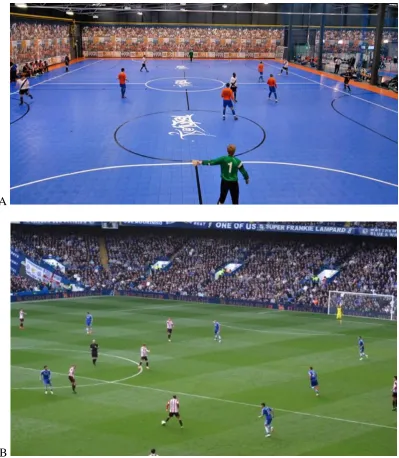
Figure 2.1 Futsal (A) and soccer (B). ... 41
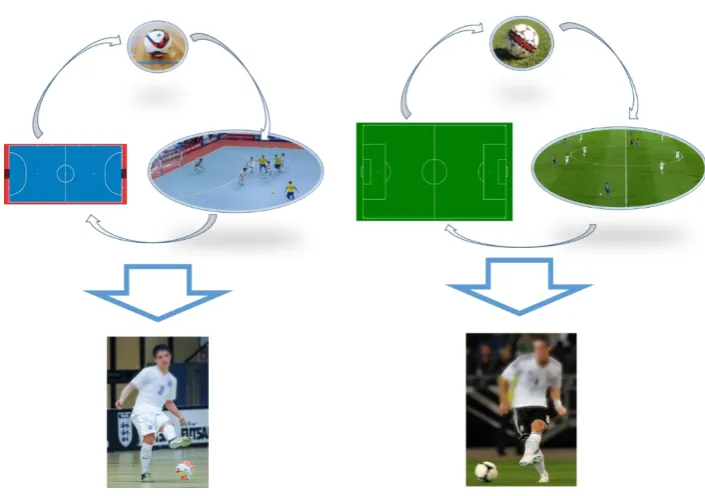
Figure 2.2 Schematic representing the interaction of constraints, e.g., ball, surface and individual playing area, when passing in futsal (left side) and soccer (right side) that are expected to influence perceptual behaviour underpinning passing. ... 45
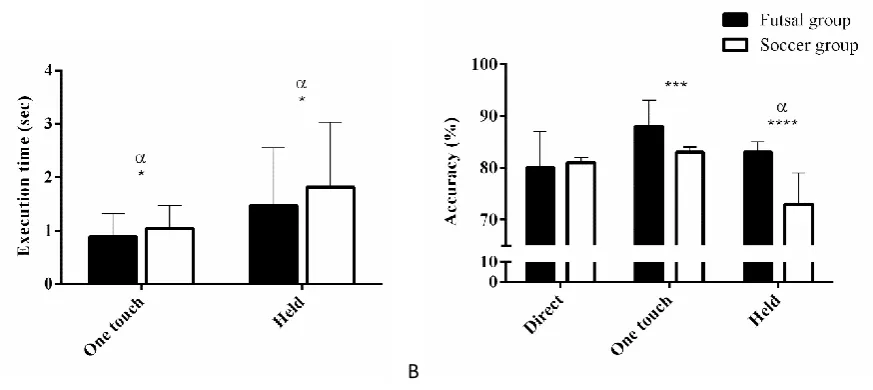
Figure 3.1 Mean passing execution time (A) and mean pass accuracy (B). ... 52
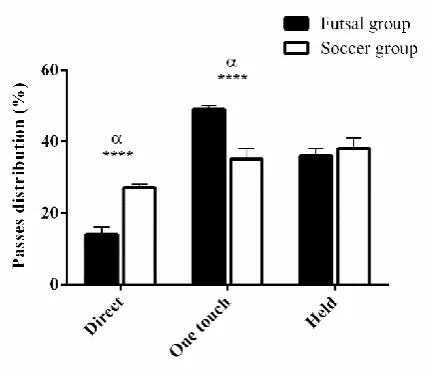
Figure 3.2. Mean frequency of direct, one-touch and held passes. ... 53
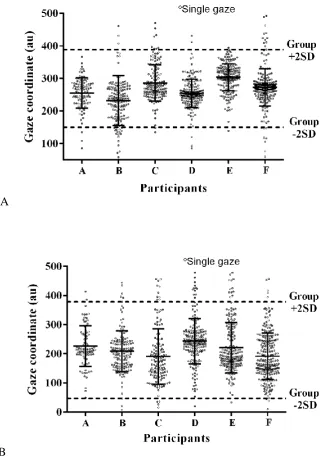
Figure 4.1 Participants’ x-axis (A) and y-axis (B) gazes dispersion. ... 63
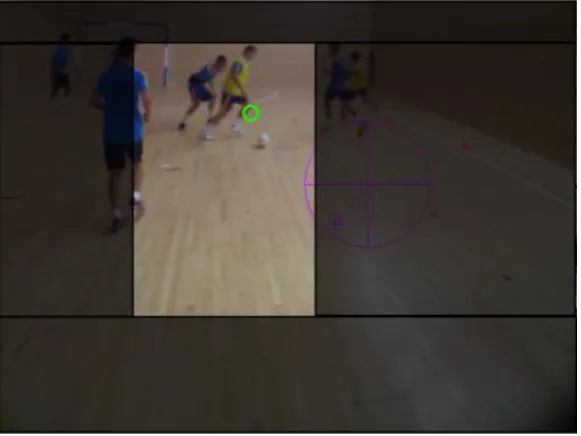
Figure 4.2 Gaze window superimposed to the footage from the eye tracker with the point of gaze and eye references... 65
Figure 4.3 The passing event comprised the time from 2 s prior ball reception to participant’s pass. ... 66
Figure 4.4 Example of gaze classification using the gaze coding window. ... 67
Figure 5.1 Example of FUT task (A) and SOC task (B) ... 80
Figure 5.2 Schematic representing the rotation of participants wearing the scene camera throughout the session. ... 81
Figure 5.3 Schematic of the three game phases: team, reception and control phase ... 83
Figure 5.4 Mean reception time (A), mean individual playing area (B), and mean technical intensity (C). ... 87
Figure 6.1 Mean pass accuracy in the performance of FUT and SOC task. ... 102
Figure 6.2 Mean AL on player-directed areas in the reception phase. ... 103
Figure 6.3 Mean AT on player-directed area (left side) and mean AS (right side) in the team phase. ... 104
Figure 6.4 Mean reception time (A), mean individual playing area (B), and mean technical intensity (C). ... 106
Figure 7.1 Schematic of the study design. ... 117
Figure 7.2 Sequence of the video stimuli, including image of the first frame (a), 3-2-1 countdown (b), video (c) and black screen with vertical red lines (d). ... 120
LIST OF TABLES
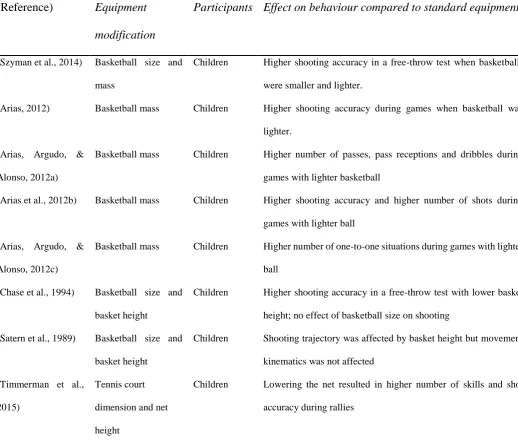
Table 2.1 Results of studies that examined the acute effects of equipment modification
on athletes’ behaviour. ... 29
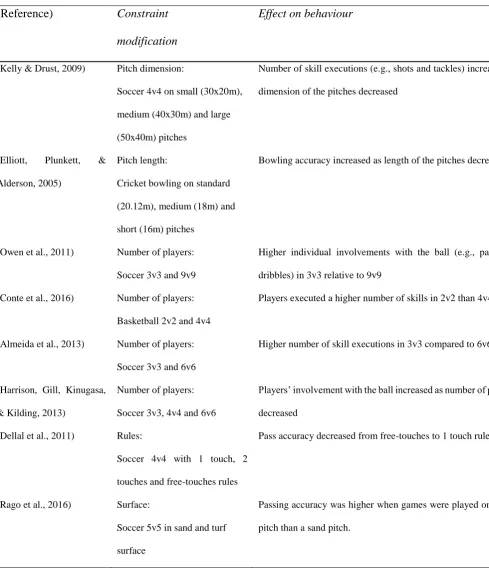
Table 2.2 Results of studies that examined the acute effects of task-constraints
modification on skill performance and opportunities for action during small-sided
games. ... 31
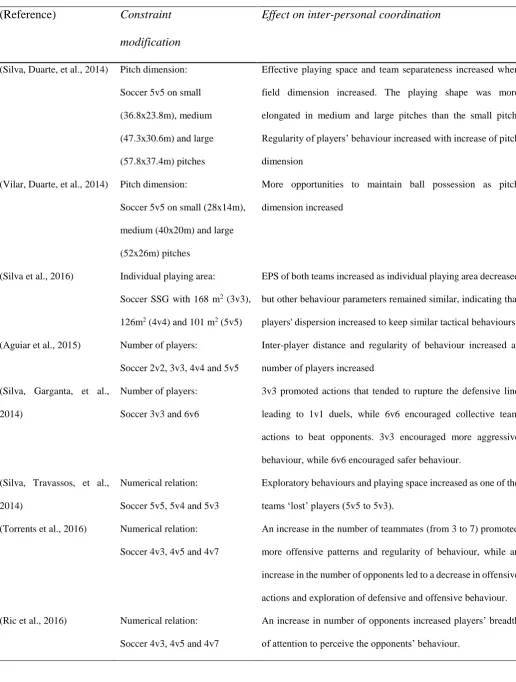
Table 2.3 Results of studies that examined the acute influence of task-constraints
modification on inter-personal coordination during small-sided games. ... 33
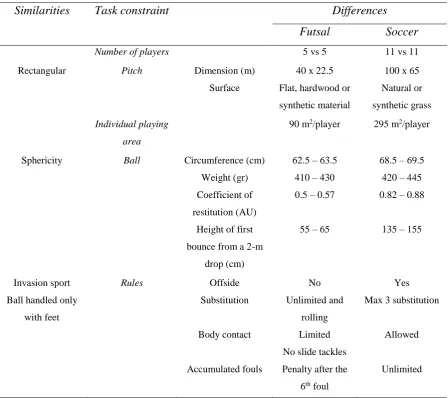
Table 2.4 Similarities and differences in task constraints between futsal and soccer. ... 42
Table 4.1 Cross tabulation of the ratings obtained with the point-of-gaze coding and the
gaze window coding. ... 69
Table 5.1 Soccer-specific and futsal-specific constraints with the expected influences on
the game. ... 76
Table 5.2 Mean relative attention-orientation time on player-directed area (AT, in
percentage), attention-orientation switches (AS, in switches/sec) and last-attention
orientation on ball-directed area (AL, in percentage) ± SD of the two groups across
the three different phases. ... 86
Table 6.1 Soccer and futsal task constraints. ... 96
Table 6.2 Mean relative attention-orientation time on player-directed area (AT, in
percentage), attention-orientation switches (AS, in switches/sec) and last-attention
orientation on ball-directed area (AL, in percentage) ± SD of the two groups across
the three different phases in the two tasks. ... 105
Table 7.1 Characteristic data (mean ± SD) for the two groups in relation to age and sport
participation experience ... 116
Table 7.2 Analysis of least square means differences in performance accuracy of FUT
(i.e., group that trained with futsal ball) and SOC (i.e., group that trained with soccer
ball). Pre-to-post within-group differences and between-group differences at pre-test
CHAPTER 1
1.1 Introduction
The ability to apply knowledge and skills learned in one context to another has been (and still
is) a key issue in various fields that deal with learning, such as education (Perkins & Salomon,
1992), and sport and exercise science (Issurin, 2013). Most often, learning programs take place
in environments that differ from the environment in which the learned behaviour is intended to
be applied. For example, athletes apply the skills learned in training to competition; children
transfer movement skills practiced during physical education classes to contexts outside
school; rehabilitation exercises aim to improve an individual’s physical ability outside the
clinic. This phenomenon is known as transfer of learning and refers to the influence of previous
learning with a set of constraints on performance or learning in another context, or with other
constraints (Adams, 1987; Magill, 2011; Newell, 1996). Given the relevance of transfer to the
sport and exercise science field, knowing the mechanisms and conditions that facilitate the
transition between contexts is critical to the design of efficient learning programs (Issurin,
2013; Perkins & Salomon, 1992).
Transfer is considered positive if previous learning leads to performance improvement
or facilitates learningin another context, while transfer is negative when it hinders learningor
performance decreases, and neutral when performance and learning are unchanged or not
affected (Carroll, Riek, & Carson, 2001). Ultimately, learning programs aspire to achieve
positive transfer. A long-standing theory, formulated at the beginning of the 20th century in the
field of education, contended that positive transfer occurs when similar elements (e.g.,
movement kinematics) are present between a learning task and the transfer task (Thorndike,
1906). Over the last century, different theories and approaches have been proposed to explain
how transfer occurs, and the concept of ‘similarity’ recurs as a key aspect for promoting transfer
(Barnett & Ceci, 2002; Lee, 1988; Magill, 2011). In sport and exercise science, the ecological
occurs due to the similarity between a learned behaviour and a behaviour required in a new
context to achieve the task goal. Given that learning refers to a permanent change in an
individual’s behaviour and this thesis discusses transfer of perceptual-motor skill learning,
transfer of learning, transfer of skill, and transfer of behaviour are used interchangeably
throughout the following chapters (this approach is commonly used, e.g., see Abernethy,
Baker, & Côté, 2005; Rosalie & Müller, 2012; Schmidt & Lee, 2011).
The ecological dynamics framework advocates the performer-environment relationship
as the basis for the analysis of human behaviour (Araújo, Davids, & Hristovski, 2006). It
combines principles of ecological psychology (Gibson, 1979) and dynamical systems theory
(Kelso, 1995), contending that an individual’s behaviour emerges from the self-organisation of
perception and action under interacting constraints (Newell, 1986; Seifert, Button, & Davids,
2013). Constraints have been defined as boundaries that limit (and enable) movement and have
been classified into three categories: organismic constraints (i.e., the characteristics of the
performer), environmental constraints (i.e., the characteristics of the environment in which a
movement is performed), and task constraints (i.e., the properties of the task performed)
(Newell, 1986).
In a given task, opportunities for action, called affordances, emerge from properties of
the environment (and task) and a performer’s action capabilities (Gibson, 1979). Affordances
describe the behaviours that are possible at a given time under a given set of contexts and
conditions (Chemero, 2003, 2009). The perception of information specifying task-relevant
affordances regulates the self-organisation of movement (Gibson & Pick, 2000; Seifert, Button,
et al., 2013). In this sense, perception and action are mutually dependent; a performer moves
to perceive environmental information to support their action, and their movement generates
more information (Gibson, 1979, 1986). Practicing with a given set of constraints, individuals
such as kicking and throwing a ball (Davids, Button, & Bennett, 2008b). In this framework,
positive transfer occurs due to similarity between the practiced perception-action couplings and
the coupling required in another context to achieve the task goal (Pacheco & Newell, 2015).
The similarity of information available to guide action during practice and the transfer task
promotes the transfer process (Snapp-Childs, Wilson, & Bingham, 2015). Therefore, the ability
to perceive information that specifies task-relevant affordances is predicted to promote the
transfer of perceptual-motor skills between tasks that present similar information.
A modification to one of the constraint categories during practice influences the
emergence of affordances, which, in turn, is predicted to influence the development and
transfer of perceptual behaviour (i.e., the perception of environmental information) supporting
perceptual-motor skills (Davids et al., 2008b). In the sport and exercise field, practitioners can
readily modify the properties of a task, such as equipment, playing area and rules to facilitate
an athlete’s skill development (Araújo, Davids, Bennett, Button, & Chapman, 2004; Farrow,
Buszard, Reid, & Masters, 2016). Previous research has examined how similarity of
information between contexts promoted transfer of perceptual behaviour (e.g., Causer & Ford,
2014; Moore & Müller, 2014), and how task-constraint modification influenced the
development of an athlete’s perceptual-motor skill (e.g., Buszard, Reid, Masters, & Farrow,
2016a; Farrow & Reid, 2010). Studies have shown transfer of perceptual behaviour to similar
but not to dis-similar sport domains, indicating how correspondence of information promotes
transfer (e.g., Causer & Ford, 2014; Moore & Müller, 2014). While studies have shown how
modification of task constraints changes the emergence of an athlete’s behaviour (e.g.,
Buszard, Reid, Masters, & Farrow, 2016b; Travassos, Goncalves, Marcelino, Monteiro, &
Sampaio, 2014) and influences learning of sport skills (e.g., Buszard et al., 2016a; Farrow &
Reid, 2010), they primarily focused on the movement outcome. Hence, it remains relatively
number of studies examined how task constraints influence skill transfer but (again) they
focused on the movement outcome (e.g., Coldwells & Hare, 1994; Pellett, Henschel-Pellett, &
Harrison, 1994). As such, it is currently unknown how task constraints influence the
development and transfer of perceptual behaviour in sport tasks.
This thesis examined how task constraints promote the (development and) transfer of
perceptual behaviour using futsal and soccer as vehicles. Futsal and soccer are two forms of
football that share many similarities, while some task constraints differentiate them. Passing
skill, which couples the perception of environmental information to make decisions and a kick
towards a teammate, is performed in both sports. Passing affordances and the passing action
are likely to emerge similarly in the two domains. Affordances emerge from the interaction of
a passer’s, teammates’, and opponents’ behaviour (Corrêa, Vilar, Davids, & Renshaw, 2014a;
Travassos, Araújo, Davids, Vilar, et al., 2012), and the passing action involves the
self-organisation of the lower limb to intercept a ball. Therefore, this relative similarity in
perception and action behaviours is expected to promote skill transfer between futsal and
soccer. Furthermore, between-sports differences in task constraints, such as ball properties,
number of players and pitch dimensions, are expected to influence the development and
transfer of perceptual behaviour underpinning passing. Specifically,futsal task constraints are
expected to promote the development of skill adaptability which would facilitate transfer to
soccer.
Current knowledge on the effect of task constraints on skill learning and transfer is
primarily derived from lab-based studies using relatively simple movements, and is limited to
the assessment of a movement outcome (e.g., Zanone & Kelso, 1992; Zanone & Kelso, 1997).
The examination of the influence of task constraints on the development and transfer of
perceptual behaviour supporting a whole-body movement in complex sport tasks would extend
process has practical implications for sport coaching. A constraints-led approach to coaching,
whereby practitioners primarily manipulate task constraints and act as facilitators, has been
argued to promote the development of a range of functional actions (Renshaw, Chow, Davids,
& Hammond, 2010). Furthermore, this approach should encourage implicit learning, which has
been shown to be more robust than explicit learning under external stressors, such as anxiety
(Hardy, Mullen, & Jones, 1996). While practitioners typically manipulate task constraints in
practice (e.g., the type of equipment, the rules of a drill and the goal of a task), it is critical that
they modify constraints in a principled manner to promote skill transfer to competition. For
example, a soccer coach can choose the size of the ball, the number of players in each team,
the size of the pitch and the rules of the game when preparing a training session. Which option
should the coach select? What combination of task constraints would be more beneficial for
improving soccer performance? Knowing how the selection of task constraints influences
transfer of sport skills would help practitioners making more informed decisions.
1.2 Aims of the Dissertation
1.2.1 General Aims
This thesis aimed to extend current knowledge on the influence of task constraints on the
development and transfer of perceptual behaviour supporting a perceptual-motor skill using
two similar sports, i.e., futsal and soccer, as the experimental context.
1.2.2 Specific Aims
o To investigate the influence of long-term practice with different task constraints on the
development of perceptual behaviour supporting the passing skill.
o To determine how task constraints influence the transfer of passing skill, and to explore
o To determine how manipulation of equipment promotes the transfer of passing skill,
and how perceptual behaviour facilitates transfer.
1.3 Chapter organisation
This chapter introduced the topic of this dissertation by providing a brief rationale for the
research and set out the specific aims of the thesis.
Chapter 2 provides a critique of the research encompassing the study of skill learning and
transfer, with a focus on the influence of task constraints on the emergence of an individual’s
behaviour.
Chapter 3 explored differences in the passing skill between futsal and soccer players during
elite games. Execution time (from reception to pass), pass accuracy, and distribution of the
different types of passes (i.e., direct, one-touch and held passes) of adult elite futsal and soccer
players were compared. Results showed that passing is performed differently in the two sports,
suggesting that domain-specific task constraints influence the emergence of passing-specific
affordances which, in turn, would be expected to affect a player’s development of perceptual
behaviour underpinning passing.
Chapter 4 presents the development and validation of a method for measuring perceptual
behaviour in a representative field task. Eye tracking technology is typically used in sport
science to assess how individuals perceive environmental information to support their action.
This technology records the movements of the eyes and has limitations when used in dynamic
tasks that involve rapid movements, e.g., running and jumping. This chapter discusses the
external camera of an eye tracker, during the performance of football field tasks. The developed
method was used in chapters 5 and 6 to approximate participants’ orientation of visual
attention.
Chapter 5 examined the influence of long-term practice with different task constraints on the
development of perceptual behaviour supporting passing. The orientation of visual attention
during passing was assessed in futsal and soccer players which developed the passing skill with
different task constraints. Results showed that practicing the passing skill for more than 1000
hours with futsal or soccer task constraints influenced players’ orientation of attention during
passing in a field test. Participants oriented their attention towards other players to inform
decision-making at different moments during the task. Futsal players did so prior to executing
a pass, while soccer players did so when they were not in possession of the ball.
Chapter 6 expanded the findings of chapter 5 by determining how learning the passing skill
with futsal or soccer task constraints influenced the transfer of passing to task constraints of
the other sport (i.e., futsal to soccer and soccer to futsal). While the relative similarity of
information available to guide action in each sport promoted transfer in both groups of players,
results showed that futsal task constraints facilitated a higher magnitude of transfer to soccer
task constraints than vice versa. Futsal players adapting their perceptual behaviour to the
passing-specific affordances that emerged with soccer task constraints was suggested to
facilitate the superior skill transfer. This chapter highlighted that task constraints influenced
transfer, and futsal-specific task constraints promoted positive transfer of perceptual behaviour
Chapters 5 and 6 presented two cross-sectional studies that investigated the impact of futsal
and soccer task constraints on participants’ orientation of attention in a field test. Chapter 7
presents a randomised controlled study that isolated one task constraint in the laboratory to
assess the development of perceptual behaviour in a controlled environment. This chapter
evaluated the influence of ball properties on transfer of passing skill. Results showed that
practicing passes with a futsal ball promoted larger improvement in the passing performance
with a soccer ball than practicing with a soccer ball, indicating positive transfer of skill. The
futsal ball facilitated the development of perceptual attunement to task-relevant information
that supported the positive transfer from the futsal ball to the soccer ball. Overall, the findings
of chapters 5, 6 and 7 highlighted how task constraints influenced the development and transfer
of perceptual behaviour. Futsal task constraints and, specifically, the futsal ball facilitated the
attunement to information specifying task-relevant affordances that, in turn, improved passing
performance.
Chapter 8 provides a summary and a general discussion of the studies conducted. Theoretical
and practical implications of the thesis are considered, along with future research directions.
Please note that the majority of chapters in this dissertation have been written with the intention
to publish and, in some cases, have already been published. Consequently, the definition of key
terms (e.g., transfer of learning and constraints) and the importance of this area have been
CHAPTER 2
2.1 Transfer of learning
Transfer of learning is a relevant issue in the field of sport and exercise science as individuals
often train to improve skills that are performed in different contexts (Issurin, 2013).
Furthermore, the ability to transfer learned skills between different contexts and sport domains
allows athletes to develop a wide range of actions, promoting the development of sport
expertise (Baker & Farrow, 2015). Understanding whether and how individuals transfer their
skills has theoretical and practical implications, as it provides insights into: i) the specificity of
learning hypothesis ii) the training conditions that might promote transfer to competition, and
iii) the preferred pathway to promote the development of sport expertise.
The specificity of learning hypothesis (Proteau, 1992) contends that learning is specific
to the visual information experienced during practice and it does not transfer to other tasks that
change or remove that sensory information (Proteau, Marteniuk, & Lévesque, 1992). For
example, practicing a target-pointing taskwith full vision did not transfer to a condition where
only the target was visible (Proteau, Marteniuk, Girouard, & Dugas, 1987). However, other
research has shown that participants transferred a learned skill even when visual information
changed from practice to the transfer task (Bennett, Button, Kingsbury, & Davids, 1999;
Tremblay & Proteau, 1998), and it has been argued that other sensory information might be
used to guide performance when visual information changes (Mackrous & Proteau, 2007). The
type of sensory information learning is specific to and how information from different sources
interact during the learning process is still debated (Tremblay, 2010). The representative
learning design framework (Pinder, Davids, Renshaw, & Araújo, 2011b) contends that learning
is specific to the information that emerges from the interaction of constraints during practice,
and learning transfers to constraints that lead to the emergence of similar information (Chow,
Davids, Button, & Renshaw, 2015); however, evidence was only derived from cross-sectional
Travassos, Duarte, Vilar, Davids, & Araujo, 2012), and intervention studies are needed to better
evaluate how learning evolves longitudinally. Experiments that evaluate how learning transfers
and how practice conditions promote the transfer process would provide new insights into what
learning is specific to, and can provide support to practitioners for the design of practice tasks.
The ultimate goal of any training program is to enhance an athlete’s performance in
competition. In this context, research can provide evidence on the practice conditions that
promote transfer to help coaches make informed decisions when planning training (Williams,
Ford, Causer, Logan, & Murray, 2012). For example, a random order of trial conditions has
been shown to facilitate the transfer process (Farrow & Buszard, 2017), and researchers have
developed tools that can support coaches in the design of random practice (Buszard, Reid,
Krause, Kovalchik, & Farrow, 2017). Practitioners can also modify equipment or other aspects
of a training (e.g., playing area and rules) and knowing how these training conditions can be
manipulated to encourage transfer to competition can support a coach’s decisions.
The transfer of learned skills is relevant when considering the timing of sport
specialisation (i.e., practicing one sport only). Specialisation in one sport is paramount to the
attainment of sport expertise (Baker & Young, 2014); however, the timing of specialisation is
debated (Baker, Cobley, & Fraser‐Thomas, 2009). Contrasting hypotheses argue, on the one
hand, that individuals should specialise in their domain at an early age (early specialisation
pathway; Ward, Hodges, Starkes, & Williams, 2007), and on the other hand, that individuals
should engage in a variety of sports at an early age and delay specialisation (early
diversification pathway; Côté, 1999; Côté, Lidor, & Hackfort, 2009). While an alternative
hypothesis suggests that individuals should engage early in domain-related playful activities
(early engagement hypothesis; Ford, Ward, Hodges, & Williams, 2009). Psychological and
interpersonal skills, such as achieved identity and self-regulation, benefit from an engagement
diversification might impact the development of perceptual-motor skills, and empirical
assessments of skill transfer between different sport domains in young athletes can provide
new insights to the debate.
Different theoretical approaches have led to different perspectives on how transfer
occurs. The two main theoretical approaches currently used in the motor control and learning
field are information-processing and ecological dynamics. This thesis primarily uses the
ecological dynamics framework to examine transfer of learning, and uses some concepts (e.g.,
skill automaticity) from the information-processing approach to examine the mechanisms
underpinning transfer. The next section presents the historical contribution of different
theoretical perspectives on transfer of learning.
2.2 Theoretical perspectives on transfer of learning
Different approaches to motor learning led to differences in explaining how transfer occurs.
Theories of motor learning address how individuals, through practice, develop the ability to
coordinate their body in response to environmental stimuli to successfully carry out actions
(Fitts, 1964). Learning typically occurs as a modification of pre-existing structures and
processes (Schmidt & Lee, 2011; Zanone & Kelso, 1997), and transfer of learning involves
applying the learned structures to a new context. Three theories contend that different structures
change with learning, and provide an explanation of transfer: identical-elements theory
(Thorndike, 1906), transfer appropriate-processing (Lee, 1988), and ecological dynamics
(Davids et al., 2012). While the three theories converge on the idea that ‘similarity’ is a key
aspect for promoting transfer, they differ on the conceptualisation of what needs to be similar.
2.2.1 Identical-elements theory
Thorndike (1906) was one of the pioneers in the investigation of transfer of learning in the field
Thorndike’s behaviourist approach to learning, where an individual’s behaviour is examined
at a stimulus-response level, shaped the formulation of his theory.Thorndike and Woodworth
tested participants’ ability to estimate the area of different sized shapes (Woodworth &
Thorndike, 1901) and the ability to recognise specific letters in different words (Thorndike &
Woodworth, 1901). After practicing with a set of shapes and words, participants accurately
estimated the shapes and recognised the letters that were similar to the ones they practiced with,
while they were not able to recognise shapes and letters that differed from the ones used during
training. Based on these results, Thorndike (1906) contended that mental functions transfer to
other functions so long as they share identical elements, and behaviours developed in response
to a class of stimuli positively transfer only to similar task stimuli.
The identical-elements theory established the basis for future research in transfer of
learning. The idea that transfer occurs between tasks that share similarities is still relevant;
however, different approaches to the issue have led to the conceptualisation of theories that
diverge on what needs to be similar to promote transfer. In the same historical period of
Thorndike, Judd (1908) developed a principle-based theory that moved away from a
task-oriented approach. He argued that transfer is promoted when knowledge, rules, and principles
abstracted in learning are applied to another context, even if the task elements are not similar
(Judd, 1908). For example, while identical-elements theory would not predict transfer of an
athlete’s ability to anticipate an opponent’s action from rugby to baseball due to differences in
the movement kinematics of the two sports, principle-based theory would predict positive
transfer due to a rugby player applying knowledge of fundamental movement skill to the
baseball context (Müller, McLaren, Appleby, & Rosalie, 2015). Judd (1908) evaluated the
effect of knowing the principle of refraction on the ability to transfer darts throwing to
submerged targets. Children practiced throwing darts to a target submerged 12 in. One group
did not receive any explanation. After the intervention, the two groups performed equally in a
post-test with the target submerged at 12 in but the intervention group outperformed the other
group when the target was moved to 4 in (transfer task). Knowing the principle of refraction
underpinned transfer to the novel task (Judd, 1908).
2.2.2 Transfer appropriate-processing
A cognitive approach to motor learning shaped the conceptualisation of the transfer-appropriate
processing theory (Lee, 1988). In this approach, learning is viewed as a process of establishing
and enriching internal representations due to practice, which lead to relatively permanent
changes in the capability for skilled movement (Schmidt & Lee, 2011). Transfer depends on
the compatibility of an individual’s internal representations and demands of a new task
(Schmidt & Young, 1987). The transfer process is promoted when the cognitive processes
elicited during learning are similar to the cognitive processes required in the transfer task (Lee,
1988).
Experiments on contextual interference, in which the order of task conditions was
manipulated during practice, provided the framework for the development of the transfer
appropriate-processing framework (Lee, 1988). Practicing tasks in random order (random
practice) consistently led to a higher degree of transfer to novel tasks than practicing the trial
conditions in predefined blocks (blocked practice) (Magill & Hall, 1990; Shea & Morgan,
1979). The cognitive processes used in random practice were quickly adapted to a novel
(transfer) task that required similar processes, namely the ability to elaborate and generate new
action plans for the novel task, while the subjects in the blocked practice struggled to adapt to
the new demands (Lee & Magill, 1983). Transfer was promoted by the similarity of cognitive
2.2.3 Ecological dynamics
Ecological dynamics combines concepts from ecological psychology and dynamical systems
theory in explaining how individuals control actions and develop perceptual-motor skills
(Davids et al., 2012; Seifert, Button, et al., 2013). It contends that perception of environmental
information is direct and information to guide action emerges from the interaction between
organism and environment (Gibson, 1979; Jacobs & Michaels, 2007; Turvey, 1990). It also
views individuals as complex dynamical systems in which movement coordination emerges
from the self-organisation of the different body parts (Kelso, 1995).
Ecological psychology considers the organism and environment as an interacting
system where one interacts with and depends on the other (Michaels & Beek, 1995).
Opportunities for action, called affordances, emerge from the dynamic interaction of a
performer and their environment (Gibson, 1979). Affordances are relations between the action
capabilities of a performer and features of the environment, and describe the range of
behaviours that are possible in a given context or task (Chemero, 2003, 2009; Fajen, 2005).
The perception of affordances that are relevant to the task at hand guides an individual’s
movement (Araújo et al., 2006). Affordances are perceived through the pick-up of information
(mainly visual) that specifies patterns in ambient stimulation, and information, in ecological
dynamics, is conceptualised as the flow of energy that can be exploited by a performer to guide
their behaviour (Gibson, 1966, 1986).
Dynamical systems theory provides a framework to conceptualise how action is
coordinated in response to the perceived affordances. It considers humans as complex
neurobiological systems composed of many sub-systems (e.g., limbs, joints, muscles) that
continuously interact with each other in different ways, which interactions and fluctuations can
potentially result in infinite patterns of coordination (Bernstein, 1967). A neurobiological
relationship among its sub-components forming stable and functional patterns of coordination,
called attractors (Kelso, 1992; Schöner & Kelso, 1988). The self-organisation of coordination
patterns is a dynamic process that takes place within an attractor landscape, i.e., a hypothetical
construct that includes stable attractors within all the potential relationships between the
system’s components (Handford, Davids, Bennett, & Button, 1997). The type of attractors a
complex system settles into depends on the constraints acting on the system (Kugler & Turvey,
1987).
Importantly, ecological dynamics contends that human behaviour emerges from
continuous couplings of perception and action. Perception and action, information and
movement, performer and environment are mutually dependent; a performer moves around the
environment to pick-up information that guides their movement, and their movement generates
new information (Davids, Araujo, Seifert, & Orth, 2015; Gibson, 1979). Perception and action
couplings emerge within interacting boundaries provided by constraints. Constraints have been
defined as features that limit (and enable) the behaviour of individuals, and have been classified
into three categories: organismic, environmental, and task (Newell, 1986). Organismic
constraints refer to the performer’s characteristics (e.g., cognition, previous experience,
intentions, physical capabilities), environmental constraints refer to the environment in which
action takes place (e.g., weather and gravity), and task constraints are specific to the
performance context (e.g., rules, equipment, goals) (Newell, 1986). The dynamic interaction
of organismic, environmental and task constraints during goal-directed activities shapes the
attractor layout of a perceptual-motor landscape, which hypothetically represents an
individual’s stable movement solutions (Newell, 1991, 1996).
From an ecological dynamics viewpoint, skill learning occurs as a relatively permanent
change in an individual’s behaviour over time as a result of goal-directed practice with a certain
environmental information that specifies affordances, and develop the ability to organize
functional coordination patterns (Davids et al., 2012). Transfer of learning is conceptualised as
a process of adapting behaviour, developed with a certain set of constraints, to a different set
of constraints (Newell, 1996; Rosalie & Müller, 2012). Transfer is positive when individuals
successfully adapt their behaviour and improve their performance, while it is negative when
performance decreases (Carroll et al., 2001). The level of correspondence between an
individual’s ability to couple perception of affordances with functional movements and the
requirements of a new task influences the degree of transfer (Davids et al., 2008b). If an
individual’s existing attractor repertoire is close to a functional attractor in the landscape of a
new task, the transfer process is promoted. On the other hand, an existing attractor that is far
from a functional attractor will ‘pull’ the entire system away from a functional coordination
pattern, in turn, hindering performance (Newell, 1996).
Research in coordination dynamics has demonstrated how the correspondence between
existing information-movement couplings and a new task requirement influences transfer,
highlighting the role of information similarities in promoting the transfer process. In a typical
experiment, participants move right and left fingers to the beat of a metronome that constrains
the relative phase (position) between the two effectors (Zanone & Kelso, 1992). Generally,
in-phase (i.e., 0 degree) and anti-in-phase (i.e., 180 degree) are inherently stable attractors within the
0-360-degree attractor landscape (Kelso, 1995). Practicing a novel relative phase (e.g., 90
degree) stabilises the attractor corresponding to the new phase, and the learned phase has been
shown to transfer to the symmetrical 270-degree phase (Zanone & Kelso, 1997). Since
information for the relative phase (i.e., metronome beat) guides the assembly of the
coordination patterns, information that supports action has been considered the key factor in
shaping learning and transfer (Bingham, 2004a, 2004b). The information at the 90- and
between the relative phases (Wilson, Snapp-Childs, & Bingham, 2010). Collectively, this
research indicated how the correspondence of behaviour to new task requirements encourages
transfer, and how similarity of the information that guides action facilitates the transfer process
(Snapp-Childs et al., 2015).
2.2.4 Evaluation of transfer
Transfer of learning is evaluated on performance achievement in a transfer task, rather than on
an ‘idealised’ reference movement, as different behaviours can lead to successful performance
(Araújo & Davids, 2015; Travassos, Araujo, & Davids, 2017). To evaluate the quality of
transfer (i.e., positive, neutral or negative), the performance of individuals that learned a skill
under certain practice conditions (training constraints) is evaluated against a criterion
performance in a transfer task. In longitudinal studies, where an experimental group practices
a skill for a period, the group’s pre-test performance in a transfer task is the criterion
performance against which post-test performance is compared. For example, to evaluate the
transfer of anticipation skill from a random-practice intervention in the laboratory to
performance in the field, an experimental group’s pre- to post-test change in anticipation
accuracy in a field task was assessed, and results showed positive transfer as the experimental
group’s performance improved from pre- to post-test (Broadbent, Causer, Ford, & Williams,
2015). Furthermore, additional experimental groups can be added to evaluate the practice
conditions that lead to the highest magnitude of transfer. Going back to the previous example,
another experimental group underwent a blocked-practice intervention, and its pre- to post-test
change in anticipation accuracy in the field task was compared to the random-practice group.
The random-practice group had a higher pre- to post-test improvement and, consequently, a
higher magnitude of transfer than the blocked-practice group, and it was concluded that random
practice was more beneficial than blocked practice to train anticipation skill that transfers to
In cross-sectional studies, that do not include an intervention but compare the
performance of different groups, participants that have experience in the transfer task and/or
novices represent the criterion performance (control group). Transfer is considered positive if
the transfer group’s performance is superior than novices and equivalent to the expert group’s
performance. For example, the performance of karate athletes in a taekwondo anticipation task
was superior compared to novices and similar to taekwondo experts’ performance, which
indicated positive transfer of anticipation skill from karate to taekwondo (Rosalie & Müller,
2014).
In summary, from an ecological dynamics viewpoint, transfer of learning is the process
of adapting the ability to functionally couple information and movement developed with a
certain set of constraints to a different set of constraints. Since information directly guides
action, transfer is promoted when the information used in practice is similar to the information
used in a transfer task. As such, an individual’s ability to perceive information that specifies
affordances should transfer to tasks that present similar information, in turn, improving overall
performance. The next section presents research that examined how information similarities
between contexts influenced transfer of perceptual learning in sport.
2.3 Transfer of perceptual learning in sport
Perceptual learning occurs as a relatively permanent change in an individual’s ability to
perceive key environmental information to support action (Gibson & Pick, 2000; Williams,
Davids, & Williams, 1999). The environment we live in affords a large number of behaviours
(i.e., affordances), and we are surrounded by a rich array of information (in the form of energy
flows) that specifies what actions the environment affords (Rietveld & Kiverstein, 2014). When
hence it is critical to perceive the information that specifies the task-relevant affordances to
support the self-organisation of a movement functional to the achievement of the task goal
(Bruineberg & Rietveld, 2014; Gibson, 1979). With practice, individuals attune their
perception to key environmental informational and learn to exploit the information that
specifies task-relevant properties of the environment in relation to their action capabilities
(Gibson & Pick, 2000; Savelsbergh, van der Kamp, Oudejans, & Scott, 2004). Skilled
behaviour and the development of sport expertise, thus, entails the education of attention
towards information that is suited to the task at hand (Beek, Jacobs, Daffertshofer, & Huys,
2003). In this context, attention is conceptualised as attunement to the environment-performer
relationship (Canal-Bruland, van der Kamp, & Gray, 2016). This perceptual attunement to
task-relevant information (i.e., perceptual behaviour) supports successful performance in sport
tasks.
2.3.1 Evaluation of perceptual behaviour
The ability to perceive key environmental information to successfully guide action in sport has
been primarily evaluated using decision-making, anticipation and pattern recall lab-based tasks
(Farrow & Abernethy, 2015; Mann, Williams, Ward, & Janelle, 2007; Travassos et al., 2013).
Decision-making tasks require individuals to make a decision in response to video stimuli; in
anticipation tasks, environmental information is occluded before a key event and an athlete’s
ability to detect affordances is assessed (temporal occlusion paradigm); pattern recall tasks
present a pattern of play for a few seconds and athletes are required to recall the pattern when
it disappears from the display. Typically, the performance of skilled athletes in these tests is
compared to less-skilled athletes or novices to evaluate how certain perceptual behaviours
support sport expertise. Experiments consistently showed experts’ superior accuracy in making
decisions (Starkes & Ericsson, 2003; Travassos et al., 2013), anticipating an opponent’s action
recalling patterns of play (Chase & Simon, 1973; Gorman, Abernethy, & Farrow, 2012) relative
to lesser-skilled counterparts, which indicates how perceiving information that specifies
affordances supports expert performance.
The specific information sources an athlete is attuned to can be directly assessed
through eye tracking technology or, indirectly, using the spatial occlusion paradigm. Vision is
considered the dominant sense for the perception of environmental information and eye
tracking technology has been extensively used in sport to directly assess the specific
information athletes focus their visual attention on during goal-directed tasks (Kredel, Vater,
Klostermann, & Hossner, 2017; Panchuk, Vine, & Vickers, 2015). This technology records
movements of the eyes and determines the point of gaze within the scene being viewed,
showing an athlete’s gaze behaviour over the performance of a task. Experts and novices quite
consistently have different visual strategies during sport tasks (Mann et al., 2007). For example,
expert soccer goalkeepers focused their attention on fewer areas and for a longer period than
novices when saving penalties (Savelsbergh, Williams, van der Kamp, & Ward, 2002).
Furthermore, the ability to focus visual attention on task-relevant information typically
discriminates between successful and unsuccessful performance, e.g., successful passes were
underpinned by longer attention on ball carrier than the unsuccessful ones (Vaeyens, Lenoir,
Williams, & Philippaerts, 2007). Another method to assess the perception of task-specific
information is the spatial occlusion paradigm that assesses what information in the environment
(e.g., an opponent’s arm movement) supports accurate performance. Specific areas of the video
display are occluded, and expert-novice differences in performance associated with the
removal of certain information indicate the sources that are most informative to support expert
performance. For example, expert-novice differences were found in a badminton anticipation
body in isolation, which indicated how attunement to that information underpinned expert
performance (Abernethy & Zawi, 2007).
The above-mentioned methods provide evidence on how perceptual behaviour
develops and underpins sport expertise; however, they present some limitations that affect the
results. Many experiments have been performed in laboratories where participants often
responded to video simulations performing actions that were not specific to their domain of
expertise (Travassos et al., 2013). For example, moving a joystick to save a soccer penalty
projected onto a screen (Savelsbergh et al., 2002). While this approach is beneficial for
controlling the stimuli presented and the potential confounding variables, the de-coupling of
perception and action that athletes typically experience in their practice influences how
participants perceive environmental information and, consequently, how perceptual behaviour
is measured (Davids, Kingsbury, Bennett, & Handford, 2001; Farrow & Abernethy, 2003). The
visual pathways are different when perception and action are coupled (perception for action)
or when they are de-coupled (perception for recognition) (van der Kamp, Rivas, van Doorn, &
Savelsbergh, 2008). Furthermore, the laboratory environment does not represent the interaction
of constraints typical of the environment towards which the assessed skill is intended to be
generalised (i.e., competition), thus limiting the generalisation of the observed behaviour
(Brunswik, 1955; Pinder, Davids, et al., 2011b). To overcome these issues there has been a
shift in the skill acquisition field from lab-based to in situ assessments, i.e., field-based tasks
that maintain perception-action coupling and represent the constraints of the competition
(Baker & Farrow, 2015).
Recent advancements in technology facilitates the assessment of perceptual behaviour
in situ (Renshaw & Gorman, 2015; van Maarseveen, Oudejans, Mann, & Savelsbergh, 2016).
For example, mobile eye trackers allow the assessment of attention control while leaving
paradigm in the field. Furthermore, perceptual behaviour supporting expert decision making
can be inferred from the assessment of performer-environment dynamics during field tasks
(Araújo et al., 2006). For example, position and inter-personal distance of team-sport athletes
associated with successful or unsuccessful performance during games (e.g., Duarte et al., 2012;
Vilar, Araujo, Davids, et al., 2014) reveal how task-relevant affordances emerge and,
consequently, what information needs to be perceived to guide performance (Vilar, Araujo,
Davids, & Button, 2012). While these approaches allow skill assessment in situ and improve
the representativeness of experiments, they present some challenges, such as difficulties in
recording eye movements in dynamic tasks, issues in selecting key variables when assessing
performance dynamics, and, in turn, the complexity of an assessment task may need to be
sacrificed (Mann & Savelsbergh, 2015; Renshaw & Gorman, 2015).
In summary, the evaluation of perceptual behaviour in sport is challenging and
researchers are required to balance the pros and cons of lab-based and in situ assessments to
properly design data collection and interpret the collected data.
2.3.2 Transfer of perceptual behaviour in sport
Previous research in sport and exercise science has examined whether perceptual behaviour
developed with domain-specific constraints transferred to similar sport domains. Most studies
were based on the prediction that similarity between information an athlete was attuned to and
information in a similar domain promoted positive transfer (e.g., Causer & Ford, 2014; Roca
& Williams, 2017). Typically, athletes’ performance in a transfer task was compared to athletes
that were expert in the transfer task and/or novices, and expert-in-the-domain athletes’ and
novices’ performance was considered the criterion performance against which the quality of
transfer was evaluated (e.g., Moore & Müller, 2014; Rosalie & Müller, 2014).
Athletes transferred their decision accuracy to similar sports, soccer to basketball (Roca
(Causer & Ford, 2014), but not to dis-similar sports in video-based decision-making tasks.
Anticipation accuracy transferred between similar sports, from karate to taekwondo (Rosalie
& Müller, 2014) and partially from baseball to cricket (Moore & Müller, 2014), and between
dis-similar sports, from karate to Australian rules football (Rosalie & Müller, 2014). In
contrast, rugby experts did not transfer their anticipation accuracy to cricket (Müller et al.,
2015). These contrasting results in skill transfer between dis-similar sports could potentially be
explained by the small sample size of 5 participants per group in Rosalie and Müller (2014).
Lastly, pattern recall accuracy transferred between netball, basketball and hockey (Abernethy
et al., 2005), and pattern recall time transferred between soccer and hockey but not to volleyball
(Smeeton, Ward, & Williams, 2004). While the number of studies is limited, this research
suggested a positive trend of perceptual behaviour transfer only to similar sport domains.
The results of these studies collectively show how the ability to perceive task-relevant
affordances in decision-making, anticipation or pattern-recall tasks transfer to tasks that present
similar information – as the ecological dynamics framework would predict (Davids et al., 2012;
Davids et al., 2008b). While most of the studies presented were conducted in the laboratory
and de-coupled perception and action, a limited number of studies have been conducted in situ
and provided insights into how the transfer of affordance perception was functional to the
performance of a skill. Karate athletes transferred their perceptual behaviour to taekwondo and
successfully anticipated a taekwondo opponent’s action blocking different types of kicks
(Rosalie & Müller, 2014). Similarly, despite perceptual behaviour being indirectly measured,
transfer of affordance perception from rock climbing to ice climbing underpinned successful
climb performance on an ice wall (Seifert, Wattebled, et al., 2013).Additional in situ research
designs are needed to provide new insights into how transfer of affordance perception might
Different approaches to motor learning shape the design of practice conditions that
exploit context similarity to improve skill transfer. From an information-processing
perspective, the sequence of skill variations has been manipulated in training to elicit cognitive
processing similar to competition, which, in turn, encouraged positive transfer from training to
sport competition (Broadbent, Causer, Ford, et al., 2015). While from an ecological dynamics
perspective, the constraints-led approach advocates the manipulation of constraints to modify
how task-relevant affordances emerge and, consequently, how the development of functional
information-movement couplings transfer to contexts that present similar information (Davids
et al., 2008b; Newell, 1996). The next section presents research that has addressed how
manipulating task constraints influenced an individual’s behaviour and transfer of learning.
2.4 Task-constraints manipulation and transfer of learning
Task constraints have been investigated the most in sport and exercise science, particularly
equipment, playing area and rules, as they can be readily manipulated by researchers and
practitioners (Araújo et al., 2004). These constraints can be modified to simplify the execution
of sport skills in children and novices, and to encourage learners to explore different movement
solutions. Typically, children progress through various sport modifications to the adult version
of the sport (Buszard et al., 2016b) and athletes train to improve performance in competition
(Farrow & Robertson, 2017). As such, it is critical to verify that behaviour developed with
task-constraint modifications is functional and transfers to competition or to the standard
equipment.
The manipulation of task constraints influences how affordances emerge and, in turn,
affects how individuals couple perception and action. Practicing with certain task constraints,
individuals attune their perception to key information specifying affordances, and a perceptual
behaviour develops over time (Ericsson & Lehmann, 1996; Newell, 1991; Phillips, Davids,