Cognitive Effort in Contextual Interference and Implicit Motor Learning by
MEGAN A. RENDELL BSc (Hons)
A dissertation submitted to the Faculty of Arts, Education and Human Development in fulfilment of the requirement for the degree of
DOCTOR OF PHILOSOPHY
Victoria University
School of Sport and Exercise Science
ABSTRACT
STUDENT DECLARATION
I, Megan Rendell, declare that the PhD thesis entitled ‘Cognitive Effort in Contextual Interference and Implicit Motor Learning’ is no more than 100,000 words in length, exclusive of tables, figures, appendices, references, and footnotes. This thesis contains no material that has been submitted previously, in whole or in part, for the award of any other academic degree or diploma. Except where otherwise indicated, this thesis is my own work.
ACKNOWLEDGEMENTS
I recall two critical moments prior to enrolling in my PhD candidature that led me to study motor learning. The first was in 2004 when I spent a day at the Australian Institute of Sport (AIS) in Canberra with Damian Farrow. He managed to tell lots of interesting stories about skill acquisition and from that day I was hooked. The second occurred in mid-2005 when Rich Masters presented some of his work at a conference I attended at the AIS. He opened my eyes to the amazing world of implicit learning and made quite a theoretical topic sound intriguing. Both Rich and Damo have provided the perfect mix of fatherly advice and straight up PhD-supervisor feedback. Thank-you for your endless support and patience.
In the past five years, I have lived in three different states, moved house seven times, got married, and am now expecting my first baby. I also saw Niagara Falls (albeit through a hotel window), stayed up all night in Las Vegas, had cocktails in New York City, and rode a camel in Morocco during a couple of fantastic conference trips. I managed to experience the amazing city of Hong Kong during my stints with Rich and his colleagues. Thanks to Rob Jackson, Jamie Poolton, Bruce Abernethy, Robyn Mellecker, Tiffany Zachry and Rich’s family (Nancy, Tess, Jake, Noah, and Rei) for making me so welcome during my visits. On a sad note, I have been
frequently reminded of the passing of Jon Maxwell as I read and cited his work in my thesis. I had the privilege of meeting Jon during my first trip to Hong Kong.
reviewers who provided feedback on earlier versions of the studies presented in this thesis.
I would like to thank my university supervisor Prof. Tony Morris for his support and guidance. Your experience and attention to detail has been well-valued. Thanks also to my AIS colleagues Dave Mann, Melissa Hopwood, Lyndell Bruce, Adam Gorman, Juanita Weissensteiner, and Stuart Morgan for your encouragement, practical help and for keeping me entertained over the years. Thanks to my QAS manager Mark Osborne and colleagues who have been supportive during the last part of my PhD. Thank-you to my family (mum, dad, Chris, and Trevor) and my friends (particularly Sarah, Frances, Alice, Camilla, and Kris) who have habitually asked, “how’s the PhD going?” and “got much to go?”. Finally, thank-you to my wonderful husband who I met part-way through my PhD enrolment. How do you manage to explain my work to the casual enquirer better than me? I am so lucky to be married to you – you make life fun and make me want to work harder and be a better person.
LIST OF PUBLICATIONS
Rendell, M. A., Farrow, D., Masters, R. S. W., & Plummer, N. (in press). Implicit practice for technique adaptation in expert performers. International Journal of Sports Science and Coaching.1
Rendell, M. A., Masters, R. S. W., & Farrow, D. (2009). The paradoxical role of cognitive effort in contextual interference and implicit motor learning International Journal of Sport Psychology, 40, 636-347.2
Rendell, M. A., Masters, R. S. W., Farrow, D., & Morris, T. (in press). An
implicit basis for the retention benefits of random practice. Journal of Motor Behavior, 43.3
Rendell, M. A., Masters, R. S. W., Farrow, D., & Morris, T. (under review). Implicit Processes in Contextual Interference. Manuscript submitted for publication.4
1
The study in Chapter 3 of the current thesis
2
Relates to the information presented in Chapters 1 and 2
3
The study in Chapter 4
4
TABLE OF CONTENTS
ABSTRACT... i
STUDENT DECLARATION... ii
ACKNOWLEDGEMENTS... iii
LIST OF PUBLICATIONS... v
TABLE OF CONTENTS... vi
LIST OF FIGURES... xiv
LIST OF TABLES... xviii
LIST OF APPENDICES... xx
CHAPTER 1... 1
INTRODUCTION... 1
Aims of the Dissertation... 4
General Aims... 4
Specific Aims... 4
Chapter Organisation... 4
CHAPTER 2... 8
REVIEW OF THE LITERATURE... 8
Cognitive Effort…... 8
Theories of Attention………... 10
Working Memory………….….…... 12
Contextual Interference... 14
Theories of Contextual Interference……... 15
Elaboration Hypothesis... 15
Reconstruction Hypothesis... 19
Cognitive Effort and Contextual Interference... 22
Implicit Motor Learning….…... 26
Theory of Implicit Motor Learning..…... 27
Benefits of Implicit Learning over Explicit Learning... 29
Less Susceptible to Skill Breakdown under Pressure... 30
Less Attention Control....………... 32
Robust under Fatigue and Durable over Time ………... 33
Implicit Motor Learning Models…..…... 34
Reducing the Amount of Traditional Instruction……... 36
Dual-Task Learning………...……….………... 36
Errorless Learning……..…...……….………... 39
Reduced-Feedback Learning………...……….……….. 40
Analogy Learning…...…...……….………... 41
Subliminal Learning…...…...……….………... 42
Measurement Issues………..…... 43
Verbal Reports... 43
Probe Reaction Time…...…...……….………... 45
Secondary Task Transfer..….…...……….…... 46
Kinematic Changes During Learning...…...………....…... 49
EEG Coherence... 49
Summary…...…...……….………... 50
The Current Thesis..…... 50
CHAPTER 3... 51
STUDY 1: IMPLICIT PRACTICE FOR TECHNIQUE ADAPTATION IN EXPERT PERFORMERS... 51
Introduction ... 51
Participants ... 56
Design and Procedures... 56
Pre-Test... 57
Single Task Performance... 57
Dual-Task Performance... 58
Verbal Reports... 58
Confidence... 59
Training Intervention... 59
Post-Test... 61
Self-Recognition Test... 62
Results... 62
Single Task Performance... 62
Dual-Task Performance... 63
Self-Recognition Test... 64
Verbal Reports... 64
Confidence... 66
Ball Flight Characteristics... 67
Discussion... 67
CHAPTER 4... 75
STUDY 2: AN IMPLICIT BASIS FOR THE RETENTION BENEFITS OF RANDOM PRACTICE..………... 75
Introduction ... 75
Method... 76
Participants ... 76
Appartus and Tasks ... 77
Performance Outcome (Accuracy)... 80
Probe Reaction Time... 80
The NASA-Task Load Index... 81
Secondary Task Transfer Test... 81
Verbal Reports... 82
Design and Procedures... 82
Pre-Test... 82
Acquisition Phase…………... 83
Secondary Task Transfer Test... 85
Retention Test... 85
Analysis... 85
Accuracy... 85
Probe Reaction Time... 85
The NASA-Task Load Index... 86
Verbal Reports... 86
Results... 86
Performance during the Acquisition Period... 86
Performance during the Retention Test... 88
Probe Reaction Time... 89
The NASA-Task Load Index... 91
Performance during the Transfer Test... 93
Verbal Reports... 95
Discussion... 96
CHAPTER 5... 105
STUDY 3: IMPLICIT PROCESSES IN CONTEXTUAL INTERFERENCE….... 105
Method... 106
Participants ... 106
Tasks……... 107
Learning Conditions... 107
Blocked... 107
Random... 108
Random + Secondary Task... 108
Procedure... 109
Acquisition Phase... 109
Verbal Reports... 110
Retention Phase... 111
Secondary Task Transfer Phase... 111
Results... 112
Acquisition Phase... 112
Retention Phase... 113
Transfer Phase…... 114
Accuracy…... 114
Verbal Reports ... 116
Discussion... 117
CHAPTER 6... 125
STUDY 4: AN INVESTIGATION INTO MOVEMENT PREPARATION AND EXECUTION TIME AS AN INDICATOR OF COGNITIVE EFFORT DURING LEARNING...………....…. 125
Introduction ... 125
Method... 129
Movement Preparation (Handball Task)... 131
Movement Execution (Handball Task)... 131
Movement Preparation (Kicking Task)... 132
Movement Execution (Kicking Task)... 133
Discussion... 133
CHAPTER 7... 141
STUDY 5: AN INVESTIGATION INTO THE USE OF A MODIFIED STROOP TASK AS A MEASURE OF IMPLICIT/EXPLICIT PROCESSING... 141
Introduction ... 141
Experiment 1... 143
Method ... 145
Participants... 145
Apparatus... 145
Tasks and Procedure... 145
Simple Colour Naming Task... 147
Colour Naming Stroop Task... 147
State-Trait Anxiety Inventory... 147
Acquisition Phase... 148
Test Phase... 148
Movement Stroop Task... 149
Verbal Reports... 152
Results.……... 152
Simple Colour Naming Task... 152
Colour Naming Stroop Task... 153
State-Trait Anxiety Inventory... 153
Test Phase Putting Accuracy... 156
Movement Stroop Task... 156
Verbal Reports... 157
Discussion... 158
Experiment 2... 162
Method ... 163
Participants... 163
Tasks and Procedure... 163
Simple Colour Naming and Colour Naming Stroop Task... 164
Swimming Word Stroop Task... 164
Swimming Pictorial Stroop Task ... 164
Results.……... 167
Colour Naming Stroop Task... 167
Swimming Word Stroop Task... 167
Swimming Pictorial Stroop Task... 168
Discussion... 168
General Discussion of Stroop Experiments... 170
CHAPTER 8... 175
GENERAL DISCUSSION…... 175
Theoretical Implications... 177
Practical Implications...…... 179
The Cognitive Effort Paradox... 180
Implicit Motor Learning in Expert Performers... 185
Methodological Considerations... 187
LIST OF FIGURES
Figure 2.1 Schematic representation of the general capacity theory of
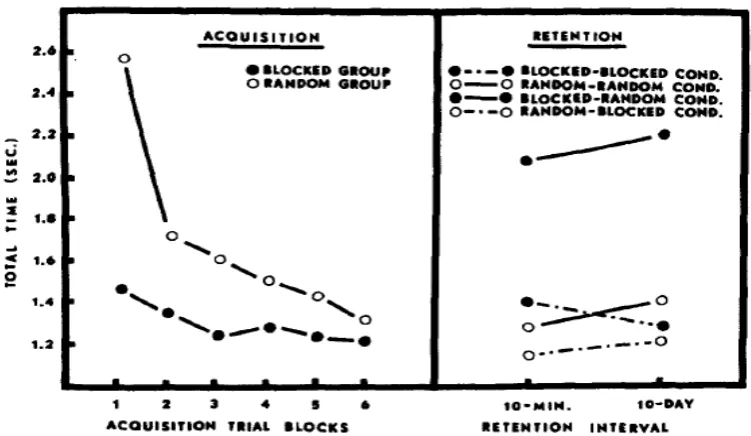
attention (adapted from Abernethy, 1988, 1993)…………..….……. 11 Figure 2.2 In this figure from Shea and Morgan (1979, p. 183), total time in
seconds is presented during acquisition and retention collapsed
over sex and tasks... 17 Figure 3.1 Schematic representation of the metal barrier attached to the netball
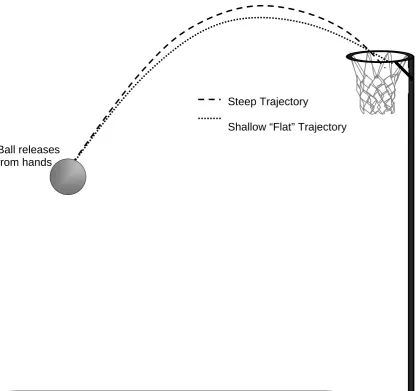
ring...….…….…………... 54 Figure 3.2 Schematic representation of steep and shallow shooting
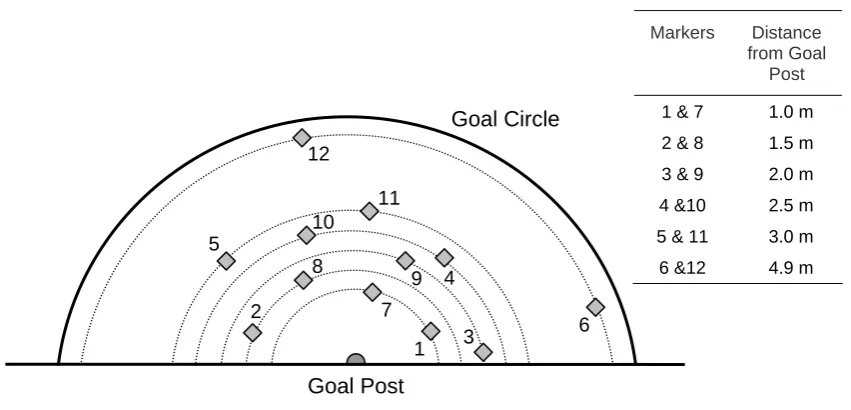
trajectories…...……... 55 Figure 3.3 Schematic representation of the position of markers for the
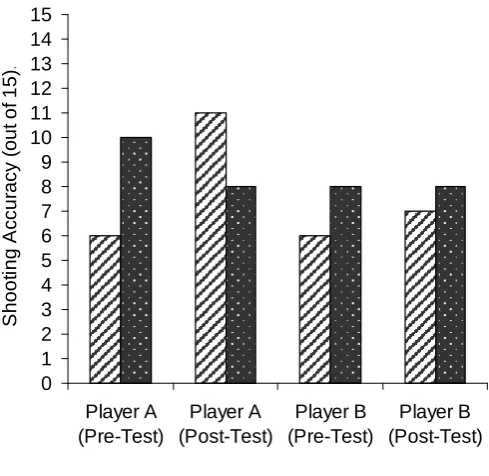
confidence test...….……. 60 Figure 3.4 Shooting accuracy from 3 m under single-task (without tones)
and dual-task (with tones) conditions...……….………….…… 63 Figure 3.5 Reaction time to tones under single task (without shooting) and
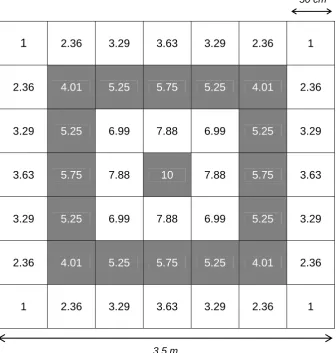
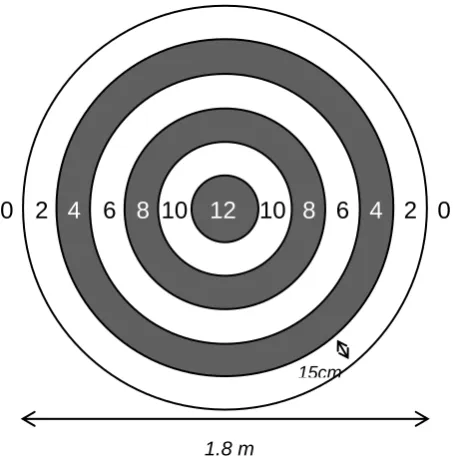
dual-task (with shooting) conditions...……….………... 64 Figure 4.1 Target and scoring values for the kicking task...……….….... 79 Figure 4.2 Target and scoring values for the handball task...……….…… 80 Figure 4.3 Scheduling of acquisition trials with probes for the PRT
measure…...…………...……….…... 84 Figure 4.4 Mean accuracy scores for the blocked and random groups on
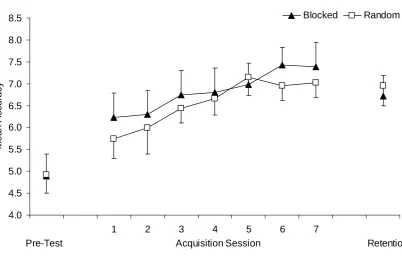
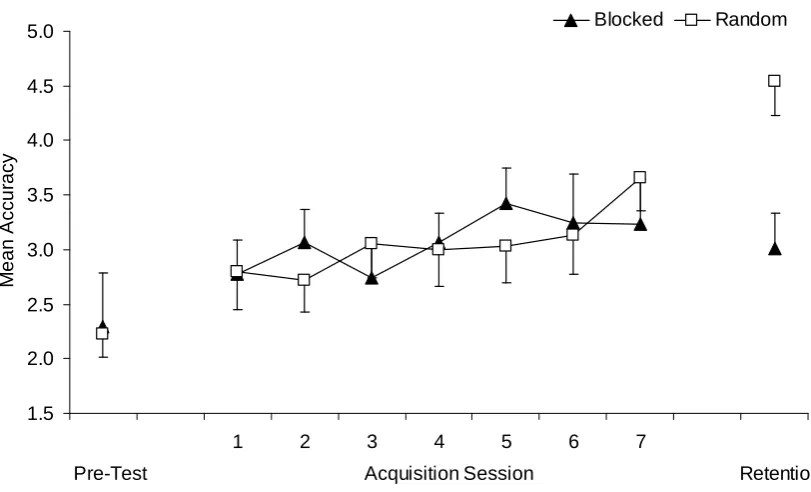
the handball task during pre-test, acquisition, and retention.
Figure 4.5 Mean accuracy scores for the blocked and random groups on the kicking task during pre-test, acquisition, and retention.
Note. Scoring is out of a possible 10 points... 88 Figure 4.6 Mean verbal reaction time for the blocked and random groups to
the PRT measure on trials preceding the handball task...….……. 90 Figure 4.7 Mean verbal reaction time for the blocked and random groups to
the PRT measure on trials preceding the kicking task...…….…. 91 Figure 4.8 Mean subjective rating for the blocked and random groups on
the mental demand, effort, frustration, and performance scales of the NASA-TLX……….…...……….………….…... 92 Figure 4.9 Mean accuracy scores for the blocked and random learners under
single- and dual-task conditions on the handball task... 94 Figure 4.10 Mean accuracy scores for the blocked and random learners under
single- and dual-task conditions on the kicking task... 94 Figure 4.11 Mean number of verbal rules for the blocked and random groups
on the handball task...…...……….………….…... 95 Figure 4.12 Mean number of verbal rules for the blocked and random groups
on the kicking task...……….………….…... 96 Figure 5.1 Mean accuracy scores for the blocked, random, and random +
secondary task groups on the forehand task during acquisition
and retention..………...…….……... 112 Figure 5.2 Mean accuracy scores for the blocked, random, and random +
secondary task groups on the backhand task during acquisition
Figure 5.3 Mean accuracy scores for the blocked, random, and random + secondary task groups on the forehand task under single and
dual-task conditions.……...…….……... 114 Figure 5.4 Mean accuracy scores for the blocked, random, and random +
secondary task groups on the backhand task under single and
dual-task conditions.……...…….……... 115 Figure 5.5 Mean reaction time to the secondary task for the blocked, random and random + secondary task groups under single- and dual-task
conditions on the combined forehand and backhand tasks... 116 Figure 5.6 Mean number of verbal rules for the blocked, random, and
random + secondary task groups on the combined forehand
and backhand tasks…... 117 Figure 6.1 A schematic representation of the time points and time phases
analysed... 130 Figure 6.2 Movement preparation times for blocked and random learners
on the handball task...…... 131 Figure 6.3 Movement execution times for the blocked and random learners
on the handball task...…... 132 Figure 6.4 Movement preparation times for blocked and random learners
on the kicking task...…... 132 Figure 6.5 Movement execution times for the blocked and random learners
on the kicking task...…... 133 Figure 6.6 A schematic representation of the timeline of events during
Figure 6.7 Processes for blocked and random learners in on experimental
trial based on the reconstruction view of random practice... 138 Figure 6.8 Processes for blocked and random learners in one experimental
trial based on the implicit learning hypothesis for random
practice... 139 Figure 7.1 Flowchart displaying a summary of the procedure………... 146 Figure 7.2 Participants’ putting accuracy during the acquisition phase…... 155 Figure 7.3 Participants’ performance on the two retention tests and
LIST OF TABLES
Table 3.1 Players’ generic verbal reports from the pre- and post-tests..………... 65 Table 3.2 Players’ episodic verbal reports from the pre- and post-tests.……….. 65 Table 3.3 Players’ ratings of confidence (out of a score of five)...…………... 66 Table 3.4 Shooting accuracy in the confidence test (out of 10 shots).…...…... 67 Table 7.1 Stimulus words included in Version 1 of the movement Stroop
task with information about word length (‘length’), frequency of use in the English language (‘frequency’), and orthographic
neighbourhood size (‘ortho. size’)... 150 Table 7.2 Stimulus words included in Version 2 of the movement Stroop
task with information about word length (‘length’), frequency of use in the English language (‘frequency’), and orthographic
neighbourhood size (‘ortho. size’)... 150 Table 7.3 Response latency (in ms) for the colour naming Stroop task... 153 Table 7.4 Participants’ scores on the State Anxiety Scale at Time 1
(following the acquisition phase) and Time 2 (while under the
influence of the stress manipulation)... 154 Table 7.5 Interferences indices (in ms) for the movement Stroop task... 157 Table 7.6 Stimulus words included in the swimming word Stroop task
with information about word length (‘length’), frequency of use in the English language (‘frequency’), and orthographic
Table 7.8 Response latency (in ms) for the swimming word Stroop task... 167 Table 7.9 Response latency (in ms) for the swimming pictorial
Stroop task... 168 Table 8.1 Summary of practical recommendations for constructing practice
LIST OF APPENDICES
Appendix A: Information statement for the study in Chapter 3 ... 217
Appendix B: Participant consent form for the study in Chapter 3 ... 218
Appendix C: Demographic and previous experience questions for the study in Chapter 3 ... 219
Appendix D: Information statement for the study in Chapter 4 ... 220
Appendix E: Participant consent form for the study in Chapter 4 ... 222
Appendix F: Demographic and previous experience questions for the study in Chapter 4 ... 224
Appendix G: Self-report cognitive effort questions for the study in Chapter 4 ... 225
Appendix H: Information statement for the study in Chapter 5 ... 226
Appendix I: Participant consent form for the study in Chapter 5 ... 229
Appendix J: Demographic and previous experience questions for the study in Chapter 5 ... 231
Appendix K: Information statement for Experiment 1 (Chapter 7) ... 232
Appendix L: Participant consent form for Experiment 1 (Chapter 7) ... 233
Appendix M: STAI-Form Y ... 234
Appendix N: Information statement for Experiment 2 (Chapter 7) ... 235
CHAPTER 1 INTRODUCTION
Motor learning has been described as a problem-solving process in which the goal of an action represents a problem and the development of an appropriate
movement pattern represents the solution (Bernstein, 1996; Guadagnoli & Lee, 2004). Skill acquisition researchers are interested in understanding which practice variables serve to optimise this process and consequently to understand the mechanisms that subserve these variables. One concern for researchers and practitioners is to consider practice conditions in terms of the cognitive effort evoked. Cognitive effort refers to the “attention-demanding” characteristics of mental processes that are utilised when performing a task (Tyler, Hertel, McCallum, & Ellis, 1979). This thesis examines the notion of cognitive effort, specifically as it relates to two practice approaches that have conflicting implications for the demand on attention during motor skill learning: the scheduling of practice conditions (blocked and random practice) and the accrual of task-relevant knowledge during practice (implicit and explicit motor learning).
Research evidence from studies of blocked and random practice typically suggests that cognitive effort is a functional characteristic of learning, but research evidence from implicit and explicit motor learning implies that minimising cognitive effort during learning can be beneficial.
between the two research domains to enable effective application. It also highlights the coach-science connection that will become apparent in the nature of the studies presented in this thesis. A broad overview of the two research areas will now be presented followed by the aims of the dissertation.
In random practice, learners rehearse a number of different tasks in a haphazard sequence, such that no two skills are repeated on consecutive trials. Researchers have consistently demonstrated that random practice promotes better learning than the alternative “blocked practice” in which a learner rehearses the same task repeatedly for a block of repetitions. Research has previously shown that when learners undertake random practice, their performance is less successful during
acquisition, but superior to blocked learners in tests of retention (see Brady, 1998; Lee & Simon, 2004; Magill & Hall, 1990 for reviews). This phenomenon has been termed the “contextual interference effect” (Battig, 1966).
“cognitive effort”) provoked by random practice and diminished processing resulting from a blocked schedule.
Implicit motor learning is based on the alternative premise that motor skill learning can occur, and can be effective, without an early dependence on effortful processing (Masters & Maxwell, 2004). Implicit motor learning involves practice in which the environment is structured to minimise the amount of conscious, rule-based information that is processed by the learner. In implicit motor learning, the performer does not acquire conscious mechanical rules for the skill that is practised. The key benefit of this type of practice is that it minimises the likelihood that performers will consciously focus on the mechanical rules when they experience anxiety or
performance pressure (and it has therefore been proposed as a method for minimising the occurrence of the colloquially termed problem “paralysis-by-analysis”).
One consideration in drawing together the contextual interference and implicit motor learning research areas is how these concepts can be incorporated into the daily training environment. If implicit motor learning is of benefit to expert performers who have previously accumulated a large amount of explicit instruction, then the
Aims of the Dissertation General Aims
The thesis aims to extend the existing motor learning research by investigating the paradox between the cognitive effort accounts of contextual interference and implicit motor learning. Furthermore, the thesis aims to provide recommendations for practitioners in the field, informed by the findings presented in this dissertation and existing motor learning research.
Specific Aims
1. To investigate whether implicit motor learning is beneficial to performers who have previously accumulated a large amount of explicit knowledge.
2. To apply a number of measures typically employed in studies of implicit motor learning as a means of assessing cognitive effort during low and high
contextual interference practice.
3. To test whether the addition of a concurrent cognitively demanding secondary task to random practice results in learning outcomes that are similar to
those experienced by random learners who do not perform a secondary task.
4. To investigate alternative measures of cognitive effort and implicit/explicit processing.
Chapter Organisation
effort. The scheduling of practice conditions (contextual interference) and the accrual of task-relevant knowledge during practice (implicit and explicit motor learning) are considered from the perspective of cognitive effort.
Chapters 3-7 provide the details of five independent, but interrelated, studies that were designed to address the general and specific aims outlined earlier in the thesis. In Chapter 3, an investigation is presented into the use of implicit learning to adapt technique in expert performers who have previously accumulated a large amount of explicit knowledge. Implicit motor learning has been widely investigated within cohorts of novice performers (e.g., Masters, 1992; Maxwell, Masters, & Eves, 2003; Liao & Masters, 2001), but researchers have yet to investigate the application of implicit learning to highly skilled performers. This chapter details a study aimed at addressing this limitation and also highlights the challenges concerned with applying implicit motor learning to an elite training environment. The suggestion is made that it is prudent to consider what other methods of implicit learning might bring about beneficial learning outcomes in skilled athletes.
In Chapter 4, the details of a study are provided which aimed to investigate the paradox at the centre of the thesis, by measuring cognitive effort and working
imposing implicit learning in a high performance sport setting (thus overcoming the applied challenges highlighted in Chapter 3). A number of limitations regarding the study are outlined, which imply a need to further investigate whether random practice shares characteristics with implicit learning.
The study presented in Chapter 5 aimed to address the limitations of the Chapter 4 study and further investigate the proposition that the benefits of random
practice are subserved by similar processes to those which underlie implicit motor
learning. Specifically, in Chapter 5, the details of a study are provided which tested
whether preventing elaboration and reconstruction during random practice (by
performing a concurrent cognitively demanding secondary task) would result in
learning outcomes that were similar to those experienced by random learners who did
not perform a secondary task. In this chapter, limitations with reference to the
measurement techniques are also discussed.
In Chapter 6, a post hoc analysis of a set of data collected in the Chapter 4
study is provided as a means of generating a new measure of cognitive effort. The
analysis measures the time taken to execute skill trials in blocked and random
learners. The premise of the investigation is that higher levels of cognitive effort are
likely to be associated with slower movement preparation times due to the increased
amount of processing that accompanies high cognitive effort. Conversely, lower
levels of cognitive effort are likely to be associated with faster movement
preparation times due to relatively fewer processing requirements. The data
presented does not differentiate between blocked and random learners, highlighting
the need to further investigate potential measurement techniques.
Chapter 7 presents a study investigating an alternative measure of
the use of a modified Stroop task to measure implicit/explicit processing in different cohorts of participants. The first experiment explored the use of a modified Stroop task as a measure of implicit/explicit processing during errorless and errorful learning. The experiment investigated whether words related to the task being practised (golf putting) would cause interference, and hence slower response times, in errorful
learners compared to errorless learners. In the second experiment, the modified Stroop task was explored as a measure of implicit/explicit processing in highly skilled
swimmers. It was hypothesised that swimming-related stimuli would produce slower response times than control stimuli due to the cognitive expertise developed by the highly skilled swimmers over the course of many years of skill acquisition. The data presented in the two experiments did not differentiate between implicit and explicit processing using the modified Stroop task. The chapter discusses a number of
limitations and suggests that it might be worthwhile to implement the modified Stroop test in a different cohort of participants such as sufferers of the “yips” or people who have a tendency to perform poorly under pressure.
CHAPTER 2
REVIEW OF THE LITERATURE
This literature review is divided into three sections. The first section discusses the concept of cognitive effort and provides a definition of cognitive effort that will form the basis for the thesis. The second section reviews literature concerning the contextual interference effect and relates the contextual interference effect to cognitive effort. The third section outlines research investigating implicit motor learning and highlights the theoretical underpinnings of implicit motor learning in terms of cognitive effort, the benefits to learners, the various models which create an implicit learning environment, and measurement considerations.
Cognitive Effort
intrinsic feedback; the amount of instruction and extrinsic feedback provided by a coach; and the complexity of the practice environment.
One relevant definition of cognitive effort is provided by Tyler et al. (1979, p. 608) who suggest that cognitive effort refers to, “the amount of the available
processing capacity of the limited-capacity central processor utilised in performing an information-processing task”. This definition of cognitive effort highlights the limited capacity nature of attention as well as the reliance on the central component of
working memory in tasks that are cognitively demanding.
An alternative definition of cognitive effort is provided by Lee, Swinnen, and Serrien, (1994, p. 329), in which cognitive effort is described as, “the mental work in making decisions”. In terms of motor learning, “making decisions” refers to a process that occurs when a performer focuses on errors after completing a movement attempt and decides how to correct the movement in future performances (Sherwood & Lee, 2003).5 For example, if a learner attempts to putt a golf ball and notes that the ball falls slightly short and to the left of the hole, he or she might decide to adjust the grip or stance so that the next practice attempt will, hopefully, reach the hole. This
definition of cognitive effort highlights the decision-making processes that underlie motor learning and as such is relevant to the current thesis.
Given that cognitive effort is a function of levels of attention demand and reliance on working memory resources, it is important to consider these concepts in detail. In the following paragraphs, the terms attention and working memory will be discussed and their importance in cognitive effort will be highlighted. This section will conclude with a definition of cognitive effort that will form the basis for the thesis.
5
Theories of Attention
The term attention is used widely in everyday language; however it is also a concept for which scientific literature has not yet given a clear definition. The key reason is that attention is not unitary. Instead, it refers to at least three broad concepts. First, the term is used to explain the selectivity of attention, that is, the process by which some information is processed whilst other information is ignored. Second, it relates to our state of alertness or readiness for action. Third, attention is seen as an “amount of something” or as being the limited amount of information that can be processed at a given time (Styles, 2000; Williams, Davids, & Williams, 1999). This final aspect of attention is most closely related to cognitive effort because it suggests that attention is something that has a finite capacity, of which a proportion is utilised when performing a task. The limited capacity nature of attention is described by the general capacity theory of attention (largely attributed to Kahneman, 1973).
available to allocate to other tasks and performance on each task may be effective (see Figure 2.1).
Figure 2.1. Schematic representation of the general capacity theory of attention (adapted from Abernethy, 1988, 1993). Note. While this diagram provides a useful overview of the general capacity theory of attention, skill level, arousal, and motivation of the performer are not accounted for.
The general capacity theory of attention highlights the limited capacity nature of attention. Cognitive effort arises from the level of dependence on this limited capacity system during skill execution. In considering reliance on attention during learning it is important to address the related concept of “working memory”. Working memory is a hypothetical system which supports attention control by temporary storage and online manipulation of information (Baddeley, 2000; Baddeley & Hitch, 1974).
Difficult task
Poor secondary task performance due to small
residual capacity Total attentional capacity
Good secondary task performance due to large
Working Memory
Working memory is a multi-component model which is made up of a central executive (which controls attention) and three subsidiary systems: the phonological loop (for holding speech-based information), a visuospatial sketchpad (for holding visual information), and an episodic buffer, which is capable of integrating
information from a variety of sources (Baddeley, 2000). The phonological loop is purported to be responsible for temporarily holding verbal and acoustic information (Gathercole, 1999). Specifically, the phonological loop is thought to control the following processes: acoustic storage (storage of the most recent auditory speech item in sensory form); phonological analysis and storage (analysis of the phonological structure of the to-be-remembered material); temporal order (coding of the temporal context of information); rehearsal (covert rehearsal of phonological material to be maintained for longer periods of time); retrieval (rapid, serial scanning of information to retrieve stored information); and reintegration (reconstruction of incomplete
phonological traces from stored knowledge). The visuospatial sketchpad, by contrast, is purported to hold visuospatial information, possibly by fractioning visual, spatial, and kinaesthetic information into separate components. The episodic buffer is assumed to be responsible for providing a temporary interface between the two subsidiary systems (the phonological loop and the visuospatial sketchpad) and long term memory. The central executive is assumed to control the episodic buffer and is considered to be responsible for ensuring that previously fractured information is bound into coherent chunks of usable information.
It is clear that working memory provides a complex model for how
produce demands on the limited capacity system. A comprehensive definition of cognitive effort needs to consider the concepts of attention and working memory as well as highlight the decision-making aspect of motor learning. Drawing heavily on the definitions by Tyler et al. (1979) and Lee et al. (1994) outlined previously in this chapter, the following definition incorporates the core concepts of attention and working memory as well as including the term “making decisions”, which refers to the error detection and correction processes that occur during motor learning. This definition will be used as the basis for the current thesis:
Cognitive effort refers to the amount of attention load imposed on working memory when making decisions.
In Chapter 1, the paradoxical role of cognitive effort in contextual interference and implicit motor learning was introduced. The case for cognitive effort as a
functional component of skill learning is based on the argument that learning is promoted by practice variables that result in an intense use of the limited-capacity resources of working memory (Lee et al., 1994). This argument is central to current theories that propose beneficial effects of contextual interference, but contradicts theories of implicit motor learning, which suggest beneficial outcomes from learning without the intense use of working memory resources. Research on contextual
Contextual Interference
As detailed in Chapter 1, the contextual interference effect refers to the relatively consistent finding that practicing motor tasks under a random practice schedule (in which practice trials are randomly sequenced throughout the practice session) results in impaired performance during learning, but superior performance on tests of retention and transfer (see Brady, 1998; Lee & Simon, 2004; Magill & Hall, 1990 for reviews). Essentially random practice refers to skill switching in which a performer practices two or more skills in a random or serial order, not repeating the same skill for more than one consecutive practice repetition. Blocked practice, in contrast, refers to repeating the same skill over and over again for a block of practice repetitions before switching to a different skill. For learners who practice motor tasks under a blocked practice schedule, according to the contextual interference effect, performance during learning is elevated, while retention and transfer performance are impaired.
The contextual interference effect was first considered in the verbal learning domain (Battig, 1966, 1972, 1979). As Lee and Magill (1985) noted, Battig originally described the beneficial effects of high interference learning in 1966, and only later (in 1979) coined the term “contextual interference”. Battig (1966) originally referred to contextual interference as “intratask interference”:
In the past thirty years, researchers have become interested in the contextual interference effect in the motor learning domain. The contextual interference effect was first explored in motor skill learning by Shea and Morgan (1979). Incidentally, both Shea and Morgan, and Battig, found independent support for the contextual interference effects in two different domains (verbal and motor learning) while they were working at the same institution – the University of Colorado (Lee & Magill, 1985). Since Shea and Morgan’s study of contextual interference, which bridged the gap between the verbal and motor learning domains, there has been much interest in the research topic with studies largely focusing on the theoretical underpinning of the effect and the scope of its application (Brady, 1998, 2004).
Researchers have focused mainly on two explanations for the contextual interference effect: the elaboration hypothesis (which was first suggested by Shea & Morgan, 1979) and the reconstruction hypothesis (first outlined by Lee & Magill, 1985). These two theories will now be discussed in detail together with a summary of alternative theories for the contextual interference effect, which have also received interest in the theoretical literature.
Theories of Contextual Interference
Elaboration hypothesis. Some researchers (e.g., Shea & Morgan, 1979; Shea & Zimny, 1983, 1988) proposed that higher levels of cognitive effort occur for random learners during practice because they engage in better relational and or
distinctive processing of their actions (i.e., they tend to compare and contrast the tasks that they are learning). According to this hypothesis, also referred to as the
task is practised for a set of trials, the factors associated with only that one task are held in working memory, and the learner is able to rely on one plan to execute the movement. Conversely, in random practice conditions, the learner engages in more elaborate and distinctive cognitive activity by way of both intra-task and inter-task (between-task) processing. Demands on working memory are low in blocked practice and high in random practice. As a result of the comparative processing that occurs during random practice, it is thought that random learners acquire more elaborate memory representations of the tasks that they have practised. According to this account, the diminished performance of random learners during acquisition is caused by the need to actively differentiate the movement solutions of each task.
Shea and Morgan (1979) conducted a seminal study of contextual interference in the motor learning domain. In their study, Shea and Morgan asked participants to practice three versions of a barrier knocking task in which they were required to hit a series of lights with a tennis ball. The three versions of the task differed in which barriers they were required to knock down. The total time, in seconds, between the onset of the stimulus light and the completion of the response was considered to be the overall index of performance. The blocked group practised all repetitions of one version of the task before switching to another, whereas the random group practised the three versions in a less systematic order (with the restriction of no more than two trials of a given task version to be repeated in a row). Retention performance was measured after a 10 min or 10 day delay under blocked and random sequences. Transfer performance was also measured on either a task of the same or greater
the more complex task. Figure 2.2 shows performance during acquisition and
retention. Shea and Morgan tentatively suggested that random learners were forced to use multiple processing strategies to optimise their performance during acquisition, whereas blocked learners were not required to use multiple processing strategies. This suggestion is in line with the elaboration hypothesis because it suggests that random learners are engaging in more elaborate processing during acquisition.
Figure 2.2. In this figure from Shea and Morgan (1979, p. 183), total time in seconds is presented during acquisition and retention collapsed over sex and tasks.
Further evidence for the elaboration hypothesis has been provided by studies which have recorded participants’ verbal reports following learning in either blocked or random schedules. The first studies to utilise this method in their investigations of contextual interference were by Zimny (1981) and Shea and Zimny (1988), who found support for the elaboration hypothesis. Specifically, participants who were engaged in random practice reported that they made more comparisons among tasks and used a number of different learning strategies that resulted in enhanced retention.
Wright (1991) adopted a different methodology and also found empirical support for the elaboration hypothesis in a study in which he manipulated the type of processing utilised by blocked learners during practice. Wright provided either intertask processing or intratask processing to assess whether the provision of additional information supported learning outcomes. The additional processing was established through verbalisations of task information during the intertrial interval. Participants were presented with diagrams which were used as the basis for them to describe commonalities with either the task that had just been performed (intertask processing) or commonalities with the other tasks they had performed in the
acquisition phase (intratask processing). The results revealed that additional intertask processing facilitated retention benefits for blocked learners (thus supporting the elaboration hypothesis) while additional intratask processing did not facilitate retention performance (inconsistent with an alternative theory – reconstruction hypothesis – which will be discussed later in this chapter).
blocked learners in additional intertask processing. A finding of added interest from this study was that supplementing random practice with intertask elaborations did not enhance learning, suggesting that there is a limit on the magnitude of interference that can produce beneficial outcomes.
In a recent study, Lin, Fisher, Winstein, Wu, and Gordon (2008) found further support for the elaboration hypothesis using single transcranial magnetic stimulation (TMS) pulses. TMS is a non-invasive method of studying the human brain in which a pulsed magnetic field is used to create targeted current flow in the brain. The
stimulation can temporarily excite or inhibit specific areas of the brain (Hallett, 2000). Lin et al. synchronised a TMS pulse to the intertrial interval of blocked and random practice of a motor task. In accord with the contextual interference effect, when there was no stimulation during the intertrial interval for the random group, the learning outcomes were enhanced. When stimulation was included during the intertrial interval, the learning benefits diminished. The authors interpreted this finding as supporting the elaboration hypothesis since the perturbation of information processing between random practice trials presumably prevented elaboration and diminished learning outcomes. On the contrary, perturbation between blocked practice trials did not result in enhanced learning outcomes (a finding which the authors interpreted as going against the reconstruction hypothesis – which will now be discussed in detail). Reconstruction hypothesis. The reconstruction hypothesis provides an
requirements of the other. On switching back to the initial task, they are forced to undergo a demanding reconstructive process to re-plan the way in which they will perform the task. The learner must re-plan both the relevant movement information as well as task-related information from the environment. In contrast, blocked practice does not encourage the learner to engage in reconstructive processing because the action-plan is held in working memory and remembered for each consecutive movement trial. The need for random learners to repeatedly plan the movement solution results in poorer performance during acquisition, but ultimately promotes the retention of tasks because the learner is well-practised at reconstructing the motor solution (a factor that is helpful in tests of retention).
pre-response conditions of the motor system as well as determine the desired parameters before each movement.
Evidence supporting the reconstruction hypothesis has been provided by a range of studies. For example, Lee and Weeks (1987) investigated the influence of forgetting on short-term retention of movement information. In the study, participants were required to engage in a linear positioning task in which they were asked to move a perpendicular handle to a criterion position. They were then instructed to estimate the criterion position by returning the handle to the criterion position either
immediately after movement execution or following a 20 s period of
attention-demanding activity. The results revealed that when participants were asked to respond following the delay, there was considerably less variable error than when their
responses were recorded immediately. These findings suggest that forgetting has potential benefits for the process of movement representation and provide potential support for the reconstruction hypothesis.
Further support for the reconstruction hypothesis was provided by Gabriele, Hall, and Lee (1989) in a study investigating the effects of mental imagery on random practice. In the second experiment presented in the study, the experience of
highlights the importance of cognitive processes in the contextual interference effect and argues against the position that the contextual interference effect is promoted by the processing of similar items in working memory (the elaboration hypothesis).
Cognitive effort and contextual interference. Both the elaboration and reconstruction accounts of the contextual interference effect suggest that effortful reliance on cognitive processes results in an embellished representation within
working memory of the tasks being practised and hence better learning outcomes. The elaboration hypothesis suggests that task switching during random practice places a high level of demand on working memory resources due to the inclination to compare and contrast more than one task in memory at a given moment. The reconstruction hypothesis suggests that task switching forces learners to repeatedly “dump” and then re-plan each movement solution in working memory as they alternate the allocation of their attentional resources between the different skills that they are learning (Lee & Simon, 2004). In a practical sense, the best advice on the basis of this research is to schedule practice trials so that learners are afforded many opportunities to engage in cognitively demanding processes. In a sporting context, this could be implemented by a coach directing the player to practice two (or more) distinct skills in a random order, rather than practicing one skill over and over again (e.g., players could be asked to switch between practicing a forehand and backhand in tennis, or switch between a set and a spike in volleyball).
Young, Cohen, and Husak (1993) examined how elaboration and
reconstructive processes could support retention. In the first experiment, the researchers provided computer-generated movement representations depicting a successful movement on a monitor following each trial. Four separate random practice conditions were included together with a blocked practice control condition. Three of the random conditions included movement representations while the fourth condition served as a control. The movement representations presented to each of the three experimental random conditions differed. Participants were shown movement representations about either the same-trial, the next trial, or other (a randomly determined trial). The results indicated that there were detrimental and slight beneficial effects for retention when these types of representations were provided, relative to the random control condition. The second experiment additionally examined the influence of providing movement representations during blocked practice. The findings from the second experiment indicated that different types of interpolated activities presented in the inter-trial interval facilitated retention for blocked practice conditions highlighting the importance of these processing opportunities for retention.
The findings of the Young et al. (1993) study suggest that the elaboration and reconstruction hypotheses might be considered as complementary rather than
contradictory. Specifically, Young et al. propose that the elaboration and
reconstruction hypotheses share two common characteristics. Firstly, both suggest active or effortful processing as an essential requirement for retention. The
or by the regeneration of a response solution (reconstruction). These processes are not necessitated in blocked practice. The conclusion drawn from this research is that the elaboration and reconstruction hypotheses share common characteristics that are essential for retention.
A recent study by Li and Wright (2000) provided empirical evidence for the contention that cognitive effort is associated with contextual interference effect. Poorer performance (during learning) of participants undertaking random practice was associated with higher cognitive demand compared to that of blocked learners. Li and Wright used a secondary task paradigm in which participants practised key-press sequences. The secondary task (a choice reaction-time task) was presented to participants at one of two time-points in the inter-trial interval. Overall, the results showed that random learners performed slower on the secondary task, presumably because the need to elaborate or reconstruct their key-press movements meant that they had less working memory resources to draw on for the secondary task. This research finding provides direct evidence that the beneficial effects of random practice are related to a higher degree of cognitive effort.
Further evidence for increased cognitive effort during random practice is presented by a study employing functional magnetic resonance imaging (fMRI) methods. Cross, Schmitt, and Grafton (2007) found the typical effects associated with contextual interference. Interestingly, the results showed that during the pre-response period, the random group displayed greater cognitive activity in the sensorimotor and pre-motor regions of the brain. The authors reported that these regions are associated with preparation, sequencing, and response selection of motor performance.
basis for the thesis). The “retroactive-inhibition” or “retroactive-interference” hypothesis relies on the idea that later learned patterns affect memory for earlier learned experiences (Poto, 1988; Meeuwsen, 1987). According to the retroactive-inhibition account, newly acquired and practised information impedes the retrieval and performance of previously learnt information. In contextual interference, this means that the retention performance of blocked learners might be impeded by the activity interpolated between the original learning and the retention test (i.e., the second task learned interferes with the retention performance of the first task learned) (Del Rey, Liu, & Simpson, 1994).
An alternative view is presented by Schöllhorn, Michelbrink, Beckmann, Trockel, Sechelmann, and Davids (2006), who proposed stochastic resonance as a potential mechanism for the contextual interference effect. Schöllhorn et al. argued that high contextual interference can be described as learning with many different levels and types of noise, which can amplify the learning signal via a mechanism known in physics as “stochastic resonance”6. In a practical sense, Schöllhorn et al. suggested that one noisy signal may be a fundamental target skill, such as passing or shooting in soccer, and the other noisy signal could be an additional random sequence of exercises that is intentionally added to the target skill during practice to create noise. They referred to this approach as differential training and emphasised the role of adaptive behaviours, rather than the process of repeating movements. In terms of both differential training and random practice, the athlete can rely on a broader spectrum of individual movement solutions than in traditional drill-based practice.
6
Finally, researchers have suggested that the contextual interference effect could be related to task interest over time. Specifically, random learners might find practice more interesting than blocked learners, resulting in heightened levels of motivation and in turn beneficial learning outcomes (Lee & Simon, 2004). One study that explored this proposition (Jackson, 2006) found that, task interest did indeed have a positive effect on participants’ level of performance; however this influence was not dependant on the level of contextual interference under which a participant practised. These results therefore do not support motivational basis for the contextual
interference effect. Interestingly, the suggestion that random practice is more motivational than blocked practice contradicts studies of “active learning” which propose that participants tend to prefer repeating movements (i.e., blocked practice) (Cohn, Ghahramani, & Jordan, 1996; Huang, Shadmehr, & Diedrichsen, 2008). Participants have been shown to prefer to repeat movement sequences following a skill trial in which they produced a large error and tend to avoid repeating movements following a skill trial in which they produced a movement perfectly (Huang,
Shadmehr, & Diedrichsen, 2008).
Implicit Motor Learning
unconscious, unselective, U-mode, and tacit knowledge. The processes underlying explicit learning are also known as declarative, conscious, and selective or S-mode (Hayes & Broadbent; 1988; Magill, 1998).
Theory of Implicit Motor Learning
Highly skilled athletes have an acquired ability to perform complex motor skills using automatic control mechanisms (e.g., Leavitt, 1979; Rose & Christina, 1990). Beginning with the work of Fitts and Posner (1973), motor learning theory asserts that performers progress through relatively distinct stages as they acquire a skill. At first, the task is very demanding as each individual component of the skill requires attention (referred to as the “cognitive stage”). With some practice, a learner may reach the “associative stage”, which is characterised by proceduralisation of the skill. That is, the learner is now able to chunk individual components of the task together in order to control multiple parts concurrently. Finally, with significant practice, an “autonomous stage” may be achieved where the skill can be performed automatically – with minimal attention demand.
into coordinated, integrated, or reorganised units (Cheng, 1985); and a move towards retrieval of past solutions from memory in a direct, single-step fashion (Logan, 1988). All of these characteristics highlight the benefits of automated movement control.
While the ultimate intention of motor learning is automated movement control, traditional approaches have historically focused on the first stage of Fitts and Posner’s (1973) model by augmenting explicit knowledge of the skill with rules and
instructions, of which learners are consciously aware (Masters, 1992). The logic behind these methods (which are especially popular with coaches), is that information can be provided to learners in a time-efficient manner that facilitates rapid
improvements in motor learning and movement control. Implicit motor learning is based on the alternative premise that positive learning outcomes can be achieved by minimising provision of explicit information early in the learning process and hence minimising the need to effortfully hold information in working memory. Implicit learning is generally regarded as, “… the process whereby a complex, rule-governed knowledge base is acquired largely independently of awareness of both the process and the product of the acquisition” (Reber, Walkenfeld, & Hernstadt, 1991, p. 888). Furthermore, implicit learning is also characterised by an absence of an intention to learn and by the resulting knowledge being difficult to express (Berry & Dienes, 1993).
Explicit knowledge accrues as a consequence of this hypothesis testing behaviour. Specifically, during hypothesis testing, learners produce verbal rules or knowledge of how they achieve the task, which is stored for future performance if found to be useful. If the hypothesis is not found to be useful, it is usually discarded (Allen & Reber, 1980; Hayes & Broadbent, 1988). This process is equivalent to the process of “making decisions” outlined in the definition of cognitive effort that was provided earlier in this literature review. In summary, implicit motor learning involves a
reduction in hypothesis testing behaviour during motor skill acquisition, which results in a person being unaware of the knowledge structures that they are acquiring
(Masters & Maxwell, 2004).
Benefits of Implicit Learning over Explicit Learning
Orrell, Eves, & Masters, 2006), and rugby passing (Poolton et al., 2007b). The beneficial characteristics of implicit learning will now be discussed in detail.
Less susceptible to skill breakdown under pressure. From a theoretical
standpoint, implicit learning is proposed as a method by which to avoid reinvestment (Masters, Polman, & Hammond, 1993). The concept of reinvestment is derived from “self-focus theories”, which propose that individuals have different predispositions to direct conscious attention to step-by-step control of normally automatic movements. When this occurs, under pressure for example, interference or disruption of the movements can occur (Baumeister & Showers, 1986; Beilock & Carr, 2001; Langer & Imber, 1979; Masters, 1992). When performers possess a large pool of explicit knowledge, they are more prone to the effects of reinvestment and therefore may be more likely to suffer from “choking”, which is a term used to describe suboptimal performance under pressure (Baumeister & Showers). Masters (1992) hypothesised that if explicit knowledge can be minimised through implicit learning approaches, then the performer will be less likely to consciously focus on the knowledge underlying the skill.
Reinvestment refers specifically to a trait tendency to introduce conscious control of a movement by focusing on particular components of it (Masters, 1992; Masters et al., 1993). Recently, Masters and Maxwell (2008) further developed the theory of reinvestment proposing that reinvestment can occur as a consequence of a variety of contingencies, such as fatigue, boredom, a changing environment,
equipment, or even injury. More generally, the disruption of automatic functioning as a result of competition pressure has been described as the “Bliss-Boder hypothesis” (Bliss, 1893; Boder, 1935), “deautomatization” (Deikman, 1969), and the
definition of reinvestment was provided by Masters and Maxwell (2004, p. 204) in which they described reinvestment as, “the propensity for manipulation of conscious, explicit, rules based knowledge, by working memory, to control the mechanics of one’s movements during motor output”.
Masters et al. (1993) developed a 20-item questionnaire that measures individual predispositions for reinvestment. Scores on the scale ranged from 0 to 20 and included questions such as, “I remember things that upset me or make me angry for a long time afterwards”. In one study reported by Masters et al., participants who scored highly on the Reinvestment Scale exhibited a greater tendency for motor disruption under stressful (evaluative) conditions during a golf-putting task. In a second study, high reinvestment was associated with a perceived likelihood to choke under competition pressure in squash and tennis as rated by officials who were familiar with the participants. Two further studies were conducted that also provided support for the proposition that the Reinvestment Scale does indeed assess a
personality trait characterised by a propensity towards reinvestment of controlled processing. The Scale was shown to have both internal reliability (coefficient alpha = .80) and test-retest reliability (r = 0.74). Further support for the Reinvestment Scale was also reported by Jackson, Ashford, and Norswothy (2006); Jackson and Beilock (2007); Maxwell, Masters, and Poolton (2006); Wong, Masters, Maxwell, and Abernethy (2008).
Support for the Reinvestment Scale was also found by Chell, Graydon, Crowley, and Child (2003) in an investigation of performance under stress during a wall-volley task. Participants who scored highly on the Reinvestment Scale reported an increase in somatic anxiety and a reduction in self-confidence when under
performance under high stress compared to participants who scored low on the Reinvestment Scale. The researchers interpreted these results as supporting the predicative ability of the Reinvestment Scale.
Masters, Eves, and Maxwell (2005) highlighted some limitations of the scale. The major concern raised was that the original scale does not directly examine movement, which draws into question its face validity. As a result, Masters et al. developed the Movement Specific Reinvestment Scale (MSRS) which included items such as, “I’m concerned about my style of moving”. The MSRS includes two factors. Factor 1 (Conscious Motor Processing) relates to self-awareness when moving and a high score on this factor describes individuals who worry about their style of moving and are interested in making a good impression in social situations. Factor 2
(Mechanical Reinvestment) relates to conscious monitoring of movement kinematics and individuals who score highly on this factor are likely to monitor the mechanics of their movements. The MSRS has also been used to assess the propensity for conscious monitoring in people with Parkinson’s disease (Masters, Pall, MacMahon, & Eves, 2006), in stroke patients (Orrell et al., 2006), and in elderly fallers (Wong et al., 2008).
Less attention control. Skills learned implicitly have been shown to require less on-line attention control than explicitly learned skills. Therefore, when a
motor learning process. The amount of attention control required to perform a
particular task can be measured using dual-task methodology which will be discussed in greater detail later in this literature review (see “Dual-Task Learning” under “Implicit Learning Models”).
Robust under fatigue and durable over time. Poolton et al. (2007b) and
Masters, Poolton, and Maxwell (2008) have reported that implicit motor performance is robust when the performer is physically fatigued. This work was based on the premise that implicit processes are evolutionarily older than explicit processes, which affords them more stability and resilience (Reber, 1992). Poolton et al. showed that the performance of implicit learners was not affected by the imposition of an
anaerobic test (the double Wingate Anaerobic test protocol), whereas under the same test conditions, performance of explicit learners deteriorated. Furthermore, in part two of the study, a sample of the participants was recalled after a one-year retention
period. The performance of both the implicit and explicit learners showed resilience to fatigue after this one-year hiatus. The authors interpreted the resilience of the explicit learners as being a result of forgetting (i.e., over the one-year break there was
deterioration in explicit knowledge, but not motor performance, indicative of implicit control).
allowing better use of resources depleted by fatigue. These findings together with the findings of the Poolton et al. (2007b) study have obvious applied benefits for sports performance. They suggest that implicit learning might be beneficial for sports in which skills are required to be performed under either aerobic or anaerobic fatigue.
Implicit Motor Learning Models
Researchers have developed a range of methods that promote implicit processing during acquisition of a cognitive task. In a seminal study of implicit learning by Reber (1967), participants acquired a simple set of rules underlying an artificial grammar by memorising meaningless letter strings. After participants had memorised the letter strings, they were informed that the strings followed the rules of a grammar. They were then asked to classify novel strings as either being
grammatically correct (following the underlying rules) or not. The results showed that participants were able to classify the letter strings at greater than chance levels; however they were unable to explicate the rules underlying the grammar. This study showed implicit learning in the cognitive domain, and more recently implicit learning has been applied to the learning of motor skills.
It is interesting to note that the implicit learning literature approximately parallels the historical timeline of the contextual interference literature with respect to its translation from the verbal to the motor learning domain. Early work in the
1970s. Shea and Morgan (1979) applied contextual interference to the motor learning domain and Pew (1974) applied implicit learning to the motor learning domain.
In the early work of Pew (1974), participants were asked to complete a waveform tracking task on an oscilloscope using a joystick. The waveform contained an underlying rule-based structure in which the middle third of the waveform did not vary from trial to trial, while the first and last third of the pattern was variable. Following learning, participants were able to complete the middle section with fewer movement errors than the first and last phase. Importantly, participants were unable to verbally report any knowledge regarding the invariant characteristics of the middle section of the waveform. This model showed that participants were able to effectively learn a movement pattern without concurrent acquisition of the knowledge underlying that movement. Recent work, however, has called these findings into question
(Chambaron, Ginhac, Ferrel-Chapus, & Perruchet, 2006).
marginally perceptible thresholds of awareness (subliminal learning: Masters, Maxwell, & Eves, 2009).
Reducing the amount of traditional instruction. Green and Flowers (1991) investigated the result of either providing or not providing participants with direct instructions for how to perform a computer-based catching skill. Participants who were provided with traditional instructions made significantly more errors than the uninstructed group. Green and Flowers interpreted these findings being as the result of additional cognitive load experienced by the instructed group. Specifically, the
instructions imposed on the explicit learning group required them to rehearse and remember the rules. This interfered with the motor control of the task.
Dual-task learning. Masters (1992) was the first to apply implicit motor learning to a sport skill. The model adopted in this study was dual-task learning. Dual-task learning involves loading working memory with a demanding secondary Dual-task to minimise the opportunity for learners to process information relating to skill
execution. There are a number of studies which provide evidence of implicit learning under conditions of secondary task load (Bright & Freedman, 1998; Hardy et al., 1996; MacMahon & Masters, 2002; Masters, 1992; Maxwell et al., 2000).
support the prediction that the group who learned with the concurrent secondary task were less likely to suffer movement failure under pressure.
The findings of this study were later replicated by Hardy et al. (1996) who additionally investigated whether the improvements in the stress conditions observed by Masters (1992) were due to a release from the secondary task load. Hardy et al. replicated and extended Masters’ study by including an additional implicit learning group which was asked to carry out the secondary task (articulatory suppression) during both the learning and the stress trials. The study by Hardy et al. revealed that both of the implicit learning groups continued to improve their performance under stress, whereas the explicit learning group did not. This study provided evidence discounting the contention that improvements in the implicit learning group in the stress conditions in Masters’ study were due to release from the secondary task load, providing further evidence for the implicit learning outcomes of dual-task practice.