Symmetric States and their Structure:
Improved Analysis of CubeHash
Niels Ferguson, Stefan Lucks, and Kerry A. McKay⋆
1
Microsoft Corp.,[email protected] 2
Bauhaus-Universit¨at Weimar,[email protected] 3
George Washington University,[email protected]
Abstract. This paper provides three improvements over previous work on analyzing CubeHash, based on its classes of symmetric states: (1) We present a detailed analysis of the hierarchy of symmetry classes. (2) We point out some flaws in previously claimed attacks which tried to exploit the symmetry classes. (3) We present and analyze new multicollision and preimage attacks. For the default parameter setting of CubeHash, namely for a message block size of b= 32, the new attacks are slightly faster than 2384
operations. If one increases the size of a message block by a single byte tob= 33, our multicollision and preimage attacks become much faster – they only require about 2256
operations. This demonstrates how sensitive the security of CubeHash is, depending on minor changes of the tunable security parameterb.
Keywords:CubeHash, preimage, multicollision, SHA-3
1
Introduction
The CubeHash family of hash functions [1] is a round-2 candidate for the SHA-3 algorithm. CubeHashr/b−
h depends on three parameters r, b, and h and produces h-bit hash values using r rounds per message block;b is the size of a message block (in bytes). Typically h∈ {224,256,384,512},b ∈ {1, . . . ,128}, and
r ∈ {1,2,3, . . .}. As mentioned by the author of CubeHash [1], and later studied in some detail by other researchers [2], there exist certain symmetries through the round function. Once the state is in a class of symmetric states, it suffices to choose the all-zero message block to preserve the symmetry.
Since the original submission with its parameter recommendation has been criticized as being too slow, its author later tweaked CubeHash, proposing a variant for normal operations for users not concerned with attacks using 2384
operations. The only difference to the conservative but very slow variant for formal operations is the choice of the parameterb: the formal case requiresb= 1, while the normal choice isb= 32 and “aimed at sensible users” [3].
1.1 Our Contributions
In this paper, we refine the results from [2]. Our main results are the following.
(1) We provide a precise analysis of the complete hierarchy of symmetry classes in CubeHash.
(2) We have a closer look at two attacks from [2] to exploit the symmetry classes. As it turns out, the claimed attack complexities from [2] are too optimistic.
(3) We describe new attacks and analyze their complexities:
• Multicollision and preimage attacks for the CubeHash with b = 32. The attacks are slightly faster than the 2384 operations claimed in [3] (the multicollision attack takes time 2381.2, the preimage attack takes time 2283.7).
• Multicollision and preimage attacks for CubeHash withb= 33, which are a lot faster than the claimed 2384
operations (generating a k-collision takes time ⌈log2(k)⌉ ×2256
, finding a preimage takes time 3×2256
).
The number r of rounds is irrelevant for our attacks. The hierarchy of symmetry classes doesn’t depend on the output size h. Neither do our multicollision and preimage attacks – though for small h, such as
h∈ {224,256}, our attacks are not always an improvement over the generic standard attacks.
1.2 CubeHash
All versions of CubeHash have a 128-byte state, represented as 32 32-bit words. These words are denoted byx00000 tox11111 as the first to last words, respectively. The hash function can be viewed as the following three steps: initialization, message processing, and finalization. These three steps are based on the following round function.
Round Function The round function is an ARX (addition, rotation, xor) function, where addition is performed modulo 232. Each round consists of 10 steps:
1. for each (j, k, l, m),x1jklm =x0jklm⊞x1jklm 2. for each (j, k, l, m),x0jklm =x0jklm≪7 3. for each (k, l, m), swapx00klm withx01klm 4. for each (j, k, l, m),x0jklm =x0jklm⊕x1jklm 5. for each (j, k, m), swapx1jk0m withx1jk1m 6. for each (j, k, l, m),x1jklm =x1jklm⊞x0jklm 7. for each (j, k, l, m),x0jklm =x0jklm≪11 8. for each (j, l, m), swapx0j0lm withx0j1lm 9. for each (j, k, l, m),x0jklm =x0jklm⊕x1jklm 10. for each (j, k, l), swapx1jkl0 withx1jkl1
Observe that the round function is a permutation over the set of states, and one can run it backwards as efficiently as one can run it in forward direction.
Initialization The initial state is computed by settingx00000 = h8, x00001 =b, x00010 =r, and all other state words are 0. 10rrounds are then applied to reach the initial state. This creates a different initial value for each parameter selection. For any fixed set of parameters, we writeH0 for this initial state.
Message processing The message must be padded to a multiple ofb bytes. CubeHash first appends a 1, and then as many 0’s as necessary to ensure the message length is a multiple of 8bbits. A padded message
M consists of kblocks and is processed oneb-byte block at a time. Given the initial stateH0 and message blocks M1, M2, . . . , state Hj is reached by applying r rounds to Hj−1⊕(Mj <<(128−b)). That is, the message blockMj is exclusive-ored with thefirst bbytes of stateHj−1, before applying the round function
rtimes.
Given an initial state H0 and a message (or a message prefix) M, whose length is a multiple of the message block length, we write
H(H0, M)
for the internal state which we get by mixing in theM. As the round function is invertible, one can just as well computeH0 fromM andH(H0, M).
Finalization The finalization step occurs after all blocks have been through the message processing step. IfM is the padded message of lengthi−1 blocks, then the internal state isHi−1=H(H0, M). Finalization begins by exclusive-oring 1 into the last state word ofHi−1 (x11111=x11111⊕1) to achieve stateHi. Then 10r round functions are applied to Hi to obtain theHi+1. Finally,Hi+1 is truncated to the required hash size. I.e., the hash ofM consists of the first h
Parameter Recommendations The parameter h is defined by the SHA-3 digest length. For the first round of the SHA-3 submission, Dan Bernstein, the designer of CubeHash, proposed r= 8 and b = 1. As it turned out, CubeHash was very slow, compared to most of the other SHA-3 candidates. For the second round, he fixedr tor= 16 and proposed two variants of CubeHash with different choices forb
– b= 32 for “normal” operations,“aimed at sensible users” [3], and
– b= 1 for “formal” operations, for users“concerned with attacks using2384
operations” [3].
Note that the “normal” variant is 16 times faster than the original proposal, and its speed appears to be competitive to the speed of other SHA-3 candidates. On the other hand, the “formal” variant is twice as slow as the original submission.
1.3 Related Work
Generic attacks, i.e., attacks which model r applications of CubeHash’s round function as an arbitrary or random permutation over 1024-bit states, have already been considered in an appendix of the original CubeHash submission and, more diligently, in [2]. The core observation is that by choosing a message block the attacker can determine 8b bits of the internal state. Thus, if the other 1024−8b state bits collide, one can enforce a collision by appropriately selecting the next message blocks. Accordingly, this attack finds collisions in the 1024-bit state after trying out about√21024−8b= 2512−4b messages. Similarly, one can find preimages by a meet-in-the-middle attack by the equivalent of trying out 2×2512−4b = 2513−4b messages. The preimage attack can also be applied to find a preimage of the all-zero state. If both the old state and the current message block are zero, then the new state is zero again, i.e.,H(0,0) = 0. Once we have found a messageM0 withH(H0, M0) = 0, we actually have found an arbitrary-size multicollision, since
0 =H(H0, M0) =H(H0, M0||0) =H(H0, M0||0||0) =. . .
Symmetric properties of the round function have been mentioned in the submission document and were further studied in [2]. Symmetry occurs when properties of the input to the round function are preserved in the output. If the property is equalities between state words, there are 15 distinct symmetry classes with 67 subsets [2]. Once a state conforms to a symmetric state, the state cannot get out of the symmetry until a nonzero block is mixed in.
We stress that for every symmetry classCi, the round function is a permutation over the set of states in
Ci. Thus, mixing in an all-zero block, including the application ofrrounds, doesn’t change the symmetry class the state is in, i.e., by mixing in an all-zero block, one can neither get into a symmetry class, nor leave it.
Note that symmetry is not present in the initial state, and symmetry in the message processing is destroyed in finalization.
For completeness, the symmetry classes are shown in table 1.
Several collisions and preimage attacks have been demonstrated on variants of CubeHash [4] [5] [6] [7] [8] [9] [10]. A linearization framework[11] and statistical approach[12] have also been applied.
2
Symmetry Hierarchy
The 15 symmetry classes presented in [2] are very useful in analyzing CubeHash. We add further structure to these symmetry classes by placing them into a hierarchy that describes how classes relate to each other. In particular, we provide further structure to describe the intersection of symmetry classes.
Let S be the state as an array of 32-bit words. Let V ={0,1}4, the space of all 4-bit vectors, and D be a linear subspace of V. Then there is a symmetry in CubeHash where a state that has ∀d ∈ D and ∀i∈(0, ..,15), S[i] =S[i⊕d] andS[16 +i] =S[16 + (i⊕d)].
ForD=V, this yields a symmetry that has 2 free words,AandB, and 30 words fixed by the values of
A and B. The corresponding symmetry class can only take on 22×32 = 264 different values. Following the notation of [2], that symmetry class has the form shown in table 2.
C1 AABBCCDD EEFFGGHH IIJJKKLL MMNNOOPP
C2 ABABCDCD EFEFGHGH IJIJKLKL MNMNOPOP
C3 ABBACDDC EFFEGHHG IJJIKLLK MNNMOPPO
C4 ABCDABCD EFGHEFGH IJKLIJKL MNOPMNOP
C5 ABCDBADC EFGHFEHG IJKLJILK MNOPNMPO
C6 ABCDCDAB EFGHGHEF IJKLKLIJ MNOPOPMN
C7 ABCDDCBA EFGHHGFE IJKLLKJI MNOPPONM
C8 ABCDEFGH ABCDEFGH IJKLMNOP IJKLMNOP
C9 ABCDEFGH BADCFEHG IJKLMNOP JILKNMPO
C10ABCDEFGH CDABGHEF IJKLMNOP KLIJOPMN
C11ABCDEFGH DCBAHGFE IJKLMNOP LKJIPONM
C12ABCDEFGH EFGHABCD IJKLMNOP MNOPIJKL
C13ABCDEFGH FEHGBADC IJKLMNOP NMPOJILK
C14ABCDEFGH GHEFCDAB IJKLMNOP OPMNKLIJ
C15ABCDEFGH HGFEDCBA IJKLMNOP PONMLKJI
Table 1.Symmetry classes [2]
4d1 AAAAAAAA AAAAAAAA BBBBBBBB BBBBBBBB
Table 2.4-Dimensional symmetry class
Let D be a 3-dimensional linear subspace ofV. There are 15 such subspaces, each representing a symmetry that has 4 free words, and the other 28 are defined by equality relations. The corresponding symmetry classes each contain 24×32= 2128distinct values. The 15 symmetry classes, which we will call 3-d symmetry classes, that result from these subspaces are listed in table 3.
3d1: AAAAAAAA BBBBBBBB CCCCCCCC DDDDDDDD
3d2: AAAABBBB AAAABBBB CCCCDDDD CCCCDDDD
3d3: AAAABBBB BBBBAAAA CCCCDDDD DDDDCCCC
3d4: AABBBBAA AABBBBAA CCDDDDCC CCDDDDCC
3d5: AABBBBAA BBAAAABB CCDDDDCC DDCCCCDD
3d6: ABBAABBA ABBAABBA CDDCCDDC CDDCCDDC
3d7: ABBAABBA BAABBAAB CDDCCDDC DCCDDCCD
3d8: ABBABAAB ABBABAAB CDDCDCCD CDDCDCCD
3d9: ABBABAAB BAABABBA CDDCDCCD DCCDCDDC
3d10: AABBAABB AABBAABB CCDDCCDD CCDDCCDD
3d11: AABBAABB BBAABBAA CCDDCCDD DDCCDDCC
3d12: ABABABAB ABABABAB CDCDCDCD CDCDCDCD
3d13: ABABABAB BABABABA CDCDCDCD DCDCDCDC
3d14: ABABBABA ABABBABA CDCDDCDC CDCDDCDC
3d15: ABABBABA BABAABAB CDCDDCDC DCDCCDCD
Table 3.3-dimensional symmetry classes
Let D be a 2-dimensional linear subspace of V. There are 35 distinct 2-dimensional subspaces, yielding symmetries with 8 free words and 24 words defined by relations. The complete list of 2-dimentsional symmetry classes appears in table 4. These classes each have 28×32
= 2256
possible values.
2d1: AAAABBBB CCCCDDDD EEEEFFFF GGGGHHHH
2d2: AABBAABB CCDDCCDD EEFFEEFF GGHHGGHH
2d3: AABBBBAA CCDDDDCC EEFFFFEE GGHHHHGG
2d4: ABBAABBA CDDCCDDC EFFEEFFE GHHGGHHG
2d5: ABBABAAB CDDCDCCD EFFEFEEF GHHGHGGH
2d6: ABABABAB CDCDCDCD EFEFEFEF GHGHGHGH
2d7: ABABBABA CDCDDCDC EFEFFEFE GHGHHGHG
2d8: AABBCCDD AABBCCDD EEFFGGHH EEFFGGHH
2d9: AABBCCDD BBAADDCC EEFFGGHH FFEEHHGG
2d10: AABBCCDD CCDDAABB EEFFGGHH GGHHEEFF
2d11: AABBCCDD DDCCBBAA EEFFGGHH HHGGFFEE
2d12: ABABCDCD ABABCDCD EFEFGHGH EFEFGHGH
2d13: ABABCDCD BABADCDC EFEFGHGH FEFEHGHG
2d14: ABABCDCD CDCDABAB EFEFGHGH GHGHEFEF
2d15: ABABCDCD DCDCBABA EFEFGHGH HGHGFEFE
2d16: ABBACDDC ABBACDDC EFFEGHHG EFFEGHHG
2d17: ABBACDDC BAABDCCD EFFEGHHG FEEFHGGH
2d18: ABBACDDC CDDCABBA EFFEGHHG GHHGEFFE
2d19: ABBACDDC DCCDBAAB EFFEGHHG HGGHFEEF
2d20: ABCDABCD ABCDABCD EFGHEFGH EFGHEFGH
2d21: ABCDABCD BADCBADC EFGHEFGH FEHGFEHG
2d22: ABCDABCD CDABCDAB EFGHEFGH GHEFGHEF
2d23: ABCDABCD DCBADCBA EFGHEFGH HGFEHGFE
2d24: ABCDBADC ABCDBADC EFGHFEHG EFGHFEHG
2d25: ABCDBADC BADCABCD EFGHFEHG FEHGEFGH
2d26: ABCDBADC CDABDCBA EFGHFEHG GHEFHGFE
2d27: ABCDBADC DCBACDAB EFGHFEHG HGFEGHEF
2d28: ABCDCDAB ABCDCDAB EFGHGHEF EFGHGHEF
2d29: ABCDCDAB BADCDCBA EFGHGHEF FEHGHGFE
2d30: ABCDCDAB CDABABCD EFGHGHEF GHEFEFGH
2d31: ABCDCDAB DCBABADC EFGHGHEF HGFEFEHG
2d32: ABCDDCBA ABCDDCBA EFGHHGFE EFGHHGFE
2d33: ABCDDCBA BADCCDAB EFGHHGFE FEHGGHEF
2d34: ABCDDCBA CDABBADC EFGHHGFE GHEFFEHG
2d35: ABCDDCBA DCBAABCD EFGHHGFE HGFEEFGH
Table 4.2-dimensional symmetry classes
Finally, there is a symmetry class where all words are the same. In total, this yields 67 distinct symmetry classes, corresponding to the 67 subsets calculated in [2]. The intersection between two symmetry classes can be represented as the linear span of the union of their subspaces.
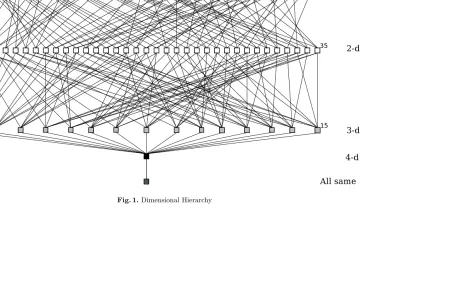
Figure 1 depicts the symmetry hierarchy. Let us start by considering it from the subspace perspective. Each 1-dimensional symmetry is part of 7 2-dimensional symmetries, and each 2-dimensional symmetry con-tains 3 1-dimensional symmetries. Each 2-dimensional symmetry is also part of 3 3-dimensional symmetries and each 3-dimensional symmetry contains 7 2-dimensional symmetries. All 15 3-dimensional symmetries are part of the single 4-dimensional symmetry. To view the hierarchy from the state perspective, simply switch the relations (i.e. a 1-d symmetry class contains 3 2-d symmetry classes).
If one selects one symmetry from each level in the graph such that the higher-dimensional symmetries always contain the lower dimensional one, then one can find a total of 15×7×3 = 315 different symmetry hierarchies.
2.1 Traversing the Hierarchy
Now consider the symmetry class resulting from each symmetry, where a x-dimensional symmetry class corresponds to anx-dimensional symmetry. Let an x-dimensional state refer to a state that has the same number of free words, but is not necessarily symmetric. It is easy to see that the intersection of 1-dimensional symmetric states leads to 2-dimensional symmetric states, but since there is no way to leave a symmetric state, it seems difficult to traverse the hierarchy from higher dimensions to lower ones in such a way that the higher dimension state is not part of a symmetry class in the higher dimension. For example, it is not clear how to go from a 2-dimensional state to a 1-dimensional state such that the 1-dimensional state is symmetric, but the 2-dimensional state is not in a 2-dimensional symmetry class. We show that there is a way using portions of the state. In particular, if the state is divided into halves or quarters, where each half or quarter belongs to a higher dimension symmetry class, a lower dimension symmetry may be achieved if the combination of higher-level symmetry class patterns allows it. Thus, the hierarchy can be traversed from 1 dimension to 4 dimensions through intersection, and from 3 dimensions to 1 dimension in this manner.
A 2-dimensional symmetric state can be reached from 3-dimensional halves that combined do not belong to a 3-dimensional symmetry class in the following way:
1. Set the left half of the state such that it conforms to the left half of a 3-dimensional symmetry class, 3di,
i∈1. . .15.
2. Set the right half of the state such that it conforms to the right half of a 3-dimensional symmetry class, 3dj,j∈1. . .15,i6=j.
All 35 2-dimensional symmetry classes can be reached in this manner. If a particular 2-dimensional state is needed, there are further restrictions on the classes the halves belong to. In order to reach a class 2di, the 3-dimensional halves must belong to 3dj and 3dk such that 2di contains 3dj and 3dk.
1-dimensional symmetric states can be generated in a similar way using 2-dimensional symmetric class halves. However, not all combinations yield a symmetric state. The left and right halves of the state should both belong to classes that a 1-dimensional class is a part of in the hierarchy. For example, C1 contains 2d1,2d2,2d3,2d8,2d9,2d10,and 2d11. If each half is set to a pattern found in these symmetric classes, the state will belong toC1.
It is convenient to divide the state into left and right halves, but not necessary. It may also be divided into 32-byte quarters, where each quarter is from a symmetric state. We call these quarter-symmetries. There are many duplicate state forms when only quarters are considered. For example, 3d2and 3d3 both have the same pattern when only 8 words are viewed. Then we say 3d2to mean either class, since they are equivalent in this context. Thus we only consider one class for these duplicates, as a representative.
Fig. 1.Dimensional Hierarchy
quarter-symmetries. That is, states that have equalities that cross the quarter boundary cannot be reached this way – that traversal must occur with half-symmetries.
3
Claimed Attacks, based on Symmetry Classes
The authors of [2] claim two attacks which take advantage of symmetry in the compression function. We argue that for both of these attacks, the analysis is much to optimistic.
3.1 A Claimed Preimage Attack
The first is a preimage attack that arrives in a symmetric state,S∈Ci, by going forward with 2500 message blocks. It arrives at another symmetric state,T ∈Cj, by computing backwards from finalization.
The authors of [2] claim that if Ci andCj are different symmetry classes one just needs to bridge these by mixing in null messages to eventually fall into the intersection symmetry classCi∩Cj. This reasoning is flawed, however: Mixing in a null message is a permutation over any symmetry classes. Thus, if one is in a stateCi and mixes in the null message, one can be sure to stay in Ci. But if one is not inCj (i.e., not in
Ci∩Cj), one can never get intoCj (orCi∩Cj) that way. Similarly for going backward fromCj toCi∩Cj. Thus, the preimage attack can only work ifCi =Cj, I.e., if S andT are in the same symmetry class.
Even if Ci =Cj, the claimed complexity of 2×2256 steps for finding a way from S to T by mixing in zero-messages is much too optimistic, since mixing in zero-messages is a permutation. Define the “successor” of a stateX ∈ Ci as the new state Y which one gets by mixing in a zero message block. If we view the elements of Ci as the vertices in a directed graph, we draw an edge from X to Y. Since mixing in a zero message is a permutation, this graph will consist of some disjoint cycles. Going fromS ∈Ci toT ∈Ci by mixing in zero-messages is possible if and only ifX andY are on the same cycle. IfS andT are not on the same cycle inCi, the attack will fail. If they are on the same cycle, the attack will succeed eventually. Thus, this part of the attack will take close to 2512steps, instead of the claimed 2
×2256. Thus, even if the attack doesn’t fail, the message length will be close tob×2512 bytes.
3.2 A Claimed Collision Attack
The second attack is a collision attack on a weakened version of CubeHash, where the initial state is sym-metric. (Note that the CubeHash specification doesn’t allow a symmetric initial state.) In that initial state, all words inx0jklm are equal and all words inx1jklm are equal, yielding a state of the form:
AAAAAAAA AAAAAAAA BBBBBBBB BBBBBBBB
Null messages can be used to cycle through all such symmetric states. With a b233-byte zero message, the authors of [2] expect a collision with probability 0.63. This seems to assume that the round function behaves like a random function over the set of states in the symmetry class. The assumption is false, and the claimed complexity is too optimistic, again, since the round function (and mixing in zero-messages) is a permutation. We expect that one would need a message close tob×264
zero-bytes.
4
Exploiting the Degrees of Freedom Available
The core problem for the above attacks from [2] is that the attacker is only allowed to apply a single fixed permutation to a message stateX ∈Ci, which is defined by mixing in an all-zero message block. Note that [2] was writtenbefore CubeHash was tweaked for improved performance. At that point in time, the default wasb = 1, and in this case, the only message block one could mix in while maintaining a given symmetry class was the zero-byte.
– For b = 32, the defined default setting of CubeHash “normal” operations, we restrict ourselves to the symmetry classesC1, . . . , C7.
– If we consider a slightly weaker variant of CubeHash, where the adversary can control one additional byte, i.e.,b= 33, then our approach works for all symmetry classesC1, . . . , C15.
Note that the first eight words (i.e., the first 32 bytes) of a state inC1, . . . , C7 are independent from any of the remaining 24 words. Also note that the state defines a certain pattern (e.g., “ABBACDDC” forCi), but apart from that pattern, there are no restrictions on the state. If we are in such a state and mix in any 8-word message block which just follows that pattern, we will remain in that state. Of course, the all-zero message block follows such a pattern, but there are 2128
−1 nonzero message blocks which also follow the required pattern.
In the case of symmetry classesC8, . . . , C15, the first eight state words are identical to the next eight state words. Thus, we need to control more than the first eight state words. But ifb= 33, we can arbitrarily choose one byte in the ninth state word. Thus, apart from the all-zero message block, there are 28
−1 = 255 nonzero message blocks (with 31 zero-bytes and two identical nonzero bytes), to choose from.
5
Our attacks
In this section, we describe our attacks, which are mainly based on the above observations. A vital part for the attack is, however, to get into a symmetric state. Since the internal state H0 of CubeHash is not symmetric, any attack based on exploiting these symmetries must first find a messageM such thatH(H0, M) is symmetric:
→ Generate random message blocks as message M1x of lengthkbbytes (for some integerk) until one can find a b-byte messageM1y such that
H(H0,(M1x||M1y)) =H1
is symmetric.
First, considerb= 33. If we don’t care about which symmetry class we are in, then we statistically expect to succeed after trying out about 2256/8 = 2253 differentM1x. Our chances to reach either of the statesC1,
C2, . . . ,C7 with that amount of work is negligible; we rather expect to reach any of the states in classesCi fori∈ {8, . . . ,15}. If we want to get into a fixed classCi∈ {C8, . . . , C15}, we need about 2256attempts.
Now consider the caseb = 32. If we are trying to reach a fixed state Ci in C1, . . . , C7, then we expect to succeed after 2384 attempts. If we don’t care which state in C
1, . . . , C7 we will get, we need about 2384/7
≈2381.2 attempts.
Of course, a smaller b makes it even harder to reach a symmetric state. [2] did consider the extreme case b = 1, which has been the recommended value at the time [2] has been written. In that case, all symmetry classes are equally hard to get into, and if we don’t care which class we will get into, we have to try 2504/15
≈2500.1 message blocksM1,x.
Note that the same approach works backward: Instead of starting with an arbitrary initial H0 and searching a messageM1x||M1y, such that the stateH1=H(H0, M1x||M1y) is symmetric, we can start with a final stateH3 and search for some messageM such that the stateH2withH3=H(H2, M) is symmetric. The amount of work depends on the symmetry class we are targeting in the exactly same way as it does for the forward direction.
5.1 Multi-Collisions on CubeHash
Note that any of the symmetry classesC1, . . . , C15 contains 2512 states. Thus, once our state is symmetric, we now can find different messages with colliding internal states by trying out about√2512= 2256 messages. (Of course, all message blocks of all the messages we consider must follow the pattern determined by the
symmetry class, such as “ABBACDDC” in the case ofC3.) This allows us to mount a Joux-style multicollision attack [13]: finding ak-collision takes the time sequentially computing⌈log2(k)⌉collisions, each in time 2256
. Forb= 32, the complexity to find ak-collision, including the time for initially getting into a symmetric state is
2381.2+⌈log2(k)⌉ ×2256,
which is dominated by 2381.2, i.e., by the time for getting into a symmetric state, for any imaginablek. Forb= 33, findingk-collisions is much faster. It can be done in time
2253
+⌈log2(k)⌉ ×2256
≈ ⌈log2(k)⌉ ×2256
.
Thus, in this case the complexity is dominated by the Joux-multicollision part.
5.2 Preimages for CubeHash
Consider a hash valueZ of sizeh(e.g.,h= 512). WriteH0for the initial state. The attacker’s goal is to find a messageM, such that CubeHash(M)=Z. The basic structure for the attack is the following:
1. ExtendZ by (1024−h) bit to a full 1024-bit state and run the finalization backwards to get a stateH4. 2. Search for a message prefixM1 and a H1=H(H0, M1) in a symmetry classCi.
3. Search for a postfixM4 andH3 in the sameCi withH(H3, M4) =H4.
4. Apply a meet-in-the-middle approach to search two nonzero message parts M2 and M3 and a state
H2∈Ci withH(H1, M2) =H2 andH(H2, M3) =H3.
Jointly, the message parts M1, . . . , M4 form a message M = (M1 ||M2 ||M3 ||M4) with H(H0, M) = H4 and thus CubeHash(M)=Z. (Of course, the length of each ofM1,M2,M3, and M4 must be a multiple of the block length.)
The first three steps in the attack are resemble the attack from [2], except that our attacker is allowed to mix in nonzero message blocks, andH3 must be in the same symmetry class asH1. Accordingly,H2 must be in the very same symmetry class, rather than in the intersection of two different symmetry classes.
The first step of this attack is trivial. Since the size of any symmetry class is 2256, we expect the fourth step to work if we try out 2256 candidates for M
2 and the same number of candidates for M3. Thus, the fourth step requires 2×2256steps.
For the analysis of the second and the third step, we distinguish betweenb= 32 andb= 33.
First, consider b= 32. In this case, we are restricted to Ci ∈ {C1, . . . , C7}. In the second step, we don’t care which of the seven possible setsCiwe get into. Thus this part of the attack requires 2381.2units of time. But then, the second step requires 2384units of time, sinceC
i is fixed. There is a little trick to improve this:
– Repeat the second step twice, to get into two states H1 ∈ Ci and H1′ ∈ C ′
1 6= Ci. This takes time 2384
/7 + 2384
/6<2384
/3≈2382.4.
– In the third step, we succeed if H3∈Ci∪C ′
i. Thus, the third step only takes time 2383 .
The second and the third step together need time ≈ 2382.4+ 2383
≈ 2383.7. This dominates the attack complexity forb= 32.
Now considerb= 33. In the second step, we don’t care which of the 15Ci we get into, and we need to try out 2256
/8 = 2253
messages. In this case, the third step takes time 2256
, thus, the overall attack complexity is 3×2256
+ 2253
≈3×2256
. The little trick from above can reduce this a bit, but since the meet-in-the-middle part in the fourth step needs 2×2256 steps alone, we will not get
much better than 3×2256 forb= 33 and the complete preimage attack.
6
Final Remarks
Note that b = 32 is sufficient for our approach, but not necessary. If b ≤4, there seems to be no way to choose nonzero message blocks while maintaining a given state. Butb= 5 would suffice for our attacks. The symmetry classC1defines a pattern “AAB. . . ”, without any further occurrence of “A”. Thus, we can freely choose one byte in the second message word, and then ensure that the first message word is identical to the second message word. Adapting our attacks to the b= 5 case would slow the attacks down a lot, since getting into a state inC1 from a non-symmetric initial state would take time 2472.
Summary and Conclusion In the current paper, we have provided a detailed analysis of the hierarchy of symmetry classes of CubeHash. We demonstrated that certain attacks presented previously are more complex than claimed by their authors. Finally, we presented and analyzed some attacks on CubeHash on our own:
– For CubeHash withb= 32 (the default for normal operations), we presented multicollision and preimage attacks with a complexity of slightly less than 2384hash operations, and
– for CubeHash withb= 33 (slightly weaker than the default), we presented multicollision and preimage attacks with a complexity of slightly more than 2256
operations.
Since the author of CubeHash explicitly disregards attacks beyond 2384 operations for the default b = 32 (he recommends an extremely slow “formal” mode with b = 1 to ensure resistance against such extreme attacks), our attacks on CubeHash are small improvements over the best attacks known to the designer of CubeHash. What we consider remarkable is the deep drop of security if one increases the tunable security parameter just by one, fromb= 32 tob= 33. We would expect a “conservative proposal with a comfortable security margin” (as written in the revised CubeHash specification), to be less sensitive to minor changes of the tunable security parameters.
References
1. Bernstein, D.J.: Cubehash specification (2.b.1). Submission to NIST (Round 2) (2009)
2. Aumasson, J.P., Brier, E., Meier, W., Naya-Plasencia, M., Peyrin, T.: Inside the hypercube. In Boyd, C., Nieto, J.M.G., eds.: ACISP. Volume 5594 of LNCS., Springer (2009) 202–213
3. Bernstein, D.J.: Cubehash parameter tweak: 16 times faster. Available online (2009)
4. Khovratovich, D., Nikolic’, I., Weinmann, R.P.: Preimage attack on cubehash512-r/4 and cubehash512-r/8. Available online (2008)
5. Dai, W.: Collisions for cubehash1/45 and cubehash2/89. Available online (2008)
6. Brier, E., Khazaei, S., Meier, W., Peyrin, T.: Attack for cubehash-2/2 and collision for cubehash-3/64. NIST mailing list (local link) (2009)
7. Brier, E., Khazaei, S., Meier, W., Peyrin, T.: Real collisions for cubehash-4/64. NIST mailing list (local link) (2009)
8. Brier, E., Khazaei, S., Meier, W., Peyrin, T.: Real collisions for cubehash-4/48. NIST mailing list (local link) (2009)
9. Aumasson, J.P.: Collision for cubehash2/120-512. NIST mailing list (local link) (2008)
10. Brier, E., Peyrin, T.: Cryptanalysis of cubehash. In Abdalla, M., Pointcheval, D., Fouque, P.A., Vergnaud, D., eds.: ACNS. Volume 5536 of LNCS. (2009) 354–368
11. Brier, E., Khazaei, S., Meier, W., Peyrin, T.: Linearization framework for collision attacks: Application to cubehash and md6. In Matsui, M., ed.: ASIACRYPT. Volume 5912 of LNCS., Springer (2009) 560–577
12. Bloom, B., Kaminsky, A.: Single block attacks and statistical tests on cubehash. Cryptology ePrint Archive, Report 2009/407 (2009) http://eprint.iacr.org/.
13. Joux, A.: Multicollisions in iterated hash functions. application to cascaded constructions. In Franklin, M.K., ed.: CRYPTO. Volume 3152 of LNCS., Springer (2004) 306–316
A
Appendix
Symmetry class 2d quarter-symmetry classes
C1 1, 2, 3, 8(to 11)
C2 1, 6, 7, 12(to 15)
C3 1, 4, 5, 16(to 19)
C4 2, 4, 6, 20(to 23)
C5 2, 5, 7, 24(to 27)
C6 3, 5, 6, 28(to 31)
C7 3, 4, 7, 32(to 35)
Table 5.2d quarter-symmetries to symmetry classes (equivalent quarters in parentheses)
Symmetry class 3d quarter-symmetry classes
C1 1, 2(3), 4(5), 10(11)
C2 1, 2(3), 12(13), 14(15)
C3 1, 2(3), 6(7), 8(9)
C4 1, 6(7), 10(11), 12(13)
C5 1, 8(9), 10(11), 14(15)
C6 1, 4(5), 8(9), 12(13)
C7 1, 4(5), 6(7), 14(15)
2d1 1, 2(3)
2d2 1, 10(11)
2d3 1, 4(5)
2d4 1, 6(7)
2d5 1, 8(9)
2d6 1, 12(13)
2d7 1, 14(15)
![Table 1. Symmetry classes [2]](https://thumb-us.123doks.com/thumbv2/123dok_us/1872601.1243718/4.612.216.398.73.236/table-symmetry-classes.webp)