Integrated Pharmacy Research and Practice
Collaborative pharmacy practice: an update
Anandi V Law Eric K Gupta Micah Hata Karl M Hess Roger S Klotz Quang A Le
Emmanuelle Schwartzman Bik-Wai Bilvick Tai
Department of Pharmacy Practice and Administration, College of Pharmacy, Western University of Health Sciences, Pomona, CA, USA
Correspondence: Anandi V Law Department of Pharmacy Practice and Administration, College of Pharmacy, Western University of Health Sciences, 309 E Second Street, Pomona, CA 91766, USA
Tel +1 909 469 5645 Fax +1 909 469 5428 Email [email protected]
Abstract: Collaborative practice among health professionals is slowly coming of age, given the global focus on efficiency and effectiveness of care to achieve positive patient outcomes and to reduce the economic burden of fragmented care. Collaborative pharmacy practice (CPP) is accordingly evolving within different models including: disease management, medication therapy management, patient centered medical home, and accountable care organizations. Pharmacist roles in these models relate to drug therapy management and include therapy introduction, adjustment, or discontinuation, patient counseling and education, and identification, resolution, and prevention of problems leading to drug interactions and adverse reactions. Most forms of CPP occur with physicians in various settings. Collaborative practice agreements exist in many states in the US and are mentioned in the International Pharmaceutical Federation policy statement. Impetus for CPP comes from health system and economic concerns, as well as from a regulatory push. There are positive examples in community, ambulatory care, and inpatient settings that have well documented protocols, indicators of care, and measurement and reporting of clinical, economic, and patient reported outcomes; however, implementation of the practice is still not widespread. Conceptual and implementation challenges include health professional training, attitudes, confidence and comfort levels, power and communication issues, logistic barriers of time, workload, proximity, resistance to establish and adopt regulations, and importantly, payment models. Some of the attitudinal and perceptual challenges can be mitigated by incorporation of interprofessional concepts and practice in health profession education. Other challenges need to be addressed across health systems, given the inefficiencies and problems that arise from lack of communication and coordination of patient care including medication nonadherence, errors and patient safety, complexity of compounded health problems, and potential liability. The existing evidence needs to be examined to address some challenges and improve infrastructure for CPP.
Keywords: collaborative pharmacy practice, collaboration model, interprofessional education, collaborative patient care, coordination of care, continuity of care
Background
In his book on sociological change, Malcolm Gladwell defines a tipping point as “the moment of critical mass, the threshold, the boiling point,” when ideas or messages spread to reach the point where a movement or change occurs.1 A similar pattern
can be drawn for collaborative patient care in the US. As health care costs increased exponentially through the turn of the twentieth century, and several factors including an aging population, chronic conditions, and the cost of delivery of complex care projected an upward trend in future costs, the system began to review solutions. Adding to the issue was the burgeoning nonadherence to therapy, error rate in health
Dove
press
R E V I E W
open access to scientific and medical research
Open Access Full Text Article
Integrated Pharmacy Research and Practice downloaded from https://www.dovepress.com/ by 118.70.13.36 on 22-Aug-2020
For personal use only.
Number of times this article has been viewed
This article was published in the following Dove Press journal: Integrated Pharmacy Research and Practice
care delivery, and related suboptimal health outcomes.2
In March 2001, a report titled “Crossing the quality chasm: a new health system for the 21st century” by the Institute of Medicine, which is an entity of multidisciplinary experts, identified a gap (chasm) in the US health care system that prevents patients from receiving the care that the system is capable of providing.3 In describing the multiple levels of
systemic change necessary to achieve an improved quality of care (safe, effective, patient centered, timely, efficient, and equitable care) for patients with chronic diseases, the report presented specific areas for systemic redesign including information technology, alignment of payment with quality improvement, and more importantly, training of health professionals in interdisciplinary and evidence based practice. This report, which appears to be the tipping point in the awareness for collaborative patient care, shed light on the need for communication and collaboration among health professionals as a means of establishing much needed con-tinuity and coordination of care to achieve positive patient care outcomes.
Objectives
This review aimed to present an update on c ollaborative pharmacy practice (CPP); accordingly, the outline of the paper includes definition, description and evolution, theories and models of collaborative practice, best practices, challenges in its implementation, and future directions in the area.
Introduction
Collaborative patient care practice is focused on a team based approach to health care of a patient and their family to ultimately achieve a higher level of continual care.3 Its
genesis in the US goes back to World War II when dif-ferent medical professionals worked together as a team to provide effective treatment to wounded soldiers.4 However,
adoption of the model in concept and implementation has been delayed due to the absence of pertinent state laws and regulations, the era of super specialization in each health profession, resistance by providers who felt threatened, and the lack of a compensation mechanism from third parties for such care. Recent impetus for collaborative practice has been from regulatory and national quality organizations. As evidence began to highlight the correlation between the absence of continuous, coordinated, and collaborative care with negative outcomes, collaborative practice within and among different health professionals has now become a national agenda. The newly emerging team based approach
brings health professionals, like physicians, pharmacists, and nurses, together by engaging them in the provision of care. As such, in interdisciplinary collaborative teams, every health care professional has access to important patient data (ie, laboratory data, total medication history, physical assessment data) and is therefore aware of a patient’s com-plete health care needs and can reasonably expect the other providers’ actions and procedures within the framework of collaborative health care.5
Search strategy for review
A structured search was performed focusing on the charac-teristics of CPP. English language articles were identified in Pubmed up to October 2012 using the following search terms: “collaborative pharmacy practice”, “interdisciplinary pharmacy practice”, “multidisciplinary pharmacy practice”, “physician pharmacist collaboration” “collaborative drug therapy management”, “collaborative practice agreement”, “physician pharmacist agreement”, “physician pharmacist partnership”, “physician pharmacist model”, “physician pharmacist outcome”, “pharmacy collaborative care example”, “collaborative practice reimbursement”, and “medication therapy management”. The references of identi-fied articles were also reviewed to identify other potentially relevant publications.
Letters, notes, and conference abstracts were excluded. In total, 142 full text articles were retrieved for review, and 55 were included for reference in the manuscript preparation. Additional sources such as books, electronic news, organiza-tion policy statements, reports, and websites relevant to the topic were also included for reference.
Description of CPP
CPP has been variable for several reasons. The often noted cliché in health care has been the presence of silos in practice. Pharmacists typically focused on prescription dispensing sec-ondary to physician diagnosis and prescribing. Collaborative practice between pharmacists and physicians may have been present episodically or anecdotally, but was not actively pur-sued until patient safety and outcomes became the focus of health care. The medication focused nature of the pharmacy profession has led to definitions and examples of CPP that are centered on physician–pharmacist collaboration.
Collaborative practice involving pharmacists has been gradually gaining traction based on evidence and regulatory forces. The Collaborative Practice Agreement Act (CPA-Act) that currently exists in 46 US states gives pharmacists permission to voluntarily enter into collaborative agreements Dovepress
Law et al
Integrated Pharmacy Research and Practice downloaded from https://www.dovepress.com/ by 118.70.13.36 on 22-Aug-2020
with physicians and other providers to offer a variety of health care services to patients according to a set protocol.6,7
In most US states that allow collaborative management, no special requirements beyond licensure are required to enter into such an arrangement. However, in a few US states, completion of board certification, an American Society of Health-System Pharmacists (ASHP) accredited residency, a certain number of years working as a licensed pharmacist (Bachelor of Pharmacy or Doctor of Pharmacy), and/or working in certain settings such as in a clinic or in long-term care are required.8
Collaborative practice between a pharmacist and a physician focuses on drug therapy management which includes medication therapy introduction, adjustment, or discontinuation, patient counseling/education, and lastly, the identification, resolution, and prevention of any drug-drug interactions, as well as the identification of adverse reactions via symptom analysis by the pharmacist, thus eliminating a potential diagnostic problem. Most forms of collaborative practice appear to involve pharmacists working with a single physician or groups of physicians in a medical office, clinic, or other ambulatory care type setting.9–12 Similar to the
CPA-Act, pharmacists in other countries have agreements with physicians; for example, in Quebec, Canada, pharmacists are allowed to initiate and modify drug therapy based on a physician’s prescription and request laboratory analyses as needed.13
Process models for CPP
This section presents an overview of the different types of collaborative processes that exist in practice or that are emerging. Disease states for which collaborative practice models have been reported include dyslipidemia, hypertension, metabolic syndrome, and chronic kidney disease.11,13–16
In these reports,11,13–16 the overall model is such that the
patients’ first access to healthcare is through their physician. The physician, in turn, delegates certain responsibilities to the pharmacist, depending upon the exact collaborative practice arrangement which has been made between the physician and pharmacist, in an effort to attain better clinical outcomes for their patients. Pharmacist responsibilities within these reports range from identifying and resolving singular medication therapy problems and prescribing medication renewals to tasks such as adding, deleting, or otherwise adjusting the medication therapy regimens of patients, ordering labora-tory tests, and performing limited physical assessments. Through the incorporation of pharmacists, medication management is typically better optimized and patient
care outcomes improved. Typically, since physicians and pharmacists work in close proximity in these types of settings, interprofessional communication is improved, thus further fostering collaboration and improving patient care.17
CPP tends to be a global description encompassing many forms of collaborative practice. Some of the delivery models of care that exist or are emerging and that involve pharmacists include: disease management (DM), medication therapy man-agement (MTM), patient centered medical home (PCMH), accountable care organizations (ACOs). Each of these models has some characteristics that set it apart but they all revolve around the concept of collaborative practice to ensure optimal outcomes. Delivery of care in each model includes provider– provider and provider–patient communication, coordination, and continuity of care. In DM, the focus is on patients with a specific highly prevalent chronic condition that is highly associated with multiple and complex morbidities if untreated or uncontrolled, has multiple modalities of treatment and care, has potential for self-care, and has a significant economic burden.18,19 Pharmacists have been shown to
improve management of the condition and resultant clinical and patient reported outcomes, along with reduced economic burden when they provide patient education on medications, continuous monitoring in conjunction with physicians, and close the loop on communication – front- and back-end. Further, streamlined protocols of care, specified indicators of change, and documentation of outcomes have been essential aspects of successful DM programs.20,21
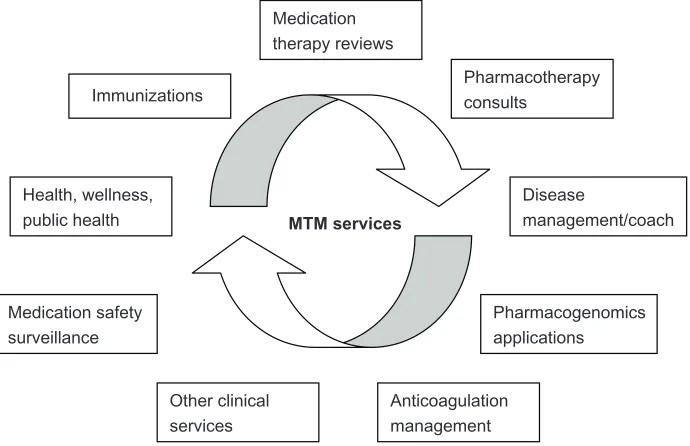
MTM is another model that was officially established as a program by the Center for Medicare and Medicaid Services (CMS) as part of the Medicare Modernization and Improvement Act (2003) to improve medication adherence and optimize therapeutic outcomes.22 In particular, MTM
has provided an opportunity for pharmacists to provide more direct patient care services in a community setting. Accord-ing to the American Pharmacists Association, MTM services may include: medication therapy reviews, pharmacotherapy consults, anticoagulation management, immunizations, health and wellness programs, and many other clinical services. Reports of pharmacist involvement in community pharmacy based collaborative practice via MTM have also been published.7,23,24
PCMH is an emerging model for organizing and deliver-ing care that has been developed in primary care, particularly in response to a predicted shortage of primary care physicians. It encompasses a team approach to care that may involve various professionals: physicians, advanced practice nurses, physician assistants, nurses, pharmacists, nutritionists,
Dovepress Collaborative pharmacy practice
Integrated Pharmacy Research and Practice downloaded from https://www.dovepress.com/ by 118.70.13.36 on 22-Aug-2020
social workers, educators, and care coordinators. The model comprises five functions: comprehensive care, patient centeredness, coordination of care, accessible services, and quality and safety. A 2009–2010 report of the American Association of Colleges of Pharmacy identified 151 unique models that define/discuss pharmacy’s involvement in primary care services.25 The majority of these models focused
on chronic disease management (eg, diabetes, hypertension, dyslipidemia), and some specialized services (eg, hepatitis, oncology, tuberculosis, anticoagulation). Most models were situated in ambulatory care settings (n = 81, 54%), while inte-grated settings (n = 33, 22%), community pharmacy (n = 29, 19%), and other (n = 8, 5%) constituted the rest.25
The most recent development is that of ACOs which is an organization of health care providers that agrees to be accountable for the quality, cost, and overall care of Medicare beneficiaries who are enrolled in a traditional fee-for-service program who are assigned the ACO.”26 The delivery model
aims at payment for performance or aligning provider reim-bursements to improved quality and reductions in cost of care for patients.
In all these models the essential features are patient centeredness with foundations of communication, health information technology, workforce development, and payment alignment.
Frameworks for CPP
To reach a higher level and more effective collaboration between practitioners, experience, knowledge, and skills are needed to function in interprofessional health care teams. To accomplish this, collaborative care needs to be empha-sized through interprofessional education (IPE) in medical and pharmacy schools. In particular, engaging students into collaborative care in a clinical environment renders great results.27
The Interprofessional Education Collaborative Expert Panel 2011, a collaboration of the American Associations of Colleges of Nursing, Pharmacy, Osteopathic Medicine, Medical Colleges, Dental Education, and Schools of Public Health, identified core competencies for interprofessional collaborative practice in four domains: values/ethics, roles/ responsibilities, interprofessional communication, and teams and teamwork.28 Their report also outlined desired principles
of these competencies; overall, this report serves as the foun-dational framework for IPE.
One of the challenges of IPE has been encouraging medi-cal students to embrace this concept broadly. Surveys show that pharmacy, nursing, and social work students generally
demonstrate a more positive attitude toward IPE than medi-cal students.4 One success story is the collaborative venture
between the University of Hawaii at Hilo (UHH) College of Pharmacy (CoP) and the John A. Burns School of Medicine Family Medicine Program.29 There, the UHH CoP students
work with their professors to engage into a collaborative practice with physicians and other medical practitioners. The students use the Hawai‘i Island Family Health Center to teach students in various health care disciplines in a collaborative team environment.
Another example is the Inter-Professional Education (IPE) program developed and used by the authors’ institu-tion (unpublished data, David Dickter, PhD, 2012). The IPEP curriculum engages health care profession students into clinical studies where students from all programs collabo-rate through interprofessional teams. Students learn about a variety of issues related to IPE including the formation of an interprofessional team, and the roles and responsibilities of individual team members to promote a culture of safety and to enhance quality of life. The program also allows students to apply the principles they have learned to enhance their clinical practice skills. Initial surveys of students and fac-ulty show strong positive attitudes toward interprofessional collaboration. Other factors that influence establishment of CPP include communication between all stakeholders, team collaboration, attitudes toward such collaboration, training, alignment of payment models, time, and workload.30
Whether pharmacists collaborate with physicians within the confines of a practice arrangement in a community pharmacy, a medical office, or in an interprofessional group practice, the first step is to form a successful work-ing relationship. McDonough and Doucette have proposed a model for how pharmacists can form such relationships with physicians.31 Within this model, they propose five
stages of development toward a collaborative working relationship (CWR) (Figures 1 and 2). As pharmacists and physicians progress through this model, collaboration is theorized to increase and a greater commitment to maintain the relationship is expected to occur, and as each profession learns to depend on the other for input, the relationship is further strengthened. The CWR model, and progression through it, is also influenced by the characteristics of each individual practitioner (eg, age, educational background), the practitioners sites (eg, proximity between), and exchanges between each practitioner. While further research and test-ing of this specific model is needed, pharmacists should be encouraged to strengthen their relationships with physicians, as well as other providers, toward achieving a successful Dovepress
Law et al
Integrated Pharmacy Research and Practice downloaded from https://www.dovepress.com/ by 118.70.13.36 on 22-Aug-2020
CWR leading to positive patient outcomes. Snyder et al used this framework to describe the professional exchanges between pharmacists and physicians engaged in successful CWRs using the Pharmacist-Physician Collaborative Index (PPCI) and qualitative information on relationship initiation, trustworthiness, and role specification.23 On the PPCI, both
physicians and pharmacists scored similarly on trustworthi-ness (39.8 ± 1.7 versus 39.2 ± 3.1, respectively); however, physicians scored higher on role specification (29.8 ± 2.9 versus 24.6 ± 6.9) and initiation of the relationship (20.3 ± 1
versus 16.2 ± 2.9). Qualitatively, it was found that establishing open communication through face to face interactions was important for pharmacists.
Payment models
One of the challenges to establishing a CPP is the economic justification for the practice model. The establishment of MTM by CMS has provided an avenue for pharmacists to obtain compensation for patient care services in collaborative practice models. In 2005, the American Medical Associa-tion supported this opportunity by introducing three Current Procedural Terminology (CPT) codes, specifically for pharma-cists to bill for MTM services provided to patients.32 However,
these codes have not been widely adopted because third party payers do not recognize or compensate pharmacists to bill as independent providers.33 Further, pharmacists express
dissat-isfaction with the amount of compensation provided by the few payers. Therefore, pharmacists have sought other options for billing for these services which include fee for service, incident-to billing, facility fee billing, direct contracting with third party payers, and outcomes based billing.34
Incident-to is a billing model where the claim is submitted under the physician’s name, with the physician overseeing the work of the pharmacist. This is one way that pharmacists bill Medicare for the services they provide, since Medicare does not allow pharmacists to bill independently under their own name. In order to bill Medicare using incident-to, certain criteria must be met. The pharmacist must be an employee
Medication therapy reviews
Pharmacotherapy consults
Disease
management/coach
Pharmacogenomics applications
Anticoagulation management Immunizations
Health, wellness, public health
Medication safety surveillance
Other clinical services
MTM services
Figure 1 Spectrumof medication therapy management services.
Notes: © Copyright American Pharmacists Association (APhA). Reprinted by permission of APhA.22
Abbreviation: MTM,medication therapy management.
Stage 0: Professional awareness Stage 1: Professional recognition Stage 2: Exploration and trial Stage 3: Professional relationship
expansion Stage 4: Commitment to CWR
Individual characteristics Content characteristics Exchange characteristics
Figure 2 Stepwiseapproach toward a collaborative working relationship.
Notes: Reprinted with permission Watkins J, Landgraf A, Barnett C, Michaud L. Evaluation of pharmacist-provided medication therapy management services in an oncology ambulatory setting. J Am Pharm Assoc (2003). 2012;52:170–174.32
Abbreviation: CWR,collaborative working relationship.
Dovepress Collaborative pharmacy practice
Integrated Pharmacy Research and Practice downloaded from https://www.dovepress.com/ by 118.70.13.36 on 22-Aug-2020
of the physician or medical group and while the supervising physician does not have to be in the same room during the visit, the physician must be somewhere on the premises. Most insurance companies will reimburse only a minimal amount for services that are billed using incident-to coding.35
Another method of billing insurance companies indirectly for services provided by pharmacists is facility fee billing. A transplant clinic in Spokane, Washington, employed this method by adding the time spent during the pharmacists’ services to the facility fee to account for a higher level of facilities used for that patient.35 The article did not specify the
entities who were billed, but it was reported that pharmacists were responsible for increasing the outpatient reimbursement by approximately $100 per patient.35
Other practices have successfully contracted directly with third party payers to be reimbursed for their CPP services. Most of these contracted services are reimbursed on a fee for service basis. Towncrest Pharmacy is a community, inde-pendent pharmacy that contracted with Iowa State Medicaid to render pharmaceutical case management services, a pro-gram that paid pharmacists after each visit for managing the beneficiaries’ medications.36 Another example is Kerr Drugs
stores, a regional pharmacy chain in North Carolina, which contracted with the North Carolina Medicaid Division of Medical Assistance to provide MTM services to their Med-icaid beneficiaries. These pharmacists were reimbursed a fixed rate for every medication review that was completed.37
Fairview Pharmacy Services established pharmaceutical care services in both Fairview retail pharmacies and primary care clinics to provide MTM services to Minnesota Medicaid beneficiaries.38 However, they also offered these services
to contracted self-funded employers as well as private pay patients. In this program, the pharmacists were paid for every patient visit with the amount of reimbursement being dependent on the complexity of the patient’s case.38 While
these are examples of fee for service payment models, some practices will contract with payers to get reimbursed on a capitated rate. This occurs particularly with health mainte-nance organizations which normally pay for services on a per member per month (PMPM) rate.
Pay for performance (P4P) is another business model utilized by health plans to pay provider organizations based on quality performance measures. In California, reimbursement through the P4P program is somewhat of a hybrid between a capitated rate and outcomes based payment. The health plan provides payment to the provider group on a PMPM rate according to their performance. Based on certain established quality measures, if the provider group falls in the 75th
per-centile or higher amongst all the other medical groups, then the health plan will reimburse 100% of the PMPM rate. The health plan reimbursed 50% payment for those groups that fell between the 50th and 74th percentiles and minimal to no payment if they were lower than 50th percentile.39
Outcomes Pharmaceutical Health Care is an administrative services company that pays pharmacists for MTM services on an outcomes based approach. The company collects fees from health plans or other benefit providers (self-insured employers, union health plans, state Medicaid programs, or Medicare Part D plan sponsors) on a capitated basis and uses those funds to reimburse pharmacists for providing MTM services to benefit enrollees. The network of pharmacies that bill the administrative company for these services include independent, franchise, chain, health system, and consultant pharmacy providers. Payments to pharmacies are processed when claims are submitted by the pharmacists and that are documented in the administrative company’s Internet-based documentation system.40
In February 2011, an electronic survey was distributed amongst pharmacists to determine what techniques were being employed to bill for outpatient MTM services. Of those report-edly billing for their services, 32 were community pharmacists, 32 were pharmacists billing out of a physician’s office, and 31 were pharmacists within a health system outpatient facility. Sixty five percent of the community pharmacists used fee for service, 62% directly contracted with the third party insurance providers, and 56% used the pharmacist CPT codes. For those billing out of the physician’s office, 71% used incident-to and 22% used the pharmacist CPT codes. Almost half of those billing within a health system outpatient facility used facility fee billing, while 36% used the pharmacist CPT codes, and 29% used incident-to billing.
Best practices in the US
and internationally
There are many practice models demonstrating collab-orative practices. To highlight the best practice models, the literature identified earlier was narrowed down to reflect practice settings that reported positive clinical, humanistic, or financial outcomes. Table 1 provides a layout of the outcomes examined in published studies.
Best practice models are described as either in a com-munity pharmacy setting or in a hospital practice, which includes primary care clinics, nursing facilities, and any other nontraditional community pharmacy setting. The Supplementary material provides a detailed narrative of selected best practices.
Dovepress
Law et al
Integrated Pharmacy Research and Practice downloaded from https://www.dovepress.com/ by 118.70.13.36 on 22-Aug-2020
Table 1
Collaborative pharmacy practice: published evidence
Citation
Setting
Stakeholders
Communication
Outcomes
41
Community pharmacy Physician, pharmacist, nurse, dietician Referring physician approved initial plan of care. Progress notes and follow- up information from the physician were communicated to the physician
Clinical: A1C (9.52% vs 7.32%,
P
=
0.0005) and blood glucose levels
(260 vs 139,
P
,
0.001) decreased, BMI (31.08 vs 29.69,
P
=
0.297)
Behavioral (daily BG monitoring, exercising 30 min 3 times a week, daily foot exam, annual eye exam)
14
Ambulatory care pharmacy (medical group) Physician (cardiologist), pharmacist Collaborative practice agreements. Physician was consulted if dealing with non-HTN medications. Documentation by pharmacists was retrospectively reviewed by physician
Clinical: Difference between groups obtaining BP
,
130/80 (49.2% vs 31.0%,
P
=
0.0456); changes in systolic, diastolic (
-12 vs
-22,
P
=
0.0077), pulse
pressure, number of BP medications used, pulse pressures, number of clinic appointments
42
Ambulatory care pharmacy (primary care clinic) Physician, pharmacist Pharmacist note was documented in EMR and forwarded to PCP for approval and cosignature
Economic: number of office visits; total (4.9 vs 7.2,
P
,
0.0001), physician
visits (3.2 vs 4.7,
P
,
0.0001)
Clinical: Difference in mean systolic (143 vs 137,
P
=
0.007) and diastolic
(78 vs 75,
P
=
0.003) BP, proportion of subjects achieving BP
,
140/90
(44% vs 62%,
P
=
0.003), self-management knowledge, medication adherence,
Humanistic: QOL using SF-36 (8.5 vs 8.6,
P
=
0.75)
43
Ambulatory care pharmacy (primary care physician group) Physician, pharmacist, physician assistant, nurse practitioner, nurse Electronic summary of visit and a comprehensive written consult were provided to the primary care provider. Physician approval was required for all clinical interventions Economic: Medical care (cardiovascular, noncardiovascular, total, emergency room, hospital), medication costs (cardiovascular, noncardiovascular, diabetes, total), combined (cardiovascular, noncardiovascular, total) Clinical: weight, BMI
,
25, SBP
,
130, DBP
,
80, LDL
,
100, HDL
.
40,
TG
,
150, FPG between 70–99, A1C
,
7% at baseline, 6 months
(A1C:
-1.1%,
P
,
0.0001 and FPG:
-39 mg/dL,
P
=
0.003) and 12 months
(A1C:
-1.1%,
P
,
0.0001 and FPG:
-35 mg/dL,
P
=
0.005)
44
Ambulatory care pharmacy (primary care clinic) Physician, pharmacist Each encounter was documented in the patient’s EMR. For any potentially harmful or urgent issue, the patient’s physician was immediately consulted Humanistic: Patients’ perception of care measured by CAHPS 2.0 (none were statistically significant), Health-related QOL measure using the SF-12 (role physical: 2.1,
P
=
0.001, social functioning: 1.9,
P
=
0.014, physical
component: 1.5,
P
=
0.024)
45
Ambulatory care pharmacy (outpatient cardiology department) Physician, pharmacist Pharmacists suggested recommendations to physicians through notes written on an outpatient hospital chart. Physicians reviewed the note to make the final decision
Clinical: TTR (47.7% vs 39.5%,
P
=
0.03), rates of thromboembolic
events (0.9% vs 2.3%,
P
=
0.279) and major bleedings (3.2% vs 3.3%,
P
=
0.951)
46
Staff model HMO clinic Physician, pharmacist, psychiatrist Primary care physicians referred patients with antidepressant therapy to pharmacy for follow-up. Progress notes, changes/ modifications in therapy and follow-up assessment information were communicated to the physician and Liaison psychiatrist Economic: Resource utilization patterns Clinical: Medication adherence Humanistic: Patient satisfaction
(
Continued
)
Dovepress Collaborative pharmacy practice
Integrated Pharmacy Research and Practice downloaded from https://www.dovepress.com/ by 118.70.13.36 on 22-Aug-2020
Table 1
(
Continued
)
Citation
Setting
Stakeholders
Communication
Outcomes
47
Outpatient University based clinic Physician, pharmacist, behavioral psychologist Patients attended lifestyle management classes led by different providers. However, there was no communication between providers reported in this article Clinical: Assessment of binge eating severity Assessment of depressive symptoms Humanistic: Health related quality of life assessment
48,49
Community-based family medicine clinics Physician, pharmacist Pharmacists reviewed patient’s medications and made face to face therapeutic recommendations to physicians Clinical: Guideline adherence improvement BP control
50
Community-based primary care center (Japan) Physician, pharmacist Pharmacists initially met with patients for individual consultations. Therapeutic treatment plans were conveyed to physicians who prescribed treatment regimens in consultation with the pharmacist Clinical: BP control Antihypertensive medication use Reduction in CV risk factors through lifestyle modifications
Abbreviations:
BMI,
body
mass
index;
BP,
blood
pressure;
CAHPS,
Consumer
Assessment
of
Health
Plans;
HDL,
high
density
lipoprotein;
LDL,
low
density
lipoprotein;
QOL,
quality
of
life;
TTR,
time
in
therapeutic
range;
vs,
versus;
A1C,
hemoglobin
A1C;
BG,
blood
glucose
level
in
mg/dL;
EMR,
electronic
medical
records;
PCP,
primary
care
physician
or
provider;
SBP,
systolic
blood
pressure;
DBP,
diastolic
blood
pressure;
TG,
triglycerides;
FPG,
fasting
plasma
glucose; HMO, health maintenance organization; non-HTN, non-hypertension; CV, cardiovascular.
Challenges and barriers in CPP
Collaborative care is aimed at improving the quality of disease management and standard of health care. As described previously in Figure 2, a good working relationship between pharmacists and other healthcare professionals, especially physicians, is integral in achieving a good corresponding collaborative care model.23,51–55 However, some barriers
still exist in establishing, developing, and maintaining CPP. These barriers stem from the inherent nature and scope of the pharmacy and medical professions, the work-ing relationship between different health care providers, organizational and financial support, as well as variability in laws and regulations governing CPP. Specifically, these barriers are reported to include boundary or turf concerns, communication breakdowns, power issues, lack of trust, and distance between practice sites.56
Traditionally, pharmacists have been typically situ-ated in a physician support role and have not contributed significantly to making major clinical decisions in patient care. Some pharmacists may lack the advanced clinical knowledge and skills in physical examination and patient assessment for providing a full spectrum of patient centered care. As a result, this can be challenging for pharmacists to gain approval from physicians regarding clinical decisions.57
This is also an issue in certain countries where the structure of health systems do allow pharmacists to perform clinical services, such as laboratory monitoring or adjustment of the therapeutic regimen for patients.
In addition, practicing pharmacists, especially entry level, may lack confidence in assuming more responsibilities in pro-viding a higher level of patient care as required in collaborative care. Further, although there is interest, health profession edu-cation around the globe has not yet placed much stress on IPE in terms of philosophy, academic, or clinical competence.58
Lack of available collaborative practice sites for experiential or practical training also limits pharmacist experience and subsequently their level of confidence and comfort in initiating or working when faced with such an environment.
Pharmacist workload is another problem recognized by pharmacists as a barrier to effectively initiating or implementing collaborative care practice with other health care providers.13,51 Literature suggests that pharmacist
interventions are viewed as extra workload by pharmacists, and potentially cause significant disruption to pharmacists’ distributive work schedule and pharmacy service provision.9
In addition, settings such as ambulatory care clinics are short staffed, making it difficult for pharmacists to expand their clinical functions in collaborative practice.57
Dovepress
Law et al
Integrated Pharmacy Research and Practice downloaded from https://www.dovepress.com/ by 118.70.13.36 on 22-Aug-2020
From a physician perspective, their training since medical school emphasizes their role as leaders who are deemed fully capable in making independent, major, and final patient related decisions in an unidisciplinary health care model.58 Even though efforts have been made to modify
roles to allow engagement of pharmacists in a physician’s practice, considerable opposition has been raised from physicians because such reforms are perceived as threats to the independence and autonomy of the physician’s prac-tice.10,13,51 A difference in attitude toward collaboration has
been observed among practitioners and students, where medical students view collaborative practice less favorably than student pharmacists.59 In fact, the above mentioned
phe-nomena are in accordance with the principle of least interest, which proposes that those who are traditionally in a more powerful position are less emotionally invested in expressing eagerness for collaborative relationships with others whom they consider to be lower in the power hierarchy.4
Another obstacle in establishing collaborative care practice is to include pharmacists in the physician’s daily routine. There is concern whether physicians are able to find time to work with pharmacists in the context of a busy practice. Additionally, the lack of physician experience with clinical pharmacy services and formal collaborative practice legislation were also considered factors that negatively impacted the pharmacist–primary care provider relationship in collaborative care.43 In Quebec, Canada, for
instance, physicians and pharmacists often do not work in close proximity in primary care settings, and in a majority of the time, telephone conversations and fax transmissions are the only means by which they interact for the exchange of professional opinions and judgments.13 In addition,
studies in both Canada and in the US suggested that some physicians were not well acquainted with pharmacists’ competence in pharmacotherapeutics and ease of access to patients.7 With this in mind, physicians may need time to
adjust their views on pharmacists, and be ready and gener-ous to fully utilize the skills and expertise of pharmacists to improve health outcomes. On the other hand, with the involvement of pharmacists in collaborative care, some physicians expressed apprehension whether the reduction in the number of medical visits may negatively impact their relationship with patients, and reduce the overall quality of their follow-up.13
Regulations are present to build better CPP; although, their establishment also came after a struggle. A study identified the most common barriers in 20 respondent states in the US to pass their original collaborative practice
legislations: resistance by physicians or state medical associations (41%), difficulties in educating health care professionals about pharmacists’ abilities (16%), opposition from pharmaceutical manufacturers (16%), opposition from state nursing associations (9%), and lack of sufficient l obbying efforts among members (9%).6
Effective administrative support, adequate human and financial resources, and continual planned assessment of performance by stakeholders, are all factors necessary for the planning, development, implementation, and success of a col-laborative care model.60,61 Although collaboration, in general,
has been shown to result in cost savings for the health care system through reduction in frequency of hospitalization and more appropriate medication use, in the majority of studies, however, cost effectiveness of the collaborative care model in improving patient outcomes compared to traditional care was not assessed precisely.14,51 Every possible effort should
be made to determine whether incorporating a medical team with members from different health disciplines is worthwhile by comparing before and after health care expenditure, and improvement in patient outcomes, at individual practice settings. Appropriate and feasible compensation mechanisms to health care providers, including pharmacists, are also essential in encouraging collaboration between health care providers in the organization.13 Finally, despite considerable
progress in passing and implementing laws on pharmacist collaborative practice, ongoing political uncertainty, which includes opposition from physicians and nurse practitioners, can become a deterrent for advancement of collaborative practice.7,62
Looking toward the future of CPP
With a projected deficiency of physicians estimated to be between 55,000 and 200,000 by 2020, there is definitely a need for clinical pharmacists to fill the gap through collaborative practice.43 To further develop CPP internationally, we needto focus our efforts on education, legislative and regulatory changes, and reimbursement mechanisms.
In 2010, the International Pharmaceutical Federation (FIP) released a policy statement on CPP in which they recommended that each country prepares their pharmacists and health care systems for CPP.63 The first step in this
process is through a fundamental change in pharmacy education to include IPE.58 This process will hopefully
achieve more positive attitudes toward collaborative practice, a better understanding of each profession’s abilities and limitations, and increased communication between disciplines.4,58,59,64 Additionally, an important component of
Dovepress Collaborative pharmacy practice
Integrated Pharmacy Research and Practice downloaded from https://www.dovepress.com/ by 118.70.13.36 on 22-Aug-2020
pharmacy education needs to include developing the skills required to document comprehensive medication reviews, interpret lab results, navigate complex patient situations, and accept clinical uncertainty. These skills will hopefully engender self-confidence in the student pharmacist to take on new responsibilities created by CPP and minimize other traits which would hinder their future ability to succeed in these new roles.64 Communication skills will also be a necessary
component of pharmacy education to improve interactions with patients, providers, and administrators.5
IPE is not limited to the didactic curriculum. One article suggests that if professional students are not able to apply the theory of IPE in an actual environment, then the didactic portion of IPE will be ineffective in the long run.61 Academic
clinical rotation sites need to adopt CPP models and create those practice environments where student pharmacists can learn how to function in an advanced practice setting and model the behavior shown to them from their preceptors. Education is not limited to student pharmacists, however. Certification or licensing exams will most likely need to dem-onstrate and ensure the pharmacists’ competence to perform in a CPP environment, similar to the Pharmacist Prescriptive Authority Act in New Mexico and the Clinical Pharmacist Practitioner Act in North Carolina.57,58,65,66
The 2010 FIP policy statement also adds legislative and regulatory actions for CPP. It recommends that each country works with their respective governments and health care pay-ers to consider the benefits of CPP to the health care system and provide legislative and financial support to further this practice.63 Each country needs to assess their own pharmacy
practice laws and strategize the best pathway to expand those laws and regulations to facilitate the development of CPPs that fits with their country’s particular health care system.63
The US has made some headway in this arena with 46 states having laws and regulations allowing for collaborative drug therapy management between pharmacists and physicians, with New Mexico and North Carolina, as mentioned above, allowing for prescriptive authority for pharmacists through statute.65,67 Recently, the US Public Health Service sent a
report to the US Surgeon General detailing how pharmacists can improve health care outcomes, relieve demand on the health care system, and reduce costs.68 This report led to the
US Surgeon General supporting the concept of pharmacists as midlevel providers in the US. These have been large gains, however, the UK is much further along with all pharmacists eligible to obtain prescribing privileges through further training and being recognized as Pharmacist Supplementary Prescribers.65 Despite these prescribing powers granted by
the government, only a small percentage of pharmacists in the UK have gone through the National Health Service approved training program to acquire these powers. One of the proposed reasons for this phenomenon is difficulty in demonstrating a financial benefit to employers.65
As the FIP policy statement noted above, legislative and regulatory involvement also works hand in hand with com-pensation for clinical services provided. Both are essential to make CPP sustainable.13,65,69–71 In the UK they have
prescrip-tive authority granted by legislation but the compensation is not sufficient incentive. In the US we are still working toward having the legislative authority to prescribe and be compensated. In the last few years, three bills have been introduced in the US Congress to allow payments for clinical services and they have failed to get out of the committee level. Thus, a more concerted legislative effort involving pharmacists engaging their locally elected officials is needed to educate them about what clinical pharmacists can do in a CPP model to secure adequate compensation for these services. Recently the Centers for Disease Control and Prevention in the US released a document titled, “Partnering with Pharmacists in the Prevention and Control of Chronic Diseases.”70 In this
summary of the available evidence, it states that collaborative drug therapy management brings a return on investment on average of 3:1 to 5:1.70 Also, it states that until government
and other third party payers realize the value of CPP services, the best partners in the meantime are academic institutions and self-insured employers (companies that assume the health risk of their employees and other beneficiaries).70 Thus, we
can continue our CPP models with these partners and further our research in this area to create a more compelling case for higher level decision makers.
Summary
The time is ripe for interprofessional collaborative practice to become a reality that all health professions commit to given the evidence that such practice has the potential to positively impact continuity and coordination of care to improve medica-tion adherence, reduce adverse events and errors, ultimately improve patient health outcomes, and reduce economic burden. Although regulation and education have bought in to the concept of collaborative practice, and various examples are in existence, barriers such as resistance from professionals, logistic issues, and lack of adequate payment mechanisms continue to impact the expansion of CPP. A combination of approaches, from education, regulation, and health systems, is needed to examine the evidence and the infrastructure to make collaborative practice a feasible model of care.
Dovepress
Law et al
Integrated Pharmacy Research and Practice downloaded from https://www.dovepress.com/ by 118.70.13.36 on 22-Aug-2020
Disclosure
The authors declare no conflicts of interest in this work.
References
1. Gladwell M. The Tipping Point: How Little Things can make a Big
Difference. New York: Little Brown; 2000.
2. Kohn LT, Corrigan JM, Donaldson MS, editors. To Err is Human:
Building a Safer Health System. Washington: National Academy Press; 2000.
3. Committee on Quality of Health Care in America. Crossing the Quality
Chasm: A New Health System for the 21st Century. Washington: National Academy Press; 2001.
4. Van Winkle L, Fjortoft N, Hojat M. Validation of an instrument to measure pharmacy and medical students’ attitudes toward
physician-pharmacist collaboration. Am J Pharm Educ. 2011;75(9):1–6.
5. Levenson S, Saffel D. The consultant pharmacist and the physician in
the nursing home: roles, relationships, and a recipe for success. J Am
Med Dir Assoc. 2007;8:55–64.
6. Punekar Y, Lin SW, Thomas J III. Progress of pharmacist collaborative practice: status of state laws and regulations and perceived impact of
collaborative practice. J Am Pharm Assoc (2003). 2003;43:503–510.
7. Alkhateeb F, Unni E, Latif D, Shawaqfeh M, Al-Rousan R. Physician attitudes toward collaborative agreements with pharmacists and their expectations of community pharmacists’ responsibilities in West
Virginia. J Am Pharm Assoc (2003). 2009;49:797–800.
8. Ukens C. Most states now allow collaborative practice. [webpage on the Internet]. Drug Topics. Available from: http://drugtopics.
modernmedicine.com/drugtopics/Community+
Pharmacy/Most-states-now-allow-collaborativepractice/ArticleStandard/Article/ detail/359816. Accessed December 6, 2012.
9. McKinnon A, Jorgenson D. Pharmacist and physician collaborative prescribing: for medical renewals within a primary health centre. Can Fam Physician. 2009;55:e86–e91.
10. Pottie K, Farrel B, Haydt S, et al. Integrating pharmacists into family
practice teams: physicians’ perspectives on collaborative care. Can Fam
Physician. 2008;54:1714–1717. e5.
11. Hammad EA, Yasein N, Tahaineh L, Albsoul-Younes A. A randomized controlled trial to assess pharmacist-physician collaborative practice in the management of metabolic syndrome in a university medical clinic
in Jordan. J Manag Care Pharm. 2011;17:295–303.
12. Mino-Leon D, Reyes-Morales H, Jasso L, Doubova SV. Physicians and pharmacists: collaboration to improve the quality of prescriptions in
primary care in Mexico. Int J Clin Pharm. 2012;34:475–480.
13. Lalonde L, Hudon E, Goudreau J, et al. Physician-pharmacist collaborative care in dyslipidemia management: The perception of
clinicians and patients. Res Soc Adm Pharm. 2011;7:233–245.
14. Irons BK, Meyerrose G, Laguardia S, Hazel K, Seifert CF. A collaborative cardiologist-pharmacist care model to improve hypertension management in patients with or at high risk for
cardiovascular disease. Pharm Prac. 2012;10:25–32.
15. Carter BL, Clarke W, Ardery G, et al; Collaboration Among Pharmacists Physicians To Improve Outcomes Now (CAPTION) Trial Investigators. A cluster-randomized effectiveness trial of a physician-pharmacist
collaborative model to improve blood pressure control. Circ Cardiovasc
Qual Outcomes. 2010;3:418–423.
16. St Peter WL, Farley TM, Carter BL. Role of collaborative care models includ-ing pharmacists in improvinclud-ing blood pressure management in chronic kidney
disease patients. Curr Opin Nephrol Hypertens. 2011;20: 498–503.
17. Kucukarslan S, Lai S, Dong Y, Al-Bassam N, Kim K. Physician beliefs and attitudes towards collaboration with community pharmacists. Res Soc Admin Pharm. 2011;7:224–232.
18. Gurnee MC, DaSilva RV. Constructing Disease Management Programs.
[webpage on the Internet]. Managed Care; 2007. Available from: http:// www.managedcaremag.com/archives/9706/9706.disease_man.shtml. Accessed January 20, 2013.
19. Disease Management Association of America. Definition of Disease
Management. Available from: http://www.dmaa.org/definition.html. Accessed January 22, 2013.
20. Bunting BA, Smith BH, Sutherland SE. The Asheville Project: Clinical and economic outcomes of a community-based long-term medication therapy management program for hypertension and dyslipidemia. J Am Pharm Assoc (2003). 2008;48:23–31.
21. Garrett DG, Bluml BM. Patient self-management program for diabetes:
first-year clinical, humanistic, and economic outcomes. J Am Pharm
Assoc (2003). 2005;45:130–137.
22. American Pharmacists Association [webpage on the Internet]. What
is Medication Therapy Management? Available from: http://www. pharmacist.com/mtm. Accessed December 10, 2012.
23. Snyder ME, Zillich AJ, Primack BA, et al. Exploring successful community pharmacist-physician collaborative working relationships
using mixed methods. Res Soc Adm Pharm. 2010;6:307–323.
24. Bryant LJM, Coster G, Gamble GD, McCormick RN. The General Practitioner-Pharmacist Collaboration (GPPC) Study: a randomized controlled trial of clinical medication reviews in community pharmacy. Int J Pharm Pract. 2011;19:94–105.
25. Haines SL, DeHart RM, Hess KM, et al; Professional Affairs Committee. Report of the 2009–2010 Professional Affairs Committee: pharmacist integration in primary care and the role of academic
pharmacy. Am J Pharm Educ. 2010;74:S5.
26. Medicare “Accountable Care Organizations” Shared Savings Pro-gram – New Section 1899 of Title XVIII, Preliminary Questions and
Answers”. Centers for Medicare and Medicaid Services. Available
from: http://www.healthcare.gov/news/factsheets/2011/03/accountable-care03312011a.html. Accessed April 20, 2013.
27. Arredondo A, Henderson B, Blackburn W, Klotz R. An Advanced
Pharmacy Practice Rotation in a Medical Group Practice: A Pharmacy Student’s Perspective. California DO Fall 2012. Available from: ws.westernu.edu/western-News/docs/CA-DO-1.pdf. Accessed April 15, 2013.
28. Interprofessional Education Collaborative Expert Panel. (2011). Core
Competencies for Interprofessional Collaborative Practice: Report of an Expert Panel. Washington, DC: Interprofessional Education Collaborative. Available from: http://www.aacn.nche.edu/education-resources/ipecreport.pdf. Accessed January 25, 2013.
29. Ma C, Holuby R, Bucci L. Physician and pharmacist collaboration: the University of Hawaii at Hilo college of pharmacy – JABSOM
experience. Hawaii Med J. 2010;69:42–44.
30. O’Daniel M, Rosenstein AH. Professional Communication and Team
Collaboration. In: Hughes RG, editor. Patient Safety and Quality: An
Evidence-Based Handbook for Nurses. Rockville: Agency for Healthcare Research and Quality (US); 2008:Chapter 33. Available from: http:// www.ncbi.nlm.nih.gov/books/NBK2637/. Accessed April 15, 2013. 31. McDonough RP, Doucette WR. Developing collaborative working
relationships between pharmacists and physicians. J Am Pharm Assoc.
2001;41(5):682–692.
32. Watkins J, Landgraf A, Barnett C, Michaud L. Evaluation of pharmacist-provided medication therapy management services in an
oncology ambulatory setting. J Am Pharm Assoc (2003). 2012;52:
170–174.
33. Scott MA, Hitch WJ, Wilson CG, Lugo AM. Billing for pharmacists’ cognitive services in physicians’ offices: Multiple methods of
reimbursement. J Am Pharm Assoc (2003). 2012;52:175–180.
34. Beatty SJ, McCormick KM, Beale DJ, et al. Current trends in
outpatient pharmacy services and billing. J Am Pharm Assoc (2003).
2012;52:154–160.
35. Maldonado AQ, Seiger TC, Urann CL, McCleary JA, Goroski AL.
Ojogho ON. Billing for outpatient transplant pharmacy services. Am J
Health Sys Pharm. 2012;69:144–147.
36. McDonough RP, Harthan AA, McLeese KE, Doucette WR. Retrospective financial analysis of medication therapy management services from
the pharmacy’s perspective. J Am Pharm Assoc (2003). 2010;50:
62–66.
Dovepress Collaborative pharmacy practice
Integrated Pharmacy Research and Practice downloaded from https://www.dovepress.com/ by 118.70.13.36 on 22-Aug-2020
37. Michaels NM, Jenkins GF, Pruss DL, Heidrick JE, Ferreri SP. Retrospective analysis of community pharmacists recommendations in the North Carolina Medicaid medication therapy management program. J Am Pharm Assoc (2003). 2010;50:347–353.
38. Oliveria DJ, Brummel AR, Miller DB. Medication therapy management:
10 years of experience in a large integrated health care system. J Manag
Care Pharm. 2010;16:185–195.
39. Cutler T, Palmieri J, Khalsa M, Stebbins M. Evaluation of the relation-ship between a chronic disease care management program and California pay-for-performance diabetes care cholesterol measures in one medical
group. J Manag Care Pharm. 2007;13:578–588.
40. Barnett M, Frank J, Wehring H, et al. Analysis of pharmacist-provided medication therapy management (MTM) services in community
pharmacies over 7 years. J Manag Care Pharm. 2009;15:18–31.
41. West D, Blevins MA, Brech D, Stotts F, Gardner S. A multidisciplinary approach in a community pharmacy can improve outcomes for diabetes
patients. Diabetes Educ. 2003;29:962–968.
42. Hunt JS, Siemenczuk J, Pape G, et al. A randomized controlled trial of team-based care: impact of physician-pharmacist collaboration on
uncontrolled hypertension. J Gen Intern Med. 2008;23(12): 1966–1972.
43. Monte SV, Slaza EM, Albanese NP, Adelman M, Rao G, Paladino JA. Clinical and economic impact of a diabetes clinical pharmacy service
program in a university and primary care–based collaboration model.
J Am Pharm Assoc (2003). 2009;49:200–208.
44. Isetts B, Schondelmeyer S, Heaton A, Wadd WB, Hardie NA, Artz MB. Effects of collaborative drug therapy management on patients’
percep-tions of care and health-related quality of life. Res Social Adm Pharm.
2006;2:129–142.
45. Saokaew S, Sapoo U, Nathisuwan S, Chaiyakunapruk N, Permsuwan U. Anticoagulation control of pharmacist-managed collaborative care
versus usual care in Thailand. Int J Clin Pharm. 2012;34:105–112.
46. Finley P, Rens H, Pont J, et al. Impact of a collaborative pharmacy
practice model on the treatment of depression in primary care. Am J
Health Syst Pharm. 2002;59:1518–1526.
47. Malone M, Alger-Mayer S, Anderson D. The lifestyle challenge
program: a multidisciplinary approach to weight management. Ann
Pharmacother. 2005;39:2015–2020.
48. Carter B, Ardery G, Dawson J, et al. Physician and pharmacist
col-laboration to improve blood pressure control. Arch Intern Med. 2009;
169:1996–2002.
49. Weber C, Ernst M, Sezate G, Zheng S, Carter B. Pharmacist-physician comanagement of hypertension and reduction in 24-hour ambulatory
blood pressures. Arch Intern Med. 2010;170:1634–1639.
50. Tobari H, Arimoto T, Shimojo N, et al. Physician–pharmacist cooperation program for blood pressure control in patients with hypertension:
a randomized-controlled trial. Am J Hypertens. 2010;23:1144–1152.
51. Dey RM, de Vries MJW, Bosnic-Anticevich S. Collaboration in chronic care: unpacking the relationship of pharmacists and general medical
practitioners in primary care. Int J Pharm Pract. 2011;19:21–29.
52. Brock KA, Doucette WR. Collaborative working relationships between
pharmacists and physicians: an exploratory study. J Am Pharm Assoc
(2003). 2004;44:358–365.
53. Mehta BH, Snyder ME, Nikitas A. Developing collaborative
relationships between pharmacists and other health professionals. J Am
Pharm Assoc (2003). 2011;51:332–338.
54. Liu Y, Doucette W, Farris K. Examining the development of
pharmacist-physician collaboration over 3 months. Res Social Adm
Pharm. 2010;6:324–333.
55. Liu Y, Doucette W. Exploring stages of pharmacist-physician collaboration using the model of collaborative working relationship. J Am Pharm Assoc (2003). 2011;51:412–417.
56. Miccolo MA, Spanier AH. Critical care management in the 1990s.
Making collaborative practice work. Crit Care Clin. 1993;9:443–453.
57. Edwards J, Edwards S, Saltman D. The role of the nurse practitioner and clinical pharmacist in collaborative patient care and drug therapy
management in Canadian cancer centres. Report Card on Cancer in
Canada, 2010–2011. 2010;13:30–33.
58. Ray M. Shared borders: Achieving the goals of interdisciplinary patient
care. Am J Health Syst Pharm. 1998;55:1369–1374.
59. Van Winkle L, Bjork B, Chandar N, et al. Interprofessional workshop to improve mutual understanding between pharmacy and medical students. Am J Pharm Educ. 2012;76:150.
60. Warrington L, Ayers P, Baldwin A, et al. Implementation of a
pharmacist-led, multidisciplinary diabetes management team. Am J Health Syst
Pharm. 2012;69:1240–1245.
61. Drummond N, Abbott K, Williamson T, Somji B. Interprofessional
primary care in academic family medicine clinics. Can Fam Physician.
2012;58:e450–e458.
62. Thompson CA. Collaborative practice comes to New York, expands in Indiana. AJHP News. July 15, 2011.
63. FIP Statement of Policy on Collaborative Pharmacy Practice FIP, 2010. Available from: http://www.fip.org/statements. [homepage on the Internet]. Accessed April 15, 2013.
64. Farrell B, Ward N, Dore N, Russel G, Geneau R, Evans S. Working in interprofessional primary health care teams: what do pharmacists do? Res Social Adm Pharm. 2012;8:1–14.
65. Murawski M, Villa KR, Dole EJ, et al. Advanced-practice pharmacists: practice characteristics and reimbursement of pharmacists certified for
collaborative clinical practice in New Mexico and North Carolina. Am J
Health Syst Pharm. 2011;68:2341–2350.
66. Martin-Boone JE, Pruce D, Airaksinen M, et al. FIP reference paper collaborative practice. 2009:1–76. Available from: http://www.fip.org/ statements. [homepage on the Internet]. Accessed April 15, 2013.
67. Academy of Managed Care Pharmacy. Practice Advisory on
Collaborative Drug Therapy Management. Academy of Managed Care Pharmacy; 2012. Available from: http://www.amcp.org/WorkArea/
DownloadAsset.aspx?id=14710. Accessed December 11, 2012.
68. Giberson S, Yoder S, Lee MP. Improving Patient and Health System
Outcomes through Advanced Pharmacy Practice. A Report to the US Surgeon General. Office of the Chief Pharmacist. US Public Health Service; 2011.
69. Moore A, Patterson C, White J, et al. Interprofessional and integrated
care of the elderly in a family health team. Can Fam Physician.
2012;58:e436–e441.
70. Morrison CM, Glover D, Gilchrist SM, et al. Partnering with
Pharmacists in the Prevention and Control of Chronic Diseases. Atlanta: Centers for Disease Control and Prevention; 2012. Available from: http:// www.cdc.gov/dhdsp/programs/nhdsp_program/docs/pharmacist_guide. pdf. Accessed April 15, 2013.
71. Howard M, Trim K, Woodward C, et al. Collaboration between community pharmacists and family physicians: lessons learned from
the seniors medication assessment research trial. J Am Pharm Assoc
(2003). 2003;43:566–572.
Dovepress
Law et al
Integrated Pharmacy Research and Practice downloaded from https://www.dovepress.com/ by 118.70.13.36 on 22-Aug-2020
Supplementary material
Community pharmacy
AllCare Pharmacy in Arkadelphia, Arkansas, developed a diabetes self-management training program according to the National Standards for Diabetes Self-Management Education, which is published by the American Diabetes Association. The program included a physician, pharmacist, nurse, and dietician. The pharmacist was a full time employee of the pharmacy and the physician served as a consultant, with all the other employees only paid part time. Marketing the service to physicians and nurses included in-person visits and telephone calls. The program was designed using the Medicare model where the initial assessment is done one on one followed by eight weekly group education sessions, each lasting about 60 minutes. Patients were able to visit the pharmacy any time they had questions or concerns since the pharmacist was accessible in the pharmacy during business hours. This study offered some evidence that providing diabetes education in a community pharmacy is effective at improving intermediate clinical outcomes. There was an average significant reduction in hemoglobin A1C (A1C) by 2.2 percentage points (P= 0.0005) and a decrease in glucose levels (from 260 mg/dL to 139 mg/dL, P, 0.001), but body mass index did not change significantly. There was also an improvement in self-care behaviors which can lead to a reduction in the risk of diabetes complications.1
Hospital practice
Hospital practice sites in the US that demonstrate best practice models include a collaborative practice model at Kaiser Per-manente, (Oakland, CA, USA), a primary care facility within a large nonprofit staff model health maintenance organization (Kaiser Permanente of Northern California).2 In this practice
site, pharmacists provided medication therapy management for patients who were taking psychiatric medications such as antidepressants. A cohort of 13 physicians referred patients who started on antidepressants to the practice model. Clinical pharmacy specialists coordinated the follow-up with patients through office visits and telephone calls. Pharmacists had limited prescribing privileges to allow for dose adjustments and to add on ancillary medications as deemed necessary. Pharmacists, physicians, and psychiatrists met regularly to discuss patients’ progress. Patients’ adherence to treatment, satisfaction, and costs to the health maintenance organization (HMO) were compared to a control group of patients being treated by other physicians in the practice. This multidisci-plinary model was associated with a significant improvement in medication adherence rates (the medication possession
ratio was 0.81 for the intervention group versus 0.66 for the control group) in comparison to patients receiving usual care. It also reduced visits to the primary care physician (39% for the control group versus 12% for the intervention group, P= 0.029).
The Lifestyle Challenge Program at a facility in New York presented results in 2005 of a multidisciplinary weight management program incorporating diet, lifestyle, physical activity, and behavioral modification.3 The goal
of the program was to educate patients using behavioral modification techniques to improve health and weight loss. Participants were required to attend 1 hour group based sessions over a 20 week period. Sessions were led by a facilitator with expertise on the topic being discussed. Participants were only educated on weight reducing diets, but were not required to follow a specific dietary plan. Facilitators included a physician specializing in nutrition, a pharmacist, a dietician or exercise physiologist, and a behavioral psychologist. Ninety participants who had mul-tiple obesity related comorbid diseases entered the program. The 39 patients who completed the study showed significant improvement in health related quality of life, binge eating behavior, and depressive symptoms.
Ambulatory care settings
A prospective, cluster randomized controlled clinical trial at six community based family medicine residency programs in Iowa evaluated a physician–pharmacist collaborative model to improve blood pressure control.4,5 The study enrolled 402
patients with uncontrolled hypertension. Clinical pharmacists made drug therapy recommendations to physicians during office visits with the patients. Physicians and pharmacists worked together to decide how best to implement the pro-posed interventions. Adherence to national guidelines was improved in the intervention group compared to the control group (the difference between baseline and a 6 month follow-up for the mean adherence score was an 8.1% increase for the control group and a 55.4% increase for the intervention group, P = 0.09). The mean blood pressure decreased by 6.8/4.5 mmHg in the control group and 20.7/9.7 mmHg in the intervention group (P= 0.05 for between group systolic blood pressure comparison). Blood pressure was controlled in 29.9% of patients in the control group and in 63.9% of patients in the intervention group (P= 0.001).
A collaborative physician–pharmacist model to improve diabetes outcomes was initiated in a multispecialty managed care physician group practice.6 In this model, 22
physi-cians held practice agreements with two pharmacy specialists
Dovepress Collaborative pharmacy practice
Integrated Pharmacy Research and Practice downloaded from https://www.dovepress.com/ by 118.70.13.36 on 22-Aug-2020