Towards an ISO Standard for the Annotation of Quantification
Harry Bunt
1, Kiyong Lee
3, and James Pustejovsky
21Tilburg Center for Communication and Cognition, Tilburg University, The Netherlands 2Brandeis University, Waltham, MA, USA
3Korea University, Seoul, Korea
[email protected], [email protected], [email protected]
Abstract
This paper presents an approach to the annotation of quantification that is being developed in preparation of the specification of a quantification annotation scheme, as part of an effort of the International Organisation for Standardisation ISO to define interoperable semantic annotation schemes. The paper focuses on the theoretical basis for an ISO standard annotation scheme in this area. It is argued that the combination of Generalized Quantifier Theory, neo-Davidsonian event-bases semantics, Discourse Representation Theory, and the ISO Principles of semantic annotation forms a powerful and solid foundation for defining annotations of quantification phenomena with an abstract and a concrete syntax and a compositional semantics. The coverage of the proposed annotation scheme includes both count and mass NP quantifiers, as well as NPs with syntactically and semantically complex heads with internal quantification and scoping structures, such as inverse linking by prepositional phrases and relative clauses.
Keywords:semantic annotation, annotation standaard, quantification
1.
Introduction
Quantification occurs in every sentence of written text or spoken discourse. This is because the application of a pred-icate to one or more sets of objects gives rise to questions of relative scope, of cardinality, and of the distribution (or ‘distributivity’) of the predicate over the sets of arguments. Dealing with these questions is of crucial importance for understanding, translating, or responding to sentences, and for correct information extraction and question answering from natural language text. Example sentence (1a) illus-trates the influence of the relative scopes of quantifications on the information that an utterance contains (how many papers weere read altogether?); (1b) illustrates the impor-tance of the collective or individual distribution of a predi-cate over a set of arguments (assuming that a certain piano was carried collectively by certain men, who individually had a beer); and (1c) shows that a quantified relation may involve parts of individuals, such as pizza halves.
(1) a. All the students read two papers on quantification.
b. The men had a beer before carrying the piano up-stairs.
c. The three boys ate four and a half pizzas.
The International Organisation for Standardisation ISO is pursuing the establishment of standards for linguistic an-notation in general, and semantic anan-notation in particular, in view of the importance of annotated language resources, both for empirically-based linguistic research and for de-veloping NLP applications, In order to be widely appli-cable across theories and platforms, annotation standards should on the one hand be theory-neutral, but they should on the other hand also take established theoretical insights into account. This paper outlines an ISO standard anno-tation scheme under development for quantification that builds on logical and linguistic theories, notably on the the-ory of generalized quantifiers, on neo-Davidsonian event-based semantics, and on Discourse Representation Theory.
in combination with established principles for semantic an-notation.
2.
Theoretical background
2.1.
Generalized Quantifier Theory
Philosophers, linguists, and AI researchers have extensively studied quantifiation phenomena. Logicians from Aristotle to van Benthem have studied quantification for its role in reasoning and thinking. It was noted relatively recently that quantifiers can be viewed as expressing a property of the involvement in a predication of sets of individual objects: ∀xexpresses that all the individual objects in the universe of discourse are involved;∃xthat at least one such object is involved (Mostowski, 1957; Lindstr¨om, 1966). This notion of a quantifier has been generalized to properties such as those expressed in English by “two”, “most”, “less than half of”,“more than 2000”. The concepts in this broader class of quantifiers are calledgeneralized quantifiers. Quantifications in formal logic are statements about all in-dividual objects in a given universe of discourse; natural languages, by contrast, have quantifying expressions like
“all the students”, “a book”, “some wine”, and “more than five sonatas”, which indicate a specific domain that the quantification is restricted to. Generalized quantifier theory (GQT) therefore views noun phrases, rather than de-terminers, as the quantifiers of natural language (Barwise and Cooper, 1981). According to GQT, words likealland
somein English do not form the counterparts of the uni-versal and existential quantifiers of formal logic, and nei-ther do words likethree, andmost, which have been called ‘cardinal quantifiers’ and ‘proportional quantifiers’ (Partee, 1988).
2.2.
Event-based semantics
their negations. Examples of such aspects are adver-bials, but also quantifying expressions such as “always”, “twice”, “never”and“more than three times”, which re-fer to sets of events. These expressions say something about the absolute or relative cardinality of a set of events of a cer-tain type. Similarly for expressions of frequency, as in“I will call you twice every day”. Adverbs, such as adverbs of manner, often express a property of events. Observations like these led Davidson (1967) to propose to treat events as individual objects.
Following Parsons (1990) this view can be expressed in se-mantic representations by means of one-place predicates applied to existentially quantified event variables, using se-mantic role relations to indicate the roles of the participants in an event. This approach has been widely accepted in modern semantics, and has been adopted in the ISO anno-tation standards 24617-1 (Time and events), 24617-4 (Se-mantic roles), and 24617-7 (Spatial information).
For the semantic annotation of quantification, we propose an approach that combines GQT with the neo-Davidsonian treatment of predicate-argument relations, including the use of semantic roles as defined in ISO 24617-4. This approach allows the expression in annotations of quantification as-pects such as the collective/individual distinction as a prop-erty of the way in which a set of individuals participates in a set of events. For example, the ISO 24617-4 annotation1 of example sentence (2) would look as in (3).
(2) Two men lifted the piano.
(3) (Markables: m1=“Two men”, m2=“lifted, m3=“the piano”.)
<entity xml:id=“x1” target=“#m1” pred=“man” involvement=“2” definiteness=“indef”/> <event xml:id=“e1” target=“#m2” pred=“lift”/> <srLink event=“#e1” participant=“#x1”
semRole=“agent”>
<entity xml:id=“x2” target=“#m3” type=“piano” involvement=“1” definiteness=“def”/> <srLink event=“#e1” participant=“#x2”
semRole=“theme”/>
This theoretical basis is also brought out in the semantics of the annotations, which makes use of Discourse Repre-sentation Structures (DRSs) that involve sets of events with sets of participants. For example, the annotation of the NP
“Two men”is interpreted as the DRS in (4a), which can be read as follows: There is a set X of cardinality 2 that con-sists of men. A semantic role link, like the one for the theme role with individual distributivity, is interpreted as the DRS in (4b), and the sentence“Two men lifted a piano”is inter-preted as the DRS (4c), obtained by combining the DRSs for the NPs, the verb, and the semantic role relations.
(4) a. X
|X|= 2, x
x∈X ⇒ MAN(x)
1
The <entity>element of ISO 24617-4 has been extended here with the attributes @involvement and @definiteness, and the attribute @entityType has been renamed @pred.
b. E, Y
y
y∈Y ⇒ e
e∈E theme(e,y)
c.
X, Y, E
|X|= 2, x∈X⇒MAN(x), y∈Y⇒PIANO(y), e∈E⇒LIFT(e),
y
y∈Y ⇒
e
agent(e,X) theme(e,y)
2.3.
Principles of Semantic Annotation
A third pillar of the approach to quantification annotation proposed in this paper is formed by the ISO principles of se-mantic annotation (ISO standard 24617-6; see also (Bunt, 2015) and (Pustejovsky et al., 201), which require an an-notation scheme to have a three-part definition consisting of (1) an abstract syntax that specifies the possible anno-tation structures in set-theoretical terms, such as pairs and triples of concepts; (2) a concrete syntax, that specifies a representation format of annotation structures as XML ex-pressions; (3) a semantics that specifies the meaning of an-notation structures. This formal definition is supported by a metamodel that captures the fundamental concepts used in annotations and the way they are related. This organi-zation ensuress that semantic annotations have a semantics, as required by ISO 24617-6 (the principle of ‘semantic ad-equacy’), and by defining the semantics at the level of the abstract syntax it puts the focus of an annotation standard at the conceptual level, rather than at the level of concrete rep-resentations, as required by the ISO Linguistic Annotation Framework (ISO 24612, see also (Ide and Romary, 2004). Annotators have to deal with the concrete representations only, but they can rely on the existence of an underlying abstract syntax and semantics, which can be generated au-tomatically from the XML representations.
A systematic specification of the semantics of annotation structures is hardly possible if it cannot be done in a compo-sitionalway, i.e., the semantic interpretation of an annota-tion structure is obtained by combining the interpretaannota-tions of its components. Two kinds of components are distin-guished: ‘entity structures’and‘link structures’. An en-tity structure specifies certain semantic information about a markable, a link structure specifies certain semantic in-formation about the way two or more entity structures are semantically related. For example, the annotation of an NP corresponds to an entity structure, and scope relations cor-respond to link structures (see below, Section 5).
3.
Related Work
(5) <TIMEX3 xml:id=“t5” target=“#token0” type=“SET” value=“P7D” quant=“EVERY”/>
Here, @quant is one of the attributes of temporal entities, used to indicate that the entity is involved in a quantifica-tion. The limitations of this approach for annotating tempo-ral quantification have been discussed by Bunt and Puste-jovsky (2010), and improvements have been suggested by Lee and Bunt (2012).
ISO-Space (ISO 24617-7) uses the @quant attribute as well, applying it to spatial entities, and in addition uses the attribute @scopes to specify a scoping relation. The fol-lowing example, taken from ISO 24617-7:2014, illustrates this:
(6) a. There’s a computerse1onss1every deskse2.
b. <spatialEntity id=“se1” target=‘”#token2” form=“nom” countable=“true” quant=“1” scopes=“∅”/>
<spatialEntity id=“se2” target=“#token5” form=“nom” pred=“desk” countable=“true” quant=“every” scopes=“#se1”/>
<spatialSignal id=“ss1” target=“#token3” type=“dirTop” />
<qsLink id=“qsl1” relType=“EC” figure=“#se1” ground=“#se2” trigger=“#ss1”/>
<oLink id=“ol1” relType=“above” figure=“#se1” ground=“#se2” trigger=“#ss1” frameType=“intrinsic” referencePt=“#se2” projective=“false” />
From a semantic point of view, this use of the @scopes at-tribute is not very satisfactory since the relative scoping of quantifications over different sets of entities is not a local property of one of these quantifications; therefore an an-notation such as (6) does not have a compositional seman-tics. Instead, we propose to use a link structure to represent scope relations among quantifying NPS, which would come down to adding an element like the following:
(7) <scopeLink arg1=“#se2” arg2=“#se1” relType=“wider”/>
Indirectly related to the definition of an annotation scheme for quantification is the Groningen Meaning Bank project (Bos et al., 2017), which is developing a resource consisting of sentences paired with DRSs that represent their mean-ings. This work cannot be compared directly with the usual kind of annotation work, which associates pieces of seman-tic information with markables like individual words and small stretches of text, whereas in the Groningen Meaning Bank DRSs are associated with full sentences. It may how-ever be interesting to compare these DRSs with those that come out of the compositional interpretation of annotations as proposed here.
4.
Aspects of Quantification
4.1.
Restrictors
A natural language quantifier, a noun phrase (NP), con-sists in its full form of three parts: (1) the head noun; (2) a sequence of determiners; and (3) pre-nominal or post-nominal adjectives, prepositional phrases (PPs), relative
clauses and other modifiers of the head noun. The head noun together with its modifiers is called therestrictorof the quantifier, and indicates a domain that is considered in the quantification, the ‘source domain’. Quantification in natural language is nearly always restricted to a contextu-ally determined part of the source domain, called the “ref-erence domain’ or ‘context set’(Westerst˚ahl, 1985). For example, the quantifier“all the students”in (8) does not apply to every student, but only to those present at some meeting or performance.
(8) All the students applauded.
The definiteness of an NP is an indication that the domain of a quantification is restricted to a certain reference do-main, rather than to its source domain; definiteness is there-fore an item of quantification information that should be annotated, as illustrated above in (3).
4.2.
Scope
Relative scope is one of the most studied aspects of quan-tification in natural language – see e.g. (Cooper, 1983); (Kamp and Reyle, 1993; Szabolcsi, 2010); (Ruys and Win-ter, 2011). Studies of scope have focused almost exclu-sively on the relative scopes of sets of participants, as in the classical example“Everybody in this room speaks two languages”. Not only the relative scoping of sets of quanti-fiedparticipantsis a semantically important issue, but also the relative scoping of participants andevents. This is illus-trated by the two possible readings of the sentence in (9):
(9) All the students protested
On one reading, each of the students protested, for instance by sending a letter of protest; on another, all students par-ticipated in a single protest event, such as a demonstration. (Note that the latter interpretation involves the consider-ation of events in which multiple participants occupy the same role. Several approaches, such as those of the Verb-Net and PropBank frameworks allow only a single occupant for each semantic role; the ISO approach to semantic role annotation (ISO 24617-4), does allow multiple participants with the same semantic role.)
The relative scopes of events and participants can be marked up on the link structure that expresses the partic-ipation in a set of events, as shown in (10) with the attribute ‘eventScope’ added to the<srLink>element.
(10) (Markables: m1=“All the students”, m2=“protested”)
<entity xml:id=“x1” target=“#m1” pred=“student” involvement=“all” definiteness=“def”/>
<event xml:id=“e1” target=“#m2” pred=“protest”/> <srLink event=“#e1” participant=“#x1” semRole=“agent”
eventScope=“wide”/>
In logic it is customary to assume that the relative scopes in a sequence of quantifiers are linearly ordered (but see e.g. Hintikka, 1973 on ‘branching quantifiers’); in natural language sentences it may happen that two or more quan-tifications have equal scope, see e.g. (11):
The intended reading here is that in total three breweries supplied in total five inns. In this total-total, or cumu-lative reading (Scha, 1981) the two quantifications have equal scope; the two cardinal determiners both indicate the amount of involvement of the respective reference domains in the predication. This can be represented in annotations as follows:
(12) <scopeLink arg1=“#se2 arg2=“#se1” relType=“equal”/>
The sentence in (13a) has the same syntactic form as the one in (11), but here the intended reading is not cumulative; it is from a report about a tournament of (European) foot-ball where teams of boys and teams of girls participated, and whenever a team of boys played against a team of girls, its size would be reduced from 11 to 7. So the two cardinal determiners are indicators not of reference domain involve-ment or of scoped involveinvolve-ment of subsets of the reference domain, but rather of group size associated with the partic-ipation of groups of boys and girls. This can be accounted for in annotations by introducing a “group” value for the @distr attribute of a participation link, as shown in (13b). Semantically, an annotation with such a distributivity will be interpreted as describing a quantification over groups of seven boys and eleven girls.
(13) a. Seven boys played against eleven girls.
b. (Markables: m1=“Seven boys”, m2=“played against”, m3=“eleven girls”)
<entity xml:id=“x1” target=“#m1” pred=“boy” involvement=“7” definiteness=“indef”/> <event xml:id=“e1” target=“#m2” pred=“play”/> <srLink event=“#e1” participant=“#x1”
semRole=“agent” distr=“group”/>
<entity xml:id=“x1” target=“#m3” pred=“girl” involvement=“11” definiteness=“indef”/> <srLink event=“#e1” participant=“#x2”
semRole=“agent” distr=“group”/>
4.3.
Distributivity
Distributivity comes in an obvious form in the distinction between individual (or ‘distributive’) and collective partic-ipation; the group distribution illustrated by (13) forms an-other case. Yet anan-other form of distributivity occurs in (14), where the three boys involved did not necessarily do all the carrying either collectively or individually, but where they may have carried some heavy boxes collectively and some lighter boxes individually:
(14) The boys carried all the boxes upstairs.
The quantifications in this sentence over sets of boys and sets of boxes have ‘unspecific’ distributivity (Bunt, 1985); the sentence just says that all the boxes weresomehow car-ried upstairs by the boys. Following (Kamp and Reyle, 1993), we use the notation X∗ to designate the set con-sisting of the members ofXand the subsets ofX, andP∗ to designate the characteristic function of the setX∗, where P is the characteristic function ofX. Using moreover the notationRCto indicate the characteristic function of a
ref-erence domain that forms a subset of a source domain with
characteristic functionR, the interpretation of (14) can be represented in second-order predicate logic as follows:
(15) ∀x.[boxC(x)→ ∃y.∃e.[boyC∗(y)∧carry-up(e)∧agent(e,y) ∧ ∃z.[boxC∗(z)∧[x=z∨x∈z]∧theme(e,z)]]]
Note that the distributivity of a quantification is not a erty of the set of participants in a set of events, but a prop-erty of the way of participating. This was already illustrated above by example (1c), assuming that“the men” individu-ally had a beer, and collectively carried the piano upstairs. Distributivity should thus be marked up on the participation relation in the drinking and carrying events.
(16) (Markables: m1=“The men”, m2=“had”, m3=“a beer”, m4=“carrying” upstairs, m5=“the piano”)
<entity xml:id=“x1” target=“#m1” pred=“man” involvement=“>1” definiteness=“def”/> <event xml:id=“e1” target=“#m2” pred=“drink”/> <entity xml:id=“x2” target=“#m3” pred=“beer”
involvement=“1” definiteness=“indef”/> <event xml:id=“e2” target=“#m4” pred=“carry”/> <entity xml:id=“x3” target=“#m5” pred=“piano”
involvement=“1” definiteness=“def”/>
<srLink event=“#e1” participant=“#x1” semRole=“agent” distr=“individual”/>
<srLink event=“#e2” participant=“#x1” semRole=“agent” distr=“collective”/>
4.4.
Involvement and size/cardinality
The prenominal part of an NP may contain a sequence of determiners of different type. Grammars commonly distin-guish different classes of determiners, with different pos-sible sequencing and co-occurrence restrictions. For ex-ample, in English grammar it is customary to distinguish between predeterminers, central determiners, and postde-terminers (e.g. Quirk et al., 1972), each of which has a different function:
• predeterminers express the (absolute or proportional) quantitative involvement of the reference domain, and may, additionally, provide information about the dis-tribution of a quantification over the reference domain;
• central determiners determine the definiteness of the NP, and thus co-determine a reference domain;
• postdeterminers contain information about the cardi-nality of the reference domain (for count NPs) or its size (for mass NPs).
involv. distributivity interpretation example
all homogeneous For all quantities ofM (21a)
total unspecific For the elements in a set of quantities ofM that together make up the whole ofM (21c)
all collective ForM as a whole (21b)
Table 1: Involvement and distributivity in mass NP quantification.
4.5.
Quantification in modifications
The restrictor part in a full-fledged NP may be simply a noun, but in general may contain adjectives and other ex-pressions that modify the noun, such as other nouns, as in
“waste dump”, prepositional phrases, or relative clauses. Moreover, conjunctions of nouns (possibly with modifica-tions) may add further complexity to restrictors.
Head noun modifications bring certain issues of quantifi-cation, such as scope and distributivity, e.g. the restrictor
“heavy books”in the sentence“Peter carried some heavy books”may be interpreted as referring to certain books that are heavy each (individual reading) or to a heavy pile of books (collective reading). To express this in annotations, an <adNLink> structure is introduced with the attribute @distr:
(17) (Markables: m1=“heavy”, “books”)
<entity id=”x1” target=”#m2” pred=”book”/> <entity id=”x2” target=#m1 pred=”heavy”/>
<adNLink head=”#x1” mod=”#x2” distr=”collective”/>
An adjective can be used not only for modifying an NP head noun, but also for modifying a noun that modifies another noun, as in “(toxic waste) dump”or “(natural language) processing”. The QuantML representation (18) shows how the adjective scope in“(toxic waste) dump” can be indi-cated (see also example (22)).
(18) (Markables: m1=“toxic”, m2=”toxic waste”, m3=”toxic waste dump”, m4=“waste”, m5=“dump”) <qDomain xml:id=“x1” target=“#m3”
source=“#x2” restrictions=“#r1”/> <sourceDomain xml:id=“x2” target=“#m5”
pred=“dump” />
<nnLink xml:id=“r1” target=“#m2” pred=“waste” restr=“#r2” />
<adNLink xml:id=“r2” target=“#m!” pred=“toxic” distr=“individual”/>
Quantifier scope issues arise when a head noun is modified by a PP or a restrictive clause, as in (19), where a quantifi-cation inside the PP takes scope over the one of the head noun.
(19) The committee spoke with two students from every university.
This phenomenon is known as ‘inverse linking’ (May, 1977; May and Bale, 2005; Szabolcsi, 2010; Ruys and Winter, 2011; Barker, 2014). Inverse linking in PP mod-ification is widespread; especially the case of an existen-tially quantified main NP and universally quantified PP, as in (19), is quite common.
To capture the relevant information related to quantifica-tion within a complex restrictor, the annotaquantifica-tion of complex
restrictors needs to be articulated in marking up the head noun that is central to the restrictor, and the various pos-sible modifiers with indications of their distributivity and possible scope inversion.
4.6.
Mass Quantifiers
Most studies of quantification in natural language have been restricted to cases where the NP head is a count noun. Quantification by NPs where the head is a mass noun are in many ways similar; compare, for example for example, (20a) and (20b) :
(20) a. The salesmen sold all the cars.
b. The vendors sold all the ice cream.
In (20a) a predicate is applied to sets of salesmen and cars, and in (20b) to sets of vendors and quantities of ice cream. A difference is that (20a) can be analysed as: “Every one of the cars was the object in a sell-event with one of the salesmen as the agent”, but it is not clear that the analogous analysis where every quantity of ice cream was the object in a sell-event would make sense. A universal quantification like “all the ice cream” does not necessarily refer to all
the quantities of ice cream that the vendors possessed, but rather to a certain subset of quantities that has the property of together making up the whole of the vendors’ ice cream. Such a situation commonly arises for mass NP quantifiers, and may arise also for count NPs in case the individuals in the quantification domain have an internal part-whole struc-ture, as in“The boys ate all the pizzas”.
A detailed analysis of quantification in relation to mass terms can be found in (Bunt, 1985), whick analyses the notion ‘quantity of’ as a part-whole relation, and defines a ‘merge’ operation∪on quantities such that the merge of two or more quantities ofM is again a quantity ofM. An expression of the form ‘all theM’ with a mass nounM can be interpreted as referring to a set of quantities ofMwhose merge forms the whole of allM.
Properties of mass quantification, like those of count NP quantification, are distributivity, scope, definiteness, do-main involvement, and size of the reference dodo-main (or of parts of it), but there are some notable differences in dis-tributivity and in the expression of involvement and size. Since mass nouns do not individuate their reference, quan-tification by mass NPs would seem not to allow individual distribution. Yet there is a distinction somewhat similar to the individual/collective distinction of count NP quantifiers, as illustrated by (21).
(21) a. The water in these lakes is polluted.
b. The sand in the truck weighs 20 tons.
primary
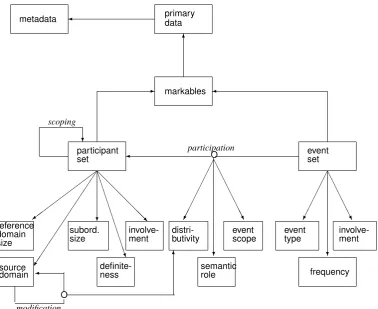
Figure 1: Metamodel for the annotation of quantification
The quantification in (21b) is collective, as the weight ap-plies to the whole formed by all the quantities of sand. In (21a) the predicate of being polluted applies to any sample of “the water in the lake”; this distribution is called ho-mogeneous. In (21c) the boys carried certain quantities of sand that together make up “all the sand”; in this case the distribution is calledunspecific, as this case is rather sim-ilar to the count NP case where both individuals, sets of individuals, and parts of individuals may be involved.
Expressions of proportional involvement, like “some pasta”, “most of the pasta”,“all the pasta”cannot be in-terpreted in terms of number of quantities. As the exam-ples in (21) illustrate, complete involvement of a mass NP reference domain means that the merge of the quantities involved forms the entire domain: if QM is the set of all
quantities ofM, andXM is the set of quantities ofM
in-volved in the quantifying predication, then∪XM =∪QM.
Non-zero involvement means that the merge of the quanti-ties inM has non-zero size, and a“most M”quantification over reference domainM means that, for any unit of mea-surementu,| ∪X|u >|M|u/2, where|.|u indicates size
measured in unitsu. (See (Bunt, 1985) for a calculus of size measurement.)
The examples in (21) illustrate three different ways in which the quantification domain of a mass NP can be ‘com-pletely’ involved in a predication, corresponding to three different senses of expressions of the form(all) the M in English, and similarly in other languages. In (21a), “The water”refers to the set of all (contextually relevant) quan-tities of water; this involvement will be indicated in annota-tions as“all”. In (21c),“all the sand”refers to a subset of quantities of sand that together make up all the
(contextu-ally relevant) sand; this involvement is indicated as “total” in annotations of reference domain involvement. Finally, in (21b),“The sand”refers to the single quantity of sand formed by all contextually relevant quantities of sand. This involvement will be annotated as “all”, just as in the case of collective count NP quantification. Table 1 summarizes these possible annotation choices.
5.
QuantML Annotation Scheme
5.1.
ISO scheme organization
An ISO standard annotation scheme for quantification should fit within the series of semantic annotation standards known collectively as the Semantic Annotation Framework (SemAF), ISO 24617. It should as such be compatible with the existing parts of SemAF: Part 1, Time and events; Part 2, Dialogue acts; Part 4: Semantic roles; Part 7: Spatial information, and Part 8: Discourse relations. Moreover, it should be defined according to the ISO Principles for se-mantic annotation, as mentioned in Section 2.3. This means in particular that the definition of the annotation scheme in-cludes an abstract syntax, a concrete syntax, and a seman-tics, supported by a conceptual metamodel. Figure 1 shows the proposed metamodel, reflecting the conceptual analysis of quantification in the previous sections.
(22) a. Alex owns some (valuable ancient (Chinese books and Japanese paintings)).
b. Markables: m1=Alex, m2=owns, m3=some valuable ancient Chinese books and Japanese paintings, m4= valuable, m5=valuable ancient Chinese books and paintings, m6=ancient, m7=Chinese, m8=Chinese books, m9=books, m10=Japanese, m11=Japanese paintings, m12=paintings
c. QuantML Representation:
<entity xml:id=“x1” target=“#m1” domain=“#x1” involvement=“1” definiteness=“def”/> <sourceDomain xml:id=“x1” target=“#m1” pred=“alex”/>
<event xml:id=“e1” target=“#m2” pred=“own”/>
<entity xml:id=“x2” target=“#m3” domain=“#x3” involvement=“some” definiteness=“indef”?/> <qDomain xml:id=“x3” target=“#m5” source=“#x4 #x6” restrictions=“#r1 #r2?”/>
<qDomain xml:id=“x4” target=“#m8” source=“#x5” restrictions=“#r3”/> <sourceDomain xml:id=“x5” target=“#m9” pred=“book”/>
<qDomain xml:id=“x6” target=“#m11” source=“#x7” restrictions=“#r4”/> <sourceDomain xml:id=“x7” target=“#m12” pred=“painting”/>
<adNLink xml:id=“r1” target=“#m4” pred=“valuable” distr=“individual”/> <adNLink xml:id=“r2” target=“#m6” pred=“ancient” distr=“individual”/> <adNLink xml:id=“r3” target=“#m7” pred=“chinese” distr=“individual”/> <adNLink xml:id=“r4” target=“#m10” pred=“japanese” distr=“individual”/>
<participationLink event=“#e1” participant=“#x1” semRole=“theme” distr=“individual” eventScope=“narrow”/>
(see Bunt, 2010). This approach supports the design of al-ternative user-friendly representations, allowing for exam-ple to use tabular forms or other formats that are more con-venient for human annotators and researchers than XML representations. This has been exploited in the DialogBank (Bunt et al., 2016), a resource of dialogues annotated ac-cording to the ISO 24617-2 annotation scheme, with alter-native representations and the possibility to convert from one representation to another.
5.2.
QuantML Abstract Syntax, Concrete
Syntax, and Semantics
The annotation structures defined by the QuantML ab-stract syntax consist of entity structures and link struc-tures. The concrete syntax specifies a pivot XML format for representing these structures. The examples earlier in this paper gave a slightly simplified impression of these representations. The example in Fig. 2 provides more detail in case the quantifier has a structured source do-main, caused by the NP head being a modified conjunc-tion of two modified nouns. (The<srLink>used in the examples above has been replaced here by the QuantML element <participationLink>.) The semantics specifies an interpretation-by-translation by means of a composi-tional interpretation function that defines DRSs for all well-formed annotation structures; compositional in the sense that the DRS expressing the meaning of an annotation structure is constructed out of the DRSs interpreting the component entity and link structures.
Example (23) shows the abstract entity structure for the quantifier “Three students”with its concrete XML repre-sentation and its semantics. The abstract annotation struc-ture pairs the markable for an occurrence of the expression
“three students”with a quadruple of concepts as shown in (23a); a concrete representation in XML may look as in (23b); and the semantic interpretation as shown in (23c), obtained by applying the interpretation function as partly defined by (24), where ‘P’ stands for the characteristic predicate of a source domain, andNis a predicate that
ex-presses reference domain involvement.
(23) a. hman, some, indef,λz.|z|= 3i b. <entity xml:id=“x1” target=“#m1”
type=“student” involvement=“3”/>
c. X
|X|= 3, x
x∈X ⇒ STUDENT(x)
(24) IA(hP, 3, indef,Ci) = X
N(|X|), x
x∈X ⇒ P(x)
6.
Conclusions and Further Work
In this paper we have outlined a theoretically well-founded approach to the annotation of quantification in natural lan-guage which observes the most important requirements for establishing an ISO annotation standard. These require-ments concern:
1. theoretical adequacy, taking well-established results of studies in logic, linguistics, and computation into ac-count (notably those of Generalized Quantifier The-ory, of neo-Davidsonian event-based semantics, and the ISO Principles of semantic annotation);
2. empirical adequacy, providing a wide coverage of quantification phenomena;
3. semantic adequacy, in specifying a well-defined se-mantics of annotations;
4. compliance with the ISO Linguistic Annotation Framework2and the ISO Principles of semantic
tation3, resulting in the separation of the abstract and concrete syntax of annotations, with a compositional semantics that provides interpretations in the form of DRSs for the structures of the abstract syntax;
5. compatibility with existing standards for the semantic annotation of time and events, spatial information, and semantic roles.
The paper specifies a metamodel that specifies a number of concepts relating to properties of quantification in natural language (including quantification phenomena within head noun modifications) that have to be taken into account in an adequate annotation scheme, including those that occur in noun modification structures with quantifier restrictors, such as the distributivity of adjectival modification and the relative scoping of quantifiers when inverse linking occurs in modification by preposition phrases.
There is still work to be done: further development of he approach outlined here will try to incorporate solutions for some of the well-known semantically hard puzzles relating to quantification, such as the treatment of reciprocals, re-flexives, generics and habituals.
7.
Bibliographical References
Barker, C. (2014). Scope. In S. Lappin and C. Fox, editors,
The Handbook of Contemporary Semantic Theory, pages 40–76. John Wiley.
Barwise, J. and Cooper, R. (1981). Generalized quantifiers and natural language. Linguistics and Philosophy, pages 159–219.
Bos, J., Basile, V., Evang, K., Venhuizen, N., and Bjerva, J. (2017). The Groningen Meaning Bank. In Nancy Ide and James Pustejovsky, editors,Handbook of Linguistic Annotation, pages 463–496. Springer, Berlin.
Bunt, H. and Pustejovsky, J. (2010). Annotating tempo-ral and event quantification. InProceedings ISA-5, Fifth International Workshop on Interoperable Semantic An-notation, pages 15–22. City University of Hong Kong. Bunt, H., Petukhova, V., Malchanau, A., Fang, A., and
Wi-jnhoven, K. (2016). The DialogBank. InProceedings 10th International Conference on Language Resources and Evaluation (LREC 2016), Portoroz.
Bunt, H. (1985). Mass terms and model-theoretic seman-tics. Cambridge University Press, Cambridge, UK. Bunt, H. (2010). A methodology for designing semantic
annotation languages exploiting syntactic-semantic iso-morphisms. In Alex Fang, Nancy Ide, and Jonathan Webster, editors,Proceedings of ICGL 2010, Second In-ternational Conference on Global Interoperability for Language Resources, pages 29–45. City University of Hong Kong.
Bunt, H. (2015). On the principles of semantic annotation. InProceedings 11th Joint ACL-ISO Workshop on Inter-operable Semantic Annotation (ISA-11), London. Cooper, R. (1983). Quantification and syntactic theory.
Reidel, Dordrecht.
3
ISO 24617-6; cf. Bunt, 2015
Davidson, D. (1967). The logical form of action sentences. In N. Rescher, editor,The Logic of Decision and Action. University of Pittsburgh Press.
Hintikka, J. (1973). Quantifiers vs. quantification theory.
Dialectica, 27:329–358.
Ide, N. and Romary, L. (2004). International standard for a Linguistic Annotation Framework. Natural Language Engineering, 10:221–225.
ISO. (2010). ISO 24612: Language resource manage-ment: Linguistic Annotation Framework (LAF). Inter-national Organisation for Standardisation ISO, Geneva. Kamp, H. and Reyle, U. (1993). From Discourse to Logic.
Kluwer Academic Publishers, Dordrecht.
Lee, K. and Bunt, H. (2012). Counting time and events. In
Proceedings 8th Joint ISO-ACL Workshop on Interoper-able Semantic Annotation (ISA-8). ILC-CNR, Pisa. Lindstr¨om, P. (1966). First order predicate logic with
gen-eralized quantifiers.Theoria, 32:186–195.
May, R. and Bale, A. (2005). Inverse linking. In Martin Everaert and Henk van Riemsdijk, editors,The Blackwell Companion to syntax, Vol. 2, pages 639–667. Blackwell, Oxford.
May, R. (1977). The Grammar of Quantification. Ph.D. Dissertation, MIT.
Mostowski, A. (1957). On a generalization of quantifiers.
Fundamentae Mathematicae, 44:12–36.
Parsons, T. (1990). Events in the Semantics of English: A Study in Subatomic Semantics. MIT Press, Cambridge, MA.
Partee, B. (1988). Many quantifiers. InESCOL 89: Pro-ceedings of the Eastern States Conference on Linguistics, Reprinted in Compositionality in Formal Semantics: Se-lected Papers by Barbara Partee, pages 241–158, Ox-ford. Blackwell 2004.
Pustejovsky, J. and Bunt, H., and Zaenen, A. (201). De-signing annotation schemes: From theory to model. In Nancy Ide and James Pustejovsky, editors,Handbook of Linguistic Annotation. Springer, Berlin.
Quirk, R., Greenbaum, S., Leech, G., and Svartvik, J. (1972).A grammar of contemporary English. Longman, London.
Ruys, E. and Winter, Y. (2011). Scope ambiguities in for-mal linguistics. In D. Gabbay et al., editors,Handbook of Philosophical Logic. Foris, Dordrecht.
Scha, R. (1981). Collective, distributive and cumulative quantification. In J. Groenendijk et al., editors, For-mal Methods in the Study of Language, pages 483–512. Mathematisch Centrum, Amsterdam.
Szabolcsi, A. (2010). Quantification. Cambridge Univer-sity Press, Cambridge, UK.