Evaluation by Experts and Designated Users on the Learning
Strategy using SketchUp Make for Elevating Visual Spatial Skills
and Geometry Thinking
Avaliação de Peritos e Utilizadores Indicados na Estratégia de
Aprendizagem Usando o SketchUp Make no Aumento das Competências
Visual-Espacial e Pensamento Geométrico
Rohani Abd Wahab Abdul Halim Abdullah
Mahani Mokhtar Noor Azean Atan Mohd Salleh Abu
Abstract
The teaching and learning of Geometry should be meaningful and not merely reacting to the teacher’s stimuli. Hence, students should be given opportunities to experiment when learning mathematics through exploration and investigation of geometric shapes by themselves. For that reason, a Learning Strategy for 3-dimensional Geometry using the SketchUp Make dynamic software, called LSPE-SUM was designed through a step-by-step instruction to help students to improve their visual spatial skills and geometric thinking. Visual spatial skills were carefully integrated onto each van Hiele levels of Geometry thinking through specific arrangement of specially crafted learning activities. Such arrangement was vital to ensure that students could achieve better cognitive enhancement in visual spatial skills by communicating and interacting physically and socially according to the hierarchical van Hiele model of Geometry thinking. LSPE-SUM capitalized the dynamic features of SketchUp Make to facilitate the elevation of visual spatial skills and Geometry thinking during the learning processes. The whole process of designing and developing the LSPE-SUM adopted the five cyclic stages of ADDIE instructional design model. The purpose of this article was to report the details of the final two stages, more specifically, implementation and evaluation of LSPE-SUM. This learning strategy was tried out twice upon twelve different students in a classroom setting over a period of 3 weeks each. Besides that, LSPE-SUM was also given to experts to obtain their views and evaluation on its functionality. Quantitative and qualitative approaches were used to collect data as well as to analyze the experts and students’ views on the suitability of LSPE-SUM. Analysis of students’ views suggested that LSPE-SUM has assisted most of them in
Kota Tinggi Science School, Bandar Penawar, 81930 Bandar Penawar, MALAYSIA. E-mail: [email protected].
Faculty of Education, Universiti Teknologi Malaysia (UTM), 81310 Johor Bahru, MALAYSIA. E-mail:
Faculty of Education, Universiti Teknologi Malaysia (UTM), 81310 Johor Bahru, MALAYSIA. E-mail: [email protected].
Faculty of Education, Universiti Teknologi Malaysia (UTM), 81310 Johor Bahru, MALAYSIA. E-mail:
Faculty of Education, Universiti Teknologi Malaysia (UTM), 81310 Johor Bahru, MALAYSIA E-mail:
elevating both their visual spatial skills and Geometry thinking; while, all experts claimed that LSPE-SUM was pedagogically functional and served its purposes well.
Keywords: van Hiele Levels of Geometry Thinking. Visual Spatial Skills, SketchUp Make. Validity. Plan and Elevation.
Resumo
O ensino e a aprendizagem da geometria devem ser significativos para os alunos, não consistindo, apenas, numa reação a estímulos do professor. Por conseguinte, os alunos devem ter oportunidades de experimentação na aprendizagem da matemática, através da exploração e da investigação de formas geométricas. Nesse sentido, uma estratégia de aprendizagem de geometria tridimensional, usando o software dinâmico SketchUp, o LSPE-SUM, foi projetada através de instruções passo a passo para ajudar os alunos a melhorar suas competências visoespaciais e de pensamento geométrico. As competências visoespaciais foram cuidadosamente integradas a cada nível proposto pelo Modelo de van Hiele, relativo ao desenvolvimento do pensamento geométrico, através de atividades especificas de aprendizagem. Esse arranjo foi vital para garantir que os alunos pudessem alcançar maior aperfeiçoamento cognitivo das competências visoespaciais ao comunicar e interagir, demonstrativa e socialmente, de acordo com o modelo hierárquico de pensamento geométrico de van Hiele. O LSPE-SUM capitalizou recursos dinâmicos de SketchUp para facilitar a melhoria das competências e do pensamento geométrico visoespacial durante os processos de aprendizagem. O processo de concepção e desenvolvimento do LSPE-SUM adotou as cinco fases do modelo de aprendizagem ADDIE. O objetivo deste artigo é informar os detalhes das duas etapas finais da implementação e avaliação do LSPE-SUM. Essa estratégia de aprendizagem foi testada em sala de aula duas vezes, em doze alunos diferentes, ao longo de um período de 3 semanas. Além disso, o LSPE-SUM também foi entregue a peritos para obter os seus pontos de vista e avaliação sobre a sua funcionalidade. Foram usadas abordagens quantitativas e qualitativas na recolha de dados e análise das opiniões de peritos e alunos sobre a adequação do LSPE-SUM. A análise das opiniões dos alunos sugere que o LSPE-SUM tem ajudado a aumentar as suas competências relativas ao pensamento geométrico visoespacial; enquanto, todos os peritos argumentam que o LSPE-SUM foi pedagogicamente funcional e cumpriu com os objetivos.
Palavras-chave: Níveis de Pensamento de Geometria Espacial van Hiele. Aptidões visoespaciais. Execução SketchUp. Validade. Plano e Melhoria.
1 Introduction
aspect in the eleven shifts of the MEB transformation focused on leveraging computer technologies to improve the quality of learning in Malaysia.
As pointed by Mullis et al. (2012), the current approaches and teaching methods in the classrooms were still confined to the traditional teacher-centered approach. Similar findings were also reported by Noraini (2006) and Abdul Halim and Effandi (2013) who found that teachers’ Geometry learning activities were uncreative and boring due to merely using blackboard to explain definitions, concepts, and specific theorems. They also reported that there were teachers who showed the methods and algorithms for the solution of the problems raised and relied on numerous exercises to make their students familiar with the questions. Adverse impact occurred when students failed to understand the basic concepts of Geometry (Abdul Halim & Effandi, 2013; Zaid, 2014; Clements & Battista, 1992b; Noraini, 2007). In addition, earlier researchers found that students who learned the concepts of Geometry by memorizing, often failed to recognize the components of Geometry series, features, and the relationship between the features. In fact, one of the learning principles to enhance students' understanding in Geometry is that students were required to successfully relate Geometry series and features.
The development of good levels of Geometry thinking plays a critical role at secondary schools. Chiang (2012) held the view that failure to raise the level of geometric thinking will disappoint students and, thus, drive them to achieve unfavorable decisions. Noraini (2006) has also expressed concern over poor Geometry performance at primary schools. It is possible that low Geometry thinking achievement at secondary schools will result in a lack of students who successfully pursue their Geometry studies related fields at higher levels. Similarly, Chiang (2012) believed that the failure to grasp the knowledge at schools would cause difficulties for students in learning more complex Geometry concepts such as trigonometry, transformation, and plan and elevation. Similarly, Usiskin (1982) also found that many students failed to understand the Geometry concepts because of their inability to master basic terminologies.
involving the same object. The Geometry concept also required visual translation since the Geometry problems were presented in 2D on question papers. Therefore, if any student failed to elaborate 3D Geometry figures in which the drawing was an isometric view on paper, they would also have difficulty in interpreting questions involving solid Geometry (Norani, 2006). There have been on-going efforts to develop teaching materials for Geometry (Battista, 2002; Clements, 2000; Ortiz, 1994). Presmeg (2006) strongly believed that exposure of computer technology was very helpful in learning Geometry. Limited experiences in Geometry did not provide opportunities for students to develop their visual spatial skills, thus, preventing the development of thinking when learning Geometry. Ben-Cham et al. (2006) asserted that students faced problems in visual spatial cross-section of an object due to the lack of experience with solid objects. Teaching materials for the Geometry learning has evolved from the traditional of just drawing on black boards, to Geometry building blocks and, until recently, jigsaw puzzles with the help of computers. Over the past decade, computers have become a more popular tool in Geometry teaching and learning. In their studies, Battista (2002), Olkun et al. (2005), Abdul Halim (2013) and Safarin (2009) have successfully demonstrated that the use of a Geometry software could foster understanding and thinking in Geometry. In addition, Baki et al. (2011), Contero et al., (2005), Safarin (2009), Darr, Blasko, and Dwyer (2000) and Saud and Foong (2007) have also proven that the dynamic software was capable to elevate visual spatial skills successfully.
Plan and elevation is a subject in Geometry which involves the mind and translation of descriptions into drawings. Geometry drawing is a picture in one's mind which is translated using drawing as a medium of communication (Ferguson, 1992). Similarly, Jonassen (2003) and Tillotson (1984) also pointed that Geometry learning was based on actual situations and often involves mental, visual, and spatial representations, especially in building (Kyttälä & Lehto, 2008). Therefore, students need to equip themselves with the basic concepts of Geometry drawing as it would facilitate them in learning more complex mathematics, especially those that involved Geometry. However, mastery of the basic concepts of Geometry drawing required students to master visual spatial skills (Alias, Black & Gray, 2002) and high level of Geometry thinking (Abdul Halim & Effandi, 2011).
for students to elevate their visual spatial skills and develop students’ Geometry thinking skills. Sidek and Jamaluddin (2005) explained that a noble learning module should be comprehensive and contain all the materials as well as teaching and learning resources including notes prepared by the teachers. In addition, Russell (1974), Sharifah Alwiah (1981) and Creager and Murray (1985) defined modules as a package of learning, containing components of learning in which students can follow step-by-step to grasp a unit of learning where it can be executed individually or in groups.
2 Development of LSPE-SUM
The development of LSPE-SUM referred to the application of visual spatial skills integrated into the van Hiele levels of Geometry thinking through a 3-dimensional dynamic software called SketchUp Make. Accordingly, the focused visual spatial skills consisted of four components, specifically the ability to mentally rotate, view, transform, and cut. Van Hiele levels of Geometry thinking are hierarchical, while the domains of visual spatial skills are not related to each other but have their own criteria representing certain abilities. To ensure that all the domains of visual spatial skills could be applied to the level of Geometry thinking, LSPE-SUM pursued the guidelines as shown in Figure 1.
Figure 1-Visual Spatial Skills Integrated into the van Hiele Levels of Geometry Thinking Source: Research Data
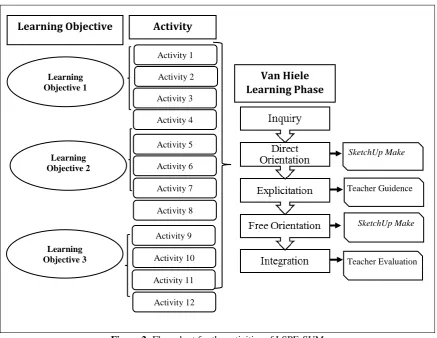
Figure 2- Flow chart for the activities of LSPE-SUM Source: Research Data
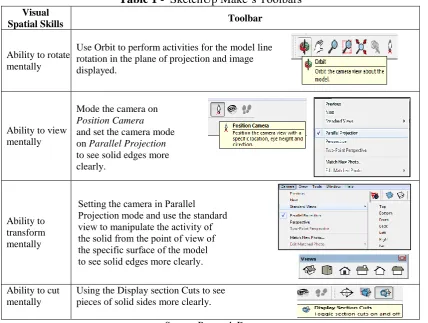
SketchUp Make’s toolbars that were used to help assimilate the visual spatial skills onto each level of Geometry thinking are enlisted in Table 1.
Ability to transform mentally
Ability to view mentally
L3/Informal Deduction
L2/Analysis
Ability to rotate mentally
L1/Visualization
Level of van Hiele Geometry Thinking
Ability to cut mentally
Visual Spatial Skills
L4/Formal Deduction
Heirarchy Integrated
Van Hiele Learning Phase
Learning Objective 1
Activity 1
Activity 4
Activity 6
Activity 7
Activity 8
Activity 9
Activity 10
Activity 11
Activity 12 Activity 5
SketchUp Make
SketchUp Make Teacher Guidence
Teacher Evaluation Activity 2
Activity 3
Learning Objective Activity
Learning Objective 2
Table 1 - SketchUp Make’s Toolbars Visual
Spatial Skills Toolbar
Ability to rotate mentally
Use Orbit to perform activities for the model line rotation in the plane of projection and image displayed.
Ability to view mentally
Mode the camera on
Position Camera and set the camera mode on Parallel Projection to see solid edges more clearly.
Ability to transform mentally
Setting the camera in Parallel
Projection mode and use the standard view to manipulate the activity of the solid from the point of view of the specific surface of the model to see solid edges more clearly.
Ability to cut mentally
Using the Display section Cuts to see pieces of solid sides more clearly.
Source: Research Data
LSPE-SUM only focused on van Hiele levels of Geometry progression from Level One (L1 / Visualization) to Level Four (L4 / Formal Deduction). This is because according to Crowley (1987), level five (Accuracy) is comprised of high-level thinking, which were complicated and complex. Furthermore, students in secondary schools have not achieved the level of thought. Examples of activities for every level of Geometry Thinking are explained below:
a) Level One (L1 / Visualization)
At this level students learn geometric shapes according to visual features and performance based on global perceptions about solid or certain elements (faces, edges, vertices) without paying particular attention to angular size, long edge, parallelism, and other traits. When any of the characteristics of mathematics appear in a student's answer, it's merely in the role of visual objects. Therefore, at this stage, students were not expected to understand and define the nature and characteristics of the Geometry shown.
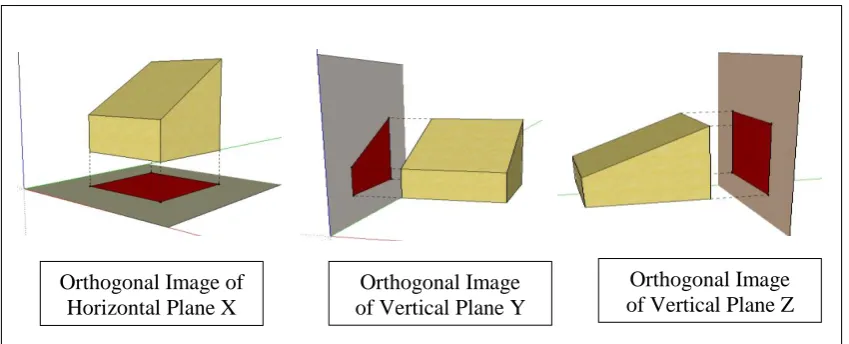
Figure 3- Orthogonal Projection Source: Research Data b) Level Two (L2 / Analysis)
At this stage, students have begun to learn about solid by global perceptions of the solid and its elements involving investigations of different mathematical properties such as size of the angle, length of the edge, and other properties through observing parallelism of solid or note about the solid name. In other words, there is an analysis of the concept and its properties. Students determine the properties through observation, measurement, experiments, drawing, and creating models. However, they cannot fully explain the relationship between nature, between Geometry and some, its definition.
To facilitate these activities, students were encouraged to use the Orbit toolbar to perform activities on all sides of the model and set the camera on the Camera Position and Parallel Projection modes to see solid edges more clearly. For example:
Students were to analyze the concept and Geometry properties of given 3D solids. Following that, they were to draw the orthogonal projection of the surface of a solid according to a predetermined direction of view as illustrated on Figure 4.
Figure 4 - Orthogonal Projection by the Views of Direction Source: Research Data
Non-orthogonal projection Orthogonal projection
Orthogonal Image of Horizontal Plane X
Orthogonal Image of Vertical Plane Y
c) Level Three (L3 / Informal Deduction)
At this stage, students have begun to see the properties’ connection in solid Geometry and properties of solids using various informal deductions, as well as, classifying solids hierarchically. The students’ answers, including non-formal justification are based on the nature of a solid such as angular size, long edge, parallelism, and other natures. These properties can be observed in the solid representation of the mathematical structure of a known solid.
To facilitate these activities, students were encouraged to set the camera on the of Position Camera mode and then on the Parallel Projection mode to see solid edges more clearly and followed by using the Standard View Camera mode to manipulate events from the viewpoint of certain solids to another. For example:
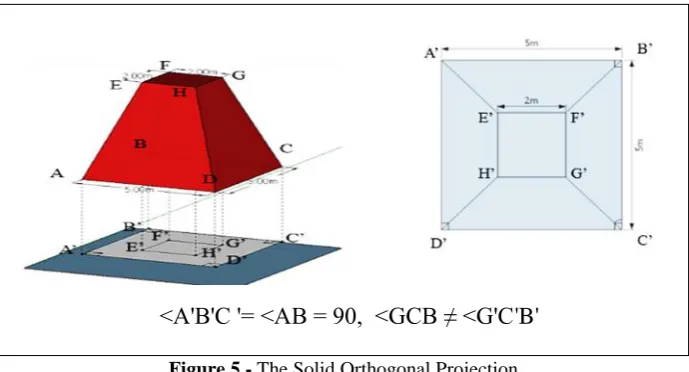
Students were to determine the orthogonal projection of a solid as displayed on Figure 5. Following that, the students were to make a formal conclusion by deduction not on the side of the solid angle and on the side of the orthogonal angle projection.
Figure 5 - The Solid Orthogonal Projection Source: Research Data
d) Level Four (L4 / Formal Deduction)
At this stage, students can reason formally based on solid mathematical structures or their elements, including properties that cannot be seen but can be inferred from the definition or other attributes. The students can then compile data, and not just receive evidence but organize theorems in the axiom system. In addition, students have the opportunity to develop more evidence along the way. Differences between statements and conversion can be made and students are aware of the need to prove through a series of deductive reasoning. For example, students have begun to understand the definitions, postulates and theorems on a
plane, but may not understand why the postulate is true and why it can be used as a postulate in the ways of proving that two triangles are congruent.
To facilitate these activities, students were encouraged to set the camera mode and then use the Parallel Projection Standard View mode to manipulate events from the viewpoint of certain solids to solids and use the Display Section Cuts to see pieces of solid sides more clearly. For example:
Students were to perform deductive reasoning on solid geometric properties of a solid long side, which involve long sides and angles that were not visible.
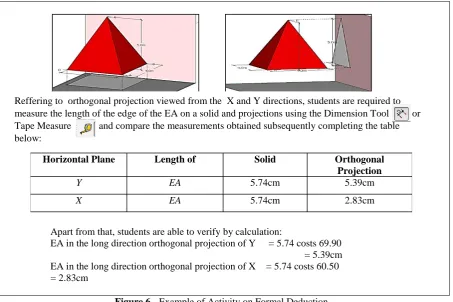
Figure 6 - Example of Activity on Formal Deduction Source: Research Data
Based on the activity carried out as illustrated on Figure 6, the students are able to do deduction reasoning, namely:
I. If the solid surface is parallel to the plane of projection, the length of the solid is equal to the length of the orthogonal projection onto a plane surface.
II. If the solid surface is not parallel to the plane of projection, the length of the solid is not the same as the length of the orthogonal projection onto a plane surface.
Reffering to orthogonal projection viewed from the X and Y directions, students are required to measure the length of the edge of the EA on a solid and projections using the Dimension Tool or Tape Measure and compare the measurements obtained subsequently completing the table below:
Horizontal Plane Length of Solid Orthogonal Projection
Y EA 5.74cm 5.39cm
X EA 5.74cm 2.83cm
Apart from that, students are able to verify by calculation:
3 Statement of the problem
This study attempted to determine the validity of LSPE-SUM, which has been designed and developed before its effectiveness was tested in mathematics classrooms. Mohd Majid (1998) defined that the validity of a module referred to the extent of which it can measure its objective. To gauge the validity, Russell (1947), Meyer (1988) and Mohd Najib (1998) suggested to request the evaluation of experts. Therefore, 5 lecturers and 2 master teachers of mathematics were engaged to validate LSPE-SUM. Sidek Mohd Noah and Jamaludin Ahmad (2005) believed that the content validity of a module depended on its objective and appropriateness. Thus, the information obtained could meet the desired overall achievement. In order to determine the validity of LSPE-SUM, the researchers designed a questionnaire with guidance from supervisors as suggested by Meyer (1988), Russell (1974) and Jamaludin Ahmad (2002). In addition, a draft of LSPE-SUM, which went through improvements in terms of content validity, was also evaluated by students. Russell (1974) and Meyer (1988) pointed out that it was necessary to analyse how extensively students managed to follow the steps of each activity, as this process would show if the students had conquered the module objectives. Therefore, each student was given a set of questionnaire, which was developed based on the steps of LSPE-SUM’s activities to be completed at the end of the pilot study. This procedure was conducted as Russell (1974) and Meyer (1988) believed that apart from validity by experts, pre and post tests should also be conducted to ensure that a developed module can achieve its required objectives.
4 Purpose of the study
5 Research methodology
The data of this study were collected through quantitative and qualitative approaches. The quantitative data collection was divided into three stages, specifically Stage I (expert validity), Stage II (students’ evaluation) and Stage III (Pre-test and post-test).
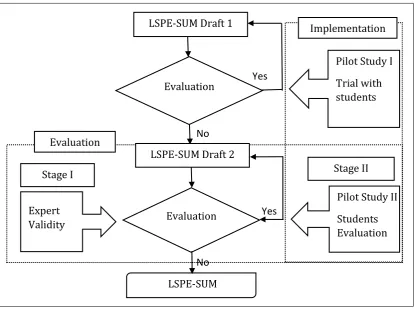
Figure 7 - The process of obtaining expert validity and students’ evaluation of LSPE-SUM. Source: Research Data
On the other hand, observation and interviews were conducted to generate qualitative data. The testing processes of Stage I and Stage II are shown in Figure 7, and they were adapted from Meyer's model (1988). Stage I was carried out through evaluation by experts, while Stage II referred to the evaluation by students based on LSPE-SUM activities. For the success of this research, pilot study was conducted twice, whereby, Pilot Study I focused on how extensive the levels of activities in each van Hiele levels of Geometry thinking and visual spatial skills were and to perceive the students' abilities to grasp the step-by-step instructions given. Refinements were made based on these outcomes, which were then followed by referring the draft of LSPE-SUM to a specialist for content validity. The comments and suggestions obtained were taken into consideration to ensure that the module could elicit the targeted outcomes. Pilot Study 2 was then conducted to see students’ perceptions of the draft
Evaluation LSPE-SUM Draft 1
LSPE-SUM Draft 2
Evaluation
LSPE-SUM Expert
Validity
Pilot Study II
Students Evaluation Stage II
Pilot Study I
Trial with students
Stage I
Implementation
Evaluation
Yes
No
Yes
of LSPE-SUM. Subsequently, pre and post-tests were conducted to ensure that the draft of LSPE-SUM could achieve its main objective, which was to elevate the visual spatial skills and van Hiele levels of Geometry thinking.
The set of questionnaires used to measure the content validity and student’s evaluation was designed by the researchers and assisted by supervisors. It was then reviewed by language experts to ascertain the accuracy of language, sentence structure, as well as to ensure that the items were accurate and appropriate for the targeted respondents. Referring to Meyer (1988) and Russell (1974) in Sidek and Jamaludin (2005), the questionnaires content validity depended on the experts’ evaluation. Hence, a module with high validity should be able to meet the population’s target, the teaching situation or the method of the module execution. Besides that, considerations should also be taken into on the allocation of time and whether the learning objectives were aligned and managed to promote students towards excellence. For that reason, each expert was given a draft of LSPE-SUM to be reviewed. Abu Bakar (1995) in Sidek and Jamaludin (2005) pointed that a rate of 70% denotes one to have mastered or attained a high level of achievement. Concurrently, students evaluated the steps of each activity in LSPE-SUM by completing the set of questionnaires. Evaluation on the content validity of each item in the questionnaire was based on a semantic scale of one for the lowest scale and five for the highest.
5.1 Research instrument
viewpoint, the Mental Transformation test for 3D to 2D (T3D2D) was used to measure the ability to manipulate mentally, and the Mental Cutting Test (MCT) was employed to measure mental cutting abilities. In addition, the van Hiele Geometric Thinking (vHGT) Test was applied to measure the level of the students' geometric thinking, which has been used widely by researchers such as Usiskin (1982), Abdul Halim (2013) and Vojkuvkova and Haviger (2013).
5.2 Respondents
Two groups of subjects were involved in this study, namely experts and students. The experts were assigned to evaluate the content validity of LSPE-SUM, while students evaluated the LSPE-SUM’s activities as a whole. The selection of experts to evaluate the content validity of LSPE-SUM was based on their expertise and feasibility. They were comprised of a lecturer and two teachers who more than 20 years of experience. In order to evaluate visual spatial skills and levels of van Hiele Geometry Thinking, two lecturers in these fields of study were engaged. After discussion and approval from the supervisors, appointment letters were sent out to these experts. They were also contacted through telephone and email. Then appointments were made to meet the experts in person and hand out the validation forms as well as to brief them personally about LSPE-SUM. They were given two to three weeks to complete their validation reports. Meanwhile, the selection of students to evaluate LSPE-SUM comprised of twelve students who participated in the Pilot Study I, and another different set of twelve students who participated in the Pilot Study II. All 24 students have similar academic backgrounds.
6 Findings and analysis
This section describes the findings and analysis based on the validation outcomes of four aspects: (1) van Hiele levels of Geometry thinking, (2) mathematics content, (3) visual spatial skills, and (4) evaluation of students, as well as the outcomes of the pre and post-tests.
6.1 Levels of van Hiele Geometry Thinking
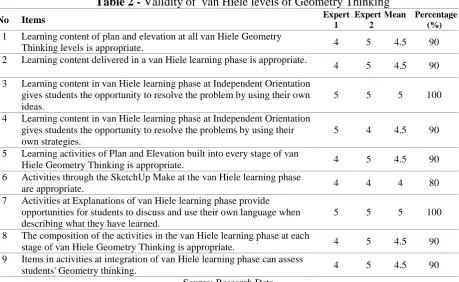
content of Geometry thinking and learning phase of van Hiele was appropriate and students were given the opportunity to use their own ideas and strategies. In addition, the experts also noted that the instructive activities were organized systematically through SketchUp Make in Geometry thinking levels and learning phases and that they promoted discussion on Geometry apart from assessing students’ van Hiele Levels of Geometry Thinking. The results also revealed that LSPE-SUM was an interesting, innovative, and systematic learning strategy, as well as, the content and learning activities being appropriate and well developed.
Table 2 - Validity of van Hiele levels of Geometry Thinking
Source: Research Data
6.2 Mathematics content
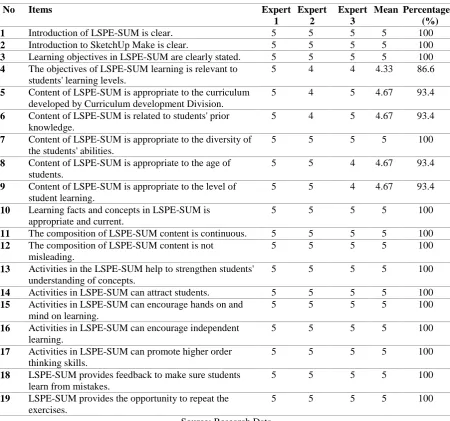
In the context of mathematics content, expert feedback on LSPE-SUM ranged from 86.6% to 100%. These findings revealed that the content of LSPE-SUM was compatible with the mathematics content, appropriate with students’ age level, displayed diversity of abilities, could consolidate understanding of the concepts and provide opportunities for students to learn ‘hands on’ and ‘mind on’. In addition, the draft of LSPE-SUM could also promote higher order thinking skills as shown in Table 3.
No Items Expert
1
Expert 2
Mean Percentage (%)
1 Learning content of plan and elevation at all van Hiele Geometry
Thinking levels is appropriate. 4 5 4.5 90
2 Learning content delivered in a van Hiele learning phase is appropriate.
4 5 4.5 90
3 Learning content in van Hiele learning phase at Independent Orientation gives students the opportunity to resolve the problem by using their own ideas.
5 5 5 100
4 Learning content in van Hiele learning phase at Independent Orientation gives students the opportunity to resolve the problems by using their own strategies.
5 4 4.5 90
5 Learning activities of Plan and Elevation built into every stage of van
Hiele Geometry Thinking is appropriate. 4 5 4.5 90
6 Activities through the SketchUp Make at the van Hiele learning phase
are appropriate. 4 4 4 80
7 Activities at Explanations of van Hiele learning phase provide opportunities for students to discuss and use their own language when describing what they have learned.
5 5 5 100
8 The composition of the activities in the van Hiele learning phase at each
stage of van Hiele Geometry Thinking is appropriate. 4 5 4.5 90 9 Items in activities at integration of van Hiele learning phase can assess
Table 3 - Validity of mathematics content
Source: Research Data
Interestingly, the experts also gave positive comments and suggestions, as enlisted below:
1. It is an innovation for 3D Geometry lesson plan and elevation. 2. It can be easily understood and followed by students.
3. It fulfilled the mission and vision of a 21st century teaching and learning experience. 4. It can help teachers and students in schools and is expected to be introduced and applied
by Mathematics teachers.
5. SketchUp Make-based teaching concept as a new approach and how it can help students understand Plan and Elevation.
6. Training and strategies in LSPE-SUM can assist students’ future career development.
No Items Expert
1
Expert 2
Expert 3
Mean Percentage (%)
1 Introduction of LSPE-SUM is clear. 5 5 5 5 100
2 Introduction to SketchUp Make is clear. 5 5 5 5 100
3 Learning objectives in LSPE-SUM are clearly stated. 5 5 5 5 100 4 The objectives of LSPE-SUM learning is relevant to
students' learning levels.
5 4 4 4.33 86.6
5 Content of LSPE-SUM is appropriate to the curriculum developed by Curriculum development Division.
5 4 5 4.67 93.4
6 Content of LSPE-SUM is related to students' prior knowledge.
5 4 5 4.67 93.4
7 Content of LSPE-SUM is appropriate to the diversity of the students' abilities.
5 5 5 5 100
8 Content of LSPE-SUM is appropriate to the age of students.
5 5 4 4.67 93.4
9 Content of LSPE-SUM is appropriate to the level of student learning.
5 5 4 4.67 93.4
10 Learning facts and concepts in LSPE-SUM is appropriate and current.
5 5 5 5 100
11 The composition of LSPE-SUM content is continuous. 5 5 5 5 100 12 The composition of LSPE-SUM content is not
misleading.
5 5 5 5 100
13 Activities in the LSPE-SUM help to strengthen students' understanding of concepts.
5 5 5 5 100
14 Activities in LSPE-SUM can attract students. 5 5 5 5 100 15 Activities in LSPE-SUM can encourage hands on and
mind on learning.
5 5 5 5 100
16 Activities in LSPE-SUM can encourage independent learning.
5 5 5 5 100
17 Activities in LSPE-SUM can promote higher order thinking skills.
5 5 5 5 100
18 LSPE-SUM provides feedback to make sure students learn from mistakes.
5 5 5 5 100
19 LSPE-SUM provides the opportunity to repeat the exercises.
6.3 Visual spatial skill
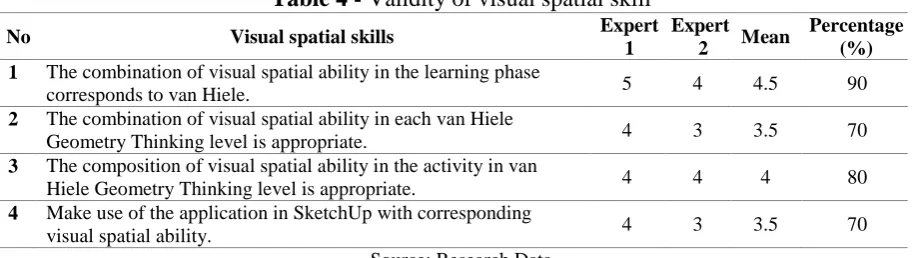
Table 4 presents the breakdown of views by experts on the domain of visual spatial skills injected in LSPE-SUM. Closer inspection of the mean value showed that the arrangement and combination of visual spatial skills, which were integrated in the level of the thinking and learning phase of van Hiele Geometry was appropriate. The data also identified that LSPE-SUM was appropriate with the level of students in developing visual spatial skills. Experts have also suggested that this technique should be introduced in textbooks or school syllabus to provide exposure for students to understand this concept.
Table 4 - Validity of visual spatial skill
Source: Research Data
6.4 Students evaluation
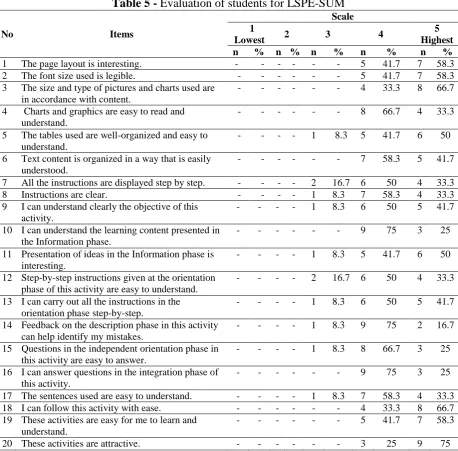
As shown in Table 5, most of the students group agreed that the layout of pages, size of texts, images, charts, tables and text content, and direction of the sentence were appropriate. Besides that, the results also showed that the students found the activities in LSPE-SUM were capable to be carried out step-by-step. They could complete the activity, give a better evaluation and it was easy for them to understand the concept of plan and elevation. In addition, they found the activities to be attractive. These thoughts were translated since it could be observed that the students were discussing and demonstrating positive attitude when doing the tasks. A possible explanation for this might be that SketchUp Make was user-friendly and a dynamic software, therefore the students were fascinated by it. In fact, interviews conducted on many students indicated that they loved and enjoyed using this software.
No Visual spatial skills Expert
1
Expert 2 Mean
Percentage (%) 1 The combination of visual spatial ability in the learning phase
corresponds to van Hiele. 5 4 4.5 90
2 The combination of visual spatial ability in each van Hiele
Geometry Thinking level is appropriate. 4 3 3.5 70
3 The composition of visual spatial ability in the activity in van
Hiele Geometry Thinking level is appropriate. 4 4 4 80 4 Make use of the application in SketchUp with corresponding
Table 5 - Evaluation of students for LSPE-SUM
No Items
Scale 1
Lowest 2 3 4
5 Highest n % n % n % n % n % 1 The page layout is interesting. - - - 5 41.7 7 58.3 2 The font size used is legible. - - - 5 41.7 7 58.3 3 The size and type of pictures and charts used are
in accordance with content.
- - - 4 33.3 8 66.7 4 Charts and graphics are easy to read and
understand.
- - - 8 66.7 4 33.3 5 The tables used are well-organized and easy to
understand.
- - - - 1 8.3 5 41.7 6 50 6 Text content is organized in a way that is easily
understood.
- - - 7 58.3 5 41.7 7 All the instructions are displayed step by step. - - - - 2 16.7 6 50 4 33.3 8 Instructions are clear. - - - - 1 8.3 7 58.3 4 33.3 9 I can understand clearly the objective of this
activity.
- - - - 1 8.3 6 50 5 41.7 10 I can understand the learning content presented in
the Information phase.
- - - 9 75 3 25 11 Presentation of ideas in the Information phase is
interesting.
- - - - 1 8.3 5 41.7 6 50 12 Step-by-step instructions given at the orientation
phase of this activity are easy to understand.
- - - - 2 16.7 6 50 4 33.3 13 I can carry out all the instructions in the
orientation phase step-by-step.
- - - - 1 8.3 6 50 5 41.7 14 Feedback on the description phase in this activity
can help identify my mistakes.
- - - - 1 8.3 9 75 2 16.7 15 Questions in the independent orientation phase in
this activity are easy to answer.
- - - - 1 8.3 8 66.7 3 25 16 I can answer questions in the integration phase of
this activity.
- - - 9 75 3 25 17 The sentences used are easy to understand. - - - - 1 8.3 7 58.3 4 33.3 18 I can follow this activity with ease. - - - 4 33.3 8 66.7 19 These activities are easy for me to learn and
understand.
- - - 5 41.7 7 58.3 20 These activities are attractive. - - - 3 25 9 75
Source: Research Data
6.4 Pre-and post tests
Table 6 - Pre and Post test for levels of van Hiele Geometry Thinking
Source: Research Data
Apart from that, overall visual spatial skills of students increased as shown in Table 7. In addition, observations done during the post test showed that the students appeared confident and the time taken to complete the test was shorter. It could be seen that the students expressed hand gestures to imagine handling the object while working on the activities. The interview responses also indicated that they felt more confident and it was easy to visualize and imagine the processes of mentally rotating, viewing, transforming, and cutting.
Table 7 - Pre and Post test for visual spatial skill
Ability to rotate mentally Ability to view mentally
Based on the graph, all students could improve the ability to rotate mentally. The findings show that three students managed to get full marks and nine marks of students increased by more than 30 points.
Based on the graph, there was a positive effect on the ability of the students, in which three students went towards excellence, five students achieved a good level and four students reached a moderate level Ability to transform mentally Ability to cut mentally
Based on the graph, all students increased their ability in mental transformation. Two students achieved full marks, three students achieved an excellent level and six students reached a good level.
The graph shows a very positive increase whereby before learning using LSPE-SUM students were at weak level and only two students at moderate level. After the intervention, one student reached good level and the remainder were at moderate level.
Source: Research Data
Based on the graph, all students’ levels of van Hiele Geometry Thinking increased. Six students increased from L1 to L3, three students increased from L1 to L2 and three students increased from L2 to L3.
0 50 100
S1 S2 S3 S4 S5 S6 S7 S8 S9 S10 S11 S12
0 20 40 60 80 100
S1 S2 S3 S4 S5 S6 S7 S8 S9 S10S11S12
0 20 40 60 80 100
S1 S2 S3 S4 S5 S6 S7 S8 S9 S10S11S12
0 20 40 60 80 100
S1 S2 S3 S4 S5 S6 S7 S8 S9 S10S11S12
0 1 2 3 4
S1 S2 S3 S4 S5 S6 S7 S8 S9 S10 S11 S12
Post
Pre
Pre Post
Pre
Pre Pre
Post
7 Conclusion
LSPE-SUM was constructed as a learning material for 3-dimensional Plan and Elevation to be used in the Mathematics classroom. The results of this investigation showed that LSPE-SUM was well constructed in the context of incorporating visual spatial skills and van Hiele levels of Geometry thinking. This claim was verified as experts and students’ evaluations agreed that LSPE-SUM was appropriate to be used in classrooms. To further ascertain this claim, the pre and post test results also indicated that LSPE-SUM successfully achieved its objective to elevate the students’ visual spatial skills and van Hiele levels of Geometry thinking. Apart from promoting the understanding of the plan and elevation concepts, LSPE-SUM also developed the students’ interest in learning Geometry. Based on this outcome, it can be concluded that LSPE-SUM can be used for Geometry learning and that the usage can be further examined for other related purposes.
References
ABDULLAH, A. H.; ZAKARIA, E. The Effects of Van Hiele’s Phases of Learning Geometry on Students' Degree of Acquisition of Van Hiele Levels. Procedia - Social and Behavioral Sciences, United Kingdom,v. 102, p. 251-266, 2013.
ABDULLAH, A. H. ; ZAKARIA, E. Enhancing students’ level of geometric thinking through van Hiele’s phase-based learning. Indian Journal of Science and Technology, India, v.6 n.5,p. 4432-4446, 2013
ABDULLAH, A. H., & ZAKARIA, E. The effects of Van Hiele’s phase-based instruction using Geometer’s Sketchpad (GSP) on students’ levels of geometric thinking. Research Journal of Applied
Sciences, Engineering, and Technology, Australia, v.5 n.5,p. 1652-1660, 2013.
ABDULLAH, A. H.; ZAKARIA, E. Skema Pemarkahan dan Penentuan Tahap Pemikiran Dalam Ujian Geometri Van Hiele. In: EDUPRES,2011, Skudai. Proceeding… Skudai, Johor: Universiti Teknologi Malaysia, 2011.
AHMAD, J. Kesahan, Kebolehpercayaan dan Keberkesanan Modul Program Maju Diri Ke Atas
Motivasi Pencapaian Di Kalangan Pelajar Sekolah Menengah Negeri Selangor. 2002. 265 f. Tesis
(Doktor FalsafahTidak Diterbitkan) - Universiti Putra Malaysia, Serdang, 2002.
AHMAD, J.; NOAH, S. M. Pendekatan Alternatif Menentukan Kesahan dan Kebolehpercayaan Modul Program Maju Diri, Jabatan Pendidikan Selangor. Jurnal Persatuan Kaunselor Malaysia
(PERKAMA), Kuala Lumpur, n.9, p. 97-118, 2001.
BATTISTA, M. Fifth graders’ enumeration of cubes in 3D arrays: Conceptual progress in an inquiry-Based Classroom. Journal for Research in Mathematics Education, Reston, VA, v. 30, n. 4, p. 417-448, 1999.
BATTISTA, M. T. Learning Geometry in a dynamic computer environment. Teaching Children
Mathematics, Reston, VA, v. 8, n. 6, p. 333-339, 2002.
WEI, C. K. Easing Learning Difficulties in Circles Among Fourth Formers Students Using van
Hiele-Oriented Learning Instructions. 1. ed. M.Ed (Maths), UTM: Unpublished. 2012. 221 p.
CROWLEY, M. L. The van Hiele model of the development of geometric thought. Learning and
Teaching geometry, K-12. Reston, VA: Ed. National Council af Teachers af Mathematics, 1987. p.
1-16.
HOCK,T. T. Assisting Primary School Children to Progress Through the van Hiele’s Levels of
Geometry Thinking Using Google Sketch-Up. 1. ed. M.Ed. (Maths), UTM:Unpublished, 2011. 240
p.
IDRIS, N. The Effect of Geometers' Sketchpad on the Performance in Geomtry of Malaysian Students' Achievement and van Hiele Geometric Thinking. Malaysian Journal of Mathematical Sciences, Malaysia, v. 1, n. 2, p. 169-180, 2007.
IDRIS, N. The Impact of Using Geometers' sketchpad on Malaysian Students' Achievement and van Hiele Geometric thinking. Journal of Mathematics Education, United States, v. 2, n. 2, p. 94-107, dec. 2009.
IDRIS, N. Pedagogy in Mathematics Education. 2. ed. Kuala Lumpur: Utusan Publication Sdn. Bhd., 2005. 216 p.
IDRIS, N. Spatial Visualization, Field Dependence/Independence, Van Hiele Level, and
Achievement in Geometry: The Influence of Selected Activities for Middle School Students. 1998.
276 f. Tesis (Doctor Degree in Mathematics Education) – The Ohio State University, Ohio, 1998. Unpublished.
JONES, K. Issues in the Teaching and Learning of Geometry. In: HAGGARTY, L. (Ed.). Aspects of
Teaching Secondary Mathematics: perspectives on practice. London: Ed. RoutledgeFalmer, 2002. p
121-139.
JONES, K.; MOONEY, C. Making Space for Geometry in Primary Mathematics. In: THOMPSON, I. (Ed.). Enhancing Primary Mathematics Teaching.London: Ed. Open University Press, 2003. p. 3-15.
MARTÍN‐GUTIÉRREZ, J. et al. Dynamic three‐dimensional illustrator for teaching descriptive Geometry and training visualisation skills. Computer Applications in Engineering Education, United States, v.21, n. 1, p. 8-25, 2013.
MEYER, B. Object-oriented software construction. 2. ed. New York: Prentice hall, 1988. 1254 p. MULLIS, M. O. M.; FOY, P.; ARORA, A. TIMSS 2011 International Results in Mathematics. In: ______. TIMSS & PIRLS International Study Center, Lynch School of Education, Boston College Chestnut Hill, MA, USA and International Association for the Evaluation of
NATIONAL COUNCIL OF TEACHERS OF MATHEMATICS. Principles and standards for
school mathematics. 3. ed. Reston: VA, 2000. 402 p.
NOAH, S. M.; AHMAD, J. Pembinaan Modul: Bagaimana Membina Modul Latihan & Modul Akademik. 1. ed.Serdang: Penerbit Universiti Putra Malaysia, 2005. 166 p.
RUSELL, J. D. Modular Instruction: A Guide to the Design, Selection,Utilization and Evaluation of Modular Materlials. 1. ed.New York: Burgess Publishing Company, 1974. 156 p.
SALLEH, M. A, M. S.; BILAL, M.; TONG, T. Assisting Primary School Children to Progress through Their van Hiele ’ s Levels of Geometry Thinking Using Google SketchUp. Procedia - Social and
Behavioral Sciences, United Kingdom, n. 64, p. 75-84, 2012.
SORBY, S. A. Developing 3-D spatial skills for engineering students. Australasian Journal of
Engineering Education, Australia, v. 13, n. 1, p. 1-11.
TAY, B. L. A van Hiele-based instruction and its impact on the Geometry achievement of Form
One students. M Ed. diss., University of Malaya : Unpublished, 2003. p.1-10.
VAN DE WALLE, J. A., KARP, K. S.; WILLIAMS, J. M. B. Elementary & Middle School
Mathematics. 4. ed. Boston: Allyn and Bacon, 2010. 42 p.
VAN HIELE-GELDOF, D. Last article written by Dina van Hiele-Geldof entitled: Didactics of Geometry as learning process for adults. In: FUYS, D.; GEDDES, D.; TISCHLER, R. (ed.). School of
Education. English translation of selected writings of Dina van Hiele-Geldof and Pierre M. Van
Hiele. Brooklyn: Ed. ERIC, 1984. p. 215-233.
VOJKUVKOVA, I.; HAVIGER, J. The van Hiele Geometry Test at Czech Secondary School. In: World Data System Asia–Oceania Conference 2013, 13., 2013, Prague. Proceedings… Czech Republic: Charles University, 2013. p. 112-115.
WILDER, J. S.; MASON, J. Developing Thinking in Geometry. 2. ed. London: Paul Chapman Educational Publishing, 2005. 270 p.