HAFER, JULIA GREER. Age Differences in the Impact of Affect on Risk Taking (Under the direction of Thomas M. Hess.)
by
Julia Greer Hafer
A thesis submitted to the Graduate Faculty of North Carolina State University
in partial fulfillment of the requirements for the Degree of
Bachelor of Science
Psychology
Raleigh, North Carolina 2015
APPROVED BY:
_______________________________ _______________________________
Lynne Baker-Ward Daniel Grühn
_______________________________ Thomas M. Hess
BIOGRAPHY
TABLE OF CONTENTS
LIST OF TABLES...iv
LIST OF FIGURES...v
INTRODUCTION...1
Feedback and Risk Taking...2
Mood and Risk Taking...4
THE PRESENT STUDY...7
Hypotheses...8
Method...9
Participants...9
Materials...10
Columbia Card Task...10
Self-Assessment Manikin...12
Film Clips...12
Procedure...14
Results...17
Participants...18
Cold CCT Performance...19
Feedback Effects...23
Mood Effects...26
Discussion...30
REFERENCES...36
LIST OF TABLES
Page Table 1. Effects of Mood Manipulation on Young and Old Pilot Participants...14
LIST OF FIGURES
Page
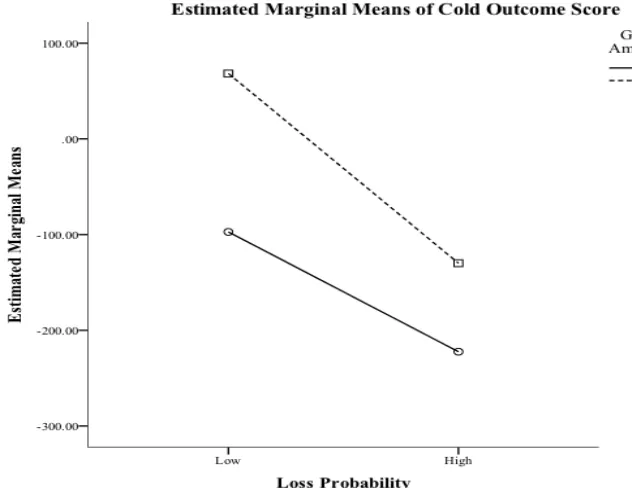
Figure 1. Impact on Outcome Score of Gain Amount by Loss Probability...20
Figure 2. Cold CCT Scores at Low and High Loss Probability for Young and
Older Adults...22
Figure 3. Cold vs. Warm CCT Risk in Older Adults by Loss and Gain
Amount...25
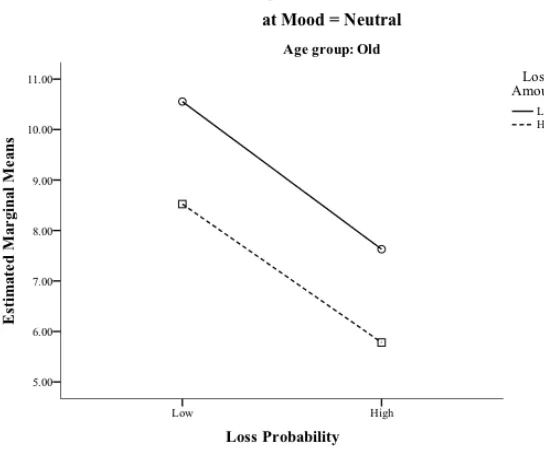
Figure 4. Neutral vs. Sad Warm CCT Risk in Older Adults by Loss Probability
INTRODUCTION
Risk taking at different stages of life can confer benefits or disadvantages depending upon the cognitive and emotional resources of the risk taker. Negative outcomes following risky decisions may be particularly consequential in later life, when resources and time to recover from bad decisions may be more limited than in younger adulthood. Prior research focusing on whether older adults are more or less risk seeking compared to younger adults paints a mixed picture, with different tasks and scenarios leading to different risk patterns. In a widely-cited study by Heckhausen (1997), older adults reported greater risk aversion in hypothetical scenarios compared to younger adults. Yet, older adults have sometimes been found to take the same or greater risks than younger adults (Mata, Josef, Samanez-Larkin & Hertwig, 2011) in gambling tasks such as Blackjack, the Iowa Gambling task (IGT, Bechara et al., 1994), the Balloon Analogue Risk Task (BART; Lejuez, Read, & Kahler, 2002), and the Columbia Card Task (CCT; Figner, Mackinlay, Wilkening, & Weber, 2009; Figner & Weber, 2011).
influence: feedback from specific responses (i.e., loss and gain outcomes) and pre-existing mood.(e.g., sadness).
Feedback and Risk Taking
Feedback during risky decision making has been shown to create greater affective engagement and arousal (Figner et al., 2009; Huang et al., 2013), which in turn might influence how risk information is processed. Heightened arousal has been found to impair processing of non-emotional information about risk (Phelps, 2006) and result in greater risk avoidance, perhaps due to increased processing of loss information (Clark et al., 2012). Delayed feedback, on the other hand, is assumed to be relatively less arousing, and result in lower affective engagement in a task compared to immediate feedback. Few studies have directly compared older and younger adults’ risky behavior. A recent meta-analysis found there was little consistency in how age impacted risk taking except when task characteristics were taken into consideration. Older and younger adults appear to take similar risks when betting is primarily based on probability information with no feedback (i.e., decision by description). In contrast, when responses are based primarily on feedback (i.e., decision by experience), older adults tend to take more risks than younger adults when learning rewards caution, but fewer risks when learning rewards risk seeking (Mata et al., 2011). Older adults’ mixed responses across different types of risky betting tasks might be explained in part by age-related differences in the reaction to the feedback delivered during a task.
Mood and Risk Taking
Another affective factor that might influence age differences in risk taking has to do with pre-existing mood (or incidental affect). In research with younger adults, the low-arousal, negatively valenced emotion of sadness has been associated with increased risk taking. Sadness is theorized to increase a person’s sense of urgency to act upon, and prefer, high-risk, high-reward options (Raghunathan & Pham, 1999; Ellsworth & Scherer, 2003). Lerner, Small, and Loewenstein (2004) found that young adults induced into a sad mood were willing to spend significantly more money on a set of highlighter pens than were participants in a neutral mood. The authors interpreted this finding as evidence that sadness triggers a goal to change one’s circumstances, supporting the position that risk taking can improve mood by providing an opportunity for a quick gain. When given the opportunity, sad younger people may take risks in order to achieve a mood-boosting higher state of arousal.
greater sympathetic nervous system activation relative to other negative emotions; this pattern was not found in younger adults, suggesting sadness is a more upsetting emotion in older adulthood than in younger adulthood.
regulate out of their mood and retain their ability to consider changing risk information. They would therefore be expected to perform as well as and take risks similar to older adults in neutral moods.
In summary, the just-reviewed research suggests that mood may play an important role in risk taking in older adults. Evidence would suggest older adults are quicker emotion regulators and may be less impacted by sadness, taking similar levels of risk in sad moods compared to neutral moods. If the emotion regulation hypothesis is supported, older adults’ performance should not be significantly affected by sad mood or immediate feedback about their losses during the game. From the perspective of socioemotional selectivity, sad moods and feedback about loss should impair older adults’ deliberative capacity, thereby negatively impacting their performance on the task. Both perspectives can be and have been supported in hypothetical scenarios of risk taking preference. Because past research has not sufficiently addressed this conflict, the current study seeks to find evidence for the aforementioned positions theorized to underlie older adults’ risk preference in sad moods by examining their actual risk taking behavior.
The Present Study
versions of the CCT allowed a test of the extent to which affective feedback moderated young and older adults’ risk taking. Comparisons across mood conditions in the Warm version then provided information about how a sad mood state impacted responses to the affective information, and whether there were age differences in this response.
Hypotheses
For conceptual simplicity, I divided my hypotheses into two sets. The first set was based on age differences across the Cold and Warm CCT conditions in the neutral mood condition, which would provide some information about normative age differences in risk-taking in relation to whether or not participants receive feedback regarding the outcomes of their bets. In keeping with previous studies, older adults were expected to exhibit greater levels of risk taking without feedback, and while both groups were expected to exhibit a significant decrease in risk-taking in the warm condition compared to the cold, older adults were expected to decrease their risk taking to a greater degree than younger adults.
greater risk taking). In contrast, older adults’ relatively more efficient sad mood regulation was expected to minimize the impact of mood on performance, resulting in little difference across mood conditions in the old group.
Alternatively, the SST perspective argues older adults are more motivated than younger adults to eliminate their sad mood; if this is true, older adults would be more likely than younger adults to use the betting task to regulate their emotions. In this case, older adults would show increased risk-taking in the sad condition compared to the neutral condition, and the difference between conditions would be greater than the difference for younger adults. If sad mood increases the salience of rewards, older adults would exhibit greater willingness to make riskier bets in order to quickly escape sad mood. From the SST perspective, sad older adults would be expected to exhibit greater, but less optimal, risk taking than sad younger adults, resulting in worse scores.
Method Participants
participants were required to have English as their primary reported language to ensure validity of the tests. Because one of the aims of the proposed study was to examine the effect of sad mood on decision making, answers on the Geriatric Depression Scale (GDS; Sheikh & Yesavage, 1986) were used to assess possible depression, with data from subjects scoring 10 or above (as recommended by Lezak, Howieson, & Loring, 2004) being excluded from the analyses. No participants were excluded for depression. I excluded from analysis data of participants (a) with limited English (N = 3 young), (b) whose choices on the CCT indicated they did not understand the instructions (i.e., if more than once they chose to turn over all 32 cards in the array, which would guarantee a loss (N = 4 young, 5 old), (c) who quit in frustration (N = 1 old), (d) whose session was interrupted due to computer malfunction (N =1 old), and (e) whose Cold CCT risk taking was identified as a high outlier on SPSS boxplot analysis (N =1 old).1 All subsequent analyses were conducted using this new sample, which
included 59 older adults (aged 65-84, 29 female) and 67 younger adults (aged 18-21, 34 female), with 62 participants in the Neutral condition (29 old, 31 female) and 64 (31 old, 32 female) in the Sad condition.
Materials
Columbia Card Task. This study used the Columbia Card Task (CCT; Figner & Weber, 2011) to assess risk taking. The CCT is a gambling task that gives researchers insight into how players use information about probability, loss, and gain to guide their decisions. Two versions of the task were used. In the Cold CCT (see Appendix A for the on-screen
instructions shown to participants), a participant sees a 4 X 8 display of 32 cards on the computer screen. Arrayed along the top are three pieces of information relating to risk: (a) the number of Loss cards in the 32-card array (1 or 3 cards); (b) the value of a Loss card (-250 or -750 points); and (c) the value of a Gain card (+10 or +30 points). The participant decides the number of cards they would like to “turn over” based on this information by clicking their choice from a row of 33 numbered button ranging from 0 to 32. The Cold CCT consists of 24 rounds of choices—three repetitions of each possible combination of the three earlier described risk components. In the Cold CCT, cards are not actually turned over, however; a player only learns of the outcome of their betting at the end of the game. In each round, participants simply click the number of cards they would turn over out of 32 based on the Loss Amount, Gain Amount and Loss Probability they are given, then move on to the next round. In this way, the Cold CCT provides a hypothetical betting scenario, and participants choose how much risk to take without experiencing feedback from round to round.
bya yellow smiley face, whereas a Loss card is indicated by a green frowning face. Encountering a Loss card results in an immediate end to the trial and subtraction of the loss amount for that trial from the running total of winnings. If no Loss card is encountered, the number of Gain cards turned over multiplied by their point value is added to the winnings. Thus, in the Warm CCT, participants experience feedback about whether they have won or lost points in a given round. Participants are not shown their cumulative score, only the outcome for each round. For both versions of the CCT, two performance measures are derived: (a) “risk taking” is determined by the number of cards turned over in each of the 24 trials; and (b) “choice outcome score” is indicated by the amount won (or lost) on each trial, The amount won or lost is determined by adding all gain cards turned over before a loss card is encountered, at which point the gain cards stop being added, the loss card deduction is immediately applied to the score, and the round stops. If a loss card is not encountered, a round total would be positive. If a loss card is encountered, the resulting round score could be negative (especially in rounds with low gain amount and high loss amount). The same scoring applies in the Cold, no-feedback version of the task, except the loss cards are not visually encountered, they are randomly chosen to by the computer to affect participants' score (or not), just as if they had been actively turned over.
Self-Assessment-Manikin. Current mood was assessed at five different times during the experiment on a 9-point scale using self-assessment manikins (SAM; Lang, 1980, see Appendix D).
Table 1
Effects of mood manipulation on young and old pilot participants
Time 1
Time 1 Time 2Time 2
Age Group M SD M SD
Sad Film
Young (N=8) 7.38 0.48 4.00 0.71
Old (N=5) 7.40 0.61 3.00 0.89
Neutral Film
Young (N=8) 7.50 0.48 7.75 0.71
Old (N=5) 7.60 0.61 6.00 0.90
Note. Values are mean scores on a 9-point scale (1=negative mood, 9=positive from the self-assessment-manikins (SAM; Lang, 1980).
Procedure
bring their packet with them to their session. The Short Blessed Orientation-Memory-Concentration test (Katzman, 1983) was administered by phone to older adults in order to screen for cognitive impairment (indicated by a score of 7 or higher); no participants were excluded for depression or cognitive impairment.
then administered the second SAM, followed by the Digit Symbol Substitution task, which took 2 min, followed by a third SAM. These data were collected in order to provide additional data about the sample as well as to provide spacing between the Cold and Warm CCT.
Results
Affective response was expected to moderate age differences in performance on the CCT, and analyses were performed to help determine whether and how this moderation might occur. First, analyses were performed comparing participants’ baseline (no-feedback, low affective engagement) Cold CCT performance. Next, the Cold CCT performance of participants in the Neutral condition were compared to their with-feedback (increased affective engagement) Warm CCT performance. Finally, the role of mood was examined by comparing sad versus neutral mood groups in their performance on the Warm CCT.
order to examine how changes in task contingencies might have impacted strategy differently across age group and mood condition. Choice outcome score as a performance measure should also reflect whether participants have accurately assessed risk, meaning they have determined when it is appropriate to take risk and when it is not based on these contingencies and have adjusted their strategies accordingly.
Participants
Sample characteristics are presented in Table 2. To determine if random assignment resulted in any inadvertent differences across conditions, Age Group X Mood Condition analyses of variance were conducted on each of the measures presented in this table prior to the main analyses. The results of these analyses revealed no significant effects due to condition.
Table 2
Participant characteristics
Age*
Age* Education*Education* Vocabulary*Vocabulary* DSS*DSS* LNS*LNS* Age
Group M SD M SD M SD M SD M SD
Young
(N=67) 19.17 0.85 12.81 1.06 46.58 9.67 79.88 12.51 10.84 2.05 Old
(N=59) 74.51 5.53 16.83 2.24 52.05 11.59 67.28 13.92 9.98 1.98
Cold CCT Performance
Prior to analyzing Cold CCT risk taking, an examination of the data showed some participants (3 older, 5 younger) chose 32 cards once during their trials, which may have been a temporary lapse in memory of the task parameters. For these participants, their 32 choice was replaced by the mean number of cards turned over for their age group for that particular trial type and condition, and all subsequent analyses were conducted using these imputed data. A 2 (age) X 2 (loss probability) X 2 (gain amount) X 2 (loss amount) mixed ANOVA was then conducted on risk taking on the Cold CCT as the dependent measure. A significant main effect for loss probability was obtained, F (1, 124)= 198.62, p < .01, η2p = .
62, with participants taking fewer risks when probability was high (M = 8.58, SD = 3.92) than when it was low (M = 12.78, SD = 4.87). A significant effect due to gain amount was also obtained, F (1, 124) = 33.36, p < .01, η2p = .21, with participants taking more risk when
gain amount was high (M = 11.24, SD = 4.40) than when it was low (M = 10.12, SD = 4.06). Finally, a significant effect of loss amount was also obtained, F (1, 124) = 51.61, p < .01, η2p
= .29, with participants taking fewer risks when loss amount was high (M = 9.73, SD =4.25 ) than when it was low (M = 11.63, SD = 4.44). No other effects were significant. Based on the obtained effect sizes, loss probability appears to be the most important factor participants considered in their risk taking, followed by loss amount, then gain amount.
= 102.90) than when it was low (M = -13.95, SD = 99.22), F (1, 124) = 170.03, p < .01, η2p
= .58; (b) when gain amount was low (M = -158.95, SD = 97.25) than when it was high (M = -30.47, SD = 98.01), F (1, 124) = 126.70, p < .01, η2p = .51; and (c) when loss amount was
high (M = -206.87, SD = 135.85) than when loss amount was low (M = 17.45, SD = 48.84),
F (1, 124) = 323.22, p < .01, η2p = .72. There was also a significant Loss Probability X Gain
Amount interaction, F (1, 124) = 10.70, p < .01, η2p = .08 . The impact on outcome score of
gain amount was higher when loss probability was low than when loss probability was high (see Figure 1).
A significant Age X Loss Probability X Gain Amount X Loss Amount interaction was also obtained, F (1, 124) = 12.49, p < .01, η2p = .09. Follow-up analyses within age groups
showed significant Loss Probability X Gain Amount, F (1, 124) = 10.60, p < .01, η2p = .16,
and Loss Probability X Loss Amount, F (1, 124) = 4.43, p = .04, η2p = .07, interactions for
older adults, but not for younger adults. In contrast, the Loss Probability X Gain Amount X Loss Amount interaction was significant for young adults, F (1, 124) = 12.44, p < .01, η2p = .
Figure 2. Cold CCT scores at low and high loss probability for young and older adults.
Although mood was not manipulated prior to performance in this task, I examined whether there were any differences across participants assigned to the two mood conditions since later analyses will focus on only a subset of the sample. Specifically, a 2(Age) X 2 (Mood) X (Loss Probability) X 2 (Gain Amount) X 2 (Loss Amount) mixed ANOVA was performed with risk taking in the Cold CCT as the dependent measure. There was a significant Age X Mood X Gain Amount X Loss Amount interaction, F (1, 122) = 6.37, p = . 01, η2p = .05; and a significant Age X Mood X Loss Probability X Gain Amount X Loss
differences across conditions in the old group. To control for this, subsquent analyses examining mood effects will use cold CCT risk scores as a covariate.
Feedback effects
In order to determine the impact of feedback on risk taking in older versus younger adults, a 2 (Age Group) X 2 (CCT Version) X 2 (Loss Probability) X 2 (Gain Amount) X 2 (Loss Amount) mixed ANOVA was conducted on participants in the neutral group. (Only effects involving task version will be discussed here and in the following analysis of choice outcome.) There was a main effect of CCT Version, F(1, 60) = 30.60, p < .01, η2p = .34, with
participants taking significantly greater risks on the Cold CCT rounds (M = 10.79, SD = 4.08) compared to the Warm CCT rounds (M = 8.01, SD = 3.35). This is consistent with the hypothesis that feedback about losses would decrease risk taking. The following significant interactions were also obtained: Age X CCT Version X Loss Probability, F (1, 60) = 4.15, p
< .05, η2p = .07; Age X CCT Version X Gain Amount, F (1, 60) = 4.49, p = .04, η2p = .07; and
Age X CCT Version X Loss Probability x Gain Amount x Loss Amount, F (1, 60) = 4.28, p
= .04, η2p = .07.
Follow-up analyses within the older adult group showed a significant main effect for CCT Version, with older adults significantly decreasing their risk taking from Cold (M = 11.81, SD = 4.11) to Warm Version (M = 8.00, SD = 3.45), F (1, 28) = 26.66, p < .01, η2p = .
49. There was also a significant CCT Version X Loss Probability interaction, F (1, 28) = 5.27, p = .03, η2p = .16. The means indicate older participants became more risk-averse with
for low probability bets (Ms = 13.78 vs 9.38; SDs =4.92 vs 4.06, from Cold to Warm CCT) than for high probability bets (Ms = 9.83 vs. 6.62; SDs =5.28 vs 3.18 from Cold to Warm CCT). There was also a significant CCT Version X Gain Amount X Loss Amount interaction,
F (1, 28) = 4.63, p = .04, η2p = .14. Again, older adults seem to have become more
risk-averse in the Warm Version on all types of trials, but the shift was stronger for low loss amounts coupled with high gain (see Figure 3). These results would suggest that older adults were reducing risk taking in all situations with feedback, but that the increase in risk aversion is—surprisingly—in conditions under which the probability of success is highest (low loss amount, high gain amount).
In the younger adult group, participants became more risk averse with feedback, F(1, 32) = 6.91, p = .01, η2p = .18, but the absence of significant interactions indicates that this
A 2 (age group) X 2 (CCT version) X 2 (loss probability) X 2 (gain amount) X 2 (loss amount) mixed ANOVA was then conducted on the choice outcome scores of participants in the neutral condition. There was a main effect of CCT Version, F (1, 60) = 17.32, p < .01, η2p = .22. Participants’ average choice outcome scores were significantly
higher on the Warm Version (M = -51.06, SD = 76.48) compared to the Cold Version of the task (M = -94.86, SD = 71.83), presumably reflecting the fact that participants took fewer risks in the Warm CCT than in the Cold CCT. I also obtained the following significant interactions: Age X CCT Version interaction, F (1, 60) = 10.67, p < .01, η2p = .15; CCT
Version X Loss Amount interaction, F (1, 60) = 10.21, p < .01, η2p = .15; and Age X CCT
Version X Loss Amount, F (1, 60) = 5.27, p = .03, η2p = .08. Older adult average outcome
scores improved more from the Cold to the Warm CCT (Ms = -121.34 vs. -37.01; SDs =72.90 vs 68.47, respectively) than younger adults’ average outcomes scores (Ms = -71.01 vs. -60.83; SDs =72.03 vs 62.04, respectively), presumably reflecting older adults’ greater change in risk taking. Follow up analyses within age groups showed that, for older adults, there was greater change from Cold to Warm CCT for bets involving high loss amounts (Ms
= -250.80 vs. -104.28 ; SDs =138.77 vs 131.08, respectively) than for those involving low loss amounts (Ms = 8.12 vs. 30.26; SDs =60.08 vs 53.87, respectively), which may reflect random error associated with loss cards. For younger adults, choice outcome scores did not significantly differ from Cold to Warm CCT.
Mood effects
manipulation check. This analysis revealed a significant Condition X Time interaction, F (1, 122) = 19.28, p < .01, η2p = .14. Specifically, participant mood at time 4 changed in a manner
consistent with the film clip viewed. That is, those viewing the sad mood film exhibited a significant decline in mood ratings at Time 4 (M = 4.36, SD = 2.07) relative to Time 1 (M = 6.81, SD =1.48), 2 (M = 6.25, SD = 1.63) and 3 (M = 6.30, SD = 1.57), whereas those in the neutral mood condition exhibited relatively stability. All participants showed mood recovery to near baseline by time 5 (M = 6.02, SD = 1.65), and there were no age differences in the effectiveness of the mood manipulations. Thus, the mood manipulation appears to have been successful in inducing sad and neutral incidental affective states in participants prior to their playing the Warm version of the CCT.
To examine the impact of mood on risk taking, a 2 (age Group) X 2 (mood condition) X 2 (loss probability) X 2 (Gain Amount) X 2 (loss amount) mixed ANCOVA was conducted on number of cards turned over in the Warm CCT as the dependent measure and risk taking on the Cold CCT as a covariate. Inconsistent with expectation, no significant effects involving mood condition were obtained (ps > .10). Given that mood effects were a primary focus of my study, I decided to explore mood effects separately within each group, recognizing that any obtained effects would need to be viewed with caution. Within the older adult group, a Mood X Loss Probability X Loss Amount interaction approached significance, F (1, 49)= 3.17, p = .08, η2p = .06. The data suggest that older participants
2 (age Group) X 2 (mood condition) X 2 (loss probability) X 2 (Gain Amount) X 2 (loss amount) mixed ANCOVA conducted on choice outcome scores in the Warm CCT as the dependent measure and risk taking on the Cold CCT as a covariate revealed no significant mood interactions. Exploratory follow-up analyses within age groups revealed no significant mood interactions.
Discussion
In this study I examined the impact of affect on younger and older adults’ risk taking, and consider the role affect regulation might play with regard to changes in risk taking. The Columbia Card Task (CCT) was chosen to examine risk taking because it allows insight into particular factors that might be influencing risk taking: loss probability, gain amount and loss amount. Another advantage to this particular task was that there were two versions, a no-feeedback (Cold) version and an immediate-feedback (Warm) version, allowing me to compare participants’ performance when affective engagement in the task was relatively low to when it was heightened.
assumed that both younger and older adults would be motivated to avoid sad moods, but according to SST, older adults should have been even more motivated to do so and thus more likely to engage in specific regulation activities designed to deal with sad moods.
When examining performance in the Cold CCT—in which affective influences are presumably minimally associated with performance—I found no significant age differences. Other researchers have found older adults took greater risk in the Cold version of the task (Chou et al., 2007; Huang et al., 2013), but my finding of no age differences was in keeping with findings from a meta-analysis about risk taking in which older and younger adults were found to take similar risks when they did not receive feedback and betting was based on probabililty information (Mata et al., 2011). Thus, in the absence of strong affective responses, young and older adults appear to act similarly in terms of their propensity for taking risks.
younger adults when learning rewarded caution; both age groups reduced their risk taking in similar ways when loss probability and loss amount increased and when gain amount decreased. In contrast to the meta-analysis, the present study was able to examine the effects of feedback using the same basic task, thereby controlling for other task-related factors that could have influenced performance.
The greater reduction in risk taking in the older adults that was observed in my study did not provide strong support for the emotion regulation hypothesis. Specifically, had older adults been more efficient at regulating their emotions compared to younger adults, they should have not have reduced their risk taking to a greater degree than younger adults when they received feedback or when they were in a sad mood. However, the results do appear to be consistent with expectations derived from Socioemotional Selectivity Theory, whereby older adults were expected to be more motivated to avoid negative affective states (e.g., losses) than younger adults. Indeed, the greater reduction in risk taking by older adults was associated with a reduction in negative outcomes, as evidenced by the significant increase in performance outcomes.
evidence that, like feedback, sad mood tended to reduce risk taking specifically in trials in which older adults would have been expected to take greater risks.
In summary, the significant reduction in risk taking by older adults when they received performance feedback supported my hypothesis that affective influences would be stronger for older adults than for younger adults. When older adults received feedback, and to some extent when they were a sad mood, older adults decreased rather than increased risk taking. Feedback also resulted in reduced risk taking in younger adults, but the shift in risk taking from Cold to Warm CCT was greater in the older adult group, suggesting feedback was affecting older adults to a greater extent. Additionally, no mood effects approached significance in the younger adult group. The position that sad mood would be associated with increased gain seeking in the young adult group (Raghunathan & Pham, 1999; Ellsworth & Scherer, 2003; Lerner et al., 2004) was not supported.
Perhaps a better "mood" manipulation would have been music, which could have lasted throughout the game, and perhaps been more effective at changing participants' strategies. While not a limitation, it should be noted that the sample of older adults from the community who participate in our lab have generally high education and are high functioning in terms of cognitive ability. Perhaps with a more diverse sample and a more effective mood manipulation, significant differences in risk taking would have been found.
Another limitation in this study was that a fairly large number of participants appear to have either not understood or to have chosen to ignore task instructions, despite indicating inititially they had understood them. Turning over 32 cards guarantees a loss in the CCT, and this should not have occurred as often as it did. More followup questions to participants following instructions reinforcing the rules of the game would have likely prevented this problem. Some participants said in their post-task questionnaire they believed the array of cards had a pattern they needed to understand in order to avoid loss cards, which would also explain their decision to turn over all of the cards in the array. Clearer pre-task instruction could have reiterated the randomness of the game.
REFERENCES
Bechara, A., Damasio, A.R., Damasio, H., Anderson, S.W. (1994). Insensitivity to future
consequences following damage to human prefrontal cortex. Cognition, 50:7–15.
Bruyneel, S. D., Dewitte, S., Franses, P. H., & Dekimpe, M. G. (2009). I felt low and my purse feels light: Depleting mood regulation attempts affect risk decision making.
Journal of Behavioral Decision Making, 22(2), 153-170.
Carstensen, L. L. (1995). Evidence for a life-span theory of socioemotional selectivity.
Current Directions in Psychological Science, 4, 151–156.
Carstensen, L. L., Isaacowitz, D. M., & Charles, S. T. (1999). Taking time seriously: A theory of social selectivity. American Psychologist, 54, 165–181.
Chou, K., Lee, T., & Ho, A. H. Y. (2007). Does Mood State Change Risk Taking Tendency in
Older Adults? Psychology and Aging, 22 (2), 310 –318.
Clark, L. L., Li, R. R., Wright, C. M. C., Rome, F. F., Fairchild, G. G., Dunn, B. D. B., & Aitken, M. R. F. M. (2012). Risk-avoidant decision making increased by threat of electric shock. Psychophysiology, 49(10), 1436–1443.
Ellsworth, P. C., & Scherer, K. R. (2003). Appraisal processes in emotion. Handbook of affective sciences, 572, V595.
Figner, B., & Weber, E. U. (2011). Who Takes Risks When and Why?: Determinants of Risk
Taking. The Caregiver-child Attachment Relationship, 20(4), 211–216.
Figner, B., Mackinlay, R. J., Wilkening, F., & Weber, E. U. (2009). Affective and deliberative
processes in risky choice: age differences in risk taking in the Columbia Card Task.
Journal of experimental psychology. Learning, memory, and cognition, 35(3), 709– 730.
Gross, J.J., Carstensen, L.L., Pasupathi, M., Tsai, J., Gotestam, S. C., Hsu, A.Y. (1997). Emotion and aging: experience, expression, and control. Psychology and Aging, 12, 590 –599.
Gross, J.J., & John, O.P. (2003). Individual differences in two emotion regulation processes:
Implications for affect, relationships, and well-being. Journal of Personality and Social Psychology, 85, 348-362.
Grühn, D., & Scheibe, S. (2008). Age-related differences in valence and arousal ratings of
pictures from the International Affective Picture System (IAPS): Does age make it more extreme? Behavior Research Methods, 40, 512-521.
Heckhausen, J. (1997). Developmental regulation across adulthood: Primary and secondary
Huang, Y., Wood, S., Berger, D., & Hanoch, Y. (2013). Risky choice in younger versus older adults: Affective context matter. Judgment and Decision Making, 8(2), 179-187.
Kunzmann, U., & Grühn, D. (2005). Age differences in emotional reactivity: The sample case of sadness. Psychology and Aging, 20, 47-59.
Labouvie-Vief, G. (2009) Dynamic integration theory: Emotion, cognition and equilibrium in later life. In V. L. Bengsten, D. Gans, N. M. Putney, & M. Silverstein (Eds.),
Handbook of theory of aging (2nd ed., pp. 277-93). New York: Springer.
Lejuez, C. W., Read, J. P., & Kahler, C. W. (2002). Evaluation of a behavioral measure of risk
taking: The Balloon Analogue Risk Task (BART). Journal of Experimental Psychology Applied, 8, 75-84.
Lerner, J. S., Li, Y., & Weber, E. U. (2013). Financial costs of sadness. Psychological Science, 24, 72-79.
Lerner, J. S. , Small, D. A. D., & Loewenstein, G. G. (2004). Heart strings and purse strings:
Carryover effects of emotions on economic decisions. Psychological Science, 15,
337–341.
Levenson, R. W., Carstensen, L. L., Friesen, W. V., & Ekman, P. (1991). Emotion, physiology, and expression in old age. Psychology & Aging, 6, 28-35.
Lezak, M. D., Howieson, D. B., & Loring, D.W. (2004). Neuropsychological Assessment (4th
Mata, R., Josef, A. K., Samanez-Larkin, G. R., & Hertwig, R. (2011). Age differences in risky choice: a meta-analysis. Annals of the New York Academy of Sciences, 1235, 18–29.
Peters, E., Hess, T. M., Västfjäll, D., & Auman, C. (2007). Adult Age Differences in Dual
Information Processes: Implications for the Role of Affective and Deliberative Processes in Older Adults' Decision Making. Perspectives on Psychological Science, 2(1), 1–23.
Phelps, E. A. (2006). Emotion and Cognition: Insights from Studies of the Human Amygdala.
Annual Review of Psychology, 57(1), 27–53.
Phillips, L. H., Smith, L., Gilhooly, K. J. (2002). The effects of age and induced positive and
negative mood on planning. Emotion, 2, 263–272.
Raghunathan, R., & Pham, M. T. (1999). All negative moods are not equal: Motivational
influences of anxiety and sadness on decision making. Organizational Behavior and
Human Decision Processes, 79 (1), 56–77.
Rolison, J. J., Hanoch, Y., Wood, S. (2012). Risky decision making in younger and older adults: The role of learning. Psychology and Aging, 27(1), 129-140.
development of a shorter version. Clinical Gerontology : A Guide to Assessment and Intervention, pp. 165-173. New York: The Haworth Press.
Appendix A
Appendix B
Appendix C