ABSTRACT
LECLERC, CHRISTINA MARIE. Age-Related Differences in the Influence of Affect on Judgment Processes: Selectivity versus Selective Preservation? (Under the direction of Thomas M. Hess.)
Research has indicated that aging is associated with declines in executive functioning, as well as with significant neuronal loss in associated brain regions. Interestingly, research has also indicated relatively less age-related decline in
regions of the brain linked to affective processing, and no significant age differences in performance on tasks assessing affective functioning. Given that older adults experience executive declines, it may be that the selective preservation of affective processing structures in the brain results in a greater reliance on affective
levels of performance in older adults in the job judgment condition due to the presumed involvement of executive processes in distinguishing between relevant and irrelevant traits was not supported in spite of lower observed levels of
AGE-RELATED DIFFERENCES IN THE INFLUENCE OF AFFECT ON JUDGMENT PROCESSES: SELECTIVITY VERSUS SELECTIVE
PRESERVATION?
by
CHRISTINA MARIE LECLERC
A dissertation submitted to the Graduate Faculty of North Carolina State University
in partial fulfillment of the requirements for the Degree of
Doctor of Philosophy
PSYCHOLOGY
Raleigh, North Carolina
2006
APPROVED BY:
_________________________ __________________________ Chair of Advisory Committee Lynne E. Baker-Ward
Thomas M. Hess
DEDICATION
This dissertation is dedicated to the three most important people in my life: my husband Tim, and my parents Ron and Rachel Bolduc. Without their constant support I could have never dreamed of the achievements I have already made. Thank you to my parents for constantly providing such wonderful examples of success and for allowing me the freedom to choose the path in life that leads to my own happiness, and more importantly, the encouragement to stay on that path. I cannot begin to tell you how much I appreciate that I have always had such patient and supportive people by my side as I grew. Thank you to my husband for providing the daily support and encouragement needed to complete this long journey. I
BIOGRAPHY
Christina Leclerc was born in Biddeford, Maine and spent the majority of her early life in Winslow, Maine where she began high school. At the age of 15, she moved with her family to Saco, Maine were she graduated from Thornton Academy in 1997. After high school, she attended Stonehill College in North Easton,
Massachusetts, graduating magna cum laude in 2001 with a B.A. in psychology. Later that year she enrolled in a combined M.S. and Ph.D. program in
developmental psychology at North Carolina State University in Raleigh, North Carolina. In June of 2002 she was married to Timothy Leclerc, a staff sergeant in the U.S. Army stationed at Fort Bragg, North Carolina. In May of 2003, Christina received her M.S. in developmental psychology. Her thesis focused on the use of diagnostic information in older adults’ social judgment processes. After completing coursework, Christina successfully completed her preliminary exams and
progressed to doctoral candidate in November of 2004. Her dissertation is an age comparison of the use of emotional information in making everyday decisions. Christina completed her dissertation and received her Ph.D. in developmental psychology in August of 2006. After completion of her graduate program, she returned to New England where she began a postdoctoral fellowship with Dr.
ACKNOWLEDGEMENTS
TABLE OF CONTENTS
List of Tables...viii
List of Figures... ix
Introduction ...1
Review of the Literature ...1
Deliberative versus Affective Processes in Choice Tasks ...3
Deliberative Processes in Judgment and Decision-making ...3
Affective Processes in Judgment and Decision-making ...4
Age Differences in Deliberative and Affective Processes...6
Age Differences in Deliberative Processes...7
Age Differences in Affective Processes ...9
Neurobiological Evidence of Age-Related Changes in Systems Underlying Decision-making Processes ...16
Age-Related Changes in Decision-making and Judgments ...19
Aging and the Influence of Affect on Decision-making and Judgment ...24
Present Research ...27
Statement of the Problem...30
Specific Aims...30
Aim 1 ...30
Hypothesis 1 ...30
Aim 2 ...31
Hypothesis 2a ...31
Aim 3 ...31
Hypothesis 3 ...31
Method ...32
Participants...32
Design ...32
Materials ...33
Target Descriptions ...33
Emotion Regulation Questionnaire. ...35
Executive Functioning Measures. ...36
Procedure ...38
Results ...41
Participant Characteristics ...42
Manipulation Check ...46
Study Time ...49
Social Judgment Task ...52
Between and Within Person Changes in Ratings ...55
Discussion...74
Aim 1 ...74
Aim 2 ...78
Aim 3 ...79
Conclusions...86
References...88
Appendices Contents ...100
Appendix A ...101
Appendix B ...102
LIST OF TABLES
Table 1. Participant Characteristics...44
Table 2. Comparison of Stroop Scoring Method ...45
Table 3. Manipulation Check – Relevance ANOVAs...48
Table 4. Multilevel Unconditional Models ...59
Table 5. Multilevel Conditional Change Model – Valence Uncentered...62
Table 6. Multilevel Limited Conditional Full Models – Valence Uncentered ...67
LIST OF FIGURES
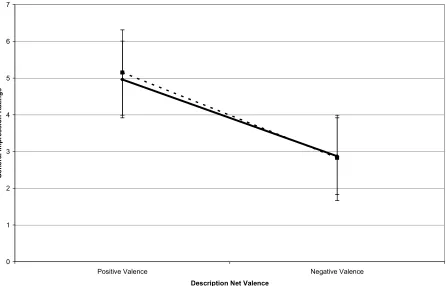
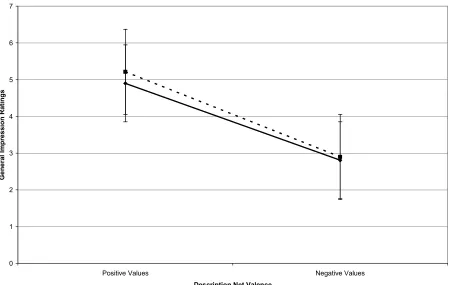
Figure 1. Social Judgment Ratings – Group x Condition Interaction ...54 Figure 2. Full General Impression Model – Overall Valence x WCST Errors ...70 Figure 3. Full General Impression Model – Overall Valence x WAIS Performance.71 Figure 4. Full General Impression Model – Overall Valence x Plus-Minus
Performance ...72 Figure 5. Full General Impression Model – Overall Valence x Vocabulary
Performance ...73 Figure 6. Full Job Effectiveness Model (with Job Valence as Predictor) – Job
Introduction
The current research is intended to examine the relative influence of
deliberative versus affective processes of younger and older adults in judgment and decision-making processes. Previous research and theory has suggested that age differences exist in the emphasis on affective information as a result of attempts to increase the positive, emotionally rewarding stimuli in one’s environment. Although supportive data regarding this motivational perspective have been obtained
(Carstensen,1993; Carstensen, Fung, & Turk-Charles, 2003; Carstensen, Isaacowitz, & Charles, 1999; Carstensen & Turk-Charles, 1994), an alternative explanation for the observed aging-related shift in the emphasis on affective
information has received less attention. Specifically, the observed age differences in emphasis on affective information may not be a reflection of chronic goals, but rather may be based more in underlying biological changes within the aging brain
(MacPherson, Phillips, Della Sala, 2002; Mittenberg, Seidenburg, O’Leary, DiGiulio, 1989; Moscovitch, & Winocur, 1995). The purpose of this research is to examine the hypothesis that age-related variations in the focus on affective information reflect selective preservation of affective systems and the simultaneous decline in deliberative systems presumably bound in the differential decline of cortical structures underlying these two systems.
Review of the Literature
changes in physiology and behavior.” A distinction does, however, exist between the meanings of emotion and affect. The term emotion refers to a coherent set of behavioral, physiological, and experiential responses associated with a discrete cause that allow an organism to adapt to changes in their environment (Cacioppo & Berntson, 1999; Lazarus, 1991). Traditionally, emotions are thought to have a specific trigger, or a start point, a set path or course of effect on the organism, and a distinct ending point. Affect, on the other hand is thought of as a multipurpose term that is used to describe not only the previously discussed emotions, but also
enduring moods that lack concrete eliciting stimuli and are usually less diffuse in nature. Throughout the context of this research, the term affect will be used to specifically mean emotion, to the exclusion of mood. Although mood research is gaining interest in the context of age-related changes (e.g., Mienaltowski & Blanchard-Fields, 2005), it is not the focus of this research.
In order to gain a better understanding of how these affective processes differentially influence younger and older adults’ cognitive processes, it is important to first gain a better understanding of the distinction between deliberative and affective processes. I will then move to a discussion of the roles of deliberative and affective systems in judgment and decision-making and age-related variations in the influence of each of these systems on these processes in adulthood.
research that has targeted aging-related changes in the influence of affect on judgment and decision-making processes.
Deliberative versus Affective Processes in Choice Tasks
According to Epstein (1994), when making a decision, two interrelated
approaches are used to process information. The cognitive or deliberative system is characterized by conscious, analytical, reason-based, verbal, and relatively slow processing, whereas the experiential or affective system is intuitive, automatic, associative, and fast. Although Epstein discusses these mechanisms separately, each with unique characteristics, he is careful not to suggest that the two systems work completely independently. In order to gain a better understanding of decision-making and judgment processes in aging, it is important that we first gain a basic understanding of the separate mechanisms that create the foundation of this relationship. I will begin by detailing the roles of deliberative versus affective systems in judgment and decision-making. This review will be followed by a description of the relationship between age and these two systems. Finally, I will develop hypotheses based on the information presented.
Deliberative Processes in Judgment and Decision-making
characterized by (a) analytic processing as opposed to the holistic processing of the affective system, (b) logical, reason-oriented thought lines (e.g., What is sensible in this situation?), and (c) logical connections between these thoughts. Additionally, he suggests that behavior is mediated by conscious evaluations of events, with
thoughts and actions requiring justification via logic and concrete evidence.
Unlike the affective system, processing within the deliberative system occurs consciously, allowing the individual to manipulate the process and outcome. As such, these complex deliberative abilities are dependent on an individual’s ability to perceive, hold, and manipulate information in memory as well as the speed with which the individual processes the information.
Affective Processes in Judgment and Decision-making
decision-making. Finally, emotions often provide the motivation necessary to implement a chosen course of action.
Affect can not only be viewed as a guide for judgments and decisions (Peters & Slovic, 1996, 2000), it may also be viewed as a crucial piece of data needed for the selection of the information most important in making a choice. Damasio (1994) has suggested that emotions provide useful information about the desirability of different courses of action. This function is highlighted in his somatic marker
hypothesis, which suggests that thought is mainly composed of images that provide perceptual and symbolic representations of the environment. Based on a lifetime of experience and learning, these images become “marked” by positive and negative feelings that are linked to somatic or bodily states. When a negative somatic marker is linked to a given image from a situation or future outcome, it serves as an
avoidance warning. In contrast, a positive marker associated with an image serves as an approach incentive towards an event or outcome. Damasio’s research (e.g., Damasio, 1994; Damasio, Tranel, Damasio, 1990; Bechara, Tranel, Damasio, 2002; Bechara, Damasio, Tranel, Anderson, 1998; Bechara, Damasio, Damasio,
and decisions. Based on this work, it is evident that performance on judgment and decision-making tasks depends on the ability to maintain the affective processing systems. It is important to note that research has also indicated that, in some cases, deliberative thought processes can result in less optimal decision outcomes than if the individual had made a more spontaneous decision, presumably based more on affective information (Dijksterhuis, 2004).
Combined, these theoretical views suggest that affective and deliberative processes represent two connected mechanisms through which decisions and judgments are made. As a means for understanding potential age differences in decision-making processes, I now turn to an examination of the impact of aging on processing systems.
Age Differences in Deliberative and Affective Processes
Aging appears to have different effects on the deliberative and affective processing systems. As such, each will be discussed as a separate entity, although I am careful to point out that neither process can be entirely separated from the other in functional terms within the context of decision processes. Typically, past research on decision-making has focused primarily on the deliberative processing system. Interestingly, it is these deliberative processes that are most affected by age (i.e., perceiving and holding information in working memory, processing information quickly to make a rapid decision).
MacGregor, 2005). Unfortunately, the bulk of this work has focused on younger adults, leaving numerous questions regarding the relationship between aging and affective processes in decision-making. Are older adults’ decisions based to a
greater degree than younger adults’ on selective processing of affective information? Is there selective preservation of cortical systems underlying decision-making
processes, and if so, how does this selectivity affect older adults’ performance? Do older adults depend more on experience—and the associated affective
consequences--in making decisions? Given the importance of effective decision-making to independence and adaptation, it is imperative that we understand the effects of aging on this process. Based on past research, we know a great deal about aging effects on deliberative systems (i.e., executive functions) that may underlie decision-making; less, however, is known about changes in affective systems. The present study contributes to filling this void by investigating age differences in both deliberative and affective processes as well as in the role of affect in judgment and decision-making processes, with particular emphasis on distinguishing between perspectives based in selective preservation of cortical systems versus selective processing perspectives.
Age Differences in Deliberative Processes
As indicated previously, deliberative processing systems are reflected in the efficiency of cognitive processes such as working memory and information
increasingly emphasized changes in specific deliberative abilities, such as executive functions, as a primary determinant of cognitive change, replacing more general resource-capacity views. Particular focus has been given to the three major types of control processes that make up basic executive functions: task switching, updating and monitoring of working memory, and inhibiting irrelevant information (Miyake, Friedman, Emerson, Witzki, & Howerter, 2000). The first process, inhibitory control, represents resistance to interference (e.g., Hasher & Zacks, 1988; Hasher, Zacks, & May, 1999). Past research indicates that older adults have more trouble inhibiting intrusive thoughts and information, leading to limited functional working memory capacity and reductions in available cognitive resources (Hasher & Zacks, 1988). A second process, the ability to coordinate multiple distinct tasks or various separate processing streams, has also been found to be affected by the aging process (e.g., Hartley & Little, 1999; McDowd & Shaw, 2000; Mayr & Kliegl, 1993; Verhaeghen, Kliegl, & Mayr, 1997). Divided attention has a greater negative effect on older adults’ performance than on that of younger adults (Whiting, 2003). Further
research has indicated that age-related deficits in coordinating multiple tasks cannot be explained simply in terms of age-related slowing in processing speed
Deficits in executive functions may lead to a number of possible outcomes in relation to judgment and decision-making. Declines in executive functions may cause older adults to access less information or choose more heuristic strategies, such as satisficing in order to reduce the demands on their limited resource capacity. Alternatively, declines in regions of the brain that support executive functions may also make access to new information difficult and may prevent older adults from making connections between information received and previous experience. Finally, it may also be the case that older adults’ decision-making strategies require more processing time in order to overcome past experience with or knowledge about a given domain.
Together, this research indicates an overall reduction in deliberative
processing abilities with age, presumably due to changes in the frontal lobes of the brain (e.g., Daigneault, Braun, & Whitaker, 1992; Mittenberg, Seidenberg, O’Leary, & DiGiulio, 1989; Moscovitch & Winocur, 1995; Perfect, 1997; Phillips & Della Sala, 1998; Raz, 2000; Raz, Gunning-Dixon, Head, Dupuis, & Acker, 1998; West, 1996). Given the importance of such abilities in the decision-making process, aging may negatively impact the ability to effectively make judgments and decisions.
Age Differences in Affective Processes
negative affect than younger adults in both cross-sectional and longitudinal studies (Carstensen, Pasupathi, Mayr, & Nesselroade, 2000; Charles, Reynolds, & Gatz, 2001; Gross, Carstensen, Pasupathi, Tsai, Skorpen, & Hsu, 1997; Mroczek, 2001). The majority of this research has involved the examination of the influence of affect on memory, but the results have been inconsistent. Some studies have shown that memory for emotional information is similar across both younger and older adults (Yoder & Elias, 1987; Kensinger, Brierley, Medford, Growdon, & Corkin, 2002). Additional research has indicated that whereas older adults remember less information overall and significantly less neutral information than younger adults, both younger and older adults recall equivalent percentages of emotional information (Denburg, Buchanan, Tranel, & Adolphs, 2003; Carstensen, Fung, & Turk-Charles, 2003; Carstensen & Turk-Charles, 1994).
A recent study indicated that whereas both younger and older adults
recognize a greater percentage of positive and negative stimuli compared to neutral stimuli, this effect seems to be weakened in older adults as demonstrated by fewer “remember” as opposed to “know” responses in older adults (Combalin,
and emotional self-focus) older adults showed more schema reliance than did younger adults. What this pattern of results suggests is that both emotional focus and age-related changes in the reliance on schemas increase when making source judgments about a previously-experienced event. Research examining memory for perceptual (e.g., who said each statement) versus conceptual (e.g., was the person telling the truth or a lie, and was the person good or evil) source information found differing patterns of age differences based on the type of source memory required (Rahhal, May, & Hasher, 2002). Large age differences were present when
participants were asked to make a decision regarding who said each statement; however, when decisions were affectively-related (i.e., judgment of the safety of an item), age differences nearly disappeared. This research suggests not only that the type of information presented can influence age-related patterns of performance for source-conveyed information, but also that affective processing appears to be preserved even in later life.
Finally, other research has more clearly demonstrated age-related emotional biases in memory (Kennedy, Mather, & Carstensen, 2004; Charles, Mather, & Carstensen, 2003; Kensinger & Corkin, 2003), with older adults remembering significantly greater proportions of positive as opposed to neutral and negative information, reflecting an age-related positivity effect. As individuals age, they recall fewer emotionally negative images compared to neutral and positive images
to positive information and to reappraise or suppress negative information as a means of regulating emotional states. Additional research has indicated that an increased focus on emotion is associated with an increase in the recollection of positive autobiographical memories (Kennedy et al., 2004). These researchers hypothesized that based on tenets of Socioemotional Selectivity Theory (SST), older adults are more motivated than younger adults to remember their past in an
emotionally positive light and that older adults’ positivity bias in memory is reflective of their motivation to regulate their emotional experiences.
If older adults remember less neutral information, and relatively equal
amounts of emotional information compared to younger adults, the decisions of older adults may be more likely than younger adults to be influenced by affective
information.The apparent increase in salience of affective information with age may be interpreted in light of SST (Carstensen, 1993), which suggests that this late-life increase in the salience of emotional information is a result of a shift in chronic motivational goals. With increasing age, individuals become more likely to perceive limitations on time remaining. This perception leads to restructuring of the
motivational goal hierarchy, resulting in increased motivation to pursue emotional goals and the rewards of close social relationships, and a decrease in the
SST does not appear to explain all of the findings in the literature, however, with some results appearing to directly contradict predictions based on this
framework (e.g., Kensinger, Piguet, Krendl, & Corkin, 2005; Denburg et al., 2003). This inconsistency may stem from differences in methodologies across studies. Studies that require participants to attend to each affectively laden stimulus
specifically find few age differences (e.g., Denburg et al., 2003). Results of this work have demonstrated that older adults perform better on memory tasks requiring only a general description of the stimuli to be recalled, whereas they display significant memory performance decrements when asked to recall details of the stimuli.
According to these researchers, general descriptions provided by older adults center around the central affective content of the stimulus, whereas the peripheral details that are often not affective in nature are not recalled by older adult participants. Additional research has examined the influences of manipulations on encoding instructions on memory for both emotional and neutral information. Generally, when individuals encounter a complex visual scene including both emotional and neutral information, memory for the emotional content (i.e., central details) is usually enhanced, whereas memory for peripheral (nonemotional) details is reduced (see reviews by Buchanan & Adolphs, 2002; Hamann, 2001). When encoding
they are equally likely to recall peripheral details of emotional and neutral stimuli. Older adults, in contrast, continue to show reduced memory for the peripheral elements of the emotional compared with the neutral scenes, even with the intentional encoding instructions.
Kensinger and her colleagues suggest that if aging does indeed influence motivational goals and the attentional focus on negative information (e.g.,
Carstensen et al., 2000), it could be hypothesized that older adults will not display increased memory for central versus peripheral details in a negatively valenced scene. More specifically, older adults, in their attempts to emphasize emotionally rewarding aspects of their environment, would be less likely to focus on negative compared to neutral details in a stimulus scene, and will therefore be more likely to recall neutral versus negative peripheral details contained in the scene.
Alternatively, Kensinger and her colleagues also hypothesize that older adults might show attentional patterns similar to that of younger adults given that attentional focus on emotional information is likely mediated by the amygdala. Previous research has indicated minimal age-related changes in the amygdala across the life span (see Mather, 2003), leaving open the possibility that if amygdalar functions underlie observed emotional effects, older adults and younger adults will likely display similar patterns of focus toward emotional information.
memory, and attention toward emotional goals. As a result of the differential rates of decline within the deliberative and affective processing systems, it is reasonable to predict that affective information should be more influential for older adults’ decision-making and judgment processes.
Recently, psychologists have begun to question how cognition or deliberative processes might be theoretically or empirically separated from affective processing systems. The focus of the present research is on this distinction between
deliberative and affective processing systems, and more specifically between the major theoretical views that exist in this area. Two major perspectives may be used to explain the age-related differences in the processing of affective information throughout the decision-making process. The first, that of selectivity or selective processing, postulates that older adults selectively process affective information to a greater extent than younger adults when making a decision due to changes in
chronic goals. The second, and the focus of the current research, is based in the selective preservation of processing systems. This view hypothesizes that aging-related differences occurring in the processing of affective information are explained by relative preservation of cortical structures associated with affective processing and simultaneous declines in those supporting more deliberative processes. This imbalance in system efficacy may be associated with the fact that affective
Neurobiological Evidence of Age-Related Changes in Systems Underlying
Decision-Making Processes
Recent neurobiological research appears to provide evidence suggestive of differential age-related declines in regions of the brain associated with deliberative as compared to affective processing mechanisms, perhaps providing neurobiological evidence in support of the selective preservation viewpoint. Neuropsychological research has consistently reported age-related declines in performance on tasks assessing functioning in brain regions associated with executive functions (reviewed by West, 1996) and little concurrent decline in affective processing systems
(Kensinger et al., 2002).
Research has indicated that the frontal cortex is a heterogeneous region in terms of cognitive and behavioral influences (e.g., West, 1996; 2000). The two regions of specific focus for this research are the dorsolateral prefrontal cortex (DLPFC) and the ventromedial prefrontal cortex (VMPFC). Both regions are located within the frontal lobes, an area of the brain associated with higher-order cognition.
MacPherson, Phillips, and Della Sala (2002) noted consistent decline with age in tasks dependent on DLPFC functioning and associated with executive
functions. More direct neurobiological research has concluded that the frontal lobes of the brain are affected by the process of normal aging both earlier than other brain regions, and at a more rapid pace (Daigneault & Braun, 1993; Mittenberg,
brain (Adolphs, Tranel, Bechara, Damasio, & Damasio, 1996). This research has indicated that the DLPFC supports executive functions and working memory as well as other higher integrated processes such as planning, decision-making, and central executive processes devoted to the control and regulation of cognition (Petrides & Milner, 1982). This region is also thought to filter between relevant and task-irrelevant information (e.g., Shimamura, 2000). It is also now abundantly clear that the prefrontal cortex, more specifically regions such as the DLPFC, suffers
disproportionately greater decline, as measured by both neuronal loss and estimated volume, due to the normal aging process than other regions of the brain, such as the VMPFC (Chow & Cummings, 2000).
The VMPFC is believed to be involved in the processing of emotions and the regulation of social behavior (Rolls, 1996). Neurobiological research has indicated that the VMPFC receives projections from higher-level functioning systems, such as the limbic system, as opposed to the more primary projections associated with the DLPFC (Adolphs et al., 1996). Researchers have demonstrated little age-related decline on tasks dependent on the VMPFC regions (Kensinger et al., 2002). Direct neurobiological evidence has indicated the relative preservation of the VMPFC regions with age (reviewed by Chow & Cummings, 2000; Mather, 2003). Based on these findings, it seems plausible that functional links to and from this region are relatively preserved across the lifespan.
affective processing systems as a form of brain-level compensation for their diminished efficiency in functioning in age-affected regions (Cabeza, 2001). This perspective can be viewed as a passive process involving a shift from less efficient to more effective processing systems. Age-related maintenance of judgment and decision-making processes exist in spite of declines in regions of the brain
associated with executive processing, even in advancing age, via the use of
preserved, more efficient affective processing systems. The present research aims to test the hypothesis that there are 1) aging-related declines in the efficiency of executive functions, 2) that there is a simultaneous preservation of affective
processing systems with age, and 3) age-related decreases observed in executive functions will in part account for age-related differences in decision-making and judgment performance.
In sum, this research suggests that with relative preservation of affective processing mechanisms and a simultaneous decline in efficacy of the deliberative processing system, affective processes may passively compensate for behavioral-level declines in deliberative functions in later life. Based on this biological
foundation, the next step towards understanding the age-related influences of affect on decision-making and judgment processes is to integrate all of the previous areas of research, as well as review the limited literature that has directly investigated the age differences in the influence of affect of judgment and decision-making
Age-Related Changes in Decision-Making and Judgments
As noted previously, the existing cognitive aging literature suggests numerous age-related deficits associated with executive functions. These findings might lead us to expect that judgment and decision-making abilities will also decline as a natural part of the aging process, given their seeming dependence on such skills. It is also important to note, however, that the majority of older adults appear to function effectively in everyday life. This suggests that their ability to make decisions may remain intact in spite of these aging-related deficits (e.g., Denney, Pearce, & Palmer, 1982; Denney & Pearce, 1989; Hartley, 1989; Marsiske & Willis, 1995). In some cases, these abilities have been found to be even better with advancing age (e.g., Cornelius & Caspi, 1987). This may suggest that other factors, such as experience and affect, which are maintained into later life, play an important role in supporting such abilities.
As stated previously, one of the major points of emphasis for this research is to examine age differences in the roles of affective and deliberative systems within judgment and decision-making processes. Based on research suggesting
making decisions and will, as a result, display an increased emphasis on affective information.
In a study examining age-related differences in the influence of executive functions on decision-making processes, both younger and older adults were asked to examine information about a number of hypothetical political candidates, and to then decide which of the presented candidates they would vote for (Riggle &
Johnson, 1996). The focus of the study was to examine the patterns of information search and type of processing strategies used by individuals when making their decisions. Results of the study indicated that older participants not only examined fewer pieces of evidence, they also took more time to complete the decision-making task and to examine each piece of information. Johnson and Drungle (2000)
indicated that older adults took almost twice as long in viewing the decision-related information. Less time was taken to review information with which older adults were very familiar (i.e., pain relievers), however, suggesting that personal experience with decision scenarios may increase the efficiency of information review. What research by Johnson and her colleagues suggests is that perhaps taking more time to
complete the task and reviewing fewer pieces of information may be a function of the slowing in activation of information in working memory and declines in processing speed found in aging. It may also reflect a form of satisficing whereby older adults conserve resources by making decisions that are “good enough.”
younger adults to uncritically accept evidence favorable to their positions and to dismiss, often with arguments based on principles of scientific inquiry, evidence that depicted their beliefs as inaccurate or that portrayed the groups they favored
negatively. The researchers hypothesize that older adults may be more biased by their beliefs than younger adults because they have more difficulty suppressing interfering cognitions (decreasing ability to inhibit irrelevant information) and only expend the effort required to inhibit interference when their beliefs are being threatened. The authors also suggest that because long-held beliefs have served older adults well (or have not caused harm) in the past, they are more resistant to change in comparison to newly developed beliefs. Because older adults’ beliefs have been held longer and have been more deeply integrated into their
self-concepts, they may in turn, be treated more as truths supporting their identities than as working, testable hypotheses.
older adults with descriptions of life-sustaining treatment interventions described positively, negatively, or exactly as worded in widely-used medical directives. Results indicated that individuals were less likely to choose the intervention when it was worded negatively compared to when it was described positively or in the neutrally worded directive widely used in the medical field. Interestingly, most participants (77%) changed their minds at least once when responding to different descriptions in three clinical scenarios. These results mirror additional work
examining age-related differences in the framing effect. Recent work has indicated that older adults are more susceptible than younger adults to framing (choices systematically altered based on the language used to formulated the decision options) (Kim, Goldstein, Hasher, & Zacks, 2005), but only under circumstances where no justification is required for their choice. When justification is required, framing effects were eliminated.
Results of this work can be interpreted in light of both of the previously
work in this area can be used to support the selectivity perspective. When older adults are specifically instructed to pay attention and systematically analyze decision options (i.e., provide justification for their choices), they are able to refocus their attention and utilize deliberative processes allowing them to overcome the focus on strictly affective aspects of the decision information. In other words, when goals of processing are altered to emphasize the less affective perspective of the available information, age differences are reduced. This follows the theoretical line of SST in that older adults simply prefer to process the affective information in a given
situation; however, when specifically instructed to attend to all available information, older adults are able to use their executive processing systems to make decisions based on all information. At present, both of these perspectives are supported by the existing research. The present research is aimed at providing further evidence that it is indeed a differential decline in systems that drives the emphasis on affective information observed in older adults.
abilities, one would expect significant declines in decision-making and judgment mechanisms with age. Rarely, however, does such a simple explanation provide all of the answers to such a complex question.
Aging and the Influence of Affect on Decision-Making and Judgment
Zajonc (1980) was one of the first researchers to argue for the importance of affect in decision-making. In his work, Zajonc postulated that affective reactions to stimuli are often the very first reactions, and these reactions occur automatically and later guide information processing and judgment. Only a small portion of the
decision-making research has included affect as one of the variables of interest. The majority of past aging work examining the relationship between emotion and cognition has examined the previously discussed learning of and memory for
emotional and neutral stimuli. This research has indicated an increased influence of affect with age, although not a completely consistent influence, on performance relative to deliberative processing mechanisms (Damasio, 1994; Kennedy, Mather, & Carstensen, 2004; Charles, Mather, & Carstensen, 2003; Kensinger & Corkin,
2003), as well as evidence towards an age-related decrease in deliberative processing abilities (e.g., Hess, Pullen, & McGee, 1996; Hess, Rosenberg, & Waters, 2000; Salthouse, 1994; 1996; Salthouse & Meinz, 1995; Salthouse,
There are a number of potential reasons for the observed age-related
increase in the influence of affect on cognition. First, due to their greater experience with affective information across the lifespan, older adults may be more adept in using this type of information in the context of a choice task. Age may be associated with more experience with affective information, which could be associated with the accumulation of more affective markers. When presented with real-world decision-making and judgment tasks, it is important to be able to immediately locate the best option, or at least the one that is “good enough” in a given situation (Yates &
Patalano, 1999). Experience gained over the lifespan may allow older adults to more efficiently locate the best option in a judgment task. It is proposed that somatic markers normally help constrain the decision-making space by making the space more manageable for deliberative processing, and permitting individuals to make judgments and decisions efficiently and quickly (Damasio, 1994). Greater
experience gained across the lifespan may allow older adults, or “experts,” to use more automatic processing (i.e., affective processing systems) in completing a task (i.e., Myles-Worsley, Johnston, & Simons, 1988).
towards affective). According to these researchers, shifts in goals towards a greater influence of affective information reflect a conscious change, or what can be viewed as a shift in preference. As a result of the increased salience of affect within older adults, it can be hypothesized that decision and judgment processes of older adults may be influenced to a greater degree by affective information than those processes of younger adults.
A final perspective suggests that aging differentially influences cortical
structures, leading to the observed increases in the influence of affective information on cognition that occurs in later adulthood. This perspective postulates that older adults exhibit an increased reliance on affective processing modes because the neural systems supporting these processes are maintained while the neural mechanisms underlying deliberative processing undergo age-related declines. According to this view, older adults do not merely prefer affective processing
mechanisms in the context of a choice task. Rather, the affective systems become primary processing mechanisms because they remain relatively efficient in the face of decrements in other systems and may be the main source of information on which to base decisions. To the extent that such information is useful and important in a specific context, decision-making and judgment capacities may be relatively unaffected—and in some cases, be improved—with age. Obviously, it is also true that decision-making may suffer if affect results in biased responses or if deliberative processes are necessary for acquiring and evaluating information.
Present Research
The just-reviewed literature suggests that there is selective preservation of brain systems related to affective processing, which in turn may lead to relative preservation of functions associated with processing of affective information. Most judgment and decision-making tasks rely on both deliberative and affective
processes. It may be that the selective preservation of affective processing structures in the brain with aging will result in greater reliance on affective
processing systems relative to deliberative processing systems. This passive and unconscious shift in reliance on affective processing systems may be reflected in increased emphasis on affective information when making judgments and decisions. Alternatively, the selective processing view posits that the focus on affective
information represents a preference rather than a consequence of brain aging, suggesting that individuals should still be able to process information in other ways as well.
systematically and independently so that the net valence of the traits varied across descriptions, and the net valence of traits within categories was uncorrelated across categories.
overall affective content of the target descriptions due to difficulties in selectively processing relevant and irrelevant attributes.
In order to further test for a selective preservation view of affect, an additional sample of younger adults, who performed the task with a memory load, was also included. According to the preservation perspective, age differences are reflective of aging-related reductions in executive functions. If true, then the performance of younger adults should mimic that of older adults if they are required to perform a secondary task—which has been shown to deplete available cognitive resources— during the social judgment task. More specifically, younger adults under a divided attention manipulation should exhibit declines in the ability to process nonaffective information in circumstances where this information would benefit performance levels.
adults were observed to emphasize affective information to a greater degree than younger adults when making a decision, and they were also found to have
diminished executive functioning abilities that account for age effects in performance.
Statement of the Problem
The field of cognitive aging has primarily focused on cognitive or deliberative level implications of the normative aging process on judgment and decision-making abilities. Little research, however, has attempted to examine the influence of
affective information on these abilities. Judgments and decisions made in everyday life involve influences from various sources including, facts and information, previous experience and biases, opinions from others, and emotions (i.e., gut responses). Real life judgments, especially those related to social perceptions are hard to view as being void of affective content. Therefore, it appears to be particularly important to understand the changes in the influence of affective information on judgments and decisions as a function of increasing age. The current research will attempt to more specifically examine age-related changes in the influence of affective information on judgment and decision-making processes.
Specific Aims
Aim 1: Examine age differences in the use of affective information.
making judgments and decisions given that these systems are maintained throughout normal aging. Based on the selective preservation view, we would
expect to observe declines in performance on tasks requiring deliberative processing given that these systems are thought to be most greatly affected by the biological aging process. In contrast, performance on tasks that depend on affective
information should be maintained with age.
Aim 2. To further identify underlying mechanisms of the observed age-related
differences in the influence of affective information on judgment processes.
Hypothesis 2a. Age differences will be apparent in judgment performance. More specifically, younger adults given a divided attention task will perform at similar levels to older adults, experiencing declines in available cognitive resources and deliberative abilities, resulting in an increased reliance on automatic affective processing systems.
Hypothesis 2b. Age differences in decision-making ability as a result of declines in cognitive resources or deliberative processing mechanisms will be exacerbated under conditions of high complexity (i.e., increased information quantity).
Aim 3. Examine the impact of individual differences in executive functioning ability
on the influence of affective information on judgment processes.
decreased working memory capacity are thought to be related to a decrease in the ability to control the impact of automatic processing on judgment (Hess, Waters, & Bolstad, 2000), resulting in an emphasis of automatic affective processing systems.
Method
Participants
Young adults consisted of 57 females and 60 males who were recruited from introductory psychology classes at North Carolina State University and received credit towards completion of a class assignment. The mean age of participants in this group was 18.6 years (range: 17-28, SD: 1.34). Older adults were recruited from the Raleigh community and surrounding areas through newspaper
advertisements and received $20.00 in return for their participation. The older adult group consisted of 30 females and 30 males with a mean age of years 71.8 (range: 63-83, SD: 4.17), and consisted of 16% minority individuals.
Design
measured were mean study time for each behavioral attribute, the overall rating provided for each target person, and individual attribute ratings provided as a manipulation check.
Materials
Target Descriptions. Target descriptions consisted of 6 or 12 attributes. The attributes across descriptions all spoke to either the target individuals’ general competence or their potential competence in a specified job field. For example, some attributes simply provided positive or negative information about the target individual’s general competence, whereas other attributes provided positive or negative information about the target’s ability to perform specific job-related functions.
occupation on a 7-point Likert scale, with 1 = very negative or not at all job-related and 7 = very positive or very job-related.
The ratings obtained were then standardized for each participant on each scale (job-relatedness, valence) to control for individual differences in the use of the rating scale, with the mean job-relatedness score and mean valence calculated for each attribute using these standardized ratings. These scores were averaged within age groups for each attribute, resulting in age-group specific normative scores on these two dimensions. These scores were used in selecting positive and negative attributes for both conditions for inclusion in the target descriptions for the full study. In order to ensure that the trait representativeness and valence of the stimulus attributes were perceived in the same manner across age groups, only those attributes for which there were no significant age-group differences in either rating were considered for use in the study. Traits were chosen that were clearly relevant or irrelevant and clearly positive or negative. The resulting attributes with their corresponding valence and relevance ratings are presented in Appendix A.
descriptions were created in an analogous manner: by simply doubling the number of attributes of each type and valence for each of the descriptions that contain six attributes. In this manner, both 6- and 12-item descriptions contained similar properties (in terms of ratios of positive to negative traits) and varied only in the amount of material presented before asking for a rating. Attributes were
systematically rotated through descriptions such that each attribute appears equally as often as part of a set of six attributes and as a part of a set of 12 attributes. Additionally, each target description was presented twice to each participant, once followed by a job-specific rating scale and once followed by a general impression rating scale.
Emotion Regulation Questionnaire. The Emotion Regulation Questionnaire (Gross & John, 2003) was used to assess the extent to which participants engaged in cognitive reappraisal and expressive suppression. This measure consists of 10 statements. Each item is accompanied by a scale ranging from 1 to 7 (1 = strongly disagree, 2 = disagree, 3 = mostly disagree, 4 = neutral, 5 = mostly agree, 6 = agree, 7 = strongly agree). Higher responses to items 1, 3, 5, 7, 8, and 10 (e.g., “I control my emotions by changing the way I think about the situation I’m in”) indicate higher levels of cognitive reappraisal strategies of emotion regulation, whereas higher responses on items 2, 4, 6, and 9 (e.g., “I control my emotions by not expressing them.”) indicate higher levels of expressive suppression strategies of emotion regulation. Gross and John (2003) reported that the measure shows
Executive Functioning Measures. In order to assess executive functions, participants were also asked to complete a subset of the tasks used by Miyake and his colleagues (2000). All tasks were presented in computer format to reduce data entry and experimenter errors. One task was used to assess each of the three major types of executive functions: task switching, updating, and inhibition.
The Plus-Minus task (adapted from Jersild, 1927 and Spector & Biederman, 1976) was used to assess task-switching ability. This task consists of three lists of 30 two-digit numbers (the numbers 10–99 pre-randomized without replacement), with the numbers in each list being presented one at a time on the computer screen. For the first list, the participants were instructed to add 3 to each number and enter their number using the keyboard. For the second list, they were instructed to
subtract 3 from each number. Finally, on the third list, the participants were required to alternate between adding 3 to and subtracting 3 from the numbers (i.e., add 3 to the first number, subtract 3 from the second number, and so on). The participants were instructed to complete each list quickly and accurately, and list completion times were recorded automatically as programmed by the experimental software. The cost of shifting between the operations of addition and subtraction was then calculated as the difference between the time to complete the alternating list and the average of the times to complete the addition and subtraction lists, and this shift cost served as the dependent measure.
presented individually in the middle of the screen with any one of four reference cards shown near the top of the screen. Participants were read the following instructions prior to beginning the task:
This test is a little unusual because I am not allowed to tell you very much about how to do it. You will be asked to match each of the cards that appear here (point to the first response card at the bottom center of the screen) to one of these four Key cards (point to each of the stimulus cards at the top of the screen). Using the mouse, point to the Key card that you believe matches this card. Once you have made a choice, press either the left or right mouse button to make your selection. The computer will place your card under the Key card that you select, and a new card will appear at the bottom of the screen. If you wish to change your answer before the card stops moving, immediately click on the Key card or anywhere on the screen a second time. You will then be permitted to select again. However, you may not change your answer after the card stops moving. If this happens, don’t try to click on the Key card a second time; just go on to the next item. I cannot tell you how to match the cards, but the computer screen will show you each time whether you are right (correct) or wrong (incorrect). If you are wrong, simply try to match the next card correctly, and then continue matching the cards correctly until the test is over. There is no time limit on this test. If you don’t have any questions, you may begin.
Finally, the traditional Stroop task (Stroop, 1935) was presented to
participants in order to assess the ability to inhibit irrelevant information. In this task, participants were instructed to verbally name the color of a stimulus as quickly as possible in each trial, with RTs measured by keyboard entry. The task included 50 trials with a string of asterisks printed in one of four colors (red, green, blue, or yellow), 50 trials with a color word printed in a different color (e.g., BLUE printed in red color), and 50 trials with a color word printed in the same color (e.g., BLUE in blue color), with the different trial types mixed (i.e., nonblocked). The dependent measure was the RT difference between the trials in which the word and the color were incongruent and the trials that consisted of asterisks.
Background Measures. In addition to the previous tasks, participants also completed a short demographic questionnaire, an assessment of Personal Need for Structure (PNS) (Thompson, Naccarato, & Parker, 1992), and the SF-36 Health Survey (Ware, 1993). Participants also completed Salthouse and Coon’s (1994) letter and pattern comparison tasks to assess processing speed, the Weschsler Adult Intelligence Scale – III (Weschsler, 1997) Letter-Number Sequencing subtest to assess working memory, and the Vocabulary test from the Kit of Factor
Referenced Tests (Ekstrom, French, Harman, Derman, 1976). These measures were used to characterize the sample, as well as to identify any possible confounds that might compromise the results.
Procedure
only the social judgment task. The remaining younger adults were required to simultaneously perform a secondary distractor task, in the form of a digit memory task similar to that used in previous research (e.g., Logie et al., 2004), in addition to the social judgment task. The digit memory task required participants to view a list of 5 digits presented on the computer screen prior to the presentation of a given target description. Immediately after completing the rating scale associated with the target description, the participants were asked to enter the digit sequence using the keyboard. Testing was completed on an individual basis. Packets containing the background questionnaire, the PNS scale, the health survey, and the ERQ were mailed home to the older participants a number of days prior to their test session. Younger adults were asked to fill out the previously mentioned background
information after the remainder of the procedure had been completed.
For the main task, participants were told that they would be completing a judgment task in which they would be asked to make ratings about target individuals based on limited information. Prior to the start of the study, participants were
thinking about the attributes in the manner that they should in the social judgment task (i.e., general impression or job suitability).
The main portion of the experiment began with the presentation of the full target descriptions. Participants were asked to read and rate a series of target descriptions that contained either 6 or 12 attributes. Participants were instructed that the information about each target would be displayed one attribute at-a-time on the computer screen, and that each description would contain traits that characterize a fictitious target individual. The computer automatically recorded reading times for each attribute as participants were making their way through the social judgment task. Participants were told prior to the presentation of each target description which rating they would be asked to make later (general impression for the affective
condition vs. job suitability for the job specific condition). Participants were told to read each piece of information on the screen, making sure they understood it before moving on to the next attribute. Participants controlled the pace of reading by
salesman, etc.) (i.e., 1 = very unfavorable to 7 = very favorable). Responses were entered using a keyboard with seven clearly marked buttons. Four practice trials were given to ensure that participants understood the procedure.
Target descriptions were presented in counterbalanced sequences, to which equal numbers of participants from each age group were randomly assigned. Participants were not allowed to look back at the original attributes while making their ratings. All target descriptions were presented twice, once in the general impression condition and once in job condition. Participants were encouraged to work at their own pace until all target descriptions sets were completed. Following the main portion of the experiment, participants were asked to complete the various unrelated background measures and the previously mentioned measures that assessed executive functioning abilities. After completing these final measures, participants were debriefed, compensated, and dismissed.
Results
Participant Characteristics
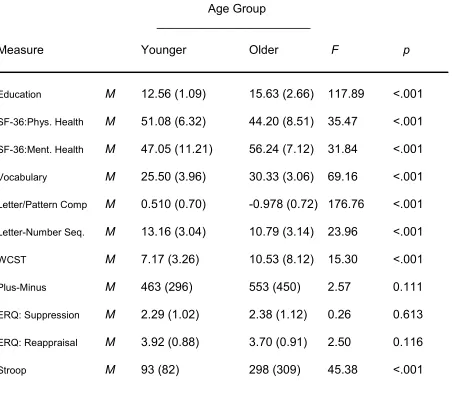
According to these analyses, older adults made significantly more
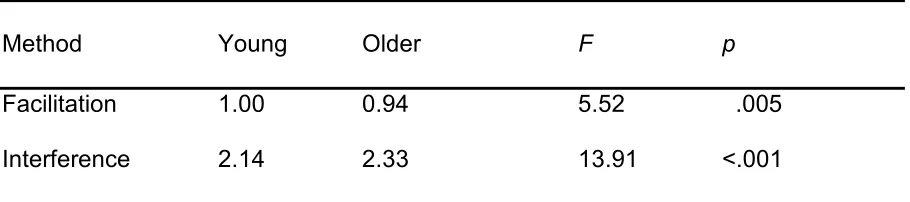
perseverative errors on the Wisconsin Card Sort Test compared to the younger adults, reflecting the fact that older adults experience greater difficulty updating and monitoring their working memory compared to younger adults. Additionally, older adults experienced greater interference on the Stroop task, as measured by mean reaction time differences between control and incongruent trials. As an additional examination of these data, responses were re-scored such that a measure of facilitation and interference were calculated. Facilitation scores were calculated by dividing mean RT for control trials by mean RT for congruent trials to produce a proportion score. Similarly, interference scores were calculated by dividing mean RT for the incongruent trials by the mean RT for the control condition, again
Table 1
Participant Characteristics
Age Group
_______________________
Measure Younger Older F p
Education M 12.56 (1.09) 15.63 (2.66) 117.89 <.001
SF-36:Phys. Health M 51.08 (6.32) 44.20 (8.51) 35.47 <.001
SF-36:Ment. Health M 47.05 (11.21) 56.24 (7.12) 31.84 <.001
Vocabulary M 25.50 (3.96) 30.33 (3.06) 69.16 <.001
Letter/Pattern Comp M 0.510 (0.70) -0.978 (0.72) 176.76 <.001
Letter-Number Seq. M 13.16 (3.04) 10.79 (3.14) 23.96 <.001
WCST M 7.17 (3.26) 10.53 (8.12) 15.30 <.001
Plus-Minus M 463 (296) 553 (450) 2.57 0.111
ERQ: Suppression M 2.29 (1.02) 2.38 (1.12) 0.26 0.613
ERQ: Reappraisal M 3.92 (0.88) 3.70 (0.91) 2.50 0.116
Stroop M 93 (82) 298 (309) 45.38 <.001
Note: Means presented, SD in parentheses. WAIS-III Letter-Number Sequencing scores could range from 0 – 21. Speed values were z-scores. Vocabulary scores could range from 0 – 36. Scores on the SF-36 were t-scores. Number of
perseverative errors reported for the WCST. ERQ subscales could range from 1 to 7. Plus-Minus and Stroop values are in milliseconds (ms).
The Plus-Minus task was also included as a measure of executive functioning. Performance was examined by calculating a difference score
comparing the average amount of time to complete a one task list (i.e., addition and subtraction separately) to the amount of time to complete a list of items where participants were asked to switch back and forth between the two previously
presented tasks. Responses that were incorrect were not included in the analyses, resulting in the exclusion of 1.8% of the data for younger adults and 2.0% for the older adults. There were no age differences on this measure, supporting previous research that indicates no age-related slowing in the ability to switch between two tasks (Verhaeghen & Basak, 2005).
Finally, the emotion regulation questionnaire was used to assess participants’ method of emotional regulation (cognitive reappraisal vs. expressive suppression). Examination of these data indicate no age-related differences on either of the two subscales, suggesting that for this sample neither the young adults nor the older Table 2
Comparison of Stroop Scoring Method
Method Young Older F p
Facilitation 1.00 0.94 5.52 .005 Interference 2.14 2.33 13.91 <.001
adults displayed differences in suppression or reappraisal as an emotion regulation strategy.
Manipulation Check
Target attribute ratings were examined as a manipulation check to ensure that participants were interpreting the job-relevance and valence of the attributes in the manner I intended when the target descriptions were constructed. Traits should be rated based on valence and relevance according to the categories built into the stimuli. Mean ratings for traits in each Valence x Relevance category were
calculated and compared using two 3 x 2 x 2 (Group x Valence x Relevance)
ANOVAs, one for each rating type (i.e., valence ratings & relevance ratings). For the valence rating analyses, no significant group differences were found. The Group X Valence interaction was marginally significant, F(2,175)=3.01, p =.052, η=.03, with the effect being mainly driven by a slightly greater differentiation between positive and negative items as rated by the older adult group (Younger - Mpos=5.58,
Mneg=2.72; DA Young - Mpos=5.71, Mneg=2.71; Older - Mpos=5.72, Mneg=2.49). A significant main effect of valence was observed, F(1,175)=2294.41, p < .001, η=.93 with positive attributes being rated more positively than negative attributes. No significant effect of relevance was found, but the Valence x Relevance interaction was significant, F(1,175)=369.85, p < .001, η=.68. This interaction indicated that, across age groups, participants rated the valences of relevant positive and irrelevant negative items higher than the valences of irrelevant positive and relevant negative items (Ms: Positive Relevant=5.99, Positive Irrelevant=5.35, Negative
moderated by group, indicating that all participants in the main study sample viewed the stimuli similarly.
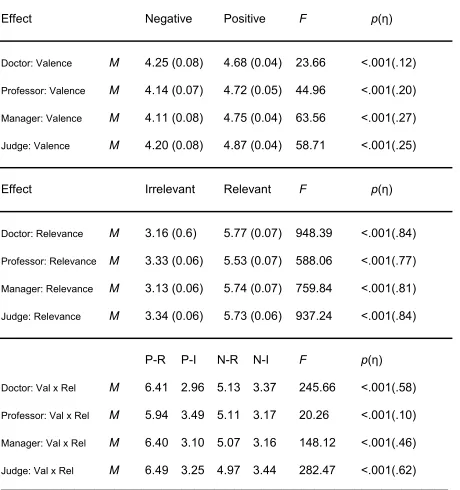
Ratings of the relevance of each of the stimulus attributes was also examined using four 3 x 2 x 2 (Group x Valence x Relevance) ANOVAs, one for each
occupation used in the study (i.e., doctor, professor, manager, judge). Results were almost identical across the four occupations (Table 3). Across all three groups, participants rated positive words as significantly more relevant than negative words, although the mean difference between valences was relatively small (.58).
Additionally, participants also rated relevant words significantly higher than irrelevant words, with an average rating difference between relevance of 2.45 rating points. This indicates that participants in the norming sample and those in the main study sample viewed the relevance of the attributes to specific jobs similarly. Finally, across all occupations, significant Valence x Relevance interactions were observed (see Table 3). These interactions consistently reflected a larger rating difference between relevant and irrelevant items for positive items than negative items.
Although the preceding analyses suggested that participants were viewing the attributes in the general manner intended, there were some nonsystematic
differences across levels of valence and relevance. With this in mind, the decision was made to recategorize the words based on participant-specific valence and relevance ratings collected in the manipulation check portion of the experiment. These new categorizations were then used in all of the following analyses. Note that for both the study time and the social judgment rating data, analyses were
categorizations. The results of the ideographic analyses were cleaner and told a better story of what patterns existed in the data. Although a degree of experimental Table 3
Manipulation Check – Relevance ANOVAs
Effect Negative Positive F p(η)
Doctor: Valence M 4.25 (0.08) 4.68 (0.04) 23.66 <.001(.12)
Professor: Valence M 4.14 (0.07) 4.72 (0.05) 44.96 <.001(.20)
Manager: Valence M 4.11 (0.08) 4.75 (0.04) 63.56 <.001(.27)
Judge: Valence M 4.20 (0.08) 4.87 (0.04) 58.71 <.001(.25)
Effect Irrelevant Relevant F p(η)
Doctor: Relevance M 3.16 (0.6) 5.77 (0.07) 948.39 <.001(.84)
Professor: Relevance M 3.33 (0.06) 5.53 (0.07) 588.06 <.001(.77)
Manager: Relevance M 3.13 (0.06) 5.74 (0.07) 759.84 <.001(.81)
Judge: Relevance M 3.34 (0.06) 5.73 (0.06) 937.24 <.001(.84)
P-R P-I N-R N-I F p(η)
Doctor: Val x Rel M 6.41 2.96 5.13 3.37 245.66 <.001(.58)
Professor: Val x Rel M 5.94 3.49 5.11 3.17 20.26 <.001(.10)
Manager: Val x Rel M 6.40 3.10 5.07 3.16 148.12 <.001(.46)
Judge: Val x Rel M 6.49 3.25 4.97 3.44 282.47 <.001(.62) ___________________________________________________________________
control was lost by using these participant produced categorizations, this should be offset by the more precise mapping of stimulus features based on each participant’s interpretation.
Study Time
Attributes were categorized individually for each participant such that valence and relevance ratings gathered in the manipulation check were used to re-categorize the attributes prior to use in the following study time analyses. Attributes rated with a valence of 4 or higher on the 1-7 rating scale were classified as positive; below 4 were categorized as negative. Similarly, attributes given a relevance rating of 4 or higher were classified as relevant, whereas those below 4 were categorized as irrelevant. Because relevance varied by occupation, relevance categorizations were entered separately for each occupation. Based on the valence and relevance
ratings for each attribute, the stimuli were then separated into the four categories that were examined in the following analyses: positive relevant, positive irrelevant, negative relevant, negative irrelevant.
Study times for each attribute were examined in order to gain information regarding the emphasis or attention placed on each category of attribute across the experimental conditions and groups. Of primary interest was whether participants would pay differential attention to relevant and irrelevant attributes across conditions. It was expected that this would only occur in the job condition, where this distinction was important. Study times for individual attributes that fell three standard deviations above or below the mean study time of all attributes for each participant were
younger adults in the control group, 3.0% of the data for DA younger adults, and 1.8% of the data for older adults.
Mean study times based on the remaining data were then examined using two 3 x 2 x 2 (Group x Relevance x Length) repeated-measures ANOVAs within each judgment condition (Job vs. General Impression). In the General Impression condition, there was a significant main effect for group, F(2,174)=56.17, p < .001, η=.39, with reading times for older participants being longer than those of both the younger control and DA younger adults, reflecting aging-related slowing. There was an unexpected significant main effect of relevance, F(1,174)=23.28, p <.001, η=.12 with relevant attributes studied longer than irrelevant attributes. This was
unexpected given that job-relevance should not have been a consideration in this condition. It is possible that the nature of the relevant attributes was fundamentally different that that of the irrelevant attributes. Although all attributes related in some way to the target individual’s competence, it is possible that relevant attributes were more diagnostic than were the irrelevant attributes. The Group x Relevance
interaction was not significant, F(2,174)=2.62, p=.08, η=.03. Further examination of the direction of this effect revealed no evidence of the hypothesized trends in
F(1,175)=32.85, p <.001, η =.16, with relevant attributes processed longer than irrelevant attributes (M=1063 ms vs. 1011 ms, respectively). The Group x
Relevance interaction showed a marginally significant trend (p=.085, η=.03), with older adults displaying a larger study time distinction between relevant and irrelevant items compared to both the younger control and divided attention groups. This greater difference for the older adult group could be an artifact of