PLANNING FOR INTEGRATED BUS STOP USING SPACE SYNTAX ANALYSIS
NUR SYAZWANI BINTI SAARI
A thesis submitted in fulfilment o f the requirements for the award o f the degree o f Master o f Philosophy in (Urban and Regional Planning)
Faculty o f Built Enviroment and Surveying Universiti Teknologi Malaysia
DEDICATION
This thesis Is dedicated to my Ma, who taught me that the best kind of knowledge to have is that which is learned for its own sake. It is also dedicated to my
ACKNOWLEDGEMENT
Subhanallah, Alhamdulillah, In the name o f Allah, the M ost Beneficent, the M ost Merciful. All the praises and thanks be to Allah, the Lord o f the 'Alamin (mankind, jinns and all that exists). The M ost Beneficent, the M ost Merciful. The Only Owner o f the Day of Recompense (i.e. the Day o f Resurrection). You (Alone) we worship, and You (Alone) we ask for help. Guide us to the Straight Way. The Way of those on whom You have bestowed Your Grace, not (the way) o f those who earned Your Anger, nor o f those who went astray.
In preparing this thesis, I was in contact with many people; researchers, academicians, and practitioners. My deepest gratitude goes to my main thesis supervisor Dr Sharifah Salwa Syed Mahdzar and my internal examiner, Dr Zaly Shah Muhammad Hussein as well as Dr Azhan Abdul Aziz as my external examiner for their valuable inputs, dedication, close supervise and patience in dealing with me.
To my family especially Ma, Abah and siblings that constantly giving me their fullest understanding support, love and Doa and for what it’s worth I want them to know I think about them every day. Even when I got busy and caught up with everything my frantic, 20-something life affords me, I’m always thinking about them. I am so blessed to have them here for me, whatever I choose to do. I know I don’t say this enough, but I am so very grateful for every single thing that they have done for me, and I love them so much. May Allah grant them blessing with happiness and peace o f this world and hereafter.
TITLE PAGE
DECLARATION ii
DEDICATION iii
ACKNOWLEDGEMENT iv
ABSTRACT v
ABSTRAK vi
TABLE OF CONTENTS vii
LIST OF TABLES ix
LIST OF FIGURES x
LIST OF ABBREVIATION xii
LIST OF SYMBOLS xiii
LIST OF APPENDICES xiv
1 INTRODUCTION 1
1.1 Research Background and Study 1
1.2 Problem Statement 5
1.3 Research Aim 11
1.4 Research Objectives 11
1.5 Research Questions 12
1.6 Research Limitation 13
1.7 Thesis Structure 13
1.8 Research Significance 15
1.9 Expected Findings 16
CHAPTER 2 17
STRATEGY TO DEVELOPING A PEOPLE-CENTRIC PUBLIC
TRANSPORTATION SYSTEM 17
2.1 Introduction 17
2.3 Bus Stop and Sustainable Development 27
2.4 Pedestrian and Sustainable Development 37
2.5 Factor Influence the Pedestrian Accessibility to and from Transit
Stop 49
2.6 Space Syntax Methodology 54
2.7 Sustainable Development, Bus Stop and Pedestrian Accessibility 61
2.8 Summary 63
CHAPTER 3 RESEARCH METHODOLOGY 65
3.1 Introduction 65
3.2 Study Area 65
3.3 Study Area Assumption 70
3.4 Research Design Framework 70
3.5 Data Acquisition M ethod 71
3.6 Data Analysis 74
3.7 Summary 85
CHAPTER 4 DATA ANALYSIS AND RESULTS 87
4.1 Introduction 87
4.2 Syntactical Parameter 88
4.3 Spatial Parameter 97
4.4 Pedestrian Parameter 103
4.5 Correlation 113
4.6 Summary 118
CHAPTER 5 DISCUSSION AND CONCLUSION 119
5.1 Introduction 119
5.2 Discussion o f Research Findings 119
5.3 Recommendation for ‘People-Centric Public Transportation System’
Implementation 125
REFERENCES 129
APPENDIX B: Pedestrian Volume, Static Activities, Mixed Land Uses Index, and Functional Fronts Index, Buffer Distance 146 APPENDIX C: Average 400 Metre Metric Integration Value by Streets
148
TABLE NO. TITLE PAGE Table 2.1 List o f identified research on transportation planning, pedestrian and
space syntax methodology 19
Table 2.2 Transit stop spacing guidelines by cities 32
Table 2.3 Malaysia development plans related to sustainable development policies 34
Table 2.4 Element that generates static activities 43
Table 2.5 Malaysian pedestrian scenario 47
Table 2.6 Syntactical measures term in space syntax 59
Table 3.1 Statistical data o f Pasir Gudang (2010) 67
Table 3.2 Research questions, objectives, description and method 72 Table 3.3 Category o f static activities, definition and criteria 76 Table 3.4 Level and interpretation o f coefficient correlation, r 85
Table 4.1 Research objectives and type o f analysis 87
Table 4.2 Comparison between pedestrian volume and integration value based on the metric, topological and angular analysis method 90 Table 4.3 Comparison between metric analysis distances with pedestrian volume
91
Table 4.4 Mixed land use index 97
Table 4.5 Functional front density index 100
Table 4.6 Pedestrian volume 104
Table 4.7 Static activities 108
Table 4.8 Summary o f static activities by category 110
Table 4.9 Summary o f correlation analysis 113
FIGURE NO. TITLE PAGE
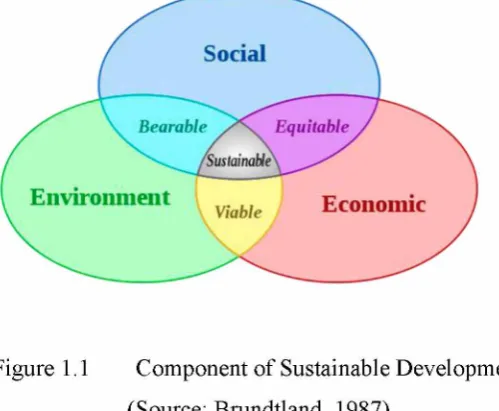
Figure 1.1 Component of Sustainable Development 1
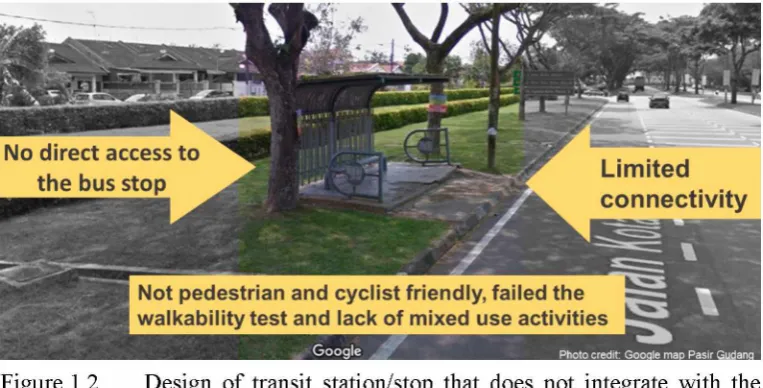
Figure 1.2 Design o f transit station/stop that does not integrate with the surrounding area and responsive to the pedestrian accessibility 8
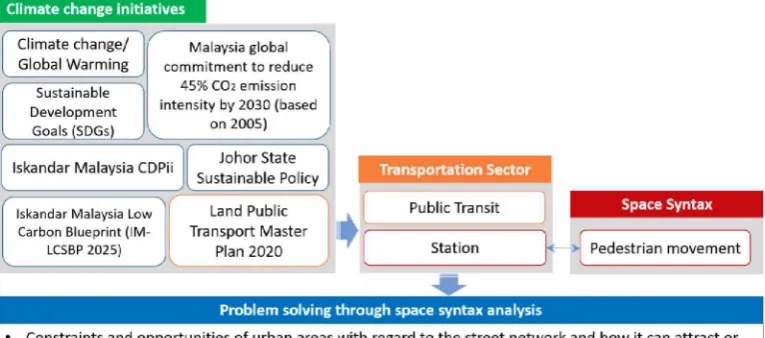
Figure 1.3 Formulation o f the problem statement 11
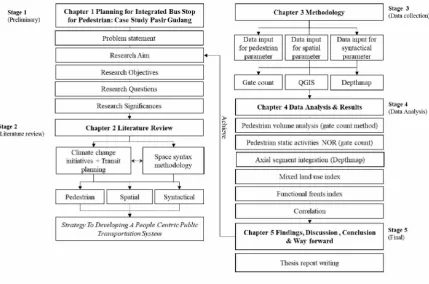
Figure 1.4 Thesis structure and framework 13
Figure 2.1 Research theoretical framework topic and authors 18
Figure 2.2 Lock-in effects 22
Figure 2.3 Sustainable Development Goals (SDGs) 2016 23
Figure 2.4 Sustainable Transport Goal 24
Figure 2.5 Station and Stop Principles 28
Figure 2.6 Breakdown o f local bus passenger US cities 32 Figure 2.7 Malaysia aspiration on public transportation 36 Figure 2.8 Social-ecological framework o f Pedestrian’s Need 45 Figure 2.9 Factors affect pedestrian accessibility stations and stops 52
Figure 2.10 Space influence perception o f people 55
Figure 2.11 Representation o f street configuration 56
Figure 2.12 Research theoretical framework and parameters proposed 63
Figure 3.1 Location o f Iskandar Malaysia 66
Figure 3.2 Pasir Gudang is located within Flagship D o f the economic corridor o f
Iskandar Malaysia 66
Figure 3.3 Percentage o f Pasir Gudang land use 67
Figure 3.4 Pasir Gudang land use map 69
Figure 3.5 Framework o f research methodology 71
Figure 3.6 Illustration o f gate count method 75
Figure 3.11 Summarised framework for each parameter, method and data collection 86 Figure 4.1 Visualisation o f global integration o f three methods 90 Figure 4.2 3-km metric axial segment analysis (Global) 92
Figure 4.3 1.2-km metric axial segment analysis 92
Figure 4.4 800-metres metric axial segment analysis 93
Figure 4.5 400-metres metric axial segment analysis (Local) 93 Figure 4.6 Visualised axial segment integration 400 metres within 3 kilometres
study area 94
Figure 4.7 46 potential zones identified 96
Figure 4.8 Mixed land use index according to zones 99
Figure 4.9 Distribution o f functional front element along the streets o f study area 101 Figure 4.10 Functional front index according to zones 102
Figure 4.11 Gates within 3 kilometres study area 105
Figure 4.12 Pedestrian volume by street 106
Figure 4.13 Pedestrian volume according to zones 107
LIST OF ABBREVIATION
COP Conference o f Parties
CDPii Comprehensive Development Plan Iskandar Malaysia DOSM Department of Statistic Malaysia
ETP Economic Transformation Program
GDP Gross Domestic Product
GHG Greenhouse gases
GTP Government Transformation Program
IM-LCSBP 2025 Low Carbon Society Blueprint for Iskandar Malaysia 2025
IRDA Iskandar Regional Development Authority M PPG Pasir Gudang Municipal Council
NCC National Climate Change
NACTO National Association o f City Transportation Officials OECD Organisation for Economic Co-operation and Development
SDGs Sustainable Development Goals
TOD Transit Oriented Development
CO2 - Carbon dioxide
km - Kilometre
km2 - Square kilometre
m - Metre
APPENDIX TITLE PAGE
A Gate count method 152
B Pedestrian volume, static activities, mixed Land Uses Index, and
functional front index, buffer distance 153
CHAPTER 1
INTRODUCTION
1.1 Research Background and Study
Sustainable development is a multi-disciplinary field that focuses on the three key elements which are economy, society, and the environment (Brundtland, 1987). "Sustainable developments is development that meets the needs o f the present without compromising the ability o f future generations to meet their own needs” (World Commission on Environment and Development, ‘ W CED’, 1987) that contains two key concepts; o f “needs” in particular the essential needs o f the world’s poor to which overriding priority should be given and, the idea o f limitations imposed by the state of technology and social organisation on the environment’s ability to meet present and future needs (Brundtland, 1987) (refer to Figure 1.1).
Sustainable development is also later translated into built environment into various city development plan nowadays. The characteristic o f sustainable city embodied following an aspect o f the affordable house, compact city, mixed-use
development, green industry, safe city, urban agriculture, cultural and identity, public information and education, climate resilient, cultural and identity, green building and renewable energy (Roberts et al., 2014). Climate change has been seen as the most significant challenge to sustainable development. W hile emissions from other sectors are generally falling, those from transport have continued to increase a past year and eventually in the future. It is reported the transport sector itself responsible for 22% of energy-related greenhouse gas (GHG) emissions worldwide, and its emission rapidly increases compared to other sectors (Lefevre et al., 2014).
Malaysia Government was also taking part in this sustainable development when our prime minister pledged that Malaysia would participate to reduce 40% carbon emission by 2025. Overall, Malaysia became a Non-Annex I Party to the United Nations Framework Convention on Climate Change (UNFCCC) when it consented the UNFCCC in 1994 and the Kyoto Protocol in 2002. During the 15th United Nations Framework Convention on Climate Change (COP15) held in Copenhagen on 2009, the Malaysian government has announced its commitment to reduce the country’s carbon dioxide emission intensity to the GDP by 45% per GDP per capita by 2030, as compared to 2005 levels - conditional upon transfer o f technology and finance from developed nations.
Moreover, the bus service has been the most feasible and affordable mode of transport. It is also the most convenient mode o f transport given the massive investment in Malaysia transportation planning is on the road infrastructure. Besides, the bus has the smaller carbon footprints that could accommodate up to 30 and 40 people per boarding, even though it still uses petrol, compared to the 20 private vehicles on the road using the same petrol — furthermore, an increase in the use of public transport results in less pollution and better air quality. Using the bus helps to cut congestion which is a severe constraint on growth and costly to the economy. However, bus service system in Malaysia still suffered from inefficiency services in term o f giving convenient and seamless journeys toward the customer.
Transit station and stops are one o f the elements o f transit planning. Good transit systems are transit stop and station that offer safe and convenient connections
for the public to other local destination. It is reported that the convenient location of transit station that has better coverage and accessibility for pedestrian would reduce people reliability to use the private vehicle and to switch to use public transport, especially during peak hour. Transit station or stops is regarded as one o f the pedestrian facilities is an essential element to support Transit-Oriented Development (TOD), hence reducing traffic congestion. Transit stop and stations also serve as essential part of transit service thus it is essential to consider these facilities from the rider. It also serves as a node to bring people into the area and to become one o f the focal points in a community.
However, people particularly pedestrian suffered in term o f access and safety ever since the introduction o f the automotive industry in the early 1860s. The expansion o f this industry allowed for the planning paradigm to change dramatically over the decades from the people-centric to vehicle oriented. The vehicle oriented planning allowed most o f the transportation investment focused on building vehicle facilities for the instance parking lot, expansion o f the road, instead o f focusing on non-motorised modes. Consequently, the physical design o f the cities particularly streets layout tends to favour mobility over accessibility while neglecting pedestrian priorities. This, in fact, restricts walking activities and led people to be dependent toward private vehicles. M ost o f the traffic congested cities in the world has suffered from this vehicle oriented physical environment. Promoting and providing multimodal transportation will increase the quality o f urban area where walking is prioritised, and pedestrian activities are encouraged. The increase in human movement can be seen as a positive effect on the cities. Most of the livable cities in the world have high pedestrian volume and movement in their cities.
pedestrian movement over 75% that is caused by the urban street configuration. The fundamental concept o f space syntax methodology explains how the movement of pedestrian and vehicular in an urban area are the result o f people’s cognitive topological-visual analysis (Hillier et al., 2007; Jiang 2009a). Besides, the component of the space syntax methodology allows researchers to quantify the integration (the level o f interconnected) o f a particular street to the rest o f the streets network within cities.
Overall, climate change resilient growth strategies create a low carbon, livable and vibrant cities. One o f the climate change strategies is by developing a people- centric public transportation system. People-centric public transportation offers a great benefit to the public particularly to the impoverished community that often suffered from the vicious cycle o f lock-in effect of land and transport development. Appropriate with the national aspiration to develop a people-centric public transportation system it is essential that every Malaysia cities to the pursuit and fulfil the goal. Besides, these people-centric public transportation system could be one o f the measures in reducing M alaysia’s GHG emission reduction o f 45% by 2030. TOD which is one o f the climate change strategies prioritised accessibility-based paradigm o f pedestrianisation activity. The fundamental concept o f TOD focus on accessibility o f pedestrian to and from the transit stops and stations and adjacent land uses.
1.2 Problem Statement
Even though there has been much emphasis on socially, economically and environmentally benefit o f TOD, people often disregard its function due to the lack of understanding the technical details of TOD, hence failing on the public transportation modal share. M ost o f the public transportation user often suffered frustration on the poor services and ticket system, speed and punctuality, inconvenient in term o f stop and station as well as safety concern particularly toward bus services. This whole perception has created an image where using the bus services is not convenient and preferable, inefficient and time-consuming. Albeit bus service is one o f the major public transportation in Malaysia context, this mode o f transport still suffers many challenges especially in term o f the long waiting time, no declared time schedules for passengers and accessibility to the stops and station. Moreover, most o f the public transportation system does not expand outside o f the large urban areas. Recommendations to improve the service quality o f public bus service is currently demanding, given with the current policy on the national public transportation toward people-centric.
M alaysia had reported an increase o f three folds o f private vehicles registration that over the past 20 years from 4.7 million (1990) to 18.6 million (2010) (SPAD, 2013). This scenario depicted the failing o f public transport modal share in urban areas, mainly where mobility demands are intense which often lead to congestion. Travel vehicle demand is expected grew from 13 million trips per day in 1991 to 40 million in 2010 (SPAD, 2013). Projections point towards this trend continuing in Malaysia, with the figure expected to reach a staggering 133 million in 2030 (SPAD, 2013). With urbanisation expected to reach 75 % by 2020 (SPAD, 2016) there is a need to enable an efficient and smooth flow o f people, which in turn also enables the growth o f new urban areas through increased connectivity.
private vehicles usage. One o f the commonly well-known new urbanism practices is TOD. Its unique features centred around the development o f a transit stop or station as a focal point o f the development or neighbourhood where the distribution of residential, commercial and employment centres are within pedestrian scale distances. This design eventually improves the connectivity and accessibility o f people to the transit services, and its adjacent land uses thus encourage and improve transit ridership (John et al., 2009). The demand for TOD neighbourhood is seen growing recently in many cars oriented development particularly in American cities (Renne et al., 2013).
Lately, most o f the TOD studies consisted and focused on the public willingness and support to used alternative modes such as public transport system and walking in order to enhance public ridership. However, creating an attractive walking condition which is one o f the basic active modes o f transport and catalyst for TOD development is seen as the primary challenge in most o f the TOD cities. TOD concept majorly emphasised on increase land use intensity within the specific ideal distance to transit services so that the people can be drawn to the area, however, its often overlooked the people movement mainly on accessibility from and to transit station which is seen only consider land use element. This eventually affects people to walk and use public transport willingly. For example, people are not willing to w alk to stop or station that does not have direct access to the transit services even though the concentration o f the land uses surrounding of the transit station is high.
It can be said that the current TOD development particularly in Malaysia is often neglecting the first and last mile connectivity o f people to move around therefore create a non-friendly walking environment. Current local studies often empirical and considers only urban design concepts in TOD. All in all, there has been lacking empirically on how to incorporate the walking environment into the development of TOD as well as on how to operate them to fulfil the main goal o f TOD (Li et al., 2014; Ozbil, 2009). As a result, these lead to vehicles oriented environment to dominate the TOD development (public transport environment).
Consequently, the choice o f location public transport systems is biased toward the vehicle oriented environment which resulted in too many development issues for
example designing o f the transit station and stop that does not integrate with the surrounding area and responsive to the pedestrian accessibility. Therefore, a study that investigates the pattern o f people around the TOD development in order to demonstrate a sense o f identity within the urban should be encouraged to change people’s urban perspective toward using to public transport. Accordingly, this vehicle oriented practises can be changed and shifted toward public transport which is a people-centric development to stimulate positive people-urban interaction (Li et al., 2014). Thus, TOD development that caters to walking environment, should be studied in the search for optimal location wise for public transit station or stop to build a better living environment that fulfilling social, economy and environment as well as encourage efficient land uses.
Meanwhile, transit services for example bus systems should be able to realise and provide multimodal transportation by serving a variety o f access needs and a limitless range o f locations throughout the area. Even though bus service is one o f the major public transportation in particularly in Asian cities, this mode o f transport still suffers many challenges particularly in term o f accessibility to the stops and station (refer to Figure 1.2). Recommendations to improve the service quality o f public bus service is currently demanding, given with the current policy on the national public transportation toward people-centric particularly toward connecting first and last mile journey for transit user which mostly consist o f pedestrian (SPAD, 2016). The pedestrian movement pattern is considered an essential element o f transit planning (Daamen et al., 2005). Often, the behaviour o f a transit user is significantly correlated by providing a convenient pedestrian environment (Guo et al., 2008) particularly in giving accessibility to and from transit stations and stops.
placed within transportation capacity o f city network in this case road network which serves as transport infrastructure to support economic and/or residential activity (Bruun, 2014). Besides, transit stop and station planning method and guidelines insufficiently address particularly within the most Asian cities context particularly toward Malaysia cities (Japheth, 2012). Thus, intensive research on the transit station and stop planning should be broadly encouraged to fulfil both national aspirations of the people-centric public transportation system (SPAD, 2016).
Figure 1.2 Design o f transit station/stop that does not integrate with the surrounding area and responsive to the pedestrian accessibility
Besides, being one o f the Malaysia economic regions and its strategic location nearby to Singapore, Iskandar Malaysia has experienced an increased demand for the transportation sector due to rapid economic growth that brought an increase in population. Iskandar Malaysia currently recorded public modal split o f 15: 85 in 2010. The percentage o f the public modal split is expected to reduce up to 10% by 2025 business as usual scenario if there was no improvement regard on this issue. It is reported that GHG emission from the transportation sector in Iskandar Malaysia is expected to increase from 15% (2010) to 27% (2025) (Ho CS et al., 2013). The four (4) major transportation corridors in Iskandar Malaysia often suffered traffic congestion, particularly during peak hours.
These important routes connected to Iskandar M alaysia’s main flagships that consist o f most and important primary economic activities to the region. Hence this
route serves as the central platform for the daily commute. The four (4) major transportation corridors which are identified are (a) Skudai-Johor Bahru, (b) Johor Bahru - Pasir Gudang (c) Johor Bahru Ulu Tiram (d) Johor Bahru - Nusajaya. The Johor Bahru - Pasir Gudang corridor notably which is recorded to have the highest private vehicles volume travel daily even though it has the greatest bus operation. Therefore, the study on the implementation o f the non-motorised planning within this corridor should be conducted in order to encourage transit ridership in this case using bus services- hopefully being one o f the measures to reduce traffic congestion.
Space syntax methodology is one o f the effective methods to determine the effective location o f certain facilities related to movement within public urban space. Bertonlini and Spit (1998) stated that the transit station should be located in a “significant place” in an urban network. Some o f the urban areas have high people movement, therefore, this characteristic should be considered in order to determine the best location for the transit station and stop. These potential areas can be used to influence people’s natural movement and attract walking activities to happen. According to space syntax theory, the degree o f street integration has influence spatial accessibility o f an urban area (Hillier, 2007b) therefore attracting movement to exist. Thus, it shows that high integrated streets likely have the potential to develop transit stations and stops that could capture this movement pattern. Lacking accessibility of transit stations and stops have respectively negative impacts on safety and liveability o f station areas; and subsequently, the public transport ridership is expected to continue to decline.
affected by spatial design; spatial segregation and social disadvantage are related in cities (Hillier et al., 1987; Hillier, 2009). This evidence shows that space syntax has the ability to measure spatial accessibility through analysing the movement network of the city (Law et al., 2013).
Compares to other methodology, space syntax methodology offer solution in terms o f (Charalambous et al., 2012);
a) Constraints and opportunities o f urban areas with regard to the street network and how it can attract or deter pedestrian movement so that land use strategy is better aligned to the pedestrian movement opportunities;
b) Offer insights on how the area can be optimised in its context regarding its commercial viability, the potential for retail, the design o f sustainable development and the creation o f vibrant and lively urban spaces;
c) Offers the possibility to test different strategic guidelines and design proposals
Climate change/ Global Warming
Sustainable Development
Malaysia global com m itm ent to reduce
45% CO2 emission intensity by 2030 (based
Iskandar Malaysia CDPii
,
Johor State Sustainable Policy CIskandar Malaysia Low
Carbon Blueprint (IM- LCSBP 2025) V
C Land Public \
Transport Master Plan 2020
v y
Transportation Sector
Public Transit Space Syntax
Station Pedestrian movement
Problem solving through space syntax analysis
Constraints and opportunities of urban areas with regard to the street network and how it can attract or deter pedestrian movement so that land use strategy is better aligned to the pedestrian movement opportunities;
Offer insights on how the area can be optimised in its context regarding its commercial viability, the potential for retail, the design of sustainable development and the creation of vibrant and lively urban spaces;
O ffers th e possibility to test different strategic guide lin es and d esign proposals
Source: Charalambous eta/., 2012
Figure 1.3 Formulation o f the problem statement
1.3 Research Aim
Thus, in response to that problem statement this study aims to “Plan for Integrated Bus Stop for Pedestrian using Space Syntax Analysis” Thus strategy to developing a people-centric public transportation system is explored in this research. This component explained further in Chapter 2.
1.4 Research Objectives
To achieve the stated research aim, the following objectives are formulated:
b) To correlate pedestrian volume with the axial segment property (integration), type of land use (functional front and mixed land use index) and distribution o f static activities in the studied zones
c) To suggest the suitable/potential location o f bus stops based on the correlation analysis result o f axial segment property (integration), type o f land use (functional front and mixed land use index) and distribution o f static activities with pedestrian volume in the studied zones
1.5 Research Questions
The scope o f this research is summarised based on the following discussion. Based on the above background scenario, three (3) research question is then tabulated to identify possible question raised while conducting the research.
a) W hat is pedestrian volume, axial segment property (integration), type o f land uses (functional front and mixed land use index) and static activities distribution in the studied zones?
b) W hat is the relationship between the pedestrian volume with axial segment property (integration), type o f land use (functional front and mixed land use index) and distribution o f static activities in the studied zones?
1.6 Research Limitation
This study is limited to the area o f Pasir Gudang. Pasir Gudang is selected due to its character as well as it is one o f five (5) municipality regions in the Iskandar Malaysia. Pasir Gudang is also a crucial manufacturing hub as well as the location of a dense neighbourhood area. Moreover, this study only considers three (3) kilometres radius o f Pasir Gudang as the study area. Apart from that, this research focuses only on defining the service coverage area o f a transit service, which is the area within walking distance o f a transit stop; does not include measuring the whole bus services system for examples the route network and ridership.
1.7 Thesis Structure
This thesis is a structure in five (5) stages, and each stage translates into Chapter 1, 2, 3, 4 and 5. Figure 1.4 shows the detailed framework o f the thesis structure.
Chapter 1: Introduction
This chapter introduces the background and issues that need to address and initiate bus stop facilities planning in Pasir Gudang using space syntax analysis. The content such as research aim, objectives, research question and scope o f this chapter defined in here.
Chapter 2: Strategy for Developing a People-Centric Public Transportation System
This chapter reviews on the climate change initiatives, the concept o f urban planning as well as transit planning and transit stop and focus on the three parameters identified that promoted accessibility o f people to and from transit station/stop (syntactical parameter, pedestrian parameter and spatial parameter) to set a model for the discussion on strategy to plan for integrated bus stop using space syntax analysis. This chapter also highlights the significant on the transit stop to urban planning by drawing links to sustainable development. Furthermore, a theoretical framework to develop a suitable methodology to achieve the research aim o f this research is proposed.
Chapter 3: Research Methodology
This chapter discussed the significant data collection (data input) and analysis required to achieve the goal o f this research. Furthermore, this chapter explained on rationales o f the technique and instrument adopted to plan for an integrated transit stop in Pasir Gudang. A theoretical methodology framework to guide the research is proposed in this chapter.
Chapter 4: Data Analysis and Result
This chapter begins with a background o f Pasir Gudang, and the result of analysis o f data collection based on the methodology proposed in chapter three (3) are
shown and analysed. Then, a series o f investigation o f the relationship between the three parameters introduced which are syntactical, spatial and pedestrian. These parameters analysis and result are then explained further.
Chapter 5: Discussion and Conclusion
This chapter summarised on the finding from the theoretical review o f Chapter two and methodology research o f Chapter three. This chapter then discussed the findings and concluded on the spatial proposal to plan for integrated transit stops thus to enhance transit planning in Pasir Gudang and recommends possible future research directions in the topic.
1.8 Research Significance
The purpose o f this study is to address people-based planning in TOD. People- centric planning is one o f the strategies identified to reduce GHG emission from the highest emitter sector (transportation) through integrating land use and transport planning. Incorporating land use and transportation approaches, for example, TOD will encourage better connectivity and accessibility o f people from and to the station with surrounding land uses. The station should be seen as another essential platform that bringing people in that could liven the area, particularly in M alaysia cities. By integrating land use and transport planning approaches for examples not only can socially benefit. However, the investment and demand for public transportation continue to increase over the years. Comprehensive and thorough planning o f the public transport station elevated transit services quality thus improve the ridership.
Agrawal, A. W., Schlossberg, M., & Irvin, K. (2012). How Far , by W hich Route and W hy? A Spatial Analysis o f Pedestrian Preference How Far , by W hich Route
and W hy? A Spatial Analysis, (January), 37-41.
https://doi.org/10.1080/13574800701804074
Al-Mudhaffar, A., Nissan, A., & Bang, K. L. (2016). Bus Stop and Bus Terminal
Capacity. Transportation Research Procedia, 14, 1762-1771.
https://doi.org/10.1016Zj.trpro.2016.05.142
Alfonzo, M. A. (2005). To walk or not to walk? The hierarchy o f walking needs. Environment and Behavior, 37(6), 808-836. https://doi.org/10.1177/0013916504274016
American Public Transportation Association (APTA). (2012). Design o f On-street Transit Stops and Access fro m Surrounding Areas. Washington D.C. Retrieved from
http://citeseerx.ist.psu.edu/viewdoc/download?doi=10.1.1.278.4944&rep=rep1 &type=pdf
American Public Transportation Association (APTA). (2017). Public Transportation Reduces Greenhouse Gases and Conserves Energy The fa cts are clear The Benefits o f Public Transportation.
Andersson, D. E., Shyr, O. F., & Lee, A. (2012). The successes and failures o f a key transportation link: Accessibility effects o f Taiwan’s high-speed rail. Annals o f Regional Science, 48(1), 203-223. https://doi.org/10.1007/s00168-010-0405-5 Andrade, R., & Schieck, A. F. G. (2015). Wayfinding to support urban exploration :
Combining space syntax analysis with social media data for navigation system design. Proceedings o f the 10th International Space Syntax Symposium, London, 117:1-117:19.
Beatrix Emo, Christoph Holscher, Jan M. Wiener, R. C. D. (2012). Wayfinding and Spatial Configuration : Evidence from Street Corners, 1-16.
Biba, S., Curtin, K. M., & Manca, G. (2010). A new method for determining the population with walking access to transit. International Journal o f Geographical
Information Science, 24(3), 347-364.
https://doi.org/10.1080/13658810802646679
Borgers, A. W. J., & Timmermans, H. (2014). Modelling pedestrian behaviour in downtown shopping areas, (January 2005).
Brons, M., Givoni, M., & Rietveld, P. (2009). Access to railway stations and its potential in increasing rail use. Transportation Research Part A : Policy and Practice, 43(2), 136-149. https://doi.org/10.1016/j.tra.2008.08.002
Brundtland, G. H. (1987). Our Common Future: Report o f the W orld Commission on Environment and Development. United Nations Commission, 4(1), 300. https://doi.org/10.1080/07488008808408783
Bruun, E. C. (2014). Better Public Transit Systems (Second).
Camagni, R., Gibelli, M. C., & Rigamonti, P. (2002). Urban mobility and urban form: The social and environmental costs o f different patterns o f urban expansion. Ecological Economics, 40(2), 199-216. https://doi.org/10.1016/S0921-8009(01)00254-3
Carpio-Pinedo, J. (2014). Urban Bus Demand Forecast at Stop Level: Space Syntax and Other Built Environment Factors. Evidence from Madrid. Procedia - Social and Behavioral Sciences, 160(Cit), 205-214. https://doi.org/10.1016/j.sbspro.2014.12.132
Cervero, R. (2001). Integration o f Urban Transport and Urban Planning. The Challenge o f Urban Government: Policies and Practices, 407-427. https://doi.org/10.1177/019263657105535117
Cervero, R. (2006). Office Development, Rail Transit, and Commuting Choices. Journal o f Public Transportation, 9, 41-55. https://doi.org/10.1016/0965- 8564(93)90040-R
Cervero, R., & Berkeley, U. C. (2010). Urban Planning & Sustainable Mobility M eta Evidence on 5Ds & VKT in US Vehicle Kilometers Traveled ( VKT ).
Chapman, E. H., & Lynch, K. (1962). The Image o f the City. The Journal o f Aesthetics and A rt Criticism, 21(1), 91. https://doi.org/10.2307/427643
Charalambous, N., & Mavridou, M. (2012). Space syntax: Spatial integration accessibility and angular segment analysis by metric distance (ASAMeD). In Accessibility Instruments for Planning Practice, edited by A. Hull, C. Silva, and
L. Bertolini: COST Office. ISBN: 978-989-20-3187-3., 57-62.
Chiaradia, A., Moreau, E., & Raford, N. (2005). Configurational Exploration o f Public Transport Movement Networks: A Case Study, The London Underground. Group, 541-552.
Chin Siong, H., Loon Wai, C., Matsuoka, Y., Gami, K., Abdullah, R., & Jausus, N. (2013). Low Carbon Society Blueprint for Iskandar Malaysia 2015. UTM Low Carbon Asia Research Center, 1 -12. https://doi.org/10.1017/CBO9781107415324.004
Christian, H. E., Bull, F. C., Middleton, N. J., Knuiman, M. W., Divitini, M. L., Hooper, P., ... Giles-Corti, B. (2011). How important is the land use mix measure in understanding walking behaviour? Results from the RESIDE study. International Journal o f Behavioral Nutrition and Physical Activity, 8(1), 55. https://doi.org/10.1186/1479-5868-8-55
Civil Society Mechanism for relations to the UN Committee on W orld Food Security. (2016). CSM Policy Working Group on Sustainable Development Goals (SDG) Coordinator.
Currie, G. (2010). Quantifying spatial gaps in public transport supply based on social needs. Journal o f Transport Geography, 18(1), 31-41. https://doi.org/10.1016/jjtrangeo.2008.12.002
Daamen, W., Hoogendoorn, S., & Bovy, P. (2005). First-Order Pedestrian Traffic Flow Theory. Transportation Research Record, 1934(January), 43-52. https://doi.org/10.3141/1934-05
Daniels, R., & Mulley, C. (2011). Explaining walking distance to public tran sp o rt: the dominance of public transport supply, (July), 28-30.
Daniels, R., & Mulley, C. (2013). Explaining walking distance to public transport: The dominance of public transport supply. Journal o f Transport and Land Use, 6(2), 5. https://doi.org/10.5198/jtlu.v6i2.308
Dempsey, N., Brown, C., Raman, S., Porta, S., Jenks, M., Jones, C., & Bramley, G. (2010). Elements o f Urban Form Elements o f Urban Form. https://doi.org/10.1007/978-1-4020-8647-2
Development, S. E. E. (2006). High-Speed Train. Railway Engineering Journal, 2(4). Donovan, S., & Munro, I. (2013). Impact o f urban form on transport and economic
outcomes.
in the function o f reduction o f carbon dioxide emission. Case study: Pancevo and Vrsac. Spatium, 523(27), 31-39. https://doi.org/10.2298/SPAT1227031D
Eboli, L., Forciniti, C., & Mazzulla, G. (2014). Service Coverage Factors Affecting Bus Transit System Availability. Procedia - Social and Behavioral Sciences, 111, 984-993. https://doi.org/10.1016/j.sbspro.2014.01.133
Elbanhawy, E. Y., & Dalton, R. (2013). Syntactic Approach To Electric Mobility In Metropolitan Areas : NE 1 district core , segment map, 1-16.
Ellerman, D. (2005). Jane Jacobs on Diversification and Specialization, (February), 1 24.
Era, R. T. (2012). Improving Pedestrian Accessibility to Public Space Through Space Syntax Analysis. Eighth International Space Syntax Symposium, 1-16.
Ewing, R., Bartholomew, K., Winkelman, S., Walters, J., & Chen, D. (2008). Growing Cooler (The evidence o f urban development and climate change), 109-130. Ewing, R., & Handy, S. (2009). Measuring the Unmeasurable: Urban Design Qualities
Related to Walkability. Journal o f Urban Design, 14(1), 65-84. https://doi.org/10.1080/13574800802451155
Fielding, G. J., Glauthier, R. E., & Lave, C. A. (1978). Performance indicators for
transit management. Transportation, 7(4), 365-379.
https://doi.org/10.1007/BF00168037
Foda, M. A., & Osman, A. O. (2010). Using GIS for Measuring Transit Stop Accessibility Considering Actual Pedestrian Road Network, (Tcrp 1996), 23-40. Frank, L. D., & Pivo, G. (1994). Relationship between land use and travel behavior in
the puget sound region.
Frank, L. D., Schmid, T. L., Sallis, J. F., Chapman, J., & Saelens, B. E. (2005). Objectively Measured Urban Form Findings from SMARTRAQ, 28, 117-125. https://doi.org/10.1016/j.amepre.2004.11.001
Gainza, X., & Livert, F. (2013). Urban form and the environmental impact of commuting in a segregated city, Santiago de Chile. Environment and Planning B: Planning and Design, 40(3), 507-522. https://doi.org/10.1068/b38045
Gehl, J. (1987). Life Between Buildings: Using Public Space, (August), 200. Retrieved from
http://books.google.hu/books/about/Life_Between_Buildings.html?id=K98JAQ AAMAAJ&pgis=1
role o f the “Historic Urban Landscape” approach. Sustainability (Switzerland), 5(10), 4329-4348. https://doi.org/10.3390/su5104329
Givoni, M., & Rietveld, P. (2007). The access journey to the railway station and its role in passengers’ satisfaction with rail travel. Transport Policy, 14(5), 357-365. https://doi.org/10.1016/j.tranpol.2007.04.004
Grajewski, T., & Vaughan, L. (2001). Space syntax observation manual. Space Syntax Laboratory, 1-18.
Griswold, J. B., Sztainer, T., Lee, J., Madanat, S., & Horvath, A. (2017). Optimizing Urban Bus Transit Network Design Can Lead to Greenhouse Gas Emissions Reduction. Frontiers in Built Environment, 3(February), 1-7. https://doi.org/10.3389/fbuil.2017.00005
Guo, Z., & Ferreira Jr, J. (2008). Pedestrian environments, transit path choice, and transfer penalties: understanding land-use impacts on transit travel. Environment and Planning B: Planning and Design, 35(3), 461-479. https://doi.org/10.1068/b33074
Guru, L. T. (2015). Land Transport Guru Details : Background : Background : The T erm inal: Bus Services : Local Bus services : Retrieved April 27, 2017, from https://landtransportguru.net/masai-bus-terminal/
Ha, E., Joo, Y., & Jun, C. (2011). Green Score : an Evaluation Scheme for Pedestrian Environment 1.
Handy, S. (1996). Methodologies for Exploring the Link Between Urban Form and Travel Behavior, 1(2), 151-165.
Handy, S. L. (1995). Understanding the Link Between Urban Form and Travel Behavior. Paper Presented at the 74th Annual M eeting o f the Transportation Research Board, 183-198.
Hass-Klau, C. (2015). The Pedestrian and The City (First).
Heath, G. W., Brownson, R. C., Kruger, J., Miles, R., Powell, K. E., & Ramsey, L. T. (2006). The Effectiveness o f Urban Design and Land Use and Transport Policies and Practices to Increase Physical Activity: A Systematic Review. Journal o f Physical Activity & Health, 3(Suppl1), S55-S76. Retrieved from http://libproxy.wustl.edu/login?url=http://search.ebscohost.com/login.aspx?dire ct=true&db=psyh&AN=2006-11624-005&site=ehost-live&scope=site
Heffernan, E. E., Heffernan, T. W., & Pan, W. (2014). The relationship between the quality o f active frontages and public perceptions o f public spaces, 19, 92-102.
Hernandez, D., Lister, M., & Suarez, C. (2011). Location Efficiency and Housing Type - Boiling it Down to BTUs, (March), 17. Retrieved from http://www.epa.gov/smartgrowth/pdf/location_efficiency_BTU.pdf
Hillier, B. (1988). Bill Hillier M apping Method : Basis O f Space Syntax Technique. In Space Syntax Laboratory.
Hillier, B. (1996). Cities as movement economies.
Hillier, B. (1999). Centrality as a process: accounting for attraction inequalities in deformed grids, 107-127.
Hillier, B. (2007a). Space is the machine. Hillier, B. (2007b). Space Is the Machine.
Hillier, B. (2009). Spatial Sustainability in Cities Organic Patterns and Sustainable Forms Note 1. Symposium A Quarterly Journal In Modern Foreign Literatures,
1-20. Retrieved from http://eprints.ucl.ac.uk/18538/
Hillier, B. (2012). Studying cities to learn about minds: some possible implications of space syntax for spatial cognition. Environment and Planning B: Planning and Design, 39(1), 12-32. https://doi.org/10.1068/b34047t
Hillier, B., Burdett, R., Peponis, J., & Penn, A. (1987). Creating Life: Or, Does Architecture Determine A nything? Ach. & Comport/Arch. Behav., 3(3), 233 250.
Hillier, B., & Iida, S. (2005). Network Effects and Psychological Effects: A Theory o f Urban Movement. University College London, UK.
Hillier, B., Penn, A., Hanson, J., Grajewski, T., & Xu, J. (1993). Natural Movement: or Configuration and attraction in urban pedestrian movement. Environment and Planning B: Planning and Design, 20, 29-66.
Holmes, J., & Hemert, J. Van. (2008). Transit Oriented Development. Sustainable Community Development Code, Research Monologue Series: Urban Form, Transportation, (2009), 1-8.
Holtzclaw, J. (1994). Using Residential Patterns and Transit To Decrease Auto Dependence and Costs, (June), 51. Retrieved from http://docs.nrdc.org/smartGrowth/files/sma_09121401a.pdf
Holtzclaw, J., Clear, R., Dittmar, H., Goldstein, D., & Haas, P. (2002). Location efficiency: Neighborhood and socio-economic characteristics determine auto ownership and use - Studies in Chicago, Los Angeles and San Francisco. Transportation Planning and Technology, 25(1), 1-27.
https://doi.org/10.1080/03081060290032033
Hongbo, W. (2016). Taking Measures to Advance Sustainable Transport.
Hoornweg, D., Sugar, L., & Gomez, C. L. T. (2011). Cities and greenhouse gas emissions: moving forward. Environment and Urbanization, 23(1), 207-227. https://doi.org/10.1177/0956247810392270
Hoornweg, D., Tuts, R., & Kehew, B. (2004). Greenhouse Gas Emissions from Cities Comparison o f International Inventory Frameworks A Draft W orking Paper by UNEP , UN-Habitat and World Bank under the Joint W ork Program for Cities and Climate Change 1 Table 1 : Four prominent international GHG emissions, (released).
Huang, S.-W., & Hsieh, H.-I. (2014). The Study o f the Relationship between Accessibility and Mixed Land Use in Tainan, Taiwan. International Journal o f Environmental Science and Development, 5(4), 352-356. https://doi.org/10.7763/IJESD.2014.V5.508
Huang, Z. (2014). A hierarchical process for optimizing bus stop distribution. Urban, Planning and Transport Research, 2(February 2015), 162-172. https://doi.org/10.1080/21650020.2014.908738
Hugh Barton & Catherine Tsourou. (2000). Healthy Urban Planning. Madison Ave, New York NY: Taylor & Francis 2 Park Square, Milton Park, Abingdon, Oxon, OX14 4RN on behalf o f the W orld Health Organization.
Huxford, R. (2004). Safer places - The Planning System and Crime Prevention. Proceedings o f the IC E - Municipal Engineer, 157, 5-107. https://doi.org/10.1680/muen.2004.157A227
Iseki, H., Ringler, A., Taylor, B. D., Miller, M., & Smart, M. (2007). Evaluating Transit Stops and Stations from the Perspective o f Transit Users, 0194.
Iskandar Regional Development Authority. (2014). Comprehensive Development Plan ii.
Jan Gehl and Birgitte Svarre. (2013). How To Study Public Life. ISLANDPRESS. Japheth, L. (2012). Bus Stands in Malaysia : Signicance , Reality , Perceptions & 10
Aspects to Improve On. Retrieved from
http://blog.japhethlim.com/index.php/2012/12/01/bus-stands-in-malaysia-significance-reality-perceptions-10-aspects-to-improve-on/
Jiang, B. (2009). Ranking spaces for predicting human movement in an urban environment. International Journal o f Geographical Information Science, 23(7),
823-837. https://doi.org/10.1080/13658810802022822
Jun, C., Kwon, J. H., Choi, Y., & Lee, I. (2007). An alternative measure o f public transport accessibility based on space syntax. Lecture Notes in Computer Science (Including Subseries Lecture Notes in Artificial Intelligence and Lecture Notes in Bioinformatics), 4413 LNAI(Berglund 2001), 281-291. Retrieved from http://www.scopus.com/inward/record.url?eid=2-s2.0-
38549164650&partnerID=40&md5=af2a7e4988366f548a9c3884198cce4b Kenneth A. Small, E. T. V. (2007). The Economics o f Urban Transportation.
Kenworthy, J. (2013). W orld Transport Policy and Practice October 2013, 19(October).
Kerkman, K., Martens, K., Meurs, H., Martens, K., & Meurs, H. (2014). Factors influencing bus-stop level ridership in the Arnhem Nijmegen City Region, (November).
Kim, D., Ko, J., & Lee, Y. (2013). Estimating Pedestrian Traffic V o lu m e: A Preliminary Analysis, 9.
Kimpel, T. J., Dueker, K. J., & El-Geneidy, A. M. (2007). Using GIS to Measure the Effect o f Overlapping Service Areas on Passenger Boardings at Bus Stops. Urban and Regional Information Systems Association Journal, 19(1), 5-11.
Kockelman, K. (1997). Travel Behavior as Function o f Accessibility, Land Use Mixing, and Land Use Balance: Evidence from San Francisco Bay Area. Transportation Research Record: Journal o f the Transportation Research Board, 1607(January 1997), 116-125. https://doi.org/10.3141/1607-16
Koohsari, M. J., Owen, N., Cerin, E., Giles-Corti, B., & Sugiyama, T. (2016). Walkability and walking for transport: Characterizing the built environment using space syntax. International Journal o f Behavioral Nutrition and Physical Activity, 13(1), 1-9. https://doi.org/10.1186/s12966-016-0448-9
Land Public Transport Commission. (2016). Touching Lives Connecting Communities - Land Public Transport Transformation Journey 2010-2015, 1-61. Retrieved from https://www.spad.gov.my/LPT5years.pdf
Land Public Transport Commission (SPAD). (2013). Land Public Transport Commission (SPAD) Annual Report 2013, 66.
Land Public Transport Commission (SPAD). (2016). Land Public Transport Information-History, Aspirations and Challenges, 1-19. Retrieved from http://www.spad.gov.my/sites/default/files/chairman_speech-22april20161.pdf
Law, S., Hillier, B., & Penn, A. (2013). Space Syntax Angular Betweeness Centrality. In Proceedings o f the Ninth International Space Syntax Symposium, Seoul (p. 16). Leather, J., Fabian, H., Gota, S., & Mejia, A. (2011). Walkability and Pedestrian Facilities in Asian Cities State and Issues. Asian Development Bank Sustainable Development Working Paper Series, (17), 69.
Lerman, Y., Rofe, Y., & Omer, I. (n.d.). Using space syntax to model pedestrian movement in urban transportation planning, 1-27.
Lerman, Y., Rofe, Y., & Omer, I. (2014). Using Space Syntax to Model Pedestrian Movement in Urban Transportation Planning. Geographical Analysis, 46(4), 392-410. https://doi.org/10.1111/gean.12063
Levinson, H. S., & Smith, W. (1990). Pedestrian Way Concepts and Case Studies. Li, C. N., & Hsieh, Y. K. (2014). Apply Space Syntax to Design a TOD land Use Plan.
International Journal o f Engineering and Technology, 6(6), 503-507. https://doi.org/10.7763/IJET.2014.V6.749
Litman, T. (2012a). Evaluating Accessibility for Transportation Planning Measuring People ’ s Ability To Reach Desired Goods and Activities, (January 2008), 49. Litman, T. (2012b). Introduction to Multi-Modal Transportation Planning: Principles
and Practices, 0-18. https://doi.org/10.1080/00420987620080731
Litman, T. (2014). Smart Transportation Emission Reduction Strategies, 47(January 2013), 153-166. Retrieved from http://www.vtpi.org/ster.pdf
Litman, T. (2015). Land Use Impacts on Transport, 1-21. https://doi.org/10.1007/978- 3-642-54876-5
Litman, T. (2016). Developing Indicators for Sustainable and Livable Transport Planning, 10-15.
Litman, T., & Burwell, D. (2006). Issues in sustainable transportation. International Journal o f Global Environmental Issues, 6(4), 331. https://doi.org/10.1504/IJGENVI.2006.010889
Long, Y., Baran, P. K., & Moore, R. (2007). The role of space syntax in spatial cognition. 6th International Space Syntax Symposium, (1960).
Manaugh, K., & Kreider, T. (2013). W hat is mixed use? Presenting an interaction method for measuring land use mix. Journal o f Transport and Land Use, 6(1), 63-72. https://doi.org/10.5198/jtlu.v6i1.291
Marks, M. (2016). People N ear Transit: Improving Accessibility and Rapid Transit Coverage in Large Cities. Institute fo r Transportation and Development, 34.
Metropolitan, W., & Transit, A. (2009). Guidelines for the Design and Placement of Transit Stops, (December).
Ming, Z. (2006). Travel choice with no alternative - Can land use reduce automobile dependence? Journal o f Planning Education and Research, 25(3), 311-326. https://doi.org/10.1177/0739456X05280544
Miranda-Moreno, L. F., Morency, P., & El-Geneidy, A. M. (2011). The link between built environment, pedestrian activity and pedestrian-vehicle collision occurrence at signalized intersections. Accident Analysis and Prevention (Vol. 43). https://doi.org/10.1016/j.aap.2011.02.005
Monteiro, F. B., & Campos, V. B. G. (2012). A Proposal o f Indicators for Evaluation o f the Urban Space for Pedestrians and Cyclists in Access to Mass Transit Station. Procedia - Social and Behavioral Sciences, 54, 637-645. https://doi.org/10.1016/j.sbspro.2012.09.781
Moudon, A. V. (1997). Urban morphology as an emerging interdisciplinary field, (January 1997).
Muhs, C. D., Clifton, K., Singleton, P. A., & Schneider, R. J. (2015). Development of a Pedestrian Demand Estimation Tool: a Destination Choice Model.
Murray, A. T. (2001). Strategic analysis o f public transport coverage. Socio-Economic Planning Sciences, 35, 175-188. https://doi.org/10.1016/S0038-0121(01)00004- 0
Murray, A. T. (2002). A Coverage Model for Improving Public Transit System Accessibility and Expanding Access. Annals o f Operations Research, 123(1-4), 143-156. https://doi.org/10.1023/A:1026123329433
Murray, A. T., Davis, R., Stimson, R. J., & Ferreira, L. (1998). Public transportation access. Transportation Research Part D: Transport and Environment, 3(5), 319 328. https://doi .org/10.1016/S1361 -9209(98)00010-8
Neary, S. J., Symes, M. S., Brown, F. E., & Hubbard, P. J. (1994). The Urban Experience A People-Environment Perspective. In Proceedings o f the 13th Conference o f the International Association fo r People - Environment Studies (p. 515). Taylor & Francis Group.
Newman, P., Kenworthy, J., & Glazebrook, G. (2013). Peak Car Use and the Rise of Global Rail: Why This Is Happening and W hat It Means for Large and Small Cities. Journal o f Transportation Technologies, 03(04), 272-287. https://doi.org/10.4236/jtts.2013.34029
O ’Leary, D. E. (2013). ‘ Big Data ’ , The ‘ Internet o f Things ’ and The ‘ Internet of Signs.’ Intelligent Systems in Accounting, Finance and Management, 65, 53-65. https://doi.org/10.1002/isaf
Orellana, D., & Wachowicz, M. (2008). Exploring Patterns o f Movement Suspension in Pedestrian Mobility, 1-21.
Orellana, D., & Wachowicz, M. (2011). Exploring patterns of movement suspension in pedestrian mobility. Geographical Analysis, 43(3), 241-260. https://doi.org/10.1111/j.1538-4632.2011.00818.x
Ortiz-Chao, C. (2008). Land use patterns and access in Mexico City. Congress, Acsp- Aesop Fourth Joint, (Figure 1), 1-17.
Ozbil, A. (2009). W alking to the Station : The Effects o f Urban Form on W alkability and Transit Ridership, 1-31.
Ozbil, A., & Peponis, J. (2012). The Effects o f Urban Form on Walking to Transit. Eighth International Space Syntax Symposium, 1-15.
Penn, A. (2003). Space Syntax and Spatial Cognition Or Why the Axial Line? Environment and Behavior, 35(1), 30-65. https://doi.org/10.1177/0013916502238864
Peterson, G. (2015). Cities for People. Seeds o f Good Anthropocenes. Retrieved from http://goodanthropocenes.net/2015/10/20/cities-for-people/
Preston L Schiller, E. C. B. and J. R. K. (2010). An Introduction to Sustainable Transportation.
Raford, N., & Ragland, D. R. (2005). Pedestrian Volume Modeling for Traffic Safety and Exposure Analysis : The Case o f Boston , Massachusetts. Transportation Research Board 85th Annual Meeting, M(April).
Raford, N., Ragland, D. R., & Berkeley, U. C. (2003). U . C . Berkeley Traffic Safety Space Syntax : An Innovative Pedestrian Volume Modeling Tool for Pedestrian Safety Space Syntax : An Innovative Pedestrian Volume Modeling Tool for Pedestrian Safety. City.
Renne, J. L., & Ewing, R. (2013). Transit-Oriented Development: An Examination of America’s Transit Precincts in 2000 & 2010. Transit Precincts in UNOTI
Publications. Paper, 17. Retrieved from
http://scholarworks.uno.edu/unoti_pubs%5Cnhttp://scholarworks.uno.edu/unoti _pubs/17
Roberts, P., Pearson, L. J., Newton, P. W., & Roberts, P. (2014). Resilient Sustainable Cities A Future. (P. Roberts, L. J. Pearson, P. W. Newton, & P. Roberts, Eds.) (First edit). Taylor & Francis Group.
Rode, P., Floater, G., Authors, C., Thomopoulos, N., Docherty, J., Schwinger, P., ... Slavcheva, R. (2014). Accessibility in C itie s: Transport and Urban Form. The London School o f Economics and Political Science, (November), 1-61. Retrieved from www.newclimateeconomy.net
Ryan, S., & Frank, L. F. (2009). Pedestrian Environments and Transit Ridership. Journal o f Public Transportation, 12(1), 39-57. https://doi.org/Cited By (since
1996) 1\rExport Date 27 September 2011
Sadek, A. W., Wang, Q., Su, P., & Tracy, A. J. (2011). Reducing Vehicle Miles Traveled Through Smart Land-Use Design. Department o f Civil, Structural and Environmental Engineering, (11107).
Saelens, B. E., Frank, L. D., & Salis, J. F. (2003). Environmental correlates o f Walking and Cycling : Findings From the Transportation , Urban Design , and Planning Literatures. The Society o f Behavioral Medicine, 25(February), 80-91. https://doi.org/10.1207/S15324796ABM2502
Saelens, B. E., & Handy, S. L. (2010). Built Environment Correlates o f Walking: A Review. National Institute o f Health Public Access, 40(206). https://doi.org/10.1249/MSS.0b013e31817c67a4.Built
Saghapour, T., Moridpour, S., & Thompson, R. G. (2018). Enhancing active transport demand Modelling by incorporating accessibility measures. Cities, 78(September 2017), 206-215. https://doi.org/10.1016/j.cities.2018.02.015
Sallis, J. F., Frank, L. D., Saelens, B. E., & Kraft, M. K. (2004). Active transportation and physical activity: opportunities for collaboration on transportation and public health research. Transportation Research Part A: Policy and Practice, 38(4), 249-268. https://doi.org/10.1016/j.tra.2003.11.003
Schaber, C. (2007). The flow o f people as an indicator for the appraisal o f HST related strategies and interventions into urban space.
Scheurer, D. J. (2010). Benchmarking Accessibility and Public Transport Network Performance in Copenhagen and Perth. Australasian Transport Research Forum, (October).
Smart, M., Miller, M., & Taylor, B. (2009). Transit stops and stations : Transit managers’ perspectives on evaluating performance. Journal o f Public Transportation, 12(1), 59-77. https://doi.org/10.5038/2375-0901.12.L4
Stonor, T., Dalton, N., Vaughan, L., Conroy, R., Fong, P., Campos, B., & Karimi, K. (2004). UCL Space Syntax Software Manuals - The Bundle.
Sung, H., Choi, K., Lee, S., & Cheon, S. H. (2014). Exploring the impacts o f land use by service coverage and station-level accessibility on rail transit ridership. Journal o f Transport Geography, 36, 134-140. https://doi.org/10.1016/jjtrangeo.2014.03.013
Syed Mahdzar, S. S. (2008). Sociability Vs Accessibility Urban Street Life. University of London, UK.
Syed Mahdzar, S. S. (2013). Streets for P e o p le : Sustaining accessible and sociable streets in Pasir Gudang city centre. Proceedings o f the Ninth International Space Syntax Symposium, Seoul, 19.
The Economic Planning Unit Prime M inister’s Department. (2010). The Tenth Malaysia Plan (RMK-10). https://doi.org/10.15713/ins.mmj.3
The Economic Planning Unit Prime M inister’s Department. (2016). Eleventh Malaysia Plan 2016-2020 Anchoring Growth on People. Putrajaya. Retrieved from www.epu.gov.my
The United States Environmental Protection Agency (EPA). (2016). Inventory o f U.S. Greenhouse Gas Emissions and Sinks. https://doi.org/EPA 430-T-18-003
The W orld Bank. (2010). Cities and Climate Change : A n Urgent Agenda (Vol. 10). The World Bank. (2015). M alaysia Economic Monitor: Transforming Urban
Transport. Malaysia Economic Monitor, 1-82. Retrieved from http://documents.worldbank.org/curated/en/509991467998814353/Malaysia- economic-monitor-transforming-urban-transport
Thwaites, K., Porta, S., Romice, O., & Greaves, M. (2007). Urban Sustainability through Environmental Design.
(1996a). TCRP Report 19: Guidelines fo r the Location and Design o f Bus Stops. Townes, M. S., Barnes, L. E. E., Blair, G. L., Millar, W. W., & Monroe, D. O. N. S. (1996b). TCRP Report 19: Guidelines for the Location and Design o f Bus Stops, 222.
Transport for London. (2017). Travel in London. Report 9, Report 7(1), 1-224. Retrieved from http://www.tfl.gov.uk/assets/downloads/corporate/travel-in- london-report-number-1.pdf
Turner, A. (2004a). Depthmap 4: a researcher’s handbook, (June). https://doi.org/citeulike-article-id:7921612
Turner, A. (2004b). Depthmap 4 — A Researcher’s Handbook, (June).
Turner, A. (2007). From axial to road-centre lines: A new representation for space syntax and a new model o f route choice for transport network analysis. Environment and Planning B: Planning and Design, 34(3), 539-555. https://doi.org/10.1068/b32067
Turner, A., & Dalton, N. (2005). A simplified route choice model using the shortest angular path assumption. Geocomputation. Retrieved from http://discovery.ucl.ac.uk/39855/
Turner, A., Penn, A., & Hillier, B. (2005). An algorithmic definition o f the axial map. Environment and Planning B: Planning and Design, 32(3), 425-444. https://doi.org/10.1068/b31097
UITP EUROPE. (2018). Public Transport: Driving Europe Forw ard in 2014-2019 o f Tom orrow :
UN-Habitat. (2013). Planning and Design fo r Sustainable Urban Mobility Global Report on Human Settlements.
Unit Perancangan Ekonomi Negeri Johor (UPEN Johor). (2015). Rancangan Struktur Negeri Johor 2030. Johor Bahru.
United Nation. (2016). Mobilizing Sustainable Transport fo r Development: Analysis and Policy Recommendations fro m the United Nations Secretary-General’s High-Level Advisory Group on Sustainable Transport. Retrieved from https://sustainabledevelopment.un.org/content/documents/2375Mobilizing Sustainable Transport.pdf
United Nations - Department o f Economic and Social Affairs. (2013). Chapter III: Towards sustainable cities. World Economic and Social Survey 2013, 53-84. https://doi.org/10.1080/08111140008727833
Urban Design Compendium. (2000). Urban Design Compendium. Design, 110. https://doi.org/10.1080/00994480.1973.10732231
Vale, D. S., Saraiva, M., & Pereira, M. (2015). Active accessibility: A review of operational measures o f walking and cycling accessibility. Journal o f Transport and Land Use, (June 2015). https://doi.org/10.5198/jtlu.2015.593
Victoria Transport Policy Institute. (2009). Walkability Improvements. Strategies, 1 19.
Victoria Transport Policy Institute. (2011). Public Transit Improvements. In TDM Encyclopedia. VTPI. Retrieved from http://internal-pdf//Public Transit Improvements-3457114368/Public Transit Improvements.pdf
Victoria Transport Policy Institute. (2014). Non - M otorized Transportation Planning. Online TDM Encyclopedia, 1-22.
Victoria Transport Policy Institute. (2015). Transit Station Improvements Improving Public Transit W aiting Conditions. In TDM Encyclopedia (pp. 1-12). Victoria Transport Policy Institute.
Victoria Transport Policy Institute. (2016). Location Efficient Development and Mortgages, (2000), 1-27.
Weisbrod, G., & Reno, A. (2009). Economic impact o f public transportation investment. The American Journal O f Managed Care, 7(16 Suppl), S496-S501. Retrieved from http://www.ncbi.nlm.nih.gov/pubmed/11680782
Williams, J. (2013). The role o f planning in delivering low-carbon urban infrastructure. Environment and Planning B: Planning and Design, 40(4), 683 706. https://doi.org/10.1068/b38180
Williams, K., Burton, E., Jenks, M., Newton, P., Newman, P., & Kenworthy, J. (2000). Achieving Sustainable Urban Form (First).
Xia, X. (2013). A Comparison Study on a Set o f Space Syntax based Methods: Applying metric, topological and angular analysis to natural streets, axial lines and axial segments, 57. Retrieved from http://hig.diva- portal.org/smash/get/ diva2:656758/FULLTEXT01.pdf
Xuebin, W. (2010). Optimizing bus stop locations in Wuhan, China, 21-26. Retrieved from http://www.itc.nl/library/papers_2010/msc/upm/xuebin.pdf
Yang, M., Zhao, J., Wang, W., Liu, Z., & Li, Z. (2015). Metro commuters’ satisfaction in multi-type access and egress transferring groups. Transportation Research Part D: Transport and Environment, 34, 179-194.