Outcomes - Based Evaluation of the
Transformative Learning Design in
Environmental Science Course of De La Salle Lipa
Marisol Laguardia, Bernardo C. Lunar*, Joy P. Talens, Catherine M. Precioso, Irish A.
Dimaculangan
De La Salle Lipa, Lipa City Batangas
Abstract—Environmental Science is one of the General
Education subjects among college students that focuses on preservation and conservation of biological and physical aspects of the natural world by emphasizing problems and corresponding solutions. To understand these concepts and to demonstrate the Expected Lasallian Graduate Attributes (ELGAs) such as developing students to become critical thinkers, excellent communicators and socially responsible citizens, the transformative learning design was employed. Thus, this study aimed to evaluate the outcomes of employing the said design specifically in the attainment of ELGAs. This study used descriptive method of research with the aid of the questionnaire checklist and unstructured interview to assess students’ perception regarding the level of attainment of the three expected learning outcomes among purposively sampled students who were enrolled in Environmental Science course during the SY 2010-2011 and 2011-2012. Based on the results of this study, an action plan for 2012 – 2013 and guideline for transformative learning were proposed.
Keywords—Transformative Learning, Environmental Science, Outcomes-based Evaluation.
I. INTRODUCTION
Transformative Learning Theory as defined by Jack Mezirow (1990) is the method of learning through critical self-reflection, which yields to a more inclusive, discriminating, and integrative understanding of one's experience. It develops the constructivist framework that considers learning as a personal process that happens within, and to, the learner. For this, it does not only place the learner at the center of the process, but it also makes the learning process an authentic venue for personal growth and development.
The De La Salle Philippines, cognizant of the potential of the transformative learning in molding the learners, stressed
its significance during the second DLSP Lasallian Learning Leaders Congress held last April 6-8, 2010. In response to this, the Science Area of the College of Education, Arts and Sciences of De La Salle Lipa has pilot tested the design in some of its general education courses.
The transformative learning design has been employed in all of the Environmental Science Courses of De La Salle Lipa since SY 2010-2011. Under this design, the course identifies and discusses the basic ecological concepts and principles that govern the environment. It focuses on the preservation and conservation of the biological and physical aspects of the natural world by giving focus to environmental problems and to corresponding solutions to these quandaries. This integrates hands-on activities like group dynamics, fieldworks, exposure trips and reforestation efforts, clean-ups and fund-raising schemes to implement an environmental project or support the school’s existing programs like One Million Trees and Beyond Project and Project Carbon Neutral.
them to conceptualize and hold an Environmental Concert for a Cause with the One Million Trees and Beyond (OMTB) Project and Project Carbon Neutral (PCN) as beneficiaries.
This study is a follow-up to the study done by Lunar, et.al (2011) entitled “Implementation of Transformative Learning Design in Environmental Science Course: A SWOT Analysis" which assessed the teachers’ experience in implementing transformative learning as to its strength, weakness, opportunities and threats. Working on one of the study’s recommendations, this study aimed to survey the students’ perception as regards the outcome of the Transformative Learning design in Environmental Science Course.
II. THEORETICAL BACKGROUND 2.1 Theoretical Framework
The study is anchored on Transformative learning in educational theory that is described as a process which leads the learner to re-evaluate past beliefs and experiences which had previously been understood within assumptions derived from others. It is central to Mezirow's Transformative Learning Theory which describes a learning process of "becoming critically aware of one's own tacit assumptions and expectations and those of others and assessing their
relevance for making an interpretation
(http://en.wikipedia.org/..). Transformative learning often involves deep, powerful emotions or beliefs, and is evidenced in action (http://www.infed.org.)
2.2 Literature Review
As cited by Steinber (2011), a professor from University of New York and University of Virginia followed more than 2,300 undergraduates at two dozen universities and concluded that 45 percent demonstrated no significant gain in critical thinking, analytical reasoning and written communications during the two years of college.
In relation to the situation about college learning above, Wallace (2011) emphasized that transformative learning looks into deep learning, not just content or process learning as critical as both are many kinds what it takes for adults to move from a limited knowledge of knowing what they know without questioning.
Fullerton (2010) in his study entitled “Transformative learning in college students: A Mixed Methods Study” University of Nebraska found out that transformative learning is not a guaranteed outcome, but only a potential opportunity for “learning to think like an adult”.
Likewise, Cunningham (2011) emphasized in his study that the process of moving along in the continuum of
transformative learning have significant implications for how we should structure the experiences themselves and the reflection associated with it, and it is much realistic to focus on how we move students along this continuum over their entire four year college experience.
2.3 Operational Framework
IPO model was employed in this study. As can be gleaned from the figure below, as an input, the Transformative Learning Design was employed in Environmental Science Course of De La Salle Lipa. Through a survey conducted among students, an outcomes- based evaluation was done. Based on the assessment findings, an action plan and a set of proposed guidelines on the conduct of Transformative Learning on Environmental Science Classes was the output of the study
INPUT PROCESS OUTPUT
Transformative Learning
Design
Outcomes- Based Evaluation
(Survey)
Action Plan
Proposed Guidelines
on Conduct
of TL
III. METHODS
3.1 Design
The descriptive method of research was used in the study. Employing the purposive sampling technique, this study involved a total of 199 students who were enrolled in Environmental Science course during the first semester of School Years 2010-2011 and 2011-2012.
3.2 Study Site
The study was conducted at the De La Salle Lipa, an institution that provides education from pre-school level to tertiary school level. Founded in 1962 by the Brothers of the Christian School, De La Salle Lipa was built on a 5.9- hectare lot along the National Highway, an institution located at Lipa City, Batangas. The tertiary school provides education in the college level offering degree programs like Accountancy, Business Management, Computer Science, Education, Engineering, Psychology and Nursing. It also provides Certificate programs in Culinary Arts and Medical Transcription.
3.3 Data Collection Procedure
attainment of the Expected Graduate Attributes. Informal interviews were also done to validate their answers on the questionnaire.
3.4 Ethical Considerations
The respondents were all aware and gave their consent to be the subject of this research. The survey was done under the condition of anonymity. Own personal biases and opinions were shun to get in the way. All responses were treated and interpreted in appropriate context.
IV. RESULTS
On General Characteristics
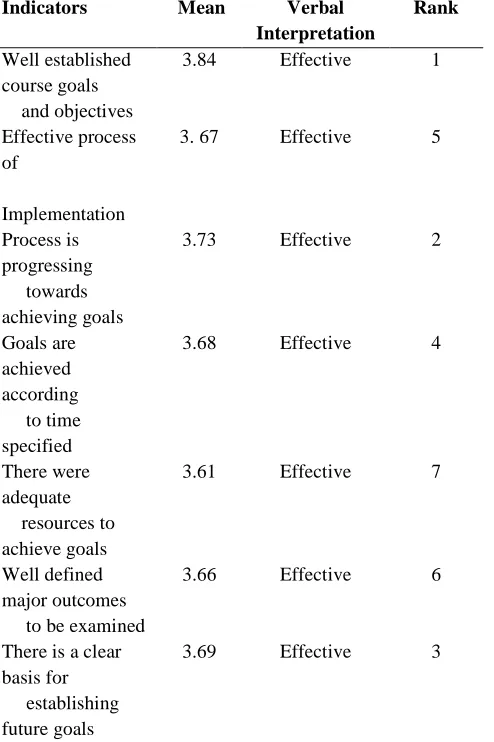
Table.1: Evaluation of the general characteristics of Transformative Learning in the course
Indicators Mean Verbal Interpretation
Rank
Well established course goals and objectives
3.84 Effective 1
Effective process of
Implementation
3. 67 Effective 5
Process is progressing towards achieving goals
3.73 Effective 2
Goals are achieved according to time specified
3.68 Effective 4
There were adequate resources to achieve goals
3.61 Effective 7
Well defined major outcomes to be examined
3.66 Effective 6
There is a clear basis for establishing future goals
3.69 Effective 3
Table 1 shows the evaluation of the general characteristics of transformative Learning in the course. It was found that all the indicators were considered by the respondents as effective particularly well established course goals and
objectives with the highest mean value of 3.84. The result is supported by the respondents’ pronouncement that:
“goals and objectives of Environmental Science are well established and veryeffective and helpful to students taking up Environmental Science”
Likewise, certain group of respondents shared that:
“the goals of the subject make students to become more aware of what is happening in the Environment, thus enhance students’ love and concern for the environment”.
Although all indicators were considered to be effective, it was found that respondents ranked indicator stating that there were adequate resources to achieve goals was ranked least with a mean value of 3.61. This result was supported by the statement of one of the respondents that:
“there should be more video presentations on environmental conservation and preservation”
The above findings is supported by Teaching Today (2011) that video presentations have the potential to add richness and variety to the curriculum by establishing the context of new learning and making applications of learned material into larger context.
On Syllabus Design
Table.2: Evaluation of the syllabus design of Transformative Learning in the course
Aspects Mean Verbal Interpretation
(Categories)
Rank
Course description
4.02 Effective 1
Desired Learning Results
3.81 Effective 3
Assessment Tasks
3.75 Effective 5
Final Performance Task/ Product
3.86 Effective 2
Instructional Plan
3.78 Effective 4
ecological concepts and principles that govern the environment and use these to understand causes and effects of environmental problems and formulate corresponding solutions. Furthermore, the students manifested that they know their role as:
“we became stewards in protecting the environment and
being responsible citizens… ”
In fact, several respondents commented that:
“the goals and objectives are clear and well established”;
and “the curriculum as the strength of the program”. Furthermore, the respondents ranked the assessment tasks as the least. Assessment tasks are student tasks that will enable them to become adept in accomplishing the final product or performance task. These findings were supported by the following statements shared by some of the student-respondents:
“We encountered difficulty in making the final project…”;
“Many works to be accomplished…”;
“Making of thesis. Some are not cooperating if there are paper works that the professor is requiring…”; “The preparation for the concert that is considered as the
final exam”; and
“The final exam requires so much compared to my other courses”.
On Syllabus Features
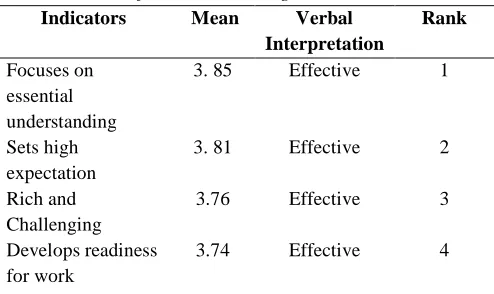
Table.3: Evaluation of the syllabus features of Transformative Learning in the course
Indicators Mean Verbal Interpretation
Rank
Focuses on essential understanding
3. 85 Effective 1
Sets high expectation
3. 81 Effective 2
Rich and Challenging
3.76 Effective 3
Develops readiness for work
3.74 Effective 4
Table 3 shows the evaluation results of the syllabus features of the Transformative learning. The respondents found all the indicators as effective and not significantly different from one another based on the garnered scores and means. Getting the highest mean of 3.85 is the indicator “focuses on essential understanding” which means that the students regard the syllabus to be effective in identifying the essential understandings that students should carry from the
class. Understanding by Design by Wiggins and McTighe (1999) provides a framework that suggests the effectiveness of “backward” design process that focuses on prior or underpinning knowledge of students. The syllabus is likewise effective in a way that teachers were able to make clear what they want students to remember and be able to apply a semester after they leave a course as reflected in the high mean scores of 3.81 and 3.76 on syllabus setting high expectation and being rich and challenging. The indicator that was rated with the lowest mean score of 3.74 was on whether the syllabus develops readiness for work. Apparently, while some students realize that the syllabus prepares them for future work as one stated:
“It develops readiness and passion for work…”,
still, some students were not able to see a link between the course and their future jobs or professions. This was supported by the following remarks:
“I believe than Environmental Science doesn’t make any sense in our curriculum because it is not even related to our program business”.
On Syllabus Delivery
Table.4: Evaluation of the syllabus delivery of Transformative Learning in the course
Aspects Mean Verbal
Interpretation Rank
Medium of
Instruction 3. 68 Effective 1
Integrative teaching/ constructivism
3. 66 Effective 3.5
Use of ICT/
instructional media 3.65 Effective 5
Class schedule 3.59 Effective 6
Curricular activities 3.66 Effective 3.5
Extra-curricular
activities 3.67 Effective 2
Table 4 presents the evaluation of the syllabus delivery in
extracurricular activities with mean scores of 3.66 and 3.67, respectively. This is backed-up by the claims of the students that:
“one of the strengths of is the effectiveness of the professors on delivering information to the students…”; “Effective for informing the students about the different
factors in Environmental Science” ; and
“Delivery of the goals formulated is effective to
guide students in their learning of Environmental Science.”
According to Sansawal (2009), ICT can be used both at school and higher education levels in teaching, diagnostic testing, remedial teaching, evaluation, psychological testing, development of virtual laboratory, online tutoring, development of reasoning and thinking, and instructional material development. The lowest mean score of 3.59 was given to the aspect that pertains to the use of ICT and various instructional materials. One of the student respondents said that:
“ Not interesting ang dating ng lesson sa mga nakaupo sa likod
(the lessons seem not to be interesting to those seated at the back)”.
On Attainment of Expected Lasallian Graduate Attributes
As Critical Thinkers
Table.5:Evaluation of the attainment of the attribute “Critical Thinkers”
Indicators Mean Verbal Interpretation
Rank
Organizing
scientific knowledge
3.81 Effective 2
Acquiring relevant skills
3.78 Effective 3
Integrating Lasallian values
3.85 Effective 1
The evaluation of the attainment of the attribute critical thinker is shown in Table 5. Based on the result, the respondents considered all the indicators effective particularly integrating Lasallian values with the highest mean value of 3.85. Although all the indicators were found to be effective, the respondents the indicator acquiring relevant skills was ranked the least with a mean value of 3.78. These findings were supported by the following statements shared by some of the student-respondents.
“the learning activities are effective in helping us gain scientific knowledge and be aware about our environment
and different the ecological problems”;
“the course allowed us to be involved and cooperate in different programs/activities that helped in the protection of
nature making us critical thinker and transformative leaders”; and
“We gained scientific knowledge and skills and developed Lasallian values through the different activities making us more aware of the things happening in the environment” As Excellent Communicators
Table.6: Evaluation of the attainment of the attribute “Excellent Communicators”
Indicators Mean Verbal Interpretation
Rank
Articulating insights
3.90 Effective 1
Listening to viewpoints
3.80 Effective 3
Formulating solutions
3.88 Effective 2
Presented in Table 6 is the evaluation of the attainment of the attribute excellent communicators. The respondents found all the indicators to be effective specifically in articulating insights which ranked 1 with the mean value of 3.90. However, the indicator listening to viewpoint was ranked the least with a mean value of 3.80. These results were supported by student-respondents’ statement that:
“the activities help us become vocal, participative and lively”
One of the aims of teaching Environmental Science in a Transformative Learning Design is to develop students with excellent communication skills. Through the learning activities provided for each student they were expected to learn to articulate coherently their insights and stand regarding environmental issues, listen critically and respectfully to the viewpoints of others, and formulate clear, relevant and humane solutions to identified ecological problems.
As Responsible citizens
Table.7: Evaluation of the attainment of the attribute “Responsible Citizens”
Indicators Mean Verbal Interpretation
Rank
Translating learning into practice
3.77 Effective 2
Participating in program/ project
Responding to stewardship
3.76 Effective 3
Table 7 shows the evaluation of the attainment of the attribute responsible citizen. Based on the results, the student-respondents found all the indicators effective specifically participating in program/ project with the highest mean value of 3.89. Although all the indicators are found to be effective, the indicator responding to stewardship was ranked the least effective with a mean value of 3.76.
These findings are supported by the student-respondents sharing that:
“it encourages students to be involved in every environment-related activities and organization making them environmentally aware and good stewards of God’s
creation ”; and
“the activities are more on actual rather than lectures involving students on different programs/ activities regarding the protection of nature e.g. coastal clean-up”.
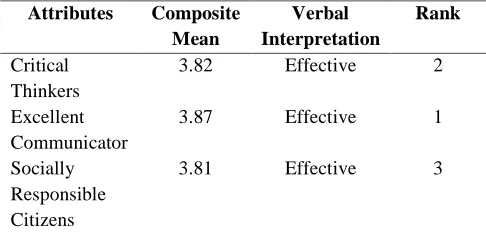
Table.8: Evaluation of the attainment of the Expected Lasallian Graduate Attributes
Attributes Composite Mean
Verbal Interpretation
Rank
Critical Thinkers
3.82 Effective 2
Excellent Communicator
3.87 Effective 1
Socially Responsible Citizens
3.81 Effective 3
Table 8 summarizes the evaluation made as regards the perceived attainment of the ELGAs. In general, the transformative learning design in Environmental Science was regarded effective in making the students attain all the three graduate attributes expected of them. The highest composite mean of 3.87 was on becoming excellent communicators. Indicators for this attribute include: being able to articulate coherently their insights ad stand regarding environmental issues; listening critically and respectfully to the viewpoints of others; and formulating clear, relevant ad humane solutions to identified ecological problems.
Though with relatively lower composite mean values of 3.82 and 3.81 for attributes- critical thinkers and socially responsible, respectively, still perceived effective by the
student- respondents. This connotes that students agree that transformative design in the course was effective in making them effectively organize scientific knowledge, acquire relevant skills, and integrate Lasallian values in order to analyze environmental problems and apply appropriate actions and solutions. Moreover, students consider the design to be effective in making them translate the gained scientific knowledge, skills and Lasallian values into practice as they participate in the various environmental programs and projects of different communities in response to the call to stewardship.
Over-all Outcomes- based Evaluation
The summary of outcomes- based evaluation of the transformative learning design employed in Environmental Science is presented in Table 9 below. As shown, the student- respondents consider the design as generally effective across all areas. The area that got the highest composite mean of 3.84 pertains to syllabus design. The result indicates that the aspects of syllabus design including course description, desired learning results, assessment tasks, final performance task, final product, and learning or instructional plan, were considered effective. However, the lowest composite mean value of 3.65 for syllabus delivery, despite its being effective, remains to be a room for improvement. Attention has to be placed on the medium of instruction, integrative teaching, use of ICT and various instructional materials, class scheduling, and on curricular and extracurricular activities.
Table.9:Summary of Outcomes- based evaluation across areas of Transformative Learning
Areas Composite Mean
Verbal Interpretation
Rank
General Characteristics
3.70 Effective 4
Syllabus Design 3.84 Effective 1
Syllabus Features 3.79 Effective 3
Syllabus Delivery 3.65 Effective 5
Attainment of ELGAs
3.83 Effective 2
V. DISCUSSION
foundation for selecting appropriate content, learning activities, and assessment measures. Likewise, if objectives of the course are not clearly understood by both instructor and students, and if your learning activities do not relate to the objectives and the content that you think is important, then your methods of assessment, which are supposed to indicate to both learner and instructor how effective the learning and teaching process has been, will be at best misleading, and, at worst, irrelevant, unfair, or useless (Instruction at FSU Handbook, 2011).
As regards syllabus design, features and delivery, Herbeck and Lockhart (2004) described the syllabus as a compass that guides both faculty and students by providing clear information about the goals and objectives of the course, what the course will cover, what work is expected of them, intended learning outcomes, and how performance will be evaluated. On one hand, giving the students the syllabus at the beginning will minimize student misunderstandings about expectations for the class (Davis, 1993; Dominiowski, 2002; Royse, 2001). On the other hand, the syllabus can help the faculty to be on track throughout the semester and ensure that the course does not stop at any one point (Royse, 2001). The study revealed that the respondents found all the indicators of a well-designed syllabus present and effective particularly the course description with the highest ranking. Same effective rating was given to syllabus features and delivery. This was made possible by involving them on hands-on activities like reforestation efforts, clean-ups and fund-raising schemes to implement class-organized activities and/or support the school’s existing programs like the OMTB and PCN.
Teaching of critical thinking is important in order to make sound decisions. If students learn to think critically, then they can use good thinking as the guide by which they live their lives (Beyer, 1995). Putting students in group learning situations is the best way to foster critical thinking (Cooper, 1995). In this research, students of Environmental Science classes were given different group learning activities aimed at developing students’ critical thinking skills and Lasallian core values. This is parallel with Cooper’s statement in 1995, that in a properly structured learning environment, students perform more of the active, critical thinking with continuous support and feedback from other students and the teacher.
The result of this research on the attainment of being an excellent communicator is supported by the claim of the U.S. Department of Education and the National Institute of Education, which highlighted student involvement as one of three critical conditions for excellence in education (U.S.
Department of Education 1984:18-19). The findings are also supported by Mezirow’s in 1997. He stated: “to facilitate transformative learning, educators must help learners become aware and critical of their own and others’ assumptions. Learners need practice in redefining problems from a different perspective. Learners need to be assisted to participate effectively in discourse. Discourse is necessary to validate what and how one understands, or to arrive at a best judgment regarding a belief. Effective discourse depends on how well the educator can create a situation in which those participating have full information; are free from coercion; have equal opportunity to assume the various roles of discourse; become critically reflective of assumptions; are empathic and open to other perspectives; are willing to listen and to search for common ground or a synthesis of different points of view; and can make a tentative best judgment to guide action”.
The above results on the attainment of the expected Lasallian graduate attribute of being socially responsible citezens are parallel with Mezirow’s view of transformative learning. He defined transformative learning as “the process of using prior interpretation to construe a new or revised interpretation of meaning of one’s experience in order to guide future actions”. The researchers provided the student-respondents with activities that allowed them to create a space for identifying and reflecting on the current environmental situation, roots of environmental problems and other ideas related to the environment that created basis for their own actions and behaviors toward the environment. This is parallel with the statement of Mezirow that transformative learning can be used to move values to action.
REFERENCES
[1] Cunninghamm, G. Transformative Learning: An Epistemological Study of Kalamazoo College Student Learning Outcome 2009. 3rd National Cofenrence on Innovations in the Scholarship of Teaching and Learning at the Liberal Arts Colleges, Wabash College, Crawfordsville, Indiana, March 6- 8, 2009. [2] Herbeck, Joyce Lockhart.. Syllabi for Today's College
Classes. Academic Exchange Quarterly. (June 2004).
Retrieved: August 15, 2012 from:
http://www.highbeam.com/doc/1G1-121714087.html
[3] Instruction at FSU Handbook (2011). Instruction.
Retrieved: August 7, 2012 from:
[4] Lunar, B., Talens, J., Laguardia, M., Precioso, C., Dimaculangan, I. (2011). Implementation of Transformative Learning Design in Environmental Science Course: A SWOT Analysis.
[5] McNamara, C. (2011).Basics of action planning.
Retrieved March 31, 2011 from:
http://managementhelp.org/plan_dec/str_plan/actions.h tm
[6] McTighe J., Wiggins G. The Understanding by Design Handbook. Alexandra, VA: Association for Supervision and Curriculum Development; 1999. [7] Mezirow, Jack. (1997). Transformative Learning:
Theory to Practice. Retrieved: August 10, 2012 from:
http://www.hrdmax.com/images/column_1325932983/ Mezirow%20Transformative%20Learning.pdf
[8] Mezirow, J.(2000). Learning as
Transformation: Jossey Bass, San Francisco
[9] Sansanwal, D. N. Use of ICT In Teaching – Learning & Evaluation. (February 2009). Retrieved: August 15, 2012 from http://www.scribd.com/doc/61923699/Use-of-ICT-in-Teaching-Learning-and-Evaluation. [10] Tannen, D. (1998), The Argument Culture.
Random House, New York. Retrieved: August
15, 2012 from:
http://en.wikipedia.org/wiki/Transformative_lear ning
[11] Teaching Today (2011). Effective video presentation.
Retrieved: August 12, 2012 from:
http://teachingtoday.glencoe.com/tip/effective-video-presentation
[12] Walker, Grayson H. Teaching Resource Center. Critical Thinking. Retrieved: August 10, 2012 from:
http://www.utc.edu/Administration/WalkerTeachingR esourceCenter/FacultyDevelopment/CriticalThinking/i ndex.html
[13] http://en.wikipedia.org/wiki/Transformative_learning [14] http://www.infed.org/biblio/b-learn.htm