http://www.ijcmph.com pISSN 2394-6032 | eISSN 2394-6040
Review Article
Non-alcoholic fatty liver disease and thyroid function in adult patients
Feras Alhussainy
1*, Razan Alharbi
2, Abrar Alali
3, Mohammad Almutairi
4, Mohammed Aljawi
5,
Youssef Almodhaibri
6, Semat Bakri
3, Shahad Alghamdi
3,
Abdulrahman Alshahrani
7, Omar Zainal
1INTRODUCTION
The frequency of non-alcoholic fatty liver disease (NAFLD) has increased significantly throughout the past periods, and it has become the prominent reason of liver disease worldwide with a global prevalence of 25%, which can be moderately recognized to the rising prevalence of obesity.1,2 The term NAFLD at the histological level includes a spectrum of liver damage containing in its common form, or simple steatosis, in addition to nonalcoholic steatohepatitis (NASH), a
theoretically progressive form of NAFLD defined by the occurrence steatosis along with hepatocyte ballooning, inflammation and variable degrees of fibrosis. Notably, the occurrence of obesity at least doubles the prevalence of NASH and its progression to cirrhosis, liver failure and hepatocellular carcinoma.3 NAFLD can be categorized into two main histological categories, to be exact nonalcoholic fatty liver and nonalcoholic steatohepatitis, which is the progressive subtype of NAFLD and can further induce liver cirrhosis and hepatocellular carcinoma.4
ABSTRACT
Results from published studies on the association between non-alcoholic fatty liver disease and hypothyroidism are still controversial. Thyroid dysfunction is closely related with components of metabolic syndrome. We conducted this meta-analysis using a comprehensive search of EMBASE, MEDLINE, PubMed, Cochrane Database of Systematic Reviews, and Cochrane Central Register of Controlled Trials till 31 January 2018 for prospective observational studies that evaluated the relationship of non-alcoholic fatty liver disease and thyroid function in adult patients. Thirteen studies were included in the present meta-analysis. Meta-analysis of the 13 studies found a high correlation between hypothyroidism and NAFLD (OR=1.48, 95% CI 1.22–1.91, p<0.001). In the meta-regression analyses, we found that study design was a possible source of heterogeneity (p=0.17), but other covariates were not. The present meta-analysis provides strong epidemiological evidence for the relationship between hypothyroidism and NAFLD. Both individuals with subclinical and overt hypothyroidism are at higher risk for NAFLD than euthyroid subjects.
Keywords: Meta-analysis, Non-alcoholic fatty liver disease, Hypothyroidism, Subclinical hypothyroidism
1
Arabian Gulf University, Bahrain
2Almaarefa College, Riyadh, KSA 3King Khalid University, Abha, KSA 4Medical University of Warsaw, Poland 5
Taif University, Taif, KSA
6Qassim University, Qassim, KSA
7AL Bashaier General Hospital, Bisha, KSA
Received: 06 May 2018
Accepted: 25 May 2018
*Correspondence:
Dr. Feras Alhussainy,
E-mail: [email protected]
Copyright: © the author(s), publisher and licensee Medip Academy. This is an open-access article distributed under the terms of the Creative Commons Attribution Non-Commercial License, which permits unrestricted non-commercial use, distribution, and reproduction in any medium, provided the original work is properly cited.
An expanding number of illnesses have been accounted for to be connected to NAFLD, for example, cancer, cardiovascular ailment, type 2 diabetes, and chronic kidney ailment.5,6 The treatment and prevention of NAFLD have turned into the focal point of medicinal research as of late, and distinguishing the hazard factors for NAFLD is basic to create viable preventive intercessions against NAFLD. Metabolic disorders, for example, hyperlipidemia, hypertension diabetes, central obesity, and gallstones are known risk factors for NAFLD.7,8 Thyroid hormones control all metabolic paths, acting on carbohydrates, protein and lipid metabolism. Low thyroid hormone levels are related with hypometabolism categorized by decreased weight gain, resting energy expenditure, reduced lipolysis, increased cholesterol levels, and reduced gluconeogenesis.9 Thyroid hormones similarly have a role in hepatic lipid metabolism and hepatic insulin resistance.10
The relationship amongst hypothyroidism and NAFLD risk stays in debate up to now. Therefore, the present meta-analysis is to validate the association amongst hypothyroidism and NAFLD.
METHODS
Data sources and searches
We conducted this meta-analysis using a comprehensive search of EMBASE, MEDLINE, PubMed, Cochrane Database of Systematic Reviews, and Cochrane Central Register of Controlled Trials till 31 January 2018 for prospective observational studies that evaluated the relationship of Nonalcoholic fatty liver disease and thyroid function in adult patients. Both semiparametric and parametric methods were used. No language restrictions were imposed. We followed the standard guidelines for conducting and reporting meta-analyses of observational studies.11
Selection criteria
Studies were included in this meta-analysis if they satisfied the following criteria: cohort, cross-sectional, or case–control studies which investigated the association between hypothyroidism and NAFLD in adult participants, and the investigators reported relative risks (RRs) with 95% CI, the diagnosis of hypothyroidism must be based on biochemical tests including TSH levels and T4/FT4 levels. Included NAFLD patients must be diagnosed with an ultrasound examination or Liver biopsy to make a clear definite diagnosis.
Data extraction
The final data were abstracted from each study using standardized form: the first author’s name, year of publication, study design, study location, number of participants, participant baseline characteristics (age and gender), method used to identify and verify NAFLD as
well as thyroid function, definition of hypothyroidism including overt hypothyroidism or subclinical hypothyroidism. Flow diagram showing the selection criteria of assessed studies.12
Statistical analysis
The present meta-analysis utilized Stata version 12.0 software for statistical analysis. Mean difference (MD) were calculated for continuous variables. Pooled odds ratios (OR) were calculated for discrete variables. Heterogeneity amongst the trials was determined by means of the Cochran Q value and quantified using the I2 inconsistency test with a significance set at the P-value <0.10 or I2 score >50%.13 DerSimonian-Laird random-effect meta-analysis was adopted when obvious heterogeneity existed.14
RESULTS
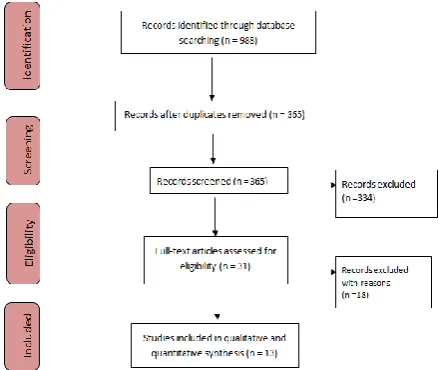
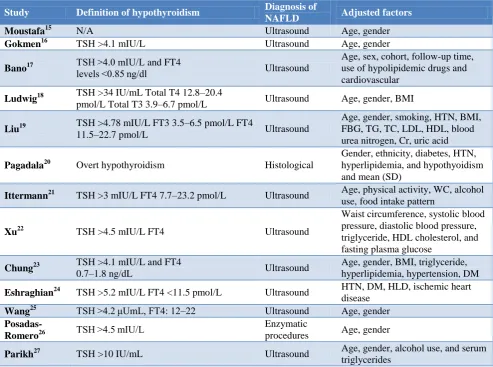
We recognized 988 citations using the search strategy. Of these, we excluded 365 after examining the title and abstract including removal of duplicates. We retrieved and evaluated 31 articles in more detail, of which 18 articles were excluded, leaving 13 studies that were eligible for inclusion (Figure 1).15-27 Main characteristics of included studies have been summarized in Table 1 and 2.
Figure 1: Flow diagram showing the selection criteria of assessed studies.
Meta-analysis of the 13 studies found a high correlation between hypothyroidism (including both overt hypothyroidism and subclinical hypothyroidism) and NAFLD (OR=1.48, 95% CI 1.22–1.91, p<0.001)
Table 1: Characteristics of included studies.
Study Year Country Mean age, years ±SD Study design
Moustafa15 2009 Egypt 55±4.6 Case–control
Gokmen16 2016 Turkey 49.9±12.5 Cross-sectional
Bano17 2016 Netherlands 64.7±9.2 Cohort
Ludwig18 2015 Germany 41.3±12.6 Cross-sectional
Liu19 2015 China 45.4±10.3 Cross-sectional
Pagadala20 2012 US 50.4±10.4 Case–control
Ittermann21 2013 Germany 50.5±16.6 Cross-sectional
Xu22 2011 China 71.7±4.1 Cross-sectional
Chung23 2012 Korea 48.6±11.8 Cross-sectional
Eshraghian24 2013 Iran 48.2±12.8 Cross-sectional
Wang25 2014 China 56.99 ± 7.98 Cross-sectional
Posadas-Romero26 2014 Mexico 51.9±8.1 Cross-sectional
Parikh27 2015 India 44.3±3.2 Case–control
Table 2: Definition of hypothyroidism and diagnosis of NAFLD.
Study Definition of hypothyroidism Diagnosis of
NAFLD Adjusted factors
Moustafa15 N/A Ultrasound Age, gender
Gokmen16 TSH >4.1 mIU/L Ultrasound Age, gender
Bano17 TSH >4.0 mIU/L and FT4 levels <0.85 ng/dl Ultrasound
Age, sex, cohort, follow-up time, use of hypolipidemic drugs and cardiovascular
Ludwig18 TSH >34 IU/mL Total T4 12.8–20.4
pmol/L Total T3 3.9–6.7 pmol/L Ultrasound Age, gender, BMI
Liu19 TSH >4.78 mIU/L FT3 3.5–6.5 pmol/L FT4
11.5–22.7 pmol/L Ultrasound
Age, gender, smoking, HTN, BMI, FBG, TG, TC, LDL, HDL, blood urea nitrogen, Cr, uric acid
Pagadala20 Overt hypothyroidism Histological
Gender, ethnicity, diabetes, HTN, hyperlipidemia, and hypothyoidism and mean (SD)
Ittermann21 TSH >3 mIU/L FT4 7.7–23.2 pmol/L Ultrasound Age, physical activity, WC, alcohol use, food intake pattern
Xu22 TSH >4.5 mIU/L FT4 Ultrasound
Waist circumference, systolic blood pressure, diastolic blood pressure, triglyceride, HDL cholesterol, and fasting plasma glucose
Chung23 TSH >4.1 mIU/L and FT4
0.7–1.8 ng/dL Ultrasound
Age, gender, BMI, triglyceride, hyperlipidemia, hypertension, DM
Eshraghian24 TSH >5.2 mIU/L FT4 <11.5 pmol/L Ultrasound HTN, DM, HLD, ischemic heart disease
Wang25 TSH >4.2 μUmL, FT4: 12–22 Ultrasound Age, gender
Posadas-Romero26 TSH >4.5 mIU/L
Enzymatic
procedures Age, gender
Parikh27 TSH >10 IU/mL Ultrasound Age, gender, alcohol use, and serum
triglycerides
As we performed sensitivity analysis, statistically similar results were obtained after sequentially excluding each study at a time in all meta-analyses for FT3, FT4, and TSH, suggesting the results were robust. For assessing the studies for the MD of FT3 and FT4, publication biases are present as there are more studies that favor
Table 3: The relationship between hypothyroidism and NAFLD.
Study OR 95% CI
Moustafa15 0.35 (0.24–0.94)
Gokmen16 1.01 (0.51–2.32)
Bano17 1.24 (1.01–1.53)
Ludwig18 1.12 (0.65–2.17)
Liu19 0.28 (0.25–0.33)
Pagadala20 2.10 (1.10–3.90)
Ittermann21 2.09 (1.22–3.60)
Xu22 2.21 (1.42–3.44)
Chung23 1.38 (1.17–1.62)
Eshraghian24 1.01 (0.55–1.86)
Wang25 1.23 (0.87–1.73)
Posadas-Romero26 0.83 (0.55–1.25)
Parikh27 14.94 (3.55–62.60)
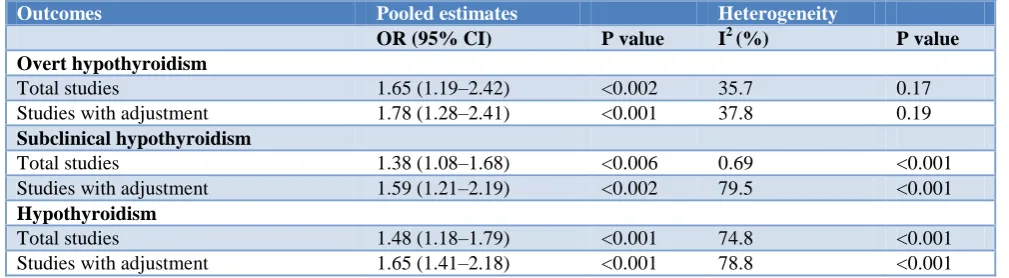
Table 4: Summary of the association between hypothyroidism and NAFLD.
Outcomes Pooled estimates Heterogeneity
OR (95% CI) P value I2 (%) P value
Overt hypothyroidism
Total studies 1.65 (1.19–2.42) <0.002 35.7 0.17 Studies with adjustment 1.78 (1.28–2.41) <0.001 37.8 0.19
Subclinical hypothyroidism
Total studies 1.38 (1.08–1.68) <0.006 0.69 <0.001 Studies with adjustment 1.59 (1.21–2.19) <0.002 79.5 <0.001
Hypothyroidism
Total studies 1.48 (1.18–1.79) <0.001 74.8 <0.001 Studies with adjustment 1.65 (1.41–2.18) <0.001 78.8 <0.001
DISCUSSION
Though earlier investigations suggest that hypothyroidism may assume a critical part in the pathogenesis of NAFLD, some observational examinations neglect to locate an obvious relationship between hypothyroidism and NAFLD. Nevertheless, based on the outcomes of the current study, hypothyroidism assumes a critical part in the pathogenesis of NAFLD. The meta-analysis recommends epidemiological indication for the noticeable association between hypothyroidism and NAFLD, and the influence of hypothyroidism is independent from other recognized risk features for NAFLD. In addition, both subclinical hypothyroidism and overt hypothyroidism are autonomously linked to NAFLD. Our outcomes exhibit that either overt hypothyroidism or subclinical hypothyroidism freely builds the risk of NAFLD. A few examinations have established the framework for the discoveries of the investigation by giving some conceivable clarifications to the molecular mechanism underlying the connection amongst hypothyroidism and NAFLD. There are a few conceivable systems which can clarify the connection amongst hypothyroidism and NAFLD. Evident relations amongst hypothyroidism and metabolic changes have been accounted for, which
incorporate IR, dyslipidemia and weight and they have imperative parts in the advancement of NAFLD.28
Even though hypothyroidism is allied with mechanisms of metabolic syndrome and NAFLD is reflected as the hepatic manifestation of metabolic syndrome, while there are numerous reasonable mechanisms that could clarify this conceivable relation, the present study, which included all published observational studies, found a strong epidemiological evidence association between NAFLD and hypothyroidism. Leptin is considered as one of the explanations of this association because it is found to be increased in patients with hypothyroidism and it is also found to be higher in NAFLD as it can promote hepatic insulin resistance and be involved in hepatic fibrogenesis.29 Both IR and obesity are dynamic factors in the development of NAFLD, which are similarly mutual in hypothyroidism patients compared to those general populations. IR can increase liver injury in NAFLD. Besides, Demir et al. found that hypothyroidism can cause NAFLD in rat models, and pointed out that obesity is one of the key factors in the association between hypothyroidism and NAFLD.30
overt hypothyroidism and NAFLD was more noteworthy than that between subclinical hypothyroidism and NAFLD. As stated above, overt hypothyroidism is characterized as having a considerably higher TSH level and lower T4 and T3 levels contrasted with subclinical hypothyroidism. The more huge relationship between overt hypothyroidism and NAFLD might be clarified by the synergistic impacts of higher TSH level and lower thyroid hormones in the pathogenesis of NAFLD, on the grounds that TSH itself may incite hepatocyte steatosis by means of TSH receptor flag.31
CONCLUSION
The present meta-analysis our meta-analysis provides strong epidemiological evidence for the significant relationship between hypothyroidism and NAFLD. Both individuals with subclinical hypothyroidism and overt hypothyroidism are at a higher risk for the development of NAFLD than those with normal thyroid function. To confirm these results, further studies should be made to make a better understanding to further strengthen the relationship between NAFLD and hypothyroidism. Large-scale and long-term randomized controlled trials in various populations must be carried out in future studies to deliver more significant evidence.
Funding: No funding sources Conflict of interest: None declared Ethical approval: Not required
REFERENCES
1. Younossi ZM, Koenig AB, Abdelatif D, Fazel Y, Henry L, Wymer M. Global epidemiology of nonalcoholic fatty liver disease - meta-analytic assessment of prevalence, incidence, and outcomes. Hepatology. 2016;64:73-84.
2. Rinella ME. Nonalcoholic fatty liver disease: a systematic review. JAMA. 2015;313(22):2263–73. 3. Barrera F, George J. Non-alcoholic fatty liver
disease: more than just ectopic fat accumulation. Drug Discov. 2013;10:47-54.
4. Charlton MR, Burns JM, Pedersen RA, Watt KD, Heimbach JK, Dierkhising RA. Frequency and outcomes of liver transplantation for nonalcoholic steatohepatitis in the United States. Gastroenterology. 2011;141(4):1249–53.
5. Motamed N, Rabiee B, Poustchi H, Dehestani B, Hemasi GR, Khonsari MR, et al. Non-alcoholic fatty liver disease (NAFLD) and 10-year risk of cardiovascular diseases. Clin Res Hepatol Gastroenterol. 2017;41(1):31-8.
6. Adams LA, Anstee QM, Tilg H, Targher G. Non-alcoholic fatty liver disease and its relationship with cardiovascular disease and other extrahepatic diseases. Gut. 2017;66(6):1138–53.
7. Jaruvongvanich V, Sanguankeo A, Upala S. Significant association between gallstone disease and nonalcoholic fatty liver disease: a systematic
review and meta-analysis. Dig Dis Sci. 2016;61:2389-96.
8. Angulo P. Nonalcoholic fatty liver disease. N Engl J Med. 2002;346:1221-31.
9. Pucci E, Chiovato L, Pinchera A. Thyroid and lipid metabolism. Int J Obes Relat Metab Disord. 2000;24(2):109-12.
10. Sinha RA, Singh BK, Yen PM. Thyroid hormone regulation of hepatic lipid and carbohydrate metabolism. Trends Endocrinol Metab. 2014;25:538-5.
11. Stroup DF, Berlin JA, Morton SC, Olkin I, Williamson GD, Rennie D, et al. Meta-analysis of observational studies in epidemiology: a proposal for reporting. Meta-analysis Of Observational Studies in Epidemiology (MOOSE) group. JAMA. 2000;283:2008–2012
12. Moher D, Liberati A, Tetzlaff J, Altman DG. Preferred reporting items for systematic reviews and meta-analyses: the PRISMA statement, 2007. 13. Higgins JP, Thompson SG, Deeks JJ. Altman DG.
Measuring inconsistency in meta-analyses, 2008. 14. DerSimonian R, Laird N. Meta-analysis in clinical
trials. Control Clin Trials. 1986;7(3):177-88. 15. Moustafa AH, Ali EM, Mohamed TM, Abdou HI.
Oxidative stress and thyroid hormones in patients with liver diseases. Eur J Intern Med. 2009;20:703-8.
16. Gokmen FY, Ahbab S, Ataoglu HE, Turker BC, Cetin F, Turker F, et al. FT3/FT4 ratio predicts non-alcoholic fatty liver disease independent of metabolic parameters in patients with euthyroidism and hypothyroidism. Clinics (Sao Paulo) 2016;71:221-5.
17. Bano A, Chaker L, Plompen EP, Hofman A, Dehghan A, Franco OH, et al. Thyroid function and the risk of nonalcoholic fatty liver disease: the Rotterdam Study. J Clin Endocrinol Metab. 2016;101(8):3204–11.
18. Ludwig U, Holzner D, Denzer C, Greinert A, Haenle MM, Oeztuerk S, et al. EMIL-Study: Subclinical and clinical hypothyroidism and non-alcoholic fatty liver disease: a cross-sectional study of a random population sample aged 18-65 years. BMC Endocr Disord. 2015;15:41.
19. Liu G, Zheng X, Guan L, Jiang Z, Lin H, Jiang Q, et al. Free triiodothyronine levels are positively associated with non-alcoholic fatty liver disease in euthyroid middle-aged subjects. Endocr Res. 2015;40:188-93.
20. Pagadala MR, Zein CO, Dasarathy S, Yerian LM, Lopez R, McCullough AJ. Prevalence of hypothyroidism in nonalcoholic fatty liver disease. Dig Dis Sci. 2012;57(2):528–34.
22. Xu C, Xu L, Yu C, Miao M, Li Y. Association between thyroid function and nonalcoholic fatty liver disease in euthyroid elderly Chinese. Clin Endocrinol. 2011;75:240-6.
23. Chung GE, Kim D, Kim W, Yim JY, Park MJ, Kim YJ, et al. Non-alcoholic fatty liver disease across the spectrum of hypothyroidism. J Hepatol. 2012;57:150-6.
24. Eshraghian A, Dabbaghmanesh MH, Eshraghian H, Fattahi MR, Omrani GR. Nonalcoholic fatty liver disease in a cluster of Iranian population: thyroid status and metabolic risk factors. Arch Iran Med. 2013;16:584-9.
25. Wang YF, Zhao JJ. The Relationship between the Broad Spectrum of Subclinical Hypothyroidism and NAFLD in Elderly Subjects (2014). Thesis for Master Degree, Shandong University, 2014.
26. Romero C, Jorge-Galarza E, Posadas-Sanchez R, Acuna-Valerio J, Juarez-Rojas JG, Kimura-Hayama E, et al. Fatty liver largely explains associations of subclinical hypothyroidism with insulin resistance, metabolic syndrome, and subclinical coronary atherosclerosis. Eur J Endocrinol. 2014;171(3):319–25.
27. Parikh P, Phadke A, Sawant P. Prevalence of hypothyroidism in nonalcoholic fatty liver disease in
patients attending a tertiary hospital in western India. Indian J Gastroenterol. 2015;34:169-73. 28. Gluvic Z, Zaric B, Resanovic I, Obradovic M,
Mitrovic A, Radak D, et al. Link between metabolic syndrome and insulin resistance. Curr Vasc Pharmacol. 2017;15(1):30-9.
29. Polyzos SA, Aronis KN, Kountouras J, Raptis DD, Vasiloglou MF, Mantzoros CS: Circulating leptin in non-alcoholic fatty liver disease: a systematic review and meta-analysis. Diabetologia. 2016;59:30-43.
30. Demir Ş, Ünübol M, Aypak SÜ, İpek E, Aktaş S, Ekren GS, et al. Histopathologic Evaluation of Nonalcoholic Fatty Liver Disease in Hypothyroidism-Induced Rats. Int J Endocrinol. 2016;2016:5083746.
31. Zhang W, Tian LM, Han Y, Ma HY, Wang LC, Guo J, et al. Presence of thyrotropin receptor in hepatocytes: not a case of illegitimate transcription. J Cell Mol Med. 2009;13(11–12):4636–42.