
Int. J. Nanosci. Nanotechnol., Vol. 14, No. 4, Dec. 2018, pp. 251-266
Purified and Functionalized MWCNTs:
Application In CO
2/CH
4Separation Using
Mixed Matrix Membranes
M. A. Aroon1,2,*, H. Beheshti2, J. Barzin3 and M. Shariaty-Niassar1
1School of Chemical Engineering, College of Engineering, University of Tehran, Tehran,
Iran.
2Membrane Research Laboratory, Caspian Faculty of Engineering, College of Engineering,
University of Tehran, Tehran, Iran.
3Biomaterial Department, Iran Polymer and Petrochemical Institute, Tehran, Iran.
(*) Corresponding author: [email protected]
(Received: 08 September 2017 and Accepted: 06 February 2018)
Abstract
To fabricate a defect free and high performance mixed matrix membrane (MMM), one approach is the functionalization of inorganic nanofillers (as dispersed phase) in the organic polymer matrix (as continuous phase) to modify the interactions between two phases. For this purpose,, raw multi-walled carbon nanotubes (rMWCNTs) were purified by acid mixture (HNO3/H2SO4; v/v = 1:3) and then the purified MWCNTs (pMWCNTs) were functionalized by low molecular weight chitosan (LMWC) and characterized by Fourier-transform infrared spectroscopy (FTIR) and X-ray diffraction (XRD) tests. Functionalized MWCNTs (fMWCNTs) were added to polyethersulfone (PES) solution, and mixed matrix membranes containing different amount of the fMWCNTs in PES matrix were fabricated by immersion precipitation technique. Neat PES and mixed matrix membranes were characterized by differential scanning calorimetry (DSC), Field emission scanning electron microscopy (FESEM) and permeation (using CO2 and CH4 as test gases) experiments. FTIR and XRD experiments confirmed attachment of LMWC on the surface of fMWCNTs. Gas permeation test results revealed that the mixed matrix membrane containing 1 wt.% fMWCNTs (PES/1wt.%fMWCNTs) has the best CO2/CH4 separation performance and this result was confirmed by DSC and FESEM results. Therefore simultaneous purification (by acid mixture) and functionalization (by LMWC) of MWCNTs can be used for fabrication of high performance mixed matrix gas separation membranes.
Keywords: CO2/CH4, Functionalization, Gas Separation, Mixed Matrix Membrane, MWCNTs.
1. INTRODUCTION
CO2/CH4 separation has many industrial applications among which one can mention biogas upgrading, enhanced oil recovery, natural gas treatment and landfill gas treatment [1].
Comparing with the other technologies, gas separation by using polymeric membranes is an effective, and environ-mental friendly technique [2, 3]. However, the trade-off relationship between the selectivity and permeability of polymeric membranes has limited their applications [4]. To overcome this limitation, mixed
polymer matrix [12]. Weng et al. [13] fabricated the MWCNTs/PBNPI mem-brane for gas separation. They reported that the transport property of membranes containing MWCNTs is better than the neat PBNPI polymeric ones.
Although, the CNTs can improve gas permeability of the polymeric membranes, however the agglomeration of CNTs inside the polymer matrix and their weak adhesion with polymer chains, are challenging problems in defect free MMMs fabrication [12, 14-16].
The functionalization of CNTs is an effective method to minimize the CNTs aggregation in organic solvents [17] and in the polymer matrix [18]. Khan et al. used polyethylene glycol (PEG) for better dispersion of MWCNTs in the polymer matrix [19]. Ismail et al. purified MWCNTs by acid mixture and functionalized them by APTES to improve their distribution and adhesion inside the polymer matrix [9]. Sanip et al. [15] and Ahmad et al. [20] functionalized MWCNTs with beta-cyclodextrin and used them for MMM fabrication. To achieve fine dispersion of nanotubes and facilitate strong interfacial adhesion with the polymer matrix, P. S. Goh et al. treated the nanotubes with different surfactants and showed that Triton X100 can reduce the agglomeration and entanglement of the nanotubes in the solvent effectively and improve compatibility of Triton X100 dispersed MWCNTs with the polymer matrix [21]. They later used a simple and feasible two stages approach (i.e. dry air oxidation and surfactant dispersion) for MWCNTs pre-treatment and showed that air oxidation can eliminate undesired amorphous carbon and metal catalyst while surfactant dispersion using Triton X100 can suppress the agglomeration of MWCNTs [22]. Ansaloni et al. used amino-functionalized MWCNTs as inorganic phase in the cross linked polyvinylalcohol-polysiloxane/amine blend and fabricated a high performance
facilitated transport mixed matrix membrane for CO2 separation [23]. Dan Zhao et al. used 3 different kinds of MWCNTs (MWNTs hydroxylated MWCNTs and amino modified MWC-NTs) inside the Pebax matrix and showed that Pebax/amino modified MWCNTs MMM has the best gas permeability [24]. Sun et al. showed that acid treatment of MWCNTs can cut them into short ropes and introduce –OH and –COOH groups on the surface of MWCNTs [25]. Fontananova et al. showed that func-tionalized by nitrogen containing groups (aminated and amidated) MWCNTs have better interaction with PVDF polymer matrix than those functionalized by oxidized agents [26]. Recently Santosh et al. applied a new material for MWCNTs fabrication. They functionalized MWCNTs-COOH using 2,3,4,6-tetra-O-acetyl-D-glucopyranoside and embedded them in poly(vinyl pyrrolidone) (PVP)- Polysulfone (PSF) (Udel, P-3500) blend matrix to fabricate high performance Nanocomposite UF membranes [27]. In our recent works, beta-cyclodextrin was used as the functionalization agent together with Chen’s soft cutting method [28]. It was shown that beta-cyclodextrin can attach to the inner and outer surface of the MWCNT walls. Also good dispersion of MWCNTs inside the polyimide matrix was observed.
We have also found that MWCNTS were well dispersed, became open ended and wrapped with chitosan, when they were functionalized with chitosan by Chen’s soft cutting method [29]. Improved dispersion and adhesion of the chitosan functionalized MWCNTs in the polymer matrix (polyimide) were also proved by DSC and FESEM analysis.
This paper is an extension of the previous two papers in which for better dispersion of MWCNTs inside the polyethersulfone (PES) matrix, rMWCNTs were purified and then surface func-tionalization with low molecular weight chitosan (LMWC). The difference of this paper from the previous works is as follows:
1) Raw MWCNTs were purified before covalent functionalization.
2) Covalent functionalization was attempted by Carson’s method.
It is necessary to note that LMWC was used because of its functional groups, which can attach to MWCNTs surface and polymer matrix [30].
Separation properties of the resulting MMMs containing different amounts of MWCNTs were characterized by gas permeation test using pure CO2 and CH4 as test gases. The structure and morphology of MWCNTs and fabricated membranes were characterized using FTIR, XRD and FESEM, DSC and gas permeation tests respectively.
2. EXPRIMENTAL 2.1. Materials
Polyethersulfone (PES, Mw=58000 g/mole) supplied by BASF company (Germany) was used as polymer continuous phase. Raw Multi-walled carbon nanotubes (rMWCNTs O.D. × I.D. 15nm × 3.5nm), N-methyl-2-pyroliddone (NMP) and low molecular weight chitosan (LMWC Mw= 5000 g/mole) were purchased from Sigma-Aldrich (USA) and used as dispersed phase, solvent and functionalization agent respectively. Thionyl chloride (SOCl2), nitric acid (HNO3 65%) and sulfuric acid (H2SO4, 98%) were purchased from Merck (Germany) and used for rMWCNTs functionalization and purification.
2.2. Functionalization of MWCNTs Raw MWCNTs (rMWCNTs) were dispersed in HNO3:H2SO4 mixture (1:3
(Elma S40H, Germany) for 30 min to remove carbonaceous impurities. After ward, the purified MWCNTs (pMWCNTs) were washed with distilled water several times and then dried in an oven at 120 ˚C for 6 h [31, 32]. The surface func-tionalization of pMWCNTs was carried out by the procedure previously described by Carson et al. [33]. Briefly, the pMWCNTs were dispersed in thionyl chloride (SOCl2) and stirred at 75 ˚C for 24 h. Then the obtained MWCNTs were ground with 100 mL 2 wt.% acetic acid aqueous solution containing 2 gr LMWC and stirring was continued for 24 h at 75 ˚C. Finally the fMWCNTs were washed with aqueous acetic acid solution and istilled water, followed by drying under vacuum for 1 day at 100 ˚C.
2.3. Fabrication of Neat and Mixed Matrix Membranes
on a glass plat, immersed in water bath and finally dried naturally.
The dope (polymeric solution) compositions of the fabricated membranes are listed in Table 1.
2.4 Characterization
The functional groups of LMWC, pMWCNTs and fMWCNTs were determined using FTIR analysis (JASCO
FTIR-680 Plus). The structure of
MWCNTs before and after
functionalization was examined by X-ray diffraction (X'Pert MPD, Philips, with Cu X-ray tube (wavelength: kα1=1.540598), 2θ=5-110˚, step size=0.02 ˚/s).
The morphology of PES/rMWCNTs and PES/fMWCNTs MMMs were observed by field emission scanning electron microscope (FESEM: Hitachi S-4160).
Table 1. Dope compositions of neat and MMMs.
Membrane description PES (wt.%)
Solid-base MWCNTs (wt.%)
Total-base MWCNTs (wt.%)
Solvent (wt.%)
Neat PES membrane 30 0 0.000 70
PES/1wt.% MWCNTs MMM 30 1 0.303 69.697
PES/2wt.% MWCNTs MMM 30 2 0.612 69.39
PES/3wt.% MWCNTs MMM 30 3 0.928 69.072
Thermal properties of the membrane samples were analyzed by differential scanning calorimeter (DSC: Melter-Toledo DSC822e).
Separation properties of the membranes were measured by gas permeation test using pure CO2 and CH4 as test gases. In this experiment, upstream pressure was set at 5 bar and operating temperature was kept constant at 35˚C. It is necessary to note that to study the effect of operating pressure on separation properties of the selected membrane; feed pressures were set to 2,4,5,7 and 10 bar.
Gas permeance (P/l) of membranes was calculated by Eq. 1 [34]:
6 10
P Q
l P A (1) In which, P/l is the gas permeance (GPU (1 GPU = 10-6 cm3 (STP)/(cm2 .s. cmHg)), Q is the volumetric flow rate of gas (cm/s), Δp is transmembrane pressure (cmHg) and A is the effective membrane area (cm2). The ideal separation factor of membranes (𝛼𝑖𝑗) was calculated by Eq. 2:
i ij
j
P l P
l
(2)
3. RESULTS AND DISCUSSION 3.1. FTIR Results
To confirm the presence of functional groups on the surface of MWCNTs, FTIR spectrum of pMWCNTs, LMWC and fMWCNTs were analyzed.
As shown in Fig. 1, FTIR spectrum of pMWCNT shows a peak at 1725 cm-1 which represents carbonyl (–C=O) bond of the carboxyl groups on the surface of pMWCNTs.
glucopyranose rings, which indicate the attachment of LMWC. A peak at 1634 cm -1 can be attributed to –NHCO– groups due
to the reaction of –NH2 of LMWC with carboxyl group on the surface of pMWCNTs. Also the appeared peak at 1735 cm-1 implies the presence of the ester (–COO–) groups on the surface of
fMWCNTs which is formed by the reaction of –OH of LMWC with pMWCNTs carboxyl groups [33].
Therefore, FTIR analysis confirms the attachment of LMWC molecules to the surface of pMWCNTs.
Figure 1. FTIR analysis of MWCNTs.
3.2. XRD Results
The XRD patterns of rMWCNTs and fMWCNTs are presented in Fig.2.
As shown in Fig. 2, both rMWCNTs and fMWCNTs are nearly pure since no diffraction peaks, indicating the catalytic impurities, are detected [35]. The diffraction peaks at 2θ of 29.8 and 50.3˚ in both rMWCNTs and fMWCNTs XRD patterns, are attributed to the hexagounal structure of the MWCNTs and the presence of 002 peak (at 2θ=29.8°) implies multiwalled nature of CNTs [36]. Comparison of rMWCNTs and fMWCNTs diffraction peaks implies that the graphite corresponding peak (002) intensity of fMWCNTs is higher than that of rMWCNTs, likely that the MWCNTs floss became looser and more ordered MWCNTs floss is formed after functionalization 35]. It is necessary to note that the decrease in the intensity of the (0 0 2) peak of rMWCNTs implies that the rMWCNTs are better aligned than MWCNTs [37].
3.3. FESEM Results
The FESEM images of PES/fMWCNTs containig 0, 1 and 3 wt.% fMWCNTs are shown in Fig.3. As shown in Fig. 3, the synthesized membranes are asymmetric containig a thin skin layer which is supported by a porous thick sublayer. Porous sublayers (in all samples) seem nodular and some macro-voids are distinguishable in sublayers. Fig. 3b shows some well dispersed fMWCNTs inside the polymer matrix and there is no evidence of particles agglomeration. It can be attributed to good polymer chains-fMWCNTs interactions. The surface modification (purication and functional-ization) of MWCNTs by acid mixtur and LMWC improves the interaction between polymer chains and particles. However, as shown in Fig. 3c, by increasing the fMWCNTs content in polymer matrix, their tendency to agglomeration increase. Moreover, the macro-voids size in the sublayer of MMMs increases as
fMWCNTs content increases in the polymer matrix (from 1 wt. % to 3 wt. %). The agglomoration of fMWCNTs promotes the solvent-nonsolvent exchange during the phase separation procedure which resultes in increasing the macro-voids size in the sublayer. Similar trends were reported by other researchers [38-40].
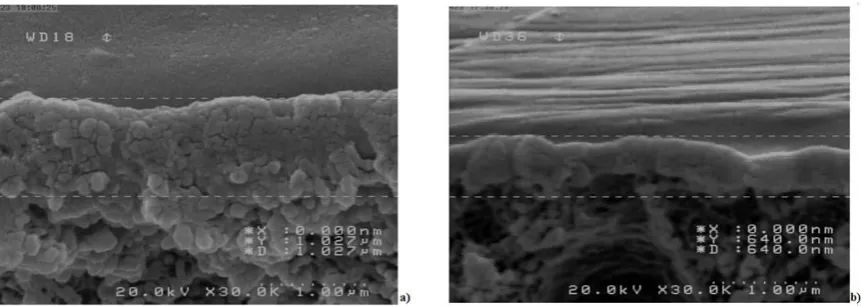
Fig. 4 shows the desne layer thickness of MMM containing 1 wt.% of rMWCNTs and 1 wt.% of fMWCNTs.
As shown in Fig. 4, the selective layer of the PES/rMWCNTs MMM (1027nm) was thicker than that of the PES/Cf-pMWCNTs (640nm). This result can be attributed to good polymer-fMWCNTs-polymer interactions (as disscused earlier in FTIR results and as will be disscused in more details later in Section 3.5). In other words, surface modification (purication and functionalization) of rMWCNTs by LMWC can improve interaction between polymer chains and particles by which instantaneous demixing is induced and a thinner selective layer is formed.
3.4. DSC Results
As discussed earlier by Li et al. [41], the main factor causing the increase of glass transition temperature (Tg) in mixed marix membranes is due to a interfacial interaction between polymer and particles. Hence Tg measurement is a good test to detrmine polymer/particles interactions in the mixed marix membranes. Glass transition temperatures (Tg) of the PES/fMWCNTs MMMs were measured by DSC analysis which results are presented in Fig. 5.
As shown in Fig. 5, glass transition temperature (Tg) of both MMMs (containing 1 and 3 wt. % fMWCNTs) are more than that of neat membrane.
polymer/particles interactions which reduce the PES chains mobility [42]. The decrease in Tg value of PES/3wt.%fMWCNTs membrane (in comparison with PES/1wt.%fMWCNTs)
can be attributed to the some agglomerated fMWCNTs which affect polymer chain/fMWCNTs interfacial interactions inside the polymer matrix.
(a)
(b)
(c)
Figure 4. Dense selective layer of a) PES/1wt.% rMWCNTs and b) PES/1wt.%fMWCNTs membranes.
Figure 5. Glass transition temperatures (Tg) of the neat PES and PES/fMWCNTs
membranes.
3.5 Permeation Test Results
The separation properties of MMMs containing 1.0 wt. % rMWCNTs, pMWCNTs and fMWCNTs in PES matrix
were studied by gas permeation test using CO2 and CH4 as test gases.
Gas permeation test results are listed in Table 2.
Table2. Separation properties of neat and MMMs.
Ideal Selectivity
CO2/CH4 CH4
Permeance
(GPU) CO2
Permeance
(GPU) Membranes
29.6 ∓ 1.5 0.27 ∓ 0.01
8.0 ∓ 0.1
Neat PES
19.5 ∓ 1.4 0.22 ∓ 0.01
4.3 ∓ 0.1
PES/1wt.%rMWCNTs MMM
24.8 ∓ 0.8 0.45 ∓ 0.01
11.2 ∓ 0.1
PES/1wt.%pMWCNTs MMM
55.8 ∓ 2.1 0.31 ∓ 0.01
17.3 ∓ 0.1
PES/1wt.%fMWCNTs MMM
225
232
227
220 222 224 226 228 230 232 234
Neat
PES/1wt.%fMWCNTs
As shown in Table 2, the PES/1wt.%fMWCNTs MMM has the maximum CO2/CH4 selectivity and CO2 permeance. In contrast, the MMM containing 1 wt. %r-MWNTs showes the minmum CO2 permeance and CO2/CH4 selectivity. The decrease in gas permeance of PES/1wt.%rMWCNTs MMM can be attributed to impermeable behavior of rMWCNTs inside the polymer matrix [43]. The impermeable rMWCNTs act as obstacles inside the polymer matrix and cause the permeance of both gasesto be decreased [44]. The decrease in CO2/CH4 selectivity of PES/1wt.%rMWCNTs MMM, in comparision with the neat PES one, can be attributed to the Knudsen size defects in polymer/rMWCNTs interfaces. By purification of rMWCNTs, the MWNCTs became open-ended [31-32] and shorter. They can act as permeable nano-sized channels inside the polymer matrix and cause the gas permeances of both gases to be increased (compared with neat PES membrane) [45].
However, the slight decrease in CO2/CH4 selectivity of PES/1wt.%pMWCNTs (compared with neat PES membrane) means that there are defects between pMWCNTs and polymer chains. However, ideal selectivity of PES/1wt.%pMWCNTs MMM is more than that of PES/1wt.%rMWCNTs MMM because
Knudsen size defects in
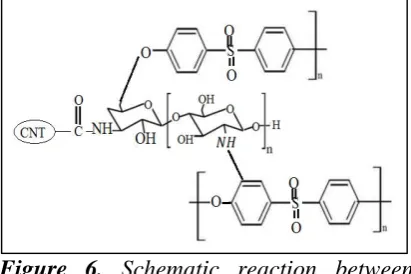
PES/1wt.%pMWCNTs is less than those in PES/1wt.%rMWCNTs, since pMWCNTs/polymer interactions are better than rMWCNTs/polymer interactions. By functionalization of pMWCNTs with LMWC, adhesion between fillers (fMWCNTs) and polymer chains increases and causes the interfacial defects to be decreased. Therefore no Knudsen size defects in PES/1wt.%fMWCNTs MMM is expected. Well dispersion and adhesion of fMWCNTs in PES matrix (As proved earlier by FESEM and DSC results) is attributed to the reaction between LMWC functional groups on the surface of
fMWCNTs and polymer chains, as illustrated in Fig. 6 schematically.
Figure 6. Schematic reaction between fMWCNTs and polymer chains.
Since fMWCNTs are well dispersed open ended fillers inside the PES matrix, they act as open channels. Therefore, small gas molecules (CO2) can pass through them easily [8, 9]. This effect results a drastic increase in CO2 permeance and also CO2/CH4 ideal selectiviy as reported in Table 2.
Since mixed matrix membrane containig fMWCNTs had the best gas separation performance, the membranes containing functionalized MWCNTs (fMWCNTs) were selected for further investigation. Fig. 7 shows the effect of fMWCNTs content on the gas separation performance of PES/fMWCNTs MMMs.
As shown in Fig. 7, the permeances of CO2 (and respectivly CH4) increase by increasing the fMWCNTs content. This phenomenon can be interpreted by the available permeable tube channels in the PES matrix, which increases by incresing the fMWCNTs content. However, further increase in fMWCNTs content in PES matrix (more than 1 wt. %), led to decrease in CO2/CH4 ideal selectivity. It can be attributed to agglemoration of fMWCNTs (as disscussed earlier in FESEM results) which causes Knudsen size defects between particle/polymer chains interfaces. Indeed when the content of fMWCNTs increases (more than 1 wt. %) the π-π interactions between
fMWCNTs overcome the
effect results the agglomeration of fMWCNTs and causes the Knudsen size defects between polymer chains and
fMWCNTs (interfacial defects) to be formed.
Figure 7. Effect of fMWCNTs content on the separation properties of PES membranes.
By formation of the Knudsen size interfacial gaps around the agglomerated fMWCNTs, CH4 permeance increases more than CO2 and it causes the CO2/CH4 selectivity to be decreased.
Since the PES/1wt.% fMWCNTs had the best performance for CO2/CH4separation, it was used to study the effect of operating pressure.
The effect of feed pressure on the CO2/CH4 ideal selectivity of PES/1wt.%fMWCNTs MMM is presented in Fig. 8.
As shown in Fig. 8, the CO2/CH4 selectivity of the membrane increases as feed pressure increases. The increases in CO2/CH4 selectivity may be attributed to
solubility of CO2 in polymer matrix which increases by increasing the feed pressure. It is necessary to note that the CO2 permeance increases as its solubility increases in the polymer matrix (according to the solution-diffusion mechanism). Moreover, by increasing the feed pressure, the membrane free volume decreases and subsequently the permeance of CH4 (bigger penetrant) decreases. These two effects cause the CO2/CH4 selectivity of membrane increases by increasing the feed pressure. Similar trend was reported by Nasir et al. elsewhere [1].
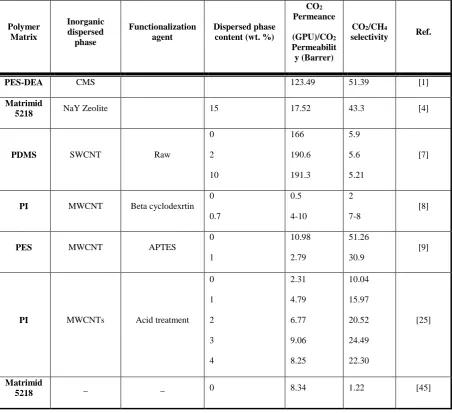
In Table 3, gas separation property of the PES/1wt.%fMWCNTs MMM is
29.6
55.8
26.3
22.7
0.0 10.0 20.0 30.0 40.0 50.0 60.0 70.0
0 1 2 3 4
C
O2/
C
H4
S
e
le
ctiv
ity
fMWCNTs wt. %
CO2/CH4 Ideal Selectivity
8.0
17.3
21.0
25.0
0.0 5.0 10.0 15.0 20.0 25.0 30.0
0 0.5 1 1.5 2 2.5 3 3.5
CO2
Per
m
e
an
ce
(GPU)
fMWCNTs wt. %
compared with the other MMMs reported elsewhere [1, 4, 7-9, 28-29, 45-55].
Figure 8. Effect of the feed pressure on CO2/CH4 ideal selectivity of PES/1wt.% fMWCNTs
MMM.
Table 3. Separation property of the fabricated PES/1wt.% fMWCNTs MMM in comparison with the other MMMs.
Polymer Matrix
Inorganic dispersed phase
Functionalization agent
Dispersed phase content (wt. %)
CO2
Permeance
(GPU)/CO2
Permeabilit y (Barrer)
CO2/CH4
selectivity Ref.
PES-DEA CMS 123.49 51.39 [1]
Matrimid
5218 NaY Zeolite 15 17.52 43.3 [4]
PDMS SWCNT Raw
0
2
10
166
190.6
191.3
5.9
5.6
5.21
[7]
PI MWCNT Beta cyclodexrtin 0
0.7
0.5
4-10
2
7-8
[8]
PES MWCNT APTES
0
1
10.98
2.79
51.26
30.9
[9]
PI MWCNTs Acid treatment 0
1
2
3
4
2.31
4.79
6.77
9.06
8.25
10.04
15.97
20.52
24.49
22.30
[25]
Matrimid
5218 _ _ 0 8.34 1.22 [45]
43.71
50.6755.80
58.51 64.08
0.00 10.00 20.00 30.00 40.00 50.00 60.00 70.00
0 2 4 6 8 10 12
CO2/C
H
4
Se
le
ctiv
ity
Pressure (bar)
Zeolite 4A Zeolite 13X TAP TAP 43 43 0.185 0.64 617 133
PI silica TMOS
0 10 20 7.4 10 12 75 114 150 [47]
PES Zeolite beta 20 1.63 32.6 [48]
PES-N-A Zeolite 4A 20 2.32 31.22 [49]
PSF SWCNT LCAA
0 5 10 15 3.9 5.12 5.19 4.52 23.55 18.82 18.41 16.09 [50]
PSF Silica TMS
0 (vol%) 5 10 15 20 6.3 7.7 9.3 12.9 19.7 29 27 25 21 18 [51]
PSF MCM-41
_ _ _ TMCS APTES 0 10 20 20 20 4.5 6.6 7.8 7.8 7.3 23 23 23 23 28 [52]
PI ZSM APTES
0 20 21.97 15.96 30.23 24.18 [53]
PI MWCNT
_ Raw Chitosan 0 1 1 16.83 10.47 37.31 10.9 17.5 16.5 [29] Matrimid
5218 Zeolite 4A
0 10 4.45 5.89 37 43 [54]
PVA MWCNTs Amino groups 0 6.9 986 1014 283 265 [23]
PES MWCNT LMWC 1 17.3 55.80 This Study
As shown in Table 3, the CO2 permeance and CO2/CH4 selectivity of the fabricated PES/1wt.% fMWCNTs MMM is comparable with the other reported data in the literature.
Fig. 9 shows separation property of the PES/fMWCNTs membranes on Rebeson’s upper bound line [55].As shown in Fig. 9, PES/1wt.% fMWCNTs MMM is near the Rebeson’s upper bound line and has an acceptable CO2/CH4 separation
performance among the other membranes (published elswhere).
This membrane is also defect free because its CO2/CH4 selectivity is more than the that of neat PES. This means that by addition of only 1 wt.% fMWCNTs to PES matrix, one can obtain a defect free and CO2/CH4 super selective membrane which its CO2 permeance is nearly two times more than that of neat PES membrane.
Figure 9. Separation performance of fabricated membrane (PES/1wt.% fMWCNTs: Black rectangle) on Robeson’s upper bound line [55].
4. CONCLUSION
MWCNTs were purified with acid mixture and functionalization by low molecular weight chitosan (LMWC) and then used for mixed matrix membrane fabrication. FTIR analysis confirmed the attachment of LMWC molecules to the surface of pMWCNTs. Comparison of
rMWCNTs and fMWCNTs XRD
of particles agglomeration. DSC result showed that the glass transition temperature (Tg) of both MMMs (containing 1 and 3 wt. % fMWCNTs) are more than that of neat membrane. Gas permeation test results revealed that by addition of only 1 wt.% fMWCNTs to PES matrix, one can obtain a defect free and CO2/CH4 super selective membrane which its CO2 permeance is nearly two times more than that of neat PES membrane.
ACKNOWLEDGMENT
The authors acknowledge the National Iranian Gas Company (NIGC) and University of Tehran for their financial supports.
CONFLICT OF INTEREST
The authors certify that they have NO affiliation with or involvement in any organization or entity with any financial interest or non-financial interest in the subject matter or materials discussed in this manuscript.
REFERENCES
1. Nasir R., Mukhtar H., Man Z., Shaharund M. S., Zailani Abu Bakare M., (2015). “Effect of fixed carbon molecular sieve (CMS) loading and various di-ethanolamine (DEA) concentrations on the performance of a mixed matrix membrane for CO2/CH4 separation”, RSC Adv., 5: 60814–60822.
2. Li Y., Chung, T-S., Kulprathipanja S., (2007). “Novel Ag+-zeolite/polymer mixed matrix membranes with a
high CO2/CH4 selectivity”, J. AlChE , 53: 610-616.
3. Nunes PS., Peinemann KV., (2001). “Membrane Technology in the Chemical Industry” , 1st ed.; Wiley-VCH.
4. Ebadi Amooghin A., Omidkhah M., Kargari A., (2015). “Enhanced CO2 Transport Properties of Membranes by Embedding Nano-Porous Zeolite Particles into Matrimid® 5218 Matrix”, RSC Adv., 5: 8552–8565. 5. Aroon, M. A.; Ismail A. F.; Matsuura T., Montazer-Rahmati, M. M., (2010). “Performance studies of mixed
matrix membranes for gas separation: A review”, Sep. Purif. Technol. , 75(3): 229-242.
6. Chung T. S., Jiang L. Y., Li Y., Kulprathipanj S., (2007). “Mixed matrix membranes (MMMs) comprising organic polymers with dispersed inorganic fillers for gas separation”, Prog. Polym. Sci., 32: 483–507. 7. Kim S., Pechar T. W., Marand E., (2006). “Poly(imide siloxane) and carbon nanotube mixed matrix
membranes for gas separation”, Desalination, 192: 330–339.
8. Sanip S. M., Ismail A. F., Goh P. S., Soga T., Tanemura M., Yasuhiko H., (2011). “Gas separation properties of functionalized carbon nanotubes mixed matrix membranes”, Sep. Purif. Technol., 78: 208–213.
9. Ismail A. F., Rahim N. H., Mustafa A., Matsuura T., Ng B. C., Abdullah S., Hashemifard S. A., (2011). “Gas separation performance of polyethersulfone/multi-walled carbon nanotubes mixed matrix membranes”, Sep. Purif. Technol., 80: 20–31.
10.Xie X., Mai Y., Zhou X., (2005). “Dispersion and alignment of carbon nanotubes in polymer matrix: A review”, J. Mater Sci. Eng. R., 4989: 112.
11.Azamat J., (2018). “Application of functionalized graphen oxide nanosheet in gas separation”, Int. J. Nanosci. Nanotechnol., 14(2): 165-175.
12.Ge L., Zhu Z., Rudolph V., (2011). “Enhanced gas permeability by fabricating functionalized multi-walled carbon nanotubes and polyethersulfone nanocomposite membrane”, Sep. Purif. Technol., 78: 76–82.
13.Weng T. H., Tseng H. H., Wey M. Y., (2009). “Preparation and characterization of multi-walled carbon nanotube/PBNPI nanocomposite membrane for H2/CH4 separation”, Int. J. Hydrogen Energy, 34: 8707–
8715.
14.Kim J. H., Lee Y. M., (2001). “Gas permeation properties of poly(amide-6-b-ethylene oxide)-silica hybrid membranes”, J. Membr. Sci., 193: 209–225.
15.Sanip S. M., Ismail A. F., Goh P. S., Ng B. C., Abdullah M. S., Soga T., Tanemura M., Yasuhiko H., (2010). “Preparation and characteristics of functionalized multiwalled carbon nanotubes in polyimide mixed matrix membrane”, Nano, 5: 195–202.
16.Sanip S. M., Ismail A. F., Goh P. S., Norrdin M. N. A., Soga T., Tanemura M., Yasuhiko H., (2012). “Carbon nanotubes based mixed matrix membrane for gas separation”, Adv. Mater. Res., 364: 272–277. 17.Aroon M. A., Matsuura T., Ismail A. F., (2012). “A Comparison between β-Cyclodextrin and Chitosan as
Soft Organic Materials for Surface Modification of MWCNTs”, Int. J. Nanosci. Nanotechnol., 8(2): 71-78. 18.Moradi L., Izadi N., Rostami F., (2015). “One Pot Chemically Attachment of Amino Groups on Multi
walled Carbon Nanotubes Surfaces”, Int. J. Nanosci. Nanotechnol., 11(2): 93-99.
20.Ahmad A. L., Jawad Z. A., Lowa S. C., Zein S. H. S., (2014). “A celluloseacetate/multi-walled carbon nanotube mixed matrix membrane for CO2/N2 separation”, J. Membr. Sci., 45: 155-166.
21.Goh P. S., Ng B. C., Ismail A. F., Aziz M., Sanip S. M., (2010). “Surfactant dispersed multi-walled carbon nanotube-polyetherimide nanocomposite membrane”, Solid State Sciences, 12: 2155-2162.
22.Goh P. S., Ng B. C., Ismail A. F., Aziz M., Hayashi Y., (2012). “Pre-treatment of multi-walled carbon nanotubes for polyetherimide mixed matrix hollow fiber membranes”, J. Colloid and Interface Sci., 386: 80– 87.
23.Ansaloni L., Zhao Y., Jung B. T., Ramasubramanian K., Giacinti Baschetti M., Winston Ho W. S., (2015). “Facilitated transport membranes containing amino-functionalized multi-walled carbon nanotubes for high-pressure CO2 separations”, J. Membr. Sci., 490: 18–28.
24.Zhao D., Ren J., Wang Y., Qiu Y., Li H., Hua K., Li X., Ji J., Deng M., (2017). “High CO2 separation performance of Pebaxs/CNTs/GTA mixed matrix membranes”, J. Membr. Sci., 52: 1104–113.
25.Sun H., Wang T., Xu Y., Gao W., Li P., Niu Q. J., (2017). “Fabrication of polyimide and functionalized multi-walled carbon nanotubes mixed matrix membranes by in-situ polymerization for CO2 separation”, Sep.
Purif. Tech., 177: 327–336.
26.Fontananova E., Grosso V., Aljlil S. A., Bahattab M. A., Vuono D., Nicoletta F. P., Curcio E., Drioli E., Di Profio G., (2017). “Effect of functional groups on the properties of multiwalled carbon nanotubes/polyvinylidenefluoride composite membranes”, J. Membr. Sci., 541: 198–204.
27.Santosh V., Gopinath J., Babu P. V., Sesha Sainath A.V., Reddy A.V. R., (2018). “Acetyl-D-glucopyranoside functionalized carbon nanotubes for the development of high performance ultrafiltration membranes”, Sep. Purif. Technol., 191: 134–143.
28.Aroon M. A., Ismail A. F., Matsuura T., (2013). “Beta-cyclodextrin functionalized MWCNT: A potential nano-membrane material for mixed matrix gas separation membranes development”, Sep. Purif. Technol., 115: 39–50.
29.Aroon M. A., Ismail A. F., Montazer-Rahmati M. M., Matsuura T., (2010). “Effect of chitosan as a functionalization agent on the performance and separation properties of polyimide/multi-walled carbon nanotubes mixed matrix flat sheet membranes”, J. Membr. Sci., 364: 309–317.
30.Ke G. , Guan W., Tang C., Guan W., Zeng D., Deng F., (2007). “Covalent Functionalization of Multiwalled Carbon Nanotubes with a Low Molecular Weight Chitosan”, Biomacromolecules, 8(2):322–326.
31.Olah, G.A., (2000). Foreword. In: Nalwa HS, editor. “Handbook of Nanostructured Materials and Nanotechnology”, Burlington: Academic Press, p. vii.
32.Kuznetsova A.; Mawhinney D. B., Naumenko V., Yates Jr-JT., Liu J., Smalley R. E., (2000). “Enhancement of adsorption inside of single-walled nanotubes: opening the entry ports”, J. Chem. Phys. Lett., 321: 292-296.
33.Carson L., Kelly-Brown C., Stewart M., Oki A., Regisford G., Luo Z., (2009). “Synthesis and characterization of chitosan-carbon nanotube composites”, J. Mater Lett., 63(6-7): 617-620.
34.Goh P. S., Ng B. C., Ismail A. F., Sanip S. M., Aziz M., Kassim M. A., (2011). “Effect of dispersed multi-walled carbon nanotubes on mixed matrix membrane for O2/N2 Separation”, Separ. Sci. Technol., 46: 1250– 1261.
35.Buang N. A., Fadil F., Majid Z. A., Shahir S., (2012). “Characteristic of mild acid functionalized multiwalled carbon nanotubes towards high dispersion with low structural defects”, Digest J. Nanomater. Biostruct., 7: 33-39.
36.Anjalin F. M., (2014). “Synthesis and characterization of MWCNTs/PVDF nanocomposite and its electrical studies”, Der Pharma Chemica, 6: 354-359.
37.Cao A., Xu C., Liang J., Wu D., Wei B., (2001). “X-ray diffraction characterization on the alignment degree of carbon nanotubes”, Chem. Phys. Lett., 344: 13-17.
38.Sanip S. M., Ismail A. F., Aziz M., Soga T., (2009). “Functionalized carbon nanotubes for mixed matrix membrane”, IEICE Trans. Electron. E92-C, 12: 1427–1431.
39.Perez E.V., Balkus Jr. K. J., Ferraris J. P., Musselman I. H., (2009). “Mixed-matrix membranes containing MOF-5 for gas separations”, J. Membr. Sci., 328: 165–173.
40.Qian H., Greenhalgh E. S., Shaffer M. S. P., Bismarck A., (2010). “Carbon nanotube-based hierarchical composites: a review”, J. Mater. Chem., 20: 4751–4762.
41.Li G.Y., Chung H. M., Kulprathipanja T. S., (2006). “Effects of Novel Silane Modification of Zeolite Surface on Polymer Chain Rigidification and Partial Pore Blockage in Polyethersulfone (PES)–Zeolite a Mixed Matrix Membranes”, J. Membr. Sci., 275: 17–28.
42.Zhang Y., Balkus K. J., Musselman I. H., Ferraris J. P., (2008). “Mixed-matrix membranes composed of Matrimid® and mesoporous ZSM-5 nanoparticles”, J. Membr. Sci., 325: 28–39.
44.Rafizah W. A. W., Ismail A. F., (2008). “Effect of carbon molecular sieve sizing with poly(vinyl pyrrolidone) K-15 on carbon molecular sieve–polysulfone mixed matrix membrane”, J. Membr. Sci., 307: 53-61.
45.Chen M., Yu H. W., Chen J. H., Koo H. S., (2007). “Effect of purification treatment on adsorption characteristics of carbon nanotubes”, Diamond Relat. Mater., 16: 1110-1115.
46.Yong H. H., Park H. C., Kang Y. S., Won J., Kim W. N., (2001). “Zeolite-filled polyimide membrane containing 2,4,6-triaminopyrimidine”, J. Membr. Sci., 188: 151–163.
47.Suzuki T., Yamada Y., (2005). “Physical and gas transport properties of novel hyperbranched polyimide– silica hybrid membranes”, Polym. Bull., 53: 139–146.
48.Li Y., Chung T-S., Huang Z., Kulprathipanja S., (2006). “Dual-layer polyethersulfone (PES)/BTDA-TDI/MDI co-polyimide (P84) hollow fiber membranes with a submicron PES-zeolite beta mixed matrix dense-selective layer for gas separation”, J. Membr. Sci., 277: 28–37.
49.Huang Z., Li Y., Wen R., Teoh M. M., Kulprathipanja S., (2006). “Enhanced gas separation properties by using nanostructured PES-zeolite 4A mixed matrix membranes”, J. Appl. Polym. Sci., 101: 3800–3805. 50.Kim S., Chen L., Johnson J. K., Marand E., (2007). “Polysulfone and functionalized carbon nanotube mixed
matrix membranes for gas separation: theory and experiment”, J. Membr. Sci., 294: 147–158.
51.Ahn J., Chung W.-J., Pinnau I., Guiver M. D.,(2008).”polysulfone/silica nanoparticle mixed-matrix membranes for gas separation”, J. Membr. Sci., 314: 123–133.
52.Kim S., Marand E., (2008). “High permeability nano-composite membranes based on mesoporous MCM-41 nanoparticles in a polysulfone matrix”, Microporous Mesoporous Mater., 114: 129–136.
53.Pechar T. W., Tsapatsis M., Marand E., Davis R., (2002). “Preparation and characterization of a glassy fluorinated polyimide zeolite-mixed matrix membrane”, Desalination, 146: 3–9.
54.Bakhtiari O., Mosleh S., Khosravi T., Mohammadi T., (2011). “Synthesis and characterization of polyimide mixed matrix membranes”, Sep. Purif. Technol., 46: 2138–2147.



![Figure 9. Separation performance of fabricated membrane (PES/1wt.% fMWCNTs: Black rectangle) on Robeson’s upper bound line [55]](https://thumb-us.123doks.com/thumbv2/123dok_us/1310771.1638664/13.595.84.463.177.587/figure-separation-performance-fabricated-membrane-fmwcnts-rectangle-robeson.webp)