e-ISSN: 2278-067X, p-ISSN: 2278-800X, www.ijerd.com
Volume 12, Issue 9 (September 2016), PP.67-72
Development of novel algorithm by combining Wavelet based
Enhanced Canny edge Detection and Adaptive Filtering
Method for Human Emotion Recognition
Aphasana Shahanvaj Mulla
1, K.P.Paradeshi
2,
1P.G.Student, Department of Electronics, PVPIT Budhgaon,
2Associate Professor,Department of Electronics, PVPIT Budhgaon,
Sangli, Maharashtra, India
Abstract:- In this paper we have proposed a new method to recognize human emotions in which a combination of wavelet-based canny edge detection and adaptive filtering is used for detection of human emotions. In the first stage edge detection carried out using wavelet based canny edge detection method. In second stage adaptive filtering is designed for noise cancellation of decomposed noisy signal. Applying combination of wavelet based canny algorithm and adaptive filtering method we arrive at a better result of human emotion recognition.
Keywords:- Adaptive filtering, Canny algorithm, Edge detection, Median Filtering, Wavelet.
I.
INTRODUCTION
Emotions play important role not only people in our relations but also in the way we use computers. As an emotional state of a person may affect concentration, task solving, decision making skill, the vision of affective computing is to make system able to recognize human emotions and influence them in order to enhance effectiveness and productivity of working with computers. Affective computing has gained enormous research interest in the development of human computer interaction over the past decades. With the increasing power of emotion recognition, an intelligent computer system can provide a more friendly and effective way to communicate with users in areas such as video surveillance, interactive entertainment, intelligent automobile system and medical diagnosis. The computer vision based pattern recognition techniques largely focuses on facial features due to the importance of human perception of emotion through visual facial expressions. Each emotion corresponds to a unique facial expression, whose characteristics serves as the input to the classification system, and the output gives the machine-perceived emotion state based on various classification algorithms.
Emotion detection is developing in the recent years because of advancement in different field like image processing and machine learning, human-computer interaction. Research on emotion has increased significantly over the past two decades with many fields contributing including psychology, neuroscience, Medicine, sociology and even computer science. Emotions play an essential role in social interactions and facilitate rational decision making and perception. The human computer interaction have started their investigation and tried to understand different causes and effects
There are several edge detection methods for human emotion recognition. But still accuracy and clarity are challenging tasks in order to obtain better emotion recognition. So, keeping in view wavelet based enhanced Canny edge detection method is used in combination with adaptive filtering The method suggested by Bing Wang and Shao Sheng Fan is CANNY arithmetic operator has been proved to have good detective effect in the common usage of edge detection. However, CANNY operator also has certain deficiencies. Based on the analysis of the traditional CANNY algorithm, an improved canny algorithm is proposed [11]. In the algorithm, self-adaptive filter is used to replace the Gaussian filter, morphological thinning is adopted to thin the edge and morphological operator is used to achieve the refining treatment of edge points detection and the single pixel level edge. The results of experiment show the improved CANNY algorithm is reasonable. But, the improved algorithm has the problem of heavy calculation.
The method suggested by GUO Lingyun, NAN Jingchang is the combination of wavelet transformation and adaptive median filter RAMF proposes a new method in place of the traditional Gaussian filter[9]. The method makes use of the wavelet transform in time - frequency analysis features and at the same time RAMF well protected edge of the smooth nature. Experiment results show that the proposed method performs better than the traditional method for impulse noise.
computation, non-maxima suppression based on interpolation, edge detection and connection. This algorithm outperforms other color image edge detection methods and can be widely used in color image processing[5].
The method suggested by WeibinRong, Zhanjing Li, Wei Zhang and Lining Sun is An Improved Canny Edge Detection Algorithm .This algorithm introduced the concept of gravitational field intensity to replace image gradient, and obtained the gravitational field intensity operator. Two adaptive threshold selection methods based on the mean of image gradient magnitude and standard deviation were put forward for two kinds of typical images (one has less edge information, and the other has rich edge information) respectively. The improved Canny algorithm is simple and easy to realize. Experimental results show that the algorithm can preserve more useful edge information and more robust to noise [1].
.
II.
METHODOLOGYA. Median Filter
Median filtering is considered a suitable method to remove impulse noises from images. This non-linear technique is a good substitute to non-linear filtering as it can efficiently subdue impulse noise while preserving edge information. The median filter operates for each pixel of the image and ensures that it fits with the pixels around it. It filters out samples that are not representative of their surroundings; in other words the impulses. Therefore, it is very useful in filtering out missing or damaged pixels of the image. Median filter has complexity to implement in hardware, as large amount of data involved in representing image information in digital format.
The Median Filter is performed by taking the magnitude of all of the vectors within a mask and sorted according to the magnitudes. The pixel with the median magnitude is then used to replace the pixel studied. The Simple Median Filter has an advantage over the Mean filter since median of the data is taken instead of the mean of an image. The pixel with the median magnitude is then used to replace the pixel studied. The median of a set is more robust with respect to the presence of noise. The median filter is given by,
Median filter(x1…xN)=Median(||x1||2……||xN||2)
Median filter is a spatial filtering operation, so it uses a 2-D mask that is applied to each pixel in the input image. The median value is determined by placing the brightness in ascending order and selecting the centre value. The obtained median value will be the value for that pixel in the output image.
Figure. 1: Application Of Median Filter
B. Use Of Wavelet and canny operator
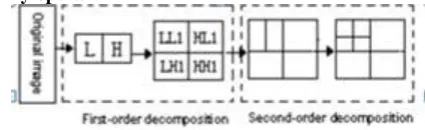
Figure.2:Digital images of second wavelet decomposition process of frequency allocation
After wavelet decomposition, the energy is distributed in the low frequency region. Therefore, noise the proportion is small, high frequency noise energy in the proportion is larger.
C. Adaptive Filter
An adaptive filter is a Wiener filter which filters out noise that has corrupted a signal. It is based on a statistical approach. Typical filters are designed for a desired frequency response. The Wiener filter approaches filtering from a different angle. One is assumed to have knowledge of the spectral properties of the original signal and the noise, and one seeks the LTI filter whose output would come as close to the original signal as possible.
Wiener filters are characterized by the following:
a. Assumption: signal and (additive) noise are stationary linear random processes with known spectral characteristics.
b. Requirement: the filter must be physically realizable, i.e. causal (this requirement can be dropped , resulting in a non-causal solution).
c. Performance criteria: minimum mean-square
III.
PROPOSED
METHOD
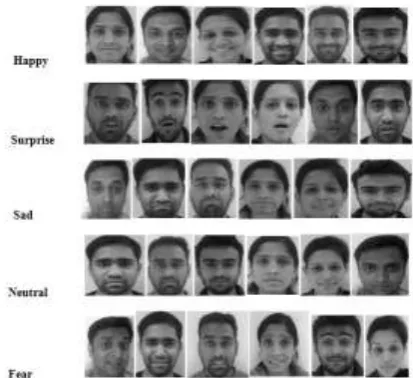
We collect images of human emotions from standard database as well as self captured. Total database is of 175 images. Self captured images are 30 which are also used for testing purpose. Features of testing images are compared with features of training images. Closely matching features gives emotion classification
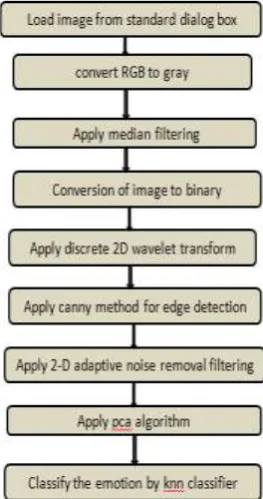
Figure. 3: Flow diagram of Human Emotion recognition
Test image is loaded which is in RGB or Gray form. If Input image in RGB form, convert to Gray Form. Median filtering is applied to replace noisy pixel by noise free pixels. Conversion of image to binary form based on threshold. Discrete 2D wavelet transform is applied for decomposition of image. Canny method is applied for edge detection. 2-D adaptive noise removal filtering is applied to evaluate gray values of each pixel. PCA algorithm is applied to reduce dimensionality of target. The emotion is classified by passing features of both testing image and training image to knn classifier.
IV.
RESULTS
AND
DISCUSSION
Figure. 4 : Sample Database Images of 5 different emotions
Results of different classification of human emotions are as below:
a b
d e
g h
i j
Figure.5: (a),(b),(c),(d),(e),(f),(g),(h),(i),(j) different classification of human emotions obtained after edge detection and noise removal.
Figure 5 shows the classification of human emotions for different testing images.
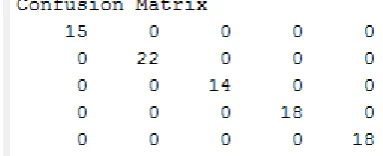
Figure.6:Confusion matrix of classification of human emotions
Figure 6 shows confusion matrix for trained database which consist 175 facial images. We are getting 15 correctly classified „Happy‟ images,22 correctly classified „Surprise‟ images,14 correctly classified „Sad‟ images,18 correctly classified „Neutral‟ images,18 correctly classified „Fear‟ images. We are not getting any misclassified image. In main coding testing images are selected from same trained dataset images. So, accuracy is 100%. From the figure we can see our proposed method achieves the better results for the final emotion recognition.
V.
C
ONCLUSIONREFERENCES
[1]. WeibinRong, Zhanjing Li, Wei Zhang and Lining Sun “An Improved Canny Edge Detection Algorithm”Proceedings of 2014 IEEE International Conference on Mechatronics and Automation August 3 - 6, Tianjin, China.
[2]. CAI-XIA DENG, GUI-BIN WANG, XIN-RUI YANG “Image Edge Detection Algorithm Based on Improved Canny Operator” Proceedings of the 2013 International Conference on Wavelet Analysis and Pattern Recognition, Tianjin, 14-17 July, 2013.
[3]. Yubing Dong, Mingjing Lib, Jie Li“Image Retrieval Based on Improved Canny Edge Detection Algorithm”2013 International Conference on Mechatronic Sciences, Electric Engineering and
Computer (MEC)Dec 20-22, 2013, Shenyang, China.
[4]. GaoJie, Liu Ning “An improved adaptive threshold canny edge detection algorithm”2012 International Conference on Computer Science and Electronics Engineering.
[5]. GengXin, Chen Ke, Hu Xiaoguang“An improved Canny edge detection algorithm for color image”978-1-4673-0311-8/12/$31.00 ©2012 IEEE.
[6]. ZhiweiTANG ,Dongqin SHEN “Canny Edge Detection Codec using VLib on davinciseries DSP”2012 International Conference on Computer Science and Service System.
[7]. E.Punarselvam, P.Suresh“Edge Detection ofCT Scan Spine Disc Image Using Canny Edge Detection Algorithm Based on Magnitude and Edge Length” 978-1-4673-0 132-9/ll/$26.00@2011 IEEE.
[8]. ShengxiaoNiu, Jingjing Yang, Sheng Wang, GengshengChen“Improvementand Parallel Implementation of Canny Edge Detection Algorithm Based on GPU” 978-1-61284-193-9/11/$26.00 ©2011 IEEE.
[9]. GUO Lingyun , NAN Jingchang “Canny Edge Detection Algorithm based on Wavelet Transform and RAMF” 978-981-08-6322-7©Memetic Computing Society ICCP 2010Proceedings.
[10]. Huili Zhao, Guofeng Qin, Xingjian Wang“Improvement of Canny Algorithm Based on Pavement Edge Detection”2010 3rd International Congress on Image and Signal Processing (CISP2010).