R E S E A R C H A R T I C L E
Open Access
Exploration of the association between quality of
life, assessed by the EQ-5D and ICECAP-O, and
falls risk, cognitive function and daily function, in
older adults with mobility impairments
Jennifer C Davis
1,2,3*, Stirling Bryan
1,3, Rob McLeod
2, Jessica Rogers
2, Karim Khan
4and Teresa Liu-Ambrose
2Abstract
Background:Our research sought to understand how falls risk, cognitive function, and daily function are associated with health related quality of life (using the EuroQol-5D) and quality of life (using the ICECAP-O) among older adults with mobility impairments.
Methods:The EQ-5D and ICECAP-O were administered at 12 months post first clinic attendance at the Vancouver Falls Prevention Clinic. We report descriptive statistics for all baseline characteristics collected at first clinic visit and primary outcomes of interest. Using multivariate stepwise linear regression, we assessed the construct validity of the EQ-5D and ICECAP-O using three dependent measures that are recognized indicators of“impaired mobility” –physiological falls risk, general balance and mobility, and cognitive status among older adults.
Results:We report data on 215 seniors who attended the Vancouver Falls Prevention Clinic and received their first clinic assessment. Patients had a mean age of 79.3 (6.2) years. After accounting for known covariates (i.e., age and sex), the ICECAP-O domains explained a greater amount of variation in each of the three dependent measures compared with the EQ-5D domains.
Conclusion:Both the EQ-5D and ICECAP-O demonstrate associations with falls risk and general balance and mobility; however, only the ICECAP-O was associated with cognitive status among older adults with
mobility impairments.
Trial registration:ClinicalTrials.gov Identifier: NCT01022866
Keywords:ICECAP-O, EQ-5D, Construct validity, Older adults, Falls
Background
Health related quality of life (HRQoL) is an important construct for healthy aging; it describes an individual’s overall health status [1]. Previous studies have demon-strated significant associations between self-efficacy, mo-bility, cognition and HRQoL [2]. Specifically, HRQoL is highly associated with mobility impairments and cogni-tive status in older adults [3-5]. Critically, functional
abilities such as walking are associated with changes in both physical and mental HRQoL [6].
Impaired mobility is also significantly associated with qual-ity of life (QoL) [7] – a construct that is distinct from HRQoL in that it captures gains or losses to an individual’s QoL beyond considering health alone. Specifically, older adults with impaired mobility experience a multitude of con-sequences beyond health including: loss of independence and social isolation [8]. Thus, current evidence strongly sug-gests older adults with impaired mobility are at significant risk for decline in both HRQoL and QoL [9]. Further, QoL is associated with cognitive status in older adults [10].
One key question remains unanswered: Are we ad-equately assessing HRQoL and QoL among older adults * Correspondence:[email protected]
1Centre for Clinical Epidemiology and Evaluation, Vancouver Coastal Health Research Institute, The University of British Columbia, Research Pavilion, 7th floor, 828 West 10th Avenue, V5Z 1M9 Vancouver, BC, Canada
2Department of Physical Therapy, University of British Columbia, 212-2177 Wesbrook Mall, V6T 1Z3 Vancouver, BC, Canada
Full list of author information is available at the end of the article
with mobility impairments? To address this question, we first need to ascertain the association between falls risk, cognitive function, and general balance and mobility, and health-related quality of life and quality of life among older adults with mobility impairments.
Two examples of feasible measures as relevant tools for this population of older adults that evaluate HRQoL and QoL, respectively, include the EQ-5D and the ICECAP-0 [11,12].
The most widely used utility-based measure of HRQoL is the EQ-5D [12-14]. The association of falls risk, cogni-tive function and general balance and mobility to HRQoL as assessed using the EQ-5D among older adults with mobility impairments remains unknown. The EQ-5D assesses an individual’s HRQOL according to the fol-lowing attributes: mobility, self-care, usual activities, pain, anxiety and depression [12]. The EQ-5D yields a single summary score, anchored at zero (equivalent to death) and 1.0 (‘full health’). Values of less than zero de-fine health states worse than death.
The Index of Capability for older adults (ICECAP-O) is a relatively new measure developed to provide a broader assessment of QoL among older adults [11,15]. The ICECAP-O measure covers attributes of capability found to be important determinants of QoL among older adults in the UK [11,15]– its descriptive system results from an extensive qualitative investigation [15]. The measure comprises five attributes:
Attachment (love and friendship)
Security (thinking about the future without concern) Role (doing things that make you feel valued) Enjoyment (enjoyment and pleasure)
Control (independence)
The value system for the ICECAP-O provides a single summary score, anchored at zero (‘no capability’) and 1.0 (‘full capability’), for each state described in terms of the five attributes.
There remains a gap in our current knowledge regard-ing the understandregard-ing of the association of falls risk, cog-nitive function and general balance and mobility with HRQoL (assessed using the EQ-5D) and quality of life (assessed using the ICECAP-O) among older adults with mobility impairments. Hence, we aim to examine the as-sociation of the EQ-5D with the ICECAP-O with valid and reliable measures of physiological falls risk, general balance and mobility, and cognitive status among older adults with mobility impairments.
Method Study design
We conducted a cross-sectional analysis of participants visiting the Vancouver Falls Prevention Clinic (www.
fallsclinic.com) due to a fall from January 2009 through May 2011.
Participants
The sample consisted of women and men referred by their general practitioner or emergency department physician to the Vancouver Falls Prevention Clinic. From January 2009 through January 2011, all patients present-ing to the Vancouver Falls Prevention Clinic were invited to participate. Community dwelling women and men who lived in the lower mainland region of British Columbia were eligible for study entry if they:
were adults≥70 years referred by a medical
professional to the Vancouver Falls Prevention Clinic as a result of seeking medical attention for a non-syncopal fall in the previous 12 months;
understood, spoke, and read English proficiently; had a Mini-Mental State Examination (MMSE) [16]
score≥24/30;
had a Physiological Profile Assessment (PPA) [17] score of at least 1.0 SD above age-normative value; were expected to live≥12 months;
were able to walk 3 metres; and
were able to provide written informed consent
We excluded those with a neurodegenerative disease (e.g., Parkinson’s disease) or dementia, patients who re-cently had a stroke, those with clinically significant per-ipheral neuropathy or severe musculoskeletal or joint disease, and anyone with a history indicative of carotid sinus sensitivity (i.e., syncopal falls).
Ethical approval was obtained from the Vancouver Coastal Health Research Institute and the University of British Columbia’s Clinical Research Ethics Board. All participants provided written informed consent.
Measures
The data presented in this paper include baseline charac-teristics collected at participants’first clinic assessment. The ICECAP-O and EQ-5D, were collected once at 12 months post first clinic assessment.
Clinical indicators of falls risk, mobility, and cognitive status
[18-20]. Impaired mobility, balance, and cognitive function are also key risk factors for falls.
For physiological falls risk, we used the PPA © [17] (Prince of Wales Medical Research Institute, AUS). The PPA is used and recognized internationally in by both clinicians and researchers in falls prevention. It is a valid and reliable tool for falls risk assessment and this meas-ure has a 75% predictive accuracy for falls in older people [17]. The PPA computes a falls risk score for each individual based on the individual’s performance of five physiological domains (postural sway, hand reaction time, quadriceps strength, proprioception, and edge con-trast sensitivity). A PPA z-score of 0–1 indicates mild risk, 1–2 indicates moderate risk, 2–3 indicates high risk, and 3 and above indicates marked risk [19].
We assessed general balance and mobility using the Short Physical Performance Battery (SPPB) [21]. For the SPPB, participants were assessed on performances of standing balance, walking, and sit-to-stand. Each compo-nent is rated out of four points, for a maximum of 12 points. Poor performance, indicated by a score of 9 or less, on this scale predicts subsequent disability [21].
For global cognitive function, we used the MMSE [16]. A score 24/30 or greater indicates intact global cognitive function.
For assessing activities of daily living, we used the In-strumental Activities of Daily Living (IADLs) Scale. Participants completed the Lawton and Brody [22] In-strumental Activities of Daily Living Scale to screen for impaired IADLs. This scale subjectively assesses ability to telephone, shop, prepare food, housekeep, do laundry, handle finances, be responsible for taking medication and determining mode of transportation.
Health related quality of life
EQ-5D
The EQ-5D is a short five-item multiple choice question-naire that measures an individual’s HRQoL and health sta-tus according to the following five domains: mobility, self-care, usual activities, pain and anxiety/depression [12]. Each domain has three possible options that either indi-cates no problems, some problems or severe problems. The EQ-5D health state utility values (HSUVs) at each time point are bounded from−0.54 to 1.00 where a score of less than zero is indicative of a health state worse than death. The HSUVs represent values that individuals within society assign – values for specific health states such as having rheumatoid arthritis relative to perfect health – these are UK societal values for given health states.
Qualify of life
ICECAP-O We assessed QoL using the ICECAP-O [11,15]. The ICECAP-O is a short five-item multiple choice questionnaire that measures an individual’s
overall QoL according to the following five attributes: at-tachment (love and friendship), security (thinking about the future without concern), role (doing things that make you feel valued), enjoyment (enjoyment and pleasure) and control (independence). Each domain has four pos-sible options. The ICECAP-O can be used to calculate a global score on a zero to one scale where zero represents no capability and one represents full capability. The ICECAP-O can also be converted to a utility scale to provide further comparability with other generic prefer-ence based instruments [23].
Statistical analysis
Descriptive statistics were used to characterize the study sample.
Bivariate analyses
To measure the association between the EQ-5D and the ICECAP-O global scores with the PPA, SPPB, and MMSE we estimated the Pearson correlation coefficients. We used Spearman correlation coefficients for the spe-cific domains of the EQ-5D (mobility, self-care, usual ac-tivities, pain and depression) & ICECAP-O (attachment, security, role, enjoyment and control) with the PPA, SPPB, MMSE and IADLs.
Multivariate analyses
We conducted three separate stepwise multivariate linear regression models with valid and reliable measures of falls risk, general balance and mobility and cognitive sta-tus as the dependent variables. An alpha level of 0.1 was used for the stepwise selection approach. All regression models were bootstrapped with 1000 replications to de-termine the consistency of each of the three final multi-variate models. Within each of these three models, we adjusted for known covariates including age and sex. Our key independent variables of interest were the EQ-5D domains (mobility, self-care, usual activities, pain, anxiety/depression) and ICECAP-O domains (attach-ment, security, role, enjoyment and control). For all domains of the EQ-5D and the ICECAP-O, level 1 was used as the reference category. Level 1 for both instru-ments indicates no problems with the domain of interest. All statistical analyses were performed using STATA Version11.0.
Results Participants
and subsequent risk for disability. The majority of parti-cipants were cognitively intact as indicated by a MMSE score of 26.9 (3.4). The mean IADL score was 7.0 (1.6) with 42% of participants indicating IADL impairment at baseline. The mean EQ-5D global score was 0.701 (9.291) and the mean ICECAP-O score was 0.815 (0.177).
Bivariate analyses
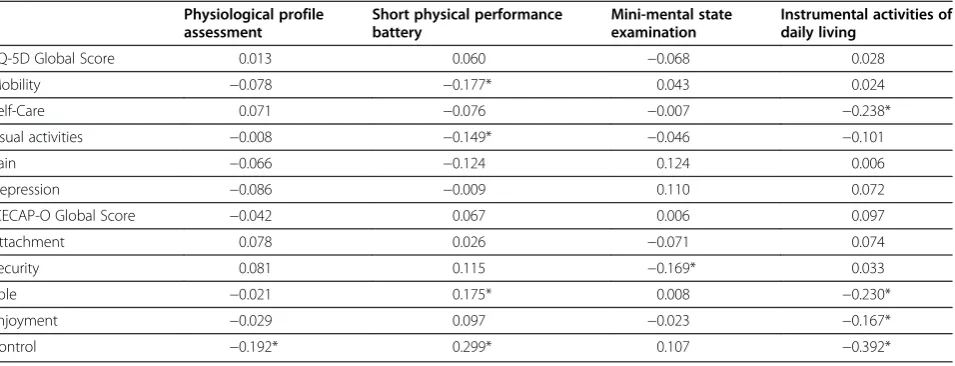
Table 2 details the results of the bivariate analyses. The global scores of EQ-5D and ICECAP-O were signifi-cantly correlated (r2= 0.474; p<0.01).
None of the domains of the EQ-5D were significantly correlated with the PPA or MMSE (p>0.05). The EQ-5D domain of mobility (r2 = −0.177, p<0.05) was signifi-cantly correlated with the SPPB. The EQ-5D domain of self-care (r2 = −0.238, p<0.05) was significantly corre-lated with IADLs. For the ICECAP-O, the domain
‘control’ was significantly associated with the PPA (r2 =
−0.192, p<0.05), the domains‘role’and‘control’were sig-nificantly associated with the SPPB (r2 = 0.175, p<0.05; r2 = 0.299, p<0.05), the domain ‘security’ was signifi-cantly associated with the MMSE (r2 = −0.169, p<0.05) and the domains of role (r2=−0.230, p<0.05), enjoyment (r2 = −0.167, p<0.05) and control (r2 = −0.392, p<0.05) were significant associated with IADLs.
Multivariate analyses
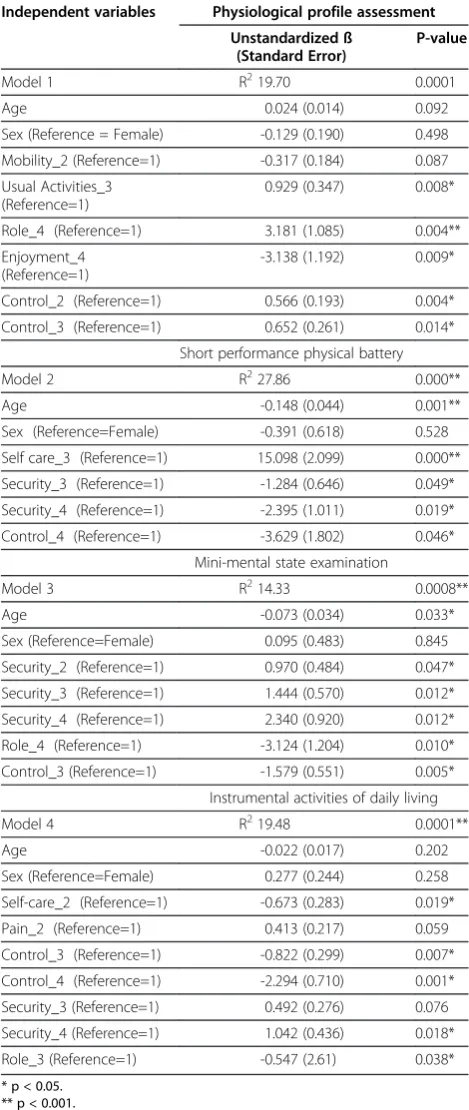
Table 3 details the results of the multivariate analyses.
Physiological falls risk
After accounting for known covariates (i.e., age and sex), we found that the ICECAP-O domains of role (level 4), en-joyment (level 4) and control (levels 2 and 3) explained a statistically significant amount of variation in the PPA score (p < 0.05). Mobility (level 2), a domain of the EQ-5D explained a non-significant degree of variation in the PPA score. Depression (level 2) and Usual Activities (level 3) of the EQ-5D explained a statistically significant amount of variation in the PPA score (p < 0.05).
General balance and mobility
After accounting for known covariates, we found that the ICECAP-O domains of security (levels 3 and 4) and control (level 4) explained a statistically significant amount of variation in the SPPB score (p < 0.05). Self-care (level 3), a domain of the EQ-5D explained a signifi-cant degree of variation in the SPPB score (p < 0.05).
Cognitive status
After accounting for known covariates, we found that the ICECAP-O domains of control (level 3), security (levels 2, 3 and 4) and role (level 4) explained a Table 1 Characteristics of the Falls Prevention Clinic
cohort (N=215)
Variable Mean (SD) or Median (IQR)
Or Number (%)
Age (years) 79.3 (6.2)
Sex (female) 154 (71.6)
Body Mass Index (kg/m2) 27.1 (5.9) Instrumental Activities of Daily
Living (max 8 points)
7.0 (1.6)
Physiological Profile Assessment 1.7 (1.2) Short Performance Physical
Battery (max 12 points)
7.5 (3.7)
Mini Mental State Examination (max 30 points)
26.9 (3.4)
EQ-5D Global Score (0–1 scale) 0.701 (0.291) ICECAP-O Global Score (0–1 scale) 0.815 (0.177)
Table 2 Correlation coefficient matrix summary for measures of fall risk, mobility, cognitive status and activities of daily living versus health related quality of life and quality of life domains
Physiological profile assessment
Short physical performance battery
Mini-mental state examination
Instrumental activities of daily living
EQ-5D Global Score 0.013 0.060 −0.068 0.028
Mobility −0.078 −0.177* 0.043 0.024
Self-Care 0.071 −0.076 −0.007 −0.238*
Usual activities −0.008 −0.149* −0.046 −0.101
Pain −0.066 −0.124 0.124 0.006
Depression −0.086 −0.009 0.110 0.072
ICECAP-O Global Score −0.042 0.067 0.006 0.097
Attachment 0.078 0.026 −0.071 0.074
Security 0.081 0.115 −0.169* 0.033
Role −0.021 0.175* 0.008 −0.230*
Enjoyment −0.029 0.097 −0.023 −0.167*
Control −0.192* 0.299* 0.107 −0.392*
statistically significant amount of variation in the MMSE score (p < 0.05). None of the domains of the EQ-5D explained a significant degree of variation in the MMSE score.
Instrumental activities of daily living
After accounting for known covariates (i.e., age and sex), we found that the ICECAP-O domains of role (level 3), security (levels 4) and control (levels 3 and 4) explained a statistically significant amount of variation in IADLs (p < 0.05). Pain (level 2), a domain of the EQ-5D explained a non-significant degree of variation in IADLs. Self-care (level 2), a domain of the EQ-5D explained a statistically significant amount of variation in IADLs (p < 0.05).
Discussion and conclusions Principal findings
Our data suggest that the EQ-5D and ICECAP-O are significantly correlated. Of note, a greater number of domains of the ICECAP-O compared with the EQ-5D explain significant variation in the PPA, SPPB, MMSE and IADLs. Using three key indicators of“impaired mo-bility”, we demonstrated several distinct differences be-tween select domains of the EQ-5D and the ICECAP-O. Specifically, role, enjoyment and control (ICECAP-O domains) explained a statistically significant amount of variation in falls risk. Depression and usual activities (EQ-5D domains) explained a statistically significant amount of variation in falls risk. Security and control (ICECAP-O domains) explained a statistically significant amount of variation in general balance and mobility. Self-care (EQ-5D domain) explained a significant degree of variation in general balance and mobility. Control, se-curity and role (ICECAP-O domains) explained a statisti-cally significant amount of variation in the cognitive status and in IADLs; whereas, similar findings were not observed for any of the EQ-5D domains. Hence, our findings suggest that among older adults with impaired mobility, both instruments provide valuable yet unique information.
Strengths and weaknesses of this study
A key strength of this study is that it compares the con-struct validity of the ICECAP-O and the EQ-5D in a spe-cific population of older adults with impaired mobility. Given that the ICECAP-O is a relatively new instrument, this study provides a population specific recommenda-tion for use of the ICECAP-O in select samples. This comparison is also useful given that the EQ-5D is a widely used instrument. It also provides a benchmark from which future studies can compare the construct validity of these and other widely used instruments such as the Short Form -6D [24] and Health Utilities Index [25].
Table 3 Multivariate linear regression summary for measures of fall risk, mobility, cognitive status and activities of daily living versus health related quality of life and quality of life
Independent variables Physiological profile assessment
Unstandardized ß (Standard Error)
P-value
Model 1 R219.70 0.0001
Age 0.024 (0.014) 0.092
Sex (Reference = Female) -0.129 (0.190) 0.498 Mobility_2 (Reference=1) -0.317 (0.184) 0.087 Usual Activities_3
(Reference=1)
0.929 (0.347) 0.008*
Role_4 (Reference=1) 3.181 (1.085) 0.004** Enjoyment_4
(Reference=1)
-3.138 (1.192) 0.009*
Control_2 (Reference=1) 0.566 (0.193) 0.004* Control_3 (Reference=1) 0.652 (0.261) 0.014*
Short performance physical battery
Model 2 R227.86 0.000**
Age -0.148 (0.044) 0.001**
Sex (Reference=Female) -0.391 (0.618) 0.528 Self care_3 (Reference=1) 15.098 (2.099) 0.000** Security_3 (Reference=1) -1.284 (0.646) 0.049* Security_4 (Reference=1) -2.395 (1.011) 0.019* Control_4 (Reference=1) -3.629 (1.802) 0.046*
Mini-mental state examination
Model 3 R214.33 0.0008**
Age -0.073 (0.034) 0.033*
Sex (Reference=Female) 0.095 (0.483) 0.845 Security_2 (Reference=1) 0.970 (0.484) 0.047* Security_3 (Reference=1) 1.444 (0.570) 0.012* Security_4 (Reference=1) 2.340 (0.920) 0.012* Role_4 (Reference=1) -3.124 (1.204) 0.010* Control_3 (Reference=1) -1.579 (0.551) 0.005* Instrumental activities of daily living
Model 4 R219.48 0.0001**
Age -0.022 (0.017) 0.202
Sex (Reference=Female) 0.277 (0.244) 0.258 Self-care_2 (Reference=1) -0.673 (0.283) 0.019*
Pain_2 (Reference=1) 0.413 (0.217) 0.059
Control_3 (Reference=1) -0.822 (0.299) 0.007* Control_4 (Reference=1) -2.294 (0.710) 0.001* Security_3 (Reference=1) 0.492 (0.276) 0.076 Security_4 (Reference=1) 1.042 (0.436) 0.018* Role_3 (Reference=1) -0.547 (2.61) 0.038*
We recognize that the analyses in this paper are cross-sectional and are therefore unable to infer causation. Further, the small sample size may have limited our abil-ity to detect a statistically significant difference. To ad-dress this limitation, we conducted 1000 bootstrap replications of the three stepwise linear regression mod-els. Lastly, our study is population specific to older adults with mobility impairment and did not include individuals with significant cognitive impairment. Thus, we are not able to generalize our findings to such broader populations.
Comparison with other research
To our knowledge, only one study has examined associa-tions of the ICECAP-O in a population of older adults [15]. This study demonstrated the first evidence of asso-ciations between the capability measure and measures of functioning [15]. Although a few studies have examined the validity of the EQ-5D in a general population of adults including older adults [26,27], to date, there is no established validation work for the EQ-5D among older adults with mobility impairments.
Implications for research and practice
The study of older adults with mobility impairments is essential because injuries in this population are asso-ciated with increased morbidity, decreased functioning and increased healthcare resource utilization [20,28-30]. Our findings are the first to highlight that both the EQ-5D and the ICECAP-O are associated with reliable and valid markers of falls risk and general balance and mobil-ity among older adults with mobilmobil-ity impairments; how-ever, the ICECAP-O captures key indicators of impaired mobility better. Further, the ICECAP-O also captures key indicators of cognitive function better. As such, this study provides a platform for recommending the ICECAP-O to assess QoL among older adults with mo-bility impairments.
Conclusion
Our study suggests that both the EQ-5D and ICECAP-O demonstrate associations with falls risk and general bal-ance and mobility; however, only the ICECAP-O was associated with cognitive status among older adults with mobility impairments.
Competing interests
The authors declare that they have no competing interests.
Authors’contributions
JCD was principal investigator for the evaluation of the association between quality of life, assessed by the EQ-5D and ICECAP-O, and falls risk, cognitive function and daily function and was responsible for design, data analysis and interpretation, and writing of manuscript. TLA was principal investigator for the study and was responsible for study concept and design, acquisition of data, data analysis and interpretation, writing and reviewing of the manuscript. RM and JR were responsible for data collection and critical
review of manuscript. KK was responsible for study concept and critical review of the manuscript. SB was responsible for data analysis and interpretation, writing and reviewing of the manuscript. All authors read and approved the final manuscript.
Acknowledgements
We obtained approval for the Vancouver Falls Prevention Clinical database from UBC Clinical Ethics Review Board. We thank the Vancouver Falls Prevention Clinical database participants for participating in this study. The Canadian Institutes for Health Research (TLA) and Vancouver Coastal Health (SB, JCD) provided funding for this study. TLA is also funded by a Michael Smith Foundation for Health Research Scholar Award and a Canadian Institute for Health Research Canada New Investigator Award and is a Canada Research Chair (Tier II) in Physical Activity, Mobility, and Cognitive. JCD is funded by a Canadian Institute for Health Research Canada and a Michael Smith Foundation for Health Research Postdoctoral Fellowship. This study was supported by the CIHR Emerging Team Grant (KK TLA)“Centre for Hip Health and Mobility: A Team Approach to Mobility in Vulnerable Seniors. TLA, SB, JCD and KK were principal investigator for the Falls Prevention Clinic Database. TLA, JCD and SB were responsible for study concept and design, acquisition of data, data analysis and interpretation, writing and reviewing of the manuscript. RM and JR were responsible for acquisition of data, data interpretation and interpretation, and critical review of the manuscript. KK was responsible for data interpretation and critical review of the manuscript.
Author details
1Centre for Clinical Epidemiology and Evaluation, Vancouver Coastal Health Research Institute, The University of British Columbia, Research Pavilion, 7th floor, 828 West 10th Avenue, V5Z 1M9 Vancouver, BC, Canada.2Department of Physical Therapy, University of British Columbia, 212-2177 Wesbrook Mall, V6T 1Z3 Vancouver, BC, Canada.3School of Population & Public Health, University of British Columbia, 2206 East Mall Vancouver, BC V6T 1Z3 Vancouver, BC, Canada.4Centre for Hip Health and Mobility, Robert HN Ho Research Centre, 2635 Laurel Street, V5Z 1M9 Vancouver, BC, Canada.
Received: 13 February 2012 Accepted: 19 October 2012 Published: 24 October 2012
References
1. Kirchengast S, Haslinger B:Gender differences in health-related quality of life among healthy aged and old-aged Austrians: cross-sectional analysis.
Gend Med2008,5(3):270–278.
2. Liu-Ambrose T, Khan KM, Donaldson MG, Eng JJ, Lord SR, McKay HA:
Falls-related self-efficacy is independently associated with balance and mobility in older women with low bone mass.J Gerontol A Biol Sci Med Sci
2006,61(8):832–838.
3. Fagerstrom C, Borglin G:Mobility, functional ability and health-related quality of life among people of 60 years or older.Aging Clin Exp Res2010,
22(5–6):387–394.
4. Davis JC, Marra CA, Najafzadeh M, Liu-Ambrose T:The independent contribution of executive functions to health related quality of life in older women.BMC Geriatr2010,10:16.
5. Davis JC, Marra CA, Liu-Ambrose TY:Falls-related self-efficacy is independently associated with quality-adjusted life years in older women.Age Ageing2011,40(3):340–346.
6. Heydarnejad S, Dehkordi AH:The effect of an exercise program on the health-quality of life in older adults. A randomized controlled trial.
Dan Med Bull2010,57(1):A4113.
7. Gill TM, Baker DI, Gottschalk M, Peduzzi PN, Allore H, Byers A:A program to prevent functional decline in physically frail, elderly persons who live at home.N Engl J Med2002,347(14):1068–1074.
8. Fielding RA, Rejeski WJ, Blair S, Church T, Espeland MA, Gill TM, Guralnik JM, Hsu FC, Katula J, King AC,et al:The Lifestyle Interventions and
Independence for Elders Study: Design and Methods.J Gerontol A Biol Sci Med Sci2011,66A(11):1226–1237.
9. Flynn TN, Chan P, Coast J, Peters TJ:Assessing Quality of Life among British Older People Using the ICEPOP CAPability (ICECAP-O) Measure.
Appl Health Econ Health Policy2011,9(5):317–329.
10. Langlois F, Vu TT, Kergoat MJ, Chasse K, Dupuis G, Bherer L:The multiple dimensions of frailty: physical capacity, cognition, and quality of life.
11. Coast J, Flynn TN, Natarajan L, Sproston K, Lewis J, Louviere JJ, Peters TJ:
Valuing the ICECAP capability index for older people.Soc Sci Med2008,
67(5):874–882.
12. Dolan P:Modeling valuations for EuroQol health states.Med Care1997,
35(11):1095–1108.
13. Brazier J, Roberts J, Tsuchiya A, Busschbach J:A comparison of the EQ-5D and SF-6D across seven patient groups.Health Econ2004,13(9):873–884. 14. Marra CA, Woolcott JC, Kopec JA, Shojania K, Offer R, Brazier JE, Esdaile JM, Anis AH:A comparison of generic, indirect utility measures (the HUI2, HUI3, SF-6D, and the EQ-5D) and disease-specific instruments (the RAQoL and the HAQ) in rheumatoid arthritis.Soc Sci Med2005,
60(7):1571–1582.
15. Coast J, Peters TJ, Natarajan L, Sproston K, Flynn T:An assessment of the construct validity of the descriptive system for the ICECAP capability measure for older people.Qual Life Res2008,17(7):967–976. 16. Folstein MF, Folstein SE, McHugh PR:“Mini-mental state”. A practical
method for grading the cognitive state of patients for the clinician.
J Psychiatr Res1975,12(3):189–198.
17. Lord S, Sherrington C, Menz H:A physiological profile approach for falls prevention. InFalls in older people Risk factors and strategies for prevention. Cambridge: Cambridge University Press; 2001:221–238.
18. Lord SR, Clark RD, Webster IW:Physiological factors associated with falls in an elderly population.J Am Geriatr Soc1991,39(12):1194–1200.
19. Lord SR, Menz HB, Tiedemann A:A physiological profile approach to falls risk assessment and prevention.Phys Ther2003,83(3):237–252. 20. Lord SR, Ward JA, Williams P, Anstey KJ:Physiological factors associated
with falls in older community-dwelling women.J Am Geriatr Soc1994,
42(10):1110–1117.
21. Guralnik JM, Ferrucci L, Simonsick EM, Salive ME, Wallace RB: Lower-Extremity Function in Persons over the Age of 70 Years as a Predictor of Subsequent Disability 10.1056/NEJM199503023320902.N Engl J Med
1995,332(9):556–562.
22. Lawton MP, Brody EM:Assessment of older people: self-maintaining and instrumental activities of daily living.Gerontologist1969,9(3):179–186. 23. Rowen D, Brazier J, Tsuchiya A, Alava MH:Valuing states from multiple
measures on the same visual analogue sale: a feasibility study.
Health Econ2011,21(6):715–729.
24. Brazier J, Roberts J, Deverill M:The estimation of a preference-based measure of health from the SF-36.J Health Econ2002,21(2):271–292. 25. Feeny D, Furlong W, Torrance GW, Goldsmith CH, Zhu Z, DePauw S, Denton
M, Boyle M:Multiattribute and single-attribute utility functions for the health utilities index mark 3 system.Med Care2002,40(2):113–128. 26. Barton GR, Sach TH, Avery AJ, Jenkinson C, Doherty M, Whynes DK, Muir KR:
A comparison of the performance of the EQ-5D and SF-6D for individuals aged >or= 45 years.Health Econ2008,17(7):815–832. 27. Luo N, Johnson JA, Shaw JW, Feeny D, Coons SJ:Self-reported health
status of the general adult U.S. population as assessed by the EQ-5D and Health Utilities Index.Med Care2005,43(11):1078–1086.
28. Campbell AJ, Borrie MJ, Spears GF:Risk factors for falls in a community-based prospective study of people 70 years and older.
J Gerontol1989,44(4):M112–117.
29. O’Loughlin JL, Robitaille Y, Boivin JF, Suissa S:Incidence of and risk factors for falls and injurious falls among the community-dwelling elderly.
Am J Epidemiol1993,137(3):342–354.
30. Tinetti ME, Speechley M, Ginter SF:Risk factors for falls among elderly persons living in the community.N Engl J Med1988,319(26):1701–1707.
doi:10.1186/1471-2318-12-65
Cite this article as:Daviset al.:Exploration of the association between quality of life, assessed by the EQ-5D and ICECAP-O, and falls risk, cognitive function and daily function, in older adults with mobility impairments.BMC Geriatrics201212:65.
Submit your next manuscript to BioMed Central and take full advantage of:
• Convenient online submission
• Thorough peer review
• No space constraints or color figure charges
• Immediate publication on acceptance
• Inclusion in PubMed, CAS, Scopus and Google Scholar
• Research which is freely available for redistribution